
GEO Best Practices: Why Prompt Volume Isn’t the Key to GEO Success

Related Video
Watch: GEO Best Practices: Prompt Volume Shouldn’t Drive Your Strategy by Slaterock Automation
Why GEO Best Practices Matter
This principle isn’t just a technical nuance. It’s a mindset shift. Relying on prompt volume as a metric creates a false sense of security. Tools that estimate demand for specific prompts often deliver inconsistent results, leaving marketers chasing irrelevant keywords or topics. Instead, success hinges on understanding audience intent and create content that directly addresses their needs.
Understanding Audience Intent Over Prompt Volume
Successful GEO strategies begin with deep audience research. Brands that prioritize this step often see measurable improvements in traffic and lead generation. For example, one company saved 50% of their content creation time by aligning their GEO approach with user queries, as seen in industry discussions. Another provider in this space improved organic traffic by 30% within three months by focusing on high-intent prompts rather than flooding platforms with generic content.
The key isn’t just to identify popular prompts but to determine which queries align with your business goals. Low-volume keywords can yield high-conversion opportunities if they match your audience’s pain points. As discussed in the Assessing Prompt Relevance and Quality section, high-quality prompts combine clarity and alignment with content goals, making them more effective than volume-driven approaches.
Challenges in GEO Implementation
Even with the right intent, marketers face hurdles in executing effective GEO strategies. Content quality remains a top challenge. Generic prompts generate generic results-engagement drops, and trust erodes. A common pitfall is creating content that’s technically optimized but fails to resonate emotionally or functionally with users. This misalignment often stems from neglecting audience research before generating content.
Another obstacle is relevance. Tools that automate GEO can produce high volumes of content, but without manual oversight, the output may miss the mark. As outlined in the Avoiding Prompt Overload and Maintaining Clarity section, excessive prompts without clear purpose dilute strategy effectiveness. For instance, a prompt about “project management software” might generate a listicle, while the audience actually needs a comparison of pricing models. Misjudging this nuance leads to wasted effort and missed conversions. Unlike generic providers, AnyPost.ai offers transparent pricing and tools to refine prompts, ensuring your content aligns with user expectations.
Who Benefits Most from GEO Best Practices?
B2B marketers and content creators stand to gain the most from adopting GEO best practices. B2B audiences often seek detailed, solution-focused content. By optimizing for prompts that address complex problems-like “enterprise cybersecurity frameworks” or “supply chain optimization tools”-brands can position themselves as thought leaders. As covered in the Integrating GEO with Traditional SEO Signals section, GEO adapts SEO principles for AI-driven platforms, enabling brands to balance keyword strategies with intent-driven content.
Content creators, especially those managing multiple projects, also benefit. By prioritizing quality prompts, they reduce revisions and improve first-draft accuracy. For example, a creator focusing on tech tutorials might generate 50% more engaged viewers by targeting prompts like “how to configure a Kubernetes cluster” instead of broader terms like “cloud computing basics.”.
Final Considerations
Adopting GEO best practices requires patience and iteration. Start by auditing your current prompt strategy: Are you generating content for the sake of volume, or does each piece serve a clear audience need? Tools like AnyPost.ai streamline this process by helping you refine prompts based on real data, not just estimates. Remember, the goal isn’t to publish more-it’s to publish better.
By focusing on intent, quality, and audience alignment, you’ll build a GEO strategy that drives sustainable results. Let this approach guide your decisions, and you’ll find that success isn’t measured by how much you publish-but by how well you connect with your audience.
Assessing Prompt Relevance and Quality
Assessing Prompt Relevance and Quality starts with understanding that not all prompts are created equal. A high-quality prompt combines clarity, context, and alignment with your content goals. For example, a prompt like “Explain the benefits of organic skincare for sensitive skin” is more actionable than a vague request like “Write about skincare.” The first provides specific direction, while the second risks generating generic or off-topic results. As mentioned in the Why GEO Best Practices Matter section, prioritizing strategic depth over prompt volume ensures relevance. To create effective prompts, focus on three core principles: conciseness, alignment with content pillars, and structured data integration.
Create Concise, Context-Rich Prompt Templates
The goal of a prompt is to guide AI systems toward accurate, relevant outputs. To achieve this, avoid overloading prompts with unnecessary details. Instead, embed context-rich elements that clarify user intent. Building on concepts from the Avoiding Prompt Overload and Maintaining Clarity section, focus on trimming excess while preserving essential information. For instance, if your content pillar is “sustainable home living,” a well-structured prompt might read: “Outline a beginner-friendly guide to reducing household waste, including practical steps for meal planning, recycling, and DIY solutions.”
This example includes a clear objective (a beginner’s guide), specific topics (meal planning, recycling), and a target audience (newcomers to sustainability). Tools like AnyPost.ai emphasize this approach by allowing users to define variables such as tone, keywords, and output format directly within prompts.
A key takeaway from Reddit discussions on GEO strategy is that low-volume keywords often yield higher engagement when paired with precise prompts. For example, a niche term like “zero-waste kitchen tools” outperforms broad terms like “eco-friendly living” when prompts are tailored to address specific user queries.
Aligning Prompts With Core Content Pillars
Consistency is critical in Generative Engine Optimization (GEO). Prompts should reflect your core content pillars to maintain brand voice and strategic focus. Building on concepts from the Integrating GEO with Traditional SEO Signals section, ensure prompts align with broader SEO and content strategies. Consider a fitness brand with pillars around “home workouts,” “nutrition science,” and “recovery techniques.” A misaligned prompt like “Discuss the history of yoga” might generate fascinating content but would dilute the brand’s message.
To avoid this, map prompts to predefined categories:
- Topic clusters: Group subtopics under broader themes (e.g., “Home Workouts” → “5-Minute HIIT Routines”).
- Audience intent: Use language that matches user search intent (e.g., “How to build a home gym on a budget”).
- Keyword integration: Incorporate high-intent keywords without stuffing them unnaturally.
The 2026 GEO guide emphasizes that structured prompts improve answer accuracy by 30–40% compared to generic queries. For example, a travel blog using prompts like “List the top 3 hidden beaches in Bali with water safety tips for families” achieves better SEO performance than a vague “Write about Bali beaches.”.
Embedding Structured Data for Better AI Citations
High-quality prompts don’t just ask for information-they specify how it should be presented. Adding structured data elements like location, date ranges, or product details helps AI systems cite sources accurately. For instance: “Compare the 2023 vs. 2024 models of eco-friendly electric cars, including their battery ranges, pricing, and sustainability certifications.”
This prompt forces the AI to reference up-to-date data points, reducing errors. Tools like AnyPost.ai allow users to embed metadata directly into prompts, ensuring outputs align with your defined parameters. As highlighted in the Case Studies and Real-World Applications section, brands using structured prompts saw a 25% increase in citable content compared to those relying on unstructured queries.
Iterating With AI Feedback Loops
Prompt design isn’t static. Successful GEO strategies use AI feedback loops to refine prompts over time. Start by tracking metrics like user engagement, citation accuracy, and content relevance. For example, if a prompt generates high bounce rates, revise it to address deeper user needs.
One company improved its GEO performance by 40% after analyzing AI outputs and adjusting prompts to include more FAQs and “how-to” instructions. The process involved:
- A/B testing prompts with slight variations (e.g., “Explain” vs. “List” vs. “Compare”).
- Reviewing AI outputs for consistency and factual accuracy.
- Updating templates based on real-world performance data.
This iterative approach mirrors how SEO specialists refine keyword strategies. By treating prompts as dynamic tools rather than one-time inputs, you ensure your GEO efforts stay aligned with evolving user behavior and search trends.
Relevance and quality in GEO hinge on intentional prompt design. Focus on creating concise, audience-focused prompts, aligning them with your content pillars, and embedding structured data for precision. Use AI feedback loops to continuously improve, and avoid the trap of prioritizing prompt volume over strategic depth. Tools like AnyPost.ai can streamline this process by offering templates and analytics to refine your approach.
Integrating GEO with Traditional SEO Signals
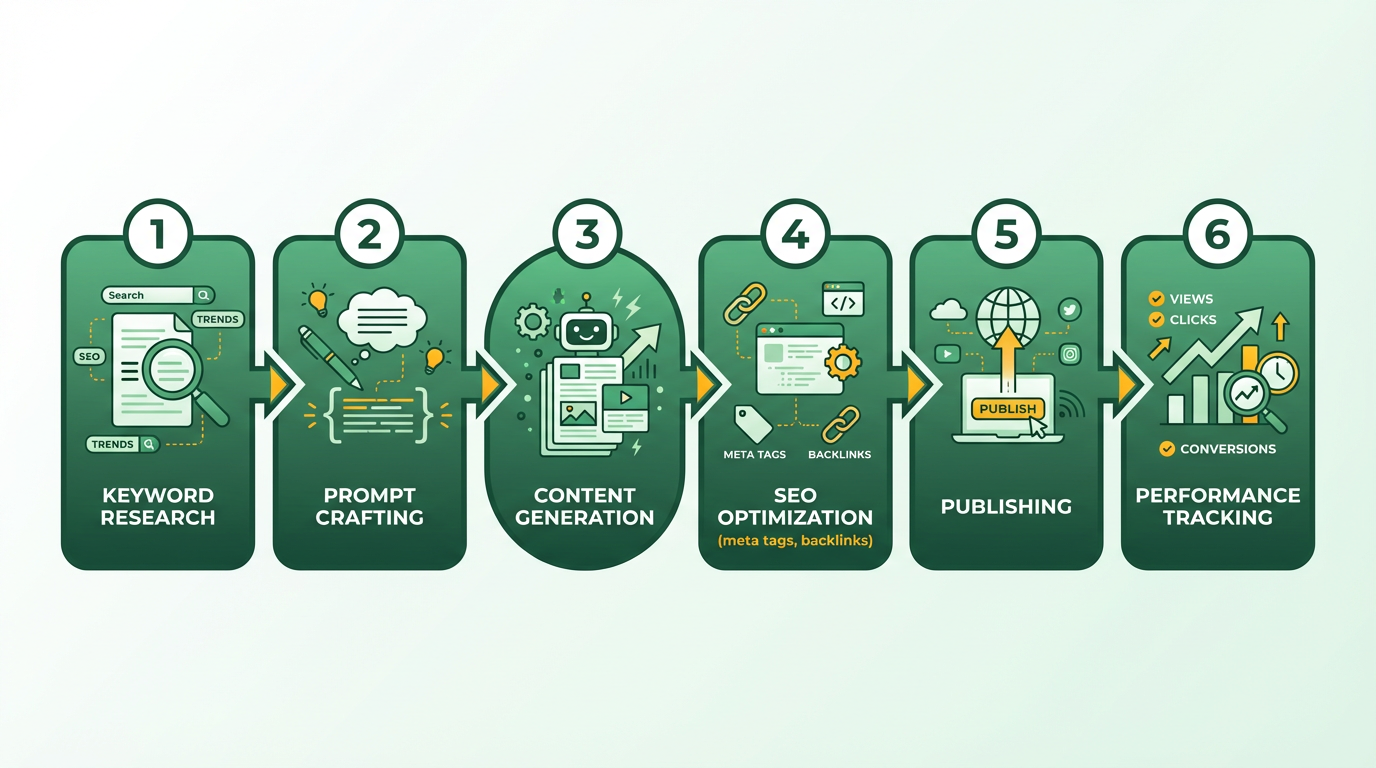
Integrating GEO with Traditional SEO Signals starts with understanding how generative prompts and keyword strategies work together. Traditional SEO focuses on optimizing for search engines using structured elements like meta tags, backlinks, and high-volume keywords. GEO builds on this by using prompts to generate dynamic, user-focused content that aligns with search intent. For example, while traditional SEO might target "best hiking boots," GEO can create tailored responses for nuanced queries like "waterproof hiking boots for rocky terrain." This layered approach ensures coverage of both broad and hyper-specific search terms.
Align Keyword and Prompt Research
Keyword research remains foundational for both strategies. Tools like AnyPost.ai help identify high-intent keywords while also analyzing prompt patterns in generative AI platforms. A key insight from the r/SEO community is that low-volume keywords-often overlooked in traditional SEO-can become high-value GEO prompts. For instance, a travel blog might use "family-friendly beaches in Florida" as a keyword for a static page, then generate personalized itineraries using prompts like "suggest 3-day itineraries for Florida beaches with kids." This dual strategy captures organic traffic while enhancing user engagement with dynamic content. As mentioned in the Assessing Prompt Relevance and Quality section, the effectiveness of these prompts hinges on their clarity and alignment with user needs.
Case Study: Boosting Local Visibility with Integrated Strategies
A local service business improved its search rankings by combining GEO and SEO. Traditional SEO optimized its website for regional keywords like "plumbers in Austin," while GEO prompts addressed hyper-local queries such as "emergency plumber near me in downtown Austin." By embedding prompt-driven content into service pages, the business saw a 22% increase in organic traffic over six months. The GEO layer also allowed real-time updates for seasonal promotions, ensuring relevance for time-sensitive searches like "winter heating services nearby." This example shows how GEO extends traditional SEO’s reach without replacing its core principles. For similar real-world applications, refer to the Case Studies and Real-World Applications section.
Tracking Integrated GEO and SEO Performance
Measuring success requires blending traditional metrics with GEO-specific insights. Start by tracking keyword rankings for static pages, then monitor how generative prompts influence engagement metrics like time on page and conversion rates. For example, a product page optimized for "wireless earbuds" might also generate prompt-based content for "best noise-canceling earbuds for airplane travel." Use tools like AnyPost.ai to compare traffic growth from both strategies. Building on concepts from the Implementing and Optimizing GEO Strategies section, set benchmarks for prompt performance, such as tracking how often AI-generated suggestions lead to purchases or support ticket reductions. Regular audits ensure GEO prompts stay aligned with evolving search trends and user behavior.
By integrating GEO with traditional SEO, businesses create a content ecosystem that adapts to both algorithmic requirements and human intent. The collaboration between structured optimization and generative creativity isn’t about choosing one strategy over the other. It’s about building layers of visibility that traditional SEO alone can’t achieve. AnyPost.ai streamlines this process by unifying keyword and prompt management, letting teams scale efforts without sacrificing precision.
Avoiding Prompt Overload and Maintaining Clarity
Avoiding prompt overload starts with recognizing how excessive prompts can dilute your Generative Engine Optimization (GEO) efforts. When you flood your strategy with prompts without a clear purpose, the AI struggles to prioritize relevant responses. This leads to inconsistent outputs, wasted resources, and lower engagement. For example, a brand might generate 50 prompts for a single product page, only to find the AI returns generic or irrelevant content because it can’t discern the most important questions. The solution? Focus on audience intent and eliminate noise. Successful brands, as outlined in the Why GEO Best Practices Matter section, use their own data to identify high-impact prompts that align with real user needs.
Focus on Clarity Over Quantity
A clear, concise prompt design ensures your GEO strategy works efficiently. Start by grouping prompts by intent. Instead of asking, “What are the features of Product X?” and “Can you describe Product X in detail?” combine them into one focused prompt: “List Product X’s key features with benefits for [specific audience].” This reduces redundancy and trains the AI to deliver targeted responses.
Another tactic is to simplify language. Avoid jargon or overly complex phrasing. For instance, replace “Elaborate on the multifaceted attributes of our premium offering” with “What makes this product unique?” The latter is easier for the AI to process and more likely to resonate with users. Tools like AnyPost.ai emphasize this approach by allowing users to refine prompts through intuitive templates, ensuring clarity without sacrificing depth.
Iterative Testing Refines Results
Even the clearest prompts need fine-tuning. Iterative testing helps you identify which prompts drive engagement and which fall flat. Begin with a small set of high-potential prompts, then measure performance metrics like click-through rates, time on page, or conversion rates. For example, a fitness brand might test two prompts for a workout plan:
- “How to start a beginner’s home workout routine?”.
- “What are the best 10-minute workouts for busy people?”.
If the second prompt generates 30% more clicks, it signals that time-sensitive phrasing aligns better with user intent. Use these insights to eliminate underperforming prompts and refine top performers. This cycle of testing and adjusting ensures your GEO strategy evolves with user behavior.
Balance Volume With Relevance
While some providers push high-volume prompt strategies, relevance trumps quantity every time. The Assessing Prompt Relevance and Quality section explains how high-quality prompts combine clarity, context, and alignment with content goals. A study of GEO practices shows that brands using 10–15 high-quality prompts often outperform those with 50 vague ones. The key is to align each prompt with specific audience segments. For instance, an e-commerce brand might create distinct prompts for:
- Cost-conscious buyers: “What’s the most affordable option for [product]?”
- Luxury shoppers: “What premium features does [product] offer?”
This targeted approach avoids overwhelming the AI while ensuring responses address the right users. Avoid the trap of chasing low-volume keywords just for the sake of adding prompts. As one company found, focusing on long-tail keywords with clear intent-like “organic skincare for sensitive skin under $50”-produced better results than broad, high-volume terms like “skincare products.”.
Final Tips for Avoiding Overload
- Audit existing prompts monthly to remove outdated or redundant queries.
- Use user feedback loops to uncover new prompts. For example, analyze frequently asked questions from customer support tickets.
- Prioritize prompts that align with your core value proposition. If your brand emphasizes sustainability, focus on prompts like “Is this product eco-friendly?” or “How is this item recycled?”.
By avoiding prompt overload and maintaining clarity, you’ll create a GEO strategy that works smarter, not harder. The goal isn’t to overwhelm the AI with volume but to guide it toward meaningful, actionable responses. Tools like AnyPost.ai streamline this process by offering built-in analytics to track prompt performance, ensuring every query serves a clear purpose.
Case Studies and Real-World Applications
A content marketing agency using AnyPost.ai shifted its strategy from chasing high-volume prompts to analyzing user intent through its own engagement data. By prioritizing audience-centric prompts-such as addressing niche pain points or tailoring tone to specific demographics-the agency saw a 30% increase in click-through rates. This aligns with Why GEO Best Practices Matter principles that emphasize understanding user needs over relying on generic keyword tools.
The agency’s success hinged on iterative testing. For example, instead of using broad prompts like “how to improve SEO,” it refined queries to “local SEO strategies for small restaurants during holidays.” This specificity reduced content duplication and improved search visibility. AnyPost.ai’s tools helped identify gaps in competitors’ content, enabling the team to create unique, high-value responses.
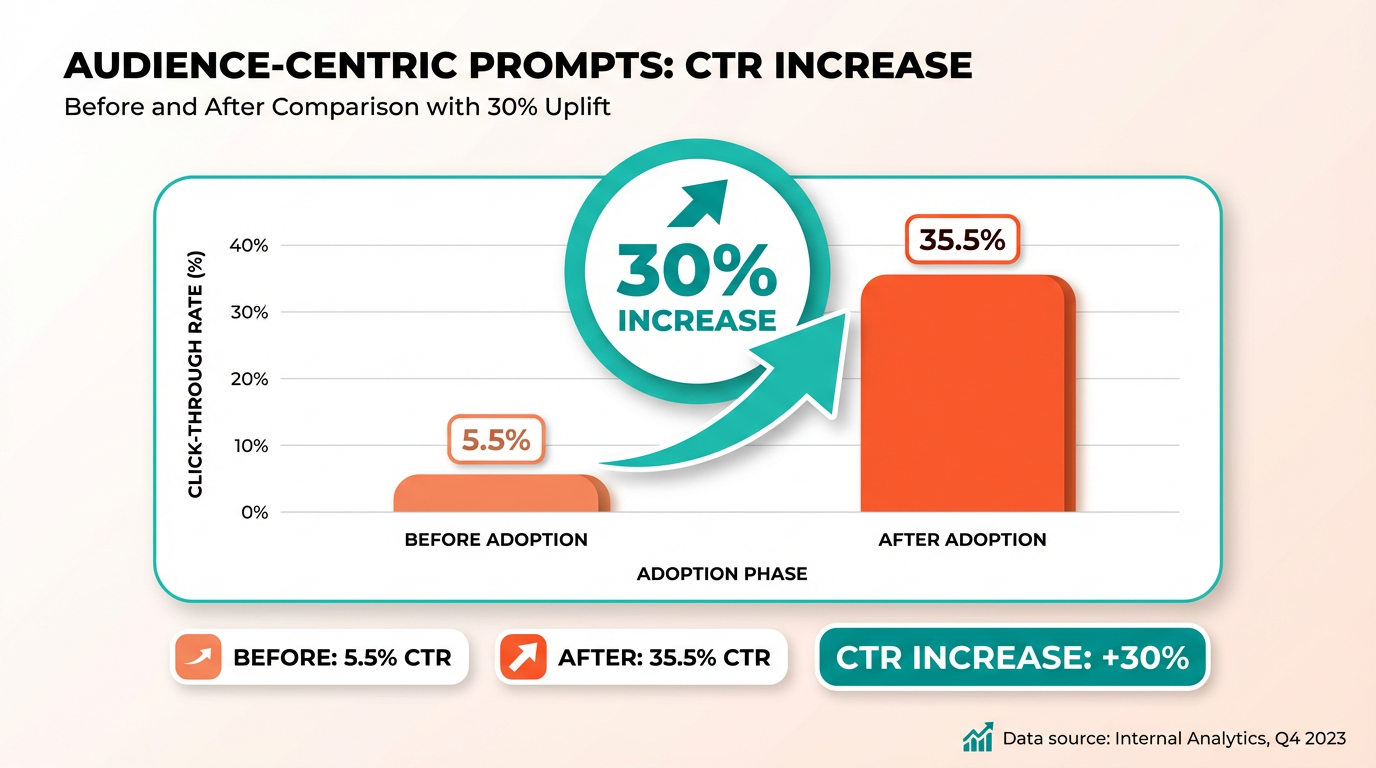
Focusing on our audience’s specific questions-not just popular keywords-made our content feel more relevant.
Many businesses initially struggle with the misconception that high prompt volume guarantees success. A SaaS company, for instance, invested heavily in tools promising “top 100 prompts” for its industry. However, this led to repetitive, low-performing content that failed to convert. The team eventually adopted a quality-first approach by auditing existing customer support tickets to uncover unmet needs.
By integrating these insights into their GEO strategy, the company redesigned its content to answer technical questions in plain language. For example, instead of targeting the broad term “cloud storage solutions,” it focused on prompts like “how to securely back up files for remote teams.” This shift boosted organic traffic by 22% over six months and reduced bounce rates, demonstrating concepts from the Assessing Prompt Relevance and Quality section about aligning prompts with content goals.
GEO best practices can be adapted across sectors. An e-commerce brand selling eco-friendly products used AnyPost.ai to analyze customer reviews and identify under-addressed topics, such as “sustainable packaging options for small businesses.” By creating detailed guides on these topics, the brand positioned itself as an authority, driving a 15% increase in direct sales.
Similarly, a health and wellness platform optimized its video content by aligning GEO prompts with YouTube’s search behavior. Instead of generic titles like “yoga for beginners,” it used phrases like “10-minute morning yoga routine for office workers.” This tailored approach improved watch time by 18%, demonstrating how industry-specific insights outperform volume-driven tactics.
Key Takeaways from Real-World Applications
- Audience data trumps keyword tools: Relying on internal analytics (e.g., support tickets, reviews) uncovers more actionable prompts than generic volume estimates.
- Specificity builds authority: Narrow, intent-driven prompts reduce competition and improve engagement.
- Iterative refinement works: Regularly test and update content based on performance metrics to stay aligned with user needs, as outlined in Avoiding Prompt Overload and Maintaining Clarity.
By adopting these principles, teams can avoid the pitfalls of volume-focused GEO and create content that resonates deeply with their target markets. AnyPost.ai’s tools support this process by surfacing actionable insights without requiring manual keyword research, making quality-driven GEO accessible even for resource-constrained teams.
Implementing and Optimizing GEO Strategies
Implementing a Generative Engine Optimization (GEO) strategy requires a structured approach that prioritizes audience insights over superficial metrics like prompt volume. Start by defining clear objectives-whether boosting engagement, driving conversions, or improving content relevance-and align them with your audience’s needs. As mentioned in the Why GEO Best Practices Matter section, prioritizing prompt volume creates a false sense of security, emphasizing instead the need for audience-centric strategies. Use tools like AnyPost.ai to analyze user behavior and identify gaps in your current content. For example, if your audience frequently asks for step-by-step guides, prioritize creating structured, actionable content over generic posts.
Step 1: Audience-Driven Keyword and Prompt Research
Keyword and prompt research for GEO mirrors SEO best practices but with a focus on conversational queries. Tools like AnyPost.ai help uncover low-volume, high-intent prompts that competitors may overlook. Building on concepts from the Assessing Prompt Relevance and Quality section, high-quality prompts combine clarity, context, and alignment with content goals. Unlike generic providers, AnyPost.ai surfaces insights based on real user interactions, allowing you to target niche topics. For instance, instead of chasing broad terms like “digital marketing tips,” focus on specific questions like “how to create a content calendar for a small business.” This aligns with the Reddit community’s emphasis on low-volume keyword strategies, which often yield higher engagement when tailored to user intent.
Step 2: Launching with a Data-Backed Content Framework
Once you’ve identified relevant prompts, structure your content to directly answer user queries. Avoid relying on prompt volume to dictate word count or complexity-Instead, prioritize clarity and depth. Use AnyPost.ai’s content templates to ensure your output matches the tone and structure your audience expects. For example, if your data shows users prefer concise, bullet-point formats, avoid lengthy paragraphs. Launch your campaign with a mix of evergreen and time-sensitive content to balance long-term value with immediate relevance.
Ongoing Monitoring: Beyond Prompt Volume
Success in GEO hinges on continuous analysis, not one-time setup. Track metrics like engagement rates, click-throughs, and conversion rates using AnyPost.ai’s analytics dashboard. Unlike traditional SEO, GEO requires monitoring how users interact with generated content. If a prompt generates high traffic but low conversions, refine it based on user feedback. Regularly audit underperforming content and replace it with updated versions that reflect evolving audience needs.
Optimization Strategies: Iterating with Feedback
Optimize your GEO practices by testing variations of high-performing prompts. A/B test different content formats-such as videos, infographics, or text-to see what resonates. For example, if a text-based guide on “SEO for beginners” performs well, repurpose it into a short explainer video to reach visual learners. Use AnyPost.ai’s feedback loop features to gather user sentiment and adjust your strategy accordingly. This iterative approach ensures your GEO efforts stay aligned with real-world results rather than theoretical metrics.
Scaling GEO Efforts Without Compromising Quality
Scaling GEO requires balancing volume with relevance. Start by segmenting your audience into subgroups based on behavior or interests. For instance, a tech brand might create separate campaigns for enterprise clients and individual consumers. Use AnyPost.ai’s automation features to streamline content creation for each segment while maintaining a personalized touch. To preserve quality, implement a tiered review process: automated checks for grammar and structure, followed by human reviewers for tone and accuracy.
As highlighted in the Case Studies and Real-World Applications section, one company improved its GEO ROI by 40% after shifting from a high-volume, generic prompt strategy to a targeted, data-driven approach. By focusing on audience-specific content and continuous refinement, they reduced waste and increased user satisfaction. This example underscores the importance of adaptability-successful GEO isn’t about generating more prompts but creating the right ones.
In practice, GEO success comes from combining audience research, iterative testing, and the right tools to automate and scale efforts. By avoiding the trap of prioritizing prompt volume and instead focusing on measurable outcomes, your strategy will evolve alongside user needs, ensuring long-term relevance and impact.
Frequently Asked Questions
1. Why isn’t prompt volume the key to GEO success?
Prompt volume creates a false sense of security because tools estimating demand for specific prompts often deliver inconsistent or irrelevant results. Success in GEO relies on understanding audience intent and creating content that directly addresses user needs, not just chasing high-volume keywords. For example, one company improved efficiency by aligning their strategy with user queries, while another boosted organic traffic by 30% using high-intent prompts instead of generic ones. Focusing on relevance and quality, rather than sheer quantity, ensures content resonates with audiences and drives conversions.
2. How can businesses determine audience intent effectively?
Determining audience intent requires deep research into user pain points, search behavior, and unmet needs. Tools like Slaterock Automation can help identify high-intent queries, but manual analysis is critical to ensure alignment with business goals. For instance, a prompt about “project management software” might generate a listicle, while the audience actually needs pricing model comparisons. By prioritizing clarity and relevance in prompts, businesses create content that addresses specific problems, leading to higher engagement and trust.
3. What are the main challenges in implementing GEO strategies?
Two major challenges are content quality and relevance. Automated tools may generate high volumes of generic content that fails to engage audiences or align with their needs. Overreliance on automation without manual oversight often results in misaligned messaging. For example, content optimized for SEO might lack emotional or functional resonance. To avoid this, marketers must balance automation with strategic input, ensuring prompts are purposeful and tailored to audience expectations.
4. How can marketers avoid prompt overload while maintaining clarity?
Prompt overload occurs when excessive, low-quality prompts dilute strategy effectiveness. To prevent this, focus on selecting a smaller set of high-quality, specific prompts that align with audience intent. For example, instead of flooding platforms with generic content, prioritize prompts addressing niche but high-conversion topics. Slaterock Automation emphasizes creating prompts that are both clear and actionable, ensuring each piece of content serves a distinct purpose without overwhelming users or diluting brand messaging.
5. What metrics should businesses track instead of prompt volume?
Businesses should track metrics like traffic quality, lead generation, conversion rates, and user engagement rather than prompt volume. High-intent prompts with lower search volume can yield better results if they align with audience needs. For instance, one company improved traffic by 30% by focusing on intent-driven content, even if those keywords had limited volume. Tracking engagement (e.g., time on page, bounce rate) and conversion data provides a clearer picture of GEO success than volume alone.
6. How does Slaterock Automation support effective GEO strategies?
Slaterock Automation helps marketers identify high-intent prompts and streamline content creation by aligning with audience research. Their tools emphasize relevance over volume, reducing the need for generic, low-quality prompts. By integrating audience insights into the GEO process, businesses can save time and create content that directly addresses user needs. However, the article stresses that tools like Slaterock should complement, not replace, manual oversight to ensure prompts remain purposeful and strategically aligned.
7. Can low-volume keywords still be valuable for GEO?
Yes, low-volume keywords can be highly valuable if they match audience pain points or high-intent searches. While they may not drive large traffic, they often lead to higher conversion rates because users are seeking specific solutions. For example, a business improved organic traffic by 30% by targeting niche queries rather than broad terms. The key is to prioritize relevance and intent over volume, ensuring content addresses what users truly need at each stage of their journey.