Gym and Fitness SEO: How to Attract More Local Members
Key Takeaways
- Focus on local keyword research to target terms like “gym near me” and “personal trainer in [neighborhood],” boosting visibility for nearby searches.
- Combine location-specific phrases with service keywords (e.g., “HIIT workouts [city]”) to attract local fitness seekers actively searching for gym services.
- Use Google Keyword Planner, Ahrefs, and SEMrush to identify high-volume local keywords and analyze competitors’ search strategies.
- Optimize website content with city/neighborhood names in titles, meta tags, and service pages to improve local search rankings.
- Create blog posts and landing pages aligned with local keyword insights to address community needs and capture intent-driven traffic.
- Prioritize service-based keywords like “affordable gym membership [state]” to target users seeking specific fitness solutions in your area.
- Monitor search volume trends and update keyword strategies quarterly to adapt to changing local search behaviors and maintain competitive relevance.
Related Video
Watch: Boost Memberships with This Gym SEO Strategy by Jess Creatives
Why Gym and Fitness SEO Matters
SEO directly impacts a gym’s ability to attract local members by ensuring visibility in search results where potential clients actively look for nearby fitness options. When someone searches “gyms near me” or “personal training in [City],” SEO determines whether your business appears. Without optimization, even high-quality gyms risk being buried by competitors who prioritize local search strategies. For example, refining website content to include location-specific keywords-like those discussed in the Local Keyword Research for Gyms section-helps your business rank higher in local searches, driving targeted traffic to your doors.
How Does SEO Solve Visibility Challenges for Gyms?
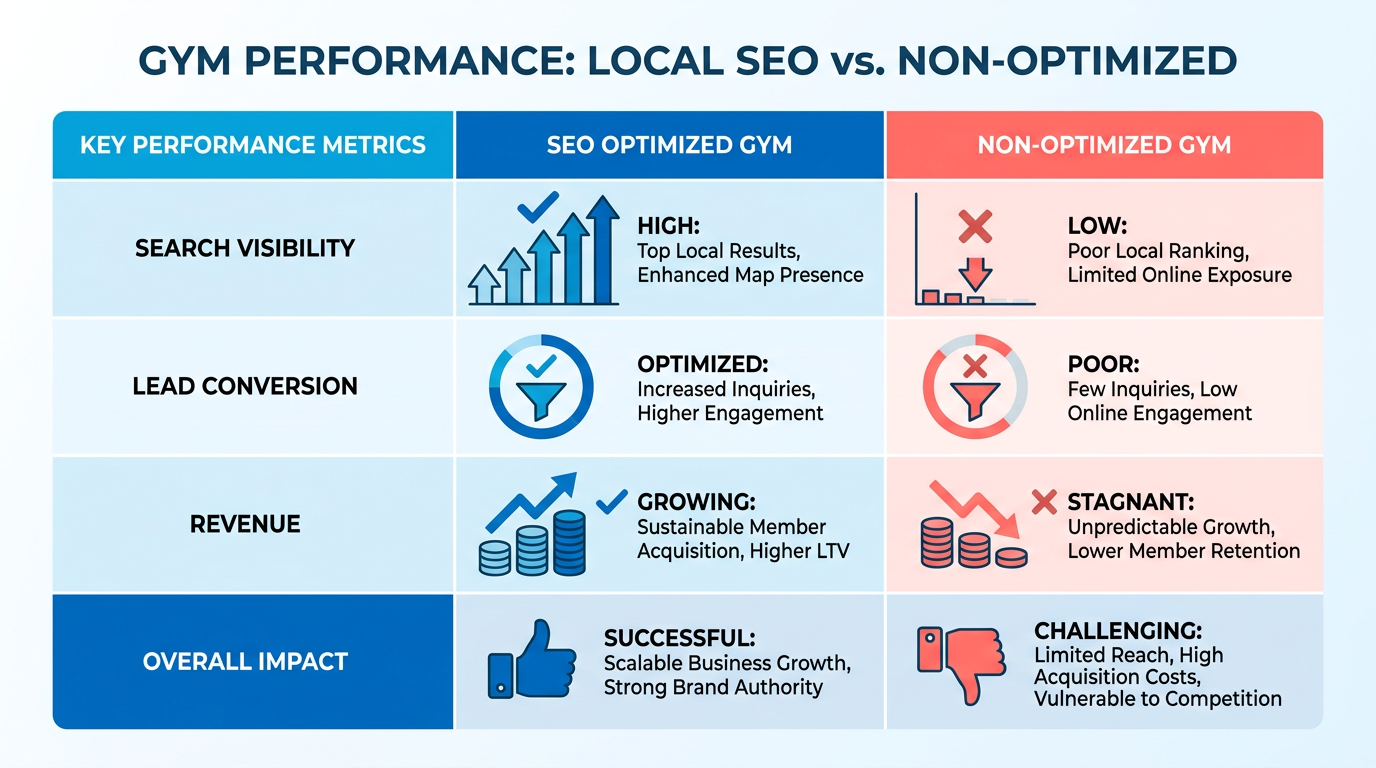
Gyms often struggle with inconsistent online listings and generic content that fails to stand out. A common issue is incomplete or mismatched Name, Address, Phone (NAP) details across directories, confusing search engines and potential clients. SEO resolves this by centralizing accurate information on your website, Google My Business profile, and local citations, as outlined in the Building Local Citations and NAP Consistency section. Another challenge is treating all services as a single page. A gym offering yoga, cycling, and weightlifting should create individual pages for each, as noted in a case study where one fitness center boosted organic traffic by structuring content this way. SEO also addresses technical barriers like slow site speed or poor mobile optimization, which deter users from engaging with your brand.
Who Gains the Most From SEO and Why?
Small to medium-sized gyms and personal training studios benefit most from SEO, as they often lack the budget for aggressive paid ads. Unlike large chains, these businesses rely heavily on local discoverability to compete. A well-optimized site can level the playing field, allowing a boutique studio to rank above a national chain in search results. SEO also builds trust by improving your online reputation-search engines prioritize authoritative, regularly updated content. Gyms that publish blogs on fitness tips, client success stories, or community events signal expertise and reliability. This strategy aligns with best practices from the On-Page SEO for Fitness Websites section, which emphasizes refining location and service pages with targeted keywords to stand out in local searches.
What Role Does SEO Play in Long-Term Growth?
Unlike short-term tactics like flash sales, SEO delivers sustainable results by continuously improving your digital footprint. For instance, gyms that invest in blog SEO-like publishing guides on workout routines or nutrition-see long-term traffic gains as their content ranks for relevant searches. This approach aligns with insights from fitness business experts, who emphasize that consistent, valuable content keeps audiences engaged and encourages repeat visits. Additionally, SEO complements other marketing efforts. A gym with strong local SEO might see higher conversion rates from social media ads or email campaigns, as users already recognize the brand through search results.
By addressing these core areas, SEO transforms how gyms connect with their communities. It’s not just about being found-it’s about being chosen in a competitive market. For insights into maintaining a competitive edge, consider evaluating how ongoing SEO adjustments adapt to evolving search trends and client expectations.
Optimizing Google Business Profile for Gyms
As mentioned in the Local Keyword Research for Gyms section, selecting precise categories like “CrossFit Gym” instead of generic terms helps target niche audiences actively searching for specialized services. Building on concepts from the On-Page SEO for Fitness Websites section, use keyword-rich descriptions for services (e.g., “HIIT workouts for weight loss”) to align with local search intent.
When updating hours or services, Building on concepts from the Building Local Citations and NAP Consistency section, ensure these changes match your website and directory listings to avoid confusion and maintain SEO credibility.
For deeper insights on content strategies, explore How Fitness Businesses Can use Blog SEO for Long-Term Growth.
Local Keyword Research for Gyms
Local keyword research is the foundation of a gym’s SEO strategy, helping you target potential members actively searching for fitness services in your area. By focusing on location-specific terms and service-based phrases, you increase visibility in local search results. This section walks you through the process, from identifying high-value keywords to using insights to shape your content strategy. As mentioned in the Why Gym and Fitness SEO Matters section, local visibility is critical for attracting nearby clients, and keyword research directly supports this goal.
How Do You Identify Relevant Local Keywords for Gyms?
Start by brainstorming terms people near your gym might use. Include location-based phrases like “gym near me”, “personal trainer in [neighborhood]”, or “yoga classes [city]”. Combine these with service-specific words like “affordable gym membership”, “24/7 fitness center”, or “HIIT workouts [location]”. Tools like Google Keyword Planner, Ahrefs, and SEMrush help expand these ideas by showing related search terms and their popularity.
For example, a gym in Austin could target “CrossFit gym in Austin” or “personal trainer Downtown Austin.” Use Google’s “Search suggestions” feature to uncover what users are actually typing. Look for gaps in your competitors’ keyword strategies-tools like Ahrefs let you analyze their top-ranking pages for inspiration. Building on concepts from the Optimizing Google Business Profile for Gyms section, aligning keywords with how users interact with local search results enhances your chances of appearing in “near me” queries.
How Can You Analyze Competition and Search Volume?
Once you have a list of candidates, filter terms by search volume (how often they’re searched) and keyword difficulty (how hard it is to rank). A high-volume, low-difficulty term like “gym memberships [city]” is ideal. Most tools assign a difficulty score from 0 to 100; aim for terms with a score below 50 to start.
Prioritize long-tail keywords like “best beginner-friendly gym in [neighborhood]”-they’re less competitive but highly specific. For instance, if a nearby fitness studio ranks for “yoga for seniors [city],” you could target “senior yoga classes [city]” with tailored content. AnyPost.ai streamlines this process by highlighting local intent and competitor gaps, ensuring your strategy aligns with real user needs.
What’s an Example of a Local Keyword Research Plan?
- List core services: Gyms, personal training, group classes, nutrition coaching.
- Add local modifiers: Use city, neighborhood, or nearby landmarks. Example: “CrossFit near [Park Name].”.
- Use tools to expand: Plug terms into Ahrefs to find related keywords like “affordable personal trainer [zip code]” or “24/7 gym [city].”.
- Sort by value: Focus on terms with 500+ monthly searches and low difficulty. For example, “fitness center [city]” might have 1,200 searches/month and a difficulty score of 35.
- Create a content calendar: Assign keywords to blog posts, service pages, or social media. A post titled “Top 5 Gyms in [Neighborhood]” could target “gyms near [landmark].”.
How Do You Use Keyword Research for Content and SEO?
Map keywords to different content types:
- Blog posts: Write guides like “How to Start CrossFit in [City]” to target “CrossFit for beginners [location].”
- Service pages: Optimize pages for terms like “personal training [neighborhood]” by including location in headers and meta descriptions, as outlined in the On-Page SEO for Fitness Websites section.
- Local citations: Ensure your gym’s name, address, and phone number match across directories like Yelp and Google My Business.
For example, a gym targeting “yoga studio [city]” could create a dedicated page with class schedules, instructor bios, and location details. Pair this with a blog post titled “Why [City] Residents Choose This Yoga Studio” to boost organic traffic. Regularly update content with fresh keywords to stay ahead of competitors.
By aligning your keyword strategy with local intent and competitor gaps, you position your gym to rank for terms that convert. Use tools like AnyPost.ai to refine your list and turn insights into action-whether it’s optimizing service pages or publishing blogs that answer common questions. For deeper guidance, explore blog SEO strategies for fitness businesses or how to improve gym SEO in 2026.
On-Page SEO for Fitness Websites
Optimizing on-page SEO for fitness websites ensures your gym stands out in local search results and attracts nearby clients. Focus on refining location and service pages with targeted keywords, structured content, and internal links to boost visibility. Here’s how to execute it effectively:.
How Do You Optimize Meta Tags for Fitness Websites?
Start with meta titles and descriptions that include your city, service, and unique value. For example: Meta Title: “Yoga Classes in Austin, TX | 24/7 Fitness & Personal Training” Meta Description: “Join top-rated yoga classes in downtown Austin. 24/7 Fitness offers beginner to advanced sessions with expert instructors. Book your free trial today!”
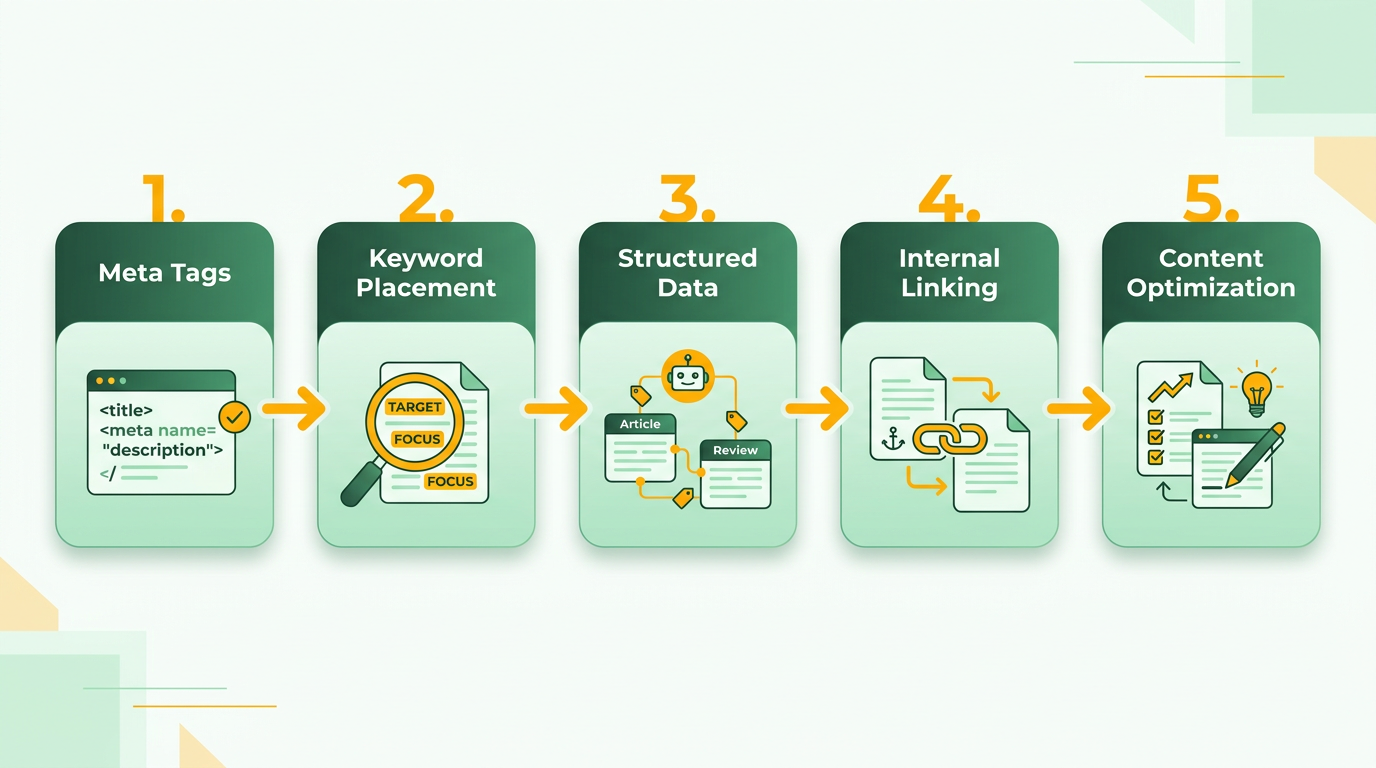
Use location keywords (e.g., “Austin yoga” or “personal trainer in Chicago”) to align with local search intent. Avoid generic phrases like “best gym” without specifying your area. As mentioned in the Local Keyword Research for Gyms section, targeting hyper-local terms improves relevance for nearby users. Tools like AnyPost.ai can streamline this process, offering structured templates for meta tags-unlike generic providers, it ensures consistency with local SEO best practices..
What’s the Best Way to Structure Service Pages?
Create dedicated pages for each service (e.g., “HIIT Training,” “Postnatal Fitness,” “Senior Strength”) instead of grouping them into a single “Classes” page. This approach increases keyword relevance and helps Google rank your content for specific searches.
For example, a HIIT Training page should:
- Include 2-3 location-based keywords in headers (e.g., “HIIT Workouts in Dallas”).
- Highlight unique selling points (e.g., “Certified trainers,” “24/7 access”).
- Link internally to related pages like “Nutrition Coaching” or Location Map.
Use H2 and H3 headers to break up content, making it scannable for users and search engines. Add FAQs at the bottom to target long-tail keywords like “Is HIIT good for beginners in Austin?”.
How Can Internal Linking Boost On-Page SEO?
Strategic internal links guide users deeper into your site while distributing SEO authority. For instance:
- Link from a blog post like “5 Benefits of Postnatal Yoga” to your “Postnatal Fitness Classes” page.
- Use descriptive anchor text like “explore our postnatal yoga schedule” instead of “click here.”
Every service or location page should link to your core pages (e.g., “Home,” “Contact,” “Membership Plans”). This creates a logical hierarchy, helping search engines understand your site’s structure. For example, a “Chicago Location” page could link to “Personal Training in Chicago” and Optimizing Google Business Profile for Gyms to reinforce local relevance..
Example: Optimized Location Page for a Gym
Consider a gym in Brooklyn, NY. Its location page should:
- Feature the address in the H1 tag: “24/7 Fitness – Brooklyn, NY.”.
- Repeat the city in body text: “Located near Barclays Center, our Brooklyn gym offers 24/7 access to state-of-the-art equipment.”.
- Include NAP (Name, Address, Phone) details in a consistent format across the page and footer. Building on concepts from the Building Local Citations and NAP Consistency section, this reinforces trust with search engines.
- Link to service-specific pages like “HIIT Classes in Brooklyn” and “Personal Training near Barclays Center.”.
This structure ensures Google associates your gym with local Brooklyn searches. For more tips on location-based content, explore How Fitness Businesses Can use Blog SEO.. By refining meta tags, structuring service pages, and using internal linking, your fitness website can dominate local search results. Stay consistent with location keywords and prioritize user-friendly navigation to maximize visibility.
Building Local Citations and NAP Consistency
Local citations and NAP (Name, Address, Phone) consistency are foundational to local SEO for gyms and fitness studios. These strategies help search engines verify your business’s legitimacy and connect potential members to accurate information. When executed correctly, they boost visibility in local search results, driving more traffic to your physical location.
Why Local Citations Matter for Gyms
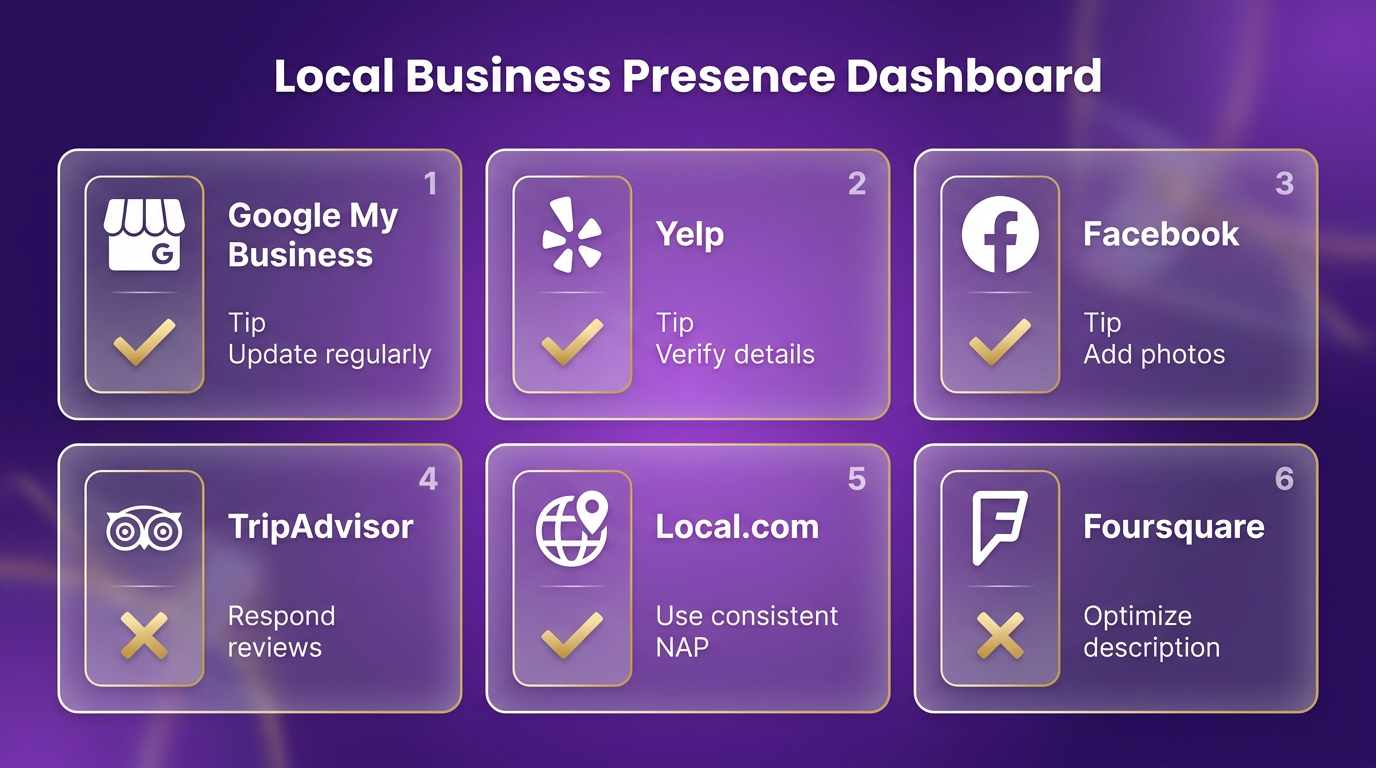
Local citations are mentions of your gym’s NAP on directories, review sites, and local business listings. Search engines use this data to determine your relevance for local queries like “gyms near me.” For example, a citation on Yelp or Bing Places signals to Google that your gym exists and deserves to appear in maps and search results. Without consistent citations, your gym may get buried under competitors’ listings.
How to Build High-Quality Citations
Start by claiming your gym’s profile on major directories like Yelp, Bing Places, and Google My Business. Fill out each listing with precise details, including your full address, phone number, website URL, and operating hours. Avoid generic descriptions-use service-specific pages for offerings like yoga classes or personal training, as recommended by local SEO guides. This structure helps search engines categorize your gym accurately.
After setting up core profiles, expand to niche fitness directories. Examples include GymLocal or MindBody, which cater to fitness professionals. Each citation should mirror your main listings to avoid confusion. If a directory allows, add a brief, keyword-rich description of your gym’s unique features. As mentioned in the Local Keyword Research for Gyms section, incorporating location-specific terms improves relevance and searchability. For instance: “PowerFit Gym offers state-of-the-art cardio equipment, group cycling classes, and personalized training plans for all fitness levels.”.
Maintaining NAP Consistency Across Platforms
Inconsistent NAP information-like a misspelled address or outdated phone number-confuses both search engines and customers. To prevent this:
- Audit Existing Listings: Use tools or spreadsheets to check every online mention of your gym. Look for variations in capitalization, formatting, or extra spaces.
- Update All Profiles: If you move locations or change your number, update every citation immediately. Delayed updates can lead to lost leads as potential members contact the wrong details.
- Monitor Reviews: Encourage clients to leave reviews, but ensure their feedback includes your correct NAP. As outlined in the Optimizing Google Business Profile for Gyms section, claiming and optimizing your Google My Business profile is a critical step in maintaining visibility. A well-structured example of a consistent NAP entry looks like this: Name: PowerFit Gym Address: 123 Fitness Lane, Springfield, IL 62704 Phone: (555) 123-4567
Using Citations and NAP for Local SEO Growth
When citations and NAP consistency align, your gym gains trust signals that search engines reward. For example, a gym with 50+ consistent citations across directories is more likely to rank on the first page of Google than a competitor with fragmented listings. This visibility translates to more local leads, as 72% of consumers who conduct a local search visit a store within five miles.
Building on concepts from the On-Page SEO for Fitness Websites section, integrate citation-building into your broader local SEO strategy. Pair it with blog SEO techniques, as outlined in this guide, to create a cohesive online presence. Regularly audit your citations using a spreadsheet or dedicated tools to catch errors early.
Final Tips for Success
- Claim All Listings: Even lesser-known directories can contribute to your local SEO.
- Encourage Reviews: Positive reviews on citation sites improve credibility and rankings.
- Track Performance: Use Google Search Console to monitor how local searches affect your website traffic.
By prioritizing citations and NAP consistency, your gym can dominate local search results and attract a steady stream of nearby members. For deeper insights into SEO strategies, explore this resource on gym SEO techniques.
Using Online Reviews and Reputation Management
When customers leave feedback, they also create SEO-friendly content. Reviews often include location-based keywords (e.g., “best gym in Chicago”) that align with strategies outlined in the Local Keyword Research for Gyms section, boosting your local search rankings.
Optimize your Google Business Profile by updating attributes regularly (e.g., “24/7 access,” “personal training”), as detailed in the Optimizing Google Business Profile for Gyms section. Add high-quality photos and videos showcasing your facility, as these increase click-through rates from search results.
Use review data to refine local keywords. If clients mention “affordable gym in San Diego,” update blog posts or service pages to include this phrase, reinforcing concepts from the On-Page SEO for Fitness Websites section. This aligns your content with what potential members are searching for.
Tracking Local SEO Performance with Analytics
Tracking local SEO performance with analytics ensures you understand how your gym’s online presence attracts nearby clients. By monitoring traffic, rankings, and conversions, you can refine strategies to stay visible in local searches. Let’s break down how to set up tools, track metrics, and use data to grow your fitness business.
How Do You Set Up Google Analytics for Local SEO Tracking?
Start by creating a Google Analytics 4 (GA4) property for your gym’s website. Link it to your Google Search Console to access detailed search performance data. Configure custom events for key actions, like form submissions or phone calls, to measure conversions. For local SEO, focus on audience reports to filter traffic by geographic location-this shows how many visitors come from your target area. As mentioned in the Local Keyword Research for Gyms section, aligning geographic data with location-specific terms helps validate whether your keyword strategy attracts the right local audience.
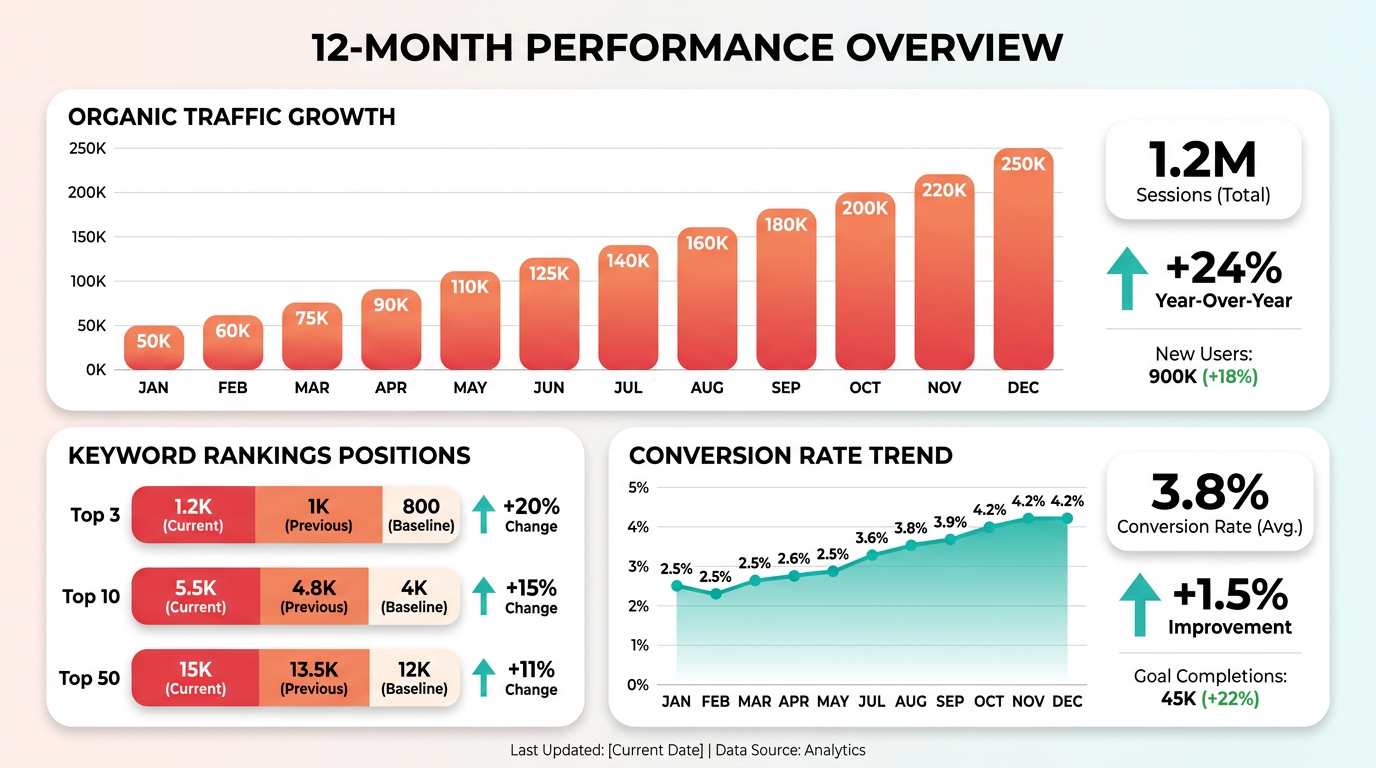
Next, set up UTM parameters for local campaigns. For example, if you run a social media ad targeting “fitness classes in Chicago,” append a unique UTM code to the link. GA4 will track how these campaigns drive traffic and conversions. Use the “User Explorer” report to identify high-value local users and analyze their behavior patterns.
What Metrics Should You Track for Local SEO Success?
Prioritize three core metrics: website traffic, search engine rankings, and conversion rates. For traffic, monitor organic sessions and bounce rates from local regions using GA4’s “Audience > Geography” report. A steady increase in local traffic indicates your SEO efforts are working. Building on concepts from the On-Page SEO for Fitness Websites section, ensure your landing pages are optimized for the keywords driving this traffic to reduce bounce rates and improve engagement.
To track rankings, use Google Search Console’s “Performance” report to see how your site ranks for keywords like “gym near me” or “yoga studio [city name].” Look for trends in click-through rates (CTR)-a low CTR for high-ranking pages means your meta titles or descriptions need optimization. As mentioned in the Optimizing Google Business Profile for Gyms section, maintaining consistency between your Google Business Profile and website content strengthens local search visibility for terms like “gyms near me.”.
For conversions, create goals in GA4 for actions like newsletter signups, class bookings, or contact form submissions. Assign monetary values to these goals (e.g., $50 per lead) to quantify your ROI. If conversions drop, investigate whether it’s due to poor landing pages, slow load times, or irrelevant keywords.
How Can Analytics Improve Your Local SEO Strategy?
Use data to refine your keyword and content strategy. For example, if GA4 shows most local traffic comes from searches like “affordable personal trainer [city],” update your blog or service pages to include this phrase. Similarly, if Google Search Console flags a high bounce rate on your “Membership Plans” page, consider adding testimonials or clearer pricing tiers. Building on concepts from the Building Local Citations and NAP Consistency section, analytics can reveal gaps in local directory listings that may affect your site’s credibility and rankings.
Build a simple dashboard in GA4 by exporting reports for traffic sources, top-performing keywords, and conversion trends. For a gym, this might include:
- Traffic Sources: Compare organic search vs. local directories like Yelp or Google Maps.
- Keyword Rankings: Highlight your top 10 local keywords and their CTR.
- Conversion Rates: Track how many visitors book a trial class or request a consultation.
Regularly review these metrics to adjust your strategy. If a blog post about “beginner gym tips” drives high traffic but no conversions, add a call-to-action for a free workout plan. By aligning analytics insights with on-page optimizations, you’ll strengthen your gym’s local SEO and attract more members.
Integrate competitor data by analyzing their high-performing local keywords and adjusting your content strategy to fill gaps. For instance, if nearby gyms rank for “evening fitness classes [city],” create targeted content or promotions to capture that audience. Use GA4’s audience insights to identify seasonal trends-like increased searches for “summer weight loss programs”-and launch timely campaigns to capitalize on demand.
Frequently Asked Questions
1. How do I find relevant local keywords for my gym?
Start with location-based phrases like “gym near me” or “HIIT workouts [city]” and pair them with service terms. Use tools like Google Keyword Planner or Ahrefs to analyze search volume and competitor strategies for high-value terms.
2. Which tools are best for local keyword research?
Google Keyword Planner, Ahrefs, and SEMrush provide search volume data and competitor insights. These tools help identify high-traffic local terms like “personal trainer in [neighborhood]” for targeted optimization.
3. How can I optimize my website for local SEO?
Integrate city/neighborhood names into titles, meta tags, and service pages. For example, use “affordable gym membership [state]” in headers to align with local search intent and improve visibility.
4. Why are service-based keywords important for gyms?
Service-based keywords like “24/7 fitness center [city]” address specific needs, capturing users actively seeking solutions. They drive intent-driven traffic and outperform generic terms in local search rankings.
5. How often should I update my keyword strategy?
Review and adjust your strategy quarterly to reflect changing trends. Tools like SEMrush track search volume shifts, ensuring your keywords remain relevant and competitive in local markets.
6. How do I create content targeting local keywords?
Develop blog posts and landing pages around phrases like “best yoga classes [location]”. Align content with community needs, such as “budget-friendly gym memberships [city]”, to attract intent-driven local traffic.
7. How do I track the effectiveness of my SEO efforts?
Monitor search volume trends and local rankings using tools like Ahrefs. Compare your keyword performance against competitors to identify gaps and refine strategies for sustained visibility in local searches.
