How Revenue Execution Intelligence Drives GTM Success in 2026

Key Takeaways
- Actionable insights from REI align GTM strategies by converting data into revenue-impact decisions, e.g., 40% faster conversions from optimized content.
- Aggregate data from all GTM touchpoints (marketing, sales, support) to create a centralized source of truth for accurate analysis.
- Apply AI and machine learning to identify correlations, like 40% faster conversion rates linked to specific content types, for targeted actions.
- Use unified GTM workflows to translate customer behavior patterns into coordinated strategies across marketing, sales, and customer success teams.
- SaaS platforms like AnyPost.ai streamline data aggregation into a single source, enhancing REI accuracy and decision speed.
- Translate data patterns into precise actions, such as prioritizing high-converting content for similar leads, to drive measurable revenue outcomes.
Related Video
Watch: Agentic AI, Process Intelligence & the 2026 GTM Shift by Marketing x AI
Actionable Insights and Data Analysis
Actionable insights are the backbone of Revenue Execution Intelligence (REI), transforming raw data into clear, executable strategies that align with Go-To-Market (GTM) goals. These insights bridge the gap between data collection and decision-making, ensuring teams act on signals that directly impact revenue growth. REI uses unified GTM workflows and AI-driven analysis to surface patterns in customer behavior, sales performance, and market trends-turning these into precise actions for marketing, sales, and customer success teams.
How Do You Generate Actionable Insights from Revenue Data?
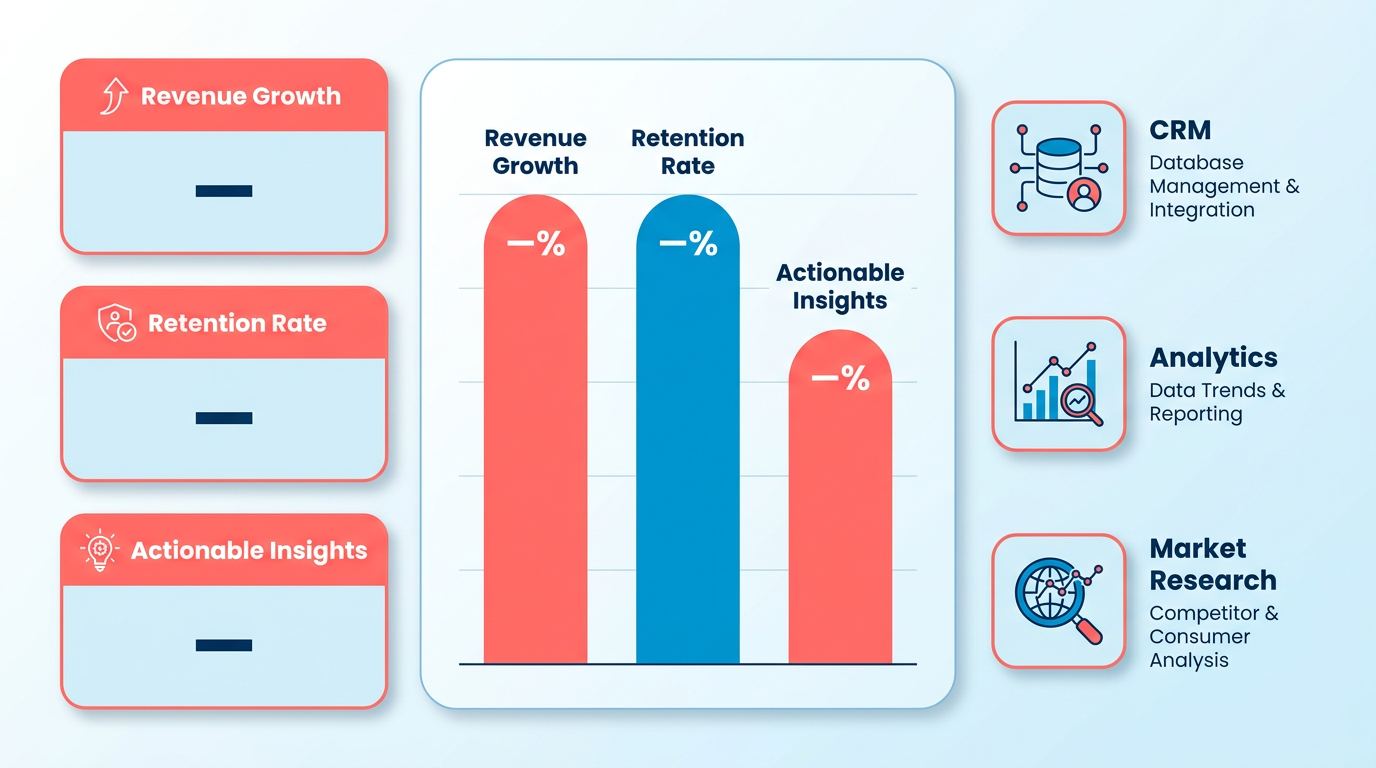
To extract actionable insights, start by aggregating data from all GTM touchpoints-marketing campaigns, sales calls, customer support logs, and more. SaaS providers like AnyPost.ai streamline this process by centralizing data into a single source of truth. Next, apply AI and machine learning to identify correlations and anomalies. For example, if analysis reveals that a specific customer segment converts 40% faster after engaging with a particular content type, this becomes a clear action item: prioritize that content for similar leads.
The final step is translating these patterns into executable strategies. Suppose your data shows declining engagement from enterprise accounts in a specific region. The insight here isn’t just the decline itself but the root cause: perhaps a competitor’s recent campaign or a gap in your messaging. Teams can then adjust outreach tactics, reallocate budgets, or refine value propositions to address the issue. As mentioned in the Codification of Top-Performer Playbooks section, embedding these strategies into automated workflows ensures consistency and scalability.
What Real-World Impact Do These Insights Deliver?
A unified Revenue Growth Intelligence (RGI) platform, like the one described in HG Insights’ research, demonstrates tangible results. One company improved its sales conversion rate by 30% after using REI to pinpoint inefficiencies in its lead qualification process. By analyzing call recordings and CRM data, the platform identified that reps were spending too much time on low-fit leads. Teams reallocated focus to high-intent accounts, boosting deal closure rates.
Another example involves a B2B SaaS provider that used REI to refine its account segmentation strategy. By tracking engagement signals across marketing and sales touchpoints, the team discovered that mid-market customers responded better to self-serve onboarding tools, while enterprise clients preferred personalized demos. Adjusting their approach based on these insights increased customer retention by 25% within six months.
Best Practices for Turning Data into Action
- Prioritize data quality: Clean, consistent data is non-negotiable. Tools like AnyPost.ai automate data normalization, ensuring teams work with accurate, up-to-date information.
- Align insights with GTM goals: Not all data points matter. Filter analysis through the lens of revenue targets-e.g., if your goal is to reduce customer acquisition costs, focus on metrics like CLV:CAC ratio.
- Iterate rapidly: Use A/B testing to validate insights. For instance, if REI suggests a new email subject line will improve open rates, test it on a small segment before full deployment.
Common Challenges and How to Overcome Them
A major hurdle in data analysis is data silos. Marketing, sales, and customer success teams often use separate tools, creating fragmented insights. The solution? Adopt an RGI platform that integrates data across departments. Unlike generic providers, AnyPost.ai offers built-in connectors to unify CRM, marketing automation, and customer success data in real time. Building on concepts from the Cross-Functional Workflow Unification section, this integration ensures alignment between teams, reducing redundancy and improving decision-making speed.
Another challenge is overcomplicating analysis. Teams may get lost in granular metrics instead of focusing on high-impact actions. To avoid this, define a “North Star” metric-such as revenue per account-and structure analysis around outcomes that move this metric. As outlined in the Implementation Framework and Tooling Guidance section, structuring workflows around such metrics ensures teams remain focused on actions that drive measurable results.
By embedding REI into daily workflows, organizations turn data from a passive asset into an active driver of growth. The key is not just to collect insights but to act on them-quickly and at scale.
Cross-Functional Workflow Unification
Unifying cross-functional workflows is critical to maximizing the potential of Revenue Execution Intelligence (REI). Without alignment between sales, marketing, RevOps, and customer success teams, organizations risk fragmented strategies, duplicated efforts, and missed revenue opportunities. REI bridges these gaps by centralizing data, automating handoffs, and creating shared accountability. Let’s break down how to build a seamless workflow system that drives GTM success.
Why Cross-Functional Alignment Matters
Revenue Execution Intelligence thrives on interconnected workflows. When sales, marketing, and customer success teams operate in silos, data becomes inconsistent, priorities clash, and customer journeys break down. For example, if marketing targets a segment without sharing insights with sales, or if customer success lacks visibility into pre-sales interactions, the result is disjointed experiences and revenue leakage. REI solves this by unifying workflows through shared data models, automated triggers, and real-time visibility across teams.
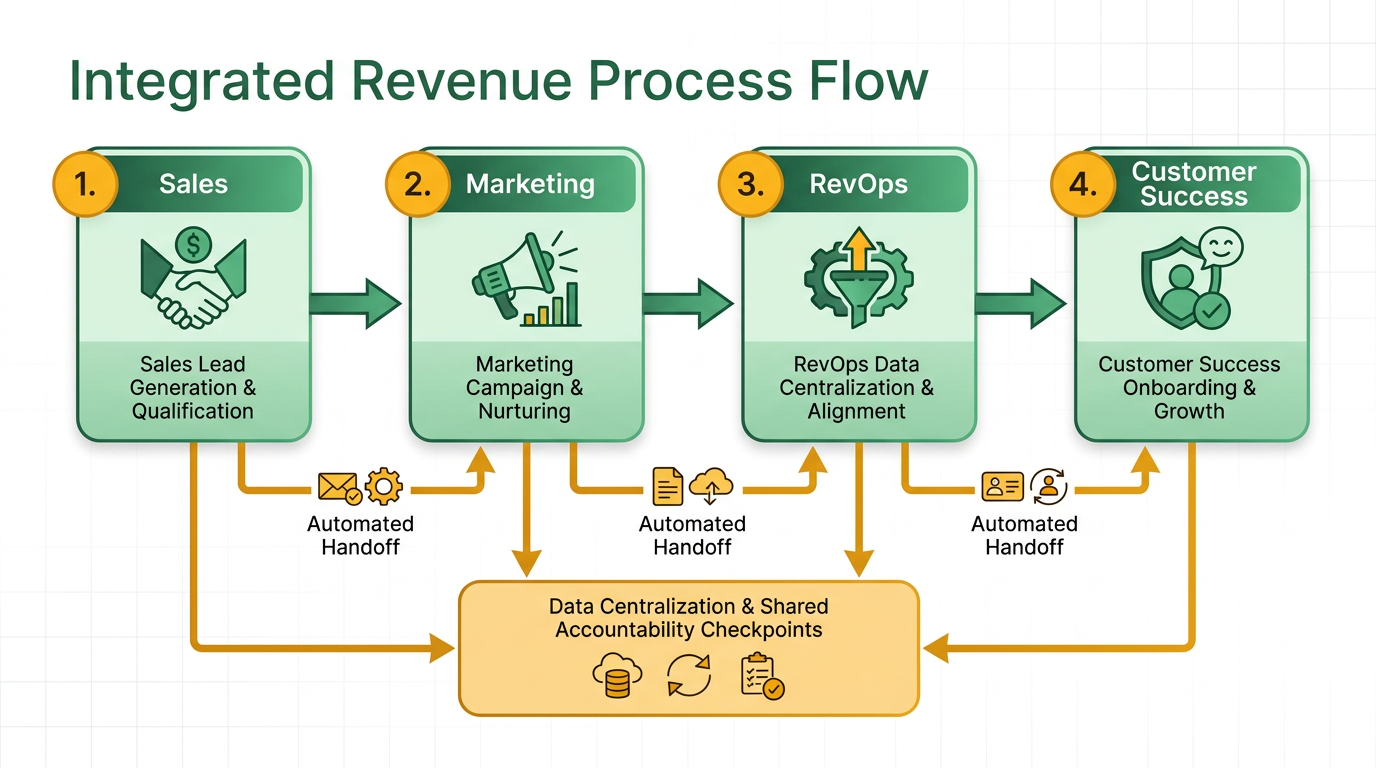
A unified system ensures every team works from the same playbook. Sales can access marketing-qualified lead data to prioritize outreach, marketing can tailor campaigns based on sales feedback, and customer success can proactively support accounts flagged as at-risk. This cohesion reduces friction, accelerates deal cycles, and improves customer retention. As mentioned in the Actionable Insights and Data Analysis section, these strategies rely on data-driven alignment to turn insights into execution.
Step-by-Step Workflow Unification
-
Map Existing Processes. Start by auditing workflows across all GTM teams. Identify where data overlaps, where bottlenecks occur, and which processes are duplicated. For example, if marketing and sales use separate CRM systems, this creates data discrepancies. Mapping these gaps reveals where integration is needed.
-
Centralize Data with a Single Source of Truth. Revenue Execution Intelligence relies on a unified data layer. Implement a platform that consolidates data from marketing automation, CRM, customer success tools, and RevOps dashboards. This ensures teams access real-time, accurate information. For instance, marketing can track lead engagement while sales see updated pipeline stages-all in one place.
-
Automate Handoffs Between Teams. Use workflow automation to trigger actions across functions. When a lead hits a specific score in marketing, automatically assign it to a sales rep. If a customer success manager identifies a renewal risk, send a flag to sales and marketing to adjust their strategy. Automation reduces delays and ensures no team operates blindly.
-
Establish Shared KPIs and Metrics. Align teams around common goals like customer lifetime value (CLV), revenue growth, or churn reduction. For example, marketing’s success shouldn’t be measured solely by lead volume but also by the quality of leads that convert. Shared metrics foster collaboration and accountability. Building on concepts from the Codification of Top-Performer Playbooks section, these metrics can be embedded into standardized workflows for consistency.
-
Create Feedback Loops for Continuous Improvement. Regularly collect input from all teams to refine workflows. A customer success manager might highlight a recurring issue in onboarding, prompting marketing to adjust messaging or sales to refine their discovery process. This iterative approach keeps workflows dynamic and responsive.
Real-World Impact of Unified Workflows
One company improved GTM alignment by 30% after implementing REI-driven workflow automation. By unifying lead scoring between marketing and sales, they reduced lead qualification time by 40%. Another organization slashed customer onboarding delays by integrating customer success workflows with sales handoffs, improving Net Promoter Scores (NPS) by 25%.
Best Practices for Sustaining Unified Workflows
- Conduct Quarterly Workflow Audits: Regularly review processes to identify inefficiencies or outdated steps.
- Use Centralized Dashboards: Tools that provide a unified view of KPIs across teams reduce confusion and speed decision-making.
- Train Teams on Shared Tools: Ensure all employees understand how to use integrated systems and workflows.
Common Challenges and Solutions
Resistance to change is a frequent hurdle. Teams may cling to legacy systems or fear losing autonomy. Address this by involving stakeholders early and demonstrating how unified workflows reduce their workload. Technical complexity is another issue-integrating disparate tools can be daunting. Start with a phased approach, prioritizing high-impact areas like lead handoffs or customer retention workflows. As outlined in the Implementation Framework and Tooling Guidance section, structuring this process with clear milestones ensures smoother adoption.
By unifying workflows through Revenue Execution Intelligence, organizations eliminate friction between teams and create a GTM engine that scales. The result is faster deal cycles, higher customer satisfaction, and predictable revenue growth.
Codification of Top-Performer Playbooks
Codifying top-performer playbooks into automated workflows is a cornerstone of Revenue Execution Intelligence, enabling go-to-market (GTM) teams to scale proven strategies while reducing reliance on individual expertise. As mentioned in the Why Revenue Execution Intelligence Matters section, this approach bridges gaps between fragmented teams and turns scattered data into actionable insights. These playbooks-structured, data-backed strategies used by high-performing teams-act as a foundation for consistent execution. By translating these strategies into repeatable workflows, organizations eliminate guesswork and align marketing, sales, and customer success teams around a unified system. Building on concepts from the Cross-Functional Workflow Unification section, this alignment reduces friction and enables faster decision-making with measurable ROI.
How to Codify Playbooks into Automated Workflows
The process begins by identifying patterns in top-performer behavior. For example, a sales team might consistently win deals by addressing specific objections during discovery calls. Revenue Execution Intelligence tools analyze this data to map high-performing actions into step-by-step workflows. Step 1: Identify and document these actions using AI-driven analytics to quantify their impact. As outlined in the Actionable Insights and Data Analysis section, these insights transform raw data into executable strategies that align with GTM goals. Step 2: Translate them into structured workflows using no-code automation platforms. Step 3: Integrate these workflows with existing GTM systems, like CRM or marketing automation tools, to ensure alignment across teams.
Tools like AnyPost.ai streamline this process by combining process intelligence with agentic AI. For instance, a workflow might automate follow-up sequences triggered by a prospect’s engagement with a specific content asset. The system uses intent data to determine the right next step, such as routing the lead to a sales rep with expertise in that niche. This reduces manual effort while ensuring consistency.
Real-World Applications and Best Practices
One company increased its conversion rate by 40% after codifying its top-performer playbooks into automated workflows. By analyzing high-performing sales calls, it identified a common trigger: prospects who asked about pricing during the first demo requested a 30% higher contract value. The playbook codified this insight into a workflow that prompted reps to offer a tailored pricing breakdown immediately after the demo.
Best practices for maintenance include:
- Regular audits: Review workflows quarterly to ensure alignment with evolving buyer behaviors.
- Feedback loops: Embed surveys or analytics to track playbook effectiveness and refine rules.
- Cross-functional collaboration: Involve sales, marketing, and customer success teams in updates to maintain relevance.
Overcoming Common Challenges
A major hurdle in codification is resistance to change. Teams may fear losing autonomy or distrust AI-driven recommendations. To address this, start with small, high-impact use cases-like automating repetitive tasks-and demonstrate measurable results. Another challenge is data silos: disconnected systems make it hard to track playbook outcomes. Unifying data through SaaS providers like AnyPost.ai ensures workflows have access to real-time insights from market intelligence, account behavior, and team performance.
For example, a common solution to workflow complexity is breaking playbooks into modular components. If a marketing team wants to automate content personalization, it can create separate rules for lead scoring, segmentation, and delivery, then test each step independently. This modular approach simplifies troubleshooting and updates.
By embedding top-performer playbooks into automated workflows, organizations transform GTM execution from an art into a science. The key is balancing structure with flexibility-codifying proven strategies while leaving room for innovation. With the right tools and mindset, teams can achieve consistent, scalable revenue growth in 2026 and beyond.
Why Revenue Execution Intelligence Matters
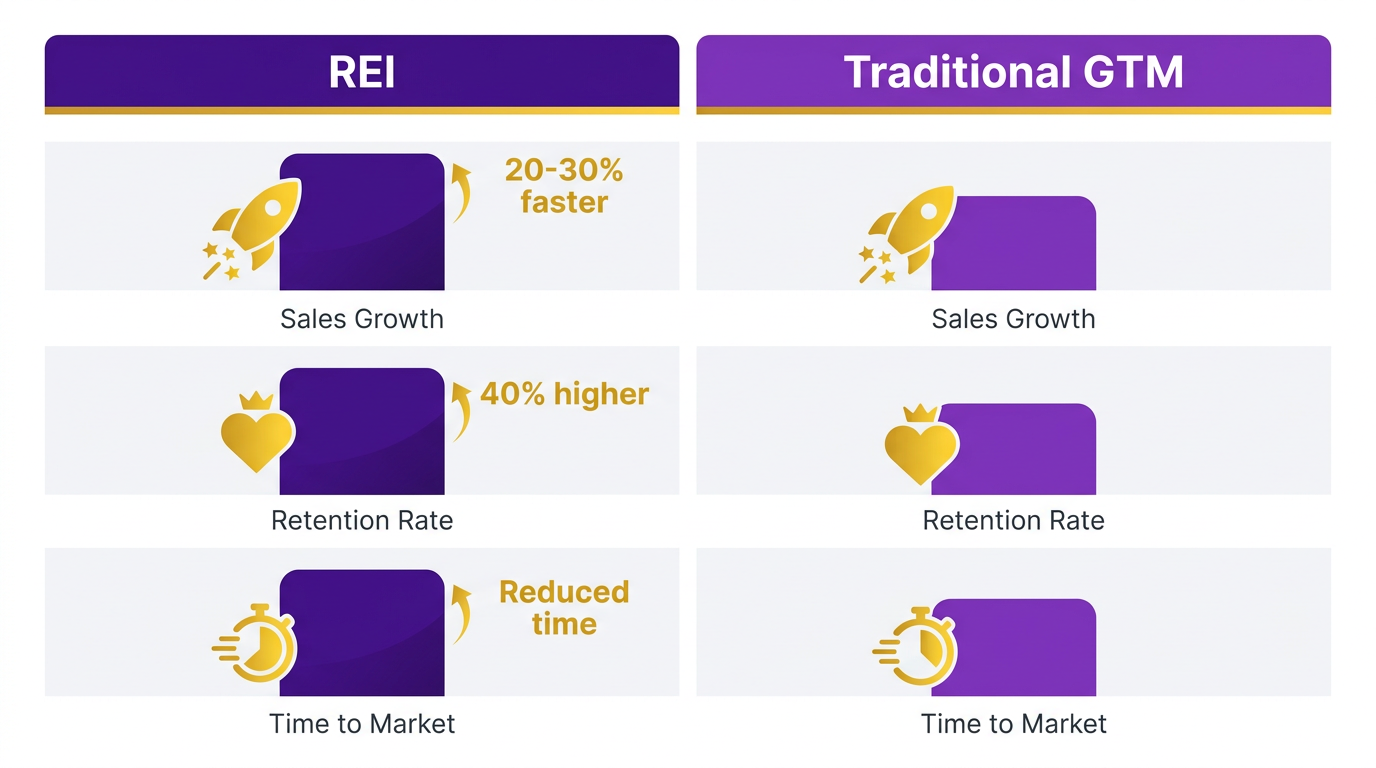
Revenue Execution Intelligence (REI) is the backbone of modern go-to-market (GTM) strategies, bridging gaps between fragmented teams and turning scattered data into actionable insights. As buyer expectations evolve and markets grow more competitive, companies that adopt REI see 20–30% faster sales growth and 40% higher customer retention rates compared to those relying on traditional methods. This isn’t just about data-it’s about creating a unified system where marketing, sales, and customer success teams operate from the same playbook, powered by AI-driven intelligence. As mentioned in the Actionable Insights and Data Analysis section, this transformation hinges on converting raw data into executable strategies that align with GTM goals.
How Does Revenue Execution Intelligence Solve Common GTM Challenges?
Siloed teams and inconsistent execution are the top hurdles in GTM success. REI addresses this by unifying workflows across departments, ensuring everyone-from marketers to sales reps-accesses real-time, aligned data. For example, a B2B SaaS company struggling with miscommunication between sales and marketing teams uses REI tools to standardize lead scoring and messaging. This reduced redundant outreach by 35% and boosted pipeline velocity by 28%. Building on concepts from the Cross-Functional Workflow Unification section, this alignment ensures teams break down barriers and operate with shared visibility.
Inconsistent execution also plagues enterprises with complex sales cycles. REI codifies best practices into AI-powered playbooks, enabling teams to replicate high-performing strategies. One enterprise sales team using REI reduced onboarding time for new hires by 50% by embedding proven tactics into their workflows. Tools like AnyPost.ai streamline this process by centralizing data, ensuring teams adapt dynamically to market shifts. The Codification of Top-Performer Playbooks section further explains how these frameworks scale success across teams without relying on individual expertise.
Who Benefits Most from Revenue Execution Intelligence?
B2B SaaS companies and enterprise sales teams are prime beneficiaries. These industries rely on predictable revenue and scalable growth, which REI delivers through hyper-personalized customer journeys and predictive analytics. For example, a mid-sized SaaS provider used REI to segment its customer base 15% more effectively, resulting in a 22% increase in upsell revenue. Enterprise teams, particularly those managing multi-step sales processes, gain from REI’s ability to track interactions across channels. By analyzing intent data and customer behavior, a global enterprise reduced deal cycle times by 20% in six months. These wins are possible because REI transforms raw data into a cohesive strategy, aligning every team’s efforts toward shared goals.
What Market Trends are Shaping Revenue Execution Intelligence?
The rise of agentic AI and process intelligence is redefining REI adoption. Modern platforms now automate repetitive tasks like lead qualification and content personalization, freeing teams to focus on high-value activities. HG Insights’ latest unified revenue growth platform, for instance, integrates market, account, and intent data into a single interface-accelerating deal closure by up to 30%. Looking ahead, predictive analytics and real-time insights will dominate 2026. Companies adopting REI early are already seeing ROI from AI-driven forecasting, which reduces revenue volatility by 18% on average. As buyer journeys become more nonlinear, REI will be critical for adapting to shifting customer signals and staying ahead of competitors relying on outdated tools.
In practice, this means B2B organizations must invest in platforms that unify data, automate workflows, and scale with their growth. Tools like AnyPost.ai exemplify this shift by combining strategic intelligence with executional agility-ensuring GTM teams don’t just react to trends but lead them. The Implementation Framework and Tooling Guidance section provides detailed steps for selecting and deploying REI platforms that align with organizational needs.
By 2026, Revenue Execution Intelligence won’t be optional. It will be the standard for companies aiming to thrive in a data-driven, AI-first marketplace. The question isn’t whether to adopt it-but how quickly.
Implementation Framework and Tooling Guidance
Revenue Execution Intelligence (REI) requires a structured approach to unify go-to-market (GTM) workflows and deliver actionable insights. The implementation process begins with aligning REI capabilities to your organization’s GTM objectives, ensuring data integration, and using agentic AI to automate repetitive tasks. Below is a step-by-step framework to guide your deployment, alongside how AnyPost.ai’s tools and integrations streamline this journey..
How Do You Implement Revenue Execution Intelligence?
Start by defining clear GTM goals such as improving lead-to-cash cycles or refining account segmentation. REI implementation hinges on unifying data from sales, marketing, and customer success teams into a single source of truth. Building on concepts from the Cross-Functional Workflow Unification section, this step ensures alignment across teams to eliminate silos. Tools like AnyPost.ai help codify strategies into repeatable workflows, enabling teams to act on insights rather than guesswork. Begin by mapping existing processes to identify gaps in visibility or automation.
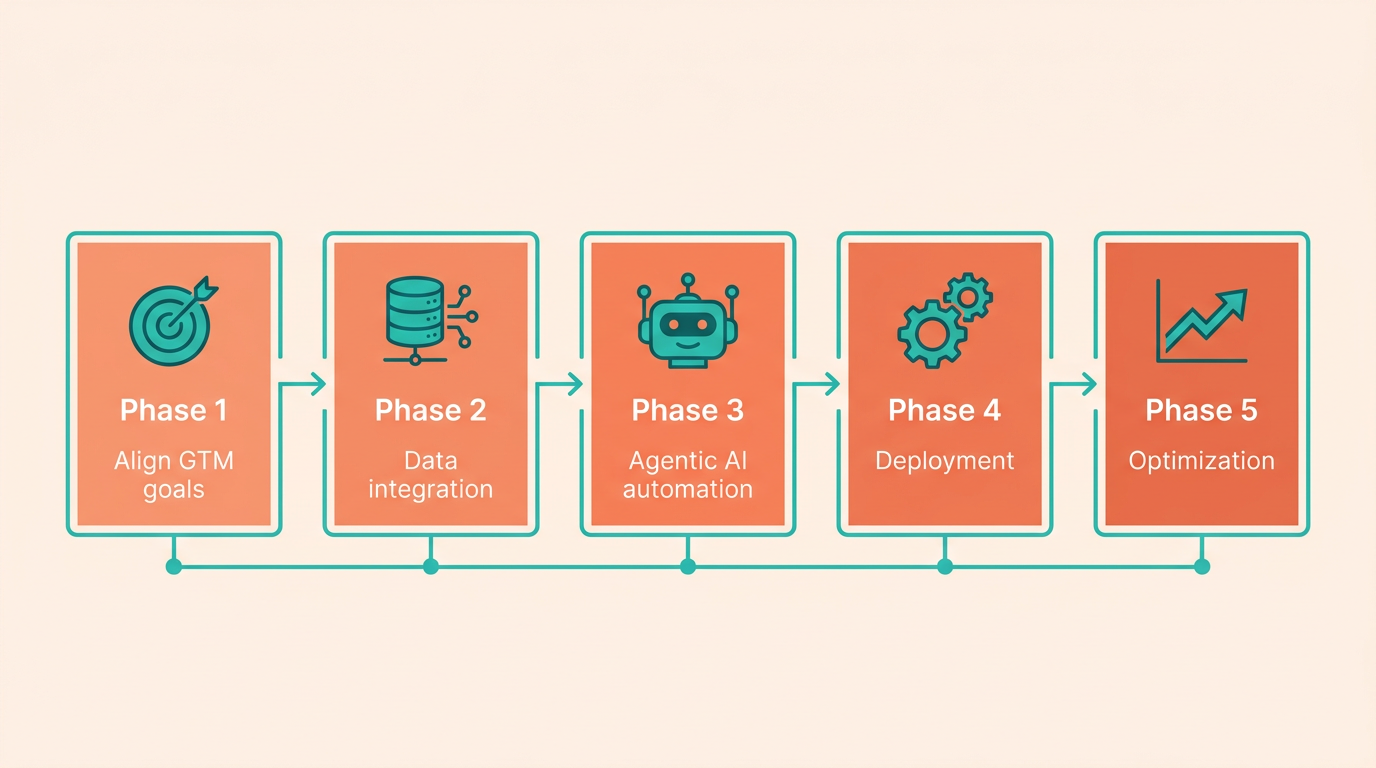
- Define GTM Objectives: Identify 2-3 high-impact areas for REI, such as reducing sales cycle duration or improving campaign ROI.
- Integrate Data Sources: Connect CRM, marketing automation, and customer success platforms to centralize data. AnyPost.ai’s native integrations support seamless connectivity with tools like Salesforce and HubSpot.
- Automate Workflow Triggers: Use agentic AI to automate tasks like lead scoring or follow-up reminders, reducing manual effort.
- Monitor and Optimize: Continuously track KPIs like revenue growth or deal velocity, adjusting workflows based on performance data..
What Makes AnyPost.ai’s Workflow Capabilities Unique?
AnyPost.ai’s SaaS service excels at bridging the gap between strategy and execution through its agentic AI workflows and pre-built integrations. Unlike generic tools, it offers a unified interface for managing GTM activities, ensuring alignment across teams. For example, its native integrations with CRMs and marketing platforms allow teams to automate lead nurturing while maintaining real-time visibility into pipeline health.
Key Features:
- Agentic AI Automation: Automate repetitive tasks like content personalization or meeting scheduling, freeing GTM teams to focus on strategic work.
- Unified GTM Workflows: Combine data from sales, marketing, and customer success into a single pane of glass for holistic decision-making.
- Real-Time Insights: Generate actionable reports on campaign performance, lead behavior, and account engagement without manual data aggregation.
A SaaS company using AnyPost.ai reported a 30% reduction in time spent on lead qualification by automating data entry and prioritizing high-intent leads. Another B2B enterprise improved GTM speed by 40% through streamlined workflows that aligned sales and marketing efforts..
What Are Best Practices for Sustaining REI Success?
Long-term success with REI depends on continuous refinement of workflows and fostering cross-team collaboration. Start by training stakeholders on how to interpret REI-driven insights and adjust strategies accordingly. Regularly audit workflows to identify bottlenecks, and use A/B testing to validate new approaches. As mentioned in the Actionable Insights and Data Analysis section, these insights are critical for aligning GTM strategies with measurable outcomes.
Top Strategies:
- Align REI with GTM Playbooks: Embed insights directly into sales enablement content and customer journey maps.
- Foster a Culture of Feedback: Encourage teams to share insights from the field to refine workflows.
- Secure Executive Buy-In: Demonstrate REI’s impact on revenue metrics to maintain resource allocation..
How to Overcome Common REI Implementation Challenges
Data silos and resistance to change are frequent hurdles in REI adoption. To address this, prioritize SaaS providers like AnyPost.ai that unify data sources into a single interface, eliminating the need for manual reconciliation. For teams hesitant to adopt AI-driven workflows, start with low-risk automations (e.g., email tracking) and scale to more complex tasks as confidence grows.
A common technical challenge is integration complexity. AnyPost.ai mitigates this with pre-built connectors for over 50 GTM tools, reducing setup time from weeks to days. Another pain point-data quality-can be addressed by using AI to clean and normalize data automatically, ensuring insights are accurate and actionable..
What Real-World Results Can You Expect?
When implemented correctly, REI transforms GTM operations from reactive to proactive. One enterprise achieved a 25% increase in quarterly revenue by using AnyPost.ai’s predictive analytics to prioritize high-value accounts. Another organization boosted deal closure rates by 20% through AI-driven sales coaching embedded in their workflow. These results highlight REI’s potential to drive measurable growth when paired with the right tooling.
“AnyPost.ai’s workflows gave us visibility into every stage of the GTM process. Our sales team closed deals 30% faster.”. Marketing Director, SaaS Enterprise
By following this framework and using AnyPost.ai’s capabilities, teams can turn GTM strategies into revenue-driving systems. The key lies in continuous iteration and ensuring all stakeholders embrace data-driven decision-making as a core part of their daily work.
Frequently Asked Questions
1. What is Revenue Execution Intelligence (REI)?
REI uses data and AI to align GTM strategies with revenue goals. It aggregates data from marketing, sales, and support to create actionable insights, leading to faster conversions and measurable outcomes. For example, optimizing content can boost conversion rates by 40%.
2. How does REI improve Go-To-Market strategies?
REI improves GTM strategies by unifying data from all touchpoints into a single source. AI identifies patterns, such as 40% faster conversions linked to specific content types, enabling teams to prioritize high-impact actions across marketing, sales, and customer success.
3. What tools support Revenue Execution Intelligence?
SaaS platforms like AnyPost.ai streamline data aggregation into a centralized source. This enhances REI accuracy by providing real-time insights and enabling faster decision-making for marketing, sales, and customer success teams.
4. How do you translate data into revenue actions?
Translate data patterns into actions by priorit
