How to Automate Backlinks Without Spam or Risky Tactics

Key Takeaways
- You can scale link acquisition with automation and still stay inside Google's spam guidelines. The trick is automating the content, not the placement.
- Three problems eat outreach teams alive: time pressure, inconsistent voice, and spam risk. Automation handles the first two and manages the third.
- Manual prospecting and outreach can burn dozens of hours a week. A good pipeline gives most of that back.
- AnyPost.ai's Persona Engine keeps brand voice consistent across a high volume of drafts, so 20 articles still sound like they came from one team.
- Generate quality, context-rich articles first. Let a human decide where the link goes. That order matters.
- B2B marketers, content teams, and growth leaders get the most out of this, because they need authoritative links at a volume that hand-crafting can't match.
- Google's spam policies penalize cloaking, keyword stuffing, and bought links outright. Compliant automation isn't a nice-to-have. It's the whole ballgame.
Why bother automating backlinks at all
Backlinks are still a core ranking signal. That part hasn't changed in fifteen years. What has changed is how fast Google catches the shortcuts.
The appeal of automation is obvious: scale link acquisition without the manual grind that drags most campaigns into spammy territory. The catch is that "automation" has become a dog whistle for exactly the tactics Google kills. Their spam policies are blunt about it. Cloaking, keyword stuffing, link schemes. Any of those can wipe out your gains overnight. As the Search team puts it, "our spam policies help protect users and improve the quality of Search results." So the only automation worth building is the kind that respects those rules by design.
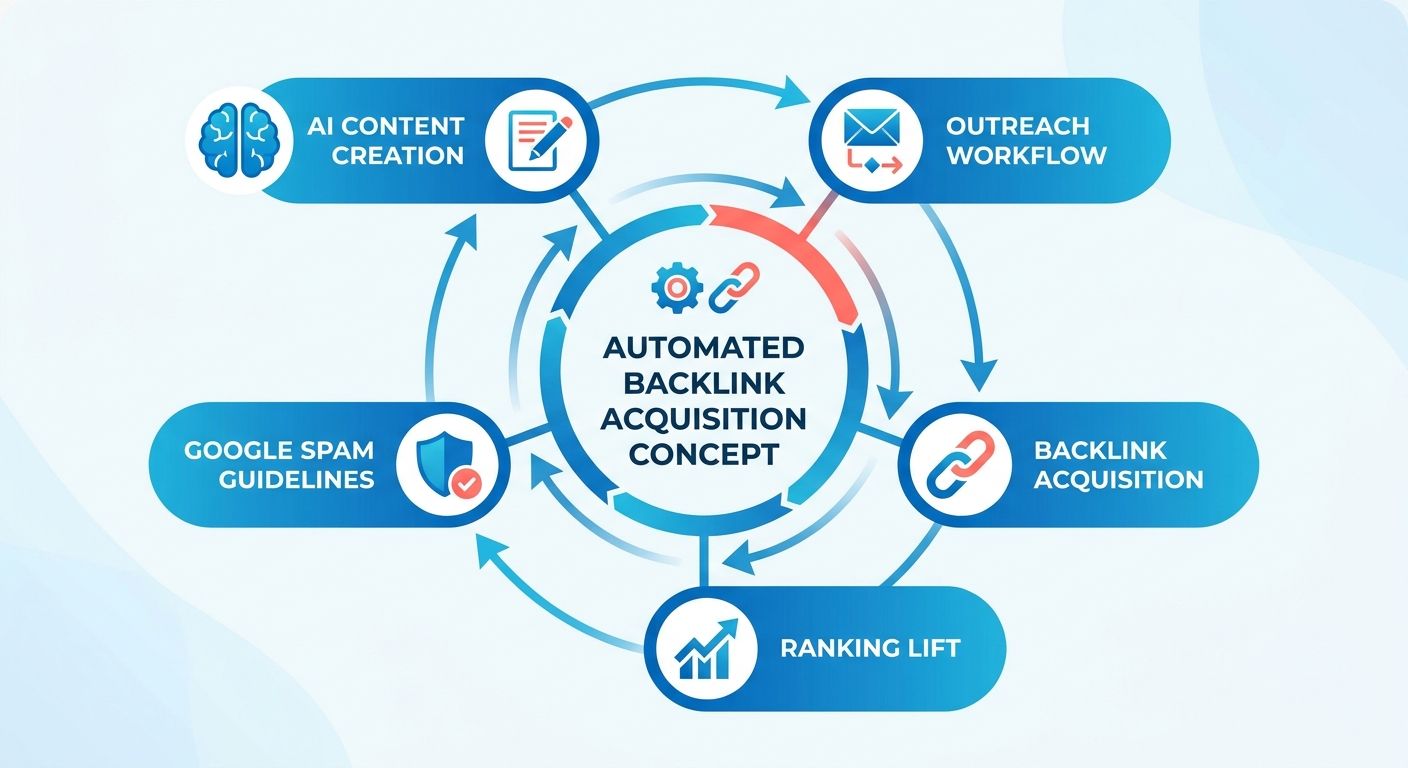
In practice, automation solves three problems that every outreach team knows too well.
- Time. Manual prospecting and outreach eats dozens of hours a week. Automated content generation and keyword research take a big chunk of that off the table.
- Consistency. Five writers means five voices. AnyPost's Persona Engine mirrors one brand voice, so every pitch reads like it came from the same shop.
- Spam risk. Automation that just pumps out links is what trips Google's filters. You avoid that by writing high-quality, contextual articles first, then applying human judgment to where the link lands.
The teams that gain the most are B2B marketers, content creators, and growth leaders, because they need authoritative links at a scale that supports lead-gen funnels, thought-leadership hubs, and product pages. When one team can produce a dozen on-brand articles in a day, the pipeline of earned links widens without adding outreach headcount.
That's the role AnyPost.ai plays. It generates SEO-optimized articles in your brand's voice, pulls from multiple sources, and gives you real-time analytics to track what's working. Those articles become guest-post material, and the links inside them come from writing people actually want to read. That's what a spam-free profile looks like.
How do you automate backlinks without getting burned?
Pair Google-compliant content with data-driven prospecting. Feed the engine a list of high-authority sites in your niche. It scrapes SERPs, scores relevance, and drafts a guest article. Then you review it for accuracy and brand fit. Because the content itself meets Google's quality bar, the links inside are contextual and natural rather than bolted on.
One rule doesn't bend: the bot never decides placement. A human editor approves every pitch. That's how you sidestep the link-spam patterns Google penalizes, like buying links or cloaking. Google's own guidance says the same thing, that effective automation means "creating high-quality, user-centric content that adheres to Google's guidelines." The machine drafts. The human decides.
What kind of time savings are realistic?
Shift discovery and drafting to automation and you'll see manual effort drop noticeably. The hours you claw back go into strategic outreach and relationship building, which is the part that actually earns placements. AI-generated, brand-aligned drafts plus human oversight keeps quality steady while the workflow gets faster. Results vary by niche and how picky your target sites are, but the direction is consistent.
Building a prospect list that won't waste your time
Before any of the content matters, you need a targeted, verified prospect list. This is the step teams skip, and it's the one that quietly sinks campaigns.
Automated content supports your outreach, but accurate contact data is what protects your sender reputation. Bad addresses mean high bounce rates, and high bounce rates torch your domain's standing with email providers. Every target should also be a genuine fit for your niche. Relevance keeps the campaign clean while you scale.
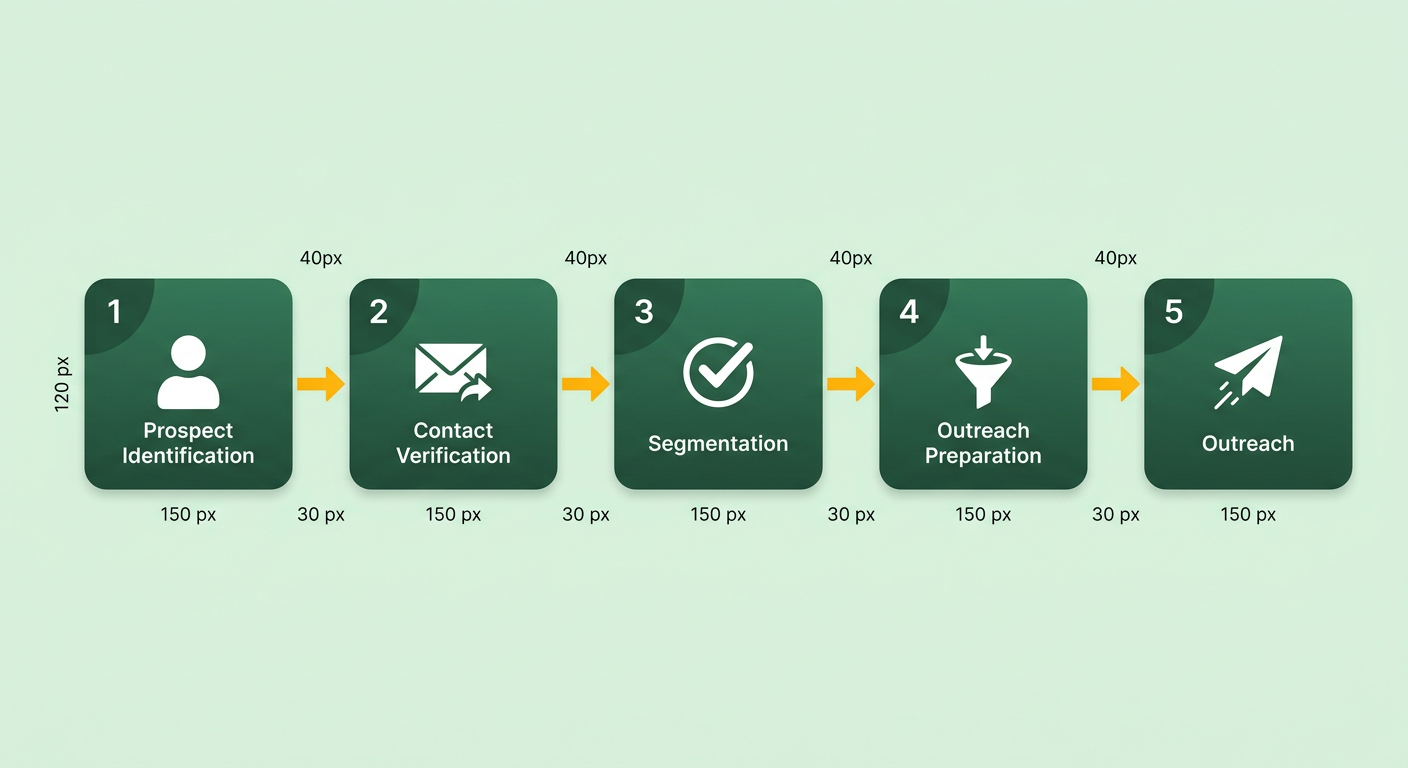
Getting contact info that actually works
Accurate email data is the foundation. A few steps that pay off:
- Gather addresses from public sources: author bios, LinkedIn, site contact pages.
- Validate every address through a verification service to catch dead inboxes and catch-all domains.
- Check publishing history to confirm the site still accepts guest contributions.
If a site hasn't run a guest post in a year, skip it. Chasing dead ends wastes hours and, at scale, starts to look spammy.
What a pitch that gets a reply looks like
A good pitch reads like a personal email, not a mail merge. It shows a snippet of content already tuned to the site's tone.
- A greeting that references a specific post or angle the editor recently covered.
- A short value proposition that names the gap your article fills in their library.
- A sample excerpt from AnyPost, already matched to their style and keyword density.
- A clear ask for a quick reply or a short call to talk through tweaks.
Keep it concise and specific. That respect for the editor's time is what separates you from the template blasts that get deleted on sight.
How AI helps with the actual writing
AnyPost can draft in a host's voice, which makes inserting a backlink feel natural instead of forced.
- Drop in the target URL. The system pulls topical clusters, preferred headings, and style cues.
- Generate a draft that holds your brand voice while respecting the host's formatting and editorial rules.
- Place the backlink where it earns its spot, like a supporting stat or a relevant case study.
"Automated link building is a spectrum, ranging from spammy tactics to legitimate automation that enhances outreach efforts." – industry analysis
Stay on the legitimate end of that spectrum and you get outreach that scales but still feels personal.
One exception: if a target site's guest-post policy bans AI-generated content, don't try to sneak it through. Forcing a submission there risks a manual penalty and burns your credibility with that editor for good.
Automating outreach without going cold
Getting pitches out the door and coordinating follow-ups needs a system, or things fall through the cracks. Automating the scheduling and tracking keeps you present in editors' inboxes without turning every message into robo-spam.
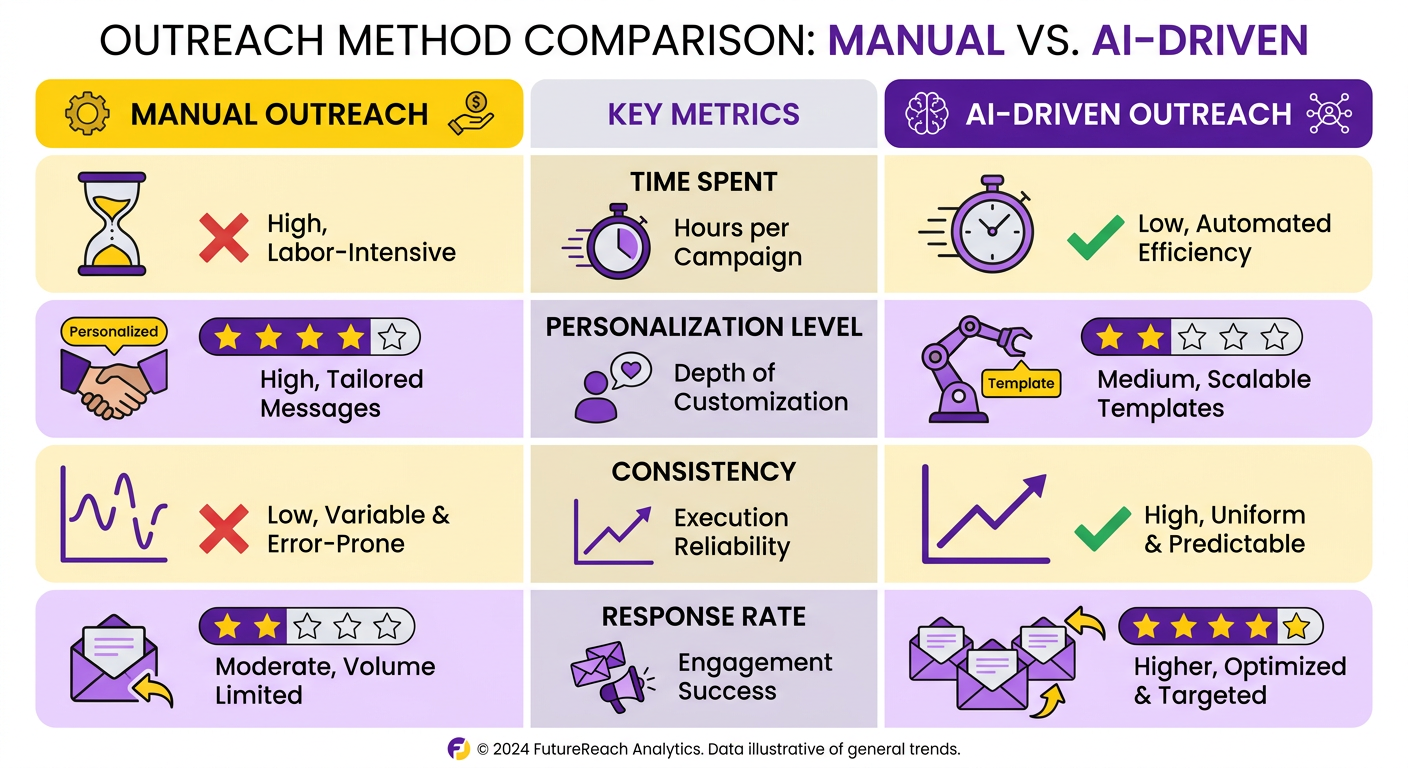
Point the automation at draft generation and SEO optimization. Keep full control over where and how each piece publishes. That split keeps you aligned with SEO best practice instead of fighting it.
What does a publishing workflow look like?
A few AI steps, a few human checkpoints. That mix produces quality output without tripping spam filters.
- AI draft. The platform writes a full article from your brief and SEO parameters.
- Review and refine. An editor adds final touches, checks the data, adjusts tone.
- Schedule. The article posts to your CMS (WordPress, LinkedIn, X) at the right time.
- Track. Real-time analytics watch traffic, engagement, and ranking signals so you can iterate.
The high-volume, low-risk steps run themselves. The trust-building moments, final edits and publishing calls, stay with a person.
When to keep your hands on the wheel
Some situations call for a manual approach over full automation.
- Regulated industries. Medical, legal, and finance content needs a human to check compliance.
- Brand-critical moments. Product launches and crisis comms need bespoke messaging.
- Complex multimedia. Pieces built around custom graphics, video, or interactive elements need coordination a bot can't handle.
- Existing relationships. When you already know the editor, a personal note beats any templated sequence.
For a step-by-step setup walkthrough, see Backlink Automation for Blogs: A Practical How-To Guide.
Directory submissions and guest posts worth chasing
Guest posting and directory submissions only work when you target platforms with real authority in your niche. Blasting content to low-quality link farms doesn't build authority. It invites trouble. The goal is placements on vetted publications search engines already trust, so every link adds to your domain rather than dragging it down.

How do you spot a publication worth pitching?
Score every target against a few criteria before you spend a minute on it:
- Relevance – it covers your industry or topic cluster.
- Authority – solid domain rating, real editorial standards, manual review of submissions.
- Visibility – it already ranks for queries you care about, which means search engines trust it.
- Editorial standards – it enforces guidelines and allows genuine, contextual links.
Turning a brief into a publishable draft
- Find the editorial contact. The specific editor or content manager who handles guest submissions.
- Match the guidelines. Formatting, word count, link policy. Read them before you write.
- Tailor the pitch. Show how your topic serves their existing audience, not yours.
- Submit and track. Send the finished draft through your outreach tool and watch the status.
"Automation is fantastic at moving data around, but it's terrible at earning trust." – Denis Dementienko, CEO & co-founder of Natural Links
That quote is the whole philosophy. Limit automation to the data-heavy steps and keep editorial judgment human-led. That's the line search engines draw between real content creation and manipulative link schemes.
When to skip automation entirely
- Co-marketing campaigns. Joint webinars or co-authored research need collaborative planning, not a template.
- Niche local directories. Some require physical verification or a phone call to confirm a listing.
- Media relations. PR outreach to journalists has to be bespoke to land coverage.
Keep that balance and your link building stays sustainable instead of flaming out after one algorithm update.
Picking an AI tool that won't get you penalized
Choosing software here means balancing efficiency against safety. The right tool streamlines prospecting and outreach while holding a hard line on search-engine compliance. Judge candidates on three pillars: content fidelity, spam-policy safeguards, and workflow integration. A tool that nails all three speeds up drafting while cutting your risk of a policy violation. One that's strong on speed but weak on safeguards is a liability dressed up as a shortcut.
Treat the AI as a content-generation engine, not a placement engine. Let it draft a full guest article in your voice, then hand that draft to a human reviewer. Skip the editorial step and you get content that feels off, or worse, raises spam flags with the host.
What should you actually compare?
Start with one question: does the tool give you control over semantic relevance and brand tone in every draft?
- Voice alignment – can it ingest a brand brief and hold that style consistently?
- SEO hygiene – built-in checks for keyword stuffing, cloaking-like patterns, and link-spam signals.
- Data handling – prospect scoring, outreach scheduling, and performance logging.
- Pricing transparency – clear per-article or per-month costs, no surprises.
- Support – a responsive help desk and a community to lean on when something breaks.
Tools that clear this bar tend to lift acceptance rates from editors and cut down on manual rewrites.
How do you keep it inside Google's spam policies?
Build the policy checks into the generation pipeline and treat any violation as a hard stop.
- Clean code – standard HTML that renders identically for visitors and crawlers. No cloaking.
- Semantic density analysis – real-time flags for over-optimized phrasing before you export.
- Link validation – outbound links checked against domain authority and relevance so they add real value.
If you can't vouch for every outbound link meeting that standard, place that one by hand.
How do you track and improve performance?
AnyPost's real-time analytics show how published articles do on traffic, engagement, and SEO signals. Review those numbers, see which drafts land, and feed what you learn back into future prompts. That loop is what turns a one-off win into a repeatable system.
A guest post from start to finish
Say you're targeting a niche SaaS blog. You feed its editorial guidelines into the AI, which produces a 1,200-word article in your brand voice. The draft clears the built-in spam checks. You export it to your outreach CRM, schedule a personalized email, and log the event. After it publishes, the analytics dashboard tracks traffic and engagement, which shapes your next batch of prompts.
Score your tools against these criteria, enforce the safeguards, and lean on the analytics. Do that and you've got a repeatable system for guest-post content that holds up, not a spam engine waiting to get caught.
Frequently Asked Questions
1. How can I ensure AI‑generated drafts don’t violate Google’s “no cloaking” rule?
Avoid cloaking by publishing a single HTML version that serves both users and crawlers. Before publishing, run the draft through a preview tool that shows the exact source code, verify no hidden text or conditional redirects, and keep the same URL for all visitors. This satisfies Google’s policy.
2. What is the recommended ratio of automated vs. manually edited backlinks for a new domain?
Target roughly a 70/30 split, where 70% of new links originate from AI‑assisted drafts that have passed human review, and 30% come from fully manual outreach. This blend supplies volume while preserving editorial control, which search engines view as natural growth for fresh sites.
3. Can automated backlink tools be used for niche industries with strict editorial guidelines, like medical?
Use automation only for research and draft generation, then require domain‑expert review before any link is placed. In regulated fields, a qualified professional must verify claims, citations, and compliance with industry standards; otherwise, the risk of penalties outweighs efficiency gains.
4. How does the cost of AnyPost.ai compare to hiring a freelance outreach specialist?
AnyPost.ai charges a subscription that averages $200 per month for unlimited article drafts, while a freelance specialist typically bills $30‑$50 per hour and may need 8‑10 hours per campaign. Over a quarter, the platform often costs less, but freelancers provide personalized relationship building that automation cannot replace.
5. What metrics should I monitor after publishing AI‑assisted guest posts to confirm they’re safe?
Track referral traffic, dwell time, and bounce rate alongside the domain’s spam score in tools like Moz or Ahrefs. A sudden spike in low‑quality referrals or a rising spam score signals a problem; stable engagement and unchanged scores indicate the links remain within safe parameters.
6. Are there any legal concerns when scraping contact data for prospect lists?
Collecting publicly available emails is permissible in many jurisdictions, but you must honor opt‑out requests and comply with regulations such as GDPR or CAN‑SPAM. Store the data securely, include an unsubscribe link in every outreach email, and document consent where required to avoid legal exposure.
