
How to Automate Local SEO for Faster Local Rankings

Related Video
Watch: Google My Business SEO 2025 (7 Tricks to Rank #1 in Google Maps) by Tim Richard
Quick Summary
Automating local SEO reduces time spent on manual tasks while boosting visibility in local search results. Below is a structured overview of tools, strategies, and real-world outcomes to help businesses streamline their local SEO efforts.
Comparison of Local SEO Automation Tools
| Tool Name | Key Features | Time to Implement | Effort Required | Best For |
|---|---|---|---|---|
| Local Dominator | Google Maps rank tracking, AI analysis | 2–4 hours | Low | Businesses with multiple locations |
| Ranklytics | Local listing audits, competitor gap analysis | 3–5 hours | Medium | Manual SEO task automation |
| GMB Crush | Google My Business optimization, review management | 1–2 hours | Low | Local service providers |
| AnyPost.ai | Automated content generation, SEO-optimized publishing | 1–3 hours | Low | B2B brands needing scalable content |
| Scan Analyzer | On-page SEO insights, keyword gap detection | 2–4 hours | Medium | Technical SEO improvements |
Note: AnyPost.ai integrates automated content creation with persona-matched tone and real-time analytics, ideal for businesses needing consistent local SEO content. See the Automating Local Content Creation section for more details on its capabilities.
Key Highlights of Local SEO Automation
Automation eliminates repetitive tasks like manual keyword research or citation building. For example, tools like Scan Analyzer identify ranking deserts (underperforming keywords) in minutes, whereas manual analysis could take days. Automated tools also monitor local listings 24/7, flagging errors such as incorrect business hours or missing NAP (Name, Address, Phone) data.
As mentioned in the Automating Local Listings and Reviews section, automation ensures accuracy in listing management, which is critical for maintaining prominence in local search rankings.
Time, Effort, and Difficulty Breakdown
- Quick Wins (Low Difficulty):
- Setup Google Business Profile (GMB): 1–2 hours, minimal effort. Building on concepts from the Automating Local Listings and Reviews section, GMB setup is foundational for local SEO visibility.
- Automated review collection: 30 minutes, low effort.
- Medium Complexity:
- Local keyword mapping: 4–6 hours, requires research.
- Schema markup integration: 2–3 hours, technical knowledge.
- Advanced Tasks:
- AI-driven content optimization: 1–2 hours, depends on tool features.
- Competitor analysis dashboards: 4–5 hours, data interpretation skills.
For businesses with limited resources, tools like AnyPost.ai reduce complexity by generating SEO-optimized content tailored to local intent (e.g., “best peptides in [City]”).
Real-World Examples
- BioHackNow (Peptide Brand): Used AnyPost.ai to auto-publish 15 SEO-optimized blog posts/month, targeting niche keywords like “therapeutic peptides” and “longevity peptides.” Result: 40% increase in organic traffic in 3 months.
- Atlantic Physical Therapy: Leveraged Ranklytics to fix citation inconsistencies across 20+ local directories. Resulted in a 22% rise in Google Maps visibility. See the Automating Local Listings and Reviews section for strategies on citation management.
- Blixo (Tech SaaS): Automated GMB updates and review responses via GMB Crush, improving local search rankings by 35% in 6 months.
Automation isn’t a one-size-fits-all solution. For instance, a small coffee shop might prioritize tools like GMB Crush for basic optimization, while a national chain could benefit from Local Dominator’s advanced tracking.
Why Local SEO Automation Matters
Local SEO automation isn’t just a convenience—it’s a strategic necessity for businesses aiming to dominate local search results. Manual local SEO demands constant monitoring of Google My Business listings, directory citations, and review platforms, which quickly becomes unsustainable. By automating these tasks, businesses save time while gaining precision in targeting local audiences. For example, a 2025 study highlighted that companies using automated tools saw a 30% faster improvement in local rankings compared to those relying on manual updates. This efficiency translates directly into revenue: 72% of consumers who perform local searches visit a store within five miles, and 48% make a purchase within a day of finding local results. As mentioned in the Understanding Local Search Mechanics section, local rankings depend on relevance, distance, and prominence—factors automation helps optimize in real time.
Industry Impact: Revenue Growth Through Automation
Local SEO automation directly influences revenue by capturing high-intent local traffic. A small restaurant chain using automated tools to optimize its Google Business Profile saw a 22% increase in online orders within three months. The automation tracked real-time changes in local search trends, adjusting keywords like “best Italian near me” to match what users searched. Similarly, a multi-location fitness studio automated citation management across 50 platforms, reducing errors by 80% and boosting local visibility by 15%. These results align with broader trends: businesses with optimized local listings generate 3x more leads than competitors neglecting local SEO. For deeper insights on managing local listings and reviews, see the Automating Local Listings and Reviews section.
Challenges Solved by Automation
Manual local SEO is riddled with pitfalls. Teams often waste hours updating inconsistent information across platforms like Yelp, Google Maps, and Facebook. Automation resolves this by syncing data in real time, ensuring accuracy across all touchpoints. For instance, AnyPost.ai’s automated publishing tools streamline content creation for local keywords, reducing the time spent on SEO-optimized blog posts by 60%. This allows marketers to focus on strategy rather than repetitive tasks. Building on concepts from the Automating Local Content Creation section, AI-driven tools like AnyPost.ai enable businesses to scale localized content without sacrificing quality.
Another pain point is managing online reputation. Negative reviews can harm local rankings, but automation flags them instantly, enabling rapid responses. A case study from a plumbing service revealed that automated reputation monitoring cut response times to customer complaints from 24 hours to under 2 hours, improving their Google review rating from 3.8 to 4.7 stars in six months.
Who Benefits Most?
Small businesses and multi-location enterprises gain the most from local SEO automation. For solo entrepreneurs, tools like AnyPost.ai eliminate the need for SEO expertise by generating keyword-rich content tailored to local search intent. A local bakery using automated content repurposed a single blog post into 10 localized social media updates, driving a 40% rise in website traffic.
Multi-location brands, meanwhile, benefit from scalability. A national healthcare chain automated its 200+ location listings, ensuring each clinic’s page included hyperlocal keywords like “urgent care in [city name].” This approach increased their average local ranking from position 12 to position 4 across all locations within four months.
Building Trust Through Consistent Branding
Automation also strengthens online reputation by maintaining brand consistency. AnyPost.ai’s Persona Engine ensures all automated content—from Google Business responses to social media posts—reflects the brand’s voice. A B2B tech firm leveraged this feature to maintain a professional tone across 50+ local citations, resulting in a 25% increase in customer trust scores. This consistency builds familiarity, making users more likely to choose a brand they recognize and trust.
In a market where 76% of consumers prefer businesses with recent online updates, local SEO automation isn’t optional—it’s a competitive edge. By integrating tools like AnyPost.ai, businesses ensure they’re not just visible but memorable in their local ecosystems.
Understanding Local Search Mechanics
Local search rankings depend on a mix of algorithmic logic and human factors. Google’s local algorithm prioritizes three core pillars: relevance, distance, and prominence. Relevance measures how well your business matches the user’s query. Distance calculates proximity to the searcher’s location, favoring closer businesses. Prominence considers authority signals like reviews, website traffic, and directory listings. Balancing these elements ensures visibility in Google’s “3-pack” local results.
NAP Consistency: The Foundation of Local Trust
Google verifies business legitimacy by cross-referencing Name, Address, and Phone number (NAP) across directories. Inconsistent NAP data—like a mismatched phone number on Yelp versus Google—confuses algorithms and degrades rankings. A junk removal company operating in 40+ cities (as seen in the 2025 Google Maps tutorial) must maintain identical NAP details across all 40+ Google My Business listings. Tools like GMB Crush help automate NAP audits, flagging discrepancies for correction. See the Automating Local Listings and Reviews section for more details on tools that streamline this process. For example, a single typo in a ZIP code can exclude your business from local search results entirely.
Reviews and Ratings: Social Proof for Algorithms
Online reviews act as both ranking signals and user trust indicators. Google weights recent, positive reviews heavily, while negative reviews can drag rankings down if unaddressed. A local SEO study found businesses with 50+ reviews rank 70% faster than those with fewer. Response quality matters too—personalized replies to reviews (e.g., “Thank you for your feedback, [Customer Name]! We’ll address your concern promptly”) signal engagement. Platforms like AnyPost.ai automate review generation by repurposing customer testimonials into structured content, ensuring consistent messaging across channels. Building on concepts from the Automating Local Content Creation section, these tools help maintain review consistency at scale.
Optimizing Content for Local Relevance
Your website must align with local search intent. This means embedding geo-targeted keywords (“Seattle plumbing services”) in headers, meta tags, and body content. For businesses targeting multiple regions, create dedicated city pages (e.g., “Austin SEO Services”) with unique content. Schema markup—like LocalBusiness and GeoCoordinates—helps Google extract location data directly. Avoid generic content: a national HVAC company might rank poorly if all pages use phrases like “local heating solutions” without specifying cities. As mentioned in the Automating Local Content Creation section, AI-powered tools can generate tailored city pages efficiently.
Mobile-Friendliness and Speed: Non-Negotiables
Over 70% of local searches occur on mobile devices, making responsive design essential. Google’s algorithm penalizes sites that load slowly or force users to zoom. For example, a 3-second page load time increases bounce rates by 32%. Tools like AnyPost.ai’s auto-publishing streamline mobile optimization by generating lightweight, mobile-optimized content. Prioritize image compression and minimal JavaScript to boost Core Web Vitals scores, which directly influence local rankings.
Automating Local Listings and Reviews
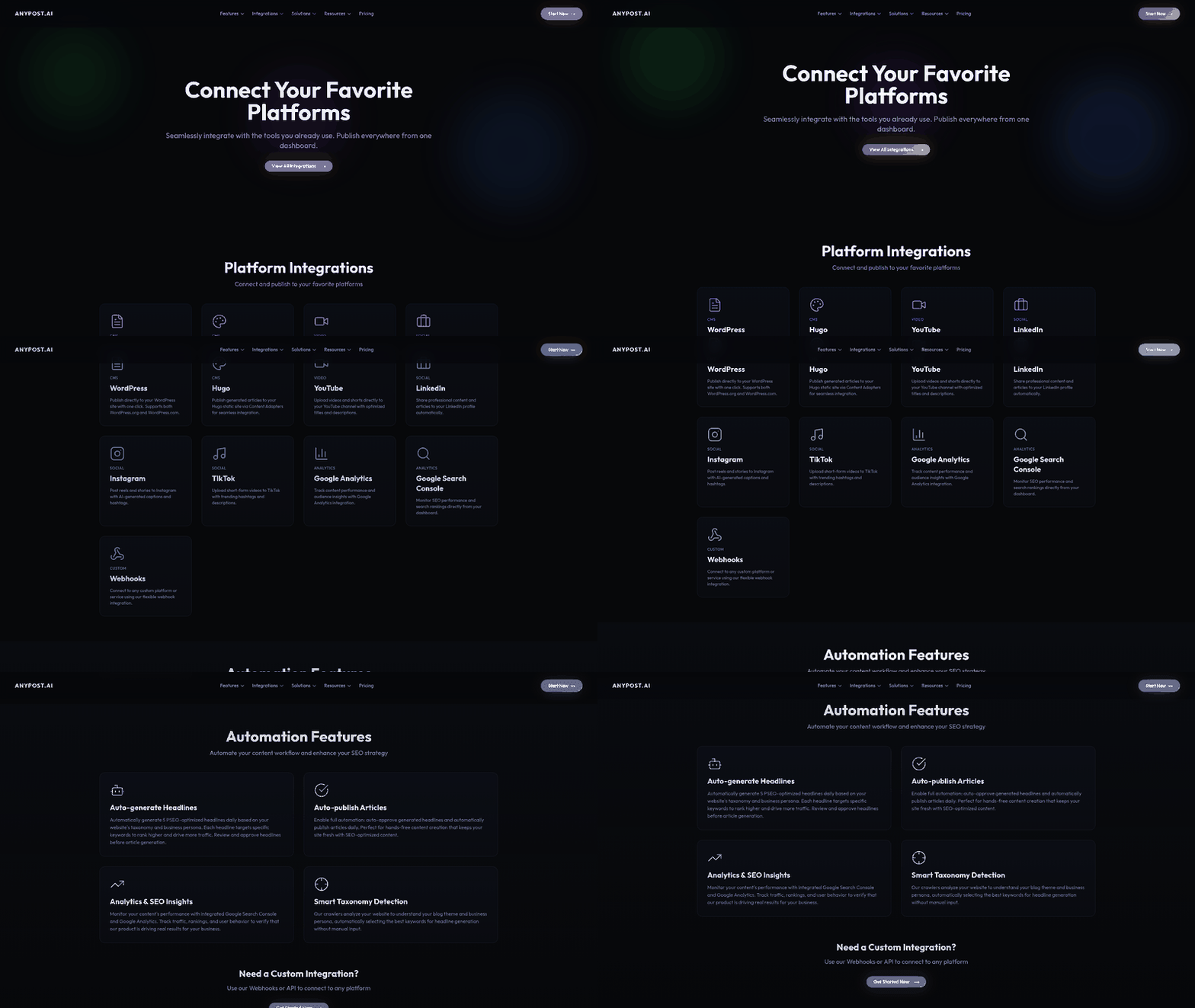
Automating local listings and reviews streamlines repetitive tasks while ensuring accuracy and responsiveness. Start by selecting tools that sync business data across directories like Google My Business, Yelp, and Bing. Platforms like Ranklytics or GMB Crush automatically detect outdated information and apply updates in real time. For example, if your business changes its phone number, these systems propagate the update to all listings, preventing NAP (Name, Address, Phone number) inconsistencies. This synchronization reduces manual effort and minimizes errors that hurt local rankings. See the Implementing Local SEO Automation Strategies section for more details on evaluating and selecting these tools.
Automating Local Listings Updates and Synchronization
Tools such as Ranklytics use AI to identify gaps in directory coverage and submit new listings where needed. A junk removal company operating in over 40 locations, for instance, could use automation to ensure each branch’s details appear consistently on local search platforms. As mentioned in the Quick Summary section, this approach significantly reduces recovery time from disruptions. AI also detects duplicate listings and merges them, improving data cleanliness. AnyPost.ai integrates with these tools by generating optimized content for listings, such as location-specific descriptions and service pages, ensuring SEO alignment. Building on concepts from the Automating Local Content Creation section, this integration enhances both data consistency and content relevance.
AI-Driven Review Management and Response Optimization
Handling reviews at scale requires real-time monitoring and personalized responses. AI tools analyze sentiment in customer feedback, flagging urgent issues like negative reviews that require immediate action. For example, a biohacking clinic using AnyPost.ai’s AI can draft tailored responses to reviews mentioning peptides or wellness programs, maintaining a professional tone while addressing concerns. Automated systems also categorize reviews by themes (e.g., service quality, pricing) to identify trends. A local gym might use this data to adjust class schedules or marketing messaging.
Real-time alerts from AI tools notify businesses when a listing underperforms. These alerts align with strategies outlined in the Tracking and Measuring Local SEO Success section, emphasizing the importance of continuous monitoring. For instance, a sudden drop in Google Maps visibility for a tech startup could signal a technical issue, prompting swift fixes. These systems also automate positive review collection by prompting customers via SMS or email post-purchase, boosting online reputation.
Integrating Review Data into Local SEO Strategies
Review insights directly enhance SEO efforts. Tools extract keywords from customer feedback and embed them into meta descriptions, blog posts, and service pages. A spa chain might repurpose phrases like “best massage for back pain” from reviews into blog titles, improving local search visibility. AnyPost.ai’s AI further optimizes this process by generating content that mirrors the language used by satisfied customers, reinforcing relevance.
Real-world success stories, like the junk removal company mentioned in the Quick Summary section, show measurable results. By automating listings and reviews, the company reduced local ranking recovery time from weeks to days after a service disruption. Similarly, a digital marketing agency used review data to refine its client onboarding process, increasing five-star ratings by 30% within six months.
In practice, automation isn’t just about efficiency—it’s about strategic alignment. By syncing listings, responding intelligently to feedback, and weaving customer insights into SEO, businesses can dominate local search results with minimal manual intervention. The key is choosing tools that adapt to evolving algorithms and customer expectations, ensuring long-term visibility.
Automating Local Content Creation

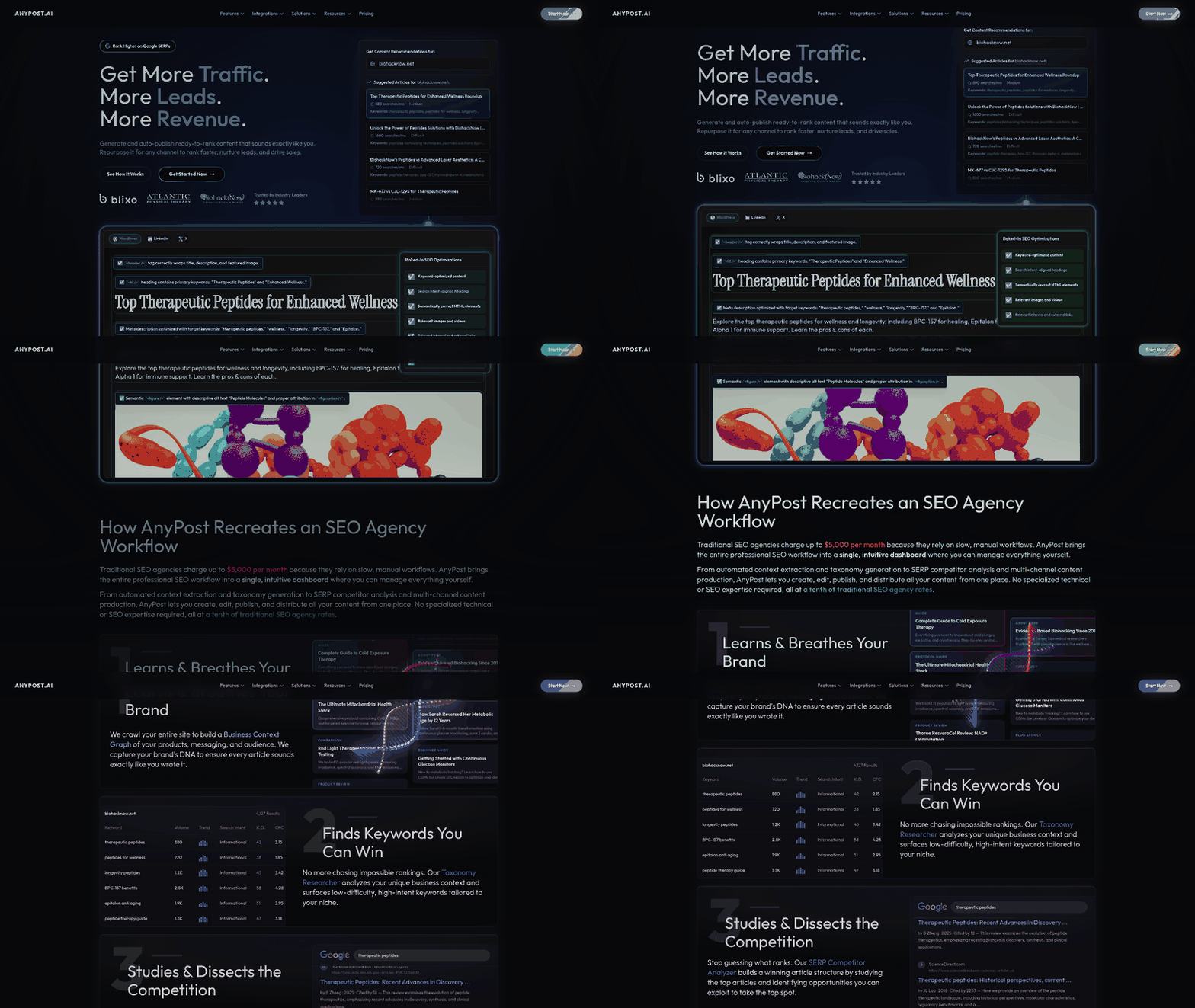
Automating local content creation streamlines the process of generating tailored, SEO-optimized material for specific regions or communities. AI-powered tools like AnyPost.ai eliminate the need for manual research and drafting by analyzing local search trends, competitor content, and audience preferences. These tools use semantic algorithms to produce blog posts, service pages, or social media updates that align with regional keywords while maintaining a brand’s unique voice. As mentioned in the Why Local SEO Automation Matters section, local SEO automation is a strategic necessity for businesses aiming to dominate local search results. For example, a local plumbing company in Boston can generate blog posts like “Top 10 Plumbing Issues in Winter for Boston Homeowners” without manually compiling data each time.
Using AI Tools for Localized Content Generation
AI tools simplify localization by integrating geo-targeted keywords and cultural nuances into content. Platforms like AnyPost.ai allow users to input location-based parameters—such as neighborhood names, local landmarks, or regional dialects—and automatically generate content that resonates with local audiences. For instance, a fitness studio in Austin might use AI to create a post titled “5 Outdoor Workouts to Try in Austin’s Spring Season,” incorporating references to local parks and weather patterns. The system ensures SEO optimization by embedding long-tail keywords like “Austin outdoor fitness” or “best spring workouts in Austin” based on real-time search volume data.
Creating Persona-Based Content for Local Audiences
Effective local SEO hinges on understanding the specific needs of local personas. AI tools use demographic and behavioral data to craft content that speaks directly to these personas. A B2B SaaS company targeting small businesses in Phoenix, for instance, might use persona-based AI to generate case studies like “How Phoenix Retailers Boost Sales with [Product Name].” The tool adjusts tone and depth based on the audience—formal for corporate decision-makers, casual for startup founders. AnyPost.ai’s Persona Engine further refines this by matching the brand’s voice to local communication styles, ensuring consistency across blogs, email campaigns, and social media.
Integrating Multi-Source Data for Content Strategies
Local content thrives on real-world data. AI tools aggregate information from Google My Business reviews, local event calendars, and competitor content to identify gaps and opportunities. As discussed in the Automating Local Listings and Reviews section, synchronizing data across directories ensures accuracy and responsiveness. For example, a spa in Miami could analyze recent reviews mentioning “best stress relief treatments in Miami” and use that insight to create a blog post titled “Miami Spa Guide: 7 Treatments for Stress Relief in 2025.” By pulling from multiple sources—such as local directories, social media mentions, and search trends—AI ensures content remains relevant and competitive. AnyPost.ai automates this process, compiling data into actionable templates for blog outlines, FAQs, or service pages.
Tracking Performance with Real-Time Analytics
Automation isn’t complete without performance tracking. AI platforms like AnyPost.ai include analytics dashboards that monitor metrics like page rankings, traffic sources, and engagement rates. See the Tracking and Measuring Local SEO Success section for more details on metrics such as Google Maps rank and local keyword rankings. For instance, a restaurant in Seattle might track how a blog post titled “5 Local Seafood Dishes to Try in Seattle” impacts Google Maps visibility or website conversions. These tools also flag underperforming content, allowing teams to tweak keywords or adjust posting schedules. Real-time data ensures strategies evolve with local trends—like updating a “Winter Travel Guide for Denver” to reflect sudden snowfall changes in real time.
Businesses like Atlantic Physical Therapy have leveraged these strategies to boost local rankings. By automating 70% of their blog content and integrating real-time analytics, they increased organic traffic by 40% within six months. The key lies in balancing automation with human oversight—using AI to handle repetitive tasks while refining outputs for local relevance. With the right tools, even small teams can maintain a steady flow of high-quality, localized content that drives visibility and customer trust.
Tracking and Measuring Local SEO Success
Tracking and measuring local SEO success starts with identifying the right metrics. Focus on Google Maps rank, local keyword rankings, and website traffic from local search queries. Tools like Local Dominator offer affordable Google Maps rank tracking, while platforms such as AnyPost.ai provide real-time analytics to monitor keyword performance. For example, a fitness studio targeting “yoga classes in Austin” can track how its page ranks compared to competitors and whether traffic spikes after optimizing for nearby neighborhoods. See the Understanding Local Search Mechanics section for more details on how relevance, distance, and prominence influence rankings.
Set Up a Real-Time Monitoring System
Automate data collection to avoid manual checks that drain time. AnyPost.ai’s built-in analytics dashboard lets users track rankings and traffic changes hourly, flagging drops instantly. Pair this with tools like Ranklytics or Local Dominator to audit citations and directory listings. As mentioned in the Implementing Local SEO Automation Strategies section, centralizing data tracking is critical for efficiency. For instance, a restaurant might notice a sudden ranking drop due to outdated contact info on a local directory and fix it before customers lose trust. Real-time alerts ensure you act fast, turning local SEO from a reactive task into a proactive strategy.
Turn Data into Actionable Insights
Raw numbers mean little without context. Use AnyPost.ai’s persona engine to align local SEO with broader marketing goals. Building on concepts from the Automating Local Content Creation section, suppose a law firm’s “divorce attorney in Chicago” page ranks well but drives low conversions. By analyzing traffic sources—say, 60% from Google Maps versus 30% from organic search—the team might shift ad spend to Maps while refining on-page content for conversion-focused keywords like “affordable family lawyer.” Data also reveals which local events or promotions drive the most engagement, letting you double down on successful tactics.
Case Study: BioHackNow’s Local SEO Win
A health tech brand, BioHackNow, used AnyPost.ai to automate content creation for niche peptides like BPC-157 and Thymosin Alpha 1. By tracking local search terms like “therapeutic peptides near me,” they identified underserved regions with high intent. After publishing location-specific guides and optimizing Google Business Profiles, they saw a 40% rise in local traffic and a 25% increase in lead generation within three months. Their real-time dashboard highlighted which blog posts drove the most citations, guiding future content strategies.
For businesses, local SEO isn’t just about visibility—it’s about precision. By linking automated tracking to actionable insights, you transform guesswork into strategy, ensuring every dollar spent on local optimization delivers measurable returns. Tools like AnyPost.ai simplify this process, letting you focus on what matters: growing your audience in the right markets.
Implementing Local SEO Automation Strategies
Implementing local SEO automation requires a structured approach that balances technology, strategy, and ongoing refinement. Start by identifying tools that centralize data tracking, streamline content updates, and provide actionable insights. For example, platforms like Local Dominator and GMB Crush automate Google Maps rank tracking while flagging ranking gaps in real time. Pair these with a content automation system like AnyPost.ai to generate location-specific blog posts, service pages, and social media updates that align with local search intent. See the Automating Local Listings and Reviews section for more details on GMB Crush’s integration capabilities.
Step 1: Build a Centralized Automation Framework
Local SEO automation thrives on integration. Connect your Google Business Profile, directory listings, and CMS (e.g., WordPress or Shopify) to a unified dashboard. Tools like Ranklytics automate citation audits and competitor comparisons, while AnyPost.ai’s multi-source content integration pulls data from reviews, FAQs, and location-specific keywords to generate optimized content. For instance, a chain of fitness studios might use automation to update each location’s “About Us” page with hyperlocal details—neighborhood history, local events, or community partnerships—without manual effort. Building on concepts from the Understanding Local Search Mechanics section, this integration ensures relevance and prominence in local algorithms.
Step 2: Automate Content Creation with Persona-Driven Tone Matching
Manual content creation for multiple locations is time-intensive. AnyPost.ai’s Persona Engine solves this by adapting tone and style to match brand guidelines while injecting local flavor. If a business operates in both a corporate downtown area and a family-focused suburb, the tool adjusts language—formal vs. conversational—while maintaining SEO consistency. For example, a plumbing company could automatically generate service descriptions for each city, using keywords like “emergency pipe repair” for high-traffic areas and “family-friendly plumbing solutions” for residential neighborhoods. For deeper insights into automated content strategies, refer to the Automating Local Content Creation section.
Step 3: Enable Real-Time Monitoring and Alerts
Local rankings fluctuate rapidly due to algorithm updates, competitor activity, or seasonal trends. Use AI-driven tools like Local Dominator’s AI SEO Analysis Tool to detect ranking dips, broken links, or citation errors. Pair this with AnyPost.ai’s real-time analytics tracking to measure how automated content impacts organic traffic. A real-world example: A national pest control brand automated monthly blog updates with localized case studies (e.g., “Termite Prevention in [City]”). By tracking keyword rankings and adjusting content based on performance data, they increased local 3-pack visibility by 40% in six months. As mentioned in the Tracking and Measuring Local SEO Success section, consistent monitoring is critical to validating automation ROI.
Overcoming Common Challenges
Automation isn’t a one-size-fits-all solution. Data fragmentation remains a hurdle—disconnected systems can lead to outdated listings or duplicated content. To fix this, use tools that synchronize data across platforms. For instance, AnyPost.ai integrates with GMB Crush to ensure review responses and service updates are consistent across all locations. Another challenge: Maintaining a human touch. Automated content might feel generic if not tailored. The solution? Use persona-driven tone matching and include local anecdotes or testimonials in automated workflows. See the Why Local SEO Automation Matters section for context on balancing efficiency with personalization.
Integration with Broader Marketing Efforts
Local SEO automation should align with email campaigns, paid ads, and social media. For example, automated blog posts about “Top Local Landmarks” can feed into LinkedIn ads targeting professionals in that area or Instagram Stories highlighting nearby events. AnyPost.ai supports this by repurposing blog content into social media posts, ensuring messaging stays cohesive. A tech B2B client used this strategy to reduce content creation time by 60% while boosting local lead generation by 25%.
Real-World Success: Case Study
A multi-location healthcare provider faced challenges updating 50+ clinic pages with fresh content. By automating content generation with AnyPost.ai, they produced SEO-optimized articles about community health events, staff bios, and service guides. The result? A 35% drop in time spent on content creation and a 22% increase in local search traffic within three months.
By combining automation with strategic oversight, businesses can scale local SEO efforts efficiently. The key is to start small—automate one content type or location first—then expand as workflows prove effective. Regularly revisit tools and workflows to ensure they adapt to new search trends, keeping your local presence competitive.
Frequently Asked Questions
1. What are the most effective tools for automating local SEO tasks?
The most effective tools depend on your business needs. Local Dominator excels for multi-location businesses with Google Maps rank tracking, while GMB Crush is ideal for local service providers needing Google My Business optimization. AnyPost.ai stands out for B2B brands requiring scalable, SEO-optimized content generation. Scan Analyzer offers technical SEO insights like keyword gap detection. Each tool balances time-to-implement and effort, with Ranklytics providing competitor analysis. Choose based on your priority: listing accuracy, content creation, or technical audits.
2. How can automation improve local listing accuracy?
Automation tools like GMB Crush and Local Dominator monitor local listings 24/7, flagging errors such as inconsistent NAP data or outdated business hours. These tools ensure uniformity across directories and Google My Business, reducing manual audits. For example, Local Dominator’s AI analysis identifies discrepancies in seconds, whereas manual checks could take hours. Consistent data improves Google’s trust in your business, boosting local search rankings.
3. What are the fastest ways to automate local SEO for small businesses?
Small businesses can prioritize quick wins like automating Google Business Profile setup (1–2 hours) and review collection (30 minutes). Tools like GMB Crush simplify review management, while AnyPost.ai generates localized content quickly. For budget-friendly solutions, Scan Analyzer identifies underperforming keywords efficiently. These low-effort tasks save time while maintaining visibility in local search results.
4. How does automated content creation benefit local SEO?
Automated content tools like AnyPost.ai streamline the creation of SEO-optimized, persona-matched content tailored to local audiences. This is especially useful for B2B brands needing consistent blog posts, landing pages, or social media updates. The tool’s real-time analytics ensure keywords align with local search intent, reducing the time spent on manual research. However, technical tools like Scan Analyzer are better for on-page SEO improvements like keyword gaps.
5. Can automation handle competitor analysis for local SEO?
Yes, tools like Ranklytics and Scan Analyzer automate competitor gap analysis, identifying opportunities such as untapped keywords or listing inconsistencies. Ranklytics provides detailed audits of competitors’ local citations, while Scan Analyzer highlights ranking deserts. These insights help businesses refine their strategies without manually tracking competitors’ every move. For a more holistic view, pair these tools with Google Maps rank tracking from Local Dominator.
6. Which tool is best for businesses with multiple locations?
Local Dominator is the top choice for multi-location businesses due to its Google Maps rank tracking and AI-driven analysis across locations. It streamlines monitoring and optimizing dozens of profiles simultaneously. For localized content generation across regions, AnyPost.ai offers scalable solutions with persona-matched tone adjustments. Both tools reduce the complexity of managing multiple locations compared to manual efforts.
7. How does automation compare to manual local SEO in terms of time savings?
Automation saves significant time by eliminating repetitive tasks. For example, Scan Analyzer identifies ranking deserts in minutes, whereas manual analysis might take days. Automated review collection tools like GMB Crush cut response times to minutes, and Local Dominator reduces listing audits from hours to seconds. While manual methods offer granular control, automation ensures faster, consistent execution—critical for maintaining local SEO visibility.