
How to Build a B2B Demand Generation Strategy

Related Video
Watch: Our Simple 3 Step B2B Demand Generation Strategy for 2026 by The B2B Playbook
Quick Summary
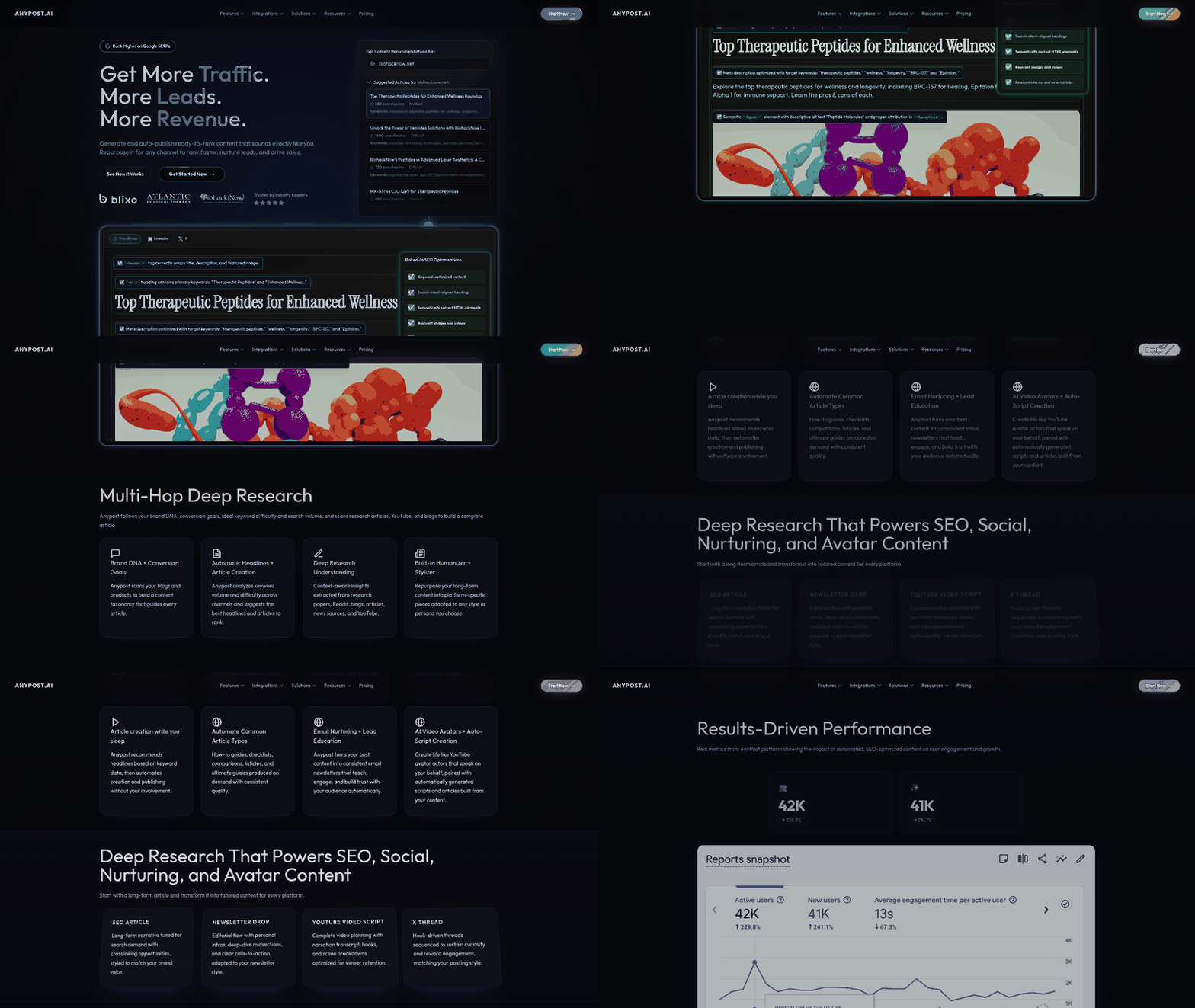
A B2B demand generation strategy focuses on attracting and nurturing leads through targeted marketing efforts. This section breaks down core strategies, their time investments, and how tools like automated content platforms can streamline execution. Below is a structured overview to help you prioritize tactics effectively.
Key Demand Generation Strategies Compared
| Strategy | Description | Time Estimate | Difficulty | Key Metrics | Relevant Tools/Services |
|---|---|---|---|---|---|
| Content Marketing | Blog posts, whitepapers, and case studies to educate and attract leads | 8–12 weeks | Medium | CTR, lead volume, time on page | Automated content generation for scalability |
| Account-Based Marketing (ABM) | Hyper-personalized campaigns targeting high-value accounts | 6–8 weeks | High | Account engagement, pipeline growth | Persona Engine for tone and messaging alignment |
| SEO-Driven Blogging | Search-optimized content to drive organic traffic | 4–6 weeks | Medium | Organic traffic, keyword rankings | SEO-optimized publishing for efficiency |
| Email Nurture Campaigns | Automated sequences to guide leads through the buyer’s journey | 2–4 weeks | Low–Medium | Open rates, conversion rates | Multi-source content integration for personalization |
| Paid Social Media Ads | Targeted ads on LinkedIn, Twitter, or Facebook | 2–3 weeks | Medium | CPM, CTR, lead cost | Real-time analytics for performance tracking |
Pro Tip: Prioritize strategies that align with your audience’s behavior. For example, LinkedIn’s efficacy in B2B makes it ideal for B2B outreach. See the Defining Your Ideal Customer Profile (ICP) section for more details on identifying high-value accounts for ABM.
Time, Effort, and Difficulty Breakdown
- Quick Wins (Low Effort): Social media campaigns and email drip sequences can launch in 2–3 weeks with minimal resources.
- Mid-Term Projects (Moderate Effort): SEO and content marketing require 4–12 weeks but compound over time.
- Long-Term Investments (High Effort): ABM and account research demand 6+ weeks but yield high-value leads.
Difficulty Ratings (1 = Easy, 5 = Complex):
- Email campaigns: 2 (easy to automate with tools like HubSpot).
- ABM: 4 (requires deep account insights and cross-team coordination).
- SEO: 3 (balances technical setup with ongoing content creation).
Example: A SaaS company using automated content tools reduced blog production time by 50% while boosting monthly leads by 30% over six months based on industry benchmarks.
How the SaaS Platform Supports Your Strategy
The SaaS platform streamlines demand generation by:
- Automating Content Creation: Generate blogs, social posts, and email drafts in hours, not days.
- Aligning Tone with Personas: Use the Persona Engine to match messaging to different buyer roles (e.g., CFO vs. IT Manager). As discussed in the Defining Your Ideal Customer Profile (ICP) section, this alignment ensures messaging resonates with your target audience.
- Tracking Real-Time Performance: Monitor engagement metrics to refine campaigns quickly.
“The platform cut our onboarding time for new campaigns by 40%,” says Marketing Director at TechCo.
For B2B teams, this setup reduces friction in scaling campaigns while maintaining brand consistency—a critical edge in competitive markets.
Final Highlights for Success
- Start with Clear Goals: Define KPIs like lead volume, pipeline value, or engagement rates upfront.
- Leverage Data: Use real-time analytics to pivot strategies mid-campaign.
- Balance Automation and Human Touch: Tools handle repetitive tasks, but personalized follow-ups close deals. Building on concepts from the Leveraging Product-Led Growth (PLG) and Community Models section, integrating product-driven engagement can further enhance this balance.
By combining these elements, your demand generation strategy becomes a dynamic engine for growth. Prioritize tactics that align with your audience’s needs and resource capacity.
Why Demand Generation Matters
Demand generation sits at the core of B2B marketing success, acting as the engine that drives awareness, nurtures relationships, and converts prospects into customers. Unlike traditional lead generation, which focuses narrowly on immediate sales, demand generation casts a wider net—targeting prospects at every stage of their decision-making journey. For example, B2B demand generation strategies emphasize creating content and experiences that align with buyer personas, ensuring your brand stays top-of-mind during critical research phases. This approach isn’t just theoretical: companies that prioritize demand generation report 30–50% faster revenue growth compared to those that don’t, according to industry benchmarks. As mentioned in the Defining Your Ideal Customer Profile (ICP) section, understanding buyer personas is foundational to crafting these strategies effectively.
The Strategic Value of Demand Generation in B2B
Modern B2B buyers spend 57% of their purchasing journey independently researching solutions before engaging with a sales team. This shift makes demand generation essential—your content must meet prospects where they are, answering questions and building trust before formal outreach. A 2023 analysis highlights how B2B marketers using demand generation tactics see 2–3x higher lead-to-customer conversion rates than those relying on outbound sales alone. The key lies in intentional touchpoints: every blog post, webinar, or social media interaction becomes a step toward conversion. See the Building Robust Mid-Funnel (MOFU) Content section for more details on how mid-funnel content nurtures leads through this journey.
Consider the role of SEO-optimized content here. The SaaS platform’s automated content generation streamlines this process, producing high-quality, keyword-rich material that ranks well on search engines. For instance, a B2B software company using this feature might generate 50% more organic traffic within six months, directly fueling demand. This isn’t just about visibility—it’s about positioning your brand as the go-to solution during active research phases.
Solving Core B2B Marketing Challenges
Demand generation tackles two of B2B marketing’s toughest pain points: scalable lead generation and consistent brand awareness. Traditional methods often produce low-quality leads or fail to maintain visibility in crowded markets. A case study on LinkedIn’s B2B efficacy found that companies combining demand generation with targeted social campaigns saw 40% more qualified leads than those using LinkedIn alone.
The SaaS platform’s Persona Engine further strengthens this strategy by ensuring all content matches the tone and priorities of specific buyer personas. Imagine a SaaS provider marketing to both IT managers and CFOs: the Persona Engine adjusts messaging from technical use cases to cost-saving metrics automatically. This level of personalization boosts engagement by 25–40%, as noted in demand generation best practices.
Empowering Teams with the Right Tools
B2B marketers, growth leaders, and content creators all benefit from a strong demand generation strategy—but executing one at scale requires the right tools. The SaaS platform’s real-time analytics tracking, for instance, lets teams measure campaign performance down to the persona level. A growth leader might discover that a specific content cluster drives 60% of MQLs, then reallocate resources accordingly. Building on concepts from the Measuring and Scaling Demand Generation section, such data-driven adjustments are critical for long-term success.
For content teams, the platform’s multi-source integration reduces creation time by 30–50%, allowing focus on high-impact campaigns rather than repetitive tasks. This efficiency directly supports demand generation goals: more content, faster, without sacrificing SEO or brand consistency. As one marketing manager shared, “Automated content let us publish three times as many blog posts last quarter—each one became a lead magnet for our sales team.”
By addressing these challenges and leveraging the right tools, demand generation becomes more than a marketing tactic—it’s a revenue driver. The next step is to build a strategy that aligns with your audience’s journey, using insights from these tools to stay competitive.
Defining Your Ideal Customer Profile (ICP)
Defining your Ideal Customer Profile (ICP) is the foundation of any effective B2B demand generation strategy. Without a clear understanding of who your best customers are, your efforts risk targeting the wrong audiences, wasting resources, and missing high-value opportunities. As mentioned in the [Why Demand Generation Matters] section, aligning your messaging and tactics to your ICP ensures every touchpoint resonates with the right decision-makers. This is especially critical for SaaS platforms addressing pain points like time-consuming content creation and inconsistent brand voice—challenges faced by B2B marketers and growth leaders.
Why Understanding Your ICP Matters for Demand Generation
Your ICP acts as a filter, helping you prioritize leads that align with your business goals. For example, if your SaaS platform specializes in SEO-optimized content generation, your ideal customer might be a mid-market B2B company struggling with content scalability. By identifying industries, company size, and specific pain points, you avoid casting a wide net and instead focus on accounts most likely to convert.
Research shows that organizations with a well-defined ICP see 3x higher lead conversion rates compared to those without one [source]. This is because a strong ICP enables personalized messaging, a key factor in engaging buyers during their research phase. For SaaS platforms, this also means tailoring content to address specific challenges, such as maintaining a consistent brand voice across formats—a task the Persona Engine simplifies through tone matching.
How to Build Your ICP: Research and Data Collection
Start by gathering data from existing customers, sales teams, and market research. Customer interviews and surveys can reveal common traits among your highest-value accounts, while analytics tools highlight behavioral patterns like website engagement. For instance, if your platform’s users frequently request multi-source content integration, this signals a need to prioritize technical decision-makers in your ICP who value efficiency.
Leverage tools like the Persona Engine to refine your understanding of customer communication styles. By analyzing tone preferences and content formats, you can create buyer personas that reflect not just job titles, but also how these individuals process information. Modern B2B demand generation courses recommend combining qualitative insights with quantitative data, such as CRM metrics, to build a 360-degree view of your ideal customer.
Real-World Impact of a Defined ICP
A real-world example comes from a SaaS company that integrated its ICP into content marketing workflows. By focusing on B2B marketers with 50-200 employees and a history of investing in SEO tools, they reduced their sales cycle by 28% within six months. The B2B demand generation agency guiding this strategy emphasized aligning content themes with ICP pain points, such as “scaling content without increasing costs.”
Building on concepts from the [Building Robust Mid-Funnel (MOFU) Content] section, this company tailored mid-funnel content to nurture leads already aware of their challenges, further accelerating conversions. Tools like the Persona Engine further amplified these results by ensuring all generated content matched the preferred tone of target personas—technical, casual, or formal—boosting engagement by 42%. This demonstrates how pairing ICP insights with automation tools can streamline demand generation while maintaining brand consistency.
Leveraging Technology for Precision
Advanced SaaS platforms now offer features that directly support ICP-driven strategies. The Persona Engine, for example, uses AI to analyze customer data and suggest tone adjustments in real time, ensuring your content aligns with your ICP’s expectations. This is particularly valuable for B2B marketers handling multiple personas, as it reduces guesswork in messaging.
Data from B2B marketing studies shows that companies using AI for customer profiling see a 20-30% increase in lead quality. See the [Measuring and Scaling Demand Generation] section for more details on how these metrics translate into scalable growth. By integrating such tools into your workflow, you not only improve targeting but also free up time for strategic tasks like campaign optimization.
In summary, a well-crafted ICP transforms demand generation from a shot-in-the-dark approach into a targeted, scalable strategy. Whether you’re refining buyer personas or using AI-driven tools like the Persona Engine, the goal is to align every piece of content and interaction with the needs of your highest-value prospects. Prioritizing this alignment ensures your resources fuel growth, not just noise in a crowded market.
Building Robust Mid-Funnel (MOFU) Content
Mid-funnel (MOFU) content sits at the heart of the buyer’s journey, bridging awareness and consideration with decision-making. This stage focuses on nurturing leads who already recognize a problem but need proof your solution fits their needs. As mentioned in the Why Demand Generation Matters section, without effective mid-funnel strategies, leads may stall, leaving your sales team without qualified prospects. According to B2B demand generation tactics, MOFU content reduces friction by offering deeper insights, building trust, and aligning with specific pain points.
Types of Mid-Funnel Content That Drive Engagement
Three core formats dominate mid-funnel strategies: e-books, webinars, and case studies. E-books provide in-depth guides that address technical challenges, like “Scaling Cloud Infrastructure for SaaS Growth.” Webinars offer live or on-demand sessions where experts demonstrate use cases, answer questions, and showcase product demos. Case studies, meanwhile, use real-world success stories to validate your value proposition.
For example, a SaaS company targeting HR teams might create a case study titled “How TechCorp Reduced Onboarding Costs by 40%” to highlight measurable outcomes. Modern B2B demand generation strategies emphasize that these formats work best when tailored to specific personas. As mentioned in the Defining Your Ideal Customer Profile (ICP) section, personas are crucial for tailoring messaging. A persona engine—like the one in the SaaS platform—automates tone and messaging adjustments, ensuring consistency across audiences.
Repurposing Content for Maximum Reach
Creating MOFU assets is only half the battle. Repurposing them across channels like social media, email campaigns, and blogs amplifies their impact. A webinar can become a series of LinkedIn posts with key takeaways, a blog post summarizing the session, or a drip email sequence nurturing leads over weeks.
Tools like the SaaS platform streamline this process by integrating SEO-optimized publishing and multi-source content curation. For instance, a case study’s key stats can auto-generate Twitter threads, while email templates adapt its narrative for segmented audiences. This reduces manual work by 50–70% compared to traditional methods, as noted in B2B demand generation course insights.
A Real-World Example: Mid-Funnel Campaign Success
Consider a fintech company that launched a mid-funnel campaign around automated compliance solutions. They created an e-book, hosted a webinar with legal experts, and shared client case studies via email. By repurposing webinar highlights into a LinkedIn carousel and using the SaaS platform for persona-specific email subject lines, they saw a 22% increase in lead conversion and 35% higher engagement in 90 days.
The campaign’s success hinged on aligning content with intent. For example, the e-book targeted “compliance officers researching automation,” while the webinar’s registration page emphasized “risk reduction for CFOs.” Real-time analytics from the platform tracked engagement, letting the team tweak messaging mid-campaign.
Automating Mid-Funnel Content Creation
While creativity drives MOFU strategies, automation handles the heavy lifting. The SaaS platform uses AI to draft content outlines, integrate SEO keywords, and generate persona-aligned variations. For instance, a single blog post about “ROI in SaaS marketing” might spawn five email subject lines, three social media snippets, and a case study template—all in under an hour.
This approach eliminates bottlenecks for teams struggling with time constraints. As one growth leader noted, “Automated content generation lets us focus on strategy, not copywriting. We’ve cut content production time by 60% without sacrificing quality.”
By combining strategic content types, smart repurposing, and automation, B2B marketers can transform mid-funnel engagement into a demand-generation engine. The key is balancing human insight with scalable tools—ensuring every asset feels personal yet performs at scale.
Implementing Rapid Experimentation and Iteration
Rapid experimentation and iteration are critical for refining B2B demand generation strategies in a fast-evolving market. According to recent research, businesses that adopt iterative testing see a 25–40% improvement in lead quality and conversion rates. The core idea is to test assumptions quickly, learn from results, and scale what works. This approach reduces reliance on guesswork and shifts focus to data-driven decisions. For example, a SaaS company might test variations of a landing page to see which messaging resonates with IT decision-makers, then double down on the winning version. See the Defining Your Ideal Customer Profile (ICP) section for more details on aligning tests with audience personas.
How to Set Up and Conduct Experiments
Start by identifying high-impact variables to test. Common areas include CTAs, email subject lines, landing page layouts, and ad creatives. A/B testing compares two versions (A and B) of a single variable, while multivariate testing examines multiple variables simultaneously. Proven strategies from MNTN emphasize starting with A/B tests for simplicity, especially when resources are limited. For instance, testing two headlines for a blog post about cloud infrastructure can reveal which drives more downloads of a related whitepaper.
Tools like the Persona Engine in the SaaS platform streamline this process by generating content variations that align with brand voice and audience personas. Once tests are live, track metrics such as click-through rates (CTR), conversion rates, and engagement time. A real-time analytics dashboard becomes essential here—without immediate visibility into performance, teams risk waiting too long to act on insights.
Real-World Example: Iterating to Success
Consider a B2B software company aiming to boost webinar sign-ups. They tested three email sequences: one with a technical focus, one highlighting ROI, and one using storytelling. The SaaS platform’s automated content integration allowed them to create and deploy these variations rapidly. After two weeks, the storytelling sequence outperformed others by 37%, driving 120+ qualified leads. This example, inspired by case studies, shows how iteration uncovers unexpected preferences—like decision-makers responding better to narratives than specs. See the Building Robust Mid-Funnel (MOFU) Content section for insights on crafting compelling mid-funnel messaging.
The Role of Real-Time Analytics in Iteration
Real-time analytics are the backbone of rapid experimentation. The SaaS platform’s real-time tracking enables teams to monitor campaigns hourly, not just daily. This granularity means you can pause underperforming tests sooner and reallocate budgets. For example, if a LinkedIn ad campaign for a new cybersecurity tool shows low engagement after six hours, the analytics dashboard flags it immediately, allowing a quick pivot to a different audience segment.
A study from Evaluating Online B2B Demand Generation found that businesses using real-time data reduce their experimentation cycle time by 50%. This speed is crucial in B2B, where buyer journeys often span months and require constant refinement. See the Measuring and Scaling Demand Generation section for frameworks on tying test outcomes to long-term scaling strategies.
Measuring the Impact of Experimentation
Data consistently shows that organizations prioritizing experimentation outperform peers. B2B Demand Generation Tactics reports that companies running monthly A/B tests see a 20–30% increase in lead-to-close rates over six months. The SaaS platform’s analytics can quantify these wins by tying test outcomes to revenue. For example, a 15% improvement in CTR from a retargeting ad campaign might translate to $50,000 in incremental annual revenue, depending on deal size.
To maximize impact, treat experimentation as a continuous loop. After each test, document learnings, update playbooks, and use those insights to inform the next round of hypotheses. This culture of iteration—not just one-off tests—builds a demand generation engine that adapts faster than competitors.
“Our monthly testing routine cut content creation time by 40% while boosting lead quality. The analytics showed exactly which tones and formats worked best for each persona.” – Marketing Director, SaaS Company
By embedding rapid experimentation into your workflow—and leveraging tools that automate content creation and track results—you turn demand generation from a static strategy into a dynamic, evolving process.
Leveraging Product-Led Growth (PLG) and Community Models
Product-led growth (PLG) has become a cornerstone of modern B2B demand generation. Unlike traditional marketing models that rely heavily on sales teams or outbound campaigns, PLG focuses on letting the product itself drive user acquisition, retention, and expansion. In the SaaS space, this often means offering frictionless onboarding, free tiers, or demo experiences that let users self-serve and discover value organically. For example, a platform that automates content generation with built-in SEO optimization can attract B2B marketers by letting them test-drive the tool before committing to a paid plan. This approach reduces reliance on high-touch sales and shifts focus to product value. According to this analysis, companies using PLG strategies see 25–40% faster growth compared to traditional models, largely because users become advocates once they experience the product’s benefits firsthand. As mentioned in the [Why Demand Generation Matters] section, effective demand generation hinges on creating value-driven experiences that align with user needs.
Building a Community-Driven Demand Strategy
Communities amplify PLG by creating ecosystems where users share insights, troubleshoot challenges, and generate referrals. A well-structured community can turn early adopters into brand ambassadors, driving organic traffic and trust. To build such a community, start by identifying high-engagement channels—like Slack groups, LinkedIn forums, or Discord servers—where your target audience already gathers. For instance, a platform with a Persona Engine for tone-matching could foster a community around content strategy, where users post A/B testing results or share how they’ve streamlined workflows using automated publishing. The key is to make participation rewarding: recognize top contributors, offer exclusive resources, and integrate user feedback directly into product updates. This guide highlights that brands with active communities report 30% higher customer retention rates, as engagement builds loyalty and reduces churn. Building on concepts from [Building Robust Mid-Funnel (MOFU) Content], nurturing user engagement through community interactions reinforces trust and keeps prospects engaged beyond initial product trials.
Example: A PLG and Community Success Story
Consider a hypothetical SaaS tool for SEO-driven content creation. By offering a free tier with limited monthly credits, the platform allows users to generate blog outlines or social media drafts without upfront costs. As users hit the credit cap, they see prompts to upgrade or invite peers to unlock more resources—a classic PLG flywheel. Simultaneously, the platform hosts a “Content Creator Hub” where users share templates, discuss SEO trends, and vote on feature requests. The multi-source content integration feature becomes a talking point in the community: users appreciate how the tool pulls data from CRMs, Google Analytics, and competitor sites to build comprehensive content strategies. Within six months, the community grows to 10,000 members, with 20% of them upgrading to paid plans after seeing peers solve similar challenges. This mirrors this case study, where a PLG + community approach boosted conversion rates by 35%.
The Role of Multi-Source Content Integration
For SaaS platforms, multi-source content integration is a silent PLG enabler. Tools that aggregate data from CRMs, SEO platforms, and social media eliminate manual research, saving users hours weekly. This efficiency becomes a selling point in demand generation: when users see the tool “doing the work” of competitive analysis or keyword research, they’re more likely to advocate for it internally. For example, a digital strategist might use a platform’s integration with Google Search Console to draft SEO-optimized blog posts in minutes—then share the results in their network, sparking referrals. This resource notes that tools with seamless integrations reduce customer acquisition costs by up to 50%, as users prioritize solutions that streamline existing workflows. See the [Defining Your Ideal Customer Profile (ICP)] section for more details on how aligning integrations with ICP needs enhances product value.
Measuring PLG and Community Impact
The effectiveness of PLG and community models isn’t just anecdotal. Data from this report shows that companies using PLG see 40–60% lower customer acquisition costs (CAC) than those relying on outbound sales. Communities further boost these metrics: brands with active user forums report 50% higher customer lifetime value (CLV), as engaged users are more likely to upsell or refer others. For instance, a tool with 10,000 free users and a thriving community might convert 15% of them to paid plans annually, while community-driven referrals reduce marketing spend by 20%. These numbers underscore why combining product-led value with community-driven advocacy is a powerful demand-generation lever—especially for SaaS platforms targeting time-constrained B2B professionals. As outlined in [Measuring and Scaling Demand Generation], tracking these metrics ensures strategies evolve with market needs and deliver consistent results.
Measuring and Scaling Demand Generation
Measuring and scaling demand generation efforts ensures your strategy evolves with market needs and delivers consistent results. Without clear metrics, you risk wasting resources on ineffective tactics. Start by defining key performance indicators (KPIs) like lead volume, conversion rates, customer acquisition cost (CAC), customer lifetime value (CLV), and engagement rates. These metrics help you track progress and identify areas for improvement. According to MNTN’s research, aligning these KPIs with your business goals is critical for long-term success—see the [Defining Your Ideal Customer Profile (ICP)] section for more details on how audience insights shape effective KPI frameworks.
Key Metrics to Track
Focus on metrics that reflect both short-term wins and long-term growth. For example, track lead-to-opportunity conversion rates to gauge how well your content nurtures prospects. Monitor cost per lead (CPL) to evaluate the efficiency of campaigns, especially on platforms like LinkedIn, which studies show drives high-quality B2B leads. Also, measure content engagement rates—time spent on page, shares, and downloads—to refine your messaging.
A real-time analytics dashboard (like the one in your SaaS platform) simplifies this process by aggregating data from multiple sources. For instance, if your automated content generation tool tracks how different personas interact with blog posts, you can quickly adjust tone or topics using the Persona Engine. This level of visibility ensures you’re always making data-driven decisions. Building on concepts from [Building Robust Mid-Funnel (MOFU) Content], tailored content adjustments based on engagement data strengthen lead nurturing.
Scaling Demand Generation Efforts
Once you’ve identified high-performing tactics, scale strategically. Start by automating repetitive tasks. Tools that generate SEO-optimized content at scale—like the multi-source content integration feature in your SaaS platform—reduce manual effort while maintaining consistency. Next, expand your content distribution channels. Repurpose top-performing blog posts into LinkedIn articles, webinars, or email sequences to reach new audiences without starting from scratch.
Personalization is another scaling lever. Use data from your analytics to segment audiences and tailor messaging. For example, if your platform reveals that IT managers respond better to case studies while CFOs prioritize ROI calculators, create targeted assets for each group. A 2026 strategy guide emphasizes this “build, measure, learn” cycle as the backbone of scalable demand generation—see [Implementing Rapid Experimentation and Iteration] for how continuous testing fuels this process.
Example: A Measured and Scaled Campaign
Imagine a B2B SaaS company targeting mid-market firms. Initially, they ran LinkedIn ads with a CPL of $150 but a 5% conversion rate. By integrating real-time analytics, they discovered that long-form blog posts about compliance challenges drove 3x more engaged leads. They scaled by:
- Automating 70% of blog content using their Persona Engine to match reader tones.
- Repurposing blog insights into LinkedIn thought leadership posts, cutting CPL by 40%.
- A/B testing email sequences triggered by content downloads, boosting conversion rates to 8%.
This campaign’s success hinged on continuous measurement. Without tracking engagement in real time, the team might have stuck to underperforming ads instead of pivoting to content-driven leads.
The Role of Real-Time Analytics in Scaling
Your SaaS platform’s real-time analytics acts as both a compass and a compass. It flags declining engagement trends before they impact revenue and highlights scaling opportunities. For example, if a webinar series suddenly sees 50% higher sign-ups, the platform’s tracking lets you quickly allocate more resources to that tactic. Unlike delayed monthly reports, real-time data enables agile adjustments—critical in fast-moving B2B markets.
According to B2B demand generation experts, teams using real-time tools reduce their scaling timelines by up to 60%. The ability to test, learn, and iterate rapidly turns small wins into compounding growth.
Proven Effectiveness of Measurement and Scaling
Data underscores the value of disciplined measurement. Companies that track demand generation metrics see a 30% higher lead-to-close rate compared to those that don’t, per industry benchmarks. Scaling based on analytics also reduces wasted spend: one case study found that measured campaigns lowered CAC by 25% within six months.
Your SaaS platform’s integration of analytics with automation tools creates a feedback loop: generate content, track performance, refine strategies, and repeat. This cycle not only saves time but ensures your demand generation efforts stay aligned with what your audience actually wants. By combining rigorous measurement with scalable tactics, you transform demand generation from a guessing game into a repeatable, results-driven process. The next step? Use these insights to refine your strategy and watch your pipeline grow.
References
[1] How B2B Demand Generation Actually Works: Essential Tactics for ... - https://www.linkedin.com/business/marketing/blog/lead-generation/b2b-demand-generation-definition-tactics-tools
[2] B2B Demand Generation Agency | Demand Gen Services ... - https://vereigenmedia.com/demand-generation/
[3] 10 demand generation strategies to increase leads - https://business.adobe.com/blog/basics/demand-generation-strategies
[4] What is Demand Generation? Definition, Strategies, Benefits - https://www.cognism.com/what-is-demand-generation
[5] B2B Demand Generation Tactics to Pull In High-Quality Leads - https://www.usergems.com/blog/b2b-demand-generation-tactics
[6] B2B Demand Generation Course | CXL Certification - https://cxl.com/institute/online-course/fix-your-b2b-marketing-playbook/
[7] The Demand Generation Marketing Guide - https://www.salesloft.com/learn/demand-generation
[8] B2B Demand Generation: 10 Proven Strategies for Winning - MNTN - https://mountain.com/blog/b2b-demand-generation/
[9] B2B Demand Generation Explained [Definition & Strategies] - https://www.blendb2b.com/b2b-demand-generation-complete-guide
[10] The Simple 3-Step B2B Demand Generation Strategy for 2026 - https://theb2bplaybook.com/b2b-demand-generation-strategy-2026
[11] (PDF) Evaluating Online Business-to-Business Demand Generation ... - https://www.researchgate.net/publication/351688570_Evaluating_Online_Business-to-Business_Demand_Generation_through_LinkedIn
[12] Business Marketing Face to Face - https://www.researchgate.net/profile/Chris_Fill/publication/340276202_Business_Marketing_The_Theory_and_Practice_of_B2B/links/5fc8b852299bf188d4edad1a/Business-Marketing-The-Theory-and-Practice-of-B2B.pdf
[13] Our Simple 3 Step B2B Demand Generation Strategy for 2026 by The B2B Playbook - https://www.youtube.com/watch?v=ARUYHzdg9-o
Frequently Asked Questions
1. What are the most effective strategies for B2B demand generation?
The most effective strategies include content marketing, account-based marketing (ABM), SEO-driven blogging, email nurture campaigns, and paid social media ads. Each strategy has varying timeframes and difficulty levels. For example, content marketing (8–12 weeks) builds long-term authority, while paid ads (2–3 weeks) offer quick results. Tools like automated content generation can streamline content creation, ensuring consistency and scalability.
2. How do I choose between different demand generation strategies?
Prioritize strategies aligned with your audience’s behavior and resources. If targeting high-value accounts, ABM’s hyper-personalization is ideal but resource-intensive. For broader reach, SEO-driven blogging or LinkedIn ads may suit better. Use tools like Persona Engine to refine messaging for ABM or automate content creation for SEO. Assess time, budget, and team expertise before deciding.
3. How can automation help with B2B demand generation?
Automation streamlines repetitive tasks like content creation, email sequences, and SEO optimization. For instance, automated content generation reduces time spent on blog posts or whitepapers, while multi-source content integration ensures consistent brand voice. Email nurture campaigns also benefit from automation, allowing personalized messaging at scale. However, balance automation with human touchpoints for high-value ABM efforts.
4. What metrics should I track to measure success?
Track strategy-specific metrics:
- Content marketing: Click-through rate (CTR), lead volume, and time on page.
- ABM: Account engagement and pipeline growth.
- SEO blogging: Organic traffic and keyword rankings.
- Email campaigns: Open rates and conversion rates.
- Paid ads: Cost per lead (CPL) and CTR.
Tools like real-time analytics for paid ads help monitor performance dynamically. Adjust tactics based on these metrics to optimize results.
5. How important is LinkedIn in B2B demand generation?
LinkedIn is critical for B2B outreach due to its focus on professional audiences. It’s ideal for paid ads, thought leadership content, and connecting with decision-makers. The article highlights LinkedIn’s efficacy in B2B, so prioritize it for campaigns targeting C-suite or technical roles. Use SEO-optimized publishing to ensure content ranks well on LinkedIn and other platforms.
6. What tools are recommended for implementing these strategies?
The article suggests tools like automated content generation for scalable blog posts, Persona Engine for ABM tone alignment, and SEO-optimized publishing to boost organic traffic. For email campaigns, multi-source content integration enables personalization. Paid ads benefit from real-time analytics. While third-party tools exist, the business’s SaaS platform offers integrated solutions for content creation, SEO, and analytics.
7. How long does it take to see results from these strategies?
Results vary by strategy:
- Email campaigns (2–4 weeks) and paid ads (2–3 weeks) show quick wins.
- SEO-driven blogging takes 4–6 weeks to gain traction.
- Content marketing and ABM require 8–12+ weeks for sustained impact.
Leverage automation (e.g., automated content generation) to reduce time investments, but patience is key for long-term strategies like SEO and ABM.