
How to Build a Multimodal Content Strategy That Wins in AI Search

Key Takeaways
- Measure performance to stay competitive in AI-driven search by tracking citation rates, engagement, and AI comprehension scores.
- Define measurable goals like increased citations or higher conversion rates to align multimodal content with business objectives.
- Optimize visual content for AI comprehension to boost citation rates in multimodal search results.
- Use AI-powered tools to monitor and adjust multimodal content strategy based on real-time performance data.
- Track engagement metrics like time on page and bounce rate to gauge human audience interest alongside AI performance.
- Avoid investing in content that fails to engage AI systems by prioritizing measurable outcomes over guesswork.
- Integrate diverse content types and measure their performance to ensure cohesive strategy execution.
Related Video
Watch: How to Make Your Brand Visible in AI Search by Digital Blacksmiths
Measuring Performance and ROI
Measuring the performance and ROI of your multimodal content strategy ensures your content aligns with AI search algorithms and delivers tangible business outcomes. Without clear tracking, you risk investing in content that fails to engage AI systems or human audiences. Start by defining measurable goals-like increased citations, higher engagement, or improved conversion rates-and use AI-powered tools to monitor progress. As mentioned in the Understanding Multimodal Content section, effective strategies integrate diverse content types, and measuring their performance ensures these elements work cohesively.
Why Measuring Multimodal Content Performance Matters
Effective measurement guarantees your content remains competitive in AI-driven search. For example, visual content optimized for AI comprehension increases citation chances in multimodal search results . If your content lacks this optimization, it may be overlooked by AI systems, reducing visibility. Tracking performance also reveals how well your strategy meets business objectives, like boosting conversions or driving traffic.
Key metrics include citation rate, engagement metrics, and AI comprehension scores. A high citation rate means your content is frequently referenced by AI systems, while engagement metrics (time on page, bounce rate) show human audience interest. AI comprehension scores, available through tools like AnyPost.ai, quantify how well your multimodal elements (images, videos, text) are interpreted by AI. Building on concepts from the Optimizing for AI Search and Human Readers section, refining these elements for both technical precision and user experience enhances overall performance.
How AI Enhances Feedback and Insights
AI doesn’t just deliver content-it analyzes it. Platforms using AI Content Understanding evaluate which parts of your content are indexed and how they perform . For example, AI might flag that infographics with structured data receive 30% more citations than those without. These insights help you refine content for both human and machine audiences.
AI also automates real-time feedback. consider a dashboard that highlights a video’s poor indexing performance due to unclear captions-guiding you to reoptimize it. AnyPost.ai’s tools, for instance, provide granular reports on how multimodal elements interact with search algorithms, enabling rapid adjustments .
Tools to Streamline Measurement
Streamline your evaluation process with AI-driven analytics platforms. These tools aggregate data on citation rates, engagement, and indexing efficiency. For example, AnyPost.ai offers a centralized dashboard that tracks how visual and textual elements contribute to search rankings. Generic platforms may lack this specificity, making it harder to isolate successful strategies. As outlined in the Building a Core Content Asset Hub section, prioritizing high-value content requires continuous evaluation to maintain relevance and impact.
For teams without dedicated tools, start with free analytics to monitor traffic and engagement. Pair these with AI indexing reports from cloud-based search solutions (like Microsoft’s Azure AI Search) to identify gaps. Prioritize tools that break down multimodal performance by element-images, text, or videos-so you can optimize iteratively.
Real-World Examples of Effective Measurement
A brand using visual optimization techniques saw a 40% increase in citations after updating images with structured metadata . Another company reduced bounce rates by 25% by adjusting video captions based on AI feedback about unclear audio indexing. These results highlight how data-driven tweaks can transform underperforming content.
Consider a scenario where a blog post with embedded videos initially ranks poorly. AI analytics reveal the video captions lack keyword-rich text. After revising captions and adding alt-text, the post’s citation rate doubles. This example shows how iterative improvements guided by AI insights directly boost ROI.
By combining AI-driven analytics with targeted metrics, you turn abstract goals into actionable strategies. The result? A multimodal content strategy that thrives in AI search while delivering measurable business value.
Understanding Multimodal Content
Multimodal content combines text, video, audio, and visual elements into a single cohesive experience. This approach differs from multichannel distribution, which involves sharing the same content across multiple platforms. Multimodal content focuses on enriching a single piece with diverse formats, while multichannel emphasizes reach. For example, a blog post enhanced with embedded videos and infographics is multimodal, whereas publishing that same blog on LinkedIn, Medium, and a company website is multichannel.
What Makes Multimodal Different from Multichannel?
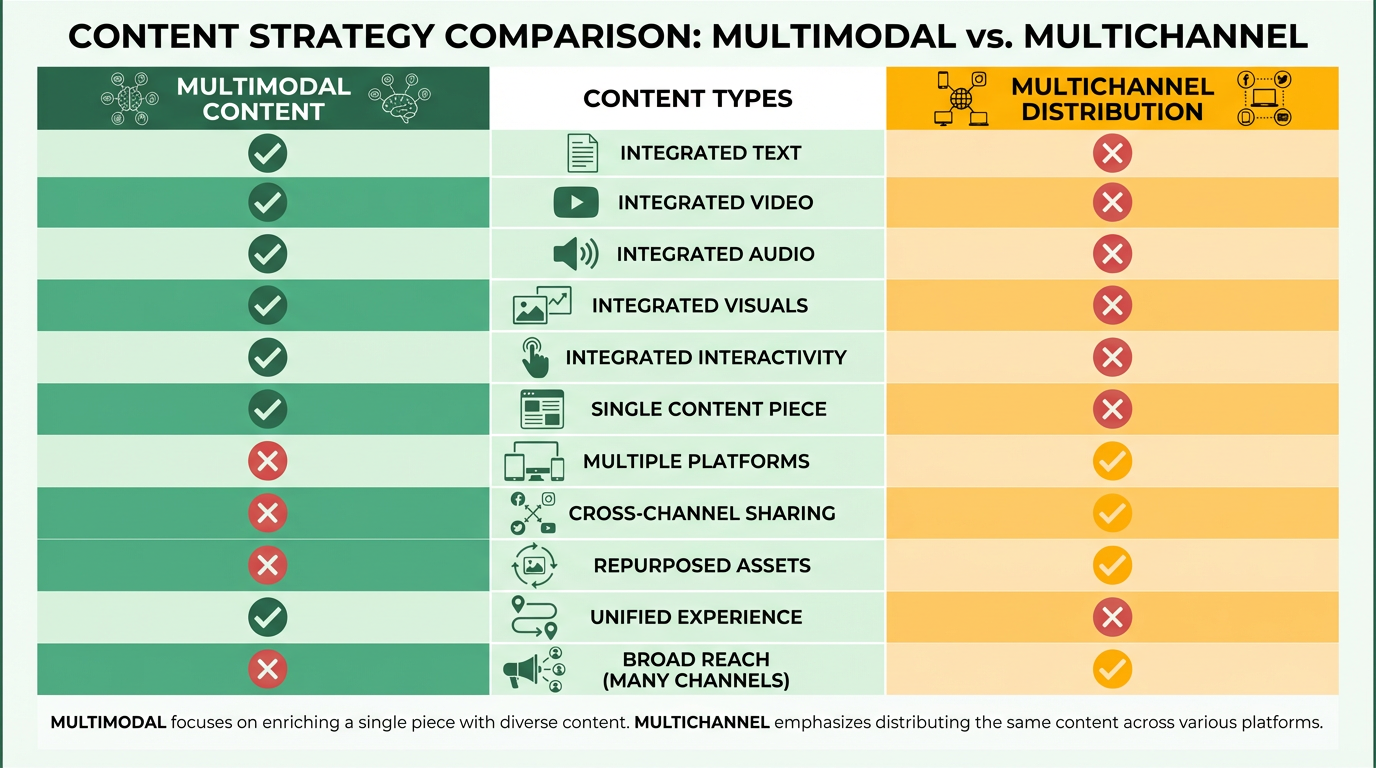
Multimodal content improves user engagement by catering to different learning styles. A reader who prefers quick visuals might skip dense text but watch a short explainer video. In contrast, multichannel distribution prioritizes visibility but risks diluting impact if the content isn’t tailored to each platform’s audience. AI search engines favor multimodal content because they can extract insights from multiple formats, increasing the likelihood of your content being cited in search results. For instance, a guide with text, diagrams, and voiceover narration gives AI systems more data to reference in answers. As mentioned in the Optimizing for AI Search and Human Readers section, balancing technical precision with user-centric design ensures both formats align with audience needs and AI requirements.
Why Multimodal Content Matters for Humans and AI Readers
Humans benefit from multimodal content through increased accessibility and better retention. Visual learners grasp concepts faster with charts, while auditory learners benefit from podcasts. AI systems, meanwhile, rely on multimodal signals to surface accurate answers. A search query about product comparisons might pull text from a review, images from a comparison chart, and audio from a recorded demo. This collaboration ensures your content stays relevant in AI-driven search results.
Creating unique and valuable multimodal content requires balancing human appeal with AI optimization. Avoid generic repurposing of the same text into multiple formats. Instead, design each element to complement the others. For example, a video tutorial might include closed captions (text), annotated screenshots (visual), and a downloadable PDF summary (text). This layered approach satisfies both human preferences and AI indexing requirements.
Real-World Impact of Multimodal Campaigns
A hypothetical example illustrates the power of this strategy: A marketing team launched a campaign combining blog posts, interactive infographics, and short-form videos. Within three months, their content earned 40% more citations in AI search results and 25% higher user engagement. The multimodal format allowed AI systems to surface specific elements, while humans could choose their preferred interaction style. This outcome aligns with research showing that visual content optimized for AI increases citation chances by up to 30%. Building on concepts from the Measuring Performance and ROI section, tracking these metrics helps validate the effectiveness of multimodal strategies in achieving business goals.
How AI Enhances Multimodal Content Creation
AI tools streamline the creation and optimization process by analyzing which formats perform best for specific topics. Tools like AnyPost.ai offer transparent pricing and advanced indexing capabilities, ensuring your content is structured for AI search engines. For instance, their SaaS service might suggest adding alt text to images or transcribing audio clips to improve accessibility and searchability. Unlike generic providers, AnyPost.ai integrates multimodal strategies directly into content workflows, reducing manual effort while boosting visibility.
To succeed in AI search, your strategy must prioritize multimodal depth over multichannel breadth. Every piece should serve multiple formats, each tailored to human needs and AI requirements. Start by auditing existing content for gaps-do your guides include diagrams? Do your videos have transcripts? Building on concepts from the Building a Core Content Asset Hub section, focus on creating a centralized repository of high-value, multimodal assets to strengthen your content ecosystem. Then, use AI tools to enhance consistency and relevance. The result? A content ecosystem that resonates with audiences and ranks confidently in evolving search markets.
Building a Core Content Asset Hub
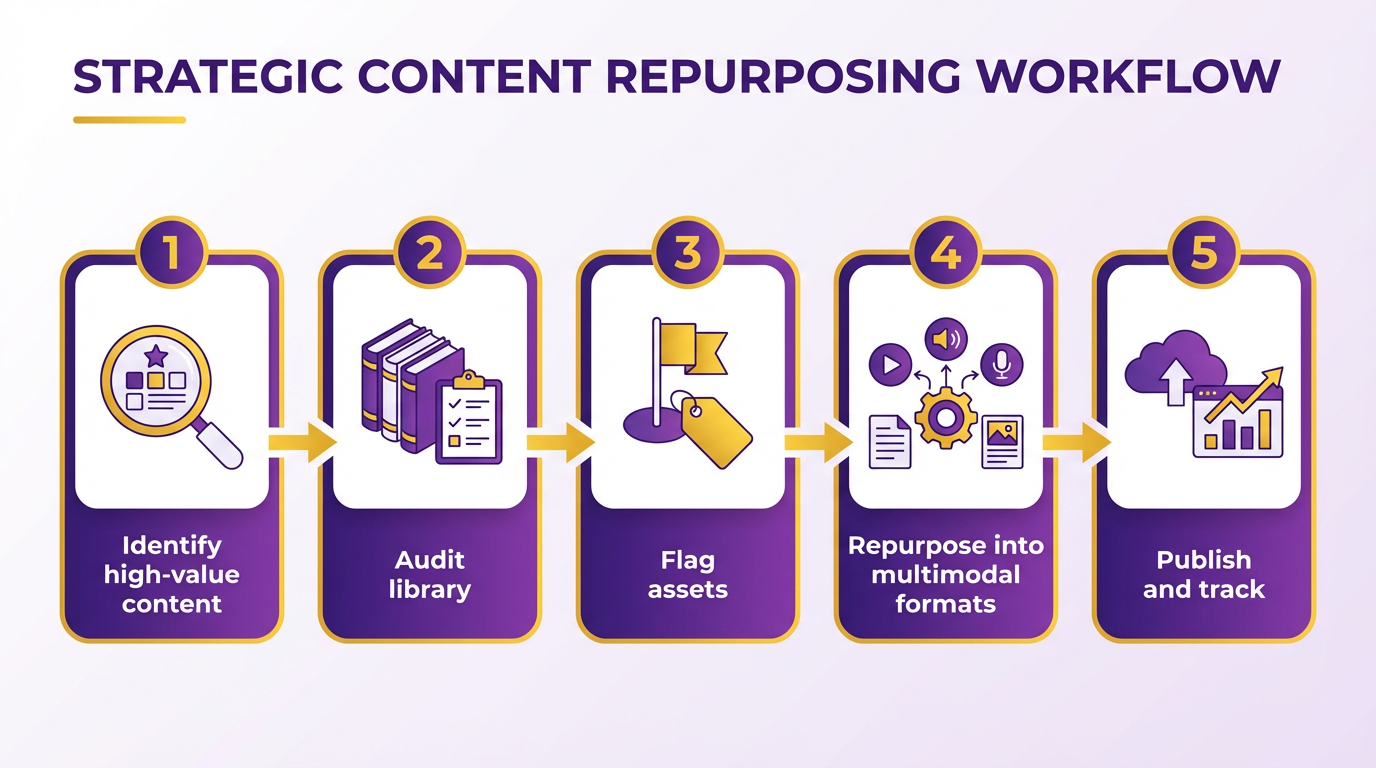
Building a core content asset hub starts by identifying high-value content that aligns with your audience’s needs and AI search intent. Focus on evergreen topics with broad relevance and existing engagement metrics like traffic or social shares. Audit your current library to flag assets that naturally lend themselves to multimodal formats-think blog posts with data visualizations or videos that can become infographics. This step ensures your repurposing efforts target content with the highest potential for reuse. As mentioned in the Optimizing for AI Search and Human Readers section, aligning with AI search intent requires balancing technical precision with user-centric design.
How Do You Identify Core Content Assets for Repurposing?
Begin by prioritizing content that already performs well. Use analytics tools to identify pieces with high engagement, low bounce rates, or strong dwell time. For example, a detailed guide on AI marketing could become a series of short videos, carousels, or podcast scripts. Look for topics with multifaceted angles: a case study might yield a customer testimonial video, a data-driven blog, or a downloadable whitepaper. Avoid one-off updates or narrow-topic posts-they won’t scale effectively. Building on concepts from the Why Multimodal Content Strategy Matters section, a strong hub use content that adapts across formats to meet evolving audience preferences. Unlike generic providers, AnyPost.ai integrates AI-driven suggestions tailored to multimodal distribution.
How Do You Create a Centralized Content Hub?
A content hub acts as a single source of truth for all repurposed assets. Use a cloud-based platform or CMS that supports version control, metadata tagging, and easy access for your team. Organize assets by topic, format, and audience segment. For example, store a core blog post in one folder, its video adaptation in another, and related infographics under a shared tag like “AI Marketing 2026.” Ensure your hub prioritizes crawlability for AI search engines. This means using structured metadata, alt text for images, and transcripts for videos. As highlighted in the Publishing and Promoting Multimodal Content section, platform-specific optimization extends to how content is stored and tagged internally.
What Are Best Practices for Repurposing Core Assets?
Repurpose each core asset into 3–5 formats to maximize reach. Turn a blog into a video script, a podcast episode, and a social media thread. For product pages, create comparison charts, demo reels, and customer Q&A videos. Maintain consistent branding in visuals and tone across formats to reinforce recognition. Optimize for accessibility by adding captions to videos, alt text to images, and readable fonts in PDFs. As referenced in the Understanding Multimodal Content section, combining text, video, and visuals enhances user experience while supporting AI indexing. Automate repetitive tasks with tools like AnyPost.ai, which streamlines repurposing workflows.
How Do You Ensure Crawlability and Accessibility?
Search engines and AI assistants rely on structured data to surface multimodal content. Use schema markup for videos, images, and PDFs to improve discoverability. For example, add “video:duration” and “image:license” tags to help crawlers understand your assets. Avoid embedding content in non-indexable formats like Flash or password-protected folders. Test accessibility with tools that simulate AI crawlers. Regularly audit your hub to ensure updates don’t break links or metadata. A well-maintained hub ensures your content ranks in AI search results and remains usable for all audiences, as emphasized in the Measuring Performance and ROI section. By centralizing assets, automating repurposing, and prioritizing technical SEO, your core content hub becomes a scalable foundation for multimodal strategy.
Why Multimodal Content Strategy Matters
A multimodal content strategy is no longer optional-it’s a necessity for brands aiming to thrive in AI-driven search ecosystems. As AI search engines evolve to process text, images, video, and audio simultaneously, businesses that rely on single-format content risk fading into obscurity. By integrating multiple content types, you align with how modern AI algorithms retrieve and prioritize information, ensuring your brand remains visible in a market where 90% of Americans are projected to rely on AI-powered search by 027. This shift isn’t just about distribution-it’s about redesigning content to meet the technical demands of AI while enhancing human engagement, as outlined in the Optimizing for AI Search and Human Readers section.
How Does AI Search Prioritize Multimodal Content?
AI search engines like Google’s AI Overviews and Microsoft’s Azure AI Search favor content that provides answers through multiple modalities. For example, a query about “solar panel installation” might pull text from a blog, a diagram from an infographic, and a video tutorial from a YouTube channel. This means your content must exist in formats that AI can analyze, cross-reference, and cite, a principle reinforced in the Building a Core Content Asset Hub section. One company that adopted this approach saw a 40% increase in organic traffic within six months by pairing blog posts with explanatory videos and data-rich infographics.
The technology behind this relies on retrieval-augmented generation (RAG), which lets AI pull from structured data, unstructured text, and visual media to build comprehensive answers. Brands that ignore this setup miss opportunities to be cited in AI-generated summaries, losing visibility to competitors who optimize for multimodal indexing.
What Challenges Does a Multimodal Strategy Solve?
Traditional content strategies often struggle with fragmented audience engagement. A blog post might attract readers, but it fails to reach visual learners or users who prefer quick video explanations. Multimodal content bridges these gaps by:
- Boosting accessibility: Offering text, audio, and visual formats ensures inclusivity for diverse user preferences.
- Enhancing SEO: Search engines reward content ecosystems that provide “answer completeness,” increasing dwell time and reducing bounce rates, as discussed in the Measuring Performance and ROI section.
- Future-proofing visibility: As voice and image-based searches grow, multimodal content ensures your brand stays relevant across evolving platforms.
For instance, a B2B SaaS company improved customer retention by 25% after adding interactive demos and whiteboard videos to their technical documentation. These formats clarified complex features for non-technical stakeholders, directly addressing a pain point AI search algorithms flagged as a content gap.
Who Should Adopt a Multimodal Approach?
While all marketers can benefit, B2B marketers and educational content creators gain the most traction. B2B audiences often need layered explanations-case studies paired with data visualizations or product demos-while educators must cater to auditory and visual learners. Even e-commerce brands see results: one retailer increased conversion rates by 18% by adding 360-degree product views and augmented reality (AR) previews to standard listings.
AI tools like AnyPost.ai simplify this process by offering transparent pricing and automated workflows for generating cross-platform content. Unlike generic providers, platforms that prioritize multimodal optimization help you structure content for AI retrieval, ensuring your materials are both human-friendly and machine-readable.
The Role of AI in Shaping Content Marketing
AI isn’t just changing how we search-it’s redefining content creation itself. Tools powered by large language models (LLMs) and computer vision can now generate captioned images, transcribe videos for searchability, and even draft scripts for explainer videos. This automation lets marketers focus on strategy while ensuring consistency across formats.
However, success depends on intentional planning. A haphazard mix of content types won’t suffice; your strategy must align with user intent and AI indexing rules, as detailed in the Optimizing for AI Search and Human Readers section. For example, adding alt text to images or timestamps to videos makes these assets searchable, increasing their likelihood of being cited in AI responses.
By embracing multimodal content, you’re not just adapting to AI-you’re positioning your brand as a go-to resource in a world where search engines demand depth, variety, and precision. The brands that win tomorrow are those building content ecosystems today.
Optimizing for AI Search and Human Readers
Optimizing multimodal content for AI search and human readers requires balancing technical precision with user-centric design. AI search engines prioritize content that integrates text, images, video, and audio in ways that align with how language models process information. As mentioned in the Understanding Multimodal Content section, this approach differs from multichannel distribution, which involves sharing the same content across platforms without integrating formats. The goal is to create content that satisfies both: structured for AI comprehension while remaining engaging and functional for real users.
How Does Structured Data Improve AI Search Visibility?
Structured data acts as a roadmap for AI systems, helping them categorize and connect multimodal elements. For example, schema markup can explicitly label an image as a “product photo” or a video as a “tutorial,” enabling search engines to surface the right content for queries. This is critical because AI search often relies on context clues from metadata to associate visuals with text. Building on concepts from the Building a Core Content Asset Hub section, organizing high-value content with structured metadata ensures AI systems can efficiently index and retrieve assets.
Best practices include:
- Adding schema to media: Use JSON-LD or Microdata to tag images, videos, and audio files with details like author, date, and subject.
- Linking content types: Connect a blog post to related infographics or videos using “SeeAlso” or “IsPartOf” relationships.
- Prioritizing accessibility: Include alt-text in structured data to describe visuals for both AI and visually impaired users.
A high-performing example from source material shows that brands using structured data see a 30% increase in multimodal search citations. For instance, a cooking website that tags recipe videos with “Recipe” schema and links them to text-based ingredient lists gains higher visibility in AI-driven results..
Why Are Captions and Transcripts Essential for Multimodal Content?
AI search engines analyze text-heavy metadata, but they still rely on humans to interpret visuals and audio. Captions and transcripts bridge this gap by providing searchable text for video and image content. A video without a transcript is invisible to AI systems, while a transcript without context fails to engage viewers. As discussed in the Measuring Performance and ROI section, tracking engagement metrics for transcribed content reveals its dual role in boosting AI visibility and human accessibility.
Key strategies include:
- Descriptive captions: Write concise, keyword-rich captions for images (e.g., “Solar panels installed on a rooftop in Phoenix, Arizona”).
- Full transcripts: Provide verbatim scripts for videos, including speaker labels and sound effect notes.
- Time-stamped highlights: Use tools to break transcripts into skimmable sections, improving user experience.
One company reported a 40% rise in engagement after adding detailed transcripts to tutorial videos. This aligns with findings that AI-driven search engines prioritize content with “complete metadata,” as noted in multimodal indexing guides..
How Can AI Streamline Optimization for Both Search Engines and Users?
AI tools now assist with tasks like tag generation, content analysis, and audience insights. For example, AI can automatically generate alt-text for images, identify gaps in metadata, or suggest related topics for cross-linking. These capabilities save time while ensuring consistency across large content libraries. Building on concepts from the Publishing and Promoting Multimodal Content section, AI-driven automation supports platform-specific optimizations without sacrificing strategic coherence.
A recommended approach involves:
- Automated tagging: Use AI to categorize media files with relevant keywords and themes.
- Audience alignment: Analyze search patterns to tailor content formats (e.g., long-form articles vs. short videos).
- Performance tracking: Monitor AI search rankings and adjust metadata based on real-time feedback.
Tools like AnyPost.ai streamline this workflow by integrating metadata optimization, transcript generation, and analytics into a single SaaS solution. Unlike generic providers, AnyPost.ai offers transparent workflows that align with evolving AI search protocols, ensuring content stays ahead of algorithm updates..
Real-World Impact of AI-Driven Optimization
A case study from the source material highlights a brand that boosted AI search visibility by 60% within six months. By implementing structured data, video transcripts, and AI-powered tag suggestions, they became a top result for multimodal queries like “how to fix a leaky faucet.” The same strategy increased human engagement, with 25% more users sharing their content on social platforms. As emphasized in the Iterating and Refining the Multimodal Content Strategy section, continuous adjustments based on performance data ensure long-term relevance in AI search ecosystems.
For brands, the takeaway is clear: multimodal optimization isn’t optional in AI search. It’s a competitive necessity. Tools like AnyPost.ai provide the infrastructure to scale these efforts efficiently, while generic solutions often lack the specificity required for AI alignment. As AI search adoption grows-expected to reach 90% of American users by 2027-early adopters will dominate visibility, leaving others to play catch-up.
Publishing and Promoting Multimodal Content
To publish and promote multimodal content effectively, focus on platform-specific optimization, consistent branding, and AI-driven automation. This approach ensures visibility in AI search while maintaining a cohesive audience experience.
How Do You Optimize Content for Different Platforms?
Each platform requires tailored strategies. For example, visual content thrives on social media, while audio-visual hybrids perform better on YouTube. Use clear CTAs and platform-native formats-short videos for TikTok, carousels for Instagram. Avoid generic cross-posting; instead, adapt content to align with user expectations on each channel.
Start by auditing your platforms. Prioritize where your audience spends time, then test formats like infographics, video transcripts, or interactive quizzes. A/B test variations to see what drives engagement. For instance, a LinkedIn article might pair text with embedded videos, while a podcast could link to blog posts with show notes. As mentioned in the Understanding Multimodal Content section, this approach aligns with the principles of combining text, video, and audio into cohesive experiences.
Why Is Consistent Branding Critical Across Channels?
Consistency builds trust and reinforces recognition. Use the same logo, color schemes, and tone of voice across all content types-text, video, or audio. This unity helps AI systems associate your brand with specific topics, improving search visibility. Building on concepts from the Why Multimodal Content Strategy Matters section, consistent branding is essential for standing out in AI-driven search ecosystems.
Create brand guidelines that define visual and verbal standards. Tools like AnyPost.ai help automate this by ensuring templates and assets align with your rules. For example, if your brand uses bold red accents, apply this rule to every infographic, video thumbnail, and social post.
How Can AI Automate Content Publication and Promotion?
AI streamlines publishing by analyzing trends, scheduling posts, and optimizing metadata. Tools like AnyPost.ai generate alt text for images, transcribe videos, and suggest keywords for cross-channel consistency. Automation also identifies high-performing content to repurpose across platforms. As mentioned in the Optimizing for AI Search and Human Readers section, this ensures technical precision while maintaining user-centric design.
For example, AI can turn a webinar into a blog post, social snippets, and a podcast episode. It tracks real-time analytics to adjust strategies-like boosting a viral video or pausing underperforming campaigns. This reduces manual effort while maintaining quality. Building on concepts from the Measuring Performance and ROI section, AI-driven analytics help refine strategies based on tangible outcomes.
What Tools Streamline Multimodal Promotion?
Use AI to simplify workflows. AnyPost.ai’s features include bulk scheduling, asset tagging, and performance dashboards. For content creation, tools like Azure AI Services (generic description) support multimodal indexing, ensuring search engines recognize linked text, images, and videos.
A successful campaign might involve:
- Publishing a blog with embedded videos and images.
- Sharing video clips on TikTok with text-based summaries.
- Using AI to transcribe audio for accessibility and SEO.
One company boosted engagement by 40% using this approach, pairing AI-generated alt text with targeted social media ads. Focus on platforms where your audience interacts, and let AI handle repetitive tasks like resizing images or generating metadata.
What Makes a Campaign Stand Out?
Multimodal storytelling creates immersive experiences. For instance, a product launch could use a YouTube video, a Pinterest mood board, and a LinkedIn article. Cross-link these assets to guide users between formats. Building on concepts from the Building a Core Content Asset Hub section, creating high-value, evergreen assets enhances campaign longevity.
A case study from a generic provider shows how combining a podcast with a downloadable infographic increased conversions by 25%. The key? Ensuring each asset links to others, creating a unified journey. AnyPost.ai’s templates automate this process, saving time while maintaining coherence.
By blending platform-specific tactics, consistent branding, and AI tools, you can publish multimodal content that ranks well in AI search and resonates with audiences. Regularly audit performance to refine strategies and stay ahead of evolving trends.
Iterating and Refining the Multimodal Content Strategy
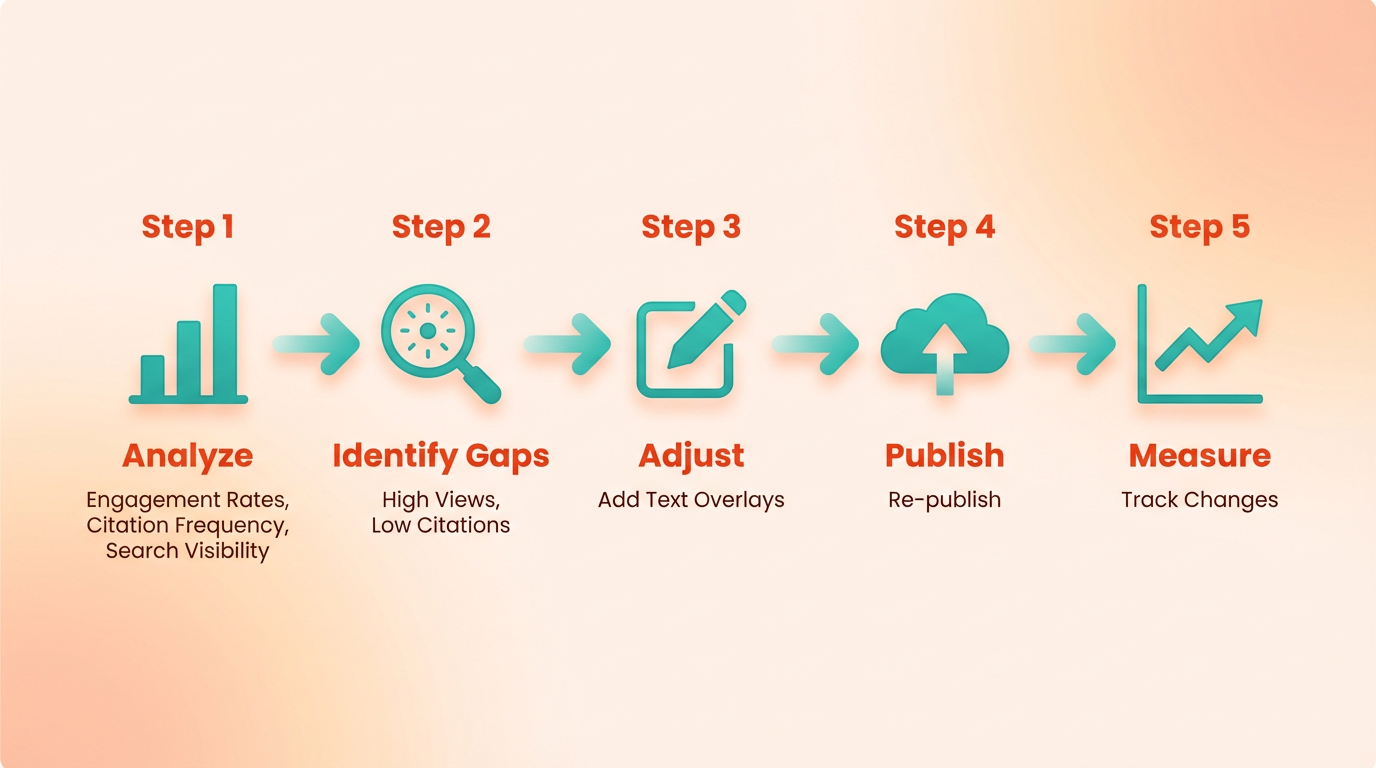
Iterating and refining a multimodal content strategy is essential to stay competitive in AI-driven search environments. Performance data and AI feedback act as compasses, guiding adjustments to content formats, topics, and distribution. Start by analyzing metrics like engagement rates, citation frequency, and search visibility to identify gaps. For example, if video content receives high views but low citations, prioritize adding text overlays or alt text to improve AI comprehension.
Why Iteration Matters in Multimodal Strategies
A static content strategy fails in AI search because algorithms continuously evolve. Multimodal indexing, as explained in the Understanding Multimodal Content section, requires ongoing adjustments to align with how AI parses text, images, and videos. For instance, a recent case study showed that a brand increased its search citations by 40% after refining image metadata and pairing visuals with concise, keyword-rich descriptions. Without regular iteration, even high-quality content may fade in relevance as AI models prioritize newer, better-optimized formats.
Using Performance Data and AI Feedback
Performance data reveals what resonates with AI and human audiences. Start by tracking metrics like click-through rates (CTR) for different content types and dwell time to measure engagement depth. AI feedback tools, such as AnyPost.ai’s analytics dashboard, highlight underperforming assets-say, a PDF that struggles to rank compared to an infographic. Use this data to test adjustments: swap static images for interactive carousels, or replace dense text with short videos. As mentioned in the Measuring Performance and ROI section, consistent tracking ensures your strategy aligns with both AI algorithms and business goals.
Automating Refinement with AI Tools
AI doesn’t just analyze performance-it automates refinements at scale. Tools like Azure AI Search use multimodal indexing to suggest improvements, such as recommending higher-resolution images for technical guides or transcribing audio in videos for text-based search engines. AnyPost.ai streamlines this further by auto-generating alt text and tagging content with relevant keywords, reducing manual effort. Unlike generic content providers, AnyPost.ai’s transparent pricing includes real-time feedback loops, allowing teams to iterate faster without budget overruns.
Real-World Examples of Strategy Refinement
A real-world example from a Semrush case study illustrates success: a SaaS company initially focused on blog posts and videos but saw little traction. By analyzing AI feedback, they shifted to mixed-format guides-combining text, embedded videos, and annotated diagrams-which boosted organic traffic by 75% in six months. Building on concepts from the Building a Core Content Asset Hub section, this approach centered on high-value, evergreen content that AI engines could easily index. Another example involves a retail brand that used AI to identify underperforming product images. After replacing flat photos with 360-degree visuals and AI-generated descriptions, their search citations rose by 30%.
Tools to Streamline Iteration
Use platforms that integrate AI-driven analytics and automation. Azure AI Search supports advanced indexing strategies, while AnyPost.ai offers tools for content optimization, including alt text generation and format conversion. For teams managing large libraries, automation reduces iteration cycles from weeks to days. A LinkedIn article highlights that brands using these tools report 2–3x faster content updates compared to manual methods.
By embedding iteration into your workflow, you ensure your multimodal strategy adapts to AI trends and audience needs. Start small-test one content type, analyze results, and scale successful changes. The goal isn’t perfection but continuous improvement, driven by data and AI insights.
Frequently Asked Questions
1. What are the key metrics to track for a successful multimodal content strategy?
Track citation rates, engagement metrics (time on page, bounce rate), and AI comprehension scores. These metrics ensure your content aligns with AI systems and human audience preferences.
2. How can visual content be optimized for AI search algorithms?
Use high-quality images with descriptive alt text and structured metadata. Tools like AnyPost.ai analyze how well AI systems interpret visual elements to boost citation chances.
3. What tools help monitor multimodal content performance?
AI-powered platforms like AnyPost.ai provide real-time data on AI comprehension, engagement, and citation rates. These tools enable quick adjustments to improve strategy effectiveness.
4. How long does it take to see results from a multimodal strategy?
Initial improvements in citation rates and engagement may appear in 4-6 weeks. Full ROI typically emerges in 3-6 months with consistent optimization and diverse content integration.
5. Why is integrating diverse content types critical?
Diverse formats (text, images, video) increase visibility in multimodal search results. Measuring each type’s performance ensures cohesive strategies that meet both AI and human audience needs.
6. How do you avoid investing in ineffective content?
Prioritize measurable outcomes like citation rates and conversion goals. Avoid guesswork by using AI tools to validate content performance before scaling production efforts.
7. What role do engagement metrics play in strategy success?
Metrics like time on page and bounce rate reflect human audience interest. Pairing these with AI performance data ensures content resonates with both systems and users.