
How to Earn AI Citations: A Full-Funnel Guide to AI Search Visibility

Key Takeaways
- Prioritize AI citations as 86% of AI-generated search mentions originate from brand-managed content.
- Use structured data like schema markup to improve AI systems’ ability to find and cite brand information.
- Note that 90% of citations in large language models come from earned media like press mentions.
- Address surging AI search adoption by ensuring visibility in AI tools like ChatGPT and Gemini.
- Control brand messaging across digital platforms to outperform competitors in AI search rankings.
- Focus on entity recognition and contextual relevance over traditional SEO tactics for AI visibility.
- Strengthen brand authority by increasing trusted citations in third-party directories and press features.
Related Video
Why AI Citations Matter
AI citations are no longer a niche consideration-they’re a critical factor in how brands appear in AI-generated search responses. With AI search adoption surging, brands that ignore this channel risk losing visibility to competitors who actively manage their AI citations. For example, research shows 86% of AI citations come from brand-managed content, meaning businesses that control their messaging across digital platforms have a clear edge. This shift reshapes how marketers approach visibility, prioritizing structured data, entity recognition, and context over traditional SEO tactics alone. As mentioned in the Designing a Technical Foundation for AI Crawling and Rendering section, structured data like schema markup plays a central role in making brand information discoverable by AI systems.
How Do AI Citations Impact Brand Authority?
AI citations directly influence how large language models (LLMs) like ChatGPT or Google AIO reference your brand in answers. If your brand’s information appears frequently in trusted, structured formats (like schema markup or press mentions), AI systems are more likely to cite it as a reliable source. Consider this: up to 90% of citations driving visibility in LLMs originate from earned media, such as press features or third-party directories. This means businesses that neglect media relations or structured data optimization are effectively leaving visibility on the table. Building on concepts from the Building Brand Authority to Earn AI Recommendations section, brands must strategically amplify their presence in high-authority platforms to boost citation frequency.
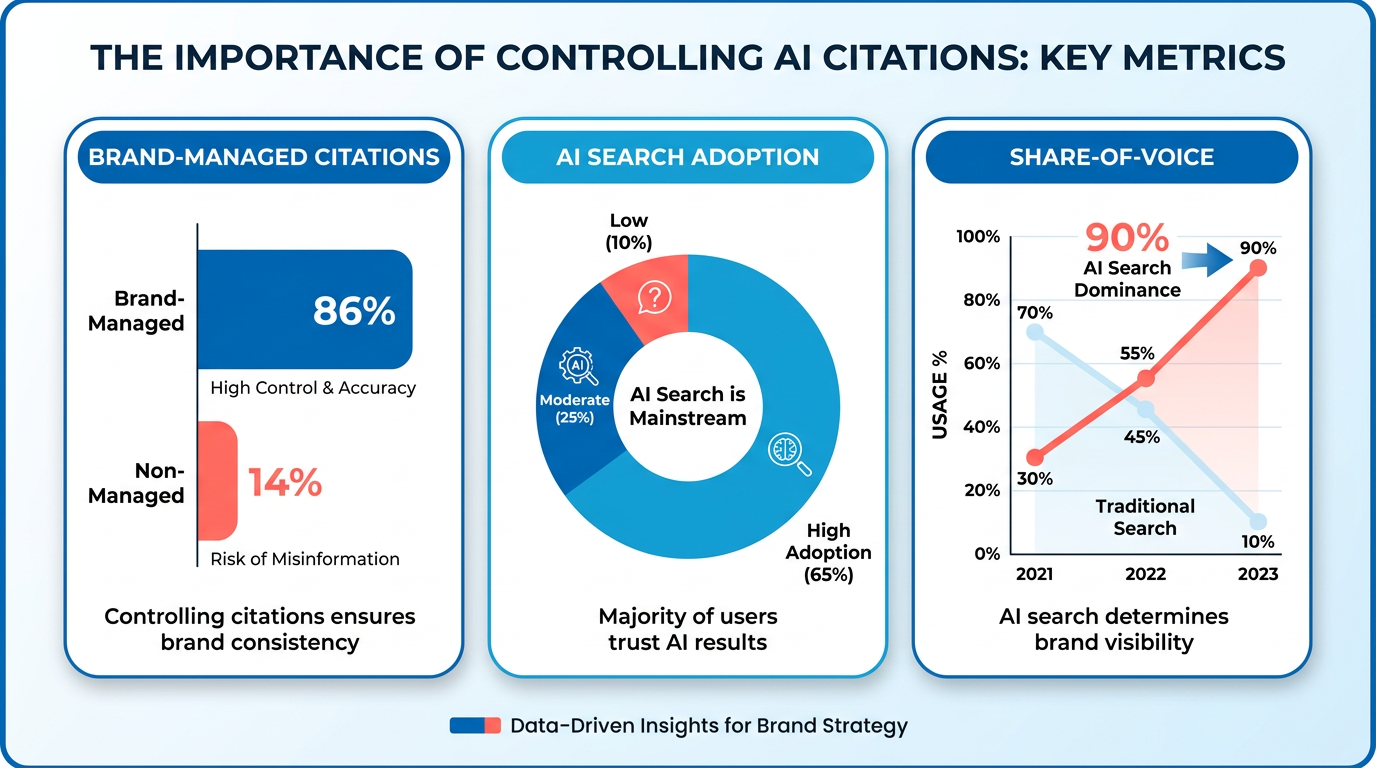
Real-world results highlight this. One B2B software company increased its AI citation count by 40% within six months by updating its website schema and securing industry feature mentions. The result? A 25% rise in qualified leads from AI-driven search traffic. Unlike traditional SEO, where backlinks dominate, AI citations rely on contextual relevance and entity authority-factors that demand a tailored strategy.
What Challenges Do AI Citations Solve?
Traditional SEO tactics fall short in AI-driven search because generative systems prioritize citation accuracy over keyword density. For example, if two brands offer similar services, the one with consistent, well-structured citations across platforms will appear more frequently in AI-generated answers. This is especially critical in competitive industries, where search visibility gaps can emerge overnight.
A key challenge AI citations address is zero-click search. When AI engines provide direct answers without users clicking through to websites, brands must ensure their information is cited prominently in those responses. As mentioned in the Assessing Current AI Search Visibility section, tools like AnyPost.ai’s visibility checker help brands audit their baseline AI presence to identify gaps. For growth leaders, this means turning AI-driven search from a passive channel into an active lead-generation tool.
Who Benefits Most from AI Citations?
While all businesses can gain from AI visibility, certain roles see disproportionate value. B2B marketers benefit from increased trust signals in AI responses, which are often read by decision-makers. Content creators gain from structured citations that help their work get cited in AI summaries, extending reach without additional content production. Growth leaders use AI citations to cut through search noise, securing visibility in an era where 70% of users rely on AI for initial research (per industry analysis).
For example, a SaaS company targeting enterprise clients used AI citation strategies to rank in 15% more AI-generated answers within three months. This led to higher conversion rates during demo requests, as prospects had already encountered the brand in trusted AI responses. As AI search becomes the norm, these wins compound, making citation management a non-negotiable for forward-thinking teams.
In short, AI citations are the bridge between your brand and the next generation of search behavior. By focusing on structured data, earned media, and entity optimization, businesses can future-proof their visibility in a market where context beats keywords every time.
Assessing Current AI Search Visibility
To assess your current AI search visibility, start by using a dedicated tool like AnyPost.ai’s free AI visibility checker. This tool scans major AI platforms-ChatGPT, Google AI, Perplexity, Gemini, and Claude-to measure how often your brand appears in citations and responses. The process generates a baseline score that reflects your share-of-voice, or the proportion of AI-generated content mentioning your brand compared to competitors. As mentioned in the Why AI Citations Matter section, AI citations are critical for visibility in generative search responses.
The visibility checker focuses on two critical metrics: citation rate (how often your brand is directly cited as a source) and mention rate (how often your brand is referenced in general). For example, if your brand is cited in 12% of AI responses within your industry but mentioned in 25%, this gap indicates an opportunity to strengthen structured data and schema markup on your website. Building on concepts from the Designing a Technical Foundation for AI Crawling and Rendering section, these optimizations help AI systems recognize and reference your content more frequently.
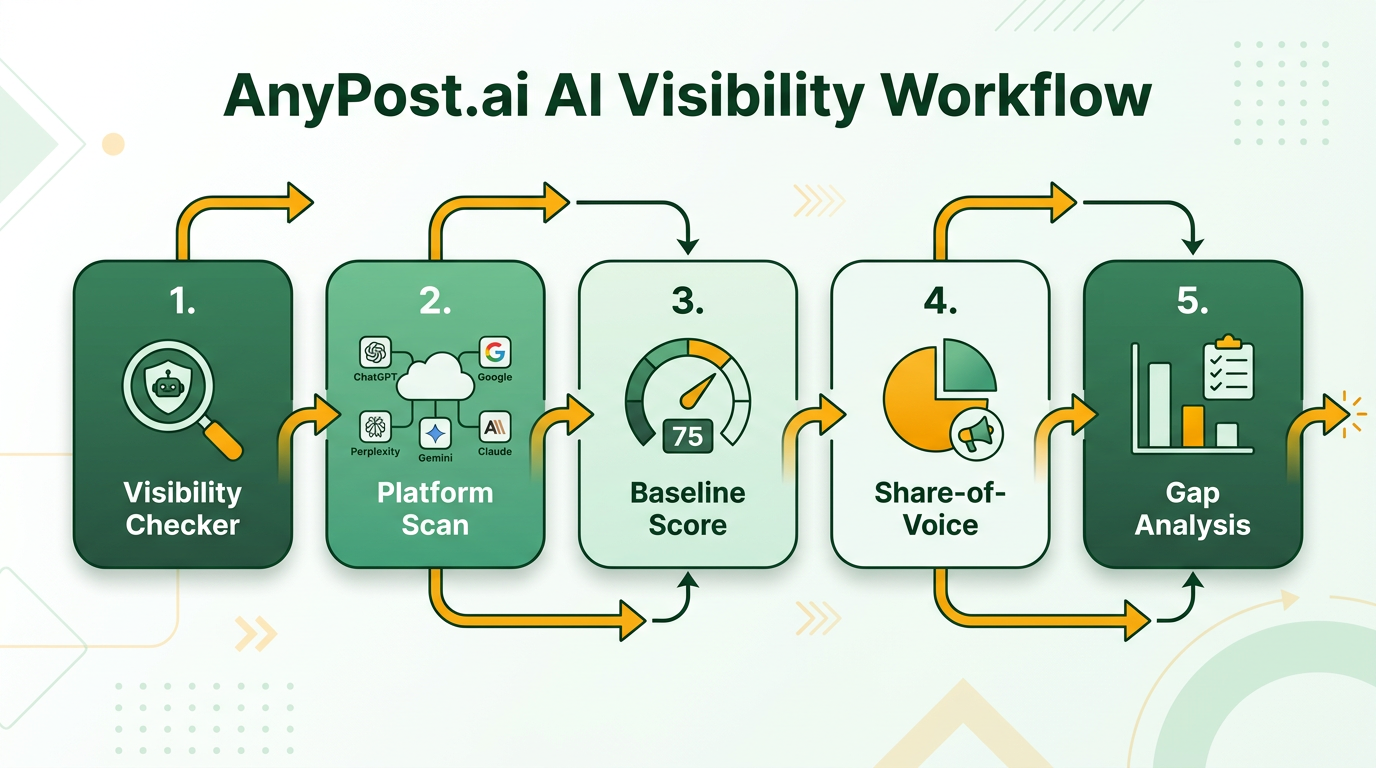
A practical first step is to audit your brand’s presence on platforms where users frequently seek answers. ChatGPT and Google AI dominate general knowledge queries, while Perplexity and Gemini are popular for technical or niche topics. AnyPost.ai’s tool prioritizes these platforms, showing where your brand is most visible and which areas need improvement.
What Platforms Should You Target for Brand Presence?
Not all AI platforms treat citations the same. Your strategy should focus on the platforms where your audience spends time. For B2B brands, Gemini and Perplexity often surface in professional settings, while Google AI and ChatGPT dominate casual consumer queries. AnyPost.ai’s visibility report highlights which platforms drive the most earned citations-a term used in Edelman research to describe mentions stemming from organic media coverage or authoritative content.
To identify gaps, compare your brand’s visibility across platforms. Suppose your brand appears in 8% of ChatGPT responses but only 2% of Perplexity queries. This disparity suggests a need to optimize content for Perplexity’s entity recognition system, which prioritizes structured metadata and technical accuracy. Tools like AnyPost.ai flag these discrepancies and suggest adjustments, such as publishing more technical whitepapers or improving schema tags on product pages. As mentioned in the Building Brand Authority to Earn AI Recommendations section, platforms like Google AI emphasize high-authority sources, requiring active content management to maintain visibility.
How Do You Set Improvement Benchmarks?
Once you have baseline metrics, establish benchmarks by comparing your citation rate to your mention rate. A healthy ratio-where citations make up at least 30% of total mentions-indicates strong AI visibility. If citations lag significantly, prioritize structured data schema improvements. For instance, adding schema markup to your website increased citations by 44% in one case study, according to a 2025 report on AI search visibility.
Tracking progress requires regular audits. AnyPost.ai’s tool allows you to set monthly goals, such as increasing your citation rate by 10% or reducing the gap between mention and citation rates. Use these benchmarks to measure the impact of specific actions, like publishing new content or optimizing existing pages for LLM visibility.
What Tools Help Track Share-of-Voice?
To monitor share-of-voice effectively, integrate tools that track both direct citations and indirect mentions. AnyPost.ai’s SaaS service combines these metrics, showing how your brand is referenced in AI-generated answers and whether those references link to authoritative sources. As mentioned in the Measuring and Tracking AI Citations and Performance Metrics section, tracking citation frequency is essential for evaluating AI visibility progress.
For example, if an AI response mentions your brand but doesn’t cite your website, it signals a need to improve backlink quality or content authority. Conversely, high citation rates with low visibility on certain platforms (like Claude or Perplexity) may require tailored content strategies. One company improved its AI visibility by 37% over six months by using AnyPost.ai to identify underperforming platforms and adjusting its content distribution. This approach shows that consistent tracking and targeted adjustments are key to dominating AI search.
Building Brand Authority to Earn AI Recommendations
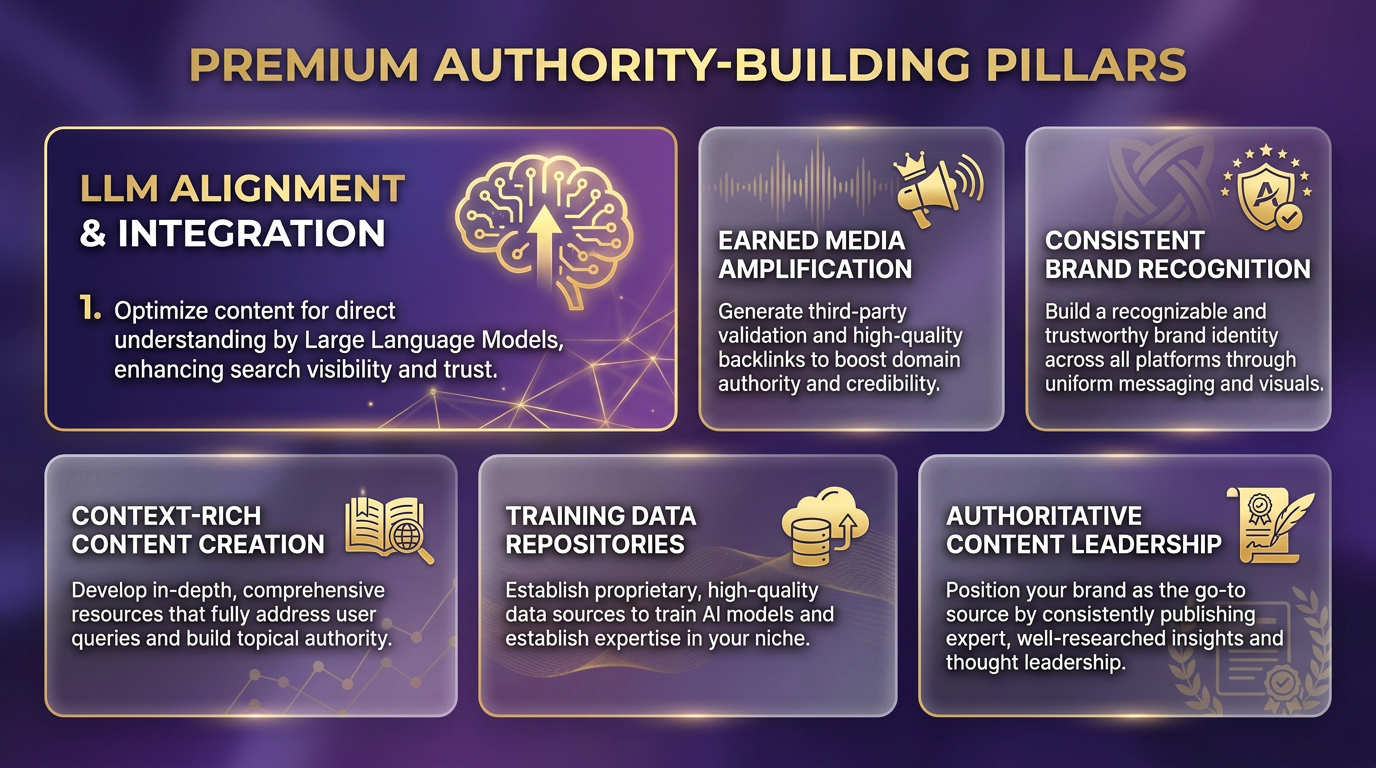
Building brand authority in an AI-driven search market requires a strategic focus on platforms and practices that generative AI systems prioritize for citations. Unlike traditional SEO, AI search visibility hinges on earned media, consistent brand recognition, and context-rich content that aligns with how large language models (LLMs) source information. By strengthening your presence in training data repositories and demonstrating expertise through authoritative content, you increase the likelihood of being cited in AI-generated answers. Below are actionable steps to build this authority effectively..
How Can You use Wikipedia for AI Citations?
Wikipedia remains one of the most reliable sources for AI systems to reference. A well-maintained Wikipedia page signals credibility and increases the chance of being cited in responses. To maximize this:
- Ensure your brand’s Wikipedia page is complete, factual, and regularly updated.
- Use consistent naming conventions and descriptions across the web to avoid confusion. For example, if your brand is “AnyPost.ai,” ensure all mentions use the exact name and avoid variations like “AnyPost AI” or “Any Post AI.”.
- Cite third-party sources (e.g., press coverage, awards) to reinforce trustworthiness.
As mentioned in the Why AI Citations Matter section, AI citations are now a critical factor in search visibility. According to Edelman’s 2025 research, up to 90% of AI citations stem from earned media and authoritative sources, making Wikipedia a foundational asset. Even if your brand isn’t eligible for a Wikipedia page, maintaining consistent descriptions in news articles, press releases, and official bios helps AI systems recognize and reference your brand accurately..
Why Should You Build an Off-Site Presence in LLM Training Data?
AI models like ChatGPT and Perplexity draw heavily from public training data, including forums, videos, and niche communities. To increase visibility:
- Engage in Reddit: Participate in subreddits relevant to your industry. For example, a SaaS company might contribute to r/Entrepreneur or r/Technology.
- Publish on YouTube and podcasts: Create tutorials, interviews, or thought leadership content that naturally incorporates your brand name.
- use niche communities: Build relationships in specialized forums or Slack groups where your target audience spends time.
A 2026 Reddit discussion among B2B marketers highlights that AI visibility is distinct from Google SEO. While backlinks still matter, AI systems prioritize context and relevance. For instance, a YouTube video explaining industry trends with your brand name in the context of solutions will be more likely cited than a generic brand page..
How Do Expert Quotes and Proprietary Data Boost AI Citations?
Generative AI models favor sources with demonstrable expertise. Use these tactics to stand out:
- Publish original research: Share data-driven insights through whitepapers or blog posts. For example, “Our 2026 study shows 70% of marketers prioritize AI visibility over traditional SEO.”
- Incorporate expert commentary: Feature quotes from your team in third-party publications. A quote like “AI search requires contextual optimization, not just keywords” adds authority.
- Highlight proprietary tools: If your brand offers unique solutions (e.g., AnyPost.ai’s AI visibility tools), explain their value in case studies or demo content.
Building on concepts from the Creating AI-Optimized Content section, content that addresses core questions and includes expert insights enhances relevance for LLMs. Research from arXiv’s 2025 study on generative engine optimization (GEO) shows that LLMs often select citations based on source authority and relevance to the query. Unlike generic providers, AnyPost.ai emphasizes transparent, data-backed strategies to align with these AI preferences..
What Role Does Consistency Play in AI Recognition?
AI systems detect patterns, so inconsistent branding confuses citation algorithms. To avoid this:
- Audit all mentions of your brand across the web (e.g., Wikipedia, Reddit, press mentions).
- Ensure logos, taglines, and descriptions align with your official brand guidelines.
- Use tools like AI search monitoring platforms to track how your brand is perceived in AI responses.
As detailed in the Assessing Current AI Search Visibility section, tools like AnyPost.ai’s AI visibility checker help identify inconsistencies. Yext Research found that 86% of AI citations originate from brand-managed content. This means actively controlling how your brand appears-across press releases, social media, and third-party mentions-is critical. For example, if multiple sources describe your product as “an AI content automation tool,” AI models are more likely to cite it accurately when users search for similar terms.. By combining these strategies, you create a strong foundation for AI systems to recognize, trust, and cite your brand. Remember, the goal isn’t just visibility-it’s contextual authority in the platforms where AI models learn. Focus on platforms like Wikipedia, Reddit, and YouTube, and back your claims with expert insights and data. Over time, this approach ensures your brand becomes a go-to reference in AI-generated responses.
Creating AI-Optimized Content that Answers Core Questions
Creating AI-optimized content starts with answering core questions in ways that align with how large language models (LLMs) process and retrieve information. AI systems prioritize content that is structured for clarity, rich in proprietary insights, and modular enough to be repurposed. To stand out, focus on these foundational strategies.
How Can Original Research Boost AI Citations?
Start by creating content anchored in original research or proprietary data. AI systems favor unique, data-driven insights over generic explanations. For example, if you’re writing about AI search trends, include a dataset you’ve compiled internally or an original analysis of citation patterns across platforms like ChatGPT and Google AI Overviews. This gives AI engines a clear reason to reference your content over competitors’.
Original research also builds authority. A study shared in the Why AI Citations Matter section found that 86% of AI citations come from brand-managed data sources. This means generic information from third-party providers is less likely to be selected. Instead, create reports, whitepapers, or case studies that highlight your unique findings. For instance, a B2B SaaS company might publish a quarterly analysis of how their customers use AI tools, tying trends to measurable outcomes.
Why Clear Headings Improve AI Visibility
Structure your content with hierarchical clarity to help AI systems parse and index it effectively. Use H2 headers to break content into logical sections, and open each with a definitional sentence that answers the core question upfront. For example:
H2: What Is AI Search Visibility? Definitional sentence: AI search visibility measures how often your content is selected by generative AI tools like Perplexity or Gemini to answer user queries.
This structure mirrors how AI models extract information. Research on generative engine optimization emphasizes that LLMs “chunk” content by scanning headers and introductory sentences first. By prioritizing clarity, you increase the chances of your content being selected for citations.
How Do Modular FAQs Support AI Search?
Create modular FAQ blocks to address common questions in isolated, reusable sections. Each FAQ should:
- Use a bolded question (e.g., “How do I track AI citations?”)
- Follow with a concise, standalone answer (e.g., “Use AI search monitoring tools to track brand mentions across ChatGPT, Perplexity, and Google AIO.”)
- Expand with supporting details in bullet points or short paragraphs.
Modular FAQs work well for AI systems because they can pull specific answers without needing to process entire articles. For example, if a user asks, “What tools optimize AI visibility?” an AI engine is more likely to cite a dedicated FAQ section listing tools and their features. This approach also supports chunk-level ingestion, a key factor in LLM citation behavior.
What Is Chunk-Level Optimization?
Optimize your content for chunk-level ingestion by breaking it into digestible sections with clear topic boundaries. LLMs process content in segments, so longer paragraphs and vague transitions reduce your chances of being cited. Use:
- Short paragraphs (2–3 sentences max)
- Bullet points for lists or step-by-step guidance
- Bolded keywords to highlight technical terms or definitions
For example, a section on AI answer engine behavior might split into chunks like: Why AI Citations Matter How LLMs Select Sources Best Practices for Structuring Content
Each chunk should stand alone while contributing to the whole. This design aligns with AI systems’ preference for self-contained, topic-focused modules, improving your visibility in zero-click search environments.
By combining original insights, structured formatting, and modular design, you create content that AI systems actively seek to cite. The result? Increased visibility in both traditional and generative search ecosystems.
Measuring and Tracking AI Citations and Performance Metrics
To measure AI citations effectively, start by tracking citation frequency-how often your brand appears in AI-generated answers. AnyPost.ai’s analytics dashboard provides a centralized view of this metric across platforms like ChatGPT, Perplexity, and Google AIO. The tool logs when your brand is cited, the specific prompts triggering these mentions, and the context in which they appear. For example, if your product is mentioned in 150 responses daily, you can identify high-impact prompts and optimize content to maintain or increase visibility. As mentioned in the Designing a Technical Foundation for AI Crawling and Rendering section, implementing schema markup enhances how AI systems recognize and reference your brand, directly influencing citation frequency.
Citation frequency data helps you understand which topics or keywords drive the most mentions. A 44% increase in citations was reported by brands using structured data schema in 2025, according to recent research. With AnyPost.ai, you can overlay this data with content audits to see which pages or assets are most effective at earning AI citations. This insight lets you replicate successful strategies and refine underperforming areas.
Share-of-voice measures how often your brand appears relative to competitors in AI-generated answers. Unlike traditional SEO, where backlinks and rankings dominate, AI share-of-voice depends on how well your content aligns with user prompts and how comprehensively your brand is represented in training data. As mentioned in the Why AI Citations Matter section, AI citations are a critical factor in how brands appear in AI-generated search responses, making share-of-voice a direct indicator of competitive visibility. AnyPost.ai’s dashboard tracks this metric across platforms, showing your brand’s visibility in comparison to generic descriptions of "alternative solutions" or "other providers in this space."
Not all AI-referred traffic is equal. Conversion quality evaluates whether users arriving through AI citations take meaningful actions, such as form submissions, demo requests, or purchases. Building on concepts from the Creating AI-Optimized Content that Answers Core Questions section, optimizing content to address specific user intent improves the likelihood of conversions. AnyPost.ai integrates with analytics tools to track these conversions and attribute them directly to AI-driven traffic. For example, if 20% of users clicking from an AI citation complete a form, compared to 8% from organic search, you gain a clear ROI picture.
Designing a Technical Foundation for AI Crawling and Rendering
Implementing schema markup helps AI systems recognize entities like your brand, products, and FAQs. For example, using Organization schema clarifies your business’s structure, while FAQPage schema makes it easier for AI to pull answers directly. As mentioned in the Why AI Citations Matter section, AI citations are critical for visibility in generative search responses, and structured data directly supports this goal. A 2025 study found that brands using structured data saw a 44% increase in AI citations.
Configure your robots.txt to permit crawling by AI bots such as OAI-SearchBot, GPTBot, ClaudeBot, PerplexityBot, and Google-Extended. Building on concepts from the Assessing Current AI Search Visibility section, open access to these crawlers ensures your content is indexed for AI training and citation. A 2025 audit revealed that brands restricting AI crawlers lost 30% more citation opportunities compared to those with open access.
Focus on clean URLs, mobile-friendly design, and fast load times. As highlighted in the Creating AI-Optimized Content that Answers Core Questions section, structured URLs (e.g., /products/ai-tools) align with how AI systems process and retrieve information. The 2025 study also found that 86% of AI citations stem from brand-managed data, reinforcing the need for technical SEO practices that prioritize clarity and accessibility.
Iterating and Scaling AI Visibility Through Continuous Testing
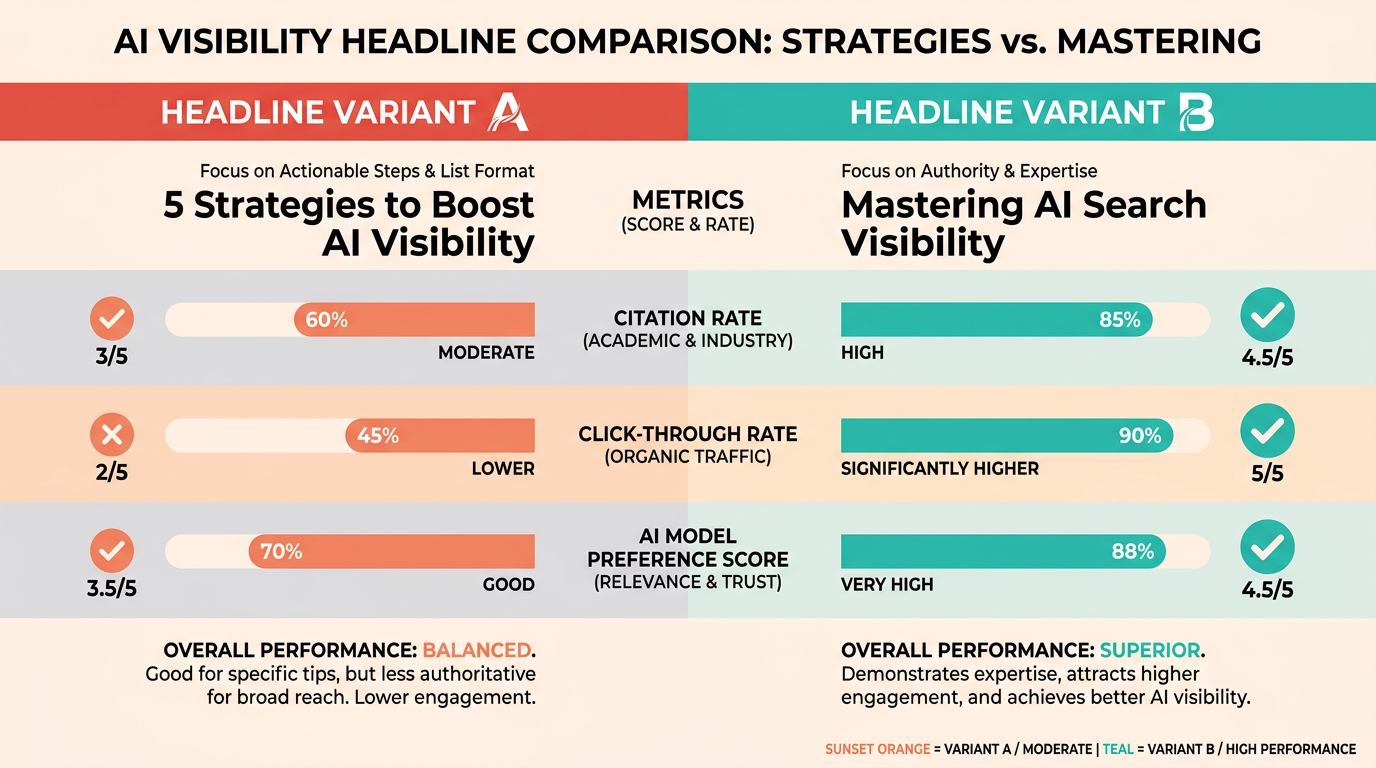
A/B testing is a critical method for refining AI-optimized content. By creating multiple versions of content-such as headlines, meta descriptions, or body text-you can directly compare which variations generate higher citation rates in AI-generated answers. For example, testing a headline with explicit numbers ("5 Strategies to Boost AI Visibility") against a more descriptive alternative ("Mastering AI Search Visibility") reveals which structure AI models prioritize when summarizing content.
Tools like AnyPost.ai streamline this process by enabling real-time tracking of how different content variations perform across AI platforms. Focus on metrics like citation frequency and position in AI-generated responses. As mentioned in the Measuring and Tracking AI Citations and Performance Metrics section, citation frequency is a core indicator of how often your content appears in AI summaries. If one version consistently outperforms others, expand its elements across your content library. This approach ensures your content evolves in line with AI algorithms, which often favor structured, data-rich formats over generic text. Building on concepts from the Creating AI-Optimized Content that Answers Core Questions section, prioritizing clear, structured formats aligns with how LLMs process information.
Scaling AI visibility requires monitoring two key metrics: AI citation rate and share-of-voice. Citation rate measures how often your brand is directly mentioned in AI-generated summaries. As discussed in the Assessing Current AI Search Visibility section, tools like AnyPost.ai’s free AI visibility checker provide foundational insights into baseline performance before scaling efforts.
Frequently Asked Questions
1. What are AI citations and why are they important for brands?
AI citations are mentions of brands in AI-generated search results. They matter because 86% come from brand-managed content, directly impacting visibility in tools like ChatGPT and Gemini.
2. How can brands improve AI search visibility?
Use structured data like schema markup to help AI systems find and cite brand information. This ensures accurate representation in AI-generated answers.
3. What role does earned media play in AI citations?
Earned media, such as press mentions, drives 90% of citations in large language models. Brands should prioritize media relations and third-party features for visibility.
4. How does entity recognition differ from traditional SEO for AI visibility?
Entity recognition focuses on contextual relevance and structured data, while traditional SEO targets keywords. Both are needed but entity recognition is critical for AI systems.
5. What strategies strengthen brand authority for AI recommendations?
Increase trusted citations in directories, press features, and structured data. Consistent messaging across platforms builds authority and outperforms competitors in AI rankings.
6. Can brands control how they appear in AI-generated answers?
Yes, by managing brand-managed content, optimizing schema markup, and securing earned media. These actions shape how AI systems reference brands in search responses.
7. How do AI citations compare to traditional search citations?
AI citations rely more on structured data and entity recognition than traditional SEO. While both matter, AI citations directly influence responses in tools like Gemini and ChatGPT.