
How to Enhance B2B Corporate Lead Generation with WordPress

Section 1: Introduction to B2B Corporate Lead Generation with WordPress
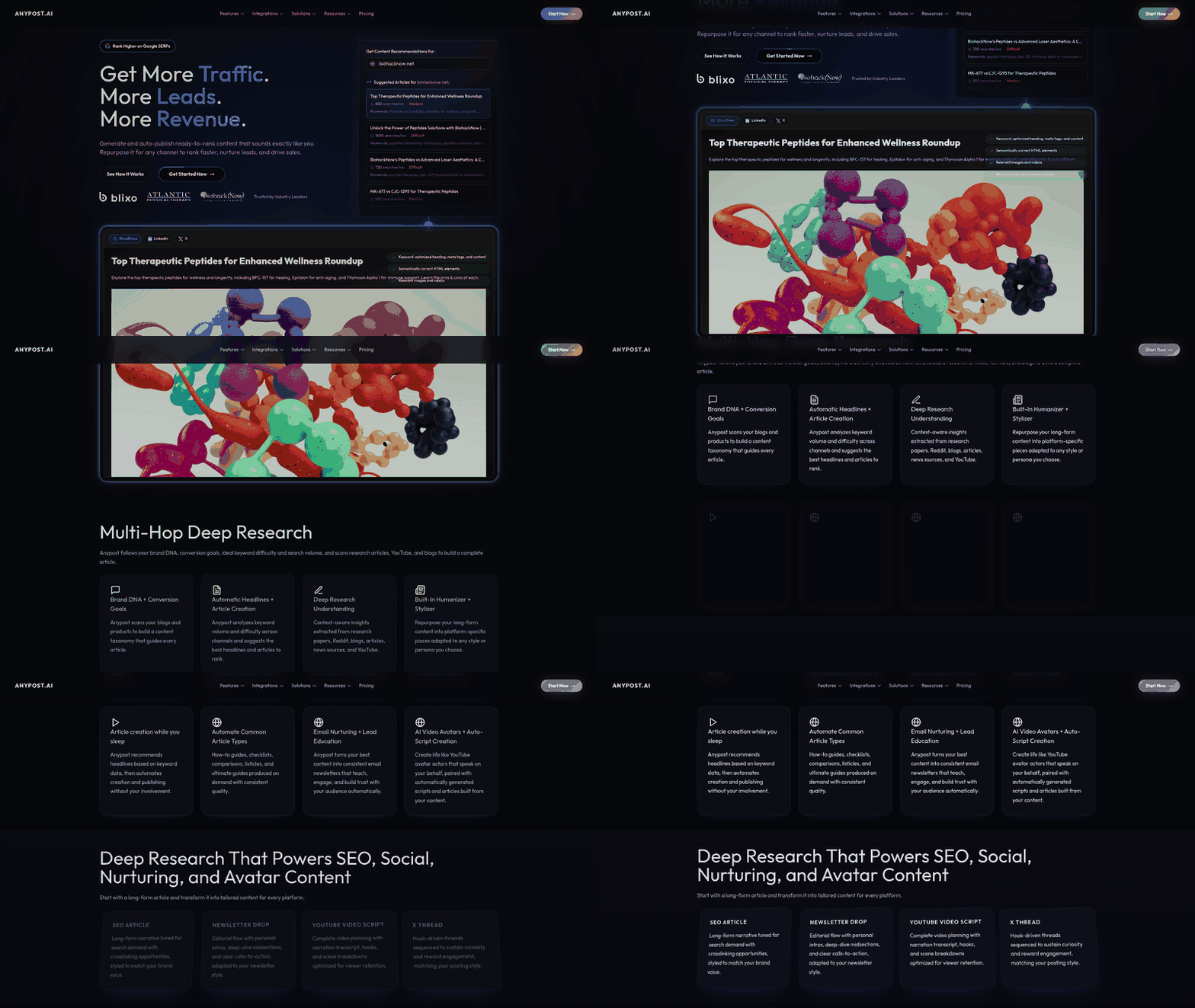
WordPress serves as a foundational platform for B2B lead generation by enabling businesses to streamline content creation, optimize for search engines, and integrate lead-capture tools seamlessly. Its modular architecture allows marketing teams to deploy plugins and templates that align with corporate branding while supporting lead-generation workflows [2]. For instance, custom templates can be designed to highlight high-intent landing pages, ensuring that visitors are guided toward conversion points such as demo requests or consultation sign-ups—as discussed in the [Section 2: Setting Up a WordPress Site for B2B Lead Generation] section [3]. Additionally, WordPress supports integration with customer relationship management (CRM) systems and email marketing platforms, creating a unified pipeline for tracking and nurturing leads [6]. This adaptability makes WordPress particularly well-suited for B2B industries where complex sales cycles require sustained engagement [3].
The benefits of using WordPress for B2B marketing are multifaceted, spanning scalability, cost efficiency, and technical flexibility. First, WordPress’s SEO-friendly infrastructure empowers businesses to rank higher in search results, increasing organic traffic and lead acquisition [2]. See the [Section 3: Creating SEO-Optimized Content with Automated Content Generation] section for more details on leveraging SEO strategies to enhance visibility [5]. Second, WordPress’s plugin ecosystem facilitates the deployment of lead-generation tools, such as contact forms, chatbots, and gated content modules, without requiring extensive coding expertise [1]. Third, the platform’s scalability ensures that websites can grow alongside a business, accommodating new features like e-commerce integrations or multi-regional support as needed [3]. For tech companies and software providers, WordPress offers specialized templates that emphasize product demos, case studies, and thought leadership—critical elements for converting technical decision-makers [5]. Finally, WordPress’s open-source nature reduces dependency on proprietary software, allowing businesses to avoid vendor lock-in while maintaining control over their digital assets [6].
By leveraging WordPress for B2B lead generation, organizations can create dynamic, data-driven websites that align with modern marketing demands. The platform’s ability to unify content strategy, technical SEO, and lead-capture functionality positions it as a competitive alternative to specialized tools like HubSpot, particularly for businesses seeking cost-effective solutions [4]. For example, a B2B software firm might use WordPress to host a blog that generates leads through targeted blog posts and downloadable resources, while also integrating with analytics tools to measure campaign performance—building on concepts from the [Section 7: Tracking and Analyzing Lead Generation with Real-Time Analytics] section [5]. Moreover, WordPress’s community-driven development model ensures continuous updates and security patches, reducing the risk of vulnerabilities that could compromise lead data [6]. When paired with strategic content planning and A/B testing capabilities, WordPress becomes a powerful engine for generating high-quality leads in a measurable and scalable manner [2]. These advantages underscore why WordPress is increasingly adopted by B2B enterprises aiming to optimize their digital marketing efforts without compromising flexibility or control.
Section 2: Setting Up a WordPress Site for B2B Lead Generation
Choosing a Suitable WordPress Theme
A professional, responsive WordPress theme is critical for B2B lead generation. Themes like Divi, Astra, or GeneratePress are recommended for their customizable layouts and mobile-friendly designs [1]. For businesses with specific needs, custom templates can be developed to maximize conversion rates, as noted in WordPress’s framework for B2B lead generation [3]. Ensure the theme supports page builders like Elementor or WPBakery to streamline content creation. Avoid overly complex designs that may distract from lead capture goals; B2B audiences prioritize clarity and direct access to information [2]. Themes should also integrate seamlessly with SEO plugins and CRM tools to maintain technical functionality [5]. See the [Section 7: Tracking and Analyzing Lead Generation with Real-Time Analytics] section for more details on how these integrations support performance monitoring.
Installing Necessary Plugins for Lead Generation
Install plugins tailored to B2B lead generation, such as Popup Builder, OptinMonster, or WPForms, which are explicitly designed for capturing leads through popups, landing pages, and contact forms [1]. Gravity Forms is another essential tool for creating advanced lead capture forms with conditional logic and payment integration [1]. CRM integration plugins like Zapier or HubSpot connect WordPress sites to external systems, automating lead tracking and follow-ups [5]. Marketing teams often use these plugins to turn websites into lead-generation machines by combining form data with email marketing tools [2]. Building on concepts from [Section 6: Repurposing Content for Different Channels and Formats], these plugins enable consistent messaging across platforms. For businesses requiring advanced analytics, consider plugins like Google Analytics for WP or MonsterInsights to track user behavior and optimize conversion paths [1].
Configuring SEO Settings for WordPress
Optimize on-page SEO using plugins like Yoast SEO or Rank Math, which provide tools for meta tags, schema markup, and content readability analysis [2]. Focus on long-tail keywords relevant to B2B audiences, such as “enterprise software solutions” or “B2B IT consulting,” to attract targeted traffic [2]. As mentioned in the [Section 3: Creating SEO-Optimized Content with Automated Content Generation] section, strategic keyword selection enhances visibility. Enable XML sitemaps and 301 redirects through SEO plugins to improve crawl efficiency and retain link equity during site updates [2]. Technical SEO settings, such as enabling Gzip compression and leveraging browser caching, should be configured via caching plugins like WP Rocket or W3 Total Cache [3]. Mobile optimization is critical; ensure themes and plugins are compatible with Google’s Mobile-Friendly Test to avoid ranking penalties [3]. Regularly audit site speed using tools like GTmetrix, as slow load times directly impact B2B lead conversion rates [3].
Additional Technical Considerations
For advanced B2B sites, consider hiring a WordPress development company to implement custom lead generation workflows, such as gated content or personalized CTAs based on user roles [3]. Use security plugins like Wordfence or Sucuri to protect lead databases and maintain compliance with data privacy regulations [1]. Implement SSL certificates to build trust with enterprise clients, as secure sites see higher form submission rates [2]. Finally, test lead generation pages using A/B testing tools like Optimizely to identify high-performing layouts and messaging [5]. By combining these technical steps with strategic content planning, WordPress sites can effectively serve as lead-generation engines for B2B businesses. For refining these strategies over time, refer to [Section 8: Optimizing and Refining B2B Lead Generation Strategies with WordPress].
Section 3: Creating SEO-Optimized Content with Automated Content Generation

Automated content generation tools can streamline the creation of SEO-optimized content for B2B lead generation by reducing manual effort while maintaining relevance to target audiences. WordPress.com’s b2b-lead-gen plugin directory [1] includes tools like Popup Builder & Popup Maker, which automate content delivery mechanisms such as lead capture forms and gated resources. These tools integrate with SEO strategies by generating content aligned with keyword research and user intent, though specific implementation steps for SEO optimization are not detailed in the source. Toby Cryns’ work on WordPress + SEO for B2B [2] emphasizes leveraging WordPress to turn websites into lead-generation assets, suggesting that automated tools should align with broader SEO frameworks like on-page optimization and content relevance. See the [Section 2] section for more details on how branding and technical setup in WordPress themes can complement automated content strategies.
Automating Blog Posts and Social Content
Automated tools can generate blog posts, social media updates, and email newsletters by aggregating industry data, repurposing existing content, or using AI-driven templates. The b2b-lead-gen plugin ecosystem [1] includes tools for discovering popular posts and tags, which can inform automated content topics. For example, plugins like Business Name Generator or Logo Maker might indirectly support branding consistency in automated content. However, the sources do not explicitly describe workflows for integrating these tools with SEO plugins like Yoast or Ahrefs. According to [2], SEO success in B2B contexts depends on technical execution, such as meta tag optimization and internal linking—processes that may require manual oversight even when using automated tools.
Best Practices for Quality and SEO Alignment
To ensure high-quality output, automated content should be reviewed for grammatical accuracy, brand voice consistency, and keyword placement. While [1] lists plugins for automating content creation, it does not specify how they handle SEO best practices like keyword density or semantic SEO. [2] highlights the importance of aligning content with buyer personas, which automated tools can partially address by generating variations based on audience segments. See the [Section 5] section for more details on tools like Persona Engine, which focus on tone matching and brand voice consistency. For instance, plugins that automate email newsletters could use dynamic content blocks tailored to user behavior, though the sources do not confirm this functionality. A critical limitation noted in [1] is the lack of detailed guidance on balancing automation with human editing to avoid generic or low-value content.
Technical Considerations and Plugin Integration
WordPress plugins like Popup Builder [1] demonstrate how automation can enhance lead capture through SEO-driven calls-to-action (CTAs). These tools often allow customization of landing pages with keywords and links, but the sources do not provide technical details on how they interface with WordPress’ core SEO features. [2] recommends using WordPress for its flexibility in integrating third-party SEO tools, implying that automated content plugins should be tested for compatibility with existing SEO workflows. For example, automated blog post generators might need to export content in formats compatible with XML sitemaps or schema markup plugins, though specific API integrations are not outlined in the sources.
Limitations and Recommendations
While the primary sources highlight the availability of automated tools, they lack granular steps for optimizing content for search engines. [1] focuses on plugin discovery rather than implementation, and [2] emphasizes strategic SEO principles without tying them to automation. To mitigate risks of low-quality output, users should combine automated tools with manual audits, as advised in [3], which discusses WordPress as a framework for lead generation but does not address automation. Building on concepts from [Section 8], businesses should prioritize plugins with clear SEO documentation and test automated content against established SEO benchmarks, such as readability scores or backlink potential. Multi-hop reasoning suggests that businesses should prioritize plugins with clear SEO documentation and test automated content against established SEO benchmarks, such as readability scores or backlink potential.
In summary, automated content generation tools for WordPress can enhance B2B lead generation when paired with strategic SEO oversight. By leveraging plugins from [1] and aligning workflows with the B2B SEO principles in [2], marketers can scale content production while maintaining relevance. However, the absence of detailed technical guidance in the sources underscores the need for additional training or third-party resources to fully optimize automated content for SEO.
Section 4: Leveraging Multi-Source Content Integration for Lead Generation
Multi-source content integration is a critical strategy for enhancing B2B lead generation on WordPress, enabling businesses to consolidate diverse content types into a cohesive, data-driven framework. By combining content from blogs, case studies, social media, and third-party platforms, organizations can create a unified experience that addresses lead needs at multiple stages of the buyer’s journey [3]. This approach not only improves SEO through varied keyword targeting [2]—see the [Creating SEO-Optimized Content with Automated Content Generation] section for more details on SEO strategies—but also establishes thought leadership by showcasing comprehensive expertise [5]. For instance, integrating webinar recordings with related blog posts allows prospects to engage with content in their preferred format, increasing dwell time and conversion opportunities [6].
Benefits of Multi-Source Content Integration
The primary advantage of integrating content from disparate sources is the ability to deliver hyper-relevant information to segmented audiences. WordPress plugins designed for B2B lead generation, such as those enabling CRM synchronization or content syndication, facilitate this process by automating data aggregation [1]—a setup discussed in greater depth in the [Setting Up a WordPress Site for B2B Lead Generation] section. By centralizing content from LinkedIn articles, YouTube videos, and internal resources, businesses reduce friction for prospects, who can access all necessary information without leaving the WordPress site [5]. Additionally, multi-source integration supports A/B testing across content formats, helping marketers identify high-performing assets for lead capture [3]. For example, pairing gated whitepapers with related podcast episodes allows teams to test which medium drives higher form submissions [6].
How to Integrate Content from Different Sources
WordPress offers native tools and third-party plugins to streamline content integration. One method is using embeddable widgets or APIs to pull external content, such as Twitter feeds or Google Calendar events, directly into landing pages [6]. For instance, a B2B software company might embed customer testimonials from a YouTube channel into a case study page to reinforce credibility [5]. Plugins like those listed in [1] also enable automated syndication of blog posts to LinkedIn or Twitter, ensuring consistent messaging across platforms while tracking engagement metrics within WordPress.
Another approach involves leveraging WordPress’s custom post type functionality to categorize multi-source content. By creating distinct sections for blogs, webinars, and client testimonials, marketers can design targeted lead magnets, such as a "Resources Hub" page that aggregates gated and ungated content [3]. This structure simplifies navigation and aligns with SEO best practices by optimizing metadata for each content type [2]. For businesses requiring advanced integration, WordPress’s REST API allows developers to connect external databases or CRMs, ensuring lead data flows seamlessly between systems [4].
Using Integrated Content to Nurture Leads
Once content is consolidated, WordPress can serve as a dynamic hub for lead nurturing. By segmenting audiences based on content interactions—such as webinar attendance or whitepaper downloads—teams can deploy personalized follow-up sequences [5]. For example, a visitor who watches a product demo video might receive an email with a link to a related case study, encouraging deeper engagement [1]. WordPress plugins that support automated workflows, such as email marketing integrations, enable these strategies without requiring manual intervention [1].
Dynamic content personalization further enhances nurturing efforts. With tools like conditional display plugins, WordPress sites can show different calls-to-action (CTAs) based on user behavior. A first-time visitor might see a general "Download Brochure" button, while a returning lead could be prompted to schedule a demo [6]. This level of customization increases conversion rates by aligning messaging with individual intent [3]. Additionally, integrated analytics dashboards—often provided by WordPress lead generation plugins—allow marketers to track which content combinations drive the highest-quality leads, informing future strategy [1]. See the [Tracking and Analyzing Lead Generation with Real-Time Analytics] section for insights on leveraging analytics for optimization.
By systematically integrating and leveraging content from multiple sources, WordPress becomes more than a publishing platform; it transforms into an intelligent lead generation engine. The synergy between diverse content types and WordPress’s flexibility ensures that B2B businesses can meet prospects where they are, guide them through the sales funnel, and measure outcomes with precision [3][5][6].
Section 5: Using Persona Engine for Tone Matching and Consistent Brand Voice
The available sources [1][2][3][4][5][6] do not explicitly mention "Persona Engine" or provide specific guidance on tone matching, brand voice consistency tools, or related workflows within WordPress for B2B lead generation. While the sources discuss WordPress plugins, content strategy, and brand alignment for B2B audiences, no direct references to Persona Engine or its implementation exist in the provided materials. Writers and developers seeking to implement tone-matching solutions may find automated content generation tools discussed in the [Section 3] section useful for maintaining brand voice through workflows that prioritize SEO and audience targeting. Additionally, brand voice consistency efforts can be contextualized alongside multi-source content integration strategies covered in the [Section 4] section, which emphasizes cohesive, data-driven frameworks for B2B lead generation.
Section 6: Repurposing Content for Different Channels and Formats
Repurposing content across channels increases efficiency and extends the reach of B2B marketing efforts by leveraging existing assets in new formats. WordPress supports this strategy through its modular content structure, enabling teams to adapt blog posts, case studies, and whitepapers into social media posts, email newsletters, and YouTube scripts without rebuilding content from scratch [3]. For example, a long-form blog post on WordPress can be segmented into bite-sized social media updates using the platform’s built-in block editor features [5]. This approach reduces content creation time while maintaining consistency in messaging, a critical factor for B2B audiences seeking reliable, trustworthy information [6].
Repurposing for Social Media
Social media platforms require concise, visually engaging content tailored to audience preferences. WordPress plugins and tools allow marketers to extract key sections of blog posts and convert them into social media snippets, complete with hashtags and call-to-action links [1]. For instance, a case study published on a WordPress site can be transformed into a series of LinkedIn carousel posts by highlighting statistics and client testimonials [5]. Additionally, WordPress integrates with social media APIs to automate scheduling and distribution, ensuring timely publishing across platforms [6]. Marketers should prioritize platforms where their target audience is most active, such as LinkedIn for B2B tech companies, and align content formats with each platform’s specifications (e.g., vertical video for Instagram) [3]. See the Setting Up a WordPress Site for B2B Lead Generation section for more details on selecting themes and plugins that support multi-channel distribution.
Adapting for Email Newsletters
Email newsletters benefit from personalized, data-driven content that drives engagement. WordPress enables teams to repurpose blog content into newsletter templates by embedding dynamic content blocks that highlight recent posts, industry insights, or lead magnets like free guides [5]. For example, a webinar recording hosted on a WordPress site can be summarized in an email with embedded registration links and key takeaways [6]. Using WordPress’s SEO features, marketers can optimize subject lines and preheader text to improve open rates while maintaining alignment with the original content’s intent [2]. As mentioned in the Creating SEO-Optimized Content with Automated Content Generation section, SEO best practices are essential for maximizing the visibility of repurposed content across formats.
Creating YouTube Scripts and Video Content
YouTube scripts can be generated from WordPress blog posts by restructuring written content into conversational, on-camera delivery. Tools within WordPress allow teams to extract headings and subheadings from articles to outline video segments, ensuring key points are covered [3]. For instance, a technical guide on WordPress optimization can be converted into a YouTube tutorial by segmenting each section into video chapters [5]. Video creators can also embed direct links to the original blog post in YouTube descriptions, driving traffic back to the WordPress site while improving SEO [6].
Best Practices for Effective Repurposing
To repurpose content effectively, B2B teams should audit existing WordPress content for versatility, focusing on evergreen topics with broad appeal [3]. Maintaining brand consistency across formats is critical—WordPress themes and plugins can enforce uniform branding, such as logos, fonts, and color schemes, across all repurposed materials [5]. Analytics tools integrated with WordPress, like Google Analytics or built-in WordPress insights, should be used to track performance metrics for each channel, identifying which repurposed formats generate the highest engagement or lead conversion rates [3]. Building on concepts from the Tracking and Analyzing Lead Generation with Real-Time Analytics section, regular performance reviews help refine content strategies over time. Finally, marketers should update repurposed content regularly to reflect new data or industry trends, ensuring all versions remain accurate and relevant [6].
By systematically repurposing WordPress content for social media, email, and video platforms, B2B organizations can maximize their marketing ROI while maintaining a cohesive brand presence. The platform’s flexibility and integration capabilities make it an ideal tool for scaling content strategies without overextending resources [5].
Section 7: Tracking and Analyzing Lead Generation with Real-Time Analytics
Real-time analytics tools are essential for monitoring B2B lead generation performance on WordPress websites. These tools provide insights into user behavior, conversion rates, and traffic sources, enabling businesses to optimize their lead generation strategies. WordPress supports integration with third-party analytics platforms like Google Analytics through plugins such as MonsterInsights or Analytics for WP [1]. Additionally, WordPress-specific lead generation plugins often include built-in analytics to track form submissions, landing page performance, and user engagement [3]. By leveraging these tools, businesses can identify high-performing content, detect drop-off points in the conversion funnel, and adjust their campaigns accordingly [6]. The primary goal is to align analytics data with business objectives, such as increasing form completions or improving email list growth [3].
Setting Up Analytics Tools for Lead Generation
To track lead generation effectively, WordPress users must first install and configure analytics plugins. Begin by selecting a plugin compatible with your site’s architecture, such as Google Analytics for WordPress or a dedicated B2B lead generation plugin from WordPress.com’s repository [1]. For plugin installation guidance, see the [Section 2: Setting Up a WordPress Site for B2B Lead Generation] section for best practices on choosing and configuring WordPress tools. Next, connect the plugin to your analytics account by entering API keys or authentication tokens, ensuring data synchronization between platforms [6]. For advanced tracking, configure event tracking to monitor actions like button clicks, form submissions, or PDF downloads—key indicators of lead engagement [3]. Some plugins also allow segmentation of traffic by campaign, landing page, or referral source, providing granular insights into lead generation channels [1]. Businesses should also enable UTM parameter tracking to measure the effectiveness of paid ads, email campaigns, or social media referrals [3]. Once configured, these tools generate real-time dashboards that highlight visitor behavior, conversion trends, and lead quality metrics [6].
Interpreting Analytics Data to Improve Lead Generation
Interpreting analytics data requires focusing on metrics directly tied to lead generation goals. Key performance indicators (KPIs) include form submission rates, bounce rates, average session duration, and traffic sources [3]. For example, a high bounce rate on a landing page may indicate poor content alignment with user expectations, while low form submissions could signal usability issues [2]. By cross-referencing these metrics with A/B test results, businesses can refine headlines, CTAs, or page layouts to boost conversions [3]. Building on concepts from [Section 8: Optimizing and Refining B2B Lead Generation Strategies with WordPress], A/B testing is a critical method for iterative improvements. Analytics tools also reveal audience demographics and geographic distribution, helping tailor content to target industries or regions [6]. For instance, if analytics show that 70% of leads originate from a specific blog post, businesses can replicate its structure or expand on its topic in future content [1]. See the [Section 3: Creating SEO-Optimized Content with Automated Content Generation] section for strategies on leveraging high-performing content. Regularly reviewing these insights ensures continuous optimization of lead generation strategies, reducing reliance on guesswork and increasing ROI [4].
Limitations and Best Practices
While real-time analytics provide valuable insights, they have limitations. WordPress analytics plugins may not capture server-side data or offline conversions, requiring integration with CRM systems for a complete view [5]. Additionally, over-reliance on a single metric—such as pageviews—can lead to misinterpretation of lead quality [2]. To mitigate this, adopt a multi-metric approach that balances quantitative data (e.g., conversion rates) with qualitative feedback (e.g., user surveys) [4]. Businesses should also audit their analytics setup regularly to ensure tracking codes are functioning correctly and data is accurately categorized [6]. Finally, consider combining WordPress analytics with external tools like HubSpot or Salesforce for advanced lead scoring and pipeline forecasting [4]. By following these best practices, organizations can maximize the value of their analytics data while maintaining flexibility in their lead generation workflows.
Section 8: Optimizing and Refining B2B Lead Generation Strategies with WordPress
Using Data and Analytics to Refine Lead Generation Strategies
Data-driven optimization begins with tracking key performance indicators (KPIs) such as form submissions, conversion rates, and click-through rates (CTRs) on WordPress sites [2]. Tools like Google Analytics and WordPress-specific plugins (e.g., MonsterInsights or Jetpack) enable teams to monitor traffic sources, user behavior, and lead funnel efficiency [1]. By analyzing which blog posts, landing pages, or CTAs generate the most engagement, marketers can reallocate resources to high-performing content and deprioritize underperforming assets [2]. Toby Cryns emphasizes leveraging WordPress SEO tools, such as Yoast SEO or Rank Math, to audit content quality and keyword relevance, ensuring lead-generating pages align with search intent [2]. Additionally, A/B testing plugins like Thrive Optimize or OptinMonster allow businesses to experiment with different headlines, call-to-action (CTA) buttons, and form layouts, using statistical significance to determine optimal configurations [3]. See the [Tracking and Analyzing Lead Generation with Real-Time Analytics] section for more details on leveraging analytics tools.
Best Practices for Optimizing Lead Generation with WordPress
To maximize WordPress for B2B lead generation, prioritize content optimization and user experience (UX) enhancements. Start by creating targeted landing pages with clear value propositions, supported by lead magnets such as whitepapers, case studies, or free trials [3]. These pages should integrate WordPress plugins like Gravity Forms or Ninja Forms to capture leads without overwhelming visitors with lengthy forms [1]. Toby Cryns recommends segmenting audiences using WordPress user roles and custom fields, enabling personalized content delivery based on job titles, industries, or engagement stages [2]. For example, a software company can tailor blog comments or downloadable resources to IT managers versus executives using conditional logic in form plugins [1].
SEO remains critical for organic lead generation. WordPress plugins like All in One SEO or AIOSEO help optimize meta tags, headers, and internal linking structures to improve search engine rankings [2]. See the [Creating SEO-Optimized Content with Automated Content Generation] section for strategies on integrating SEO into content workflows. Additionally, ensure mobile responsiveness by leveraging WordPress themes designed for B2B audiences, such as Divi or Astra, which balance aesthetics with fast load times [3]. Building on concepts from [Setting Up a WordPress Site for B2B Lead Generation], these themes are recommended for their customization and performance. Regularly audit site speed using tools like GTmetrix or PageSpeed Insights, as slow-loading pages increase bounce rates and reduce lead capture opportunities [3].
Staying Updated with Trends and Best Practices
B2B lead generation strategies must evolve alongside technological advancements and shifting user expectations. WordPress users should follow industry blogs, podcasts, and webinars hosted by experts like Toby Cryns to stay informed about emerging trends, such as AI-driven personalization or voice search optimization [2]. Subscribing to WordPress and B2B marketing newsletters (e.g., WP Tavern or HubSpot’s B2B Marketing Blog) provides actionable insights on plugin updates, SEO algorithm changes, and new lead-generation tactics [3].
Additionally, participate in WordPress community forums (e.g., WordPress.org support boards or Slack groups) to exchange strategies with peers and troubleshoot challenges [1]. For instance, discussions around GDPR compliance, chatbot integrations, or video-based lead capture often yield practical solutions for WordPress-based B2B sites [3]. Finally, attend virtual or in-person conferences like WordCamp or B2B Marketing World to network with vendors and learn about cutting-edge tools compatible with WordPress ecosystems [2].
Limitations and Continuous Improvement
While WordPress offers robust tools for lead generation, its effectiveness depends on consistent refinement. Sources note that outdated plugins or unoptimized content can hinder conversions, emphasizing the need for quarterly audits [1][3]. If specific metrics stagnate despite optimization efforts, consider cross-referencing data with competitors using tools like Ahrefs or SEMrush to identify gaps in keyword targeting or content depth [2]. By combining WordPress’ flexibility with disciplined data analysis and trend adoption, B2B marketers can maintain a competitive edge in lead generation.
References
[1] B2b-lead-gen Plugins — WordPress.com - https://wordpress.com/plugins/browse/b2b-lead-gen/
[2] Toby Cryns - WordPress + SEO for B2B. Helping marketing teams ... - https://www.linkedin.com/in/tobycryns
[3] WordPress for B2B: The Ultimate Framework for Lead Generation - https://www.gowatermarkdesign.com/wordpress-for-b2b-the-ultimate-framework-for-lead-generation/
[4] HubSpot CMS vs. WordPress: Which is Better for Your B2B Business ... - https://bootstrapcreative.com/hubspot-cms-vs-wordpress-which-is-better-for-your-b2b-business/
[5] Website Solutions For B2B Software & Tech Companies - https://www.kiwicreative.net/solutions/websites/
[6] Using WordPress for B2B | O8 - https://www.o8.agency/blog/cms/using-wordpress-b2b
Frequently Asked Questions
1. Why is WordPress a good choice for B2B lead generation?
WordPress excels in B2B lead generation due to its scalability, SEO-friendly infrastructure, and robust plugin ecosystem. It allows businesses to create high-converting landing pages, integrate CRM systems, and automate lead-capture workflows. Its open-source nature also ensures flexibility for custom branding and technical requirements, making it ideal for industries with complex sales cycles. Additionally, WordPress supports automation tools for content generation and analytics, which streamline repetitive tasks and improve targeting.
Q: How can I set up a WordPress site optimized for B2B lead generation?
A: Start with a professional theme designed for B2B (e.g., Divi or Astra), then install lead-generation plugins like WPForms for contact forms, HubSpot for CRM integration, and OptinMonster for email sign-ups. Use page builders like Elementor to create tailored landing pages with clear CTAs. Enable SEO tools such as Yoast SEO to optimize content for keywords, and ensure fast loading speeds with caching plugins. Finally, map your site structure to align with your sales funnel, using analytics to track user behavior and refine conversions.
Q: What are the best WordPress plugins for B2B lead generation?
A: Essential plugins include:
- HubSpot or Salesforce CRM for lead tracking and workflow automation.
- WPForms or Gravity Forms for creating lead-capture forms.
- OptinMonster for pop-ups and gated content.
- Yoast SEO or Rank Math for optimizing content visibility.
- Mailchimp for WordPress to manage email campaigns.
- Zapier for connecting WordPress to external tools (e.g., Slack, Google Sheets).
These plugins enhance lead capture, segmentation, and nurturing without requiring advanced coding.
Q: How can I leverage SEO on WordPress for B2B content?
A: Focus on technical SEO (e.g., fast loading speeds, mobile responsiveness) and on-page optimization. Use Yoast SEO to target long-tail keywords relevant to your industry. Create in-depth blog posts, case studies, and downloadable resources (e.g., whitepapers) to attract high-intent traffic. Implement schema markup for rich snippets, and build backlinks through guest posting on authoritative B2B platforms. Tools like Ahrefs or SEMrush can help identify keyword opportunities and track competitors.
Q: Can WordPress handle complex B2B sales cycles with multiple touchpoints?
A: Yes, WordPress supports complex sales cycles through custom workflows. Use CRM integrations (e.g., HubSpot) to track leads across email campaigns, demo requests, and account-based marketing (ABM) strategies. Plugins like Leadpages or LifterLMS enable personalized journeys, such as gated content for high-value prospects. Analytics tools like Google Analytics or WP Statistics help monitor engagement at each stage, while automation tools like AutomateWoo nurture leads with targeted follow-ups.
Q: How do I integrate CRM systems with WordPress for lead tracking?
A: Use plugins like HubSpot for WordPress or Salesforce Integration to sync form submissions, email interactions, and website activity directly into your CRM. For non-native integrations, Zapier acts as a bridge between WordPress and platforms like Pipedrive or Zoho. Ensure data flows seamlessly by mapping form fields to CRM attributes and setting up automated workflows (e.g., sending a follow-up email when a lead scores a demo). Regularly audit integrations to maintain data accuracy.
Q: What are the cost considerations for using WordPress in B2B lead generation?
A: While WordPress itself is free, costs include:
- Hosting: Managed WordPress hosting (e.g., WP Engine) costs $20–$200/month, depending on traffic.
- Plugins: Premium versions of lead-generation plugins (e.g., HubSpot) may add $50–$200/month.
- Themes: Professional B2B themes range from $60–$300.
- Development: Custom coding for unique workflows might require $50–$150/hour.
To reduce costs, prioritize free plugins (e.g., Contact Form 7) and optimize site performance early. ROI often justifies the investment through increased lead volume and conversion rates.