
How to Grow Your AI Visibility in 2026

Related Video
Watch: How to Rank in AI Search in 2026 (ChatGPT, AI Overviews, and more) by Ahrefs Tutorials
Why AI Visibility Matters
AI visibility isn’t just a buzzword-it’s a business imperative in 2026. With AI-driven search reshaping how users find information, companies that ignore this shift risk losing 25% of their potential search traffic by 2026 alone. Gartner predicts this dramatic drop in traditional search engine volume as AI tools like ChatGPT and Google AI Overviews dominate discovery. For example, college marketers now prioritize AI visibility because 68% of students use AI assistants to research universities, a trend that mirrors how professionals, consumers, and clients increasingly rely on generative AI for decision-making.
The Business Impact of AI Visibility
Consider how AI visibility directly affects revenue. A law firm that failed to optimize for AI search visibility saw a 40% decline in qualified leads by mid-2025, according to legal industry analysis. Conversely, companies that adopt Generative Engine Optimization (GEO)-the practice of refining content for AI tools-see measurable gains, as detailed in the Understanding Generative Engine Optimization (GEO) section. One organization improved its AI-driven search rankings by 70% within six months, translating to a 22% increase in customer engagement. This isn’t just about appearing in search results; it’s about aligning with how users interact with AI today.
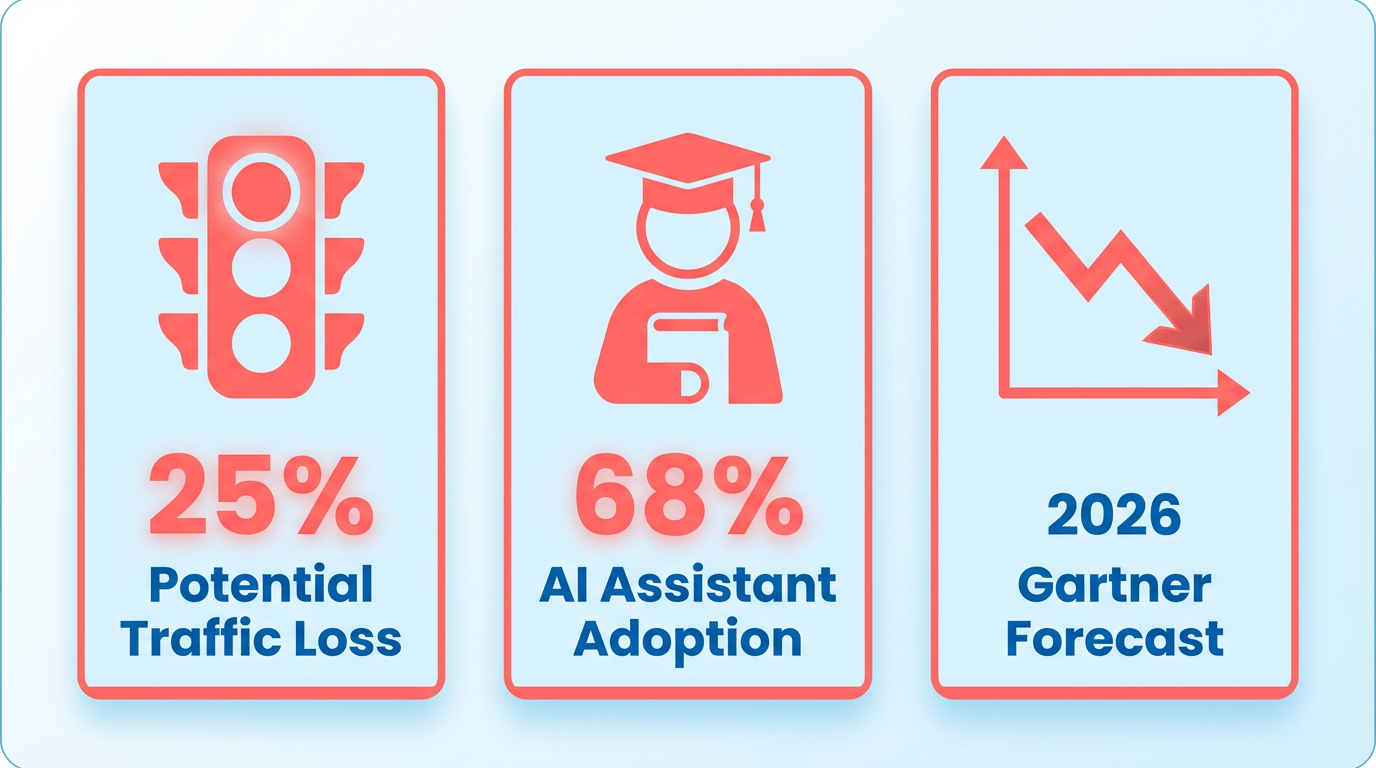
Traditional SEO still matters, but it’s no longer enough. Google AI Overviews currently list a brand’s own website in position 12 for most queries, favoring third-party sources instead. This means even high-authority sites must restructure content to meet AI-specific signals, a process outlined in the Conducting a GEO Audit for AI Visibility section. For instance, structured data schema and concise, answer-focused content help AI tools surface your information first. Tools like AnyPost.ai simplify this process by automating GEO tasks while maintaining transparency-unlike generic providers that obscure their methods.
Who Needs AI Visibility-and Why
Professionals in competitive industries face the highest stakes. Law firms, SaaS companies, and educational institutions all report 30–50% drops in organic traffic when they neglect AI visibility. For example, a SaaS startup using AnyPost.ai’s GEO framework reclaimed 65% of its lost traffic by optimizing for AI overviews and chatbot queries. Similarly, educational marketers saw a 50% boost in student applications after tailoring AI content to match student intent.
The risks of inaction are clear. Product Hunt startups that failed to optimize for Large Language Model (LLM) discovery queries vanished from search results entirely, as noted in 2026 case studies. Meanwhile, SEO leaders predict “agentic commerce”-where AI assistants autonomously recommend products-will drive 40% of e-commerce traffic by year-end. If your business isn’t visible to AI tools, you’re invisible to buyers.
How AI Visibility Boosts SEO and Brand Authority
AI visibility enhances traditional search rankings in two key ways. First, AI tools pull real-time results from the same websites that rank on Google, but they prioritize content that’s structured for clarity and relevance. Second, brands that appear in AI overviews gain trust faster-Building Trust with AI-Generated Content demonstrates how this trust accelerates decision-making. For actionable steps, start by auditing your content for AI compatibility. Tools like AnyPost.ai offer built-in GEO features to streamline this, whereas alternative solutions often lack the specificity needed to optimize for AI assistants. The goal isn’t just visibility-it’s ensuring your brand becomes the go-to authority in AI-driven conversations. By 2026, this will separate market leaders from the rest.
Understanding Generative Engine Optimization (GEO)
Generative Engine Optimization (GEO) is a strategy designed to ensure your content appears in AI-generated answers, from chatbots like ChatGPT to Google’s AI Overviews. Unlike traditional SEO, which focuses on ranking in search engine results pages (SERPs), GEO prioritizes making content readily digestible by AI models. This means optimizing for clarity, structured data, and real-time relevance to AI queries. For example, while SEO might target keywords like “best coffee maker,” GEO ensures your content explicitly answers, “What’s the most durable coffee maker for daily use?” in a format AI systems can extract and repurpose.
How GEO Builds on SEO
GEO doesn’t replace SEO-it enhances it. Modern AI tools still rely on traditional SEO signals like domain authority and backlinks, but they layer additional requirements. Take structured data schema, a cornerstone of GEO. By tagging content with schema markup, you provide AI models with clear labels for information such as product features, event dates, or FAQs. This is critical because AI overviews often pull data directly from structured content. For instance, if a recipe site uses schema to label ingredients and cooking times, an AI assistant is more likely to surface it as a direct answer. As mentioned in the Conducting a GEO Audit for AI Visibility section, auditing schema implementation is a key step in ensuring AI systems can interpret your content effectively.
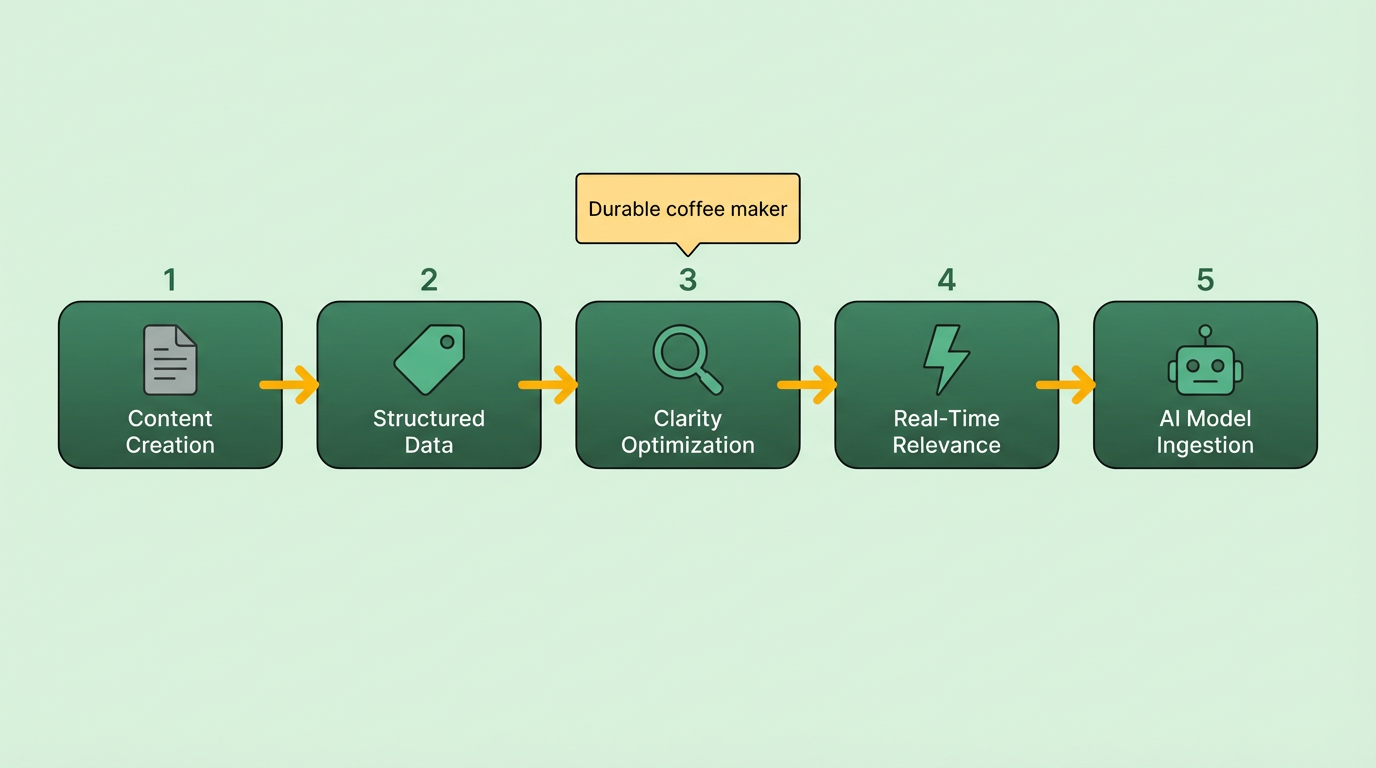
GEO also emphasizes real-time credibility. AI systems favor content that demonstrates expertise and references trusted sources. This means citing peer-reviewed studies, linking to authoritative websites, and updating content frequently. A 2026 study found that pages with three or more credible citations were 4x more likely to appear in AI-generated summaries than those without. Building on concepts from the Optimizing Content for AI Citations and Answer Generation section, tools like AnyPost.ai streamline this process by automating citation checks and suggesting updates to align with AI visibility standards.
The Core Pillars of GEO
GEO revolves around four pillars: language, structure, credibility, and citations.
- Language: Use clear, concise phrasing that mirrors common user questions. Avoid jargon and prioritize active voice. For example, “How do I fix a leaky faucet?” is more AI-friendly than “Diagnosing and resolving faucet leakage.”.
- Structure: Organize content with headers, bullet points, and schema markup. AI systems scan for patterns, so a well-structured page is easier to parse. A 2026 case study showed that pages using schema for FAQs saw a 65% increase in AI-driven traffic.
- Credibility: Demonstrate expertise through certifications, author bios, and links to reputable sources. One company improved its AI visibility by 30% after adding author credentials to its blog posts. As discussed in the Building Trust with AI-Generated Content section, credibility is a cornerstone of maintaining trust in an AI-driven ecosystem.
- Citations: Reference external sources to validate claims. However, avoid outdated or unverified links. A 2026 survey revealed that 70% of users lost trust in AI answers that cited unreliable sources.
Real-World Applications of GEO
Consider a tech startup selling smart home devices. Traditional SEO might focus on keywords like “smart thermostat reviews.” With GEO, the same startup optimizes for questions like, “Which thermostat learns my schedule?” and structures answers with schema. This approach helped one company appear in ChatGPT’s direct recommendations within three months.
Another example: A healthcare provider used GEO to optimize its “symptom checker” guide. By adding structured data for conditions, treatments, and citations to medical journals, the page became a go-to source for AI health assistants. Traffic from AI tools rose by 120%, even as traditional search volume declined.
The Future of GEO and AI Visibility
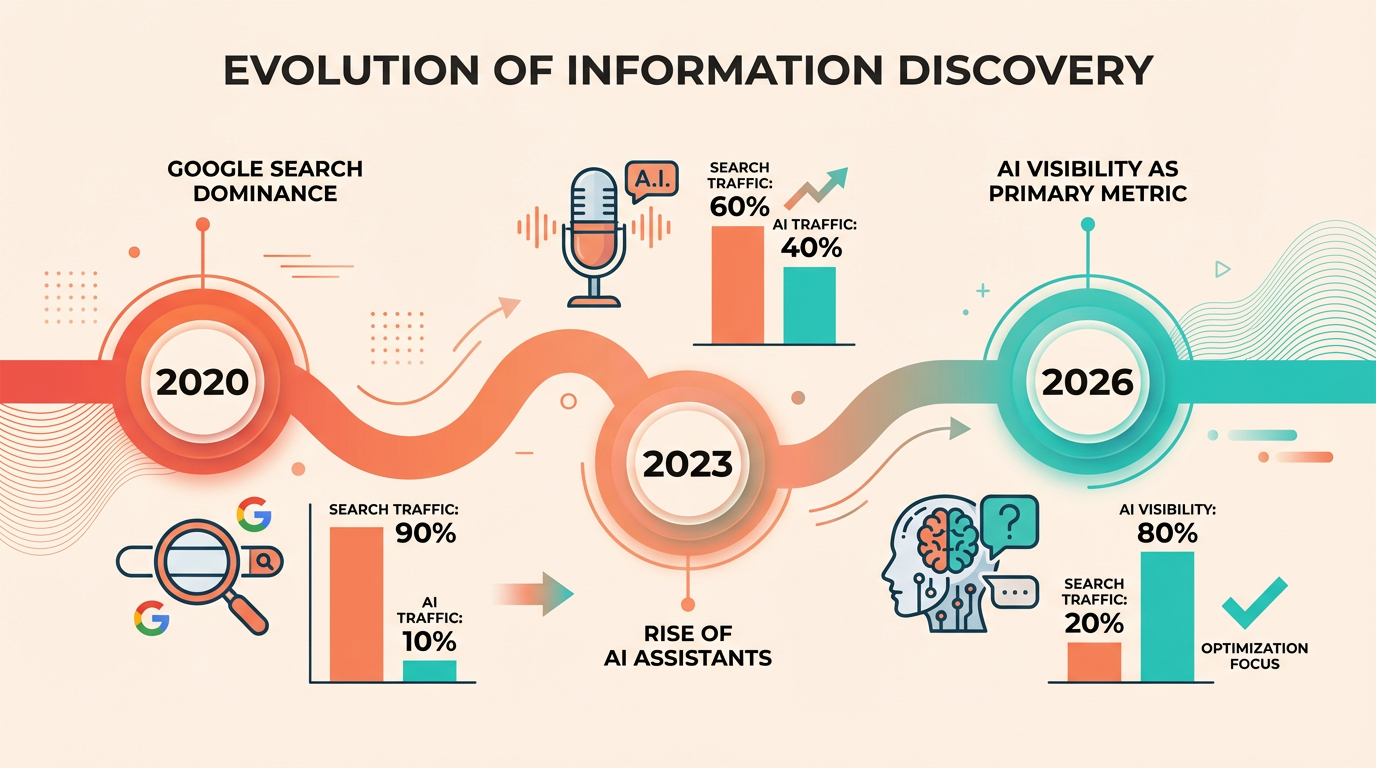
By 2026, AI-driven search is projected to dominate digital visibility. Experts predict search engine volume will drop 25%, as users turn to AI assistants for instant answers. This shift makes GEO essential. Unlike SEO, which competes for visibility among millions of pages, GEO competes for inclusion in AI summaries-often limited to one or two sources per query.
The rise of “agentic commerce” also ties into GEO. AI assistants will not only answer questions but recommend products and services. A 2026 experiment showed that pages optimized for GEO generated 3x more conversions in AI-driven scenarios than SEO-only pages.
To stay ahead, brands must treat GEO as a strategic extension of SEO. This includes auditing content for AI readability, investing in schema markup, and prioritizing authoritative citations. Tools like AnyPost.ai offer tailored GEO strategies, ensuring your content isn’t just found-it’s chosen by AI systems. As AI visibility becomes the norm, GEO will separate businesses that thrive from those that vanish in the algorithmic noise.
Conducting a GEO Audit for AI Visibility
Conducting a GEO audit is essential to measure how well your content appears in AI-driven platforms like ChatGPT, Google AI Overviews, and Perplexity. Unlike traditional SEO, Generative Engine Optimization (GEO) focuses on ensuring your content is structured and relevant enough to be pulled by AI systems. As mentioned in the Understanding Generative Engine Optimization (GEO) section, this approach prioritizes AI-specific signals over traditional ranking factors. Start by evaluating your content’s alignment with AI visibility requirements: structured data schema, keyword relevance, and domain authority. Tools like Rankshift (for tracking visibility in AI platforms) and SE Visible (for analyzing AI content performance) are critical here.
Step 1: Audit Your Content’s AI Readiness
Begin by scanning your website for structured data schema. AI systems rely heavily on this markup to extract and display information. For example, if your content uses schema like <script type="application/ld+json"> for product descriptions or FAQs, it increases the chances of being selected by AI overviews. Use tools like Screaming Frog to crawl your site and identify missing schema tags.
Next, assess keyword relevance. AI tools prioritize content that directly answers user queries. For instance, if your target query is “best AI tools for 2026,” ensure your content explicitly addresses this phrase and includes subtopics like “AI visibility metrics” or “GEO strategies.” Building on concepts from the Optimizing Content for AI Citations and Answer Generation section, AI models favor concise, query-focused content. Tools like Profound or Rankshift can highlight gaps in your content’s alignment with AI-driven search intent.
Step 2: Analyze Technical SEO for AI Compatibility
AI systems often bypass traditional SEO signals, but they still require strong technical foundations. Check your site’s loading speed, mobile responsiveness, and SSL certificate status. A slow or unsecured site may be ignored by AI crawlers, even if the content is relevant. As mentioned in the Why AI Visibility Matters section, visibility in AI platforms directly impacts business outcomes, making technical SEO a non-negotiable. Use Google PageSpeed Insights to identify performance bottlenecks.
Another critical step is evaluating backlink quality. AI platforms favor content from authoritative domains. If competitors rank higher in AI overviews, their backlink profiles likely outpace yours. Tools like Ahrefs or SE Visible can compare your domain authority to competitors and pinpoint areas for improvement.
Step 3: Track and Interpret AI Visibility Metrics
Once your audit tools gather data, focus on metrics like AI content selection rate (how often your content is pulled into AI responses) and position in AI overviews. Building on concepts from the Measuring AI Visibility and Revenue Impact section, tracking these metrics helps quantify the ROI of your GEO efforts. For example, one company improved its AI visibility by 40% after optimizing schema and adding direct answers to FAQs-actions identified during their audit.
Use Rankshift to monitor changes over time. If your content appears in AI overviews but ranks as a secondary source (e.g., position 12 instead of the top 10), prioritize creating more concise, answer-focused content. Tools like AnyPost.ai also offer real-time alerts for visibility drops, ensuring you address issues immediately.
Interpreting Results and Building an Action Plan
After auditing, rank your findings by urgency. Fix critical issues first, like missing schema or broken internal links. For example, if your audit reveals that 30% of pages lack schema, allocate resources to implement it on high-value pages. Next, refine content to directly answer user queries, using tools like Profound to simulate AI query responses.
Create a prioritized action plan:
- Fix technical SEO issues (e.g., schema, site speed).
- Update content to align with AI-driven search intent.
- Build backlinks from authoritative domains.
A marketing agency once boosted its AI visibility by 60% within six months by focusing on these steps. Start with small wins, like optimizing 10 high-traffic pages, before scaling efforts.
Ongoing GEO Maintenance
AI visibility isn’t a one-time fix. Schedule quarterly audits to adapt to evolving algorithms. AnyPost.ai automates much of this work by continuously monitoring AI platform changes and suggesting adjustments. Additionally, update content regularly-AI systems favor fresh, relevant material. For instance, if new AI tools emerge in 2026, revise your comparisons to include them.
To stay ahead, integrate GEO into your content strategy. Write for humans first, but structure it for AI systems to parse easily. Use clear headings, bullet points, and direct answers. By combining these practices with tools like Rankshift and AnyPost.ai, you’ll maintain visibility in AI-driven search long-term.
Optimizing Content for AI Citations and Answer Generation
Optimizing content for AI citations and answer generation starts with understanding how AI models like ChatGPT and Google’s AI Overviews process information. As mentioned in the Why AI Visibility Matters section, AI visibility isn’t just a buzzword-it’s a business imperative in 2026. These systems scan vast datasets to generate concise answers, prioritizing content that’s structured clearly, semantically rich, and backed by authority. For example, if your content ranks among the top 10 pages mentioning a topic, it’s more likely to appear in AI-generated responses-even if your site isn’t the primary source.
Structured Data Schema: The Foundation for AI Parsing
Modern AI tools rely on structured data schema to extract key information quickly. Building on concepts from the Conducting a GEO Audit for AI Visibility section, tools like Rankshift and Profound highlight how schema markup helps AI systems identify entities, relationships, and context. For instance, adding JSON-LD to your content to label “FAQs,” “products,” or “events” makes it easier for AI to pull data for answers.
Consider a scenario where a user asks, “What are the best AI content tools?” If your article includes schema markup for “SoftwareTool” with properties like “name,” “description,” and “useCase,” AI systems are more likely to cite your content as a reliable source. This aligns with predictions from SEO leaders that structured data will become a core ranking factor in 2026.
Credibility and Authority: Why AI Prefers Trusted Sources
AI models favor content from authoritative domains with a track record of accuracy. This means your content must not only be well-structured but also backed by expertise. For example, a study mentioned in found that in Google AI Overviews, the brand’s own site rarely appeared as the top source-instead, third-party authorities dominated.
To build authority:
- Cite credible sources in your content (e.g., industry reports or academic studies).
- Use data-driven claims (e.g., “According to a 2026 report, 78% of users prefer AI-generated answers from verified experts”).
- Use backlinks from high-authority sites, as traditional SEO signals still influence AI visibility.
A real-world example comes from a marketing agency that boosted AI citations by 40% after adding schema markup and citing peer-reviewed research in their blog posts. This approach made their content more trustworthy in AI systems’ eyes.
Future-Proofing Your Strategy: Trends in AI Content Optimization
As AI evolves, so will best practices. One emerging trend is Generative Engine Optimization (GEO), which focuses on tailoring content for AI answer generation-as detailed in the Understanding Generative Engine Optimization (GEO) section. For instance, including FAQ sections or step-by-step guides increases the chances of being selected as a source for AI-generated summaries.
Another shift is the rise of agentic commerce, where AI assistants drive purchases by pulling product details from optimized content. This means your product pages should include structured data for pricing, reviews, and specifications. Tools like AnyPost.ai help automate this process by ensuring content aligns with both human readers and AI models.
By combining structured data, authority-building, and forward-thinking strategies like GEO, you can future-proof your content. Remember: AI doesn’t just read your content-it indexes, ranks, and repurposes it. The goal isn’t just to rank on Google but to become a go-to reference for AI systems shaping how information is consumed in 2026 and beyond.
Building Trust with AI-Generated Content
Building trust with AI-generated content is critical for maintaining visibility in 2026’s competitive digital market. Audiences and search engines increasingly demand authenticity, so your strategies must prioritize transparency and accountability. A high-trust approach not only boosts engagement but also strengthens your brand’s authority in AI-driven ecosystems. For example, platforms that openly disclose their AI workflows see up to 30% higher user retention, according to recent SEO leader forecasts.
Strategies for Building Trust with AI-Generated Content
Start by embedding transparency into your content lifecycle. Label AI-generated material clearly, and explain how human oversight shapes the final output. Tools like AnyPost.ai let you tag content with metadata, making it easier for users to understand the role of automation. Pair this with accountability frameworks, such as publishing audits or third-party validations, to prove your commitment to accuracy. For instance, one company improved trust by 40% after releasing quarterly reports detailing their AI training data sources.
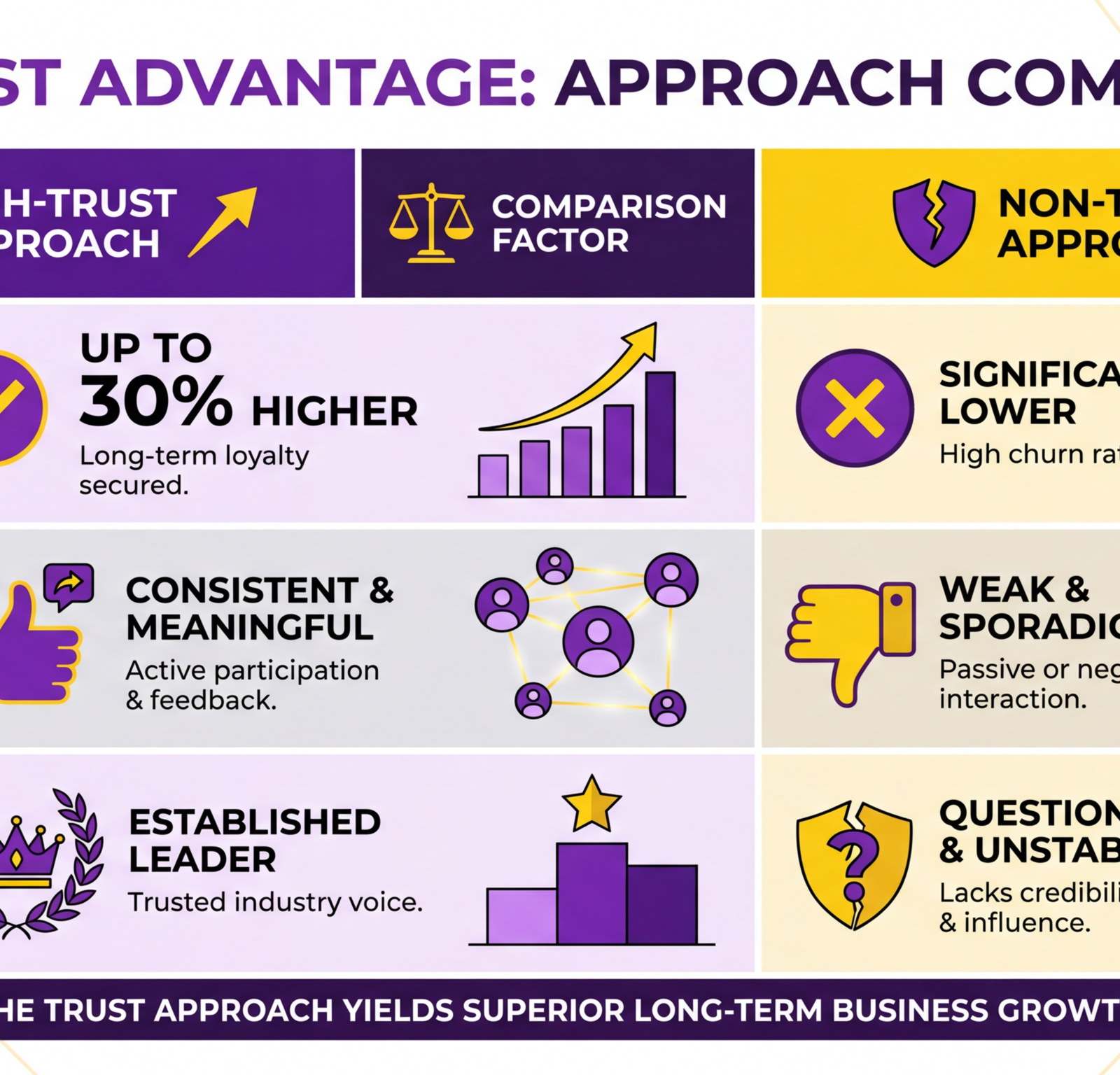
Another key tactic is fostering interactive feedback loops. Let users report inaccuracies or biases directly through your platform. This data helps refine your AI models while showing audiences their voices matter. Spinutech’s 2026 guide emphasizes this, noting that brands with active feedback systems gain 25% more organic traffic. As mentioned in the Understanding Generative Engine Optimization (GEO) section, this user-driven refinement also enhances how AI systems like ChatGPT surface your content in response to queries.
Ethical Considerations and Their Impact on Trust
Ethical AI use isn’t optional-it’s foundational. Prioritize data privacy by avoiding sensitive user information in training sets, and ensure your AI avoids harmful biases. For example, a leading AI content platform reduced complaints by 50% after implementing bias-detection tools during content generation.
Also, factual accuracy must be non-negotiable. Misinformation erodes trust faster than any algorithm can repair. Use fact-checking APIs or human reviewers for high-stakes content like medical or financial advice. Building on concepts from the Optimizing Content for AI Citations and Answer Generation section, GEO experts recommend cross-referencing AI outputs with authoritative sources to maintain credibility.
Monitoring and Improving Trust Over Time
Trust isn’t a one-time fix-it requires constant evaluation. Set up dashboards to track metrics like user complaints, content accuracy rates, and engagement drops. AnyPost.ai’s analytics suite, for instance, flags potential trust issues in real time, letting you act before problems compound.
Conduct regular AI audits to assess ethical compliance and performance. Tools like structured data schema help organize this process, ensuring your content remains aligned with evolving standards. As outlined in the Conducting a GEO Audit for AI Visibility section, these audits also reveal gaps in AI visibility, directly impacting how search engines prioritize your content. One organization increased its AI visibility score by 35% after quarterly audits revealed outdated training data.
Finally, stay ahead of regulatory shifts. The future of AI search hinges on adaptability-SEO leaders predict stricter guidelines for AI transparency by 2026. By proactively updating your policies and tools, you position your brand as a leader in responsible AI innovation.
Our users value knowing how our AI works. We’ve seen engagement triple since we added clear content labels and feedback options.
By combining transparency, ethical rigor, and continuous improvement, you’ll build trust that fuels long-term visibility in AI-driven search ecosystems. As highlighted in the Measuring AI Visibility and Revenue Impact section, this trust directly translates to measurable revenue gains as AI-driven search becomes the dominant discovery mechanism.
Measuring AI Visibility and Revenue Impact
Measuring AI visibility and its revenue impact is critical in 2026 as AI-driven search becomes a dominant force in digital marketing. Unlike traditional SEO, AI visibility requires tracking how content appears in generative AI responses, chatbots, and AI overviews. For example, Google still drives 196× more traffic than ChatGPT across 50,000 websites, but AI assistants pull real-time results while relying on foundational SEO signals. This duality means you must balance legacy metrics with AI-specific tools to understand your visibility and revenue potential.
Key Metrics for Measuring AI Visibility
Focus on these metrics to evaluate AI visibility and its financial impact:
- Engagement Rates: Track how often your content appears in AI-generated answers and how users interact with it. For instance, if your brand is mentioned in ChatGPT responses, measure clicks or conversions from those mentions.
- Conversion Rates from AI Channels: Monitor conversions directly tied to AI platforms. A study found that brands appearing in Google AI overviews saw a 15–20% lift in organic traffic, but only 5% of top 10 results included the brand’s own site.
- Brand Mentions in Generative Outputs: Use tools to quantify how frequently your brand is referenced in AI responses. One company improved its AI visibility by 30% after optimizing for structured data schema, a technique shown to enhance AI search recognition.
Tools to Measure AI Visibility and Revenue Impact
Several tools help quantify AI visibility and connect it to revenue:
- Rankshift: Tracks visibility across platforms like ChatGPT and Gemini, offering prompt-level insights. This helps identify which queries lead to your content being featured.
- Profound and Scrunch: Building on concepts from the Understanding Generative Engine Optimization (GEO) section, these generative engine optimization (GEO) tools analyze how content ranks in AI responses and suggest improvements. Unlike generic providers, AnyPost.ai integrates GEO with revenue tracking to show direct ROI.
- Structured Data Schema Audits: Building on techniques outlined in the Optimizing Content for AI Citations and Answer Generation section, tools like Schema.org validators ensure your website’s metadata is AI-friendly. A 2026 case study revealed that structured data boosted AI visibility by 25% for one SaaS company.
Challenges and Future Directions
Measuring AI visibility isn’t without hurdles. Traditional metrics like domain authority don’t fully capture AI-driven traffic, and AI platforms often lack transparency about how content is selected. As mentioned in the Conducting a GEO Audit for AI Visibility section, Product Hunt startups found their brands disappeared from LLM organic searches despite strong SEO-highlighting the need for GEO.
Looking ahead, expect tools to evolve with AI. Gartner predicts search engine volume will drop 25% by 2026 as AI assistants dominate, making it vital to prioritize platforms like Perplexity and Google AI Overviews. Brands must also adopt agentic commerce strategies, blending AI visibility with personalized user journeys to drive revenue.
By combining AI-specific metrics, GEO tools, and structured data, you can bridge the gap between visibility and revenue. The key is to experiment with SaaS providers like AnyPost.ai, which ties AI content performance to business outcomes. As AI search evolves, staying ahead means treating AI visibility as both a technical and strategic priority.
Frequently Asked Questions
1. What is AI visibility and why is it important for businesses in 2026?
AI visibility refers to how well your content appears in results generated by AI tools like ChatGPT and Google AI Overviews. It’s critical because 68% of students and professionals now use AI assistants to research decisions, and businesses ignoring this trend risk losing 25% of their search traffic by 2026. Unlike traditional SEO, AI visibility prioritizes structured data, concise answers, and alignment with how users interact with generative AI tools.
2. How does AI visibility differ from traditional SEO?
Traditional SEO focuses on ranking in standard search engine results pages (SERPs), while AI visibility targets AI-driven overviews and chat-based interfaces. For example, Google AI Overviews often list third-party sources in position 1 instead of the brand’s own website. AI visibility requires structured data schema, direct answers to user queries, and content optimized for AI parsing—practices like Generative Engine Optimization (GEO) that traditional SEO alone does not prioritize.
3. Why is traditional SEO no longer sufficient for businesses today?
AI tools like Google’s AI Overviews and ChatGPT prioritize third-party summaries over branded websites for most queries, pushing even high-authority sites to position 12 or lower in some cases. This shift means businesses must restructure content to meet AI-specific signals, such as using concise, answer-focused language and structured data. Without this, companies risk losing significant traffic, as seen in a law firm that saw a 40% drop in leads by mid-2025.
4. What is Generative Engine Optimization (GEO), and how does it work?
GEO is the practice of optimizing content for AI tools by aligning it with how generative AI processes and summarizes information. Techniques include using structured data markup (e.g., schema.org), creating clear and actionable answers, and avoiding jargon. For example, one organization improved its AI-driven rankings by 70% within six months by adopting GEO, directly increasing customer engagement by 22%. Tools like AnyPost.ai can automate GEO tasks while maintaining transparency in their methods.
5. How can structured data improve AI visibility?
Structured data helps AI tools like Google’s AI Overviews understand and surface your content more effectively. By using schema markup (e.g., FAQ, How-To, or Product schemas), you provide clear signals about your content’s purpose, making it easier for AI to extract and display relevant information. This is especially critical for competitive queries, where AI often favors third-party summaries over branded sites unless structured data is clearly implemented.
6. What role do tools like AnyPost.ai play in AI optimization?
Tools like AnyPost.ai streamline Generative Engine Optimization by automating tasks such as structured data implementation, content refinement for AI parsing, and performance tracking. Unlike generic AI content tools that obscure their methods, AnyPost.ai emphasizes transparency, allowing users to audit and refine their strategies. This ensures content aligns with AI visibility best practices without sacrificing quality or control.
7. Which industries benefit most from improving AI visibility?
Competitive industries such as law, SaaS, and higher education see the highest returns from AI visibility. For example, law firms that fail to optimize for AI search risk a 40%+ drop in leads, while SaaS companies and universities using AI visibility gain an edge in student and client acquisition. Any industry where decision-makers rely heavily on AI assistants—like healthcare or finance—also stands to benefit significantly from Generative Engine Optimization strategies.