
How to Hire a SaaS Content Writer for Rapid Growth

Related Video
Watch: 400% Growth in 3 Years: How We Built a High-Powered SaaS Content Marketplace with Verblio CEO by SaaStr AI
Quick Summary
When deciding between hiring a SaaS content writer and using an AI-powered platform like AnyPost.ai, businesses must weigh cost, time, scalability, and quality. This section breaks down the critical differences to help you make an informed choice for rapid growth.
Key Metrics Comparison
| Metric | Hiring a SaaS Content Writer | Using AnyPost.ai |
|---|---|---|
| Cost | $50–$150/hour (freelance) or $3k–$10k/month (full-time) | $99–$299/month (depending on plan) |
| Time to Setup | 3–6 weeks (hiring, onboarding) | Instant setup, no hiring required |
| Content Quality | Variable; depends on writer’s expertise | Consistent, SEO-optimized output |
| Scalability | Limited; adds hours to workload | Infinite; generates content in bulk |
| Brand Voice Control | Requires manual oversight | Uses AI Persona Engine to mimic tone |
| Difficulty Rating | High (5/5 for hiring process) | Low (1/5; automated workflow) |
Time and Effort Breakdown
Hiring a SaaS content writer involves significant upfront effort:
- Recruitment: 2–4 weeks to vet candidates, conduct interviews, and negotiate terms.
- Onboarding: 1–2 weeks to align on brand voice, SEO goals, and content strategy.
- Ongoing Management: Weekly check-ins, revisions, and quality control add 5–10 hours/month.
In contrast, AnyPost.ai requires zero hiring effort and delivers instant scalability:
- Setup: 5 minutes to input brand guidelines and target keywords.
- Content Generation: Publish 10+ SEO-optimized blog posts, social media updates, or product descriptions in under an hour.
- Maintenance: Real-time analytics track performance, with AI-driven adjustments to improve rankings.
Cost Efficiency and ROI
Switching to AnyPost.ai saves 70–80% in costs compared to hiring a writer. For example:
- A $5k/month freelance writer could be replaced by a $199/month plan, freeing up $4,801/month for other growth initiatives.
- Businesses using AnyPost.ai report 3x faster content production, enabling 20+ posts/month instead of 6–8.
Key Benefits of AnyPost.ai:
- SEO-Optimized Content: Built-in keyword targeting and semantic structure (H2/H3 headings,
<section />tags) boost Google rankings. See the Leveraging Automated Content Generation Platforms section for more details on how AI-powered tools achieve this. - Multi-Channel Publishing: Auto-publish to WordPress, LinkedIn, and X (Twitter) with one click.
- Persona Engine: Maintains consistent brand voice across personas (e.g., B2B tech, wellness, SaaS). As mentioned in the Onboarding and Integrating the Writer section, manual oversight is often required for brand voice consistency with human writers.
- Time Savings: Eliminates hiring delays, allowing teams to focus on strategy over execution. Building on concepts from the Why Hiring a SaaS Content Writer Matters section, this contrast highlights the trade-offs between strategic hiring and automation.
“Using AnyPost.ai cut our content creation time by 60% while improving SEO traffic by 40% in three months.”. Digital Marketing Manager, BioHackNow
For businesses prioritizing speed and cost-effectiveness, AnyPost.ai offers a streamlined alternative to traditional hiring. By automating repetitive tasks and ensuring scalability, it empowers teams to scale content production without sacrificing quality.
Why Hiring a SaaS Content Writer Matters
Hiring a SaaS content writer isn’t just about filling a blog with articles-it’s a strategic move that directly fuels growth. SaaS businesses operate in competitive, fast-evolving markets where content marketing drives 50% of all leads, according to industry benchmarks. As mentioned in the Quick Summary section, this strategic decision contrasts sharply with relying on AI-powered platforms, emphasizing the balance between cost, quality, and scalability. Without consistent, high-quality content, even the most innovative SaaS products struggle to gain visibility. A dedicated writer ensures your messaging aligns with customer needs, technical nuances, and SEO best practices, turning content into a scalable growth engine.
Content Marketing as a Growth Lever
Consider the case of Verblio, a SaaS content marketplace that grew 400% in three years by reinvesting in content strategy. Their success hinged on producing targeted blogs, case studies, and guides that addressed pain points for small businesses. A SaaS content writer replicates this model by creating assets that attract, educate, and convert audiences. For example, Liz Rosenblum, a content architect for high-growth SaaS companies, helped Mews-a global hospitality tech firm-refine their content to reflect multi-language, multi-product complexity. The result? Higher engagement from enterprise clients and clearer differentiation in a crowded market.
Solving Scalability and Quality Challenges
Most SaaS teams face two roadblocks: inconsistent content volume and subpar quality. Writing blogs, whitepapers, and social posts while managing product development is unsustainable. A specialized writer solves this by scaling output while maintaining technical accuracy. Sonu Goswami, a SaaS content writer, leverages AI tools to draft posts 30% faster without sacrificing depth-a critical advantage for B2B SaaS brands targeting niche audiences, as discussed in the Leveraging Automated Content Generation Platforms section. This efficiency lets marketers focus on strategy rather than execution.
SEO optimization further amplifies returns. A skilled writer integrates keywords, semantic variations, and technical SEO elements (like meta tags and header structures) to dominate search rankings. For instance, a SaaS company targeting project management tools might rank for “agile workflow software” while also linking to related terms like “team collaboration platforms.” This layered approach drives organic traffic and reduces reliance on paid ads.
Who Benefits Most and Why
The value of a SaaS content writer depends on your business stage and goals. Growth leaders at early-stage startups need writers to build brand credibility and support fundraising efforts. B2B marketers in mid-sized companies benefit from writers who align content with complex sales cycles-think detailed use cases for enterprise clients or onboarding guides for technical buyers, as outlined in the Defining the SaaS Content Writer Role section. For teams with limited resources, hiring a writer eliminates guesswork. Instead of experimenting with in-house content or relying on underqualified freelancers, you gain an expert who understands SaaS-specific challenges. This is especially critical for technical B2B audiences, where jargon and product details must be precise.
Real-World Outcomes and Testimonials
The impact of a skilled writer is measurable. At Mews, Liz Rosenblum’s content improvements led to a 25% increase in qualified leads within six months. Similarly, Sonu’s AI-powered workflows helped a SaaS founder double blog traffic by repurposing existing content into video scripts and email sequences.
“Our content team couldn’t keep up with the demand for technical blogs. Hiring a SaaS writer who understood our product’s architecture saved us 20+ hours weekly and boosted our organic search traffic by 40%.” – Growth Marketer, SaaS startup
These results highlight a key truth: SaaS content isn’t just about writing-it’s about solving business problems through strategy. From SEO-driven blogs to thought leadership pieces, every asset serves a growth objective.
By investing in a SaaS content writer, you’re not just outsourcing a task-you’re acquiring a partner who turns content into a revenue driver. Whether you’re scaling a B2B SaaS business or optimizing for enterprise clients, the right writer ensures your voice stays consistent, your messaging resonates, and your growth trajectory accelerates.
Defining the SaaS Content Writer Role
A SaaS content writer operates at the intersection of technical expertise and storytelling, crafting content that educates, converts, and retains users. This role demands a unique blend of writing, research, and SEO skills tailored to the software-as-a-service industry. Unlike general content writers, SaaS professionals must translate complex technical concepts into accessible language while aligning with business goals like lead generation and customer retention. Their work directly impacts product adoption, brand authority, and revenue-making it a critical asset for scaling SaaS companies.
Essential Skills and Experience
Strong writing and research skills form the foundation of this role. Writers must produce clear, engaging content that simplifies technical topics for diverse audiences. For example, Sonu Goswami, a SaaS content writer, leverages AI tools to streamline blog creation while maintaining depth and accuracy. Research abilities are equally vital, as writers often need to dissect competitor strategies, analyze user pain points, and synthesize product features into compelling narratives.
SEO optimization is non-negotiable. A SaaS content writer must master keyword research, on-page SEO techniques, and content structuring to ensure visibility in competitive search landscapes. Liz Rosenblum’s experience as a Strategic Content Architect highlights the need to balance SEO demands with user intent-ensuring articles rank well and provide actionable value. Writers should also track metrics like bounce rates and time on page to refine their approach iteratively.
Industry-specific experience amplifies effectiveness. While not strictly required, prior work in SaaS or adjacent fields (like tech startups or enterprise software) gives writers context about recurring challenges, such as explaining cloud infrastructure or pricing models. For instance, a writer with B2B SaaS experience understands how to emphasize ROI in a way that resonates with decision-makers, versus a B2C audience focused on ease of use. See the Writing a Targeted Job Description section for more details on how to define these skills in a hiring context.
Core Responsibilities
The primary duty of a SaaS content writer is to produce high-quality content across formats, including blog posts, case studies, whitepapers, and social media. Each piece must align with the company’s messaging while addressing specific stages of the buyer’s journey. For example, a blog post might educate readers about a problem, a case study demonstrate a solution, and a product page persuade action. Meeting tight deadlines is equally critical-SaaS companies often rely on consistent content pipelines to fuel growth.
Collaboration is another key responsibility. Writers work closely with product teams to understand updates, with marketing to align with campaigns, and with customer success to highlight user stories. Liz Rosenblum’s work at a global hospitality tech company underscores the need to coordinate across departments to create cohesive content that reflects the product’s value across markets. As mentioned in the Onboarding and Integrating the Writer section, establishing clear collaboration protocols early ensures alignment with company goals.
Technical documentation and thought leadership also fall under this role. Writers may draft FAQs, API guides, or tutorials-requiring precision to avoid misinterpretation. Simultaneously, they must position the company as an industry authority through whitepapers or guest posts that showcase expertise.
Technical Proficiency and Persona Alignment
A deep understanding of technical concepts is essential. SaaS writers must grasp how products function, from backend architecture to user workflows, to communicate benefits accurately. For example, explaining a CRM’s automation features requires knowing how triggers and rules operate-without using jargon that confuses readers. This technical fluency also helps writers anticipate and address common user questions, reducing support requests.
Persona matching elevates content relevance. A SaaS product might target IT managers, CTOs, and end-users, each with distinct priorities. Writers must tailor tone, depth, and focus to these personas. When targeting IT managers, the emphasis could be on security and scalability; for end-users, it might highlight intuitive design and ease of onboarding. Liz Rosenblum’s work with a multi-segment company demonstrates how nuanced messaging can drive engagement across diverse stakeholder groups.
In practice, this means creating content variations that speak directly to each persona’s pain points. For instance, a blog post about data analytics might highlight ROI for executives, integration capabilities for developers, and user-friendly dashboards for non-technical staff. This approach ensures every audience feels addressed, boosting conversion rates and customer satisfaction.
By combining technical acumen, SEO expertise, and audience empathy, a SaaS content writer becomes a linchpin for growth. Their ability to simplify complexity while driving measurable results defines their value in a competitive market, as emphasized in the Why Hiring a SaaS Content Writer Matters section.
Writing a Targeted Job Description
Writing a targeted job description for a SaaS content writer begins with defining clear responsibilities and desired skills. Start by outlining specific tasks, such as creating product marketing content, technical blog posts, or customer-facing documentation. For example, Liz Rosenblum’s role at Mews required writing for a multi-segment, multi-language, multi-product audience, which highlights the need to specify complexity in your job post. As mentioned in the Defining the SaaS Content Writer Role section, this role demands a unique blend of technical expertise and storytelling, so align your responsibilities accordingly. List skills like SEO optimization, subject-matter expertise in SaaS, and proficiency in tools like Google Docs or CMS platforms. Avoid vague language-instead of “strong writing skills,” state “ability to craft SEO-optimized blog posts that drive organic traffic.”
Highlight Company Culture and Benefits
Next, emphasize your company culture and what makes your workplace unique. If your team operates in a fast-paced, global environment like Mews, mention it. Candidates want to know if your company values collaboration, innovation, or remote flexibility. For example, you might write, “We prioritize a customer-first mindset and empower writers to shape content strategies that impact global markets.” Include tangible benefits like professional development budgets, equity options, or wellness programs. A SaaS startup might note, “Opportunities to learn from cross-functional teams in product, engineering, and sales.” See the Onboarding and Integrating the Writer section for more details on how culture alignment supports long-term success.
Specify SEO and Technical Knowledge Requirements
SEO and technical knowledge are non-negotiable for SaaS content writers. Clearly state expectations for keyword research, on-page SEO, and analytics tools like Ahrefs or SEMrush. Mention technical skills such as familiarity with SaaS industry jargon, API documentation, or competitor analysis. For instance, a job description might require, “Demonstrated ability to increase organic traffic by 20% through SEO-optimized content.” Tailor these requirements to your company’s needs-if your product involves AI, include experience explaining technical concepts to non-technical audiences. Avoid assuming candidates know SaaS specifics; instead, guide them toward the expertise you need. Building on concepts from the Defining the SaaS Content Writer Role section, ensure your technical requirements reflect the role’s intersection of creativity and precision.
A successful example from a SaaS company might look like this: Title: Senior Product Content Writer Responsibilities:
- Write marketing copy for SaaS product launches targeting enterprise clients.
- Collaborate with engineering teams to translate technical features into customer benefits.
- Optimize content for SEO, improving search rankings by 15% monthly. Skills:
- 3+ years of SaaS content creation.
- Proficiency in SEO tools and content management systems.
- Fluency in writing for global audiences (multi-language teams a plus). Culture/Benefits:
- Remote-first work environment with flexible hours.
- Annual budget for conferences like Content Marketing World.
- Equity options for high performers.
Tailoring the job description to your company’s specific needs ensures you attract candidates who align with your goals. If your SaaS product focuses on cybersecurity, highlight experience in that niche. If you’re scaling rapidly, stress the urgency and impact of the role. By combining clarity, cultural fit, and technical requirements, you create a job post that stands out in a competitive market.
For further inspiration, explore 5 tips to finding and hiring the best SaaS copywriter. PhoebeLown, which dives into aligning content writers with product strategy.
Sourcing and Evaluating Candidates
Sourcing and evaluating SaaS content writers requires a structured approach to identify candidates who combine technical expertise with storytelling skills. Start by leveraging freelance platforms to cast a wide net, then refine your search through rigorous evaluation of portfolios and interviews. As mentioned in the Writing a Targeted Job Description section, creating a clear outline of required skills and responsibilities ensures you attract candidates aligned with your business’s specific needs.
Sourcing Candidates on Freelance Platforms
Freelance platforms like Upwork and Freelancer remain popular for connecting with SaaS content writers. These platforms allow you to filter candidates by experience, hourly rates, and client reviews. Focus on profiles that highlight SaaS-specific expertise, such as experience writing for B2B audiences or knowledge of cloud-based software. While these platforms provide access to global talent, prioritize candidates with proven track records in similar projects. For example, look for writers who have contributed to SaaS blogs or created whitepapers for tech companies.
Evaluating Writing Samples and Portfolios
Reviewing writing samples is critical to assess both quality and fit. Start by analyzing technical knowledge-does the writer explain complex SaaS concepts clearly? Next, evaluate SEO optimization skills by checking for keyword usage, meta descriptions, and readability. See the Defining the SaaS Content Writer Role section for more details on the technical and SEO competencies that distinguish top candidates. A strong portfolio should include content that balances educational value with persuasive language. For instance, a sample blog post might explain the benefits of a CRM platform while naturally integrating terms like “customer lifecycle management.” Avoid candidates who rely on generic jargon without tailoring content to specific audiences.
Conducting Effective Interviews
Interviews should dive deeper into a candidate’s ability to meet your SaaS business’s unique needs. Ask scenario-based questions, such as, “How would you approach writing a case study for a SaaS product targeting healthcare providers?” This reveals their adaptability and understanding of niche markets. Additionally, inquire about their process for researching technical topics or collaborating with product teams. Candidates who demonstrate curiosity and a methodical approach to content creation are more likely to deliver high-quality work under tight deadlines.
Aligning with Company Culture Through Persona Matching
Persona matching ensures the writer’s communication style aligns with your brand’s voice. Building on concepts from the Why Hiring a SaaS Content Writer Matters section, a writer who resonates with your brand’s values-such as innovation or reliability-can enhance audience engagement. For example, a SaaS startup focused on agile project management might prioritize candidates who use concise, action-driven language, while a compliance-focused platform may need writers with formal tones. During evaluations, assess how well a candidate’s past work reflects your brand’s values-do they emphasize innovation, reliability, or customer-centricity? Tools like LinkedIn and company blogs can help you compare their existing content with your brand guidelines.
By combining platform-driven sourcing with thorough evaluations, you’ll identify SaaS content writers who not only meet technical requirements but also resonate with your audience. This approach minimizes the risk of misalignment and accelerates your team’s ability to produce content that drives growth.
Onboarding and Integrating the Writer
Establishing Clear Expectations and Onboarding Processes
Onboarding a new SaaS content writer begins with defining clear expectations to align their work with your company’s goals. Start by sharing your content strategy, including target audiences, brand voice guidelines, and SEO priorities. For example, if your company focuses on B2B SaaS tools, the writer must understand how to balance technical accuracy with persuasive language. Assign a mentor or point of contact to guide them through internal tools, editorial calendars, and collaboration workflows. This reduces ramp-up time and ensures they can produce high-quality drafts faster. As mentioned in the Defining the SaaS Content Writer Role section, this role demands a unique blend of technical expertise and storytelling, so clarity on these expectations is essential.
High-growth SaaS teams often integrate onboarding with hands-on projects early. A writer might start by revising existing blog posts or drafting short case studies to familiarize themselves with your audience’s preferences. Provide access to resources like competitor analysis reports, keyword research data, and customer feedback archives. This context helps them create content that resonates with your market. For instance, if your product targets project management software users, the writer should study common pain points and feature use cases from your support team’s notes.
Structured Feedback and Support Mechanisms
Consistent feedback loops are critical for refining a writer’s output. Schedule weekly check-ins to review drafts, discuss challenges, and adjust priorities. Use collaborative platforms to annotate content with suggestions, avoiding vague comments like “Make this better.” Instead, specify changes such as “Add a comparison table to clarify pricing differences” or “Include a customer testimonial here to strengthen the call-to-action.” This clarity accelerates improvements and reduces back-and-forth revisions.
Peer reviews can also strengthen content quality. Encourage the writer to share early drafts with editors or subject-matter experts for technical accuracy. For example, a post about API integrations should be vetted by your engineering team to avoid errors. Additionally, consider implementing a tiered approval process: the writer submits a draft, the editor refines it, and a senior leader reviews it for alignment with business goals. This structured approach ensures consistency while giving the writer room to grow.
Integration into Content Strategy and Performance Measurement
A SaaS content writer’s success depends on their ability to contribute to broader marketing goals. Integrate them into strategy meetings to understand how their work supports lead generation, product launches, or customer retention. For example, if your team plans to increase email marketing conversions, the writer should focus on crafting subject lines and CTAs that align with this objective. Building on concepts from the Why Hiring a SaaS Content Writer Matters section, this integration ensures their output directly fuels business growth. Share analytics dashboards with them to show how past content performed, helping them replicate successful patterns.
Use real-time analytics to track content performance and adjust onboarding as needed. Monitor metrics like page views, bounce rates, and conversion rates to identify strengths and gaps. If a writer’s blog posts consistently underperform in engagement, provide targeted training-such as improving subheadings or incorporating more visual elements. Tools like Google Analytics or internal dashboards (if available) help measure these outcomes without overwhelming the writer with data overload. For high-growth SaaS companies, this iterative process ensures writers evolve alongside the business’s needs.
For further insights on aligning content with business goals, explore 5 tips to finding and hiring the best SaaS copywriter.
Leveraging Automated Content Generation Platforms
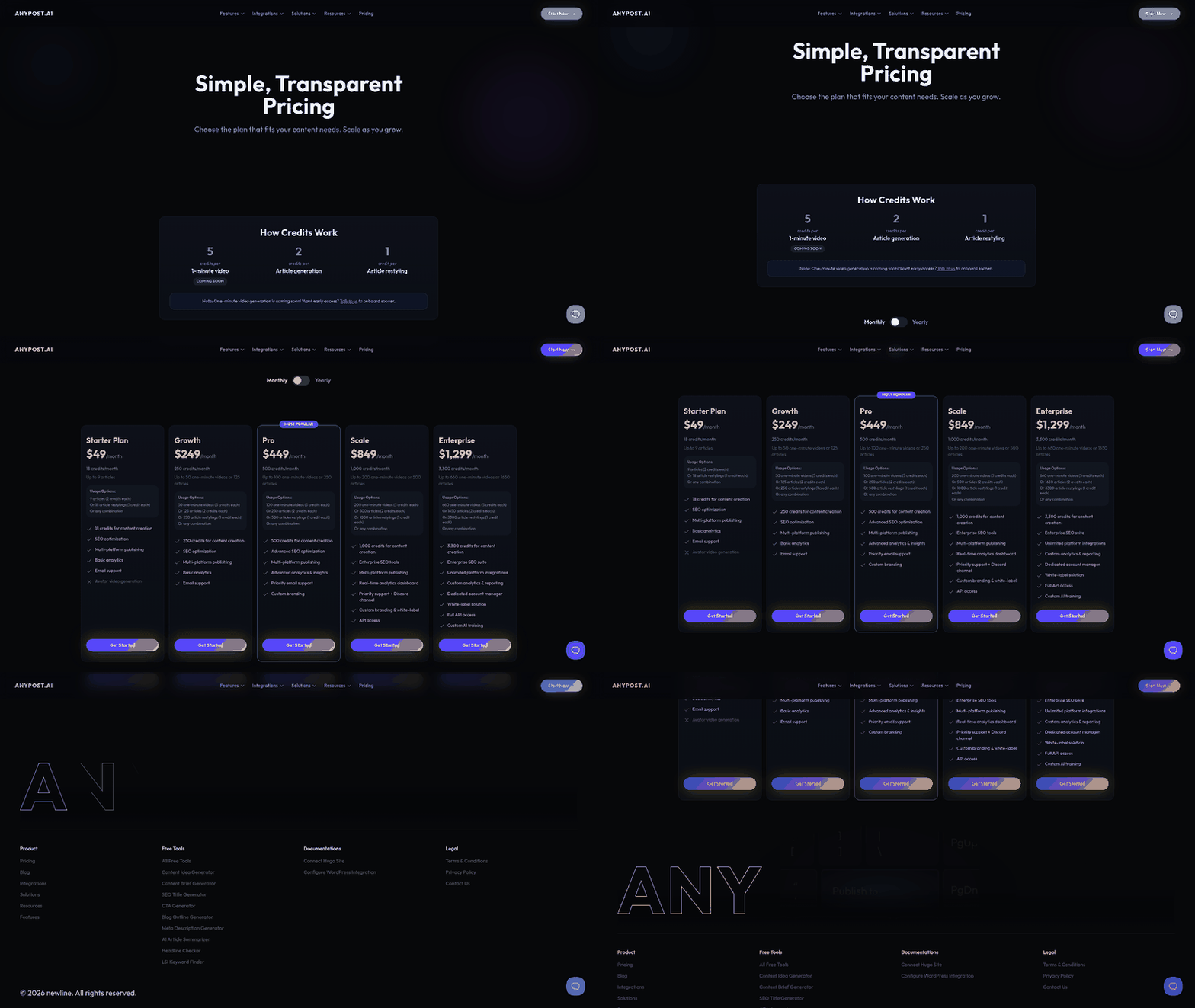
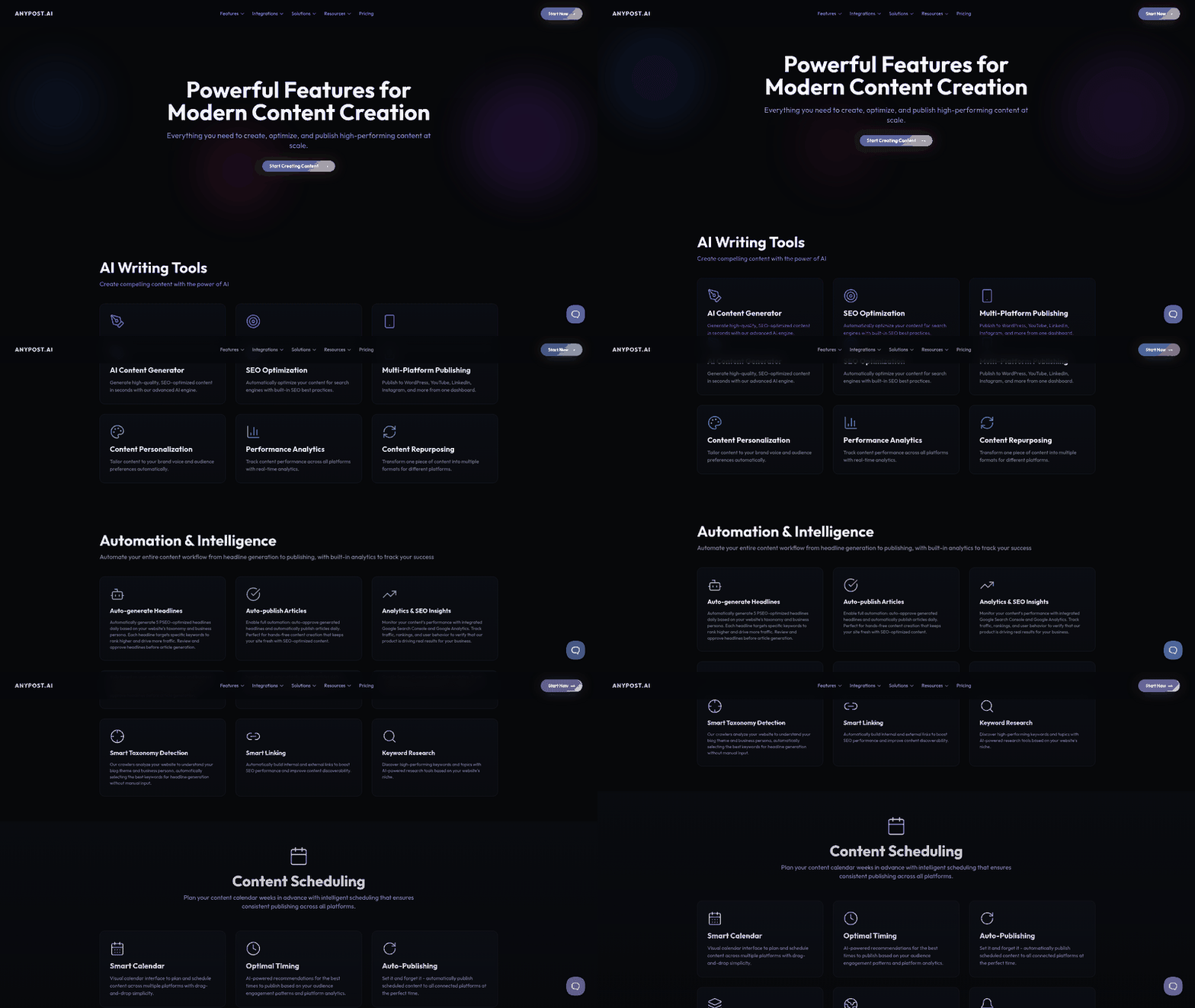
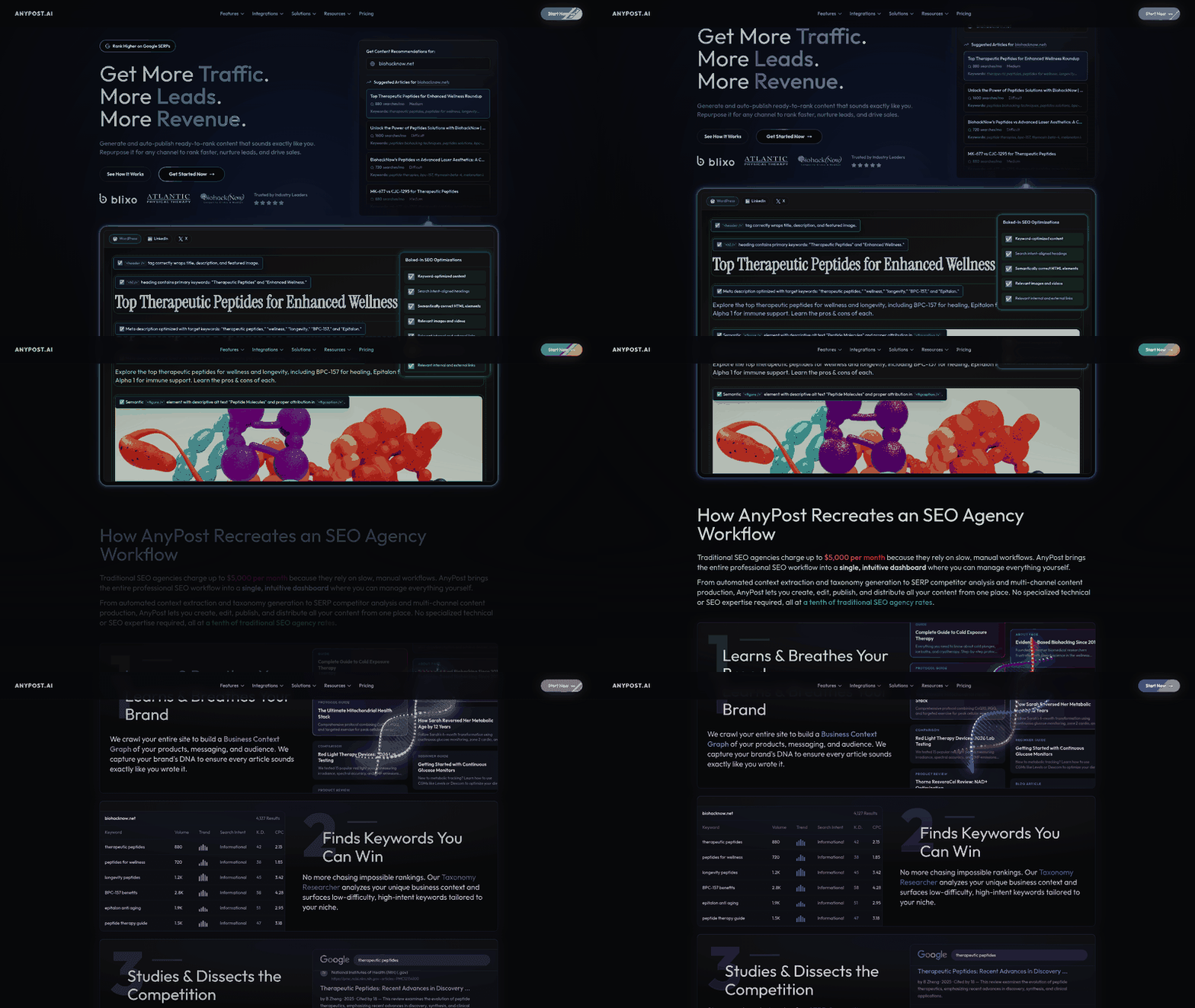
Automated content generation platforms use AI-powered tools to create blog posts, articles, and other written content at scale. These systems analyze keywords, generate outlines, and draft full pieces while optimizing for SEO. For example, platforms like AnyPost.ai streamline content creation by integrating SEO optimization directly into the writing process, ensuring topics align with search engine rankings. This eliminates the need for manual keyword research and structural planning, saving hours of upfront work.
Cost Savings and Efficiency Gains
Using automated platforms reduces reliance on large in-house writing teams or expensive freelance writers. A SaaS founder working with AnyPost.ai reported cutting content production costs by over 50% while maintaining high output quality. The efficiency comes from generating drafts in minutes rather than days, allowing teams to repurpose content across blogs, social media, and email campaigns. For instance, a draft blog post can be transformed into multiple formats, reducing redundant work.
Scaling Content Marketing with AI
Scaling content efforts traditionally requires hiring more writers, but automation offers a faster alternative. AnyPost.ai and similar tools enable businesses to publish 10–20 posts monthly without increasing headcount. This is critical for SaaS companies targeting competitive markets, where consistent content drives visibility. A strategic approach involves using AI for initial drafts and having human writers refine them, balancing speed with nuance. This hybrid model ensures efficiency without sacrificing quality, as detailed in the Defining the SaaS Content Writer Role section, where the importance of human nuance in content is emphasized.
Integration into Existing Strategies
To adopt automation effectively, start by identifying low-impact content-like standard how-to guides or industry updates-that AI can handle reliably. Next, feed the platform prompts aligned with your brand voice, using templates from existing content to maintain consistency. Finally, review AI-generated drafts for accuracy and inject personalized touches where needed. Building on concepts from the Onboarding and Integrating the Writer section, establishing clear expectations ensures AI-generated content aligns with brand standards. This hybrid model ensures efficiency without sacrificing quality, as detailed in the Defining the SaaS Content Writer Role section, where the importance of human nuance in content is emphasized.
Automated platforms aren’t a replacement for skilled writers but a tool to amplify their impact, as highlighted in the Why Hiring a SaaS Content Writer Matters section. By automating repetitive tasks, teams can focus on high-value work like strategy and audience engagement. For example, a SaaS content writer might use AI to draft 80% of a post, then refine the introduction and conclusion to add a human perspective. This approach maintains authenticity while accelerating production.
When evaluating platforms, prioritize tools that offer SEO integration, customization options, and collaboration features for team feedback. AnyPost.ai’s ability to generate SEO-optimized content directly addresses the needs of SaaS companies aiming for rapid growth. The key is to test platforms with small projects first, measuring output quality and alignment with brand standards before full-scale adoption.
"Using AI to draft content cut my editing time in half while keeping our blog’s tone consistent." – SaaS Marketing Manager
By embedding automation into workflows, businesses avoid bottlenecks caused by writer availability or burnout. This is especially valuable for SaaS companies experiencing rapid growth, where content demands outpace traditional production methods. The result is a scalable, cost-effective system that supports long-term marketing goals.
Frequently Asked Questions
1. What are the main cost differences between hiring a SaaS content writer and using an AI platform like AnyPost.ai?
Hiring a SaaS content writer typically costs $50–$150/hour for freelancers or $3k–$10k/month for full-time hires, while AnyPost.ai plans start at $99–$299/month. This represents a 70–80% cost reduction, as AI platforms eliminate hiring, onboarding, and ongoing management expenses. For example, a $5k/month freelance budget could be redirected to other growth initiatives by switching to a $199/month AI plan.
2. How long does it take to start producing content with each option?
Hiring a writer requires 3–6 weeks for recruitment, onboarding, and alignment on brand voice, while AnyPost.ai enables instant setup (5 minutes to input guidelines). This means businesses can publish SEO-optimized content within hours using AI, whereas hiring involves a lengthy vetting process and weeks of adjustment before consistent output begins.
3. Which option offers better scalability for growing businesses?
AnyPost.ai provides infinite scalability, generating 10+ blog posts, social media updates, or product descriptions in under an hour. In contrast, hiring a writer limits scalability due to fixed workload hours (6–8 posts/month vs. 20+ with AI). AI platforms also adapt to bulk content needs without requiring additional staffing.
4. Can an AI platform like AnyPost.ai maintain consistent brand voice?
Yes, AnyPost.ai uses an AI Persona Engine to mimic brand tone and style, reducing the need for manual oversight. However, human writers may still offer nuanced creativity. Businesses should provide detailed brand guidelines for both options—writers need ongoing feedback, while AI requires initial setup to replicate voice accurately.
5. What are the long-term ROI benefits of using AI for SaaS content?
AI platforms like AnyPost.ai deliver 3x faster content production, enabling higher-volume SEO strategies (20+ posts/month vs. 6–8). This accelerates organic growth and reduces costs by 70–80%, freeing capital for other initiatives. Studies show businesses using AI achieve faster search ranking improvements due to consistent, optimized output.
6. Is there a risk of lower quality with AI-generated content?
While AI ensures consistent SEO-optimized output, quality depends on the platform’s training data and user input. AnyPost.ai uses semantic structure (H2/H3 headings, <section /> tags) to meet technical SEO standards, but businesses should review content for brand-specific nuances. Human writers may offer deeper creativity but require more management to maintain quality.
7. How do time investments compare for managing each option?
Hiring a writer requires 5–10 hours/month for check-ins, revisions, and quality control. AnyPost.ai minimizes this to real-time analytics and occasional adjustments, with AI-driven performance optimization. This saves 40+ hours/month on average, allowing teams to focus on strategy rather than content management.