
How to Master Automated SEO Reports with Semantic Pen AI

Understanding Automated SEO Reports
Automated SEO reports are data-driven assessments generated by tools that analyze website performance, keyword rankings, backlink profiles, and content quality without manual intervention. These reports streamline the collection and interpretation of SEO metrics, offering actionable insights to improve search engine visibility [1]. By leveraging algorithms, automated systems can process vast datasets to identify trends, such as declining page rankings or emerging keyword opportunities, that might otherwise require hours of manual analysis [1]. For content marketers, this functionality is critical because it reduces the time spent on data compilation, allowing teams to focus on strategy and execution [2]. Automated reports also provide consistency, ensuring that SEO evaluations are repeatable and benchmarked against predefined KPIs [1].
The Role of SEO Reporting in Content Marketing
SEO reports are essential for content marketers because they quantify the effectiveness of content strategies and highlight areas for optimization. By tracking metrics like organic traffic, bounce rates, and conversion rates, marketers can determine which content resonates with audiences and which pages require revisions [2]. For example, a report might reveal that a blog post targeting a specific keyword underperforms due to poor on-page SEO, prompting the team to refine meta tags or internal linking [1]. In B2B marketing, where content often serves as a lead generation tool, SEO reports help align content creation with business objectives by identifying high-intent keywords and tracking lead sources from organic search [2]. Without regular reporting, it’s challenging to attribute SEO efforts to tangible outcomes like lead volume or revenue growth [1].
Introducing Semantic Pen AI and Its Core Functionality
Semantic Pen AI is an AI-powered platform designed to enhance SEO reporting by incorporating semantic analysis into traditional keyword-based strategies. Unlike conventional tools that focus solely on keyword frequency, Semantic Pen AI examines the contextual relationships between words, user intent, and topic clusters to provide a more nuanced understanding of search behavior [1]. This approach aligns with the principles of semantic SEO, which emphasizes creating content that addresses the broader context of a topic rather than targeting isolated keywords [1]. By integrating Generative Engine Optimization (GEO) techniques, the tool optimizes content for AI-driven search engines, ensuring visibility in both traditional and emerging AI-powered platforms [1]. For instance, Semantic Pen AI might analyze a user’s query about “cloud computing solutions” and recommend content adjustments that cover related concepts like “enterprise scalability” or “data security,” thereby improving relevance for semantic search algorithms [1]. See the [Setting Up Semantic Pen AI for Automated SEO Reports] section for more details on implementing the tool.
Benefits of AI in SEO Reporting
AI-driven SEO reporting tools like Semantic Pen AI offer three primary advantages: speed, accuracy, and predictive capabilities. First, AI automates the aggregation of data from multiple sources—such as Google Search Console, backlink profilers, and content management systems—into a unified dashboard, reducing reporting cycles from days to minutes [1]. Second, machine learning algorithms detect patterns in data that human analysts might overlook, such as subtle shifts in user intent or correlations between content structure and dwell time [2]. Third, AI enables predictive analytics by forecasting ranking changes based on historical data, allowing marketers to proactively adjust strategies before competitors [1]. For B2B marketers, this foresight is invaluable for maintaining visibility in competitive niches where search trends evolve rapidly [2]. Additionally, AI-powered tools minimize human error in data interpretation, ensuring that recommendations are statistically validated [1]. See the [Analyzing and Optimizing Automated SEO Reports] section for insights on leveraging these predictive capabilities.
Practical Applications of Semantic Pen AI
Semantic Pen AI’s capabilities extend beyond basic reporting to include content optimization suggestions, competitor benchmarking, and technical SEO audits. For example, the tool might flag a page with high bounce rates and recommend restructuring the content into digestible sections with subheadings, based on user engagement patterns observed in top-ranking pages [1]. It can also analyze competitors’ content to identify gaps, such as frequently mentioned topics that your own content lacks [1]. In technical SEO, the platform detects issues like broken links or slow-loading assets, which directly impact search engine rankings [2]. By automating these tasks, Semantic Pen AI reduces the reliance on manual audits, which are time-consuming and prone to oversight [1].
Limitations and Considerations
While automated SEO reports offer significant advantages, they are not a substitute for human judgment. AI tools rely on historical data, which may not account for sudden market changes or evolving user preferences [1]. For instance, a tool might recommend optimizing for outdated keywords if it hasn’t been trained on recent search trends [2]. Marketers must also validate AI-generated insights against business goals, as technical metrics like keyword rankings don’t always correlate with revenue growth [1]. Finally, overreliance on automation could lead to “analysis paralysis,” where teams become overwhelmed by data without clear priorities [2]. To mitigate these risks, it’s essential to use automated reports as a foundation for decision-making, not the sole determinant [1]. See the [Common Challenges and Solutions in Automated SEO Reporting] section for strategies to address data inaccuracy and integration complexities.
Setting Up Semantic Pen AI for Automated SEO Reports
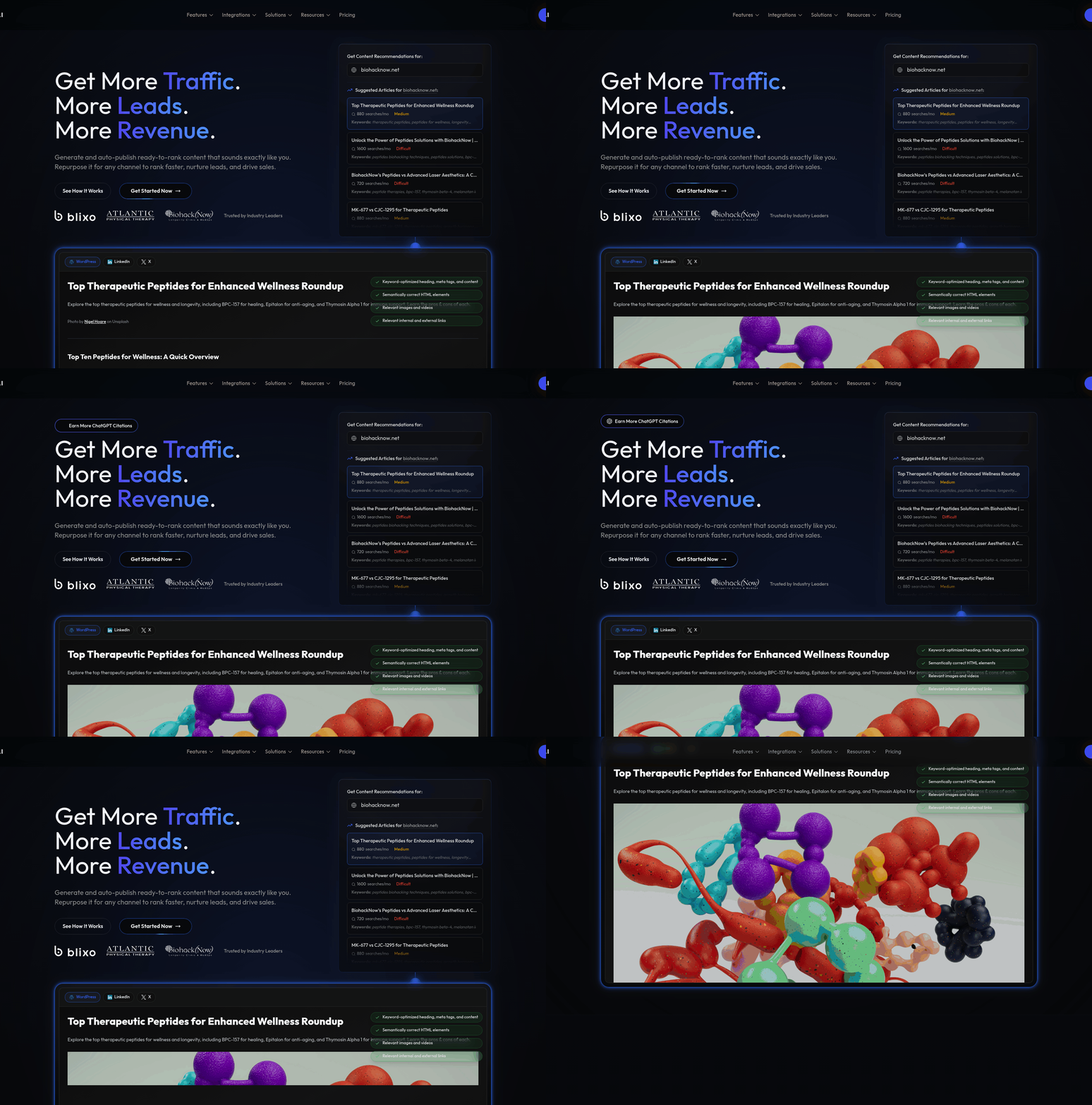
To set up Semantic Pen AI for automated SEO reports, begin by accessing the platform through its official website or via a plugin if supported by your content management system (CMS). According to SEO Learning Resources & Website Optimization Academy [1], most SEO tools require initial configuration through an account dashboard, where you can link your website’s domain and specify target keywords. This step ensures the tool crawls the correct URLs and aligns its analysis with your SEO goals. Next, integrate Semantic Pen AI with existing platforms such as Google Analytics, Search Console, or CMS systems like WordPress. The Essential Guide to SEO Reporting Analytics highlights that API-based integrations are standard for synchronizing data across tools, allowing automated reports to pull live metrics such as traffic, bounce rates, and keyword rankings [2]. For integration with Google Analytics, navigate to the "Integrations" section in Semantic Pen AI’s dashboard and authorize the connection using OAuth 2.0, a method commonly supported by SEO platforms [2]. If using a CMS, install the provided plugin (if available) or manually embed tracking codes in your site’s header to enable data flow. For third-party SEO tools like Ahrefs or SEMrush, ensure API keys are configured to allow Semantic Pen AI to import competitors’ data or benchmark metrics. The SEO Learning Resources emphasize that compatibility with these platforms enhances the depth of automated reports by combining on-page and off-page analysis [1].
Configuring Report Settings
After integration, define the scope and frequency of automated reports. The Essential Guide to SEO Reporting Analytics recommends selecting key performance indicators (KPIs) such as organic traffic, backlink growth, and content performance metrics [2]. In Semantic Pen AI, access the "Report Settings" menu to choose which KPIs to include, set update intervals (daily, weekly, or monthly), and specify recipient email addresses. Additionally, configure filters to exclude irrelevant data—such as internal traffic or bot activity—to ensure reports reflect accurate user behavior, a practice endorsed by SEO Learning Resources [1]. For deeper insights into analyzing these KPIs, see the [Analyzing and Optimizing Automated SEO Reports] section.
Customizing Report Templates
To tailor reports to your audience, use the template customization features in Semantic Pen AI. The SEO Learning Resources suggest aligning visual elements with your brand’s style guide, including logos, color schemes, and typography [1]. In the platform, edit templates by adding custom headers, adjusting data visualization formats (e.g., charts vs. tables), and inserting explanatory notes for non-technical stakeholders. The Essential Guide to SEO Reporting Analytics further advises segmenting reports by page, keyword, or campaign for clarity, which can be achieved using Semantic Pen AI’s "Group By" functionality [2]. For strategies on aligning these reports with broader SEO goals, refer to the [Creating Effective SEO Strategies with Semantic Pen AI] section.
Final Checks and Automation
Before enabling full automation, validate the setup by generating a test report. This step helps identify integration gaps or misconfigured settings. According to [1], test reports should be reviewed for data accuracy and completeness, ensuring all linked tools contribute correctly. Once verified, activate the automation schedule and monitor initial outputs for any anomalies. If issues arise, revisit the integration settings or consult the platform’s support documentation, which is typically structured to address common setup challenges [2]. For troubleshooting common issues during automation, see the [Common Challenges and Solutions in Automated SEO Reporting] section.
By following these steps, Semantic Pen AI becomes a streamlined solution for generating actionable SEO insights, leveraging existing tools and customized workflows to meet specific business needs.
Creating Effective SEO Strategies with Semantic Pen AI
Semantic Pen AI streamlines SEO strategy development by integrating semantic analysis with traditional keyword research, enabling data-driven decisions across content creation and optimization. To begin, leverage its keyword research capabilities to identify high-intent keywords and semantically related terms. The tool analyzes search intent and contextual relevance, aligning with semantic SEO principles outlined in Lumar’s research on moving "From Keywords to Context" [1]. By prioritizing semantic clusters over single keywords, users can map content to user queries more effectively, ensuring alignment with search engine algorithms that emphasize context [1]. This approach also supports Generative Engine Optimization (GEO), as highlighted in Lumar’s reports on AI visibility, by anticipating how AI-driven search results might surface content [1]. See the [Setting Up Semantic Pen AI for Automated SEO Reports] section for more details on implementing these techniques.
Keyword Research Using Semantic Pen AI
Semantic Pen AI automates keyword audits and semantic mapping, reducing manual effort while uncovering overlooked opportunities. For example, its AI-assisted analysis identifies keyword density gaps and suggests semantically related terms to enhance content relevance [2]. Users can input seed keywords, and the tool generates a hierarchy of related terms, prioritizing those with high search volume and low competition. This aligns with SEO Learning Resources’ emphasis on semantic SEO, which advocates for content that mirrors natural language patterns [1]. Building on concepts from [Understanding Automated SEO Reports], users can integrate these insights into content planning to address both user intent and algorithmic requirements, improving rankings for primary and long-tail keywords [1].
Content Optimization Techniques
Once keywords are identified, Semantic Pen AI aids in optimizing content for both readability and search engine compliance. The tool evaluates existing content for semantic relevance, flagging underperforming sections that lack keyword integration or contextual depth [2]. For instance, it assesses whether semantic clusters are evenly distributed and suggests edits to balance keyword density with natural language flow. This aligns with the "Essential Guide to SEO Reporting Analytics," which stresses the importance of AI-driven audits to refine content post-publication [2]. Additionally, Semantic Pen AI’s semantic analysis ensures that content aligns with GEO principles, adapting to how generative AI models interpret and rank content [1].
Link Building Strategies
While Semantic Pen AI does not explicitly outline link-building workflows in its provided sources, its SEO reporting features can inform strategic decisions. By analyzing backlink profiles and competitor data, the tool identifies high-value link opportunities, such as broken link gaps or authoritative domains likely to reference your content [2]. However, specific tactics like outreach templates or guest posting frameworks are not detailed in the sources, requiring users to supplement with external best practices from SEO Learning Resources [1]. The focus remains on leveraging AI-generated insights to prioritize efforts, ensuring link-building campaigns align with broader semantic SEO goals.
Measuring SEO Performance
Semantic Pen AI’s reporting dashboards provide real-time metrics to track SEO performance, including keyword rankings, traffic trends, and semantic relevance scores [2]. These dashboards integrate with SEO Learning Resources’ framework for "Website Optimization Academy," allowing users to benchmark progress against industry standards [1]. As mentioned in the [Analyzing and Optimizing Automated SEO Reports] section, users can monitor how semantic optimizations correlate with traffic increases, validating the ROI of AI-driven strategies. The tool also supports A/B testing of content variations, enabling data-backed refinements to maximize visibility [2]. By continuously analyzing performance data, teams can adapt strategies to evolving algorithm updates and user behavior patterns [1].
Limitations and Best Practices
Despite its capabilities, Semantic Pen AI’s sources do not provide explicit guidance on advanced techniques like technical SEO audits or local SEO optimizations. Users should cross-reference its insights with external tools for comprehensive coverage. Additionally, while the AI excels at semantic analysis, human oversight remains critical to ensure content creativity and brand voice are preserved [1]. Best practices include combining Semantic Pen AI’s data with manual reviews, particularly for high-stakes campaigns where nuance and originality are paramount. By adhering to these principles, marketers can harness the tool’s strengths while mitigating its limitations.
This structured approach—rooted in semantic analysis, continuous optimization, and performance tracking—enables teams to create SEO strategies that are both scalable and adaptable in an AI-driven search landscape.
Repurposing Content for Multi-Channel Distribution
Repurposing content for multi-channel distribution requires strategic adaptation of core insights to align with the unique requirements of each platform. Semantic Pen AI streamlines this process by analyzing content structure and suggesting platform-specific optimizations, such as condensing blog posts into social media snippets or transforming webinar transcripts into newsletter summaries [1]. By leveraging AI-driven insights, creators can maintain consistency in messaging while tailoring formats to maximize engagement across channels like YouTube, blogs, and email campaigns. See the Setting Up Semantic Pen AI for Automated SEO Reports section for more details on how the tool integrates with content workflows.
Content Repurposing Strategies for Diverse Channels
Semantic Pen AI identifies high-performing topics and keywords from existing content, enabling users to repurpose material without redundant keyword research [1]. For example, a detailed blog post on SEO best practices can be segmented into shorter, visually engaging social media posts for platforms like LinkedIn or Twitter. Similarly, data-rich sections of a report can be converted into infographics or video scripts for YouTube, ensuring the same core message resonates across audiences [2]. Building on concepts from the Creating Effective SEO Strategies with Semantic Pen AI section, the tool’s semantic analysis helps maintain SEO relevance through consistent keyword usage and thematic coherence.
Multi-Channel Distribution Techniques
Effective multi-channel distribution demands customization to each platform’s audience and content preferences. Semantic Pen AI assists by recommending optimal content formats based on historical performance data, such as suggesting short-form videos for YouTube or thread-based posts for Twitter [2]. For instance, a comprehensive SEO report can be split into digestible newsletter sections for email marketing, while key findings are formatted as carousel posts for Instagram or LinkedIn. The tool also emphasizes cross-promotion strategies, identifying overlapping audiences across channels to amplify reach without duplicating effort [1]. By aligning distribution schedules with peak engagement times for each platform, users can maximize visibility while minimizing manual coordination.
Leveraging Semantic Pen AI for Content Repurposing
Semantic Pen AI’s core functionality includes analyzing existing content to extract actionable insights for repurposing. It identifies high-impact phrases, semantic clusters, and underutilized keywords, enabling users to refine existing material for new audiences [1]. For YouTube, the tool suggests scripting techniques based on viewer retention patterns, while for blogs, it recommends expanding on frequently searched subtopics. Additionally, Semantic Pen AI automates the creation of meta descriptions, titles, and alt text for repurposed content, ensuring SEO alignment across channels [2]. This reduces the need for manual adjustments and maintains search visibility as content is adapted for different formats.
Measuring Content Performance Across Channels
To evaluate the effectiveness of repurposed content, Semantic Pen AI integrates SEO reporting analytics that track engagement metrics, traffic sources, and conversion rates per channel [2]. As mentioned in the Analyzing and Optimizing Automated SEO Reports section, these insights allow users to compare how a single piece of content performs as a blog post versus a YouTube video, identifying which format drives more organic traffic or conversions. The tool also highlights underperforming channels, allowing teams to reallocate resources to platforms with higher ROI [1]. By aggregating data from all distribution channels into a unified dashboard, Semantic Pen AI simplifies performance analysis, enabling data-driven adjustments to repurposing strategies without requiring separate tools for each platform [2]. This centralized approach ensures continuous optimization of content workflows.
Analyzing and Optimizing Automated SEO Reports
Analyzing Automated SEO Reports with Semantic Pen AI
Automated SEO reports generated by tools like Semantic Pen AI provide structured insights into keyword performance, semantic relevance, and content quality. To analyze these reports effectively, begin by reviewing the keyword audit results, which highlight gaps in keyword coverage and density [2]. Semantic Pen AI’s AI-assisted content analysis evaluates semantic relevance by cross-referencing content with contextual search intent, ensuring alignment with both user queries and broader topic clusters [1]. For instance, the tool identifies underperforming pages with low semantic scores, indicating a misalignment between content and target keywords. This step requires cross-referencing keyword density metrics with semantic relevance scores to prioritize pages needing optimization [2]. As mentioned in the [Understanding Automated SEO Reports] section, these reports form the foundation for strategic adjustments.
Identifying Areas for Improvement
Semantic Pen AI’s reports pinpoint specific areas for improvement by categorizing issues such as keyword stuffing, thin content, or outdated information. The Lumar SEO Research Report emphasizes the importance of addressing semantic gaps—instances where content lacks contextual depth compared to top-ranking competitors [1]. For example, a page targeting “AI content tools” might score poorly if it doesn’t address subtopics like “generative AI for SEO” or “AI content quality metrics.” To resolve this, Semantic Pen AI suggests content expansion strategies, such as integrating related keywords or adding subsections on emerging trends [1]. See the [Repurposing Content for Multi-Channel Distribution] section for more details on expanding content depth. Additionally, the tool highlights technical SEO issues like broken links or slow load times, which require separate audits but are often bundled in comprehensive reports [2].
Adjusting SEO Strategies Based on Report Insights
Once weaknesses are identified, adjust your SEO strategy by prioritizing high-impact actions. Semantic Pen AI’s data-driven recommendations include optimizing underperforming pages by refining keyword placement and enhancing semantic coherence [2]. For example, if a report flags low semantic relevance for a blog post about “AI visibility,” the strategy might involve incorporating subtopics like “AI visibility metrics” or “generative engine optimization,” as outlined in the [Future of Automated SEO Reporting with Semantic Pen AI] section [1]. Repurposing content into formats like videos or infographics can also address thin content issues while improving engagement. Adjustments should align with the Essential Guide to SEO Reporting Analytics’ emphasis on balancing keyword optimization with user-centric content design [2].
Measuring Report Performance and Iterating
To evaluate the effectiveness of optimizations, track key performance indicators (KPIs) such as organic traffic, keyword rankings, and bounce rates. Semantic Pen AI allows users to compare pre- and post-optimization metrics, providing a clear view of progress [2]. For instance, a 20% increase in traffic for a target keyword after semantic adjustments validates the strategy’s success. Regularly revisiting reports ensures strategies adapt to algorithm updates or shifting user intent. The SEO Learning Resources & Website Optimization Academy recommend quarterly audits to maintain alignment with evolving search trends [1]. If performance plateaus, Semantic Pen AI’s iterative analysis can uncover new opportunities, such as untapped long-tail keywords or emerging semantic themes [1].
By systematically analyzing automated reports, addressing semantic and technical gaps, and measuring outcomes, SEO strategies become more dynamic and responsive to both algorithmic and user-driven changes. This structured approach, supported by Semantic Pen AI’s integrations, ensures continuous improvement in visibility and content quality.
Advanced Automated SEO Reporting Techniques
Semantic Pen AI elevates automated SEO reporting through AI-powered insights that analyze semantic context alongside traditional keyword metrics. By leveraging machine learning models trained on semantic SEO principles, the platform identifies content gaps based on user intent and contextual relevance, not just keyword density [1]. For instance, after conducting a keyword audit, Semantic Pen AI assesses semantic relevance by cross-referencing content with search engine result pages (SERPs) to ensure alignment with top-ranking pages [2]. This method enables more accurate content optimization recommendations, addressing both on-page SEO and semantic coherence [1].
Predictive analytics further enhances SEO reporting by forecasting content performance trends. Semantic Pen AI uses historical data and machine learning to predict how changes in content structure or keyword strategy might impact search visibility [1]. For example, the platform can simulate the potential traffic gain from optimizing a page for a long-tail keyword variant, factoring in competitors’ content and search intent [2]. These predictive models are particularly useful for generative engine optimization (GEO), where AI visibility depends on dynamic content adaptation to algorithmic updates [1]. See the [Future of Automated SEO Reporting with Semantic Pen AI] section for more details on how GEO and AI-driven visibility metrics shape emerging SEO practices. By integrating predictive analytics, marketers can prioritize high-impact SEO adjustments proactively.
Machine learning plays a critical role in automating iterative SEO optimization. Semantic Pen AI’s models continuously refine content suggestions based on real-time performance metrics, such as bounce rates and dwell time [2]. For instance, if a page’s semantic analysis reveals low alignment with user queries, the system recommends contextual keyword additions or structural changes to improve engagement [1]. This process eliminates manual guesswork, allowing teams to focus on executing data-driven adjustments. Additionally, machine learning enables the platform to detect subtle patterns in competitor content, such as shifts in semantic themes, which are then translated into actionable insights for content strategy [2].
Advanced report customization ensures SEO stakeholders receive tailored data insights. Semantic Pen AI allows users to create dynamic report templates that include filters for traffic trends, conversion metrics, or competitor benchmarks [1]. For example, a marketing team can generate a report highlighting only pages with declining organic traffic, alongside AI-generated remediation strategies [2]. The platform also supports visualization tools that map semantic relationships between keywords, helping teams identify clusters of related topics for content expansion [1]. Building on concepts from the [Analyzing and Optimizing Automated SEO Reports] section, these visualizations provide deeper insights into semantic gaps and content opportunities. By customizing reports to specific business goals—such as increasing voice search visibility or improving local SEO—users gain actionable clarity without sifting through redundant data [2].
For multi-tenant SEO operations, Semantic Pen AI’s automation scales across multiple domains while maintaining granular control. Predictive analytics and machine learning models adapt to each website’s unique industry context, ensuring recommendations align with niche-specific search behaviors [1]. Advanced users can further refine AI parameters, such as adjusting the weight of semantic relevance versus keyword frequency in content scoring [2]. This flexibility is critical for enterprises managing diverse SEO portfolios, as it balances standardized best practices with domain-specific optimization needs [1].
In practice, combining AI-powered insights with predictive analytics transforms static SEO reports into dynamic decision-making tools. Semantic Pen AI’s approach not only identifies current inefficiencies but also forecasts future opportunities, enabling teams to stay ahead of algorithmic shifts [1]. By automating complex analyses—such as semantic gap detection and competitor content benchmarking—the platform reduces manual effort while increasing the precision of SEO strategies [2]. As generative AI continues to influence search visibility, these advanced reporting techniques become essential for maintaining competitive relevance in evolving digital landscapes [1].
Common Challenges and Solutions in Automated SEO Reporting
Common challenges in automated SEO reporting often stem from data inaccuracy, integration complexities, and limited real-time insights. For instance, inconsistent data sources can lead to incomplete or misleading reports, while fragmented tools may hinder cohesive analysis [1]. Additionally, many automated systems struggle with processing large datasets efficiently, slowing down actionable decision-making [2]. Semantic Pen AI addresses these issues by leveraging machine learning algorithms to standardize data inputs, ensuring consistency across platforms. Its integration with popular SEO tools, as outlined in [1], streamlines workflows and reduces manual reconciliation efforts. By automating data normalization processes, Semantic Pen AI minimizes inaccuracies caused by human error or conflicting metrics [2].
Data Inaccuracy and Incomplete Insights
Automated SEO reporting frequently encounters data gaps due to siloed systems or outdated crawlers. For example, keyword rankings might be reported without competitor benchmarking, limiting strategic value [1]. Semantic Pen AI resolves this by cross-referencing multiple data sources, such as search console APIs and competitor analysis tools, to provide holistic views. Its natural language processing (NLP) capabilities, detailed in [2], extract context from unstructured data like user reviews, enriching reports with sentiment analysis. To troubleshoot incomplete insights, users should verify data source configurations within Semantic Pen AI’s dashboard and ensure scheduled crawls are set to run frequently [1]. For deeper guidance on interpreting these insights, see the Analyzing and Optimizing Automated SEO Reports section.
Integration with Existing SEO Tools
Fragmented toolchains are a major hurdle in automated reporting, requiring teams to manually consolidate metrics from platforms like Google Analytics, Ahrefs, and SEMrush. This fragmentation increases reporting delays and errors [2]. Semantic Pen AI mitigates this by offering pre-built connectors for major SEO platforms, as noted in [1], enabling seamless data aggregation. For instance, its API integrations allow users to pull keyword performance data directly into a unified dashboard. If integration issues arise, checking API authentication credentials and reviewing Semantic Pen AI’s integration logs—accessible via the troubleshooting section of its documentation [2]—can resolve most conflicts. See the Setting Up Semantic Pen AI for Automated SEO Reports section for step-by-step configuration guidance.
Real-Time Data Processing Limitations
Traditional automated reports often rely on batch processing, leading to delays in identifying critical ranking fluctuations or content gaps [1]. Semantic Pen AI overcomes this by utilizing real-time data pipelines, processing updates as they occur across search engines and websites. According to [2], this capability is critical for monitoring time-sensitive metrics like backlink spikes or sudden traffic drops. To optimize real-time reporting, users should configure alert thresholds within Semantic Pen AI’s settings to trigger notifications for significant deviations from expected performance metrics [1]. Building on concepts from the Advanced Automated SEO Reporting Techniques section, these real-time capabilities enable proactive SEO adjustments.
Best Practices for Effective Automation
To maximize the value of automated SEO reporting, teams must adopt structured workflows. First, establish baseline metrics for key performance indicators (KPIs) such as organic traffic, bounce rates, and conversion rates, as recommended in [2]. Semantic Pen AI supports this by allowing users to define custom KPIs and track historical trends in its reporting interface. Second, automate recurring report generation but schedule periodic manual audits to validate data accuracy, aligning with best practices from [1]. Finally, train team members on Semantic Pen AI’s visualization tools to interpret complex data patterns, ensuring actionable insights are consistently derived from automated outputs [2]. For strategic alignment with overarching SEO goals, refer to the Creating Effective SEO Strategies with Semantic Pen AI section.
By addressing these challenges with Semantic Pen AI’s structured solutions, teams can reduce manual effort, enhance data reliability, and respond proactively to SEO opportunities.
Future of Automated SEO Reporting with Semantic Pen AI
The future of automated SEO reporting with Semantic Pen AI is shaped by emerging trends such as semantic SEO, generative engine optimization (GEO), and AI-driven visibility metrics. These advancements move beyond traditional keyword-focused strategies to prioritize contextual relevance and user intent. Semantic SEO, as outlined in the Lumar SEO Research Report [1], emphasizes understanding search queries through natural language processing (NLP) and entity-based analysis. Semantic Pen AI integrates these principles by analyzing content context, identifying topic clusters, and aligning content with semantic frameworks that search engines prioritize. This shift reduces reliance on keyword stuffing while improving content’s alignment with search intent, a trend reinforced by growing emphasis on E-E-A-T (Experience, Expertise, Authoritativeness, Trustworthiness) metrics [1].
Future of Semantic Pen AI: AI Visibility and Contextual Adaptability
Semantic Pen AI’s evolution hinges on its ability to adapt to AI visibility—a concept introduced in Lumar’s GEO reports [1]. AI visibility measures how well content is optimized for generative AI models, such as those powering chatbots and search assistants. Semantic Pen AI addresses this by analyzing content for semantic density, topical authority, and conversational relevance, ensuring visibility in both traditional search engines and AI-driven platforms. For example, the tool’s semantic analysis identifies gaps in content structure compared to top-ranking pages, enabling users to refine their strategies for AI visibility. However, sources do not explicitly detail specific technical enhancements planned for Semantic Pen AI’s future iterations [1]. The tool’s development is likely to focus on integrating real-time data from AI model updates, ensuring continuous alignment with evolving search algorithms. See the [Setting Up Semantic Pen AI for Automated SEO Reports] section for more details on configuring the tool for dynamic data integration.
Impact of AI on the SEO Industry: Automation and Predictive Insights
AI is transforming the SEO industry by automating repetitive tasks and introducing predictive analytics. Tools like Semantic Pen AI streamline reporting by generating data-driven insights on content performance, backlink quality, and competitor strategies. Building on concepts from the [Analyzing and Optimizing Automated SEO Reports] section, Semantic Pen AI automates the identification of high-impact keywords, content gaps, and technical SEO issues, accelerating optimization cycles. Additionally, AI enables predictive SEO through machine learning models that forecast ranking volatility and content decay. These models analyze historical data to recommend proactive adjustments, such as updating outdated content or targeting emerging search trends. However, the reliance on AI for SEO decisions necessitates human oversight to ensure ethical practices and contextual accuracy [1].
Future-Proofing SEO Strategies with Semantic Pen AI
To future-proof SEO strategies, marketers must leverage Semantic Pen AI to stay ahead of algorithmic and technological shifts. One approach is adopting semantic content frameworks that prioritize topic modeling over keyword lists. This involves structuring content around core entities and their relationships, as outlined in Lumar’s semantic SEO research [1]. As mentioned in the [Creating Effective SEO Strategies with Semantic Pen AI] section, Semantic Pen AI facilitates this by mapping content to knowledge graphs, ensuring alignment with search engines’ evolving understanding of context. Another critical strategy is optimizing for AI-driven search assistants, which require conversational and question-based content. Semantic Pen AI identifies frequently asked questions (FAQs) and semantic variations of search terms, enabling content creators to tailor material for voice search and AI chatbots [1].
Emerging technologies like generative AI and multimodal search (combining text, images, and video) also demand adaptive SEO practices. Semantic Pen AI supports this by analyzing multimodal content for semantic coherence and relevance. For example, the tool can assess how well images and videos complement textual content thematically, ensuring a unified user experience. While sources do not specify Semantic Pen AI’s current capabilities in handling non-text content [1], the tool’s focus on contextual analysis suggests future integration with multimodal SEO frameworks.
In conclusion, Semantic Pen AI’s role in automated SEO reporting will expand as the industry prioritizes semantic depth, AI visibility, and predictive analytics. Marketers must embrace these tools to navigate the shift from keyword-centric optimization to context-aware, AI-ready strategies. By leveraging Semantic Pen AI’s capabilities in semantic SEO and GEO, businesses can future-proof their digital presence in an increasingly AI-driven search landscape.
References
[1] SEO Learning Resources & Website Optimization Academy - Learn ... - https://www.lumar.io/academy/
[2] Essential Guide to SEO Reporting Analytics for Improved Performance - https://divisiond.com/ai-driven-seo-strategies/
Frequently Asked Questions
1. How does Semantic Pen AI differ from traditional keyword-based SEO tools?
Semantic Pen AI goes beyond keyword frequency by analyzing contextual relationships, user intent, and topic clusters. Traditional tools focus solely on keyword density, while Semantic Pen AI leverages semantic SEO to create content that aligns with broader topics and evolving search behavior. For example, it might suggest expanding a post on "cloud computing" to include related concepts like "hybrid cloud benefits" or "data security," ensuring the content remains relevant for both human readers and AI-driven search engines.
Q: What is semantic SEO, and why is it critical for modern content marketing?
A: Semantic SEO involves optimizing content based on the meaning of words and phrases rather than just their frequency. It’s critical because search engines like Google now prioritize understanding user intent and contextual relevance over rigid keyword matching. By adopting semantic SEO, marketers can create comprehensive, topic-focused content that answers complex queries (e.g., "how to choose a cloud provider" vs. just "cloud computing solutions"), improving rankings and user engagement.
Q: How does Semantic Pen AI address user intent in content creation?
A: Semantic Pen AI identifies user intent by analyzing search queries and mapping them to specific content goals, such as informational, transactional, or navigational intent. For instance, if a query like "best SEO tools 2024" is detected, the tool might recommend structuring content to compare features, pricing, and use cases rather than listing generic tool names. This ensures content directly meets user needs and aligns with search engine algorithms that prioritize intent-driven results.
Q: Can Semantic Pen AI integrate with existing SEO tools and workflows?
A: Yes, Semantic Pen AI is designed to complement existing SEO platforms by adding semantic analysis layers. It can integrate with tools like Ahrefs or SEMrush to enhance keyword research with topic clustering suggestions or improve content audits by highlighting semantic gaps. For example, if your team uses Google Analytics to track traffic, Semantic Pen AI can overlay semantic data to identify underperforming content clusters and recommend targeted optimizations.
Q: How does Semantic Pen AI optimize for AI-powered search engines like Google’s MUM or Bing’s AI search?
A: Semantic Pen AI employs Generative Engine Optimization (GEO) to tailor content for AI search engines that prioritize context and conversational queries. It does this by generating content that answers multi-faceted questions (e.g., "What are the pros and cons of cloud computing for small businesses?") and structuring it in a way AI can easily parse. This includes using schema markup, semantic headers, and natural language patterns that align with how AI models interpret and summarize information.
Q: What metrics should I track to measure the ROI of Semantic Pen AI?
A: Track metrics like organic traffic growth, keyword ranking improvements, content creation efficiency, and conversion rates. For instance, if Semantic Pen AI reduces content revision cycles by 30% while increasing time-on-page by 20%, it directly lowers costs and boosts engagement. Additionally, monitor changes in semantic-related KPIs, such as topic cluster performance or improvements in featured snippet visibility, which are strong indicators of semantic SEO success.
Q: How can small businesses with limited resources adopt Semantic Pen AI effectively?
A: Start by focusing on high-impact content areas, such as pillar pages or lead-generating landing pages, and use Semantic Pen AI to optimize these for semantic relevance. Leverage its automation features to generate topic ideas and prioritize low-hanging semantic SEO opportunities (e.g., fixing content silos or enhancing FAQ sections). Small teams can also use the tool’s reporting features to track progress without needing advanced technical skills, making it a cost-effective way to compete with larger competitors.