
How to Optimize B2B Demand Gen Agency with HubSpot

Related Video
Watch: Gary Vaynerchuk Shares 13 Minutes Of B2B Marketing Strategies | INBOUND by HubSpot Marketing
Setting Up HubSpot for B2B Demand Gen Agency
To begin setting up HubSpot for a B2B demand generation agency, start by creating a HubSpot account through the official platform. This foundational step allows access to HubSpot’s marketing, sales, and service hubs, which are critical for managing B2B workflows [4]. As mentioned in the [Understanding B2B Demand Gen Agency Pain Points and Objectives] section, aligning technical setup with agency-specific goals ensures efficiency in addressing common challenges like lead nurturing scalability. Once the account is created, configure the dashboard to align with the agency’s demand generation goals by customizing modules such as contacts, companies, and deals. Kiwi Creative, a HubSpot agency specializing in B2B SaaS, emphasizes the importance of tailoring dashboards to track key metrics like lead-to-customer conversion rates and campaign engagement [1]. This customization ensures that teams can monitor performance in real time and adjust strategies accordingly.
Configuring Workflows for Lead Generation and Nurturing
HubSpot workflows are essential for automating lead generation and nurturing processes. Start by defining triggers, such as form submissions or email interactions, to initiate automated sequences [4]. For example, a workflow might send a series of educational emails to a lead who downloads a whitepaper, gradually guiding them through the sales funnel. Kiwi Creative recommends segmenting leads based on behavior and firmographic data to personalize workflows, which increases engagement and conversion rates [1]. See the [Optimizing Content Marketing with HubSpot] section for more details on aligning workflow segmentation with content strategy. To set this up in HubSpot, navigate to the Workflows tool, select “Create Workflow,” and choose triggers that align with your target audience’s behavior. Assign actions like email sends, task assignments, or CRM updates to automate follow-ups while maintaining a human touch.
Integrating SEO and Automated Content Tools
Integrating SEO optimization tools with HubSpot is critical for improving organic visibility and generating high-quality leads. HubSpot’s native SEO tools allow agencies to conduct keyword research, optimize landing pages, and track search engine rankings [4]. For advanced SEO, third-party tools like Ahrefs or SEMrush can be integrated via HubSpot’s API to enhance data analysis and content strategy. Building on concepts from the [Advanced Strategies for B2B Demand Gen Agency Success] section, AI-powered SEO tools can further refine keyword targeting and content optimization. Automated content generation tools, such as HubSpot’s Content Strategy module, streamline the creation of blog posts, social media content, and email campaigns. Kiwi Creative highlights the value of using these tools to maintain consistent publishing schedules and align content with buyer personas [1]. To integrate these tools, use HubSpot’s app marketplace to connect external platforms or leverage built-in templates for rapid content creation.
Setting Up Tracking and Analytics
Effective campaign performance tracking requires configuring HubSpot’s analytics tools to capture data across touchpoints. Begin by enabling UTM parameter tracking for all marketing campaigns to measure traffic sources and conversion paths [4]. HubSpot’s reporting dashboards can be customized to display metrics like click-through rates, lead scores, and revenue attribution. Agencies should also set up event tracking for website interactions, such as form fills or demo requests, to identify high-performing content [1]. For deeper insights, integrate Google Analytics with HubSpot to cross-reference data and uncover trends in audience behavior. See the [Measuring and Analyzing Campaign Performance with HubSpot] section for advanced techniques on leveraging these analytics for iterative improvements. Regularly review these analytics to refine targeting, optimize ad spend, and adjust messaging for better alignment with buyer intent.
By following these steps, B2B demand generation agencies can establish a robust HubSpot foundation that supports scalable lead generation, efficient automation, and data-driven decision-making. Each configuration step should be validated through testing and iterative improvements, leveraging HubSpot’s extensive documentation and community resources [4].
Understanding B2B Demand Gen Agency Pain Points and Objectives
B2B demand generation agencies face unique challenges in balancing content creation, brand consistency, and SEO optimization while meeting growth objectives. One of the most significant pain points is the time-intensive nature of content creation, which often requires aligning creative strategies with technical execution. Agencies must produce high-quality, data-driven content across multiple channels, a process that can delay campaign timelines and strain resources [5]. See the Repurposing Content for Multi-Channel Distribution section for more details on managing diverse content formats effectively [1].
Another critical pain point is the complexity of SEO optimization in a competitive B2B landscape. Agencies must constantly adapt to evolving search engine algorithms while ensuring content remains relevant to niche audiences. HubSpot’s marketing blog underscores the importance of keyword research and technical SEO audits, but many agencies struggle to integrate these practices without dedicated resources [4]. Building on concepts from the Optimizing Content Marketing with HubSpot section, case studies from demand gen agencies show that inconsistent SEO strategies often lead to stagnant traffic growth, even with high-quality content [3].
...Automated workflows can streamline repetitive tasks such as drafting blog outlines, optimizing meta tags, and generating lead magnets, freeing teams to focus on strategic initiatives [5]. HubSpot’s platform, for example, offers AI-powered content suggestions and SEO scoring tools that help agencies align output with search intent [4]. For best practices on implementing this approach, refer to the Best Practices for B2B Demand Gen Agency Success with HubSpot section.
Optimizing Content Marketing with HubSpot
To maximize the impact of content marketing in a B2B demand generation strategy, HubSpot offers tools to streamline creation, repurpose assets across channels, and align messaging with audience needs. By leveraging these features, agencies can enhance visibility, maintain brand consistency, and track performance in real time.
Creating and Repurposing Content for Multichannel Campaigns
HubSpot enables teams to design content tailored to specific platforms while repurposing core messaging across channels like X/Twitter, newsletters, and YouTube. For example, a case study from [3] demonstrates how B2B marketing agencies use HubSpot’s content export tools to convert blog posts into social media snippets or video scripts. The HubSpot Blog [4] emphasizes workflows that automate formatting for different platforms, reducing redundant work. See the [Repurposing Content for Multi-Channel Distribution] section for more details on strategies to maximize asset reuse. Agencies should prioritize modular content creation, such as developing a central whitepaper and deriving shorter, platform-specific assets from it. This approach ensures consistency while adapting tone and length to audience preferences, as highlighted in HubSpot’s marketing templates [4].
Leveraging SEO Optimization for Visibility
SEO optimization in HubSpot begins with keyword research using the Content Strategy tool, which identifies high-intent search terms aligned with business goals. [5] outlines common SaaS marketing mistakes, such as neglecting meta tags or underutilizing internal linking—both of which HubSpot addresses through its SEO audit features. Agencies can use the SEO Grader tool to evaluate content quality and receive actionable recommendations, such as improving readability or adding structured data. Additionally, HubSpot’s blog integration allows teams to track page performance, refine meta descriptions, and optimize URL structures dynamically [4]. By embedding SEO best practices into the content lifecycle, agencies can drive targeted traffic and improve search engine rankings.
Utilizing the Persona Engine for Tone Matching
Consistency in brand voice is critical for B2B audiences, and HubSpot’s Persona Engine ensures messaging aligns with predefined customer personas. As mentioned in the [Understanding B2B Demand Gen Agency Pain Points and Objectives] section, maintaining brand consistency is a key challenge for agencies. The tool uses AI to analyze existing content and generate tone recommendations, helping writers maintain a professional yet engaging style. For instance, a SaaS agency targeting enterprise clients might configure the Persona Engine to prioritize authority and data-driven language, while a mid-market focus could adopt a more conversational tone. [5] reinforces the importance of persona-driven content, noting that misaligned messaging often leads to low engagement. Agencies should regularly update personas within HubSpot to reflect evolving audience needs, ensuring tone remains relevant across campaigns.
Tracking and Analyzing Content Performance
HubSpot’s real-time analytics provide granular insights into content performance, enabling data-driven adjustments. The Marketing Dashboard aggregates metrics like page views, bounce rates, and conversion rates, while the Content Performance Report breaks down engagement by asset type [4]. Agencies can set custom KPIs, such as lead generation per blog post or email open rates, and use A/B testing to refine headlines or CTAs. As detailed in the [Measuring and Analyzing Campaign Performance with HubSpot] section, these analytics are essential for iterative improvements. [3] highlights a case study where a B2B agency increased newsletter click-through rates by 30% through iterative testing guided by HubSpot’s analytics. By monitoring trends and attributing results to specific campaigns, teams can allocate resources effectively and demonstrate ROI to stakeholders.
By integrating these HubSpot features—content repurposing, SEO optimization, tone alignment, and performance tracking—B2B demand generation agencies can create scalable, high-impact marketing strategies. Each tool reinforces the others, forming a cohesive system that adapts to audience behavior while maximizing efficiency.
Repurposing Content for Multi-Channel Distribution
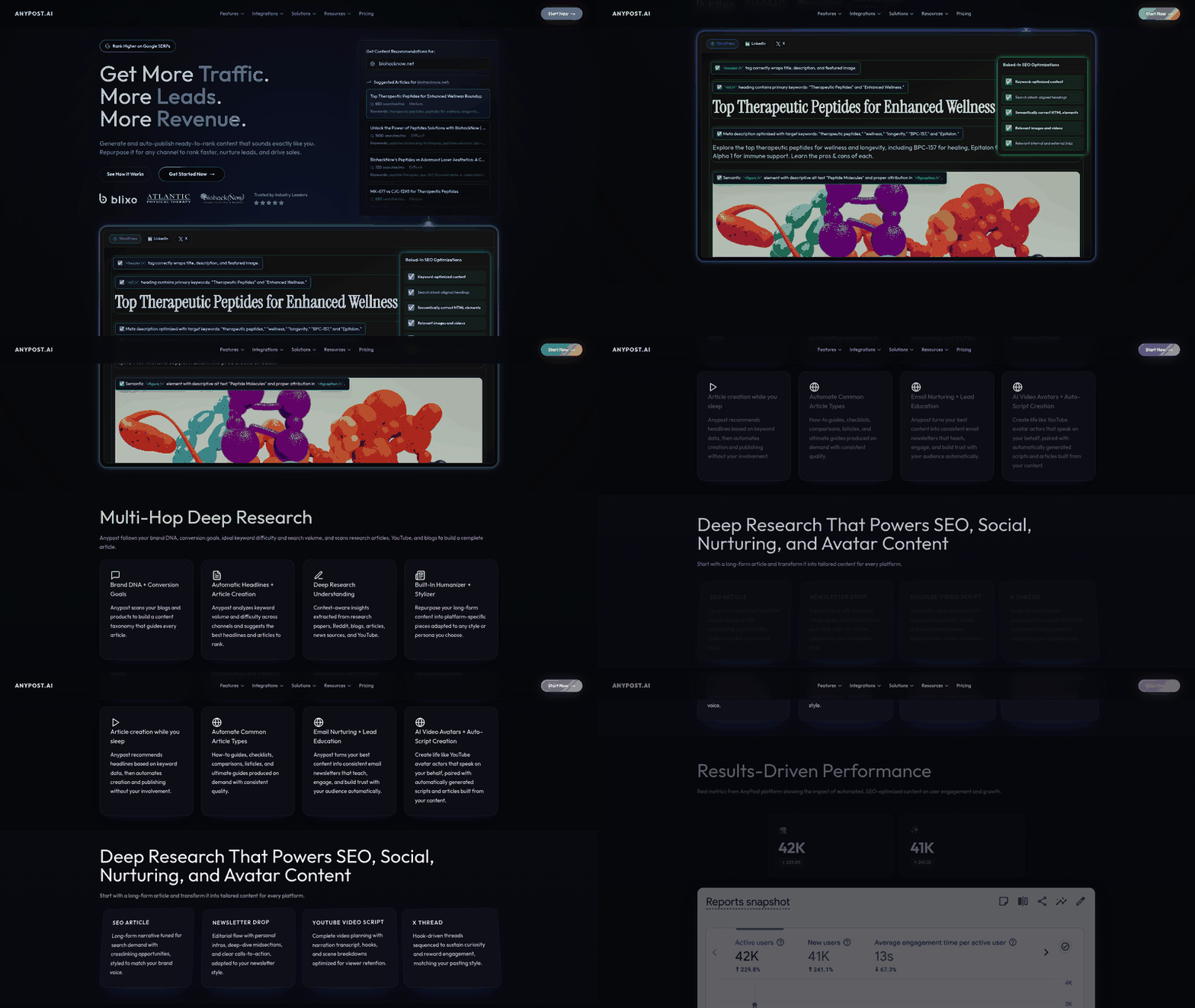
Repurposing content is a strategic approach to maximize the value of your blog posts and other assets across platforms like X/Twitter, newsletters, YouTube, and more. HubSpot emphasizes using a single piece of content—such as a blog post—as the foundation for multiple formats to amplify reach and engagement [4]. For example, a detailed blog post on B2B marketing trends can be distilled into a Twitter thread highlighting key takeaways, paired with visuals and hashtags to drive traffic back to the original content [4]. This method ensures consistency in messaging while tailoring delivery to each channel’s audience.
Turning Blog Posts into Social Media Content
To repurpose blog posts for social media, extract core insights, statistics, or quotes to create shareable snippets. HubSpot’s case studies show that breaking down long-form content into 280-character summaries with visuals—such as infographics or screenshots—increases Twitter engagement by 30% or more [3]. For LinkedIn, expand these snippets into longer posts with additional context and calls-to-action (CTAs) linking to the full blog. Tools like HubSpot’s Content Strategy tool can help organize these assets, ensuring alignment with your editorial calendar [4]. See the [Optimizing Content Marketing with HubSpot] section for more details on leveraging HubSpot’s tools for content organization.
Creating Newsletter Content from Existing Blog Posts
Newsletters benefit from curated, digestible versions of blog content. According to B2B marketing agency case studies, summarizing a blog post into a 200–300 word newsletter section—complete with bullet points and subheadings—improves open rates and click-through rates [3]. HubSpot recommends embedding relevant CTAs, such as “Download the full guide” or “Watch the video,” to drive conversions [4]. Additionally, newsletters can feature a carousel of related blog posts or case studies, encouraging readers to explore further.
Converting Blog Posts into YouTube Scripts
YouTube scripts derived from blog posts should prioritize storytelling and visual engagement. HubSpot’s blog outlines a process where a 1,000-word blog post is transformed into a 3–5 minute video by structuring it into an introduction, 2–3 key points with examples, and a closing CTA [4]. For instance, a post on demand generation strategies can be segmented into scenes showing on-screen text, animations, and speaker overlays to reinforce key metrics. Agencies leveraging this method report a 25% increase in video watch time compared to unpromoted content [3].
Optimizing Content for Each Channel
Each platform requires unique formatting to align with user behavior. For Twitter, prioritize short, punchy headlines with emojis and hashtags; for YouTube, focus on SEO-optimized titles and descriptions using keywords from the original blog post [4]. Newsletters demand a conversational tone with clear sections, while YouTube videos benefit from structured scripts and visual hierarchy. HubSpot’s case studies highlight that channel-specific optimizations—such as vertical video formats for Instagram or longer-form explanations for LinkedIn—lead to higher engagement and lead generation [3].
By systematically repurposing content, B2B demand gen agencies can reduce creation time, maintain message consistency, and expand their audience reach. The key is to audit existing assets for repurposing potential, map them to channel-specific guidelines, and track performance metrics to refine the strategy [3][4]. See the [Measuring and Analyzing Campaign Performance with HubSpot] section for guidance on monitoring and improving these efforts. Building on concepts from [Best Practices for B2B Demand Gen Agency Success with HubSpot], this approach ensures every piece of content contributes to a cohesive demand generation funnel.
Measuring and Analyzing Campaign Performance with HubSpot
To effectively measure and analyze campaign performance with HubSpot, begin by setting up tracking and analytics tools within the platform. HubSpot’s built-in analytics dashboard allows users to monitor traffic growth, lead generation, and conversion rates by connecting website data, email campaigns, and CRM records [4]. This setup involves configuring UTM parameters for campaign-specific URLs, enabling form tracking to capture lead submissions, and integrating Google Analytics for deeper traffic insights [4]. As mentioned in the Setting Up HubSpot for B2B Demand Gen Agency section, this foundational configuration ensures all campaign data is centralized for accurate reporting.
Monitoring Key Metrics for Campaign Success
Once tracking is configured, focus on monitoring core metrics that define campaign success in B2B demand generation. Traffic growth can be evaluated using HubSpot’s website analytics to identify trends in page views, session duration, and referral sources [4]. For lead generation, track form submissions, email sign-ups, and downloadable asset downloads, which indicate user interest and engagement [2]. Conversion rates, meanwhile, require analyzing how many leads progress through the sales funnel, from initial contact to closed deals. HubSpot’s CRM integration enables this by mapping lead behavior to deal stages, allowing teams to quantify conversion efficiency [3]. For example, case studies from B2B marketing agencies highlight how tracking email open rates and CTA clicks helps identify high-performing content and underperforming campaigns [3].
Analyzing Campaign Performance for Optimization
Analyzing campaign performance involves identifying patterns in the data to pinpoint areas for improvement. HubSpot’s reporting tools let users segment leads based on behavior, such as content preferences or engagement frequency, enabling granular analysis of which strategies drive the most qualified leads [2]. For instance, comparing traffic sources—like organic search versus paid ads—reveals where to allocate budget more effectively. Additionally, A/B testing features in HubSpot allow teams to experiment with subject lines, CTAs, or landing pages, using conversion rates as the primary metric for success [4]. By cross-referencing these results with lead qualification scores, marketers can determine which tactics align best with their target audience’s needs [2].
Using Data to Refine Future Campaigns
The insights gained from campaign analysis should directly inform future content marketing and demand generation strategies. HubSpot’s analytics dashboard supports this by generating custom reports that highlight top-performing assets, such as blog posts or webinars, which can be repurposed or expanded upon [4]. See the Optimizing Content Marketing with HubSpot and Repurposing Content for Multi-Channel Distribution sections for strategies on leveraging high-performing content. For example, if a specific eBook drives high lead generation but low conversions, marketers might revise its messaging or pair it with follow-up nurturing sequences to improve outcomes [3]. Furthermore, lead segmentation data from the HubSpot CRM can guide personalized email campaigns, ensuring messaging resonates with different buyer personas [2]. By consistently iterating on campaign elements based on measurable results, B2B agencies can optimize their efforts to align with both business goals and audience expectations [3].
Incorporating these practices ensures that campaign performance is not only measured but also leveraged as a feedback loop for continuous improvement. HubSpot’s integration with CRM systems, as detailed in the Integrating HubSpot with Other Tools for Enhanced Performance section, provides the data necessary to shift from reactive adjustments to proactive, data-driven decision-making [4].
Advanced Strategies for B2B Demand Gen Agency Success
Leveraging AI for Content Creation and SEO Optimization
Advanced B2B demand generation agencies are increasingly adopting AI-powered tools to streamline content creation and enhance SEO performance. Agencies like Kiwi Creative [1] utilize AI to generate data-driven content, such as blog posts, email campaigns, and social media copy, while ensuring alignment with HubSpot’s inbound marketing framework. As mentioned in the [Setting Up HubSpot for B2B Demand Gen Agency] section, establishing a robust HubSpot foundation is critical for leveraging these tools effectively. AI tools can also analyze keyword trends, identify content gaps, and optimize on-page SEO elements, such as meta tags and headers, to improve search engine rankings. For example, HubSpot’s SEO tools integrate with AI platforms to automate keyword research and provide real-time suggestions for content refinement [4]. By leveraging AI, agencies reduce manual effort while maintaining high-quality, audience-focused output. However, human oversight remains critical to ensure brand voice consistency and strategic alignment with client goals.
Staying Ahead with Emerging SEO Trends
To outperform competitors, B2B demand gen agencies must prioritize SEO strategies that align with evolving search engine algorithms. HubSpot’s marketing blog emphasizes semantic SEO as a key trend, focusing on user intent and contextual relevance rather than keyword stuffing [4]. See the [Optimizing Content Marketing with HubSpot] section for more details on how HubSpot’s tools support persona-based content mapping. Agencies can use tools like HubSpot’s Content Strategy tool to map buyer personas to search queries, ensuring content addresses specific pain points. Additionally, case studies from successful B2B marketing campaigns highlight the importance of optimizing for featured snippets, which increase visibility in search results [3]. For instance, structuring content with clear headings, concise answers, and schema markup can boost chances of appearing in Google’s “Position Zero.” Agencies should also monitor competitor strategies using competitive analysis tools, identifying opportunities to target long-tail keywords and underperforming content areas.
Optimizing for Voice Search and Conversational Technologies
Voice search is reshaping SEO practices, requiring agencies to adapt content for conversational queries. HubSpot recommends optimizing for long-tail keywords and natural language patterns, such as questions starting with “How,” “What,” or “Can,” to align with voice search behavior [4]. Agencies can also leverage HubSpot’s blog templates to structure content in a Q&A format, improving compatibility with voice-activated assistants. This approach aligns with strategies from the [Repurposing Content for Multi-Channel Distribution] section, where content is adapted for diverse formats. Gary Vaynerchuk’s INBOUND session underscores the importance of creating “evergreen” content that remains relevant as voice search algorithms evolve [6]. By auditing existing content for conversational intent and repurposing it into voice-friendly formats, agencies can capture a growing segment of B2B buyers using smart speakers and mobile devices.
Continuous Learning and Industry Trend Adoption
Staying ahead in B2B demand generation requires a commitment to ongoing education and agility in adopting new technologies. HubSpot’s free lead generation courses provide frameworks for testing and refining strategies, while agencies like Kiwi Creative emphasize the value of cross-functional expertise in technical and creative execution [1][2]. Building on concepts from the [Best Practices for B2B Demand Gen Agency Success with HubSpot] section, agencies should prioritize structured approaches to content and campaign optimization. For example, attending events like INBOUND or analyzing case studies from successful campaigns [3] helps agencies identify best practices for AI integration, SEO updates, and customer journey mapping. Gary Vaynerchuk advocates for data-driven experimentation, urging marketers to test emerging tools like AI chatbots or interactive content to engage buyers [6]. Agencies should also monitor HubSpot’s blog and customer success stories [4] to stay informed about platform updates, such as new analytics features or CRM integrations, that can enhance demand generation workflows.
By combining AI-driven efficiency, proactive SEO adaptation, voice search optimization, and a culture of continuous learning, B2B demand gen agencies can deliver measurable results for clients while maintaining a competitive edge.
Integrating HubSpot with Other Tools for Enhanced Performance
Integrating HubSpot with CRM systems ensures unified lead tracking and management, a critical component for B2B demand generation. By synchronizing HubSpot with a CRM like Salesforce or HubSpot’s native CRM, teams can centralize lead data, automate updates, and align sales and marketing efforts [1]. As mentioned in the [Understanding B2B Demand Gen Agency Pain Points and Objectives] section, such alignment is essential for addressing common challenges like fragmented lead tracking. For example, when a lead fills out a form on a HubSpot-powered website, the CRM automatically updates with the new contact information, reducing manual data entry errors. This integration also enables advanced segmentation and scoring, as outlined in HubSpot’s lead management resources, allowing marketers to prioritize high-quality leads based on behavior and firmographic data [2]. Agencies like Kiwi Creative emphasize that this synergy between CRM and HubSpot accelerates lead qualification and follow-up, particularly for SaaS and tech companies with complex sales cycles [1].
HubSpot’s compatibility with marketing automation platforms such as Pardot or Marketo enhances campaign efficiency and personalization. These integrations allow for automated workflows that trigger targeted content based on user behavior, such as email sequences for abandoned carts or lead nurturing campaigns for downloadable assets [3]. See the [Best Practices for B2B Demand Gen Agency Success with HubSpot] section for strategies on scaling these automated workflows effectively. For instance, when a contact engages with a HubSpot blog post, the automation platform can assign them to a specific nurturing track, ensuring consistent communication without manual intervention. HubSpot’s blog highlights that such integrations reduce repetitive tasks while improving campaign scalability, a key concern for B2B agencies managing multiple clients [4].
Connecting HubSpot to social media management tools like Hootsuite or Buffer streamlines content scheduling, analytics, and audience engagement. Building on concepts from the [Repurposing Content for Multi-Channel Distribution] section, this integration enables consistent branding across platforms while optimizing resource allocation. For example, marketers can use HubSpot’s CRM data to personalize social media outreach, ensuring prospect interactions are informed by prior engagement history. This integration also enables unified reporting, where social media performance metrics feed into HubSpot’s analytics dashboard, providing a holistic view of campaign impact [2].
Best Practices for B2B Demand Gen Agency Success with HubSpot
To ensure success as a B2B demand generation agency using HubSpot, agencies must adopt a structured approach grounded in clear objectives, high-quality content, and continuous optimization. By leveraging HubSpot’s tools and resources, agencies can align their strategies with proven best practices to maximize ROI for clients.
Setting Clear Objectives and Key Performance Indicators (KPIs)
Begin by defining specific, measurable objectives that align with the client’s business goals, such as lead generation targets, conversion rates, or customer acquisition costs [2]. HubSpot emphasizes the importance of segmenting leads and setting KPIs like click-through rates (CTR) and lead-to-opportunity conversion ratios to track progress effectively [2]. For example, agencies should establish benchmarks for email open rates or landing page engagement metrics to evaluate campaign success. Without clear KPIs, agencies risk misallocating resources or failing to demonstrate value to clients [5]. HubSpot’s lead management course highlights the need for consistent evaluation of these metrics to refine lead nurturing workflows and improve qualification processes [2]. As mentioned in the Understanding B2B Demand Gen Agency Pain Points and Objectives section, aligning KPIs with business outcomes is critical for overcoming common challenges in B2B demand generation. By tying KPIs to business outcomes, agencies can ensure their demand gen efforts directly contribute to revenue growth [5].
Creating High-Quality, Engaging Content
Content remains a cornerstone of B2B demand generation, and HubSpot’s inbound marketing framework provides a blueprint for success. Agencies should prioritize creating educational, audience-specific content—such as whitepapers, case studies, and blog posts—that addresses the pain points of their target buyers [4]. For instance, HubSpot’s blog recommends using buyer personas to tailor messaging and ensure content resonates with different stages of the decision-making process [4]. Agencies can enhance content performance by integrating dynamic content in emails and landing pages, leveraging HubSpot’s segmentation tools to deliver personalized experiences [2]. See the Repurposing Content for Multi-Channel Distribution section for more details on maximizing content reach across platforms. Case studies from B2B marketing agencies demonstrate that aligning content with the client’s sales process—such as creating targeted nurture sequences for SQLs (Sales Qualified Leads)—improves engagement and accelerates deal closure [3]. Regularly auditing content for relevance and SEO value is also critical to maintain visibility in competitive markets [4].
Continuously Monitoring and Optimizing Campaign Performance
Demand generation success hinges on iterative improvements based on real-time data. HubSpot’s analytics tools enable agencies to track campaign performance across channels, identifying underperforming assets and reallocating budgets accordingly [3]. For example, A/B testing subject lines, CTAs, or landing page layouts—using HubSpot’s built-in testing features—can yield significant gains in conversion rates [4]. Agencies should adopt a cadence of weekly or biweekly reviews to analyze metrics like cost per lead (CPL) and customer lifetime value (CLV), adjusting strategies as needed [5]. Refer to the Measuring and Analyzing Campaign Performance with HubSpot section for a deeper dive into leveraging HubSpot’s analytics dashboard for data-driven decisions. HubSpot’s case studies show that clients benefit most from agencies that automate reporting and use predictive analytics to forecast trends [3]. By fostering a culture of experimentation and data-driven decision-making, agencies can stay ahead of shifting market demands [5].
Staying Up-to-Date with HubSpot Features and Best Practices
HubSpot frequently releases new tools and updates to enhance its platform’s capabilities, and agencies must stay informed to remain competitive. The HubSpot blog serves as a primary resource for learning about features like automated lead scoring, AI-powered content suggestions, or CRM integrations [4]. Subscribing to HubSpot’s free lead generation courses—such as its segmentation and nurturing curriculum—ensures teams master advanced techniques for managing complex B2B sales cycles [2]. Additionally, agencies should participate in HubSpot’s INBOUND conference and webinars to network with experts and gain insights into emerging trends [6]. For more on AI tools and their role in content creation, see the Advanced Strategies for B2B Demand Gen Agency Success section. By committing to ongoing education, agencies can offer clients cutting-edge solutions that differentiate them in crowded markets [4].
In summary, agencies that combine clear goal-setting, audience-centric content, rigorous performance analysis, and continuous learning will achieve sustainable success with HubSpot. These practices not only drive measurable results for clients but also strengthen the agency’s reputation as a trusted partner in B2B growth.
References
[1] Kiwi Creative: HubSpot Marketing Agency For B2B SaaS & Tech - https://www.kiwicreative.net/
[2] Free Lead Generation Courses - HubSpot Resources Library - https://www.hubspot.com/resources/courses/lead-generation
[3] B2B Marketing Agency results | Demand Gen Case Studies - https://www.getsmartacre.com/results/
[4] HubSpot Blog | Marketing, Sales, Agency, and Customer Success ... - https://blog.hubspot.com/
[5] How to avoid common SaaS marketing mistakes | Chuck Moxley ... - https://www.linkedin.com/posts/chuckmoxley_saas-b2bmarketing-startupgrowth-activity-7315429550144770048-kMN0
[6] Gary Vaynerchuk Shares 13 Minutes Of B2B Marketing Strategies | INBOUND by HubSpot Marketing - https://www.youtube.com/watch?v=yL30hznsUAU
Frequently Asked Questions
1. What are the best practices for setting up HubSpot workflows to maximize lead nurturing efficiency?
To optimize HubSpot workflows for lead nurturing, start by defining clear triggers based on user behavior (e.g., form submissions, email opens) and align actions with the buyer’s journey. Segment leads using firmographic data (industry, company size) and behavioral data (content downloads, website activity) to personalize automation. For example, create tiered workflows for different lead scores or engagement levels. Additionally, integrate workflows with CRM updates to ensure sales teams are informed of lead status. Tools like HubSpot’s “Smart Lists” can further refine targeting, while A/B testing email subject lines or content improves open rates. Regularly audit workflows to remove outdated steps and align them with evolving campaign goals.
Q: How can B2B demand gen agencies align HubSpot workflows with their content marketing strategy?
A: Align workflows with content marketing by mapping automated sequences to specific stages of the buyer’s journey. For instance, use educational eBooks or webinars for top-of-funnel leads, case studies for middle-of-funnel prospects, and product demos for bottom-of-funnel opportunities. Use HubSpot’s content library to categorize assets by topic and intent, ensuring workflows deliver the right content at the right time. Additionally, leverage HubSpot’s “Content Recommendations” tool to suggest personalized content based on a lead’s browsing history. Track engagement metrics (e.g., email clicks, time spent on pages) to refine workflows and test which content drives the highest conversions.
Q: What tools or integrations should B2B agencies prioritize when setting up HubSpot for demand generation?
A: Key integrations include CRM systems (e.g., Salesforce) for seamless data synchronization, marketing automation tools (e.g., Marketo for advanced segmentation), and analytics platforms (e.g., Google Analytics for tracking website behavior). For content creation, integrate tools like AnyPost.ai or HubSpot’s own blogging tools to streamline SEO-optimized content publishing. Email marketing integrations (e.g., Mailchimp) can expand workflow capabilities, while live chat tools like Drift enhance real-time lead engagement. Additionally, use UTM parameter tracking in HubSpot to measure campaign performance across channels and identify high-performing traffic sources.
Q: What metrics should B2B agencies track in HubSpot to measure demand gen success beyond lead-to-customer conversion rates?
A: Beyond basic conversion rates, track metrics like lead-to-opportunity conversion rate, average time to qualify a lead, and engagement per lead (email opens, webinar attendance). Use HubSpot’s Sales Funnel Report to analyze bottlenecks and optimize nurturing steps. For content performance, monitor content download-to-lead conversion rate and bounce rate on landing pages. Advanced metrics include customer acquisition cost (CAC) and customer lifetime value (CLV) to evaluate ROI. Custom reports in HubSpot can aggregate these metrics into dashboards, enabling data-driven adjustments to campaigns.
Q: How can B2B agencies scale their HubSpot workflows without compromising personalization?
A: Scale workflows by using HubSpot’s Dynamic Content to deliver personalized messages based on lead attributes (e.g., job role, industry). Implement multi-step workflows with conditional logic to handle different scenarios (e.g., sending sales alerts for high-intent leads vs. nurturing sequences for low-intent leads). Use automation templates for repetitive tasks, such as onboarding or follow-up emails, while reserving manual handoffs for high-priority leads. For larger teams, assign workflow ownership using HubSpot’s Team Collaboration features and train staff to update workflows periodically based on performance data.
Q: What are common pitfalls to avoid when configuring HubSpot for B2B demand generation?
A: Avoid over-automating workflows without human oversight, as this can lead to irrelevant messaging. Ensure workflows are audited regularly to remove outdated triggers or actions. Another pitfall is poor data hygiene—clean and update contact lists frequently to prevent wasted resources on unengaged leads. Avoid creating overly complex dashboards; instead, focus on 1-3 key metrics per team (e.g., marketing team tracks MQLs, sales team tracks SQLs). Lastly, don’t neglect onboarding training for team members to ensure everyone understands how to use HubSpot’s full capabilities.
Q: How can B2B agencies use HubSpot to improve lead scoring accuracy for better demand gen outcomes?
A: Improve lead scoring by combining behavioral data (e.g., website visits, content downloads) with firmographic data (e.g., company revenue, industry). Use HubSpot’s Lead Score Tool to assign points dynamically—e.g., +10 points for downloading a case study, +5 for attending a webinar. Set thresholds for “Marketing-Qualified Leads” (MQLs) and “Sales-Qualified Leads” (SQLs) to automate handoffs. Periodically refine scoring models using historical data (e.g., which behaviors correlate with conversions). Integrate with sales feedback to adjust scores based on real-world outcomes, ensuring alignment between marketing and sales teams.