
How to Optimize Content with Auto SEO Tools

Related Video
Watch: Give me 8 Minutes and You'll Win at SEO in 2025 by Ahrefs
Understanding Auto SEO Tools
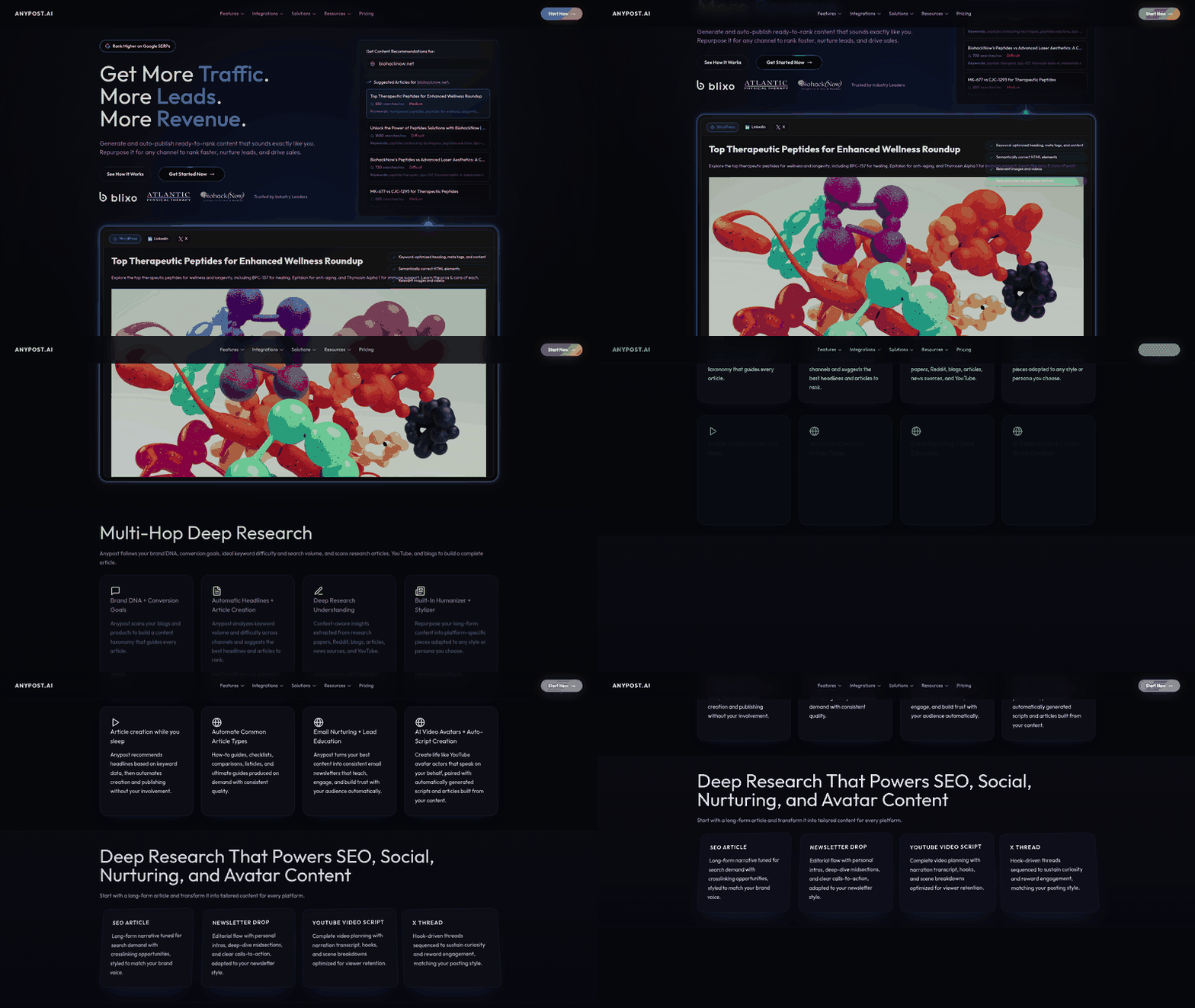
Auto SEO tools are AI-driven platforms designed to streamline and enhance search engine optimization (SEO) processes by automating tasks like keyword research, content analysis, and on-page optimization. These tools leverage artificial intelligence to evaluate content quality, identify gaps, and suggest improvements aligned with search engine algorithms and user intent. For example, Surfer AI integrates a built-in content optimization platform that guides users from initial research to final adjustments [1]. As mentioned in the [Setting Up Auto SEO Tools for Content Optimization] section, selecting a tool like Surfer AI requires evaluating features such as built-in content optimization capabilities. Similarly, AI-powered tools like Clearscope and Frase.io focus on refining existing content and generating new material optimized for both search engines and audience engagement [5][9]. By combining machine learning with SEO best practices, these tools reduce manual effort while increasing the likelihood of higher search rankings.
Key Benefits of Auto SEO Tools
The primary advantage of auto SEO tools is their ability to save time and resources while delivering data-driven insights. Tools like OTTO SEO automate fixes and optimizations across websites, ensuring consistent improvements in performance without requiring constant manual oversight [10]. This automation is particularly valuable for content marketers managing large volumes of material, as it allows for rapid scaling without compromising quality. Additionally, platforms such as Search Atlas and RankMaster AI prioritize features like keyword research and backlink analysis, enabling users to align their strategies with proven SEO tactics [6][11].
Another critical benefit is the enhancement of content relevance and freshness. Auto SEO tools analyze competitor content and search trends to suggest updates, as seen with Clearscope’s ability to refresh outdated material for optimal ranking [5]. See the [Repurposing Content for Multi-Channel Distribution] section for more details on how refreshed content can be adapted for broader audience reach. This functionality is vital in competitive niches where staying current can determine visibility. Furthermore, AI-powered tools like Frase.io accelerate content creation by generating outlines, optimizing for both traditional search engines and emerging AI-based platforms like ChatGPT [9]. By integrating semantic analysis and geo-targeting, these tools ensure content meets diverse audience needs while adhering to SEO standards.
How Auto SEO Tools Work
Auto SEO tools operate through a combination of data analysis, machine learning, and automation. For instance, RightBlogger’s Auto-Optimize Tool uses large language models (LLMs) to dissect content structure, keyword placement, and readability, offering real-time suggestions for improvement [7]. Similarly, platforms like Surfer AI and Search Atlas employ algorithms to assess technical SEO elements such as meta tags, internal linking, and image optimization, ensuring technical compliance with search engine requirements [1][10].
A core function of these tools is their ability to rewrite or refine content for SEO gains. AI models analyze existing text to identify underperforming sections and propose revisions, such as rephrasing headers or adjusting keyword density [4]. Tools like OTTO SEO extend this capability by automatically publishing optimized content to connected CMS platforms, including metadata and internal links, which reduces human error and accelerates deployment [8]. This end-to-end automation is particularly useful for businesses aiming to maintain a consistent publishing schedule while adhering to evolving SEO guidelines.
Moreover, auto SEO tools rely on competitive benchmarking to inform strategies. By scraping and analyzing top-ranking pages, they identify gaps in a user’s content and recommend actionable steps. For example, AI SEO platforms highlighted in Marketer Milk’s 2025 list use competitor data to suggest topic expansions or keyword opportunities, ensuring content remains competitive [1]. Building on concepts from the [Measuring and Tracking Content Performance with Auto SEO Tools] section, competitive benchmarking can also be enhanced by analyzing metrics like traffic and engagement to refine strategies further. This competitive edge is further amplified by tools like Frase.io, which integrates real-time SEO and geo-targeted optimization to address both global and local search intent [9].
Limitations and Considerations
While auto SEO tools offer significant advantages, they are not a standalone solution. Their effectiveness depends on the quality of input data and the user’s ability to interpret recommendations. As noted in source [12], many tools lack transparency in their methodologies, making it challenging to audit their suggestions. Additionally, over-reliance on automation can lead to generic content if not paired with human creativity and domain expertise.
To maximize results, users should combine auto SEO tools with manual review processes. For instance, Clearscope’s AI-driven insights must be validated against brand guidelines to maintain voice consistency [5]. Similarly, while RankMaster AI automates keyword research, strategic decision-making is required to prioritize targets based on business goals [11]. By treating these tools as augmentative rather than replacement technologies, marketers can achieve a balance between efficiency and originality in their SEO efforts.
Setting Up Auto SEO Tools for Content Optimization

Choosing the Right Auto SEO Tool
Selecting an auto SEO tool begins by evaluating its core features against your content optimization needs. As mentioned in the Understanding Auto SEO Tools section, these AI-driven platforms automate tasks like keyword research and content analysis [1]. Tools like Surfer AI offer built-in content optimization platforms, enabling users to refine content structure and keyword density seamlessly [1]. For refreshing existing content, Clearscope excels by analyzing top-ranking pages and suggesting improvements for relevance and SEO alignment [5]. Frase.io combines real-time SEO and GEO (Google Search and Generative AI) optimization, making it ideal for dynamic content creation [9]. If backlink analysis and keyword prioritization are critical, RankMaster AI provides automated workflows for these tasks [11]. Consider factors like integration capabilities, AI-driven suggestions, and whether the tool supports multilingual content, as highlighted in sources [3] and [7].
Configuring Auto SEO Tool Settings
Once a tool is selected, configuring its settings ensures alignment with your SEO goals. Start by defining primary and secondary keywords, as tools like Surfer AI use these to calculate content scores and suggest optimizations [1]. See the Optimizing Content with Automated Keyword Research section for more details on how these keywords are identified and prioritized [3]. Adjust settings for content structure, such as heading hierarchy and paragraph length, to match guidelines from top-ranking pages. For example, Frase.io allows users to enable real-time suggestions while writing, ensuring SEO adjustments are made dynamically [9]. Tools like RightBlogger’s Auto-Optimize feature automate meta tag generation and internal linking recommendations [7]. Set thresholds for metrics like keyword density and readability scores, referencing benchmarks from sources like Clearscope’s content quality reports [5]. These configurations ensure the tool’s output aligns with both search engine algorithms and user intent.
Integrating Auto SEO Tools with Content Management Systems
Integration with a CMS streamlines workflow efficiency. Tools such as OTTO SEO and AI SEO platforms support direct CMS connections, automatically publishing optimized content with metadata, internal links, and image alt text [8][10]. For platforms like WordPress or Shopify, install plugins provided by the SEO tool—Surfer AI and Frase.io offer CMS integrations for seamless content deployment [1][9]. If API-based integration is required, verify compatibility with your CMS; tools like seoClarity and RankMaster AI provide documentation for custom API setups [6][11]. For manual workflows, export optimized drafts from the SEO tool and import them into the CMS, ensuring metadata and formatting are preserved. Test integrations by publishing a sample article and monitoring performance via the tool’s analytics dashboard [8].
Validating and Refining the Setup
After initial setup, validate the tool’s effectiveness by auditing its recommendations against established SEO best practices. Compare its keyword suggestions with tools like Ahrefs or SEMrush to ensure alignment with industry standards [6]. Building on concepts from the Measuring and Tracking Content Performance with Auto SEO Tools section, monitor content performance using built-in analytics from platforms like Clearscope or Frase.io, adjusting tool settings if rankings or traffic fall short of benchmarks [5][9]. Regularly update the tool’s configuration to reflect algorithm changes—many AI SEO tools, such as Search Atlas, offer updates for schema markup and Core Web Vitals optimizations [10]. Collaborate with your content team to refine workflows, ensuring the tool complements human creativity while automating repetitive optimization tasks [3].
By following these steps, teams can establish a robust auto SEO framework that enhances productivity and search visibility. Each tool’s unique strengths, from Surfer AI’s content scoring to Frase.io’s real-time editing, should be leveraged according to specific use cases [1][9]. Continuous evaluation and adaptation ensure the system remains effective as SEO landscapes evolve.
Optimizing Content with Automated Keyword Research
Automated keyword research streamlines the process of identifying high-value keywords by leveraging AI-driven tools that analyze search trends, content gaps, and competitor strategies. Tools like Surfer AI integrate built-in content optimization platforms, allowing users to generate keyword suggestions directly from topic prompts [1]. Frase.io further simplifies this by combining SEO and GEO (Google’s Generative Experience) optimization, enabling real-time keyword research and content scoring [9]. These tools use natural language processing (NLP) to prioritize keywords based on search volume, relevance, and user intent, reducing manual effort [13]. For example, RankMaster AI automates keyword clustering, grouping related terms to create comprehensive content strategies [11].
Analyzing Keyword Competition with AI Tools
Once relevant keywords are identified, AI tools assess competition to determine feasibility. seoClarity offers an extensive suite of SEO analysis tools, including competitor benchmarking and keyword difficulty scores [6]. Similarly, RightBlogger’s Auto-Optimize Tool evaluates keyword competition by analyzing top-ranking pages, highlighting on-page elements like meta tags, headers, and content length [7]. These platforms use machine learning to predict how easily new content can rank for specific terms. For instance, OTTO SEO’s AI-powered automation tool identifies low-competition keywords by scanning search engine results pages (SERPs) for overlooked opportunities [10]. By cross-referencing data from tools like Surfer AI and Frase.io, marketers can prioritize keywords with balanced search volume and achievable competition levels [1][9]. See the [Measuring and Tracking Content Performance with Auto SEO Tools] section for more details on how these tools track post-publication rankings.
Optimizing Content with Targeted Keywords
After selecting high-potential keywords, AI tools guide content optimization to align with search engine algorithms. OTTO SEO’s Content Optimization Software provides instant recommendations for keyword placement, readability adjustments, and semantic variations [10]. Tools like Frase.io rewrite existing content—headers, body text, or metadata—to enhance SEO while maintaining natural language flow [9]. For example, RightBlogger’s auto-optimization feature scans draft content, flagging under-optimized keywords and suggesting replacements based on SERP analysis [7]. Additionally, Search Atlas automates keyword insertion into titles, headers, and image alt text, ensuring technical SEO compliance [4].
For deeper optimization, AI tools like Surfer AI analyze top-ranking content to generate “content scorecards,” which highlight gaps in word count, keyword density, and backlink profiles [1]. This data-driven approach ensures new content meets or exceeds competitors’ standards. RankMaster AI extends this by integrating local SEO factors, such as geographic keyword variations, to target niche audiences [11]. By using these tools, content creators can systematically refine drafts to align with both algorithmic requirements and user intent [13].
Streamlining the Optimization Workflow
To maximize efficiency, many platforms offer end-to-end workflows. For instance, Frase.io allows users to input a topic, automatically generating an outline with keyword suggestions, competitor analysis, and optimized content snippets [9]. Similarly, Surfer AI’s “Content Editor” provides real-time feedback during the writing process, suggesting keyword placements and readability improvements [1]. These workflows reduce iteration cycles, enabling teams to produce SEO-ready content faster.
When implementing automated keyword research, it’s critical to validate results with manual audits. While AI tools excel at data analysis, human judgment ensures contextual relevance and brand voice consistency. Tools like seoClarity and RankMaster AI provide performance dashboards to track keyword rankings post-publication, allowing iterative optimizations based on real-world traffic data [6][11]. Building on concepts from the [Common Mistakes to Avoid When Using Auto SEO Tools] section, balancing automation with strategic oversight prevents over-reliance on AI outputs. By combining automated insights with strategic oversight, content creators can achieve sustainable SEO growth.
Repurposing Content for Multi-Channel Distribution
Repurposing content for multi-channel distribution is a strategic approach to maximize reach, engagement, and SEO efficiency. By adapting existing content for platforms like social media, email newsletters, and YouTube, creators reduce redundancy while tailoring messaging to diverse audiences. According to [4], AI-powered tools can rewrite headers and body texts to enhance SEO, which is critical for repurposing content to align with platform-specific algorithms. As mentioned in the [Understanding Auto SEO Tools] section, these AI-driven platforms streamline tasks such as keyword optimization and metadata adjustments. For example, social media platforms prioritize concise, attention-grabbing text, while YouTube requires optimized video transcripts and metadata. Auto SEO tools streamline these adjustments, ensuring consistency in messaging without duplicating effort. This process not only saves time but also amplifies content visibility across ecosystems, as noted in [1], where SEO automation tools are highlighted for their ability to manage cross-channel workflows.
How Auto SEO Tools Facilitate Content Repurposing
Auto SEO tools simplify repurposing by automating formatting, keyword optimization, and platform-specific adjustments. Tools like those described in [4] can rewrite existing content to improve search rankings, which is essential when repurposing for new audiences. See the [Optimizing Content with Automated Keyword Research] section for more details on how AI identifies high-value keywords for such tasks. For instance, a long-form blog post can be transformed into a series of social media snippets, with AI tools like Frase.io (cited in [9]) generating platform-ready variations. These tools analyze original content to identify core themes and keywords, then restructure them for brevity or depth depending on the channel. Additionally, [2] emphasizes the role of AI in automating metadata generation, such as crafting YouTube video descriptions with targeted keywords that align with search intent. This reduces manual effort while maintaining SEO coherence across channels.
Optimizing Content for Different Channels
Each distribution channel demands unique optimizations, and auto SEO tools address these requirements systematically. For social media, tools like those in [7] can condense blog posts into tweet-length summaries with embedded hashtags, improving discoverability on platforms like Twitter and LinkedIn. Email newsletters benefit from personalized subject lines and segmented content, a capability supported by AI-driven SEO tools mentioned in [10], which prioritize readability and engagement metrics. YouTube content, meanwhile, requires tools to generate transcripts and suggest on-page keywords, as noted in [15], where video SEO strategies for 2025 stress the importance of aligning transcripts with search trends.
Cross-referencing [5], Clearscope’s content optimization tools demonstrate how AI adapts tone and structure for different platforms—such as converting a technical article into a conversational Instagram reel script—while preserving core SEO value. For instance, a tool might shorten a 2,000-word article into a 500-word newsletter piece, using natural language processing to retain key takeaways. This ensures that repurposed content meets the engagement expectations of each channel without diluting its original purpose.
Practical Steps for Effective Repurposing
To leverage auto SEO tools for multi-channel distribution, follow these steps:
- Audit Existing Content: Use tools like those in [3] to identify high-performing pieces suitable for repurposing.
- Generate Variations: Employ AI to create platform-specific drafts, such as YouTube scripts or social media posts, as outlined in [4].
- Optimize Metadata: Tools from [6] can automate title tags, alt text, and descriptions tailored to each channel’s SEO requirements.
- Test and Refine: Analyze performance metrics using AI-powered analytics (e.g., [11]) to iteratively improve repurposed content. As discussed in the [Measuring and Tracking Content Performance with Auto SEO Tools] section, these analytics provide insights for continuous optimization.
By integrating these steps, creators ensure that repurposed content maintains SEO integrity while resonating with platform-specific audiences. As emphasized in [14], multi-channel strategies are vital for small businesses to maximize limited resources, and auto SEO tools democratize access to these tactics by automating labor-intensive tasks.
In conclusion, repurposing content with auto SEO tools bridges the gap between efficiency and precision. By leveraging AI to adapt messaging for diverse channels, creators can sustain audience engagement without compromising on quality or search visibility. The synergy between content repurposing and automated SEO optimization, as highlighted in [7] and [9], underscores its role as a cornerstone of modern digital marketing.
Measuring and Tracking Content Performance with Auto SEO Tools
To effectively measure and track content performance using auto SEO tools, begin by leveraging built-in analytics features. Tools like seoClarity [6] and Frase.io [9] provide dashboards that aggregate metrics such as traffic, engagement rates, and conversion rates, enabling users to monitor content performance in real time. These platforms often break down data by page type, including text, images, and videos, as noted in source [12], allowing teams to identify which content formats resonate most with audiences. For instance, seoClarity’s suite includes tools for analyzing how specific pages contribute to overall SEO goals, while Frase.io integrates with Google Analytics to map user behavior directly to SEO performance [9]. By regularly reviewing these analytics, marketers can pinpoint high-performing content and prioritize improvements for underperforming assets. See the [Optimizing Content with Automated Keyword Research] section for more details on how these tools support keyword-driven insights.
Tracking Keyword Rankings and SERP Performance
Auto SEO tools automate the process of tracking keyword rankings, a critical component of SEO strategy. RankMaster AI [11] emphasizes features like keyword research and backlink analysis, which help users monitor their positions for target keywords over time. Similarly, seoClarity [6] offers keyword tracking capabilities, allowing teams to set up alerts for ranking fluctuations and analyze competitors’ keyword strategies. Frase.io [9] further enhances this by combining keyword tracking with content optimization suggestions, ensuring that pages remain competitive in search engine results pages (SERPs). For example, the platform identifies gaps between current content and top-ranking competitors, recommending specific keyword adjustments. These tools often provide historical data on keyword performance, enabling users to correlate ranking changes with content updates or algorithm shifts [12].
Adjusting Content Strategies Based on Data
Data from auto SEO tools must inform iterative adjustments to content strategies. RankMaster AI [11] highlights the importance of using performance metrics to refine targeting, such as reallocating resources to keywords with higher conversion potential or lower competition. Frase.io [9] supports this by generating actionable insights from analytics, like suggesting topic clusters or content gaps based on user search intent. For instance, if analytics reveal that a blog post ranks well for a long-tail keyword but has low dwell time, the tool might recommend restructuring the content to improve readability or adding multimedia elements [12]. Additionally, seoClarity [6] enables teams to conduct A/B tests on metadata or headlines, using automated reporting to determine which variations drive the most traffic. By aligning content revisions with data-driven priorities, marketers ensure their strategies remain agile and responsive to audience needs. Building on concepts from [Common Mistakes to Avoid When Using Auto SEO Tools], it is essential to balance automated insights with human judgment during strategy adjustments.
Integrating Multi-Source Insights for Holistic Optimization
To maximize the value of auto SEO tools, combine insights from multiple platforms. For example, while RankMaster AI [11] focuses on automation for keyword research and backlink analysis, Frase.io [9] integrates generative AI to suggest content rewrites based on SERP trends. Cross-referencing data from these tools allows teams to validate findings—such as identifying keywords that show high search volume in one tool but low competition in another [6]. Source [12] underscores the value of monitoring progress across page types, which can be achieved by layering analytics from tools like seoClarity [6] and Frase.io [9] to assess how different content formats contribute to SEO goals. This multi-source approach reduces blind spots and ensures that optimization efforts address both technical and creative aspects of content.
Limitations and Best Practices
While auto SEO tools offer robust tracking capabilities, their effectiveness depends on consistent monitoring and interpretation. Source [12] explicitly states that some tools, like seoClarity [6], have custom or unclear pricing, which may limit access to advanced features for smaller teams. Additionally, no single tool provides a complete view of SEO performance, necessitating integration with external platforms like Google Search Console. To avoid over-reliance on automation, supplement tool-generated insights with manual audits and stakeholder feedback [11]. As mentioned in the [Common Mistakes to Avoid When Using Auto SEO Tools] section, human judgment remains critical in deciding whether to revise, repurpose, or retire underperforming content. Finally, establish a cadence for reviewing analytics—weekly or monthly reports are common practices cited in source [6]—to maintain momentum in SEO efforts without becoming overwhelmed by data.
Advanced Auto SEO Techniques for Content Marketers
To elevate SEO strategies, content marketers must leverage advanced auto SEO techniques powered by AI. AI-powered SEO tools like Surfer AI streamline content optimization by providing real-time recommendations for keyword placement, content structure, and readability adjustments [1]. Tools such as OTTO SEO automate fixes and optimizations across all search queries, ensuring continuous improvements in search engine performance without manual intervention [2]. For instance, Clearscope allows marketers to refresh existing content or generate new material aligned with the latest ranking factors, enhancing relevance and visibility [5]. Frase.io further accelerates SEO efforts by integrating generative AI with SEO and GEO (Google’s Generative Experience) optimization, enabling content creators to craft pieces that rank highly on Google and get cited by AI search engines like Perplexity [9]. These tools collectively reduce guesswork, allowing marketers to focus on strategic adjustments rather than granular optimizations [7]. See the [Understanding Auto SEO Tools] section for more details on how these platforms function.
Optimizing Content for Voice Search
Voice search optimization requires adapting content to natural language queries and featured snippet formats. While direct guidance on voice search is sparse in the sources, tools like RankMaster AI emphasize semantic SEO, which aligns with voice search intent by prioritizing conversational keywords and question-based phrasing [11]. Auto SEO platforms such as RightBlogger’s Auto-Optimize Tool analyze search patterns to suggest content adjustments that cater to voice-activated queries, such as “how to” or “what is” statements [7]. Additionally, AI SEO tools that automate metadata and internal linking, like those described in [8], improve the likelihood of content appearing in voice search results, which often pull from top-ranking snippets. By focusing on long-tail keywords and concise, answer-driven content, marketers can align their strategies with the growing dominance of voice search in the AI era [15]. See the [Optimizing Content with Automated Keyword Research] section for insights on leveraging long-tail keywords effectively.
Entity-Based Optimization for Improved Rankings
Entity-based optimization involves structuring content around semantic entities—key concepts or topics relevant to a query—to enhance search engine understanding. AI tools like Search Atlas’s OTTO SEO leverage entity recognition to refine content context, ensuring alignment with Google’s evolving emphasis on semantic relationships [10]. For example, Clearscope’s AI analyzes entities within high-ranking content to suggest topic clusters and related keywords, enabling marketers to create contextually rich material [5]. Similarly, Surfer AI’s content optimization platform identifies entities critical to a topic, guiding writers to incorporate them naturally into headers and body text [1]. This approach not only improves rankings but also strengthens content authority by addressing search intent more precisely [13]. Building on concepts from the [Setting Up Auto SEO Tools for Content Optimization] section, marketers should prioritize tools with robust entity recognition capabilities to maximize SEO impact.
By combining AI-powered tools with entity-focused strategies, marketers can future-proof their SEO efforts. Platforms like Frase.io and RankMaster AI automate much of this process, offering insights into competitor content, backlink opportunities, and semantic gaps [9][11]. However, success hinges on continuous refinement: AI tools provide recommendations, but human oversight ensures content remains engaging and aligned with brand voice. As AI evolves, staying updated with tools like those listed in [1][2], and [9] will be critical for maintaining a competitive edge in search rankings.
Common Mistakes to Avoid When Using Auto SEO Tools
One of the most common mistakes when using auto SEO tools is relying solely on automation without incorporating human judgment. While tools like seoClarity offer extensive suites of SEO analysis and rich content optimization features [6], they cannot fully account for nuanced audience preferences or strategic context. For example, AI-driven suggestions may prioritize keyword density over readability, leading to content that satisfies technical requirements but fails to engage readers. As highlighted in [15], the 2025 SEO landscape emphasizes balancing automation with manual oversight to ensure alignment with brand voice and user intent. See the [Setting Up Auto SEO Tools for Content Optimization] section for more details on selecting the appropriate tools for your needs. To avoid this pitfall, always review tool-generated recommendations critically and supplement them with human insights.
Automated tools often prioritize technical SEO metrics—such as keyword placement and meta tags—over the intrinsic quality of content. This can result in optimized but unoriginal or repetitive material that fails to deliver value. Source [6] notes that even advanced tools like seoClarity require users to manually refine content structure and depth, as algorithms may not detect subtle gaps in expertise or creativity. Similarly, [15] stresses that AI-generated content must be edited for clarity, coherence, and relevance, as machines cannot replicate human storytelling or contextual understanding. See the [Optimizing Content with Automated Keyword Research] section for more details on effective keyword strategies. To maintain quality, treat auto SEO tools as aids rather than replacements for writing. Use them to validate technical aspects, but invest time in crafting unique, audience-focused content that addresses specific needs.
Another critical error is assuming that auto SEO tools provide a "set-and-forget" solution. Tools like those described in [6] offer real-time data and analysis, but they do not automatically adapt to evolving search engine algorithms or market trends. For instance, an AI tool might recommend targeting a specific keyword based on historical data, but shifts in user behavior could render that keyword obsolete without manual intervention. The 2025 SEO strategies outlined in [15] emphasize continuous performance tracking and iterative adjustments, such as A/B testing headlines or refining target keywords based on competitor activity. Refer to the [Measuring and Tracking Content Performance with Auto SEO Tools] section for guidance on utilizing analytics effectively. To stay ahead, schedule regular audits of your SEO performance using your tool’s analytics features, and adjust tactics in response to new insights or industry changes.
Combining the insights from [6] and [15], it’s clear that auto SEO tools function best when integrated with proactive, human-driven strategies. For example, while seoClarity’s rich content optimization tools [6] can streamline keyword research and on-page analysis, [15] advises pairing these outputs with manual competitor benchmarking to identify untapped opportunities. Similarly, the video in [15] demonstrates how AI can accelerate content creation but warns against ignoring user feedback loops—such as adjusting tone based on engagement metrics—which tools alone cannot interpret. By layering automation with deliberate strategic oversight, users can maximize efficiency without sacrificing adaptability.
To summarize, avoid over-reliance on automation by using auto SEO tools as complementary rather than standalone solutions. Prioritize content quality by manually refining AI-generated drafts to ensure they meet editorial standards and audience expectations. Finally, continuously monitor performance metrics and be prepared to adjust strategies in response to new data or market shifts. By combining the strengths of automation with human expertise, you can achieve sustainable SEO success in 2025 and beyond.
Future of Auto SEO Tools and Content Optimization
Emerging Trends in Auto SEO Tools
The future of auto SEO tools is being shaped by the integration of AI-driven platforms that streamline content creation and optimization. Tools like Surfer AI are leveraging built-in content optimization features to allow users to generate outlines and drafts based on a single topic input, reducing manual effort [1]. As mentioned in the [Section 2] section, selecting the right auto SEO tool involves evaluating features like Surfer AI’s built-in content optimization capabilities. Simultaneously, platforms like Frase.io emphasize real-time SEO and GEO (Google’s AI search) optimization, enabling content to rank not only on traditional search engines but also on AI-driven query interfaces like Perplexity and ChatGPT [9]. Another notable trend is the rise of automated systems that continuously refine SEO strategies, such as OTTO SEO’s approach to running fixes and optimizations through a single automated pipeline, ensuring consistent performance improvements across all search queries [10]. As highlighted in a 2025 video guide, the AI era demands adaptive strategies, with tools prioritizing speed and integration with emerging search algorithms to stay competitive [15].
Technological Advancements in Content Optimization
AI-powered automation is accelerating content optimization through features like real-time keyword research, semantic analysis, and backlink tracking. For instance, RankMaster AI streamlines SEO workflows by automating keyword research, content scoring, and backlink analysis, ensuring alignment with search intent and technical SEO standards [11]. Similarly, Search Atlas’s OTTO SEO platform employs machine learning to enhance GBP (Google Business Profile) management and local SEO, demonstrating how automation extends beyond content to broader digital marketing ecosystems [10]. The integration of AI in tools like Surfer AI and Frase.io also allows for dynamic content rewriting, where existing headers and body texts are restructured to improve SEO scores and readability [1][9]. According to academic research, AI is increasingly used by marketers to automate repetitive tasks such as meta-tag creation and competitor analysis, further reducing the time required for manual optimization [13]. These advancements highlight a shift toward predictive analytics and self-optimizing systems that adapt to algorithmic changes in real time.
Impact on Content Marketing Strategies
The automation of SEO tools is reshaping content marketing strategies by prioritizing agility and data-driven decision-making. Marketers are adopting AI tools like Frase.io and Surfer AI to generate high-ranking content faster, ensuring alignment with both Google’s ranking factors and AI search engines’ citation preferences [9][1]. For example, AI-powered platforms now rewrite existing content to meet evolving SEO benchmarks, enabling brands to maintain relevance without constant manual revisions [4]. Additionally, tools like OTTO SEO emphasize continuous optimization, where every update to a website’s content automatically triggers performance enhancements across search engines [10]. This shift is particularly impactful for small businesses, as AI-driven SEO tools lower the barrier to entry by automating tasks such as keyword integration and semantic SEO [14]. As a result, content marketing strategies are becoming more iterative, with teams focusing on rapid A/B testing and performance tracking rather than static content creation.
Challenges and Limitations
Despite these advancements, the reliance on auto SEO tools introduces challenges. Over-automation risks content homogenization, where AI-generated text prioritizes keyword density over originality, potentially alienating audiences [13]. As discussed in the [Section 7] section, over-reliance on automation without human oversight can lead to content that lacks brand voice and contextual accuracy. Additionally, while tools like RankMaster AI streamline workflows, they require human oversight to ensure contextual accuracy and brand voice consistency [11]. The 2025 Marketer Milk report also notes that no single tool currently handles all aspects of SEO, necessitating multi-tool ecosystems that integrate keyword research, content creation, and backlink analysis [1]. Furthermore, the rapid evolution of AI search engines like Google’s Gemini and Perplexity demands constant updates to auto SEO platforms, creating a race to adapt to new ranking signals [9].
Conclusion: Preparing for the Future
To future-proof content strategies, marketers must adopt a hybrid approach that combines AI automation with human creativity. Tools like Frase.io and Surfer AI demonstrate the value of real-time optimization, but their effectiveness depends on strategic input from content teams [9][1]. As mentioned in the [Section 7] section, striking the right balance between automation and human judgment is critical to avoid pitfalls like content homogenization. As AI continues to refine tasks such as semantic SEO and local search optimization, businesses should prioritize platforms that offer transparency in their decision-making processes, such as Search Atlas’s OTTO SEO [10]. Ultimately, the future of auto SEO tools lies in their ability to adapt to emerging technologies while maintaining a balance between efficiency and authenticity—a challenge that will define the next era of content marketing [13].
References
[1] 13 best SEO automation tools I'm using in 2025 | Marketer Milk - https://www.marketermilk.com/blog/best-seo-automation-tools
[2] AI-Powered SEO Automation Tool by Search Atlas | OTTO SEO ... - https://searchatlas.com/otto-seo/
[3] Best SEO Content Writing AI Software And Optimization Tools - https://www.outranking.io/
[4] Best AI-Powered SEO Content Optimizers? Recommendations ... - https://www.reddit.com/r/TechSEO/comments/1gib0vr/best_aipowered_seo_content_optimizers/
[5] What are the best content optimization tools? | Clearscope - https://www.clearscope.io/blog/best-content-optimization-tools
[6] The 11 best SEO tools in 2025 | Zapier - https://zapier.com/blog/best-seo-tools/
[7] How to Auto SEO-Optimize Content with AI Tools (LLM SEO) - https://rightblogger.com/blog/auto-seo-optimize-content-ai
[8] AI SEO - done for you by AI - https://seo.ai/
[9] Frase.io: Rank on Google & AI Search 10x Faster with SEO + GEO - https://frase.io/
[10] AI-Powered SEO Automation Tool by Search Atlas | OTTO SEO ... - https://searchatlas.com/otto-seo/
[11] Revolutionize Your SEO with AI Automation – RankMaster AI - https://rankmaster.ai/transform-your-seo-strategy-with-ai-powered-automation/
[12] FAQ – Good Gallery - https://www.goodgallery.com/faq/
[13] (PDF) Artificial Intelligence's Revolutionary Role in Search Engine ... - https://www.researchgate.net/publication/381058941_Artificial_Intelligence's_Revolutionary_Role_in_Search_Engine_Optimization
[14] Optimizing Business Performance: Marketing Strategies for Small ... - https://www.researchgate.net/publication/377183366_Optimizing_Business_Performance_Marketing_Strategies_for_Small_and_Medium_Businesses_using_Artificial_Intelligence_Tools/fulltext/65989fcc0bb2c7472b362e36/Optimizing-Business-Performance-Marketing-Strategies-for-Small-and-Medium-Businesses-using-Artificial-Intelligence-Tools.pdf
[15] Give me 8 Minutes and You'll Win at SEO in 2025 by Ahrefs - https://www.youtube.com/watch?v=vE_A4IhmkKQ
Frequently Asked Questions
1. How do Auto SEO tools analyze content quality and suggest improvements?
Auto SEO tools use AI to scan content for keyword density, readability, meta tags, and structure while comparing it to top-ranking pages. They identify gaps (e.g., missing keywords, poor formatting) and align suggestions with search intent and algorithm updates. For instance, Surfer AI provides real-time metrics like keyword clusters and content length recommendations to optimize for both SEO and user engagement.
2. Which Auto SEO tools are best for beginners, and why?
For beginners, Frase.io and Clearscope are ideal due to their intuitive interfaces and guided workflows. Frase.io simplifies content creation with competitor analysis and outline generation, while Clearscope’s "Content Fitness Report" breaks down improvements in digestible steps. These tools reduce the learning curve by offering actionable insights without requiring advanced SEO knowledge.
3. Can Auto SEO tools completely replace human SEO experts?
While Auto SEO tools automate repetitive tasks like keyword research and on-page optimization, human expertise remains critical. Experts interpret nuanced data (e.g., brand voice, cultural context) and strategize for long-term goals like backlink building. Tools like RankMaster AI aid in execution, but human oversight ensures alignment with business objectives and creative content quality.
4. How do these tools handle competitor analysis?
Auto SEO tools crawl competitors’ websites to extract high-performing keywords, content structure, and backlink profiles. Platforms like Search Atlas use this data to recommend content gaps and opportunities (e.g., "content gaps" in your competitors’ material). Some tools, like Surfer AI, even simulate competitor content performance to predict ranking potential.
5. What are the costs associated with using Auto SEO tools?
Pricing varies widely: free tiers (e.g., Ubersuggest) offer basic keyword research, while premium tools like Surfer AI start at $100/month for advanced features like content scoring and competitor audits. Enterprise solutions (e.g., Ahrefs) can cost $999+/month but include comprehensive backlink analysis. Budget-friendly options like Frase.io ($29/month) balance affordability with core SEO functionalities.
6. How do Auto SEO tools ensure content stays fresh and relevant?
Tools like Clearscope monitor search trends and algorithm updates in real time, flagging outdated keywords or obsolete information. They also suggest repurposing old content (e.g., turning blog posts into video scripts) and provide alerts for expired or broken links. This ensures content remains competitive in dynamic search landscapes.
7. What are the limitations of relying solely on Auto SEO tools?
While efficient, these tools may lack the creativity and empathy needed for storytelling or brand-specific nuances. Over-reliance can lead to generic content optimized for algorithms but lacking human connection. Additionally, tools may struggle with hyper-niche topics or local SEO, where manual research and cultural insights are vital. Balancing automation with human input ensures the best results.