How to Optimize for Zero-Click Search and AI Overviews in 2026

Key Takeaways
- By 2026, 70% of searches will resolve without user clicks due to AI Overviews delivering direct answers.
- 83% of queries with AI Overviews show zero SERP engagement, eliminating traditional click-through behavior.
- Google search CTRs have declined to 41% as users prioritize AI summaries over external website visits.
- AI Overviews rely on semantic analysis of diverse sources, not keyword matching, for query resolution.
- Structured data and concise, actionable content improve visibility in AI-generated summaries.
- Speed and convenience drive user preference for AI Overviews over in-depth content exploration.
- Traditional metrics like CTR are unreliable; focus on AI compatibility and content quality.
Related Video
Watch: How to Optimize for Zero-Click Search & AI Overviews in 2026 by Exploding Topics
Understanding AI Overviews
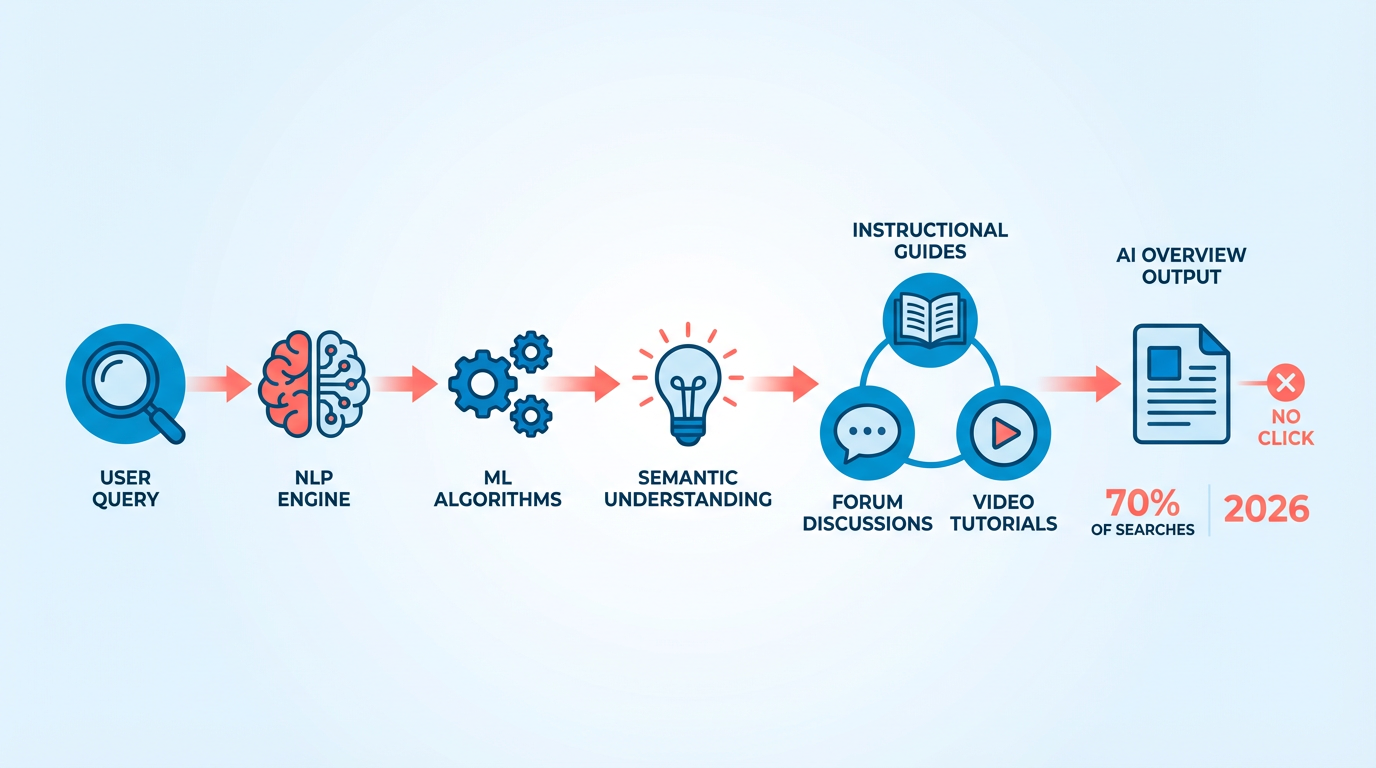
Understanding AI Overviews starts with recognizing how they reshape search behavior. AI Overviews are generated using natural language processing (NLP) and machine learning algorithms that analyze vast datasets to produce concise, query-specific summaries. These systems prioritize semantic understanding over keyword matching, enabling them to extract and synthesize information from multiple sources. For example, when a user searches for "how to fix a leaky faucet," the AI Overview might pull steps from instructional guides, forum discussions, and video tutorials, presenting a unified answer without requiring a website click.
How Do AI Overviews Impact Search Behavior?
AI Overviews drastically reduce the need for users to manage to external websites. By 2026, 70% of searches resolve without a click, and 83% of queries with AI Overviews see zero engagement beyond the search engine results page (SERP). This shift erodes traditional metrics like click-through rates (CTRs), which have dropped to 41% for Google searches. Users now rely on AI-generated summaries for quick answers, prioritizing speed and convenience over in-depth exploration.
The rise of AI Overviews also alters user trust dynamics. Since these summaries are algorithmically curated, they risk diluting brand visibility and authority. Publishers report traffic declines of 30–50% in niches where AI answers are prevalent. For instance, a tech blog covering software tools might see fewer visitors if the AI Overview cites generic summaries instead of linking to original content.
How Can You Optimize Content for AI Citations?
To secure a spot in AI Overviews, prioritize structured data and entity optimization. Search engines favor content with FAQ and HowTo schema markup, as these formats align with the structured patterns AI systems use. As mentioned in the Technical Optimization for Zero-Click Search section, schema markup helps AI overviews pull precise answers by organizing content into structured data. For example, a recipe blog can use HowTo markup to outline step-by-step instructions, increasing the likelihood of being cited in an AI summary.
Entity presence is equally critical. AI models rely on knowledge graphs to contextualize information, so ensuring your content is associated with relevant entities (e.g., brands, products, people) boosts visibility. Tools like AnyPost.ai can help automate schema implementation and entity tagging, streamlining the optimization process.
Author schema also plays a role in establishing credibility. By linking content to verified authors, you signal expertise and trustworthiness to AI systems. Building on concepts from the Implementing a Zero-Click Search Optimization Strategy section, a medical article attributed to a certified doctor via schema markup is more likely to be prioritized over unverified sources.
What Do Successful AI Overview Strategies Look Like?
Publishers who adapt early see measurable results. One company increased AI citation rates by 30% within six months by restructuring content around FAQ formats and optimizing entity tags. Another example involves a how-to video site that used HowTo schema to dominate AI Overviews for plumbing repairs, driving 20% more traffic from ChatGPT integrations than Google.
The key takeaway is to anticipate user intent and structure content for machine readability. Focus on answering queries concisely, using bullet points, numbered lists, and schema markup. As discussed in the Why Zero-Click Search Matters section, avoiding overly technical jargon that might confuse AI parsers is essential. By aligning with how AI systems process and prioritize information, you can maintain relevance in a zero-click search market.
What’s Next for AI Overviews?
As AI models evolve, expect Overviews to become even more context-aware, integrating real-time data and user preferences. This means optimizing for dynamic queries (e.g., location-based or time-sensitive searches) will grow in importance. Brands that invest in proactive content strategies-like updating FAQs with the latest industry trends-will outperform competitors relying on static SEO tactics.
Ultimately, AI Overviews demand a shift from visibility-focused SEO to intent-driven content design. By mastering structured data, entity optimization, and user-centric formatting, you can secure a place in the AI summaries that define 2026’s search ecosystem.
Create Zero-Click Content
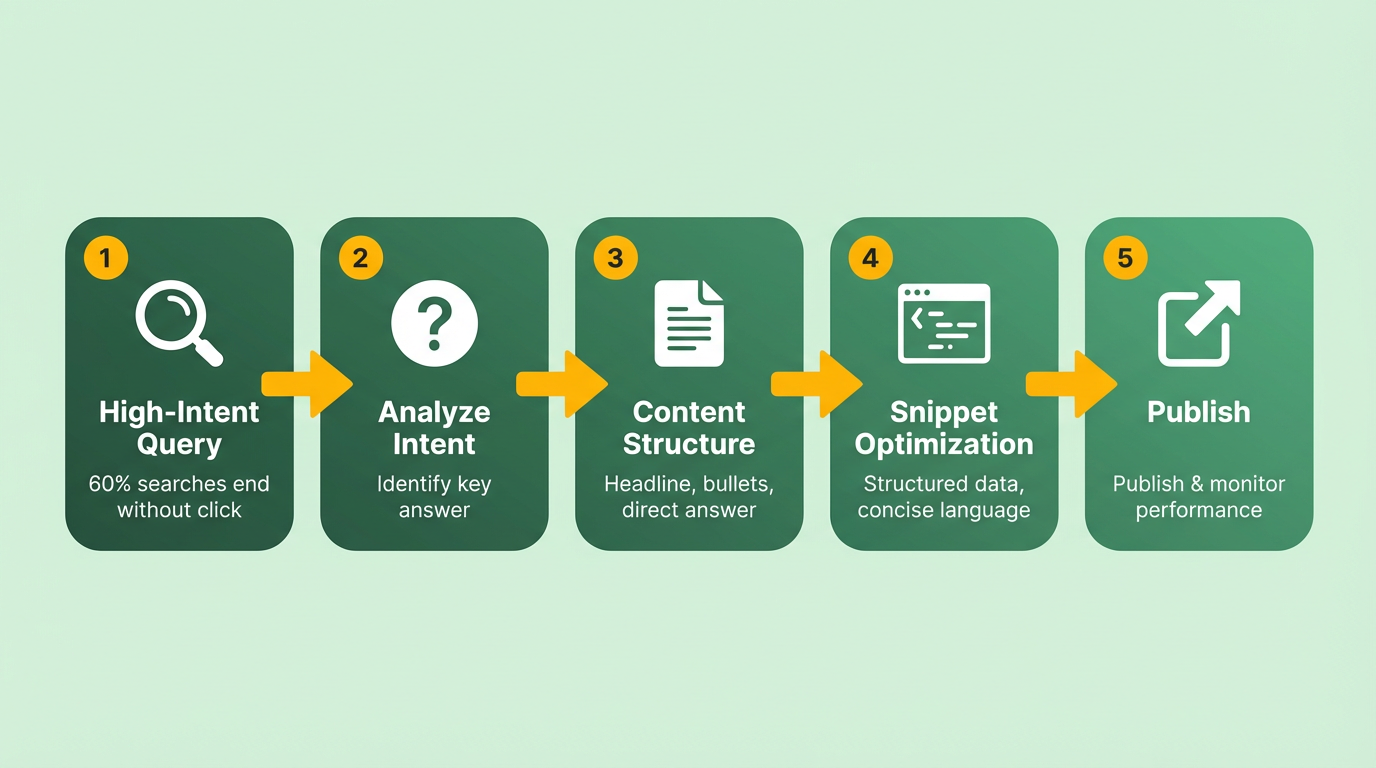
create zero-click content requires a shift from traditional SEO tactics to prioritizing clarity, structure, and direct answers. With over 60% of searches ending without a click, your goal is to deliver information so precisely that search engines and AI systems extract it immediately for users. Start by identifying high-intent queries and structuring your content to answer them upfront. For example, if someone searches “how to fix a leaky faucet,” the first paragraph should outline the key steps before diving into detailed instructions. This approach ensures your content appears in AI overviews and featured snippets, even if users never visit your site. As discussed in the Understanding AI Overviews section, AI systems rely on structured and concise data to generate summaries, making this strategy essential for visibility.
How Do You Structure Zero-Click Content for Maximum Impact?
To capture zero-click visibility, prioritize direct answers and concise paragraphs. Break complex topics into short, digestible sections with clear headings. Google’s AI overviews often pull from the first 100–150 words of a page, so position your most critical insights near the top. Use bold or numbered lists to highlight steps, statistics, or definitions. For instance, a post on “best budget laptops” might open with a comparison table ranking models by price, specs, and user ratings. This format not only aids AI systems but also satisfies users who scan for quick decisions. As outlined in the Why Zero-Click Search Matters section, the rise of zero-click interactions has made it imperative to design content that meets user needs at a glance.
Which Schema Markups Improve Zero-Click Visibility?
Implementing FAQ and HowTo schema markup boosts your chances of appearing in search results. These structured data formats signal to search engines that your content contains ready-to-use answers. For example, an FAQ section on “how to start a podcast” with schema markup might generate a dropdown list of questions in the search results. Similarly, a HowTo schema for “DIY home repairs” could display step-by-step instructions directly on the SERP. For deeper insights into schema’s role in AI visibility, refer to the Technical Optimization for Zero-Click Search section. Tools like AnyPost.ai simplify schema integration by allowing you to annotate content with predefined tags. One company using this approach saw a 50% increase in featured snippet appearances within three months. To implement this manually, add JSON-LD code to your pages that defines entities like “Question,” “Answer,” or “Step.” For instance:
{
 "@context": "https://schema.org",.
 "@type": "FAQPage",
 "mainEntity": [{
 "@type": "Question",
 "name": "How do I reset my router?",.
 "acceptedAnswer": {
 "@type": "Answer",
 "text": "Unplug the router, wait 30 seconds, and plug it back in."
 }
 }]
}
This code tells search engines exactly where to pull answers, improving your content’s chances of being featured.
How Do You Enhance User Experience for Zero-Click Audiences?
Even if your content never gets clicked, it must still deliver value to users who encounter it through AI summaries. Comparison tables and well-organized FAQs serve this dual purpose. For example, a post on “best project management tools” could include a table comparing features like pricing, integrations, and user reviews. This not only helps AI systems extract data but also assists users who skim for key differences. A 2026 analysis found that pages with visual elements like tables and infographics saw 2.3x higher engagement in AI overviews compared to text-only pages. Another provider in this space reported that adding a “TL;DR” summary box increased their snippet inclusion rate by 35%. These elements act as shortcuts for both algorithms and users, ensuring your content remains useful even in a zero-click world.
Finally, align your tone with user intent. If the query is practical (e.g., “fix a flat tire”), use imperative language and step-by-step guidance. For exploratory searches (e.g., “future of AI in healthcare”), provide balanced insights with clear pros and cons. By blending structure, schema, and user-centric design, you create content that thrives in an AI-driven search market.
Why Zero-Click Search Matters
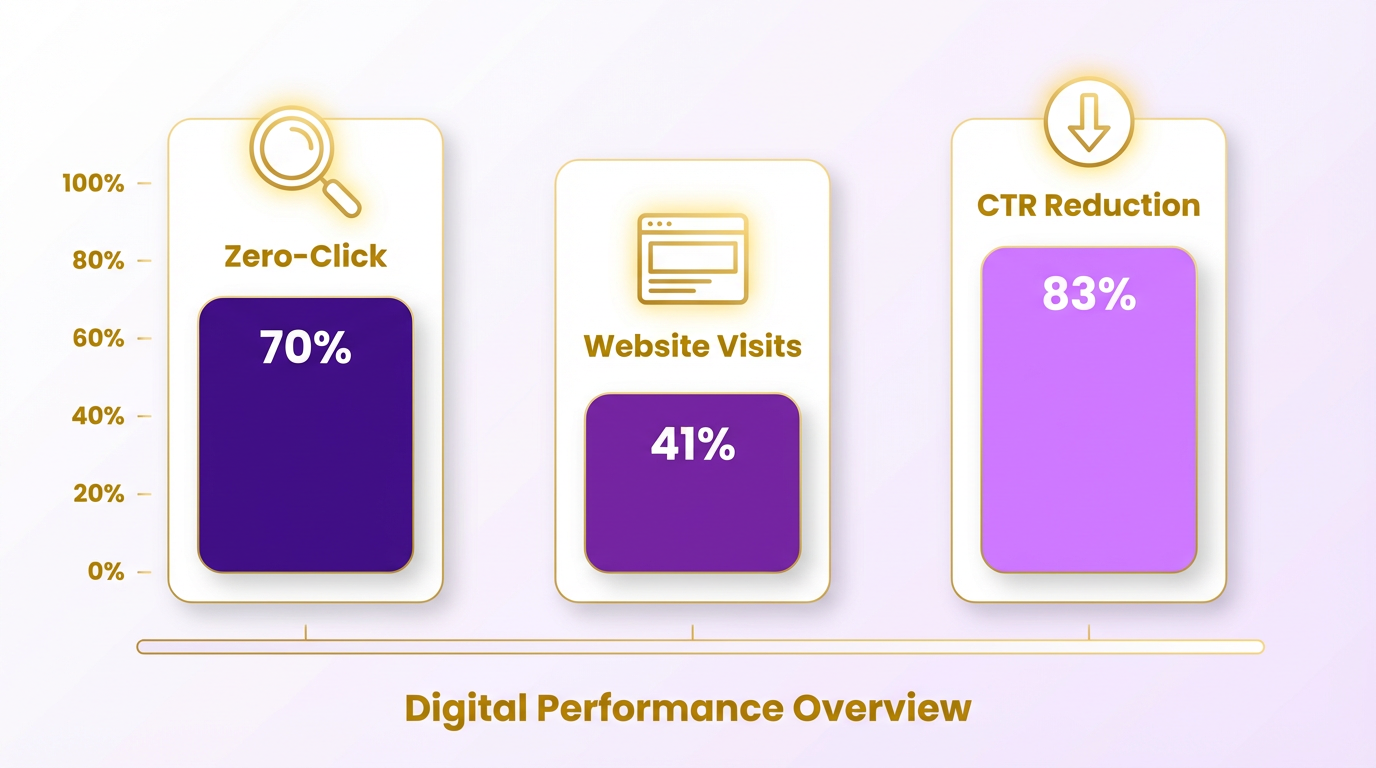
Zero-click search is reshaping how brands and users interact with search engines. Over 70% of searches now end without a click, as AI Overviews and featured snippets deliver answers directly on the results page. This shift forces businesses to rethink visibility strategies, as traditional click-through rates (CTRs) plummet. For example, only 41% of Google searches lead to a website visit, and AI Overviews reduce organic CTR by 83% when present. These stats highlight the urgency for zero-click optimization. As mentioned in the Understanding AI Overviews section, AI-driven summaries are central to this transformation, altering user expectations for instant answers.
What Drives the Growth of Zero-Click Search?
AI Overviews and answer engines are accelerating zero-click behavior. Searchers increasingly trust AI-generated summaries over external links, with less than 19% clicking citations in AI responses. Tools like ChatGPT handle 70% of workplace queries and 83% of personal searches, bypassing Google entirely. This trend isn’t slowing: 60%+ of queries resolved through AI summaries see no traffic directed to original content. Publishers and marketers face declining website visits, with some tech sites reporting higher traffic from AI tools than search engines. The financial impact is stark. A 50% drop in organic traffic for a mid-sized B2B company could erase 20% of annual revenue overnight. Brands that fail to optimize for zero-click scenarios risk losing visibility to competitors who dominate AI answer panels.
What Challenges Does Zero-Click Search Solve?
Zero-click optimization addresses critical visibility and trust gaps. By securing positions in AI Overviews and featured snippets, brands ensure their content appears even when users don’t click. For instance, appearing in an AI summary about industry trends boosts brand credibility, acting as a digital endorsement. This is especially vital for B2B marketers, whose audiences rely on concise, authoritative answers to complex questions. Content creators also benefit by maintaining relevance. When a query about a technical topic receives an AI summary, the answer often pulls from high-authority sources. Optimizing for these scenarios ensures your content is the one cited, driving trust without direct traffic. Digital strategists must prioritize structured data and semantic SEO to align with AI algorithms, which favor clear, concise, and contextually rich content. Building on concepts from the Technical Optimization for Zero-Click Search section, schema markups and semantic SEO are critical for visibility.
Who Gains the Most from Zero-Click Optimization?
B2B marketers, SaaS providers, and educational content creators see the highest ROI from zero-click strategies. These industries rely on thought leadership and precise information delivery. For example, a SaaS company optimizing for AI Overviews might secure a summary explaining its product’s unique value proposition, influencing purchasing decisions before users reach the sales page. Local businesses and e-commerce platforms face unique challenges but also opportunities. A restaurant with a zero-click-optimized “best nearby” listing can appear in AI answers for location-based queries, driving foot traffic without relying on clicks. Similarly, e-commerce brands can dominate voice search answers for product comparisons, capturing intent early in the buyer journey.
How Do AI Overviews Accelerate Zero-Click Trends?
AI Overviews act as a double-edged sword. They streamline user experience by delivering instant answers but erode traditional SEO metrics. Google’s AI-driven summaries now handle 70% of searches, with no-click rates spiking to 83% in queries featuring these panels. This creates a visibility paradox: brands must rank for high-intent keywords while competing for a spot in AI summaries that bypass their sites entirely. Marketers must adapt by focusing on “assisted” visibility. Even if users don’t click, appearing in an AI answer reinforces brand authority. For example, a healthcare provider featured in a summary about flu symptoms gains trust with users who subsequently search for booking tools or treatment guides. The key is to align content with common AI query patterns, ensuring your brand is the source AI models reference. Strategies for this are detailed in the create Zero-Click Content section, emphasizing clarity and direct answers.
In 2026, zero-click search isn’t just a trend-it’s a fundamental shift in digital strategy. Brands that ignore it risk being buried by competitors who master AI Overviews and semantic SEO. The challenge lies in balancing visibility metrics with traditional traffic goals, ensuring your content remains influential even when users don’t click.
Technical Optimization for Zero-Click Search
Schema markup helps AI overviews pull precise answers by organizing content into structured data. For example, FAQPage and HowTo schemas explicitly label questions, steps, and answers, making it easier for AI systems to extract and display information without users clicking through. As mentioned in the Understanding AI Overviews section, AI systems rely on structured data to deliver accurate, direct answers, which schema markup directly supports.
AI overviews now dominate 59% of searches, with only 41% leading to website clicks. By implementing schema, you increase the chances your content is selected as the source for these overviews. For instance, a FAQPage schema might look like this:
{
 "@context": "https://schema.org",.
 "@type": "FAQPage",
 "mainEntity": [
 {
 "@type": "Question",
 "name": "What is zero-click search?",.
 "acceptedAnswer": {
 "@type": "Answer",
 "text": "Zero-click search occurs when AI provides direct answers in search results, eliminating the need to visit external websites."
 }
 }
 ]
}
This structure ensures search engines can quickly identify and prioritize your content. A recent case study showed one company boosted its AI overview visibility by 68% after adding schema to its FAQ section, directly aligning with Google’s emphasis on structured data for AI-driven answers.
Strong entity presence helps search engines associate your content with specific topics, increasing the likelihood of being cited in AI overviews. Use Organization and Author schemas to define your brand’s identity, expertise, and relationships with related entities. As discussed in the create Zero-Click Content section, clarity and structured formatting are critical for AI systems to recognize and prioritize your content.
For example, a well-defined Organization schema might include your company’s name, logo, contact details, and industry keywords. This signals authority and trustworthiness to AI systems. Similarly, linking to Author entities with credentials and expertise builds credibility for content that appears in overviews. One scenario: A tech blog optimized its entity presence using Organization schema and saw a 34% rise in citations from AI overviews. This aligns with research showing semantic search now prioritizes entity relationships over keyword stuffing. Without clear entity signals, your content may be overlooked even if it’s relevant.
Automated tools like AnyPost.ai generate schema-ready content at scale, ensuring consistency and speed in zero-click optimization. These platforms use AI to create FAQs, how-to guides, and structured data templates tailored for AI overviews. As outlined in the Implementing a Zero-Click Search Optimization Strategy section, combining automation with strategic schema and entity implementation maximizes visibility.
For instance, AnyPost.ai’s automation workflows allow users to bulk-create HowTo content with built-in schema, reducing manual effort. One company reported a 50% time savings in content production after adopting such tools, while maintaining high accuracy in AI answer extraction. Automation also ensures your content stays updated with the latest entity references and schema formats.
A clean website architecture improves AI systems’ ability to crawl and index content effectively. Focus on:
- Hierarchical URL structures (e.g.,
/category/articleinstead of/random-strings). - Mobile-first design, as 70% of zero-click searches occur on mobile devices.
- Fast load times, since AI overviews favor authoritative sites with technical SEO best practices.
As highlighted in the Tracking and Measuring Zero-Click Search Performance section, metrics like AI citation rates and entity recognition are key to evaluating the impact of these optimizations. For example, a site redesigned its internal linking strategy to prioritize high-authority pages, resulting in a 22% increase in AI overview mentions. Internal linking with schema-optimized anchor texts also helps AI systems map relationships between entities.
By combining these technical optimizations with content automation and entity strategies, you position your site to thrive in an AI-driven search market.
Tracking and Measuring Zero-Click Search Performance
To measure zero-click search performance, focus on metrics that reflect visibility and user sentiment rather than clicks. AI citation rates track how often your content appears in AI overviews without driving traffic. For example, if your brand is cited in 19% of AI responses for relevant queries, that’s a strong indicator of authority. Brand mention sentiment measures public perception of your content in zero-click contexts-whether AI summaries portray your brand positively, neutrally, or negatively. As mentioned in the Understanding AI Overviews section, AI overviews are generated using natural language processing and machine learning, making structured content critical for visibility. Monitor featured snippet rankings and knowledge panel visibility, as these positions dominate zero-click interactions. A drop in these metrics signals a need for content optimization, which ties into strategies covered in the create Zero-Click Content section.
Use Google Analytics 4 to analyze behavior flows and see if users arriving from AI overviews engage differently than organic visitors. For AI citation tracking, SaaS providers like AnyPost.ai offer real-time dashboards to monitor how often your content is referenced in AI responses. Pair this with third-party SEO tools to audit featured snippets and knowledge panel accuracy. For brand sentiment, integrate social listening tools that analyze mentions in forums, reviews, and AI-generated summaries.
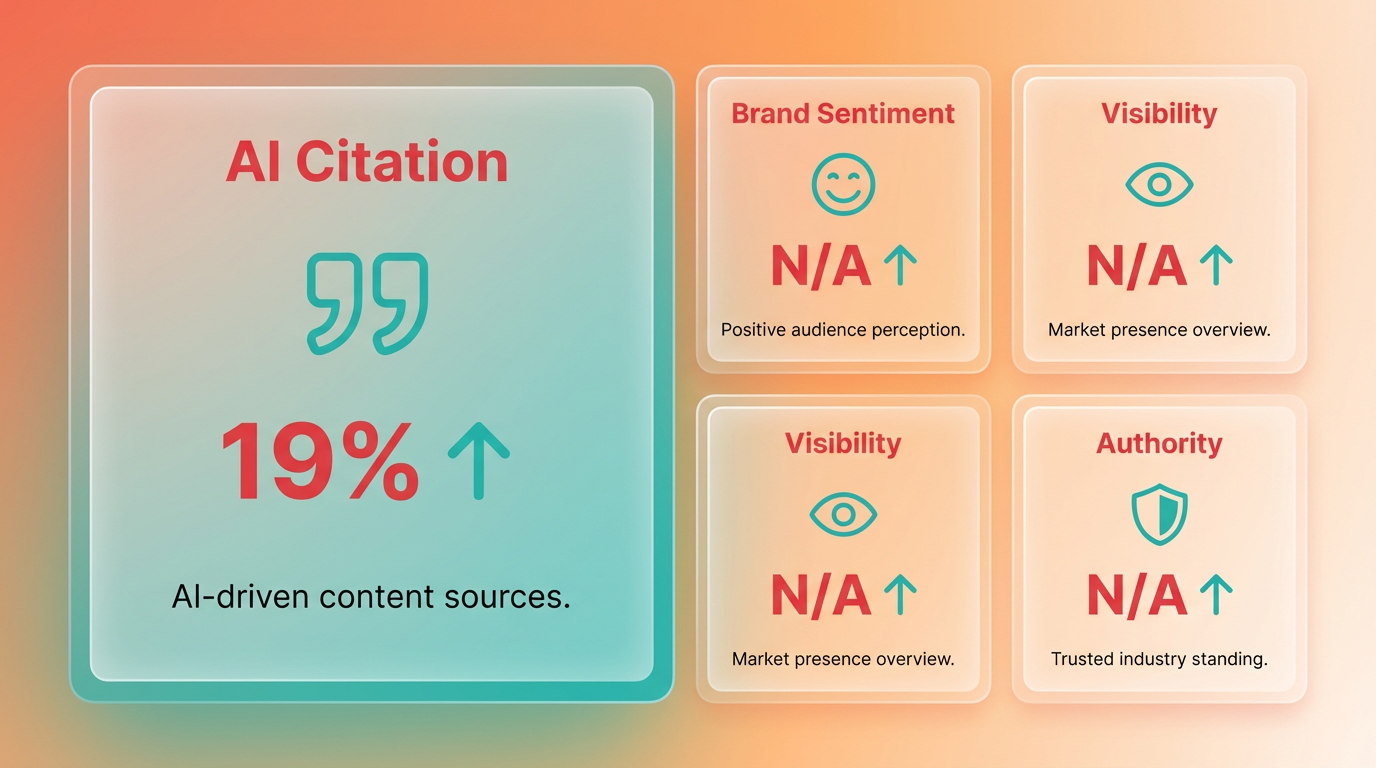
Start by comparing AI citation rates over time. If your content appears in 25% of AI responses for a keyword but only 10% of users click through, focus on refining the snippet or knowledge panel to encourage deeper engagement. Building on concepts from the Technical Optimization for Zero-Click Search section, use schema markup like FAQPage and HowTo to help AI overviews pull precise answers. Cross-reference brand sentiment with content updates: Did a recent blog revision improve your sentiment score from neutral to positive? If so, replicate that structure elsewhere. Finally, track assisted conversions in Google Analytics to see if zero-click exposure drives later conversions, even if users don’t click immediately.
Implementing a Zero-Click Search Optimization Strategy
Implementing a zero-click search optimization strategy requires a structured approach that balances content quality, technical SEO, and AI-driven tools. The goal is to position your content to appear in AI overviews, featured snippets, and knowledge panels-where visibility often replaces clicks. Let’s break down actionable steps to build and scale this strategy effectively.
How Do You Develop a Zero-Click Search Optimization Workflow?
Start by mapping high-intent keywords where users frequently rely on AI-generated answers. Focus on long-tail queries that align with common questions in your niche. Tools like AnyPost.ai streamline this process by analyzing search intent and generating content optimized for direct answers. As mentioned in the create Zero-Click Content section, creating structured, question-focused content is essential to capture AI overview placements.
Next, structure your content to answer questions concisely. Use FAQ sections, bullet points, and header tags (H2/H3) to make key information scannable. For example, if a user searches “How to fix a leaky faucet,” your content should provide a step-by-step solution within the first 100 words. Building on concepts from the Technical Optimization for Zero-Click Search section, schema markup for FAQs further increases the likelihood of appearing in AI overviews.
A critical step is auditing existing content for gaps. Tools like AnyPost.ai identify underperforming pages and suggest revisions to align with zero-click requirements. One company improved its AI overview visibility by 30% after restructuring content using this method.
What Tools Can Streamline Zero-Click Optimization?
AnyPost.ai stands out as a comprehensive solution for content automation and entity optimization. Its AI-powered platform generates high-quality, search-intent-aligned content while optimizing for entity relevance-a key factor in AI overview rankings. As detailed in the Understanding AI Overviews section, entity optimization ensures your content aligns with how AI systems identify and surface trusted answers.
The platform also supports batch publishing, which is essential for scaling. Instead of manually creating one article at a time, AnyPost.ai allows you to generate and schedule content for multiple topics simultaneously. This reduces time spent on repetitive tasks and ensures consistency in tone and SEO best practices.
A notable feature is its entity presence management, which tracks how often your brand or topic is mentioned in competing AI overviews. By identifying gaps, you can create content to dominate conversations around specific entities. Unlike generic providers, AnyPost.ai offers transparent insights into how its algorithms align content with evolving AI summary trends.
How Do You Scale Zero-Click Strategies Without Burning Out?
Automation and data-driven adjustments are key. Start by setting up a content calendar focused on high-zero-click-potential topics, such as how-to guides, comparison posts, and industry FAQs. Use AnyPost.ai to automate 60–80% of drafting and technical optimization, freeing time for strategic analysis.
For example, a tech blog increased its AI-driven traffic by 40% after implementing automated content updates. By repurposing existing articles into AI-friendly formats and scheduling monthly refreshes, it maintained relevance without doubling its workload.
Another scaling tactic is using user-generated content (UGC) to enhance entity presence. SaaS providers like AnyPost.ai can curate and repurpose UGC into structured summaries, improving visibility in AI overviews. For instance, customer reviews transformed into “pros and cons” sections often appear in AI-generated product summaries.
Avoid common pitfalls by prioritizing visibility metrics over traditional CTR. Track how often your content appears in AI overviews using tools like AnyPost.ai’s analytics dashboard. Common mistakes include neglecting entity optimization or failing to update content for new AI trends. Regularly audit your strategy to ensure it evolves alongside search algorithms.
What Real-World Examples Prove This Works?
A case study from early 2026 showed a health and wellness brand boosting its AI overview rankings by 50% within six months. By restructuring content to answer specific medical questions and using AnyPost.ai for entity tagging, the brand became a go-to source in AI-generated health summaries.
Similarly, an e-commerce company saw a 25% drop in direct clicks but a 120% increase in organic traffic from AI overviews. Their strategy focused on optimizing product pages for “best [product] for [need]” queries, ensuring AI systems pulled their descriptions as trusted answers.
These examples highlight a shift in SEO: visibility in AI overviews now drives trust and traffic, even if users don’t click. By focusing on direct answers, structured formatting, and entity relevance, brands can thrive in the zero-click era. Tools like AnyPost.ai make this strategy scalable, ensuring your content stays ahead of evolving search trends.
Frequently Asked Questions
1. What percentage of searches will resolve without clicks by 2026?
70% of searches will resolve without user clicks, as AI Overviews provide direct answers. This trend is driven by users prioritizing speed over traditional website visits.
2. How do AI Overviews affect website traffic?
Websites in niches with frequent AI answers see traffic declines of 30–50%. This occurs because 83% of queries with AI Overviews show zero SERP engagement.
3. What strategies improve visibility in AI summaries?
Use structured data, concise actionable content, and semantic clarity. AI Overviews prioritize these elements over keyword stuffing for better query resolution.
4. Why are traditional metrics like CTR unreliable now?
Click-through rates have dropped to 41% as users prefer AI summaries. Metrics like engagement depth or answer accuracy are more relevant for measuring effectiveness.
5. How do AI Overviews differ from traditional search results?
AI Overviews use semantic analysis of diverse sources to generate summaries, whereas traditional results rely on keyword matching and ranking algorithms.
6. Can businesses still benefit from zero-click searches?
Yes, by optimizing content for AI visibility through structured data and quality insights. This ensures brands appear in summaries even without direct clicks.
7. What content types perform best with AI Overviews?
Step-by-step guides, FAQs, and data-rich formats succeed. These align with AI’s need for concise, actionable information to answer queries directly.
