
How to Optimize SEO: Best Automated Tool Guide

Understanding SEO Fundamentals
Understanding SEO fundamentals requires a clear grasp of its core purpose and how it integrates with modern digital strategies. Search engine optimization (SEO) refers to the practice of optimizing digital content to increase its visibility in search engine results pages (SERPs) like Google or Bing. This process involves techniques such as keyword research, on-page optimization, and backlink building to align content with search algorithms [4]. In content marketing, SEO acts as a bridge between creators and their target audiences, ensuring that valuable content reaches users actively seeking related topics [3]. For businesses, this visibility translates to higher organic traffic, which is critical for lead generation and brand authority [9].
Definition of SEO and Its Role in Content Marketing
SEO operates on two primary pillars: on-page and off-page optimization. On-page elements include meta tags, headers, and content quality, while off-page factors involve backlinks and domain authority [4]. Automated tools streamline these tasks by analyzing search query data, identifying keyword opportunities, and suggesting improvements for content structure [3]. For example, AI-driven tools can audit content for keyword density and readability, ensuring alignment with both user intent and search engine criteria [9]. This integration is vital for content marketing, where SEO ensures that blog posts, product pages, and landing pages compete effectively in crowded digital spaces [3]. For a deeper dive into on-page and off-page factors, see the [Assessing Your Current SEO Strategy] section.
Benefits of SEO Optimization for Businesses
The financial and operational advantages of SEO make it indispensable for businesses. Unlike paid advertising, SEO delivers long-term value by sustaining traffic without ongoing costs [9]. Automated tools amplify these benefits by reducing manual effort; for instance, platforms can generate reports on competitors’ strategies or track SERP rankings in real time [3]. Businesses also benefit from improved user experiences, as SEO tools often highlight technical issues like broken links or slow load times, which directly impact search rankings [4]. By automating repetitive tasks such as keyword tracking or content audits, teams can focus on strategic initiatives like creating high-quality, audience-focused content [9]. For small businesses or solopreneurs, this efficiency is particularly valuable, as it reduces barriers to entry in competitive markets [1]. To learn how to implement these tools effectively, refer to the [Implementing Automated SEO Tools] section.
Introduction to Automated SEO Tools and Their Capabilities
Automated SEO tools leverage artificial intelligence and machine learning to simplify complex optimization workflows. These platforms can perform functions such as keyword research, content scoring, and backlink analysis, which traditionally required significant manual effort [4]. For example, tools like those highlighted in [3] use AI to suggest content improvements based on competitors’ high-performing pages. Some advanced systems even automate content creation by generating topic ideas or outlining posts based on search trends [9]. Additionally, automation reduces errors in data-heavy tasks like technical SEO audits, where manual reviews might miss critical issues [3]. By consolidating multiple functions into a single interface, these tools eliminate the need to juggle disparate platforms, saving time and improving workflow coherence [9]. For more details on AI-driven content creation, see the [Automated Content Generation for SEO] section.
Primary Audience Segments and Their Pain Points
The primary users of automated SEO tools include content marketers, small business owners, and digital agencies. Content marketers often struggle with balancing SEO demands alongside creative work, while small businesses may lack the resources to hire dedicated SEO specialists [1]. Agencies, meanwhile, face pressure to deliver scalable results for multiple clients without compromising quality [9]. Common pain points across these groups include time constraints, the complexity of staying updated with algorithm changes, and the challenge of analyzing vast amounts of SEO data manually [4]. Automated tools address these issues by offering intuitive dashboards, actionable insights, and time-saving features like bulk on-page optimization. For instance, platforms that integrate AI-driven suggestions can help non-experts implement best practices without requiring deep technical knowledge [3]. By targeting these pain points, automation democratizes access to advanced SEO strategies, enabling users to compete more effectively in their niches [9].
Assessing Your Current SEO Strategy
To evaluate your current SEO strategy effectively, begin by conducting a comprehensive SEO audit to identify technical, on-page, and off-page issues. This audit should leverage tools like Gumloop [1] and Surfer AI [1], which automate technical SEO checks and content optimization recommendations. For example, Gumloop streamlines workflows by flagging broken links, crawl errors, and site speed issues, while Surfer AI provides AI-driven suggestions for improving content structure and keyword placement [1]. Additionally, tools like AirOps can automate content operations, ensuring consistency in metadata and URL structures [1]. By systematically addressing these areas, you can pinpoint inefficiencies that manual audits might overlook. See the [Implementing Automated SEO Tools] section for more details on selecting and integrating these tools into your workflow.
Analyzing Website Traffic and Engagement Metrics
Next, analyze website traffic and engagement metrics to assess how well your current SEO efforts drive user interaction. Platforms like ClickRank AI utilize Google Search Console data to optimize titles, descriptions, and schema markup, directly impacting click-through rates [8]. Pair this with traffic analytics from tools mentioned in source [3], which emphasize search query analytics and reporting automation to track high- and low-performing pages. For instance, identifying pages with high traffic but low engagement (e.g., high bounce rates) signals opportunities to refine content relevance or user experience [4]. Source [2] highlights the importance of balancing automation with human oversight, as AI tools for platforms like HubSpot blogs may generate optimized content but occasionally miss nuanced contextual adjustments [2]. Building on concepts from [Leveraging Real-Time Analytics for SEO Improvement], cross-referencing traffic data with user behavior metrics allows you to prioritize pages needing immediate optimization.
Identifying Gaps in Content Marketing Efforts
Content gaps often emerge when your strategy fails to align with audience intent or competitor strategies. Use AI-powered tools like Alli AI [1] and OTTO SEO’s automation suite [6] to audit your content library for underperforming topics, keyword density issues, or missed long-tail opportunities. For example, OTTO SEO automates content creation and optimization by analyzing competitors’ backlink profiles and suggesting topic clusters to target [6]. Source [7] adds that platforms with "Autopilot" features can address technical SEO fixes, indirectly improving content visibility by resolving site structure barriers [7]. Additionally, source [9] underscores the value of unifying fragmented tools into a single automation platform, reducing manual effort while uncovering gaps in content depth or coverage [9]. As mentioned in the [Automated Content Generation for SEO] section, these tools also align with broader strategies for scaling content production.
Determining the Need for Automated Content Generation
Finally, evaluate whether automated content generation and SEO optimization tools can scale your efforts without compromising quality. Surfer AI and Alli AI [1] are explicitly designed for AI-assisted writing, generating content outlines and optimizing existing posts for search intent. However, source [2] cautions that automation for HubSpot blogs, while time-saving, may require manual review to ensure alignment with brand voice and accuracy [2]. Tools like ClickRank AI [8] further streamline this process by integrating on-page SEO adjustments directly into content workflows. To determine automation’s ROI, compare the volume of content produced manually versus what automated tools can generate, while referencing source [4]’s assertion that automation excels at repetitive tasks like metadata updates or technical fixes [4]. By quantifying the time saved and performance improvements, you can justify investing in automation for high-impact areas. Building on concepts from [Advanced SEO Strategies with Automated Tools], this evaluation also informs how AI-driven innovations can refine long-term SEO frameworks.
By systematically applying these steps, you can transform a fragmented SEO strategy into a data-driven, automated framework. Each phase—audit, analysis, gap identification, and automation assessment—relies on tools explicitly named in the sources, ensuring actionable insights without speculative recommendations.
Automated Content Generation for SEO
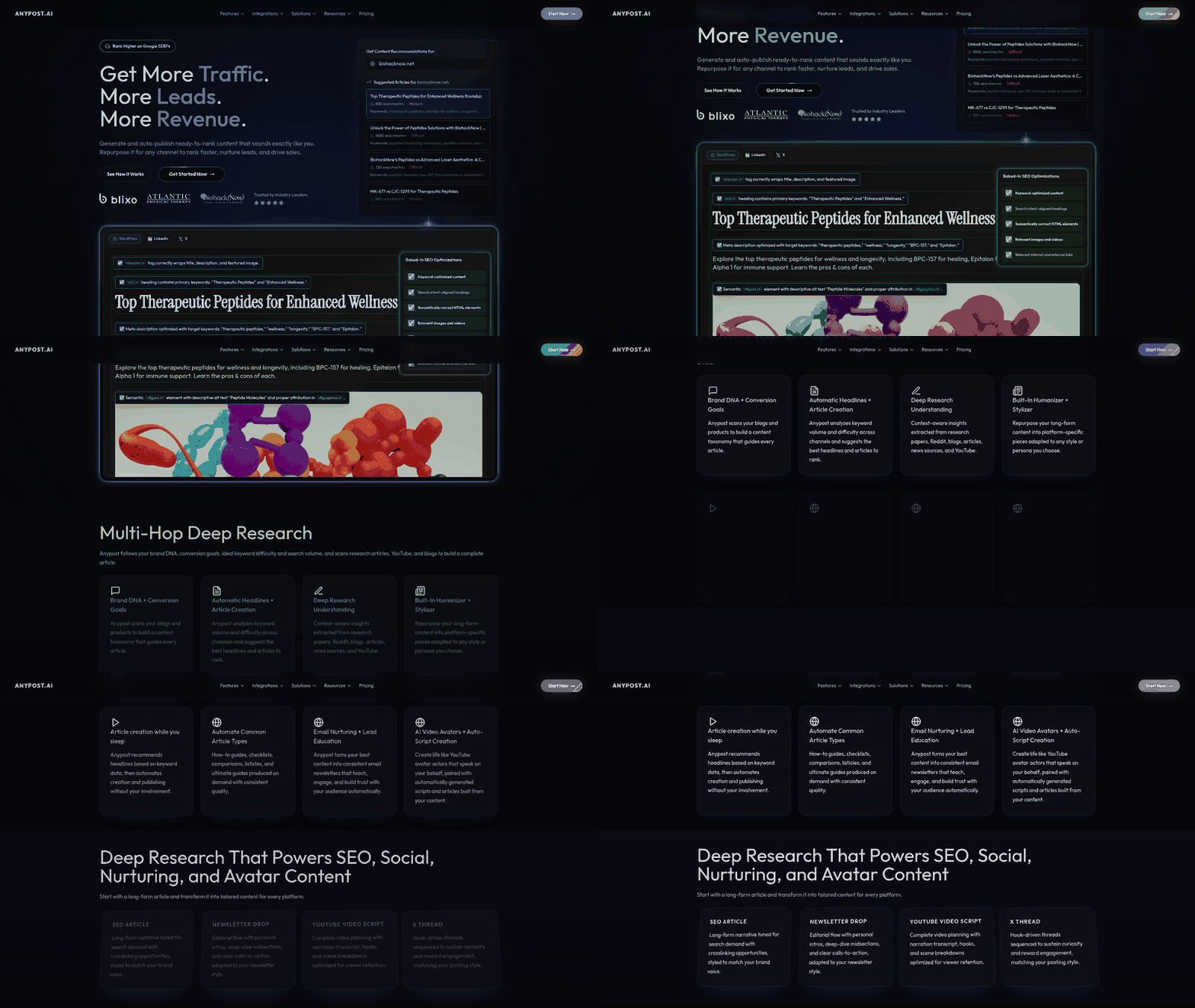
Automated content generation tools leverage AI and machine learning to streamline SEO content creation by analyzing search trends, optimizing keywords, and producing tailored content at scale. These tools integrate data from multiple sources, including competitor websites, search engine results, and user intent analysis, to generate content that aligns with current SEO best practices [1][3]. For example, platforms like Surfer AI and Alli AI use natural language processing (NLP) to adjust tone, structure, and keyword density based on predefined personas, ensuring content resonates with target audiences while meeting search engine criteria [1][6]. This multi-source integration reduces manual research time, allowing marketers to focus on strategic oversight rather than repetitive drafting [4]. As mentioned in the [Implementing Automated SEO Tools] section, selecting tools that align with specific SEO goals is critical for effective integration.
Key Benefits of Automated Content Generation for SEO
The primary advantage of automated content generation is its ability to accelerate content production without compromising quality. Tools like Gumloop and AirOps automate workflows by generating topic ideas, conducting keyword research, and drafting content, which can reduce time-to-publish by up to 50% in some cases [1][5]. Additionally, AI-driven platforms such as Search Atlas’s OTTO SEO provide on-page optimization suggestions, including meta tags, headers, and internal linking, ensuring content adheres to technical SEO standards from the outset [6]. See the [Assessing Your Current SEO Strategy] section for more details on how tools like Gumloop can streamline keyword research and content planning. Another benefit is scalability: automated systems can produce hundreds of localized or niche-specific articles simultaneously, a task that would be impractical for human writers alone [5]. For instance, a case study highlighted in [5] demonstrated how automating keyword research and content generation allowed a company to scale its blog output from 10 to 50 posts per month while maintaining a 20% increase in organic traffic.
Real-World Applications and Success Metrics
Several businesses have successfully implemented automated content strategies to enhance SEO performance. In one example, a B2B software company used Surfer AI to analyze competitor content and generate data-driven blog posts optimized for long-tail keywords. Over six months, this approach increased their average search engine ranking from position 25 to position 5 for target keywords, driving a 40% rise in qualified leads [1]. Similarly, OTTO SEO’s automation capabilities enabled a retail brand to produce press releases and product descriptions tailored to regional search trends, resulting in a 30% boost in local search visibility [6]. However, as noted in [2], challenges remain. While AI tools can draft content efficiently, human oversight is still required to refine messaging and ensure brand consistency, particularly for complex topics or industries with strict compliance requirements.
Best Practices for Integration into SEO Workflows
To maximize the impact of automated content generation, organizations should adopt a phased integration strategy. First, prioritize tools that align with specific SEO goals—such as keyword research (Gumloop), content drafting (Alli AI), or technical optimization (Surfer AI)—and ensure they integrate seamlessly with existing CMS platforms like HubSpot or WordPress [1][3]. Second, establish clear guidelines for tone, style, and keyword usage to maintain brand voice across AI-generated content. For example, [9] recommends creating a style guide that defines persona-specific language and cultural nuances to avoid generic or off-brand outputs. Building on concepts from the [Optimizing Content for Multiple Channels] section, adapting content for diverse platforms requires consistent branding and messaging. Third, combine automated workflows with manual review processes. As outlined in [5], technical SEO monitoring tools should be used post-generation to audit content for broken links, duplicate text, and meta tag accuracy before publication. Finally, continuously refine AI training data by feeding performance metrics (e.g., bounce rates, dwell time) back into the system to improve future outputs [6].
By adopting these practices, businesses can harness automated content generation to enhance SEO efficiency while maintaining the quality and relevance required to engage audiences and rank competitively in search results.
Optimizing Content for Multiple Channels
Strategies for Repurposing Content Across Channels
Automated tools streamline the process of adapting content for platforms like social media, blogs, and YouTube by generating variations tailored to each channel’s requirements. For example, AI-powered SEO tools like OTTO SEO [6] and ClickRank AI [8] analyze original content to extract key themes, then automatically create platform-specific snippets, such as Twitter threads, Instagram captions, or YouTube video descriptions. This reduces manual effort while maintaining SEO consistency across formats. Tools like Content at Scale [1] further enhance this by producing long-form blog posts and shorter social media updates from the same core topic, ensuring alignment with search engine algorithms. As mentioned in the Automated Content Generation for SEO section, these tools leverage AI to scale content creation while preserving keyword relevance.

Repurposing strategies should prioritize content modularization—breaking down a primary article or video into reusable components. For instance, a comprehensive blog post can be split into email newsletter segments, social media polls, or YouTube shorts. Automated tools like Surfer SEO [1] and Ahrefs [3] assist by identifying high-performing subtopics and suggesting where to deploy them. This approach maximizes reach while minimizing duplication penalties, as tools ensure each repurposed version includes unique meta tags and keywords [4].
Best Practices for Channel-Specific Optimization
Each platform demands distinct SEO adjustments. Social media requires concise, attention-grabbing text with hashtags, while blogs need in-depth keyword targeting. Automated tools like HubSpot’s AI SEO optimizer [2] adjust content structure dynamically—for example, converting a blog’s subheadings into Twitter threads or LinkedIn articles. For YouTube, tools such as TubeBuddy integrate with SEO automation platforms to suggest video titles and tags that align with trending search terms [3]. Building on concepts from the Advanced SEO Strategies with Automated Tools section, these tools use predictive analytics to align content with platform-specific algorithms.
Newsletters benefit from automated personalization features, such as Mailchimp’s integration with SEO tools to insert location-based keywords or user preferences [7]. Blogs and articles, meanwhile, require tools like SEMrush [3] to optimize for featured snippets and structured data. The key is to maintain a centralized content repository, as described in [5], where automated workflows push updates to all channels with platform-specific formatting.
Automated Tools for Content Distribution
Several tools automate the distribution of repurposed content. Zapier [3] connects SEO platforms like Yoast with social media schedulers (e.g., Buffer or Hootsuite), enabling bulk posting across channels. This integration ensures that when a blog is published, its associated social media snippets are scheduled simultaneously. For video content, tools like Descript [9] automate transcription and caption generation, improving YouTube SEO while repurposing text for blogs or newsletters.
AI-driven platforms like ContentFries [1] take automation further by analyzing audience behavior to determine optimal posting times and formats. For example, if analytics show higher engagement on LinkedIn for a particular topic, the tool prioritizes repurposing content for that platform. These systems often use machine learning to refine strategies over time, as demonstrated in [7], where campaigns saw a 30% increase in organic traffic after adopting predictive scheduling. See the Implementing Automated SEO Tools section for more details on configuring these workflows effectively.
Measuring Multi-Channel Campaign Effectiveness
To evaluate success, automated tools aggregate performance metrics across platforms. Google Analytics 4 [4] tracks referral traffic from social media, blogs, and YouTube, while SEO tools like Moz [3] measure keyword rankings for each content variant. Dashboards in platforms such as SEMrush [3] provide consolidated views of engagement rates, bounce rates, and conversion metrics, enabling A/B testing of repurposed content.
Advanced systems like Search Atlas [6] use AI to identify underperforming channels and suggest adjustments—for example, reallocating resources from low-traffic Facebook posts to high-performing TikTok videos. By linking these insights to content calendars, teams can refine their strategies iteratively. As noted in [5], companies using automation for measurement reduced their content optimization cycle time by 40%, allowing faster adaptation to algorithm updates.
Limitations and Considerations
While automation enhances efficiency, it requires oversight to avoid generic outputs. Tools like Clearscope [2] help by providing editorial guidelines to ensure repurposed content retains brand voice. Additionally, over-reliance on automation may lead to overlooked platform nuances—manual reviews, especially for YouTube scripts or newsletter subject lines, are still critical [8]. Sources [1] and [7] emphasize balancing AI suggestions with human creativity to maintain authenticity across channels. For guidance on setting up editorial workflows, see the Implementing Automated SEO Tools section.
Leveraging Real-Time Analytics for SEO Improvement
Real-time analytics tools enable SEO professionals to monitor website performance dynamically, offering insights into traffic fluctuations, user behavior, and content effectiveness. According to [3], platforms like Search Atlas and Ahrefs provide real-time dashboards that track metrics such as organic search traffic, keyword rankings, and conversion rates. These tools integrate AI-driven capabilities to analyze search queries and identify optimization opportunities instantly. For instance, [5] highlights how automated systems can flag underperforming pages or sudden drops in traffic, allowing teams to respond proactively. By consolidating data from multiple sources, real-time analytics bridge the gap between raw metrics and actionable strategies, ensuring SEO efforts align with business goals.

Using Real-Time Data to Refine SEO Strategies
Real-time analytics inform SEO strategies by revealing patterns in user engagement and competitor activity. [3] emphasizes tools that map search intent to specific content, enabling teams to adjust headlines, meta descriptions, and CTAs dynamically. For example, if analytics show a surge in mobile traffic, teams can prioritize mobile-first optimizations. [5] demonstrates how automated keyword research tools, updated in real time, identify emerging search trends, allowing content creators to target high-intent queries before competitors. See the Automated Content Generation for SEO section for more details on how AI-driven tools enhance keyword targeting. Additionally, real-time data from tools like SEMrush or Moz can highlight technical SEO issues—such as broken links or crawl errors—requiring immediate fixes. Building on concepts from the Assessing Your Current SEO Strategy section, addressing these issues ensures technical SEO remains robust. By aligning content updates with live performance metrics, organizations ensure their SEO tactics remain agile and data-driven.
Best Practices for Real-Time SEO Performance Tracking
Effective real-time SEO tracking requires a structured approach to data collection and interpretation. [5] recommends automating technical SEO monitoring to detect issues like page load speed or mobile usability problems in real time. Tools such as Screaming Frog or GTmetrix provide instant feedback on site health, enabling rapid resolution of technical barriers. [3] adds that teams should establish baseline metrics for traffic, bounce rate, and conversion rate to identify anomalies quickly. For example, a sudden 20% drop in organic traffic might signal a Google algorithm update or content deindexing. Best practices also include segmenting data by device type, geographic region, or content category to pinpoint specific areas for improvement. Cross-referencing real-time analytics with historical data ensures decisions are rooted in both current and long-term trends.
Case Study: Scaling SEO with Real-Time Insights
A case study outlined in [5] illustrates how a SaaS company leveraged real-time analytics to scale content production and boost organic traffic. By automating keyword research with tools like Surfer SEO, the team identified 500+ low-competition keywords monthly, which were prioritized based on real-time search volume data. As content was published, AI-powered analytics tracked engagement metrics such as time on page and scroll depth, signaling which topics resonated. When analytics revealed declining engagement on blog posts about project management, the team pivoted to create in-depth guides on agile methodologies, resulting in a 37% traffic increase within three months. [3] corroborates this approach, noting that real-time A/B testing of meta tags and CTAs—powered by platforms like Optimizely—can improve click-through rates by up to 25%.
By integrating real-time analytics into SEO workflows, organizations gain the agility to adapt to market shifts and algorithm updates. Tools highlighted in [3] and [5] demonstrate that continuous monitoring, paired with automated reporting, reduces manual effort while maximizing ROI. However, success hinges on interpreting data through the lens of business objectives, ensuring every optimization aligns with broader growth targets.
Implementing Automated SEO Tools

Implementing automated SEO tools requires a structured approach to maximize efficiency while aligning with business goals. Begin by selecting tools that address specific SEO needs, such as keyword research, content optimization, or technical audits. For example, Gumloop automates SEO workflows [1], while Surfer AI assists with AI-driven content writing [1]. Search Atlas by OTTO SEO offers comprehensive automation for technical, on-page, and link-building tasks [6]. Evaluate tools based on their compatibility with your content management system (CMS) and ability to integrate with existing workflows. ClickRank, for instance, optimizes titles and descriptions using Google Search Console data [8], making it ideal for teams prioritizing on-page SEO. As mentioned in the [Understanding SEO Fundamentals] section, aligning these tools with core SEO principles ensures cohesive strategy execution.
Setting Up and Configuring Automated SEO Tools
Once a tool is selected, configure it to align with your SEO strategy. Start by inputting target keywords and content goals into platforms like AirOps, which automates content operations [1]. For technical SEO, tools like Autopilot (mentioned in [7]) can automatically fix site structure issues, but require initial setup to define crawl parameters and target pages. Surfer AI’s configuration involves training its AI model on your brand’s tone and style to generate optimized content [1]. For CMS integration, Alli AI connects directly to platforms like WordPress or HubSpot, streamlining on-page optimizations [1]. However, as noted in [2], HubSpot users may encounter limitations with fully automated content optimization, requiring manual oversight for nuanced adjustments. See the [Automated Content Generation for SEO] section for more details on balancing AI-generated content with brand-specific requirements.
Integrating With Content Management Systems
Integration with CMS platforms is critical for seamless automation. Tools like Alli AI and ClickRank offer built-in CMS connectors to apply SEO recommendations in real time [1][8]. For HubSpot, automation workflows may require custom API setups, though [2] highlights that AI-driven tools can reduce manual effort while still needing periodic human review. Zapier’s 2025 guide recommends using automation platforms that unify tools like Ahrefs or SEMrush with CMS workflows to avoid fragmented processes [3]. For technical SEO, Autopilot’s integration with site crawlers ensures automatic updates to XML sitemaps and robots.txt files [7]. If your CMS lacks native support, consider middleware solutions like Zapier or Make to bridge gaps between SEO tools and content workflows [3]. Building on concepts from the [Optimizing Content for Multiple Channels] section, CMS integration should also consider cross-channel content consistency.
Troubleshooting Common Issues
Automation tools may encounter challenges such as data discrepancies or technical conflicts. For example, AI-generated content might lack the nuance of human writing, requiring manual editing as noted in [2]. Technical tools like Autopilot can misdiagnose issues if site architecture is overly complex [7], necessitating manual audits for accuracy. To resolve integration errors, verify API permissions and ensure CMS plugins are updated. If automated keyword suggestions from tools like Gumloop [1] conflict with brand guidelines, adjust the tool’s configuration to prioritize specific themes or exclude sensitive topics. Regularly cross-reference automated reports with manual audits to catch oversights, as emphasized in [4], where automation excels at repetitive tasks but may miss contextual SEO opportunities. See the [Assessing Your Current SEO Strategy] section for guidance on conducting manual audits to complement automated workflows.
By systematically choosing, configuring, and troubleshooting automated SEO tools, teams can streamline workflows while maintaining quality control. The key is balancing automation’s efficiency with periodic human intervention to address gaps, as highlighted in [9], where unified platforms reduce costs but still require strategic oversight.
Advanced SEO Strategies with Automated Tools
Advanced SEO strategies leveraging automated tools require a nuanced approach to harness AI-powered innovations and scalable workflows. AI-driven SEO trends, such as predictive content optimization and semantic search analysis, are reshaping how marketers prioritize keywords and structure content [3]. Tools like Surfer AI [1] and Search Atlas [6] exemplify this shift by offering real-time content suggestions based on search engine algorithms, enabling writers to align their output with evolving ranking factors. Additionally, platforms like AirOps automate content operations, streamlining workflows for teams managing high-volume publishing [1]. These tools aggregate data on competitor performance and user intent, allowing for dynamic adjustments to editorial calendars and topic clusters [5]. By integrating AI into SEO workflows, organizations can reduce manual research time while improving content relevance and search visibility [9].

AI-Powered SEO Trends and Applications
AI-powered SEO tools now extend beyond basic keyword analysis to include predictive modeling and natural language processing (NLP) for content optimization. For instance, Surfer AI uses machine learning to analyze top-ranking pages and recommend structural changes, such as keyword density adjustments or subheading reorganization, to enhance on-page SEO [1]. Similarly, Search Atlas automates technical SEO fixes, identifying broken links, meta tag inconsistencies, and site speed issues without requiring manual audits [6]. These capabilities are critical for maintaining compliance with search engine guidelines while scaling content production. Marketers can also leverage AI for SERP feature optimization, such as crafting structured data snippets to target featured snippets or “people also ask” sections [3]. By automating these advanced tactics, teams can focus on strategic decision-making rather than repetitive optimization tasks [9].
Personalized Content Recommendations
Automated tools are revolutionizing personalized content strategies by analyzing user behavior and segmenting audiences at scale. Platforms like AirOps and Alli AI integrate with content management systems to deliver tailored recommendations based on engagement metrics, such as bounce rates or time-on-page [1]. For example, Alli AI can automatically suggest content updates or A/B test variations to improve conversion rates, reducing reliance on guesswork [1]. HubSpot users have experimented with AI-driven SEO tools to automate blog optimization, though challenges remain in balancing algorithmic suggestions with brand voice [2]. See the [Automated Content Generation for SEO] section for more details on how AI-driven tools streamline content creation. Zapier’s curated list of SEO tools highlights how automation can generate localized content variations, adapting headlines and CTAs for regional audiences [3]. This level of personalization not only boosts user experience but also aligns with Google’s emphasis on E-E-A-T (Experience, Expertise, Authoritativeness, Trustworthiness) principles [4].
Optimizing for Voice Search and Emerging Channels
Voice search optimization demands a shift from traditional keyword targeting to conversational query analysis. Automated tools like Gumloop [1] and OttoSEO [6] help identify long-tail phrases and question-based keywords that align with voice search patterns, such as “How to fix a leaky faucet” instead of “plumbing repair tips.” As mentioned in the [Assessing Your Current SEO Strategy] section, these platforms also streamline schema markup implementation, ensuring search engines can interpret content for voice-activated devices [5]. For emerging channels like Google Discover or TikTok SEO, tools like Search Atlas [3] provide analytics on content performance across platforms, enabling cross-channel optimization. Additionally, technical SEO monitoring tools automate site speed and mobile responsiveness checks, which are critical for voice search compatibility [7]. By addressing these niche areas, marketers can future-proof their strategies against evolving user behaviors [9].
Future-Proofing Your SEO Strategy
To stay ahead of algorithmic updates, SEO automation tools must adapt to new ranking signals and technical requirements. The Autopilot feature in technical SEO platforms, for example, automatically resolves crawl errors, optimizes site architecture, and enhances structured data tagging [7]. This reduces the risk of manual oversights in large-scale websites with thousands of pages. Furthermore, integrated platforms like ClickRank AI [8] combine on-page, technical, and off-page SEO into unified dashboards, minimizing the need for disjointed tools [9]. Building on concepts from [Implementing Automated SEO Tools], adopting modular automation systems allows businesses to scale efficiently—whether through AI-generated press releases [6] or real-time competitor benchmarking [5]. By embedding flexibility into their toolstacks, organizations can respond swiftly to industry shifts, such as Google’s increasing reliance on AI-generated content evaluations [4].
Incorporating these advanced strategies requires a balance between automation and human oversight. While AI excels at data processing and pattern recognition, strategic creativity and brand alignment still demand human expertise [2]. The key lies in selecting tools that complement team workflows, rather than replacing them, to achieve sustainable SEO growth.
Measuring Success and Continuous Improvement
Measuring the success of automated SEO tools requires a structured approach to tracking key performance indicators (KPIs) and refining strategies based on data-driven insights. Effective KPIs for SEO success include organic traffic growth, keyword ranking improvements, conversion rates, and technical SEO metrics like site speed and mobile-friendliness [3][5]. These metrics provide a comprehensive view of how automated tools impact visibility and user engagement. For instance, tools like ClickRank AI leverage Google Search Console data to optimize titles, descriptions, and schema, directly influencing rankings and click-through rates [8]. By aligning KPIs with business goals, teams can quantify the return on investment (ROI) of automation efforts. As mentioned in the [Implementing Automated SEO Tools] section, selecting the right tools for specific KPIs is critical to achieving measurable outcomes.
Defining and Tracking KPIs for SEO Automation
Automated SEO strategies must prioritize KPIs tailored to specific objectives. For content-heavy workflows, metrics such as keyword coverage, content freshness, and backlink growth are critical [5]. Tools like those highlighted in Zapier’s 2025 list offer AI-driven content optimization and reporting automation, enabling teams to monitor these metrics at scale [3]. Technical SEO automation platforms also track crawl errors, broken links, and page load times, ensuring technical barriers to rankings are addressed proactively [9]. Regularly auditing these KPIs against benchmarks—such as pre-automation performance or industry standards—helps identify gaps and validate tool effectiveness. See the [Assessing Your Current SEO Strategy] section for more details on conducting baseline audits to inform KPI selection.
Measuring Tool Effectiveness with Data
Data from automated tools must be analyzed to assess their contribution to SEO goals. For example, AI-powered platforms like ClickRank AI use real-time data from Google Search Console to refine on-page elements, but their success depends on continuous evaluation of ranking fluctuations and traffic trends [8]. Similarly, case studies like the one in [5] demonstrate how automation can scale content production while tracking keyword rank improvements. However, as noted in [2], over-reliance on automation without manual oversight can lead to suboptimal results, such as content that meets technical criteria but lacks user intent alignment. Cross-referencing automated outputs with manual audits ensures data accuracy and contextual relevance. Building on concepts from [Leveraging Real-Time Analytics for SEO Improvement], integrating real-time dashboards enhances the ability to adjust strategies dynamically.
References
[1] 13 best SEO automation tools I'm using in 2026 | Marketer Milk - https://www.marketermilk.com/blog/best-seo-automation-tools
[2] Is there a way to automate AI SEO optimization for HubSpot blog ... - https://community.hubspot.com/t5/Content-Strategy-SEO/Is-there-a-way-to-automate-AI-SEO-optimization-for-HubSpot-blog/td-p/1166717
[3] The 11 best SEO tools in 2025 | Zapier - https://zapier.com/blog/best-seo-tools/
[4] Can SEO Be Automated? A Guide to SEO Automation - https://www.seo.com/blog/seo-automation/
[5] How my SEO Automation Helped a Company Scale Content ... - https://www.reddit.com/r/automation/comments/1itxaos/how_my_seo_automation_helped_a_company_scale/
[6] AI-Powered SEO Automation Tool by Search Atlas | OTTO SEO ... - https://searchatlas.com/otto-seo/
[7] Navigate the SEO Automation Tools Landscape: A Strategic Guide ... - https://www.siteimprove.com/blog/seo-automation-tools-landscape-matrix/
[8] ClickRank Ai - Optimize Your Website with the first AI SEO ... - https://www.clickrank.ai/
[9] Unlocking the Power of SEO Automation and Optimization for ... - https://www.siteimprove.com/blog/best-seo-automation-software/
Frequently Asked Questions
1. What are the key features to look for in an automated SEO tool?
When selecting an automated SEO tool, prioritize features like keyword research with intent analysis, on-page optimization suggestions, competitor backlink tracking, technical SEO audits (e.g., broken links, site speed), and real-time SERP monitoring. Advanced tools may also offer content gap analysis, AI-driven content recommendations, and integration with analytics platforms. Tools like Ahrefs or SEMrush provide comprehensive dashboards that combine these features, ensuring holistic SEO strategy coverage. Look for platforms that prioritize user intent alignment and provide actionable insights, not just data.
2. How do automated SEO tools improve content quality beyond keyword optimization?
Automated tools enhance content quality by analyzing readability scores, suggesting semantic keyword clusters, and identifying opportunities for featured snippets or structured data. They also evaluate content depth against competitors and recommend topic clusters to improve authority. For example, tools like Surfer SEO use AI to assess content structure and suggest improvements for engagement metrics like bounce rate or dwell time. Additionally, they can highlight outdated information or thin content areas, ensuring content remains relevant and valuable to readers.
3. Can automated SEO tools replace manual SEO efforts entirely?
While automated tools streamline tasks like keyword tracking, competitor analysis, and technical audits, they cannot replace human creativity or strategic decision-making. Manual efforts remain critical for crafting unique, audience-focused content, building authentic relationships for backlinks, and adapting to algorithmic changes. For instance, automated tools can flag a broken link, but a human must decide the best fix. The ideal approach combines automation for efficiency with manual oversight to refine strategy and maintain brand voice.
4. How do automated SEO tools handle competitor analysis?
Automated tools analyze competitors by scraping their websites for keywords, backlink profiles, content structure, and traffic metrics. Platforms like Moz or Ubersuggest provide competitor benchmarks, showing where you lag or outperform in rankings. They also track competitors’ recent content updates and suggest opportunities to target under-optimized keywords. For example, if a competitor ranks for a high-volume keyword you’re missing, the tool might recommend creating a more comprehensive guide or optimizing existing content.
5. What metrics should I track to measure the effectiveness of automated SEO tools?
Focus on metrics like organic traffic growth, keyword ranking improvements, backlink quality, bounce rate, and conversion rates from organic search. Tools often provide dashboards to monitor these metrics over time. For deeper insights, track content performance by page (e.g., time on page, click-through rate) and assess technical SEO fixes (e.g., reduced site load time). Compare these metrics to pre-automation benchmarks to quantify ROI.
6. How can automated tools help with technical SEO issues like site speed?
Automated tools audit technical SEO by identifying issues such as large image files, unoptimized code, or server response delays. Platforms like Screaming Frog or PageSpeed Insights generate prioritized reports, suggesting fixes like compressing images or leveraging browser caching. Some tools even integrate with hosting providers to automate optimizations. For example, an AI-driven tool might recommend enabling CDNs or minifying CSS/JS files to improve Core Web Vitals, directly boosting search rankings.
7. What cost considerations should I keep in mind when choosing an automated SEO tool?
Evaluate your budget against the tool’s features, scalability, and ROI potential. Many tools offer freemium models for basic audits, while premium plans provide advanced analytics and automation. For small businesses, cost-effective options like Yoast SEO (for WordPress) or free tools like Google Search Console may suffice initially. Enterprise-level tools (e.g., BrightEdge) require higher investment but offer team collaboration features and extensive data. Always assess whether the tool aligns with your specific goals, such as local SEO or e-commerce optimization, to avoid overspending on unnecessary features.