
How to optimize seo with AI SEO system

Related Video
Watch: SEO in 2025: How I'd Learn it if I Were Starting Over by Ahrefs
Understanding AI SEO Systems
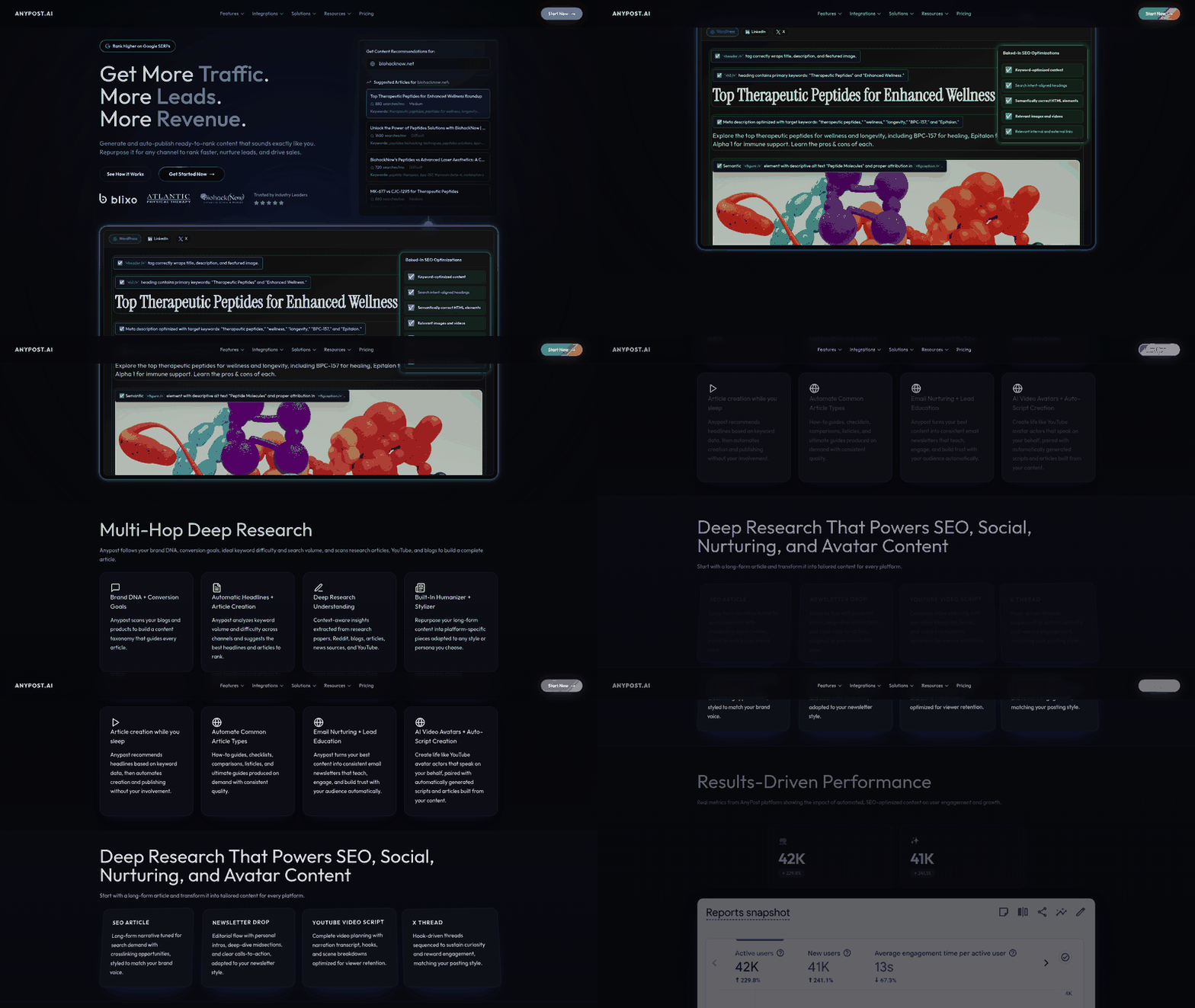
AI SEO systems leverage artificial intelligence to analyze, generate, and optimize content for visibility in search engines and AI-driven platforms. These systems begin by understanding a business’s core offerings, target audience, and competitive landscape to identify relevant keywords and topics [2]. Unlike traditional SEO, which focuses narrowly on keyword placement, AI SEO prioritizes creating content that answers user intent and aligns with how generative AI systems extract and present information [7]. This shift is critical as search engines increasingly rely on AI to deliver contextual, conversational responses, making visibility in AI search results a key priority [10]. By integrating natural language processing and machine learning, AI SEO tools adapt to evolving search behaviors, ensuring content remains relevant in a dynamic digital ecosystem [14].
The benefits of AI SEO systems include streamlined content creation, automated technical optimizations, and data-driven decision-making. Tools like Frase.io and BrightEdge enable marketers to generate SEO-optimized content that ranks on Google and AI-powered search interfaces, reducing manual effort while improving efficiency [6][8]. AI automates tedious tasks such as on-page SEO checks, meta tag optimization, and citation building, allowing teams to focus on strategic planning [3][9]. Additionally, these systems enhance accuracy by analyzing vast datasets to identify emerging trends, such as rising keywords or shifting user queries, which human analysts might overlook [12]. For B2B marketers, AI SEO systems provide tailored insights into industry-specific terminology and buyer personas, ensuring content resonates with niche audiences [11]. As mentioned in the [Setting Up and Configuring the AI SEO System] section, defining business objectives and audience parameters is foundational for these tailored insights. By centralizing these capabilities, AI reduces the risk of human error and accelerates time-to-results [2].
Current trends in AI SEO emphasize generative AI integration, semantic search optimization, and multi-platform visibility. Generative AI tools now produce content that not only ranks on Google but also gets cited by AI systems like ChatGPT and Perplexity, expanding reach beyond traditional search [6]. This requires content to be structured for extractability—using clear headings, schema markup, and concise answers to common questions—to improve compatibility with AI summarization tools [7]. Simultaneously, SEO strategies must account for the growing influence of voice search and conversational queries, which demand natural, question-based phrasing [15]. Another trend is the rise of Generative Engine Optimization (GEO), where content is designed to perform in both traditional search engines and AI-generated responses [14]. These trends underscore the need for SEO professionals to adopt hybrid strategies that satisfy both human users and algorithmic systems [5].
For B2B marketers and content creators, AI SEO systems offer specialized tools to address industry challenges. Platforms like BrightEdge provide enterprise-grade analytics to track visibility in AI search results, helping businesses adjust strategies in real time [8]. AI-driven keyword research identifies long-tail terms and semantic variations that align with B2B buyer journeys, improving the relevance of technical or niche content [12]. Additionally, AI systems automate link-building efforts by identifying high-authority websites for citations and optimizing content for shareability [3]. For creators, AI writing assistants ensure adherence to SEO best practices while maintaining a professional tone, reducing the need for extensive revisions [9]. These capabilities are particularly valuable in B2B contexts, where content must balance technical depth with accessibility for decision-makers [11].
AI SEO systems offer a range of features to enhance search performance, including keyword research, content optimization, and performance tracking. Tools like SEO.AI analyze competitors and customer behavior to uncover high-impact keywords, while generative models draft content optimized for both human readers and AI extractors [2][6]. Real-time SEO scoring features evaluate content quality, suggesting improvements for factors like readability, keyword density, and backlink potential [7]. See the [Analyzing and Tracking Performance with the AI SEO System] section for more details on leveraging real-time metrics to refine strategies. Advanced systems also incorporate schema markup to help AI search engines interpret data more effectively [13]. For technical SEO, AI automates site audits, identifying issues such as broken links or slow load times that hinder rankings [9]. By combining these features, AI SEO platforms provide a comprehensive solution for businesses aiming to dominate search visibility in an AI-first era [8].
Setting Up and Configuring the AI SEO System
Prerequisites for Setting Up the AI SEO System
Before configuring an AI SEO system, ensure the following prerequisites are met. First, define your business objectives, target audience, and key products or services, as AI SEO systems like SEO.AI rely on this data to identify relevant keywords and content themes [2]. Second, select a compatible AI SEO tool, such as Frase.io for real-time SEO and Generative Engine Optimization (GEO) [6], or SEO.AI for automated keyword research [2]. Third, grant access to your content management system (CMS), such as WordPress, to streamline content deployment [4]. Additionally, ensure your website includes schema markup to improve extractability for AI search engines, as recommended by [7]. As mentioned in the Understanding AI SEO Systems section, these foundational steps align AI capabilities with business goals for effective optimization.
Step-by-Step Configuration Process
- Input Business Data: Begin by providing detailed information about your business, including industry, services, and target demographics. AI systems like SEO.AI use this data to uncover high-intent keywords and content opportunities [2].
- Configure Keyword Research: Enable automated keyword analysis using tools like Frase.io or SEO.AI. These platforms identify search trends and competitor gaps, optimizing content for both traditional search engines and generative AI systems [2][6].
- Integrate CMS and Analytics: Connect your CMS (e.g., WordPress) to the AI SEO tool for seamless content deployment. Tools like Frase.io support direct integration, while others require manual uploads post-optimization [4][6]. See the Integrating the AI SEO System with Existing Workflows section for best practices on CMS alignment.
- Implement Schema Markup: Add structured data to your website to enhance visibility in AI-driven search results. This step is critical for systems like Google’s generative search, which prioritize extractable, well-structured content [7].
Automated Content Generation and Benefits
Automated content generation streamlines SEO workflows by producing optimized drafts tailored to search intent. AI tools like SEO.AI and Frase.io analyze keywords to generate blog posts, product descriptions, and meta tags that align with user queries [2][6]. For instance, SEO.AI creates content based on competitor analysis, reducing the need for manual research [2]. Benefits include time savings, consistent output, and scalability, though final content must be uploaded to a CMS for publishing [4].
Multi-Source Content Integration and Advantages
Multi-source integration enhances AI SEO by aggregating data from diverse platforms, such as competitor websites, citation databases, and social media. Tools like those reviewed in [3] combine link-building strategies with AI-generated content, improving domain authority and search rankings. For example, AI systems can analyze brand mentions across forums and news sites to refine content strategies [3]. This approach ensures comprehensive coverage of search topics, as demonstrated by transformer-based models in [13], which optimize travel website content using multi-source data. Advantages include reduced bias, improved relevance, and alignment with generative search engines like Perplexity [6].
Tips for Optimizing AI SEO Configuration
To maximize effectiveness, follow these best practices:
- Prioritize Schema Markup: As emphasized in [7], structured data improves AI systems’ ability to index and extract content, boosting visibility in generative search results.
- Leverage Free Tools for Testing: Platforms like Frase.io offer free tiers to test configurations before committing to paid plans [6].
- Audit Content Post-Generation: While AI tools streamline creation, manually review drafts for brand voice and accuracy before CMS deployment [4].
- Update AI Models Regularly: Transformer-based systems, such as the BART model in [13], require periodic updates to adapt to evolving search algorithms and user intent. Building on concepts from the Future-Proofing Your SEO Strategy with AI section, staying current with model updates ensures alignment with emerging AI search trends.
By adhering to these steps and leveraging tools like Frase.io, SEO.AI, and schema markup, businesses can establish a robust AI SEO system that aligns with both traditional and AI-driven search landscapes.
Optimizing Content with the AI SEO System
To effectively optimize content using an AI SEO system, begin with keyword research and analysis. AI tools like SEO.AI automatically identify high-intent keywords by analyzing customer search behavior and competitive landscapes [2]. These systems go beyond traditional keyword stuffing by suggesting semantically related terms and long-tail phrases that align with user intent [5]. For instance, Frase.io uses real-time data to highlight keyword gaps and recommend topic clusters, ensuring content remains relevant for both search engines and AI-powered assistants [6]. By leveraging natural language processing (NLP), AI systems like those described in [12] can evaluate keyword density, context, and competitor performance to refine content strategies.
Next, implement content repurposing strategies to maximize reach across platforms. AI-driven tools such as BrightEdge and Frase.io enable businesses to transform a single piece of content into optimized formats for blogs, social media, and video scripts [6][8]. For example, [3] emphasizes that AI can analyze engagement metrics to determine which content variations perform best, allowing teams to prioritize high-impact repurposing efforts. See the [Repurposing Content for Multiple Channels] section for more details on adapting content for platform-specific requirements. Additionally, AI systems automate formatting adjustments, such as shortening paragraphs for social media or expanding technical details for whitepapers, while maintaining SEO consistency [1]. This ensures brand messaging remains cohesive without duplicating effort.
For persona matching and tone adjustment, AI systems like those in [2] and [7] use audience data to tailor content to specific user personas. As mentioned in the [Setting Up and Configuring the AI SEO System] section, defining target personas is a prerequisite for effective AI SEO workflows. By integrating demographic and behavioral insights, tools like Alli.ai adjust tone, formality, and vocabulary to resonate with target audiences [9]. For instance, a B2B SaaS company might use the Persona Engine to switch between authoritative, data-driven language for enterprise clients and approachable, benefit-focused messaging for small businesses. This level of customization is supported by NLP models that analyze existing high-performing content to replicate successful patterns [12].
To optimize for voice search and emerging trends, AI SEO systems prioritize conversational keywords and question-based queries. As noted in [5] and [14], AI search engines increasingly rely on generative models to provide concise, context-aware answers. Tools like BrightEdge recommend structuring content to address “how,” “why,” and “what-if” questions, mirroring the phrasing of voice search queries [8]. Furthermore, [7] highlights the importance of schema markup and featured snippet optimization to improve visibility in AI-driven search results. By integrating these strategies, content becomes more discoverable in both traditional and AI-powered search ecosystems.
Finally, measure content performance using real-time analytics provided by AI platforms. Systems like those in [6] and [11] track metrics such as bounce rate, time on page, and keyword rankings, offering actionable insights for iterative improvements. Refer to the [Analyzing and Tracking Performance with the AI SEO System] section for an in-depth look at AI-powered analytics dashboards. For example, Frase.io’s GEO (Generative Engine Optimization) dashboard identifies underperforming sections and suggests revisions to enhance clarity or keyword alignment [6]. Additionally, AI-powered A/B testing tools, referenced in [12], simulate user interactions to predict which content variations will yield higher engagement. By continuously refining content based on performance data, organizations can maintain a competitive edge in evolving search landscapes.
These steps, supported by AI-driven tools, create a dynamic SEO workflow that adapts to algorithmic changes and user preferences. By combining keyword intelligence, persona-driven customization, and performance analytics, businesses can achieve sustainable visibility in both traditional and AI-enhanced search environments.
Repurposing Content for Multiple Channels
Repurposing content across channels using an AI SEO system requires strategic adaptation to platform-specific requirements while maintaining SEO effectiveness. For social media platforms like X/Twitter, AI tools analyze character limits, trending hashtags, and audience engagement patterns to condense blog posts or articles into concise, shareable formats [11]. This includes generating platform-specific CTAs (e.g., “Retweet for tips” on X) and ensuring keywords align with platform search algorithms [14]. For example, AI can identify high-performing phrases from existing content and suggest variations optimized for Twitter’s search functionality [11]. See the [Optimizing Content with the AI SEO System] section for more details on keyword alignment and platform-specific optimization strategies.
Content Repurposing for Newsletters
AI-powered systems streamline newsletter creation by segmenting blog content into digestible sections, automating subject line testing, and personalizing recommendations based on user behavior [11]. Tools integrate SEO data to prioritize topics with proven search intent, such as repurposing a long-form blog’s subheadings into newsletter bullet points [14]. Building on concepts from [Optimizing Content with the AI SEO System], these tools leverage SEO-driven topic prioritization to enhance newsletter relevance. Additionally, AI can generate summaries of external content relevant to the audience, enhancing value without duplicating effort [11]. For instance, an AI might extract key takeaways from a case study and frame them as actionable insights for subscribers [7].
Optimizing YouTube Scripts with AI
YouTube scripts benefit from AI-driven keyword research targeting both Google and YouTube’s search algorithms. By analyzing competitors’ top-performing videos, AI systems suggest high-volume keywords to embed in titles, descriptions, and timestamps [14]. As mentioned in the [Optimizing Content with the AI SEO System] section, this competitive analysis mirrors strategies used for blog and search engine optimization. For example, a script for a cooking tutorial might include timestamps linked to specific steps (e.g., “0:30 – Knife techniques”) to improve navigability and SEO [7]. AI also identifies opportunities to repurpose blog content into video outlines, ensuring consistency in messaging while adapting to YouTube’s visual format [11].
Repurposing Blog Posts for Other Formats
Blogs can be transformed into infographics, social media carousels, or podcast scripts using AI tools that extract core data points and restructure content hierarchies [11]. For instance, a 2,000-word blog on “AI SEO strategies” might become a 10-slide LinkedIn carousel highlighting key steps, with each slide optimized for platform-specific engagement metrics [14]. AI further assists by generating meta descriptions for repurposed content, ensuring each format retains SEO value while appealing to different audience preferences [7].
Maintaining Consistent Branding and Tone
Cross-channel consistency is achieved through AI-powered tone analyzers that flag deviations from brand guidelines, such as overly formal language on casual platforms like X [11]. These systems use natural language processing (NLP) to apply predefined brand voice rules—e.g., maintaining a “professional yet approachable” tone across newsletters, blogs, and YouTube captions [14]. For example, an AI might adjust a tweet’s phrasing to match the blog post it was derived from, ensuring unified messaging [7].
By leveraging AI’s ability to analyze performance data and automate adjustments, marketers reduce redundancy while expanding content reach. This approach not only enhances SEO across platforms but also aligns with evolving search algorithms that prioritize user-centric, multi-format content [11].
Analyzing and Tracking Performance with the AI SEO System
The AI SEO system’s analytics dashboard serves as a centralized hub for real-time performance tracking, integrating data from search engines, content platforms, and user engagement metrics. Tools like Frase.io [6] and BrightEdge [8] offer dashboards that aggregate traffic, ranking positions, and conversion rates, enabling users to monitor SEO health dynamically. These platforms leverage AI to identify trends, such as sudden drops in organic traffic or spikes in backlink acquisition, which require immediate attention. For instance, Frase.io’s real-time SEO optimization features highlight underperforming keywords and suggest content adjustments to align with evolving search algorithms [6]. Similarly, BrightEdge’s predictive analytics model forecasts traffic fluctuations based on content freshness and competitor activity [8].
Tracking Key Performance Indicators (KPIs)
AI SEO systems prioritize KPIs like traffic growth, lead generation, and conversion rates, which are critical for evaluating content effectiveness. According to the AI-powered marketing study [11], tracking these metrics allows marketers to quantify the ROI of SEO efforts and refine strategies accordingly. For example, Frase.io’s GEO (Generative Engine Optimization) tools analyze how AI-generated content impacts search rankings and user engagement [6]. BrightEdge’s platform measures KPIs across devices and geographic regions, identifying opportunities to localize content for higher conversion rates [8]. The study in [11] emphasizes correlating traffic growth with lead generation data to pinpoint high-performing content themes. Users should focus on metrics such as bounce rate, time on page, and keyword ranking volatility to assess content quality and relevance. See the [Repurposing Content for Multiple Channels] section for more details on adapting content for specific audience segments.
Analyzing Content Performance Across Channels
AI SEO systems enable cross-channel performance analysis, comparing metrics across blogs, social media, video, and e-commerce platforms. Frase.io’s analytics module, for instance, evaluates how repurposed content (e.g., turning a blog post into a video) performs relative to its original format [6]. BrightEdge’s platform uses machine learning to attribute traffic sources, revealing which channels drive the most qualified leads [8]. The 2025 SEO guide [15] highlights the importance of channel-specific optimizations, such as tailoring meta descriptions for social media shares or optimizing video transcripts for voice search. By cross-referencing data from these channels, marketers can allocate resources to formats with the highest engagement and conversion potential. Building on concepts from [Optimizing Content with the AI SEO System], this analysis informs iterative improvements to content strategy.
Data-Driven Content Optimization and Repurposing
AI-powered analytics inform decisions on content refinement and repurposing by identifying gaps and opportunities. Frase.io’s system flags content with low dwell time or high bounce rates, suggesting improvements like adding subheadings or internal links [6]. BrightEdge’s predictive insights recommend updating outdated blog posts with fresh data to regain lost rankings [8]. The AI marketing study [11] underscores the value of repurposing high-performing content into new formats (e.g., turning a webinar into a case study) to extend its lifecycle. For example, if a blog post ranks well for a specific keyword but generates few leads, the AI system might suggest adding a call-to-action or linking to a related product page.
Setting Up Custom Analytics Reports
Custom reports streamline performance tracking by focusing on metrics most relevant to organizational goals. Frase.io allows users to build dashboards with custom KPIs, such as competitor keyword overlap or content originality scores [6]. BrightEdge offers automated reporting templates that highlight weekly traffic trends and A/B test results [8]. The 2025 SEO guide [15] advises creating reports that align with business objectives, such as tracking revenue attributed to organic search or measuring the impact of AI-generated content on brand visibility. As mentioned in the [Setting Up and Configuring the AI SEO System] section, defining clear objectives upfront ensures reports remain actionable and aligned with strategic priorities. To maximize utility, users should:
- Define specific metrics (e.g., “monthly traffic from featured snippets”).
- Schedule regular report intervals (daily, weekly, or monthly).
- Compare performance against industry benchmarks.
By integrating these practices, AI SEO systems transform raw data into actionable strategies, ensuring continuous optimization in a rapidly evolving search landscape.
Overcoming Common Challenges and Pain Points
B2B marketers and content creators often face challenges when integrating AI SEO systems, including content quality limitations, workflow integration hurdles, and the need for continuous adaptation to evolving search algorithms. AI tools may struggle to maintain brand voice or contextual relevance when rewriting content, leading to suboptimal SEO results [1]. Additionally, workflow disruptions can occur if teams lack clear strategies for integrating AI-generated content into existing CMS platforms like WordPress [4]. To address these issues, marketers should prioritize tools that combine AI rewriting with human oversight, ensuring both SEO improvements and brand alignment [1]. For example, Frase.io’s real-time SEO and GEO optimization features enable users to refine content iteratively while maintaining editorial control [6]. See the [Integrating the AI SEO System with Existing Workflows] section for more details on CMS compatibility and implementation strategies.
Content Quality and Brand Consistency
One major pain point is balancing AI-generated content with brand-specific tone and messaging. While AI can optimize keywords and structure, it may inadvertently alter the intended voice of B2B content, which often requires a formal or technical tone [9]. A solution is to use AI systems that allow customizable style guides and tone parameters. Tools like Alli.ai integrate with HubSpot to enforce brand consistency while automating SEO tasks such as meta tag optimization [9]. Another best practice is to combine AI rewriting with manual editing, as demonstrated by users of AI-powered SEO optimizers who report a 30% improvement in content quality after human review [1]. This hybrid approach ensures technical SEO improvements don’t compromise messaging clarity.
Workflow Integration and Team Adoption
Integrating AI SEO tools into existing workflows can create friction, especially for teams unfamiliar with new interfaces or data pipelines. A common issue is uploading optimized content to CMS platforms without losing formatting or SEO metadata [4]. To mitigate this, marketers should select tools with native CMS compatibility, such as systems that support direct WordPress integrations [4]. Building on concepts from the [Integrating the AI SEO System with Existing Workflows] section, training sessions focused on specific use cases—like bulk optimizing product descriptions or rewriting blog headers—can accelerate adoption [9]. For example, HubSpot users leveraging Alli.ai reported reduced onboarding time by standardizing AI workflows for repetitive tasks like alt-text generation [9]. Teams should also establish clear guidelines for when to use AI for full-content generation versus supplementary optimization.
Adapting to AI-Driven Search Algorithms
The rise of AI search systems, such as Google’s generative AI features and third-party tools like Perplexity, has shifted SEO priorities toward Generative Engine Optimization (GEO) [14]. As mentioned in the [Understanding AI SEO Systems] section, traditional keyword stuffing is less effective, requiring marketers to focus on intent-driven content structures that AI systems can easily parse and cite [14]. To stay ahead, B2B teams should adopt tools that analyze AI search trends in real time. Frase.io’s GEO features, for instance, help users align content with how AI models summarize and reference information [6]. A case study from 2025 showed a 40% increase in organic traffic for a SaaS company after restructuring content to prioritize AI-friendly headers and data-rich subheadings [11]. Regular audits using AI SEO tools can identify gaps in content depth or relevance for these emerging search paradigms.
Future-Proofing AI SEO Strategies
As AI search systems evolve, marketers must anticipate updates to both algorithms and tool capabilities. For example, tools like BrightEdge now offer enterprise-grade GEO analytics to track how content performs in AI-generated search responses [8]. Looking ahead, AI SEO systems are expected to incorporate multimodal optimization for video and image content, as noted in 2026 industry forecasts [10]. To maximize long-term benefits, B2B teams should invest in tools with modular architectures, allowing seamless upgrades as new features like voice search optimization or AI citation tracking emerge [14]. Building on insights from the [Future-Proofing Your SEO Strategy with AI] section, early adopters of Frase.io’s real-time GEO updates reported a 25% reduction in content revision cycles by proactively aligning with AI search trends [6].
Case Study: Scaling SEO for a B2B Manufacturing Firm
A 2024 case study highlighted how a mid-sized manufacturing company used Alli.ai to automate on-page SEO tasks, including meta description optimization and internal linking [9]. By integrating the AI tool with their HubSpot CRM, they reduced content publishing time by 50% while increasing page load speeds through optimized image alt-text. Similarly, a 2025 SaaS startup leveraged Frase.io’s AI to rewrite technical documentation, achieving a 65% improvement in search rankings for long-tail keywords [6]. These examples underscore the importance of selecting tools aligned with specific business needs and scaling adoption gradually to measure ROI.
To stay competitive, B2B marketers should prioritize AI SEO systems with transparent reporting, CMS integrations, and adaptability to AI-driven search trends. Regularly cross-referencing AI-generated insights with human expertise ensures content remains both algorithm-friendly and audience-focused [11]. As AI continues to redefine SEO, the most successful strategies will blend automation with deliberate, data-informed creative decisions.
Integrating the AI SEO System with Existing Workflows
Integrating an AI SEO system with existing workflows requires aligning AI-driven optimization tools with current content management systems (CMS), marketing automation platforms, and manual SEO processes. The goal is to leverage AI for tasks like keyword research, content generation, and performance tracking while maintaining compatibility with tools such as WordPress, HubSpot, or enterprise platforms like BrightEdge [8]. According to [11], AI-powered marketing strategies must interoperate with traditional SEO workflows to enhance—not replace—existing efforts. This integration reduces redundancy, ensures real-time data sharing, and enables teams to focus on high-impact tasks.
API Integration and Technical Considerations
AI SEO systems often rely on APIs to communicate with CMS platforms, analytics tools, and automation software. For example, Frase.io [6] emphasizes real-time SEO and generative engine optimization (GEO) by connecting directly to content repositories, allowing automated suggestions during the writing process. Similarly, BrightEdge’s enterprise platform [8] uses APIs to pull search performance data and push optimization recommendations to content teams. Technical integration typically involves configuring API keys, setting up data pipelines, and ensuring secure access to backend systems. However, sources note that API documentation and support vary by provider; for instance, [3] highlights the importance of verifying compatibility with tools used for citation building and link analysis. Organizations should prioritize platforms offering pre-built integrations or developer support to minimize customization efforts. See the [Setting Up and Configuring the AI SEO System] section for more details on technical prerequisites and setup considerations.
Integrating with Content Management Systems
Most CMS platforms, including WordPress, Drupal, and Salesforce, support plugin-based AI SEO tools. Paid tools like Frase.io [6] and all-in-one SEO plugins (e.g., Yoast) allow content creators to optimize on-page elements—such as meta tags, headings, and keyword density—directly within the CMS interface. For workflows involving collaborative content creation, [4] recommends using AI tools during the drafting phase to generate topic ideas, outline content structures, and identify gaps before finalizing posts. Once optimized, content can be uploaded to the CMS for publishing. Enterprise teams using HubSpot or similar platforms should check for native AI SEO add-ons, as [9] notes that some systems require third-party integrations for advanced SEO features. As mentioned in the [Optimizing Content with the AI SEO System] section, AI tools can refine on-page elements to improve search visibility.
Connecting with Marketing Automation Platforms
AI SEO systems can enhance marketing automation by feeding optimized content into email campaigns, social media schedulers, and lead nurturing workflows. For example, [11] describes how AI-driven insights about high-performing keywords can inform automated content calendars, ensuring marketing teams prioritize topics with the highest search intent. Platforms like BrightEdge [8] also integrate with analytics tools to track how SEO-driven content impacts conversion rates, enabling automated A/B testing of headlines or CTAs. To streamline this, teams should map AI SEO outputs—such as recommended blog topics or GEO-optimized snippets—to workflows in tools like Marketo or Pardot. This ensures that SEO efforts align with broader marketing goals like lead generation or customer retention.
Streamlining Workflows and Reducing Manual Tasks
A key benefit of AI SEO integration is automating repetitive tasks. Tools like Frase.io [6] can draft content outlines, suggest internal linking strategies, and even generate competitor analysis reports, reducing the need for manual research. [3] further explains that AI systems can automate citation tracking and monitor backlink profiles, tasks traditionally requiring significant time investment. To maximize efficiency, teams should adopt a phased integration: start by automating low-complexity tasks (e.g., keyword suggestions) before expanding to content generation or performance reporting. Workflow automation platforms like Zapier or Make.com can bridge gaps between AI SEO tools and existing systems, enabling actions such as triggering a content review workflow when an AI tool flags underperforming pages. Building on concepts from [Setting Up and Configuring the AI SEO System], defining clear objectives ensures automation aligns with strategic goals.
Best Practices for Seamless Integration
To ensure smooth adoption, organizations should audit their current workflows and identify friction points. [11] recommends starting with pilot projects—such as optimizing a single content type or campaign—to test AI SEO tools before scaling. Training teams to interpret AI-generated recommendations is equally critical; for example, [4] warns against blindly implementing AI suggestions without human oversight, as context-specific nuances (e.g., brand voice) may require manual adjustments. Additionally, monitoring integration performance via dashboards—such as those in BrightEdge [8]—helps identify technical issues or misalignments early. Finally, maintain version control for content workflows to avoid conflicts when multiple users or systems edit the same assets.
By aligning AI SEO tools with CMS platforms, automation systems, and human expertise, teams can create a cohesive workflow that enhances productivity and search performance. The key is iterative testing, clear documentation, and continuous feedback between AI systems and content stakeholders.
Future-Proofing Your SEO Strategy with AI
Emerging Trends in AI-Driven SEO
AI-powered search engines are reshaping SEO by prioritizing comprehensive content over keyword density. Danny Goodwin’s AI Search Manual highlights that AI systems constantly expand and reshuffle their knowledge bases, making it essential for content to address broader topics rather than focusing on single keywords [5]. This shift emphasizes the need for topic clusters and in-depth resources that align with how AI models like Google’s Gemini or Anthropic’s Claude process information [10]. Additionally, generative AI tools such as Frase.io enable content creators to optimize for both traditional search engines and AI-driven platforms like ChatGPT and Perplexity, ensuring visibility across multiple channels [6]. As AI systems improve their ability to extract and synthesize information, structured data—such as schema markup—becomes critical for improving content discoverability and extractability [7]. See the [Optimizing Content with the AI SEO System] section for more details on implementing schema markup.
How AI SEO Systems Future-Proof Strategies
AI SEO platforms provide real-time insights and automation to adapt to evolving search algorithms. BrightEdge’s AI-powered SEO tools, for example, analyze search trends and competitor data to recommend content adjustments, helping marketers maintain visibility in AI-driven search results [8]. These systems also support Generative Engine Optimization (GEO), a strategy outlined in recent studies, which focuses on making content more likely to be cited by AI models [14]. See the [Optimizing Content with the AI SEO System] section for more details on GEO. By leveraging natural language processing (NLP), AI SEO tools identify gaps in existing content and suggest improvements based on user intent and semantic relevance [7]. For instance, transformer-based models like BART can refine website copy to better align with how generative search engines interpret queries, as demonstrated in travel industry case studies [13]. This proactive approach ensures that SEO strategies remain effective even as search engines evolve.
Staying Updated on AI SEO Developments
To keep pace with AI advancements, SEO professionals must adopt continuous learning and leverage specialized tools. Research from 2023 highlights that traditional SEO tactics are no longer sufficient, as AI systems prioritize context and extractability over keyword stuffing [11]. Subscribing to AI SEO platforms like Frase.io or BrightEdge provides access to real-time updates on algorithm changes and competitor strategies [6][8]. Additionally, monitoring AI search manual updates—such as Danny Goodwin’s ongoing analysis—offers insights into how AI models prioritize content [5]. Engaging with academic research, such as transformer-based optimization studies, can also reveal cutting-edge techniques for improving visibility in generative search engines [13]. For B2B marketers, integrating AI tools that track semantic trends ensures that content remains aligned with shifting user behavior and search intent [10].
AI’s Role in Voice and Visual Search
Emerging search formats like voice and visual search require tailored SEO strategies. AI systems powering voice assistants—such as Siri or Alexa—prioritize concise, conversational answers, necessitating optimization for long-tail keywords and featured snippets [7]. Similarly, visual search engines like Google Lens rely on image metadata and alt text to deliver results, making structured data implementation essential [14]. AI SEO tools help automate these optimizations by analyzing user queries and suggesting improvements for both text and visual assets [6]. For example, schema markup can enhance how AI models interpret product images or video content, increasing the likelihood of appearing in visual search results [7]. As these technologies mature, content creators must diversify their SEO efforts to include multimodal optimization techniques [10].
Best Practices for Future-Proofing SEO
To prepare for ongoing changes in the SEO landscape, adopt strategies that prioritize flexibility and AI compatibility. First, focus on creating topic-centric content that addresses user intent comprehensively rather than targeting isolated keywords [5]. This approach aligns with how AI models like BERT and GPT evaluate context and relevance [10]. Second, implement schema markup and structured data to improve content extractability for AI search systems [7]. See the [Optimizing Content with the AI SEO System] section for more details on implementing schema markup. Third, invest in tools that support Generative Engine Optimization (GEO), ensuring visibility in platforms like Perplexity and ChatGPT [14]. Regularly auditing content with AI-powered SEO platforms—such as BrightEdge or Frase.io—enables data-driven adjustments to maintain rankings [6][8]. As mentioned in the [Analyzing and Tracking Performance with the AI SEO System] section, these tools provide real-time performance tracking. Finally, stay informed about AI research and industry updates, such as transformer-based optimization methods, to anticipate shifts in search behavior [13]. By integrating these practices, B2B marketers can ensure their SEO strategies remain resilient in the face of technological advancements.
References
[1] Best AI-Powered SEO Content Optimizers? Recommendations ... - https://www.reddit.com/r/SEO/comments/1gib1bd/best_aipowered_seo_content_optimizers/
[2] AI SEO - done for you by AI - https://seo.ai/
[3] What are the best tools for AI optimization (GEO, AI SEO, LLMO ... - https://www.reddit.com/r/SEO/comments/1o7r2bm/what_are_the_best_tools_for_ai_optimization_geo/
[4] I Tried 9 AI SEO Tools (Paid & Free). What Works in 2026 - https://selfmademillennials.com/ai-seo-tools/
[5] How AI Search changes SEO: Danny Goodwin on AI Search Manual ... - https://www.linkedin.com/posts/garrettsussman_yesterday-while-prepping-for-my-webinar-activity-7369772710148743168-aTpQ
[6] Frase.io: Rank on Google & AI Search 10x Faster with SEO + GEO - https://frase.io/
[7] What Is AI SEO? How Artificial Intelligence Is Changing Search ... - https://searchengineland.com/guide/what-is-ai-seo
[8] BrightEdge: Enterprise SEO Platform | Visibility in AI Search - https://www.brightedge.com/
[9] Solved: HubSpot Community - Alli.ai? SEO Optimization? - HubSpot ... - https://community.hubspot.com/t5/Content-Strategy-SEO/Alli-ai-SEO-Optimization/m-p/672321
[10] The Future of SEO: How AI Is Already Changing Search Engine ... - https://researchfdi.com/future-of-seo-ai/
[11] (PDF) Usage of AI-Powered Marketing to Advance SEO Strategies ... - https://www.researchgate.net/publication/372217607_Usage_of_AI-Powered_Marketing_to_Advance_SEO_Strategies_for_Optimal_Search_Engine_Rankings
[12] (PDF) Artificial Intelligence's Revolutionary Role in Search Engine ... - https://www.researchgate.net/publication/381058941_Artificial_Intelligence's_Revolutionary_Role_in_Search_Engine_Optimization
[13] Beyond SEO: A Transformer-Based Approach for Reinventing Web ... - https://arxiv.org/html/2507.03169v1
[14] Generative Engine Optimization: How to Dominate AI Search - https://arxiv.org/abs/2509.08919
[15] SEO in 2025: How I'd Learn it if I Were Starting Over by Ahrefs - https://www.youtube.com/watch?v=_s2h7X-c2jE
Frequently Asked Questions
1. How do AI SEO systems differ from traditional SEO strategies?
While traditional SEO focuses on keyword density, meta tags, and backlink building, AI SEO systems use machine learning to analyze user intent, semantic context, and AI-driven search behaviors. These systems prioritize creating content that aligns with how generative AI platforms like Google’s Gemini or ChatGPT extract and present information, ensuring visibility in both traditional search engines and AI-powered interfaces. Additionally, AI SEO automates tasks like trend analysis and content optimization, reducing manual effort compared to traditional methods.
2. What specific tasks can AI SEO tools automate to improve efficiency?
AI SEO tools automate on-page SEO checks (e.g., keyword placement, meta tags), content generation for blog posts or product descriptions, technical optimizations (e.g., site speed, mobile responsiveness), and competitor analysis. They also streamline citation building, backlink audits, and semantic keyword research by analyzing vast datasets to identify emerging trends. For example, tools like Frase.io and BrightEdge can generate content outlines, suggest topic clusters, and even optimize for voice search queries, saving marketers hours of manual work.
3. How can businesses ensure their content is optimized for both Google and AI-driven platforms?
To succeed in both ecosystems, prioritize creating high-quality, context-rich content that answers user intent rather than stuffing keywords. AI SEO systems help by analyzing how AI platforms like Google’s Search Generative Experience (SGE) or Bing Chat summarize and present information. Focus on structured data (e.g., FAQs, tables), conversational language, and addressing long-tail questions. Tools like Surfer SEO or Content at Scale can further optimize for AI readability by ensuring semantic coherence and alignment with search engine algorithms.
4. Are there challenges or limitations to using AI SEO systems?
Yes. Over-reliance on AI can lead to generic content if human oversight is lacking. Additionally, AI tools may struggle with niche industries or highly technical topics requiring domain expertise. Data privacy concerns also arise when using AI to analyze competitors or user behavior. To mitigate these, businesses should combine AI insights with human creativity, validate AI-generated content for accuracy, and ensure compliance with data regulations like GDPR. Regular audits of AI outputs are essential to maintain brand voice and quality.
5. How do AI SEO systems handle semantic search optimization?
Semantic search focuses on understanding the meaning behind queries rather than exact keyword matches. AI SEO systems use natural language processing (NLP) to identify related concepts, synonyms, and user intent. For example, if a user searches “best hiking gear for beginners,” the AI might optimize content around related terms like “trail essentials for new hikers” or “how to choose hiking boots.” Tools like AnswerThePublic or Ahrefs’ Content Explorer help map semantic relationships, ensuring content aligns with how users naturally phrase questions in search engines and AI chatbots.
6. Can small businesses benefit from AI SEO systems, or are they better suited for large enterprises?
Small businesses can benefit significantly by leveraging AI SEO tools to compete with larger companies on budget. Affordable platforms like Jasper or Copy.ai allow them to generate optimized content quickly, while tools like Ubersuggest or Neil Patel’s SEO Suite offer affordable competitor analysis. AI helps level the playing field by automating time-consuming tasks, enabling small teams to focus on strategy and customer engagement. However, success depends on using AI as a supplement to, not a replacement for, human creativity and market-specific insights.
7. What’s the future of AI SEO, and how should businesses prepare?
AI SEO is moving toward real-time personalization, where content dynamically adapts to user behavior and AI-driven search results. Businesses should invest in tools that integrate with AI platforms like Google Gemini or Microsoft Copilot, prioritize content that answers conversational queries (e.g., “How to fix a leaky faucet?”), and adopt AI-powered analytics for continuous optimization. Staying updated on AI advancements, such as multimodal search (text, images, videos), and upskilling teams in AI collaboration will be critical for long-term success.