
How to Optimize SEO with SaaS Content Marketing

Understanding SaaS Content Marketing and SEO
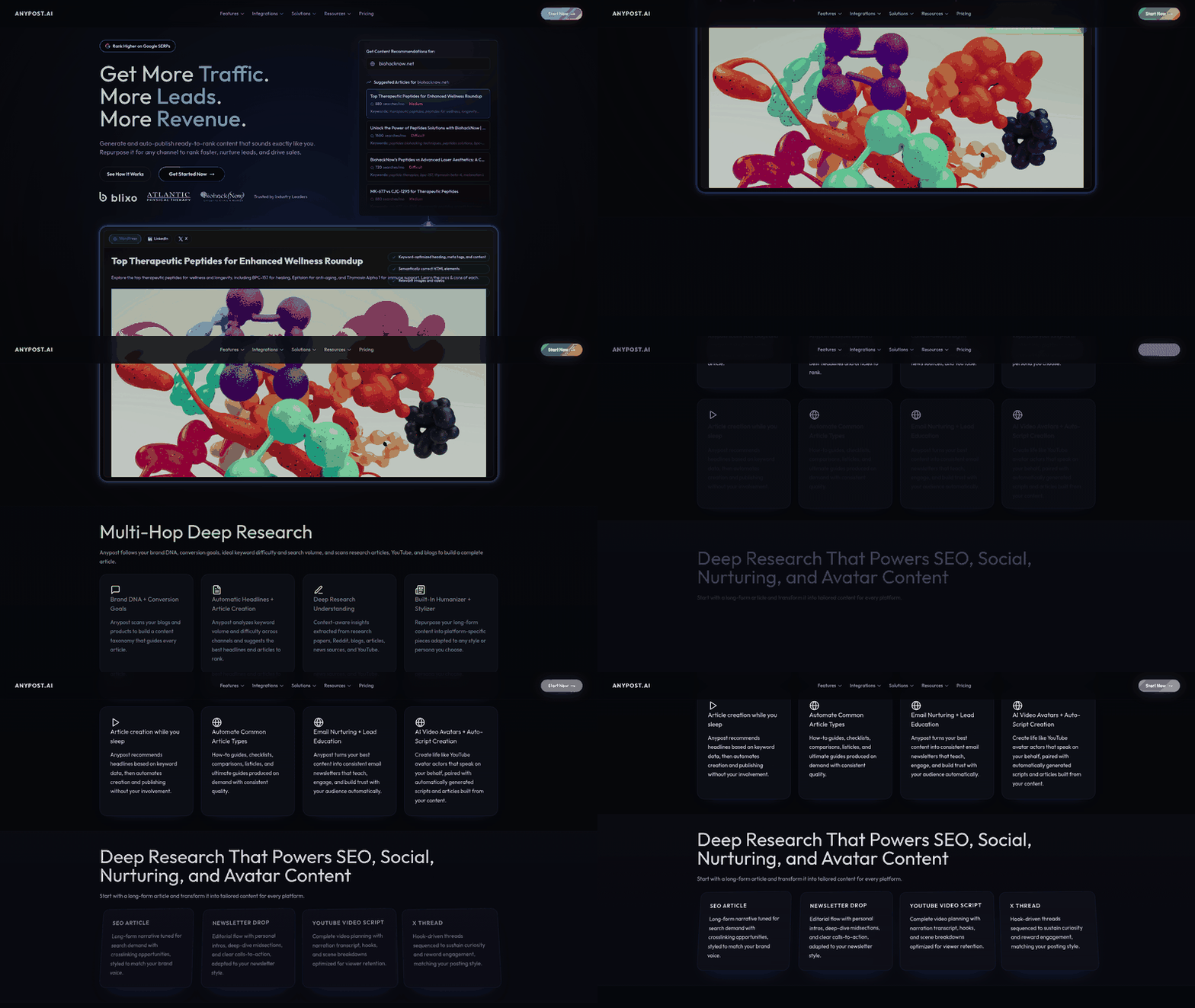
SaaS content marketing refers to the strategic creation and distribution of digital content tailored for Software-as-a-Service (SaaS) businesses, leveraging tools and platforms to streamline content production while aligning with SEO best practices. This approach integrates automated workflows, data-driven insights, and multi-channel publishing to enhance visibility and engagement [8]. At its core, it addresses the unique challenges of SaaS companies, such as educating technical audiences, building trust in digital solutions, and driving conversions through targeted messaging [3]. By combining educational content with SEO-optimized strategies, SaaS platforms can systematically attract and retain customers across the sales funnel [3]. For example, tools like Surfer enable businesses to research high-impact keywords, audit existing content gaps, and generate SEO-optimized articles in minutes, ensuring alignment with search engine algorithms [4]. See the Automating Content Generation for Efficiency and Scalability section for more details on how platforms like Surfer streamline these workflows. This synergy between content creation and technical SEO is critical for SaaS brands competing in crowded digital markets [5].
SEO plays a foundational role in SaaS content marketing by ensuring content reaches the right audience at scale. Effective SEO strategies prioritize keyword optimization, on-page structure, and backlink acquisition to improve search engine rankings [8]. For SaaS companies, this means targeting niche, high-intent keywords such as “lead generation techniques” or “SaaS marketing” to attract prospects actively seeking solutions [2]. See the SEO Optimization Strategies for SaaS Content Marketing section for a deeper dive into keyword research and planning. Additionally, SEO-driven content marketing helps establish thought leadership and credibility, both of which are essential for converting leads in B2B SaaS contexts [5]. Tools like Surfer and agencies specializing in SEO-optimized content further refine this process by analyzing competitor performance and recommending improvements for keyword density, readability, and user intent alignment [4]. Without SEO, even high-quality SaaS content risks remaining undiscovered, limiting its impact on lead generation and customer acquisition [10].
SaaS platforms enhance content marketing efforts by offering integrated services that automate repetitive tasks and optimize efficiency. These platforms provide features such as automated content generation, which uses AI to draft blog posts, case studies, or social media updates based on predefined topics and keywords [10]. For instance, SaaS agencies like those highlighted in [9] combine SEO optimization with content strategy to produce scalable campaigns, including blog articles, ebooks, and whitepapers tailored to specific audience segments. See the Implementing AI and SEO Trends in SaaS Content Marketing section for insights on leveraging AI for content creation. Multi-source content integration is another key capability, allowing businesses to aggregate data from customer feedback, analytics tools, and market research to inform content creation [6]. This ensures that content remains relevant and responsive to evolving user needs. Platforms like Surfer further streamline workflows by consolidating research, writing, and optimization into a single interface, reducing the time required to produce high-quality, SEO-ready content [4]. By centralizing these functions, SaaS tools empower marketers to focus on strategic planning rather than manual execution [1].
Identifying Your Target Audience and Creating Persona-Based Content
Identifying Audience Segments
To identify the target audience for SaaS content marketing, start by analyzing existing customer data, including demographics, job roles, and behavioral patterns [3]. Tools like CRM systems and analytics platforms can reveal insights into user engagement, such as frequently visited pages or common support queries [5]. Additionally, conduct competitor analysis to identify gaps in their content strategies and uncover overlapping audience segments [5]. Industry reports and surveys further validate assumptions about audience needs, ensuring personas are grounded in real-world data rather than speculation [3]. See the SEO Optimization Strategies for SaaS Content Marketing section for more details on how keyword research complements audience segmentation.
Creating Buyer Personas for Content Marketing
Buyer personas should integrate qualitative and quantitative data, including pain points, goals, and preferred communication channels [1]. For example, a SaaS tool targeting project managers might prioritize personas emphasizing collaboration features and time-tracking efficiency [3]. Personas must also reflect behavioral patterns, such as decision-making processes—whether users prefer free trials, case studies, or peer testimonials [5]. Aligning these personas with SEO strategies ensures content addresses specific keywords and search intent relevant to each audience segment [8]. Building on concepts from the SEO Optimization Strategies for SaaS Content Marketing section, this alignment strengthens both content relevance and search visibility.
Using Persona Engines in SaaS Platforms
Persona engines automate tone and language optimization by integrating audience data into content workflows. These tools suggest phrasing, keywords, and even structural elements based on predefined personas [1]. For instance, a persona engine might recommend avoiding jargon for non-technical users or emphasizing ROI metrics for executives [5]. Some platforms combine these engines with SEO tools like Surfer to ensure tone adjustments align with on-page optimization requirements [4]. See the Automating Content Generation for Efficiency and Scalability section for examples of how tools like Surfer streamline persona-driven content workflows. By maintaining consistency across blogs, case studies, and social media, persona engines reduce the risk of fragmented messaging [1].
Multi-Hop Strategy: Aligning Personas with SEO Goals
Effective persona-based content requires cross-referencing audience insights with SEO audits. For example, if a persona prioritizes cost efficiency, content should target keywords like “affordable SaaS solutions” while addressing pain points like budget constraints [3][8]. Tools like Ahrefs or SEMrush can validate keyword relevance for each persona, ensuring SEO and content strategies are mutually reinforcing [5]. As mentioned in the SEO Optimization Strategies for SaaS Content Marketing section, regular keyword audits help maintain alignment with evolving audience needs. Regularly updating personas based on new user feedback and search trends maintains alignment with evolving audience needs [1].
Automating Content Generation for Efficiency and Scalability
Automating content generation is a cornerstone of modern SaaS content marketing, enabling teams to scale output while maintaining SEO alignment. Tools like Surfer [4] streamline the entire content lifecycle, from keyword research to final optimization, reducing article creation time to under 20 minutes. This efficiency is critical for SaaS companies, which often require high-volume, niche-targeted content to compete in saturated markets. By automating repetitive tasks such as audits and on-page optimization, these tools free marketers to focus on strategic initiatives like audience analysis and campaign planning. The scalability of automation also ensures consistent content delivery, a key factor in sustaining SEO momentum over time [4]. For foundational insights into SaaS content marketing, see the [Understanding SaaS Content Marketing and SEO] section.

Types of Content Suitable for Automation
Automated tools excel at generating structured, research-driven content. Surfer [4] specializes in SEO-optimized articles, making it ideal for blog posts, pillar pages, and guide-style content that form the backbone of SaaS SEO strategies. These platforms leverage data-driven templates to produce drafts that align with search intent, reducing the need for manual revisions. While automation is most effective for content requiring keyword integration and structure, it may not replace creative or highly personalized formats like case studies or thought leadership pieces. Teams should prioritize automating high-volume, medium-complexity content to maximize ROI [4]. For strategies on tailoring content to specific audience segments, refer to the [Identifying Your Target Audience and Creating Persona-Based Content] section.
Best Practices for Using Automated Content Tools
To leverage automation effectively, start by inputting precise SEO parameters into the tool. Surfer [4] requires keyword clusters, competitor benchmarks, and topic outlines to generate contextually relevant drafts. Validate the tool’s output by cross-referencing its recommendations with existing SEO strategies outlined in resources like [2] and [8]. A hybrid approach—where AI-generated drafts are edited by human writers—ensures both efficiency and quality. Regularly update training data for the tool to reflect evolving search trends, ensuring generated content remains competitive. Finally, audit automated content for brand voice consistency, as tools may default to generic phrasing without explicit style guidelines [4].
Integration with SEO Optimization
Automation platforms like Surfer [4] are designed to embed SEO best practices at every stage. The tool analyzes top-ranking content to identify keyword density, meta tag structures, and content gaps, then applies these insights to new drafts. This eliminates guesswork in on-page optimization, ensuring automated content meets technical SEO standards outlined in guides like [8]. For link-building, use automated tools to generate topic ideas for guest posts or resource pages, then manually curate backlink opportunities as recommended in [3]. To align with broader SEO strategies, integrate automation with analytics platforms to track performance metrics and refine keyword targeting iteratively [4]. For deeper insights into SEO optimization techniques, see the [SEO Optimization Strategies for SaaS Content Marketing] section.
By combining automation with manual oversight, SaaS marketers can achieve a balance between speed and quality. Surfer [4] and similar tools are not replacements for strategic thinking but enablers of consistent, data-informed content production. As automation evolves, its role in SEO will expand, making it essential for teams to adopt these tools while staying grounded in proven marketing principles.
SEO Optimization Strategies for SaaS Content Marketing
SEO optimization in SaaS content marketing begins with rigorous keyword research and planning. Start by identifying high-intent keywords relevant to your SaaS product, such as “lead generation techniques” or “SaaS marketing,” which align with user search intent and business goals [2]. Tools like Surfer SEO streamline this process by analyzing competitors’ content, suggesting keyword clusters, and providing content gap insights to inform your strategy [4]. Prioritize keywords with balanced search volume and competition, focusing on long-tail terms that target specific user queries, such as “B2B SaaS content marketing strategy” [8]. This approach ensures your content addresses niche audiences while maintaining alignment with broader SEO objectives [10]. As mentioned in the [Identifying Your Target Audience and Creating Persona-Based Content] section, understanding audience segments helps refine keyword selection to better match user needs.
On-page optimization requires structuring content to maximize visibility and user engagement. Use tools like Surfer SEO to optimize content length, keyword density, and header structure based on data-driven recommendations [4]. Incorporate primary keywords in title tags, meta descriptions, and the first 100 words of your content, while secondary keywords should appear naturally in subheadings and body text [5]. Internal linking is critical—interlink related blog posts, product pages, and landing pages to improve navigation and distribute page authority [8]. For example, a SaaS blog post on “SEO for SaaS startups” should link to in-depth guides on onboarding or customer retention, creating a cohesive content ecosystem [3]. See the [Repurposing Content for Multi-Channel Distribution] section for more details on structuring interlinked content.
Link-building strategies for SaaS content must leverage both earned and built tactics. Earn backlinks by creating shareable, educational resources such as ebooks, case studies, or whitepapers, which agencies often use to demonstrate expertise and attract organic links [6]. Guest posting on industry-relevant websites and participating in thought leadership roundups can further amplify visibility [9]. For built links, utilize SaaS platforms that automate outreach and track link performance, ensuring you prioritize high-authority domains with relevance to your niche [3]. Additionally, embed UGC (user-generated content) or testimonials on your site, as these foster trust and encourage natural backlinks from satisfied customers [5]. Building on concepts from the [Measuring Success and Continuous Improvement in SaaS Content Marketing] section, tracking UGC performance can refine future link-building efforts.
SaaS tools play a pivotal role in streamlining SEO processes by integrating research, optimization, and analytics into a single workflow. Platforms like Surfer SEO enable teams to audit existing content, identify technical SEO issues (e.g., broken links or slow load times), and generate optimized content in minutes [4]. These tools also provide real-time data on keyword rankings and competitor performance, allowing for agile adjustments to content strategies [5]. For instance, a SaaS content writer might use Surfer to analyze top-ranking articles for “B2B SaaS marketing” and replicate their structure while adding unique insights, ensuring both SEO compliance and audience value [7]. By automating repetitive tasks, SaaS solutions free up time for creative strategy, enabling teams to focus on high-impact content creation [10]. See the [Automating Content Generation for Efficiency and Scalability] section for further insights on leveraging SaaS tools.
To maximize ROI, align SEO efforts with overarching content marketing goals. For example, a SaaS brand targeting enterprise clients might prioritize long-form blog posts and in-depth resource pages optimized for transactional keywords like “enterprise SaaS solutions” [8]. Conversely, a startup could focus on educational content targeting informational queries, such as “how does SaaS pricing work?” to build brand awareness [3]. Regularly update content using analytics from SaaS platforms to reflect evolving search trends and user behavior, ensuring sustained visibility in competitive markets [6]. This iterative approach, supported by SaaS-driven insights, turns SEO from a static task into a dynamic growth lever [9].
Repurposing Content for Multi-Channel Distribution
Repurposing content is a critical strategy for SaaS marketers aiming to amplify SEO impact while maximizing resource efficiency. By transforming a single piece of content into multiple formats tailored to different channels, marketers can reach broader audiences without duplicating effort. For example, a comprehensive blog post optimized for SEO can be distilled into social media snippets, email newsletter summaries, or YouTube video scripts [10]. This approach not only reinforces brand visibility but also ensures consistent messaging across platforms, which is vital for B2B SaaS companies targeting niche markets [9]. Additionally, repurposing allows teams to leverage evergreen content, reducing the need for constant creation while maintaining a steady content pipeline [10]. As mentioned in the SEO Optimization Strategies for SaaS Content Marketing section, aligning repurposed content with keyword research ensures sustained SEO value across formats.
Effective Strategies for Channel-Specific Repurposing
To repurpose content effectively, marketers must adapt formats to align with each channel’s strengths. For instance, a long-form blog post on SaaS analytics can be transformed into a Twitter thread with key takeaways, a LinkedIn article with industry insights, or a YouTube video with screen recordings and voiceover explanations [9]. Newsletters can repurpose blog content by summarizing key points and linking to the full article, while slide decks from webinars can be shared on SlideShare or converted into blog posts [10]. Tools like Canva or Adobe Express streamline visual repurposing for social media, though specific tools are not explicitly named in the sources [9]. A core strategy emphasized in SaaS marketing guides is to prioritize audience needs: for technical audiences, detailed whitepapers or case studies may work best, while visual learners might engage more with infographics or short videos [10]. See the Identifying Your Target Audience and Creating Persona-Based Content section for insights on tailoring repurposed content to distinct audience segments.
Tools and Services for Streamlined Repurposing
While no single tool is explicitly named in the sources, agencies and platforms play a significant role in efficient repurposing. B2B SaaS agencies like those highlighted in [9] specialize in creating multi-format content, including SEO-optimized blogs, ebooks, and social media assets, which can be systematically repurposed. These teams often use project management software to track repurposing workflows, ensuring alignment with SEO goals outlined in content strategy guides [10]. For in-house teams, collaboration tools like Notion or Trello can organize content repurposing tasks, though integration with SEO platforms like Surfer [4] helps maintain keyword consistency across formats. Building on concepts from the Automating Content Generation for Efficiency and Scalability section, agencies also leverage analytics dashboards to identify high-performing content for repurposing, ensuring efforts are directed toward assets with proven SEO value [9].
Measuring the Impact of Repurposed Content
Evaluating the effectiveness of repurposed content requires tracking metrics specific to each channel. For blogs, SEO success is measured through organic traffic, bounce rate, and keyword rankings, while social media engagement metrics like shares, comments, and click-through rates indicate performance on platforms like Twitter or LinkedIn [2]. Email newsletters should monitor open rates and conversion rates to determine if repurposed content drives traffic to primary SEO assets [10]. Tools like Google Analytics or UTM parameters help isolate the impact of repurposed content by tracking referral sources and user behavior across channels. Crucially, marketers must compare performance against original content to assess whether repurposing amplifies reach without diluting SEO value [9]. Regular audits of repurposed content ensure alignment with evolving SEO strategies and audience preferences, as recommended in SaaS content marketing guides [10]. By systematically repurposing content, SaaS marketers can optimize SEO efforts while maintaining a cohesive presence across channels. The key lies in balancing automation with strategic customization, ensuring each format resonates with its intended audience while reinforcing core SEO objectives.
Leveraging Real-Time Analytics for Content Performance Tracking
Real-time analytics serve as a critical tool for SaaS content marketers to monitor and adjust campaigns dynamically, ensuring alignment with SEO goals and audience engagement. By integrating performance analytics into content strategies, teams can identify underperforming assets, refine keyword targeting, and prioritize topics that drive traffic and conversions [6]. For instance, real-time data enables rapid adjustments to SEO tactics, such as optimizing meta tags or redirecting resources to high-performing blog posts before audience interest wanes [5]. This agility contrasts with traditional analytics, which often delay actionable insights due to batch processing cycles [6]. SaaS platforms, in particular, benefit from real-time tracking to measure how content supports lead nurturing across the customer journey, from awareness to conversion [8].
Key Metrics to Track in SaaS Content Marketing
To maximize the value of real-time analytics, focus on metrics directly tied to SEO performance and user behavior. Traffic sources (organic, referral, social) reveal which channels drive the most qualified visitors, while time-on-page and bounce rates indicate content relevance [3]. Conversion rates for gated assets, such as whitepapers or demo requests, highlight the effectiveness of lead-generation strategies [5]. Additionally, real-time tracking of keyword rankings helps marketers identify fluctuations in search visibility, allowing them to adjust content to maintain or improve positions [2]. See the SEO Optimization Strategies for SaaS Content Marketing section for more details on keyword research and planning. Tools like Surfer SEO (cited in [4]) provide granular insights into on-page SEO metrics, such as keyword density and content quality scores, enabling teams to optimize pages for both search engines and user intent. By monitoring these metrics continuously, SaaS marketers can isolate high-impact opportunities and deprioritize efforts with diminishing returns [6].
Refining Content Strategies with Real-Time Data
Analytics data should inform iterative improvements to content strategies, from topic selection to distribution timing. For example, real-time engagement metrics—like social shares or email open rates—can signal which content resonates most with specific audience segments, guiding future creation [6]. A/B testing headlines or CTAs becomes more effective with real-time feedback, as teams can pause underperforming variations and scale successful ones within hours [2]. Additionally, tracking user flow through the website helps identify friction points, such as pages where visitors drop off before converting, allowing for targeted UX improvements [5]. By correlating content performance with SEO metrics like backlink acquisition or domain authority, marketers can align their efforts with long-term search visibility goals [3]. This data-driven approach reduces reliance on guesswork, ensuring that content investments yield measurable business outcomes [6].
The Role of SaaS Platforms in Real-Time Analytics
Modern SaaS platforms embed analytics capabilities directly into their tools, streamlining the process of content performance tracking. Platforms like Surfer SEO (cited in [4]) offer real-time suggestions for optimizing content structure, keyword placement, and readability, ensuring alignment with search engine algorithms. See the Automating Content Generation for Efficiency and Scalability section for further discussion on Surfer SEO’s role in content workflows. Others, such as those highlighted in [6], integrate dashboards that consolidate traffic, engagement, and conversion data into a single view, reducing the need for manual cross-tool analysis. These platforms often leverage machine learning to predict content performance trends, enabling proactive adjustments to publishing schedules or resource allocation [5]. For B2B SaaS companies, where lead cycles are lengthy, real-time analytics help track how content influences decision-making at each stage of the funnel, from educational blog posts to case studies that reinforce product value [8]. By choosing SaaS tools with robust analytics features, content teams can ensure their strategies remain agile and data-informed [6].
In practice, combining real-time analytics with SEO optimization requires a structured approach:
- Set up tracking for core metrics using SaaS-integrated tools or third-party platforms like Google Analytics.
- Monitor trends daily to catch anomalies in traffic, rankings, or engagement that may signal technical issues or shifting audience preferences.
- Conduct weekly reviews of aggregated data to identify patterns and adjust content calendars or SEO tactics accordingly [2].
- Test and iterate by using A/B testing frameworks to validate hypotheses about content format, length, or distribution channels [3].
By embedding real-time analytics into their workflows, SaaS marketers can transform reactive content creation into a strategic, performance-driven discipline [6].
Implementing AI and SEO Trends in SaaS Content Marketing
Implementing AI and SEO trends in SaaS content marketing requires leveraging tools like Surfer to streamline content creation, optimization, and distribution while aligning with evolving search engine algorithms. AI-driven platforms such as Surfer enable teams to research, audit, write, and optimize SEO-focused articles in under 20 minutes, ensuring content aligns with keyword intent and competitor benchmarks [4]. By automating tasks like keyword clustering, semantic analysis, and content structuring, AI reduces manual effort while improving accuracy in targeting high-value search terms [4]. This integration allows SaaS marketers to focus on strategic decisions rather than repetitive optimization tasks.
Leveraging AI for Content Creation and Optimization
AI tools like Surfer enhance content creation by analyzing competitor content and providing data-driven recommendations for structure, keyword placement, and readability [4]. For example, Surfer’s “Content Editor” suggests optimal headers, bullet points, and paragraph lengths to maximize SEO performance [4]. This ensures content meets both search engine requirements and user expectations. Additionally, AI-powered content audits identify gaps in existing articles, such as missing keywords or weak meta descriptions, enabling teams to refine underperforming pages [4]. By automating these processes, SaaS companies can maintain a consistent output of high-quality content tailored to specific audience segments, as discussed in the [Identifying Your Target Audience and Creating Persona-Based Content] section.
Impact of AI on SEO and Content Relevance
AI’s role in SEO extends beyond content creation to real-time optimization. Surfer’s platform uses machine learning to track search intent shifts and algorithm updates, allowing marketers to adjust content strategies dynamically [4]. For instance, if a new trend emerges in SaaS, AI can surface related keywords and topic clusters, ensuring content stays relevant to evolving user queries [4]. This adaptability is critical in competitive SaaS markets, where outdated content quickly loses visibility. Furthermore, AI-generated insights help prioritize topics with high search volume and low competition, enabling teams to allocate resources efficiently [4].
Aligning with the Latest SEO Trends
Current SEO trends emphasize semantic search, mobile-first indexing, and user experience (UX) optimization—areas where AI excels. Tools like Surfer incorporate semantic SEO by analyzing search results to determine which entities, questions, and phrases should be included in content [4]. For SaaS marketing, this means crafting articles that not only rank for primary keywords but also address related subtopics, improving topical authority. Additionally, AI tools can flag technical SEO issues, such as slow page load speeds or broken links, ensuring content adheres to Google’s Core Web Vitals [4]. By automating these audits, SaaS teams can maintain compliance with algorithm updates without manual intervention.
Strategies for Integrating AI and SEO Trends
To effectively implement AI and SEO trends, SaaS marketers should adopt a hybrid approach that combines AI-generated insights with human creativity. Start by using Surfer to identify content gaps and prioritize topics based on search intent and competitor analysis [4], as outlined in the [Automating Content Generation for Efficiency and Scalability] section. Next, leverage AI to draft content outlines, ensuring optimal keyword placement and structure before human writers refine the tone and messaging. For distribution, AI can analyze audience engagement metrics to recommend the best publishing times and platforms [4], a strategy expanded upon in the [Repurposing Content for Multi-Channel Distribution] section. Regularly revisiting AI-driven audits and updating content based on performance data ensures long-term SEO success in a rapidly changing digital landscape [4].
By embedding AI tools like Surfer into their workflows, SaaS companies can stay ahead of SEO trends while scaling content production. The synergy between AI’s analytical power and SEO best practices not only boosts search rankings but also enhances user experience, driving higher conversion rates for SaaS products.
Measuring Success and Continuous Improvement in SaaS Content Marketing
Measuring the effectiveness of SaaS content marketing requires tracking specific KPIs that align with business goals such as lead generation, traffic growth, and conversion rates. Key performance indicators (KPIs) for SaaS content marketing include organic search traffic, keyword ranking improvements, lead capture rates from gated content, and conversion rates from content-driven sales funnels [3][6]. For example, tracking the number of leads generated through downloadable resources like whitepapers or case studies provides insight into content’s role in the buyer’s journey [3]. Additionally, monitoring conversion rates—such as the percentage of website visitors who sign up for free trials or demos—helps quantify content’s impact on revenue [6]. Tools like Google Analytics, CRM platforms, and SEO software (e.g., Surfer [4]) enable teams to aggregate and analyze these metrics systematically. See the [Automating Content Generation for Efficiency and Scalability] section for more details on how tools like Surfer streamline content workflows.
Measuring Lead Generation and Conversion Rates
Lead generation success hinges on tracking metrics like form submissions, email sign-ups, and social shares, which indicate audience engagement and intent [2][3]. For SaaS companies, conversion rates are often measured by the percentage of visitors who complete a desired action, such as scheduling a demo or upgrading to a premium plan [6]. A/B testing call-to-action (CTA) placement, headlines, and landing page copy can refine these metrics, as demonstrated by agencies that optimize content for specific user intent [2]. For instance, if a blog post about “lead generation techniques” drives high traffic but low conversions, analyzing the CTA or landing page UX may reveal friction points [2].
Using Data for Continuous Improvement
Continuous improvement relies on iterative analysis of performance data to refine content strategies. For example, SEO agencies use keyword performance data to identify underperforming content and update it with fresh, relevant information [2]. Similarly, tracking which topics generate the highest lead volume—such as “SaaS marketing” or “SEO content”—guides future content creation [2][3]. Tools like Surfer [4] help teams optimize content for search engines by analyzing competitors and suggesting keyword density adjustments. Regular audits of content performance, such as monthly reports on bounce rates or time-on-page metrics, ensure alignment with evolving audience needs [6].
Best Practices for Ongoing Optimization
To sustain growth, SaaS marketers should adopt best practices such as repurposing high-performing content into new formats (e.g., turning a blog post into a webinar or infographic) [3]. See the [Repurposing Content for Multi-Channel Distribution] section for strategies on maximizing SEO impact through content reuse. Prioritizing evergreen topics—like SaaS sales funnels or B2B content strategies—ensures long-term SEO value, while timely updates on industry trends maintain relevance [3][6]. Collaborating with analytics teams to segment audience data (e.g., by job role or company size) allows for hyper-targeted content, improving both engagement and conversion rates [3]. Finally, integrating user feedback from surveys or support tickets into content planning addresses pain points directly, closing gaps between content offerings and customer needs [6]. See the [Identifying Your Target Audience and Creating Persona-Based Content] section for insights on leveraging audience data for content personalization.
By systematically tracking KPIs, testing hypotheses with A/B experiments, and iterating based on data, SaaS companies can transform their content marketing from a static strategy into a dynamic engine for growth [2][3][6].
References
[1] My best SaaS content marketing strategy guide for 2025 | Marketer ... - https://www.marketermilk.com/blog/saas-content-marketing
[2] SEO is easy. The EXACT process we use to scale our clients' SEO ... - https://www.reddit.com/r/startups/comments/hqgahk/seo_is_easy_the_exact_process_we_use_to_scale_our/
[3] SaaS Content Marketing Strategy: How to Generate Leads and ... - https://revtekcapital.com/saas-content-marketing-strategy
[4] Surfer: SEO Content Optimization Platform - https://surferseo.com/
[5] Mastering B2B SaaS Content Marketing | Stratabeat - https://stratabeat.com/saas-content-marketing/
[6] 7 Top SaaS Content Marketing Agency to Grow Faster - https://kejoragasbumi.com/saas-content-marketing-agency/
[7] Ekta Swarnkar - B2B SaaS Content Writer | Content Strategist ... - https://in.linkedin.com/in/ekta-swarnkar
[8] SaaS Content Marketing: Definition & Importance [2025 Guide] - https://www.omnius.so/blog/what-is-saas-content-marketing
[9] The 9 Best B2B SaaS Content Marketing Agencies in 2025 - Animalz - https://www.animalz.co/blog/b2b-saas-content-marketing-agencies
[10] My best SaaS content marketing strategy guide for 2025 | Marketer ... - https://www.marketermilk.com/blog/saas-content-marketing
Frequently Asked Questions
1. How does SaaS content marketing differ from traditional SEO strategies?
SaaS content marketing is tailored to the unique needs of software-as-a-service businesses, focusing on educating technical audiences, building trust in digital solutions, and driving B2B conversions. Unlike traditional SEO, which may target broader audiences, SaaS SEO emphasizes niche, high-intent keywords (e.g., “cloud-based project management tools”) and integrates automation tools like Surfer or AnyPost.ai to streamline content creation. It also prioritizes aligning content with user intent across the sales funnel, such as creating case studies for decision-makers or tutorials for early-stage leads.
Q: What tools are essential for automating SaaS content creation and SEO optimization?
A: Key tools include AI-powered platforms like Surfer for keyword research, content gap analysis, and generating SEO-optimized articles; AnyPost.ai for multi-channel publishing and AI-driven content creation; and tools like Ahrefs or SEMrush for competitor analysis. Additionally, technical SEO tools like Screaming Frog help audit site architecture, while platforms like Grammarly or Hemingway Editor ensure readability. These tools reduce manual effort, improve scalability, and ensure content aligns with search engine algorithms.
Q: How can SaaS companies balance automation with human creativity in content marketing?
A: Automation streamlines repetitive tasks like keyword research and draft generation, but human input is critical for refining messaging, ensuring brand voice consistency, and addressing nuanced audience needs. For example, while AI can outline a blog post about “SaaS onboarding strategies,” human writers should personalize examples with real-world case studies or add storytelling elements to resonate emotionally. Teams should use automation for efficiency but review and humanize content before publishing to maintain authenticity and depth.
Q: What are the most effective SEO strategies for SaaS content marketing?
A: Focus on three pillars:
- Keyword targeting: Use tools like Surfer to identify high-intent, low-competition keywords (e.g., “SaaS customer retention metrics”) and align content with user intent (informational, transactional, or navigational).
- On-page optimization: Structure content with clear headings, meta tags, and internal linking to guide search engines.
- Backlink acquisition: Collaborate with industry influencers, guest post on relevant blogs, and leverage SaaS platforms’ whitepapers or case studies for link-building.
Additionally, prioritize technical SEO elements like page speed and mobile responsiveness to enhance user experience.
Q: How can SaaS businesses measure the ROI of their content marketing and SEO efforts?
A: Track metrics like organic traffic growth, keyword rankings, conversion rates (e.g., demo sign-ups or free trials), and customer acquisition cost (CAC). Tools like Google Analytics and UTM parameters help isolate SEO-driven traffic from other channels. For example, if a blog post targeting “SaaS analytics tools” drives 1,000 monthly visits and converts 5% into leads, calculate its contribution to pipeline revenue. Regular audits of content performance using platforms like Search Console also reveal underperforming pages for optimization.
Q: What are common pitfalls to avoid in SaaS SEO content marketing?
A: Avoid over-automating content without human oversight, which can lead to generic or irrelevant posts. Also, steer clear of keyword stuffing, which harms readability and search rankings. Another pitfall is neglecting technical SEO, such as broken links or slow load times. Additionally, failing to update content for algorithm changes or new competitor tactics can render strategies obsolete. Always prioritize user-centric content that solves real problems, not just keyword-driven fluff.
Q: How can SaaS brands optimize technical SEO elements like schema markup and site speed?
A: Implement schema markup to help search engines understand content context, such as marking up FAQs or product pages for rich snippets. Use tools like Google’s Structured Data Testing Tool to validate. For site speed, compress images, leverage CDNs, and minimize CSS/JS files. Platforms like AnyPost.ai often integrate with SEO tools to automate these optimizations. Regularly audit technical SEO with Screaming Frog or DeepCrawl to identify crawl errors, broken links, or indexing issues that hinder performance.