
How to Optimize SEO with Textual Analysis Software

Understanding Textual Analysis Software for SEO Optimization
Textual analysis software for SEO optimization refers to tools that leverage artificial intelligence and algorithms to evaluate written content for search engine visibility. These tools analyze factors like keyword usage, content structure, readability, and competitor benchmarks to provide actionable insights for improving search rankings [10]. By processing vast amounts of data, they identify patterns and gaps that human analysts might miss, enabling data-driven content strategies [2]. For instance, platforms like SEMrush and Surfer SEO combine keyword research, on-page analysis, and competitor comparison to streamline SEO workflows [1][6]. The core function of these tools is to bridge the gap between user intent and content relevance, ensuring websites align with both search engine algorithms and audience needs [3]. For businesses aiming to select the most suitable tools, As mentioned in the [Choosing the Right Textual Analysis Tool for Your Business] section, factors like pricing and scalability play a critical role in decision-making.
How Textual Analysis Enhances SEO
Textual analysis improves SEO by refining content to meet algorithmic requirements while maintaining user engagement. One of its primary applications is keyword optimization, where tools like Frase.io and Clearscope analyze search queries to recommend high-impact keywords and phrases [2][3]. These tools also assess keyword density, placement, and semantic variations to avoid over-optimization pitfalls [4]. Additionally, textual analysis tools evaluate content quality through metrics such as readability scores and topic coverage. For example, MarketMuse uses AI to compare a webpage’s content depth against top-ranking competitors, suggesting expansions or revisions to enhance authority [9]. Competitor benchmarking is another critical feature; tools like Surfer SEO provide insights into competitors’ content structures, backlink profiles, and engagement metrics, allowing users to craft superior alternatives [6]. By automating these tasks, textual analysis reduces guesswork and accelerates the content optimization process [7].
Key Features of Textual Analysis Tools
Effective textual analysis software includes several standardized features designed to streamline SEO workflows. First, keyword research and optimization tools generate lists of relevant search terms and track their performance across platforms. SEMrush and SEOBoost, for instance, integrate keyword difficulty scores and search volume data to prioritize targets [1][8]. Second, content scoring systems evaluate existing content against SEO best practices. Surfer SEO provides real-time scores based on factors like meta tags, heading structure, and internal linking, guiding users toward improvements [6]. Third, on-page SEO audits identify technical issues such as broken links, duplicate content, or missing alt text. Tools like SEO Scout automate these audits, offering granular feedback for each page [4]. Fourth, competitor analysis modules dissect rival websites to reveal gaps and opportunities. MarketMuse’s AI-powered competitor analysis highlights underutilized topics where users can gain an edge [9]. Finally, content outline generation tools like Clearscope create structured blueprints for new content based on user intent and top-ranking pages, ensuring comprehensive coverage of target themes [3]. See the [Optimizing Content with Textual Analysis Software] section for more details on how these outlines translate into actionable content strategies. These features collectively empower marketers to produce content that satisfies both search engines and audiences [2].
By integrating these capabilities, textual analysis software transforms SEO from a reactive practice into a proactive, data-centric strategy. Its ability to unify keyword research, content evaluation, and competitor insights makes it indispensable for modern content marketing [7]. As AI advancements continue, tools like Frase.io and Surfer SEO are likely to expand their functionalities, further automating complex SEO tasks [2][6]. Building on concepts from the [Future Directions in Textual Analysis for SEO Optimization] section, emerging technologies will likely enhance predictive analytics and real-time content adaptation. For businesses aiming to maintain or elevate their search rankings, understanding and leveraging textual analysis tools is no longer optional—it’s a necessity [8].
Choosing the Right Textual Analysis Tool for Your Business
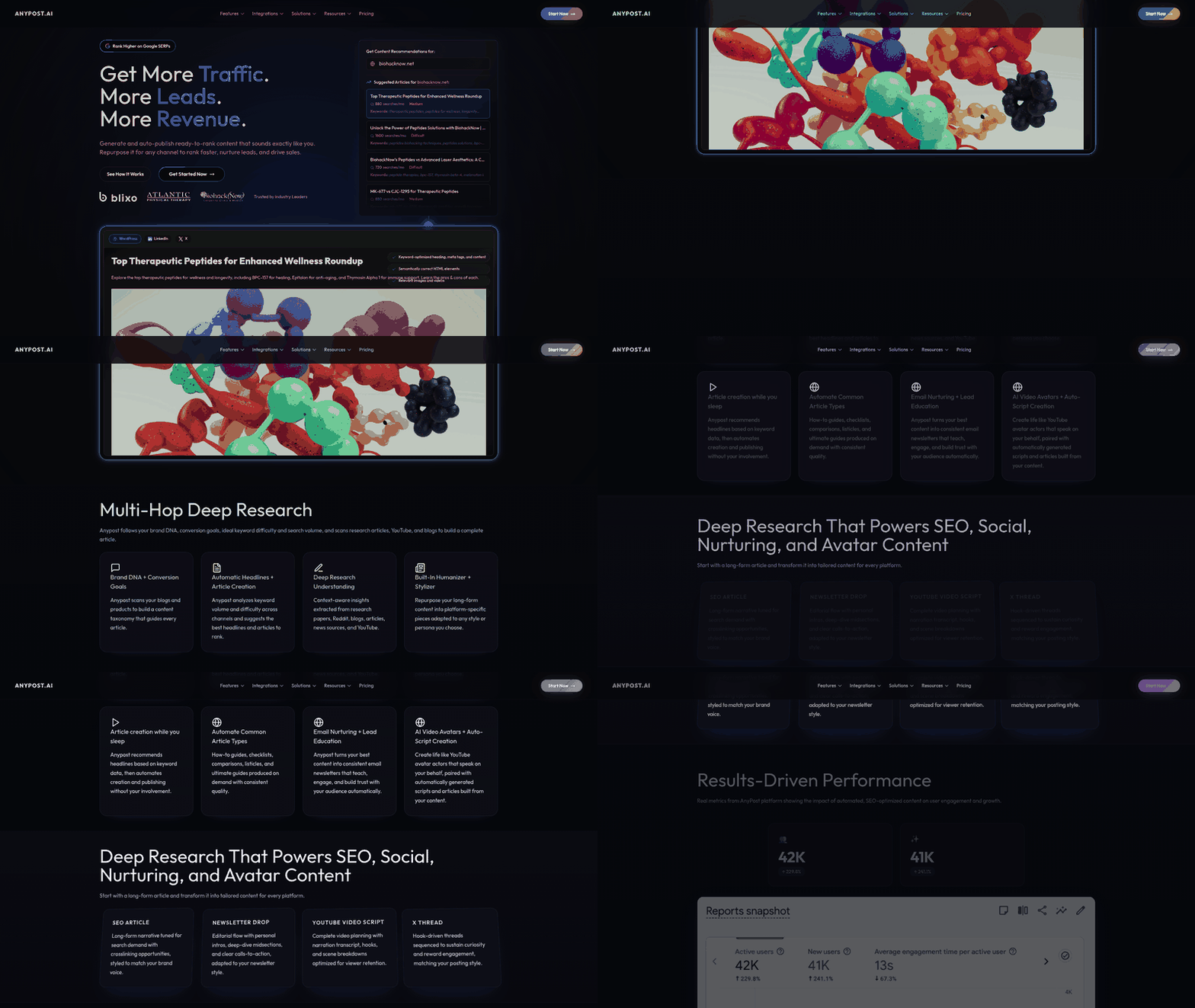
When selecting a textual analysis tool for SEO optimization, businesses must evaluate factors such as pricing models, scalability, and compatibility with existing systems. Pricing structures vary significantly across platforms. For example, Frase.io offers a free tier with no credit card required [2], while SEMrush provides an all-in-one solution that includes paid subscriptions for advanced features like keyword research and technical SEO analysis [1]. Scalability depends on the tool’s ability to handle growing datasets and user bases; AI-driven tools like MarketMuse leverage automation to scale efficiently for large-scale content planning [9]. Building on concepts from [Future Directions in Textual Analysis for SEO Optimization], AI-powered platforms like MarketMuse enhance efficiency by automating tasks like keyword research and content structuring [9]. Integration is another critical factor. SEO Scout’s website content checker emphasizes compatibility with existing workflows, enabling seamless analysis of current content for keyword optimization [4]. Businesses should prioritize tools that align with their budget, growth trajectory, and technical infrastructure.
Comparing Popular Textual Analysis Tools
Several tools dominate the SEO landscape, each with distinct strengths. SEMrush is widely recognized for its comprehensive suite, combining keyword research, content optimization, and technical SEO analysis [1]. Frase.io differentiates itself with real-time SEO and GEO (Google’s Generative Experience) optimization, allowing users to adapt content for both traditional search engines and AI-driven platforms [2]. Clearscope focuses on user intent analysis, generating content outlines based on competitive research and keyword intent [3]. Surfer SEO, meanwhile, emphasizes data-driven content optimization by analyzing top-ranking pages to suggest improvements [6]. For businesses prioritizing AI, MarketMuse offers AI-powered content planning that identifies gaps in competitors’ strategies [9], while SEOBoost provides end-to-end AI-driven content management [8]. Each tool’s unique features should be matched to specific business needs, such as keyword targeting, competitor analysis, or AI readiness.
Evaluating Tool Effectiveness
To assess the value of a textual analysis tool, businesses should measure its impact on SEO performance metrics. Tools like Search Atlas streamline content SEO analysis by providing actionable insights for optimizing blog posts and landing pages [5]. Effectiveness can be gauged through improvements in keyword rankings, organic traffic, and content relevance scores. For instance, Clearscope’s user-intent-based outlines help ensure content aligns with searcher needs, potentially boosting engagement and rankings [3]. Surfer SEO’s analysis of top-ranking pages offers data-backed recommendations, which can increase the likelihood of outranking competitors [6]. Additionally, tools with AI capabilities, such as MarketMuse, enhance efficiency by automating tasks like keyword research and content structuring [9]. See the [Measuring the Impact of Textual Analysis on SEO Performance] section for more details on tracking metrics like organic traffic and keyword rankings over time.
Key Considerations for Decision-Making
Beyond core functionality, additional factors can refine tool selection. Free tools like those recommended in the r/SEO community [1] offer cost-effective entry points for small businesses, though they may lack advanced features. As mentioned in the [Understanding Textual Analysis Software for SEO Optimization] section, paid tools often provide more granular data and integrations—SEO Scout, for example, integrates keyword and Google Trends analysis to refine content strategies [4]. Scalability is critical for growing businesses; AI-powered platforms like SEOBoost handle complex workflows, from research to optimization [8]. User-friendliness also matters: Frase.io’s intuitive interface reduces the learning curve for teams new to SEO [2]. Finally, customer support and training resources should be evaluated, as tools like Surfer SEO offer extensive documentation and tutorials to maximize adoption [6]. By cross-referencing these criteria with business objectives, companies can identify the tool that best balances functionality, cost, and ease of use.
Optimizing Content with Textual Analysis Software
Integrating multiple tools enhances SEO outcomes. For example, [3] recommends Clearscope for content outlines, while [2] advocates Frase.io for real-time optimization, aligning with strategies discussed in the "Leveraging Automated Content Generation for SEO" section. A multi-tool approach might involve using SEMrush [1] for initial keyword research, Surfer SEO [6] for content benchmarking, and SEOBoost [8] for repurposing. This layered strategy ensures content is both search-engine and user-friendly. As mentioned in the [Choosing the Right Textual Analysis Tool for Your Business] section, selecting tools that integrate seamlessly with existing workflows is critical for maximizing efficiency. By cross-referencing data from diverse tools, teams can adopt a holistic approach to SEO, as emphasized in the [Measuring the Impact of Textual Analysis on SEO Performance] section.
Leveraging Automated Content Generation for SEO
Benefits of Automated Content Generation for SEO
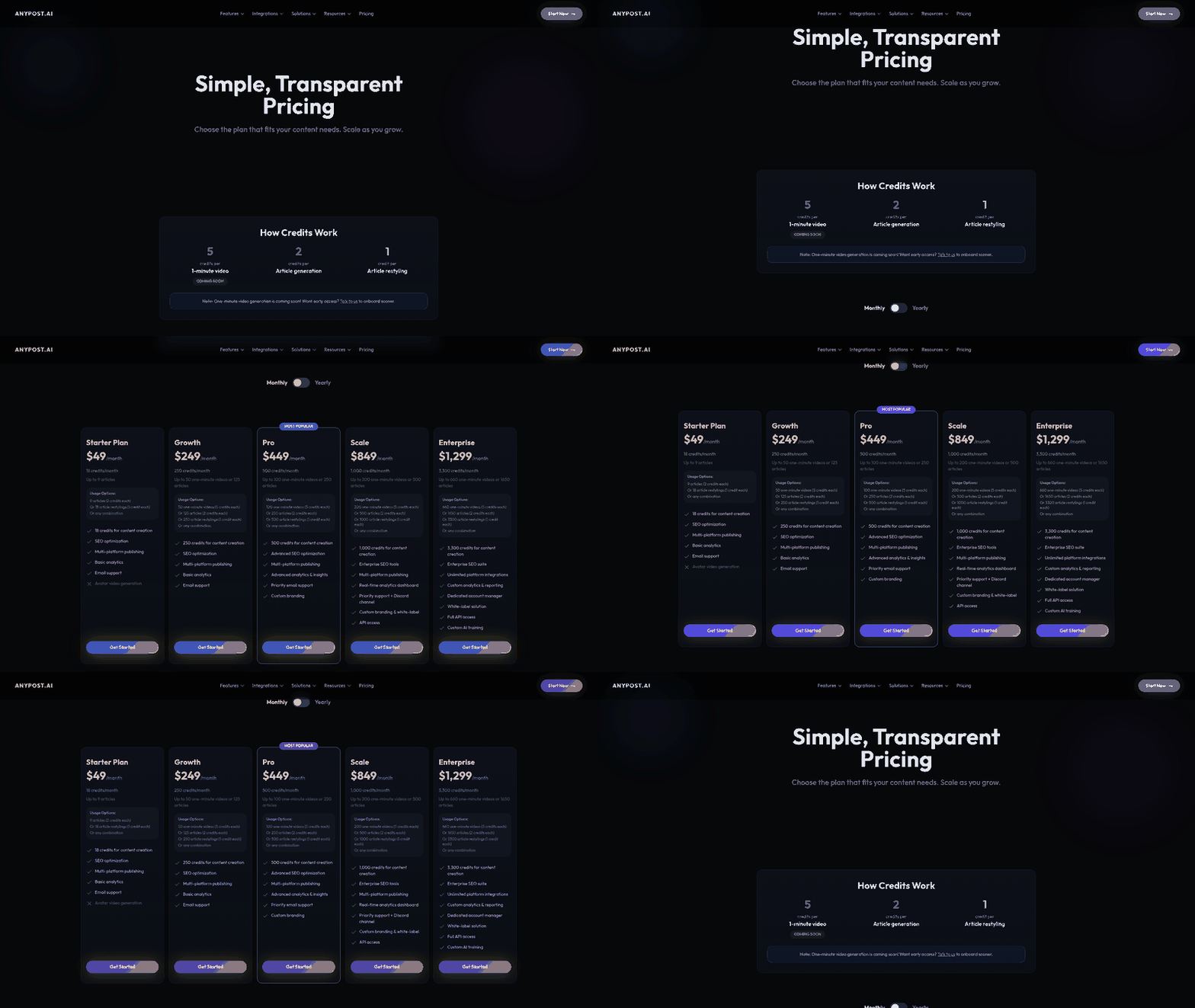
Automated content generation tools enhance SEO by streamlining tasks such as keyword research, content optimization, and competitor analysis. Platforms like Frase.io enable real-time SEO and GEO optimization, allowing users to create content that aligns with Google’s ranking criteria and is likely to be cited by AI models like ChatGPT and Perplexity [2]. Similarly, MarketMuse’s AI-powered software identifies high-potential content topics and suggests optimal content length to outperform competitors in specific niches [9]. By automating these processes, creators save time while ensuring their content meets technical SEO standards, such as keyword density and semantic relevance. Additionally, AI-driven tools like those described in [10] improve efficiency in backlink analysis, helping users prioritize link-building opportunities that strengthen domain authority. These capabilities reduce manual effort, allowing marketers to focus on strategic improvements rather than repetitive tasks. For a deeper understanding of how these tools evaluate content for search visibility, see the [Understanding Textual Analysis Software for SEO Optimization] section.
Limitations and Challenges of Automated Content Generation
Despite its advantages, automated content generation has limitations that require careful consideration. AI tools may produce content that lacks nuanced creativity or fails to capture brand-specific tone, necessitating human oversight for final edits [9]. For example, while MarketMuse provides data-driven recommendations, it does not replace the need for human judgment in refining messaging or addressing complex user intent [9]. Similarly, Frase.io’s real-time optimization features depend on the quality of input data; if prompts are poorly structured, the output may not fully align with SEO goals [2]. Another challenge is the potential over-reliance on automation, which could lead to content homogenization if multiple users leverage similar AI tools. As noted in [10], automation enhances efficiency but does not inherently solve issues like evolving search algorithms or the need for original, high-value insights. These constraints highlight the importance of balancing AI-generated outputs with manual review and customization.
Best Practices for Using Automated Content Generation Tools
To maximize the effectiveness of automated content generation, adopt a structured approach that integrates AI with human expertise. First, use tools like MarketMuse to identify content gaps and prioritize topics where competitors have weak coverage [9]. This ensures efforts are directed toward high-impact areas. Next, leverage Frase.io’s real-time SEO optimization features to draft content, monitoring keyword placement, semantic density, and readability metrics simultaneously [2]. For example, the platform’s GEO (Google’s Eye) feature predicts how AI search engines will interpret content, enabling adjustments to improve visibility in AI-driven query responses [2]. Third, cross-reference AI-generated suggestions with manual analysis using tools like Surfer SEO or Ubersuggest (referenced in [6] and [8]) to validate recommendations against broader market trends. See the [Optimizing Content with Textual Analysis Software] section for more details on integrating these tools into your workflow. Finally, always conduct a post-generation review to refine tone, fix factual inaccuracies, and ensure alignment with brand guidelines. By combining automated workflows with strategic human input, teams can produce SEO-optimized content that balances technical precision with creative value.
Integrating Automation into Your SEO Workflow
Incorporating automated tools into your SEO workflow requires a phased approach to ensure consistency and scalability. Start by mapping your content strategy to AI capabilities, such as using MarketMuse for content planning and Frase.io for on-page optimization [2][9]. For example, MarketMuse’s AI can analyze competitor content to suggest required word counts and subtopic coverage, while Frase.io’s outline generator creates draft structures based on keyword clusters [2][9]. Next, establish a review process to validate AI outputs: assign team members to audit generated content for factual accuracy, brand alignment, and user intent fulfillment. Tools like the SEO Analysis Tool from [4] can further verify technical compliance, such as meta tag optimization and internal linking. Finally, iterate based on performance data—monitor rankings and traffic using platforms like Ahrefs or SEMrush (cited in [7]) to refine AI inputs over time. To evaluate the long-term impact of these strategies, refer to the [Measuring the Impact of Textual Analysis on SEO Performance] section for guidance on tracking relevant metrics. By treating automation as a collaborative partner rather than a standalone solution, teams can achieve sustainable SEO growth while mitigating risks like content duplication or algorithmic penalties.
Integrating Textual Analysis with Multi-Channel Content Distribution
Optimizing Content for Social Media Platforms
Textual analysis software can refine content for social media by identifying platform-specific keyword opportunities and readability metrics. Tools like Frase.io [2] and Surfer SEO [6] analyze audience engagement patterns to suggest adjustments in tone, keyword density, and call-to-action placement tailored to platforms like Twitter, Instagram, or LinkedIn. For instance, Surfer SEO [6] provides data on high-performing social media posts, enabling creators to replicate successful structures while avoiding keyword stuffing. Additionally, the 5-step content SEO analysis framework outlined in [5] emphasizes platform-specific keyword research, ensuring content aligns with search intent on social media algorithms. By leveraging these tools, teams can generate variations of core messages optimized for character limits, hashtags, and visual elements, as noted in [5]. See the [Optimizing Content with Textual Analysis Software] section for more details on the 5-step framework.
Repurposing Content for Newsletters and Blogs
Repurposing long-form blog content into newsletters or shorter social media posts requires strategic trimming and restructuring, a process supported by AI-driven tools like MarketMuse [9]. These tools use natural language processing to extract key themes and subtopics, ensuring consistency across channels while adapting to audience preferences. For example, MarketMuse [9] identifies underutilized sections of blog posts that can be transformed into newsletter summaries or social media snippets. Similarly, the SEO content analysis tools listed in [3] highlight how textual analysis can detect high-performing phrases to retain in repurposed content, maintaining SEO value across formats. By automating this process, creators reduce redundancy while preserving keyword relevance, as emphasized in [3]. Newsletters, in particular, benefit from sentiment analysis features in tools like Frase.io [2], which adjust messaging to match the more formal tone expected in email campaigns. Building on concepts from [Optimizing Content with Textual Analysis Software], these tools streamline cross-channel content repurposing.
Using Textual Analysis to Improve Content Performance Across Channels
Cross-channel optimization demands continuous evaluation of content performance, a task streamlined by tools such as Surfer SEO [6] and the SEO analysis framework in [5]. Surfer SEO [6] offers real-time metrics on how content ranks and engages on different platforms, allowing teams to reallocate resources to high-performing channels. The 2025 guide in [5] outlines a step-by-step method for comparing textual metrics—such as bounce rate, time on page, and social shares—across blogs, newsletters, and social media. For instance, if analysis reveals that a blog post’s meta description underperforms on search engines but drives newsletter signups, teams can prioritize refining meta descriptions for SEO while preserving their effectiveness in email campaigns.
Moreover, tools like those reviewed in [3] and [8] enable A/B testing of content variations across channels. By inputting different headlines or CTAs into textual analysis software, creators can predict which versions will resonate most with each audience segment. This predictive capability is rooted in AI models trained on historical performance data, as described in [10]. For example, a textual analysis tool might flag that a LinkedIn article benefits from longer paragraphs and industry jargon, whereas a Twitter thread requires concise, conversational language. Building on concepts from [Leveraging Automated Content Generation for SEO], this AI-driven approach enhances cross-channel adaptability.
Limitations and Practical Considerations
While textual analysis software offers significant advantages, its effectiveness depends on the quality of input data and the specificity of channel guidelines. The SEO content checker in [4] notes that automated tools may overlook platform-specific nuances, such as Instagram’s emphasis on visual storytelling or YouTube’s reliance on video transcripts. Teams must supplement software insights with manual reviews to ensure compliance with each channel’s best practices. Additionally, as highlighted in [7], not all SEO analysis tools support multi-channel integration, requiring businesses to invest in platforms explicitly designed for cross-channel campaigns, like those listed in [3]. See the [Choosing the Right Textual Analysis Tool for Your Business] section for guidance on selecting tools with multi-channel capabilities.
In practice, the integration of textual analysis with multi-channel distribution involves iterative testing and adaptation. The AI-powered planning features of MarketMuse [9] and Frase.io [2] allow teams to map content themes across channels, ensuring topical consistency while adapting formats. By systematically applying these tools, organizations can achieve a cohesive SEO strategy that maximizes reach and engagement without duplicating effort.
Measuring the Impact of Textual Analysis on SEO Performance
To evaluate the effectiveness of textual analysis software in improving SEO, you must track specific metrics that quantify changes in website performance. Key metrics to monitor include organic traffic growth, keyword ranking improvements, bounce rates, conversion rates, and backlink acquisition. Organic traffic can be measured through tools like Google Analytics or SEMrush, while keyword rankings are often tracked using SEO platforms such as Ahrefs or Moz [3]. Bounce rate and conversion rate data provide insights into user engagement and content relevance, which textual analysis tools aim to optimize by refining content structure and keyword placement [7]. Backlink growth, another critical metric, indicates how well your content is perceived by other websites and search engines [3]. By establishing baseline values for these metrics before implementing textual analysis software, you can later compare results to assess improvements [5]. See the Optimizing Content with Textual Analysis Software section for more details on how these tools automate keyword research and content structure improvements.
Key Metrics to Track When Using Textual Analysis Software
- Organic Traffic Growth: Textual analysis tools help optimize content for target keywords, which can increase visibility in search engine results pages (SERPs). Monitoring monthly traffic trends using Google Search Console or tools like Frase.io [2] allows you to correlate content adjustments with traffic spikes.
- Keyword Rankings: Track the movement of target keywords in SERPs. Tools like Surfer SEO [6] provide detailed reports on keyword performance, showing how textual analysis-driven optimizations (e.g., improved keyword density or semantic relevance) affect rankings. Building on concepts from Advanced Textual Analysis Techniques for SEO Optimization, entity-based optimization can further refine semantic relevance by integrating key entities into content.
- Bounce Rate and Dwell Time: High bounce rates may indicate poor content quality or mismatched user intent. Textual analysis software like MarketMuse [9] can identify gaps in content depth or structure, enabling revisions to reduce bounce rates and increase time-on-page.
- Conversion Rates: If your SEO goals include lead generation, track how textual improvements (e.g., clearer CTAs or better information architecture) impact conversions. Tools such as Hotjar or Google Analytics can isolate these effects [6].
- Backlink Quality and Quantity: Enhanced content quality from textual analysis often attracts natural backlinks. Platforms like SEMrush or Ahrefs [3] help monitor backlink growth and assess the authority of referring domains.
Measuring the Effectiveness of Textual Analysis on SEO Performance
To determine whether textual analysis tools positively impact SEO, compare pre- and post-implementation data. For example, if Surfer SEO [6] recommends optimizing a blog post for a specific keyword cluster, track the page’s ranking trajectory over 3–6 months. A/B testing can also validate results: split similar content versions—one optimized using textual analysis and one unoptimized—then measure traffic, engagement, and conversion differences [8]. Competitor benchmarking is another method. Tools like Frase.io [2] allow you to analyze competitors’ content strategies, identifying gaps your textual analysis software can address. For guidance on selecting tools like Frase.io, see the Choosing the Right Textual Analysis Tool for Your Business section. For instance, if competitors rank higher due to more comprehensive keyword integration, your software can help close that gap by suggesting semantic variations or subtopic expansions [5].
Using Data to Refine and Adjust SEO Strategies
Data from textual analysis should inform iterative adjustments to your SEO strategy. If keyword rankings stagnate despite optimizations, revisit the content’s structure or expand its length based on recommendations from tools like MarketMuse [9]. For pages with high bounce rates, use textual analysis to identify unclear sections or missing subtopics that need elaboration [7]. If backlink growth is underperforming, prioritize creating pillar content or resource pages that textual analysis tools flag as high-potential link magnets [3]. Additionally, leverage competitor analysis features in platforms like Ahrefs [3] to uncover new keyword opportunities, then use your textual analysis software to craft content that aligns with search intent and outranks existing competitors [5]. Regularly exporting performance reports from these tools ensures you maintain data-driven insights for ongoing refinements [6].
By systematically tracking these metrics and applying actionable insights from textual analysis software, you can quantify improvements in SEO performance and adapt strategies to sustain growth. The iterative nature of this process ensures that your content remains competitive in evolving search landscapes [2][5][9].
Advanced Textual Analysis Techniques for SEO Optimization
Entity-based optimization involves identifying and integrating key entities—such as people, places, events, or concepts—into content to align with search intent and improve contextual relevance. Tools like Frase.io leverage entity extraction to map relationships between keywords and related topics, ensuring content addresses both primary and secondary search queries [2]. For example, a blog post about "climate change" might include entities like "carbon emissions," "renewable energy," and "UN climate reports," which help search engines contextualize the content [2]. MarketMuse’s AI-driven platform further enhances this process by analyzing competitors’ content to identify high-impact entities and suggesting their integration into your strategy [9]. By prioritizing entity-rich content, creators can improve visibility in both traditional and AI-powered search engines, such as ChatGPT and Perplexity, which rely on semantic understanding [2]. As mentioned in the Understanding Textual Analysis Software for SEO Optimization section, these tools rely on AI to decode complex relationships between entities and search intent.
Topic modeling uses algorithms to identify patterns and clusters of related themes within content, ensuring alignment with user intent and competitor benchmarks. Surfer SEO, for instance, analyzes top-ranking pages for a given keyword and generates topic clusters to guide content creation [6]. This approach helps writers avoid generic content by highlighting niche subtopics, such as "beginner vs. advanced SEO strategies" for a general "SEO tips" query [6]. Clearscope, another tool referenced in SEO best practices, builds content outlines based on topic modeling insights, ensuring comprehensive coverage of user intent while avoiding redundancy [3]. For example, if competitors’ top pages include subtopics like "SEO for e-commerce," "local SEO tactics," or "mobile optimization," the model will prioritize these areas [3]. See the Optimizing Content with Textual Analysis Software section for more details on how topic modeling integrates with broader SEO workflows.
Multi-tool integration for comprehensive optimization requires selecting platforms that align with business goals and technical requirements. For example, a content creator might use MarketMuse to identify high-value entities [9], Surfer SEO to outline topic clusters [6], and Frase.io to refine tone and keyword density [2]. Building on concepts from the Choosing the Right Textual Analysis Tool for Your Business section, this multi-tool approach emphasizes scalability and compatibility, ensuring tools work synergistically rather than in isolation. By cross-referencing data from multiple platforms, SEO teams can create content that balances technical precision with human readability, a critical factor in AI-driven search rankings [2][10].
Future Directions in Textual Analysis for SEO Optimization
The future of textual analysis software in SEO optimization is increasingly intertwined with advancements in artificial intelligence (AI) and machine learning (ML). Emerging tools like Frase.io [2] are already leveraging AI to streamline tasks such as keyword research, content creation, and real-time optimization for both Google and AI-driven search engines like Perplexity. These platforms enable content creators to generate material that aligns with search intent and is structured to be cited by AI models, reflecting a shift toward AI-aware SEO strategies. Additionally, research highlights AI’s role in automating repetitive SEO tasks, such as backlink analysis and content scoring, which reduces manual effort while improving accuracy [10]. As textual analysis tools evolve, they are expected to integrate more deeply with predictive analytics, allowing marketers to anticipate algorithmic shifts and user behavior trends.
AI and Machine Learning Integration
Machine learning is poised to enhance textual analysis by refining how SEO tools interpret user intent and semantic context. For instance, platforms like MarketMuse [9] use AI to map knowledge gaps in content and suggest improvements based on competitive analysis, ensuring topics are both comprehensive and aligned with search engine priorities. Similarly, Surfer SEO [6] employs ML-driven data to recommend optimal keyword density, subheading structures, and content length, creating a feedback loop where tools adapt to real-time performance metrics. The integration of natural language processing (NLP) in these systems enables deeper semantic analysis, allowing tools to evaluate content quality beyond surface-level keywords [10]. This evolution is critical as search engines increasingly prioritize context over keyword stuffing, requiring SEO professionals to adopt tools that mimic human understanding of language. See the Advanced Textual Analysis Techniques for SEO Optimization section for more details on semantic and entity-based approaches.
Predictive Content Optimization
Future textual analysis tools will likely emphasize predictive capabilities, using historical data and ML models to forecast content performance. For example, Frase.io [2] already offers real-time SEO scoring by analyzing content against top-ranking pages, but upcoming iterations may predict how algorithm updates could impact visibility. By cross-referencing data from tools like Ahrefs or SEMrush [3], predictive models could simulate scenarios such as the effect of a new Google update on existing content. This shift will empower marketers to proactively adjust strategies rather than react retroactively. See the Choosing the Right Textual Analysis Tool for Your Business section for guidance on selecting platforms with predictive analytics features. Moreover, AI-driven platforms may prioritize geo-targeted optimization (GEO) [2], tailoring content to regional search patterns and local search engine results pages (SERPs). The ability to preemptively adapt to algorithmic trends will become a competitive advantage for SEO teams.
Semantic and Contextual Analysis
As search engines refine their ability to understand context, textual analysis software must evolve to meet these standards. Tools that incorporate semantic analysis—like those described in [10]—will prioritize evaluating how well content addresses user intent rather than merely matching keyword queries. For instance, AI models can now detect whether a page’s content answers a question in a way that satisfies both human readers and search engine crawlers. This is particularly important for featured snippets and voice search optimization, where clarity and directness are paramount. Future tools may also integrate sentiment analysis to ensure tone aligns with audience expectations, further bridging the gap between technical SEO and user experience.
Real-Time Adaptation to Algorithm Changes
The dynamic nature of search algorithms demands that textual analysis tools offer real-time adaptability. AI-powered platforms like Frase.io [2] and MarketMuse [9] are already experimenting with continuous learning systems that update content recommendations based on live SERP data. For example, if Google rolls out a core update, these tools could automatically flag underperforming pages and suggest revisions. This capability is particularly valuable for large websites with thousands of pages, where manual audits are impractical. Furthermore, the rise of AI-generated content (AIGC) means SEO tools must distinguish between high-quality, original content and generic AI outputs, ensuring that optimization strategies prioritize value over volume [10].
Implications for Content Marketers and SEO Professionals
The integration of AI and ML into textual analysis software will redefine workflows for SEO practitioners. Tasks such as competitor analysis, keyword clustering, and on-page optimization will become more automated, allowing teams to focus on strategic decision-making. However, this also requires upskilling to effectively interpret AI-generated insights and avoid over-reliance on automation [10]. Building on concepts from the Optimizing Content with Textual Analysis Software section, while tools can suggest optimal content structures, human oversight remains essential to ensure brand voice and creativity are preserved. Additionally, as AI becomes more prevalent in content creation, SEO professionals must prioritize ethical considerations, such as avoiding plagiarism and maintaining transparency about AI usage [2].
In summary, the future of textual analysis for SEO will be defined by AI’s ability to process vast datasets, predict trends, and adapt to evolving search landscapes. By leveraging these advancements, content marketers can achieve more precise, data-driven strategies while staying ahead of algorithmic changes. As tools like Frase.io [2], Surfer SEO [6], and MarketMuse [9] continue to innovate, the SEO industry will need to balance technological adoption with human expertise to maximize results.
References
[1] What are the best free SEO tools to improve website rankings : r/SEO - https://www.reddit.com/r/SEO/comments/1148wbc/what_are_the_best_free_seo_tools_to_improve/
[2] Frase.io: Rank on Google & AI Search 10x Faster with SEO + GEO - https://frase.io/
[3] The 7 Best SEO Content Analysis Tools - Omniscient Digital - https://beomniscient.com/blog/content-analysis-seo/
[4] SEO Analysis Tool: Website Content Checker, Keyword + Google ... - https://seoscout.com/
[5] How to Do Content SEO Analysis in 5 Quick Steps (2025 Guide) - https://searchatlas.com/content-seo-analysis/
[6] Surfer SEO Review: a Powerful Content Optimization Tool - Alex ... - https://www.alexbirkett.com/surfer-seo-review/
[7] Best On-Page SEO Analysis Tools: We Found the 8 True Winners - https://owdt.com/insight/best-on-page-analysis-tools-to-supercharge-your-seo-strategy/
[8] 8 Best SEO Content Optimization Tools You Need to Try - https://thrivethemes.com/best-seo-content-optimization-tools/
[9] MarketMuse: AI Content Planning and Optimization Software - https://www.marketmuse.com/
[10] (PDF) Artificial Intelligence's Revolutionary Role in Search Engine ... - https://www.researchgate.net/publication/381058941_Artificial_Intelligence's_Revolutionary_Role_in_Search_Engine_Optimization
Frequently Asked Questions
1. What is textual analysis software for SEO, and how does it work?
Textual analysis software for SEO uses AI and algorithms to evaluate content for search engine visibility. It analyzes keyword usage, content structure, readability, and competitor benchmarks to identify optimization opportunities. For example, tools like SEMrush and Surfer SEO process data to recommend keyword placements, highlight content gaps, and align text with user intent. The software automates tasks like keyword research, readability scoring, and competitor comparisons, enabling data-driven SEO strategies.
Q: Which tools are best for textual analysis in SEO?
A: Top tools include SEMrush (for keyword research and competitor audits), Surfer SEO (for content scoring and competitor benchmarking), Frase.io (for semantic keyword analysis), and MarketMuse (for content depth comparisons). Each tool has unique strengths: SEMrush excels in backlink analysis, while Surfer SEO offers real-time optimization suggestions. For small businesses, Clearscope or SEOBoost may be more cost-effective, focusing on content scoring and keyword prioritization.
Q: How do textual analysis tools improve SEO performance?
A: These tools enhance SEO by optimizing keyword usage, improving content quality, and aligning with user intent. For instance, they suggest high-impact keywords, track keyword density to avoid over-optimization, and recommend content expansions to match competitors. They also evaluate readability (e.g., using Flesch scores) and provide insights into competitor strategies, enabling businesses to create more engaging, search-friendly content.
Q: What are the key features to look for in textual analysis software?
A: Essential features include keyword research with difficulty scores, content scoring systems (e.g., meta tags, heading structure), competitor benchmarking, and real-time optimization suggestions. Advanced tools may also offer semantic analysis (identifying related terms) and AI-driven content suggestions. Scalability, integration with existing SEO platforms, and user-friendly interfaces are additional factors to consider.
Q: How can businesses avoid common mistakes when using these tools?
A: Over-reliance on automation is a key pitfall—always balance AI insights with human creativity. Avoid keyword stuffing by adhering to recommended density thresholds (1-2%). Regularly audit content for outdated information and ensure competitor benchmarks are relevant to your niche. Lastly, customize tool settings to align with your brand’s voice and audience preferences rather than copying competitors blindly.
Q: How do these tools handle competitor benchmarking?
A: Competitor benchmarking tools like Surfer SEO and MarketMuse analyze top-ranking pages to identify structural, keyword, and engagement patterns. For example, Surfer SEO might reveal that competitors use subheadings to break up content, while MarketMuse could highlight gaps in their topic coverage. Businesses can then adjust their content depth, structure, or keyword strategy to outperform rivals.
Q: What factors should businesses consider when choosing SEO textual analysis tools?
A: Beyond pricing and scalability, evaluate the tool’s ability to integrate with your workflow (e.g., CMS or content calendars), data accuracy, and reporting capabilities. Look for tools that offer customizable templates, team collaboration features, and real-time updates. Prioritize platforms that provide actionable insights tailored to your industry, such as niche-specific keyword databases or competitor profiles.