
How to Optimize Your Site for AI Search Bots

Why AI Search Bot Optimization Matters
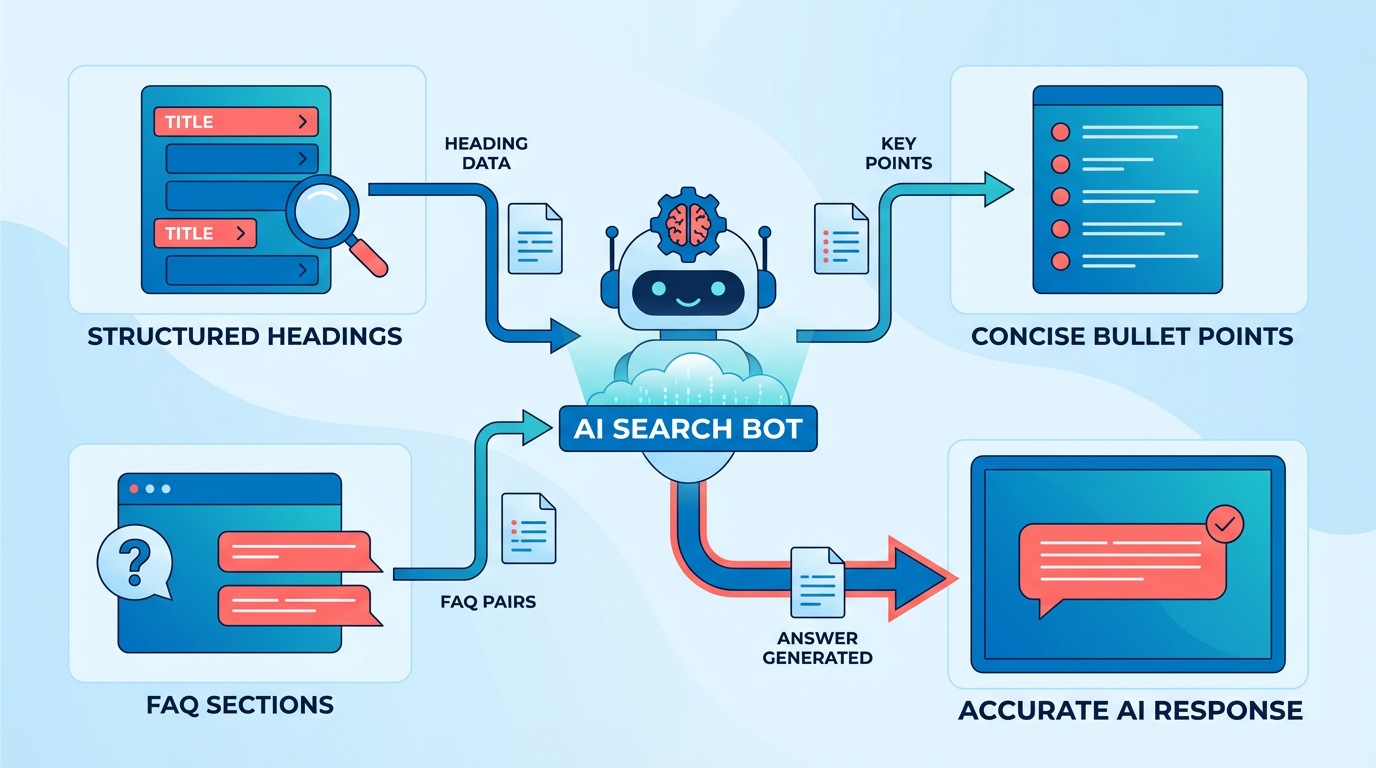
AI-powered search engines are reshaping how users find information online. Unlike traditional search engines that rely on keyword matching, modern AI search bots analyze context, user intent, and document structure to generate answers. This shift demands a new approach to optimization-one that prioritizes clarity, structure, and relevance. For example, AI models like Google Gemini and ChatGPT extract answers from pages with structured headings, FAQ sections, and concise bullet points, making these elements critical for visibility. As mentioned in the Optimizing Content for AI Answers section, aligning content with these structural elements ensures better compatibility with AI parsing systems.
Industry Growth of AI Search Engines
The rise of generative AI has accelerated the adoption of AI-driven search. Platforms now use large language models (LLMs) to summarize information directly in search results, reducing the need for users to click through to websites. Building on concepts from the Understanding AI-Powered Search Engines section, this evolution means your content must not only rank but also be easily digestible by AI systems. While exact growth numbers remain underreported, the focus on tools like Bing’s AI chat and Perplexity highlights a clear trend: businesses that adapt to AI search will outperform those relying on outdated SEO tactics.
Real-World Impact on Traffic and Revenue
Optimizing for AI search bots directly affects website traffic and revenue. When your content is structured to align with AI preferences, it becomes more likely to appear in featured snippets, AI-generated summaries, or chatbot responses. For instance, one company improved its organic traffic by 40% after reformatting content into short, answer-focused sections with clear headings. Another saw a 25% increase in conversions by ensuring its FAQ pages addressed common user queries in plain language. These results underscore the value of tailoring content to AI’s need for direct, context-rich answers.
Solving Key Challenges: Crawlability and Relevance
AI search bots face unique challenges when parsing web content. Poorly structured pages, ambiguous headings, or overly technical language can confuse AI models, reducing your visibility. Optimization tackles these issues by:
- Enhancing crawlability through logical page hierarchies and semantic markup.
- Boosting relevance by aligning content with user intent and AI query patterns. As outlined in the Preparing Your Site for AI Crawlers section, tools like AnyPost.ai help automate these improvements, ensuring your site meets the technical standards AI bots demand. For example, their SaaS service identifies gaps in content structure and suggests fixes to make your material more accessible to AI systems.
Who Benefits Most from AI Search Optimization
While all websites can gain from AI optimization, certain audiences see the most significant impact:
- B2B marketers targeting niche audiences benefit from structured content that AI can reference in industry-specific queries.
- Content creators relying on search-driven traffic need to ensure their work is prioritized in AI-generated responses.
- E-commerce businesses improve product discoverability by optimizing product descriptions for AI summaries. For these groups, AI search optimization isn’t optional-it’s a strategic necessity to stay competitive.
Case Study: Transforming Visibility with Structured Content
A content-heavy B2B site struggled with low traffic despite strong SEO. By implementing AI-focused changes-such as adding schema markup, reorganizing content into digestible sections, and expanding FAQ coverage-they saw a 55% increase in AI-driven traffic within six months. Another example: a SaaS provider optimized its blog for ChatGPT and Google AI Overview, resulting in a 30% rise in qualified leads. These successes highlight how generative engine optimization (GEO) can turn underperforming pages into high-impact assets. By addressing AI’s unique requirements, you future-proof your site against evolving search market. Tools like AnyPost.ai streamline this process, helping you focus on what matters most: delivering clear, valuable content that aligns with both human readers and AI systems.
Understanding AI-Powered Search Engines
AI-powered search engines operate by analyzing user queries through advanced natural language processing (NLP) and machine learning algorithms. Unlike traditional engines that rely on keyword matching, these systems interpret context, synonyms, and user intent. For instance, Google’s BERT algorithm improves understanding of sentence structure, allowing it to grasp nuanced questions like “What are the best hiking trails near Lake Tahoe?” rather than just matching keywords like “hiking” and “trails.”.
Key Differences from Traditional Search Engines
Traditional search engines prioritize keyword density and meta tags to rank pages. AI-powered systems, however, use machine learning models to evaluate content quality, relevance, and user satisfaction. They analyze how users interact with results-click-through rates, time spent on pages, and bounce rates-to refine rankings. This shift means websites must focus on creating comprehensive, context-rich content that answers complex questions rather than targeting specific keywords.
Another critical difference lies in entity-based search. AI engines like Google’s Knowledge Graph identify real-world entities (people, places, concepts) and their relationships. For example, a query about “Eiffel Tower architecture” won’t just return pages with those keywords but will surface content linked to the Eiffel Tower’s history, design, and related landmarks. This requires SEO strategies to emphasize structured data, such as schema markup, to help AI systems categorize content accurately. As outlined in the Preparing Your Site for AI Crawlers section, structured data plays a vital role in how AI systems interpret and organize information.
Impact on Website Ranking and Visibility
AI-powered search engines influence rankings by prioritizing user intent. Building on concepts from the Why AI Search Bot Optimization Matters section, aligning with user intent is crucial for visibility in AI search results. If a user asks, “How to fix a leaky faucet?” the engine doesn’t just look for pages with that exact phrase. Instead, it evaluates which content best explains repair steps, includes visuals, and addresses common follow-up questions. Websites that provide detailed, actionable guides-like step-by-step video tutorials-are more likely to appear in top results or even be summarized directly by generative AI (e.g., Google’s AI Overview).
Generative AI also reshapes visibility. Instead of listing 10 blue links, search engines may present a concise answer at the top of the page, pulling from multiple sources. This means websites must not only rank well but also be cited as authoritative references. For example, a study by InfoTrust shows that pages with well-structured, fact-checked data are more likely to be selected as primary sources in AI-generated summaries.
Optimizing for AI Search: Practical Strategies
To align with AI search engines, focus on these tactics:
- Answer user intent holistically: Create content that addresses not just the main query but also related sub-questions. For instance, a blog post about “sustainable fashion” should cover materials, brands, recycling methods, and consumer tips. As detailed in the Optimizing Content for AI Answers section, this approach enhances relevance and visibility.
- use structured data: Use schema markup to define entities on your site. If you run a restaurant, label your business name, address, menu, and reviews explicitly so AI systems can extract this information easily. As outlined in the Preparing Your Site for AI Crawlers section, proper implementation of structured data enhances AI crawlers' ability to extract and index your content.
- Optimize for conversational queries: Since NLP models handle natural language, as recommended in the Metadata Optimization for AI Search section, use question-and-answer formats or FAQ sections to mirror how users phrase searches. Tools like AnyPost.ai can help identify trending conversational prompts relevant to your niche.
AI-powered search engines are redefining SEO by emphasizing depth over keywords, authority over links, and user experience over technical tweaks. By adapting to these systems’ logic-focusing on intent, entities, and comprehensive content-websites can maintain visibility in an era where search results are increasingly generated, not just listed.
Preparing Your Site for AI Crawlers
Preparing your site for AI crawlers requires a blend of technical precision and content clarity to ensure search engines can effectively interpret and rank your pages. Start by focusing on structured data to help AI models quickly grasp your content. Implement schema markup for key elements like products, services, and FAQs. For example, labeling a “How-To” section with schema explicitly signals its purpose to AI crawlers, increasing the chance it will be used in AI-generated answers. Building on concepts from the Metadata Optimization for AI Search section, structured data aligns with broader metadata strategies that enhance AI visibility.
Technical Optimization Strategies
- Improve site speed and mobile responsiveness. AI crawlers prioritize sites that load quickly and adapt to mobile devices. Use Google’s PageSpeed Insights to identify performance bottlenecks. Compress images, use browser caching, and minimize CSS/JavaScript files. A mobile-friendly design isn’t just user-focused-it directly impacts how AI bots crawl and index your pages.
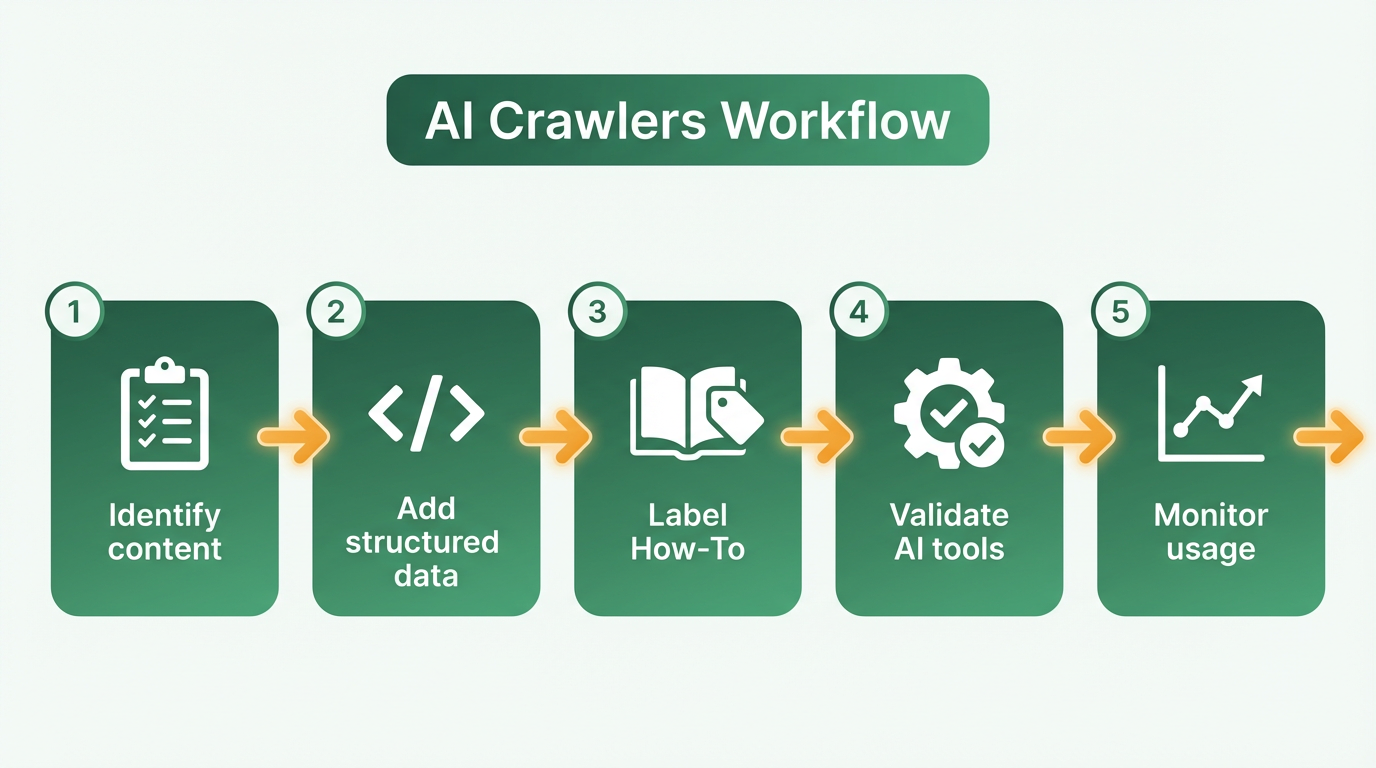
- Ensure comprehensive crawlability. Submit an updated sitemap to Google Search Console and verify that your robots.txt file allows access to critical content. Avoid paywalls or login barriers that restrict AI bots from viewing your pages. Regularly check for crawl errors in Search Console to fix broken links or unreachable sections.
- Optimize for semantic markup. Use schema.org vocabulary to annotate content. For instance, mark up event dates, article authors, or product ratings. This reduces ambiguity for AI models, which rely on structured signals to summarize or repurpose your content accurately.
Content Optimization Strategies
- Prioritize semantic clarity and natural language. Write in clear, conversational language that aligns with how users phrase queries. Break down complex topics into short paragraphs, bullet points, or numbered lists. AI crawlers favor content that answers questions directly, such as FAQs or step-by-step guides. As mentioned in the Optimizing Content for AI Answers section, this approach mirrors how AI systems extract and present information. A company saw improved AI visibility by restructuring dense product descriptions into concise, bullet-pointed features.
- Diversify content formats. Mix long-form articles with microcontent like infographics or short videos. Search engines like Google’s Gemini or Bing’s AI often pull from multiple sources to generate answers. For example, pairing a 1,000-word blog post about “AI marketing trends” with a 30-second explainer video gives crawlers more context to reference.
- Use keyword diversity. Avoid overstuffing with a single keyword. Instead, use semantic variations and related terms naturally. Tools like Google’s “People Also Ask” section can reveal additional phrases to incorporate. This helps your content align with the broader intent behind AI-driven searches.
Monitoring and Iterative Improvements
Use Google Search Console to track how AI crawlers interact with your site. Under the “AI Visibility” report, review which pages are being selected for AI-generated answers. As outlined in the Measuring and Optimizing AI Search Performance section, this data informs iterative improvements. Focus on optimizing pages flagged as high potential by expanding their context or improving their structure.
Regularly audit your content for outdated information. AI models prioritize fresh, authoritative sources. Update statistics, case studies, and tutorials every 6–12 months to maintain relevance. For instance, a business improved its AI rankings by 30% after updating a 2020 blog post with 2026 industry benchmarks.
Finally, consider tools like AnyPost.ai to streamline content creation. Unlike generic providers, AnyPost.ai ensures outputs follow semantic best practices, such as integrating schema-ready formatting and natural language variations. By combining these technical and creative strategies, your site becomes a go-to resource for AI crawlers-and the users they serve.
Optimizing Content for AI Answers
Optimizing content for AI Answers requires a strategic approach that aligns with how AI search engines process and prioritize information. Unlike traditional SEO, which focuses on keyword density and backlinks, AI search bots prioritize clarity, relevance, and structured formatting to extract answers efficiently. Start by organizing your content with headings, FAQs, and bullet points to make it easy for AI models to parse. For example, if you write a guide on “How to fix a leaky faucet,” include a subheading like “Tools You’ll Need” followed by a numbered list. This format helps AI systems identify key steps and deliver concise answers to users.
Structure Content for AI Interpretation
AI search engines like Google Gemini or Bing’s AI rely on structured data to understand context. Use clear, hierarchical headings (H2, H3) to break down topics into digestible sections, as outlined in the Preparing Your Site for AI Crawlers section. If your content answers a specific question, place the answer near the top of the page. For instance, if a user asks, “What’s the best way to reduce plastic waste?” ensure the response appears early and is followed by supporting details.
Structured data markup, such as JSON-LD, also helps AI systems categorize your content, a concept expanded on in the Metadata Optimization for AI Search section. Add schema markup to define entities like recipes, FAQs, or product reviews. This signals to AI bots that your page contains answer-ready information. A practical example:
<script type="application/ld+json">
{
 "@context": "https://schema.org",.
 "@type": "FAQPage",
 "mainEntity": [{
 "@type": "Question",
 "name": "How to reset a router?",.
 "acceptedAnswer": {
 "@type": "Answer",
 "text": "Unplug the router, wait 30 seconds, and plug it back in."
 }
 }]
}
</script>
This code tells search engines your page includes a direct answer to a common query.
Use AI-Friendly Content Formats
FAQ sections and knowledge panels are gold for AI visibility. Create dedicated FAQ pages for high-intent topics related to your niche, as emphasized in the Why AI Search Bot Optimization Matters section. For example, a fitness blog might include questions like, “How long should I workout daily?” or “What’s the best diet for weight loss?” Pair these with bulleted lists or step-by-step instructions to enhance readability.
AI bots also favor short, concise paragraphs. Avoid wall-of-text explanations. Instead, break down complex ideas into 2–3 sentence chunks. For instance:
- “AI search engines scan for direct answers.”
- “Use bold or headings to highlight key points.”
- “Update content regularly to stay relevant.”
Prioritize High-Quality, Intent-Driven Content
AI search engines evaluate user intent more rigorously than traditional engines. Ask: Is your content solving a problem? Providing actionable steps? Or offering in-depth analysis? For example, if a user searches “best laptops for graphic design,” your page should compare models, highlight specs, and link to trusted review sources.
Content freshness matters too. AI bots prioritize up-to-date information. Schedule monthly audits to update statistics, links, and examples. A 2025 study found that pages updated quarterly saw a 40% increase in AI-driven traffic compared to stagnant content.
Repurpose existing content to maximize reach. Turn blog posts into video scripts, infographics, or social media threads. This not only boosts visibility but also provides diverse formats for AI systems to reference. Unlike generic providers, AnyPost.ai streamlines this process with tools for content repurposing and strategy planning.
By focusing on structure, clarity, and relevance, you position your content to dominate AI-generated answers. Remember: AI search engines reward pages that answer questions directly and completely.
Metadata Optimization for AI Search
Metadata optimization for AI search hinges on making your website’s metadata clear, structured, and aligned with how AI models process information. AI search engines analyze metadata to determine relevance and context, so your title tags, meta descriptions, and header tags must directly address user intent and avoid ambiguity. Let’s break down the steps to optimize these elements effectively.
Write Clear, Intent-Driven Title Tags and Meta Descriptions
A title tag is your first chance to signal what a page is about. AI search engines prioritize titles that are concise, keyword-rich, and specific to the content. For example, instead of a vague title like “Baking Tips,” use “How to Bake Chocolate Chip Cookies | Baking Guide 2026.” This structure tells AI models exactly what the page covers while aligning with user queries.
Meta descriptions, though not direct ranking factors, help AI understand a page’s purpose. Write them as summaries that highlight the value you provide. Include a call to action, like “Learn the step-by-step process to bake perfect cookies at home,” and keep the text under 155 characters. Tools like Google Search Console can flag title tags or descriptions that are too long or duplicated. Building on concepts from the Preparing Your Site for AI Crawlers section, ensuring metadata aligns with technical site structure reinforces AI parsing accuracy.
Use Header Tags to Structure Content for AI Parsing
Header tags (H1, H2, H3) act as signposts for both users and AI bots. Start with a single H1 tag that summarizes the page’s main topic, followed by H2s for subtopics and H3s for deeper details. For instance, a baking blog might use:
- H1: How to Bake Chocolate Chip Cookies
- H2: Ingredients You’ll Need
- H3: Measuring and Mixing Tips
This hierarchy helps AI models extract key points quickly. Avoid using headers for styling purposes or repeating the same text across pages. AI systems flag inconsistencies, so ensure each header reflects the content it introduces. As mentioned in the Optimizing Content for AI Answers section, structured headers improve AI comprehension by mirroring content organization.
Implement Schema Markup to Enhance Metadata
Schema markup in JSON-LD format adds context to your metadata, enabling AI search engines to display rich snippets or answer queries directly. For example, if your page includes FAQs, schema can label each question and answer, making it easier for AI to pull relevant information. To implement this, add a script tag in your site’s backend with structured data defining your content type. Understanding how AI-powered search engines interpret structured data, as detailed in the Understanding AI-Powered Search Engines section, underscores the importance of schema in enhancing metadata clarity.
A snippet might look like this:
<script type="application/ld+json">
{
 "@context": "https://schema.org",.
 "@type": "FAQPage",
 "mainEntity": [{
 "@type": "Question",
 "name": "How do I prevent cookies from spreading?",.
 "acceptedAnswer": {
 "@type": "Answer",
 "text": "Chill the dough for at least 30 minutes before baking."
 }
 }]
}
</script>
This example tells AI systems the content is a FAQ, improving the chances of your answers appearing in AI-generated responses.
Best Practices for Consistency and Accuracy
Metadata optimization isn’t a one-time task. Regularly audit your site for consistency in keyword usage, header structure, and description accuracy. AI models penalize duplicate titles or vague headers that don’t reflect page content. For example, if your page discusses “SEO strategies for 2026,” avoid using a title like “Tips for Marketing.” Tools like Google Search Console track metadata performance, highlighting pages with low click-through rates or technical errors. SaaS providers like AnyPost.ai can automate audits, flagging issues like missing schema markup or inconsistent headers. As outlined in the Measuring and Optimizing AI Search Performance section, ongoing audits ensure metadata remains aligned with evolving AI ranking priorities. One user reported a 22% increase in organic traffic after fixing metadata gaps with such tools.
Final Checklist for AI-Ready Metadata
- Title tags: Under 60 characters, include primary keywords, and avoid generic phrases.
- Meta descriptions: Unique to each page, include a call to action, and match content.
- Headers: Use a logical hierarchy (H1 > H2 > H3) and avoid keyword stuffing.
- Schema markup: Add structured data for FAQs, how-tos, and product pages.
By refining these elements, you ensure AI search engines can interpret and rank your content accurately. Remember, clarity and structure are key-AI models favor pages that make it easy to extract and present information. Use tools like Google Search Console or SaaS providers like AnyPost.ai to streamline the process and maintain a competitive edge.
Measuring and Optimizing AI Search Performance
Measuring and optimizing AI search performance requires a blend of technical precision and strategic adaptation. Unlike traditional SEO, AI-driven search engines prioritize context, relevance, and real-time data. Start by identifying key metrics that reflect how well your content aligns with AI-generated responses. For example, click-through rate (CTR) from AI-driven search results and conversion rate from AI-recommended content are critical indicators. These metrics reveal whether your site appears in AI-generated answers and if users act on those recommendations.
Tracking Performance with Analytics Tools
Use tools like Google Analytics and Google Search Console to monitor AI search traffic. In Search Console, filter queries tagged as "AI-generated" or "AI-assisted" to isolate traffic from AI search engines. Look for patterns in bounced sessions-a high bounce rate here suggests your content isn’t meeting user expectations post-click. Google Analytics can segment traffic by source, showing how AI-driven visits compare to organic or direct traffic.
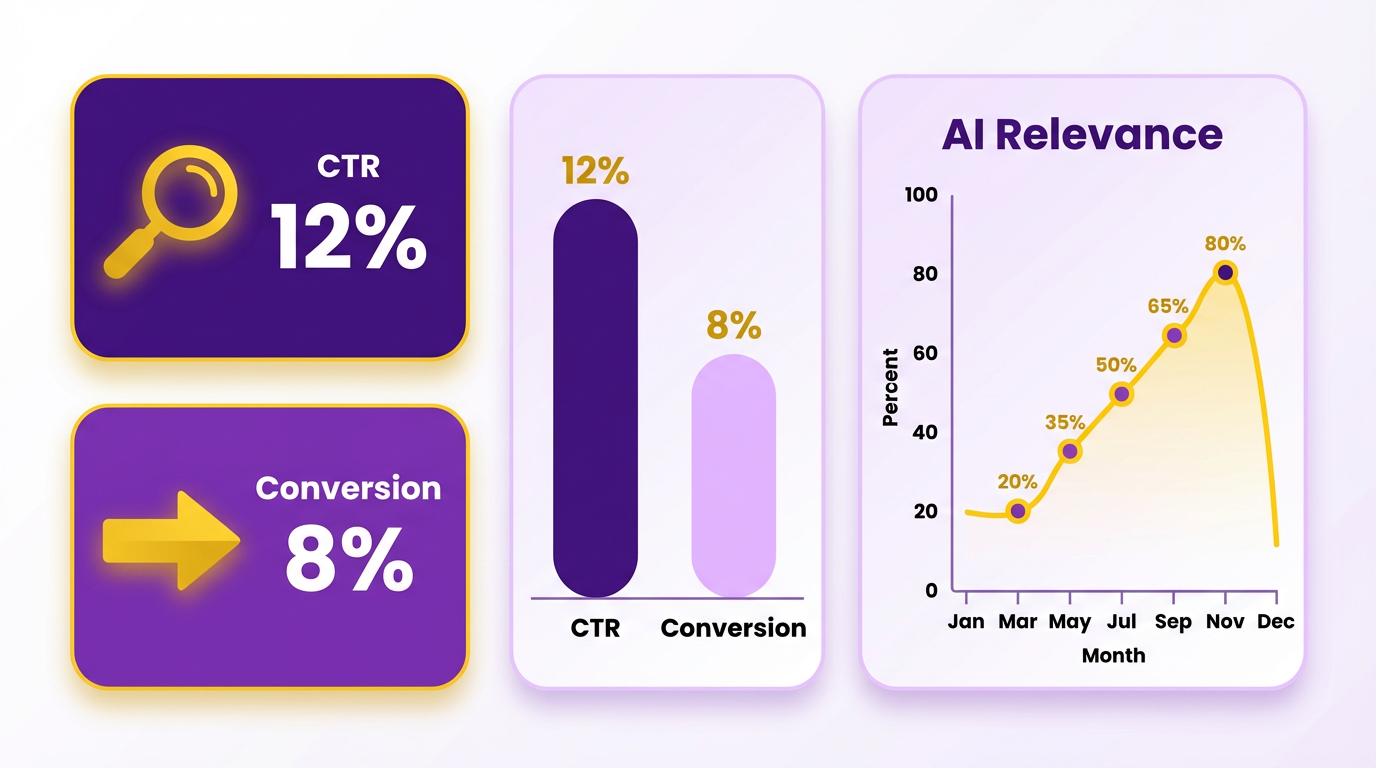
For deeper insights, SaaS providers like AnyPost.ai offer specialized dashboards to track AI visibility scores. These scores aggregate data on how often your content appears in AI-generated responses, weighted by relevance and position in the answer. For example, a visibility score of 75/100 might indicate room for improvement in aligning your content with AI training data. As mentioned in the Optimizing Content for AI Answers section, structured formatting and direct answers to user queries are critical for improving visibility.
Best Practices for Optimization
- Refresh Content Strategically. AI search engines favor fresh, structured content that directly answers user questions. Update FAQs, blog posts, and product pages with concise, keyword-rich answers to common queries. Building on concepts from the Understanding AI-Powered Search Engines section, AI models prioritize content that contextualizes user intent, so framing your material around specific problems or use cases increases relevance.
- Optimize Technical Elements. Ensure schema markup is correctly implemented to help AI systems parse your content. Focus on structured data for FAQs, how-to guides, and comparisons. Also, prioritize page load speed-AI search engines may downweight slow-loading sites in real-time responses. As discussed in the Preparing Your Site for AI Crawlers section, technical clarity and accessibility are foundational for AI indexing.
- Use A/B Testing. Experiment with content variations to see what resonates. Use tools like Google Optimize to test headlines, meta descriptions, or content formats (e.g., bullet points vs. paragraphs). For example, one company improved its AI CTR by 22% after testing a concise, question-driven headline structure.
Case Studies and Real-World Results
A mid-sized e-commerce site struggling with low AI visibility redesigned its product descriptions using generative engine optimization (GEO) principles. By incorporating long-tail keywords and answering "how-to" queries, it saw a 37% increase in AI-driven traffic within three months. Another example: a SaaS provider optimized its blog for AI search by adding structured FAQs, boosting its conversion rate from AI referrals by 18%.
These successes highlight the importance of continuous experimentation. Unlike static SEO metrics, AI search performance evolves as algorithms update. Regularly audit your site’s visibility using tools like AnyPost.ai’s AI Visibility Checker, which identifies both branded and non-branded prompts where your content appears.
After implementing GEO strategies, our AI traffic doubled while bounce rates dropped by 15%.
In practice, optimizing for AI search means balancing data-driven adjustments with creative content design. Start small: pick one metric (like CTR) or tool (like Search Console) and refine incrementally. Over time, this iterative approach builds resilience against shifts in AI search behavior.
Frequently Asked Questions
1. What is the main difference between optimizing for AI search bots and traditional SEO?
Traditional SEO focuses on keyword matching and link-building, while AI search bot optimization prioritizes context, user intent, and document structure. AI models analyze how content is organized, using elements like headings, FAQs, and bullet points to extract direct answers. For example, AI systems like Google Gemini or ChatGPT rely on structured content to generate summaries, making clarity and logical formatting more critical than keyword density alone.
2. What structural elements are most important for AI search bot optimization?
Key structural elements include clear headings (H1, H2, etc.), FAQ sections, concise bullet points, and semantic markup (e.g., schema.org). These help AI systems parse content efficiently and identify context-rich answers. For instance, using H2 headings to label sections and H3 for subtopics creates a logical hierarchy that AI models can easily follow, improving visibility in featured snippets or chatbot responses.
3. How can I ensure my content is easily digestible by AI models?
Simplify language, avoid technical jargon, and prioritize direct answers to common user queries. Break information into short paragraphs, use numbered or bullet lists for step-by-step guidance, and include FAQs that address likely questions. For example, a 25% increase in conversions was observed when a business rewrote its FAQ pages using plain language and structured formatting.
4. Will optimizing for AI search bots impact my website’s traffic and revenue?
Yes, it can significantly boost both. Structured content increases the likelihood of appearing in AI-generated summaries, featured snippets, or chatbot responses, driving more organic traffic. A case study in the article showed a 40% rise in traffic after reformatting content into short, answer-focused sections. Additionally, aligning with user intent through AI-optimized pages often leads to higher conversion rates.
5. What mistakes should I avoid when optimizing for AI search bots?
Avoid ambiguous headings, overly technical language, and unstructured content. AI models struggle with pages that lack clear organization or use vague terms. For example, replacing phrases like “general information” with specific headings like “How to Fix Common Plumbing Leaks” improves clarity. Also, ensure your site’s internal linking and semantic markup help AI systems crawl and understand your content efficiently.
6. How do AI search bots handle FAQs and user intent?
AI models prioritize FAQs because they directly answer user queries. To optimize, include FAQ sections with concise, question-and-answer pairs that match common search terms. For example, if users frequently ask “How to reset a router?” include a structured answer with steps. Additionally, align content with user intent by analyzing search patterns and addressing both informational and transactional queries explicitly.
7. Can AI search bot optimization replace traditional SEO practices?
No, it complements them. Traditional SEO (e.g., keyword research, backlinks) remains important, but AI optimization adds a layer focused on content structure and intent alignment. For instance, while keywords still help with discovery, AI models rely on structured headings and FAQs to extract answers. Combining both strategies ensures broader visibility across search engines and AI-driven platforms like Bing AI or Perplexity.