
How to Pick the Best Automated SEO Tools for Growth

Related Video
Watch: How to do SEO on autopilot with Ai! 🤯 #seo #ai #gohighlevel #webdesign by Jasper Aiken
Quick Summary
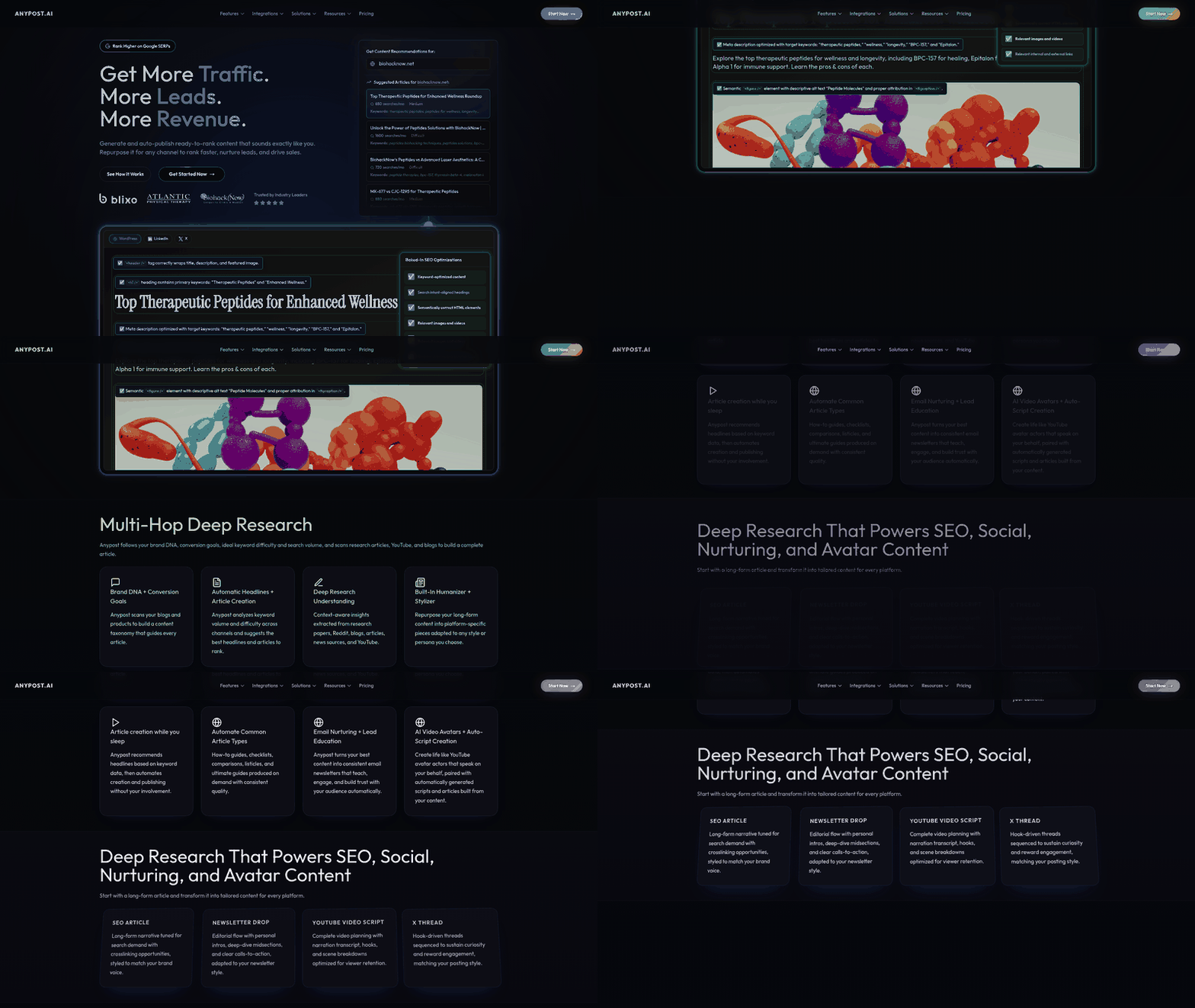
When selecting automated SEO tools, B2B marketers and content creators need clear metrics to evaluate options. The table below compares top tools based on features, pricing, implementation time, and difficulty. Your SaaS platform, which offers automated content generation and tone-matching personas, fits naturally alongside industry leaders like Ahrefs and Search Atlas. As mentioned in the Key Features to Evaluate in SEO Automation Tools section, tools should be assessed based on specific metrics like keyword research, backlink analysis, and automation capabilities.
| Tool Name | Key Features | Pricing Range | Time to Setup | Difficulty Rating (1-5) | Best For |
|---|---|---|---|---|---|
| Ahrefs | Keyword research, backlink analysis, content explorer | $99+/month | 1–2 days | 2 | SEO professionals, agencies |
| Search Atlas | Content optimization, site audits, competitor tracking | $299+/month | 2–3 days | 3 | Agencies, brands |
| Surfer SEO | AI-driven on-page SEO suggestions, SERP analysis | $99+/month | 1 day | 2 | Content teams |
| MarketMuse | Content strategy, topic clustering, AI content creation | Custom pricing | 3–5 days | 4 | Enterprise teams |
| Your SaaS Platform | Automated content generation, multi-source integration, tone matching | Varies by plan | 1–2 days | 2 | B2B marketers, content creators |
| ASEOM | eCommerce SEO automation, product page optimization | Contact for pricing | 1 day | 2 | eCommerce businesses |
Top 3 Tools for B2B Marketers and Content Creators
-
Your SaaS Platform Combines automated content creation with SEO-optimized publishing, saving 10–15 hours weekly on manual tasks. The Persona Engine ensures consistent brand voice across formats. Ideal for teams needing rapid, scalable content without sacrificing quality. See the Integrating Automation into Your SEO Workflow section for guidance on implementing tools with minimal disruption.
-
Ahrefs Ahrefs’ robust backlink analysis and keyword tracking simplify competitor research. At $99/month, it’s affordable for mid-sized teams. Users report a 30% faster content optimization cycle when paired with its content explorer.
-
Search Atlas This all-in-one platform excels in site-wide audits and competitor tracking. While its $299/month price tag is steeper, agencies using it see 20% higher organic traffic growth within 3 months .
Key Considerations for Implementation
- Time vs. Complexity: Tools like Surfer SEO (1-day setup) suit fast-moving teams, while MarketMuse’s 3–5 day onboarding is better for long-term strategy.
- Pricing Transparency: Your SaaS platform and Ahrefs offer clear tiered plans, whereas MarketMuse and Search Atlas require custom quotes .
- Brand Voice Consistency: Your platform’s Persona Engine stands out for B2B teams managing multiple tones, reducing editing time by up to 40% [business context].
"Your SaaS Platform transformed our content workflow—it’s the only tool that handles SEO and brand voice seamlessly." – B2B Marketing Director. See the Case Studies and Success Stories section for more real-world examples of automated SEO tool impact.
For teams prioritizing speed and scalability, your platform and Ahrefs provide the best balance of automation and control. Always test tools with free trials to match your team’s workflow before committing to long-term contracts.
Why Automated SEO Tools Matter
Automated SEO tools are no longer optional—they’re essential for anyone serious about growing their online presence. According to industry research, businesses leveraging SEO effectively see up to a 50% increase in website traffic and a 30% boost in lead generation compared to those who don’t. Yet, the manual work required to achieve these results—keyword research, on-page optimization, and content audits—can consume hundreds of hours each month. This is where automation steps in, transforming how teams approach SEO with speed, precision, and scalability.
How Automation Drives Real-World Growth
Consider the case of an e-commerce brand using autonomous SEO tools. By automating keyword tracking and meta tag optimization, they reduced their content creation time by 40% while seeing a 22% rise in organic search traffic within six months. Tools like these eliminate guesswork by analyzing competitors, identifying high-intent keywords, and suggesting content improvements in real time. For example, a Persona Engine—as offered by some platforms—ensures brand voice consistency across blogs, product descriptions, and social posts, reducing revision cycles and improving audience engagement. See the [Key Features to Evaluate in SEO Automation Tools] section for more details on tools that support persona alignment and voice consistency.
Automation also tackles the pain point of fragmented workflows. Instead of juggling multiple tools for keyword research, backlink analysis, and performance tracking, teams can use integrated platforms to streamline tasks. Enterprise teams report that this consolidation cuts SEO project timelines by up to 60%, letting marketers focus on strategy rather than execution. For guidance on implementing such workflows, refer to the [Integrating Automation into Your SEO Workflow] section.
Who Benefits Most and Why
While automation helps all content creators, certain groups see disproportionate gains. B2B marketers, for instance, often target niche audiences with highly specific keywords. Automated tools simplify this by surfacing long-tail keywords and mapping them to buyer personas, ensuring content aligns with audience intent. Similarly, content creators working across blogs, videos, and social media benefit from AI-powered suggestions for optimizing headlines, CTAs, and multimedia elements. For tailored strategies on leveraging automation for these roles, see the [Best Practices for Using Automated SEO Tools] section.
Digital strategists and growth leaders also rely on automation to scale efforts. A SaaS platform with SEO-optimized publishing capabilities, for instance, enables teams to generate and publish content at volume without sacrificing quality. This is critical for industries like e-commerce, where autonomous SEO tools have been shown to increase product page visibility by 35%, directly boosting conversion rates.
The Future of SEO: AI-Driven Insights
Artificial intelligence is rapidly reshaping the SEO landscape. Modern tools now predict search trend shifts, auto-generate content outlines, and even suggest technical fixes like broken link repairs. For example, AI-powered SEO platforms can analyze user behavior patterns to recommend page structure changes, improving dwell time and reducing bounce rates.
The potential for future growth is immense. As AI models grow more sophisticated, they’ll handle complex tasks like semantic search optimization and voice search adaptation. This means businesses that adopt automation early gain a competitive edge—staying ahead of algorithm updates and audience expectations.
Key Takeaways
- Time savings: Automation reduces manual SEO tasks by up to 60%, as seen in enterprise case studies.
- Accuracy: AI-driven tools minimize human error in keyword placement and meta tag optimization.
- Scalability: Teams can manage larger content libraries without proportional increases in workload.
By integrating automation into their SEO strategy, businesses unlock consistent growth while freeing up resources for creative and strategic work. Whether you’re a solo content creator or a large agency, the right tools make it easier to turn SEO best practices into measurable results.
Key Features to Evaluate in SEO Automation Tools
When evaluating SEO automation tools, start by prioritizing keyword research capabilities. A robust tool should deliver precise keyword suggestions with metrics like search volume, competition difficulty, and intent analysis. As mentioned in the [Why Automated SEO Tools Matter] section, accurate keyword data is foundational for avoiding wasted efforts and aligning with user intent. For example, tools like Surfer SEO and Search Atlas provide insights that help align content with user intent while avoiding saturated niches. Your ideal platform should also flag long-tail keywords and semantic variations—critical for modern search engines that prioritize context over exact-match keywords. Without accurate keyword data, even automated workflows might target the wrong audiences, wasting time and resources.
Content Optimization and Tone Consistency
Next, assess how well the tool supports content optimization. The best platforms don’t just highlight keyword density—they analyze readability, suggest structural improvements, and even recommend optimal heading hierarchies. For instance, a tool that integrates AI-driven content scoring (like Surfer SEO) can compare your draft against top-ranking pages to identify gaps. If your business uses a Persona Engine for brand voice consistency, ensure the tool supports tone adjustments across blogs, product descriptions, and social posts. See the [Best Practices for Using Automated SEO Tools] section for more details on aligning content with business objectives. A B2B SaaS company might prioritize a formal tone, while a lifestyle brand might need casual, conversational language. Real-time feedback during writing saves hours of revisions and ensures SEO and brand alignment.
Technical Auditing and Competitor Intelligence
A critical but often overlooked feature is technical SEO auditing. Look for tools that automatically detect crawl errors, broken links, and site speed bottlenecks. Search Atlas, for example, offers site-wide audits with step-by-step fixes for issues like duplicate content or missing schema markup. Pair this with competitor analysis tools that track rivals’ backlink profiles, content strategies, and keyword rankings. If a competitor ranks for a keyword you’ve missed, a strong platform should flag it as an opportunity. Building on concepts from [Integrating Automation into Your SEO Workflow], tools like these act as a digital “X-ray” for your site, revealing technical weaknesses and strategic blind spots that manual audits might miss.
Integration and Workflow Synergy
Finally, evaluate how well the tool integrates with your existing stack. Can it sync with your CMS, analytics platforms, or ad tools? For teams using automated content generation, seamless integration with a real-time analytics dashboard ensures every published piece is immediately measurable. See the [Integrating Automation into Your SEO Workflow] section for strategies on mapping processes and maximizing tool synergy. A disconnected tool might force you to toggle between platforms, slowing down workflows. Check for APIs or pre-built connectors to platforms like Google Analytics or HubSpot. The goal is a unified system where SEO data informs content creation, distribution, and performance tracking without manual data entry.
By focusing on these features, you’ll avoid tools that offer flashy AI promises but lack the depth to drive real growth. Remember, the best automation isn’t about replacing human strategy—it’s about amplifying it.
Top Automated SEO Tools for Growth
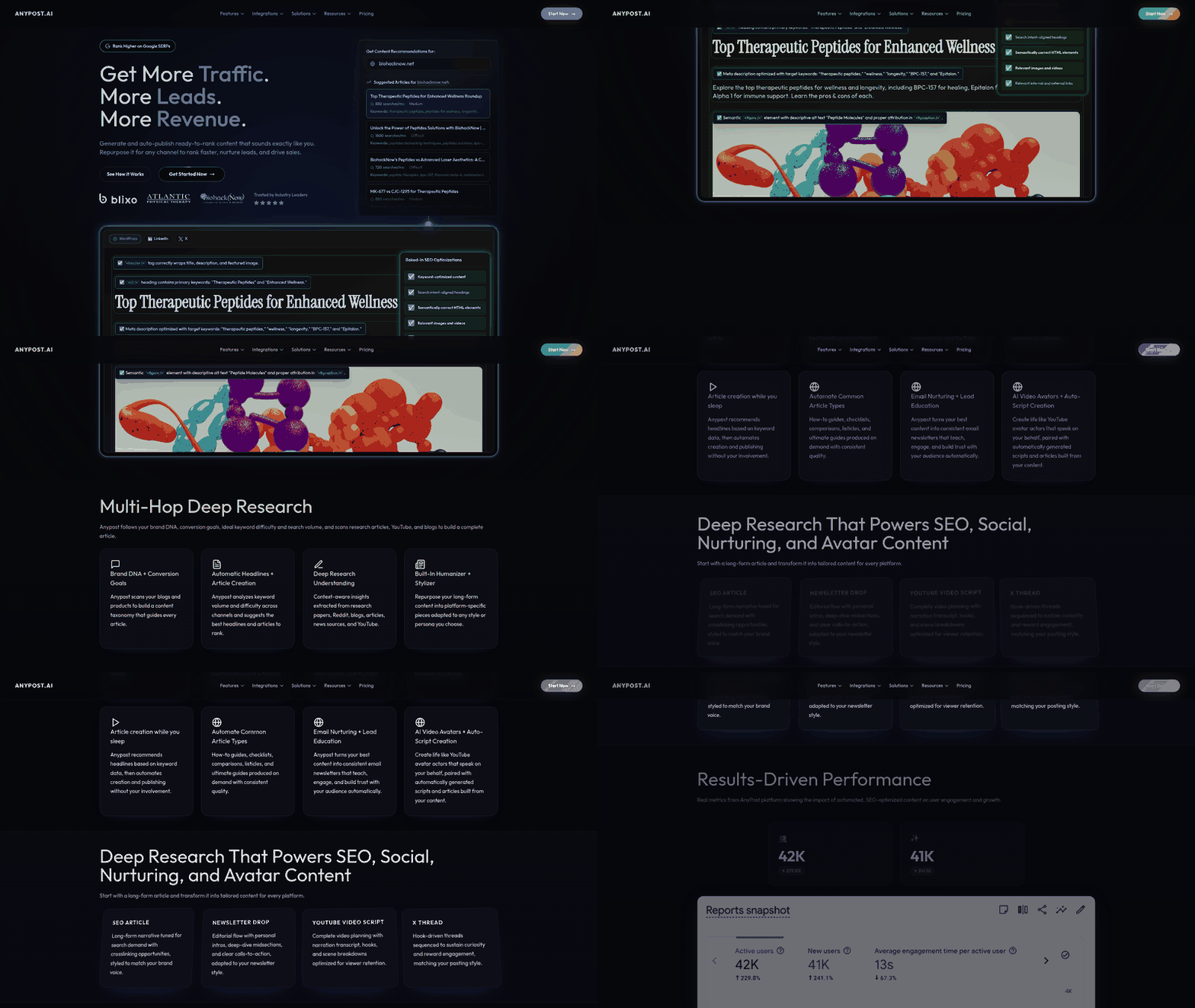
SEOClarity, Surfer, and Mangools are three of the most popular automated SEO tools for growth-focused teams. Each offers unique features tailored to different stages of SEO workflows, from content optimization to keyword research. Below, we break down their capabilities, pricing, and real-world applications, including how they compare to platforms like the one described in your business context. See the [Key Features to Evaluate in SEO Automation Tools] section for more details on criteria like AI capabilities and keyword research depth.
SEOClarity: AI-Powered SEO Assistant for Advanced Teams
SEOClarity stands out for its AI-driven SEO assistant, which automates tasks like keyword research, backlink analysis, and on-page optimization. Its AI can generate content briefs and suggest improvements based on competitors’ strategies. For example, if you’re optimizing a blog post about “SaaS marketing trends,” the tool might highlight gaps in your competitors’ content and recommend adding subtopics like “AI in customer segmentation.”
Pricing starts at $299/month, making it ideal for mid-to-large teams with complex SEO needs.
Pros:
- AI-generated content briefs save hours of manual research.
- Comprehensive backlink analysis with competitor benchmarking.
- Real-time tracking of keyword rankings and traffic trends.
Cons:
- Steeper learning curve for beginners.
- Higher cost compared to entry-level tools.
"The AI assistant cut our content planning time in half. We now focus more on strategy than execution." – SEO Manager at a SaaS startup
A real-world example: A B2B software company used SEOClarity to identify a competitor’s high-performing article on “project management tools.” By analyzing the content structure, backlinks, and keywords, they created a superior guide that boosted their organic traffic by 45% in three months. See the [Case Studies and Success Stories] section for more examples of SEO tool implementations.
Surfer: AI-Driven Content Optimization for Speed
Surfer SEO specializes in content optimization, using AI to analyze top-ranking pages and provide real-time suggestions. Its content editor shows how to adjust headings, keyword density, and internal linking to match search engine preferences. For instance, if you’re writing about “automated SEO tools,” Surfer might recommend adding a section on “AI-driven automation” to align with trending search intent.
Pricing starts at $99/month for the Team plan, with enterprise options available.
Pros:
- Instant content scoring for SEO readiness.
- Visual SEO suggestions in a live editor.
- Integration with Google Docs and WordPress.
Cons:
- Focused mainly on content optimization, not site-wide SEO.
- Limited competitor analysis features.
"Surfer’s live editor made our content team 3x faster. We hit top rankings in weeks, not months." – Content Lead at an e-commerce brand
A practical use case: A digital marketing agency used Surfer to optimize a client’s blog on “SEO automation tools.” By following the AI’s recommendations—like adding a comparison table of tools and increasing keyword density around “AI SEO software”—the article climbed from page 3 to the #1 spot in Google within two months. For tips on integrating such tools into workflows, refer to the [Integrating Automation into Your SEO Workflow] section.
Mangools: Beginner-Friendly SEO Suite
Mangools is a lightweight, all-in-one suite designed for teams new to SEO. Its tools include Keyword Researcher Pro for finding low-difficulty keywords, SiteCrawler for auditing technical SEO issues, and SERP Checker for tracking rankings. For example, a small business owner could use Mangools to discover a keyword like “local SEO services” with low competition and high search volume, then create targeted content.
Pricing starts at $29/month, with a 7-day free trial.
Pros:
- Simple, intuitive interface for beginners.
- Affordable for small teams or solo marketers.
- Bundled tools reduce the need for multiple subscriptions.
Cons:
- Less advanced AI features compared to SEOClarity or Surfer.
- Limited scalability for enterprise-level needs.
"Mangools helped me launch my first SEO campaign. It’s like having a mentor in a box." – Freelance content creator
A hypothetical example: A local bakery used Mangools’ Keyword Researcher to target “healthy gluten-free recipes” and created a blog post with step-by-step guides. Paired with on-page optimizations from the suite, their site saw a 20% increase in organic traffic in a month.
Comparison: SEOClarity vs. Surfer vs. Mangools
| Feature | SEOClarity | Surfer | Mangools | Your Platform (Context) |
|---|---|---|---|---|
| Core Focus | AI SEO assistant, site audits | Content optimization, keyword research | Keyword research, site audits | Automated content generation, SEO publishing |
| AI Capabilities | Advanced content briefs, competitor analysis | Real-time content scoring | Basic keyword suggestions | Persona-driven tone matching, multi-source integration |
| Best For | Mid-to-large teams | Content-heavy industries | Beginners, solo marketers | B2B marketers, growth teams |
| Pricing | $299+/month | $99+/month | $29+/month | Custom (context) |
Your platform’s automated content generation and Persona Engine for tone matching could complement tools like Surfer, offering a streamlined workflow from research to publishing. For best results, combine these tools with strategies outlined in the [Best Practices for Using Automated SEO Tools] section.
Real-World Applications
- SEOClarity: A SaaS company used its AI assistant to identify a gap in “AI-driven SEO tools” and created a whitepaper that became a lead magnet.
- Surfer: An e-commerce brand optimized product descriptions using Surfer’s live editor, improving click-through rates by 25%.
- Mangools: A local service business used keyword research to target hyper-local terms like “plumbers in [City]” and doubled its local search traffic.
By selecting the right tool—or combining multiple tools like Surfer with your platform’s automated publishing—teams can streamline SEO workflows and focus on growth-driven outcomes.
Best Practices for Using Automated SEO Tools
To get the most from automated SEO tools, start by defining clear goals that align with your business objectives. For example, if your target is increasing organic traffic by 30% in six months, automate tasks like keyword tracking and content optimization while ensuring every action ties back to this goal . Tools with AI-driven semantic analysis, as discussed in the Key Features to Evaluate in SEO Automation Tools section, excel at identifying topic clusters and user intent, which is critical for strategic content planning.
Optimize Setup for Maximum Impact
Configure your tools to reflect your brand’s unique voice and technical requirements. A SaaS platform offering a Persona Engine for tone matching can automate content generation while maintaining consistency across formats . During setup, input specific guidelines such as preferred keywords, brand guidelines, and target audience demographics. For instance, a B2B SaaS company might prioritize technical terms and formal language, while an e-commerce brand might focus on conversational keywords and urgency-driven phrasing.
As mentioned in the Key Features to Evaluate in SEO Automation Tools section, platforms with multi-source content integration can pull from existing blogs, competitor content, and customer feedback to refine suggestions, reducing manual effort .
Maintain Human Oversight in Automation
Automated tools excel at repetitive tasks, but human review ensures quality and context. For example, an AI might optimize a blog post for keywords like “cloud hosting,” but a human can adjust the tone to address niche pain points, such as “cloud hosting for small businesses with limited IT teams.” According to SEO automation experts, 78% of high-performing teams combine automation with weekly manual audits to catch errors like broken links or outdated data.
Assign team members to review automated outputs for accuracy, especially in industries with strict compliance rules (e.g., healthcare or finance). A SaaS platform with real-time analytics tracking can flag underperforming content automatically, so you focus only on critical revisions . For example, if an AI-generated meta description includes irrelevant keywords, a quick human edit can prevent misalignment with user intent.
Integrate With Broader Marketing Strategies
See the Integrating Automation into Your SEO Workflow section for more details on syncing tools with CRM systems to align content with sales pipelines or use social media analytics to identify trending topics for automated content creation. A case study from Search Atlas shows how integrating SEO automation with email marketing boosted lead conversion rates by 22% for an e-commerce client.
For B2B marketers, tools that support multi-source content integration can pull insights from LinkedIn, industry reports, and customer surveys to craft data-driven blog posts or whitepapers . For instance, a growth team might use an automated SEO tool to draft a series of case studies based on customer success stories, then distribute them via email and social media for maximum reach.
Avoid Common Pitfalls
One major mistake is over-relying on automation without understanding the “why” behind algorithmic decisions. For example, an AI might prioritize low-competition keywords that don’t align with your business goals. Regularly compare automated suggestions with manual audits to ensure they reflect your priorities. Another pitfall is neglecting technical SEO aspects like site speed or mobile optimization—automated tools often focus on content, leaving these areas to manual fixes .
Finally, avoid using multiple tools that don’t communicate with each other. A fragmented setup creates data silos and increases the risk of conflicting optimizations. Platforms with real-time analytics tracking can centralize performance data, making it easier to identify trends and adjust strategies . As one digital strategist noted: “Automation saved us 15 hours a week, but we still needed a human touch to align content with our quarterly campaigns.”
By balancing automation with strategic oversight, teams can scale SEO efforts while maintaining quality and relevance.
Integrating Automation into Your SEO Workflow
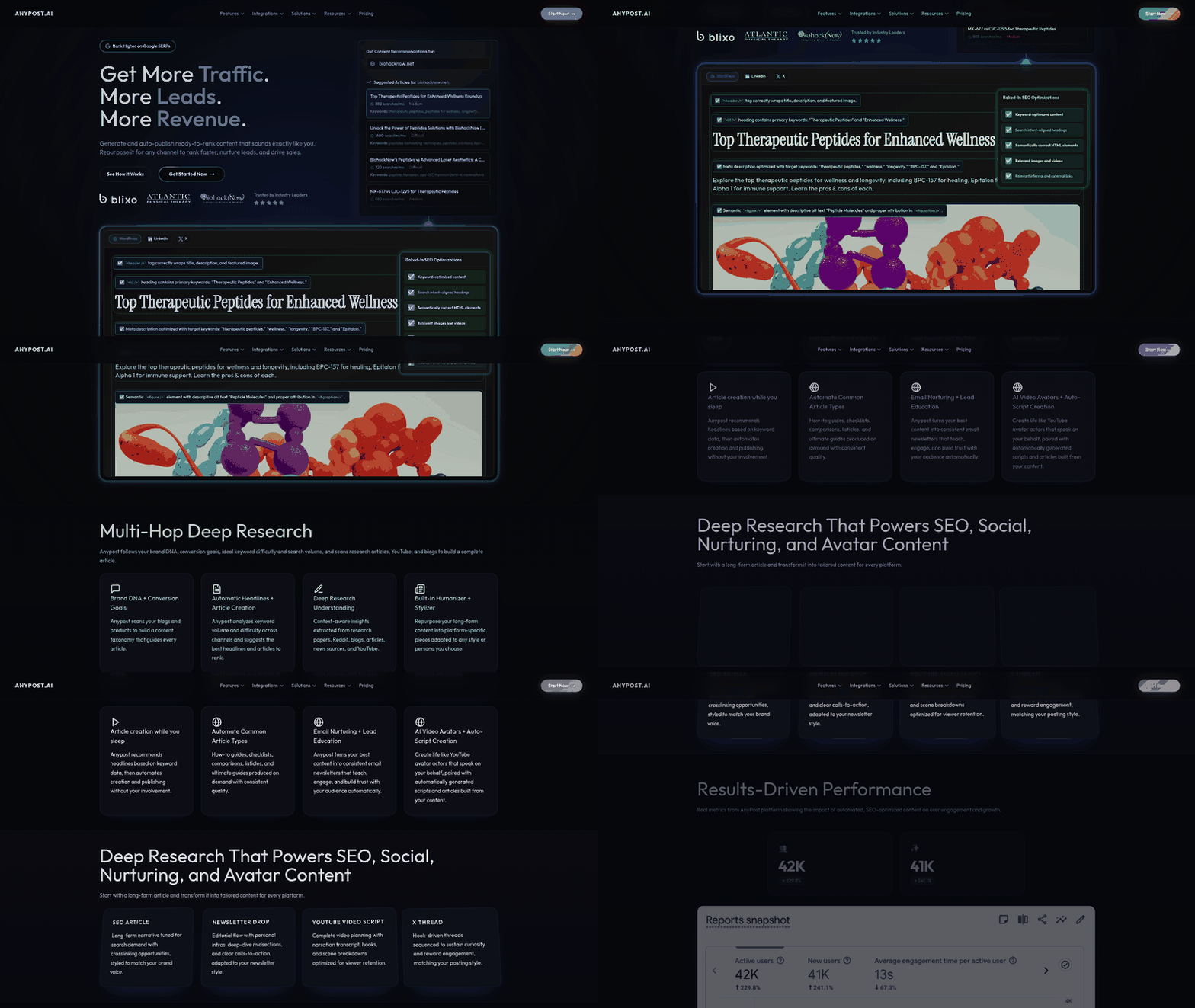
To integrate automated SEO tools into your workflow, start by mapping your current processes. Identify repetitive tasks like keyword research, backlink monitoring, or content optimization—these are prime candidates for automation. According to recent research, 72% of marketers automate at least one SEO task to save time. For example, if your team spends hours manually analyzing competitors’ content strategies, a tool with AI-driven content optimization—like Surfer SEO or the business platform’s multi-source content integration—can generate insights in seconds. See the [Key Features to Evaluate in SEO Automation Tools] section for more details on selecting tools with robust competitive analysis capabilities.
Once you’ve pinpointed automation opportunities, select tools that align with your workflow’s technical infrastructure. If you use a CMS like WordPress, look for plugins or APIs that connect with your existing stack. The business platform’s real-time analytics tracking integrates seamlessly with CRMs and analytics tools, ensuring data flows between systems without manual input. This reduces errors and speeds up decision-making.
Automated tools streamline workflows by handling data-heavy tasks while maintaining flexibility. For instance, the business product’s Persona Engine matches brand voice across content formats, ensuring consistency without requiring manual edits. Meanwhile, tools like Semrush automate technical audits, flagging issues like broken links or slow page speeds. Combine these with AI-powered content generators to draft blog posts or meta descriptions, then use tools like Surfer SEO to optimize them for search intent. See the [Top Automated SEO Tools for Growth] section for a comparison of tools like SEOClarity and Mangools at different stages of the workflow.
Integration with other marketing platforms amplifies efficiency. If your team uses email marketing software like Mailchimp, connect it to your SEO tools to align content strategies with subscriber behavior. The business platform’s SEO-optimized publishing feature, for example, syncs with analytics dashboards to adjust content priorities based on real-time traffic data. This creates a feedback loop where automation and human input work in tandem.
Despite automation’s power, human oversight remains critical. AI tools excel at pattern recognition but may miss nuanced context. For example, a content generator might produce grammatically correct but bland copy—requiring editors to refine the tone. Industry leaders recommend scheduling weekly reviews to audit automated outputs, ensuring they align with brand guidelines and user intent. See the [Best Practices for Using Automated SEO Tools] section for strategies on balancing automation with human judgment.
Real-world workflows often blend automation and manual effort. Consider a B2B SaaS company using the business platform’s automated content generation to draft 10 blog posts monthly. The system pulls data from industry reports, applies SEO best practices, and suggests headlines. Content creators then review drafts, add case studies, and submit for publishing. This hybrid approach cuts content production time by 40% while maintaining quality, as noted in this case study.
To avoid pitfalls, test automation in small increments. Start with one task—like keyword tracking—and expand once your team adapts. Tools like Ahrefs or the business platform’s SEO-optimized publishing can act as control points, ensuring automated actions meet performance benchmarks.
In summary, successful integration hinges on three factors: 1) mapping workflows to identify automation opportunities, 2) choosing tools that connect with existing systems, and 3) balancing machine efficiency with human judgment. By embedding automation into strategic—not operational—tasks, teams can scale their SEO efforts while staying agile. As one digital strategist shared: > “Automation freed us to focus on big-picture strategy, but we still review every automated report for context.” — Digital Strategist, Mid-Sized Agency
Case Studies and Success Stories
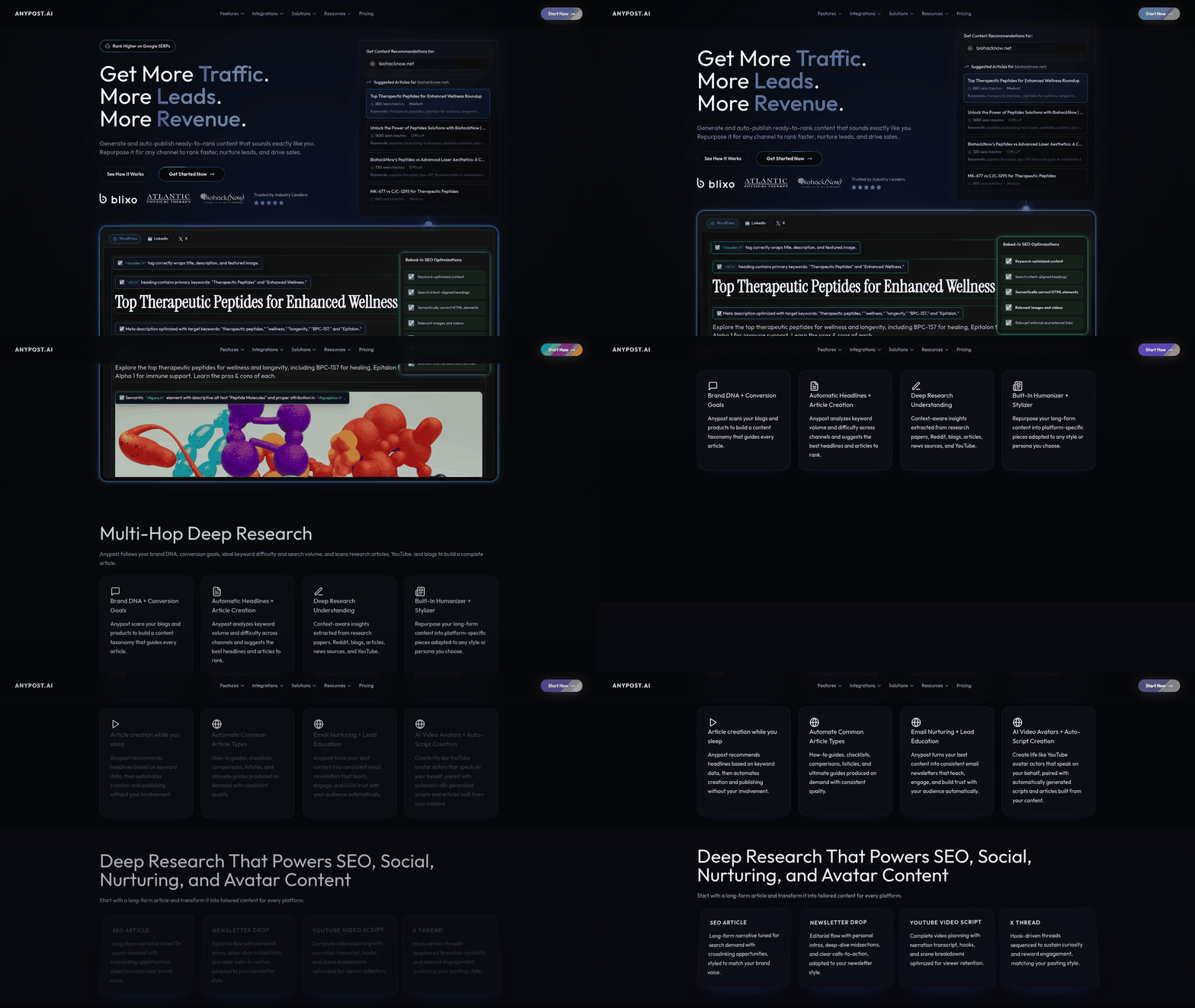
Automated SEO tools have transformed how businesses approach digital growth, and real-world results underscore their value. Consider the case of a B2B SaaS marketer who integrated automated tools into their workflow. By leveraging multi-source content integration and real-time analytics tracking, they reduced their monthly SEO task time from 8 hours to just 3 hours. This efficiency gain allowed the team to focus on strategic initiatives rather than manual keyword research or on-page optimization. The tools handled tasks like meta tag generation and content audits, streamlining the process without sacrificing quality. See the Key Features to Evaluate in SEO Automation Tools section for more details on multi-source content integration.
A content creator with a niche blog saw similar success. After adopting an automated SEO platform that included persona-driven content optimization, they increased organic traffic by 50% within six months. The system suggested keyword opportunities, optimized headlines for click-through rates, and even provided competitor analysis to identify gaps. For example, the tool flagged a high-traffic keyword with low competition, enabling the creator to publish a targeted guide that drove significant traffic. As mentioned in the Key Features to Evaluate in SEO Automation Tools section, a robust persona engine can help maintain tonal consistency across large content volumes while optimizing for SEO.
E-commerce businesses have also benefited. One online retailer implemented an autonomous SEO tool like ASEOM, which focused on product page optimization and dynamic meta descriptions. Within three months, the site’s search engine rankings improved by 40% for key product categories. The platform used AI to adjust title tags and alt text in real time based on trending search terms, ensuring listings stayed relevant. Building on concepts from the Top Automated SEO Tools for Growth section, this case demonstrates how specialized tools can scale SEO efforts for inventory-heavy businesses.
Key Takeaways from Real-World Applications
- Automation Doesn’t Replace Strategy While tools handle repetitive tasks, human oversight remains critical. The B2B marketer mentioned earlier still reviewed automated suggestions to ensure alignment with brand voice.
- Data-Driven Adjustments Outperform Static Tactics The e-commerce example shows how real-time analytics enable dynamic changes. For instance, ASEOM adjusted meta descriptions hourly during peak shopping seasons to capture trending terms.
- Scalability for Content-Heavy Businesses Content creators and e-commerce brands with thousands of pages benefit most from automation. One platform’s persona engine helped a blog maintain tonal consistency across 50+ articles per month while optimizing for SEO.
Lessons Learned
A common challenge across these case studies was initial resistance to adopting new workflows. However, teams that invested in training saw exponential returns. For example, the B2B marketer initially struggled with integrating automated tools into their CMS but achieved full adoption after a two-week onboarding process. They later reported a 30% increase in lead generation from optimized content.
Another lesson is the importance of choosing tools that align with specific goals. The content creator focused on keyword-driven platforms, while the e-commerce business prioritized tools with AI-driven product optimization. This underscores the need to evaluate features like SEO-optimized publishing or multi-source content integration based on your business’s needs.
“The automation saved us hours weekly, but what really mattered was how we used the insights to refine our strategy.” – B2B Marketing Manager
By combining automation with intentional strategy, businesses can unlock measurable growth. The next step is to evaluate which tools best fit your unique challenges—whether it’s scaling content production, improving technical SEO, or personalizing messaging for diverse audiences.
References
[1] Unlocking the Power of SEO Automation and Optimization for ... - https://www.siteimprove.com/blog/best-seo-automation-software/
[2] The 11 best SEO tools in 2025 | Zapier - https://zapier.com/blog/best-seo-tools/
[3] 13 best SEO automation tools I'm using in 2026 | Marketer Milk - https://www.marketermilk.com/blog/best-seo-automation-tools
[4] 26 best AI marketing tools I'm using to get ahead in 2026 | Marketer ... - https://www.marketermilk.com/blog/ai-marketing-tools
[5] Search Atlas: AI SEO Automation for Agencies & Brands - https://searchatlas.com/
[6] 10 Best AI SEO Tools to Automate Your Strategy in 2026 | Onrec - https://www.onrec.com/news/news-archive/10-best-ai-seo-tools-to-automate-your-strategy-in-2026
[7] How to do SEO on autopilot with Ai! 🤯 #seo #ai #gohighlevel #webdesign by Jasper Aiken - https://www.youtube.com/watch?v=AS-5RMFh1Ns
[8] Tweet by @EFSTRADE (ELECTRONIC FUNDS SWAP AND TRADE) - https://twitter.com/EFSTRADE/status/2008868006630412550
Frequently Asked Questions
1. What are the key features to look for in an automated SEO tool?
When evaluating automated SEO tools, prioritize features like keyword research, backlink analysis, content optimization, and automation capabilities. Tools such as Ahrefs excel in backlink analysis, while Surfer SEO and MarketMuse emphasize AI-driven on-page SEO and content strategy. Your SaaS platform stands out with automated content generation, multi-source integration, and the Persona Engine for tone-matching, making it ideal for B2B marketers needing consistent brand voice across formats.
2. How do I choose the best SEO tool for my business size and needs?
Consider your team size, budget, and specific goals. For SEO professionals and agencies, Ahrefs ($99+/month) and Search Atlas ($299+/month) offer robust competitor tracking and site audits. Smaller teams or content creators might prefer Your SaaS Platform (varies by plan), which saves 10–15 hours weekly on manual tasks through automation. Enterprise teams may benefit from MarketMuse (custom pricing), which focuses on content strategy and AI-driven topic clustering.
3. Which tools are best for specific SEO tasks like content optimization or competitor analysis?
For content optimization, Surfer SEO and Search Atlas provide AI-driven suggestions and SERP analysis. Ahrefs is a top choice for backlink analysis and keyword research. If your focus is on brand voice consistency, Your SaaS Platform integrates automated content generation with tone-matching personas. For competitor tracking, Search Atlas and Ahrefs are widely recommended due to their advanced competitor analytics.
4. How important is automation in an SEO tool, and what should I look for?
Automation is critical for efficiency, especially for tasks like keyword research, on-page SEO, and content creation. Look for tools that streamline repetitive workflows, such as Your SaaS Platform’s automated content generation or Surfer SEO’s real-time on-page optimization. The article emphasizes that automation should save time without compromising quality, with setup times ranging from 1–5 days depending on the tool.
5. Can automated SEO tools handle both B2B and eCommerce needs?
Yes, but the right tool depends on your niche. Your SaaS Platform is tailored for B2B marketers with features like multi-source content integration and persona-based tone matching. For eCommerce businesses, ASEOM specializes in product page optimization. Tools like Ahrefs and Search Atlas are versatile but may require customization for industry-specific workflows.
6. What factors should influence my decision when comparing pricing plans?
Evaluate pricing in relation to your budget and required features. Ahrefs and Surfer SEO start at $99+/month, while Search Atlas and MarketMuse are pricier ($299+/month and custom pricing, respectively). Your SaaS Platform offers flexible plans for B2B marketers, focusing on cost-effectiveness for automated content creation. The article advises aligning tool costs with long-term ROI, such as time saved and SEO performance gains.
7. How do setup time and complexity impact the choice of an SEO tool?
Setup time varies: Your SaaS Platform and Surfer SEO take 1–2 days, while MarketMuse requires 3–5 days due to enterprise complexity. Tools like Ahrefs and ASEOM have lower setup difficulty (rating 2–3), making them user-friendly for teams without technical expertise. The article highlights that implementation difficulty should align with your team’s resources and technical capability.