
How to Write SaaS Content That Drives Leads

Related Video
Watch: SaaS Content Marketing Strategy: How to Drive Signups From your Content by The Grow and Convert Marketing Show
Quick Summary
A comprehensive SaaS content strategy requires balancing creation, optimization, and distribution across channels while addressing time, effort, and difficulty. Below is a structured overview of key considerations for driving leads effectively.
Channel-Specific Metrics and Effort
Different content channels demand unique strategies and resources. For example:
| Channel | Time to Create | Optimization Effort | Difficulty Rating | Key Use Case |
|---|---|---|---|---|
| Blog Posts | 4–8 hours | High (SEO, CTAs, internal links) | 7/10 | Top/middle-of-funnel education |
| Social Media (LinkedIn/X) | 1–2 hours | Medium (engagement, hashtags) | 5/10 | Brand visibility, thought leadership |
| YouTube/Tutorials | 10–20 hours | High (scripting, video SEO) | 8/10 | Product demos, long-form value |
| Email Newsletters | 2–4 hours | Medium (segmentation, A/B testing) | 6/10 | Nurturing leads post-engagement |
For instance, a YouTube tutorial on "How to Automate Content Publishing with AnyPost.ai" might take 15 hours to script, film, and optimize. Blog posts targeting keywords like “SaaS content automation” require 6–8 hours of research and SEO refinement to rank in competitive niches.
Core Strategies for Lead-Driven Content
- Align with the Sales Funnel:
- Top-of-funnel (TOFU): Use educational blogs and guides (e.g., “What Is SaaS Content Marketing?”). As mentioned in the Understanding Your Target Audience section, these materials should address specific pain points of your audience to drive initial engagement.
- Middle-of-funnel (MOFU): Create comparison posts (e.g., “HubSpot vs. AnyPost.ai for SEO”).
- Bottom-of-funnel (BOFU): Publish case studies (e.g., “571% Lead Growth with SaaS Content”) and demo-focused landing pages.
- Leverage AI for Efficiency: Tools like AnyPost.ai streamline SEO-optimized publishing by auto-generating keyword-aligned content, integrating brand voice via its Persona Engine, and repurposing blog posts into social snippets. This reduces manual effort by 50–70% for teams struggling with content volume, as detailed in the Leveraging AI in SaaS Content Creation section.
- Prioritize Distribution Over Creation: As highlighted in a real-world example, 96% of traffic for a SaaS content guide came from WhatsApp, LinkedIn, and Twitter—versus 3.7% from Google. See the Repurposing and Distributing SaaS Content section for more details on how multi-channel sharing in communities and peer networks amplifies reach, turning high-quality content into viral leads.
Time, Effort, and Difficulty Breakdown
- Content Creation:
- Blog posts: 4–8 hours (research, writing, SEO).
- Social posts: 1–2 hours (copywriting, scheduling).
- Videos: 10–20 hours (planning, production, editing).
- Optimization:
- SEO: 2–4 hours per post (keyword research, meta tags, internal linking).
- A/B Testing: Ongoing (subject lines, CTAs).
- Difficulty Factors:
- SEO Optimization: High (requires technical knowledge and tools).
- Brand Voice Consistency: Medium (easier with AnyPost.ai’s tone-matching AI).
- Repurposing Content: Low to Medium (using AI to transform blogs into social posts or emails).
For example, a team using AnyPost.ai could auto-publish 10 SEO-optimized blog posts per month in 20 hours—versus 100+ hours manually. This efficiency lets marketers focus on refining strategies rather than content assembly.
Key Takeaways for SaaS Teams
- Focus on bottom-of-funnel content (e.g., product comparisons, case studies) to convert casual readers into leads.
- Use multi-channel distribution (social media, email, podcasts) to maximize reach, as seen in Notion’s user-generated content campaigns.
- Automate repetitive tasks with tools like AnyPost.ai, which integrates real-time analytics to track traffic and conversions.
By balancing strategic planning with AI-driven execution, SaaS brands can turn content into a scalable lead-generation engine.
Why SaaS Content Writing Matters
Effective SaaS content writing is a cornerstone of modern digital marketing, directly influencing lead generation, customer retention, and revenue growth. In a competitive landscape where 72% of B2B marketers use AI tools for content creation and 53% of SaaS companies identify content marketing as their most impactful growth channel, the stakes are high. A well-crafted content strategy doesn’t just attract attention—it nurtures trust, educates buyers, and transforms casual readers into paying customers. Let’s break down why this matters.
The ROI of High-Quality SaaS Content
Industry data underscores the financial impact of strategic content. For example, a SaaS startup boosted leads by 571% in five months by aligning content with buyer intent and optimizing for SEO. Similarly, HubSpot’s educational ecosystem—ranging from blog posts to in-depth guides—has become a magnet for marketing professionals, turning organic traffic into paid customers. These results stem from content that addresses specific pain points: “Signs Your Team is Outgrowing Email” or “How to Automate Your Workflow”.
Statistics reinforce this: 79% of B2B marketers agree that understanding their audience is key to success. As mentioned in the Understanding Your Target Audience section, mapping content to the buyer journey—educating at the top of the funnel, solving problems in the middle, and converting at the bottom—enables SaaS companies to guide prospects from curiosity to commitment. For instance, Zapier’s blog uses bottom-of-funnel content like integration tutorials to drive product signups, while Notion’s user-generated case studies build credibility by showcasing real-world applications.
Solving SaaS Content Challenges with Precision
Creating effective SaaS content isn’t just about volume—it’s about solving specific challenges that hinder growth. Consider these pain points:
- Time constraints: Writing SEO-optimized, brand-aligned content manually is labor-intensive.
- SEO complexity: Ranking for competitive keywords requires technical expertise and ongoing optimization.
- Consistency: Maintaining a uniform tone across blogs, social media, and product documentation is difficult.
This is where platforms like AnyPost.ai step in. By automating SEO-optimized publishing and integrating Persona Engine for tone matching, it addresses these hurdles head-on. See the Leveraging AI in SaaS Content Creation section for more details on how AI tools streamline these processes. For example, a healthcare SaaS company might use the tool to generate blog posts targeting “therapeutic peptides for wellness” with variations like “MK-677 vs CJC-1295,” ensuring both search visibility and brand voice consistency. The result? Reduced time spent on content creation and higher engagement from audiences seeking precise solutions.
Who Benefits—and How
The value of SaaS content writing extends to multiple stakeholders:
- B2B marketers rely on content to nurture leads through long sales cycles. For instance, Leadfeeder increased signups by 200/month using targeted blog posts and landing pages tailored to enterprise decision-makers.
- Digital strategists leverage SEO-optimized content to dominate search rankings. A project management SaaS company, for example, might rank for “team collaboration tools for remote work” to attract businesses transitioning to hybrid models.
- Growth leaders use content to drive product adoption. BioHackNow repurposes technical articles about peptides into LinkedIn summaries and YouTube scripts, extending reach while maintaining credibility. As highlighted in the Repurposing and Distributing SaaS Content section, this multi-format approach ensures maximum impact from every piece of content.
In practice, the right content strategy bridges the gap between visibility and conversion. Whether it’s a how-to guide for developers or a case study for executives, the goal is to speak directly to the audience’s needs. Tools like AnyPost.ai streamline this process by combining automated content generation with multi-source integration, ensuring teams can scale production without sacrificing quality.
By investing in SaaS content writing, businesses don’t just fill pipelines—they build authority, foster loyalty, and stay ahead of competitors in a market where 98% of SaaS companies already use blogs. The key is to create content that’s actionable, intent-driven, and relentlessly focused on solving problems. When done right, it becomes the engine that drives growth.
Understanding Your Target Audience
Understanding your target audience is the foundation of any successful SaaS content strategy. Without clear insights into who your readers are and what challenges they face, even the most well-crafted content will fail to resonate. Let’s break down how to research, define, and address your audience effectively.
Researching Buyer Personas: Techniques That Work
Creating accurate buyer personas starts with data. Use surveys and customer interviews to gather first-hand insights. Ask questions like: What tools do you currently use? What frustrates you about your workflow? What results do you prioritize? Tools like AnyPost.ai’s Persona Engine can also help by analyzing existing content and audience interactions to refine personas based on behavioral patterns.
For example, a B2B marketer might struggle with balancing SEO demands and creative content production, while a growth leader could prioritize scalability over speed. According to Stratabeat, 79% of B2B content marketers agree that audience understanding is critical to success. Pair this with AI-driven tools—like generative AI for persona mapping—to uncover hidden needs. As mentioned in the Leveraging AI in SaaS Content Creation section, platforms like AnyPost.ai enhance persona development by automating data analysis.
Examples of Effective SaaS Buyer Personas
Let’s visualize two common personas in the SaaS space:
- The Overloaded B2B Marketer
- Role: Mid-level content marketer at a SaaS company.
- Pain Points: Limited time for research, pressure to meet SEO targets, difficulty maintaining brand consistency.
- Goals: Streamline content creation, repurpose assets across channels, and boost organic traffic.
- Example: A user of AnyPost.ai might rely on automated content generation to draft blog posts and repurpose them into LinkedIn articles, saving hours weekly.
- The Data-Driven Growth Leader
- Role: Director of growth at a scaling SaaS startup.
- Pain Points: Need for real-time analytics, aligning content with conversion funnels, proving ROI to stakeholders.
- Goals: Optimize content for lead nurturing, track engagement metrics, and justify budget allocations.
- Example: This persona might use AnyPost.ai’s real-time analytics to identify high-performing keywords and adjust content strategies on the fly.
By mapping out such personas, you ensure your content speaks directly to their workflows and frustrations.
Identifying and Addressing Pain Points in SaaS Content
Pain points are the gaps between your audience’s current state and their desired outcomes. For SaaS content, common issues include:
- Time Constraints: Manual content creation slows progress.
- SEO Complexity: Staying ahead of search engine algorithms is daunting.
- Brand Consistency: Maintaining voice across teams or regions is error-prone.
To address these, structure your content around solutions. For instance, if a persona struggles with SEO, create a guide like “10 SEO-Optimized Content Templates for SaaS Teams”—highlighting tools like AnyPost.ai’s built-in keyword optimization. See the Repurposing and Distributing SaaS Content section for more details on how to adapt such templates across formats. A real-world example: A healthtech company used AnyPost.ai to automate blog publishing, reducing content creation time by 40% while improving search rankings.
Why Tone Matching Matters—and How to Master It
Even the most useful content falls flat if the tone doesn’t align with your audience’s expectations. A formal, technical tone might appeal to enterprise decision-makers, while a casual, relatable voice could resonate with indie developers. Tools like AnyPost.ai’s Persona Engine help customize tone by analyzing existing brand materials and audience preferences. Building on concepts from the Crafting Compelling SaaS Content section, tone adaptation ensures headlines and messaging align with audience expectations.
Consider a SaaS company targeting both biohackers and healthcare professionals. For the former, a post like “Top Therapeutic Peptides for Enhanced Wellness” might use energetic, forward-thinking language. For the latter, the same topic could adopt a more clinical, evidence-based approach. Stratabeat’s experts emphasize that content must “speak to the customer and their needs”—a balance achieved through intentional tone adaptation.
By combining rigorous research, persona-specific examples, and tone alignment, your SaaS content can cut through the noise and drive real engagement. The next step? Building a content calendar that reflects these insights—ensuring every piece you create addresses your audience’s unique challenges.
Crafting Compelling SaaS Content
Crafting compelling SaaS content starts with headlines that cut through the noise. A strong headline should balance specificity and curiosity while aligning with SEO goals. For example, instead of writing “Why SaaS Matters,” focus on a concrete benefit: “How SaaS Saves B2B Marketers 10+ Hours Weekly.” Use numbers, power words (automate, scale, optimize), and direct pain point solutions. Tools like AnyPost.ai help identify high-intent keywords (e.g., “SaaS content strategy for lead generation”) to embed in headlines, ensuring visibility for both search engines and human readers. As mentioned in the Understanding Your Target Audience section, tailoring content to specific personas enhances relevance and engagement.
Simplifying Complex Features in Body Copy
SaaS products often involve technical jargon that confuses audiences. Break down features using analogies and real-world applications. For instance, explain automated content generation as “a virtual team of writers that repurpose your research into blog posts, case studies, and social media in minutes.” Pair this with personas—like B2B marketers struggling with content volume—to tailor language to specific pain points. AnyPost.ai’s Persona Engine ensures tone consistency, whether you’re writing for a digital strategist focused on ROI or a growth leader prioritizing scalability. Use short paragraphs, bullet points, and subheadings to guide readers through dense topics, such as SEO optimizations or AI integration.
SEO and LLM Optimization Strategies
SEO isn’t just about keywords—it’s about structuring content to match user intent. Start with keyword research: tools like Ahrefs or SEMrush reveal phrases your audience searches for (e.g., “SaaS SEO content strategy 2025”). Integrate these naturally into H2 and H3 headings, meta descriptions, and the first 100 words of your content. For example, a blog post targeting “AI content generation tools” might open with: “Struggling to keep up with content demands? AI tools like AnyPost.ai automate SEO-optimized publishing, saving teams 20+ hours monthly.”
Leverage LLMs (large language models) like ChatGPT or Google Gemini to refine drafts, test headline variations, or generate topic ideas. However, don’t rely solely on AI—human oversight ensures brand voice stays authentic. AnyPost.ai’s multi-source integration pulls from competitor analysis, search trends, and user feedback to train AI outputs, reducing guesswork. See the Leveraging AI in SaaS Content Creation section for more details on how AI tools enhance efficiency and accuracy.
Real-World Example: Balancing SEO and Readability
Consider a post titled “7 SaaS Content Hacks to Boost Organic Traffic.” The headline uses a number for clarity and urgency. Body copy simplifies technical terms: instead of “semantic SEO,” write “search engines prioritize content that answers user questions naturally.” Embed LSI keywords (e.g., SaaS content automation, SEO-optimized publishing) without stuffing. Use tools like AnyPost.ai to auto-generate meta descriptions and ensure header tags follow a logical hierarchy (H1 > H2 > H3).
By combining SEO precision, AI-driven insights, and audience-centric storytelling, SaaS brands can turn content into a lead-generating engine. The goal isn’t just to rank—it’s to provide value that turns readers into customers. As outlined in the Repurposing and Distributing SaaS Content section, maximizing reach through multi-channel strategies further amplifies these efforts.
Repurposing and Distributing SaaS Content
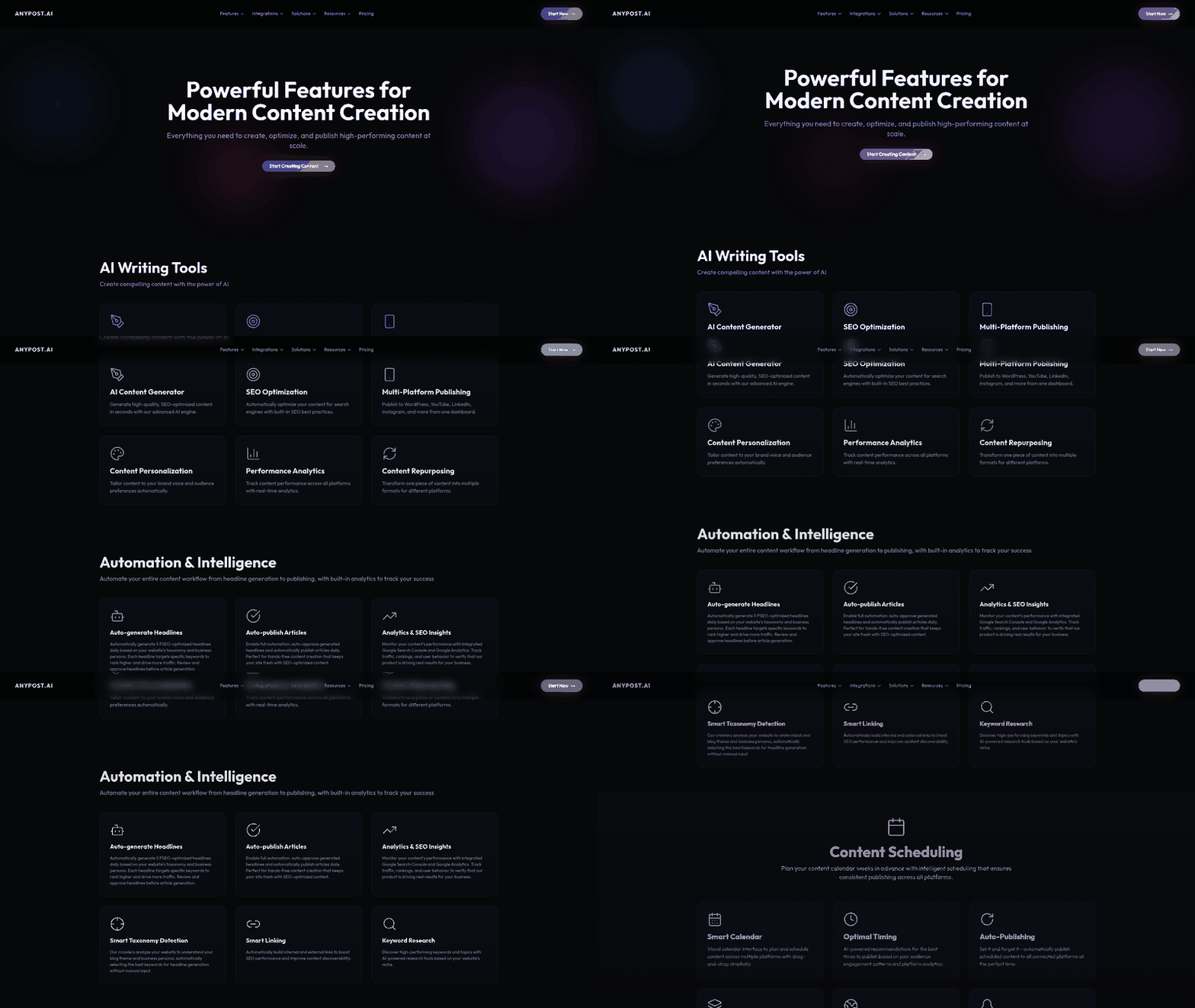
Repurposing SaaS content is a strategic way to maximize your reach and efficiency. By transforming blog posts into social media snippets, videos, or podcast episodes, you can engage diverse audiences without creating entirely new content from scratch. For example, a detailed blog about peptides for wellness can become a series of LinkedIn posts highlighting key benefits, a YouTube video explaining each peptide’s function, or a podcast episode discussing use cases with a guest expert. Tools like AnyPost.ai streamline this process by auto-generating platform-specific content while maintaining SEO alignment, as explored in the Leveraging AI in SaaS Content Creation section.
1. Techniques for Cross-Channel Repurposing
Start by dissecting high-performing blog posts into modular components. Extract statistics, quotes, or definitions to create Twitter threads or LinkedIn carousel posts. For instance, a section on BPC-157’s regenerative properties could become a short-form Instagram video with animations showing its healing effects. Long-form content like the Epitalon longevity analysis can be split into a 10-part Twitter thread, a YouTube Shorts series, or a podcast episode. AnyPost.ai’s Persona Engine ensures tone consistency across formats, whether you’re writing a casual LinkedIn post or a technical whitepaper.
Podcasts and webinars are ideal for repurposing in-depth content. Take a blog post like “Thymosin Alpha 1: Immune System Booster” and turn it into a 20-minute interview with a biohacker or a Q&A session addressing listener questions. Record these sessions and later convert the audio into transcribed articles or social media clips. This approach not only extends your content’s lifespan but also caters to different learning preferences—visual, auditory, and textual. For tips on crafting engaging content across formats, see the Crafting Compelling SaaS Content section.
2. Real-World Examples of Successful Campaigns
Companies like Zapier and Notion have mastered content repurposing. Zapier’s blog posts on automation strategies are systematically transformed into case studies, social media tutorials, and even interactive webinars. Notion repackages user stories into social media testimonials and community-driven content, fostering engagement while reducing creation time.
A standout example is Dock, which atomizes podcast episodes into bite-sized social posts. One episode on SaaS growth tactics became 15 LinkedIn posts, 3 Twitter threads, and a YouTube playlist. This strategy increased their engagement by 40% and extended the content’s reach beyond their core audience.
For SaaS platforms offering automated tools, repurposing becomes even more powerful. AnyPost.ai users have reported a 3x increase in organic traffic by auto-publishing blog snippets to newsletters, Twitter, and YouTube with minimal manual effort. Their real-time analytics track which formats perform best, allowing teams to refine their strategy dynamically. Understanding your audience’s preferences, as detailed in the Understanding Your Target Audience section, is critical for tailoring repurposed content effectively.
3. Measuring Success: Metrics That Matter
To evaluate repurposed content, focus on engagement, conversions, and revenue. Track metrics like social media shares, video watch time, and podcast downloads to gauge audience interest. Use UTM parameters to monitor how each repurposed piece drives traffic to your website or landing pages. For example, a repurposed LinkedIn post from a blog might generate 500 new leads, while a YouTube video could boost demo sign-ups by 20%.
Customer acquisition cost (CAC) and revenue attribution are critical for SaaS businesses. If a single blog post repurposed into 10 social posts and 2 videos generates $15,000 in monthly revenue while costing $2,000 to produce, the return on investment (ROI) is clear. Tools like AnyPost.ai’s analytics dashboard let you track these metrics alongside SEO performance, showing how repurposed content contributes to organic growth. For deeper insights into measuring and optimizing content performance, refer to the Measuring Success and Optimizing SaaS Content section.
4. Balancing Automation and Human Insight
While automation accelerates repurposing, human oversight ensures quality. For instance, AnyPost.ai’s AI can draft a Twitter thread from a blog, but a content team should review it for clarity and brand voice. Similarly, a podcast episode on peptides might need expert input to avoid misinformation. Combine AI efficiency with human expertise to maintain credibility.
Testimonials from users highlight this balance:
“We cut content production time by 50% using AnyPost.ai’s repurposing tools, but our team still reviews every output for tone and accuracy.” — Marketing Manager, BioTech Startup
By aligning repurposed content with audience needs and tracking performance rigorously, SaaS companies can turn single pieces of content into multi-channel growth drivers. The key is to stay agile, iterate based on data, and leverage tools that simplify the process without sacrificing quality.
Leveraging AI in SaaS Content Creation
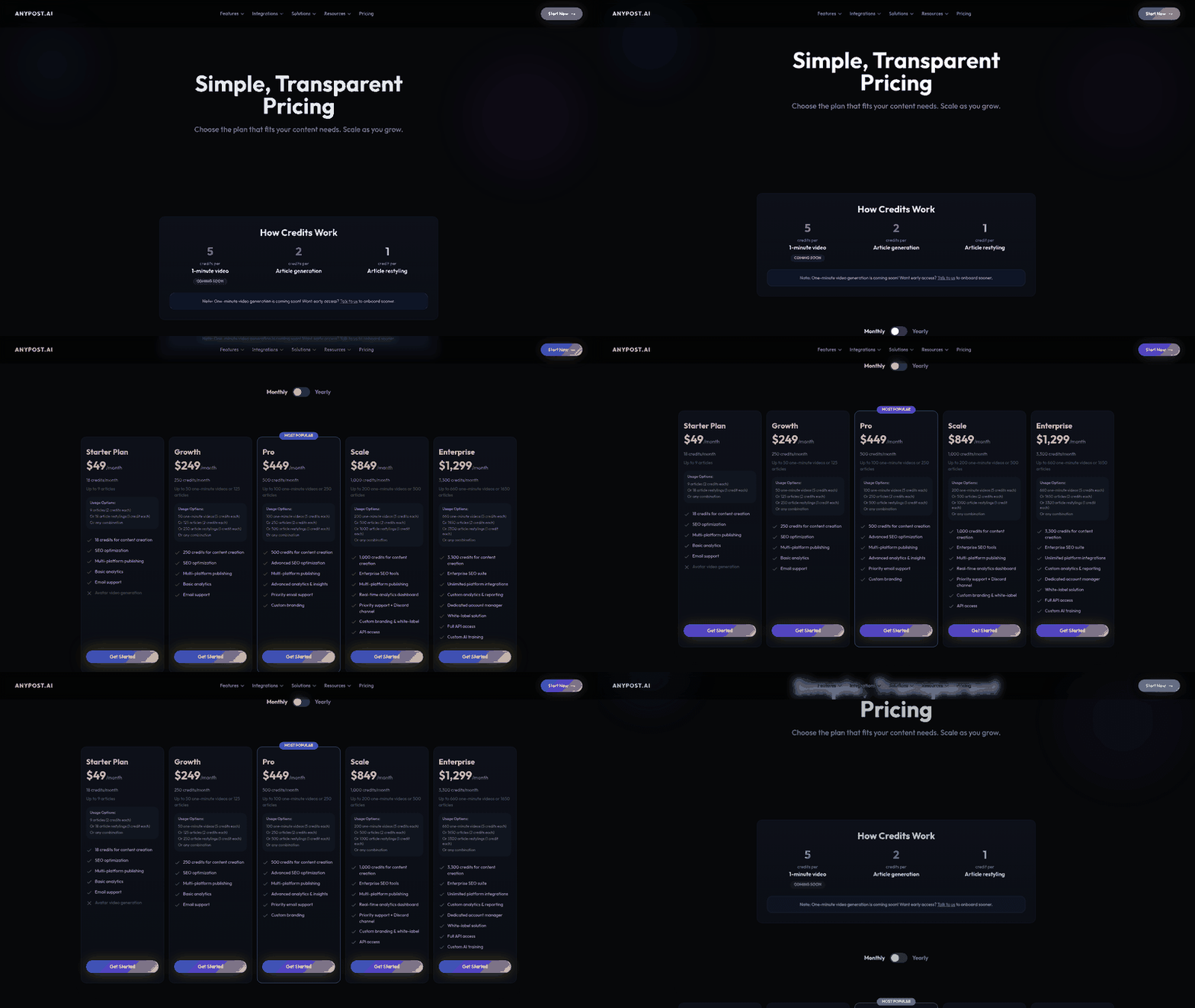
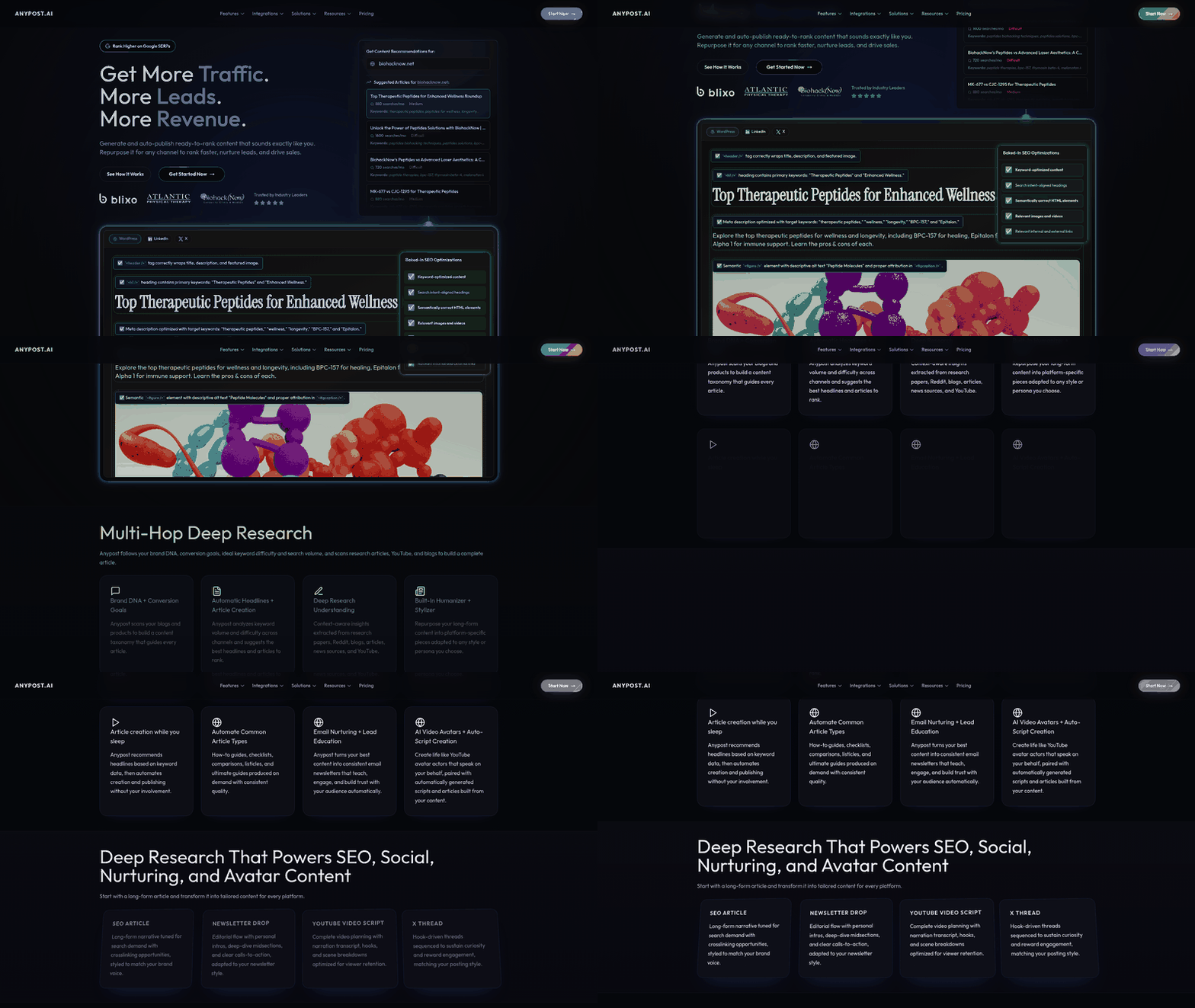
AI writing tools streamline SaaS content creation by automating tasks like research, drafting, and SEO optimization. Platforms like AnyPost.ai integrate automated content generation, multi-source data integration, and persona-based tone matching to align with brand voice. These tools reduce manual effort, enabling teams to focus on strategy rather than execution. For example, AnyPost.ai’s SEO-optimized publishing ensures content ranks well on Google by embedding keyword-rich headings and semantic HTML structures. As mentioned in the Understanding Your Target Audience section, aligning tone and messaging with audience needs is critical, and AI tools help scale this alignment across content formats.
The rise of generative AI has transformed how SaaS brands approach content. According to industry data, 72% of B2B marketers use AI tools for content creation and optimization, highlighting their growing reliance on these technologies. AI-driven workflows not only accelerate production but also maintain consistency across formats—blogs, social posts, and email campaigns—by adhering to defined brand guidelines.
...
Another risk is the potential for brand voice inconsistency. To counter this, SaaS marketers can train AI tools on internal style guides or use platforms like AnyPost.ai that allow custom persona configurations. For instance, a content team at BioHackNow might define a tone blending scientific rigor with approachable language, which the AI then mirrors in all outputs. This aligns with the Crafting Compelling SaaS Content section’s emphasis on balancing specificity and tone to engage audiences.
...
- Track and Iterate: Use analytics tools to monitor content performance. AnyPost.ai’s real-time tracking identifies high-performing sections, allowing teams to repurpose successful content across channels like LinkedIn or YouTube. This ties into the Measuring Success and Optimizing SaaS Content section, which outlines metrics like conversion rates and customer lifetime value to refine strategies over time.
Measuring Success and Optimizing SaaS Content
To measure the success of SaaS content, start by tracking core metrics like conversion rates, customer acquisition costs (CAC), and customer lifetime value (CLV). These metrics provide clarity on how effectively your content turns visitors into paying customers and sustains their engagement. For example, a SaaS company might analyze how many blog readers convert to free trials versus those who become paid users. Tools like AnyPost.ai simplify this process by integrating real-time analytics to monitor user behavior across touchpoints, from landing page interactions to post-purchase activity.
Track and Optimize Key Performance Indicators
A data-driven approach begins with defining KPIs aligned with business goals. Conversion rates reveal how well your content persuades users to take desired actions—whether signing up for a demo or scheduling a call. Track these rates per content type (e.g., case studies vs. how-to guides) to identify high-performing formats. See the Crafting Compelling SaaS Content section for more details on how different formats resonate with audiences. CAC is equally critical: if your content drives traffic but acquisition costs outweigh revenue, refine your targeting. For instance, HubSpot’s educational ecosystem reduced CAC by 40% by focusing on bottom-of-funnel content like product comparison guides, which directly address purchase intent.
CLV adds long-term context. Even if a piece of content has a low upfront conversion rate, its value grows if it nurtures leads over months. Consider a SaaS brand publishing a detailed “ROI Calculator for SaaS Teams” blog. While initial signups may be modest, the resource builds trust, leading to repeat purchases or upsells. Use CLV to prioritize content that keeps customers engaged post-purchase, such as onboarding tutorials or advanced use-case scenarios.
Leverage A/B Testing for Content Optimization
A/B testing isn’t just for headlines—it’s a powerful tool for refining entire content strategies. Test variations in tone, format, and call-to-action (CTA) placement to see what resonates. For example, a SaaS company A/B tested two versions of a case study: one with a technical focus and another emphasizing business outcomes. The latter drove 35% more demo requests, highlighting the importance of aligning content with audience priorities.
AnyPost.ai’s Persona Engine streamlines this process by generating tone-matched content for different audience segments. If you’re targeting developers, prioritize technical depth and code samples. For executives, emphasize ROI and risk mitigation. Building on concepts from the Understanding Your Target Audience section, tailoring content to personas ensures relevance. By automating variations, you can test multiple personas simultaneously, reducing the time needed to identify winning strategies.
Real-world campaigns underscore A/B testing’s impact. A project management SaaS firm tested two blog titles:
- “How to Improve Team Productivity” (broad, top-of-funnel)
- “5 Signs Your Team Needs Project Management Software” (problem-focused, middle-of-funnel)
The second variation generated 2x more trial signups, proving that content addressing specific pain points outperforms general advice. Pair A/B testing with Ahrefs or SEMrush to analyze traffic shifts and adjust keyword strategies in real time.
Use Real-Time Analytics to Refine Strategies
Traditional monthly reports delay actionable insights. Real-time analytics let you respond to trends as they emerge. For example, if a blog post suddenly spikes in traffic but has a high bounce rate, investigate whether the content matches search intent. As mentioned in the Leveraging AI in SaaS Content Creation section, platforms like AnyPost.ai enhance this process by providing analytics that link performance to revenue. AnyPost.ai’s real-time tracking flags such issues instantly, allowing teams to update underperforming pages or redirect traffic to better resources.
Consider a scenario where a SaaS brand’s LinkedIn article about “AI in Marketing” sees 10k views but few conversions. Real-time data might reveal that readers abandon the page after the first paragraph. By tweaking the opening with a problem statement (e.g., “Struggling to keep up with AI trends?”), the team could recover engagement.
Real-time tools also highlight viral content. A case study from source shows 96% of traffic coming from social shares, not organic search. By monitoring which posts generate shares, teams can prioritize replication. For instance, a cybersecurity SaaS company noticed Twitter threads on compliance trends drove 20% of their leads. They shifted focus to short, shareable compliance tip videos, boosting conversions by 25%.
Conclusion: Iterate and Adapt
Success in SaaS content marketing hinges on continuous measurement and adaptation. Track metrics rigorously, test hypotheses with A/B experiments, and use real-time data to pivot strategies swiftly. Platforms like AnyPost.ai accelerate this cycle by automating SEO-optimized content creation and providing analytics that link performance to revenue.
Remember, the goal isn’t just to create content—it’s to build a flywheel where each piece of content attracts, converts, and retains customers. By aligning KPIs with buyer journeys and iterating based on data, SaaS brands can transform content into a scalable lead-generation engine.
Frequently Asked Questions
1. What types of content should I create for each stage of the sales funnel?
For the top-of-funnel (TOFU), focus on educational content like blogs or guides (e.g., “What Is SaaS Content Marketing?”) to address pain points and attract new leads. In the middle-of-funnel (MOFU), comparison posts (e.g., “HubSpot vs. AnyPost.ai for SEO”) help nurture leads by comparing solutions. For the bottom-of-funnel (BOFU), use case studies (e.g., “571% Lead Growth with SaaS Content”) and demo-focused landing pages to convert prospects into customers. This approach ensures your content aligns with the audience’s readiness to engage.
2. How can I optimize blog posts for SEO and lead generation?
Blog optimization involves thorough keyword research (e.g., targeting “SaaS content automation”), strategic use of CTAs, and internal linking. Spend 6–8 hours refining SEO elements like meta descriptions, headers, and content structure. Tools like AnyPost.ai can streamline this process by auto-generating keyword-aligned content and integrating brand voice, reducing manual effort. However, ensure your content provides genuine value to readers, not just keyword stuffing.
3. Which content channels require the most time and effort?
YouTube tutorials demand the most time (10–20 hours) due to scripting, filming, and video SEO, with a difficulty rating of 8/10. Blog posts follow closely (4–8 hours) for research and SEO optimization (7/10 difficulty). Social media (1–2 hours, 5/10 difficulty) and email newsletters (2–4 hours, 6/10 difficulty) are lower-effort but still require strategic planning. Prioritize channels based on your team’s resources and audience preferences.
4. How can AI tools help with SaaS content creation?
AI tools like AnyPost.ai automate time-consuming tasks such as generating SEO-optimized content, repurposing blog posts into social media snippets, and maintaining brand voice via features like the Persona Engine. These tools reduce manual effort by 50–70% for teams struggling with content volume. However, AI should complement—not replace—human creativity and strategic thinking. Always review AI-generated content for accuracy and alignment with your brand’s unique voice.
5. Why is distribution more important than creation in SaaS content strategy?
High-quality content won’t drive leads without effective distribution. Prioritize channels like LinkedIn, YouTube, or email newsletters where your audience is most active. Use analytics tools to track engagement and refine your approach. For example, a YouTube tutorial on “How to Automate Content Publishing” might attract leads, but without promotion (e.g., sharing on social media or embedding in emails), its reach will be limited. Focus on amplifying your best-performing content.
6. What role do case studies play in SaaS lead generation?
Case studies are critical for bottom-of-funnel (BOFU) conversions. They build trust by showcasing real-world results (e.g., “571% Lead Growth with SaaS Content”) and demonstrate how your product solves specific problems. Include metrics, customer testimonials, and clear takeaways to guide prospects toward a decision. Pair case studies with targeted CTAs, such as scheduling a demo or requesting a consultation, to maximize their impact.
7. How can I maintain a consistent brand voice across multiple content formats?
Use tools like AnyPost.ai’s Persona Engine to standardize tone and language for blogs, social posts, and emails. Additionally, create a brand style guide outlining preferred terminology, values, and audience-specific messaging. For example, a “friendly expert” tone for LinkedIn posts might shift to a “data-driven authority” voice for whitepapers. Consistency reinforces brand identity and ensures your messaging resonates across platforms.