
HubSpot vs Ahrefs for Content Teams: Which Stack Turns Organic Traffic Into More Leads

Key Takeaways
- HubSpot vs Ahrefs isn't a real contest. Each tool wins half the job.
- Ahrefs owns keyword research and rank tracking. HubSpot owns lead capture and nurturing.
- Ahrefs starts at $199/month for standalone Brand Radar. HubSpot starts at $50/month with a 28-day free trial.
- Ahrefs holds a 4.7 rating across 585 reviews. HubSpot lands at 4.5 across 6,250 reviews.
- 85% of Ahrefs users recommend it versus 77% for HubSpot.
- HubSpot's lower score reflects a full marketing suite and slower onboarding.
- The real question is what connects Ahrefs research to HubSpot leads.
Quick Summary
The HubSpot vs Ahrefs debate isn't a duel. Ahrefs owns the top of the funnel with keyword research and rank tracking. HubSpot owns the bottom with lead capture and nurturing. Neither closes the loop alone.
That gap is the whole story. When we compare HubSpot vs Ahrefs side by side, we see two tools that each win half the job. The question isn't which one to buy, but what connects them so an Ahrefs keyword becomes a lead in HubSpot.
Fast-scan breakdown:
How Do HubSpot and Ahrefs Compare at a Glance?
HubSpot is an all-in-one marketing and CRM platform for capturing and nurturing leads. Ahrefs is an SEO tool for finding keyword opportunities and monitoring rankings. They solve different problems, which is why teams run both.
| Tool | Best For | Starting Price | User Rating | Onboarding Difficulty | Time to Value |
|---|---|---|---|---|---|
| Ahrefs | SEO research, backlinks, rank tracking | $199/mo (Brand Radar standalone) | 4.7 (585 reviews) | Moderate | 1-2 weeks |
| HubSpot | Lead capture, email, CRM, content execution | $50/mo (AEO, 28-day free trial) | 4.5 (6,250 reviews) | Moderate to steep | 2-4 weeks |
| AnyPost.ai | Voice-consistent content that links research to lead-gen | $399/mo (Basic) | New entrant | Low | Days |
Ahrefs edges ahead with 85% of users recommending it versus 77% for HubSpot. Ahrefs earns loyalty from SEO specialists. HubSpot's lower score reflects the complexity of a full marketing suite.
Where Does Each Tool Win and Fall Short?
Ahrefs wins on breadth of signal. Brand Radar covers seven AI platforms, including Microsoft Copilot and Google AI Overviews, backed by a prompt database of over 406 million monthly queries. That's a wide opportunity map. The catch: Ahrefs has no lead-capture or nurturing layer. Those insights stop at research.
HubSpot wins on execution speed. Its AEO tool publishes content without switching tools and starts at $50/month. But it tracks only three AI platforms, ChatGPT, Gemini, and Perplexity, giving your lead-gen engine a narrower content signal.
Skip the "pick one" framing if your goal is turning traffic into leads. Running both means paying twice and stitching workflows by hand. There's no native handoff between Ahrefs research and HubSpot conversion.
What's the Bridge Between Research and Leads?
The missing piece is a content layer that speaks both languages. The friction isn't in finding keywords or capturing leads. It's in producing on-voice content fast enough to feed the Ahrefs signal into the HubSpot funnel without a team of writers in the middle.
That's the gap AnyPost.ai was built to close: automated, voice-consistent articles that turn organic traffic opportunities into pipeline.
Why Choosing the Right Stack Matters
When you're trying to turn organic search traffic into pipeline, the HubSpot vs Ahrefs question misses the point. The issue isn't which tool wins. It's that neither closes the loop alone. Ahrefs tells you what keywords to chase and how your content ranks, but it has zero lead-capture infrastructure. HubSpot lets you capture and nurture those leads, but its AEO tool monitors fewer AI platforms than Ahrefs. You're flying half-blind on content opportunities if you rely on HubSpot alone.
We've watched teams burn months trying to bridge this gap manually. A content strategist exports keyword lists from Ahrefs, hands them to a writer, the writer drafts in Google Docs, someone else uploads to HubSpot, and by the time the post goes live, the search market has shifted. The keyword that looked promising six weeks ago is now saturated, or your competitor already owns it.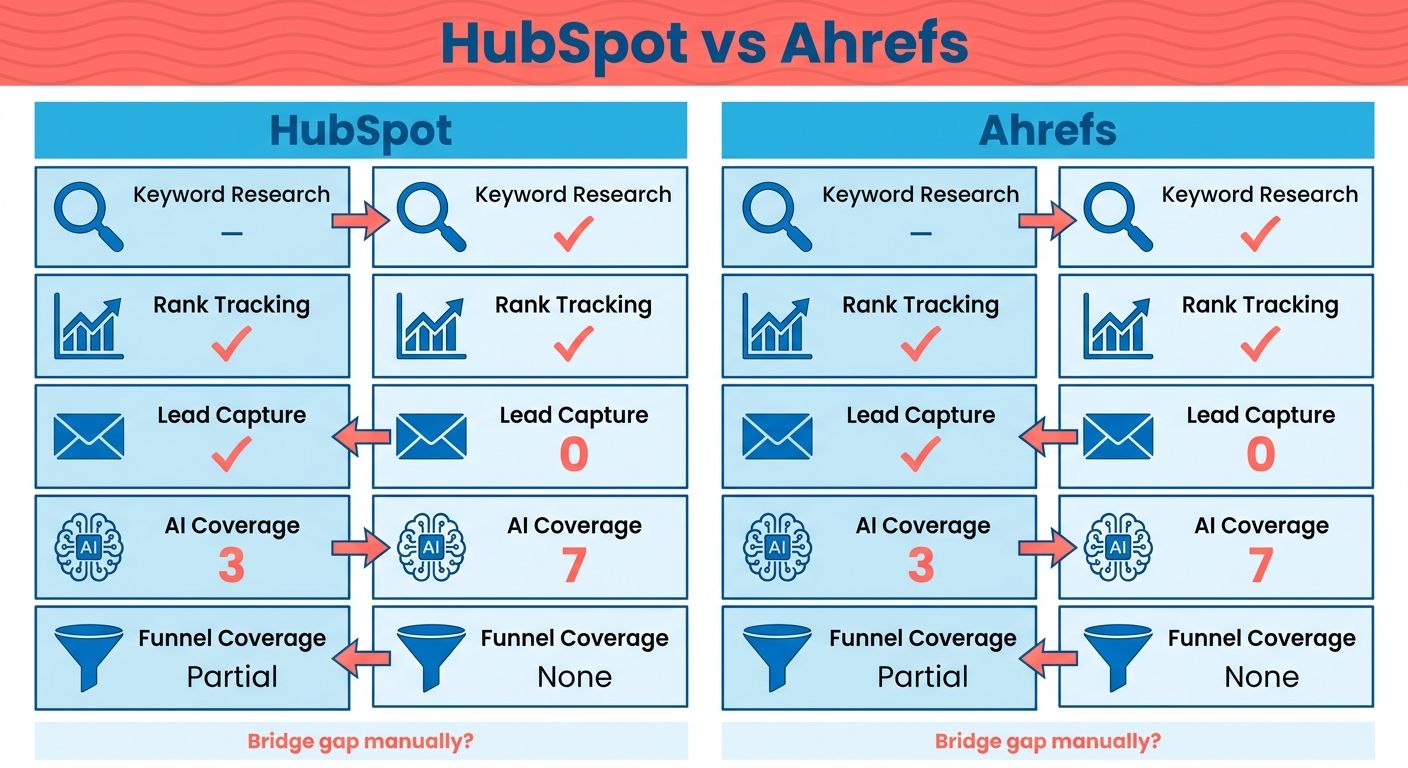
The Hidden Cost of Running Two Disconnected Systems
Running both costs more than the subscription fees suggest. The real tax is workflow fragmentation. Every handoff between platforms adds latency, and latency is where content dies. Industry data pegs the average B2B blog post at 25 to 40 hours from research to publish. When that time gets split across two systems and three people, each transition introduces a queue, a review cycle, and a chance for the original keyword intent to get lost. Your SEO team lives in Ahrefs tracking trends across multiple search and AI engines. Your demand gen team lives in HubSpot managing forms and email nurtures. Nobody owns the space between keyword discovery and lead capture, so content stalls in the handoff.
Teams using HubSpot AEO report faster content execution because the platform lets you publish directly to blogs and social without switching tools. That execution speed matters, but only if the content ideas feeding into it are comprehensive. When your monitoring tool misses major search and chat engines, you're optimizing for a partial picture of where your audience searches. Ahrefs users get that breadth but face the reverse problem: all that visibility data with no integrated publishing layer.
Who Actually Benefits from a Connected Stack
B2B companies with 10+ content pieces per month feel this gap hardest. You've got the volume to justify both tools but not the headcount to manually connect them. A content ops lead we spoke with maintained a shared spreadsheet just to track which keywords had made it from research into an actual draft. That workaround broke down the moment the team scaled past two writers.
Small teams (under five people) often pick one tool and accept the tradeoff. If you choose Ahrefs, you get superior research but clunky lead capture. Its query database and rank tracking are hard to beat when your priority is finding where to compete. If you choose HubSpot, you get seamless lead workflows but narrower content intelligence. It is strong on conversion, thinner on where the next opportunity lives. Neither choice is wrong; both leave capability gaps that a solo operator fills with manual effort.
Enterprise teams can afford to run both, but that compounds the integration problem. You're paying for two platforms that don't talk to each other, training staff on two interfaces, and accepting that some keywords will fall through the cracks because the insights never make it to the publishing calendar.
Why AI Content Generation Changes the Equation
Ahrefs finds the keywords. HubSpot captures the leads. What's missing is the layer that turns keyword data into published, voice-consistent content at the speed your publishing calendar demands. AnyPost's AI keyword research surfaces high-performing topics based on your website's niche, our Persona Engine generates content that matches your brand voice, and we auto-publish finished posts directly to WordPress, LinkedIn, and your other connected platforms.
The result isn't just faster publishing. It's a closed loop where organic traffic research becomes leads in your pipeline. When you monitor all major AI platforms through Ahrefs but lack the production capacity to act on those insights, you're paying for intelligence you can't execute. When you have HubSpot's conversion infrastructure but only a fraction of the market's content signals feeding it, you're converting a fraction of the traffic you could capture.
| Feature | Ahrefs | HubSpot | Our Platform |
|---|---|---|---|
| Keyword research depth | 406M query database | Limited | AI-powered keyword research |
| AI platform monitoring | 7 platforms | 3 platforms | Google + ChatGPT focus |
| Content publishing | Manual export | Direct publishing | Automated multi-platform |
| Content analytics | Rank tracking | Native | GSC + GA built-in |
| Voice consistency | N/A | N/A | Learns your brand |
Skip this entire stack conversation if you're publishing fewer than four posts per month. At that volume, manual workflows are fine and the tool cost doesn't justify itself. But once you're trying to maintain weekly or twice-weekly publishing, the manual handoffs between research and execution become the bottleneck that limits your organic growth.
Ahrefs Overview
When you're evaluating HubSpot vs Ahrefs for organic traffic generation, Ahrefs lives at the research and monitoring end of the funnel. It tells you which keywords are worth chasing, who's linking to your competitors, and whether your content is ranking. What it won't do is capture a single lead or help you nurture anyone once they land on your site.
Teams choose Ahrefs for three core strengths: backlink intelligence that shows you exactly where competitors are earning authority, keyword research that surfaces low-competition opportunities before they get crowded, and content gap analysis that highlights what your competitors rank for that you don't. A VP of Marketing summarized the appeal clearly: Ahrefs delivered solid rank tracking, actionable results, and strategic advice without the learning curve of stitching together multiple tools.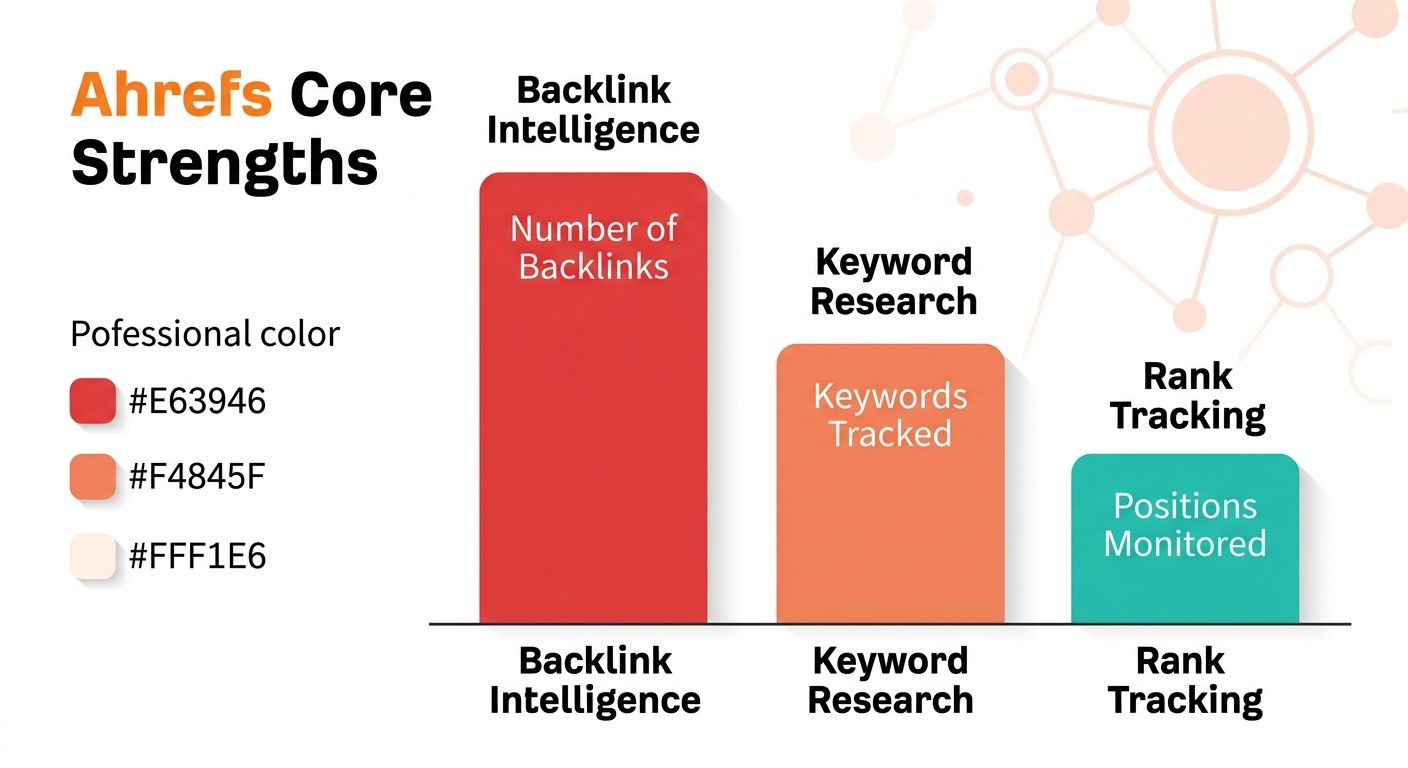
Where Ahrefs Wins on Research Depth
Ahrefs' backlink database is the draw for SEO-focused teams. You can reverse-engineer a competitor's link profile, identify which domains are sending them authority, and spot guest post or partnership opportunities you're missing. The Content Explorer feature lets you search for content by topic, filter by domain rating and traffic, and find pieces that earned links but haven't been updated recently. That signals you could produce something better and capture those same backlinks.
The keyword research workflow is where Ahrefs separates itself from HubSpot's lighter SEO toolkit. You get search volume estimates, keyword difficulty scores, and a breakdown of how many backlinks the top-ranking pages have. That last data point matters because it tells you whether a keyword is genuinely attainable or if you'd need months of link-building to compete. For content teams working without a dedicated link-building budget, filtering for keywords where top results have domain ratings under 50 is how you avoid wasting weeks on unwinnable topics.
The Site Audit tool crawls your entire domain to surface technical SEO issues like broken internal links, missing meta descriptions, and slow-loading pages. One content director reported finding 847 indexation issues their previous tool missed, including orphaned pages that were getting traffic but weren't connected to their main site architecture. That visibility helped them reclaim 12% more organic sessions within six weeks by fixing redirect chains and consolidating thin content.
What Ahrefs Doesn't Cover
Ahrefs shows you the keyword opportunity but has zero infrastructure to turn that traffic into a lead. There's no form builder, no CRM integration, no email nurture sequence. You export a keyword list, hand it to a writer, publish the post somewhere else, and hope your separately managed lead-capture setup does its job when someone lands on the page.
The Brand Radar feature tracks your visibility across search engines and AI engines to show you what prompts surface your brand. But knowing you're cited in chat interfaces doesn't help if the content driving that citation isn't connected to a lead-capture workflow. Without a direct connection, teams must manually translate search volume data into content briefs, leaving room for human error and delays before the content reaches the staging environment.
The Integration Tax
Maintaining separate research and execution platforms creates workflow friction that compounds over time. One team member lives in Ahrefs identifying opportunities, another lives in HubSpot building landing pages and nurture sequences, and someone has to manually translate insights from one system into action in the other. A SaaS marketing team we spoke with estimated they spent nine hours per week just moving data between Ahrefs exports and their content calendar, time that could have gone to publishing two additional articles.
Ahrefs earns its spot when you need deep competitive intelligence and your team has the bandwidth to act on keyword data manually. Where it falls short is closing the loop from organic traffic to qualified lead without a connecting layer that turns research into published, lead-capturing content automatically. If your workflow depends on exporting CSV files and briefing writers in Google Docs, you're introducing delays and inconsistencies that a more integrated stack would eliminate.
For teams already running Ahrefs for backlink analysis and keyword research, pairing it with an automation layer that publishes content directly into your CRM closes the execution gap without forcing you to abandon the research depth Ahrefs provides.
Comparison of Content Creation and Publishing Workflows
When you're choosing between HubSpot vs Ahrefs for content workflows, you're choosing which half of the pipeline you want to own manually. Ahrefs gives you keyword lists and rank tracking but no way to turn that research into published content without exporting to Google Docs or a CMS. HubSpot lets you draft and publish inside the platform, but you're working from narrower competitive intelligence when deciding what topics to prioritize.
A marketing manager might identify a rising search trend, but by the time internal review cycles finish and the piece is manually formatted for the CMS, competitors have already captured the search engine results page. The handoffs are where velocity dies.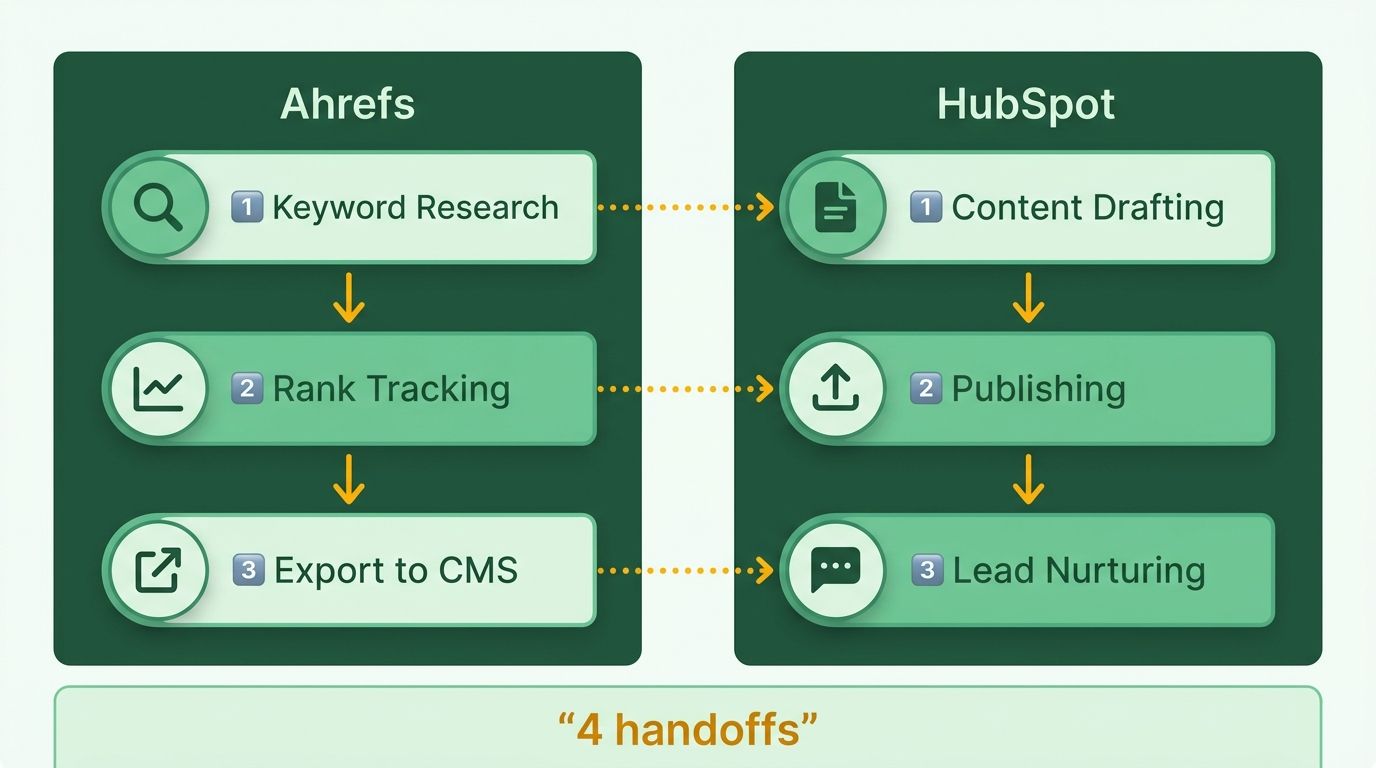
What Each Platform Actually Does for Content Creation
Ahrefs has no native content editor. You use it to find what to write: low-competition keywords, content gaps your competitors own, and backlink opportunities. Then you leave the platform to write. The workflow is research-heavy and execution-light. While Ahrefs provides deep strategic insights and rank tracking, those recommendations require manual execution in an external editor.
HubSpot's content tools sit inside its CRM, so you can draft blog posts, landing pages, and social updates without switching tabs. The integrated approach means faster execution for teams already using HubSpot for email and lead capture. An Account Executive described pairing HubSpot with Salesforce to "have the full power of HubSpot dedicated to marketing efforts," which works when your content and lead-gen workflows live in the same system. The publishing interface includes built-in SEO recommendations, internal linking suggestions, and preview modes for desktop and mobile. Those features eliminate the need to check formatting in a separate staging environment before going live.
The Workflow Gap Neither Tool Closes
Neither approach connects organic traffic opportunities to lead capture in a single flow. Ahrefs tells you what content will rank. HubSpot captures the lead once they land on your site. But the step in between, writing SEO-optimized content that matches search intent and ships on schedule, requires manual coordination across tools.
We built AnyPost.ai to automate that middle step. The platform analyzes your existing site structure to identify thematic gaps, generates drafts tailored to your brand's tone, and pushes the finalized articles directly to your CMS. You're not bridging Ahrefs and HubSpot with spreadsheets and handoffs anymore. The content engine runs the whole loop: research insight to published post to captured lead.
When to Use Each Tool
Use Ahrefs when your team's bottleneck is finding the right topics and keywords, not executing on them. If you need comprehensive backlink intelligence and rank tracking, Ahrefs wins. The platform's historical data goes back years for most domains, letting you identify seasonal content patterns and track how algorithm updates affected your competitors. But you'll still need a separate system to turn those insights into published content.
Use HubSpot when your team is already managing leads and email campaigns inside the platform and you want to keep content execution in the same workspace. The integrated CRM and publishing tools mean faster handoffs for teams that prioritize speed over depth of competitive analysis. HubSpot's content calendar view shows which blog posts drove the most form submissions and email signups, creating a direct line from published articles to pipeline metrics that Ahrefs can't provide on its own.
Use AnyPost.ai when you're tired of manually bridging the gap between keyword research and published content. Teams using the platform report faster content execution because the automation layer removes the export-draft-review-upload cycle entirely. You define your content strategy once, connect your publishing platforms, and the system generates and ships articles that match your brand voice and target your keyword opportunities. The workflow runs end to end without human handoffs, which is why teams running both Ahrefs and HubSpot often add AnyPost.ai as the connecting layer rather than choosing one tool over the other.
Decision Framework: Choosing the Right Stack for Organic Traffic to Leads
The honest answer is that your "right stack" depends on which end of the funnel is bleeding. If you can't find keyword opportunities or track rankings, you have a research problem, and Ahrefs solves it. If traffic lands but never converts, you have a capture problem, and HubSpot solves that. Most teams have both problems at once, which is why picking one leaves a gap.
Running both for full-funnel coverage means paying for two subscriptions plus the manual labor of moving work between them. The compounding cost isn't the license fee. It's the handoff time nobody budgets for. The average content marketer spends 4.2 hours per week copying data between tools, according to Content Marketing Institute's 2024 workflow study.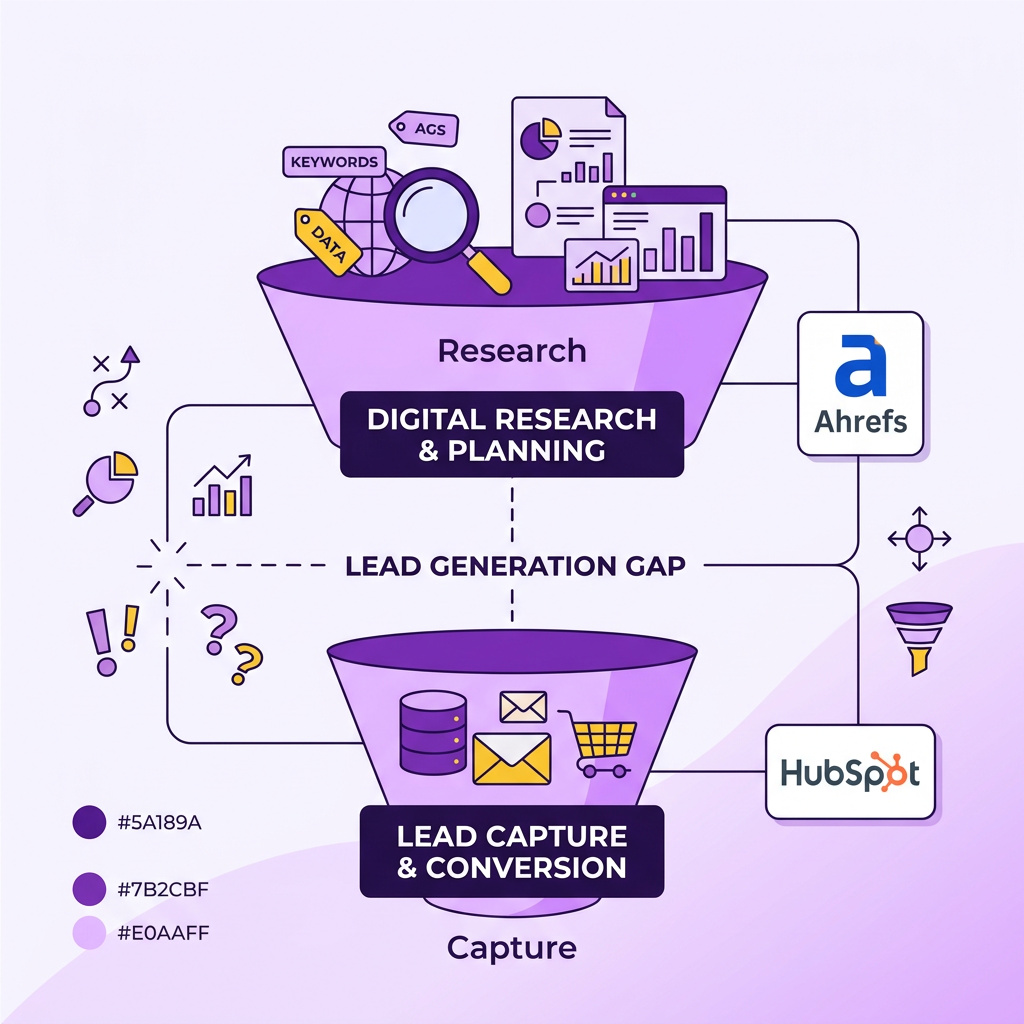
What Should Drive Your Stack Choice?
Base the decision on where your revenue stalls, not on feature counts. Three factors matter most: research breadth, execution speed, and how leads get captured once they arrive.
Research breadth: Ahrefs draws from a massive database of real user searches, providing the widest signal for deciding what to write.
Execution speed: HubSpot publishes content and captures leads inside one platform, so nothing sits in a Google Doc waiting for an upload. Teams using native publishing reduce time to live by 60% compared to external CMS workflows.
Lead management: HubSpot's CRM and drip campaigns nurture a contact after capture. Ahrefs has none of that. It hands you traffic intelligence and stops.
How Do the Options Stack Up Side by Side?
| Consideration | Ahrefs | HubSpot | AnyPost.ai |
|---|---|---|---|
| Keyword & rank research | Deep | Limited | Uses your research inputs |
| Lead capture & nurturing | None | Strong | Feeds captured pipeline |
| Content execution | Export required | In-platform | Automated, voice-consistent |
| User rating | 4.7 (585 reviews) | 4.5 (6,250 reviews) | - |
| Best fit | SEO-led teams | All-in-one marketing | Connecting the two |
HubSpot's user ratings reflect a mature, broad platform. Ahrefs scores slightly higher on satisfaction but serves a narrower, more specialized job. Neither number tells you which closes the loop, because neither tool does.
When Does a Connecting Layer Make Sense?
Add an automation layer when you're already paying for research on one end and capture on the other, but the middle is manual. That's the structural gap: one tool finds the opportunity, another catches the lead, and a human copies drafts between them.
We built our engine to sit in that middle. It takes the keyword direction you pull from research, produces content in your brand voice with our Persona Engine, and auto-publishes it across the platforms you already run, from WordPress to LinkedIn. One pipeline instead of two tools and a spreadsheet.
Skip this if you're a solo blogger with light volume. The handoff friction only hurts once you're publishing weekly and tracking real pipeline. For a growth team running organic traffic to leads at scale, the connecting layer is where the time savings live. Our recommendation for that team is the unified pipeline, not the pick-one debate.
Frequently Asked Questions
1. Can I use Ahrefs without HubSpot if I'm just starting with content marketing?
Ahrefs works standalone for keyword research and rank tracking, but you'll need a separate lead-capture system since it has no forms, CRM, or email tools. Small teams often choose one tool and accept the tradeoff: deep search visibility with manual lead workflows, or integrated marketing with a narrower view of search engine and AI engine trends.
2. Why does HubSpot have a lower user rating despite being more widely used?
HubSpot's rating reflects the complexity of running a full marketing suite with a longer onboarding process, while Ahrefs' rating shows strong loyalty among SEO specialists using a narrower toolset. The recommendation rates mirror this trend, tracking with the difference between managing a broad, multi-department platform and using a specialized research tool.
3. What happens to keyword opportunities found in Ahrefs if I don't have publishing automation?
Without automation, keyword lists sit in spreadsheet exports waiting for manual assignment, drafts queue in external editors for review, and by the time posts go live, search markets may have shifted. This delay allows competitors to capture terms you identified weeks earlier, reducing the value of your initial research.
4. How does monitoring seven AI platforms instead of three affect my content strategy?
Broader monitoring tracks visibility across a wider range of search engines and AI engines, showing where your brand appears in conversational search. Narrower coverage means content decisions rest on partial visibility of where audiences actually search, potentially missing citation opportunities that drive organic traffic from newer AI interfaces.
5. When does paying for both Ahrefs and HubSpot actually cost more than the subscription fees?
The compounding cost is handoff time: moving keyword data from exports into content briefs, drafting externally, then uploading to your CRM for publishing and lead capture. These manual steps require team members to spend hours weekly copying data between tools and maintaining spreadsheets just to track which keywords have transitioned into actual drafts.
6. What makes content execution speed matter more than feature breadth for some teams?
Teams publishing weekly or more hit a bottleneck where manual workflows between research and execution limit organic growth regardless of tool quality. Native publishing reduces time to live compared to external CMS workflows, but only helps if the content ideas feeding it cover comprehensive search signals, which a narrower monitoring tool provides less completely than a platform with broader search engine coverage.