
Lead Generation Services B2B Checklist: Consistent Brand Voice Essentials

Section 1: Introduction to Consistent Brand Voice
Brand voice refers to the consistent tone, style, and personality a brand uses to communicate its identity across platforms, including social media and marketing content [1]. In B2B lead generation, it acts as a foundational element that differentiates a brand from competitors and ensures messaging aligns with audience expectations [2]. For example, maintaining a cohesive voice across LinkedIn posts and email campaigns reinforces a brand’s reliability and expertise, critical for attracting decision-makers in enterprise settings [1]. This alignment directly impacts how prospects perceive a brand’s professionalism and credibility, which are key drivers in B2B purchasing decisions [2].
Importance of Consistency
Consistency in brand voice is essential for maintaining a unified identity across all touchpoints, such as content marketing, social media, and client-facing communications [2]. When a brand consistently applies its defined tone and messaging, it strengthens recognition and trust among target audiences [1]. For instance, B2B companies that standardize their voice in LinkedIn lead generation campaigns report higher engagement rates, as prospects can easily identify and connect with the brand’s values [2]. Conversely, inconsistent messaging risks confusion and dilutes the brand’s core identity, reducing the effectiveness of lead-generation efforts [1]. As mentioned in the [Section 2: Assessing Current Brand Voice] section, tools like style guides and voice audits can help identify inconsistencies and reinforce adherence to the defined tone [2]. By aligning all marketing strategies under a single, coherent voice, brands ensure a seamless experience for prospects, fostering familiarity and reinforcing their market position [2].
Impact on Customer Trust and Loyalty
A consistent brand voice builds trust by demonstrating reliability and professionalism—traits highly valued in B2B environments where decisions often involve multiple stakeholders [1]. When messaging remains uniform across platforms, prospects develop a sense of confidence in the brand’s commitment to its promises [2]. For example, consistent tone in blog content and social media posts contributes to credibility, increasing the likelihood of converting leads into long-term clients [1]. Over time, this trust translates into loyalty, as businesses prefer partners they perceive as dependable and aligned with their operational goals [2]. Additionally, consistent messaging reduces friction in the sales process by ensuring prospects recognize the brand’s offerings and values across all interactions [1]. This loyalty not only improves retention but also encourages referrals, which are vital for sustainable B2B growth [2].
Practical Applications in B2B Lead Generation
To operationalize a consistent brand voice in B2B lead generation, teams must document tone guidelines and ensure cross-channel alignment. See the [Section 4: Implementing Consistent Brand Voice Across Channels] section for more details on aligning content through a content calendar. For example, a brand might define its voice as authoritative yet approachable to balance expertise with relatability [1]. These guidelines should be shared with content creators, social media managers, and sales teams to maintain uniformity [2]. See the [Section 8: Best Practices for Maintaining a Consistent Brand Voice] section for more details on establishing a documented brand voice guide. Tools like style guides and voice audits can help identify inconsistencies and reinforce adherence to the defined tone [2]. Regular training sessions for marketing teams further ensure that all members understand how to apply the brand voice in diverse scenarios, from LinkedIn posts to client proposals [1]. By embedding consistency into workflows, brands enhance their ability to generate high-quality leads while strengthening relationships with prospects [2].
Section 2: Assessing Current Brand Voice
Conducting a Brand Voice Audit
- Review all existing content (website copy, social media posts, email campaigns, sales materials) to document current tone, language, and messaging patterns. This establishes a baseline for evaluating consistency [1]. For foundational definitions of brand voice, see the [Introduction to Consistent Brand Voice] section.
Identifying Inconsistencies
- Compare tone and language across departments (marketing, sales, customer support) to detect disparities in messaging. Source [2] highlights that disjointed communication undermines trust in B2B contexts. Refer to the [Best Practices for Maintaining a Consistent Brand Voice] section for guidance on creating alignment.
Evaluating Brand Voice Across Channels
- Assess how tone and language align with platform norms (e.g., LinkedIn’s professional tone vs. Twitter’s concise style). Source [2] outlines B2B social media best practices that balance platform requirements with brand consistency. For strategies on aligning content with lead generation goals across platforms, see the [Implementing Consistent Brand Voice Across Channels] section.
Documenting Findings
- Create a report summarizing audit results, including examples of inconsistencies and audience feedback. This provides actionable insights for refining brand voice [1]. Refer to the [Best Practices for Maintaining a Consistent Brand Voice] section for guidance on formalizing these findings into a brand voice guide.
Section 3: Developing a Unique Brand Voice
Define Target Audience for Brand Voice Alignment
- Research industry-specific challenges and priorities to align brand messaging with audience needs. B2B buyers often prioritize problem-solving and ROI, so brand voice must reflect expertise and reliability [2].
- Map decision-maker personas to tailor tone and language. For example, technical decision-makers may require precise terminology, while executives might prioritize high-level value propositions [1].
- Analyze competitors’ brand voices to identify gaps and opportunities for differentiation. This ensures your messaging stands out while addressing unmet audience needs [2]. As mentioned in the [Section 2] section, competitor analysis is a key part of understanding your market position.
Create a Brand Voice Chart for Consistency
- Document core brand attributes such as formality, emotional tone (e.g., authoritative vs. approachable), and key messaging pillars. This serves as a reference for all content creators [1]. See the [Section 8] section for more details on establishing a brand voice guide.
- Assign language preferences for different platforms (e.g., LinkedIn vs. email). For instance, LinkedIn may require concise, thought leadership-focused language, while emails might use a more personalized tone [2].
- Include examples of acceptable and unacceptable phrasing to avoid ambiguity. This helps teams maintain consistency across campaigns and reduces misinterpretation [1].
Establish a Tone and Language Guide
- Define grammatical and stylistic rules (e.g., active vs. passive voice, capitalization preferences). Source [2] emphasizes that structured guidelines prevent inconsistencies in B2B communications.
- Specify jargon and terminology boundaries. Avoid overusing industry-specific jargon to ensure clarity, but retain enough technical terms to establish credibility with niche audiences [1]. Building on concepts from [Section 8], this step ensures clarity while maintaining expertise.
- Outline emotional cues such as urgency, empathy, or innovation. For example, a cybersecurity brand might adopt a protective, cautionary tone to resonate with risk-averse clients [2].
Integrate Brand Voice Into Lead Generation Workflows
- Train sales and marketing teams on the brand voice chart to ensure alignment during client interactions. Source [1] notes that social media success hinges on cohesive messaging, which applies broadly to B2B lead generation.
- Audit content regularly for adherence to the tone guide. Use tools like grammar checkers with custom dictionaries or peer review systems to catch deviations [2].
- Update the brand voice framework annually to reflect market shifts or product changes. Source [2] highlights that evolving brand voice maintains relevance in dynamic B2B environments.
By systematically defining the target audience, documenting brand voice elements, and embedding guidelines into workflows, organizations can create a recognizable identity that resonates with B2B buyers. This structured approach ensures all communications—from social media posts to email campaigns—reinforce trust and clarity, directly supporting lead generation goals [1][2].
Section 4: Implementing Consistent Brand Voice Across Channels
-
Align content with brand voice and lead generation goals. A content calendar ensures all posts across social media, blogs, and newsletters reflect the same tone and messaging, which is critical for B2B lead generation [2]. As mentioned in the Introduction to Consistent Brand Voice section, brand voice directly impacts how B2B audiences perceive expertise and trustworthiness. Schedule posts to maintain a consistent presence while reinforcing key brand attributes like professionalism and expertise [1].
-
Define brand tone, keywords, and prohibited terms. A style guide explicitly outlines the brand’s voice (e.g., authoritative vs. approachable) and approved terminology, ensuring alignment across all content [2]. See the Best Practices for Maintaining a Consistent Brand Voice section for more details on establishing a brand voice guide. This is especially critical for B2B audiences, where clarity and trust are prioritized [1].
-
Track engagement metrics across channels. Analyze metrics like LinkedIn post shares, blog time-on-page, and email open rates to assess how well the brand voice resonates with B2B audiences [2]. Building on concepts from the Measuring and Optimizing Brand Voice Effectiveness section, use these insights to refine messaging strategies while maintaining core brand principles [1].
Section 5: Automating Content Generation for Consistency
Benefits of Automated Content Generation
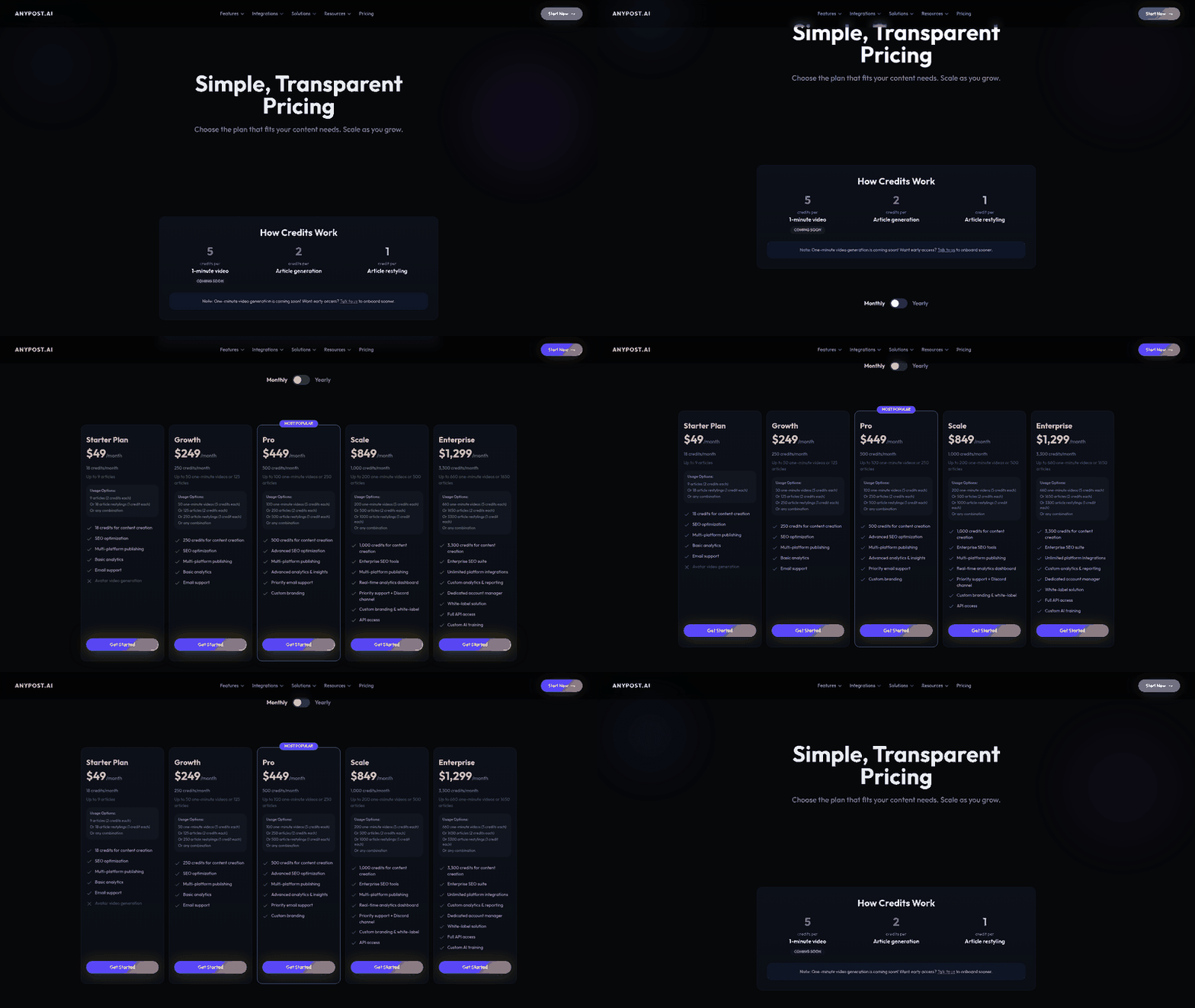
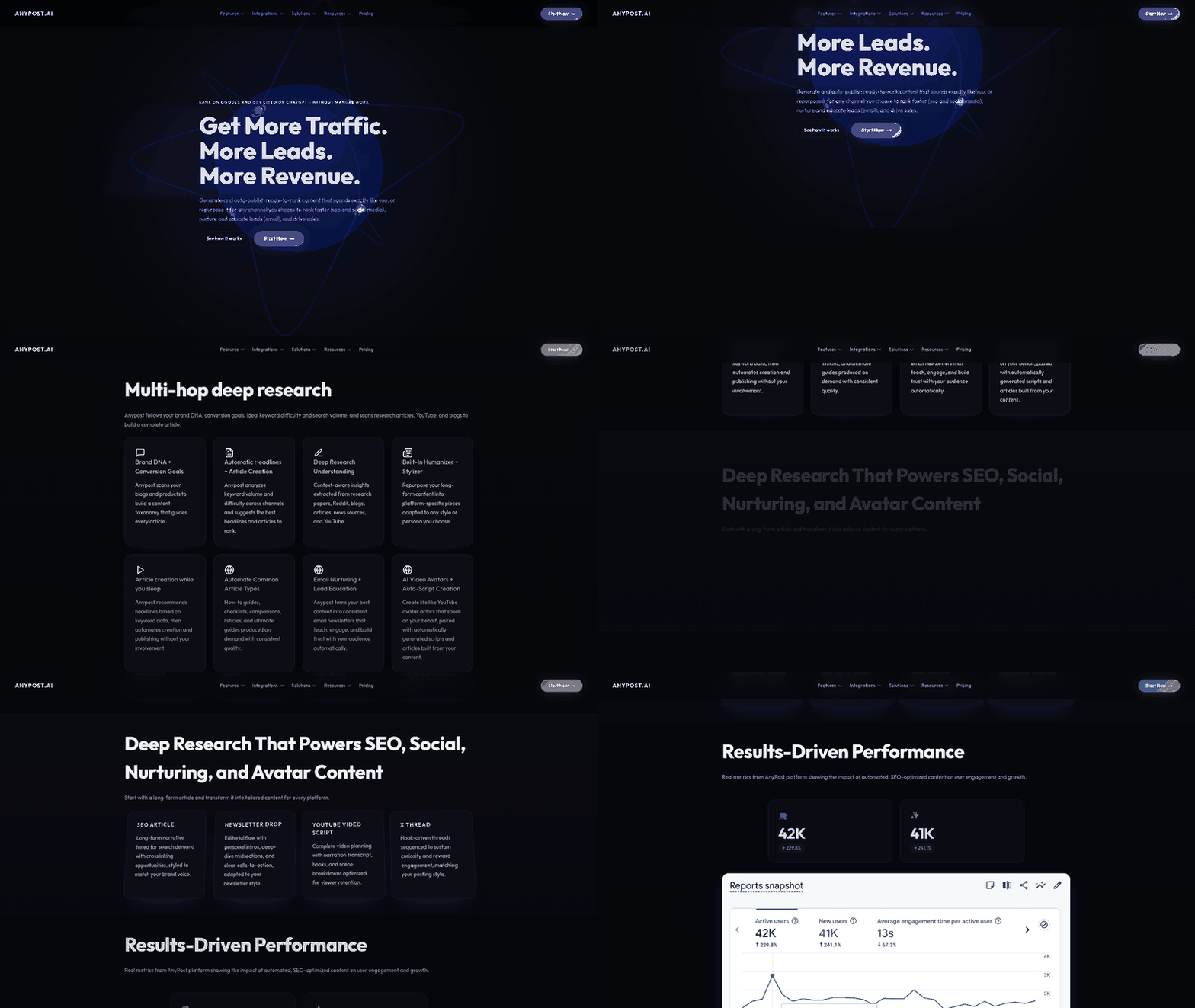
- Implement AI-powered content tools to standardize brand voice across platforms [1]. These tools use pre-defined tone and style guidelines to ensure messaging aligns with brand identity, reducing inconsistencies in blog posts, social media, and email campaigns. As mentioned in the Introduction to Consistent Brand Voice section, brand voice is foundational to maintaining identity across platforms.
- Leverage SEO-optimized publishing features to maintain visibility while adhering to brand guidelines [1]. Automated tools can integrate keyword research with content creation, ensuring SEO best practices are followed without compromising brand voice.
- Scale content production for B2B lead generation channels like LinkedIn, blogs, and newsletters [1]. Automation enables rapid creation of platform-specific content (e.g., LinkedIn posts tailored for professional audiences) while preserving a unified tone. Building on concepts from the Implementing Consistent Brand Voice Across Channels section, aligning AI-generated content with existing channel strategies is critical.
Selecting the Right Automation Tools
- Prioritize tools that support multi-channel publishing workflows [2]. Integration with platforms like LinkedIn ensures automated content distribution aligns with audience expectations for B2B engagement.
- Validate tools with customizable brand voice templates [1]. For example, configure AI generators to reflect your brand’s specific terminology, formality level, and messaging priorities before deployment. See the Developing a Unique Brand Voice section for more details on defining these priorities.
- Audit tools for collaboration features with marketing teams [2]. Source [2] emphasizes that B2B social media management requires human oversight; automation should include review workflows for teams to refine AI-generated drafts.
Integrating Automation with Marketing Workflows
- Connect automation tools to existing content calendars [2]. Schedule posts using shared calendars to align AI-generated content with seasonal campaigns or product launches.
- Use analytics from automation platforms to refine brand voice [1]. Track engagement metrics across posts to identify which AI-generated variations resonate most with target audiences.
- Ensure SEO tools sync with automated workflows [1]. Source [1] highlights the importance of SEO-optimized publishing; automation should include real-time keyword suggestions during content creation.
Limitations and Mitigations
- Monitor AI output for contextual accuracy [1]. While automation standardizes tone, manual review is critical to catch industry-specific nuances or data inaccuracies.
- Avoid over-reliance on automation for high-stakes content [2]. Source [2] notes that B2B audiences value authenticity; reserve human writing for core messaging like case studies or executive-led posts.
- Train teams on hybrid workflows [1]. Combine AI efficiency with human creativity by designating specific roles for content refinement, such as editors adjusting AI drafts for emotional resonance.
By aligning automated content generation with brand voice principles, B2B marketers can maintain consistency while accelerating lead generation efforts. The key is balancing AI capabilities with strategic human input, as emphasized in [1] and [2].
Section 6: Measuring and Optimizing Brand Voice Effectiveness
Setting Key Performance Indicators (KPIs) for Brand Voice
- Define engagement metrics (e.g., likes, shares, comments) to evaluate how well brand voice resonates with the target audience. These metrics indicate whether tone and messaging align with audience expectations [1]. As mentioned in the [Introduction to Consistent Brand Voice] section, brand voice is foundational to how a brand communicates its identity.
- Establish lead generation KPIs, such as conversion rates and click-through rates (CTR) on calls-to-action, to measure how brand voice influences decision-making [2].
- Track sentiment analysis results to assess emotional responses to brand messaging, ensuring consistency with intended brand personality [1].
Using Analytics Tools to Monitor Engagement
- Leverage social media platform insights (e.g., LinkedIn Analytics, Twitter Analytics) to measure post-level engagement and identify high-performing content patterns [1]. See the [Implementing Consistent Brand Voice Across Channels] section for more details on aligning content with brand voice.
- Integrate Google Analytics to monitor website traffic sources and user behavior, linking brand voice consistency to lead generation outcomes [2].
- Conduct A/B testing on content variations (e.g., formal vs. conversational tone) to quantify the impact of brand voice adjustments on engagement and conversions [2].
Conducting Regular Brand Voice Audits
- Review all content channels (social media, email campaigns, website copy) quarterly to ensure alignment with brand guidelines and organizational goals [1]. Building on concepts from the [Assessing Current Brand Voice] section, regular audits help identify deviations in messaging.
- Compare current brand voice usage against documented guidelines to identify inconsistencies or deviations that may dilute brand identity [2].
- Gather stakeholder and customer feedback through surveys or focus groups to validate whether brand voice meets perceived expectations [1].
Refining Brand Voice Based on Data Insights
- Update brand guidelines annually to reflect shifts in audience preferences or market trends identified through audit findings and engagement data [2].
- Adjust content calendars to prioritize formats (e.g., thought leadership articles, case studies) that demonstrate the highest alignment with brand voice and audience receptivity [1].
- Train marketing teams on audit results and performance gaps to reinforce consistent voice application across all touchpoints [2].
Cross-Functional Collaboration for Optimization
- Share analytics reports with sales teams to correlate brand voice effectiveness with lead quality and conversion rates [2].
- Align brand voice strategies with customer success teams to ensure messaging remains relevant throughout the buyer’s journey [1].
- Document lessons learned from audits and performance reviews to create a feedback loop for continuous improvement [2].
By systematically tracking KPIs, analyzing engagement data, and conducting structured audits, B2B organizations can ensure their brand voice remains a strategic asset that drives lead generation and strengthens market positioning.
Section 7: Repurposing Content for Different Channels
- Audit existing content to identify core messages that align with lead generation goals. Blogs, case studies, and whitepapers often contain key data points or insights suitable for social media posts, email subject lines, or LinkedIn carousel content [1]. As mentioned in the [Section 4: Implementing Consistent Brand Voice Across Channels] section, aligning repurposed content with channel-specific objectives requires careful planning.
- Maintain a brand voice style guide that outlines tone, terminology, and messaging priorities. This guide should inform all repurposed content, from social media captions to email body text [2]. See the [Section 8: Best Practices for Maintaining a Consistent Brand Voice] section for more details on establishing and documenting brand voice standards.
- Note: The sources do not explicitly address automation tools or detailed workflows for repurposing. Strategies referenced rely on platform-native features and manual alignment with brand guidelines [1][2]. Building on concepts from [Section 1: Introduction to Consistent Brand Voice], effective repurposing requires deliberate attention to how brand voice adapts across medium-specific constraints.
Section 8: Best Practices for Maintaining a Consistent Brand Voice
Establishing a Brand Voice Guide
- Create a documented brand voice guide that defines tone, language, and key messaging principles. A formal guide ensures all team members and external partners reference the same standards, reducing inconsistencies across platforms [2]. As mentioned in the [Introduction to Consistent Brand Voice] section, this aligns with the foundational goal of maintaining a unified brand identity.
- Align the guide with audience expectations by specifying how the brand’s voice resonates with B2B decision-makers. For example, LinkedIn content should balance professionalism with approachability to engage leads effectively [1]. See the [Developing a Unique Brand Voice] section for strategies on audience research to inform these choices.
- Integrate lead generation goals into the guide by outlining how messaging drives conversions. This includes emphasizing value propositions and pain-point solutions tailored to B2B audiences [2].
Training Team Members
- Conduct regular workshops to train teams on the brand voice guide. Hands-on sessions help writers, marketers, and sales teams internalize tone and messaging rules, ensuring alignment in content creation [2]. Building on concepts from [Assessing Current Brand Voice], these workshops should reference audit findings to address gaps.
- Assign role-specific training modules for departments like social media management or email marketing. For instance, LinkedIn lead generation teams need distinct guidance on balancing formality with engagement [1].
- Use platform-specific examples during training to demonstrate brand voice in action. Highlight how tone adapts across blogs, newsletters, and social media while maintaining core messaging [2].
Regular Review and Updates
- Schedule quarterly audits of brand voice consistency across all channels. This includes reviewing blogs, social media posts, and sales collateral to identify deviations from the guide [1]. See the [Measuring and Optimizing Brand Voice Effectiveness] section for metrics to track during these audits.
- Update the brand voice guide annually to reflect evolving audience preferences or market trends. For example, shifts in B2B buyer behavior may necessitate adjustments to terminology or communication styles [2].
- Implement feedback loops with stakeholders to refine the brand voice. Gather insights from sales teams, customer support, and marketing to ensure messaging remains relevant and impactful [1].
Cross-Functional Collaboration
- Involve multiple departments in guide creation to ensure buy-in from marketing, sales, and customer success teams. Diverse perspectives help align brand voice with practical needs like lead nurturing and client retention [2].
- Standardize on approved terminology through shared glossaries. This minimizes jargon discrepancies that could confuse B2B audiences or dilute brand authority [1].
- Track brand voice performance metrics such as engagement rates and lead conversion ratios. Use data to identify which messaging strategies resonate most with target audiences [2].
Tools and Resources
- Leverage content management systems (CMS) to enforce brand voice guidelines. Configure templates or approval workflows that flag inconsistencies before publishing [1]. See the [Automating Content Generation for Consistency] section for tools that streamline this process.
- Utilize social media management tools to maintain consistency across platforms. Platforms like LinkedIn require tailored approaches, and automation tools can enforce tone and style rules [2].
- Provide access to centralized repositories for the brand voice guide and related assets. Cloud-based storage ensures teams always reference the latest version, especially during updates [1].
Measuring Success
- Define KPIs for brand voice consistency, such as reduced revision cycles or higher content approval rates. These metrics demonstrate the efficiency gains from standardized messaging [2]. As outlined in [Measuring and Optimizing Brand Voice Effectiveness], these KPIs should align with broader business objectives.
- Compare pre- and post-training performance to quantify the impact of team education. Improved alignment in lead generation content often correlates with higher conversion rates [1].
- Survey internal and external stakeholders for feedback on brand voice clarity. Internal teams and customers can highlight areas where messaging feels disjointed or unclear [2].
By systematically addressing these practices, organizations can maintain a cohesive brand voice that strengthens trust, enhances lead generation efforts, and supports long-term B2B growth. Each step reinforces the connection between consistent messaging and measurable business outcomes, as emphasized in [1] and [2].
References
[1] Why Your Brand Voice Matters on Social Media—and How To Get It ... - https://100poundsocial.com/blog/social-media-marketing/why-your-brand-voice-matters-on-social-media/
[2] The complete guide to B2B social media management - Oktopost - https://www.oktopost.com/blog/complete-guide-b2b-social-media-management/
Frequently Asked Questions
1. What is brand voice, and why is it critical for B2B lead generation?
Brand voice is the consistent tone, style, and personality a brand uses to communicate across platforms. For B2B lead generation, it’s critical because it establishes credibility, differentiates the brand from competitors, and ensures messaging aligns with the professional expectations of decision-makers. A cohesive voice builds trust in complex purchasing environments where stakeholders evaluate reliability and expertise before committing. Without it, brands risk appearing unprofessional or inconsistent, which undermines lead generation effectiveness.
2. How can businesses develop a consistent brand voice across multiple platforms?
Start by defining a clear brand voice that reflects your company’s values, audience preferences, and industry norms. Create a detailed style guide outlining tone (e.g., formal, approachable), language rules, and approved phrases. Train teams and vendors to adhere to these guidelines. Use tools like AI-powered content analysis software (e.g., Grammarly Brand Voice) to audit consistency. Regularly review content across platforms—social media, email campaigns, and client communications—to ensure alignment. Consistency is achieved through repetition, so integrate the voice into all marketing strategies, from LinkedIn posts to white papers.
3. What tools or methods help maintain brand voice consistency?
Key tools include:
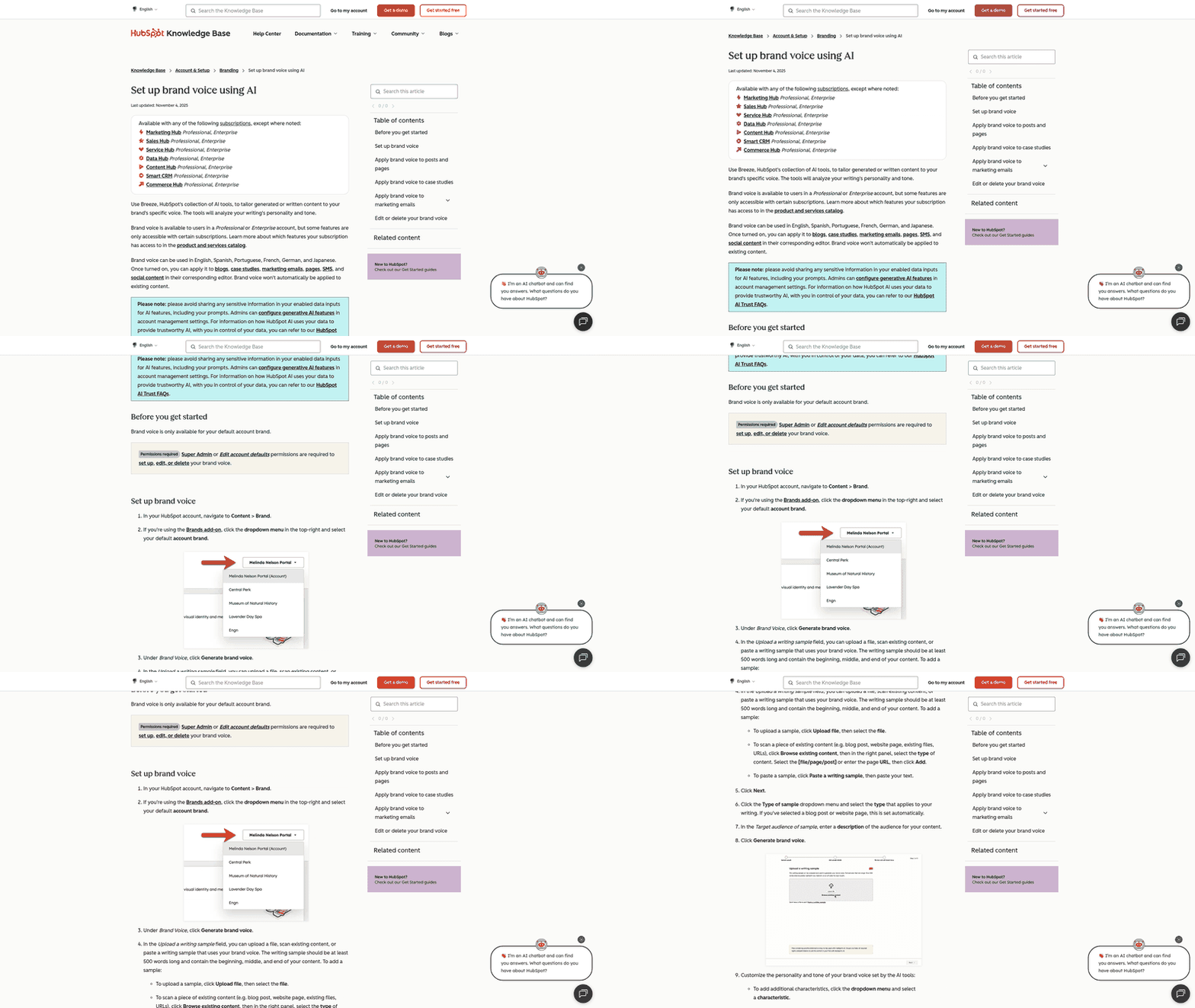
- Style guides (e.g., HubSpot’s brand voice templates) to document tone and language rules.
- Voice audits to identify inconsistencies in existing content.
- Collaboration platforms (e.g., Notion, Slack) with shared style resources for teams.
- AI writing assistants (e.g., Acrolinx) to flag deviations in tone.
Additionally, schedule quarterly reviews of all touchpoints to reinforce consistency. Training workshops for marketing teams also ensure everyone understands the brand’s voice and its strategic importance.
4. How does inconsistent brand voice impact B2B lead generation efforts?
Inconsistency creates confusion among prospects, diluting the brand’s identity and reducing trust. For example, a formal tone on LinkedIn paired with casual language in email campaigns may signal a lack of professionalism. This inconsistency can lead to lower engagement, reduced lead conversion rates, and missed opportunities to build long-term relationships with decision-makers. Prospects in B2B settings rely on consistent messaging to assess reliability, so disjointed communication often results in lost credibility and wasted marketing spend.
5. Can you provide an example of how consistent brand voice strengthens customer trust?
Imagine a B2B SaaS company that uses a confident, data-driven tone in all communications—from LinkedIn thought leadership to client onboarding emails. This consistency reinforces their expertise and reliability, making prospects more likely to trust their solutions. For instance, a consistent emphasis on “innovation” and “security” across case studies, webinars, and sales calls signals to enterprise clients that the brand is a dependable partner. Over time, this familiarity fosters loyalty, as stakeholders feel confident in the brand’s ability to meet their complex needs.
6. What are common mistakes businesses make when establishing their brand voice?
Common pitfalls include:
- Overly broad definitions (e.g., “professional” without specific examples).
- Ignoring audience preferences (e.g., using jargon for a technical audience might backfire).
- Neglecting to update voice as the market or company evolves.
- Inconsistent application across departments (e.g., sales using a casual tone while marketing remains formal).
To avoid these, conduct audience research, define voice with actionable examples, and regularly revisit guidelines to ensure alignment with business goals.
7. How can a brand measure the effectiveness of its brand voice strategy?
Track metrics such as engagement rates (e.g., LinkedIn post likes, email open rates), lead conversion rates, and brand sentiment analysis from social listening tools (e.g., Brandwatch). Surveys can also gauge how well the voice resonates with prospects. For example, if 70% of leads describe the brand as “reliable” in feedback, it indicates the voice successfully communicates trustworthiness. Compare these metrics against competitors and refine the strategy based on data-driven insights.