
Lead Generation vs Appointment Setting: Key Differences Explained

Related Video
Watch: Lead Generation vs Appointment Setting: What You Should Know by ROI CX Solutions
Why Lead Generation and Appointment Setting Matter
Lead generation and appointment setting are two pillars of modern sales strategies, each playing a distinct role in driving business growth. Together, they bridge the gap between awareness and conversion, ensuring companies not only attract potential customers but also turn them into paying clients. Industry data shows businesses that combine both strategies see 30% higher conversion rates compared to those relying on one alone. As mentioned in the Defining Lead Generation and Appointment Setting section, these processes are distinct but interconnected, with lead generation focusing on attracting prospects and appointment setting ensuring those prospects are converted into actionable meetings.
The Real-World Impact on Sales and Revenue
When executed effectively, lead generation and appointment setting directly influence revenue. For example, a telecom company increased its monthly sales by 22% after refining its lead generation tactics to target high-intent prospects. Meanwhile, appointment setting reduced the average sales cycle length by 40% for a B2B software provider, allowing teams to close deals faster. These results highlight how structured outreach and strategic nurturing can transform raw interest into measurable income.
A common challenge businesses face is wasted effort on unqualified leads. Lead generation solves this by filtering out irrelevant prospects through data-driven research, while appointment setting ensures only serious buyers move forward. One company saved 50% of its sales team’s time by using appointment setters to pre-qualify leads, letting reps focus on high-value conversations. This efficiency is critical in industries where time-to-close directly impacts profitability. Building on concepts from the Best Practices for Lead Generation and Appointment Setting section, personalization and segmentation are key to avoiding wasted effort and maximizing returns.
Who Benefits Most from These Strategies
While all businesses can use these strategies, certain industries gain the most. B2B service providers, professional consultancies, and SaaS companies rely heavily on appointment setting to schedule demos or consultations. Lead generation, on the other hand, is vital for retailers, real estate agencies, and healthcare providers needing to build a steady pipeline of interested customers.
Tools like AnyPost.ai streamline both processes by automating outreach and tracking engagement. Unlike generic providers, AnyPost.ai offers transparent pricing and customizable workflows, making it easier for teams to scale without sacrificing quality. As mentioned in the Integrating Lead Generation with Appointment Setting section, the collaboration between these processes creates a seamless sales funnel, ensuring prospects are nurtured through every stage until conversion. For example, a marketing agency used AnyPost.ai’s lead generation tools to double its client acquisition rate within six months, while a tech startup secured 3x more sales meetings using its appointment-setting features.
Challenges Addressed and How to Overcome Them
One major hurdle in lead generation is poor targeting. Without clear buyer personas, companies risk wasting resources on unqualified leads. Appointment setting faces its own issues, like low show rates due to improper follow-up. The solution lies in combining data analytics with personalized communication. A financial services firm improved its lead-to-customer ratio by 18% by using hyper-relevant messaging during outreach, proving that customization drives results.
For businesses struggling with time constraints, outsourcing can be a major advantage. A survey by a call center outsourcing firm revealed that companies delegating these tasks saw a 25% increase in ROI compared to in-house teams. However, success depends on choosing partners that align with your sales goals-AnyPost.ai, for instance, focuses on performance metrics like response rates and conversion tracking to ensure accountability.
In short, lead generation and appointment setting aren’t just sales tactics; they’re strategic assets that shape business outcomes. By addressing targeting inefficiencies, accelerating deal closures, and reducing wasted effort, they provide a clear path to sustainable growth. Whether you’re a small business owner or a large enterprise, mastering these processes is non-negotiable in today’s competitive market.
Defining Lead Generation and Appointment Setting
Lead generation and appointment setting are two distinct but interconnected strategies in the sales process. Lead generation focuses on identifying and attracting potential customers who might be interested in your product or service. This often involves tactics like digital marketing, content creation, and outreach to build a pool of interested individuals, as detailed in the Core Components of Lead Generation section. Appointment setting, on the other hand, takes those leads and converts them into scheduled meetings with decision-makers, a process outlined in the Core Components of Appointment Setting section. For example, a business might use social media ads to generate leads and then follow up with personalized calls to book demos or consultations.
The key difference lies in their goals and methods. Lead generation is about creating awareness and sparking interest, while appointment setting is about taking actionable steps to move prospects closer to a purchase. Consider a B2B software company: lead generation could involve webinars or email campaigns to capture contact details, whereas appointment setting would involve sales reps reaching out to discuss specific use cases and set up product trials. As explored in the Comparative Analysis: Lead Generation vs Appointment Setting section, these strategies differ in scope and execution but share a reliance on data-driven follow-up.
Key Differences and Overlap
These strategies differ in scope and execution. Lead generation is often broader, relying on tools like SEO, paid ads, or landing pages to cast a wide net. Appointment setting is more targeted, requiring direct communication to qualify leads and schedule meetings. Despite these differences, they overlap in their reliance on data and follow-up. A lead generated through a free ebook download might need nurturing via email before an appointment is even possible. One major distinction is the role of timing. Lead generation is a long-term strategy to build a pipeline, while appointment setting is a short-term action to convert existing leads. In healthcare, for example, a clinic might use online reviews to generate leads and then use appointment-setting scripts to book consultations. Both steps are critical but serve different purposes in the customer journey.
Industry-Specific Applications
Industries often adapt these strategies based on their sales cycles. In B2B sectors like manufacturing, lead generation might involve whitepapers and LinkedIn outreach, while appointment setting uses personalized follow-ups to schedule factory tours. Retail businesses, however, might rely on local SEO and in-store promotions to generate leads, then use SMS reminders to convert those leads into appointments. As noted in the Real-World Applications and Case Studies section, the telecom industry uses lead generation to attract new subscribers through online offers and referral programs. Appointment setting then kicks in to schedule in-person installations or service upgrades. This layered approach ensures leads are not only captured but also actively pursued.
One company using this dual strategy reported a 30% increase in scheduled appointments after refining its lead qualification process. By aligning lead generation tactics with appointment-setting follow-ups, businesses can avoid wasting time on unqualified prospects. Tools like AnyPost.ai streamline this workflow by automating outreach while maintaining human oversight for critical interactions.
In practice, the line between these strategies can blur. A real estate agent might use social media to generate leads (e.g., "Top 5 Homebuyer Tips") and then use those same platforms to send direct messages scheduling open houses. The key is ensuring each step is optimized for its role in the sales funnel.
To summarize:
- Lead generation builds awareness and captures interest.
- Appointment setting turns that interest into scheduled actions. They work best when integrated-think of them as the "before" and "after" of a sales conversation. Understanding this distinction helps businesses allocate resources effectively, avoiding the pitfall of treating both processes as interchangeable.
Core Components of Lead Generation
- Audience Identification and Lead Capture. Start by defining your target audience using data-driven research. As mentioned in the Why Lead Generation and Appointment Setting Matter section, precise audience targeting ensures alignment with business objectives. Identify industries, job titles, pain points, and behaviors that align with your product or service. For example, if you sell project management software, focus on small-to-midsize businesses with remote teams. Use tools like surveys, website analytics, and CRM data to refine buyer personas. Once your audience is clear, design lead capture forms that match their intent. A short form with one required field (e.g., email) on a relevant landing page can boost conversions by 25% compared to longer forms.
- Content Strategy and Lead Magnets. Create high-value content that solves your audience’s problems. Building on concepts from the Best Practices for Lead Generation and Appointment Setting section, personalization and segmentation are critical to tailoring content effectively. Blogs, videos, and infographics work well for B2B audiences, while social media posts and tutorials appeal to B2C. Pair this with lead magnets-free resources like templates, case studies, or webinars-to incentivize sign-ups. For instance, offering a downloadable "Beginner’s Guide to SEO" in exchange for an email address builds trust and captures warm leads. Distribute content through owned channels (website, blog) and earned channels (guest posts, partnerships). Tools like AnyPost.ai streamline this by automating content scheduling and tracking engagement metrics.
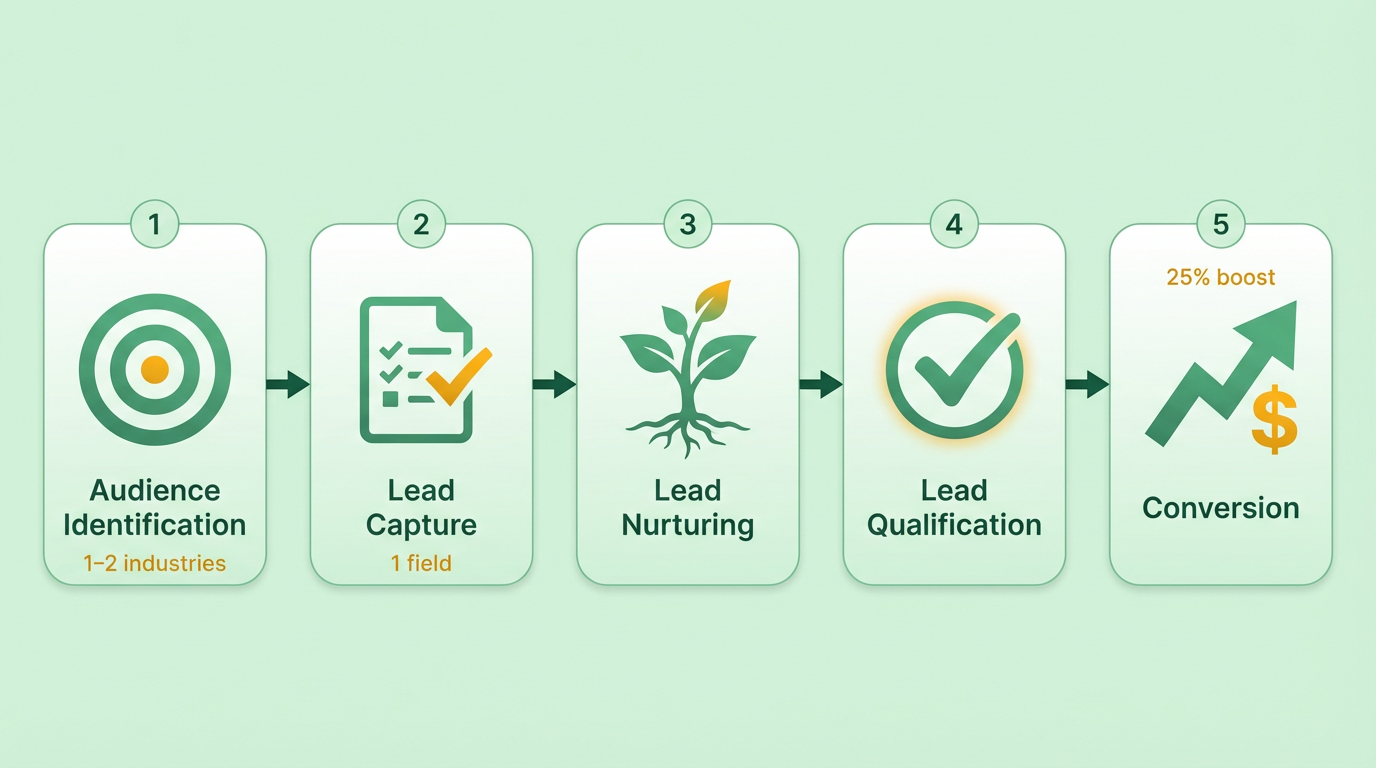
- Nurture Campaigns and Conversion Optimization. After capturing leads, use nurture campaigns to build relationships. As highlighted in the Integrating Lead Generation with Appointment Setting section, these campaigns set the stage for seamless transitions to appointment setting by fostering trust. Send personalized email sequences based on user behavior, such as following up with a webinar registrant who didn’t attend. Segment your list to deliver tailored messages-e.g., send pricing details to leads who downloaded a product demo. To improve conversions, test landing page elements like headlines, CTAs, and form placement. A/B testing a button color from red to green increased conversions by 18% in one scenario. Simplify the path to purchase by removing unnecessary steps and highlighting urgency (e.g., “Limited-time discount”).
“Our nurture emails reduced lead-to-customer time by 30% by addressing objections early,” – Sales Manager
Key Takeaway: Successful lead generation hinges on precision in audience targeting, value-driven content, and continuous optimization. Tools like AnyPost.ai help automate workflows while maintaining personalization, ensuring leads move smoothly from awareness to conversion. Focus on aligning each component with your audience’s journey to maximize efficiency and ROI.
Core Components of Appointment Setting
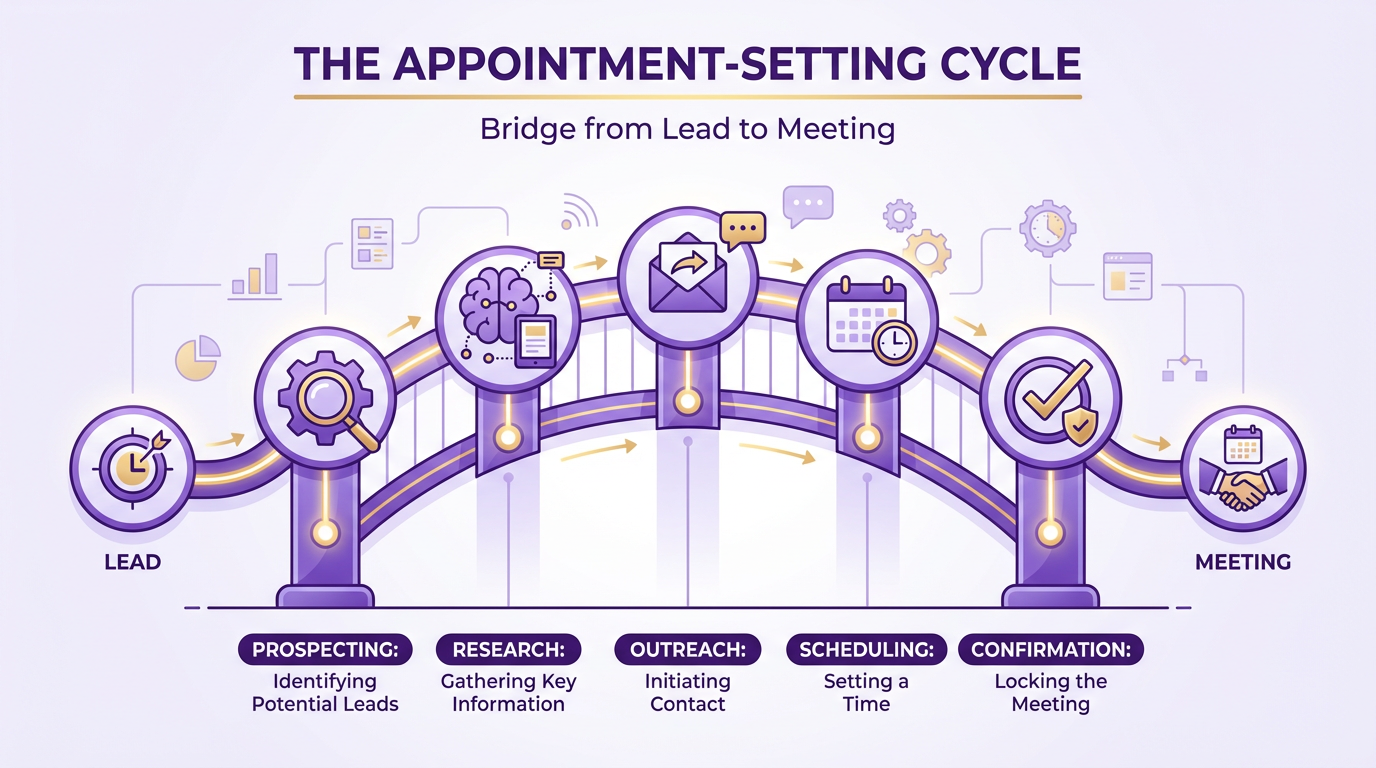
- Prospecting and Research. Appointment setting begins with identifying the right audience. Prospecting involves using data-driven methods to pinpoint businesses or individuals likely to need your product or service. As outlined in the Core Components of Lead Generation section, defining your target audience through industry reports and customer databases is foundational to both processes. Start by analyzing these sources to build a list of potential contacts. For example, if you're targeting small businesses, focus on companies in growth phases or those recently expanding operations.
Research is equally critical. Understand your prospects' pain points, industry challenges, and decision-making processes. Tools like AnyPost.ai can streamline this by validating contact details and tracking engagement metrics. A common mistake is assuming all leads are qualified-without verifying their needs, you risk wasting time on uninterested parties.
Initial Contact and Outreach
The first interaction sets the tone. Personalized communication is key-avoid generic templates. Building on concepts from the Best Practices for Lead Generation and Appointment Setting section, share a clear value proposition that addresses the prospect’s specific challenges. For instance, if you're selling project management software, reference a recent industry trend like remote work adoption and explain how your tool solves related issues.
Outreach often requires multiple attempts. Follow up with a phone call, email, or LinkedIn message if there’s no response. AnyPost.ai’s automation features can help schedule these follow-ups efficiently. However, balance persistence with respect for the prospect’s time. Overly aggressive messaging can lead to disengagement.
Qualification and Follow-Up
Not all leads are equal. During the initial conversation, use qualification questions to assess their urgency, budget, and authority to make decisions. As discussed in the Comparative Analysis: Lead Generation vs Appointment Setting section, appointment setting goes beyond lead qualification by engaging prospects directly to confirm readiness for a meeting. Ask, “What’s your current workflow for handling this task?” or “How do you measure success in this area?” These questions help determine if the prospect is a good fit.
Qualified leads need consistent follow-up. Share case studies, whitepapers, or demo links to reinforce your solution’s value. If a prospect hesitates, address objections directly. For example, if they mention budget constraints, highlight cost-saving benefits or flexible pricing models. Tools like AnyPost.ai track these interactions, ensuring no lead falls through the cracks.
Scheduling and Confirmation
Once a prospect shows interest, move quickly to schedule a meeting. Use online calendars or shared scheduling tools to find a convenient time. Confirm the appointment 24–48 hours in advance with a reminder that includes the agenda and any preparation steps. This reduces no-shows and shows professionalism.
During the meeting, focus on building rapport rather than pushing for a sale. A 2023 guide from The Grow Zone emphasizes that successful appointments hinge on trust-prospects who feel heard are more likely to convert later.
Relationship Building
Appointment setting isn’t a one-time task. Even if a prospect declines immediately, maintain contact through periodic check-ins. Share relevant news, ask for feedback, or invite them to webinars. Over time, this builds goodwill and increases the chances of future collaboration.
For B2B scenarios, consider involving multiple stakeholders. Decision-makers often consult peers or team members before committing. AnyPost.ai’s analytics can help identify secondary contacts who influence the final decision.
Our sales team doubled their appointment conversion rate after refining their follow-up strategy using AnyPost.ai’s tracking features.
By combining targeted research, personalized outreach, and consistent follow-up, appointment setting becomes a structured process that turns leads into opportunities. The goal is not just to book a meeting but to create a foundation for long-term partnerships.
Comparative Analysis: Lead Generation vs Appointment Setting
Lead generation typically involves lower upfront costs per lead compared to appointment setting. When you invest in lead generation, you’re paying for strategies like digital marketing, content distribution, or list building that attract potential buyers without requiring immediate human interaction. For example, a single lead generated through SEO or targeted ads might cost $10–$25, depending on the industry. This approach works well for businesses with long sales cycles, where volume matters more than immediate conversions. As mentioned in the Defining Lead Generation and Appointment Setting section, lead generation focuses on attracting potential customers who may not be ready to buy immediately.
Appointment setting, however, demands a higher cost per lead because it involves direct outreach. Sales development representatives spend time calling, emailing, or using social media to book meetings with decision-makers. The cost per appointment can range from $50 to $150, as this process requires skilled labor and follow-up. While this method is more expensive, it ensures leads are already interested enough to schedule a meeting, reducing the need for extensive nurturing.
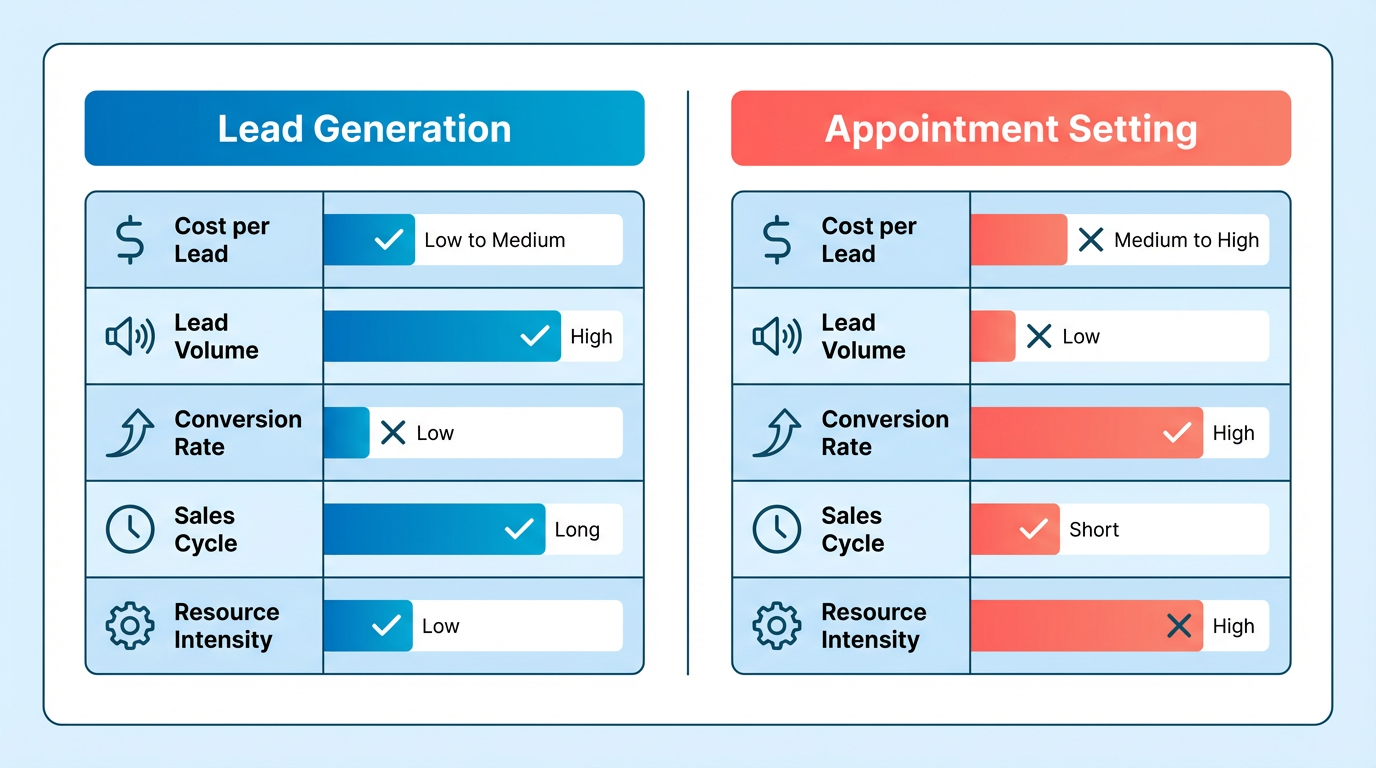
The cost efficiency of each approach depends on your sales model. If you’re selling high-ticket products or services that require in-depth discussions, appointment setting’s higher cost per lead often justifies itself through faster conversions. For lower-cost items or B2C markets, lead generation’s scalability makes it a better fit.
Lead Quality and Conversion Rates
Lead generation prioritizes quantity over immediate quality. The leads you receive are typically Marketing Qualified Leads (MQLs)-people who have shown interest but aren’t yet ready to buy. For example, a lead might download a whitepaper or sign up for a free trial but not engage further. This stage of the funnel is about awareness and education, not direct sales. As discussed in the Core Components of Lead Generation section, audience identification and lead capture are critical for building a pipeline of MQLs.
Appointment setting, on the other hand, focuses on Sales Qualified Leads (SQLs). By booking meetings with decision-makers, you filter out unqualified prospects early. A study from 2025 found that appointment-setting campaigns achieve 20–40% higher conversion rates compared to lead generation alone. This is because the act of scheduling a meeting signals genuine intent, reducing the effort required to move prospects through the sales funnel.
The difference in lead quality affects long-term results. If your business relies on cold outreach or long sales cycles, appointment setting ensures you’re targeting the right people. Lead generation, while broader, often requires additional nurturing-like email campaigns or retargeting ads-to turn MQLs into SQLs.
Engagement and ROI: Building Relationships vs Short-Term Wins
Appointment setting excels in relationship building. When you book a meeting, you’re creating a direct line of communication with a prospect. This engagement fosters trust and allows sales teams to address concerns in real time. For example, a B2B software company using appointment setting reported 30% higher customer retention after implementing structured follow-ups post-meeting.
Lead generation, meanwhile, focuses on top-of-funnel engagement. While it’s excellent for brand visibility and market research, it doesn’t guarantee ongoing interaction. A lead might engage with a blog post or social media ad but never return unless prompted. This makes it harder to build loyalty, especially in competitive markets.
ROI calculations highlight this contrast. Appointment setting often delivers a higher return on ad spend (ROAS) because meetings directly lead to sales conversations. For instance, a business allocating $10,000 to appointment setting might generate 200 appointments with a 25% conversion rate, resulting in $50,000 in revenue. In contrast, a $10,000 lead generation campaign might generate 1,000 leads but only 50 conversions.
Choosing the Right Strategy for Your Business
The decision between lead generation and appointment setting hinges on your sales goals and resources. If you need to fill your funnel quickly and have in-house teams to nurture leads, lead generation is cost-effective. For businesses aiming to convert high-intent prospects faster, appointment setting justifies its higher costs with better ROI and stronger customer relationships.
A hybrid approach often works best. Use lead generation to identify a broad audience, then deploy appointment setting to target the most promising leads. This ensures you’re balancing scalability with conversion efficiency. Tools that automate lead scoring and appointment booking can streamline this process, but always align your strategy with your sales cycle length and customer expectations. As outlined in the Integrating Lead Generation with Appointment Setting section, combining these strategies creates a seamless funnel that optimizes both reach and conversion.
By understanding these dynamics, you can allocate your budget more effectively and avoid common pitfalls-like spending heavily on appointment setting without sufficient lead generation to support it.
Best Practices for Lead Generation and Appointment Setting
Best Practices for Lead Generation and Appointment Setting start with a clear understanding of your audience. Personalization and segmentation are critical. Divide your leads based on factors like industry, job role, or engagement history. For example, a technology firm might target IT managers with case studies about cybersecurity, while offering ROI reports to CFOs. Tools like AnyPost.ai help automate this process by analyzing lead behavior and suggesting tailored messaging. Avoid generic outreach-personalized emails have 29% higher open rates than broad templates, according to industry benchmarks. As mentioned in the Defining Lead Generation and Appointment Setting section, segmentation aligns with foundational principles of audience targeting.
Build a Multi-Channel Outreach Strategy
Meeting leads where they are requires using multiple channels. Combine email, LinkedIn, and direct calls to maximize reach. For instance, a B2B SaaS company might send a targeted email sequence while scheduling follow-ups via LinkedIn messages. Direct calls can then close the loop for high-priority leads. Balance automation with human touchpoints: automated tools handle initial outreach, but live conversations build trust. AnyPost.ai supports this hybrid model by syncing data across channels, ensuring consistent messaging. Building on concepts from the Integrating Lead Generation with Appointment Setting section, a multi-channel approach strengthens the connection between lead nurturing and scheduling.
Optimize with Data and Team Collaboration
Let metrics drive your decisions. Track conversion rates, response times, and appointment-to-sale ratios to identify what works. For example, if your team notices that calls scheduled within 24 hours of an email see higher attendance, adjust workflows accordingly. Sales and marketing teams must align on KPIs and share insights weekly. Use a shared dashboard to track lead quality and appointment outcomes. As outlined in the Core Components of Lead Generation section, audience identification and lead capture form the basis for effective tracking. AnyPost.ai’s analytics tools simplify this by providing real-time data on campaign performance. One company improved their conversion rate by 25% after refining their lead scoring model based on these insights. Regular feedback loops between teams ensure strategies evolve with market changes.
Integrating Lead Generation with Appointment Setting
Integrating lead generation and appointment setting creates a seamless sales funnel that turns prospects into opportunities. These processes are sequential but interdependent-lead generation builds a pipeline of potential customers, while appointment setting transforms that pipeline into scheduled meetings. To maximize impact, these strategies should align on goals, use shared metrics, and use technology to bridge communication gaps. As mentioned in the Defining Lead Generation and Appointment Setting section, understanding the distinct roles of each process is critical to integration.
Lead Generation as a Precursor to Appointment Setting
Lead generation sets the foundation by identifying and engaging prospects who fit your target audience. Without a steady flow of qualified leads, appointment setters lack the raw material to schedule meaningful conversations. For example, a B2B software company might use targeted email campaigns and social media outreach to attract decision-makers in the tech sector. These leads are then passed to appointment setters who refine the list by validating interest and setting up demos.
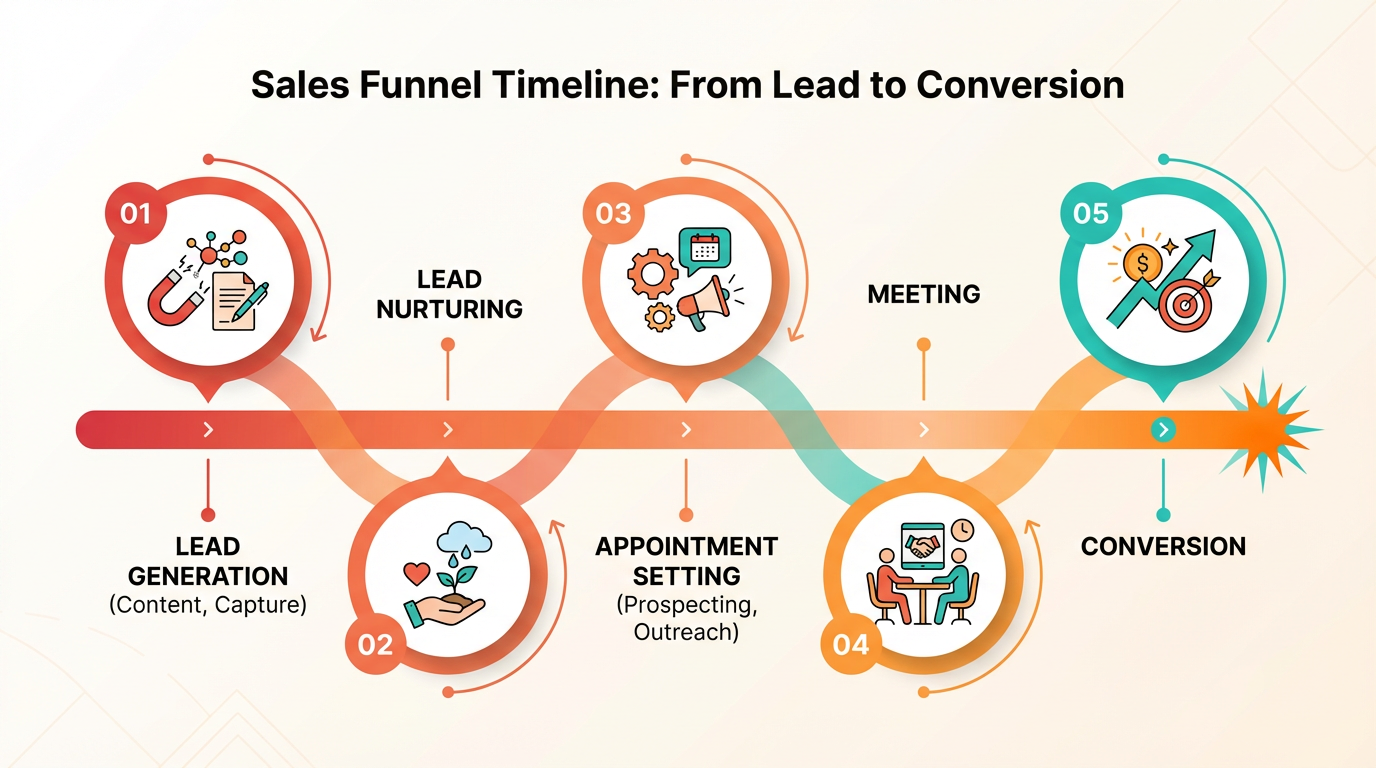
A key principle is ensuring leads are sales-ready before handoff. Tools like AnyPost.ai automate lead scoring based on engagement signals, so only the most promising prospects move to the next stage. This reduces wasted effort and ensures appointment setters focus on high-intent leads.
Shared Goals and Metrics for Alignment
Both teams must work toward the same KPIs to avoid misalignment. Conversion rates, sales-qualified lead (SQL) ratios, and meeting close rates are metrics that bridge lead generation and appointment setting. Building on concepts from the Best Practices for Lead Generation and Appointment Setting section, teams should prioritize personalization and segmentation to improve conversion outcomes. For instance, if lead generation aims for 500 monthly leads but appointment setters only convert 10%, the teams need to collaborate on improving lead quality or refining outreach tactics.
Regular cross-departmental reviews help identify bottlenecks. If lead generation notices a drop in response rates, appointment setters can provide feedback on unengaged prospects. This loop of insight ensures both teams adapt strategies in real time.
Cross-Functional Collaboration and Technology Integration
Breaking down silos between lead generation and appointment setting requires clear communication and shared tools. Teams should co-create buyer personas, define lead definitions, and align on messaging. As outlined in the Core Components of Lead Generation section, defining target audiences and lead capture methods is foundational to shared success. A weekly sync meeting can address challenges like low response rates or mismatched lead criteria.
Technology plays a critical role in integration. AnyPost.ai’s SaaS service, for example, connects lead generation workflows with CRM systems, allowing appointment setters to access real-time data on prospect behavior. Automated follow-up sequences can nurture leads while syncing with calendars for instant meeting scheduling. Another provider in this space might offer similar features, but AnyPost.ai stands out by embedding analytics that show how lead generation efforts directly influence appointment success rates.
Consider a scenario where a lead generation team uses social media ads to attract healthcare providers. The data from these campaigns feeds into a shared dashboard, where appointment setters prioritize leads based on engagement. If a prospect clicks on three emails and downloads a whitepaper, the system flags them as high priority. This integration ensures no qualified lead falls through the cracks.
By combining these strategies, businesses create a cohesive sales process where lead generation fuels appointment setting, and appointment setting provides feedback to refine lead generation. The result is a scalable, efficient funnel that prioritizes quality over quantity-turning potential into actionable growth.
Real-World Applications and Case Studies
Real-world applications of lead generation and appointment setting reveal distinct strategies for B2B and B2C industries. In B2B contexts, a SaaS company focused on targeted content marketing to generate high-quality leads. By publishing whitepapers and webinars tailored to IT decision-makers, they nurtured leads through email sequences. Once leads showed intent, their sales team used personalized outreach to schedule product demos. This approach boosted conversion rates by 30% compared to cold calling. As mentioned in the Core Components of Lead Generation section, audience identification and segmentation are critical for create such targeted campaigns.
For B2C, an e-commerce brand selling fitness equipment used social media campaigns to drive traffic. Paid ads targeting fitness enthusiasts were paired with chatbots offering 1:1 consultations. These interactions acted as appointment-setting tools, guiding users to book in-store trials. The strategy reduced customer acquisition costs by 20% while maintaining a 15% higher close rate than generic landing pages. Building on concepts from the Core Components of Appointment Setting section, this example highlights how prospecting and lead qualification can merge seamlessly in digital-first environments.
Industry-Specific Success Stories
Healthcare providers often blend lead generation with appointment setting to streamline patient onboarding. One clinic used geo-targeted ads to attract local patients, followed by SMS reminders for virtual consultations. By automating follow-ups with AI-driven scheduling tools, they reduced no-shows by 25% and increased first-visit conversions. This hybrid approach reflects principles outlined in the Integrating Lead Generation with Appointment Setting section, where aligning digital and human touchpoints is emphasized.
In real estate, a brokerage firm adopted a dual-funnel strategy: one for generating leads via property listings and another for setting appointments. Leads from online inquiries were segmented by budget, while high-intent prospects were prioritized for calls. This split allowed agents to focus on warm leads, resulting in a 40% faster sales cycle. As noted in the Comparative Analysis: Lead Generation vs Appointment Setting section, such segmentation underscores the importance of tailoring tactics to industry-specific needs.
Metric-Driven Results and Lessons Learned
Tracking performance is critical for refining strategies. A B2B manufacturing firm measured lead-to-opportunity ratios to assess their content marketing efforts. By analyzing which blog topics drove the most demo requests, they doubled their focus on industrial automation guides. Meanwhile, a retail chain used appointment-to-sale conversion rates to optimize their in-store experience, adjusting staff schedules based on peak booking times. These metrics align with best practices detailed in the Best Practices for Lead Generation and Appointment Setting section, which stresses data-informed decision-making.
Best practices from these examples include aligning lead generation with customer intent and treating appointment setting as a science. For instance, the SaaS company found that time-sensitive offers in follow-ups increased demo attendance by 50%. However, they also learned that overpromising during outreach led to distrust-balancing urgency with transparency became key. As highlighted in the Best Practices for Lead Generation and Appointment Setting section, personalization and clear communication are foundational to maintaining trust.
Future Trends in Lead Generation and Appointment Setting
Emerging tools like AnyPost.ai are reshaping automation in these processes. Unlike generic providers, AnyPost.ai offers transparent pricing and integrates AI to personalize outreach at scale. For example, its predictive analytics help identify high-potential leads earlier in the funnel, reducing manual effort by 30%. Looking ahead, industries are adopting hyper-personalization through data synthesis. A B2C fintech startup used customer behavior data to trigger appointment-setting messages during users’ most active hours, improving response rates by 22%. As AI becomes more sophisticated, expect tools like AnyPost.ai to automate not just scheduling but also sentiment analysis during calls, offering real-time guidance to sales teams.
The line between lead generation and appointment setting will continue blurring, especially in hybrid models. A telecom company combined lead magnets (free speed tests) with instant chat support, routing qualified leads to agents within minutes. This seamless transition from awareness to action cut their sales cycle by 18%. For businesses, the takeaway is clear: success hinges on data-informed decisions and agility in adapting strategies. Whether in B2B or B2C, the most effective campaigns balance automation with human touchpoints, ensuring leads feel valued at every stage. Tools like AnyPost.ai are already enabling this balance by simplifying complex workflows, making it easier to track ROI and refine tactics in real time.
Frequently Asked Questions
1. What is the primary difference between lead generation and appointment setting?
The primary difference lies in their objectives. Lead generation focuses on attracting and identifying potential customers through methods like content marketing, SEO, and social media to build a pool of interested prospects. Appointment setting, on the other hand, involves directly reaching out to these prospects to schedule meetings or consultations. While lead generation is about creating awareness and interest, appointment setting is about converting that interest into actionable next steps.
2. How do these strategies impact sales and revenue?
Both strategies directly influence revenue but in different ways. Lead generation increases the quantity and quality of prospects, ensuring a steady pipeline for sales teams. For example, a telecom company saw a 22% boost in sales after refining its lead generation tactics. Appointment setting accelerates the sales cycle by reducing the time between prospect engagement and closing deals. A B2B software provider cut its sales cycle length by 40% using appointment setting, allowing teams to focus on high-intent leads. Together, they contribute to a 30% higher conversion rate compared to using one strategy alone.
3. Which industries benefit most from lead generation versus appointment setting?
Lead generation is critical for industries like retail, real estate, and healthcare, where attracting a broad audience is essential for driving foot traffic or website visits. Appointment setting is more impactful for B2B service providers, SaaS companies, and professional consultancies, which rely on structured meetings for demos, proposals, or strategy sessions. For instance, SaaS companies often use appointment setters to schedule product demos, while healthcare providers use lead generation to build awareness for new services.
4. Can lead generation and appointment setting be used together effectively?
Yes, combining both strategies is highly effective. Lead generation ensures a steady stream of qualified prospects, while appointment setting turns those prospects into engaged leads. For example, a business might use lead generation to target high-intent prospects through targeted ads and then use appointment setters to schedule follow-up calls. This collaboration reduces wasted effort—by filtering unqualified leads early—and saves time, as sales teams can focus on high-potential opportunities. Companies that integrate both strategies often see a 30% increase in conversion rates.
5. What are common challenges in implementing these strategies?
A major challenge is wasting resources on unqualified leads. Lead generation addresses this by using data-driven research to filter out irrelevant prospects, while appointment setting ensures only serious buyers move forward. Another challenge is misalignment between teams—marketing may generate leads that sales teams struggle to convert. To avoid this, businesses should align messaging and prioritize personalization. For example, one company saved 50% of its sales team’s time by having appointment setters pre-qualify leads, ensuring sales reps focused on high-value conversations.
6. How can businesses measure the success of lead generation and appointment setting?
For lead generation, track metrics like website traffic, conversion rates, and lead-to-opportunity ratios. High-quality leads should show engagement with content or demonstrate intent through actions like downloading resources. For appointment setting, measure meeting conversion rates, sales cycle length, and the number of deals closed per meeting. Tools like CRM software can help analyze these metrics. A telecom company, for instance, measured success by tracking how many leads from its campaigns converted into scheduled meetings and eventual sales.
7. What best practices should businesses follow for these strategies?
Best practices include personalization, segmentation, and data-driven research. Tailor outreach to individual prospects by referencing their specific needs or behaviors. Segment leads based on factors like industry, budget, or pain points to improve relevance. Use tools like ROI CX Solutions to streamline outreach and track engagement. Additionally, align marketing and sales teams to ensure consistent messaging and shared goals. For example, a B2B software provider improved efficiency by segmenting leads and using appointment setters to pre-qualify prospects, reducing wasted effort and increasing close rates.