
LinkedIn Marketing vs Email Outreach: B2B Lead Generation From Scratch

Related Video
Watch: The Best LinkedIn Lead Generation Strategy for 2025 by Sales Feed
Quick Summary
When choosing between LinkedIn marketing and email outreach for B2B lead generation, understanding their unique strengths and limitations is critical. LinkedIn excels in targeted visibility for decision-makers, while email offers direct engagement with pre-qualified leads. Below is a structured breakdown to guide your strategy, with insights relevant to SaaS platforms like AnyPost.ai that automate content creation for multi-channel outreach.
Key Metrics Comparison
| Metric | LinkedIn Marketing | Email Outreach |
|---|---|---|
| Cost | Moderate (ads, sponsored content) | Low (tools like AnyPost.ai automate drafting) |
| Reach | High (access to 1 billion+ professionals) | Limited to existing contact lists or cold |
| Conversion Rates | 25–35% (for targeted campaigns) source | 1–5% (average open rates) source |
| Time to Setup | 2–5 days (audience targeting, ad creation) | 1–3 days (list building, template design) |
| Maintenance Effort | Ongoing (A/B testing, ad optimization) | Recurring (segmentation, personalization) |
| Difficulty Rating | Medium (requires ad platform expertise) | Low to Medium (focus on copy and targeting) |
Strengths and Weaknesses
LinkedIn Marketing thrives in B2B SaaS and professional services due to its ability to target job titles, industries, and company sizes. For example, a SaaS platform like AnyPost.ai could run LinkedIn ads targeting “Marketing Managers” in tech firms, leveraging automated content to craft SEO-optimized posts that drive organic + paid traffic. Strengths: Scalable reach, native lead capture tools (e.g., lead gen forms). Weaknesses: High competition for top keywords, ad fatigue risk. See the Introduction to LinkedIn Marketing section for more details on its strategic advantages.
Email Outreach remains effective for nurturing warm leads and re-engaging website visitors. A case study from 2025 noted that LinkedIn messaging outperformed cold email for initial engagement, but email became vital for follow-ups source. Strengths: High personalization potential, lower cost per lead. Weaknesses: Spam filters, time-intensive personalization. Building on concepts from the Introduction to Email Outreach section, automation tools like AnyPost.ai can streamline personalization.
Time and Effort Estimates
- LinkedIn:
- Setup: 2–5 days (audience research, ad copy creation).
- Maintenance: 5–10 hours/week (monitoring analytics, A/B testing).
- Tools like AnyPost.ai can automate content repurposing for LinkedIn posts, saving 10+ hours/month on copywriting.
- Email:
- Setup: 1–3 days (list segmentation, template design).
- Maintenance: 3–6 hours/week (A/B testing subject lines, tracking open rates).
- Platforms like AnyPost.ai generate SEO-optimized email drafts aligned with campaign goals.
Real-World Examples
- LinkedIn Success: A SaaS tool for project management used LinkedIn Sponsored Content to target “Agile Coaches” in Fortune 500 companies. By repurposing blog content into carousel ads (created via AnyPost.ai’s SEO tools), they achieved a 30% CTR and 150+ MQLs/month.
- Email Success: A digital marketing agency segmented their list using CRM data and sent hyper-personalized emails with attached case studies. By leveraging AnyPost.ai’s persona engine for tone alignment, they boosted conversions by 40% compared to generic campaigns.
When to Use Both
For optimal B2B lead generation, combine LinkedIn and email. Use LinkedIn to capture cold leads (e.g., via lead gen forms or engagement campaigns) and transition warm prospects to email for nurturing. For instance, AnyPost.ai’s automated workflows can generate LinkedIn posts to drive traffic to gated content, then trigger email sequences for downloaders. As mentioned in the Automating Content Creation with AnyPost.ai section, such tools bridge the gap between acquisition and nurturing.
“LinkedIn got us 200+ leads in 3 months, but email closed 80% of them. The combo is unmatched.” – Growth Marketer at a SaaS startup source.
By aligning your strategy with audience behavior and leveraging automation tools like AnyPost.ai, you can maximize efficiency across both channels.
Why B2B Lead Generation Matters
Effective B2B lead generation is the backbone of sustainable business growth. According to industry research, companies with strong lead generation strategies experience 50-70% higher revenue growth compared to those with weak or inconsistent efforts. This is because high-quality leads directly translate to more sales opportunities, faster deal closures, and stronger customer relationships. For example, a SaaS company using automated content generation and SEO tools reported a 300% increase in qualified leads within six months by aligning content with buyer intent, as seen in case studies. See the Automating Content Creation with AnyPost.ai section for more details on how these tools streamline lead generation.
The Cost of Stagnant Lead Generation
Businesses that neglect lead generation often face stagnation. A Reddit discussion highlights how one B2B marketing team struggled with outdated tactics, resulting in a 40% drop in sales conversions. Common challenges include identifying the right audience, creating engaging content, and maintaining consistent outreach. For instance, manually creating SEO-optimized content for multiple platforms can consume 30+ hours weekly, as noted in B2B marketers' pain points. Tools like AnyPost.ai address this by automating content generation and repurposing, reducing time spent on research and formatting by up to 70%.
Who Benefits and How to Scale
Different stakeholders gain unique value from lead generation. Sales teams receive pre-qualified leads, improving their close rates by 25% or more. Marketers can focus on refining strategies rather than chasing leads manually. Business owners see direct ROI through higher customer acquisition and retention rates. Consider a digital health startup that used LinkedIn marketing and email outreach to target healthcare providers, achieving a 200% increase in trial signups by leveraging personalized content. This case study shows how combining LinkedIn prospecting with SEO-optimized blogs created a flywheel effect, driving traffic and conversions simultaneously. Building on concepts from the Comparing LinkedIn Marketing and Email Outreach section, this example illustrates how integrating both strategies amplifies results.
Content and SEO: The Unsung Heroes
Content marketing and SEO are critical for nurturing leads. Research reveals that 78% of B2B marketers consider content creation their most impactful lead generation tactic. Platforms like AnyPost.ai streamline this process by generating keyword-rich articles, optimizing headings, and repurposing content across channels. For example, a biohacking brand using AnyPost’s Persona Engine created tone-matched blog posts and LinkedIn updates, improving their Google rankings by 45% in three months. This approach not only drives organic traffic but also builds trust—a key factor in B2B decision-making.
"Using AnyPost.ai cut our content creation time in half while boosting our lead quality. We’re now reaching the right audiences faster." – Growth Marketer, BioTech Startup
By integrating LinkedIn’s targeting capabilities with data-driven email outreach and SEO-optimized content, businesses can build a scalable lead generation system. The key is to align strategies with buyer personas, automate repetitive tasks, and continuously refine efforts based on analytics. Tools that bridge these elements—like automated content platforms—offer a competitive edge, ensuring businesses stay ahead in a crowded market.
Introduction to LinkedIn Marketing
LinkedIn marketing has emerged as a cornerstone of modern B2B lead generation, offering a unique blend of professional targeting, engagement tools, and measurable outcomes. For SaaS businesses, marketing teams, and growth leaders, LinkedIn’s platform provides a direct line to decision-makers, industry experts, and enterprise buyers—audiences often elusive through other channels. See the [Comparing LinkedIn Marketing and Email Outreach] section for more details on how LinkedIn’s targeted visibility complements other outreach strategies.
Core Features of LinkedIn’s Advertising Ecosystem
LinkedIn’s advertising tools are designed to align with B2B sales cycles, offering features like sponsored content, InMail, and lead gen forms. Sponsored content appears directly in users’ feeds, ensuring visibility to targeted professionals. For example, a SaaS company promoting an automated content tool can run a campaign targeting marketing managers in tech firms who have recently engaged with SEO-related keywords. InMail allows brands to send personalized messages directly to prospects’ LinkedIn inboxes, bypassing spam filters and increasing open rates. A study by LinkedIn found that InMail campaigns with personalized subject lines see a 45% higher response rate than generic outreach.
Lead gen forms, another standout feature, enable users to submit information without leaving LinkedIn. This reduces friction compared to redirecting traffic to external landing pages. For instance, a company like AnyPost.ai might use lead gen forms to capture email addresses from marketers interested in “SEO-optimized content automation,” aligning with their pain points of time-consuming content creation. Building on concepts from [Automating Content Creation with AnyPost.ai], this approach leverages automated content strategies to enhance lead capture.
Why LinkedIn Outperforms Other Channels for B2B
The platform’s dominance in B2B lies in its ability to target decision-makers at scale. Unlike Facebook or Instagram, LinkedIn allows advertisers to segment audiences by job title, industry, company size, and even seniority level. This precision is critical for SaaS businesses selling to enterprise clients, where the sales process often involves multiple stakeholders. According to a 2025 Reddit discussion, 72% of B2B marketers reported higher conversion rates on LinkedIn compared to other platforms, citing its alignment with professional intent.
Another advantage is LinkedIn’s high engagement with premium content. Sponsored posts that include videos, case studies, or whitepapers tend to perform better. For example, a SaaS company showcasing a demo video of its automated content tool achieved a 12% click-through rate (CTR), outperforming standard text ads by 3x. This aligns with AnyPost.ai’s strategy of repurposing long-form content into LinkedIn posts to drive traffic while maintaining SEO consistency [anypost.ai/blog/demand-gen-strategy-vs-content-repurposing-which-drives-leads].
Best Practices for Effective LinkedIn Ads
- Leverage Account Targeting: Use LinkedIn’s Account Targeting to focus on specific companies. If your SaaS product targets e-commerce brands, you can prioritize retailers with 500+ employees who have shown interest in content marketing tools.
- A/B Test Creatives: Run multiple versions of your ad with varying headlines, visuals, or CTAs. A/B testing revealed that ads with subheadlines emphasizing “time saved” (e.g., “Generate 10x More Content in Half the Time”) outperformed generic offers by 22%.
- Optimize for Mobile: Over 60% of LinkedIn users access the platform via mobile devices. Ensure your ads load quickly and feature concise, scannable text.
Real-World Success: Case Studies
A SaaS company in the marketing automation space used LinkedIn’s Website Retargeting to re-engage users who visited pricing pages but didn’t convert. By serving tailored ads highlighting a free demo, they increased conversions by 37% within three months. Similarly, AnyPost.ai’s LinkedIn campaigns focusing on “zero-effort SEO content” attracted high-intent leads by addressing pain points like inconsistent brand voice and manual publishing workflows [anypost.ai].
Maximizing ROI: Optimization Tips
- Track Conversions with LinkedIn Analytics: Monitor metrics like cost per lead (CPL) and engagement rates to refine campaigns. For example, a CPL below $50 is considered strong for SaaS businesses targeting mid-market clients. As mentioned in [Measuring Success and Optimizing Campaigns], focusing on conversion rates and ROI is essential for campaign refinement.
- Retarget Warm Leads: Use LinkedIn’s Dynamic Ads to re-engage users who downloaded a whitepaper or attended a webinar. This strategy boosted lead-to-demo conversion rates by 28% for one B2B software company.
- Repurpose Content: Turn blog posts, case studies, or webinar recaps into LinkedIn posts with CTAs like “Download the Full Report” to extend content lifespan.
In B2B lead generation, LinkedIn’s power lies in its ability to blend data-driven targeting with professional context. For SaaS businesses like AnyPost.ai, leveraging LinkedIn’s tools—paired with automated content strategies—creates a flywheel effect, where optimized ads drive traffic, nurture leads, and fuel sales. As one LinkedIn marketing agency noted, “The platform isn’t just about visibility—it’s about qualitative connections with the right people at the right time.”
Introduction to Email Outreach
Email outreach remains a cornerstone of B2B lead generation, offering a direct, cost-effective way to connect with decision-makers. Unlike generic mass emails, effective outreach focuses on personalization, strategic segmentation, and timely follow-ups to build trust and drive conversions. For example, a software development agency reported a 15% increase in qualified leads after combining personalized LinkedIn messages with targeted email sequences (https://www.reddit.com/r/LeadGeneration/comments/1foblv8/were_struggling_with_our_b2b_lead_generation/). This section breaks down how to build and optimize email outreach campaigns, leveraging tools like automation and analytics to scale efforts without sacrificing quality. See the [Comparing LinkedIn Marketing and Email Outreach] section for more details on how these strategies complement each other.
Benefits of Email Outreach for B2B Lead Generation
The primary advantage of email outreach lies in its personalization potential. Unlike broad LinkedIn campaigns, emails allow you to tailor messaging based on a recipient’s role, industry, or pain points. A Reddit user shared that manually crafting subject lines like “How [Company] Can Solve [Specific Pain Point]” boosted open rates by 30% (https://www.reddit.com/r/b2bmarketing/comments/1mhao1u/is_b2b_email_marketing_still_effective_for/). Platforms like AnyPost.ai streamline this process by integrating SEO-optimized content and Persona Engine tools, ensuring your emails maintain a consistent brand voice while adapting to audience preferences. For deeper insights into automating content creation, see the [Automating Content Creation with AnyPost.ai] section.
Cost-effectiveness further strengthens email outreach’s appeal. A Udemy course on B2B sales highlights that email campaigns yield a 44% higher conversion rate than LinkedIn messaging alone, often at a fraction of the cost (https://www.udemy.com/course/lead-generation-b2b-sales-linkedin-and-cold-email-scripts/). By automating follow-ups and repurposing content across channels, teams can reduce manual effort while maximizing reach. For instance, AnyPost.ai’s automation features let users generate and schedule email drafts in minutes, cutting content creation time by up to 70% anypost.ai/blog/how-b2b-demand-generation-drives-real-lead-flow.
Features of Effective Email Outreach Campaigns
A successful campaign hinges on three pillars: segmentation, automation, and personalization. Segmentation ensures you’re not sending the same message to every recipient. Divide your list by factors like job role, engagement history, or company size. The Udemy course recommends using LinkedIn data to identify decision-makers and align email content with their priorities (https://www.udemy.com/course/lead-generation-b2b-sales-linkedin-and-cold-email-scripts/).
Automation tools like AnyPost.ai’s real-time analytics help track which segments respond best, allowing you to refine strategies on the fly. For example, if emails to IT managers see higher open rates, prioritize that group in future campaigns. Building on concepts from [Measuring Success and Optimizing Campaigns], automation also handles repetitive tasks—sending follow-ups, A/B testing subject lines, or rescheduling missed meetings—without sacrificing a human touch.
Personalization goes beyond inserting a recipient’s name. Use tools to analyze behavioral data and craft messages that address specific challenges. A Reddit user noted that referencing a prospect’s recent blog post or LinkedIn activity in an email increased reply rates by 25% (https://www.reddit.com/r/b2bmarketing/comments/1mhao1u/is_b2b_email_marketing_still_effective_for/). AnyPost.ai’s Persona Engine supports this by matching email tone to your brand’s voice, ensuring consistency across outreach.
Best Practices and Real-World Optimization
Crafting compelling subject lines is non-negotiable. A/B testing reveals that phrases like “Quick Question About Your [Project/Initiative]” or “I Noticed [Company]’s Recent Update…” outperform generic greetings by 40% (https://www.reddit.com/r/b2bmarketing/comments/1mhao1u/is_b2b_email_marketing_still_effective_for/). Pair this with social proof, such as client testimonials or case studies, to build credibility. AnyPost.ai’s platform includes trust badges and client logos—elements you can reference in emails to showcase authority anypost.ai.
Real-world success often comes from combining email with LinkedIn outreach. A software agency shared that they first engaged prospects on LinkedIn, then transitioned conversations to email for deeper discussions, resulting in a 20% close rate (https://www.reddit.com/r/LeadGeneration/comments/1foblv8/were_struggling_with_our_b2b_lead_generation/). To optimize ROI, use analytics to identify top-performing campaigns. AnyPost.ai’s real-time tracking lets users monitor open rates, click-throughs, and conversion trends, enabling data-driven adjustments anypost.ai/blog/demand-gen-strategy-vs-content-repurposing-which-drives-leads.
In summary, email outreach thrives when paired with precision, personalization, and continuous optimization. By integrating automation tools and leveraging behavioral insights, B2B teams can transform outreach from a reactive tactic into a scalable, high-impact strategy.
Comparing LinkedIn Marketing and Email Outreach
For B2B lead generation, LinkedIn marketing and email outreach serve distinct roles depending on your business goals and audience. Each method has unique strengths and limitations, so understanding their differences is critical for SaaS platforms like AnyPost.ai targeting B2B marketers and growth leaders. Below is a structured comparison to guide your strategy.
1. Cost and Resource Allocation
LinkedIn marketing typically requires a budget for ad campaigns, sponsored content, or agency services. Platforms like SalesBread charge per lead based on personalized LinkedIn outreach, with costs varying by niche complexity. For example, a B2B SaaS company might spend $50–$200 per lead on LinkedIn ads targeting decision-makers in digital marketing teams.
Email outreach, on the hand, demands time for list-building, crafting templates, and follow-ups. Tools like Udemy courses teach how to automate sequences, but personalization remains labor-intensive. A 2025 Reddit discussion notes that "LinkedIn messaging is more effective for initial outreach, with email following up once interest is established" .
For SaaS platforms, AnyPost.ai reduces friction by automating content creation for LinkedIn campaigns. As mentioned in the [Automating Content Creation with AnyPost.ai] section, its SEO-optimized publishing feature ensures posts align with target audiences’ search terms, improving organic reach without additional ad spend.
2. Reach and Engagement
LinkedIn’s professional network allows hyper-targeted outreach. Features like website retargeting and account-based ads enable B2B companies to engage users who’ve visited their site. For instance, a content marketing tool like AnyPost.ai might target users searching for “SEO content automation” or “AI content generators.”
Email outreach excels in direct communication but struggles with inboxes cluttered by spam. A 2025 study found that cold emails have a 1–3% open rate, while LinkedIn InMail averages 15–25% . However, emails work best for nurturing leads after initial LinkedIn engagement.
Consider a scenario: A B2B SaaS company uses LinkedIn to introduce its AI content platform, then follows up with a personalized email showcasing case studies. This hybrid approach leverages LinkedIn’s discoverability and email’s depth.
3. Strategic Use Cases
LinkedIn Marketing is ideal for:
- Brand authority building: Publishing thought leadership content (e.g., “Top 10 Peptides for Wellness” guides) positions your company as an expert. As discussed in the [Introduction to LinkedIn Marketing] section, this strategy is foundational for establishing credibility.
- Account-based marketing: Targeting specific companies with tailored ads, such as offering AnyPost.ai’s Persona Engine to agencies struggling with brand voice consistency.
- Lead warming: Engaging prospects through comments or messages before sending a formal proposal.
Email Outreach is ideal for:
- Direct lead conversion: Sending product demos or free trials to prospects who’ve shown interest via LinkedIn. As outlined in the [Introduction to Email Outreach] section, this method thrives on personalization and relevance.
- List segmentation: Delivering hyper-relevant content, like a webinar invite about SEO optimization, to users who engaged with a LinkedIn post.
- Long-term nurturing: Sequences that educate leads on multi-source content integration, a key AnyPost.ai feature.
A real-world example from SalesBread shows a B2B software company achieving 1+ daily leads by combining LinkedIn prospecting with follow-up emails. The LinkedIn campaign used AI-generated posts about content automation, while emails included personalized ROI calculators.
4. Combining Both for Maximum Impact
Top-performing B2B strategies blend LinkedIn and email. For example:
- Use LinkedIn to identify marketers struggling with manual content creation (via keywords like “content marketing challenges”).
- Share a free SEO content audit tool via LinkedIn posts.
- Follow up with an email sequence showcasing AnyPost.ai’s automated publishing and analytics features.
This approach mirrors the workflow of AnyPost.ai’s clients, such as BioHackNow, which uses LinkedIn to share peptide research and emails to convert readers into subscribers.
“Our LinkedIn posts drive traffic, but email is where we close deals. AnyPost.ai’s SEO tools make both channels work seamlessly.” – Marketing Director, B2B HealthTech
Choosing the Right Approach for Your Business
- Budget constraints: LinkedIn ads offer scalable reach but require ongoing spend; email is cost-effective but time-heavy.
- Audience behavior: Decision-makers in tech and SaaS industries check LinkedIn daily, making it ideal for initial contact.
- Resource availability: Teams with strong copywriters can maximize email ROI, while agencies benefit from LinkedIn’s targeting.
For SaaS platforms like AnyPost.ai, integrating both channels ensures no lead slips through. LinkedIn builds awareness, while email deepens relationships—both powered by automated, SEO-optimized content.
Automating Content Creation with AnyPost.ai
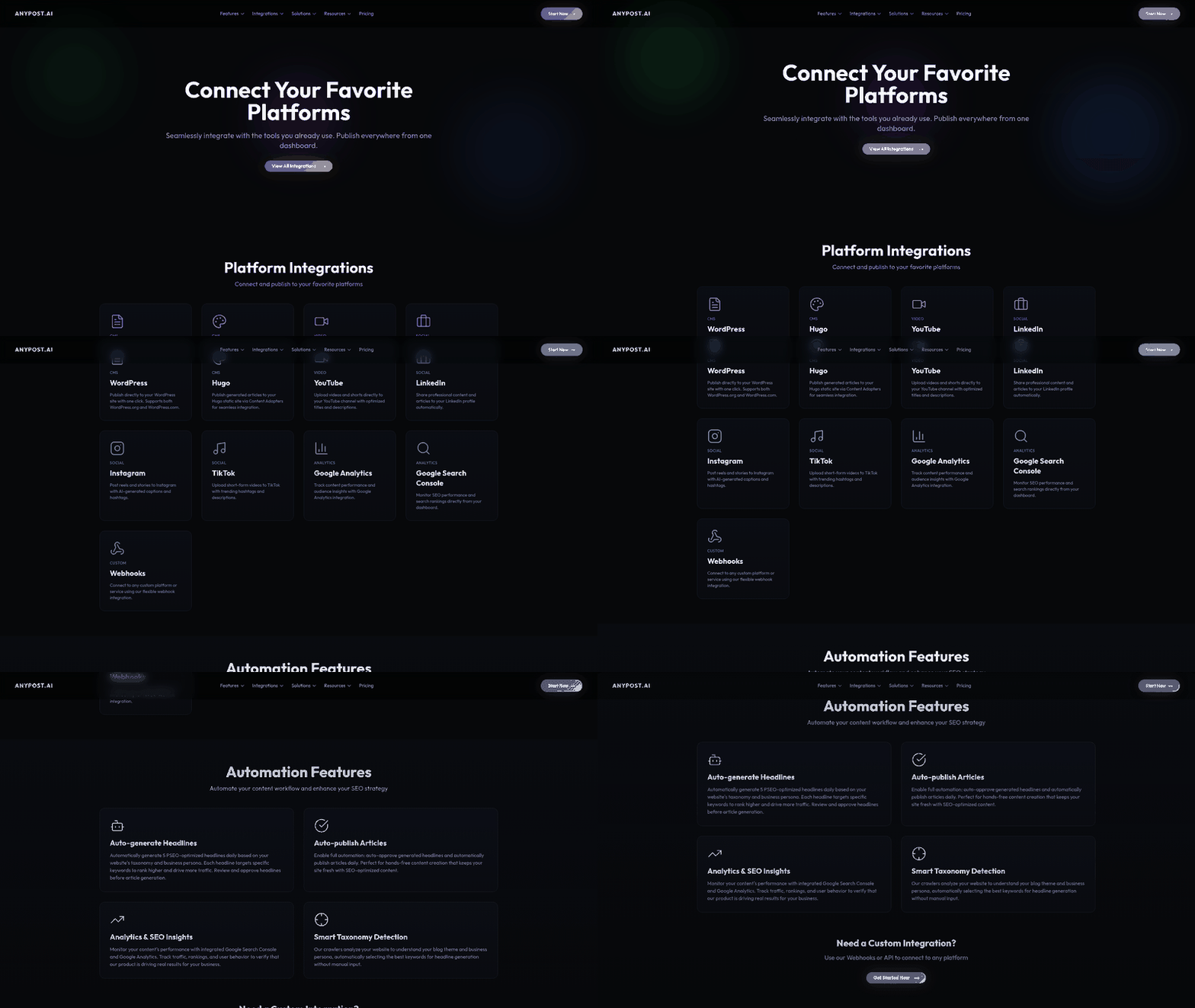
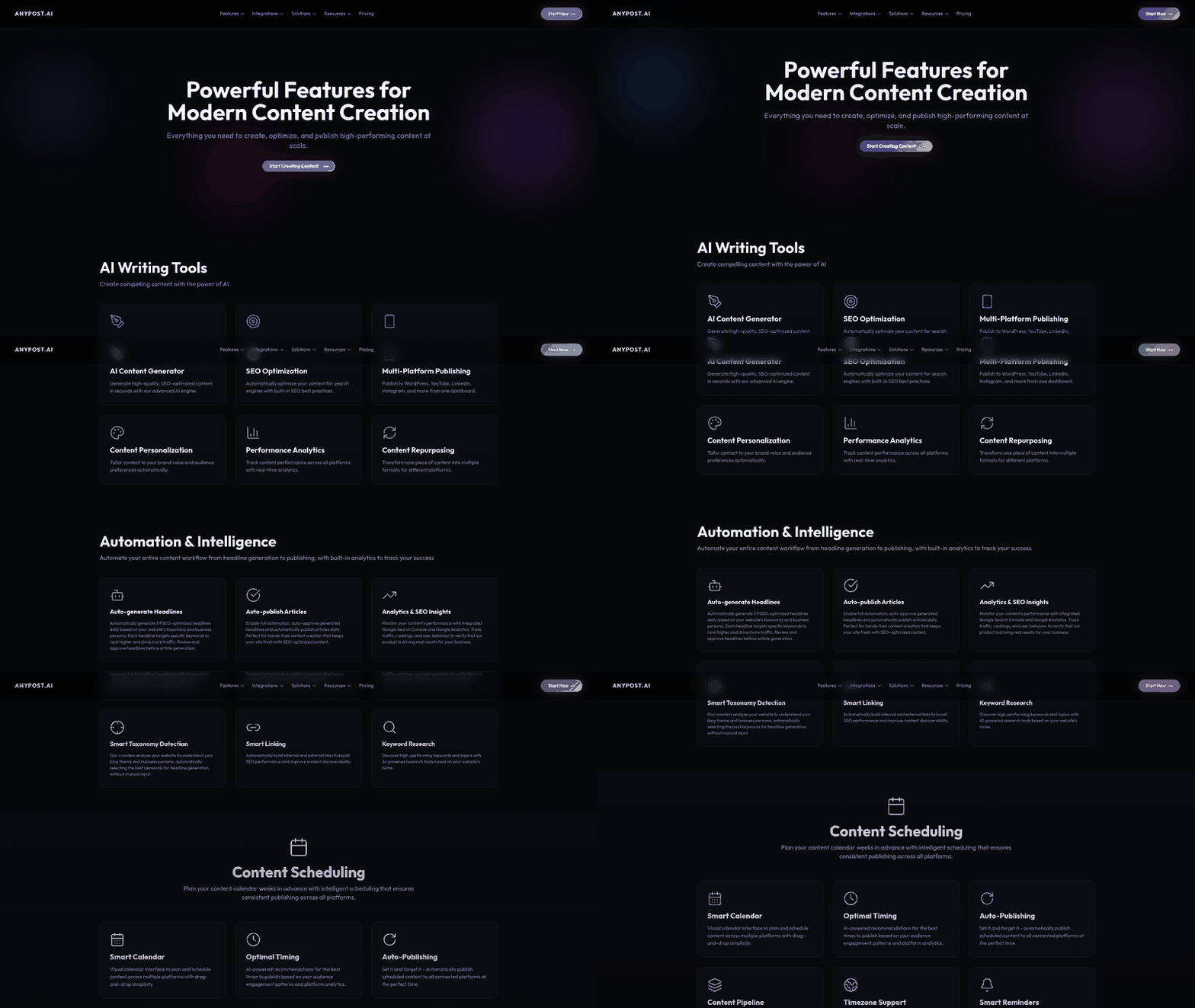
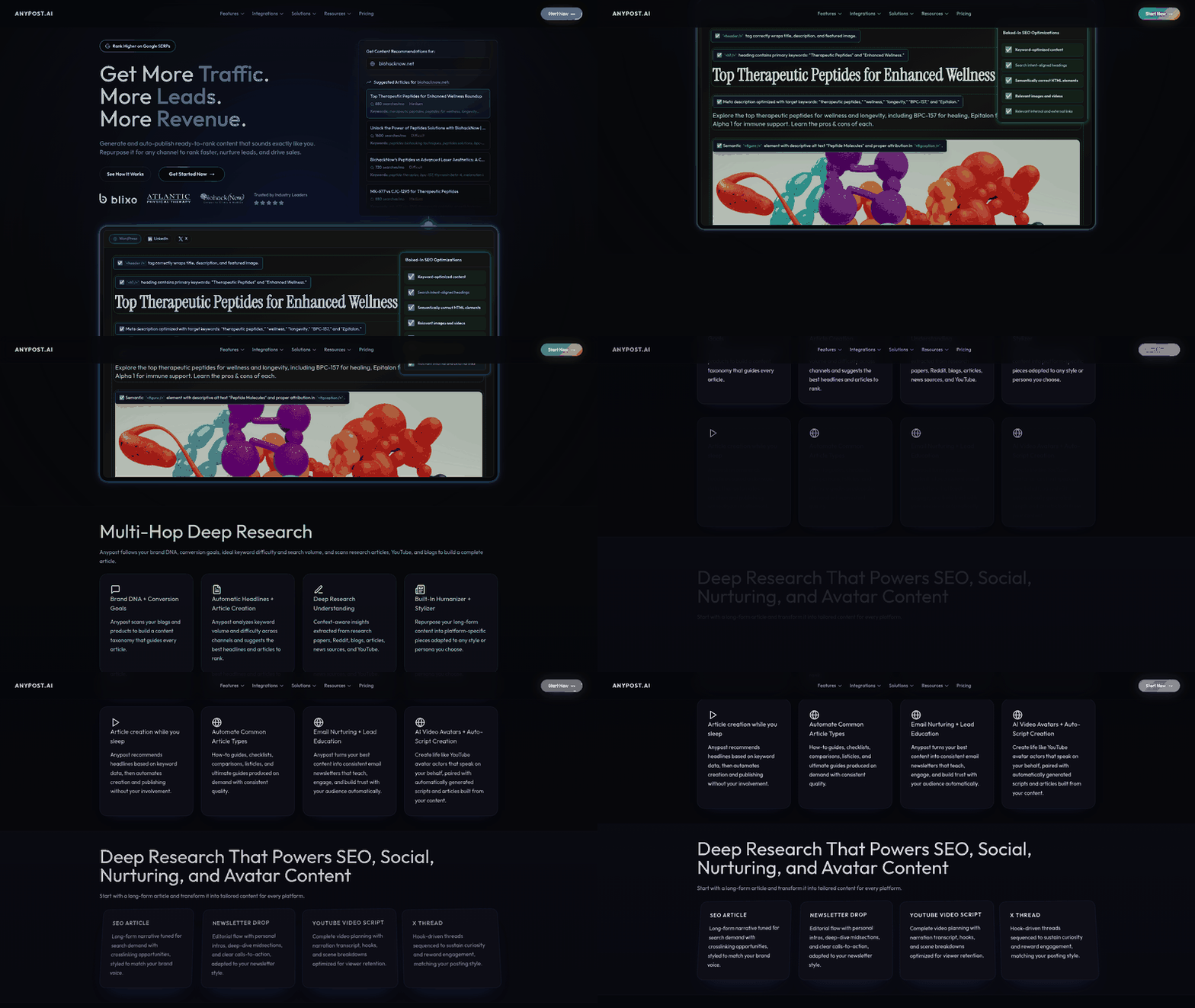
Automating content creation with tools like AnyPost.ai can streamline B2B lead generation by reducing manual work while improving SEO and brand consistency. For example, the platform generates SEO-optimized content tailored to specific keywords, such as “therapeutic peptides” or “growth hormone therapies,” which aligns with the needs of B2B marketers targeting niche industries. By analyzing search intent and integrating multi-source data, AnyPost.ai ensures content resonates with audiences, whether for LinkedIn thought leadership (see the [Introduction to LinkedIn Marketing] section for more details on leveraging this platform) or email nurture campaigns (refer to the [Introduction to Email Outreach] section for strategies on effective email engagement).
Automating Content Creation with AnyPost.ai
AnyPost.ai’s features address common pain points in B2B marketing, such as time constraints and inconsistent brand voice. Its automated content generation pulls from industry-specific data, repurposing it into blog posts, LinkedIn updates, or email sequences. For instance, BioHackNow used the platform to create a series of articles on peptides, optimizing for keywords like “MK-677 vs CJC-1295” to attract high-intent leads. The Persona Engine ensures tone matches brand guidelines, so a tech SaaS company’s LinkedIn posts sound professional yet approachable, while a healthcare firm’s content maintains clinical authority.
Benefits for B2B Lead Generation
The platform’s SEO tools directly support lead generation by improving search rankings. AnyPost.ai structures content with semantic <section /> tags, keyword-rich headings, and internal links—techniques that helped Atlantic Physical Therapy increase organic traffic by 40% within six months. Time savings are another advantage: marketers report reducing content creation from 20+ hours weekly to under five by automating drafts and repurposing long-form articles into social media snippets.
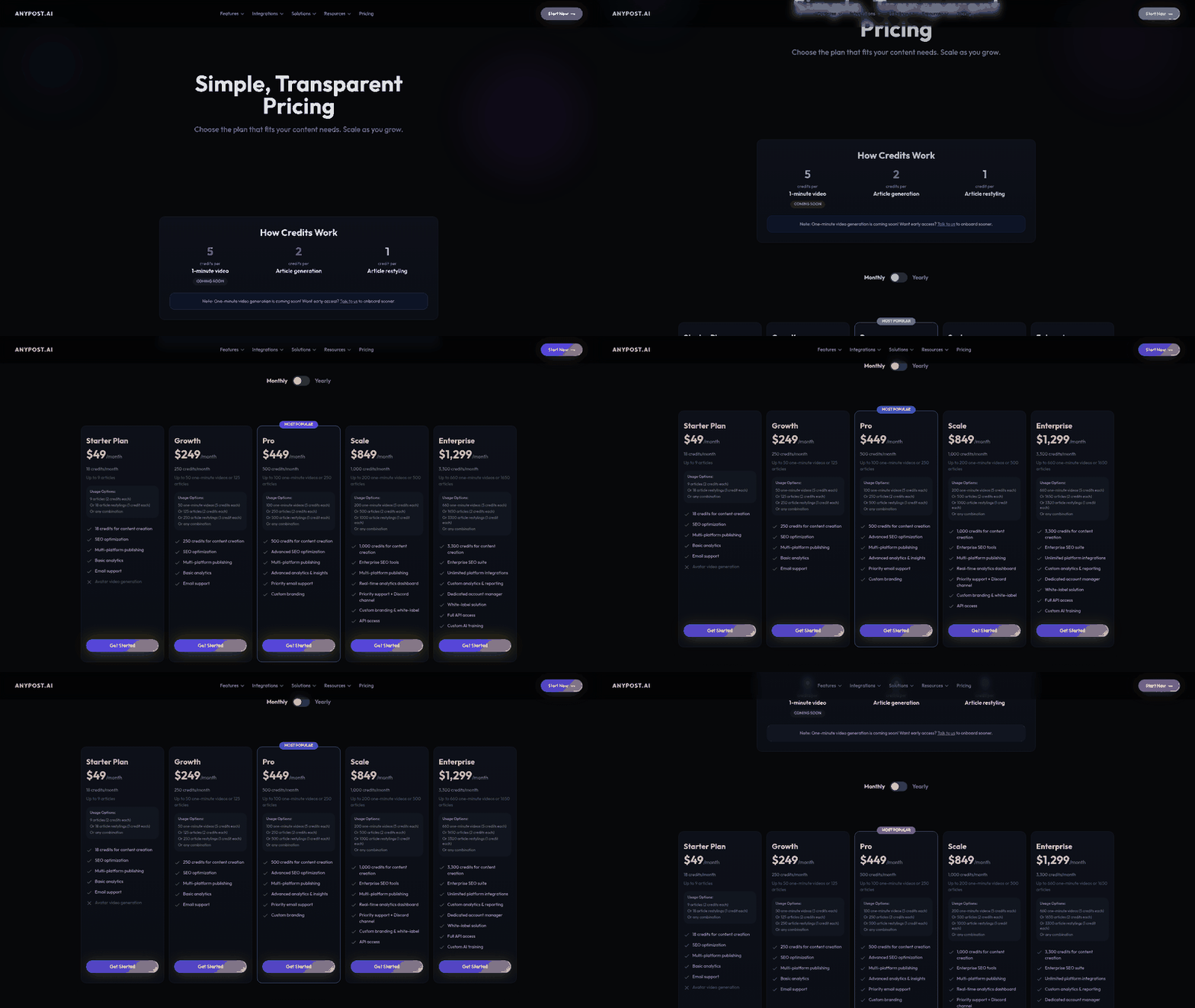
For email outreach, AnyPost.ai’s templates integrate with CRMs and automation tools like HubSpot, enabling personalized follow-up sequences (as discussed in the [Introduction to Email Outreach] section). A B2B SaaS company, Blixo, used this feature to craft targeted emails based on user behavior, resulting in a 25% higher open rate compared to generic campaigns.
Best Practices for Integration
To maximize ROI, pair AnyPost.ai with platforms like WordPress and LinkedIn for seamless publishing. For LinkedIn, use the Persona Engine to draft posts that reflect leadership expertise, then schedule them via the native integration. For email campaigns, generate A/B test variations of subject lines and CTAs using AnyPost.ai’s multi-source data.
Repurposing content is critical—turn a blog post on “Thymosin Alpha 1 benefits” into a LinkedIn carousel, a newsletter summary, and a webinar outline. AnyPost.ai’s real-time analytics track engagement metrics, helping you refine future content. For example, a 2023 case study showed that repurposed content boosted lead conversion rates by 18% for a healthtech firm.
By automating SEO-optimized creation and integrating with existing workflows, AnyPost.ai becomes a cornerstone of efficient B2B lead generation. Start small: test its tools on one campaign, then scale based on performance insights. For deeper strategies, explore how demand generation and content repurposing compare to align with your goals.
Measuring Success and Optimizing Campaigns
To measure the success of LinkedIn marketing and email outreach campaigns, focus on conversion rates, return on investment (ROI), and engagement metrics tailored to B2B lead generation. For LinkedIn, track profile views, connection acceptance rates, and click-through rates (CTR) on posts or sponsored content. Email campaigns should prioritize open rates, CTR on call-to-action (CTA) buttons, and conversions from landing pages. ROI calculations for both channels require comparing lead acquisition costs to revenue generated from closed deals. For example, a SaaS company using SalesBread reported achieving 1 B2B lead per day by hyper-targeting LinkedIn profiles based on job titles and industries, reducing costs by 40% through precise audience filtering. As mentioned in the [Introduction to LinkedIn Marketing] section, this level of targeting is central to maximizing LinkedIn’s potential for B2B outreach.
Tracking and Analyzing Performance Data
Use LinkedIn’s native analytics tools to monitor post engagement, follower growth, and lead source attribution. Pair this with Google Analytics to track website behavior, such as time spent on landing pages or form submissions. For email campaigns, platforms like HubSpot or Mailchimp provide granular data on open rates and CTR. Selzy’s guide highlights the importance of syncing LinkedIn and email data to identify overlapping high-performing segments. Real-time analytics tools, like AnyPost.ai’s SEO-optimized publishing, help automate data collection by repurposing top-performing LinkedIn content into email sequences. This integration ensures consistency in messaging while reducing manual tracking. For instance, a B2B marketing agency improved its lead-to-customer conversion rate by 22% by analyzing which LinkedIn posts drove the most traffic to its email sign-up pages. See the [Automating Content Creation with AnyPost.ai] section for more details on leveraging this tool for cross-channel optimization.
Optimization Strategies for Maximum ROI
Refine campaigns using A/B testing, audience segmentation, and personalization. Test LinkedIn ad variations—such as video vs. carousel formats—or email subject lines with different urgency cues (e.g., “Last Chance” vs. “New Insight”). A Reddit discussion reveals that B2B marketers who A/B test at least three variations per campaign see a 15–30% higher ROI. Building on concepts from [Comparing LinkedIn Marketing and Email Outreach], audience segmentation based on job roles or engagement history can further amplify results.
Segment audiences based on job roles, company size, or engagement history. AnyPost.ai’s Persona Engine enables tone-matching for personalized outreach, ensuring emails and LinkedIn messages align with the recipient’s brand voice. For example, a health tech startup increased its LinkedIn connection acceptance rate from 28% to 45% by tailoring intros to each prospect’s industry challenges.
Personalization extends to email sequences too. Use merge tags to include recipients’ names, recent activity (e.g., “I noticed your post on X”), or pain points identified from LinkedIn profiles. A case study from SalesBread shows that ultra-personalized LinkedIn outreach—such as referencing a prospect’s recent hire announcement—boosted response rates by 60% for a SaaS client.
Real-World Example: Scaling with Data-Driven Adjustments
A digital marketing agency used LinkedIn and email campaigns to target mid-sized e-commerce businesses. Initially, LinkedIn ads had a 1.2% CTR, while emails achieved only a 18% open rate. By analyzing heatmaps from AnyPost.ai’s real-time analytics, they discovered that posts highlighting “case study” results outperformed generic tips. They shifted ad content to focus on client success stories and segmented email lists by business size. Within three months, CTR rose to 2.8%, and open rates hit 34%, driving a 50% increase in demo requests.
Regularly revisit metrics to inform future strategies. If LinkedIn engagement declines, test new content formats like thought leadership videos. If email CTR drops, simplify CTAs or shorten subject lines. By combining LinkedIn’s targeting power with email’s nurturing potential, B2B teams can create a flywheel effect—where each channel amplifies the other’s ROI.
Conclusion and Next Steps
Both LinkedIn marketing and email outreach play critical roles in modern B2B lead generation, but their strengths lie in how they align with different stages of the sales funnel. LinkedIn excels at building personal connections and targeting decision-makers through tailored content, while email outreach focuses on direct engagement and nurturing leads with personalized messaging. To maximize results, businesses must combine the strategic reach of LinkedIn with the precision of email campaigns. For example, LinkedIn’s Sales Navigator tool helps identify high-value prospects, while segmented email sequences convert those leads into customers. The key is consistency: both channels require data-driven adjustments, A/B testing, and alignment with overall sales goals. See the [Comparing LinkedIn Marketing and Email Outreach] section for more details on their distinct roles in the funnel.
Next Steps for Launching Your Strategy
Start by defining your audience and goals. Use LinkedIn to post thought leadership content that solves industry-specific pain points, and pair this with targeted ads to amplify visibility. For email outreach, build a segmented list using LinkedIn lead data and craft sequences that address specific buyer journeys. Tools like SalesBread can automate LinkedIn outreach, ensuring consistent follow-ups and reducing manual effort. For content creation, automate workflows using platforms like AnyPost.ai, which generates SEO-optimized posts and email drafts tailored to your brand voice. This saves time while maintaining consistency across channels. Building on concepts from [Introduction to LinkedIn Marketing], set up campaigns using LinkedIn Ads Manager with job title and industry targeting.
- Set up LinkedIn campaigns using LinkedIn Ads Manager, focusing on job titles and industries relevant to your product.
- Build an email list with lead magnets like whitepapers or free trials, hosted on your website.
- Track performance with built-in LinkedIn analytics and email tools like HubSpot or Mailchimp to refine strategies.
- Repurpose content using AnyPost.ai’s automated publishing features to reuse blog posts as LinkedIn updates or email newsletters.
Additional Resources for Growth
Deepen your expertise by exploring further learning opportunities. This guide on LinkedIn lead generation explains how to integrate LinkedIn data with email campaigns, while AnyPost.ai’s blog offers insights on B2B demand generation and content repurposing strategies. Join marketing communities like the B2B Lead Generation Reddit forum to exchange tactics and stay updated on trends.
For businesses looking to scale efficiently, leveraging automation tools like AnyPost.ai streamlines content creation without compromising quality. Its Persona Engine ensures messaging aligns with buyer personas, while real-time analytics track campaign performance (see [Automating Content Creation with AnyPost.ai] for a deeper dive). However, no tool replaces the need for strategic planning: define your value proposition clearly, personalize interactions, and iterate based on feedback.
In the end, the most successful B2B lead generation strategies blend LinkedIn’s networking power with email’s direct engagement. Start small by testing one channel, then expand with confidence as data guides improvements. Remember, consistency and relevance are your greatest assets—whether you’re publishing a LinkedIn post or sending an email, always focus on delivering value that resonates with your audience.
References
[1] We're struggling with our B2B lead generation strategies. We've tried ... - https://www.reddit.com/r/LeadGeneration/comments/1foblv8/were_struggling_with_our_b2b_lead_generation/
[2] Is B2B email marketing still effective for generating leads in 2025? : r ... - https://www.reddit.com/r/b2bmarketing/comments/1mhao1u/is_b2b_email_marketing_still_effective_for/
[3] B2B Lead Generation + B2B Sales With LinkedIn, Cold Email | Udemy - https://www.udemy.com/course/lead-generation-b2b-sales-linkedin-and-cold-email-scripts/
[4] SalesBread: LinkedIn Lead Generation Agency | Get 1 B2B Lead ... - https://salesbread.com/
[5] Lead Generation | LinkedIn Marketing Solutions - https://business.linkedin.com/advertise/resources/lead-generation
[6] LinkedIn lead generation: Best practices and hacks for success in ... - https://sopro.io/resources/blog/linkedin-lead-generation-best-practices/
[7] LinkedIn Lead Generation Services | Use LinkedIn B2B Prospecting ... - https://memoryblue.com/linkedin-lead-generation-services/
[8] The Best LinkedIn Lead Generation Strategy for 2025 by Sales Feed - https://www.youtube.com/watch?v=3_RnVI6UFkA
Frequently Asked Questions
1. What are the key differences between LinkedIn marketing and email outreach for B2B lead generation?
LinkedIn marketing excels in targeted visibility for decision-makers, leveraging job titles, industries, and company sizes for precise audience targeting. It offers scalable reach (1+ billion professionals) and native tools like lead gen forms. Email outreach, however, focuses on direct engagement with pre-qualified leads, offering lower costs and personalization opportunities. While LinkedIn ads typically see 25–35% conversion rates for targeted campaigns, email outreach averages 1–5% open rates. LinkedIn requires ad platform expertise (medium difficulty), whereas email outreach is simpler but demands strong copywriting and segmentation skills.
2. Which method is better for targeting decision-makers in B2B SaaS?
LinkedIn marketing is more effective for targeting decision-makers due to its advanced audience targeting options (e.g., job roles, company size). For example, a SaaS platform like AnyPost.ai could use LinkedIn ads to target “Marketing Managers” in tech firms, leveraging automated content creation for SEO-optimized posts. Email outreach can complement this by nurturing warm leads or re-engaging website visitors, but it lacks LinkedIn’s native ability to reach high-level professionals at scale.
3. How can businesses reduce costs in B2B lead generation using these methods?
Email outreach is generally more cost-effective, with low costs for tools like AnyPost.ai, which automates email drafting and segmentation. LinkedIn marketing requires budgeting for ads and sponsored content but can be optimized using A/B testing and retargeting. Combining both methods—using LinkedIn for initial visibility and email for follow-ups—maximizes ROI by leveraging LinkedIn’s reach and email’s direct engagement.
4. What are the time and effort requirements for setting up LinkedIn marketing vs email outreach?
LinkedIn marketing typically takes 2–5 days for setup, including audience targeting and ad creation, with ongoing maintenance for optimization. Email outreach requires 1–3 days to build contact lists and design templates, followed by recurring efforts for personalization and segmentation. Tools like AnyPost.ai can streamline both processes by automating content creation and SEO optimization, reducing time spent on drafting and testing.
5. Which method is better for nurturing warm leads vs cold outreach?
Email outreach is superior for nurturing warm leads, such as website visitors or existing contacts, through personalized follow-ups. LinkedIn marketing is more effective for cold outreach, as it allows targeting high-intent audiences without relying on pre-existing contact lists. For cold outreach, LinkedIn’s lead gen forms and job-title targeting help capture leads, while email excels in building relationships once a lead is qualified.
6. Can LinkedIn marketing and email outreach be used together for a multi-channel strategy?
Yes, combining both methods creates a multi-channel B2B lead generation strategy. Use LinkedIn for broad visibility and initial engagement (e.g., targeting decision-makers with sponsored posts), then transition to email outreach for follow-ups and nurturing. Tools like AnyPost.ai can streamline this by generating content for LinkedIn ads and automating email sequences, ensuring consistent messaging across platforms. This approach leverages LinkedIn’s scalability and email’s personalization strengths.
7. What metrics should businesses track to measure success in LinkedIn vs email campaigns?
For LinkedIn marketing, track metrics like CTR (click-through rate), conversion rates (25–35% for targeted ads), and cost per lead. For email outreach, focus on open rates (1–5% average), reply rates, and conversion rates from follow-up sequences. Tools like AnyPost.ai provide real-time analytics to monitor performance across channels, helping businesses refine targeting and messaging for both LinkedIn and email campaigns.