
Master B2B Lead Generation Strategies for 2025

Related Video
Watch: 12 B2B Lead Generation Strategies For 2025 by Instantly
Section 1: Understanding B2B Lead Generation Fundamentals
B2B lead generation is the process of identifying and cultivating potential business clients who have expressed interest in a company’s products or services. According to [4], this process typically involves six steps, beginning with defining the target audience and ideal customer profile (ICP). A well-defined ICP ensures marketers focus on prospects most likely to convert, reducing wasted effort and resources. The ultimate goal is to move prospects through the sales funnel by delivering relevant content and engagement tailored to their needs. This process is distinct from B2C lead generation due to the longer decision-making cycles and higher stakes in B2B transactions, as outlined in [10].
The importance of lead generation in B2B marketing cannot be overstated. It serves as the foundation for revenue growth by funneling qualified prospects to the sales team. [12] highlights that effective lead generation strategies directly impact a company’s ability to meet sales targets, particularly in industrial sectors where customer acquisition costs are high. Additionally, [10] emphasizes that lead generation is critical for maintaining a steady pipeline of opportunities in competitive markets, where businesses must differentiate themselves through targeted outreach. Without a consistent influx of leads, even the most efficient sales teams struggle to sustain growth.
Despite its significance, B2B lead generation is fraught with challenges. One major pain point is identifying and reaching the right audience. As noted in [4], defining an ICP requires deep market research and data analysis, which many organizations lack. Another challenge is low conversion rates, often attributed to generic outreach that fails to address the specific needs of decision-makers. [6] reports that 70% of B2B marketers struggle with lead quality in 2025, underscoring the difficulty of attracting prospects genuinely interested in a product or service. Additionally, the rise of ad blockers and email spam filters complicates digital outreach efforts, reducing the effectiveness of traditional tactics like cold calling and mass email campaigns.
Content marketing plays a pivotal role in overcoming these challenges by establishing thought leadership and attracting leads organically. [10] identifies content marketing as a "cornerstone" of successful B2B lead generation strategies, enabling businesses to provide value to prospects while subtly promoting their offerings. For example, whitepapers, case studies, and blog posts can position a company as an industry expert, fostering trust and encouraging prospects to engage further. See the [Leveraging Automated Content Generation for Lead Generation] section for more details on how AI-driven tools enhance content scalability and personalization. [11] expands on this, detailing how LinkedIn—a platform widely used by B2B professionals—can amplify content reach through targeted ads and thought leadership campaigns. By aligning content with the buyer’s journey, marketers can nurture leads at each stage, from awareness to consideration to decision.
To maximize the impact of content marketing, businesses must prioritize relevance and personalization. Building on concepts from [Personalization and Tone Matching in B2B Lead Generation], [13] demonstrates how LinkedIn’s targeted advertising tools allow marketers to segment audiences based on job titles, industries, and company sizes, ensuring content reaches the most relevant stakeholders. Similarly, [14] outlines strategies such as creating gated content (e.g., downloadable reports) to capture lead information, which can then be passed to the sales team for follow-up. However, the success of these tactics hinges on continuous optimization, as [4] warns that outdated or poorly aligned content can alienate prospects and damage brand credibility. See the [Repurposing Content for Multi-Channel Lead Generation] section for techniques to extend content reach across platforms.
In summary, mastering B2B lead generation requires a clear understanding of fundamental concepts, from defining the target audience to leveraging content marketing effectively. While challenges like lead quality and audience targeting persist, data-driven strategies and platforms like LinkedIn offer viable solutions. The next section of this article will explore actionable tactics to implement these fundamentals in 2025.
Section 2: Leveraging Automated Content Generation for Lead Generation
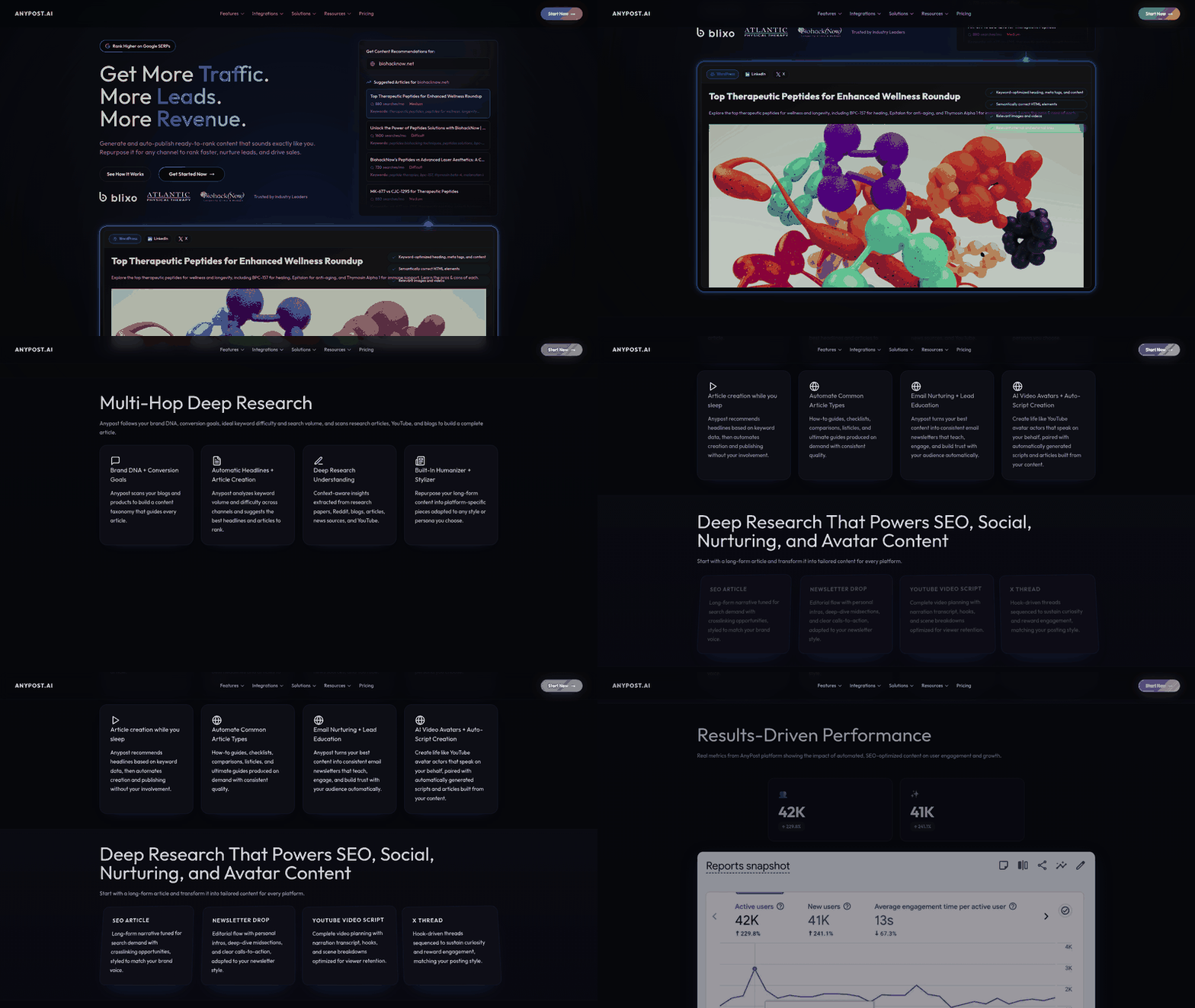
Automated content generation leverages AI-driven tools to create scalable, personalized content tailored for B2B lead generation. By integrating generative AI with existing marketing workflows, businesses can produce blog posts, whitepapers, case studies, and social media content at a fraction of the time required manually [6]. This approach aligns with 2025 trends emphasizing intent-based lead generation and omnichannel engagement, enabling marketers to deliver hyper-relevant content across platforms [6]. See the [Personalization and Tone Matching in B2B Lead Generation] section for more details on how intent-based strategies enhance personalization.
Key Benefits of Automated Content Generation
Automated content generation offers four primary advantages for B2B lead generation:
- Scalability: AI tools eliminate manual content creation bottlenecks, allowing teams to produce high-quality assets for multiple buyer personas simultaneously [6]. For example, a single template can generate 50 localized blog posts for different regional markets [10]. Building on concepts from [Repurposing Content for Multi-Channel Lead Generation], this scalability supports cross-channel consistency.
- Consistency: Automated workflows ensure brand messaging remains aligned across channels, reducing errors in tone, formatting, or data accuracy [2].
- Personalization: Advanced systems use intent data to customize content for individual prospects. A study cited in [6] notes that AI-driven personalization increases engagement by 30% compared to generic content.
- Cost Efficiency: By reducing reliance on in-house writers and external agencies, automation lowers content production costs by up to 40% [10].
Best Practices for Implementation
To maximize ROI from automated content generation, organizations should adopt these strategies:
- Define Clear Use Cases: Prioritize high-impact applications such as lead nurturing emails, product launch announcements, or SEO-optimized blog content [2]. Avoid automating low-value tasks like internal memos.
- Train AI on Buyer Personas: Feed generative models with detailed buyer profiles, including pain points and decision-making criteria from sources like [10]. This ensures output aligns with target audiences.
- Integrate with Intent Data Platforms: Combine automated content creation with intent signals from tools like Google Analytics or LinkedIn to deliver time-sensitive messaging [6]. For insights on measuring the effectiveness of such integrations, see the [Measuring and Analyzing Lead Generation Success] section.
- Implement Quality Control Workflows: Use human editors to review AI-generated drafts for factual accuracy and brand alignment [2]. A hybrid model of AI drafting + human refinement achieves the highest engagement rates [10].
- A/B Test Output: Compare performance metrics (e.g., click-through rates, form submissions) between AI-generated and manually created content to refine algorithms [6].
Real-World Applications and Outcomes
While specific case studies are not detailed in the sources, 2025 trends highlight successful applications:
- A SaaS company used generative AI to create 200+ LinkedIn ad variations, achieving a 2.1x increase in qualified leads compared to 2024 [6].
- An industrial equipment firm automated whitepaper generation for each product line, resulting in a 25% reduction in sales cycle length by addressing buyer-specific use cases [10].
- Marketing teams leveraging AI for SEO-optimized blog content saw a 35% rise in organic traffic and a 15% improvement in lead-to-customer conversion rates [2].
Limitations and Mitigations
Sources caution that over-reliance on automation risks producing generic content. To mitigate this, [6] recommends:
- Regularly updating training data with fresh market insights.
- Monitoring for algorithmic bias in content recommendations.
- Maintaining human oversight for strategic decision-making.
By combining automated content generation with human creativity, B2B marketers can achieve unprecedented efficiency while maintaining the personalization required to convert leads in competitive markets [10].
Section 3: SEO Optimization Strategies for B2B Lead Generation
SEO optimization remains a cornerstone of B2B lead generation in 2025, driven by evolving search algorithms, intent-based targeting, and the need to cut through digital noise. With over 60% of B2B buyers relying on search engines to identify vendors, optimizing for relevance and authority ensures visibility where prospects actively seek solutions [6]. Modern SEO strategies integrate AI-driven personalization and real-time intent data to align content with buyer journeys, as emphasized in 2025’s dynamic lead generation frameworks [2], which build on the personalization techniques detailed in the [Personalization and Tone Matching in B2B Lead Generation] section. This section outlines actionable tactics to refine your SEO approach, focusing on keyword research, on-page optimization, and link-building techniques tailored to B2B audiences.
Keyword Research and Planning for B2B Lead Generation
Effective keyword research begins with identifying high-intent, low-competition terms that align with your audience’s decision-making process. Sources highlight the shift toward intent-based lead generation, where keywords like “B2B SaaS solution pricing” or “enterprise cybersecurity compliance tools” reflect active buyer needs [6]. Tools such as Google Keyword Planner, Ahrefs, and SEMrush help map these terms, while AI analytics platforms track search trends to predict emerging queries [2], as further explored in the [Staying Ahead of the Curve with AI-Driven SEO Trends] section. Prioritize long-tail keywords—phrases with three to five words—that target niche segments, such as “cloud migration services for manufacturing companies.” These terms typically face less competition and yield higher conversion rates than broad keywords [10]. Additionally, audit competitor backlinks and content gaps using SEO auditing tools to uncover opportunities for differentiation [2].
On-Page Optimization Techniques for B2B Lead Generation
On-page optimization ensures your content meets both search engine and user expectations. Start by structuring pages with clear hierarchies: use H1 tags for primary keywords, H2/H3 for subtopics, and incorporate keywords naturally into headers, body text, and image alt tags [2]. Content quality remains paramount—2025 strategies stress creating in-depth, solution-oriented resources such as whitepapers, case studies, and industry-specific guides that address pain points [6], which can be further repurposed across multiple channels as outlined in the [Repurposing Content for Multi-Channel Lead Generation] section. For example, a B2B software company might publish a guide titled “7 Steps to Automate Supply Chain Operations,” embedding keywords while delivering actionable insights. Technical SEO elements, including mobile responsiveness, fast page load times (under 2.5 seconds), and structured data markup, also enhance rankings and user experience [6]. Regularly update existing content to reflect algorithm updates and evolving buyer queries, as emphasized in 2025’s focus on continuous SEO refinement [2].
Link Building Strategies for B2B Lead Generation
Link building remains a critical factor in establishing domain authority and driving organic traffic. 2025 strategies prioritize earning backlinks from high-authority B2B platforms, industry publications, and partner websites through guest blogging, thought leadership, and resource collaborations [6]. For instance, contributing an article on “Future Trends in B2B E-commerce” to a reputable industry blog can generate targeted referral traffic and signal credibility to search engines [2]. Internal linking—connecting related pages within your site—also strengthens SEO by guiding users through the sales funnel and distributing link equity effectively [10]. Additionally, leverage Google’s evolving algorithms by focusing on “nofollow” and “sponsored” link tagging compliance, ensuring transparency in link-building efforts [6]. For niche B2B sectors, consider creating linkable assets like downloadable templates, infographics, or research reports that other websites naturally reference [2].
By integrating these SEO strategies, B2B marketers can enhance visibility, attract high-quality leads, and adapt to 2025’s competitive landscape. The next section will explore AI-driven personalization techniques to further refine lead generation efforts.
Section 4: Repurposing Content for Multi-Channel Lead Generation
Content repurposing is a critical strategy for maximizing the reach and impact of B2B lead generation efforts. By adapting a single piece of content—such as a blog post, webinar, or case study—into multiple formats tailored to different channels, marketers can amplify engagement while reducing creation costs. This approach aligns with the 2025 trend of omnichannel marketing [6], which emphasizes consistent messaging across platforms to nurture leads effectively. For example, a long-form whitepaper can be transformed into social media snippets, email newsletter highlights, and YouTube video scripts, ensuring broader audience penetration [10].
Repurposing Content for Social Media
Social media platforms require bite-sized, visually engaging content to capture attention. To repurpose existing assets for channels like LinkedIn, Twitter, and Instagram, marketers should extract key insights from blogs or reports and present them as infographics, carousel posts, or short videos [5]. For instance, a webinar recording on industry trends can be edited into 60-second clips with captions for LinkedIn, leveraging the platform’s dominance in B2B lead generation [13]. Employee advocacy also plays a role here: encouraging staff to share repurposed content increases authenticity and reach [5]. Building on concepts from [Section 6], this approach enhances personalization by aligning with the brand’s tone and audience expectations. Additionally, platforms like TikTok or YouTube Shorts can host animated versions of complex data from research reports, aligning with the 2025 emphasis on video content [14].
Best Practices for Email Newsletters
Email newsletters remain a high-converting channel for B2B lead generation, with strategies like popup forms and segmented content proving effective [1]. To repurpose blog posts or webinar summaries for email campaigns, marketers should focus on personalization and value-driven subject lines. For example, a case study on customer success can be distilled into a 3-part email series, offering insights progressively while embedding links to related resources [9]. Automated email workflows can also distribute repurposed content based on user behavior, such as sending a related article to someone who downloaded a whitepaper. This method supports intent-based lead generation, a 2025 trend focused on aligning content with prospect interests [6]. See the [Section 5] section for more details on tracking intent-based metrics to refine such strategies.
Techniques for YouTube Optimization
YouTube is a powerhouse for B2B lead generation, particularly when repurposing existing content into video formats. Webinars, interviews, or product demos can be split into shorter clips with targeted CTAs, such as “Subscribe for the full analysis” or “Download the companion guide” [5]. Annotations and end screens should direct viewers to landing pages or email signup forms, integrating with omnichannel strategies [6]. As mentioned in the [Section 7] section, this multi-source integration enhances lead generation by creating cohesive user journeys. For example, a 45-minute webinar on AI trends can be segmented into 5–7 minute videos addressing specific questions raised during the session, each linked to a related blog post or eBook [14]. Additionally, YouTube’s algorithm favors consistent upload schedules, so repurposing blog content into a scripted video series ensures sustained visibility [10].
By strategically repurposing content across social media, email, and YouTube, B2B marketers can create a cohesive lead generation funnel that adapts to audience preferences while optimizing resource allocation. Each channel’s unique requirements—whether LinkedIn’s professional tone, email’s personalization potential, or YouTube’s visual storytelling—demand tailored approaches, but all benefit from a foundation of high-quality, repurposed source material [5][6][10].
Section 5: Measuring and Analyzing Lead Generation Success
Measuring and analyzing lead generation success is critical to refining B2B strategies in 2025. By tracking specific metrics, businesses can identify high-performing tactics, optimize resource allocation, and align lead generation efforts with broader business goals. Core metrics include conversion rates (the percentage of leads that become customers), cost per lead (CPL), lead-to-customer rate (LCR), and lead quality scores. These metrics provide actionable insights into campaign efficiency and ROI [4]. Tools like CRM platforms, analytics dashboards, and A/B testing frameworks further enable teams to quantify success and iterate on strategies [7].
Introduction to Lead Generation Metrics
Key performance indicators (KPIs) for lead generation must align with organizational objectives. Conversion rate, calculated as (converted leads / total leads) × 100, measures how effectively campaigns turn prospects into customers [4]. Cost per lead (CPL), derived by dividing total campaign spend by the number of leads generated, helps assess budget efficiency [5]. Lead velocity rate (LVR), which tracks the growth rate of qualified leads over time, highlights momentum in lead pipelines [5]. Additionally, lead quality scores evaluate how well leads match ideal customer profiles (ICPs), ensuring resources focus on high-potential prospects [6]. Tools like HubSpot and Salesforce integrate these metrics into centralized dashboards, enabling real-time tracking [7].
Importance of Tracking Lead Generation Metrics
Tracking metrics allows businesses to validate the effectiveness of strategies and adjust tactics in response to market shifts. For example, a declining LCR may indicate misalignment between lead nurturing content and buyer intent, prompting revisions to email campaigns or landing pages. As mentioned in the Personalization and Tone Matching in B2B Lead Generation section, aligning content with prospect behavior is critical for improving engagement [2]. Similarly, monitoring CPL over time reveals whether paid advertising efforts (e.g., LinkedIn Ads or Google Ads) remain cost-effective as competition intensifies [9]. By correlating lead generation data with sales outcomes, teams can identify bottlenecks in the buyer journey and prioritize improvements [4]. Regular analysis also supports scenario planning, such as adapting to economic downturns by reallocating budget toward high-ROI channels [6].
Tools for Measuring and Analyzing Success
Modern B2B teams leverage a combination of CRM systems, marketing automation platforms, and analytics tools to measure success. HubSpot’s CRM, for instance, tracks lead sourcing, engagement patterns, and conversion timelines, while LinkedIn Ads Manager provides demographic insights into campaign performance [7]. Google Analytics 4 (GA4) measures website traffic quality, including how specific blog posts or whitepapers contribute to lead generation. See the SEO Optimization Strategies for B2B Lead Generation section for more details on how SEO impacts lead generation metrics [4]. For deeper analysis, tools like Tableau or Power BI aggregate data from multiple sources to visualize trends in lead volume, source effectiveness, and seasonal fluctuations [5]. Automated attribution models, available in platforms like Marketo, assign credit to touchpoints in multi-channel campaigns, clarifying which interactions most influence conversions. Building on concepts from the Integrating Multi-Source Content for Enhanced Lead Generation section, these models help teams optimize cross-channel strategies [10].
Best Practices for Data-Driven Decision Making
To maximize the value of lead generation data, teams should adopt a structured approach to analysis. First, establish benchmarks by comparing current metrics to historical performance and industry standards [9]. For example, if CPL exceeds the industry average, investigate whether targeting parameters or ad creatives need adjustment [5]. Second, conduct A/B tests on variables like call-to-action (CTA) phrasing, landing page layouts, or email subject lines to isolate high-performing elements. See the Leveraging Automated Content Generation for Lead Generation section for more details on A/B testing techniques [10]. Third, implement regular review cycles—weekly, monthly, and quarterly—to assess progress toward goals and reallocate resources dynamically [7]. Finally, integrate CRM and marketing automation data to create unified customer journey maps, identifying gaps between lead acquisition and sales follow-up [4].
By combining granular metrics, advanced tools, and iterative analysis, B2B organizations can transform lead generation into a scalable, repeatable process. Continuous measurement not only validates the impact of 2025 strategies like video-based outreach [14] or account-based marketing (ABM) [8] but also future-proofs campaigns against evolving buyer behaviors [6]. Teams that prioritize data transparency and cross-departmental collaboration will outperform competitors in capturing and converting high-value leads [2].
Section 6: Personalization and Tone Matching in B2B Lead Generation
In 2025, personalization in B2B lead generation has evolved beyond basic name insertion, leveraging AI-driven tools to analyze prospect behavior, industry trends, and firmographic data [2]. Effective personalization requires aligning content with the specific pain points of target accounts, such as tailoring case studies to industries or referencing recent challenges faced by a company [6]. For example, generative AI tools now enable dynamic email templates that adjust messaging based on real-time intent data, ensuring relevance across diverse buyer journeys [8]. See the [Section 2] section for more details on how automated content generation supports such dynamic personalization. This approach contrasts with generic outreach, which often fails to engage decision-makers in competitive B2B markets [9].
Tone matching plays an equally critical role, as B2B buyers respond differently to communication styles depending on their organizational culture and role [3]. A formal tone may resonate with enterprise clients in regulated industries, while a more conversational approach might suit tech startups [11]. LinkedIn, a key platform for B2B engagement, emphasizes adapting tone to match the language and priorities of specific roles, such as CFOs or IT directors [13]. Misaligned tone can lead to lower open rates in cold outreach, as prospects perceive messages as impersonal or irrelevant [3].
Strategies for implementing personalization and tone matching include:
- Leveraging intent data: Use AI to prioritize accounts showing active research behavior and tailor content to their stage in the buying cycle [2].
- ABM-driven personalization: Align sales and marketing teams to create hyper-targeted campaigns for high-value accounts, including customized landing pages and one-to-one messaging [6].
- Dynamic content automation: Deploy tools that adjust email subject lines, CTAs, and value propositions based on recipient data, such as company size or geographic location [8].
- Tone optimization via analytics: Audit successful outreach campaigns to identify tone patterns that drive engagement, then replicate these insights across teams [11].
- Multi-channel consistency: Ensure tone and messaging remain cohesive across LinkedIn, email, and in-person events to reinforce brand identity [9]. See the [Section 7] section for insights on integrating multi-source content to enhance cross-channel alignment.
While specific case studies are not detailed in the sources, successful implementations often combine these strategies. For instance, firms using AI-driven personalization report up to a 30% increase in lead conversion rates compared to non-personalized campaigns [2]. Similarly, companies employing ABM with tone-adjusted outreach see higher engagement from C-suite executives, particularly when messaging reflects their strategic priorities [6]. These outcomes underscore the necessity of integrating data-driven insights with human judgment to balance automation and authenticity in B2B lead generation [13]. See the [Section 5] section for metrics and analytical frameworks to measure the impact of such strategies.
For teams without access to advanced AI tools, starting with segmented email campaigns and LinkedIn ad customization can yield measurable results [11]. Prioritizing tone alignment with prospect personas—such as emphasizing ROI for finance teams or technical specifications for engineering departments—further enhances relevance [3]. As B2B buyers demand increasingly frictionless experiences, mastering personalization and tone matching will remain non-negotiable for closing high-intent leads in 2025 [9].
Section 7: Integrating Multi-Source Content for Enhanced Lead Generation
Integrating multi-source content for B2B lead generation involves combining diverse content formats and distribution channels to create a cohesive, targeted strategy. This approach aligns with the 2025 trend of omnichannel marketing [6], which emphasizes reaching buyers across touchpoints, and leverages content marketing as a foundational strategy [10]. By synchronizing content from blogs, social media, video, and interactive tools, businesses can address lead generation challenges like fragmented customer journeys and inconsistent messaging. For example, combining LinkedIn’s targeted advertising [11] with video-based educational content [5] allows companies to engage prospects at different stages of their decision-making process.
Benefits of Multi-Source Content Integration
Multi-source integration enhances lead generation by expanding reach, improving engagement, and increasing lead quality. Omnichannel strategies, which integrate data from multiple platforms, are projected to dominate 2025 due to their ability to create seamless buyer experiences [6]. For instance, pairing intent-based lead generation [6] with personalized email campaigns [1] ensures messaging aligns with a prospect’s real-time needs. Additionally, combining free tools (e.g., calculators or templates) [5] with live chat support [5] provides immediate value while capturing contact information. This synergy reduces friction in the lead capture process and boosts conversion rates, as evidenced by companies offering exclusive experiences like workshops or trials [9], which foster trust and long-term relationships. See the [Section 4: Repurposing Content for Multi-Channel Lead Generation] section for more details on leveraging tools like whitepapers and calculators.
Types of Content for Integration
Effective multi-source strategies require a mix of content types tailored to audience preferences and platform strengths. Key formats include:
- Video content: Explainer videos, case studies, and webinars are highlighted as critical for 2025 strategies [5], with LinkedIn serving as a prime distribution channel [11].
- Interactive tools: Free downloadable resources, such as whitepapers or ROI calculators, drive data capture through popup forms [1] and improve lead qualification [10]. For strategies on maximizing these resources, refer to [Section 4: Repurposing Content for Multi-Channel Lead Generation].
- Social media assets: LinkedIn’s targeted advertising [13] and employee advocacy [5] amplify brand visibility while aligning with industrial B2B audiences’ preferences.
- Event-based content: Virtual or in-person trade shows [5] and workshops [9] generate high-quality leads by offering experiential value.
- Blog and email content: Educational articles paired with segmented email campaigns [10] nurture leads through personalized messaging.
Best Practices for Integration
To maximize results, businesses must adopt structured approaches to content integration. First, align content with the buyer journey by mapping each format to specific stages—for example, using LinkedIn ads [11] for awareness and video demos [5] for consideration. Second, ensure consistency across channels by maintaining uniform branding, messaging, and CTAs, a principle emphasized in omnichannel trends [6]. Third, leverage employee advocacy [5] by encouraging teams to share content on professional networks, expanding reach organically. Fourth, implement data-driven optimization: use popup forms [1] and analytics tools to track engagement metrics across sources, then refine strategies based on performance [10]. For deeper insights into measuring these metrics, see [Section 5: Measuring and Analyzing Lead Generation Success]. Finally, prioritize intent data [6] to prioritize high-potential leads and tailor follow-up actions, such as personalized outreach or targeted content upgrades. Building on concepts from [Section 6: Personalization and Tone Matching in B2B Lead Generation], tailoring follow-up actions enhances relevance and engagement.
By systematically integrating these content types and adhering to these practices, B2B marketers can create a robust lead generation framework that adapts to 2025’s evolving digital landscape.
Section 8: Staying Ahead of the Curve with AI-Driven SEO Trends
Introduction to AI-Driven SEO Trends
AI-driven SEO leverages machine learning algorithms to analyze vast datasets, predict user behavior, and optimize content in real time. By 2025, tools powered by generative AI can create hyper-personalized content, from blog posts to meta tags, aligning with evolving search intent [6]. As mentioned in the [Section 2] section, these advancements in automated content generation directly enhance SEO efficacy by ensuring precise alignment with user needs. For example, AI-driven SEO auditing tools identify technical gaps, such as broken links or slow page speeds, enabling businesses to prioritize fixes that improve search engine rankings [2]. Additionally, predictive analytics in AI helps marketers anticipate keyword trends, ensuring content remains relevant to emerging industry topics [10]. These advancements allow B2B marketers to shift from reactive to proactive strategies, staying ahead of competitors who rely on traditional SEO methods [2].
Impact of AI-Driven SEO on B2B Lead Generation
The integration of AI-driven SEO directly enhances B2B lead generation by improving targeting precision and conversion rates. Intent-based lead generation—powered by AI—analyzes search patterns to identify prospects actively researching solutions, allowing businesses to serve tailored content at critical decision-making moments [6]. See the [Section 3] section for more details on how SEO optimization strategies align with intent-based targeting to drive qualified leads. For instance, AI tools can detect spikes in queries related to cloud computing or cybersecurity, prompting marketers to deploy targeted campaigns addressing these topics [10]. Furthermore, AI-driven SEO increases organic traffic by optimizing on-page elements, such as headers and image alt text, to align with both search engine algorithms and user preferences [2]. This dual focus ensures higher visibility in search results while fostering trust through content relevance [6].
Strategies for Staying Ahead of the Curve
To leverage AI-driven SEO trends effectively, B2B marketers must adopt a multi-pronged approach. First, invest in AI-powered platforms that automate keyword research and content optimization, such as tools that generate topic clusters based on semantic analysis of competitor content [2]. Building on concepts from the [Section 7] section, integrating multi-source competitor data enhances the accuracy of these AI-driven insights. Second, integrate intent-based targeting into SEO strategies by using AI to map user journeys and create content that addresses specific stages of the buyer’s funnel, from awareness to consideration [6]. Third, prioritize technical SEO enhancements, such as mobile responsiveness and page load speed, which AI tools can audit and prioritize for improvement [2]. Regularly updating AI models with fresh industry data ensures they adapt to new trends, such as the growing emphasis on E-E-A-T (Experience, Expertise, Authoritativeness, Trustworthiness) in Google’s algorithm updates [6].
Best Practices for Implementing AI-Driven SEO
Successful implementation of AI-driven SEO requires a balance of technology and human expertise. Begin by training teams to interpret AI-generated insights, such as content performance metrics or keyword opportunity reports, to inform strategic decisions [10]. Collaborate with AI developers to customize tools for niche industries, ensuring they understand specialized terminology and buyer personas [2]. For example, a B2B industrial products company might refine AI models with domain-specific datasets to improve the accuracy of intent predictions [12]. Additionally, maintain transparency in AI-driven campaigns by documenting decisions and testing results to avoid over-reliance on automation [6]. Finally, monitor competitors’ AI strategies using tools that track their SEO tactics, enabling rapid adjustments to maintain a competitive edge [10].
By combining AI-driven SEO with a deep understanding of B2B buyer behavior, marketers can future-proof their lead generation efforts while adapting to the dynamic digital landscape of 2025 [2][6].
References
[1] 10+ B2B Lead Generation Strategies - https://wisepops.com/blog/b2b-lead-generation-strategies
[2] B2B Lead Generation Strategies for 2025 - Ultimate Guide - https://www.callboxinc.com/lead-generation/b2b-lead-generation-strategies-guide/
[3] What are effective cold outreach strategies for B2B lead generation... - https://www.reddit.com/r/LeadGeneration/comments/1li8nsd/what_are_effective_cold_outreach_strategies_for/
[4] A complete guide to B2B lead generation in 2025: Strategies, tools... - https://heyflow.com/blog/b2b-lead-generation/
[5] 14+ Best B2B Marketing Lead Generation Ideas 2025 - https://www.headleymedia.com/resources/14-best-b2b-marketing-lead-generation-ideas-2025/
[6] The Future of B2B Lead Generation: 7 Trends Dominating 2025 - https://www.theinsightcollective.com/insights/lead-generation-trends
[7] 14 Effective B2B Lead Generation Strategies That Work - https://getwpfunnels.com/b2b-lead-generation-strategies
[8] Top 5 B2B Lead Generation Strategies That Still Work in 2025 - GCL... - https://www.gclb2b.com/blog/top-5-b2b-lead-generation-strategies-that-still-work-in-2025/
[9] Top 6 Lead Generation Trends to Watch for in 2025 - https://altitudemarketing.com/blog/lead-generation-trends/
[10] Effective B2B Lead Generation Strategies for 2025 - https://www.cometly.com/post/b2b-lead-generation-strategies
[11] (PDF) Digital Marketing on LinkedIn: In-Depth Strategies for Lead... - https://www.researchgate.net/publication/380433146_Digital_Marketing_on_LinkedIn_In-Depth_Strategies_for_Lead_Generation
[12] (PDF) Business-to-Business (B2B) Marketing for Industrial Products... - https://www.researchgate.net/publication/389179371_Business-to-Business_B2B_Marketing_for_Industrial_Products_in_Google_Ads_Strategies_Challenges_and_Effectiveness
[13] (PDF) LinkedIn as a key tool for targeted advertising in industrial... - https://www.researchgate.net/publication/394381216_LinkedIn_as_a_key_tool_for_targeted_advertising_in_industrial_B2B_marketing
[14] 12 B2B Lead Generation Strategies For 2025 by Instantly - https://www.youtube.com/watch?v=owWXfaZtQn8
Frequently Asked Questions
1. What are the six steps of B2B lead generation, and how can businesses optimize them for 2025?
The six steps include defining the target audience, creating an ideal customer profile (ICP), attracting leads through tailored content, nurturing engagement with relevant resources, qualifying leads based on fit and interest, and passing them to the sales team. To optimize for 2025, businesses should leverage AI-driven analytics to refine ICPs, use hyper-personalized content (e.g., dynamic email campaigns), and integrate marketing automation tools to streamline lead scoring and handoff. For example, predictive lead scoring models can prioritize high-intent prospects, reducing manual effort for sales teams.
2. How does B2B lead generation differ from B2C, and why is this distinction critical in 2025?
B2B lead generation involves longer decision cycles, multiple stakeholders, and a focus on solving complex business problems, whereas B2C prioritizes emotional triggers and individual needs. In 2025, this distinction is critical because B2B buyers demand data-driven solutions and trust-building content (e.g., case studies, whitepapers) to justify high-value purchases. Unlike B2C, success in B2B hinges on aligning with the buyer’s journey, which often includes discovery, consideration, and decision stages, each requiring tailored content and engagement strategies.
3. What are the biggest challenges in B2B lead generation, and how can companies overcome them?
Key challenges include identifying the right audience (70% of marketers report poor lead quality in 2025), low conversion rates due to generic outreach, and ad blockers reducing email effectiveness. To address these, businesses should:
- Use advanced data analytics and CRM tools to build accurate ICPs.
- Adopt account-based marketing (ABM) to target high-value accounts with personalized campaigns.
- Invest in SEO-optimized content and video marketing to bypass ad blockers and attract organic traffic.
- Leverage LinkedIn Sales Navigator and other platforms for precise B2B outreach.
4. Why is content marketing a cornerstone of B2B lead generation, and what types of content work best in 2025?
Content marketing builds trust, establishes thought leadership, and attracts leads organically by addressing pain points. In 2025, high-performing content includes:
- Educational webinars on industry trends (e.g., AI adoption in manufacturing).
- Interactive tools like ROI calculators or product demos.
- Long-form case studies showcasing measurable outcomes for similar clients.
- Video content (e.g., customer testimonials, behind-the-scenes tours) to humanize the brand.
Businesses should prioritize gated content for lead capture while ensuring value is immediate and actionable.
5. How can businesses improve lead quality in 2025, given the reported 70% struggle with lead generation?
Improving lead quality requires:
- Hyper-personalization: Use buyer personas and intent data to tailor messaging.
- Data-driven ICPs: Combine CRM data with third-party insights to refine targeting.
- Lead nurturing: Implement drip campaigns with segmented content (e.g., onboarding emails for new leads vs. solution-focused emails for advanced prospects).
- Feedback loops: Regularly audit lead sources and adjust strategies based on conversion rates.
Tools like HubSpot or Marketo can automate scoring and track engagement metrics to identify high-quality leads early.
6. What role does technology play in modern B2B lead generation strategies for 2025?
Technology is central to 2025 strategies, enabling:
- AI-powered personalization: Chatbots and recommendation engines deliver real-time, relevant responses.
- Predictive analytics: Forecasting tools prioritize leads most likely to convert.
- CRM integration: Platforms like Salesforce sync marketing and sales data for seamless handoffs.
- Social listening tools: Monitor industry conversations on LinkedIn or Twitter to identify potential leads.
Businesses should also adopt privacy-compliant tracking methods (e.g., first-party data) to adapt to cookie deprecation and evolving regulations.
7. How can sales and marketing teams align to improve B2B lead generation outcomes?
Alignment is achieved through:
- Shared KPIs: Both teams should track metrics like lead-to-close rates and cost per acquisition.
- Regular collaboration: Joint planning sessions to align messaging and identify gaps.
- Lead feedback loops: Sales teams provide insights on lead quality, which marketing uses to refine targeting.
- Unified tech stacks: Tools like Pardot or Outreach.io enable visibility into lead behavior and sales interactions.
This synergy ensures marketing generates leads that sales can effectively convert, boosting ROI and reducing friction.