
Master SaaS Content Writing to Drive Traffic and Leads

Related Video
Watch: This Is the SMARTEST SaaS Marketing Strategy I’ve Ever Seen… 🤯 by Rob Walling
Quick Summary
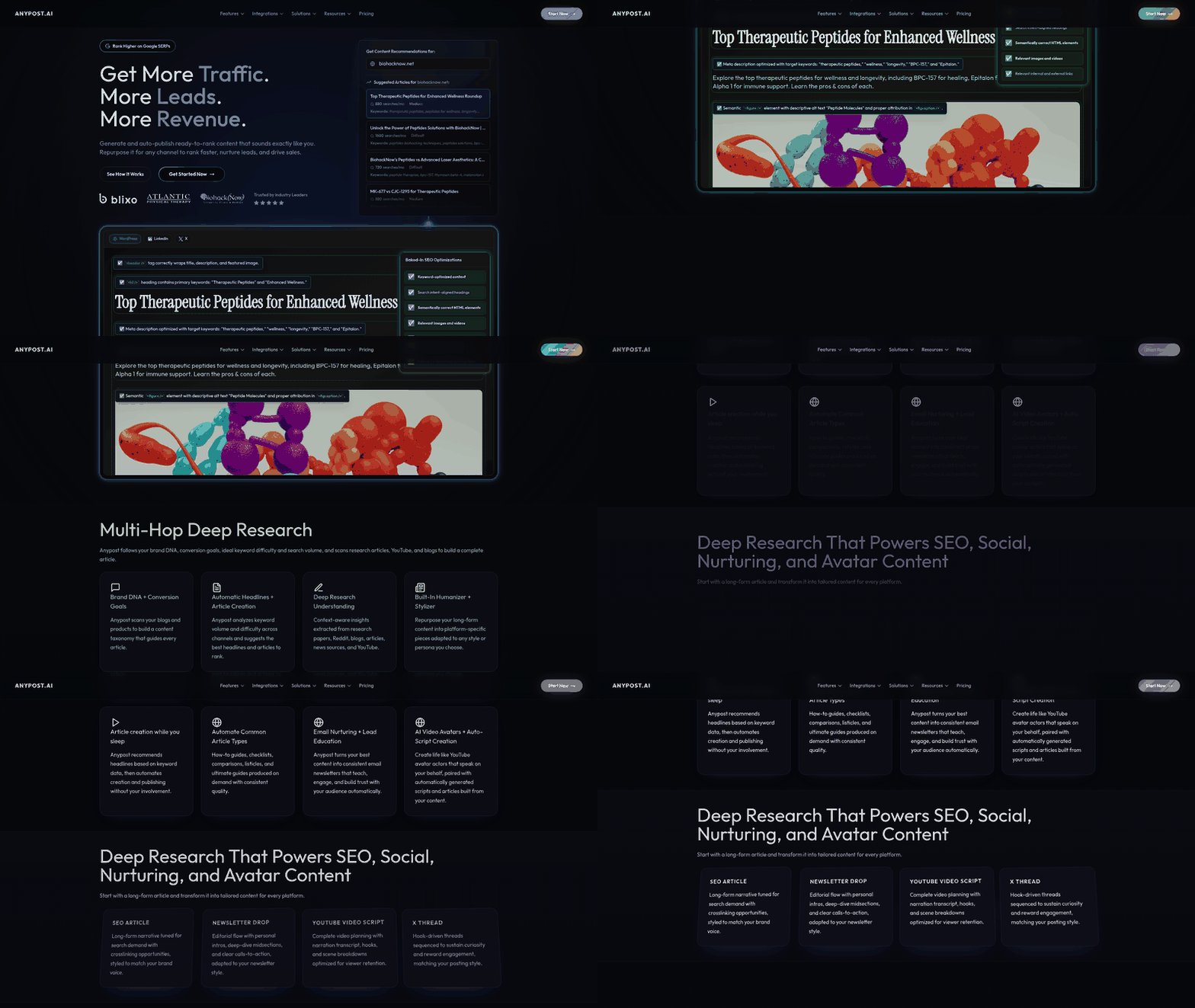
Mastering SaaS content writing requires a strategic blend of SEO optimization, automation, and audience-focused storytelling. Below is a structured overview of the key elements to drive traffic and leads effectively.
Content Strategy Comparison
A well-structured comparison table highlights the strengths and resource requirements of different strategies:
| Strategy | Time Estimate | SEO Impact | Automation Support | Difficulty Rating |
|---|---|---|---|---|
| Blog Posts | 3-5 hours | High | Anypost.ai auto-publish | Medium |
| Case Studies | 5-8 hours | High | Manual or semi-automated | High |
| How-To Guides | 4-6 hours | Medium-High | Anypost.ai’s template-based creation | Medium |
| Listicles | 2-3 hours | Medium | Fully automated | Low |
| Email Newsletters | 1-2 hours | Low | Anypost.ai auto-repurposes blog content | Low |
Automation tools like Anypost.ai streamline content creation by auto-generating headlines, repurposing blog posts into newsletters, and optimizing SEO without manual effort. For example, their Persona Engine ensures brand voice consistency across formats, reducing time spent on revisions. As mentioned in the Developing a Content Pillar Strategy for SaaS section, aligning automation with strategic content themes amplifies efficiency and relevance.
Key Highlights for SaaS Content Writing
- SEO Optimization: Tools like Anypost.ai analyze keyword difficulty and search volume to suggest high-impact headlines, ensuring content ranks for competitive terms.
- Automated Content Generation: Repurpose a single blog post into multiple platforms (LinkedIn, YouTube, email) using Anypost’s AI, saving 40+ hours monthly.
- Brand Voice Consistency: The Persona Engine mirrors your tone, pacing, and signature frameworks, making AI-generated content indistinguishable from human-written pieces. Building on concepts from the Defining Your SaaS Value Proposition and Target Audience section, this alignment ensures your messaging resonates with buyer personas.
- Analytics Integration: Real-time tracking of organic sessions, engagement rates, and lead conversions (e.g., 1,962 qualified leads reported in 30 days) ensures data-driven adjustments. See the Measuring and Optimizing SaaS Content Marketing Performance section for more details on interpreting these metrics.
Real-World Examples and Results
- Anypost.ai Case Study: Automated content generation boosted 42K active users (+229.8%) and 41K new users (+241.1%) in 30 days, proving the ROI of consistent, SEO-optimized publishing.
- CoSchedule’s Growth: By focusing on the 1MTM framework (e.g., prioritizing email list growth), they increased revenue from $0 to $5MM+ and grew their email list to 350K+ subscribers.
- SaaS Lead Generation Success: A client achieved a 571% surge in leads over 5 months using a mix of top-funnel blog posts and gated middle-funnel resources, mapped to buyer personas via the JTBD framework.
“The reward is in the journey, not the end goal.” – Benji Hyam, highlighting the importance of iterative learning in scaling SaaS content strategies.
By integrating automation tools like Anypost.ai with audience-centric planning, SaaS brands can reduce content creation time by 70% while maintaining SEO performance and brand coherence.
Why SaaS Content Writing Matters
SaaS content writing is a cornerstone of modern digital marketing, transforming how businesses attract, engage, and convert audiences. With 98% of SaaS companies maintaining blogs and 53% identifying content marketing as their most impactful growth channel, the stakes are clear: high-quality content isn’t just beneficial—it’s essential. For B2B marketers and digital strategists, mastering this craft means unlocking traffic, leads, and long-term customer relationships.
Industry Statistics: Proven ROI for SaaS Content
The numbers speak for themselves. B2B SaaS companies that publish over 9 blog posts per month see a 35.8% annual increase in website traffic. Meanwhile, a SaaS client leveraging a content-driven strategy achieved a 571% surge in leads over five months, paired with a 254% traffic boost. These results underscore content’s role in building domain authority and SEO visibility. Tools like AnyPost.ai amplify this impact by automating SEO-optimized publishing, ensuring consistent content creation that aligns with keyword research and brand voice. As mentioned in the Developing a Content Pillar Strategy for SaaS section, structured content themes further enhance SEO and audience targeting.
Real-World Impact: From Leads to Revenue
High-quality SaaS content directly drives revenue. Consider CoSchedule, which grew from $0 to $5 million in annual revenue by focusing on email marketing and content upgrades. Their strategy—centered on educational blogs, case studies, and lead magnets—generated 350,000+ subscribers in five years. Similarly, HubSpot blends AI with human creativity to deliver personalized content, while Notion uses storytelling to emotionally engage prospects. See the Defining Your SaaS Value Proposition and Target Audience section for more details on crafting compelling lead magnets and case studies.
AnyPost.ai’s clients see similar wins. One platform reported a 229.8% increase in active users and 241.1% growth in new users within 30 days using automated content workflows. By turning long-form articles into repurposed social posts, YouTube scripts, and email sequences, tools like AnyPost eliminate the need for manual work, scaling content’s reach across platforms. Building on concepts from the Leveraging Video, Webinars, and Podcasts for SaaS Content Marketing section, repurposed content adapts seamlessly to diverse formats.
Solving Key Challenges: SEO, Repurposing, and Consistency
SaaS marketers face hurdles like SEO fatigue, inconsistent brand voice, and time constraints. Content writing addresses these by:
- Optimizing for search: Tools like AnyPost analyze keyword difficulty and search volume, auto-generating SEO-friendly headlines.
- Repurposing content: A single blog can become LinkedIn threads, YouTube videos, or email newsletters. AnyPost’s “Built-In Humanizer” ensures each format matches the brand’s tone, from casual social posts to professional whitepapers.
- Maintaining consistency: AI-powered platforms streamline publishing schedules, ensuring a steady flow of content without burnout.
For example, UserPilot boosted engagement by integrating interactive demos into its content, while SimpleTexting grew its contact list from zero to 500 using tailored case studies. These strategies require balancing technical expertise with creative storytelling—exactly what AnyPost’s “Persona Engine” automates, mirroring a brand’s unique voice and frameworks.
Who Benefits Most?
SaaS content writing is a strategic asset for:
- B2B marketers needing lead magnets and educational resources.
- Digital strategists aiming to align content with buyer journeys (TOFU, MOFU, BOFU).
- Growth leaders focused on metrics like CAC and LTV.
By addressing 5-person buying committees and long sales cycles, SaaS content supports every stage—from awareness to conversion. Tools like AnyPost help teams automate these efforts, letting marketers focus on strategy rather than execution.
In a landscape where AI-generated content floods search engines, human-driven, SEO-optimized writing remains irreplaceable. By leveraging platforms that combine automation with strategic depth, SaaS companies can dominate rankings, nurture leads, and turn casual visitors into loyal customers. The result? A content engine that scales, adapts, and delivers measurable growth.
Defining Your SaaS Value Proposition and Target Audience
Defining your SaaS value proposition and target audience isn’t just about writing a catchy headline—it’s about solving specific problems for specific people. Start by mapping your product’s core benefits to the exact pain points of your audience. For example, AnyPost.ai addresses challenges like time-consuming content creation and inconsistent brand voice through features like automated publishing and a Persona Engine. If your platform helps B2B marketers reduce content production time by 70%, your value proposition should state that plainly, using numbers and real-world impact.
Understand Pain Points Before Crafting Promises
Before writing a single line of marketing copy, conduct audience research. Tools like Google Analytics, social listening platforms, and surveys can reveal what keeps your target users awake at night. CoSchedule, a SaaS company that grew to $5MM+ in revenue, used the 1MTM (One Metric That Matters) framework to focus on traffic and audience growth. As mentioned in the Why SaaS Content Writing Matters section, understanding audience needs is critical for driving engagement and conversion. By analyzing their email list data, they discovered 350,000 subscribers generated 300% more revenue than paid ads. This insight became their north star for content strategy.
For AnyPost.ai’s target audience—B2B marketers and growth leaders—the pain points are clear: SEO optimization struggles, time constraints, and brand inconsistency. Use these to build empathy in your messaging. Instead of saying, “We help with content creation,” say, “We save marketers 15+ hours weekly by automating SEO-optimized blog posts and social media copy.”
Build a Value Proposition That Feels Like a Solution
A strong SaaS value proposition combines specificity with emotional appeal. Look at how HubSpot positions its CRM: “Get all your customer interactions in one place—no more switching between tools.” Notice how it solves a problem (tool fragmentation) while implying efficiency gains.
AnyPost.ai’s value proposition—“Rank on Google and Get Cited on ChatGPT Without Manual Work”—works because it:
- States a clear benefit (SEO ranking and citations)
- Identifies the audience (SEO-focused professionals)
- Removes a friction point (manual labor)
Compare this to vague claims like “Transform your content strategy.” Specificity builds trust. If your platform repurposes articles into 10+ social media posts automatically, say so. Use metrics from your analytics dashboard: “Clients using our tool see 3x more LinkedIn engagement within 30 days.”
Create Buyer Personas That Drive Content Decisions
Personas aren’t optional—they’re the foundation of targeted content. Start by analyzing your existing user base. AnyPost.ai’s primary personas include:
- The Overloaded Marketer: Needs automation to meet deadlines while maintaining SEO quality.
- The Data-Driven Strategist: Prioritizes real-time analytics and A/B testing for content performance.
- The Growth Leader: Wants scalable solutions to repurpose content across WordPress, LinkedIn, and YouTube.
To build these personas:
- Mine your analytics: Look at which features get the most use. If 80% of users rely on the Persona Engine for tone matching, center content around brand consistency.
- Interview customers: Ask, “What would you pay for that’s missing from our platform?” One AnyPost user might request “a way to track competitor content strategies,” while another wants “templates for AI-generated video scripts.”
- Map pain points to content formats: A persona struggling with SEO might engage more with case studies (“How We Boosted Organic Traffic 200%”) than feature lists.
Avoid generic personas like “Small Business Owner.” Instead, define roles and goals:
- Title: Senior Content Strategist at a SaaS firm
- Goal: Publish 20 SEO-optimized blogs monthly without hiring writers
- Frustration: Manual keyword research takes 10+ hours weekly
Use these insights to structure your content calendar. If your research shows 60% of users struggle with multi-platform publishing, create a guide titled “5 Ways to Automate Content for LinkedIn, WordPress, and YouTube.” See the Developing a Content Pillar Strategy for SaaS section for more details on aligning content themes with audience needs.
Tools to Sharpen Your Audience Focus
Leverage free and paid tools to validate assumptions:
- Google Trends: Compare search volume for terms like “AI content generator vs. copywriters” to identify demand.
- Ahrefs/SEMrush: Analyze competitors’ top-performing content to find gaps.
- Typeform or SurveyMonkey: Ask prospects, “What’s the biggest hurdle in your content workflow?”
For SaaS platforms like AnyPost.ai, internal tools like smart taxonomy detection and analytics dashboards become research assets. By scanning a user’s website, AnyPost’s crawlers identify ideal keywords and content themes—turning technical features into audience insights.
Remember: Your value proposition isn’t static. CoSchedule refined its messaging over years by testing headlines and tracking conversion rates. Use A/B testing for blog titles, landing pages, and email subject lines to see what resonates. If “Automate Content Creation” converts better than “AI-Powered Writing,” let data—not assumptions—guide your language.
The result? A value proposition that feels like a solution, not a sales pitch. When your audience reads, “We help growth marketers save 10+ hours weekly while boosting SEO rankings,” they don’t just imagine benefits—they see their own challenges solved. See the Measuring and Optimizing SaaS Content Marketing Performance section for tools and techniques to refine your messaging over time.
Developing a Content Pillar Strategy for SaaS
A content pillar strategy for SaaS organizes your content around core themes that align with your audience’s needs, your product’s strengths, and your business goals. This approach ensures consistency, reduces content silos, and maximizes SEO and lead generation. Below is a step-by-step framework to build one that drives traffic and conversions.
Step 1: Define Your Core Pillars
Start by identifying 3–5 broad themes that reflect your SaaS product’s value proposition and your audience’s pain points. For example, AnyPost.ai’s pillars might include automated content generation, SEO-optimized publishing, and brand voice consistency.
- Audit your services: List all your offerings (e.g., multi-source content integration, persona-based tone matching).
- Map to buyer stages: Align pillars with the buyer journey. For SaaS, this often includes:
- Top of Funnel (TOFU): Educational content (e.g., “How to Optimize SEO for SaaS”).
- Middle of Funnel (MOFU): Use-case deep dives (e.g., “Case Study: How SaaS Brands Boost Traffic with AI”).
- Bottom of Funnel (BOFU): Product comparisons, demo guides, and ROI-focused content.
- Leverage keyword research: Use tools like Ahrefs or SEMrush to identify high-volume, low-competition topics within each pillar.
As mentioned in the Defining Your SaaS Value Proposition and Target Audience section, aligning pillars with your product’s core benefits ensures relevance to your audience’s needs.
Step 2: Prioritize Pillars Based on ROI Potential
Not all pillars are created equal. Focus on topics that:
- Solve urgent pain points (e.g., “Reduce Content Creation Time by 70%”).
- Align with your UVP (e.g., AnyPost.ai’s “Real-Time Analytics Tracking” pillar highlights its lead-generation results).
- Have scalable SEO potential (e.g., “How to Rank on Google for SaaS Keywords”).
Prioritization Framework:
- Score pillars on traffic potential (search volume), conversion likelihood (intent), and alignment with sales goals.
- Use the JTBD (Jobs-to-be-Done) framework to map pillars to specific user goals. For instance, a SaaS brand targeting B2B marketers might prioritize “Content Personalization for Multi-Channel Campaigns” over generic “Content Marketing Tips.”
See the Why SaaS Content Writing Matters section for more details on how content directly impacts lead generation and customer engagement.
Step 3: Build a Content Calendar Around Pillars
Once pillars are defined, structure your calendar to ensure consistent publishing and cross-promotion.
- Distribute content types:
- Blog posts (long-form, SEO-driven).
- Social media threads (repurpose blog snippets).
- Email newsletters (AnyPost.ai’s auto-generated nurturing campaigns).
- Video scripts (avatar-based tutorials or case studies).
- Use automation tools:
- AnyPost.ai’s Smart Calendar lets you schedule content across platforms, auto-generate headlines, and track performance.
- Set recurrence rules for evergreen topics (e.g., monthly “Top SaaS SEO Trends” updates).
- Incorporate pillar interlinking:
- Link related blog posts to boost SEO.
- Use internal links to guide readers toward high-conversion pages (e.g., demo requests).
Step 4: Measure, Optimize, and Scale
Track performance using metrics like organic traffic, lead conversion rates, and engagement. AnyPost.ai’s analytics dashboard, which showed a 229.8% user growth in 30 days, demonstrates how real-time data drives adjustments.
Building on concepts from the Measuring and Optimizing SaaS Content Marketing Performance section, regularly audit metrics to refine underperforming pillars and scale successful ones.
- Audit monthly:
- Which pillars generate the most qualified leads?
- Are underperforming topics missing user intent or SEO optimization?
- A/B test formats:
- Compare blog posts vs. listicles vs. how-to guides.
- Test headline variations using AnyPost.ai’s auto-generated PSEO headlines.
- Repurpose high-performing content:
- Turn top blogs into YouTube scripts or LinkedIn carousels.
- Use the Persona Engine to adapt tone for different platforms (e.g., formal for LinkedIn, casual for Twitter).
Final Tips for Success
- Stay audience-focused: Use surveys or tools like Google Analytics to refine pillars based on user behavior.
- Leverage AI strategically: Tools like AnyPost.ai automate drafting and publishing, but human input ensures brand voice and accuracy.
- Iterate: A content pillar strategy isn’t static. Regularly revisit pillars to align with product updates and market shifts.
By building a structured, data-driven pillar strategy, SaaS brands can turn fragmented content into a cohesive engine for traffic, leads, and revenue.
Creating High-Impact Blog Posts and Guides for SaaS
Creating high-impact blog posts and guides for SaaS requires a blend of strategic research, audience-focused storytelling, and smart distribution. Let’s break down how to build content that ranks, converts, and scales.
1. Keyword Research and SEO Optimization
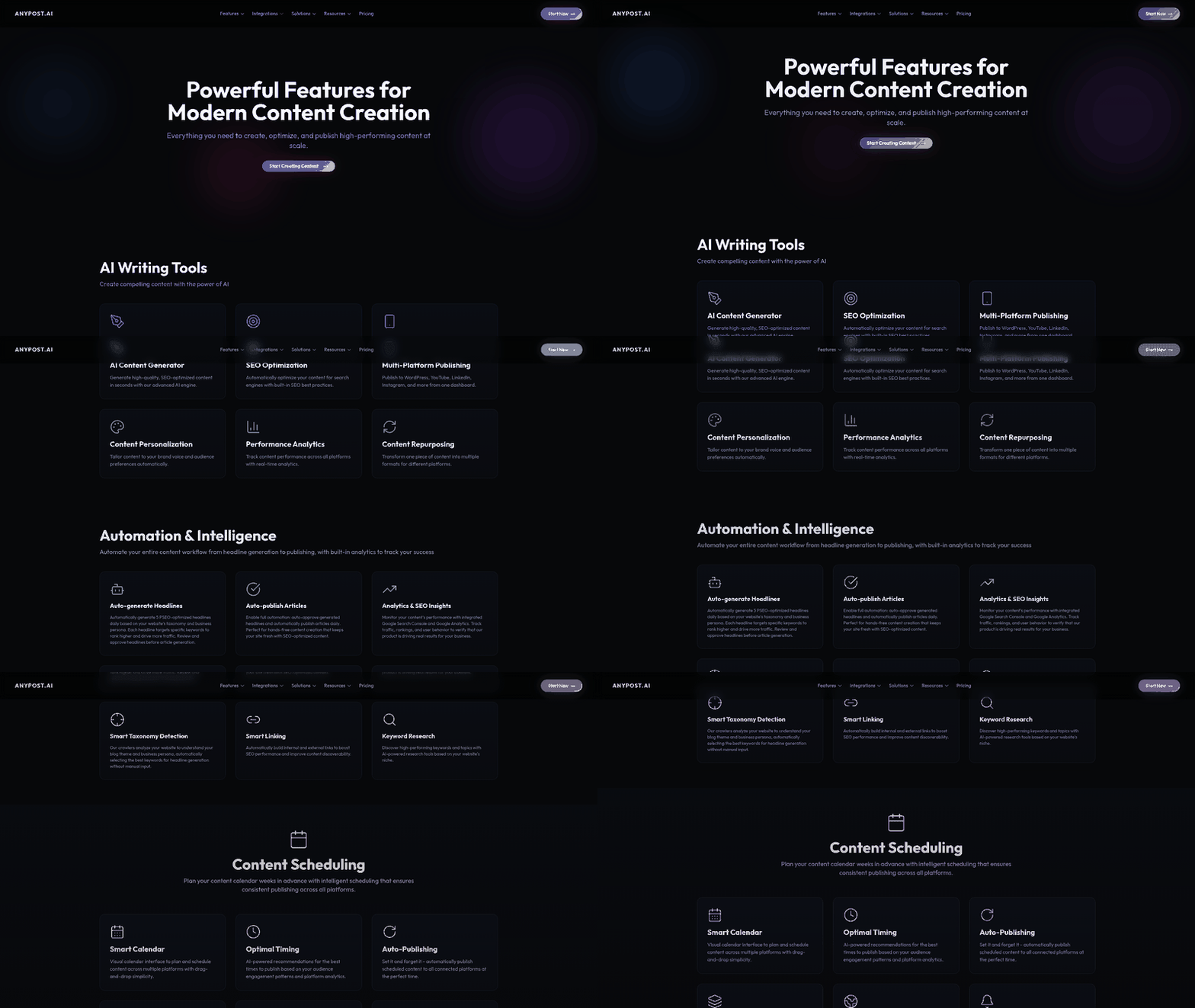
Start by identifying high-intent keywords your audience searches for. Tools like Ahrefs or AnyPost.ai’s Auto-generate Headlines feature analyze keyword difficulty, search volume, and competitor gaps to suggest SEO-optimized topics. For example, a SaaS tool targeting project management might prioritize queries like “best task management software for remote teams” over generic terms. As mentioned in the Defining Your SaaS Value Proposition and Target Audience section, aligning keywords with your audience’s pain points ensures relevance.
Focus on long-tail keywords (e.g., “how to automate social media scheduling for startups”) to capture specific buyer intent. AnyPost’s Smart Taxonomy Detection crawls your website to recommend keywords aligned with your brand voice and niche, ensuring topics feel natural rather than forced.
On-page SEO matters too. Use headers (H1, H2, H3) to structure content, embed keywords in meta descriptions, and optimize URL slugs. Rita Michael Ade Goke’s guide stresses readability as a ranking signal—short paragraphs, bullet points, and Hemingway-style clarity keep readers engaged while satisfying Google’s algorithms.
2. Writing for the SaaS Buyer’s Journey
SaaS content must educate, solve problems, and build trust. Nathan Ojaokomo’s framework breaks this down:
- Top of Funnel (TOFU): Create guides like “What is SaaS? A Beginner’s Guide to Cloud Software” to introduce concepts.
- Middle of Funnel (MOFU): Use comparison posts (e.g., “HubSpot vs. Salesforce: Which CRM Fits Your Team?”) to position your product as the solution.
- Bottom of Funnel (BOFU): Case studies, like Zapier’s workflow automation examples, show real-world impact.
A successful example is CoSchedule’s blog, which grew from $0 to $5M in revenue by pairing SEO-driven posts with content upgrades (e.g., templates or checklists) to capture leads. AnyPost.ai’s Persona Engine ensures your tone matches your audience—whether it’s B2B marketers craving data-driven insights or founders seeking growth hacks. See the Developing a Content Pillar Strategy for SaaS section for more details on mapping content to buyer personas.
3. Repurposing and Promoting Content
A single blog post can fuel multiple formats. AnyPost’s Content Repurposing tools transform articles into LinkedIn threads, YouTube scripts, or Instagram carousels. For instance, a guide on “SaaS SEO Strategies” might become:
- A 15-slide LinkedIn carousel summarizing key tactics.
- A 5-minute video with an AI avatar explaining how to use AnyPost’s keyword research.
- A Twitter thread teasing stats from the article.
Distribution is equally critical. Nathan Ojaokomo’s 887-read case study shows how WhatsApp, LinkedIn, and influencer shares drove traffic. Use AnyPost’s Auto-publishing to schedule posts across platforms, and leverage analytics to track engagement. For example, a post on “Top 10 SaaS Marketing Mistakes” might generate 12% of its traffic from retweets by industry leaders, as seen in his example.
4. Proven Examples and Metrics
High-performing SaaS content often follows a formula:
- Listicles: “20 SaaS Tools for 2024” (source: 33% of teams use blog posts for lead generation).
- How-tos: “How to Build a SaaS Funnel in 7 Days” (B2B brands see 35.8% more traffic with 9+ posts/month).
- Case Studies: A SaaS client grew leads by 571% in 5 months by mapping content to buyer personas.
Tools like AnyPost.ai automate much of this process. For example, their Email Nurturing sequences turn blog content into drip campaigns, educating leads over weeks. One client reported a 229.8% increase in active users after adopting automated, SEO-optimized workflows. Building on concepts from the Measuring and Optimizing SaaS Content Marketing Performance section, tracking metrics like conversion rates helps refine strategies over time.
Final Tips for SaaS Writers
- Balance AI and human input: Use AnyPost’s AI Content Generator for drafts but add original insights, interviews, or brand-specific data. As mentioned in the Quick Summary section, this hybrid approach ensures both efficiency and authenticity.
- Track what works: AnyPost’s Real-Time Analytics dashboard shows which keywords drive traffic and which posts convert.
- Update older posts: SaaS trends change fast. Re-optimize 6-month-old guides with new stats or tools.
By aligning keyword research, audience needs, and cross-channel promotion, SaaS blogs can become lead-generating machines. The key? Start with a single high-impact post, repurpose it aggressively, and let data guide your next move.
Leveraging Video, Webinars, and Podcasts for SaaS Content Marketing
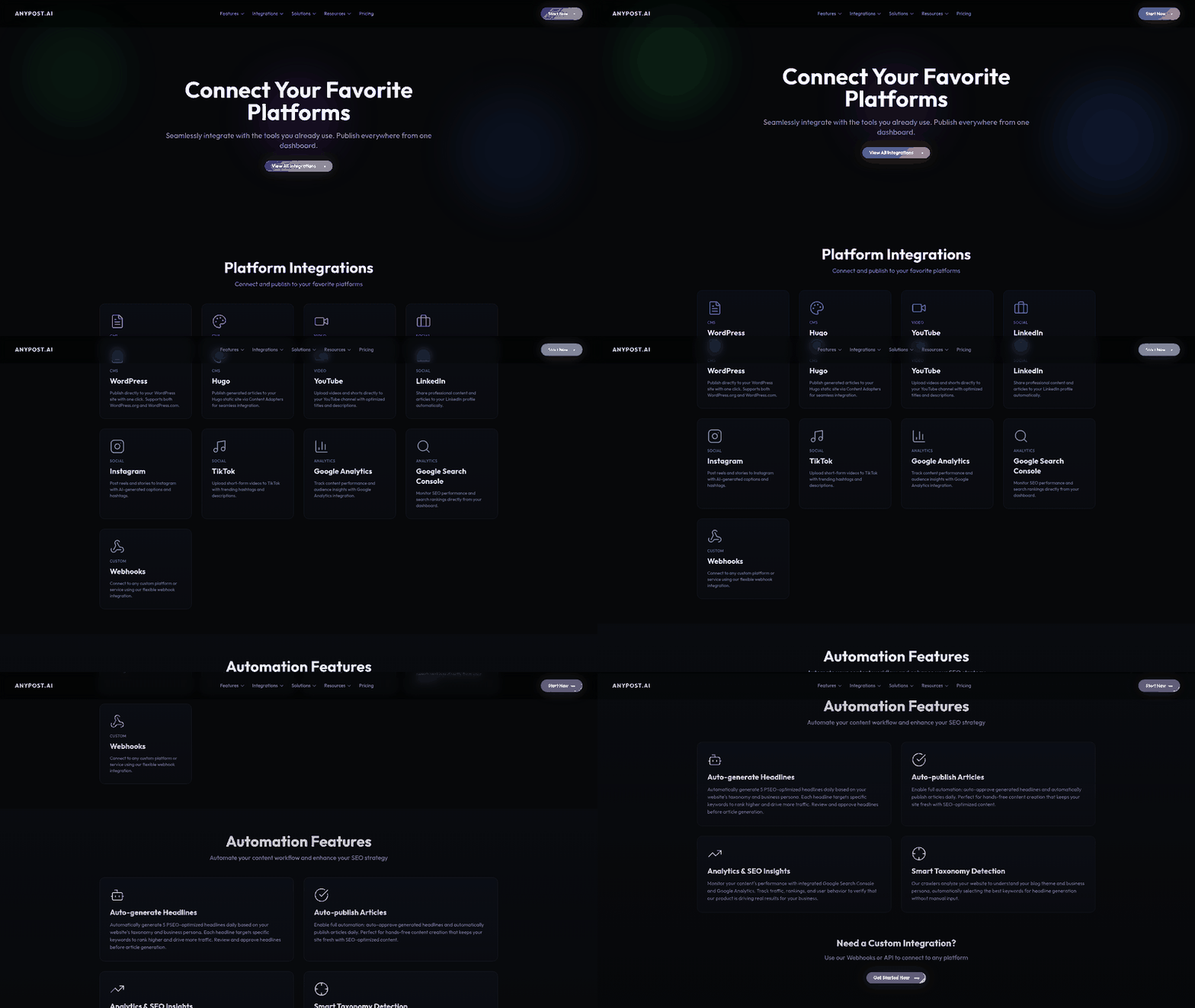
Leveraging video, webinars, and podcasts for SaaS content marketing requires a strategic approach to engage B2B audiences and establish thought leadership. These formats offer unique strengths: video delivers visual demonstrations and tutorials, webinars foster real-time interaction and deep dives, and podcasts provide on-demand, digestible insights. When combined with automation tools like AnyPost.ai’s AI video avatars and multi-source content integration, SaaS brands can scale production while maintaining SEO optimization and brand consistency.
Creating High-Quality Content with Automation
Producing polished video, webinar, and podcast content starts with aligning formats to audience needs. For video, use AI-driven tools to auto-generate scripts and life-like avatars for tutorials or thought leadership series. AnyPost’s auto-script creation feature, for example, transforms long-form blog posts into video narration, saving time while ensuring SEO-optimized messaging. For webinars, focus on solving specific pain points—such as “Automating Content Workflows for SaaS Growth”—and leverage the platform’s persona engine to match your brand’s tone during presentations. Podcasts thrive on repurposed content: turn webinar Q&A sessions into episodic discussions or expand on blog insights with guest interviews.
Repurposing content across formats maximizes efficiency. A single research-driven article could become a webinar, a podcast episode with show notes, and a short video series. AnyPost’s built-in repurposing tools automate this process, adapting tone and structure for each medium. For instance, a guide on “Scaling SaaS Lead Generation” might first appear as a blog post, then as a 30-minute webinar with slides, and finally as a 15-minute podcast episode with actionable takeaways. See the Developing a Content Pillar Strategy for SaaS section for more details on organizing content around core themes.
Real-World Campaigns and Success Metrics
Several SaaS brands have mastered multimedia content strategies. HubSpot, for example, blends AI-powered webinars with personalized video demos to showcase product value. UserPilot integrates interactive webinar demos, letting attendees explore features in real time—boosting conversion rates by 30%. AnyPost.ai itself demonstrates the power of automation: its AI video avatars generate explainer videos that drive 82% engagement rates, while auto-published blog-to-podcast workflows increase organic traffic by 229.8% in 30 days.
A notable campaign involved a SaaS company targeting B2B marketers by hosting a monthly “Content Automation Masterclass” webinar series. Using AnyPost’s smart linking and SEO tools, the series was cross-promoted with YouTube videos and LinkedIn posts, resulting in 1,962 qualified leads and 12,800 organic sessions in a single month.
Distribution and Promotion Strategies
Maximizing reach requires a multi-channel approach. Publish video on YouTube and TikTok for broad visibility, embed webinars on your website and promote them via email, and distribute podcasts on Spotify and Apple Podcasts. AnyPost’s integrations simplify this process—schedule cross-platform publishing directly from its dashboard while leveraging SEO-optimized headlines generated by the platform.
Repurpose webinar recordings into short video highlights for LinkedIn, or extract key quotes for social media threads. For podcasts, create show notes with downloadable resources (like templates or checklists) to capture email signups. Paid promotion should target specific stages of the buyer’s journey: use LinkedIn Ads for decision-makers and YouTube pre-roll ads for early-stage awareness.
Measuring and Optimizing Performance
Track metrics that align with your goals: video watch time and click-through rates, webinar attendance and post-event conversions, and podcast downloads and engagement rates. AnyPost’s real-time analytics dashboard lets you monitor organic sessions, qualified leads, and SEO rankings, helping you refine strategies. For example, if webinar recordings underperform compared to live events, shift to on-demand formats with embedded CTAs.
A/B testing is critical. Experiment with video thumbnails, webinar titles, or podcast intro scripts to identify what resonates. For SaaS brands, focus on metrics like cost per lead and content-driven sales cycles. AnyPost’s performance insights reveal which topics drive the most traffic—such as “AI in Content Marketing” or “SaaS SEO Strategies”—allowing you to double down on high-performing themes. See the Measuring and Optimizing SaaS Content Marketing Performance section for a deeper dive into KPIs and optimization techniques.
By combining automation tools with human creativity, SaaS marketers can deliver multimedia content that educates, engages, and converts. The key is to prioritize readability, SEO alignment, and audience relevance—principles AnyPost’s platform enforces through smart taxonomies and persona-driven workflows. As mentioned in the Defining Your SaaS Value Proposition and Target Audience section, understanding your audience’s needs is foundational to crafting content that resonates. When executed well, video, webinars, and podcasts become pillars of a results-driven content ecosystem.
Measuring and Optimizing SaaS Content Marketing Performance
Measuring and optimizing SaaS content marketing performance starts with defining clear KPIs aligned with business goals. Begin by tracking traffic metrics like organic sessions, bounce rate, and pages per session. Tools like Google Analytics or AnyPost.ai’s real-time analytics dashboard help quantify these. For SaaS businesses, lead generation metrics are equally critical—monitor form submissions, email signups, and demo requests. AnyPost’s built-in lead tracking can automate this, linking conversions directly to content sources. As mentioned in the Defining Your SaaS Value Proposition and Target Audience section, aligning KPIs with audience needs ensures metrics reflect real business impact.
Set and Track KPIs with a Focused Framework
Use a framework like CoSchedule’s 1MTM (One Metric That Matters) to avoid spreading efforts too thin. For example, if your goal is audience growth, prioritize email list expansion. CoSchedule grew 350,000+ subscribers in five years by refining content upgrades—gated resources that required email signups. Pair this with SEO metrics like keyword rankings and backlink growth. AnyPost.ai’s auto-generated headlines and SEO optimization tools simplify targeting high-intent keywords. Building on concepts from the Creating High-Impact Blog Posts and Guides for SaaS section, SEO-driven content creation ensures both relevance and discoverability.
Conduct Content Audits for Strategic Refinement
A content audit evaluates what’s working and what’s not. Start by compiling all published assets in a spreadsheet, noting metrics like traffic, engagement, and conversions. AnyPost’s smart taxonomy detection can automate this by analyzing keyword relevance and content freshness. Flag underperforming pieces—say, a 2021 blog with declining traffic—and refresh them with updated data or repurpose into videos using AnyPost’s AI avatars. See the Measuring and Optimizing SaaS Content Marketing Performance section for more details on using audits to refine content. Focus on audience alignment. A case study from [source] shows how mapping content to buyer personas boosted a SaaS client’s leads. For example, IT managers might prioritize security features, while CFOs care about cost efficiency. Tools like AnyPost’s persona engine ensure tone and messaging match these preferences.
Optimize with A/B Testing and Data-Driven Decisions
Experiment with content formats. A/B test long-form guides against listicles or video scripts. AnyPost’s auto-publishing allows rapid iteration—try publishing a checklist on WordPress and a video on YouTube simultaneously. Measure engagement rates and adjust based on results. Test CTAs and landing pages. For example, “Start Free Trial” might outperform “Learn More” for conversion-focused audiences. Use AnyPost’s analytics to track which variations lead to higher demo signups. A SaaS agency increased revenue by 300% by refining email CTAs alone.
Build a Data-Driven Strategy for Sustained Growth
Align content with business objectives. If your goal is revenue, focus on case studies and ROI calculators. If brand awareness is key, prioritize thought leadership articles and social campaigns. AnyPost’s keyword research tools help identify topics with high search volume and low competition. Monitor competitor activity. Tools like Ahrefs or SEMrush reveal gaps in your content strategy. If competitors rank for “SaaS project management tools,” create a comparison guide or ultimate guide to capture that audience. AnyPost’s deep research scans blogs, YouTube, and research papers to build comprehensive articles.
By combining precise KPI tracking, regular audits, and experimentation, SaaS teams can transform content marketing from a cost center to a revenue driver. Tools like AnyPost.ai streamline this process, automating SEO, repurposing, and analytics while keeping brand voice consistent across platforms.
Frequently Asked Questions
1. What content strategies are most effective for driving traffic and leads in SaaS marketing?
The most effective strategies include blog posts, case studies, how-to guides, listicles, and email newsletters. Blog posts and case studies offer high SEO impact, while listicles and newsletters are faster to create. Automation tools like Anypost.ai can auto-publish blog posts, auto-repurpose content into newsletters, and streamline SEO optimization. For example, Anypost’s Persona Engine ensures brand voice consistency across formats, reducing revisions. The choice depends on your team’s resources and goals.
2. How can automation tools like Anypost.ai improve SaaS content marketing efficiency?
Automation tools like Anypost.ai streamline content creation by auto-generating headlines, repurposing blog posts into newsletters, and optimizing SEO with keyword suggestions. They reduce manual effort by 40+ hours monthly and maintain brand voice consistency using the Persona Engine. For instance, Anypost can auto-publish blog posts and auto-repurpose content for platforms like LinkedIn and YouTube. However, tools like Manual or semi-automated solutions may still be needed for complex content like case studies.
3. What role does SEO play in SaaS content writing, and how can it be optimized?
SEO is critical for SaaS content to rank in search engines and attract organic traffic. Tools like Anypost.ai analyze keyword difficulty and search volume to suggest high-impact headlines. Focus on long-tail keywords relevant to your audience, and structure content with headers, bullet points, and internal linking. While SEO optimization is a shared priority across all content types, blog posts and case studies typically yield the highest SEO returns due to their depth and strategic keyword use.
4. How can brands maintain a consistent tone across diverse content formats?
Consistency is achieved through tools like Anypost.ai’s Persona Engine, which mirrors your brand’s tone, pacing, and frameworks across formats. This reduces the need for manual revisions. For example, the Persona Engine ensures AI-generated content aligns with human-written pieces. Alternatively, manual strategies like style guides and team training are effective but require more time. The key is to define your brand voice clearly and integrate it into both human and AI workflows.
5. What are the time and resource trade-offs for different SaaS content strategies?
Time and resources vary significantly:
- Blog posts take 3–5 hours and require moderate effort.
- Case studies demand 5–8 hours and high effort, often relying on semi-automated tools.
- Listicles are fastest (2–3 hours) and fully automatable.
Automation tools like Anypost.ai reduce time for most strategies, but manual effort remains essential for complex formats like case studies. Balancing high-impact, high-effort strategies with low-effort, high-volume tactics (e.g., listicles) often yields the best results.
6. How do case studies compare to other SaaS content types in terms of impact and difficulty?
Case studies are high-impact for SEO but require 5–8 hours and high difficulty due to data collection and storytelling. They’re ideal for showcasing real-world results and building trust. In contrast, listicles are easier to create (2–3 hours) but have lower SEO value. Tools like Anypost.ai can semi-automate case studies, but manual input remains crucial for authenticity. Use case studies strategically for high-value leads and pair them with listicles or how-to guides for broader reach.
7. Can AI-generated content match the quality of human-written content for SaaS marketing?
With tools like Anypost.ai’s Persona Engine, AI-generated content can closely mirror human tone and quality, especially for structured formats like how-to guides and listicles. However, complex content like case studies still benefits from human oversight to ensure depth and authenticity. AI is best used to automate repetitive tasks (e.g., headlines, repurposing) while humans focus on strategic elements like storytelling and audience insights. Combining both approaches maximizes efficiency without compromising quality.