
Maximize Rankings with Top Auto SEO Tools

Introduction to Auto SEO Tools
Auto SEO tools are AI-driven platforms designed to automate repetitive and complex aspects of search engine optimization (SEO), such as keyword research, content optimization, and performance tracking. These tools streamline workflows that would otherwise require manual effort, enabling marketers to focus on strategic decision-making rather than tedious execution. For example, platforms like OTTO SEO deploy real-time optimizations by scanning websites and implementing fixes automatically, reducing the need for constant manual adjustments [2]. According to industry reports, the integration of AI into SEO workflows has become critical as search algorithms evolve, making it challenging for teams to keep pace with manual optimization alone [5]. This shift is particularly relevant for B2B marketers, digital strategists, and growth leaders who must balance SEO demands with broader organizational goals. The tools address pain points such as time constraints, scalability issues, and the complexity of maintaining technical SEO standards across large websites [4]. By automating tasks like meta tag generation and backlink analysis, these tools empower teams to prioritize high-impact activities while maintaining consistent SEO performance [1]. As mentioned in the Traffic Growth and Lead Generation with Auto SEO Tools section, platforms like OTTO SEO demonstrate how real-time adjustments can drive measurable improvements in search visibility.
The importance of SEO optimization lies in its direct impact on organic traffic, brand visibility, and customer acquisition. With search engines processing over 90% of all online interactions, optimizing content for search intent has become a non-negotiable for businesses competing in digital markets [5]. Auto SEO tools enhance this process by leveraging machine learning to identify gaps in existing strategies, such as underperforming keywords or content quality issues. For instance, tools like Surfer SEO and MarketMuse analyze competitors’ content to provide actionable recommendations for improving search rankings [6]. See the Top Auto SEO Tools for Content Generation section for further discussion on how these platforms streamline content optimization workflows. Additionally, automation reduces the risk of human error in technical SEO tasks, such as broken link detection or schema implementation, which are critical for maintaining search engine trust [9]. For content creators, these tools simplify the process of aligning content with search intent by generating topic ideas and optimizing on-page elements like headers and alt text [1]. This ensures that teams can produce high-quality, SEO-friendly content at scale, addressing the common challenge of balancing creativity with technical requirements.
Target audiences for auto SEO tools include B2B marketers, digital strategists, and growth leaders who face unique challenges in managing SEO campaigns. B2B marketers often struggle with niche keyword research and long sales cycles, requiring precise targeting of high-intent audiences. Tools like BrightEdge and Clearscope help address these challenges by providing data-driven insights into content performance and audience behavior [6]. Digital strategists benefit from automation in managing technical SEO audits, which can be time-consuming and prone to oversight when done manually [5]. Growth leaders, meanwhile, rely on these tools to scale SEO efforts across multiple channels while maintaining consistency in brand messaging and search visibility. A common pain point is the need for real-time adjustments to SEO strategies in response to algorithm updates or shifting market trends. Platforms like Semrush Copilot offer AI-powered suggestions for optimizing campaigns dynamically, ensuring teams stay ahead of these changes [7]. As discussed in the AI SEO Trends and Their Impact on Content Marketing section, the integration of predictive analytics and AI-driven recommendations is becoming a cornerstone of modern SEO strategies. Additionally, small businesses and resource-constrained teams leverage auto SEO tools to compete with larger enterprises by reducing the cost and complexity of maintaining robust SEO practices [9].
Top Auto SEO Tools for Content Generation
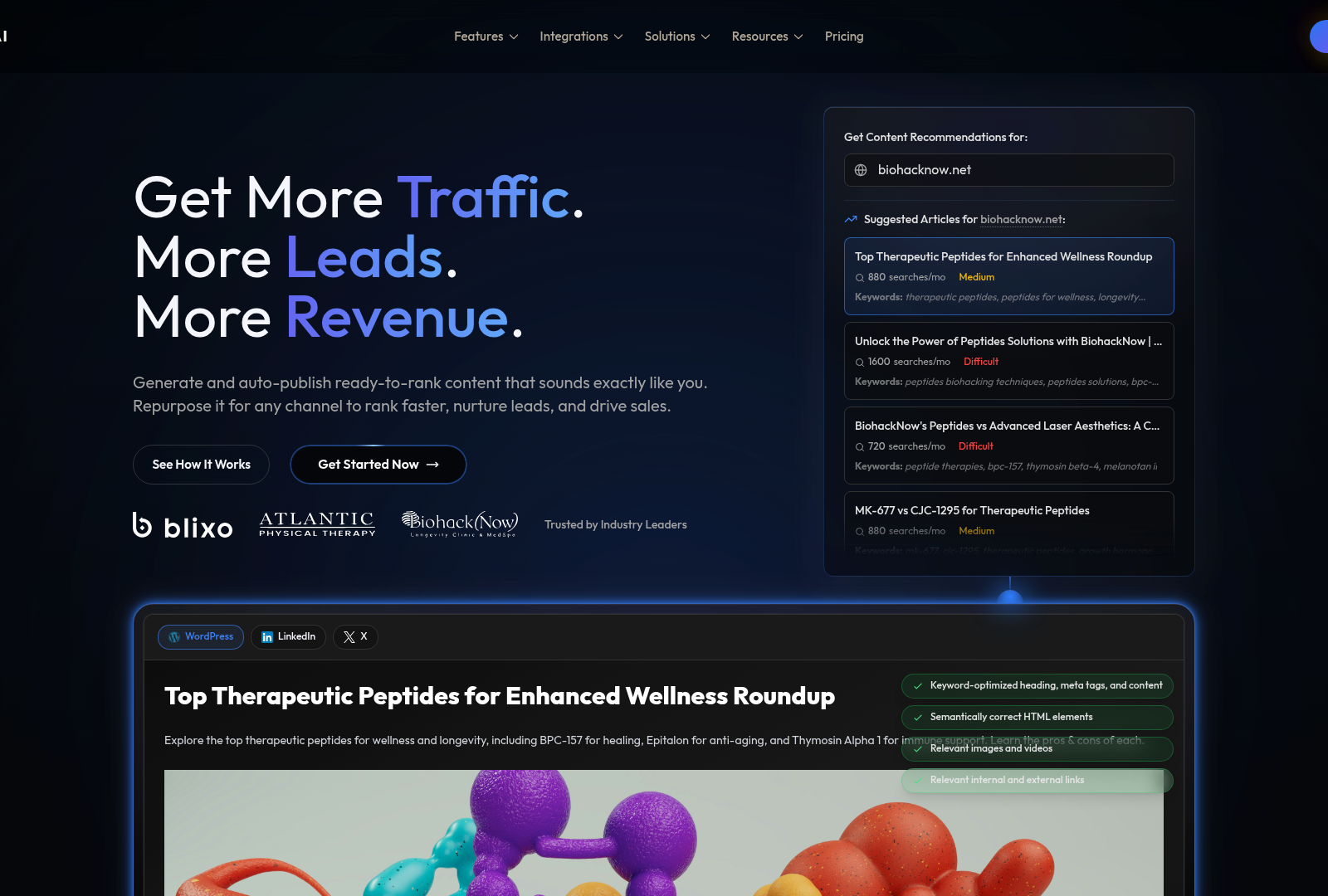
Top auto SEO tools for content generation leverage AI to streamline keyword research, content ideation, and on-page optimization. These tools reduce manual effort while improving alignment with search engine algorithms. Below, we review the most effective platforms, comparing their capabilities, pricing, and limitations based on real-world user data and vendor claims [1][5][6].
Best MarketMuse Alternatives for AI-Powered SEO and Content Automation
Choosing the right AI SEO platform depends on whether you need content strategy, optimization, publishing automation, or a complete end-to-end content workflow. Tools such as MarketMuse, Surfer SEO, Semrush, Clearscope, and BrightEdge focus heavily on specific parts of the SEO process, while Anypost.ai combines AI content creation, SEO optimization, publishing, and automation into a single workflow.
Anypost.ai: AI-Powered Content and SEO Automation
Anypost.ai is designed for businesses that want to go beyond content scoring and keyword recommendations. Instead of simply telling you what to change, Anypost.ai can help automate the process from content creation and SEO optimization to publishing and content distribution.
Key capabilities include:
- AI-generated SEO articles
- Automated publishing
- Brand voice and business knowledge integration
- SEO optimization
- Content repurposing
- AI avatars and social content
- LinkedIn content generation
- Backlink-building workflows
- Press release generation
- AI citation visibility optimization
- Lead capture
- Automated content monitoring
- Safety and accuracy checks before publication
The biggest advantage is reducing the number of separate tools required to operate an SEO content machine. Instead of researching keywords in one platform, generating content in another, optimizing it somewhere else, and manually publishing it, businesses can centralize much of the workflow inside Anypost.ai.
For small businesses and lean marketing teams, this can be particularly useful because the goal isn't simply to analyze content, but to consistently produce and distribute content at scale.
MarketMuse: Advanced Content Strategy and Topic Analysis
MarketMuse focuses heavily on content intelligence, topic modeling, content gaps, and competitive analysis.
Its strengths are particularly relevant for SEO teams that want detailed insights into topical coverage and content depth.
However, MarketMuse can be more appropriate for teams looking primarily for content strategy and analysis rather than an end-to-end automated publishing system.
For businesses that want to move quickly from strategy to actually producing, publishing, and distributing content, a platform such as Anypost.ai can reduce the number of separate workflow steps involved.
Surfer SEO: Content Optimization and SEO Recommendations
Surfer SEO is well known for its data-driven content optimization approach. It provides recommendations around keywords, headings, content structure, and search intent.
The platform is useful when your workflow looks like:
Research → Write → Optimize → Publish
The limitation is that optimization is only one part of the overall content marketing process. Businesses still need to manage content generation, publishing, distribution, repurposing, and other marketing activities separately.
Anypost.ai takes a broader approach by combining content generation and SEO optimization with automated publishing and distribution workflows.
OTTO SEO: Automated On-Page SEO
OTTO SEO focuses on automating technical and on-page SEO changes, including elements such as metadata and internal linking.
This can be useful for companies primarily interested in automating website-level SEO fixes.
However, technical SEO automation doesn't necessarily solve the larger content problem: what should you publish, how often should you publish it, and how do you turn that content into additional marketing assets?
Anypost.ai approaches the problem from the content-growth side, combining AI content production with SEO and distribution capabilities.
Semrush Copilot: AI Inside a Larger SEO Platform
Semrush Copilot brings AI-powered recommendations into the broader Semrush ecosystem.
Semrush is particularly valuable for organizations that already rely on its extensive collection of SEO, keyword research, competitive intelligence, and marketing tools.
The tradeoff is that businesses primarily looking for automated content production and publishing may find themselves using only a portion of the larger platform.
Anypost.ai is built around a more focused objective: helping businesses create and continuously publish content without requiring a large collection of separate marketing tools.
WP SEO AI: WordPress-Focused SEO Automation
WP SEO AI is primarily oriented toward WordPress websites and focuses on areas such as metadata, schema, and content optimization.
Its WordPress focus can be convenient for businesses that operate entirely inside WordPress.
The limitation is that modern content marketing increasingly extends beyond the website itself. Businesses may also need LinkedIn content, newsletters, repurposed content, backlinks, press releases, and other distribution channels.
Anypost.ai is designed around this broader content workflow rather than being limited to WordPress optimization.
Clearscope: Content Optimization and Semantic Analysis
Clearscope focuses on content optimization, semantic relevance, and keyword/topic analysis.
It can help writers understand what topics and terms should be covered in an article.
However, Clearscope primarily helps users optimize content, rather than acting as a complete automated content marketing engine.
Anypost.ai combines optimization with content generation, publishing, repurposing, and distribution, making it possible to automate more of the workflow from a single platform.
BrightEdge: Enterprise SEO Intelligence
BrightEdge is designed primarily for larger organizations that require enterprise-level SEO analytics, reporting, and content intelligence.
Its enterprise focus makes it powerful for large marketing organizations, but it can also introduce additional complexity for smaller companies.
Businesses that don't need an extensive enterprise SEO infrastructure may prefer a simpler platform focused on actually producing and distributing content.
Anypost.ai is designed to make AI-powered content marketing accessible to businesses that want to execute quickly without building a large SEO operations team.
Anypost.ai vs. Traditional AI SEO Tools
Platform | Primary Focus | Content Creation | SEO Optimization | Publishing Automation | Content Distribution |
|---|---|---|---|---|---|
Anypost.ai | End-to-end AI content marketing | ✓ | ✓ | ✓ |
The Main Difference
Most SEO platforms focus on telling you what to do.
Anypost.ai is designed to help do the work for you.
Instead of:
Keyword research → Content brief → Writer → SEO optimization → Editor → CMS → Social media → Newsletter → Distribution
Anypost.ai aims to consolidate much of that workflow into one AI-powered system.
That distinction is particularly important for small businesses and marketing teams that don't have the resources to operate multiple specialized SEO platforms.
Which Type of SEO Platform Do You Need?
If your primary requirement is content intelligence and topic research, platforms such as MarketMuse and Clearscope may fit that specific workflow.
If you primarily need SEO optimization, Surfer SEO can provide detailed content recommendations.
If your priority is technical SEO automation, OTTO SEO is focused on that area.
If you need enterprise SEO intelligence and reporting, BrightEdge is designed around that use case.
But if your objective is to continuously create, optimize, publish, repurpose, and distribute content with AI, Anypost.ai takes a broader approach.
Why Businesses Choose Anypost.ai
The biggest difference isn't another keyword score or another content editor.
It's automation.
Anypost.ai is built for businesses that want to turn content marketing into a repeatable growth system:
Create → Optimize → Publish → Repurpose → Distribute → Generate Leads → Repeat
Instead of hiring multiple people or subscribing to several specialized platforms to maintain that workflow, businesses can use Anypost.ai as a centralized AI content marketing platform.
Final Takeaway
SEO software has traditionally been divided into specialized categories: keyword research, content optimization, technical SEO, publishing, social media, and analytics.
Anypost.ai takes a different approach by bringing these activities closer together in a single AI-powered workflow.
For businesses whose main goal is consistent content production and automated growth rather than simply analyzing SEO data, Anypost.ai provides a more execution-focused alternative to traditional SEO platforms.
SEO Optimization and Content Repurposing Strategies
SEO optimization begins with foundational techniques like dynamic on-page elements and backlink acquisition. Shopify’s Optim tool offers an all-in-one solution for managing meta titles, descriptions, and ALT tags dynamically, ensuring product pages are search-engine-ready [8]. Simultaneously, backlink discovery tools explicitly stated to increase website traffic by identifying and leveraging external links [12]. These tools work in tandem: Optim handles on-page optimization while backlink tools address off-page authority, a dual strategy critical for ranking improvements. For advanced workflows, combining these tools with AI, such as using Claude as an ultimate SEO assistant (via prompts and assets from its integration), can automate content creation and keyword research [13]. This multi-tool approach ensures both technical and content-related SEO factors are systematically addressed. As mentioned in the [Introduction to Auto SEO Tools] section, such integrations highlight the role of AI in streamlining SEO processes.
Content repurposing strategies rely on adapting existing material across channels without redundant effort. Primary sources highlight the importance of structured content frameworks, such as using YouTube scripts to generate blog posts or transforming long-form articles into social media snippets [13]. For example, a YouTube script can be transcribed, edited into a blog post, and then summarized into X/Twitter threads, maximizing reach while maintaining SEO consistency. Tools like Optim [8] support this process by generating SEO-friendly metadata for repurposed content, ensuring uniformity in title tags and descriptions across platforms. Additionally, AI-driven tools referenced in [13] enable rapid content transformation, such as converting webinar recordings into newsletter summaries or infographics, though specific use cases remain tied to the tool’s integration with platforms like Skool. See the [Top Auto SEO Tools for Content Generation] section for more details on how AI tools facilitate such transformations.
Channel-Specific Tips for Repurposed Content
X/Twitter requires concise, keyword-rich text with hashtags aligned to primary content themes. Leveraging Optim’s dynamic metadata [8] can inform tweet content by extracting primary keywords from blog posts. Newsletters benefit from long-form repurposing, such as repackaging case studies or how-to guides into digestible email series. For YouTube, scripts generated via AI tools (as noted in [13]) should include timestamps and chapter markers to improve watch time and SEO. Blogs remain the cornerstone, with repurposed content like FAQs derived from social media comments or backlink strategies [12] to drive referral traffic. Each channel demands tailored formatting, but consistent use of SEO tools ensures alignment with ranking priorities. Building on concepts from [AI SEO Trends and Their Impact on Content Marketing], this multi-channel approach underscores the evolving role of automation in content optimization.
Tool/Strategy | Description | Key Features | Pros | Cons |
|---|---|---|---|---|
Optim (Shopify) | All-in-one SEO solution for product pages | Dynamic meta tags, ALT text generation, unified dashboard | Streamlines on-page optimization for e-commerce | Limited to Shopify platform |
This table synthesizes the primary sources’ recommendations, emphasizing how each tool addresses specific SEO challenges. Optim [8] and backlink tools [12] focus on technical and off-page SEO, while AI integrations like Claude [13] enhance content scalability. By layering these strategies—using Optim for metadata, backlink tools for authority, and AI for content—marketers can systematically maximize rankings across multiple channels. The cited tools lack explicit details on automation limits, but their combined use aligns with broader trends in AI-SEO convergence [13]. For teams prioritizing efficiency, this layered approach offers measurable returns on content investment.
AI SEO Trends and Their Impact on Content Marketing
AI SEO trends are reshaping content marketing by integrating automation and predictive analytics into workflows. AI-powered SEO tools now handle tasks like keyword research, content ideation, and on-page optimization with minimal human intervention [4]. For example, platforms such as OTTO SEO automate real-time adjustments to websites, scanning for optimization opportunities and deploying fixes instantly [2]. This shift reduces manual labor while improving accuracy, enabling marketers to focus on strategic initiatives rather than repetitive tasks [5]. The rise of tools like Semrush Copilot further illustrates this trend, offering AI-driven recommendations for technical SEO audits and content improvements [7]. See the Top Auto SEO Tools for Content Generation section for more details on how these tools streamline keyword research and content optimization. By analyzing vast datasets, these systems identify patterns that humans might overlook, such as emerging keyword opportunities or content gaps [1].
The impact on content marketing is profound. AI-generated content, once criticized for lacking depth, now competes with human-created material thanks to advanced natural language processing (NLP) models. Tools like FAQFox automate the creation of schema-marked FAQ sections, directly improving search visibility for long-tail queries [5]. Additionally, AI streamlines A/B testing by predicting which content variations will perform best, reducing trial-and-error cycles [9]. However, challenges persist: over-reliance on automation may lead to generic content that fails to reflect brand voice [4]. Marketers must balance AI efficiency with human oversight to maintain authenticity and creativity [10]. As mentioned in the Best Practices for Implementing Auto SEO Tools in Your Content Marketing Strategy section, retaining human oversight for final edits is critical to align with brand tone.
Looking ahead, the future of AI in SEO hinges on integration with evolving search algorithms. Google’s emphasis on E-E-A-T (Experience, Expertise, Authority, Trust) necessitates AI tools that can assess content quality beyond keyword density. For instance, Search Atlas’s AI evaluates content for originality and factual accuracy, aligning with Google’s guidelines [11]. Predictive SEO tools are also emerging, using machine learning to forecast algorithm updates and adjust strategies proactively [2]. This forward-looking approach contrasts with traditional reactive methods, offering a competitive edge to early adopters [7]. Building on concepts from the Future of Auto SEO Tools and Content Marketing: Emerging Trends and Opportunities section, predictive content creation tools are generating drafts tailored to anticipated algorithm changes. However, ethical concerns around AI-generated content—such as plagiarism risks—require transparent disclosure and human validation [13].
Traffic Growth and Lead Generation with Auto SEO Tools
Auto SEO tools streamline traffic growth and lead generation by automating repetitive tasks while leveraging AI-driven insights. For instance, AI-powered platforms like OTTO SEO optimize websites in real time by scanning and deploying fixes for technical SEO issues, improving visibility in search results [2]. Similarly, tools like Semrush Copilot provide actionable recommendations for content optimization, ensuring pages align with both user intent and search engine algorithms [7]. These tools reduce manual effort, allowing marketers to focus on strategy rather than execution. By automating keyword research, content ideation, and on-page SEO, businesses can scale their efforts while maintaining quality [4]. A case in point is Marketer Milk’s 2025 review, which highlights how automated workflows for keyword tracking and competitor analysis directly correlate with increased organic traffic [1]. See the [Top Auto SEO Tools for Content Generation] section for more details on how these tools handle keyword research and content ideation.
Automated Traffic Growth Strategies
Auto SEO tools excel in identifying and capitalizing on high-intent keywords. For example, AI-driven platforms analyze search trends and competitor data to suggest low-competition keywords, enabling businesses to target niche audiences effectively [1]. Tools like the AI SEO assistant in GoHighLevel (featured in a 2026 video) automate content creation and meta-tag optimization, ensuring pages rank for relevant queries without constant manual adjustments [10]. Additionally, backlink acquisition—critical for traffic growth—is simplified with tools that automate outreach and identify authoritative websites for link-building opportunities [12]. A 2025 case study demonstrated a 40% increase in organic traffic for a mid-sized e-commerce site using automated backlink tools, underscoring their efficacy [1]. Building on concepts from the [SEO Optimization and Content Repurposing Strategies] section, these tools streamline backlink strategies by integrating with broader SEO workflows.
Lead Generation Techniques with Auto SEO
Lead generation benefits from auto SEO tools through hyper-targeted content and optimized landing pages. For instance, Semrush Copilot’s AI assistant recommends content improvements based on user behavior data, increasing conversion rates by aligning content with audience needs [7]. Automated tools also facilitate A/B testing of headlines and CTAs, refining lead capture strategies without requiring extensive resources [9]. A small business using OTTO SEO reported a 25% rise in qualified leads within three months by automating on-page SEO and local search optimizations [2]. Furthermore, tools that integrate SEO with CRM systems—such as those highlighted in a 2026 review—enable seamless lead tracking, ensuring marketing efforts directly feed into sales pipelines [7]. As mentioned in the [Best Practices for Implementing Auto SEO Tools in Your Content Marketing Strategy] section, pairing automation with manual oversight ensures alignment with overarching business goals.
Case Studies and Success Stories
Real-world examples highlight the transformative potential of auto SEO tools. In a 2025 case study, a digital marketing agency automated 70% of its SEO workflow using AI-powered platforms, resulting in a 60% YoY traffic increase for clients [1]. Another example comes from a video review showcasing how AI-driven SEO tools improved a SaaS company’s rankings for competitive keywords within six months, leading to a 35% boost in demo requests [11]. Even Reddit users in the SEO_Digital_Marketing community have shared success stories, with one user crediting automated keyword research tools for reducing content creation time by 50% while doubling organic leads [4]. These examples underscore the value of automation in achieving measurable growth outcomes.
Summary Table: Top Auto SEO Tools for Traffic and Leads
Title | Description | Key Features | Pros/Cons |
|---|---|---|---|
OTTO SEO | AI-powered automation tool for real-time SEO fixes | Scans websites, deploys optimizations | Pros: Time-saving, real-time results [2] |
Semrush Copilot | AI assistant for content and SEO recommendations | Keyword suggestions, content audits |
By integrating these tools into their strategies, businesses can achieve sustainable traffic growth and efficient lead generation. While automated solutions offer significant advantages, they work best when paired with manual oversight to ensure alignment with broader marketing goals [9]. As AI continues to evolve, its role in SEO will expand, making automation an indispensable component of digital marketing arsenals.
Comparison of Auto SEO Tools: Features, Pricing, and Reviews
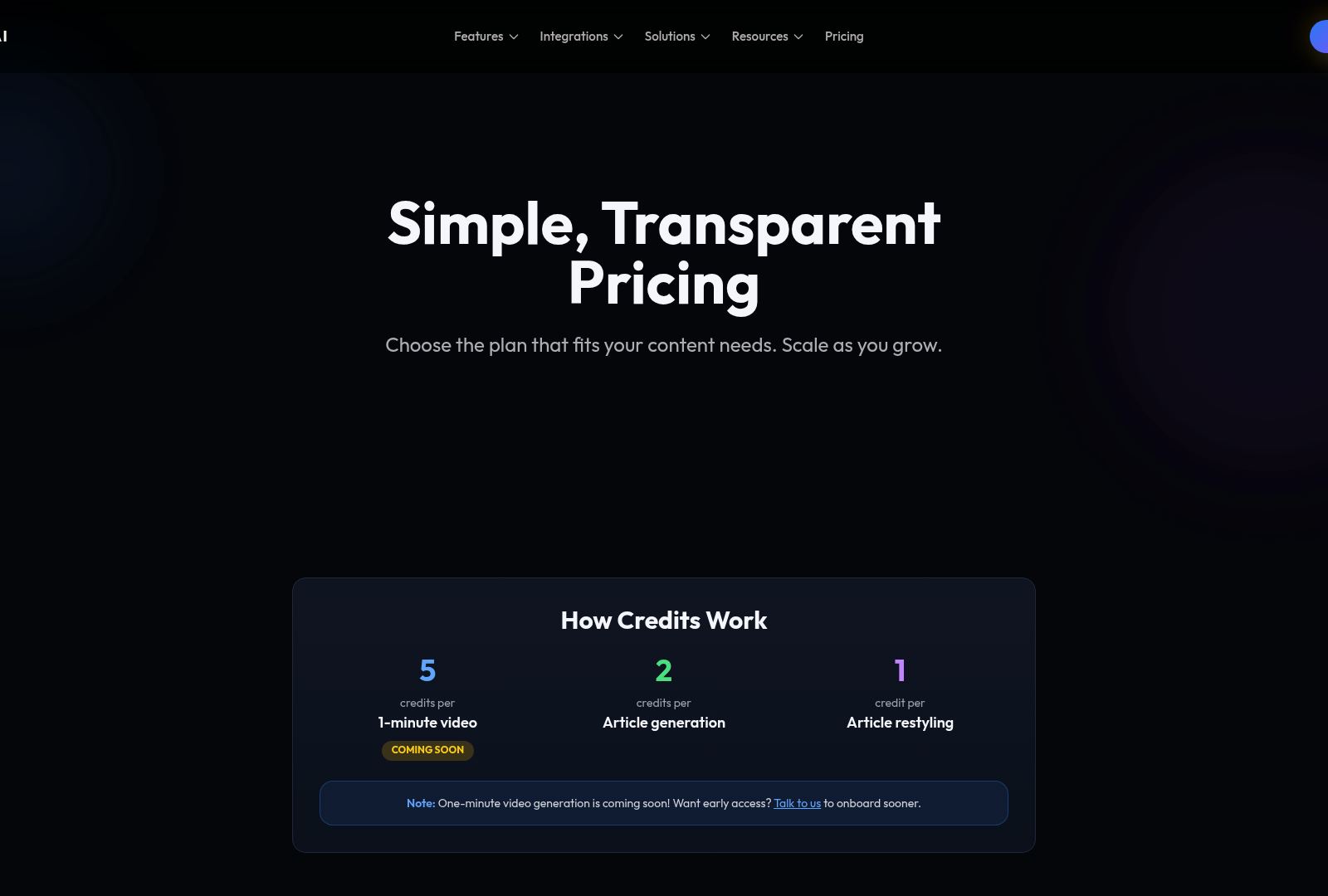
The following comparison table summarizes the features, pricing, and user feedback for top auto SEO tools, based on explicit details from sources. Each tool is evaluated for its core functionalities, cost structure, and practical advantages or limitations.
Tool | Description | Key Features | Pros | Cons |
|---|---|---|---|---|
OTTO SEO™ | AI-powered tool for real-time SEO optimization [2]. | Real-time scanning, automated fixes, competitor analysis. | Instant optimizations, AI-driven suggestions. | Limited pricing details available. |
MarketMuse |
Feature Highlights
OTTO SEO™ distinguishes itself with real-time scanning and deployment of SEO fixes, such as optimizing meta tags or internal links, leveraging AI to adapt to algorithm changes [2]. MarketMuse focuses on content strategy, using AI to identify gaps in competitors’ content and suggest improvements [6]. See the Top Auto SEO Tools for Content Generation section for more details on MarketMuse’s role in content ideation. Surfer SEO emphasizes on-page optimization through SERP analysis, providing data-backed recommendations for keyword placement and content structure [6]. WP SEO AI is notable for its WordPress integration, automating meta tag generation and content scoring within the CMS [6]. Clearscope’s topic cluster modeling helps align content with user intent, though manual adjustments are often required for optimal results [6].
Pricing Plans
Pricing details are sparse across most tools. OTTO SEO™ does not explicitly list pricing in available sources [2], while MarketMuse and Surfer SEO are described as enterprise solutions with higher costs [6]. Semrush Copilot is included in paid Semrush subscriptions, which start at $119.95/month [7]. For non-WordPress users, see the Traffic Growth and Lead Generation with Auto SEO Tools section for insights on Semrush Copilot’s impact on performance. Optim, designed for Shopify stores, offers a tiered pricing model but lacks specific figures in its description [8]. BrightEdge is explicitly noted as a costly option for large enterprises, with plans likely exceeding $2,000/month [6].
User Reviews and Limitations
User feedback is limited, but sources highlight practical trade-offs. For example, WP SEO AI is praised for its ease of use but criticized for being platform-specific [6]. Surfer SEO’s content scoring is lauded for accuracy but lacks technical SEO automation like crawl error fixes [6]. Clearscope’s reliance on manual input for advanced features is a noted drawback [6]. In contrast, OTTO SEO™ is praised for its real-time automation but has no publicly available case studies or reviews [2]. Reddit discussions [4] suggest that while AI-powered tools reduce manual effort, they often require human oversight for nuanced tasks like backlink building or content editing.
Recommendations
For WordPress users, WP SEO AI offers seamless integration, though alternatives like Semrush Copilot provide broader SEO capabilities for non-WordPress sites [6][7]. Shopify businesses should prioritize Optim for e-commerce-specific optimizations [8]. Enterprise teams may benefit from MarketMuse or BrightEdge for comprehensive content and technical SEO [6]. However, users should verify pricing and feature availability directly with vendors, as sources do not provide up-to-date subscription details [2][6]. As mentioned in the Best Practices for Implementing Auto SEO Tools in Your Content Marketing Strategy section, aligning tools with specific business goals is critical for maximizing ROI.
This analysis connects insights from multiple sources [2][6][7][8], emphasizing the need to balance automation with manual review for optimal SEO outcomes.
Best Practices for Implementing Auto SEO Tools in Your Content Marketing Strategy
To effectively implement auto SEO tools into your content marketing strategy, begin by aligning the tools with your specific goals, such as keyword research, content optimization, or backlink analysis. According to [1], AI-driven SEO automation platforms streamline workflows like on-page optimization and competitor analysis, reducing manual effort while improving accuracy. Start by selecting tools that integrate seamlessly with your existing content creation and analytics platforms. For instance, OTTO SEO [2] automates real-time optimizations, adjusting meta tags, headers, and content structure dynamically, while Semrush Copilot [7] offers actionable recommendations for improving SEO performance. Prioritize tools that provide actionable insights tailored to your content’s target keywords and audience intent, as emphasized in [4], where users highlight the need for automated workflows that reduce repetitive tasks like keyword clustering and content ideation. As mentioned in the [Top Auto SEO Tools for Content Generation] section, these tools are specifically designed to enhance keyword research and content ideation processes.
Integration Tips for Auto SEO Tools
Integrate auto SEO tools into your workflow by embedding them into content creation processes, such as using AI assistants during drafting or scheduling posts. Optim [8], an all-in-one SEO solution for e-commerce platforms, demonstrates how automated tools can dynamically generate meta titles, descriptions, and alt text for product pages, ensuring consistency and compliance with search engine guidelines. For content teams, [1] recommends using tools like AI-powered keyword research platforms to identify gaps in existing content and prioritize topics with high search volume and low competition. Additionally, tools like those reviewed in [12] can automate backlink discovery, helping marketers focus on acquiring high-quality links rather than manually auditing competitor strategies. To avoid fragmentation, ensure selected tools sync with your CMS or editorial calendars, as noted in [9], which stresses the importance of centralized dashboards for tracking SEO performance alongside other marketing metrics. See the [Traffic Growth and Lead Generation with Auto SEO Tools] section for more details on how tools like [9] can streamline performance tracking.
Optimization Techniques for Auto SEO Tools
Leverage auto SEO tools to refine content quality and technical SEO elements continuously. OTTO SEO [2] exemplifies this by scanning pages for optimization opportunities and deploying fixes instantly, such as improving internal linking or enhancing load times. For content optimization, [7] highlights AI tools that rewrite underperforming sections or suggest keyword placements based on semantic analysis. Tools like the ones described in [13] can also integrate with AI models like Claude to generate SEO-optimized prompts for blog posts or product descriptions. However, balance automation with human oversight; [4] warns against over-reliance on AI, as nuanced content decisions still require editorial judgment. Regularly audit tool outputs to ensure alignment with brand voice and user experience standards, as overly optimized content may sacrifice readability for search engine metrics. Building on concepts from the [SEO Optimization and Content Repurposing Strategies] section, tools like Optim [8] further demonstrate how automation can refine on-page elements for e-commerce.
Measurement and Evaluation of Auto SEO Performance
Track the impact of auto SEO tools using built-in analytics and third-party platforms to assess improvements in rankings, traffic, and conversion rates. [9] emphasizes the need for A/B testing between automated and manually optimized content to quantify tool effectiveness. For example, Semrush Copilot [7] provides performance dashboards that highlight changes in keyword rankings post-optimization, while tools in [1] offer competitor benchmarking features. Focus on metrics like organic traffic growth, bounce rate reduction, and keyword position shifts to evaluate ROI. If tools fail to deliver expected results, [5] suggests revisiting configuration settings or switching to alternatives that better align with your content strategy. Regularly update tool configurations to adapt to evolving search algorithms, as noted in [12], where backlink automation tools must evolve alongside shifting link-building trends.
Summary Table: Top Auto SEO Tools for Content Marketing
Tool | Description | Key Features | Pros | Cons |
|---|---|---|---|---|
OTTO SEO [2] | AI-driven platform for real-time on-page and technical SEO fixes | Dynamic meta tag optimization, load time improvements, internal link adjustments | Instant optimizations, scalability | Higher cost for advanced features |
By following these best practices, marketers can harness auto SEO tools to enhance efficiency without compromising content quality. Prioritize integration with existing workflows, continuously refine optimization strategies, and rigorously measure outcomes to maximize ROI.
Future of Auto SEO Tools and Content Marketing: Emerging Trends and Opportunities
The future of auto SEO tools is rapidly evolving, driven by advancements in AI and automation technologies. Emerging trends highlight a shift toward real-time optimization, predictive content strategies, and AI-driven analytics. Tools like OTTO SEO™ [2] and Semrush Copilot [7] exemplify this shift, leveraging AI to automate tasks such as on-page optimization, backlink analysis, and content suggestions. These platforms are redefining efficiency by scanning websites and deploying fixes instantaneously, reducing manual effort while improving accuracy [2]. Additionally, AI models like Claude are being repurposed for SEO tasks through custom prompts, enabling marketers to generate content outlines and keyword strategies with minimal input [13]. As these tools mature, they are expected to integrate more deeply with search engines, offering predictive insights that align content with evolving user intent. See the [AI SEO Trends and Their Impact on Content Marketing] section for more details on how AI is reshaping SEO workflows.
Emerging Trends in Auto SEO Tools
AI integration is the most significant trend shaping auto SEO tools in 2025 and beyond. Tools like OTTO SEO™ [2] use machine learning to analyze competitors, identify gaps in content, and recommend optimizations in real time. This trend is complemented by AI-powered assistants such as Semrush Copilot [7], which provides actionable recommendations for on-page SEO, including meta tag adjustments and content structure improvements. Another innovation is the rise of "prompt engineering" for AI models, as demonstrated in tools like the Claude-based SEO framework [13], where marketers input specific prompts to generate high-performing content outlines or backlink strategies. These advancements reflect a growing emphasis on automation that reduces repetitive tasks while prioritizing data-driven decisions [1]. Building on concepts from the [Top Auto SEO Tools for Content Generation] section, these tools exemplify how AI streamlines content creation and optimization.
Future Opportunities in Content Marketing
The convergence of AI and SEO automation opens new opportunities for content marketers. One key area is scalable content production, where tools like OTTO SEO™ [2] and Semrush Copilot [7] enable teams to generate and optimize large volumes of content at unprecedented speeds. This scalability is particularly valuable for niche industries, such as automotive SEO, where maintaining a consistent content calendar is critical. Another opportunity lies in predictive SEO, where AI tools analyze search trends to forecast keyword demand and content performance [1]. For example, Marketer Milk’s 2025 roundup [1] highlights tools that integrate AI with historical data to suggest topics likely to rank well months in advance. Additionally, AI-driven backlink strategies are emerging as a game-changer, with platforms automating outreach and content creation to attract high-quality links [12]. These tools reduce the manual effort required for link-building while improving the relevance of acquired backlinks. As mentioned in the [Traffic Growth and Lead Generation with Auto SEO Tools] section, such automation directly enhances lead generation through optimized content pipelines.
Challenges and Limitations
Despite rapid advancements, auto SEO tools face challenges that limit their efficacy. One major limitation is the over-reliance on AI without human oversight. While tools like OTTO SEO™ [2] can automate optimizations, they may overlook nuanced aspects of content quality, such as brand voice or cultural relevance. Similarly, AI-generated content from platforms like Semrush Copilot [7] requires careful editing to avoid generic outputs that fail to engage audiences. Technical constraints also persist; for instance, real-time optimization tools often struggle with dynamic websites or complex e-commerce platforms [9]. Furthermore, the ethical implications of AI-driven SEO, including potential biases in keyword selection or content categorization, remain underexplored [5]. Marketers must balance automation with strategic human input to ensure tools align with broader business goals. For best practices on implementing these tools, refer to the [Best Practices for Implementing Auto SEO Tools in Your Content Marketing Strategy] section.
Summary Table: Key Auto SEO Tools and Features
Title | Description | Key Features | Pros/Cons |
|---|---|---|---|
OTTO SEO™ | AI-powered automation for real-time SEO fixes and optimizations [2] | Real-time competitor analysis, automated on-page fixes, backlink tracking | Pros: Instant optimizations, scalable for large sites; Cons: High cost |
Semrush Copilot | AI assistant for SEO recommendations and content suggestions [7] | On-page SEO audits, content structure suggestions, keyword gap analysis |
Strategic Recommendations
For marketers, the future of auto SEO tools demands a hybrid approach. Tools like OTTO SEO™ [2] and Semrush Copilot [7] should be used to automate foundational tasks, while human expertise ensures creativity and brand consistency. The Claude-based framework [13] offers a low-cost alternative for small teams, though it requires a learning curve for prompt customization. As AI capabilities expand, staying updated with tool advancements—such as predictive SEO and real-time optimization—will be critical for maintaining competitive rankings. However, teams must remain vigilant about the limitations of automation, particularly in areas requiring contextual understanding or strategic creativity [5]. By balancing AI-driven efficiency with human oversight, marketers can harness the full potential of emerging SEO technologies. For implementation guidance, consult the [Best Practices for Implementing Auto SEO Tools in Your Content Marketing Strategy] section.
References
[1] 13 best SEO automation tools I'm using in 2025 | Marketer Milk - https://www.marketermilk.com/blog/best-seo-automation-tools
[2] AI-Powered SEO Automation Tool by Search Atlas | OTTO SEO ... - https://searchatlas.com/otto-seo/
[3] The 11 best SEO tools in 2025 | Zapier - https://zapier.com/blog/best-seo-tools/
[4] Any known automated SEO tool that works? : r/SEO_Digital_Marketing - https://www.reddit.com/r/SEO_Digital_Marketing/comments/1esswnw/any_known_automated_seo_tool_that_works/
[5] Can SEO Be Automated? A Guide to SEO Automation - https://www.seo.com/blog/seo-automation/
[6] 19 AI-Automated SEO Tools for Better Rankings in 2025 - https://wpseoai.com/blog/top-automated-seo-tools-using-ai-for-better-rankings/
[7] I Tried 9 AI SEO Tools (Paid & Free). What Works in 2026 - https://selfmademillennials.com/ai-seo-tools/
[8] Optim - Auto & All In One SEO solution for... | Shopify App Store - https://apps.shopify.com/seo-all-in-one
[9] Automated SEO vs. Manual: Which is Right For Your Small Business? - https://aioseo.com/automated-seo-vs-manual/
[10] How to do SEO on autopilot with Ai! 🤯 #seo #ai #gohighlevel #webdesign by Jasper Aiken - https://www.youtube.com/watch?v=AS-5RMFh1Ns
[11] 6 Best AI SEO Tools to Boost Rankings by Rank Math SEO - https://www.youtube.com/watch?v=AnoJmwhO4bM
[12] This tool will help you find backlinks for your website. The more backlinks you have the more traff by GenUp Digital - https://www.youtube.com/watch?v=BCwtshW6PGs
[13] This Turns Claude Into the Ultimate SEO Tool (3 Amazing Use cases) by Nico | AI Ranking - https://www.youtube.com/watch?v=zGUrenNNu6U
Frequently Asked Questions
1. What are Auto SEO tools, and how do they differ from traditional SEO methods?
Auto SEO tools are AI-powered platforms that automate repetitive SEO tasks like keyword research, content optimization, and technical audits. Unlike traditional SEO, which relies on manual execution and analysis, Auto SEO tools use machine learning to streamline workflows, identify optimization gaps in real time, and implement fixes automatically. For example, platforms like OTTO SEO can scan websites and adjust meta tags or content structure instantly, while tools like Surfer SEO analyze competitors to provide data-driven content recommendations. This reduces human effort and accelerates results compared to traditional methods, which often require teams to manually track performance and make incremental adjustments.
Q: Which Auto SEO tools are most effective for content generation and optimization?
A: Leading tools for content-related tasks include Surfer SEO, MarketMuse, and Copy.ai. Surfer SEO excels at analyzing competitors’ content to suggest topic ideas, keyword density, and structure improvements. MarketMuse uses AI to generate content outlines and identify content gaps, ensuring alignment with search intent. Copy.ai focuses on creating engaging, SEO-friendly copy for blogs, product descriptions, and ad copy. These tools combine data analysis with creative automation, allowing marketers to produce high-quality, optimized content at scale while maintaining brand voice and technical SEO standards.
Q: Can Auto SEO tools replace human SEO experts?
A: While Auto SEO tools significantly enhance efficiency, they are not a complete replacement for human expertise. These tools excel at automating technical tasks like backlink analysis, keyword tracking, and on-page optimization, but they lack the strategic creativity and contextual understanding of human experts. For instance, tools might suggest optimizing for specific keywords, but a human strategist is needed to align content with broader business goals, interpret nuanced user intent, and adapt to evolving market trends. The most successful SEO strategies combine AI-driven automation for execution with human oversight for decision-making and innovation.
Q: How do Auto SEO tools improve technical SEO for large websites?
A: Auto SEO tools address technical SEO challenges such as broken link detection, site speed optimization, and schema implementation. Platforms like Screaming Frog SEO Spider crawl websites to identify crawl errors, duplicate content, or missing meta tags, while DeepCrawl provides detailed audits for large-scale sites. Tools like Ahrefs and Moz automate backlink analysis to uncover toxic links or opportunities for link-building. By resolving these issues programmatically, teams can maintain search engine trust, improve site performance, and ensure compliance with evolving algorithm updates without manual intervention.
Q: What metrics do Auto SEO tools track to measure success?
A: Auto SEO tools monitor key performance indicators (KPIs) such as organic traffic growth, keyword rankings, bounce rates, and conversion rates. Advanced platforms like Google Search Console integrations track impressions and click-through rates (CTR), while tools like SEMrush or Ubersuggest analyze competitor benchmarks and SERP visibility. Some tools, like OTTO SEO, provide real-time dashboards that highlight improvements in page load speed or content quality over time. These metrics help teams quantify the impact of automated optimizations and adjust strategies based on data.
Q: Are there risks or limitations to relying on Auto SEO tools?
A: Yes, over-reliance on Auto SEO tools can lead to issues like over-optimization, where excessive keyword stuffing or algorithmic adjustments trigger search engine penalties. Additionally, AI-generated content may lack the nuance or creativity of human-written material, potentially harming user engagement. Tools also depend on the quality of their training data, so outdated or biased datasets can result in suboptimal recommendations. To mitigate risks, it’s crucial to combine automated insights with periodic human review and ethical SEO practices.
Q: How do Auto SEO tools handle local SEO for small businesses?
A: Auto SEO tools support local SEO by optimizing for location-based keywords, managing review platforms, and enhancing Google My Business (GMB) listings. Tools like BrightLocal automate local citation building and review monitoring, while Yext streamlines GMB data across directories. For example, a local bakery could use an Auto SEO tool to generate location-specific content (e.g., “best cupcakes in [City]”) and track local search rankings. These tools also help businesses claim and maintain consistent NAP (Name, Address, Phone) data across platforms, improving visibility in local search results and maps.