
Maximizing B2B SaaS Content Marketing in 2025

Related Video
Watch: The Best SaaS Marketing Strategy in 2025 by Oren Greenberg
Introduction to B2B SaaS Content Marketing
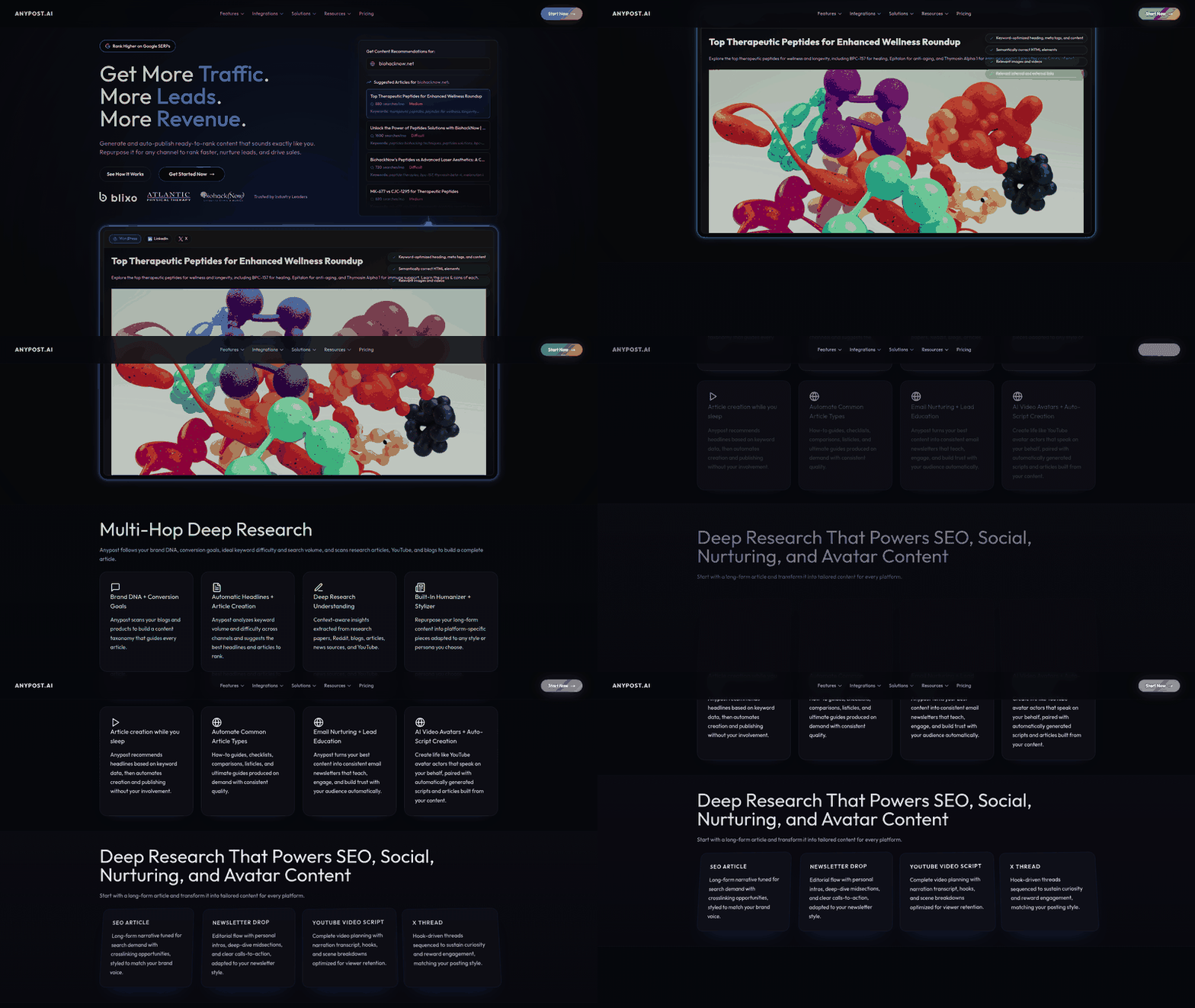
B2B SaaS content marketing involves creating strategic, educational content—such as blogs, webinars, and eBooks—to address the specific pain points of target audiences while driving engagement and conversions [5]. This approach is distinct from traditional marketing because it prioritizes solving customer problems over direct promotion [7]. For SaaS businesses, content marketing serves as a critical tool to establish thought leadership, nurture leads, and reduce reliance on paid advertising channels [1]. By delivering value through educational resources, companies can build trust with potential customers and position themselves as industry experts [7]. For example, case studies are highlighted as one of the most effective formats, with 70% of B2B marketers citing their role in converting leads to deals [6]. The ultimate goal is to align content with the buyer’s journey, ensuring each stage—from awareness to decision—is supported by relevant, high-quality materials [5].
Key Benefits of B2B SaaS Content Marketing
Content marketing offers measurable advantages for SaaS companies, including higher ROI and improved lead generation. According to RevenueZen, content marketing generates 3x the ROI of traditional marketing methods, making it a cost-effective strategy for scaling growth [6]. Additionally, it enables businesses to attract the right customers organically by addressing their needs through targeted content [1]. For instance, blogs and whitepapers can capture leads by offering in-depth solutions to technical challenges, while webinars provide interactive opportunities to demonstrate product value [5]. Another significant benefit is the ability to reduce customer acquisition costs. By focusing on educational content, SaaS companies can shorten sales cycles and increase conversion rates, as buyers are better informed before engaging with sales teams [7]. This approach also supports long-term brand equity, as consistent, high-quality content reinforces credibility and loyalty [1].
Current Trends and Challenges in 2025
The B2B SaaS content marketing landscape is evolving rapidly, driven by technological advancements and shifting buyer expectations. A 2025 survey of over 1,000 B2B marketers revealed that AI-powered personalization and video content are among the top trends shaping strategies [2]. For example, AI is being used to tailor content recommendations based on user behavior, while interactive tools like demo platforms help prospects explore product features without direct sales intervention [4]. See the [Leveraging AI and Machine Learning in Content Marketing] section for more details on how these technologies are applied. However, implementing these innovations presents challenges. Marketers report difficulties in budget allocation, with 45% stating their teams lack sufficient resources to adopt new technologies [2]. Additionally, measuring the impact of content remains complex, as traditional KPIs like page views often fail to capture nuanced engagement metrics [8].
Another major challenge is adapting to the remote and hybrid work environments that dominate post-pandemic business operations. Buyers now prioritize content that addresses collaboration, cybersecurity, and productivity tools, requiring SaaS companies to pivot quickly [8]. At the same time, 2025 trends emphasize the importance of account-based marketing (ABM), where hyper-targeted content is created for specific decision-makers [4]. Building on concepts from the [Advanced Content Marketing Tactics for B2B SaaS] section, ABM requires hyper-personalized strategies for specific decision-makers. Despite these hurdles, the demand for educational content continues to rise. For example, 68% of B2B buyers prefer consuming content on-demand via video or on company websites rather than attending live events [2].
Navigating the Changing Landscape
To succeed in 2025, B2B SaaS marketers must balance innovation with practicality. This includes investing in tools that automate content creation while maintaining a human-centric approach to storytelling [2]. For example, AI can streamline tasks like blog ideation or social media scheduling, but the core messaging must resonate emotionally to foster trust [4]. Automated content generation tools, discussed in the [Automated Content Generation and SEO Optimization] section, can further enhance efficiency in content creation. Additionally, companies should prioritize formats that align with modern consumption habits, such as short-form video tutorials and interactive case studies [6]. However, these strategies require careful planning to avoid resource overextension. Marketers must also address internal challenges like cross-department collaboration, as disjointed efforts between sales and marketing teams can dilute content effectiveness [8]. By staying agile and leveraging data-driven insights, B2B SaaS companies can navigate these complexities and maximize their content marketing impact.
Understanding Your Target Audience
Understanding your target audience is foundational to maximizing B2B SaaS content marketing in 2025. Modern demand generation hinges on producing high-value content that addresses specific pain points and builds trust, which directly correlates with a 4x higher conversion rate and 26% improvement in lead generation for B2B SaaS companies [[9]]. To achieve this, marketers must prioritize creating detailed buyer personas, mapping audience segments, and tailoring messaging to align with decision-makers’ priorities. This section explores how to implement these strategies effectively.
The Role of Buyer Personas in B2B SaaS Marketing
Buyer personas are not optional—they are critical for reducing guesswork in content creation. According to [9], companies that leverage personas see measurable improvements in engagement because personas help identify key factors such as job titles, pain points, and preferred content formats. For example, a SaaS solution targeting IT managers will require different messaging than one aimed at CFOs, even within the same industry. [10] reinforces this by emphasizing that personas should include not only demographic data but also behavioral insights, such as how prospects interact with content across stages of the buyer’s journey.
To build personas effectively, start by analyzing existing customer data, surveying your audience, and studying competitors’ customers. [10] outlines a step-by-step framework: conduct interviews with 10–15 customers, categorize responses into themes (e.g., “cost-conscious” vs. “innovation-driven”), and document goals and challenges. For instance, a persona for a mid-market SaaS tool might include a “Tech-Savvy Decision Maker” who prioritizes scalability and integration capabilities [[10]]. See the [Content Repurposing Strategies for Maximum Reach] section for more details on how personas inform content format selection.
Creating Effective Buyer Personas: A Checklist
Creating actionable personas requires rigor. Use this checklist derived from [9] and [10]:
- Identify roles: List all stakeholders involved in purchasing decisions (e.g., end-users, gatekeepers, approvers).
- Map pain points: Use surveys and CRM data to uncover recurring challenges.
- Define goals: Align personas with business outcomes, such as reducing operational costs or improving team productivity.
- Assign content preferences: Determine which formats (e.g., case studies, webinars) resonate with each segment.
- Validate regularly: Update personas quarterly based on new data [[10]].
Tailoring Content to Specific Audience Segments
Once personas are established, content must be segmented to address distinct needs. [9] highlights that 72% of B2B buyers expect personalized experiences, which can be achieved through dynamic content customization. For example, a SaaS company might create a series of blog posts tailored to personas:
- For IT Managers: Focus on technical specifications, integration workflows, and ROI metrics.
- For Executives: Highlight strategic benefits, such as market differentiation and long-term cost savings.
[10] provides a real-world example of a B2B SaaS firm that segmented its email campaigns using persona-based subject lines. The result was a 37% increase in open rates and a 22% rise in demo requests. Similarly, [9] notes that companies using persona-driven video content—such as testimonials from similar businesses—achieve 68% higher engagement than generic alternatives. As mentioned in the [Automated Content Generation and SEO Optimization] section, these insights can inform SEO strategies to further enhance persona-driven content visibility.
Advanced Segmentation Techniques
Beyond personas, advanced segmentation leverages data analytics to refine targeting. [10] recommends using tools like CRM analytics and Google Analytics to track user behavior, such as pages visited or content downloaded. For instance, if a persona frequently engages with whitepapers on cybersecurity, future content should prioritize depth over breadth in that topic. Cross-referencing this behavior with personas ensures that marketing teams avoid “spray-and-pray” tactics and instead deploy hyper-targeted campaigns [[10]]. Building on concepts from the [Leveraging AI and Machine Learning in Content Marketing] section, AI-driven analytics can further automate and scale these segmentation efforts.
Example: Aligning Personas with Content Formats
| Persona | Preferred Content Type | Key Messaging Focus | Source |
|---|---|---|---|
| Tech-Savvy Decision Maker | Product demos, case studies | Integration ease, scalability | [10] |
| Cost-Conscious Manager | ROI calculators, comparison guides | Cost savings, contract flexibility | [9] |
| Executive Stakeholder | Webinars, industry reports | Market trends, strategic value | [10] |
Measuring the Impact of Audience-Centric Content
Finally, success metrics must align with audience-centric strategies. [9] advises tracking persona-specific KPIs, such as time spent on page for each segment or conversion rates by content type. For example, if a persona’s engagement drops after a content update, it signals misalignment with their needs. [10] adds that A/B testing messaging variations across personas can reveal optimal phrasing and calls-to-action, ensuring that content remains both relevant and compelling. See the [Measuring and Optimizing Content Performance] section for a deeper dive into tracking and refining these metrics.
By embedding buyer personas into every phase of the content lifecycle—from ideation to analytics—B2B SaaS companies can transcend generic marketing and deliver value that resonates deeply with their audience. This approach not only boosts conversions but also fosters long-term loyalty in an increasingly competitive landscape [[9]][[10]].
Automated Content Generation and SEO Optimization
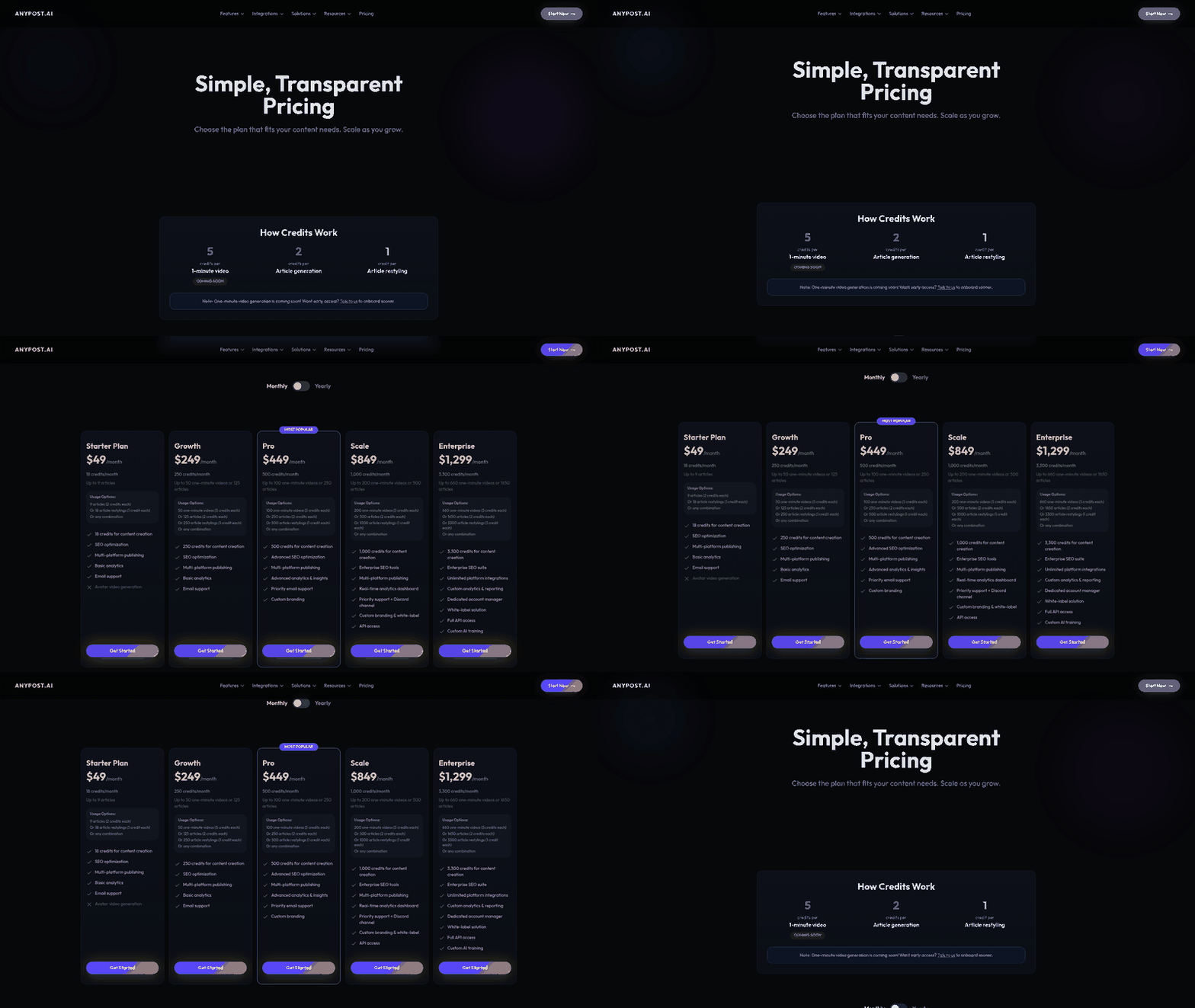
Automated content generation and SEO optimization have become critical components of B2B SaaS content marketing in 2025, enabling teams to scale production while maintaining relevance in competitive digital landscapes. According to the Content Marketing Institute’s 2026 trends report, 68% of B2B marketers now leverage AI-driven tools for content creation, reducing time-to-publish by up to 40% [2]. These tools streamline tasks like blog drafting, social media scheduling, and email personalization, allowing marketers to focus on strategic initiatives rather than repetitive workflows [10]. Meanwhile, SEO optimization remains a cornerstone for SaaS companies, with keyword-optimized content driving 50% more organic traffic compared to non-optimized content in 2025 benchmarks [6]. This section explores how automation and SEO intersect, including best practices, tools, and frameworks validated by industry leaders.
Benefits of Automated Content Generation
Automated content generation addresses scalability challenges by producing high-volume, consistent output tailored to specific audience segments. For example, AI-powered platforms like Jasper and Copy.ai generate drafts for case studies, whitepapers, and product documentation, which human writers then refine [10]. This hybrid approach reduces content backlogs while preserving brand voice. A 2025 SaaS marketing guide highlights that companies using automation report a 30% increase in content output without additional headcount [4]. Additionally, automation tools integrate with CRM data to personalize content at scale, such as generating account-specific email campaigns that reference a prospect’s industry pain points [10]. See the Understanding Your Target Audience section for more details on leveraging CRM data for personalization.
However, automation alone is not a panacea. The Content Marketing Institute warns that 22% of marketers over-rely on AI, leading to generic content that fails to engage [2]. Best practices emphasize using automation for foundational tasks (e.g., drafting, formatting) while reserving creative direction and strategic messaging for human oversight [10]. For instance, automated tools can create 80% of a blog post’s structure, but subject-matter experts must inject domain-specific insights to ensure authority and trustworthiness [10].
SEO Optimization Techniques for SaaS Content
SEO optimization in 2025 requires a dual focus on technical precision and user intent. SaaS companies must prioritize long-tail keywords (e.g., “B2B payment gateway software for e-commerce”) to capture niche audiences, as 70% of B2B buyers use such highly specific search terms [6]. Tools like Surfer SEO and Ahrefs analyze competitors’ content to identify keyword gaps and on-page optimization opportunities, such as optimal meta description lengths or header tag structures [10].
Technical SEO also demands attention to page speed and mobile responsiveness, with Google’s Core Web Vitals impacting rankings for 45% of SaaS websites [6]. Automated tools like Screaming Frog audit sites for broken links, duplicate content, and schema markup errors, streamlining fixes that improve crawlability [10]. Additionally, content clustering—organizing topics around pillar pages—has emerged as a 2025 best practice, with companies like HubSpot reporting a 200% traffic boost by grouping related blog posts under enterprise-focused landing pages [4]. For more on structuring content around pillar pages, see the Content Repurposing Strategies for Maximum Reach section.
Voice search optimization is another growing priority, as 30% of B2B searches in 2025 are now voice-activated [6]. This shift necessitates conversational keyword integration, such as answering questions directly in content (“How do I choose a cloud ERP system?”) rather than relying solely on keyword stuffing [10].
Tools for Automated Content Generation and SEO Optimization
The 2025 B2B SaaS marketing guide recommends a toolkit combining AI writers, SEO analyzers, and analytics platforms to maximize ROI [10]. Below is a curated list of tools validated by industry surveys and case studies:
| Tool | Function | Notable Features | Source |
|---|---|---|---|
| Jasper | AI content generation | Blog drafting, tone customization, multilingual output | [10] |
| Surfer SEO | SEO optimization | Content score metrics, competitor analysis, keyword suggestions | [10] |
| Clearscope | Content strategy | Topic clustering, keyword difficulty scores | [2] |
| Screaming Frog | Technical SEO audit | Site crawling, broken link detection | [10] |
| HubSpot CMS | Content management & publishing | Workflow automation, SEO templates | [4] |
For teams new to automation, [2] advises starting with low-risk use cases like social media caption generation before scaling to complex workflows. Meanwhile, advanced users can integrate tools via APIs—e.g., linking Jasper to Surfer SEO to auto-generate keyword-rich drafts [10]. Building on concepts from the Leveraging AI and Machine Learning in Content Marketing section, these integrations demonstrate how automation enhances both efficiency and precision.
A critical consideration is performance tracking. The 2025 guide emphasizes using Google Analytics 4 and Hotjar to measure not only traffic but also user engagement metrics like bounce rate and time-on-page, which signal content quality [10]. Automated A/B testing tools like Optimizely further refine landing pages by identifying high-converting headlines and CTAs [4].
By combining automated content generation with rigorous SEO practices, B2B SaaS marketers can achieve both volume and visibility in 2025. As the Content Marketing Institute notes, the most successful strategies balance AI efficiency with human creativity, ensuring technical accuracy while resonating emotionally with enterprise buyers [2].
Content Repurposing Strategies for Maximum Reach
Content repurposing is a cornerstone of B2B SaaS marketing in 2025, enabling teams to maximize reach while optimizing resource allocation. By transforming a single piece of content into multiple formats tailored for different channels, marketers can extend the lifespan of their assets, reduce production costs, and engage diverse audience segments [10]. This strategy is particularly critical in the B2B SaaS space, where buyers often interact with brands across social media, email, and video platforms before making a decision [4]. For example, a comprehensive blog post on "Scaling SaaS Operations" can be repurposed into LinkedIn articles, Twitter threads, YouTube tutorials, and newsletter summaries, ensuring consistent messaging while adapting to platform-specific preferences [10]. As mentioned in the [Understanding Your Target Audience] section, aligning repurposed content with audience preferences is key to driving engagement.
Benefits of Content Repurposing in B2B SaaS
Repurposing content offers three primary advantages: audience expansion, time efficiency, and SEO amplification. By adapting a single topic into varied formats (e.g., turning a webinar into a podcast, a case study into a social media carousel), teams can reach audiences at different stages of the buyer journey [5]. For instance, a 2025 study highlighted in [6] found that SaaS companies repurposing 70% of their content saw a 200% increase in organic traffic compared to those relying on one-off posts. Additionally, repurposing reduces the pressure to create entirely new content from scratch, allowing marketers to focus on refining high-performing assets [10]. Finally, distributing the same core message across multiple channels strengthens SEO by increasing backlink potential and topical authority [7]. See the [Automated Content Generation and SEO Optimization] section for more details on how SEO strategies can be integrated with repurposed content.
Channel-Specific Repurposing Strategies
To execute effective repurposing, B2B SaaS teams must align content formats with platform strengths. Below are strategies for three key channels:
Social Media Repurposing
Social platforms thrive on concise, visually engaging content. A long-form blog can be broken into Twitter threads with key takeaways, LinkedIn posts featuring expert insights, or Instagram carousels with data visualizations [3]. For example, a 2025 case study in [10] demonstrated how a SaaS company transformed a 2,000-word guide into a 10-part LinkedIn series, driving a 40% increase in engagement. Video content, such as snippets from webinars or customer testimonials, performs particularly well on TikTok and YouTube Shorts, where B2B audiences increasingly consume on-demand insights [11].
Newsletter Integration
Newsletters remain a high-converting channel for B2B SaaS, with open rates averaging 29% in 2025 [6]. Repurpose blog posts, case studies, or podcast episodes into newsletter-exclusive summaries with embedded CTAs. For instance, [5] recommends using blog-to-email workflows where new content is automatically summarized and sent to subscribers, reducing creation time by 50%. Additionally, newsletters can serve as a "hub" for cross-linking repurposed content, such as pointing readers to related social posts or YouTube videos [10].
YouTube and Video Content
Video is now the dominant format for B2B education, with 85% of SaaS buyers preferring video over text [11]. Repurpose webinars, customer success stories, or blog posts into structured YouTube tutorials. A 2025 framework in [10] suggests splitting a 30-minute webinar into 5–7 short videos (e.g., "Top 3 Challenges in SaaS Onboarding"), each optimized with keywords for YouTube SEO. Similarly, screen recordings of software demos can be edited into TikTok-style clips to showcase product features [4].
Best Practices for Repurposing
To maintain quality and coherence across repurposed content, follow these practices:
- Audit existing content for repurposing potential using tools like content inventories or analytics dashboards [10].
- Adapt tone and format to each platform—e.g., use formal language for LinkedIn articles but casual, punchy language for Twitter [3].
- Leverage automation for batch repurposing, such as using AI tools to generate social media captions from blog headlines [5]. Building on concepts from [Leveraging AI and Machine Learning in Content Marketing], AI-driven tools can further streamline this process.
- Track performance to refine strategies: [7] emphasizes monitoring engagement metrics per channel to prioritize high-impact formats.
A checklist for execution includes:
- Identify top-performing content from the past 6–12 months [10]
- Map content to channel-specific goals (e.g., social media for brand awareness, newsletters for lead nurturing) [5]
- Use templates for consistent branding across repurposed assets [4]
- Update repurposed content with the latest data or insights to avoid redundancy [6]
By systematically repurposing content, B2B SaaS marketers can amplify their message, reduce burnout, and maintain a cohesive presence across fragmented digital landscapes [10].
Leveraging AI and Machine Learning in Content Marketing
AI and machine learning are reshaping B2B SaaS content marketing in 2025, offering tools to optimize creation, distribution, and performance analysis. These technologies address key challenges identified in recent industry surveys, such as scalability of content production and audience personalization [2]. By automating repetitive tasks and providing data-driven insights, AI empowers marketers to focus on high-impact strategies while maintaining consistency across channels [4]. Below, we explore the core applications, benefits, and analytical capabilities of AI in this evolving landscape.
Applications of AI in Content Marketing
AI-driven tools are now integral to content creation workflows. For example, natural language processing (NLP) models generate draft blog posts, product descriptions, and even video scripts, reducing manual effort by up to 40% [4]. Marketers leverage platforms like Jasper and Copy.ai to produce SEO-optimized content aligned with brand voice guidelines [10]. See the Automated Content Generation and SEO Optimization section for more details on how AI enhances SEO strategies.
Beyond text, AI also automates visual content creation, such as generating social media graphics or editing video footage, accelerating time-to-publication metrics [11]. Content repurposing strategies, as discussed in the Content Repurposing Strategies for Maximum Reach section, further benefit from AI’s ability to transform content formats efficiently.
Personalization is another critical application. Machine learning algorithms analyze user behavior, such as website clicks and email engagement, to deliver tailored content recommendations. A 2025 case study highlighted in [10] demonstrated that hyper-personalized email campaigns increased open rates by 32% for a SaaS company targeting enterprise clients.
Benefits of AI-Powered Content Generation
The efficiency gains from AI tools are substantial. Automated workflows minimize human error and ensure consistent quality across large volumes of content. According to [2], 68% of B2B SaaS marketers reported faster content production cycles after adopting AI, directly improving their ability to meet quarterly marketing goals.
Additionally, AI democratizes high-quality content creation for teams with limited resources. Startups and mid-sized companies use AI to compete with larger firms by producing polished materials at a fraction of the cost [4]. For instance, AI-powered tools like Surfer SEO help teams optimize content for search engines by analyzing competitors and suggesting keyword improvements [10].
AI-Powered Analytics for Content Marketing
Predictive analytics is transforming how marketers evaluate content performance. By analyzing historical data, AI models forecast which topics, formats, and distribution channels will resonate most with target audiences. The 2025 B2B content trends report [2] notes that 58% of marketers now use predictive tools to prioritize content ideas, resulting in a 22% increase in lead generation.
Real-time analytics further enhance agility. AI dashboards track engagement metrics (e.g., bounce rates, time on page) and automatically adjust ad targeting or A/B test variations [11]. For example, a SaaS firm using machine learning-driven analytics reduced customer acquisition costs by 18% by reallocating budget to high-performing blog topics [10]. See the Measuring and Optimizing Content Performance section for insights on leveraging these analytics for continuous improvement.
Implementing AI: A Checklist for B2B SaaS Marketers
To effectively leverage AI, consider the following actionable steps:
- Audit Existing Workflows: Identify repetitive tasks (e.g., social media scheduling, data entry) for AI automation [4].
- Invest in NLP Tools: Use platforms like Grammarly or Hemingway to refine AI-generated drafts for tone and clarity [10].
- Integrate Analytics Platforms: Combine AI with tools like Google Analytics 4 or HubSpot to unify data insights [2].
- Train Teams on AI Ethics: Address biases in algorithmic outputs and ensure transparency in content creation [11].
Limitations and Considerations
While AI offers significant advantages, its implementation requires careful planning. Over-reliance on automation can dilute brand authenticity, as noted in [4], which warns against "template-driven" content that fails to engage audiences. Additionally, AI models trained on outdated data may perpetuate biases, necessitating regular audits [2].
Marketers must also balance efficiency with creativity. AI excels at iterative tasks but struggles with original ideation. A hybrid approach—using AI for drafting and humans for strategic oversight—yields the best results [10].
By integrating AI and machine learning strategically, B2B SaaS marketers can achieve unprecedented precision in content delivery while staying agile in a competitive market. The key lies in aligning technology with human expertise to drive measurable business outcomes.
Measuring and Optimizing Content Performance
Measuring and optimizing content performance is critical for B2B SaaS marketers to ensure their efforts align with business goals. By leveraging the right metrics, tools, and strategies, teams can refine their content to drive higher engagement, conversions, and revenue. Below, we break down the essential components of this process, supported by insights from recent industry trends and data.

Key Metrics for Content Performance
To evaluate the effectiveness of content, B2B SaaS marketers should focus on metrics that directly correlate with business outcomes. Conversion rates remain a top priority, with 70% of B2B marketers attributing case studies as the most effective format for converting leads into customers [6]. Additionally, high-value content—such as in-depth guides or whitepapers—has been shown to generate a 4x higher conversion rate compared to generic assets [9].
Other critical metrics include engagement indicators like time on page, bounce rate, and click-through rate (CTR). For instance, a high bounce rate may signal poor content relevance or user experience issues, while a low CTR could reflect ineffective CTAs or metadata [2]. Lead generation metrics, such as the number of MQLs (Marketing-Qualified Leads) or SQLs (Sales-Qualified Leads) generated per piece of content, also provide clarity on downstream impact [6].
A less-discussed but equally important metric is content velocity, which measures how quickly new content moves through the production pipeline. Research from 2025 highlights that organizations with agile content workflows see a 26% improvement in lead-to-customer conversion rates [9]. Tracking this helps teams identify bottlenecks in ideation, creation, or publishing stages [10].
Tools for Measuring Content Performance
Modern B2B SaaS marketers rely on a combination of analytics platforms, CRM integrations, and content management systems to monitor performance. Google Analytics 4 (GA4) and HubSpot are widely used for tracking traffic sources, user behavior, and conversion paths [2]. GA4’s enhanced event tracking capabilities, for example, allow teams to measure micro-conversions like video views or form submissions with granular detail [4].
For deeper CRM integration, platforms like Salesforce and HubSpot CRM enable alignment between marketing and sales by tracking lead progression from content engagement to deal closure [10]. This is particularly valuable for B2B SaaS, where the sales cycle is often long and complex.
Content management systems (CMS) such as WordPress or Contentful also play a role in performance measurement. WordPress plugins like MonsterInsights or SEMrush offer SEO and traffic analytics, while headless CMS platforms provide custom dashboards for tracking content performance across channels [4]. For video content—a growing trend in 2025—tools like Wistia or Vimeo Business offer engagement heatmaps and viewer retention analytics [11]. See the [Content Marketing Tools and Platforms for B2B SaaS] section for more details on selecting and integrating these tools.
Strategies for Optimizing Content Performance
Optimization begins with A/B testing key elements like headlines, CTAs, and visuals. A/B testing tools such as Optimizely or Google Optimize are recommended for this, with 2025 trends emphasizing the importance of testing personalized content variations for different buyer personas [4]. For example, a case study tailored to a finance team might perform better with a focus on cost savings, while a version for IT teams could highlight scalability [6].
Data-driven content updates are another cornerstone of optimization. Regularly auditing underperforming assets—using metrics like low engagement or high bounce rates—and revising them based on user feedback can significantly boost performance [10]. Tools like Hotjar or Typeform can gather qualitative insights to inform these revisions [2].
Personalization strategies also play a pivotal role. In 2025, 73% of B2B marketers report that personalized content improves lead-to-customer outcomes [9]. This includes dynamic content on landing pages, segmented email campaigns, and account-specific case studies. For hyper-personalization techniques, see the [Advanced Content Marketing Tactics for B2B SaaS] section.
Finally, content repurposing maximizes ROI by extending the lifecycle of high-performing assets. A webinar, for example, can be repurposed into a blog post, social media clips, and a podcast episode [6]. See the [Content Repurposing Strategies for Maximum Reach] section for practical frameworks on cross-channel reuse.
Checklist for Continuous Optimization
- Audit metrics monthly: Track conversion rates, engagement, and lead generation.
- Test and iterate: Run A/B tests on CTAs, headlines, and CTAs.
- Update underperforming content: Use user feedback and analytics to refine assets.
- Leverage CRM data: Align content with sales-qualified lead criteria.
- Repurpose high-performing assets: Maximize reach through cross-channel reuse.
By embedding these practices into their workflows, B2B SaaS teams can ensure their content remains agile, relevant, and aligned with evolving buyer needs in 2025 and beyond.
Building a Content Marketing Strategy for Growth
Building a content marketing strategy for growth in B2B SaaS requires a structured approach that aligns with business objectives, audience needs, and resource availability. According to [3], a well-defined strategy delivers measurable results, builds trust, and positions the company as an authority in its niche. This section outlines actionable steps to design a strategy that drives organic growth, leverages budget effectively, and scales with team expertise.
Defining Strategic Importance and Alignment
A content marketing strategy is not optional for B2B SaaS companies. As noted in [7], content marketing enhances online visibility, fosters customer relationships, and educates prospects about complex solutions. When executed correctly, it attracts targeted traffic organically, reducing reliance on paid advertising [1]. For example, [6] highlights that 70% of B2B marketers find case studies most effective for converting leads, emphasizing the need to prioritize high-impact formats. To ensure alignment, strategies must integrate with overarching business goals, such as lead generation, customer retention, or product launches. See the [Understanding Your Target Audience] section for more details on how audience insights shape these priorities.
Goal-Setting and Budgeting for Content Marketing
Setting clear goals is the foundation of a successful strategy. [3] recommends using SMART goals (Specific, Measurable, Achievable, Relevant, Time-bound) to define outcomes like increasing website traffic by 30% in six months or boosting lead conversion rates by 20%. Budgeting must reflect these goals while accounting for resource constraints. [2] reports that 62% of B2B marketers cite budget limitations as a key challenge, underscoring the need for prioritization. Allocate funds to high-performing formats—such as video, whitepapers, or webinars—based on audience preferences [10]. For instance, [6] notes that case studies and tutorials drive conversions, so investing in these formats can maximize ROI. Content repurposing strategies, as discussed in the [Content Repurposing Strategies for Maximum Reach] section, can further optimize budget efficiency by extending the lifespan of core assets.
Example Budget Allocation Framework
| Content Type | % of Budget | Purpose | Source |
|---|---|---|---|
| Case Studies | 30% | Lead conversion and social proof | [6] |
| Blog Posts | 25% | SEO and thought leadership | [3] |
| Video Content | 20% | Engagement and onboarding | [10] |
| Paid Promotion | 15% | Amplifying high-performing assets | [2] |
| Tools/Software | 10% | Content creation and analytics | [10] |
Building a High-Performance Content Team
A dedicated team is critical for executing a scalable strategy. [10] outlines a framework for structuring roles, including content creators, SEO specialists, designers, and analytics teams. Cross-functional collaboration ensures alignment with sales and product teams to address audience pain points [3]. For example, [9] stresses the importance of involving customer success teams to generate authentic testimonials and case studies. The SEO specialist’s role in optimizing content, as detailed in the [Automated Content Generation and SEO Optimization] section, is particularly vital for ensuring content ranks well in search engines and drives organic traffic.
Key Roles and Responsibilities
- Content Strategist: Oversees the editorial calendar, aligns content with business goals, and conducts competitor analysis [3].
- Copywriters and Editors: Produce and refine blog posts, emails, and landing page copy [10].
- SEO Specialist: Optimizes content for search engines, focusing on keyword research and technical SEO [7].
- Data Analyst: Tracks KPIs like bounce rate, conversion rate, and time on page to refine the strategy [2].
Smaller teams can outsource non-core tasks, such as graphic design or video production, while retaining control over messaging and strategy [10]. Outsourcing should be evaluated based on cost-effectiveness and quality [8].
Integrating Cross-Functional Collaboration
Collaboration between departments is essential. [9] highlights that successful B2B SaaS strategies rely on input from sales, customer success, and product teams to ensure content addresses real-world use cases. For example, product updates can inform blog topics, while sales feedback can refine lead magnets [3]. Regular syncs between teams—weekly or biweekly—help maintain alignment and agility [10].
Measuring Success and Iterating
A robust strategy includes mechanisms for continuous improvement. [6] recommends tracking metrics like lead-to-customer conversion rates, cost per acquisition (CPA), and content engagement rates. Tools like Google Analytics, HubSpot, or Contentful can automate data collection [10]. Based on analytics, teams should A/B test headlines, CTAs, and formats to optimize performance [2]. For instance, [3] suggests quarterly reviews to reallocate budget toward top-performing assets and retire underperforming ones.
By combining clear goal-setting, strategic budgeting, and structured team collaboration, B2B SaaS companies can build content marketing strategies that drive sustainable growth. The key is to remain agile, leveraging data and cross-departmental insights to adapt to evolving market demands [1][3][10].
Advanced Content Marketing Tactics for B2B SaaS
Advanced content marketing for B2B SaaS in 2025 demands hyper-personalization, strategic partnerships, and multi-channel storytelling. Below, we break down three advanced tactics—account-based marketing (ABM), influencer marketing, and podcasting—and how to implement them effectively, supported by recent industry insights.
Account-Based Marketing for B2B SaaS
ABM has evolved beyond targeting accounts to orchestrating personalized journeys for decision-makers. According to [4], 72% of B2B SaaS marketers now use ABM to align sales and marketing, focusing on "account-specific content" like case studies and tailored demos. For example, a SaaS company targeting enterprise clients might create customized landing pages for each account, paired with whitepapers addressing their unique pain points [10]. See the [Understanding Your Target Audience] section for more details on identifying these pain points.
Key Implementation Steps
- Identify High-Value Accounts: Use CRM and intent data to prioritize accounts with the highest revenue potential [2].
- Develop Account-Specific Content: Leverage case studies (70% of B2B marketers call them the most effective for conversions [6]) and create account-specific email campaigns [4]. Building on concepts from [Content Repurposing Strategies for Maximum Reach], consider reusing existing case study templates for rapid personalization.
- Track Engagement: Use UTM parameters and marketing automation tools to measure content performance at the account level [10].
A checklist for success includes:
- ✅ Mapping buyer personas to account roles (e.g., CFO, IT manager) [9].
- ✅ Creating a content library for rapid personalization (templates, one-pagers).
- ✅ Collaborating with sales teams to refine messaging [2].
Influencer Marketing Strategies
Influencer marketing for B2B SaaS is shifting from vanity metrics to relationship-driven advocacy. [4] highlights that 68% of B2B SaaS marketers now prioritize "micro-influencers" (10K–100K followers) who have niche expertise in SaaS verticals like cybersecurity or project management.
How to Execute Effectively
- Partner with Industry Thought Leaders: Identify influencers who create content on platforms like LinkedIn or Substack. For instance, a SaaS company offering CRM tools might collaborate with a productivity blogger to co-author a report on sales automation trends [9].
- Co-Creation of Content: Use influencers to host webinars or provide testimonials in video format. [6] notes that video content has a 55% higher engagement rate compared to static posts in B2B contexts.
- Measure ROI with Precision: Track lead attribution using unique promo codes or UTM links. See the [Measuring and Optimizing Content Performance] section for more details on tracking these metrics. [2] reports that 2026 trends will emphasize "proof of value" metrics over basic follower counts.
Table: Influencer Marketing Metrics to Track
| Metric | Tool/Method | Source |
|---|---|---|
| Engagement Rate | Social media analytics | [4] |
| Lead Conversion | Promo code usage | [2] |
| Content Reach | UTM parameter tracking | [6] |
Podcasting for B2B SaaS Content Marketing
Podcasting has emerged as a cornerstone for B2B SaaS due to its ability to build trust through in-depth storytelling. [4] states that 43% of B2B SaaS companies launched podcasts in 2025, with top-performing shows focusing on "real-world use cases" and industry challenges. For example, a cloud storage provider might host a series featuring CTOs discussing data management strategies [10]. As mentioned in the [Content Repurposing Strategies for Maximum Reach] section, repurposing podcast clips into social media posts or blog articles can significantly amplify reach.
Best Practices for SaaS Podcasts
- Guest-Centric Format: Invite customers, partners, and analysts to discuss how your product solves problems. [11] emphasizes that 2025’s top SaaS podcasts blend educational content with product demos.
- Repurpose Content: Turn podcast clips into social posts, blog articles, or LinkedIn stories. [9] shares that repurposed content boosts SEO by 300% for SaaS brands.
- Leverage Paid Sponsorships: Partner with complementary SaaS tools to reach wider audiences. [4] notes that sponsored episodes now generate 22% of podcast-driven leads.
H4: Example Podcast Structure
- Intro (2 min): Highlight a customer win with your product.
- Deep Dive (15 min): Discuss an industry trend with an expert.
- Call-to-Action (3 min): Offer a free trial or whitepaper [10].
Cross-Tactic Synergies
Advanced strategies thrive when combined. For instance, ABM campaigns can integrate podcast clips to personalize outreach emails [4], while influencer-hosted webinars can drive traffic to ABM-optimized landing pages [9]. [10] provides a framework for aligning these tactics in a "content flywheel" model, where each channel amplifies the others.
By 2025, the most successful B2B SaaS brands will treat content marketing as a system—not a siloed effort—leveraging ABM precision, influencer credibility, and podcast storytelling to dominate buyer journeys [2][4][10].
Content Marketing Tools and Platforms for B2B SaaS
Content marketing for B2B SaaS in 2025 relies on specialized tools and platforms to streamline creation, optimize SEO, and track performance. The selection of these tools directly impacts scalability, audience targeting, and ROI. Below is an organized breakdown of key categories, supported by insights from industry surveys and trend analyses.
Content Management Systems (CMS) for B2B SaaS
B2B SaaS companies require CMS platforms that support multi-channel publishing, integration with marketing automation, and scalability for growing content libraries. Headless CMS solutions like Contentful and Strapi dominate in 2025 due to their API-first architecture, enabling seamless synchronization with CRMs, email marketing tools, and analytics platforms [10]. Traditional CMS options such as WordPress (with plugins like Divi or Elementor) remain popular for their flexibility and cost-effectiveness, particularly for smaller teams [4]. Key features to prioritize include:
- Dynamic content personalization for segmented audiences [10]
- Version control for collaborative workflows [4]
- SEO-friendly templates preloaded with metadata fields [2]
A 2025 survey of 1,000 B2B marketers found that 68% of high-performing teams use a CMS with built-in SEO tools, reducing content optimization time by 40% [2].
SEO Tools for Content Optimization
Search engine visibility remains critical for B2B SaaS, with 72% of marketers citing SEO as their top content marketing priority [6]. Advanced tools like Ahrefs, SEMrush, and Surfer SEO are widely adopted for keyword research, competitor analysis, and content gap identification [4]. These platforms now incorporate AI-driven suggestions for optimizing content structure, readability, and semantic relevance to search intent [10].
For technical SEO, tools like Screaming Frog and Ahrefs Site Audit help identify crawl errors, broken links, and on-page SEO issues. Additionally, AnswerThePublic visualizes search queries as visual “idea clouds,” enabling teams to align content with audience pain points [4]. A 2025 case study highlighted in [10] demonstrated that B2B SaaS companies using AI-powered SEO tools saw a 30% increase in organic traffic within six months.
Checklist for SEO Tool Evaluation [2][4]:
- Keyword tracking across desktop and mobile search
- Backlink analysis with competitor benchmarking
- Real-time content scoring for readability and SEO compliance
As mentioned in the Automated Content Generation and SEO Optimization section, AI-driven SEO tools are central to scaling content production while maintaining relevance [4].
Analytics Platforms for Content Performance Tracking
Measuring content ROI requires platforms that unify web analytics, user behavior tracking, and CRM data. Google Analytics 4 (GA4) remains foundational, offering event-based tracking for interactions like video views or form submissions [10]. However, B2B SaaS teams increasingly adopt specialized tools like HubSpot, Mixpanel, and Heap for deeper insights into customer journeys [2].
Advanced analytics platforms now leverage predictive modeling to forecast content performance and identify underperforming assets [4]. For example, Content Insights by HubSpot correlates content engagement with pipeline revenue, while Jumpshot maps content consumption to sales cycle stages [10]. A 2025 report emphasized that companies using integrated analytics tools reduced content production costs by 22% through data-driven repurposing [6].
Comparison of Analytics Platforms [2][10]:
| Platform | Key Features | Integration Capabilities |
|---|---|---|
| GA4 | Event tracking, audience segmentation | Google Ads, BigQuery |
| Mixpanel | Funnel analysis, user retention metrics | Salesforce, Slack, AWS |
| HubSpot | CRM alignment, lead scoring | HubSpot Sales, Marketo |
See the Measuring and Optimizing Content Performance section for more details on aligning analytics with business goals [6].
Challenges and Emerging Solutions
Despite robust tooling, B2B SaaS marketers face challenges such as data silos between CMS, SEO, and analytics platforms [2]. Emerging solutions in 2025 include:
- Unified marketing stacks (e.g., Contentstack + HubSpot integrations) [10]
- AI-powered content audits that flag outdated or redundant assets [4]
- Real-time collaboration features in CMS platforms to align content with sales feedback [2]
As noted in the Building a Content Marketing Strategy for Growth section, integrating tools across the marketing stack is essential for eliminating data silos and improving efficiency [3].
By strategically selecting and integrating these tools, B2B SaaS teams can enhance efficiency, align content with business goals, and maintain agility in a rapidly evolving market.
Future of B2B SaaS Content Marketing: Trends and Predictions
The future of B2B SaaS content marketing in 2025 and beyond is being reshaped by technological advancements, evolving buyer expectations, and data-driven strategies. Emerging trends such as hyper-personalized content, AI-powered automation, and video-centric storytelling are gaining prominence, driven by the need to engage increasingly discerning audiences. Predictions for the next 12–24 months suggest a shift toward interactive content formats, predictive analytics for audience targeting, and a stronger emphasis on educational content to build trust. These shifts create opportunities for B2B SaaS companies to innovate through multi-channel strategies, leveraging tools like case studies and product demos to shorten sales cycles [6]. Below, we explore these trends, predictions, and growth opportunities in detail.
Emerging Trends in B2B SaaS Content Marketing
AI-Driven Content Personalization
Artificial intelligence is no longer a "future" tool but a core component of B2B SaaS marketing. By 2025, 78% of B2B marketers use AI to tailor content to individual buyer personas, leveraging data from CRM systems and website behavior analytics [2]. Tools like predictive content generators and dynamic email marketing platforms enable companies to deliver real-time, contextually relevant messaging. For example, SaaS firms are using AI to auto-generate blog posts, whitepapers, and social media updates based on audience preferences [4]. See the [Leveraging AI and Machine Learning in Content Marketing] section for more details on AI’s role in content personalization.
Video as the Dominant Content Format
Video content is projected to account for 82% of all consumer internet traffic by 2025 [11]. B2B SaaS companies are capitalizing on this trend with explainer videos, customer testimonial reels, and product demo walkthroughs. Short-form video platforms like TikTok and Instagram Reels are being used to distill complex SaaS features into digestible, shareable clips, aligning with the shorter attention spans of modern buyers [11].
Hyper-Targeted Educational Content
Buyers in 2025 prioritize content that solves specific problems rather than generic brand messaging. This has led to a surge in "how-to" guides, industry-specific case studies, and whitepapers addressing niche challenges [6]. For instance, a cybersecurity SaaS provider might create a series of deep-dive reports on compliance frameworks for healthcare clients, directly addressing their pain points [3].
Predictions for the Future of B2B SaaS Content Marketing
Interactive Content Will Dominate
Interactive content—such as quizzes, configurators, and interactive demos—is predicted to outperform static content by 2026. Marketers using interactive tools report 43% higher lead generation rates compared to traditional formats [2]. SaaS companies are integrating embedded calculators and ROI estimators into their websites, allowing prospects to visualize value propositions instantly [10].
Content Will Be "Predictive" by Nature
Advances in machine learning enable predictive content strategies, where algorithms forecast audience needs based on historical data. For example, a project management SaaS company might preemptively publish content on agile workflow automation as its audience shows increased engagement with related search terms [4].
The Rise of "Content-as-a-Service" (CaaS) Models
Content-as-a-Service, where SaaS companies offer curated educational content as a subscription product, is gaining traction. This model not only generates recurring revenue but also strengthens customer retention by positioning the company as a continuous knowledge partner [8].
Opportunities for Growth and Innovation
Leveraging Case Studies for Lead Conversion
Case studies remain the most effective format for converting leads, with 70% of B2B marketers citing their direct impact on deal closures [6]. To maximize ROI, companies are repurposing case studies into podcast interviews, LinkedIn carousel posts, and video testimonials, extending their reach across channels [10]. Building on concepts from [Content Repurposing Strategies for Maximum Reach], this approach ensures content longevity and broad engagement.
Multi-Channel Content Distribution
The "one-size-fits-all" approach is obsolete. Successful B2B SaaS marketers in 2025 employ a "content matrix" strategy, publishing the same core message across blogs, podcasts, webinars, and social media with format-specific adjustments [9]. For example, a webinar on AI-driven analytics might become a blog post, a YouTube video, and a series of LinkedIn articles over several weeks [3].
Ethical AI and Transparency
As AI adoption grows, buyers demand transparency about how their data is used. SaaS companies that openly communicate their AI ethics—such as data anonymization practices and bias mitigation—will build stronger trust [2]. This trend is creating opportunities for thought leadership content around responsible AI [8].
Strategic Recommendations for 2025
To stay ahead, B2B SaaS marketers should:
- Invest in AI Tools: Automate content creation and personalization using platforms like HubSpot or Contentful [4]. See the [Content Marketing Tools and Platforms for B2B SaaS] section for a comprehensive list of tools.
- Prioritize Video Production: Allocate 40% of content budgets to video creation, focusing on short-form and interactive formats [11].
- Build Content Pipelines: Use a content calendar that integrates predictive analytics to align output with buyer intent [3].
- Repurpose High-Performing Assets: Transform case studies and webinars into 10+ derivative formats to maximize ROI [6].
By embracing these trends and predictions, B2B SaaS companies can future-proof their content strategies, drive higher engagement, and achieve measurable business outcomes. The key lies in balancing technological innovation with a relentless focus on audience needs—a principle underscored by industry leaders and data from 2025’s most successful campaigns [2][6][10].
References
[1] My best SaaS content marketing strategy guide for 2025 | Marketer... - https://www.marketermilk.com/blog/saas-content-marketing
[2] B2B Content and Marketing Trends: Insights for 2026 - https://contentmarketinginstitute.com/b2b-research/b2b-content-marketing-trends-research
[3] How to Build Your 2025 B2B SaaS Content Marketing Strategy - https://www.kalungi.com/blog/guide-to-b2b-saas-content-marketing
[4] 10 Saas Content Marketing Trends in 2025 - https://www.bayleafdigital.com/10-content-marketing-trends-in-2025/
[5] SaaS Content Marketing 101: A Comprehensive Guide - https://www.kalungi.com/blog/content-marketing-seo-guide-for-b2b-saas
[6] 45 SaaS Content Marketing Statistics for 2025 | RevenueZen - https://revenuezen.com/saas-content-marketing-statistics/
[7] SaaS Content Marketing: Definition & Importance [2025 Guide] - https://www.omnius.so/blog/what-is-saas-content-marketing
[8] B2B Content Marketing Is Shifting: How To Create A Powerful... - https://thecmo.com/demand-generation/b2b-content-marketing/
[9] 3 B2B SaaS marketing strategies that actually work in 2025. After 20... - https://www.linkedin.com/posts/orengreenberg_3-b2b-saas-marketing-strategies-that-actually-activity-7330136416175206400-FsTO
[10] B2B SaaS Marketing Strategy: Ultimate Guide for 2025 - https://www.tripledart.com/b2b-saas-marketing
[11] The Best SaaS Marketing Strategy in 2025 by Oren Greenberg - https://www.youtube.com/watch?v=vlv15nEH-zk
Frequently Asked Questions
1. What are the most effective content formats for B2B SaaS companies in 2025?
In 2025, the most effective formats include blogs, whitepapers, case studies, webinars, and interactive tools like AI-driven content generators. Blogs and whitepapers address technical challenges, while case studies (with 70% lead-to-deal conversion rates) build trust by showcasing real-world success. Webinars offer live engagement, and AI-powered tools like AnyPost AI streamline content creation. Emerging trends also emphasize video content, such as explainer videos and short-form social clips, to simplify complex SaaS solutions for broader audiences.
2. How does B2B SaaS content marketing differ from traditional marketing strategies?
B2B SaaS content marketing prioritizes educational value over direct promotion, focusing on solving customer pain points rather than pushing products. Unlike traditional marketing’s interruptive ads, SaaS content nurtures leads by aligning with the buyer’s journey—educating prospects in the awareness phase and providing decision-making resources later. It also leverages SEO and thought leadership to build long-term brand equity, whereas traditional methods often rely on short-term campaigns with less emphasis on audience retention.
3. How can SaaS companies measure the ROI of their content marketing efforts?
Track metrics like lead-to-customer conversion rates, cost per acquisition (CPA), and content-driven revenue. Tools like Google Analytics and CRM platforms help monitor traffic sources, engagement rates, and lead behavior. For example, case studies should track how many leads converted after viewing them. Additionally, assess SEO performance via keyword rankings and organic traffic growth, and use surveys to gauge customer satisfaction and content utility. RevenueZen reports content marketing delivers 3x higher ROI than traditional methods, but this requires consistent A/B testing and data-driven adjustments.
4. What role do case studies play in B2B SaaS marketing, and how can they be optimized for 2025?
Case studies are critical for social proof, with 70% of B2B marketers citing their role in converting leads. In 2025, optimize them by including video testimonials, interactive data dashboards, and concise problem-solution narratives. Focus on quantifiable outcomes (e.g., “30% cost reduction”) and align them with specific customer personas. Distribute via LinkedIn, industry publications, and your website, and repurpose snippets into blog posts or social media to maximize reach.
5. How can SaaS companies align content with the buyer’s journey in 2025?
Map content to each stage:
- Awareness: Use blogs, infographics, and social media to address pain points.
- Consideration: Offer whitepapers, comparison guides, and webinars to compare solutions.
- Decision: Provide case studies, free trials, and ROI calculators to ease purchasing.
In 2025, AI tools like chatbots can dynamically recommend content based on user behavior, ensuring personalized journeys. Also, leverage user-generated content (e.g., customer reviews) to reinforce trust at the decision stage.
6. What are the latest 2025 trends in B2B SaaS content marketing?
Key trends include:
- AI-generated content: Tools like AnyPost AI create SEO-optimized, brand-consistent content at scale.
- Hyper-personalization: Use data analytics to tailor content to individual user needs and behaviors.
- Video dominance: Short-form videos (TikTok, Instagram Reels) and live demos simplify technical explanations.
- Interactive content: Quizzes, calculators, and interactive webinars boost engagement.
- Sustainability storytelling: Highlight eco-friendly practices to resonate with ESG-conscious buyers.
7. How can SaaS companies leverage SEO and AI tools to enhance content effectiveness in 2025?
Combine AI tools like AnyPost AI for content creation with SEO strategies such as keyword clustering and schema markup. Use AI to analyze competitors’ content gaps and generate topic ideas. For 2025, prioritize voice search optimization and mobile-first content. Tools like Surfer SEO and Ahrefs can help refine on-page SEO, while AI-powered analytics platforms track real-time content performance. Additionally, repurpose underperforming content into new formats (e.g., turning blog posts into podcasts) to maximize ROI.