
Maximizing B2B SaaS Lead Generation Success

Related Video
Watch: This Is the SMARTEST SaaS Marketing Strategy I’ve Ever Seen… 🤯 by Rob Walling
Section 1: Understanding B2B SaaS Lead Generation
B2B SaaS lead generation refers to the process of attracting and converting potential customers into qualified leads who show interest in a SaaS product tailored for business use. This process involves identifying target audiences, deploying targeted marketing strategies, and nurturing prospects through educational content, demonstrations, or trials. A leads-first approach is critical for B2B SaaS businesses, as it ensures consistent demand and aligns marketing, sales, and customer success teams around shared goals [6]. However, the effectiveness of lead generation strategies varies widely, with traditional methods like cold outreach or generic email campaigns often yielding low conversion rates—some studies report success rates as low as 2% for conventional B2B lead generation tactics [7]. For instance, content marketing strategies discussed in the [Section 2: Content Marketing Strategies for B2B SaaS] section highlight the need for tailored, value-driven approaches to improve engagement.
The Importance of Lead Generation for B2B SaaS Businesses
For B2B SaaS companies, lead generation is the cornerstone of sustainable growth. Unlike consumer-focused SaaS, B2B sales cycles are longer, involve multiple decision-makers, and require tailored value propositions. Without a steady pipeline of high-quality leads, scaling becomes challenging, even with a superior product. Research emphasizes that effective lead generation not only drives revenue but also reduces customer acquisition costs (CAC) by focusing efforts on prospects with genuine intent [6]. For example, strategies that prioritize demo requests or free trial sign-ups can directly correlate with higher conversion rates, as these actions indicate active engagement [9]. However, as noted by practitioners, inconsistent execution of strategies—even proven ones—can undermine results, underscoring the need for continuous optimization [4].
Common Challenges in B2B SaaS Lead Generation
Several challenges complicate lead generation in the B2B SaaS space. One major hurdle is the low effectiveness of certain channels, such as LinkedIn lead generation for mid-market or enterprise audiences. Campaigns on this platform often struggle to generate meaningful conversions, with some reports highlighting underwhelming performance despite high ad spend [2]. Another challenge is maintaining consistency in strategy execution. While tactics like content marketing, account-based marketing (ABM), or referral programs can succeed, their outcomes depend heavily on sustained investment and refinement [4]. Additionally, the complexity of B2B buying journeys means leads require extensive nurturing. A study on digital advertising in B2B SaaS found that factors like messaging alignment, data-driven personalization, and multi-channel engagement—discussed further in the [Section 4: Repurposing Content for Multi-Channel Lead Generation] section—are critical to overcoming these barriers [13].
Key Metrics for Measuring Lead Generation Success
To evaluate the effectiveness of lead generation efforts, B2B SaaS companies must track specific metrics. Demo request conversion rates are a primary indicator, as they reflect how well marketing content resonates with prospects and drives actionable interest [9]. Similarly, demo-to-opportunity conversion rates help assess the quality of leads handed off to sales teams, ensuring alignment between marketing and revenue goals [9]. Other critical metrics include average deal size from demo-sourced leads and sales cycle length, which provide insights into the long-term value of generated leads [9]. Additionally, tracking customer acquisition cost (CAC) alongside lifetime value (LTV) ensures that lead generation strategies remain financially viable [6]. Advanced approaches, such as leveraging marketing automation for lead scoring and segmentation—explored in detail in the [Section 3: Leveraging AI for Automated Content Generation] section—further enhance measurement accuracy by prioritizing high-intent prospects [12].
By understanding these fundamentals, B2B SaaS companies can build targeted, data-driven lead generation strategies that address industry-specific challenges while maximizing return on investment.
Section 2: Content Marketing Strategies for B2B SaaS
Content marketing is a cornerstone of B2B SaaS lead generation, requiring a strategic mix of content types, structured planning, and performance-driven optimization. Effective strategies include blog posts, case studies, webinars, and targeted social media campaigns. Blog posts remain a foundational tool for addressing audience pain points and establishing thought leadership, while case studies from sources like [3] demonstrate real-world success to build credibility. Webinars, highlighted in [5], offer interactive engagement opportunities, and lead magnets such as whitepapers or templates, as noted in [8], can capture contact details. Social media platforms, particularly LinkedIn, enable targeted outreach when aligned with audience-specific challenges [1].
Creating a Content Calendar for B2B SaaS Lead Generation
A structured content calendar ensures consistency and alignment with business goals. Start by mapping content themes to the buyer’s journey, such as educational blogs for awareness, product demos for consideration, and case studies for decision stages [3]. Tools like Google Sheets or project management software can help schedule posts around industry events, product launches, and competitor activity [10]. For example, [5] emphasizes the importance of intentional planning for webinars, ensuring they complement other content like blog posts or email campaigns. A calendar also helps balance evergreen content with time-sensitive topics, such as seasonal trends or regulatory updates. See the [Section 4] section for strategies on repurposing content across multiple channels to amplify reach. Regular audits of the calendar, informed by analytics and feedback, allow adjustments to optimize performance [8].
Role of SEO in B2B SaaS Content Marketing
SEO is critical for ensuring content reaches the right audience. See the [Section 5] section for more details on advanced SEO tactics tailored for B2B SaaS. Keyword research should focus on long-tail terms reflecting buyer intent, such as “B2B SaaS project management tools” or “how to reduce customer churn in SaaS” [3]. On-page SEO techniques, including optimizing meta tags, headers, and internal linking, improve search visibility [10]. Technical SEO, such as improving page load speed and mobile responsiveness, enhances user experience and search rankings [8]. Content should also address semantic search by answering related questions and incorporating schema markup [3]. For instance, [10] recommends using tools like Ahrefs or SEMrush to track keyword performance and refine strategies over time.
Measuring the Effectiveness of Content Marketing Campaigns
Tracking metrics is essential to evaluate ROI and refine tactics. Key performance indicators (KPIs) include website traffic, lead conversion rates, cost per lead, and customer acquisition cost (CAC) [1]. Tools like Google Analytics and CRM platforms can segment data to identify high-performing content and underperforming assets [8]. A/B testing headlines, CTAs, and formats, as suggested in [5], provides actionable insights for optimization. For example, [3] highlights the value of case studies in generating qualified leads, so tracking downloads or webinar sign-ups tied to these assets can quantify their impact. Regular reporting against these metrics, as outlined in [10], ensures strategies evolve with changing market demands and audience preferences. See the [Section 6] section for a deeper dive into analyzing lead generation success through comprehensive KPIs.
By integrating these strategies, B2B SaaS companies can create a cohesive content marketing framework that drives lead generation while aligning with long-term growth objectives.
Section 3: Leveraging AI for Automated Content Generation
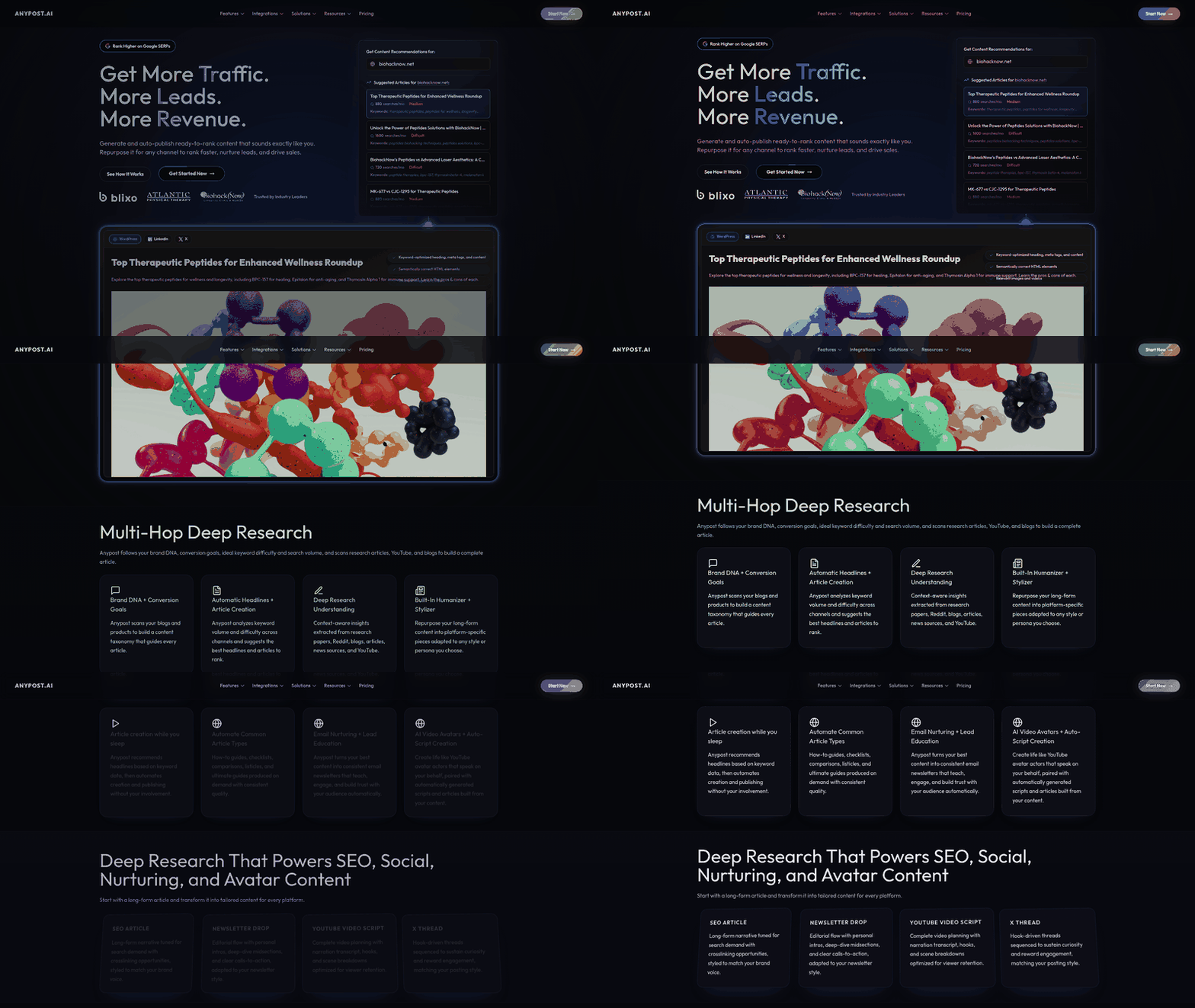
AI-powered content generation tools leverage machine learning algorithms to analyze data, identify patterns, and produce written or visual content tailored to specific audiences. In B2B SaaS lead generation, these tools are increasingly used to create blog posts, email campaigns, social media updates, and sales collateral at scale [12]. By integrating with CRM and marketing automation platforms, AI tools can synthesize customer data to generate personalized messaging, aligning with data-driven strategies highlighted in marketing automation reports [12]. See the [Section 2: Content Marketing Strategies for B2B SaaS] section for more details on integrating these strategies. Tools like Copy.ai, Jasper, and Contentbot are examples of platforms that automate content creation while maintaining brand voice consistency [10]. However, their effectiveness depends on the quality of input data and the specificity of training parameters, as noted in studies on conversion models [11].
The primary advantage of AI in content generation is its ability to accelerate production while maintaining relevance. According to a 2021 Marketing Automation Report, organizations using AI for lead generation reported a 30% improvement in lead qualification efficiency, with one-third of respondents citing AI as critical to their success [12]. AI reduces manual effort by automating repetitive tasks such as drafting email sequences or generating meta descriptions, freeing teams to focus on strategic initiatives [5]. Additionally, AI-driven personalization—such as dynamically inserting prospect names or company details into content—enhances engagement, as demonstrated by high-impact B2B SaaS strategies [8]. Scalability is another key benefit; AI tools can produce region-specific or industry-specific content variants rapidly, addressing the needs of diverse markets [10].
Despite its advantages, AI-generated content faces challenges, including limitations in contextual understanding and creativity. Automated tools may struggle with nuanced topics requiring deep domain expertise, leading to generic or inaccurate outputs [12]. For instance, AI might misinterpret technical jargon common in B2B SaaS, producing content that lacks the precision needed to resonate with enterprise clients [7]. Another limitation is the risk of brand inconsistency; without rigorous oversight, AI-generated text may deviate from established tone guidelines [9]. See the [Section 7: Persona Engine and Tone Matching for Consistent Brand Voice] section for more details on ensuring brand alignment. Furthermore, over-reliance on AI can reduce human oversight in content quality checks, potentially propagating errors or biases present in training data [11]. These challenges underscore the need for hybrid workflows that balance automation with human expertise.
To maximize effectiveness, organizations should adopt a structured approach to AI implementation. First, prioritize data quality by training AI models on high-fidelity datasets, including past successful campaigns and customer interaction logs [12]. Second, integrate AI tools with existing marketing stacks—such as HubSpot or Marketo—to ensure alignment with lead scoring and segmentation strategies [10]. Third, establish human-in-the-loop workflows where team members review and refine AI-generated drafts, combining machine efficiency with human creativity [8]. For example, use AI to draft initial versions of case studies or whitepapers, then have subject matter experts add technical depth [5]. Finally, continuously audit performance metrics like click-through rates and lead conversion to refine AI outputs iteratively [9]. See the [Section 6: Measuring and Analyzing Lead Generation Success] section for insights on tracking these metrics.
The success of AI in B2B SaaS lead generation hinges on its integration with broader marketing strategies. For instance, AI-generated content can feed into A/B testing frameworks, enabling teams to identify high-performing messaging quickly [11]. When combined with LinkedIn lead gen tactics—such as targeted ad copy creation—AI enhances reach while maintaining cost efficiency [2]. However, balancing automation with personalization remains critical; studies show that 68% of B2B buyers prefer content tailored to their role and industry, a nuance AI can address only if trained on segmented data [12]. Building on concepts from [Section 1: Understanding B2B SaaS Lead Generation], organizations must align AI workflows with their understanding of buyer personas to drive lead conversion. Thus, organizations must align AI workflows with their understanding of buyer personas, as outlined in proven SaaS lead gen strategies [6].
By addressing technical, strategic, and operational factors, B2B SaaS companies can harness AI to streamline content generation while maintaining the quality and personalization required to drive lead conversion.
Section 4: Repurposing Content for Multi-Channel Lead Generation
Repurposing content for multi-channel lead generation allows B2B SaaS companies to maximize reach, reduce creation costs, and maintain consistent messaging across platforms. By transforming a single piece of content—such as a blog post—into formats tailored for social media, email newsletters, and YouTube scripts, teams can engage audiences at different stages of the buyer’s journey while reinforcing brand authority. [3] emphasizes that case studies and SEO-optimized content can serve as foundational assets, but their value expands when adapted for platforms like LinkedIn or email campaigns. For example, a case study detailing a client’s ROI improvement can be distilled into a Twitter thread highlighting key metrics or a LinkedIn carousel for visual learners. This approach ensures that high-quality content continues to generate leads long after its initial publication. See the [Section 5] section for more details on SEO optimization techniques that support foundational content creation.
Repurposing Blog Posts for Social Media and Email Newsletters
To adapt blog posts for social media, focus on extracting key insights, statistics, or actionable takeaways. [5] recommends breaking down long-form content into bite-sized posts, such as using bullet points, infographics, or quotes to emphasize value propositions. For instance, if a blog post outlines "10 Tips for Improving SaaS Customer Retention," each tip can become a standalone Instagram post or a LinkedIn caption with a call-to-action (CTA) directing users to the full article. Email newsletters benefit from a similar strategy: summarizing the blog’s core message with a CTA to download a related whitepaper or schedule a demo. [3] notes that repurposed content should always include a clear purpose, such as driving traffic to a landing page or nurturing leads through an email sequence. Tools like Canva or Adobe Express can streamline the design of social media assets, ensuring brand consistency across channels.
Creating YouTube Scripts from Existing Content
YouTube scripts can be derived from webinar recordings, blog posts, or customer testimonials by structuring them into digestible segments. [14] highlights a strategy where video content is built around a problem-solution framework, aligning with the structure of a blog post or case study. Building on concepts from [Section 2], this approach ensures content remains strategically aligned with audience needs. For example, a script might open by addressing a common pain point (e.g., "How to reduce churn in SaaS businesses") and then walk through solutions outlined in an existing article. Voiceovers can be paired with text overlays and screenshots to maintain viewer engagement. [6] adds that repurposing webinar Q&A sessions into YouTube videos can address audience objections while providing social proof. To optimize for YouTube’s algorithm, include keywords from the original content in the video title and description, as SEO best practices apply similarly across formats.
Measuring the Effectiveness of Repurposed Content
Tracking the performance of repurposed content requires aligning metrics with platform-specific goals. As mentioned in the [Section 6] section, key performance indicators (KPIs) such as click-through rates (CTR), engagement rates, and conversion rates are critical for evaluating success. For social media, prioritize metrics like shares and comments to gauge resonance, while email campaigns should monitor open rates and link clicks. A/B testing subject lines or visuals across channels can reveal which adaptations perform best. [3] suggests using UTM parameters to track traffic sources, enabling teams to identify which repurposed assets drive the most qualified leads. If analytics show that a particular YouTube video generates high watch time but low conversions, consider revising the CTA or linking it to a more relevant landing page. Regularly auditing performance data ensures that content repurposing efforts remain aligned with overarching lead-generation objectives.
Section 5: SEO Optimization for B2B SaaS Lead Generation
SEO optimization is a foundational strategy for B2B SaaS lead generation, enabling companies to attract qualified prospects through organic search traffic. By aligning content with the intent of decision-makers and stakeholders, SEO ensures visibility in competitive markets where buyers often research solutions extensively before engaging with vendors [3]. According to [8], SEO optimization ranks among the top strategies for 2025, emphasizing its role in driving sustainable, cost-effective lead generation. Unlike paid advertising, SEO builds long-term authority and trust, making it critical for B2B SaaS companies targeting enterprise clients with extended sales cycles [3]. This section outlines actionable steps to implement SEO effectively, focusing on keyword research, on-page optimization, and link-building strategies.
Keyword Research for B2B SaaS Lead Generation
Keyword research is the cornerstone of SEO, ensuring content addresses the specific pain points and search behaviors of B2B buyers. B2B SaaS companies should prioritize long-tail keywords and industry-specific terms, as these align with the technical and decision-driven queries of enterprise buyers [8]. For example, instead of targeting generic terms like “project management software,” focus on phrases such as “AI-driven project management for enterprise teams” to capture niche audiences [3]. Tools like Google Keyword Planner, Ahrefs, or SEMrush can identify high-intent keywords with lower competition, while analyzing competitors’ content gaps reveals opportunities to dominate relevant search topics [8]. See the [Content Marketing Strategies for B2B SaaS] section for more details on aligning content with user intent through strategic planning. Additionally, incorporating keywords into blog posts, case studies, and product pages ensures alignment with user intent, increasing the likelihood of conversion [3].
On-Page Optimization Techniques
On-page optimization involves structuring website content to maximize search engine visibility while delivering value to readers. This includes optimizing title tags, meta descriptions, headers, and URL slugs with targeted keywords [8]. For B2B SaaS, it’s essential to balance keyword density with readability, avoiding over-optimization that could trigger search penalties [3]. Internal linking is another critical component; linking to related blog posts, whitepapers, or product pages enhances user navigation and reinforces topical authority [8]. Building on concepts from [Repurposing Content for Multi-Channel Lead Generation], internal linking leverages existing content to enhance navigation and reinforce topical authority. For instance, a blog post about “cloud security challenges” might link to a case study demonstrating how a SaaS solution resolved similar issues for a client, creating a seamless journey from research to conversion [3]. Additionally, optimizing for featured snippets by structuring content with clear headings and concise answers improves visibility in search results [8].
Link-Building Strategies for Authority and Traffic
Link building remains a vital SEO tactic, as high-quality backlinks from reputable domains signal credibility to search engines and drive referral traffic. B2B SaaS companies should prioritize earning links through content that offers unique value, such as in-depth guides, industry reports, or case studies [8]. As discussed in the [Content Marketing Strategies for B2B SaaS] section, case studies serve as valuable assets for demonstrating solutions and earning backlinks. Guest posting on authoritative B2B publications or collaborating with influencers to co-create content are proven methods to secure backlinks [3]. For example, publishing a whitepaper on “The Future of B2B Automation” and sharing it with industry thought leaders can generate both backlinks and social proof [8]. Additionally, leveraging existing relationships with partners, clients, or industry associations to request links from their websites strengthens domain authority [3]. It’s crucial to audit backlinks regularly using tools like Moz or Ahrefs to disavow low-quality or spammy links that could harm rankings [8].
By integrating these SEO strategies, B2B SaaS companies can enhance their online presence, attract high-intent leads, and establish themselves as thought leaders. The synergy between keyword research, on-page optimization, and link building creates a robust framework for sustainable lead generation, aligning with the long-term goals of B2B SaaS growth outlined in [3] and [8].
Section 6: Measuring and Analyzing Lead Generation Success
Measuring and analyzing lead generation success is critical for refining B2B SaaS strategies and ensuring alignment with business goals. Key metrics and KPIs provide actionable insights into campaign performance, enabling teams to identify strengths and weaknesses. According to [9], essential KPIs include demo request conversion rates, demo-to-opportunity conversion rates, and average deal size from demo-sourced leads. These metrics help quantify the effectiveness of lead generation efforts in driving revenue. Additionally, [7] highlights that traditional B2B lead generation strategies often yield a mere 2% success rate, underscoring the need for precise measurement to avoid wasted resources. [12] emphasizes the role of data-driven marketing in lead qualification, advocating for metrics like lead-to-opportunity ratios and cost-per-lead (CPL) to evaluate efficiency. By tracking these KPIs, teams can pinpoint high-performing channels and optimize underperforming ones.
Measuring Success with Google Analytics
Google Analytics serves as a foundational tool for tracking lead generation performance, though its utility depends on how metrics are structured. [9] notes that demo request conversion rates can be monitored through goal tracking in Google Analytics, allowing teams to assess the effectiveness of landing pages and ad campaigns. For example, setting up event tracking for demo form submissions provides real-time visibility into user behavior. However, [7] cautions that traditional strategies may not integrate seamlessly with modern analytics tools, requiring adjustments to tracking parameters. While Google Analytics does not explicitly outline advanced B2B-specific configurations, it remains a standard for monitoring traffic sources, bounce rates, and user engagement. Combining this data with CRM insights, as emphasized in [12], ensures a holistic view of lead progression from initial contact to conversion. See the [SEO Optimization for B2B SaaS Lead Generation] section for more details on aligning analytics with SEO-driven traffic sources.
Role of CRM and Marketing Automation Tools
CRM systems and marketing automation platforms are indispensable for analyzing lead generation success. [12] reports that one-third of respondents successfully leveraged marketing automation for lead scoring and segmentation, which directly impacts conversion rates. CRMs like Salesforce or HubSpot allow teams to track lead progression through stages such as "Marketing Qualified Lead (MQL)" to "Sales Accepted Lead (SAL)," providing granular data on drop-off points. [4] stresses the importance of consistent effort in lead generation strategies, which is facilitated by automation tools that streamline follow-ups and nurture campaigns. For instance, marketing automation can identify leads that abandon demo requests and trigger targeted email sequences to re-engage them. By centralizing data on lead behavior, CRMs enable teams to correlate campaign performance with sales outcomes, as outlined in [9]. Building on concepts from the [Content Marketing Strategies for B2B SaaS] section, these tools help refine content-driven lead qualification processes.
Best Practices for Optimization
Optimizing lead generation campaigns requires iterative analysis and alignment between marketing and sales teams. [4] highlights that even the most effective strategies demand consistent refinement, suggesting regular A/B testing of ad creatives, landing pages, and CTAs. [9] recommends evaluating demo-to-opportunity conversion rates to identify friction points in the sales funnel, such as overly complex onboarding processes. Additionally, [13] underscores the value of statistical tests—like comparing between-subjects effects—to determine which variables (e.g., ad copy, targeting criteria) most influence lead quality. Teams should also prioritize high-performing channels; for example, [2] notes that LinkedIn lead gen for B2B SaaS has shown mixed results, prompting some companies to shift focus to content marketing or account-based strategies. Refer to the [Repurposing Content for Multi-Channel Lead Generation] section for insights on maximizing channel efficiency through content reuse. Finally, [12] advises integrating CRM data with marketing automation to refine lead scoring models, ensuring resources are allocated to the most promising prospects.
By combining these metrics, tools, and practices, B2B SaaS companies can move beyond guesswork and build data-driven lead generation strategies. Continuous analysis—not just one-time audits—ensures adaptability in a competitive market where even minor optimizations can significantly impact ROI.
Section 7: Persona Engine and Tone Matching for Consistent Brand Voice
Section 7 begins with the importance of aligning B2B SaaS content with audience expectations through persona engines and tone matching. Persona engines, as discussed in [3] and [5], are tools that synthesize buyer personas—detailed profiles of target audiences—by analyzing behavioral data, pain points, and decision-making criteria. These engines enable marketers to tailor messaging to specific segments, ensuring content resonates with technical decision-makers, procurement teams, or end-users. See the [Leveraging AI for Automated Content Generation] section for more details on how AI tools can enhance persona engines. Tone matching, meanwhile, focuses on aligning linguistic style (e.g., formal vs. casual, authoritative vs. conversational) with brand identity and audience preferences, as emphasized in [7] and [10]. Together, these strategies create a cohesive voice that reinforces trust and credibility in competitive B2B markets.
Benefits of Persona Engines for Consistent Brand Voice
Persona engines offer three key advantages for B2B SaaS lead generation. First, they reduce guesswork by grounding content in empirical data about audience preferences, as noted in [1] and [6]. For example, if analytics show that IT managers prioritize security metrics over cost savings, persona engines can prioritize those topics in blog posts or email campaigns. Second, they streamline cross-channel consistency by providing a centralized reference for messaging priorities, a point reiterated in [8] and [9]. Building on concepts from [Repurposing Content for Multi-Channel Lead Generation], persona engines help maintain messaging consistency across platforms. Third, persona engines enhance scalability, allowing teams to repurpose content across LinkedIn, case studies, or webinars without diluting relevance. [3] highlights that companies using persona-driven strategies report up to 30% higher engagement rates compared to generic campaigns.
Implementing Tone Matching in B2B SaaS Content Marketing
To implement tone matching, start by auditing existing content to identify inconsistencies, as advised in [7]. Next, define a tone hierarchy: specify primary and secondary tones for different touchpoints (e.g., formal for whitepapers, conversational for social media). Tools like Grammarly or Hemingway Editor can flag deviations from brand guidelines, though [10] stresses that manual reviews by marketing teams remain critical for nuance. For example, a SaaS company targeting enterprise clients might adopt a "confident and precise" tone for case studies, while using "approachable and collaborative" language in community forums. [5] recommends integrating tone rules into content management systems (CMS) to automate checks during publishing workflows.
Best Practices for Maintaining Consistent Brand Voice Across Channels
- Centralized Style Guides: Document tone rules, keyword preferences, and persona-specific language in a shared style guide, as outlined in [6]. For instance, define whether the brand uses "we" or "you" pronouns, and specify jargon thresholds for different audiences.
- Team Training: Regularly train writers, designers, and customer success teams on persona and tone standards. [9] notes that inconsistent training leads to fragmented messaging, especially in fast-growing SaaS companies.
- Cross-Channel Audits: Perform quarterly audits of LinkedIn posts, email sequences, and support documentation to ensure alignment. [1] suggests using A/B testing to validate tone choices, such as comparing formal vs. casual subject lines in nurture campaigns.
- Leverage Analytics: Track engagement metrics (e.g., click-through rates, time on page) to identify tone mismatches. As mentioned in the [Measuring and Analyzing Lead Generation Success] section, tracking these metrics helps identify tone mismatches. [8] cites an example where a shift from technical to storytelling language increased webinar sign-ups by 22% for a cloud infrastructure provider.
By integrating persona engines and tone matching into workflows, B2B SaaS companies can eliminate voice inconsistencies that dilute brand authority. As [3] and [10] emphasize, consistency fosters recognition and trust—critical factors in long sales cycles where buyers evaluate multiple vendors. The next section will explore automation tools to further optimize these strategies.
Section 8: Real-Time Analytics and Continuous Optimization
Real-time analytics is critical for B2B SaaS lead generation, enabling teams to monitor campaign performance, adjust strategies, and respond to market shifts dynamically. In data-driven B2B environments, real-time insights allow marketers to identify underperforming channels or messaging gaps immediately, reducing wasted spend and improving conversion rates [12]. For example, LinkedIn campaigns for mid-market or enterprise SaaS targeting may fail to generate leads due to misaligned audience segmentation, a challenge users report in forums like r/PPC [2]. Real-time analytics tools address this by providing visibility into engagement metrics, such as click-through rates (CTRs) and form submissions, which are essential for refining targeting parameters [12].
Implementing Real-Time Analytics Tools
To leverage real-time analytics, B2B SaaS teams should integrate tools that track lead behavior across touchpoints, including ad platforms, landing pages, and CRM systems. Marketing automation platforms, as highlighted in the 2021 Marketing Automation Report, enable real-time lead scoring by analyzing user interactions, such as email opens or demo requests [12]. For LinkedIn campaigns, real-time dashboards can flag low-performing ads within hours, allowing marketers to pause or adjust bids before significant budget allocation [2]. Tools like HubSpot or Marketo provide automated workflows to segment leads based on real-time activity, ensuring high-intent prospects receive personalized follow-ups [12]. These systems also sync with Google Analytics 4 (GA4) to combine website behavior data with campaign metrics, offering a unified view of lead generation pipelines [12]. See the [Section 7] section for more details on how persona engines and tone matching support consistent personalization in lead segmentation.
Best Practices for Continuous Optimization
Continuous optimization requires iterative adjustments guided by real-time data. The Marketing Automation Report 2021 emphasizes that successful B2B SaaS campaigns rely on A/B testing CTAs, ad creatives, and landing page layouts to identify high-converting variations [12]. For instance, testing headlines like “Schedule a Demo” versus “Download Our Whitepaper” can reveal audience preferences within days, reducing reliance on assumptions [13]. Additionally, real-time analytics should drive bid adjustments in paid campaigns; if LinkedIn ads show a 2% CTR below industry benchmarks, budgets can be reallocated to higher-performing channels like LinkedIn Groups or targeted LinkedIn Jobs [2]. Regularly reviewing conversion funnel metrics—such as drop-off rates at form submission stages—helps pinpoint friction points, enabling rapid A/B tests on form length or field relevance [12]. For further insights on measuring optimization outcomes, see the [Section 6] section on key metrics for lead generation success.
A/B Testing and Experimentation Strategies
A/B testing is a cornerstone of continuous optimization, as demonstrated by studies on digital advertising success factors in B2B SaaS [13]. Teams should test one variable at a time, such as subject lines in email nurturing sequences or pricing models in demo offers, to isolate performance drivers [13]. For example, a SaaS company might split traffic between two landing pages: one emphasizing cost savings and another highlighting ROI metrics. Real-time analytics can measure which version generates more qualified leads within a 48-hour window [12]. The 2021 report also notes that enterprises using automated A/B testing tools reduce time-to-optimization by 30%, as manual analysis delays adjustments [12]. Experimentation should extend to ad targeting, such as testing LinkedIn audiences segmented by job function versus company size, with real-time bid modifiers applied to top-performing groups [2].
Limitations and Multi-Source Insights
While real-time analytics accelerates decision-making, its effectiveness depends on data quality and integration. The Marketing Automation Report 2021 warns that fragmented data across siloed tools (e.g., separate ad platforms and CRMs) can skew real-time insights [12]. Cross-referencing LinkedIn campaign data with CRM records, as discussed in r/PPC forums, helps validate whether lead gen efforts align with sales outcomes [2]. Furthermore, the 2021 study highlights that only 33% of B2B SaaS marketers successfully attribute leads to specific campaigns without real-time tracking, underscoring the need for unified analytics stacks [12]. Teams should prioritize tools with API integrations to consolidate data streams, ensuring continuous optimization efforts are based on holistic, up-to-date metrics [12]. Building on concepts from [Section 1], understanding the foundational goals of B2B SaaS lead generation is essential for interpreting real-time analytics effectively.
By combining real-time analytics with structured A/B testing and cross-platform data integration, B2B SaaS companies can maintain agility in lead generation, adapting to audience preferences and market conditions faster than competitors relying on static strategies.
References
[1] 15 Essential Strategies for B2B SaaS Lead Generation - https://www.artisan.co/blog/b2b-saas-lead-generation
[2] How's lead gen on LinkedIn looking for B2B SaaS? : r/PPC - https://www.reddit.com/r/PPC/comments/1i8mtxh/hows_lead_gen_on_linkedin_looking_for_b2b_saas/
[3] B2B SaaS Lead Generation: 15 Tactics for Success - https://operatix.net/blogs/b2b-saas-lead-generation/
[4] What's your most effective B2B SaaS lead generation strategy? : r ... - https://www.reddit.com/r/Entrepreneur/comments/1f9msx8/whats_your_most_effective_b2b_saas_lead/
[5] 17 SaaS Lead Generation Strategies For Driving Business Growth - https://userpilot.com/blog/saas-lead-generation-strategies/
[6] 14 Proven SaaS Lead Generation Strategies for B2B Growth - https://rightleftagency.com/saas-lead-generation-strategies-for-b2b-growth/
[7] B2B SaaS Lead Generation: 11 Unique Strategies - Mouseflow - https://mouseflow.com/blog/saas-lead-generation-strategies/
[8] 8 High-Impact B2B SaaS Lead Generation Strategies for 2025 - https://www.poweredbysearch.com/learn/b2b-saas-lead-generation/
[9] 15 B2B SaaS Lead Generation Strategies To Drive Growth - https://thecmo.com/demand-generation/b2b-saas-lead-generation-strategies/
[10] B2B Saas Lead Generation: Top Strategies, Tools and Tips - https://www.cognism.com/blog/saas-lead-generation
[11] (PDF) Conversion Model In Digital Marketing AIDA MODEL in SME ... - https://www.researchgate.net/publication/370029035_Conversion_Model_In_Digital_Marketing_AIDA_MODEL_in_SME_B2B_SaaS_EDTech
[12] (PDF) Marketing Automation Report 2021: Lead Generation and ... - https://www.researchgate.net/publication/349553323_Marketing_Automation_Report_2021_Lead_Generation_and_Lead_Qualification_Through_Data-Driven_Marketing_in_B2B
[13] Tests of Between-Subjects Effects | Download Scientific Diagram - https://www.researchgate.net/figure/Tests-of-Between-Subjects-Effects_tbl5_393709529
[14] This Is the SMARTEST SaaS Marketing Strategy I’ve Ever Seen… 🤯 by Rob Walling - https://www.youtube.com/watch?v=1p95mVJxnRg
Frequently Asked Questions
1. Why is LinkedIn lead generation underperforming for mid-market or enterprise B2B SaaS companies?
LinkedIn often struggles with mid-market or enterprise B2B SaaS lead generation due to overly generic ad targeting and poor alignment with decision-makers' intent. These audiences typically prioritize solving complex problems over passive ad engagement. To improve performance, focus on hyper-segmented targeting (e.g., job titles, company size, industry challenges) and intent-based ads (e.g., targeting companies actively researching solutions). Pair this with long-form content (whitepapers, case studies) to address pain points and establish authority. For example, use LinkedIn’s “Dynamic Ads” to retarget users who engage with gated content, creating a warmer pipeline than cold ad clicks alone.
2. How can B2B SaaS companies optimize content marketing to generate high-quality leads?
Beyond blog posts and webinars, educational content should be tailored to each stage of the buyer’s journey. For awareness, create industry-specific guides or interactive tools (e.g., ROI calculators). For consideration, develop comparison frameworks (e.g., “5 Features to Compare in SaaS Tools”) and customer success stories with metrics. For decision, offer product demos or free trials with limited-time incentives. Additionally, leverage video content—such as short explainer clips or customer testimonials—to boost engagement. For example, HubSpot increased demo sign-ups by 30% by embedding product walkthrough videos in lead magnets.
3. What role does lead scoring play in improving B2B SaaS lead generation efficiency?
Lead scoring helps prioritize leads based on behavior, firmographics, and engagement, ensuring sales teams focus on the most promising prospects. Combine behavioral scoring (e.g., website visits to pricing pages, demo sign-ups) with predictive scoring (machine learning models analyzing historical conversion data). For instance, a lead who downloads a whitepaper and then schedules a demo might receive a higher score than one who only clicks on an ad. Tools like HubSpot or Marketo can automate this process, reducing time-to-close by up to 40%.
4. What are common mistakes B2B SaaS companies make in lead generation, and how can they avoid them?
Three critical mistakes include:
- Over-reliance on cold outreach (e.g., generic LinkedIn InMails) without qualifying leads first. Instead, use warm outreach (e.g., referrals, retargeting) to increase open rates.
- Ignoring intent data (e.g., G2 reviews, Google search trends) to identify prospects actively researching solutions. Tools like ZoomInfo or DiscoverOrg can map intent signals to sales pipelines.
- Failing to align marketing and sales on lead definitions. Create a shared Lead Qualification Framework (e.g., BANT: Budget, Authority, Need, Timeline) to ensure clarity.
For example, companies using intent data saw a 25% increase in lead-to-customer conversion rates by aligning outreach with active buyer intent.
5. How can B2B SaaS companies measure the success of their lead generation efforts beyond just conversion rates?
Track pipeline velocity (time from lead to close) and cost per lead (CPL) to assess efficiency. Monitor engagement metrics like demo attendance rates, trial activation rates, and content downloads to gauge interest. Use UTM parameters and CRM analytics to attribute revenue to specific campaigns. For example, if a webinar generates 100 leads but only 10 become customers, analyze which segments (e.g., job titles, industries) converted best to refine targeting.
6. What are effective alternatives to cold outreach for generating high-quality B2B SaaS leads?
Consider account-based marketing (ABM) to target high-value accounts with personalized campaigns (e.g., customized landing pages, 1:1 emails). Use referral programs to incentivize current customers to share your product with peers. Co-marketing partnerships with complementary SaaS tools can also tap into established audiences. For example, Slack’s partnership with Zoom drove mutual lead growth by cross-promoting integrations. Additionally, user-generated content (e.g., customer case studies) builds trust and attracts similar businesses.
7. How can B2B SaaS companies nurture leads during long sales cycles?
Implement drip campaigns with tailored content (e.g., weekly email series on ROI, scalability, and security). Use predictive nurturing to adjust messaging based on lead behavior (e.g., sending compliance resources to prospects visiting security pages). Host live Q&A sessions or webinars to address objections and build relationships. For enterprise accounts, assign customer success managers (CSMs) early to provide insights and accelerate decision-making. A/B testing subject lines and CTAs can further optimize engagement.