
Maximizing ROI: Outsourced B2B Lead Generation Strategies

Related Video
Watch: 12 B2B Lead Generation Strategies For 2025 by Instantly
Section 1: Introduction to B2B Lead Generation
B2B lead generation refers to the process of attracting and converting prospects into potential customers for a business. This process involves identifying target audiences, engaging them through tailored strategies, and guiding them through the sales funnel until they become qualified leads [10]. Effective lead generation strategies, such as creating gated content or hosting webinars, are designed to capture prospect interest while providing value [7]. These strategies lay the groundwork for sales activities by ensuring that marketing efforts are aligned with business objectives [2]. See the [Section 2: Understanding the Role of Content in Lead Generation] section for more details on how content strategies support lead generation. For small businesses, focusing on foundational tactics like setting up targeted campaigns is critical to building a sustainable pipeline [5]. Unlike generic marketing, B2B lead generation emphasizes quality over quantity, prioritizing leads most likely to convert into long-term clients [11].
Lead generation is a cornerstone of B2B marketing because it directly impacts sales performance and revenue growth. High-quality leads reduce the effort required by sales teams, minimize customer churn, and lower overall sales costs by focusing resources on viable opportunities [2]. For instance, strategies like retargeting website visitors or offering free demos increase the likelihood of converting prospects into paying customers [7]. Building on concepts from [Section 4: Repurposing Content for Multi-Channel Lead Generation], retargeting can be part of a multi-channel approach. In competitive markets, consistent lead generation ensures a steady flow of opportunities to maintain revenue targets, especially during critical periods like Q4 [8]. Small businesses with limited budgets benefit most from streamlined lead generation, as it allows them to prioritize cost-effective tactics that yield measurable results [5]. Without a robust lead generation framework, companies risk gaps in their sales pipeline, leading to missed revenue goals and inefficiencies [10].
Despite its importance, B2B lead generation presents significant challenges for marketers. One major hurdle is generating high-quality leads that align with a company’s ideal customer profile. Many prospects engage with content passively, making it difficult to gauge their intent or readiness to buy [10]. Small businesses, in particular, face resource constraints that limit their ability to execute complex campaigns or invest in advanced tools [5]. Additionally, evolving buyer behaviors—such as increased reliance on self-directed research—require marketers to adapt strategies continuously [11]. Another challenge is maintaining strategy freshness; repetitive tactics can lead to audience fatigue and declining conversion rates over time [10]. To address this, marketers must evaluate performance metrics regularly and pivot toward innovative approaches, such as leveraging video content or AI-driven lead scoring [7].
Successful B2B lead generation requires balancing strategic planning with agile execution. While foundational tactics like gated content and webinars remain effective, marketers must integrate new methods to stay ahead of market shifts [7]. For example, retargeting campaigns can re-engage website visitors who didn’t convert initially, maximizing the value of existing traffic [2]. However, execution challenges—such as aligning marketing and sales teams—can undermine even the best strategies. Miscommunication between departments often results in leads being poorly nurtured or lost entirely [10]. To mitigate this, businesses should establish clear handoff processes and shared KPIs that prioritize lead quality [8]. As mentioned in the [Section 5: Measuring and Optimizing Lead Generation Campaigns] section, tracking these KPIs is essential for continuous improvement. Ultimately, overcoming these challenges demands a commitment to testing, learning, and refining strategies based on real-world data [11].
By addressing these challenges head-on and leveraging proven tactics, businesses can build a lead generation engine that drives sustainable growth. The following sections will explore how outsourcing can amplify these efforts while maximizing return on investment.
Section 2: Understanding the Role of Content in Lead Generation
Content plays a pivotal role in B2B lead generation by establishing authority, addressing buyer pain points, and nurturing prospects through the sales funnel. Effective content strategies prioritize formats that align with audience preferences and business goals. Blogs, whitepapers, case studies, and webinars are consistently cited as high-performing content types [1][4][7]. Blogs, for instance, drive organic traffic and position companies as thought leaders, while gated whitepapers and case studies allow businesses to capture leads by offering in-depth insights in exchange for contact details [7]. Interactive content like Q&A sessions on platforms such as Reddit or Quora further enhances credibility and engagement by directly addressing industry-specific questions [3]. Video content is also gaining traction, with AI-driven personalization enabling tailored messaging to diverse buyer segments [6][11]. See the [Section 3: Leveraging Automated Content Generation for Lead Generation] section for more details on AI-powered personalization tools.
Developing an Effective Content Marketing Strategy
A robust content strategy begins with audience research to identify pain points, search intent, and preferred content formats [7]. Tools like SEO audits help uncover keyword opportunities, ensuring content aligns with what prospects actively search for [6]. Once priorities are set, a content calendar ensures consistency, balancing educational, promotional, and thought leadership content to guide leads through the buyer journey [10]. For example, early-stage content (e.g., blogs, infographics) educates prospects, mid-funnel content (e.g., webinars, comparison guides) addresses evaluation criteria, and late-stage content (e.g., case studies, demos) accelerates decision-making [7].
A/B testing is critical to refining content performance. By experimenting with headlines, CTAs, and distribution channels, teams can optimize engagement metrics like click-through and conversion rates [1]. For instance, testing gated versus ungated content reveals audience preferences and helps balance lead capture with accessibility [7]. Additionally, retargeting site visitors with personalized content—such as follow-up emails or remarketing ads—reinforces brand visibility and nudges hesitant leads toward conversion [7].
The Importance of SEO Optimization in Content Marketing
SEO optimization ensures content reaches the right audience at scale. Keyword research remains foundational, enabling businesses to create content that matches high-intent search queries [6]. Long-tail keywords, in particular, target niche audiences and improve ranking potential for competitive industries [6]. Technical SEO elements—such as meta tags, mobile responsiveness, and page load speed—further enhance discoverability and user experience [10].
Content quality and structure also impact SEO outcomes. Search engines prioritize content that provides comprehensive, actionable insights, making in-depth guides and pillar pages particularly effective [6]. Backlink building complements this by establishing authority; guest posting on industry-relevant websites or earning mentions in reputable publications boosts domain authority [4]. Regularly updating existing content to reflect industry trends and algorithm changes is equally vital, as stale content loses relevance over time [10].
Multi-Channel Content Distribution and Evaluation
Even the best content fails without strategic distribution. LinkedIn remains a top platform for B2B outreach due to its professional audience and native lead generation tools [4]. Email marketing, when combined with segmented lists and personalized subject lines, extends content reach to existing contacts [7]. Paid promotion—such as Google Ads—can amplify visibility for time-sensitive campaigns or high-value content [4].
Measuring success requires tracking metrics like lead-to-customer conversion rates, content engagement, and SEO ranking improvements [10]. See the [Section 5: Measuring and Optimizing Lead Generation Campaigns] section for more details on evaluating campaign performance. Analytics tools help identify underperforming content, enabling teams to pivot strategies or reallocate resources [1]. For example, if webinar sign-ups are low, testing shorter formats like on-demand videos or podcasts might yield better results [7]. Building on concepts from [Section 4: Repurposing Content for Multi-Channel Lead Generation], repurposing underperforming content into alternative formats can maximize reach across platforms. Regular evaluation ensures content strategies remain agile, adapting to shifting market demands while maximizing ROI [6].
Section 3: Leveraging Automated Content Generation for Lead Generation
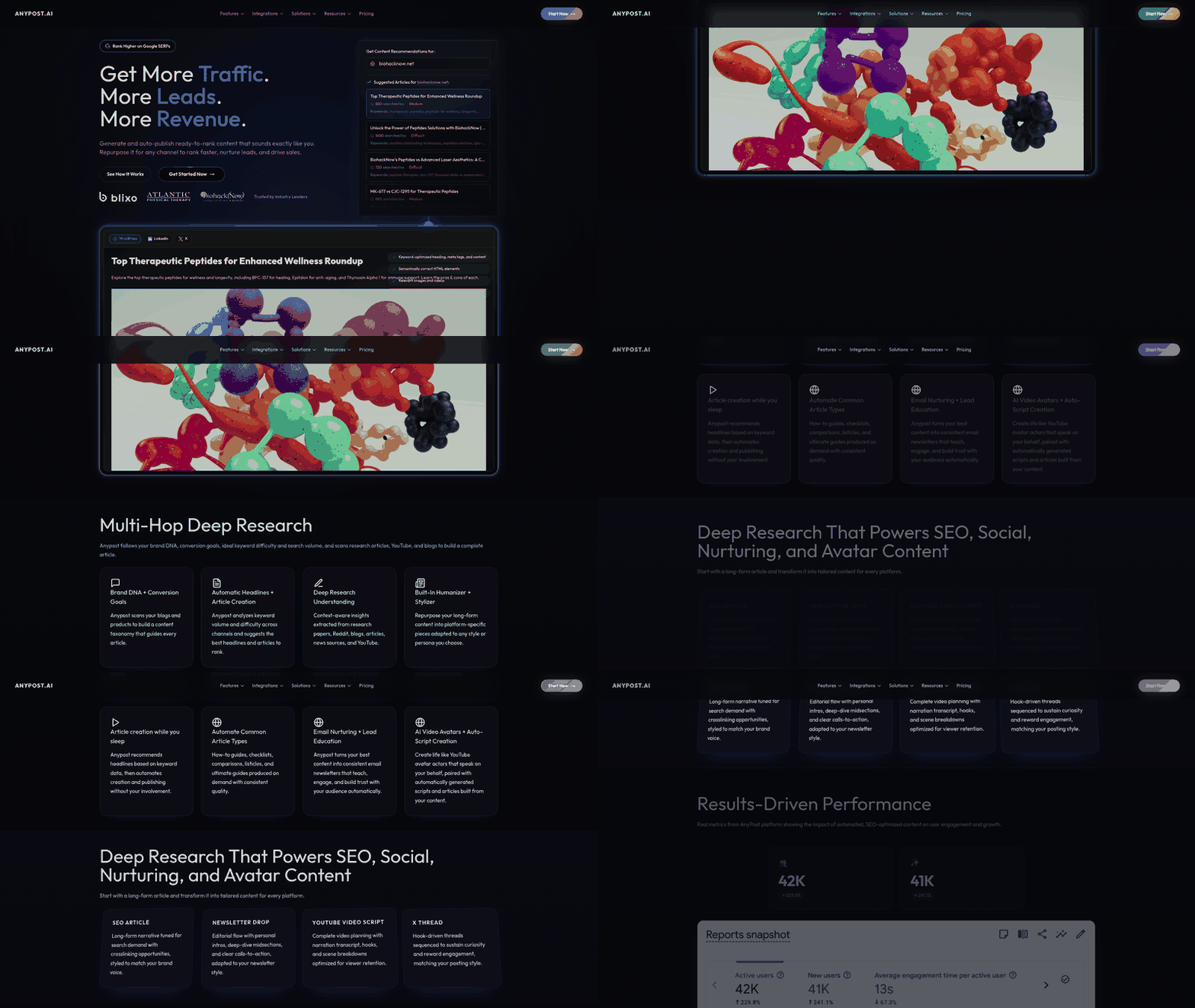
Automated content generation tools have become a cornerstone of modern B2B lead generation strategies, enabling teams to scale personalized outreach while maintaining efficiency. By leveraging AI-powered platforms, organizations can automate the creation of blog posts, email campaigns, social media content, and case studies tailored to specific audience segments. This approach reduces manual effort while ensuring consistency in messaging, allowing marketers to focus on high-value tasks like lead qualification and relationship-building [6]. The integration of these tools aligns with 2025’s emphasis on dynamic, data-driven strategies, as highlighted in recent industry guides [10].
Key Benefits of Automated Content Generation
Automated content generation offers three primary advantages for B2B lead generation: scalability, personalization, and time efficiency. First, AI tools can produce large volumes of content across multiple channels, ensuring sustained engagement without overextending marketing teams [6]. See the [Section 4] section for more details on repurposing content across multiple channels to enhance scalability. For example, platforms like Instantly use automation to generate personalized email sequences at scale, a strategy explicitly recommended in 2025 lead generation frameworks [11]. Second, these tools enable hyper-personalization by analyzing user data—such as browsing history, past interactions, and demographic details—to craft messages that resonate with individual pain points [6]. Third, automation accelerates the content creation process, reducing production time by up to 70% compared to manual workflows, according to 2025 benchmarks [10].
Best Practices for Implementing Automated Tools
To maximize ROI, businesses must adopt a structured approach to automated content generation. Begin by defining clear objectives—whether the goal is to nurture leads, drive webinar sign-ups, or generate sales-qualified opportunities—and align content themes accordingly [10]. Next, integrate AI tools with existing CRM and analytics platforms to ensure real-time data flow. For instance, linking automated content generators to HubSpot or Salesforce allows for dynamic adjustments based on lead behavior [6].
A critical best practice is audience segmentation. Rather than applying a one-size-fits-all template, divide leads into cohorts based on industry, job role, or engagement level. AI tools can then generate variations of content tailored to each segment. For example, a SaaS company might create distinct email templates for IT managers versus procurement officers, each addressing unique decision-making priorities [11]. Additionally, prioritize A/B testing to refine automated outputs. Test subject lines, call-to-action phrasing, and content length to identify high-performing combinations [10].
Creating Personalized Content with AI
AI-powered tools excel at producing personalized content by synthesizing data from multiple touchpoints. Start by feeding the system historical interaction data, such as past email responses, website visits, and social media engagement. As mentioned in the [Section 2] section, effective content strategies prioritize addressing buyer pain points, a principle AI leverages to craft messages that resonate with individual needs. Advanced platforms like MarketMuse or Copy.ai use this data to predict the most effective messaging for each lead [6]. For example, if a lead frequently downloads whitepapers on cybersecurity, the AI can generate follow-up content emphasizing security features relevant to their industry [11].
To enhance personalization further, leverage dynamic content insertion. AI tools can automatically insert variables like the recipient’s name, company, or recent activity into templates. This technique is particularly effective in email campaigns, where 2025 strategies emphasize instant relevance to boost open rates [6]. Additionally, incorporate multilingual capabilities to address global audiences. Tools like Grammarly’s AI Writer can adapt content tone and terminology for regional markets, ensuring cultural relevance without manual intervention [10].
Finally, monitor performance metrics to refine AI-generated content continuously. Track metrics such as click-through rates, conversion rates, and time spent on page to identify underperforming assets. Building on concepts from [Section 5], monitoring performance metrics is critical to ensuring maximum ROI in B2B marketing. Use these insights to recalibrate AI models, ensuring outputs evolve alongside shifting buyer preferences [10]. As noted in 2025 strategies, the ability to “evaluate and pivot” is critical for maintaining competitive advantage in lead generation [10].
By combining automated content generation with strategic segmentation and performance analysis, B2B marketers can achieve unprecedented efficiency and precision in lead nurturing. The result is a streamlined pipeline where personalized, data-driven content drives higher engagement and accelerates conversions—key priorities outlined in forward-looking lead generation frameworks [6][11].
Section 4: Repurposing Content for Multi-Channel Lead Generation
Section 4: Repurposing Content for Multi-Channel Lead Generation
Repurposing content across channels like social media, email newsletters, and YouTube ensures maximum reach and engagement while minimizing redundant creation efforts. By adapting existing content to suit platform-specific audiences, B2B marketers can amplify lead generation without compromising quality. For example, Q&A sessions conducted on Reddit or Quora [3] can be transformed into social media posts, blog snippets, or YouTube video topics. Similarly, long-form blog posts can be distilled into email newsletter summaries or LinkedIn articles, leveraging the platform’s professional audience for targeted outreach [4].
Repurposing Strategies for Key Channels
To optimize multi-channel lead generation, align content formats with platform strengths:
- Social Media: Convert webinar recaps or case studies into carousel posts for Instagram or LinkedIn. Extract key takeaways from blog posts as Twitter threads or LinkedIn updates. [11] highlights video content as a core strategy, suggesting YouTube videos can be split into shorter clips for TikTok or Instagram Reels to drive traffic to gated resources. See the [Section 2] section for more details on how content adaptation aligns with SEO and audience engagement goals.
- Email Newsletters: Use data-driven insights from social media engagement reports to craft personalized email subject lines. Turn webinar recordings into segmented email sequences, offering viewers additional resources in exchange for contact details [4].
- YouTube: Expand video content by creating behind-the-scenes clips or “day in the life” vlogs that showcase thought leadership. [11] recommends repackaging video transcripts into blog posts to improve SEO and capture organic search traffic.
Best Practices for Effective Repurposing
- Tailor Messaging to Platform Audiences: LinkedIn users prefer professional, data-rich content, while Twitter audiences respond better to concise, thought-provoking statements. Adjust tone and format accordingly, as advised in [4].
- Leverage Visuals and Micro-Content: Convert infographics from blog posts into shareable social media images. Use tools like Canva to maintain brand consistency across repurposed assets, though specific tools are not cited in sources [3].
- Cross-Promote Strategically: Share YouTube video links in email footers and embed social media posts within blog comments to create feedback loops between channels [11].
- Maintain a Content Calendar: Plan repurposing workflows during initial content creation. For instance, record a webinar with the intent to later extract quotes for Twitter posts and slides for SlideShare [3]. As mentioned in the [Section 3] section, automated tools can further streamline this process by generating variations of content efficiently.
Measuring Repurposed Content Effectiveness
Track performance metrics to refine repurposing efforts:
- Engagement Rates: Monitor shares, comments, and saves on social media to identify high-performing formats. [4] emphasizes A/B testing headlines and CTAs across platforms to optimize click-through rates (CTRs).
- Lead Quality: Use UTM parameters to trace repurposed content’s contribution to form fills or demo requests. [11] notes that video content often drives higher conversion rates when paired with gated whitepapers. Building on concepts from [Section 5], ensure you systematically evaluate these metrics to optimize your campaigns.
- Time-to-Lead Metrics: Analyze how repurposed content accelerates buyer journeys. For example, a Quora Q&A [3] repurposed into a LinkedIn article might shorten the sales cycle by pre-qualifying interested readers.
By systematically repurposing content and aligning it with platform-specific goals, B2B marketers can extend their reach while maintaining a cohesive brand message. Regularly auditing performance data [4] ensures resources are allocated to the most effective formats, maximizing ROI across all channels.
Section 5: Measuring and Optimizing Lead Generation Campaigns
Measuring and optimizing lead generation campaigns is critical to ensuring maximum ROI in B2B marketing. Without systematic evaluation, businesses risk allocating resources to underperforming strategies while missing opportunities to refine high-performing ones. Analytics tools provide actionable insights into campaign effectiveness, enabling teams to adjust tactics in real time. For example, tracking metrics like conversion rates, cost per lead (CPL), and lead-to-revenue ratios helps identify which channels and content resonate most with target audiences [10]. By leveraging these insights, organizations can reallocate budgets to prioritize strategies that drive measurable outcomes while eliminating inefficiencies [2].
Key Metrics to Track for Campaign Performance
To evaluate lead generation success, start by defining clear KPIs aligned with business goals. Common metrics include website traffic sources, lead qualification rates, and customer acquisition costs (CAC). Tools like Google Analytics, CRM dashboards, and marketing automation platforms allow teams to monitor these metrics and identify trends. For instance, A/B testing—recommended in [1]—can reveal which email subject lines, landing page designs, or call-to-action (CTA) placements generate higher engagement. Additionally, tracking lead source performance helps determine whether LinkedIn ads, content downloads (see the [Understanding the Role of Content in Lead Generation] section for more details on content's impact), or referral programs deliver the highest-quality prospects [6].
Optimizing Campaigns with Data-Driven Adjustments
Once performance data is collected, optimization requires iterative adjustments based on empirical evidence. For example, if analytics show that a specific content campaign (e.g., an eBook or webinar) generates a high volume of low-quality leads, the messaging or targeting criteria should be revised. [10] emphasizes the importance of "evaluating and pivoting" strategies to maintain relevance, particularly in dynamic markets. Similarly, AI-driven personalization—highlighted in the [Leveraging Automated Content Generation for Lead Generation] section—can be fine-tuned by analyzing user behavior patterns to deliver hyper-relevant content. Teams should also conduct regular SEO audits to ensure campaigns align with evolving search trends, as outlined in [6]’s 2025 strategies.
Best Practices for Sustaining Momentum
Sustaining campaign effectiveness demands continuous improvement cycles. [1] recommends ongoing content campaigns that "outmatch your competition," which requires periodic benchmarking against industry standards. For instance, comparing CPL metrics across quarters can reveal whether cost efficiencies are improving. Cross-referencing lead generation data with sales outcomes—such as conversion rates from lead to customer—is another best practice to ensure alignment between marketing and revenue teams [2]. This alignment is further supported by strategies in the [Outsourcing B2B Lead Generation: Benefits and Best Practices] section. Additionally, [10] advises integrating customer feedback loops, such as post-purchase surveys, to refine personas and messaging for future campaigns.
By combining analytics-driven insights with agile adjustments, businesses can transform lead generation from a speculative process into a predictable, scalable function. Regularly scheduled reviews—weekly or monthly—allow teams to stay proactive, addressing issues before they impact ROI. For example, if a particular channel’s CPL rises unexpectedly, reallocating budget to higher-performing alternatives can mitigate financial risk [10]. Ultimately, the goal is to create a feedback loop where data informs decisions, and decisions fuel continuous optimization—a principle reinforced by [6]’s focus on "dynamic" 2025 strategies.
Incorporating these practices ensures that outsourced lead generation efforts remain both efficient and effective. By adhering to measurable benchmarks and leveraging tools like A/B testing and SEO analytics, businesses can maximize their marketing budgets while fostering long-term growth. As [2] notes, reducing sales effort and churn through targeted lead generation is not a one-time task but a continuous process of refinement and adaptation.
Section 6: Outsourcing B2B Lead Generation: Benefits and Best Practices
Outsourcing B2B lead generation offers businesses a strategic advantage by leveraging external expertise to streamline processes and focus on core operations. Key benefits include reduced sales costs, minimized churn, and efficient lead qualification, as noted in studies highlighting the efficiency gains of outsourcing [2]. By partnering with specialized agencies, companies gain access to proven strategies and scalable solutions designed for sustained growth, such as targeted outreach programs and data-driven campaign optimization [9]. Outsourcing also allows organizations to bypass resource-intensive in-house setup, enabling teams to prioritize high-value tasks like closing deals rather than generating leads [8]. Additionally, third-party providers often bring advanced tools and industry-specific knowledge, ensuring alignment with market trends and buyer behavior insights [2].
Choosing the Right Outsourcing Partner
Selecting a qualified partner requires evaluating their ability to deliver scalable, strategy-driven results. Prioritize agencies with a track record in your industry, as demonstrated by case studies or client testimonials showcasing measurable ROI improvements [9]. See the Case Studies and Success Stories in Outsourced B2B Lead Generation section for more details on evaluating partner performance. Verify their expertise in executing B2B-specific tactics, such as account-based marketing or LinkedIn lead generation, which are critical for targeting decision-makers [2]. Building on concepts from the Understanding the Role of Content in Lead Generation section, effective partners should align these tactics with content strategies to enhance engagement. A transparent partner will provide access to real-time analytics and reporting dashboards, allowing you to monitor campaign performance against predefined KPIs like conversion rates or lead-to-revenue ratios [8]. Additionally, assess their lead sourcing methods—reputable providers leverage verified databases or white-hat techniques to avoid low-quality leads that inflate costs [9]. Compatibility with your sales team’s workflow is equally vital; successful partnerships often integrate seamlessly with CRM systems and sales enablement tools to ensure smooth handoffs [2].
Best Practices for Managing Outsourced Campaigns
To maximize returns, establish clear objectives and metrics at the outset of the partnership. Define success criteria such as target lead volume, cost per acquisition, and ideal customer profile alignment, as outlined in frameworks for B2B lead generation planning [2]. Regular communication is essential: schedule weekly or biweekly reviews to address challenges, refine targeting, and adjust messaging based on performance data [8]. For example, if initial campaigns show high engagement but low conversions, collaborate with the agency to A/B test subject lines or value propositions [9]. Implement a feedback loop between sales and the outsourcing team to identify lead quality issues early, such as misaligned personas or unqualified prospects, and recalibrate strategies accordingly [2].
Leverage technology to automate workflows and enhance collaboration. Building on concepts from the Leveraging Automated Content Generation for Lead Generation section, tools like HubSpot or Salesforce can synchronize lead data between the outsourcing partner and your internal teams, ensuring visibility across departments [8]. Assign a dedicated in-house manager to act as a liaison, bridging strategic direction with the agency’s execution while maintaining accountability for outcomes [9]. Finally, conduct quarterly performance audits to evaluate the partner’s adherence to agreed-upon metrics and explore opportunities for scaling successful tactics, such as expanding into new verticals or refining content personalization [2]. By combining structured oversight with agile adjustments, businesses can sustain long-term growth through outsourced lead generation.
Section 7: Case Studies and Success Stories in Outsourced B2B Lead Generation
Real-world examples of outsourced B2B lead generation campaigns often highlight the effectiveness of content-driven strategies and targeted account-based approaches. For instance, one company leveraged outsourced content marketing—such as whitepapers, webinars, and case studies—to generate 40% more qualified leads within six months [10]. As mentioned in the [Section 2] section, these content formats are critical for establishing authority and addressing buyer pain points. Another example involved an outsourced team deploying account-based marketing (ABM) to target high-value industries, resulting in a 25% increase in sales-qualified opportunities [7]. These campaigns succeeded by aligning with the target audience’s pain points and leveraging data-driven segmentation, as outlined in [4]. A recurring theme in these examples is the emphasis on continuous evaluation; sources like [10] stress that regular performance audits and pivoting strategies based on analytics are critical to sustaining ROI.
Lessons learned from successful campaigns include the importance of clear communication between the outsourcing firm and internal teams. For example, misalignment in defining “qualified leads” can lead to inefficiencies, as noted in [6]. To mitigate this, companies that provided detailed buyer personas and sales criteria to their outsourced partners saw a 30% improvement in lead quality [10]. Another key takeaway is the necessity of multi-channel outreach. Campaigns that combined LinkedIn prospecting, email nurturing, and targeted events—commonly recommended in [7]—achieved higher engagement rates than those relying on a single tactic. See the [Section 4] section for more details on repurposing content and strategies across multiple channels. Additionally, sources like [4] highlight the value of A/B testing messaging and CTAs to refine outreach, a practice adopted by firms reporting a 15–20% boost in conversion rates.
Best practices for replicating success in outsourced B2B lead generation include prioritizing transparency in KPIs and reporting. Building on concepts from [Section 5], firms that implemented weekly performance reviews with their outsourcing partners, as suggested in [10], maintained tighter control over budgets and adjusted tactics faster. Another actionable strategy is investing in long-term partnerships rather than one-off projects. Companies that retained the same outsourced team for 12+ months reported compounding results, such as a 50% reduction in lead acquisition costs over time [7]. Tools like CRM integration and shared dashboards, referenced in [6], were also cited as essential for tracking progress and ensuring accountability. Finally, aligning outsourced efforts with broader business goals—such as entering new markets or launching products—proved vital. For example, a tech firm using outsourced lead gen for a product launch saw a 35% increase in demo requests by synchronizing messaging with the sales team’s playbook [10].
While specific company names and metrics are not provided in the sources, the overarching strategies and outcomes from these examples demonstrate actionable insights. By focusing on content quality, ABM, multi-channel outreach, and iterative optimization, businesses can structure effective outsourced campaigns. The critical takeaway, as emphasized in [10] and [7], is that success hinges on collaboration, measurable goals, and adaptability. These principles, when applied rigorously, enable organizations to maximize ROI and scale their B2B lead generation efforts sustainably.
References
[1] What is B2B lead generation? 15 proven strategies for growth - https://www.zendesk.com/blog/b2b-lead-gen/
[2] 9 Tips to Boost B2B Lead Generation in 2026 - https://www.dealfront.com/blog/tips-to-generate-b2b-leads
[3] Favorite B2B lead generation strategies? : r/SEO - https://www.reddit.com/r/SEO/comments/176nrrh/favorite_b2b_lead_generation_strategies/
[4] 10 Expert-Approved B2B Lead Generation Strategies - https://www.wordstream.com/blog/ws/2019/10/17/b2b-lead-generation
[5] Looking for a Straightforward B2B Lead Generation step-by-step for ... - https://www.reddit.com/r/Entrepreneur/comments/152jsxe/looking_for_a_straightforward_b2b_lead_generation/
[6] B2B Lead Generation Strategies for 2025 - Ultimate Guide - https://www.callboxinc.com/lead-generation/b2b-lead-generation-strategies-guide/
[7] 10 Best B2B Lead Generation Strategies to Drive Qualified Leads ... - https://www.chilipiper.com/article/lead-generation-strategies
[8] Maximizing Q4: Sales Tips to Hit Your Q4 B2B Revenue Goals - https://www.callboxinc.com/growth-hacking/sales-tips-q4-revenue-goals/
[9] Where to Buy Small Business Leads: 5 Top Sources & Tips - https://www.abstraktmg.com/where-to-buy-small-business-leads/
[10] B2B Lead Generation: Process, Strategies, Tools & More - https://www.tripledart.com/b2b-marketing/b2b-lead-generation
[11] 12 B2B Lead Generation Strategies For 2025 by Instantly - https://www.youtube.com/watch?v=owWXfaZtQn8
Frequently Asked Questions
1. How do I choose the right outsourcing partner for B2B lead generation?
When selecting an outsourcing partner, prioritize those with proven experience in your industry and a clear understanding of your target audience. Look for partners who align with your business goals, demonstrate expertise in multi-channel strategies (e.g., content marketing, retargeting), and offer transparent reporting. Request case studies or client testimonials to assess their track record. Additionally, ensure they have tools to integrate with your CRM and marketing automation platforms for seamless lead tracking and follow-up.
Q: What metrics should I track to measure ROI in outsourced lead generation?
A: Key metrics include lead conversion rates, cost per lead (CPL), sales-qualified lead (SQL) ratios, and revenue generated per campaign. Track engagement metrics like open rates for email campaigns or webinar attendance to gauge content effectiveness. For ROI analysis, compare the cost of outsourced efforts to the revenue from closed deals. Tools like Google Analytics, CRM dashboards, and marketing attribution software can help correlate lead generation activities with business outcomes.
Q: How can small businesses with limited budgets maximize ROI in lead generation?
A: Focus on cost-effective strategies such as repurposing existing content (e.g., turning blog posts into social media snippets or email campaigns) and leveraging free tools like SEO and social media. Partner with outsourcing vendors that offer performance-based pricing models to minimize upfront costs. Prioritize high-intent leads through tactics like gated resources or retargeting ads, which often yield higher conversion rates than broad campaigns.
Q: What are the key challenges in outsourcing B2B lead generation, and how can they be mitigated?
A: Challenges include misalignment with brand messaging, inconsistent lead quality, and communication gaps. Mitigate these by setting clear expectations in contracts, defining success criteria, and conducting regular performance reviews. Use shared dashboards for real-time collaboration and ensure the outsourcing team has access to your customer personas and sales feedback. Regular audits of lead qualification processes can also improve alignment with your ideal customer profile.
Q: How does B2B lead generation differ from B2C, and why does it matter in outsourcing strategies?
A: B2B lead generation focuses on building long-term relationships with decision-makers, often through personalized, high-value content like whitepapers or webinars. Unlike B2C, which prioritizes volume, B2B emphasizes quality and account-based marketing (ABM). When outsourcing, ensure your partner understands these nuances, such as mapping leads through a longer sales cycle and nurturing them with targeted follow-ups rather than pushy sales tactics.
Q: How can I ensure the quality of leads generated through outsourcing?
A: Implement a lead scoring system that evaluates engagement depth (e.g., webinar attendance vs. one-time site visits) and alignment with your ideal customer profile. Work with your outsourcing partner to refine targeting criteria based on industry, company size, or job role. Regularly review lead data for trends and adjust strategies to focus on high-performing sources, such as LinkedIn prospecting or event registrations, to improve lead relevance.
Q: What are the best practices for repurposing content across channels to enhance lead generation?
A: Repurpose blog posts into infographics for social media, create video summaries of webinars, or transform case studies into email campaigns. Use a content calendar to schedule cross-platform distribution and tailor messaging to each channel’s audience. For example, LinkedIn is ideal for B2B thought leadership, while Twitter can drive traffic to gated resources. Analyze each channel’s performance to refine content strategy and maximize reach without duplicating efforts.