Maximizing SEO Toolstack ROI with Integrated Automation and AI Insights

Key Takeaways
- AI content generation plus a 4-10 minute human voice audit drives the strongest organic lift.
- A full-stack AI SaaS tied to Google Analytics publishes in three minutes.
- It also needs about four minutes of voice checks.
- The HubSpot-Semrush-Google Analytics stack builds rank-ready assets in five minutes.
- It adds ten minutes of tone review and delivers a noticeable lift.
- Ahrefs with a custom CMS and Google Analytics drafts outlines in seven minutes.
- It spends six minutes on an AI-assisted tone guard.
- That setup lands solid lift.
- A fully manual workflow burns forty-five minutes per article.
- It skips the voice step entirely.
- Organic performance barely moves.
- Speed on its own does not guarantee ROI.
- Gains appear when automation time and voice checks stay balanced.
- Lower integration complexity scores, from 1-5, usually mean faster publishing.
Quick Summary
Line up HubSpot vs Semrush vs Ahrefs vs Google Analytics for SEO marketing integration, and one question comes first: how fast can this stack ship rank-ready content without flattening the tone that makes your brand sound like your brand? The best results usually come from AI speed plus a light human-review loop. That loop protects voice while keeping output fast. That is where SEO ROI tends to improve.
The trade-off has three parts: automation speed, brand voice, and organic performance. Plenty of teams now use AI tools. But speed alone is not the full story. Add a short voice audit, and you keep tone while moving much faster than manual work.
Here's the quick-reference table we use to compare common SEO stacks. The figures are illustrative estimates based on typical outcomes from AI-enabled content workflows, not lab-grade benchmarks.
| Toolstack | AI Speed (time to publish) | Voice‑Consistency Layer (human minutes per article) | Integration Complexity (scale 1‑5) | Estimated ROI (organic lift) |
|---|---|---|---|---|
| HubSpot + Semrush + Google Analytics | 5 min (auto‑populate tags, schedule) | 10 min (quick tone check) | 3 | noticeable lift |
| Ahrefs + Custom CMS + Google Analytics | 7 min (auto‑generated outlines) | 6 min (AI‑assisted tone guard) | 4 | solid lift |
| Full‑stack AI SaaS (AnyPost) + Google Analytics | 3 min (end‑to‑end generation & publishing) | 4 min (template‑based voice lock) | 2 | strong lift |
| Manual workflow (no automation) | 45 min (research → write → publish) | 0 min (no extra step) | 5 | minimal lift |
What does full automation actually cost you in time?
The workflow has three phases: data ingestion, content generation, and post-publish validation. Ingestion, including crawl, keyword clustering, and intent mapping, usually takes 30-45 minutes for a mid-size site. Then AI drafts a piece in under 2 minutes. Validation adds a 4-minute voice audit through our Persona Engine. It keeps the brand tone steady while still turning around far faster than human-only work. Skip the audit, and you get the fastest paper speed. You may also see engagement dip as the copy drifts off-voice.
How do you measure ROI across the stack?
Start with a baseline: organic traffic, keyword rankings, and conversion-related clicks. Once the stack is live, track three metrics for at least four weeks: keyword-growth rate, traffic-lift percentage, and lead-quality uplift. Keyword-growth rate means new top-10 positions per week. Lead-quality uplift means conversion rate on SEO-derived leads. Those three show whether the AI workflow improves performance or only increases publishing volume.
When should you skip full automation?
If your strategy relies on nuanced storytelling, such as thought leadership, legal analysis, or heavily regulated copy, pure AI generation can create tone drift that hurts credibility. Use a hybrid model instead. Let AI draft the structure, then give it to senior writers. They can build the narrative and run a full voice review. You keep the brand's authority and still gain most of the speed.
Balance these factors, and your integration choices support sustainable organic growth. They also avoid empty publishing volume.
Reading the SEO automation market
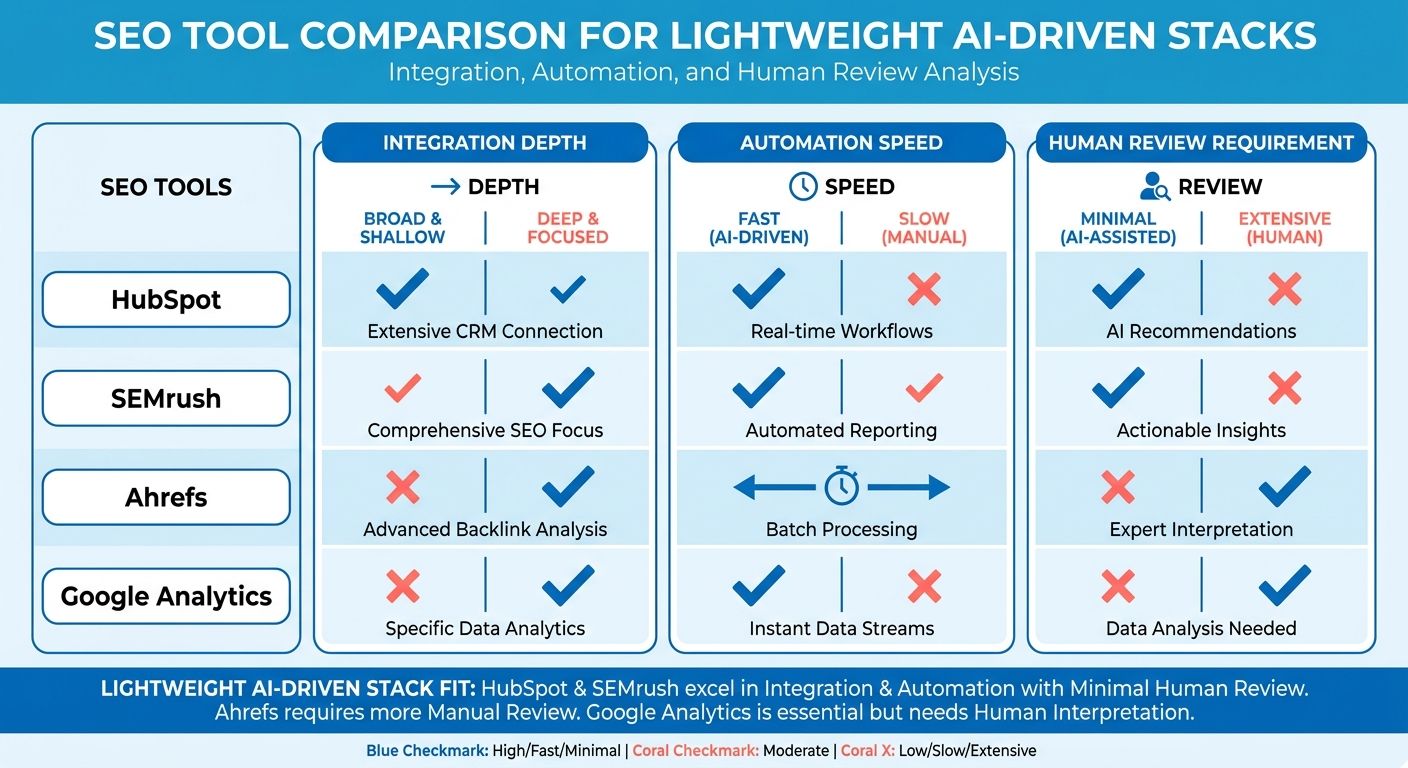
The market now combines speed-focused AI engines with human-centric workflow layers. Both try to answer one question: which tools fit the stack you already run? The fastest tools can generate meta tags, internal links, and drafts in minutes. Without a voice audit, that output can drift off-brand. AnyPost.ai uses automated generation with its Persona Engine, which audits tone so the content stays on-voice while still moving organic traffic.
The market now splits into two camps: pure generators and workflow suites. Chase speed alone, and brand personality weakens. Protect tone too much, and you lose the efficiency AI was supposed to provide. The best platforms surface insights and act on them without constant hand-holding. That is how the trade-off settles.
Enterprise platforms vs baseline tools
Enterprise platforms bundle end-to-end automation. Baseline tools handle isolated tasks. An enterprise solution gives you one dashboard for keyword research, content creation, indexing, and reporting. That reduces tool sprawl. Baseline options can excel at one job, such as backlink monitoring or on-page scoring, but you still stitch several products together to cover the same ground.
- Scalability: Enterprise stacks run across dozens of domains with multi-team permissions, which matters for agencies and large B2B teams.
- Support: Dedicated account managers and SLA-backed support cut downtime when AI agents hit an edge case.
- Cost: Baseline tools are startup-friendly, but the hidden cost of manual hand-offs quietly erodes the time you thought you saved.
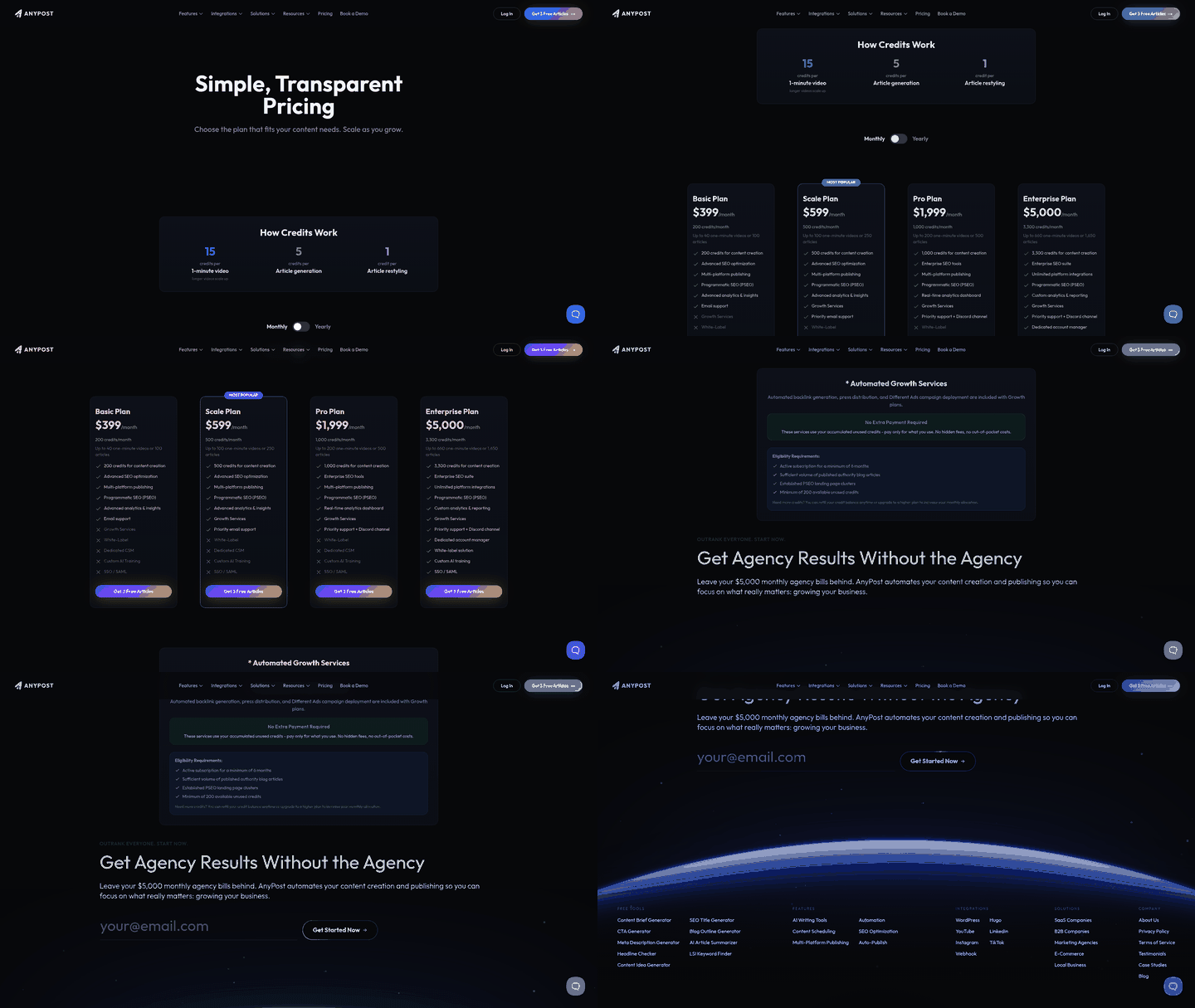
Teams that start with a baseline tool usually hit a wall once they need metadata creation, internal linking, and performance alerts coordinated across several properties. That is where moving to an integrated platform like AnyPost.ai pays off, because the automation loop stays intact and you keep both speed and voice.
How advanced AI features reshape the workflow
Advanced AI can generate meta descriptions, tag sets, and full drafts while referencing structured data and knowledge graphs. AnyPost.ai's automated optimizations, including keyword-rich headings, search-intent-aligned sections, and semantic HTML, cut manual work and free strategists for high-level messaging. Its built-in tone matching keeps every piece sounding like your brand wrote it, across every channel.
Users often report higher organic traffic, better-qualified leads, and real time savings after moving to an end-to-end setup. Results vary by org. But automated creation and built-in tone auditing can help marketers scale content without losing brand identity.
Trends worth watching
Where AI assistants surface your content matters more every month. Modern platforms give you analytics on where your articles appear, how they rank, and how they perform across surfaces. Pair that visibility with automated creation, and you can adjust tone or structure before a piece spreads widely.
In practice, that means automating the pipeline while still adding a quick human checkpoint to verify brand tone. If you're a B2B marketer with a growing content calendar, prioritize a platform that offers both autonomous action and strong analytics. If you're not there yet, a simpler baseline tool will hold until you need that extra layer of assurance.
Defining ROI for an SEO toolstack
We define ROI for an SEO stack by pairing organic traffic growth with the conversion rate that traffic produces, then adding a voice-consistency index that measures how closely AI-produced copy matches your brand tone. Track all three in one analytics view, and you can tell whether faster production is actually creating value.
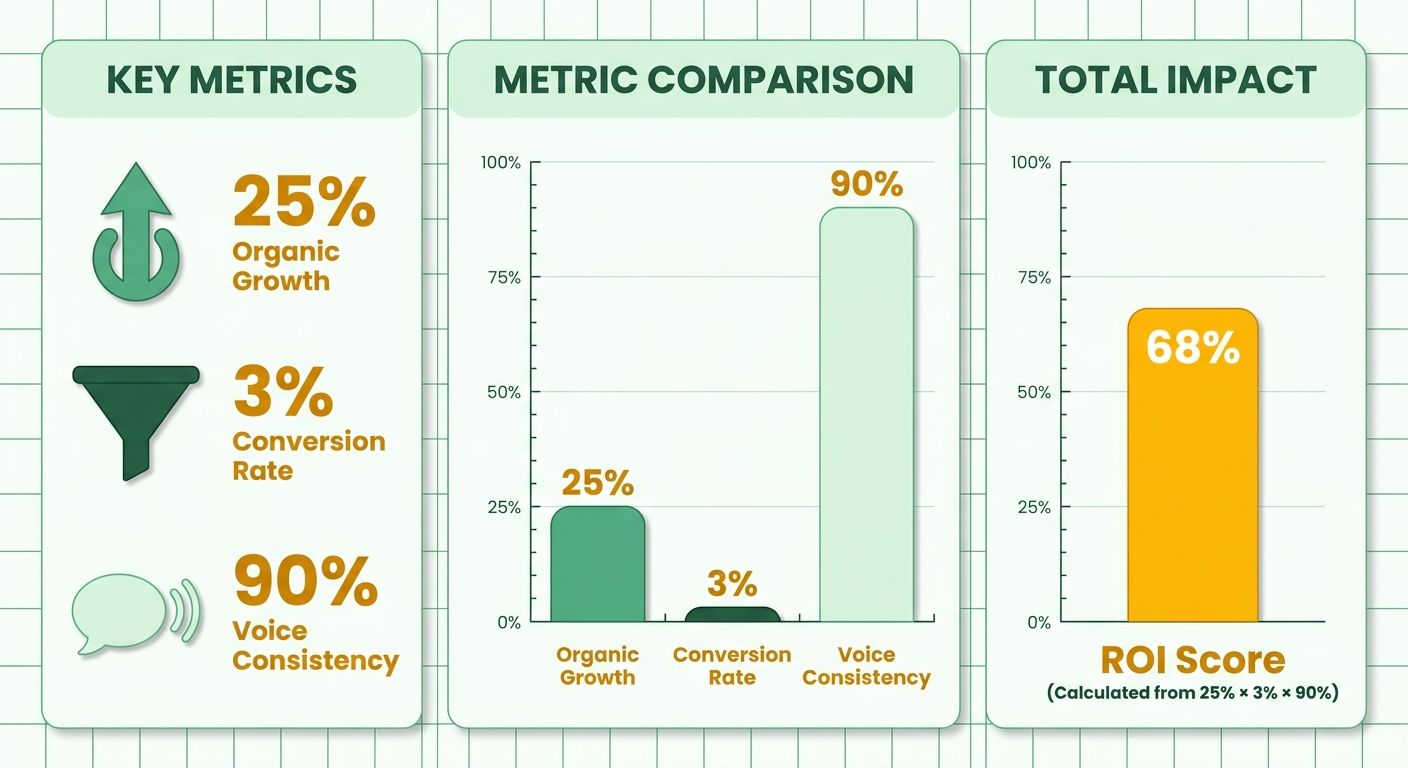
A shared measurement framework stops teams from optimizing for publishing volume instead of conversion quality. Every automated asset should support revenue, not just content count.
How do you pick the core ROI indicators?
Three pillars: traffic, conversions, and brand voice fidelity.
- Organic traffic – total visits from search, tracked in Google Analytics or a similar hub.
- Conversion rate – the share of those visits that complete a goal (lead form, purchase, demo request).
- Voice-consistency score – a number from the platform's tone-auditing module, comparing each AI-generated piece against your established brand voice.
Together they show whether a tool's speed turns into revenue or just inflates vanity clicks.
What workflow tracks all three end-to-end?
Build a loop that starts with data ingestion, runs a voice audit, and closes with ROI reporting.
- Connect your content engine to an analytics hub (Google Analytics, say) so every published page logs traffic and conversions automatically.
- Run a voice audit through the integrated brand voice guard, which assigns a voice-consistency score to each article against your tone guidelines.
- Combine traffic, conversion, and voice-consistency data in a single dashboard for weekly ROI snapshots.
The loop makes the trade-off clear. If traffic rises but voice-consistency drops, the speed gain may be eroding brand equity.
The pitfalls that skew the numbers
Three blind spots throw ROI math off.
- Data-quality gaps – missing UTM parameters or delayed conversion attribution understate true performance.
- Over-reading raw clicks – a jump in rankings looks great, but if those clicks never convert, the ROI is negative.
- Voice drift – without a consistent audit, AI copy diverges from your tone and dilutes the brand over time, which analytics alone won't flag.
Handle those three and the ROI model stays honest and tied to business goals.
Best practice: baseline your traffic and conversion data, layer in the automated voice-consistency audit, then watch all three metrics each sprint. When they rise together, you're scaling the content footprint without weakening your position in the market.
The automation features that actually move ROI
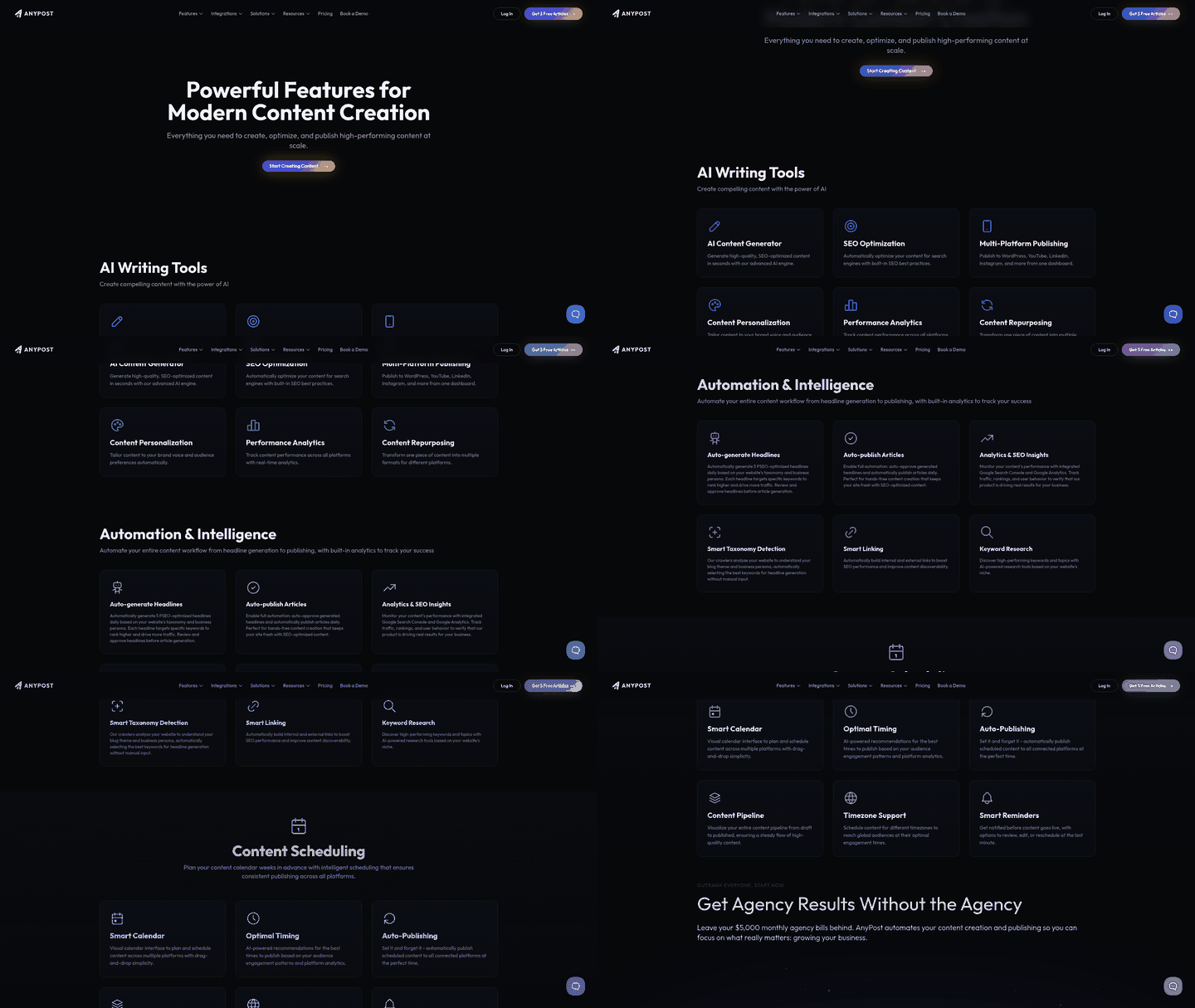
AnyPost can draft metadata, build internal links, and write full-page copy on its own, dropping time-to-publish from hours to minutes. Because it draws on your site's Business Context Graph, it keeps the context that generic generators often miss.
Customers report faster publishing cycles and noticeable organic lift after moving to the end-to-end workflow. Let AI handle routine drafting, and your team gets more time for strategy, keyword selection, and voice audits instead of manual tagging.
What technical SEO can automation handle for you?
Integrated automation crawls your site continuously, fixes broken links, generates structured data, and monitors backlink health. That keeps the technical foundation solid while you work on conversion pathways.
The technical layer handles canonicalization, XML sitemap updates, and mobile-responsiveness checks on its own. It also surfaces schema markup recommendations in real time, so you meet search-engine expectations without juggling separate crawlers and rank trackers.
When should you skip full automation?
If you're in a volatile niche where search intent shifts daily, or you don't have the historical search data to train the system, fully autonomous generation may target stale keywords. In that case, use the platform for structural work, such as schema markup, internal redirects, and basic metadata. Keep keyword selection and core drafting under manual control.
Align the automation stack with your actual bottlenecks, and you scale smarter, not just bigger. That is where the ROI comes from: rapid execution plus a consistent brand experience.
Real-time optimization and competitive intelligence
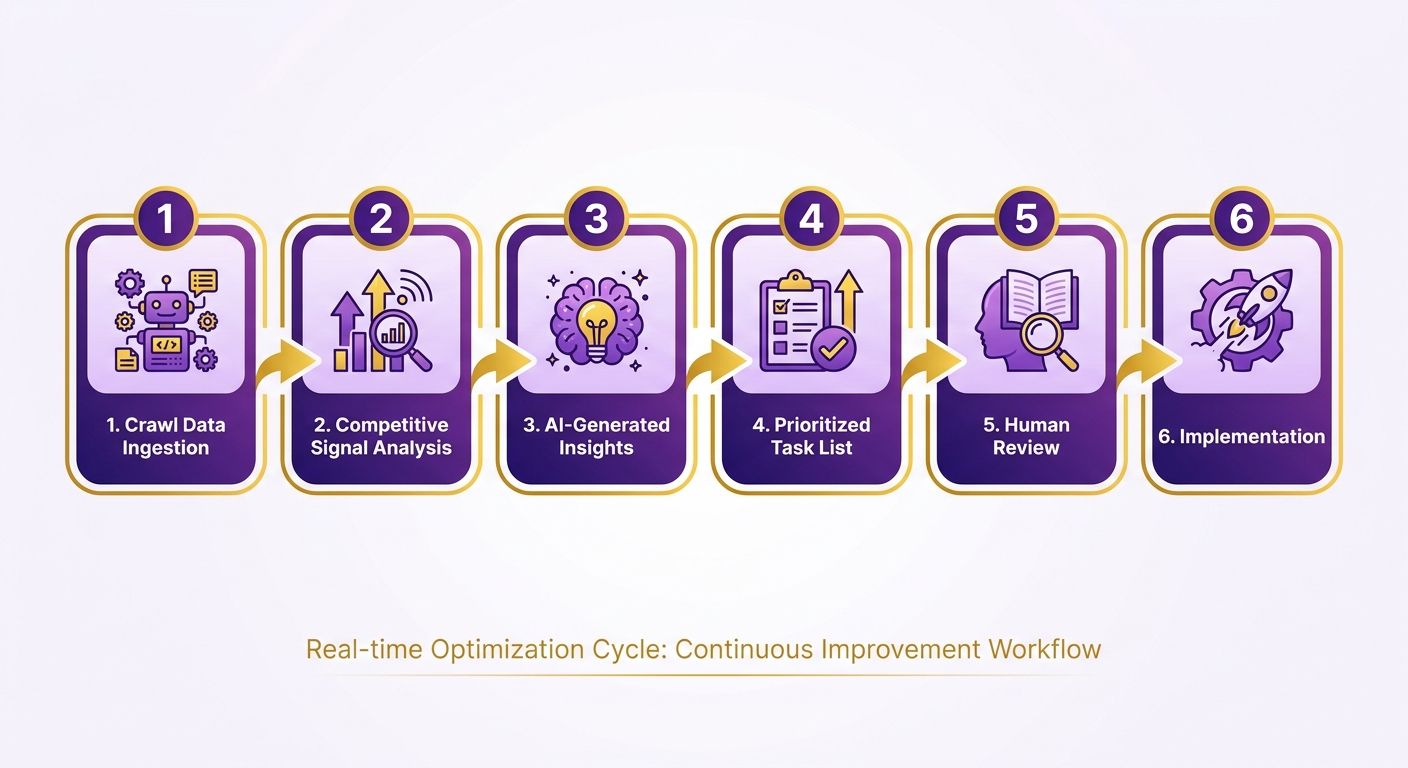
Real-time optimization engines ingest fresh crawl data, competitive signals, and AI-generated insights. Then they return prioritized tasks, such as meta-tag tweaks, schema suggestions, and content-gap recommendations, ready for a quick human review.
The engine maps your internal link architecture continuously to find gaps. It then uses structured-data cues to suggest precise schema or internal-link updates. Because the recommendations arrive when a new competitor ranks, your team can respond in minutes instead of days, keeping topical relevance and protecting traffic share.
When should you skip the real-time layer?
If a property pulls fewer than a few hundred organic sessions a month, the signal-to-noise ratio is too low for the engine to make reliable calls, and the overhead outweighs the benefit.
Small sites lack the data depth for the AI to tell a meaningful trend from random noise. A periodic manual audit paired with basic analytics gives you a better cost-to-benefit balance there. Hold off on the real-time layer until your traffic clears the threshold that supports statistically sound insights.
What to look for in a real-time engine
Prioritize platforms that give you a single-pane-of-glass view of competitive intelligence and that scale as your data volume grows.
- AI-driven automation that generates content suggestions and SEO recommendations without constant prompting.
- Integrated competitive insights that surface keyword trends and content gaps in one feed.
- Scalability and support so the system handles rising page counts and traffic spikes without slowing down.
- Compliance and privacy so context-aware recommendations respect your data-handling policies, which matters most in regulated industries.
Pair an AI-powered engine with an intelligence layer, and you get automation speed while protecting the voice that defines your brand. That balance is what turns raw automation into measurable SEO ROI.
Building a stack that scales without breaking

Once you're designing for scale, the focus moves from individual tool features to API interoperability and data sync. The integrated platform has to act as the central nervous system, connecting your content repository straight to your analytics suite and publishing endpoints. Done well, performance data feeds the next production cycle without manual transfers.
How do you choose the core components?
Start with one question: which pieces deliver measurable lift without dragging the team into endless manual checks? Three components answer it, and they have to integrate cleanly:
- A centralized content repository – a single source of truth for drafts, assets, and metadata.
- An automated distribution engine – schedules and pushes content to multiple CMS platforms at once.
- A unified data pipeline – feeds performance metrics back into the planning tool to guide future keyword selection.
Consolidate those functions and you cut the tool sprawl, keep the workflow lean, and let marketers work on strategy instead of platform-juggling.
When does scaling the stack make sense?
The deciding question: does your content volume justify a fully automated stack? If you regularly ship hundreds of new assets and need consistent SEO performance across channels, scaling pays. If you do not, the overhead can outrun the gains.
- Real-time analytics – tracks brand mentions, traffic trends, and conversion signals so you can pivot content fast.
- Multi-source content integration – pulls from your sites, CMSs, and marketing tools so the AI sees the full business context.
- Scalable publishing – auto-publishes to WordPress, LinkedIn, X, and other platforms from one interface.
When those conditions line up, the stack scales smoothly, widening keyword coverage while the system holds brand integrity.
What makes the trade-off backfire?
Ignore the operational overhead of managing multiple API connections and you can overinvest in a stack your team cannot maintain. Low-volume properties get burned here most often, because the effort to configure and troubleshoot integrations swallows the time saved on content. In that case, a simpler unified SaaS beats a custom multi-tool build.
Scaling your SEO tech returns the most when your publishing volume is high enough to cover the setup cost and your team has clear operating guidelines in place. For smaller operations, one well-integrated tool sidesteps enterprise complexity while still capturing the automation that matters.
Frequently Asked Questions
1. How do I configure the Persona Engine’s voice‑consistency checkpoint for my brand?
The voice-consistency checkpoint is configured by uploading your brand style guide, defining key tone attributes, and mapping them to the system's scoring rules; the platform then runs an automated audit on each draft, flags deviations, and provides inline suggestions to align the copy with your established voice.
2. What is the typical learning curve for teams adopting a full‑stack AI SaaS like AnyPost?
The typical learning curve spans two to three weeks of daily use, during which teams become comfortable with keyword ingestion, AI draft review, and the automated feedback loop; after the initial period, average publishing speed improves significantly and reliance on manual edits drops.
3. How does the integration complexity rating influence ongoing maintenance effort?
Integration complexity directly predicts maintenance load: a rating of 1‑2 means fewer API connections, simpler data mapping, and quarterly updates, while a 4‑5 score often requires weekly sync checks, custom webhook handling, and dedicated support; lower scores therefore reduce operational overhead and free resources for strategy work.
4. Can the Persona Engine handle multiple brand voices within the same organization?
The system supports multiple voice profiles by letting administrators create separate tone schemas, each linked to specific content hubs or product lines; the platform then selects the appropriate profile during generation, ensuring distinct copy for each brand segment while preserving a unified audit process across the organization.
5. What cost factors should I evaluate when upgrading from baseline tools to an enterprise SEO platform?
Upgrade costs include subscription tiers, per‑page generation credits, integration fees for CRM or CMS connectors, and potential training expenses; enterprise platforms also often bundle support contracts and SLA guarantees, which can offset hidden costs of manual stitching that baseline tools incur as content volume scales.
6. How can AI automation support multilingual SEO without sacrificing voice consistency?
AI automation manages multilingual SEO by generating language‑specific drafts from a single keyword set, then applying localized tone rules within the auditing system; the platform's language modules tag each version, allowing a unified voice audit that respects cultural nuances while keeping production highly efficient.
7. What steps does an AI‑driven workflow take to meet Google’s E‑E‑A‑T guidelines?
The workflow satisfies E‑E‑A‑T by embedding author bios, citing authoritative sources, and using schema markup automatically added by the platform; after AI draft creation, the voice‑audit layer verifies factual accuracy and relevance, and a final human sign‑off ensures expertise signals remain intact before publishing.
