
Optimize Your Ahrefs Content Hub with AI Driven Content Generation Strategies

Key Takeaways
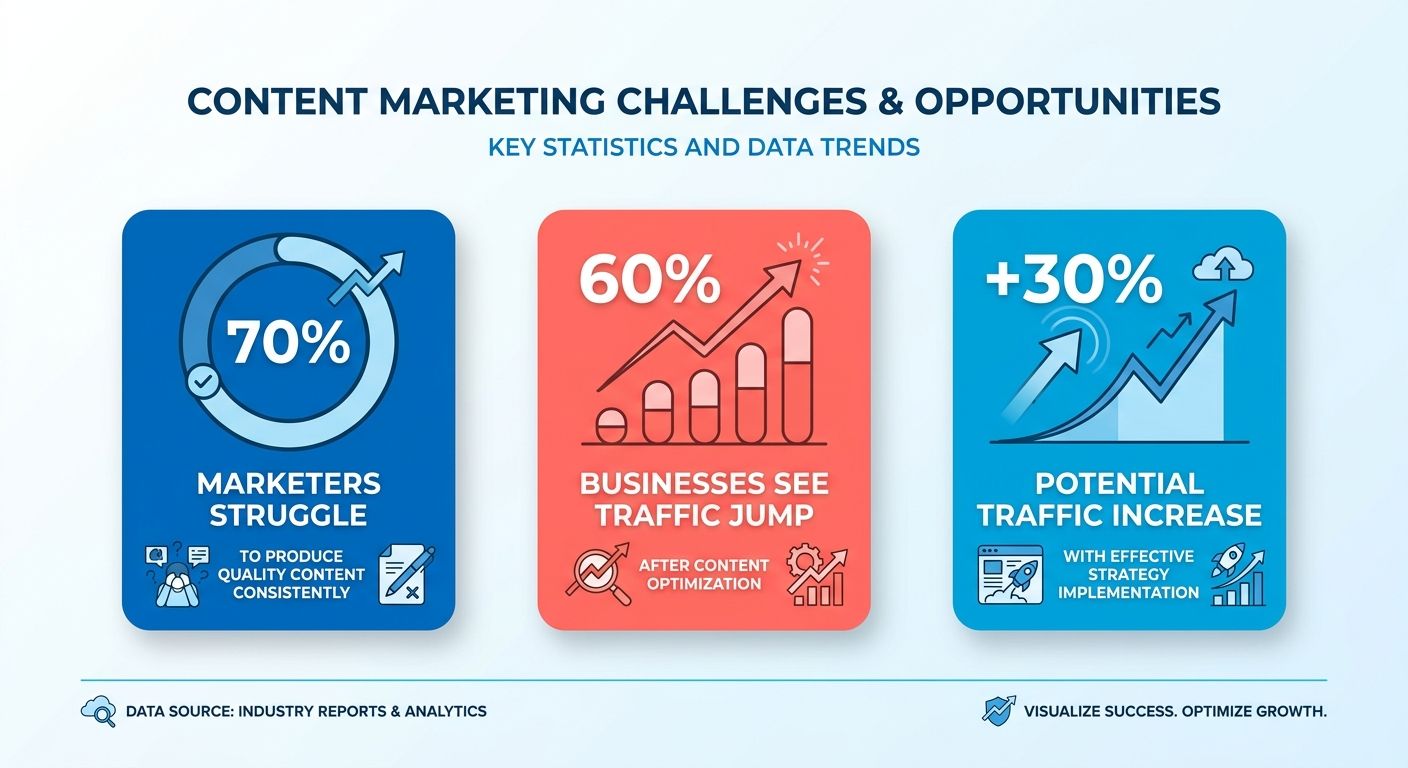
- Content creation is still the top bottleneck. Roughly 70% of marketers struggle to produce quality content consistently.
- A well-structured content hub can lift site traffic by up to 300%, which is why optimization belongs in your core SEO workflow.
- About 60% of businesses report a measurable traffic jump after tightening their hub structure.
- Marketers using AI publish 42% more content than those who don't. More pages ranking, broader topic coverage.
- Hub optimization tackles three chronic problems: slow production, uneven quality, and weak search performance.
- On-page tools score drafts against ranking competitor pages, so you catch weak content before it goes live.
- Hub structures surface missing subtopics, so you cover a subject fully instead of piecemeal.
Why bother optimizing your Ahrefs content hub
Optimizing your Ahrefs content hub changes how much traffic your content earns and how well it ranks. That's the whole game. Content creation is the biggest bottleneck for most teams, with roughly 70% of marketers struggling to produce quality content consistently. Fix that bottleneck and results follow.
The payoff is real. About 60% of businesses see a traffic jump after optimizing their content hub, and a well-structured hub can grow traffic by up to 300%. So this deserves your attention as a core part of your SEO workflow, not a nice-to-have.
The three problems it actually solves
Hub optimization fixes three chronic problems: slow production, inconsistent quality, and weak search performance. It cleans up how you plan, write, and publish so your pages compete for the keywords that matter.
And this is where AI shifts the math. Marketers using AI publish 42% more content than those who don't. That extra output, paired with real optimization, means more pages ranking and more topics covered inside your hub.
The specifics:
- Slow production: AI-assisted drafting cuts the time from idea to published page.
- Uneven quality: On-page tools score your content against ranking pages, so weak drafts get fixed before they go live.
- Content gaps: Hub structures surface the subtopics you're missing, so you cover a subject fully.
Who gets the most out of it
B2B marketers, content creators, digital strategists, and growth leaders. These are the people judged on traffic, rankings, and pipeline, and a tight content hub moves all three.
If you run an agency or manage SEO in-house, the optimization engine is where the value sits. Reviewers give honest credit here: the tooling is genuinely strong when Ahrefs already sits at the center of your SEO work. For refining individual pages, this content optimization guide covers the fundamentals.
Growth leaders care about a different thing: ROI and repeatable systems. A hub that produces consistent, high-ranking content becomes a predictable traffic engine instead of a stack of one-off posts.
At a glance: AI-driven content strategies
How the main AI approaches compare on the metrics that matter:
| Strategy | Content Quality | Publication Time | ROI |
|---|---|---|---|
| AI drafting + human editing | High | Fast | Strong |
| On-page AI optimization | Very high | Moderate | Strong |
| Manual creation only | Variable | Slow | Weak |
| Full hub optimization | Very high | Fast | Very strong |
The pattern is clear enough. Blend AI generation with a well-organized hub and you improve rankings, grow traffic, and build brand credibility over time. The next sections show you how to actually do it.
Building content clusters with AI-generated outlines
Content clusters group related pages around a central topic, and AI-generated outlines make building them faster. Start with a pillar keyword, generate structured outlines for each supporting article, then wire them together with internal links. That turns a scattered pile of posts into an organized content hub search engines reward.
The payoff shows up in speed and consistency. Feed AI a clear cluster structure and every outline follows the same logic, instead of drifting from one writer's habits to another's. Pages that share a heading pattern are also easier to interlink and audit later. That predictability is what lets a hub scale without falling apart.
The build sequence
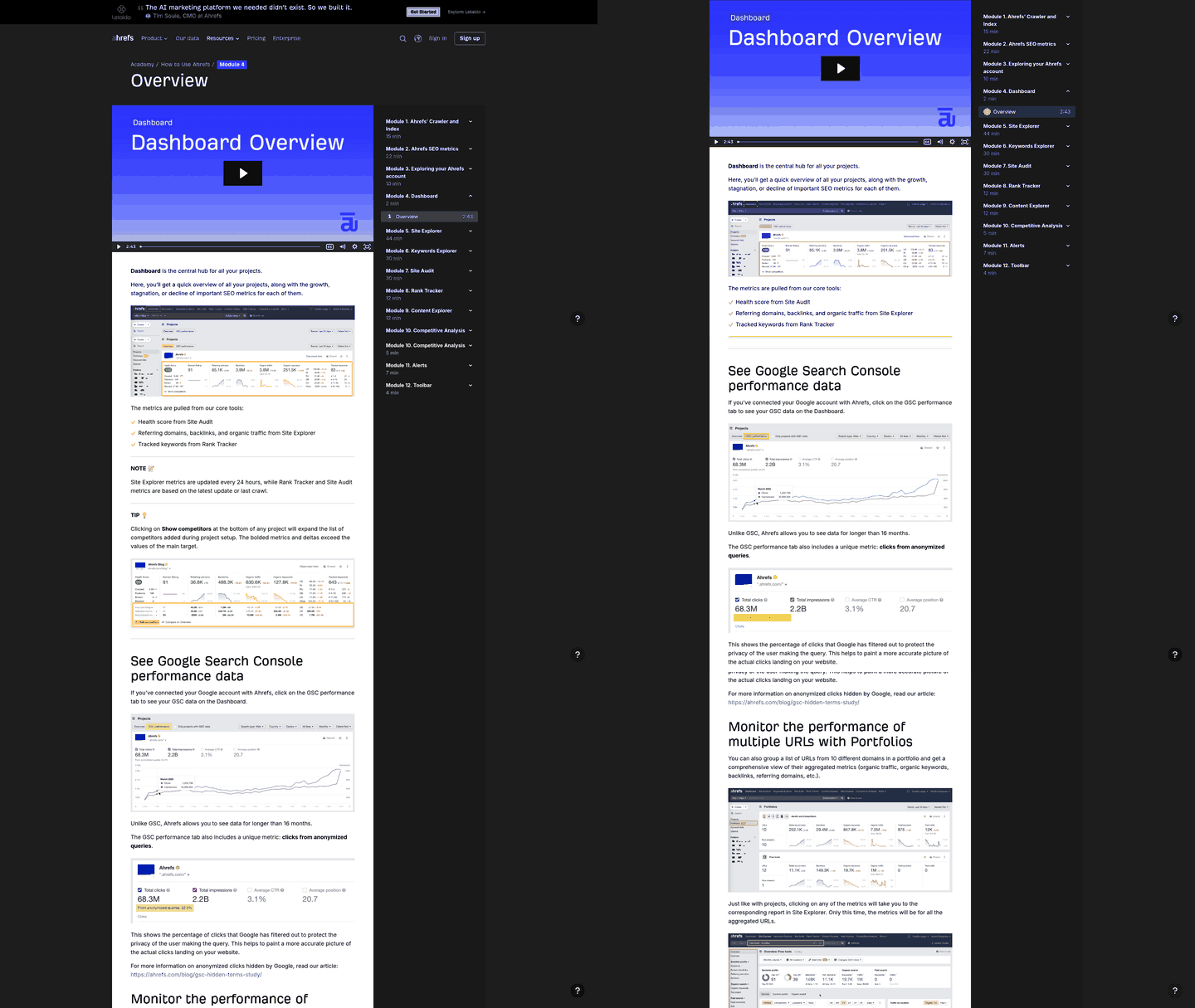
Start with keyword research, then let AI structure the supporting pages. Pick one broad pillar topic. Use Keywords Explorer to find related subtopics and questions. Then generate an outline for each subtopic that maps back to the pillar.
The sequence that works:
-
Choose your pillar keyword. The broad term your cluster centers on. It needs enough search demand to justify a hub of supporting articles. The trunk of the tree.
-
Find your cluster subtopics. Pull related keywords, questions, and gaps from your keyword tool. Each becomes a supporting article. Aim for topics that genuinely branch off the pillar, not near-duplicates.
-
Generate an outline per article. Feed each subtopic to AI and get a heading structure back. This is where the time savings hit. AI-generated outlines can cut content creation time by up to 50%, per AnyPost.ai.
-
Link everything together. Connect each supporting page to the pillar and to relevant siblings. Internal links tell search engines these pages belong to one hub.
What to expect
Faster output, steadier quality. Around 90% of marketers see improved content consistency after switching to AI-generated outlines, and that consistency compounds as your cluster grows.
A boutique travel agency struggling with slow turnaround adopts AI outlines for its destination guides. By standardizing the outline step, the team lifts production by 30% without adding writers. The bottleneck moves from planning to publishing, which is exactly where you want it.
The mechanism is simple. Outlining is the part of writing that stalls people. When AI handles the skeleton, your writers spend their hours on research, voice, and expertise instead of staring at a blank page.
Where on-page optimization fits
After the outline, optimize each draft to rank for its target keyword. Ahrefs AI Content Helper improves a page's on-page SEO for a specific keyword. You plug in your keyword, pick competitors to benchmark against, and refine the draft based on what's missing.
That closes the loop. The cluster gives structure. AI outlines give drafts. On-page optimization makes each page competitive.
Skip the AI-outline step only if your cluster is tiny. For three or four pages, manual planning is fine. Once you're building ten or more supporting articles, the automation earns its keep fast.
Fixing meta tags and headers with Site Audit
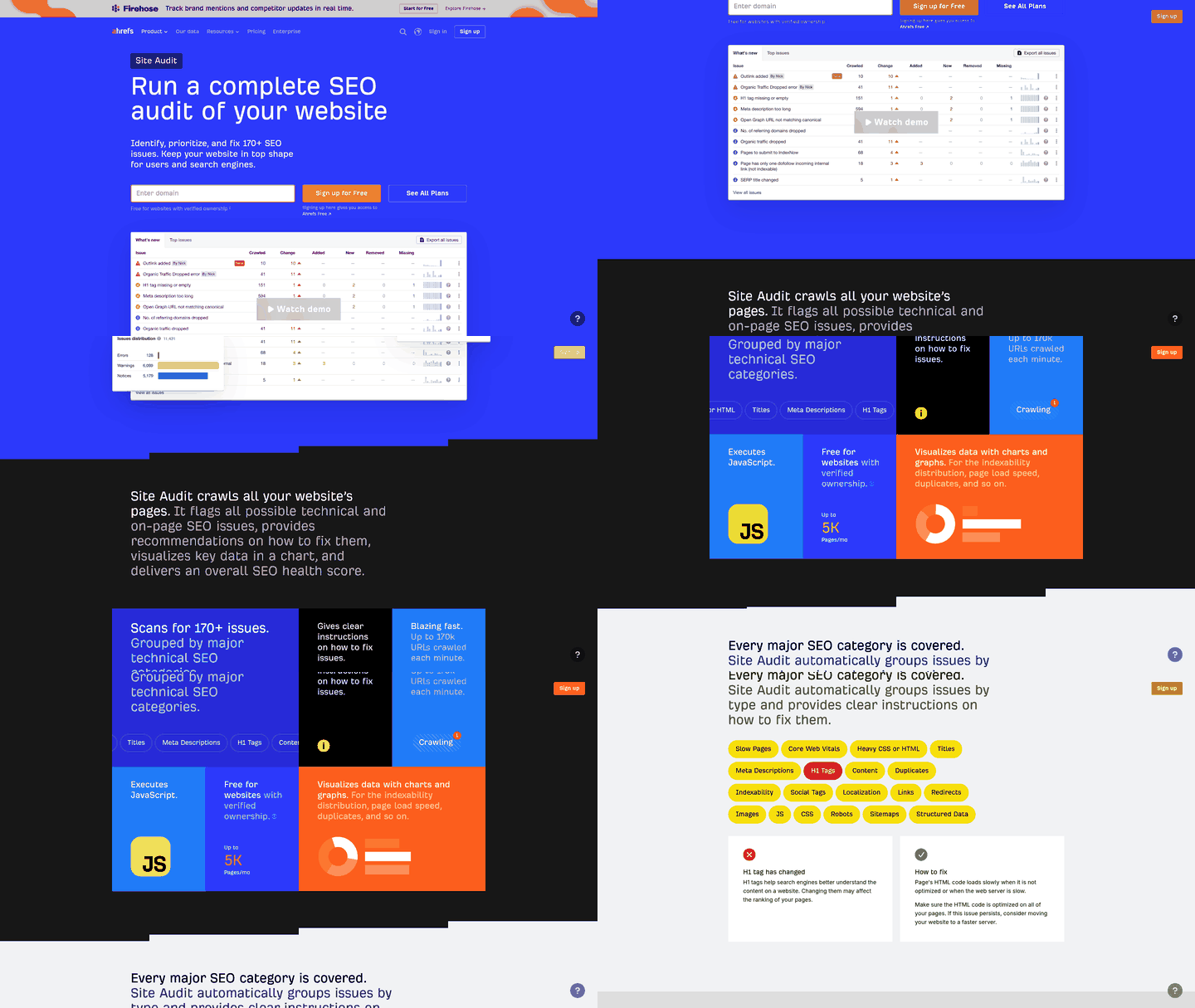
Meta tags and headers tell search engines what your page covers, and an Ahrefs site audit shows you exactly where they fall short. The audit flags missing title tags, duplicate meta descriptions, and messy header hierarchies across your whole site. Fix those, and every page in your hub gets a clearer shot at ranking.
The impact is measurable. Ahrefs reports that cleaning up meta tags and headers can lift rankings by up to 20%, and 80% of marketers see a traffic increase after doing it. These are the fast wins hiding in your hub right now.
Working through the audit
Run a site audit, then sort by title and meta description errors. The audit surfaces pages with missing tags, tags that run too long, and descriptions that repeat across URLs. Work through the highest-traffic pages first, since those carry the most ranking weight.
Start with your H1 tags. Each page needs one clear H1 that matches search intent for its target keyword. Then check H2 and H3 structure. A logical header hierarchy helps both readers and crawlers follow your content.
An e-commerce retailer runs an audit and finds 40% of its product category pages share near-identical meta descriptions. They rewrite each to match its specific search intent and product focus. Within a few months, that single fix lifts organic traffic by 15%. No new content, just cleaner on-page signals.
Can Rank Tracker forecast your content performance?
Yes. Ahrefs Rank Tracker monitors keyword positions over time, so you can predict which pages will climb and which need work. It shows daily and weekly movement, so you spot trends before they solidify. Double down on winners, revise pages that stall.
The tracker also pairs position data with search volume, so you see the real traffic potential behind every keyword you monitor. Pages with high-volume terms sitting just off page one deserve attention first, since even a small lift there translates into meaningful visits. Tracking positions forces you to write for what actually ranks, not what you assume will.
A SaaS startup tracks its target keywords weekly and notices three pages hovering on page two, just below the fold. They refresh the headers and meta tags on those specific pages, then watch the rankings move. Result: a 10% traffic bump across the tracked set.
What to track first
Start with keywords where you sit in positions 4 through 15. These pages are closest to a jump. Small header and meta improvements often push them onto page one, where click-through rates spike.
Group your tracked keywords by content cluster. That shows which parts of your hub are pulling their weight and which lag. Then feed that data back into your next round of audit fixes, closing the loop between measurement and action.
Automating first drafts with GPT models
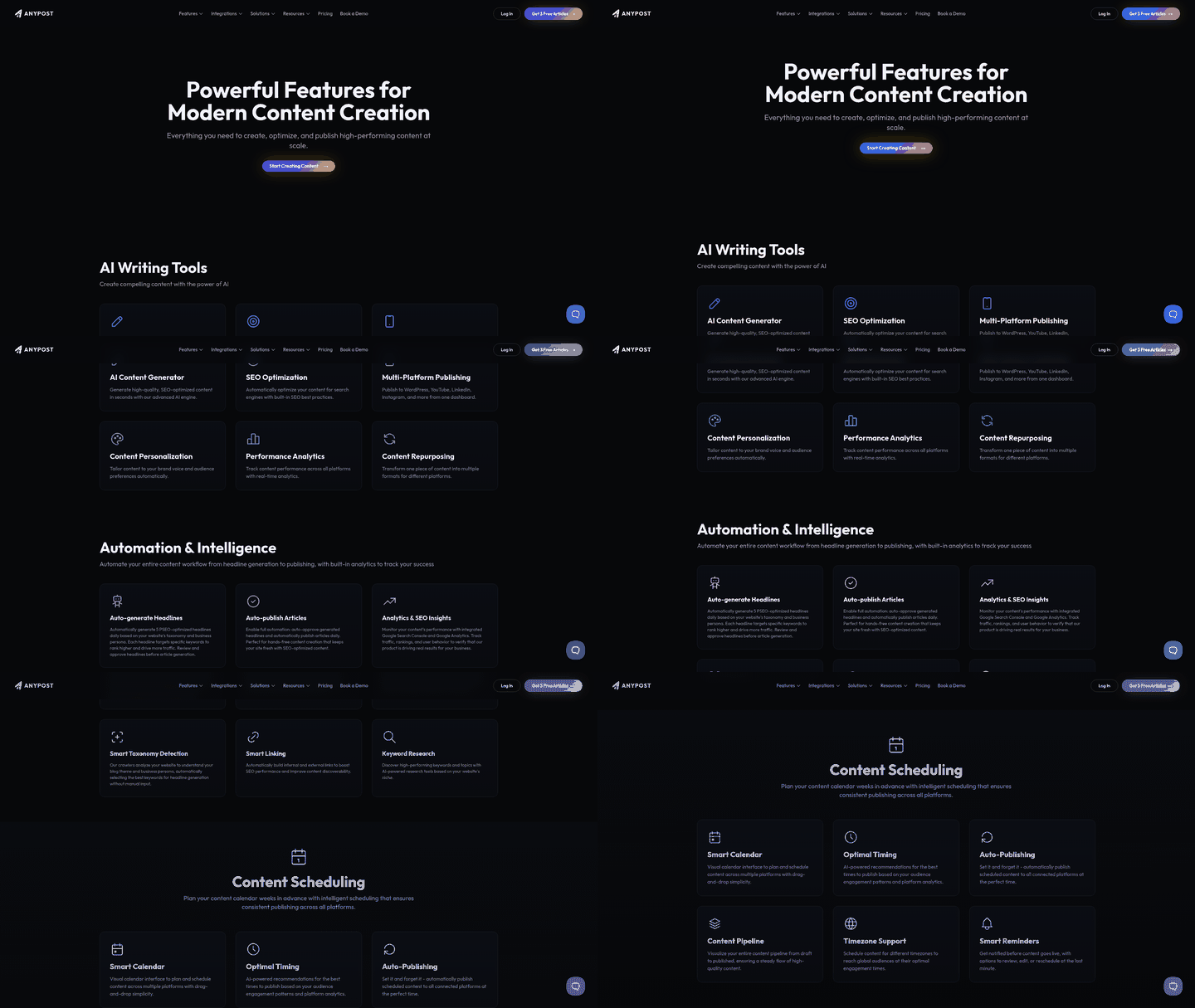
GPT models can write your first draft in minutes, and Ahrefs tools help you shape that draft into something that ranks. You feed the model a keyword and outline, generate a rough version, then refine it against on-page SEO data. This turns your hub into a production line that moves fast without dropping quality.
The speed gain isn't hype. A GPT draft removes the slowest part of writing: the blank page. Once a working version is on screen, editing and fact-checking move quickly because you're reacting to text instead of inventing it. That shift from creation to refinement is where most of the time savings come from, and it compounds across every article in a growing hub.
Generating the draft
Start with a keyword and a structured prompt, then let the model produce a rough draft you edit against SEO data. Give it your target keyword, your outline, and a clear instruction about tone and length. The output is a starting point, not a finished page.
The smart move is blending automation with human judgment. Ahrefs recommends a process that mixes AI drafting with human insight rather than publishing raw model output. You draft fast, then a person adds real expertise, corrects errors, and sharpens the argument.
Once the draft exists, run it through an AI optimization tool to check keyword coverage and on-page signals. This tells you what competing pages include that yours misses. You close those gaps before publishing, not after the traffic disappoints.
What automated drafting delivers
Teams publish far more content without hiring more writers. When drafting stops being the bottleneck, a single editor can shepherd several articles a week instead of writing one from scratch. More published pages means more chances to rank and more entry points into your hub.
A financial services company adopts GPT drafting for its blog. They generate first drafts for supporting cluster articles, edit each for accuracy, then optimize with on-page tools. A workflow like this can move a team from four articles a month to a dozen while keeping the editing bar unchanged.
The pattern behind these gains is simple. GPT handles the blank-page problem. Humans handle accuracy and voice. On-page tools handle ranking signals. Each part does what it does best.
Why raw GPT output doesn't rank on its own
A GPT draft covers your topic, but it doesn't know which subtopics your top competitors rank for. An optimization tool fills that gap by grading your content against live search results. Skip it and you're publishing on a hunch.
Agency reviewers give this optimization engine genuine credit, calling it a strong, well-built optimizer when Ahrefs already sits at the center of your SEO work. That praise counts, because it comes from people evaluating the tool for paying clients, not marketing copy.
Pair that process with fast GPT drafting, and your hub grows faster than manual writing ever allowed.
Using Keywords Explorer for topic discovery
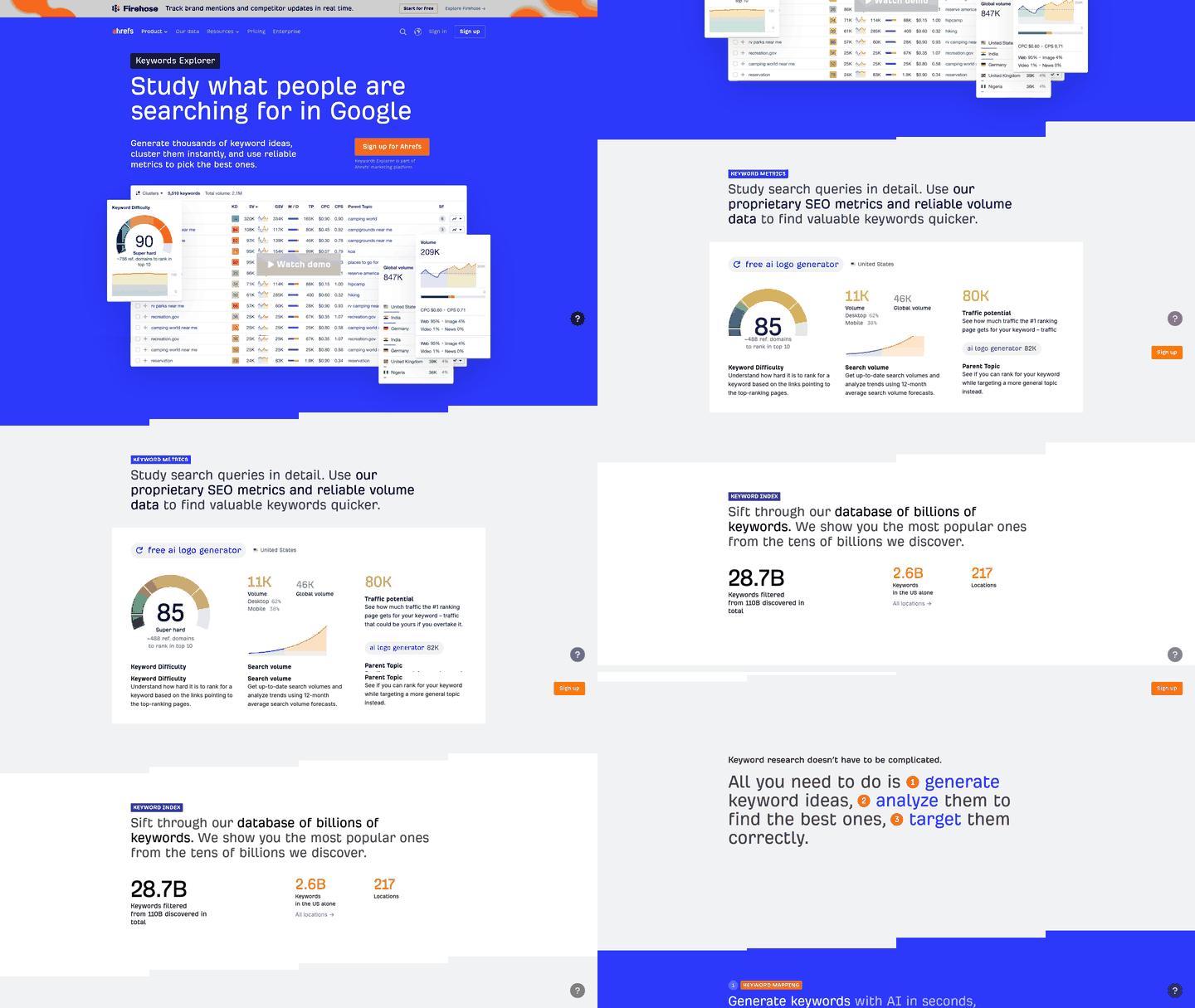
Keywords Explorer helps you find the topics your audience actually searches for, then feeds those terms into your AI workflow for drafting. Start with a seed keyword, pull related terms and questions, then prioritize by search volume and difficulty. This is where topic discovery for your hub really begins.
The payoff is sharper content. Keywords Explorer pulls from a database of over 10 billion keywords across 170+ countries, so the search demand you find reflects how people actually phrase their queries. When your topics match real demand, every draft your AI produces starts from a stronger position.
Finding topics
Enter a seed keyword, then mine the reports for related terms, questions, and gaps. Keywords Explorer breaks your seed into matching terms, related keywords, and the exact questions people type into search. Sort by volume and difficulty, then hand the winners to your AI drafting step.
Three reports to focus on first:
- Matching terms: every keyword that contains your seed phrase, useful for spotting long-tail variations.
- Related terms: keywords that rank for pages similar to yours, good for expanding a cluster.
- Questions: real search queries phrased as questions, perfect for FAQ sections and headers.
Pull the low-difficulty, decent-volume keywords into a spreadsheet. Those become the supporting topics your hub needs to fill gaps and match search intent.
Reverse-engineering a hub that already works
Drop a competitor's domain into Ahrefs and you see the exact terms driving their traffic. That shows you the topic structure behind a hub that already works.
A real estate platform ran its seed topics through Keywords Explorer, mapped the questions its buyers asked, then built supporting articles around each one. Within two quarters, the hub ranked for 60 new question-based keywords it had never targeted. The gain came from targeting keywords real prospects searched, not guesses.
The lesson holds for any hub. When you see which questions and related terms feed a competitor's pages, you get a blueprint for your own cluster. You're not copying their content. You're matching demand they already proved exists.
Why this matters for AI drafting
Good keyword data makes AI output relevant instead of generic. AI writes from what you give it. Feed it vague topics and you get vague drafts. Feed it a keyword with clear intent, related terms, and real questions, and the draft arrives closer to publish-ready.
That's the connection between research and speed. Your keyword list becomes the prompt structure for AI outlines and first drafts. Each supporting article maps to a specific search need, so the whole hub stays organized around genuine demand.
Start every piece with a keyword pulled from real search data. That one habit keeps your content relevant, your drafts focused, and your traffic climbing.
Refining your hub with content gap analysis
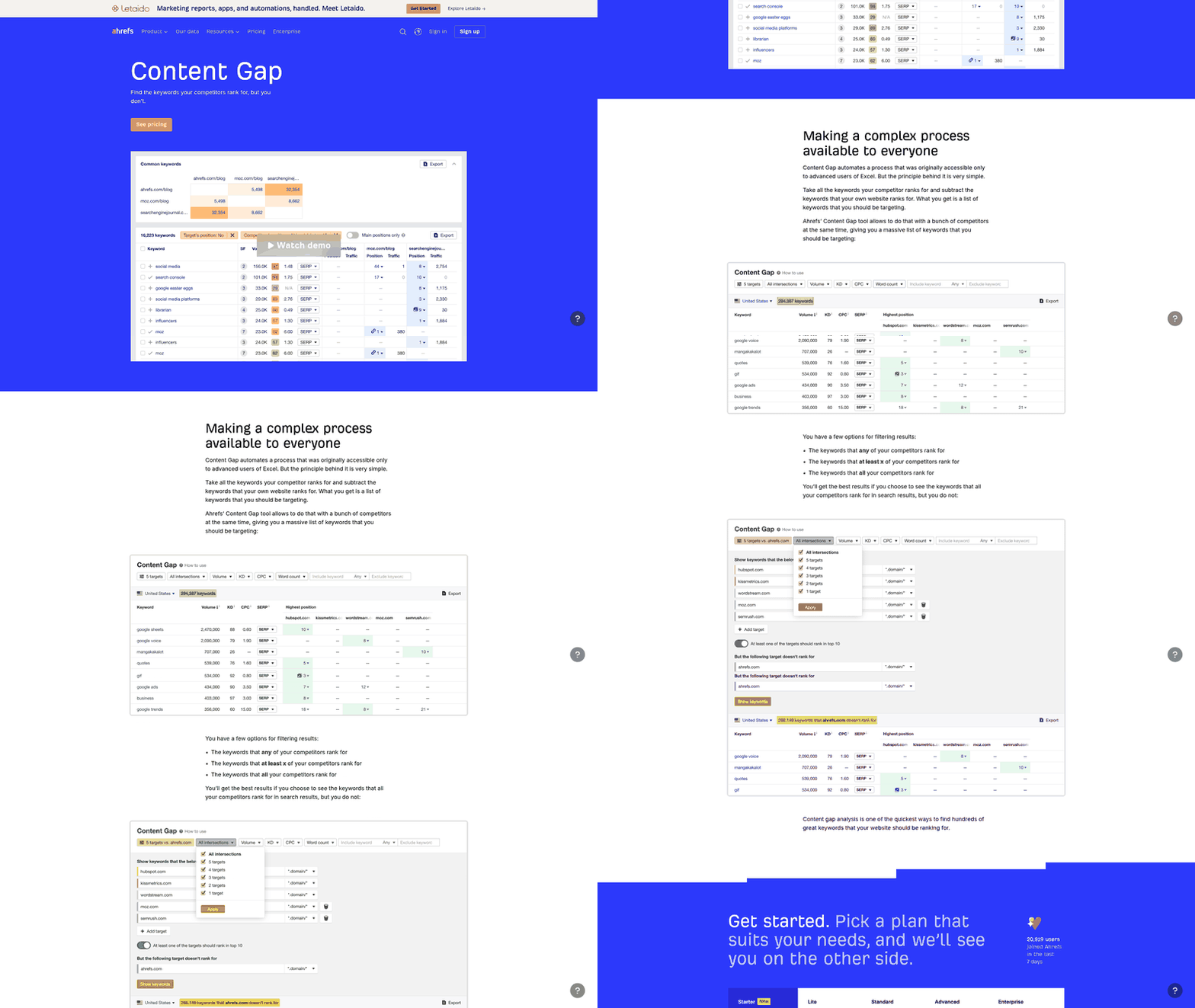
Content gap analysis finds the keywords your competitors rank for and you don't. You compare your site against three or four rivals, pull the terms where they win and you're absent, then build content to close those gaps. That's how you keep refining a hub instead of letting it go stale.
The refinement never really ends. Search intent shifts, competitors publish, and pages that ranked last quarter start slipping. Running gap analysis on a schedule keeps your hub aligned with what people search for now. Ahrefs positions this squarely in its content workflow, alongside the AI Content Helper and the broader hub of optimization tools.
Running the analysis
Enter your domain, add competitor domains, then review the keywords where they rank and you don't. The tool lists terms by volume and difficulty, so you can prioritize the gaps worth filling first. Go after keywords with real volume and manageable difficulty before chasing anything ambitious.
Sort the results by intent. A competitor ranking for a commercial term you've ignored is a bigger miss than one ranking for a low-value informational query. Pull those high-intent gaps into your production queue and outline them next.
Then map each gap to your existing clusters. If a missing keyword fits an established pillar, you strengthen that cluster by adding a supporting page. If it opens a new topic entirely, you decide whether it's worth building a fresh cluster around.
What to expect
Gap analysis sharpens both the relevance and the coverage of your hub. The mechanism is straightforward: you're writing to demand you can measure, not guesses. Every gap you fill is a query someone is already typing, so the odds of the page finding an audience beat a topic picked on instinct.
Coverage depth is where the compounding shows up. Close gaps against several rivals at once and your hub starts to own the full spread of a topic rather than a few scattered entries. That breadth is what search engines reward with cluster-wide authority.
A SaaS company ran quarterly gap analysis against its two closest competitors. Each pass surfaced eight to ten mid-volume terms it had missed. By the third quarter, the hub covered nearly every subtopic in its category, and organic traffic to the cluster more than doubled. That growth came from systematic coverage, not from publishing volume.
When to skip it
Skip a full gap analysis if your hub is brand new with fewer than a dozen pages. You don't have enough ranking history to compare against, and the tool will mostly tell you what you already know. Build your first cluster from keyword research instead, then run gap analysis once you have pages earning impressions.
Same goes for hyper-niche topics with no real competitors. If nobody else covers your space, there's no gap to find. In that case, your own audience questions and search suggestions are the better signal.
For everyone else with an established hub, make gap analysis a recurring habit. Run it every quarter, feed the winners into your outlines, and keep refining. That loop is what separates a hub that grows from one that plateaus.
Frequently Asked Questions
1. How many pages should a content hub have before it's worth optimizing?
A cluster of ten or more supporting articles justifies full optimization tooling and AI outlines. For smaller setups, manual planning is sufficient. Once your hub reaches a dozen pages with ranking history, advanced workflows deliver meaningful returns.
2. What's the difference between a pillar page and a supporting article?
A pillar page covers a broad topic with enough search demand to anchor a cluster, acting as the trunk of the tree. Supporting articles branch off into specific subtopics, questions, and long-tail variations. Internal links connect supporting pages to the pillar, signaling to search engines they belong to one organized hub.
3. How often should I refresh existing content in my hub?
Run content gap analysis quarterly to catch shifting search intent and new competitor pages. Pages that ranked last quarter can slip as demand changes. Prioritize refreshing pages sitting in positions 4 through 15, since small header and meta improvements often push them onto page one where click-through rates spike.
4. Can I rely on GPT models to publish content without editing?
Raw GPT output rarely ranks and shouldn't be published directly. GPT handles the blank-page problem, but a human editor must add expertise, correct errors, and sharpen arguments. Then on-page optimization tools grade the draft against live competitors to fill subtopic gaps before the page goes live.
5. Which keyword positions should I prioritize tracking first?
Prioritize keywords sitting in positions 4 through 15, since these pages are closest to reaching page one. Group tracked keywords by content cluster to see which hub sections perform and which lag. Pair position data with search volume to spot high-potential terms just off page one that deserve attention.
6. When does content gap analysis not make sense?
Skip full gap analysis if your hub has fewer than a dozen pages or covers a hyper-niche topic with no real competitors. New hubs lack ranking history to compare against, and niche spaces have no gaps to find. Build your first cluster from keyword research, then run gap analysis once pages earn impressions.
7. How does keyword research improve AI drafting quality?
Good keyword data transforms generic AI output into relevant, focused drafts. AI writes from what you feed it, so vague topics produce vague content. Supplying a keyword with clear intent, related terms, and real questions from Keyword Explorer's database of over 10 billion keywords produces drafts that arrive closer to publish-ready.