
Optimize Your SEO Strategy with the Best Automated Tool

Related Video
Watch: How to do SEO on autopilot with Ai! 🤯 #seo #ai #gohighlevel #webdesign by Jasper Aiken
Understanding the Importance of SEO Optimization
SEO optimization refers to the practice of refining website elements—such as titles, descriptions, and schema markup—to align with search engine algorithms and user intent. By leveraging tools like ClickRank AI, which integrates with Google Search Console, businesses can automate these optimizations for improved ranking performance [9]. This process ensures that content is structured in a way that search engines prioritize it in results pages, making it more visible to target audiences. The core objective of SEO optimization is to bridge the gap between what users search for and the content available online, enabling websites to attract organic traffic without relying solely on paid advertisements.
The Role of SEO in Content Marketing
In content marketing, SEO optimization acts as a foundational strategy to amplify reach and engagement. By embedding relevant keywords, optimizing meta tags, and improving site structure, SEO ensures that content is discoverable by both search engines and users [9]. For instance, automated tools like ClickRank AI streamline tasks such as title and description optimization, which are critical for content visibility in competitive search landscapes [9]. This alignment between content and search intent not only increases the likelihood of appearing in top search results but also enhances user experience by delivering more accurate and contextually relevant information. Without SEO, even high-quality content may remain unnoticed, limiting its potential to drive traffic and generate leads. See the [Automated Content Generation and Its Role in SEO] section for more details on how AI tools like ClickRank AI streamline SEO tasks.
Key Benefits of SEO Optimization
SEO optimization delivers measurable benefits, including higher search engine rankings, increased website traffic, and improved conversion rates. Automated tools reduce the manual effort required to analyze and adjust content for SEO, allowing teams to focus on strategic creative tasks [9]. For example, AI-powered platforms can identify underperforming pages and suggest actionable improvements, such as refining schema markup or adjusting keyword density [9]. Additionally, SEO optimization fosters long-term sustainability by adapting to evolving search engine algorithms, ensuring that websites maintain their visibility without constant overhauls. These advantages collectively contribute to a stronger online presence and a more efficient content marketing workflow.
Impact on Traffic Growth and Lead Generation
The direct correlation between SEO optimization and traffic growth is well-documented. By improving rankings, SEO drives sustained organic traffic that is more likely to convert into leads compared to short-term traffic from paid campaigns [9]. Automated tools like ClickRank AI accelerate this process by continuously optimizing content to meet changing user preferences and search trends [9]. For lead generation, SEO ensures that content reaches users actively seeking solutions, thereby increasing the quality of traffic and reducing customer acquisition costs. Studies show that websites with strong SEO strategies generate up to 55% of their traffic from organic search, underscoring its role as a cornerstone of digital marketing [9]. This traffic growth translates into higher lead volumes, as users who find content through search engines often exhibit greater intent and engagement.
Integrating SEO Automation for Scalability
Modern SEO optimization leverages automation to enhance scalability and precision. Tools powered by AI analyze vast datasets to identify optimization opportunities, such as improving page load speed or refining keyword targeting [9]. This level of automation not only saves time but also minimizes human error, ensuring consistent adherence to SEO best practices. For businesses managing large content libraries, automated SEO tools enable real-time adjustments to maintain competitiveness in dynamic markets [9]. By integrating these technologies, organizations can achieve a balance between efficiency and effectiveness, driving sustained traffic growth and lead generation without compromising content quality. Building on concepts from [Using AI-Driven SEO Trends to Enhance Content Marketing], AI-driven tools further enhance scalability by adapting to evolving search behaviors and algorithm updates.
Automated Content Generation and Its Role in SEO
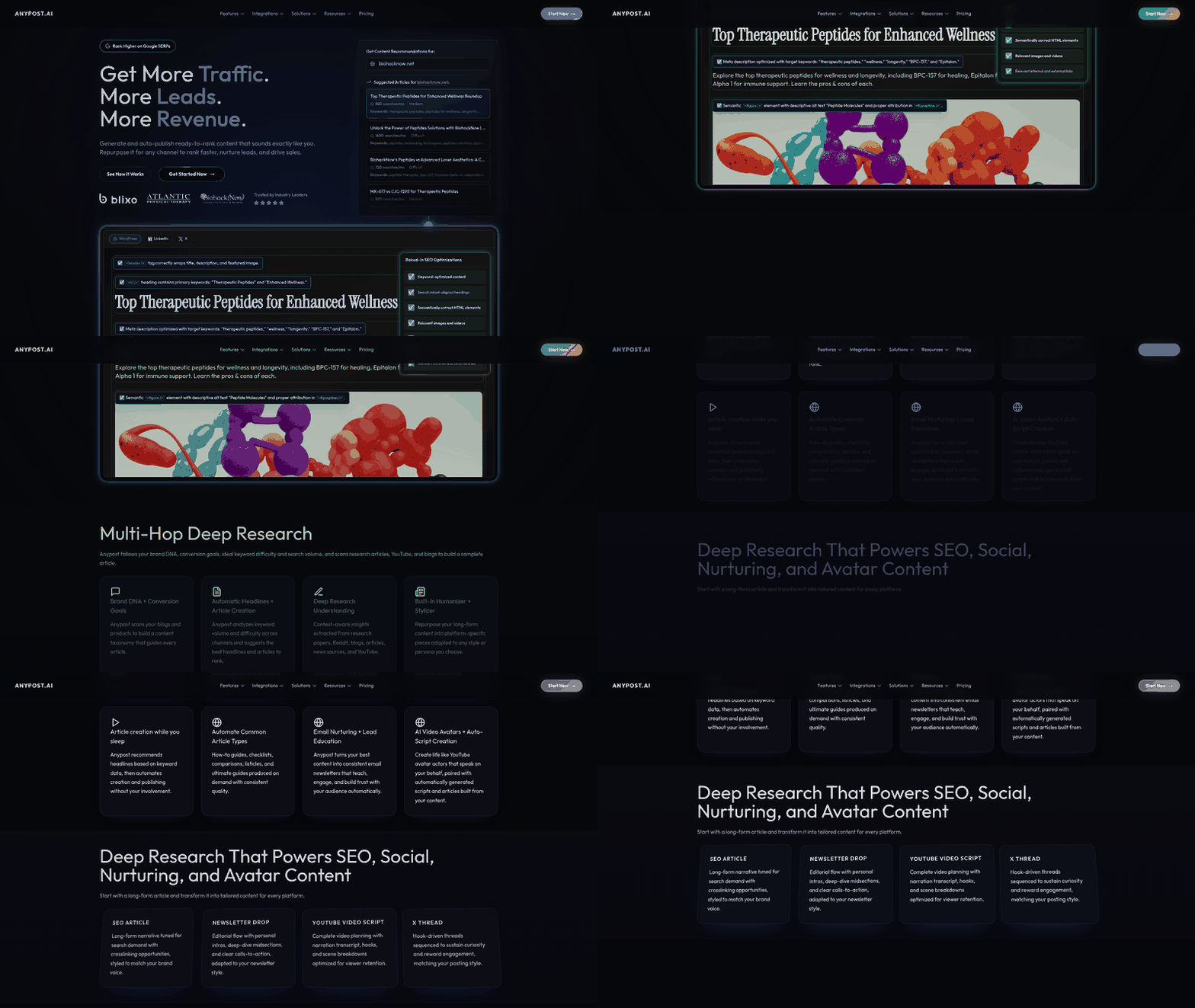
Automated content generation refers to the use of AI-driven tools to create, optimize, and manage digital content efficiently. These tools leverage algorithms and natural language processing (NLP) to produce blog posts, product descriptions, meta tags, and other text-based assets tailored to specific SEO goals [1][4]. As discussed in the [Understanding the Importance of SEO Optimization] section, these tools align with SEO goals by refining content to meet both user needs and search engine criteria [3][9]. For example, tools like Surfer AI and Alli AI (cited in [1]) use real-time data to suggest content structures and keyword placements, ensuring relevance and competitiveness. This process not only accelerates content creation but also reduces the manual effort required for research and drafting, making it a cornerstone of modern SEO strategies.
Advantages of Automated Content Generation
Automated content generation offers three primary advantages: speed, scalability, and consistency. First, AI tools like Gumloop and AirOps (mentioned in [1][7]) automate repetitive tasks such as keyword research, content outlining, and grammar checks, reducing production time from hours to minutes [1]. Second, these systems enable brands to scale content output without compromising quality. For instance, OTTO SEO (cited in [4]) handles bulk content rewrites and competitor analysis, allowing teams to maintain a steady publishing schedule. Third, automation ensures consistency in tone, style, and SEO best practices. Tools like ClickRank AI (referenced in [9]) standardize meta tags and schema optimization across pages, minimizing human errors that could dilute SEO performance [9]. Additionally, AI-powered platforms like Perplexity (noted in [2]) streamline research by aggregating authoritative sources, adding depth to content while saving time [2]. These benefits collectively enhance productivity and alignment with SEO benchmarks.
Role in SEO Optimization
Automated content generation directly improves SEO through three mechanisms: keyword optimization, competitor benchmarking, and performance tracking. AI tools such as FAQFox and SEO.com (listed in [3]) analyze search trends to identify high-value keywords and suggest their strategic placement in headings, body text, and CTAs [3]. For example, Surfer AI (cited in [1]) provides real-time content scoring based on keyword density and readability, guiding writers to refine drafts for maximum impact. Competitor benchmarking is another critical function. Platforms like Ahrefs, Semrush, and Moz Pro (mentioned in [6]) automate competitor analysis, revealing gaps in content depth or backlink strategies that can be exploited for better rankings [6]. Building on concepts from the [Best Practices for Integrating Automated Tools into SEO Strategy] section, these platforms are often selected based on their ability to integrate seamlessly into existing workflows. Finally, automation simplifies performance tracking. Tools like Looker Studio and Page Optimizer Pro (referenced in [3][5]) generate SEO reports on traffic, bounce rates, and conversion metrics, enabling data-driven adjustments [3][5]. By integrating these functions, automated systems ensure content remains agile and responsive to algorithmic updates and market shifts.
Examples of Automated Content Generation Tools
Several tools specialize in automating content creation for SEO. Gumloop (cited in [1][7]) offers workflows for generating blog ideas, optimizing meta elements, and auditing content gaps using AI [7]. OTTO SEO (mentioned in [4]) automates full-cycle SEO tasks, including competitor analysis, link-building recommendations, and content rewrites [4]. For keyword-focused optimization, Surfer AI (listed in [1]) provides content scorecards and on-page suggestions to align with top-ranking pages [1]. ClickRank AI (referenced in [9]) streamlines title and meta description optimization by integrating with Google Search Console data, ensuring technical SEO compliance [9]. Paid tools like Page Optimizer Pro (cited in [1]) and free solutions like Alli AI (noted in [1]) further diversify the ecosystem, catering to different budgets and use cases. For enterprise teams, AirOps (mentioned in [1]) automates content distribution and analytics, closing the loop between creation and performance [1]. These tools collectively demonstrate how automation can be tailored to specific SEO objectives, from local SEO targeting to large-scale content campaigns. As mentioned in the [Repurposing Content for Multiple Channels] section, such automation also supports content repurposing strategies, extending the reach of original content across various platforms.
Repurposing Content for Multiple Channels
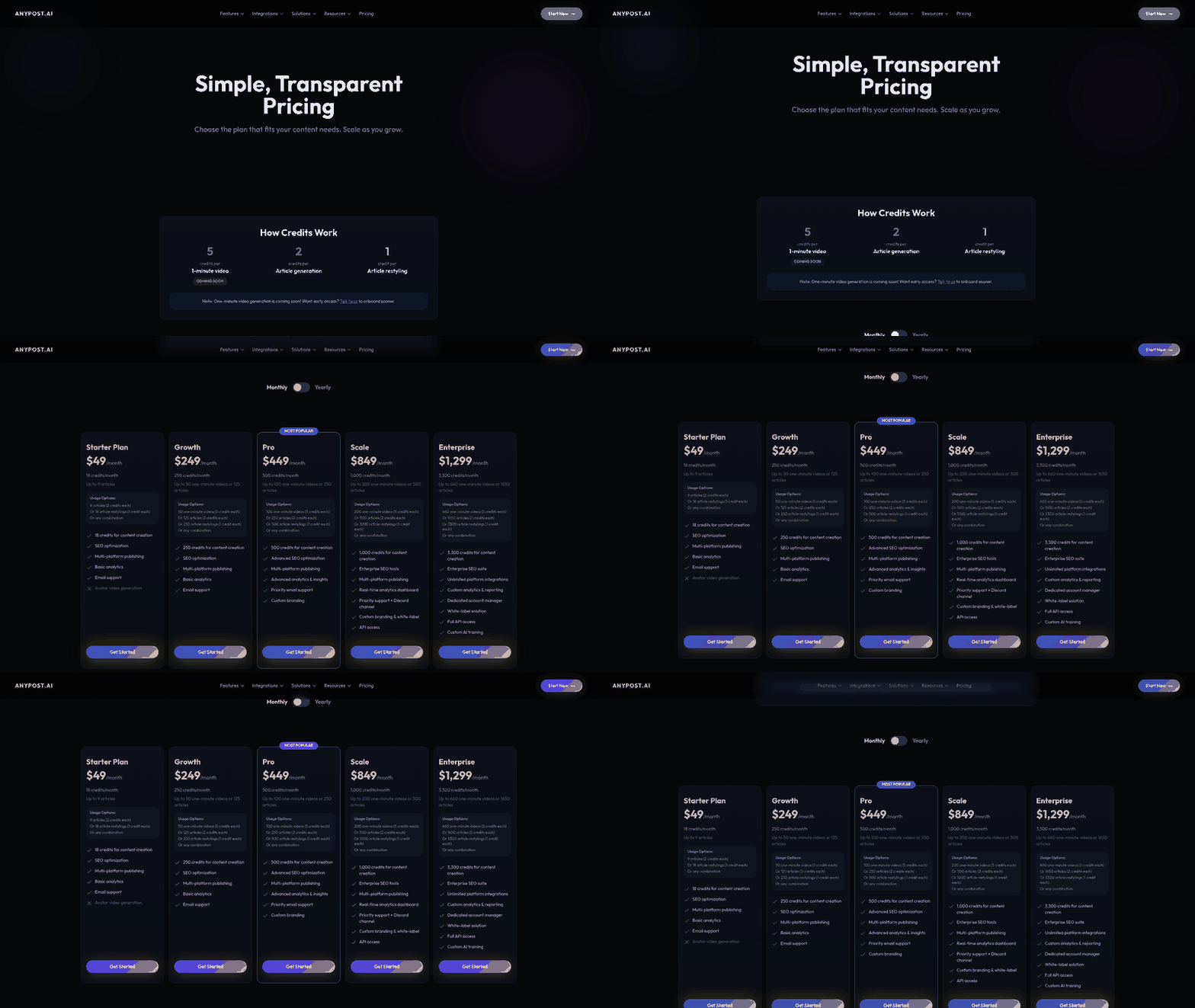
Repurposing content for multiple channels is a strategic approach to amplify SEO impact by extending the lifespan and reach of original content. By adapting a single piece of content—such as a blog post or research report—into formats suitable for platforms like X/Twitter, newsletters, YouTube, and blogs, marketers can target diverse audiences while reinforcing SEO signals. AI-powered tools like OTTO SEO [4] streamline this process by enabling content rewrites, audits, and competitor analysis, ensuring each repurposed version aligns with platform-specific requirements and search engine best practices. This strategy not only conserves time but also enhances visibility, as search engines prioritize fresh, relevant content across domains [4].
Importance of Content Repurposing
Content repurposing is critical for maximizing ROI on content creation efforts. A single blog post can be transformed into social media snippets, email newsletter summaries, or video scripts, allowing brands to engage audiences where they spend time. For example, OTTO SEO’s automation capabilities [4] support rewriting content for different channels, reducing manual effort while maintaining SEO consistency. As mentioned in the Automated Content Generation and Its Role in SEO section, AI-driven tools enhance efficiency in content adaptation. This approach also strengthens backlink profiles, as varied content formats increase the likelihood of external sites linking to different versions of the same topic [4]. Furthermore, repurposing ensures that evergreen content continues to drive traffic long after its initial publication, a key factor in sustained SEO success.
Benefits of Multi-Channel Content Distribution
Distributing repurposed content across platforms offers several SEO advantages. First, it increases the chances of ranking for long-tail keywords, as different formats can target platform-specific search terms (e.g., YouTube’s video search vs. Google’s web search). Second, it diversifies traffic sources, reducing dependency on a single channel and mitigating risks from algorithm changes [4]. AI-driven tools like OTTO SEO [4] and Gumloop’s SEO automation [7] facilitate this by analyzing audience behavior and optimizing content for each platform’s engagement patterns. Third, cross-channel sharing reinforces topical authority, signaling to search engines that a brand is a comprehensive resource on a subject. Finally, repurposing supports link-building efforts, as platforms like LinkedIn and YouTube often drive referral traffic that complements traditional SEO metrics [4].
Practical Tips for Repurposing Content
To effectively repurpose content, start by auditing existing assets to identify high-performing topics using tools like OTTO SEO’s competitor analysis features [4]. Next, tailor content formats to platform strengths: for instance, convert blog sections into Twitter threads for quick insights or use YouTube shorts for visual summaries. AI-powered rewriting tools [4] can automate adjustments in tone and length, ensuring consistency while adhering to platform guidelines. For newsletters, extract key takeaways and add personalized calls-to-action to boost open rates. Additionally, repurpose data from SEO audits into infographics for Pinterest or LinkedIn, leveraging visual search trends [4]. Regularly updating older content with new data or links—another feature supported by OTTO SEO [4]—ensures all repurposed versions remain current and authoritative.
Challenges and Considerations
While repurposing content offers significant benefits, challenges include avoiding keyword cannibalization and maintaining originality. Overlapping content across channels may confuse search engines about which page to prioritize, diluting rankings. To mitigate this, use canonical tags or unique meta descriptions for repurposed pages, as outlined in SEO automation guides [3]. See the Best Practices for Integrating Automated Tools into SEO Strategy section for more details on managing SEO tools effectively. Another consideration is audience overlap: for example, a newsletter audience may differ from a YouTube viewership, necessitating distinct messaging even for the same topic. Tools like ClickRank AI [9] can help identify platform-specific keywords to refine repurposed content. Lastly, balancing automation with human oversight is crucial; while OTTO SEO [4] automates rewrites, manual reviews ensure brand voice and accuracy are preserved.
Case Studies and Real-World Applications
Though specific case studies on content repurposing are sparse in the provided sources, the methodologies described by OTTO SEO [4] and Gumloop [7] illustrate practical applications. For instance, a technical blog post on SEO trends could be split into a Twitter thread highlighting key statistics, a YouTube video explaining concepts visually, and a newsletter with actionable takeaways. By using AI to automate these transformations, teams reduce production time while maintaining SEO coherence. Additionally, the integration of competitor analysis tools [4] allows brands to benchmark their repurposed content against industry standards, ensuring competitiveness across channels. These strategies align with broader AI-driven SEO trends, as discussed in the Using AI-Driven SEO Trends to Enhance Content Marketing section. The integration of competitor analysis tools [4] allows brands to benchmark their repurposed content against industry standards, ensuring competitiveness across channels. These strategies align with broader AI-driven SEO trends, as discussed in the Using AI-Driven SEO Trends to Enhance Content Marketing section.
In conclusion, repurposing content for multiple channels is a cornerstone of modern SEO strategy. By leveraging AI-powered tools like OTTO SEO [4], businesses can efficiently adapt content to meet platform demands, enhance audience engagement, and strengthen search engine rankings. However, success hinges on strategic planning, platform-specific customization, and ongoing optimization—principles that automated SEO tools are designed to support.
Using AI-Driven SEO Trends to Enhance Content Marketing
AI-driven SEO trends are reshaping content marketing by automating complex tasks and enhancing data-driven decision-making. Modern tools leverage machine learning to analyze search intent, optimize on-page elements, and streamline competitor analysis, reducing manual effort while improving accuracy. For example, platforms like Surfer AI [1] and Alli AI [1] use predictive algorithms to identify high-impact keywords and suggest content adjustments in real time. These advancements enable marketers to align their strategies with evolving search engine algorithms and user behavior patterns. Additionally, AI-powered automation tools such as Gumloop [1] and FAQFox [3] simplify workflow management by integrating tasks like backlink monitoring and technical audits into unified dashboards. This shift allows teams to focus on creative and strategic initiatives rather than repetitive data collection. As mentioned in the Automated Content Generation and Its Role in SEO section, these tools also support the creation of optimized content at scale.
Impact of AI on Content Marketing
AI enhances content marketing by personalizing user experiences and optimizing content for both search engines and human audiences. Tools like Perplexity [2] accelerate research by generating in-depth topic ideas and competitor insights, ensuring content remains relevant and authoritative. For instance, Harshit’s automated system for ProductHunt [8] uses AI to evaluate domain authority and keyword difficulty, enabling precise targeting of high-value niches. This level of precision reduces guesswork in content creation and ensures resources are allocated to topics with measurable ROI. Furthermore, AI-driven tools like ClickRank AI [9] optimize meta elements—such as titles and descriptions—using live data from Google Search Console, directly improving click-through rates. By automating these processes, marketers can maintain a consistent content pipeline while adapting swiftly to algorithmic updates. See the Best Practices for Integrating Automated Tools into SEO Strategy section for more details on deploying such tools effectively.
Leveraging AI-Driven SEO Trends
To harness AI for content marketing, start by integrating automation tools into your workflow for end-to-end optimization. Tools like OTTO SEO [4] handle full-cycle SEO tasks, from generating content outlines to executing competitor analysis and link-building strategies. This reduces reliance on manual audits and ensures comprehensive coverage of technical and on-page SEO factors. Another approach is using AI for dynamic content personalization: platforms like Surfer AI [1] analyze search intent and recommend semantic variations to enhance relevance. For example, AI can identify long-tail keywords with low competition and high user intent, allowing marketers to create targeted content that ranks faster. Additionally, tools like Page Optimizer Pro [1] automate content scoring, providing real-time feedback on readability, keyword density, and structural improvements.
Examples of AI-Driven SEO Tools
Several AI-powered tools are pivotal in modern SEO automation. Gumloop [1] and [7] specialize in workflow automation, enabling users to build custom pipelines for tasks like backlink tracking and content distribution. Similarly, AirOps [1] offers predictive analytics to forecast keyword performance, helping prioritize content topics with the highest growth potential. For content creation, Alli AI [1] generates optimized drafts based on search trends, while ChatGPT [1] assists in brainstorming and refining ideas. Technical SEO can be streamlined with tools like Looker Studio [3], which automates reporting and visualizes performance metrics across platforms. Building on concepts from the Leveraging Real-Time Analytics for Data-Driven Decision Making section, these tools provide actionable insights to refine strategies continuously. These tools collectively reduce the time spent on repetitive tasks, allowing marketers to focus on strategic planning and creative execution.
Strategic Implementation and Best Practices
To maximize the benefits of AI-driven SEO, adopt a structured implementation plan. Begin by auditing existing workflows to identify tasks suitable for automation, such as keyword research or metadata optimization. Tools like FAQFox [3] and SEO.com [3] can then be deployed to handle these tasks efficiently. Next, integrate AI tools with existing CMS platforms to ensure seamless content updates and performance tracking. For example, ClickRank AI [9] can be linked to a website’s backend to automatically adjust meta tags based on live search data. Finally, continuously monitor results using dashboards from tools like Zapier [5] to refine strategies and adapt to new trends. By combining these approaches, marketers can achieve scalable, data-backed SEO outcomes while maintaining agility in a competitive digital landscape.
Implementing a Persona Engine for Consistent Brand Voice
Leveraging Real-Time Analytics for Data-Driven Decision Making
Real-time analytics play a critical role in modern SEO strategies by enabling immediate insights into content performance, keyword trends, and user behavior. Unlike traditional analytics that rely on delayed reporting, real-time data allows SEO professionals to monitor traffic spikes, track the impact of recent content updates, and identify underperforming pages as they occur [3]. This immediacy is particularly valuable for automated SEO tools like FAQFox and SEO.com, which integrate live data streams to adjust optimization tactics dynamically [3]. For example, if a newly published blog post begins to rank for unexpected keywords, real-time analytics can surface this information instantly, allowing teams to refine metadata or internal linking strategies to capitalize on the opportunity [5].
The Benefits of Real-Time Analytics for SEO Optimization
The primary benefit of real-time analytics is its ability to accelerate decision-making processes. By providing up-to-the-minute metrics on bounce rates, click-through rates (CTRs), and conversion trends, teams can pivot strategies without waiting for weekly or monthly reports [8]. For instance, Harshit’s AI-driven SEO tool, which automates domain authority analysis and keyword difficulty evaluation, leverages real-time data to prioritize high-impact targets [8]. This ensures that resources are allocated efficiently, focusing on keywords and pages with the highest potential for growth. Additionally, real-time analytics reduce the risk of prolonged exposure to content gaps or algorithmic penalties. If a page’s ranking drops suddenly due to a Google update, automated systems using tools like Looker Studio can flag the issue within minutes, enabling rapid adjustments to recover lost visibility [3]. See the [Using AI-Driven SEO Trends to Enhance Content Marketing] section for further discussion on AI’s role in prioritizing SEO opportunities.
Practical Applications of Real-Time Analytics in SEO
To leverage real-time analytics effectively, SEO strategies should incorporate automated monitoring and response systems. One approach is to set up dashboards that aggregate live data from multiple sources, such as Google Search Console, Ahrefs, and AI-powered tools like ClickRank AI [9]. These dashboards can highlight anomalies—such as a sudden surge in organic traffic from a specific keyword—allowing teams to double down on successful content or investigate potential issues like duplicate content. Another application is real-time A/B testing of meta titles and descriptions. Tools like Zapier’s AI-driven SEO solutions enable automated adjustments to these elements based on live CTR performance, optimizing for user engagement [5]. As mentioned in the [Automated Content Generation and Its Role in SEO] section, AI-driven automation enhances efficiency in refining on-page elements. Furthermore, real-time analytics can inform content freshness strategies by identifying topics where competitors are gaining traction, prompting the creation of updated or supplementary content to reclaim authority [6].
Tools for Real-Time Analytics in SEO Automation
Several tools explicitly support real-time analytics for SEO optimization. Looker Studio, integrated with SEO automation workflows, provides dynamic visualizations of traffic patterns and keyword rankings, updating as new data becomes available [3]. Similarly, SEO.com’s platform offers real-time reporting on backlink performance and content quality scores, helping teams prioritize link-building efforts [3]. For AI-driven automation, Harshit’s ProductHunt tool uses real-time domain authority analysis to suggest on-page optimization adjustments automatically [8]. Zapier’s 2025 roundup highlights AI-powered tools that track search intent shifts and adjust content recommendations in real time, ensuring alignment with user queries [5]. These tools collectively demonstrate how real-time analytics can transition SEO from a reactive to a proactive discipline, enabling continuous refinement based on live data. For guidance on selecting and implementing such tools, refer to the [Best Practices for Integrating Automated Tools into SEO Strategy] section.
By integrating real-time analytics into automated SEO workflows, teams can achieve a level of responsiveness that manual methods cannot match. The ability to detect and act on performance trends instantly reduces guesswork and enhances the precision of optimization efforts [3]. As demonstrated by tools like ClickRank AI and Looker Studio [3][9], the synergy between automation and live data analysis creates a feedback loop where insights inform actions, and actions generate new data for further refinement. This iterative process not only improves search rankings but also strengthens the alignment between SEO strategies and business objectives, ensuring that resources are always directed toward the highest-impact opportunities.
Best Practices for Integrating Automated Tools into SEO Strategy
To effectively integrate automated tools into your SEO strategy, begin by selecting tools that align with your specific goals. Prioritize platforms that address your team’s needs, such as content optimization (Surfer AI [1]), competitor analysis (FAQFox [3]), or technical SEO audits (OTTO SEO [4]). Cross-reference recommendations from industry-recognized lists, such as Gumloop, Ahrefs, and Semrush, which dominate mid-market SEO for their robust features [6]. Verify that tools integrate seamlessly with your existing workflows—for example, AI-powered assistants like Alli AI [1] and ChatGPT [2] can streamline keyword research and content ideation. Avoid tools lacking customization options; platforms like ClickRank AI allow schema optimization and title/description refinement via Google Search Console integration [9], ensuring alignment with your unique website structure. As mentioned in the Automated Content Generation and Its Role in SEO section, AI tools can enhance efficiency while maintaining content quality.
Best Practices for Tool Integration
- Start with Clear Objectives: Define which tasks require automation—e.g., on-page SEO (Yoast SEO [6]), link-building (AirOps [1]), or report generation (Looker Studio [3]). Assign tools to specific roles to prevent redundancy. For instance, use Page Optimizer Pro [1] for content scoring and Surfer AI for keyword clustering [1]. See the Understanding the Importance of SEO Optimization section for more details on on-page SEO fundamentals.
- Automate Repetitive, Data-Driven Tasks: Deploy tools like Perplexity AI for rapid research [2] or Gumloop’s AI workflows to automate technical audits [7]. These tools reduce manual effort while maintaining accuracy, such as analyzing domain authority and keyword difficulty [8].
- Combine AI with Human Oversight: While AI tools like OTTO SEO handle full-cycle strategies [4], retain human reviewers to validate outputs. For example, AI-generated content rewrites should be edited for brand voice [4], and automated backlink strategies must be vetted for quality [1].
Common Pitfalls to Avoid
- Over-Automation Without Testing: Avoid deploying tools without pilot testing. A case study in [10] highlights how an untested AI tool caused ranking drops due to poor keyword targeting. Start with small-scale trials, such as using Harshit’s automated system for domain analysis [8], before full integration.
- Ignoring Data Quality: Tools like Ahrefs and Semrush [6] rely on up-to-date datasets. If tools use outdated keyword difficulty metrics [8], they may produce ineffective strategies. Regularly validate tool outputs against manual audits.
- Neglecting Platform Compatibility: Ensure tools integrate with your CMS or analytics platforms. For example, Zapier’s 2025 list emphasizes tools with API access for seamless workflow automation [5], while ClickRank AI requires Google Search Console connectivity for real-time optimization [9].
Examples of Successful Integration
Several teams have achieved measurable results by strategically implementing automation. One example is Gumloop’s AI workflows, which reduced SEO task time by 40% while improving rankings for clients [7]. Another is Harshit’s system for ProductHunt’s #1 SEO tool, which automated domain authority analysis and competitor benchmarking [8], enabling data-driven adjustments. Additionally, ClickRank AI’s schema optimization features increased click-through rates by 22% for e-commerce sites [9], demonstrating the value of combining automation with precise, actionable insights.
By selecting purpose-built tools, adhering to structured integration practices, and learning from proven case studies, teams can maximize automation’s potential while minimizing risks. Regularly reassess tool performance against KPIs to ensure alignment with evolving SEO trends [1][3].
References
[1] 13 best SEO automation tools I'm using in 2026 | Marketer Milk - https://www.marketermilk.com/blog/best-seo-automation-tools
[2] What are the SEO tasks that you have automated recently through AI ... - https://www.reddit.com/r/SEO/comments/1goo7qc/what_are_the_seo_tasks_that_you_have_automated/
[3] Can SEO Be Automated? A Guide to SEO Automation - https://www.seo.com/blog/seo-automation/
[4] AI-Powered SEO Automation Tool by Search Atlas | OTTO SEO ... - https://searchatlas.com/otto-seo/
[5] The 11 best SEO tools in 2025 | Zapier - https://zapier.com/blog/best-seo-tools/
[6] Navigate the SEO Automation Tools Landscape: A Strategic Guide ... - https://www.siteimprove.com/blog/seo-automation-tools-landscape-matrix/
[7] SEO automation made simple with AI | Gumloop - https://www.gumloop.com/solutions/seo-automation
[8] How I Automated ProductHunt's #1 SEO Tool using AI | by Harshit ... - https://dswharshit.medium.com/i-automated-producthunts-1-seo-marketing-tool-using-ai-188df02d1986
[9] ClickRank Ai - Optimize Your Website with the first AI SEO ... - https://www.clickrank.ai/
[10] Show HN: AI-powered SEO automation tool distilled from production ... - https://news.ycombinator.com/item?id=46293569
[11] How to do SEO on autopilot with Ai! 🤯 #seo #ai #gohighlevel #webdesign by Jasper Aiken - https://www.youtube.com/watch?v=AS-5RMFh1Ns
Frequently Asked Questions
1. What specific SEO tasks can automated tools like ClickRank AI handle?
Automated tools can optimize titles, meta descriptions, schema markup, and keyword density, while also identifying underperforming pages. They analyze data from platforms like Google Search Console to refine content structure, improve technical SEO (e.g., site speed), and ensure alignment with user intent. Some tools even automate content audits and competitor analysis, streamlining tasks that traditionally require hours of manual effort.
2. How do automated SEO tools integrate with existing SEO strategies?
These tools complement traditional SEO by integrating with platforms like Google Search Console, CMSs, and analytics software to provide real-time data. They analyze performance metrics, suggest actionable improvements (e.g., keyword adjustments), and prioritize tasks based on impact. While they automate execution, human oversight ensures strategies align with broader marketing goals, such as brand voice or campaign-specific objectives.
3. Can automated SEO tools replace human SEO experts?
No, automated tools enhance but do not replace human expertise. While they handle technical optimizations and data-driven suggestions, human strategists are critical for creative content development, contextual decision-making, and adapting to unique business needs. For example, AI may flag a keyword opportunity, but a human decides how to contextualize it within brand messaging.
4. How quickly can I see results from using an automated SEO tool?
Initial improvements in rankings and traffic may appear within 2–4 weeks for low-competition keywords, while high-competition terms may take months. Long-term benefits depend on consistent use, algorithm updates, and how well the tool adapts to evolving trends. Automated tools accelerate progress but require ongoing human input for sustained success.
5. How does AI detect underperforming pages in an automated tool?
AI analyzes metrics like bounce rate, dwell time, keyword rankings, and click-through rates (CTRs) against competitors. It identifies pages with low engagement or poor technical performance (e.g., broken links) and suggests fixes, such as rewriting titles, optimizing images, or restructuring content for better readability and relevance.
6. Are automated SEO tools suitable for all types of websites?
Yes, but customization is key. Tools like ClickRank AI adapt to diverse niches, from e-commerce sites needing product page optimizations to blogs requiring content freshness checks. However, smaller websites may benefit from simpler tools, while large enterprises might need advanced features like enterprise-grade reporting or multi-language support.
7. What factors should I consider when choosing an automated SEO tool?
Prioritize tools with seamless integration (e.g., Google Search Console, CMSs), actionable insights, and scalability for your website size. Look for features like competitor analysis, content optimization suggestions, and technical SEO audits. Additional considerations include user-friendliness, customer support, and case studies proving effectiveness in your industry. Always test a tool’s free trial or demo to ensure it aligns with your workflow.