
Outsourced Lead Gen with Ahrefs Analysis

Section 1: Introduction to Outsourced Lead Gen
Outsourced lead generation refers to the practice of delegating the task of identifying and nurturing potential customers to third-party agencies or specialized teams. This approach is increasingly critical in content marketing, where the focus shifts from broad audience engagement to targeted, high-quality lead acquisition. By outsourcing, businesses can leverage external expertise to streamline processes such as competitor analysis, keyword research, and content optimization—tasks that require specialized tools and knowledge [1]. Ahrefs, a leading SEO platform, plays a pivotal role in this ecosystem by providing actionable insights into competitor strategies, backlink profiles, and content performance metrics, enabling data-driven lead generation decisions [2]. See the [Section 2: Setting Up Ahrefs for Lead Gen Analysis] section for more details on configuring Ahrefs for lead generation workflows.
Key Benefits of Outsourced Lead Generation
Outsourcing lead generation addresses several challenges inherent in in-house efforts, particularly for teams lacking dedicated SEO or content marketing resources. One primary advantage is access to advanced tools like Ahrefs, which are essential for conducting comprehensive competitor analysis. As noted in SEO best practices, competitor analysis without Ahrefs is "difficult" due to the platform’s ability to track competitors’ content strategies, keyword rankings, and backlink sources [1]. Building on concepts from [Section 6: Advanced Ahrefs Features for Lead Gen Optimization], outsourcing ensures access to features like content gap analysis and keyword clustering, which refine targeting precision. By outsourcing, businesses gain access to this expertise without the need for internal training or software subscriptions. Additionally, outsourcing reduces time-to-market for lead generation campaigns. External agencies often have pre-established workflows and templates for content creation, allowing faster deployment of optimized landing pages, blog posts, and targeted ad campaigns [2].
The Role of Ahrefs in Lead Gen Analysis
Ahrefs enhances outsourced lead generation by providing granular data to refine targeting and content strategies. For instance, its site explorer feature allows agencies to audit competitors’ websites, identifying gaps in content coverage or underutilized keywords [2]. This analysis informs the creation of high-intent content tailored to specific audience segments, a cornerstone of effective lead generation. Furthermore, Ahrefs’ backlink analysis tools help prioritize outreach efforts by highlighting authoritative domains for link-building, which improves search engine visibility and trust metrics [1]. In B2B contexts, where lead generation often hinges on domain authority and technical SEO, Ahrefs’ data becomes indispensable for aligning content with industry-specific search intent [2]. As mentioned in [Section 7: Measuring and Optimizing Lead Gen Success with Ahrefs], continuous tracking of Ahrefs metrics ensures campaigns remain aligned with evolving SEO benchmarks.
Addressing Common Pain Points Through Outsourcing
Traditional lead generation efforts often struggle with inefficiencies such as inconsistent content quality, poor keyword targeting, and limited competitor intelligence. Outsourcing mitigates these issues by introducing structured workflows and accountability. For example, Ahrefs analysis reveals which keywords drive traffic to competitors, allowing outsourced teams to replicate successful strategies while avoiding saturated niches [1]. Another pain point is the time required to manually analyze SEO performance; Ahrefs automates this process, providing real-time metrics on content effectiveness and enabling rapid adjustments [2]. Additionally, outsourcing reduces the risk of algorithmic penalties by ensuring compliance with SEO best practices, such as avoiding keyword stuffing or low-quality backlinks—practices Ahrefs can detect during audits [3]. By integrating Ahrefs into outsourced lead generation workflows, businesses can achieve a balance of scalability and precision. The platform’s ability to uncover competitor weaknesses and highlight high-impact keywords ensures that outsourced teams focus on strategies with measurable ROI. However, success depends on clear communication between the business and the outsourcing partner to align Ahrefs-driven insights with broader marketing goals [1]. In the next section, we will explore step-by-step techniques for implementing outsourced lead generation with Ahrefs analysis as the core framework.
Section 2: Setting Up Ahrefs for Lead Gen Analysis
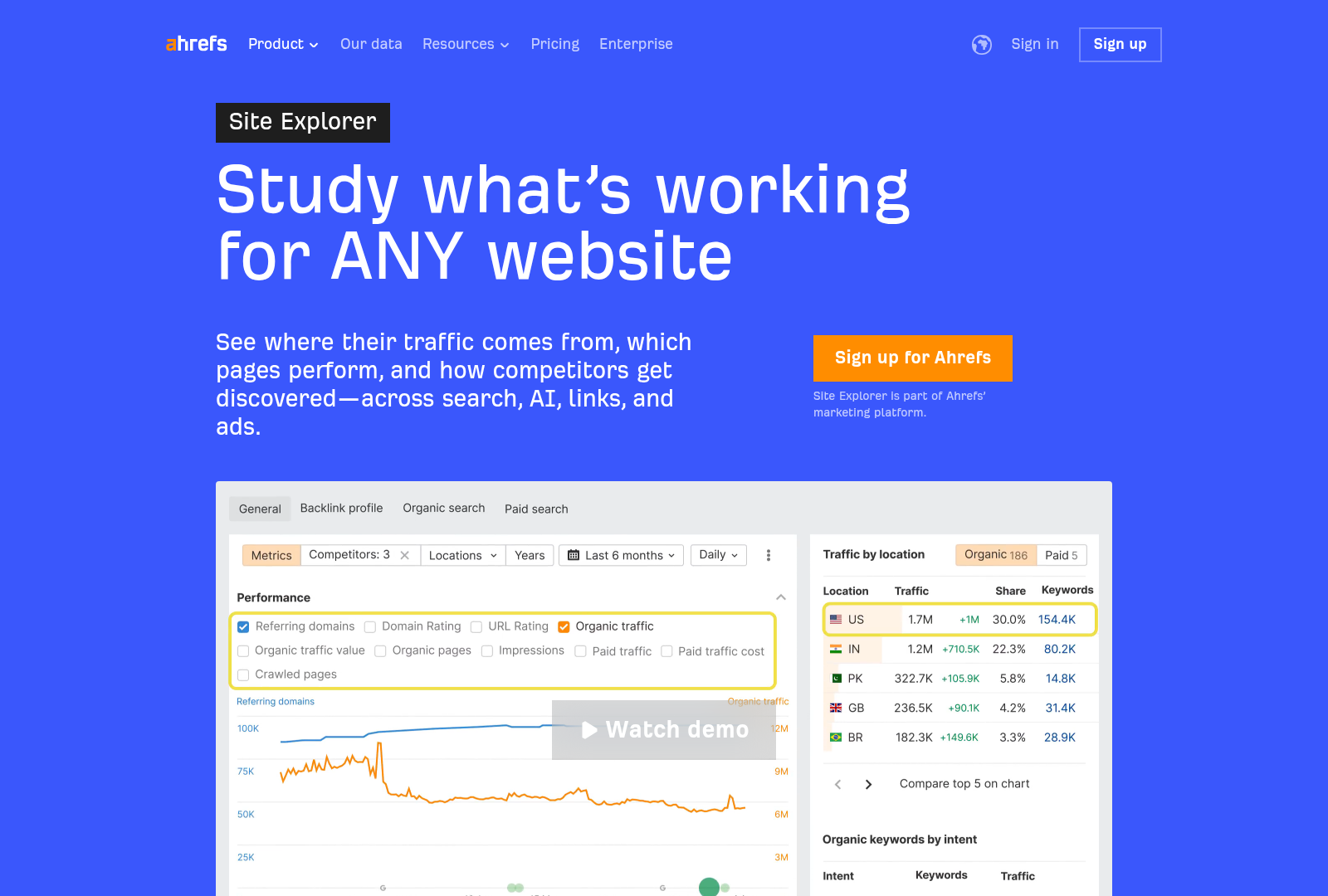
To set up Ahrefs for lead generation analysis, begin by creating an account and configuring a project tailored to your lead gen goals. Visit Ahrefs’ website and sign up for a plan that aligns with your business needs, ensuring access to tools like Site Audit, Keywords Explorer, and Content Explorer [2]. Once logged in, navigate to the “Projects” section and add a new project by entering the domain you want to analyze (e.g., your company’s website or a competitor’s domain). This step enables Ahrefs to crawl and analyze your site’s structure, backlinks, and keyword performance, forming the foundation for lead gen insights [2].
Understanding Ahrefs Metrics for Lead Gen Analysis
Ahrefs provides critical metrics to evaluate lead generation potential, including keyword difficulty (KD), traffic potential (TP), and backlink data. Keyword difficulty scores (0–100) indicate how challenging it is to rank for a specific term, while traffic potential estimates the monthly search volume and click-through rate (CTR) [2]. For lead gen, prioritize keywords with high commercial intent, such as “B2B SaaS solutions” or “financial technology consulting,” which correlate with conversion-driven searches [2]. Additionally, analyze competitors’ backlink profiles using the Backlink Checker tool to identify gaps and opportunities for improving your site’s authority [3]. Metrics like Domain Rating (DR) and URL Rating (UR) further quantify the strength of your backlink profile relative to competitors [3].
Configuring Keyword Tracking and Content Analysis
To track keywords effectively, use Ahrefs’ Keywords Explorer to input seed keywords related to your lead gen objectives. Filter results by metrics such as KD, TP, and cost-per-click (CPC) to prioritize terms that balance competitiveness and revenue potential [2]. Create a custom keyword list and set up alerts to monitor ranking fluctuations over time, ensuring you adapt strategies to maintain visibility in high-value searches [2]. For content analysis, leverage the Content Explorer to research top-performing articles, whitepapers, or case studies in your niche. Filter by content type, backlinks, and traffic to benchmark against competitors and identify content gaps [2]. This process helps refine your lead gen content strategy by focusing on topics and formats that drive engagement and conversions [3]. See the [Section 3: Content Creation Strategies for Lead Gen] section for more details on leveraging Ahrefs' Content Explorer for content strategies.
Integrating Ahrefs with Other Marketing Tools
While explicit integration steps for third-party tools are not detailed in available sources, Ahrefs can complement other marketing platforms by exporting data for cross-platform analysis. For instance, combine Ahrefs’ keyword reports with Google Analytics to correlate organic search traffic with lead generation metrics like form submissions or demo requests [2]. Similarly, use the backlink data from Ahrefs to inform outreach campaigns managed through CRM tools, ensuring alignment between SEO efforts and sales follow-ups [3]. Building on concepts from [Section 8: Scaling Lead Gen Efforts with Outsourced Partnerships], integrating Ahrefs insights with CRM systems can streamline outreach efforts. For B2B lead generation, SalesHive recommends using Ahrefs’ competitive analysis features alongside sales enablement tools to target accounts actively searching for solutions your business offers [2]. By synchronizing Ahrefs insights with marketing automation platforms, teams can prioritize high-intent leads identified through keyword and content analysis [2].
Limitations and Multi-Source Considerations
The available sources emphasize Ahrefs’ utility for competitive analysis and keyword tracking but do not specify proprietary APIs or direct integrations with tools like HubSpot or Salesforce [3]. Users must manually export and import data between platforms, which may require intermediate technical skills for automation. Furthermore, while Ahrefs’ metrics are robust for identifying lead gen opportunities, they should be paired with conversion rate optimization (CRO) strategies to maximize results [1]. As mentioned in the [Section 6: Advanced Ahrefs Features for Lead Gen Optimization] section, advanced tools like content gap analysis and keyword clustering can further refine lead gen strategies. Cross-referencing [2] and [3] highlights the importance of combining Ahrefs’ keyword and backlink analysis with on-page SEO and sales funnel optimization to create a holistic lead generation strategy.
Section 3: Content Creation Strategies for Lead Gen
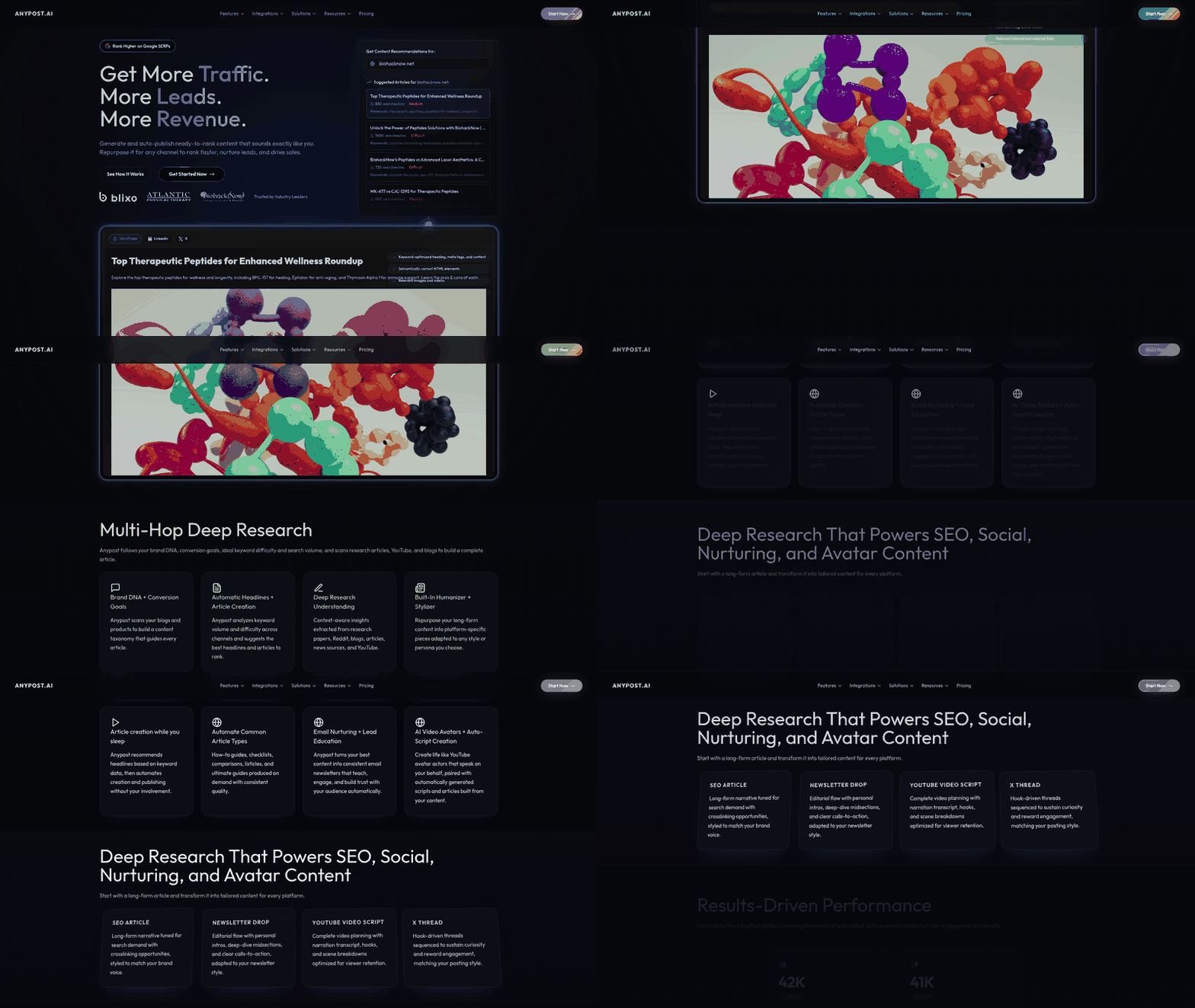
Effective lead generation through content creation requires a strategic blend of SEO, automation, and content repurposing. By leveraging tools like Ahrefs, teams can optimize content for search engines, identify high-value keywords, and adapt existing content across platforms. Below, we break down actionable strategies grounded in the insights from [1], [2], and [3].
Automated Content Generation Techniques
Automated content generation is most effective when guided by competitor analysis and keyword research. Ahrefs enables teams to identify gaps in competitors’ content strategies by analyzing their backlink profiles, top-performing pages, and keyword rankings [1]. For example, using Ahrefs’ Content Gap tool, you can uncover keywords your competitors rank for but you do not, then prioritize content creation around those terms. While the sources do not explicitly describe automation tools for content generation, they emphasize using Ahrefs’ data to inform topic selection and structure. This includes exporting keyword lists for content outlines or integrating findings into editorial calendars to streamline workflows. See the [Section 2: Setting Up Ahrefs for Lead Gen Analysis] section for more details on configuring Ahrefs for competitor analysis.
SEO Optimization Strategies for Lead Gen Content
SEO optimization for lead generation hinges on targeting high-intent keywords and improving on-page elements. Ahrefs helps identify commercial keywords with strong search volume and low competition, such as “B2B lead generation tools” or “outsourced SEO services” [1]. Once these keywords are selected, optimize content by incorporating them into title tags, meta descriptions, and headers. [2] adds that B2B SEO success with Ahrefs also involves auditing technical SEO factors like internal linking and site speed. For instance, use Ahrefs’ Site Audit tool to detect broken links or crawl errors that hinder lead-generating pages. Building on concepts from [Section 6: Advanced Ahrefs Features for Lead Gen Optimization], prioritize long-form content (2,000+ words) targeting informational queries, as [1] notes that longer, comprehensive content ranks higher and attracts more leads.
Repurposing Content for Multiple Channels
The sources do not provide explicit strategies for repurposing content across Twitter, newsletters, YouTube, and blogs. However, general best practices suggest adapting existing content to suit platform-specific audiences. As mentioned in the [Section 4: Multi-Channel Lead Generation with Ahrefs Analysis] section, leveraging Ahrefs’ keyword data ensures consistency in messaging and SEO value across repurposed content. Teams should also monitor engagement metrics to refine repurposed content strategies over time.
Using Persona Engines for Tone Matching
The provided sources do not mention persona engines or tone-matching tools. However, aligning content tone with buyer personas is critical for lead generation. Ahrefs can indirectly support this by revealing competitor content styles through keyword and content analysis [1]. For example, if competitors targeting your audience use a formal tone in high-ranking blog posts, you can adjust your content to match or differentiate strategically. Without explicit source details on persona engines, teams should rely on Ahrefs’ competitive insights to infer effective tonal approaches and test variations using A/B testing tools.
By combining Ahrefs’ analytical capabilities with targeted SEO and content adaptation, businesses can create a scalable lead generation strategy. The next section will explore how to measure and refine these efforts using Ahrefs’ reporting features.
Section 4: Multi-Channel Lead Generation with Ahrefs Analysis
Subsection Name: Analyzing Social Media Lead Gen with Ahrefs
Ahrefs enables businesses to evaluate the effectiveness of their social media lead generation efforts by analyzing backlinks and content performance. Using the Site Explorer tool, teams can identify which social media profiles (e.g., LinkedIn, Twitter) drive the most referral traffic and backlinks to their website [2]. For instance, examining the backlink profile of competitors’ social media pages reveals high-performing content types and engagement strategies [1]. Additionally, Ahrefs’ Content Explorer helps pinpoint trending topics within a niche, allowing marketers to create shareable content tailored to their audience’s preferences [1]. By comparing organic search traffic from social media-linked content against industry benchmarks, teams can prioritize platforms that yield the highest lead-generation returns [2]. See the [Section 2: Setting Up Ahrefs for Lead Gen Analysis] section for more details on configuring Ahrefs tools for lead gen tracking.
Subsection Name: Optimizing Email Marketing Campaigns with Ahrefs Insights
Ahrefs supports email marketing optimization by identifying high-performing content for inclusion in newsletters. Marketers can use Ahrefs’ keyword analysis to align email subject lines and body content with user search intent, increasing open and conversion rates [1]. For example, analyzing competitors’ top-performing blog posts and landing pages via Ahrefs highlights content themes that resonate with target audiences, which can be repurposed into email campaigns [2]. Furthermore, tracking referral traffic from email campaigns in Ahrefs’ Site Audit tool helps quantify the impact of email-driven lead generation [2]. By integrating Ahrefs’ SEO recommendations—such as optimizing meta descriptions and internal links for email-redirected content—teams ensure seamless transitions from email clicks to conversion-focused landing pages [1]. Building on concepts from [Section 3: Content Creation Strategies for Lead Gen], this approach aligns with creating SEO-optimized content for email integration.
Subsection Name: Content Marketing Strategies Across Channels
Ahrefs facilitates cross-channel content marketing by uncovering opportunities to repurpose high-performing assets. Through the Content Gap feature, teams compare their content inventory with competitors’ to identify underserved keywords and topics [1]. For example, a blog post ranking well for a specific keyword can be transformed into a LinkedIn article, a YouTube video script, or an email course, maximizing reach across platforms [2]. Ahrefs’ Backlink Checker also aids in disintermediation strategies, where teams target backlinks from websites that have previously linked to competitors’ content [1]. By aligning content formats (e.g., infographics for Pinterest, listicles for email) with channel-specific user behavior insights from Ahrefs, marketers ensure consistent lead-generation messaging [2]. See the [Section 6: Advanced Ahrefs Features for Lead Gen Optimization] section for deeper insights into content gap analysis and competitor research.
Subsection Name: Tracking and Measuring Lead Gen Success
Ahrefs provides actionable metrics to measure lead generation success across multiple channels. Custom reports in Ahrefs’ Dashboard track organic traffic growth, backlink acquisition, and keyword ranking improvements over time, correlating these with lead generation KPIs [2]. For instance, monitoring traffic from social media referral sources in Ahrefs’ Site Explorer helps assess which platforms drive the most qualified leads [2]. Position Tracking features allow teams to evaluate how content optimizations impact rankings for lead-magnet keywords [3]. By benchmarking monthly traffic and backlink growth against competitors using Ahrefs’ Competitor Backlink Checker, businesses refine their multi-channel strategies to prioritize high-ROI activities [1]. As mentioned in the [Section 7: Measuring and Optimizing Lead Gen Success with Ahrefs] section, defining clear goals is essential for interpreting these metrics effectively.
Subsection Name: Integrating Ahrefs with Multi-Channel Analytics
To holistically assess lead generation, Ahrefs data should be combined with analytics from native channel tools. For social media, cross-reference Ahrefs’ backlink data with platform-specific engagement metrics (e.g., Instagram Insights) to identify content that balances virality and SEO value [1]. Email marketing platforms like Mailchimp can be audited alongside Ahrefs’ referral traffic reports to validate if email content drives targeted visits [2]. For content marketing, Ahrefs’ Content Rating scores complement Google Analytics’ bounce rate and conversion data, offering a comprehensive view of lead quality [1]. This integration ensures teams address both quantitative (traffic, backlinks) and qualitative (engagement, lead intent) factors in their optimization efforts [2]. See the [Section 5: Real-Time Analytics and Tracking for Lead Gen] section for strategies on combining real-time data with Ahrefs insights.
Section 5: Real-Time Analytics and Tracking for Lead Gen
Real-time analytics are critical in lead generation because they enable teams to identify opportunities, address underperforming tactics, and adapt to competitor actions quickly. According to [1], tracking keyword rankings and content performance in real-time allows businesses to optimize their SEO strategies for maximum lead generation. Ahrefs provides tools to monitor these metrics continuously, ensuring that adjustments can be made without significant delays. By integrating real-time data into lead gen workflows, marketers can prioritize high-performing keywords, refine content strategies, and allocate resources to campaigns that drive the most traffic and conversions [2]. This section outlines how to leverage Ahrefs for real-time tracking and optimization, focusing on actionable steps supported by the platform’s features.
Setting Up Real-Time Tracking with Ahrefs
To begin tracking lead gen efforts in real-time, start by configuring Ahrefs to monitor your website’s traffic, keyword rankings, and backlink profile. [2] emphasizes that Ahrefs’ Site Audit tool identifies technical SEO issues that could hinder lead generation, such as broken links or meta tag inconsistencies. Addressing these issues ensures accurate data collection. Next, use the Keywords Explorer to set up a real-time ranking tracker for target keywords. This tool updates rankings hourly, providing visibility into how your content performs against competitors [3]. For B2B lead generation, [2] recommends tracking keywords with commercial intent, such as those containing terms like “software,” “service,” or “consulting,” as they indicate higher lead potential. Additionally, Ahrefs’ Content Explorer can be used to benchmark your content against competitors, identifying gaps in topic coverage or backlink strength [1]. See the [Section 2: Setting Up Ahrefs for Lead Gen Analysis] section for more details on configuring Ahrefs for lead gen workflows.
Monitoring Keyword Rankings and Content Performance
Real-time keyword tracking in Ahrefs allows marketers to respond to fluctuations in search engine results pages (SERPs). For instance, if a previously ranking keyword drops in position, teams can investigate whether recent algorithm updates or competitor actions caused the decline [1]. [2] highlights the importance of using Ahrefs’ Position History feature to visualize ranking trends over time, helping to correlate changes with specific content updates or outreach efforts. Content performance metrics, such as traffic estimates and bounce rates from Ahrefs’ Site Audit, provide insights into which pages are most effective at converting visitors into leads [3]. By cross-referencing these metrics with lead generation data (e.g., form submissions or demo requests), marketers can identify high-performing content and replicate its structure in future campaigns [1]. Building on concepts from [Section 3: Content Creation Strategies for Lead Gen], refining content based on real-time data ensures alignment with audience intent and SEO best practices.
Adjusting Lead Gen Strategies Based on Real-Time Data
Ahrefs’ real-time data empowers teams to pivot lead generation strategies dynamically. For example, if a piece of content receives a surge in traffic but fails to generate leads, [1] suggests analyzing its call-to-action (CTA) placement or form complexity using Ahrefs’ backlink and traffic data to troubleshoot user experience issues. Conversely, if a keyword’s search volume spikes unexpectedly, [2] recommends creating targeted blog posts or landing pages to capitalize on the opportunity. Ahrefs’ Competitor Backlink Checker can also reveal competitors’ recent link-building activities, allowing teams to replicate successful tactics or counter their lead gen efforts [3]. [1] further notes that real-time competitor analysis helps identify emerging trends, such as shifts in keyword intent, which can inform topic research for lead magnets like whitepapers or webinars.
Limitations and Best Practices
While Ahrefs offers robust real-time tracking capabilities, it is important to recognize its limitations. The platform does not directly track lead conversion rates or user behavior on landing pages—these metrics require integration with tools like Google Analytics or CRM systems [2]. See the [Section 7: Measuring and Optimizing Lead Gen Success with Ahrefs] section for guidance on aligning Ahrefs data with CRM metrics. Additionally, [3] cautions that Ahrefs’ keyword data is based on its own crawlers, which may not perfectly align with search engines’ indexing timelines. To mitigate this, marketers should cross-reference Ahrefs’ data with other SEO tools or search console reports for accuracy. Best practices include setting up alerts for significant ranking drops, regularly reviewing competitor backlink profiles, and using Ahrefs’ Export feature to share real-time reports with stakeholders [1]. By combining these strategies, teams can maintain agility in their lead generation efforts while minimizing reliance on outdated or incomplete data.
Section 6: Advanced Ahrefs Features for Lead Gen Optimization
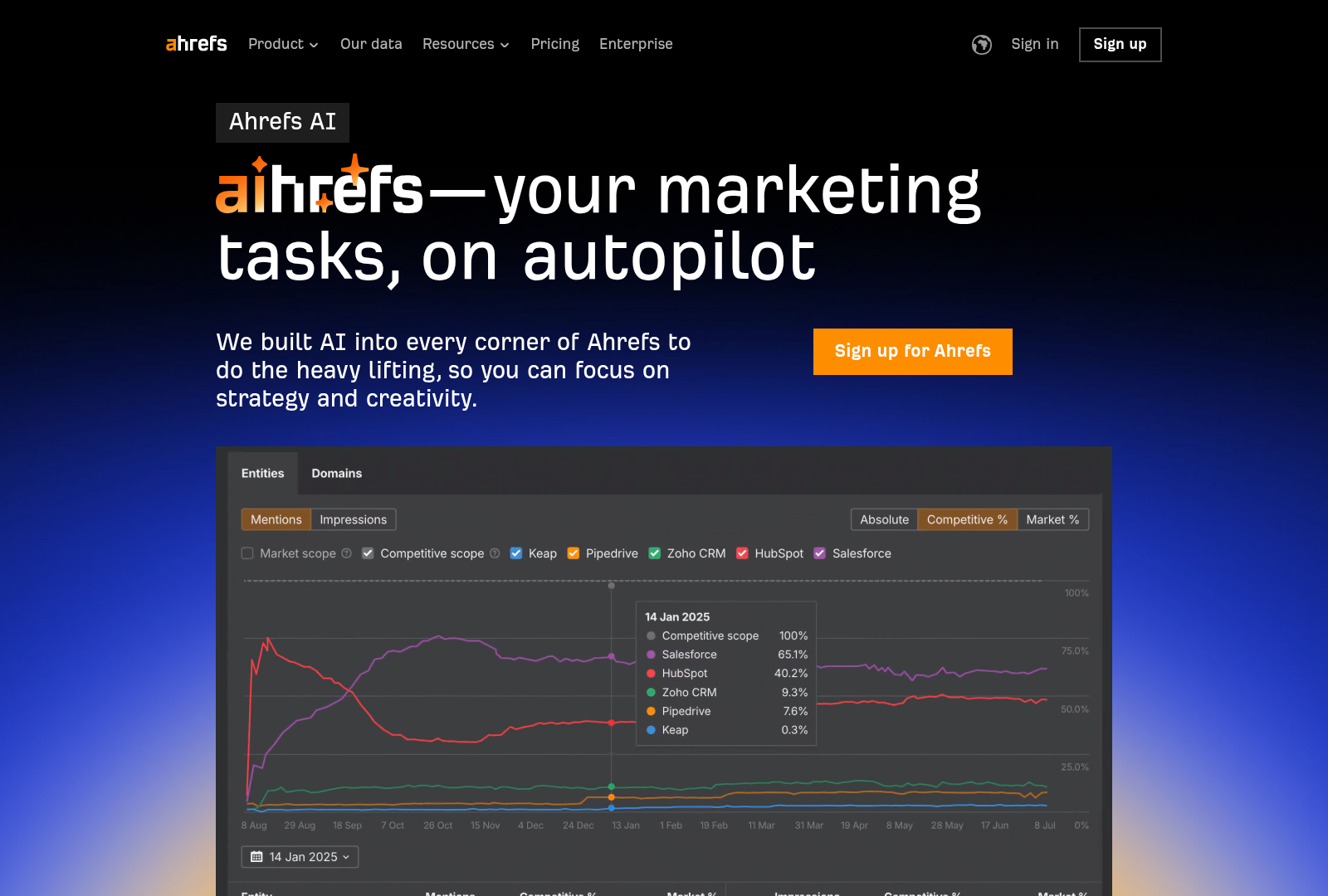
Advanced Ahrefs features like content gap analysis, keyword clustering, and competitor research offer a structured approach to optimizing lead generation. By leveraging these tools, teams can identify unmet audience needs, refine keyword strategies, and adapt to competitor moves with precision. Here’s how to implement these techniques effectively.
Content Gap Analysis for Lead Gen Opportunities
Ahrefs’ Content Gap tool enables teams to uncover keywords competitors rank for but are not targeting themselves. For example, by comparing competitors’ content in the FinTech or EdTech sectors, users can identify high-intent keywords that align with their own lead generation goals [2]. This process involves:
- Inputting competitors’ domains into the Content Gap tool to analyze their top-performing keywords [1]. See the [Section 2: Setting Up Ahrefs for Lead Gen Analysis] section for more details on configuring Ahrefs for competitor comparisons [1].
- Filtering results by search volume, keyword difficulty, and relevance to the target audience [2].
- Creating content to address these gaps, such as blog posts, whitepapers, or case studies, which directly answer audience queries competitors overlook [1].
This method ensures lead generation efforts focus on keywords with less competition and higher conversion potential.
Keyword Clustering for Effective Lead Gen Targeting
Keyword clustering groups related search terms into thematic categories, allowing for more strategic content planning. Using Ahrefs’ Keyword Explorer, teams can organize keywords by topic clusters, which align with specific stages of the buyer journey [2]. For instance:
- Cluster 1: High-volume, broad keywords for awareness-stage content (e.g., “B2B lead generation strategies”).
- Cluster 2: Long-tail keywords for consideration-stage guides (e.g., “outsourced lead gen for SaaS companies”).
- Cluster 3: Transactional keywords for conversion-focused landing pages (e.g., “hire lead generation agency”).
By structuring campaigns around these clusters, teams ensure their content addresses user intent at every stage, improving lead quality [2]. Building on concepts from [Section 3: Content Creation Strategies for Lead Gen], this approach ties keyword targeting directly to content frameworks that drive engagement [2].
Competitor Research with Ahrefs to Stay Ahead
Ahrefs’ Site Explorer and Backlink Gap tools provide insights into competitors’ SEO strategies. Teams can analyze competitors’ backlink profiles to identify link-building opportunities or spot content gaps in their competitors’ offerings [3]. Key steps include:
- Using Site Explorer to review competitors’ top organic keywords and content types [1].
- Running a Backlink Gap analysis to discover websites linking to competitors but not to your own domain [3].
- Replicating successful content formats (e.g., infographics, tool-based guides) while improving upon competitors’ shortcomings [1].
This proactive approach helps maintain a competitive edge, especially in saturated markets like FinTech [2].
Additional Advanced Ahrefs Features for Lead Gen Optimization
Beyond the core tools, Ahrefs offers features like Content Explorer and AI Overview tracking to refine lead generation:
- Content Explorer: Search for trending content ideas based on search volume and engagement metrics, ensuring campaigns align with current audience interests [2].
- Backlink Gap Analysis: Identify authoritative domains to target for link-building, improving domain authority and organic reach [3].
- AI Overview Monitoring: Track shifts in search results caused by AI-driven summaries, adjusting content to maintain visibility in evolving SERPs [2].
These tools collectively ensure lead generation strategies remain agile and data-driven.
By integrating these advanced Ahrefs features into outsourced lead generation workflows, teams can systematically uncover opportunities, optimize keyword targeting, and outperform competitors. Each step should be validated with real-time data from Ahrefs to maintain alignment with market dynamics [1][2][3]. As highlighted in [Section 5: Real-Time Analytics and Tracking for Lead Gen], continuous data validation is critical for adapting to shifting audience behaviors and competitor tactics [1].
Section 7: Measuring and Optimizing Lead Gen Success with Ahrefs
To measure and optimize lead generation success using Ahrefs, start by defining clear goals aligned with your lead generation objectives. Ahrefs enables tracking of conversions by identifying high-performing keywords and content that drive traffic to lead capture pages [1]. For example, use Ahrefs’ Site Explorer to analyze competitors’ top-performing pages and benchmark your own content against theirs, ensuring your lead magnets (e.g., whitepapers, webinars) target similar high-intent keywords [2]. This process, known as content gap analysis, highlights opportunities to create content that addresses unmet needs in your niche, directly improving lead generation. See the [Section 6] section for more details on advanced content gap analysis techniques [3].
Setting Up Goals and Tracking Conversions
Begin by configuring goals in your analytics platform (e.g., Google Analytics) to track lead generation actions such as form submissions, email signups, or demo requests. Ahrefs complements this by identifying the keywords and backlink sources driving traffic to these conversion pages [1]. For instance, use Ahrefs’ Keywords Explorer to isolate keywords with high commercial intent, such as those containing terms like “buy,” “pricing,” or “free trial,” and optimize landing pages around these terms [2]. Additionally, monitor referral traffic from backlinks using Ahrefs’ Backlink Checker to determine which websites are sending high-quality leads to your site [3]. Building on concepts from [Section 2], ensure your Ahrefs project is configured to align with these tracking goals.
Measuring Lead Gen Success with Ahrefs Metrics
Ahrefs provides several metrics to evaluate lead generation performance:
- Keyword rankings: Track progress for target keywords using Ahrefs’ Rank Tracker, focusing on positions 1–5 where click-through rates (CTRs) are highest [1].
- Content performance: Use Ahrefs’ Content Explorer to analyze traffic trends for blog posts, case studies, or landing pages, prioritizing content with consistent traffic growth [2].
- Backlink quality: Assess the authority of referring domains via the Domain Rating (DR) metric, as higher-DR backlinks correlate with increased credibility and lead generation [3].
For example, a B2B SaaS company might discover that a case study page ranks for long-tail keywords like “cloud migration tools for healthcare,” driving targeted traffic and form submissions [2]. By comparing this page’s performance to competitors’ using Ahrefs’ Content Gap tool, they can replicate successful strategies. As mentioned in the [Section 6] section, competitor analysis is a key component of optimizing lead gen content [3].
Analyzing Data to Identify Areas for Improvement
Ahrefs’ data reveals inefficiencies in your lead generation funnel. Start by auditing underperforming pages using the Site Audit tool, which flags technical issues like broken links or missing meta tags that hinder conversions [2]. Cross-reference this with Ahrefs’ Keywords Explorer to determine if low-traffic keywords are worth optimizing or if they should be replaced with higher-intent alternatives [1].
For content optimization, analyze competitors’ top pages using Ahrefs’ Competing Domains report. If a competitor’s “Ultimate Guide to Cybersecurity for Small Businesses” ranks for 100+ keywords and receives 15,000 monthly visits, you can create a comparable guide targeting similar terms with added value, such as downloadable templates or expert interviews [3].
Adjusting Lead Gen Strategies Based on Ahrefs Insights
Use Ahrefs’ insights to refine your lead generation tactics iteratively. If data shows that guest posts from niche-specific websites drive more conversions than generic directories, shift your backlink-building efforts accordingly [1]. Similarly, if Ahrefs’ Content Explorer reveals that video-based content receives 50% more backlinks than blog posts, prioritize producing video assets to enhance lead capture [2].
Adjust keyword strategies by prioritizing “low-hanging fruit”—keywords with high traffic potential and low difficulty scores—as identified in Ahrefs’ Keywords Explorer [3]. For instance, a FinTech company might target “small business loan calculators” instead of broader terms like “business loans,” reducing competition while capturing highly qualified leads [2]. Regularly revisit Ahrefs’ Site Explorer to monitor competitors’ updates and adapt your content calendar to stay ahead. See the [Section 6] section for advanced competitor research strategies [1].
By integrating Ahrefs into your lead generation workflow, you can systematically measure performance, pinpoint weaknesses, and implement data-driven improvements. This approach ensures that every adjustment—whether to content, keywords, or backlink strategies—is grounded in actionable insights, maximizing ROI from outsourced lead generation efforts [1][2][3].
Section 8: Scaling Lead Gen Efforts with Outsourced Partnerships
Key Benefits of Outsourced Lead Generation Partnerships
Outsourced lead generation partners offer specialized expertise in SEO and content optimization, which aligns with Ahrefs’ capabilities for keyword research and competitor analysis [2]. By delegating lead generation tasks, businesses can focus on core operations while leveraging external teams’ knowledge of tools like Ahrefs to identify high-intent keywords and optimize content for search engines [1]. Outsourcing also provides scalability, enabling companies to adjust campaign scope based on demand without hiring full-time staff [1]. Additionally, partners often bring access to advanced analytics tools and methodologies not natively available in-house, enhancing the precision of lead targeting [2]. However, success depends on selecting a partner with demonstrated proficiency in B2B SEO strategies and a proven track record in generating measurable results [2]. See the [Section 2] section for more details on setting up Ahrefs for lead gen analysis.
Selecting the Right Outsourced Lead Gen Partner
When vetting potential partners, prioritize teams with expertise in Ahrefs and other SEO tools, as highlighted in best practices for B2B SEO [2]. Evaluate their ability to conduct competitive analysis using Ahrefs’ backlink and keyword data to inform lead generation strategies [2]. Review case studies or past campaigns to assess their experience in generating high-quality leads for similar industries [1]. A reliable partner should also demonstrate transparency in reporting and willingness to integrate Ahrefs’ analytics into their workflow for real-time adjustments [3]. Avoid partners who lack specific metrics—such as cost per lead or conversion rates—to quantify past performance [1]. Finally, ensure alignment on goals, such as improving organic traffic or increasing lead volume, to establish a shared vision [1].
Structuring a Successful Outsourced Partnership
Begin by defining clear objectives, such as increasing leads by 30% in six months or improving keyword rankings for target terms [1]. Collaborate with the partner to outline workflows that integrate Ahrefs for competitor benchmarking, content audits, and tracking keyword performance [2]. Establish communication protocols, including weekly progress reviews and monthly strategy adjustments based on Ahrefs’ data [2]. Assign accountability for specific tasks, such as content creation, Ahrefs-based competitor analysis, and lead qualification, to avoid overlap or gaps [1]. Define contractual terms, including deliverables, timelines, and penalties for underperformance, to maintain alignment [1]. Lastly, provide the partner with access to internal resources, such as CRM systems or brand guidelines, to ensure consistency in outreach efforts [1]. Building on concepts from [Section 5], real-time analytics should inform these adjustments.
Measuring Success and Optimizing Partnerships
Track key performance indicators (KPIs) such as cost per lead, lead-to-customer conversion rates, and SEO-driven traffic growth using Ahrefs’ reporting features [2]. Compare these metrics against industry benchmarks to assess whether the partner meets expectations [3]. Regularly analyze Ahrefs data to identify underperforming keywords or content gaps, then collaborate with the partner to refine strategies [2]. Use A/B testing for landing pages and CTAs, as recommended in SEO lead generation frameworks, to optimize conversion rates [1]. If KPIs fall short of targets, renegotiate terms or request process improvements, such as reallocating budget to high-performing keywords [1]. Continuously audit the partner’s use of Ahrefs to ensure they leverage tools like Content Explorer and Backlink Checker for maximum efficiency [2]. See the [Section 7] section for further guidance on measuring lead gen success with Ahrefs.
Limitations and Considerations
While outsourcing offers scalability, it requires ongoing oversight to prevent misalignment with brand values or campaign goals [1]. Partners may lack deep industry-specific knowledge, necessitating additional training or resource sharing [1]. Ahrefs’ data is only as effective as the partner’s ability to interpret it; poor execution can lead to wasted budgets on irrelevant keywords [2]. Additionally, dependencies on third-party tools like Ahrefs introduce risks if the partner faces technical limitations or subscription constraints [3]. To mitigate these challenges, maintain regular audits of the partner’s workflows and Ahrefs usage, and retain in-house oversight for strategic decisions [2].
References
[1] SEO for Lead Generation: How to Drive High-Quality Leads Using ... - https://ahrefs.com/blog/seo-for-lead-generation/
[2] Using Ahrefs: Best Practices for B2B SEO | SalesHive Blog - https://saleshive.com/blog/b2b-using-ahrefs-best-practices-seo-2/
[3] Ahrefs vs. SEMrush vs. Moz | 321 Web Marketing - https://www.321webmarketing.com/blog/ahrefs-vs-semrush-vs-moz/
Frequently Asked Questions
1. How does outsourced lead generation differ from in-house lead generation, and when is outsourcing more beneficial?
Outsourced lead generation leverages external agencies with specialized tools and expertise, while in-house efforts rely on internal teams. Outsourcing is more beneficial when businesses lack dedicated SEO/content marketing resources, need access to advanced tools like Ahrefs, or require faster campaign deployment. It is particularly advantageous for small-to-midsize businesses or those targeting niche markets, where agencies can offer cost-effective scalability and proven strategies without the overhead of hiring full-time experts.
Q: How does Ahrefs specifically aid in identifying high-quality lead generation opportunities?
A: Ahrefs helps by providing data-driven insights into competitors’ strategies. For example, its Content Gap Analysis tool identifies keywords rivals are ranking for but your business is not, enabling you to create content that fills these gaps. Additionally, Ahrefs’ Backlink Checker reveals which domains link to competitors, helping prioritize outreach to high-authority websites. These features allow agencies to target audiences with unmet needs and optimize content for higher visibility in competitive markets.
Q: What are the key metrics to measure the success of an outsourced lead generation campaign using Ahrefs?
A: Success can be measured through a combination of SEO and sales metrics. Key SEO metrics include keyword rankings, organic traffic growth, and backlink profile strength (tracked via Ahrefs). Sales metrics like conversion rates, lead-to-customer ratios, and cost per acquisition (CPA) provide insights into campaign effectiveness. Agencies should also monitor content performance (e.g., bounce rates, time on page) to refine strategies. Ahrefs’ Site Explorer can benchmark competitors’ progress, ensuring your strategy stays ahead.
Q: What steps are involved in setting up Ahrefs for lead generation workflows?
A: Setting up Ahrefs involves three core steps:
- Competitor Analysis: Use Ahrefs’ Site Explorer to audit competitors’ websites, identifying their top-performing content, keywords, and backlink sources.
- Keyword Clustering: Group related keywords using Ahrefs’ Keywords Explorer to create targeted content clusters, ensuring topics align with audience intent.
- Content Gap Analysis: Compare your site’s content with competitors to uncover underutilized keywords and opportunities for high-intent content.
Agencies can integrate these workflows into their campaigns to streamline lead generation and maximize ROI.
Q: Are there risks associated with outsourcing lead generation, and how can they be mitigated?
A: Risks include misaligned goals, lack of transparency, and data security concerns. To mitigate these, choose an agency with a proven track record in SEO and content marketing, and insist on regular performance reports using Ahrefs or similar tools. Ensure contracts include clear KPIs and data protection clauses. Additionally, maintain active communication to align strategies with your brand’s voice and objectives.
Q: How does Ahrefs compare to other SEO tools for lead generation purposes?
A: Ahrefs stands out for its comprehensive backlink analysis, real-time keyword tracking, and user-friendly interface. Unlike some competitors, it offers a unified platform for competitor research, content audits, and link-building insights. For example, its Content Gap Analysis is more intuitive than similar features in tools like SEMrush, and its Site Explorer provides deeper backlink data. However, tools like Moz or Ubersuggest may offer lower costs for small businesses, making the choice dependent on budget and specific campaign needs.
Q: Can outsourced lead generation with Ahrefs be effective for B2B industries, and if so, how?
A: Yes, it is highly effective for B2B industries. Ahrefs’ tools help identify technical buyer personas by analyzing competitors’ content that targets decision-makers (e.g., whitepapers, case studies). Its backlink analysis prioritizes outreach to authoritative business domains, while keyword clustering ensures topics align with B2B intent (e.g., “enterprise software solutions” vs. generic terms). Agencies can also use Ahrefs to track long-tail keywords relevant to complex purchasing cycles, ensuring content addresses detailed pain points common in B2B sectors.