
Outsourced Lead Generation Checklist: Ahrefs Content Explorer Analysis

Section 1: Introduction to Outsourced Lead Generation
Outsourced lead generation is a strategic approach where businesses delegate the responsibility of identifying and nurturing potential customers to third-party agencies. This model is particularly critical in B2B marketing, where lead generation requires specialized expertise in areas like content creation, SEO optimization, and data analysis. By outsourcing, companies can focus on core operations while leveraging external teams to execute targeted lead acquisition strategies. Content marketing and SEO optimization are foundational to this process, as they enable the creation of high-quality, discoverable content that attracts and converts prospects. The integration of tools like Ahrefs Content Explorer further enhances this strategy by identifying content gaps and opportunities for competitive advantage [1].
Core Principles of Outsourced Lead Generation
- Define clear objectives and KPIs to align outsourced efforts with business goals. Agencies must understand metrics like lead volume, conversion rates, and cost per acquisition to optimize performance [1].
- Select agencies with proven SEO expertise, including familiarity with tools like Ahrefs for keyword research and content gap analysis. This ensures lead generation strategies are data-driven and adaptable to market trends [1]. See the Ahrefs Content Explorer Analysis for Lead Generation section for more details on leveraging this tool for competitive insights.
- Establish transparent communication channels to track progress and address challenges. Regular reporting and collaborative feedback loops prevent misalignment between internal teams and external partners [1].
Strategic Benefits of Outsourcing
- Access to specialized tools and methodologies such as Ahrefs Content Explorer, which identifies high-performing content for replication or improvement. This reduces reliance on in-house resources for advanced SEO analysis [1].
- Cost efficiency through scalable labor models. Outsourcing eliminates the need for full-time hires, allowing businesses to adjust budgets according to campaign demands [1].
- Focus on core competencies while external teams handle lead generation. This division of labor accelerates time-to-market for new campaigns and improves overall operational agility [1].
Content Marketing’s Role in Lead Generation
Content marketing is the backbone of outsourced lead generation, as it drives organic traffic and builds trust with target audiences. Agencies use Ahrefs Content Explorer to analyze top-ranking articles, identifying themes and keywords that resonate with specific demographics [1]. For example, selecting three to five high-performing articles and conducting a "content gap" analysis reveals opportunities to create superior, SEO-optimized content [1]. This process ensures that outsourced teams prioritize topics with high search intent and low competition, maximizing lead generation potential. Additionally, content audit tools like those referenced in [2] help evaluate existing assets, streamlining efforts to repurpose or update underperforming material. See the Automated Content Generation for Scalable Lead Generation section for related strategies on content audits and topic generation [2].
Integrating SEO for Targeted Lead Acquisition
SEO optimization is inseparable from outsourced lead generation, as it determines the visibility of content to potential customers. Agencies must conduct keyword research to align content with search queries used by target buyers, ensuring that blog posts, landing pages, and case studies rank for relevant terms [1]. Building on concepts from the SEO Optimization for Lead Generation section, Ahrefs Content Explorer allows teams to benchmark competitors’ content strategies, uncovering high-traffic keywords that can be incorporated into new material [1]. By prioritizing SEO in outsourced workflows, businesses ensure that lead generation efforts are both scalable and sustainable, driving consistent traffic over time.
Challenges and Mitigation Strategies
- Avoid over-reliance on a single tool or strategy. Diversifying SEO tactics and content formats (e.g., blogs, videos, whitepapers) reduces risk if one approach underperforms [1].
- Ensure alignment with brand voice and messaging. Outsourced teams must be trained on brand guidelines to maintain consistency across all lead generation materials [1].
- Monitor ROI through A/B testing. Regularly testing subject lines, CTAs, and landing page designs helps refine strategies and improve conversion rates [1].
This structured approach to outsourced lead generation emphasizes the synergy between content marketing, SEO optimization, and external expertise. By adhering to these principles, businesses can achieve measurable results while maintaining flexibility in their B2B marketing strategies.
Section 2: Ahrefs Content Explorer Analysis for Lead Generation
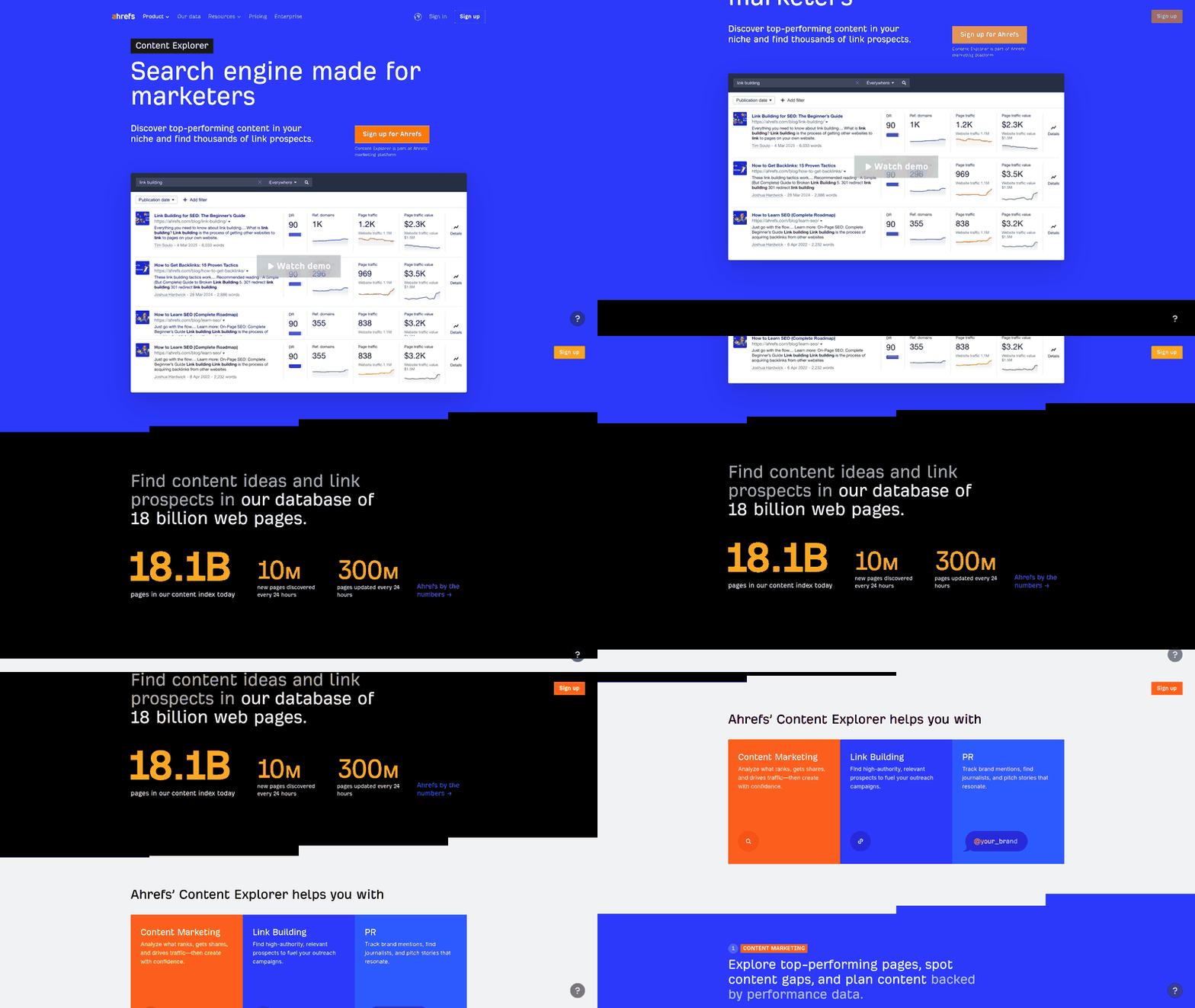
Ahrefs Content Explorer is a critical tool for lead generation analysis, offering insights into competitor strategies, content gaps, and high-performing topics. By leveraging its features, teams can identify opportunities to create targeted content that aligns with audience intent and outperforms competitors. This section outlines actionable steps to integrate Ahrefs Content Explorer into outsourced lead generation workflows, emphasizing competitor analysis and SaaS platform integration.
### Analyze Competitor Content Strategies
- Identify top-ranking competitor articles by searching for keywords relevant to your lead generation goals. Select three to five articles with high search traffic and engagement metrics to benchmark against [1].
- Use the Content Gap tool to uncover topics your competitors rank for but you do not. This reveals untapped content opportunities that can attract overlapping audiences and generate leads [1].
- Audit competitor backlink profiles to assess their authority and identify potential collaboration or outreach targets. High-authority links correlate with increased visibility and trust, both vital for lead generation [2].
### Optimize Content Creation with Ahrefs Features
- Leverage the Content Explorer database to discover trending topics and formats (e.g., guides, case studies) that drive traffic and conversions. Focus on content with high click-through rates (CTRs) and low competition [1].
- Analyze content metrics such as keyword difficulty, organic traffic, and backlinks to prioritize topics with the highest potential ROI. This ensures outsourced content teams focus on lead-generating assets [2]. See the [SEO Optimization for Lead Generation] section for more details on aligning content with high-intent search queries.
- Export competitor content reports to share with writers and editors, providing clear benchmarks for optimizing headlines, meta descriptions, and keyword density [1].
### Integrate with Automated Content Generation Platforms
- Sync Ahrefs data with SaaS tools like automated content generators to streamline topic research and outline creation. This integration reduces content production costs by up to 40% while maintaining strategic alignment [2]. Building on concepts from [Automated Content Generation for Scalable Lead Generation], this step ensures technical SEO standards are met during automation [2].
- Use Ahrefs’ audit tools to validate the SEO quality of AI-generated drafts, ensuring they meet technical standards and address user intent effectively [2].
- Automate competitor monitoring through Ahrefs’ SaaS integrations to stay updated on emerging trends and adjust lead generation strategies in real time [2].
### Limitations and Considerations
- Acknowledge gaps in Ahrefs’ data by cross-referencing findings with other SEO tools. While Ahrefs provides robust insights, no single platform captures the full scope of content performance [2].
- Balance automation with human oversight when using integrated platforms. Automated content generation should be paired with manual reviews to maintain brand voice and quality [2]. As mentioned in the [Automated Content Generation for Scalable Lead Generation] section, this balance is critical for maintaining content quality and alignment with campaign objectives [2].
By systematically applying Ahrefs Content Explorer’s features—competitor analysis, content gap identification, and SaaS integration—outsourced lead generation teams can create data-driven content strategies. These steps not only improve content efficiency but also align with measurable outcomes like increased traffic and qualified leads [1][2].
Section 3: Checklist for Setting Up Outsourced Lead Generation Campaigns
Campaign Objectives
- Define clear campaign objectives (e.g., increase qualified leads by 30% in six months) to ensure alignment with business goals [1].
- Align objectives with specific lead generation metrics, such as cost per lead (CPL) or conversion rate, to measure success [1].
- Identify the primary use case for outsourced efforts (e.g., B2B SaaS lead generation) to focus strategies on relevant buyer personas [1].
- Set time-bound KPIs, such as achieving a 20% improvement in lead quality within three months, to track progress [1].
Target Audience Personas
- Analyze competitors’ top-ranking articles using Ahrefs Content Explorer to identify topics and keywords resonating with similar audiences [1]. As mentioned in the Ahrefs Content Explorer Analysis for Lead Generation section...
- Create buyer personas based on data from competitor content, including job titles, pain points, and decision-making roles [1].
- Segment personas by industry or company size to tailor messaging for niche markets [1].
- Map audience intent by reviewing search queries from Ahrefs’ content gap analysis to align messaging with user needs [1].
Content Strategy Development
- Use Ahrefs’ Content gap feature to compare 3–5 competitors’ content and identify high-performing, underutilized topics [1].
- Develop a topic cluster strategy by grouping subtopics around competitor-validated pillar content (e.g., “SEO for lead generation”) [1]. See the SEO Optimization for Lead Generation section for more details on integrating keywords and search intent.
- Prioritize content formats (e.g., blogs, case studies) based on competitors’ top-performing assets to maximize reach [1].
- Optimize content for SEO by integrating keywords from competitor analyses, ensuring alignment with search intent [1].
Outsourced Vendor Alignment
- Share Ahrefs-identified content gaps with vendors to ensure alignment with data-driven opportunities [1].
- Specify content quality benchmarks, such as word count or backlink profiles, based on competitor analyses [1].
- Establish a reporting cadence to track lead generation metrics against KPIs using Ahrefs’ performance data [1].
- Require vendors to audit content monthly using Ahrefs tools to refine strategies based on real-time insights [1].
Content Repurposing and Optimization
- Repurpose high-performing competitor content formats (e.g., infographics or webinars) to amplify reach [1]. Building on concepts from the Content Repurposing for Multi-Channel Lead Generation section...
- Update existing content with keywords and topics from Ahrefs’ gap analysis to improve search visibility [1].
- Test variations of top-ranking competitor headlines using A/B testing to optimize click-through rates [1].
- Monitor content performance weekly via Ahrefs to remove underperforming assets and reallocate resources [1].
Compliance and Quality Assurance
- Verify vendor compliance with SEO best practices by cross-referencing Ahrefs’ backlink profiles of top-ranking content [1].
- Audit outsourced content for keyword stuffing or thin content, ensuring alignment with competitor-quality standards [1].
- Validate audience targeting by comparing persona data with Ahrefs’ traffic metrics to confirm relevance [1].
- Document all Ahrefs analyses and vendor deliverables for transparency and future campaign iterations [1].
Section 4: Content Repurposing for Multi-Channel Lead Generation
Benefits of Content Repurposing
- Extend content lifespan by transforming existing assets into new formats, reducing the need to create entirely new material from scratch. This strategy maximizes the return on investment for content creation efforts [2]. As mentioned in the [Ahrefs Content Explorer Analysis for Lead Generation] section, tools like Ahrefs can help identify high-performing content for repurposing.
- Target diverse audience segments by tailoring repurposed content to specific platforms and user preferences. For example, a long-form blog post can be distilled into a social media thread for X/Twitter or a video script for YouTube [2].
- Improve SEO performance by repurposing content to address related keywords and topics. By analyzing high-performing content through tools like Ahrefs Content Explorer, teams can identify gaps and opportunities for supplementary content [1].
Strategies for Repurposing Content
- Audit existing content using tools like Ahrefs Content Explorer to identify underperforming or high-performing assets. This step ensures repurposed content aligns with audience interests and SEO goals [2]. See the [Ahrefs Content Explorer Analysis for Lead Generation] section for more details on leveraging this tool.
- Segment content into modular components such as statistics, quotes, or case studies. These elements can be reused across platforms like newsletters, social media, or presentations without requiring full rewrites [2].
- Optimize for platform-specific formats by adjusting tone, structure, and media types. For instance, convert a blog post’s key points into a Twitter thread with visual aids or a YouTube video with voiceover narration [1].
Channel-Specific Repurposing Tips
X/Twitter
- Break down complex ideas into bite-sized threads. Use emojis, hashtags, and links to original content to drive traffic and engagement [2].
- Repurpose data visualizations from blog posts or reports into standalone images or GIFs. Twitter’s image-sharing capabilities make this format ideal for attracting attention [1].
Newsletter
- Summarize blog posts with added context or actionable steps tailored to the audience. Newsletters can also include links to related content, encouraging deeper exploration [2].
- Include exclusive insights not found in the original content to add value for subscribers. This approach fosters loyalty and positions the brand as a thought leader [1].
YouTube
- Convert written content into video scripts by narrating key sections while overlaying text and visuals. This method reduces production time while maintaining educational value [2].
- Use testimonials or case studies from blogs or client reports as the foundation for video testimonials. Highlighting real-world outcomes strengthens lead generation efforts [1].
Limitations and Considerations
- Avoid over-repetition of the same message across channels, which can dilute brand perception. Use Ahrefs Content Explorer to track how repurposed content performs relative to original versions [2].
- Balance automation with personalization. While tools can streamline repurposing, manual adjustments ensure content resonates with each platform’s unique audience [1].
- Monitor analytics to refine repurposing strategies. Metrics like click-through rates and time-on-page help identify which formats and platforms yield the highest lead generation returns [2]. Building on concepts from [Measuring and Optimizing Lead Generation Campaigns], analytics should guide iterative improvements.
By leveraging content audits and SEO insights, teams can systematically repurpose material to amplify lead generation across channels. This approach not only conserves resources but also ensures consistent messaging and optimized performance.
Section 5: SEO Optimization for Lead Generation
SEO optimization is a critical component of lead generation, as it enables businesses to align content with high-intent search queries while improving visibility in competitive markets. Tools like Ahrefs Content Explorer and Audit facilitate this process by identifying content gaps and providing data-driven insights for strategic improvements [1][2]. By integrating keyword research, on-page optimization, and link-building tactics, teams can systematically enhance their content’s performance and attract qualified leads.
Keyword Research for Targeted Lead Generation
- Identify top-ranking articles in your niche using Ahrefs Content Explorer. Select three to five articles that rank highly for your target keywords and analyze their structure, content depth, and engagement metrics. This helps uncover what resonates with audiences and informs your own content strategy [1]. See the [Ahrefs Content Explorer Analysis for Lead Generation] section for more details on leveraging this tool.
- Leverage the "Content gap" feature to discover untapped keyword opportunities. By comparing your content inventory with competitors’, you can pinpoint keywords they rank for but you don’t, enabling you to create targeted content that fills these gaps [1].
- Prioritize keywords with commercial intent for lead generation. Focus on terms like “[industry] solutions,” “[product] pricing,” or “[service] comparison,” which indicate a higher likelihood of conversion compared to general informational queries [1].
On-Page Optimization Best Practices
- Incorporate primary keywords in title tags, headers, and the first 100 words of content. This ensures search engines and readers immediately understand the page’s relevance, improving both rankings and click-through rates [2].
- Optimize content depth based on Ahrefs’ content audit insights. Audit tools reveal whether your content is sufficiently detailed compared to competitors. For example, if top-ranking articles for a keyword average 2,000 words, your content should aim to match or exceed that length while maintaining quality [2].
- Use internal linking to guide users toward lead-capture pages. Link strategically from high-traffic blog posts to landing pages with downloadable resources (e.g., whitepapers, case studies) or product demos, creating natural pathways for lead conversion [2].
Link-Building Strategies to Boost Authority
- Analyze competitors’ backlink profiles using Ahrefs to identify outreach opportunities. Focus on acquiring links from authoritative websites in your industry, as backlinks remain a core ranking factor and signal credibility to both search engines and prospects [1].
- Create pillar content that serves as a hub for related topics. Pillar pages, supported by interlinked blog posts, provide comprehensive value and increase the likelihood of earning organic backlinks from other sites [1].
- Repurpose underperforming content into fresh, optimized formats. Use Ahrefs’ content audit to flag low-traffic pages and rebuild them with updated keywords, improved structure, or multimedia elements to regain visibility and attract new leads [2]. See the [Content Repurposing for Multi-Channel Lead Generation] section for additional strategies on extending content value.
By systematically applying these SEO strategies, businesses can refine their content to meet both algorithmic and user expectations. The integration of Ahrefs’ tools ensures decisions are data-driven, reducing guesswork and maximizing the efficiency of lead-generation efforts [1][2]. Regular audits and iterative optimizations further sustain long-term success in competitive markets.
Section 6: Automated Content Generation for Scalable Lead Generation
Features of Automated Content Platforms
- Utilize content audit tools to identify gaps in existing content strategies, enabling targeted topic generation [2]. These tools analyze competitors and internal content to prioritize high-impact opportunities, a process detailed in the [Ahrefs Content Explorer Analysis for Lead Generation] section [2].
- Integrate keyword research capabilities to align generated content with search intent, ensuring topics address user queries and industry trends [2]. Platforms like Ahrefs leverage Content Explorer for real-time keyword data, as discussed in the [Ahrefs Content Explorer Analysis for Lead Generation] section [2].
- Automate template-based content creation for consistent formatting and structure, reducing manual effort while maintaining brand guidelines [2].
Benefits of Automated Content Generation
- Reduce content production costs by over 40% through streamlined workflows and minimized manual drafting [2]. Automation accelerates output without compromising quality.
- Double lead generation by scaling content volume and improving topical coverage, as demonstrated by Ahrefs’ case studies [2]. High-frequency publishing increases visibility and audience engagement, a strategy that complements the multi-channel approaches outlined in the [Content Repurposing for Multi-Channel Lead Generation] section.
- Maintain agility in adapting to market changes by rapidly generating updated or new content based on performance analytics [2].
Integration with SEO Optimization Tools
- Connect automated platforms with SEO tools like Ahrefs Content Audit to validate on-page SEO elements (meta tags, headers, internal links) during content creation [2]. This aligns with the SEO best practices described in the [SEO Optimization for Lead Generation] section [2].
- Use keyword tracking features to optimize generated content for search engine rankings, ensuring alignment with high-traffic, low-competition terms [2].
- Monitor content performance through integrated dashboards, enabling data-driven adjustments to improve lead generation outcomes [2].
Scalability and Workflow Automation
- Deploy automated systems to produce region-specific or audience-tailored content at scale, expanding market reach without proportional cost increases [2]. This mirrors the content repurposing strategies detailed in the [Content Repurposing for Multi-Channel Lead Generation] section [2].
- Schedule content publication via built-in calendar tools, synchronizing with SEO strategies for optimal timing and distribution [2].
- Automate revisions and updates using performance metrics, ensuring content remains relevant as search trends evolve [2].
Limitations and Considerations
- Acknowledge that automated platforms require human oversight for nuanced editing, tone refinement, and strategic alignment [2].
- Verify that generated content complies with brand voice and industry regulations, as platforms may lack contextual awareness without manual checks [2].
- Cross-reference SEO recommendations from tools like Ahrefs to avoid over-automation, which can lead to duplicate or low-quality content [2].
By combining automated content generation with SEO-driven insights from tools like Ahrefs, businesses can achieve scalable lead generation while maintaining content quality and relevance [2]. This approach reduces operational bottlenecks and aligns marketing efforts with measurable SEO outcomes.
Section 7: Measuring and Optimizing Lead Generation Campaigns
Key Metrics to Track
- Conversion Rate: Measure the percentage of leads that complete a desired action (e.g., form submission, demo request). This metric directly correlates with campaign effectiveness and helps identify high-performing content [1].
- Click-Through Rate (CTR): Track the ratio of users who click on a campaign’s call-to-action (CTA) versus those who view it. A low CTR may indicate weak CTAs or irrelevant messaging [1].
- Lead-to-Customer Conversion Ratio: Analyze how many leads progress to paid customers. This metric highlights gaps in nurturing strategies and sales funnel efficiency [1].
- Cost Per Lead (CPL): Calculate total campaign costs divided by the number of leads generated. CPL helps assess budget allocation and ROI for different channels [1].
Analytics Tools for Tracking Lead Generation
- Ahrefs Content Explorer: Use Ahrefs to audit competitors’ content strategies, identify high-performing keywords, and track backlink growth. This tool provides insights into content gaps and SEO opportunities [2]. See the [Section 2] section for more details on leveraging Ahrefs for lead generation analysis.
- Google Analytics: Monitor traffic sources, user behavior, and goal completions. Set up custom dashboards to track lead generation KPIs like form submissions and CTR [1].
- UTM Parameter Tracking: Tag campaign URLs with UTM parameters to segment traffic in Google Analytics. This allows granular analysis of which channels and content types drive the most leads [1].
Strategies for Campaign Optimization
- A/B Testing for CTAs: Test variations of headlines, button colors, or landing page layouts to determine which elements improve conversion rates. Source [1] emphasizes testing as a method to refine messaging and design.
- Content Audit and Refresh: Use Ahrefs Content Explorer to identify underperforming content and update it with relevant keywords or newer data. Source [2] highlights this as a proven tactic to revive old assets and boost organic leads. For more information on content audit techniques, see the [Section 6] section on automated content generation.
- Refine Targeting Based on Audience Data: Analyze demographic and behavioral data from Google Analytics to adjust ad targeting or personalize email campaigns. Source [1] notes that audience segmentation improves engagement and reduces CPL.
- Optimize for SEO Best Practices: Implement on-page SEO techniques, such as optimizing meta tags and internal linking, to increase visibility in search results. Source [1] links strong SEO execution to higher-quality lead generation. Building on concepts from [Section 5], ensure SEO alignment with high-intent search queries.
Limitations and Considerations
- Attribution Challenges: Multi-channel campaigns may complicate lead attribution. Use UTM parameters and CRM integration to map user journeys accurately, as suggested in [1].
- Data Interpretation: Avoid over-reliance on single metrics; combine CPL, CTR, and conversion rate analysis for a holistic view of campaign health [1].
By systematically tracking these metrics, leveraging analytics tools, and applying data-driven optimizations, teams can enhance lead generation efficiency while aligning with SEO and content audit best practices outlined in the provided sources.
References
[1] SEO for Lead Generation: How to Drive High-Quality Leads Using ... - https://ahrefs.com/blog/seo-for-lead-generation/
[2] Content audit tools that actually drive growth - https://blog.hubspot.com/website/content-audit-tools
Frequently Asked Questions
1. How do I choose the right outsourced lead generation agency with SEO expertise?
To select a top-tier agency, look for proven experience in B2B lead generation, case studies demonstrating successful campaigns, and proficiency in tools like Ahrefs. Evaluate their ability to conduct keyword research, content gap analysis, and competitor benchmarking. Ask for examples of how they’ve optimized content using Ahrefs Content Explorer to identify high-performing themes and keywords. Additionally, ensure they align with your business goals by reviewing their process for defining KPIs like lead volume, conversion rates, and cost per acquisition (CPA).
Q: What specific role does Ahrefs Content Explorer play in outsourced lead generation?
A: Ahrefs Content Explorer is critical for identifying high-performing content opportunities. It helps agencies analyze competitors’ top-ranking articles, uncover keyword gaps, and map content strategies to target audiences effectively. For instance, by using its "Top Pages" and "Content Gap" features, teams can replicate successful content structures or improve underperforming pieces. This tool also aids in tracking backlink profiles, ensuring content is optimized for SEO and positioned to attract organic traffic, which directly boosts lead generation efforts.
Q: What metrics should I prioritize to measure the success of outsourced lead generation?
A: Focus on key performance indicators (KPIs) such as lead volume, conversion rates, cost per acquisition (CPA), and return on investment (ROI). Additionally, track content-specific metrics like organic traffic growth, bounce rates, and engagement rates (e.g., time on page, shares). Tools like Ahrefs can help monitor SEO performance by tracking keyword rankings and competitor benchmarks. Regular reporting on these metrics ensures transparency and allows for data-driven adjustments to improve campaign effectiveness.
Q: What are common pitfalls to avoid when outsourcing lead generation?
A: Avoid agencies that lack clear communication protocols or fail to align with your business goals. Another pitfall is outsourcing without defined KPIs, which can lead to misaligned priorities. Additionally, ensure the agency doesn’t rely solely on generic content strategies—personalization is key in B2B marketing. Lastly, be cautious of agencies that ignore ongoing optimization; lead generation requires iterative improvements based on analytics and market trends. Regular audits with tools like Ahrefs can help catch inefficiencies early.
Q: How can content marketing contribute to a successful outsourced lead generation strategy?
A: Content marketing builds trust and authority, positioning your brand as a thought leader. Agencies use Ahrefs to create targeted content (e.g., blogs, whitepapers, case studies) that addresses audience pain points and ranks for competitive keywords. For example, analyzing competitors’ top-performing content via Ahrefs Content Explorer can reveal themes and formats to replicate or improve. High-quality, SEO-optimized content not only drives organic traffic but also nurtures leads through the sales funnel by providing relevant information at each stage.
Q: What budget considerations should I keep in mind when outsourcing lead generation?
A: While outsourcing can be cost-efficient, ensure your budget covers specialized tools (like Ahrefs), content creation, and ongoing SEO optimization. Avoid underfunding by prioritizing scalable models, such as performance-based pricing, where costs align with results like lead volume or conversion rates. Factor in the agency’s expertise—cheaper options may lack the resources or strategy needed for long-term success. Allocate funds for A/B testing and analytics to refine campaigns continuously.
Q: How can I ensure alignment between my business goals and the outsourced team’s efforts?
A: Start by defining clear, measurable objectives (e.g., “Generate 100 MQLs monthly”) and share them with the agency. Establish regular check-ins and use collaborative platforms for real-time updates. Implement a feedback loop where both teams review Ahrefs data and campaign performance to adjust strategies. Transparent reporting—such as weekly or monthly dashboards—ensures accountability. Finally, integrate the agency into your broader marketing strategy to maintain consistency in brand messaging and audience targeting.