
Outsourced Lead Generation with Repurpose.io

Related Video
Watch: The Secret to 1,495 New Leads: Witness the Power of Outsourcing and Content Repurposing! by Automated Marketing Mastery
Understanding Outsourced Lead Generation
Outsourced lead generation involves delegating the process of identifying and converting potential customers to external experts or agencies. This approach is particularly relevant for businesses seeking to scale efficiently while leveraging specialized skills. According to [2], outsourcing lead generation allows companies to tap into experienced teams that focus on demand generation strategies, ensuring alignment with broader marketing goals. Repurpose.io, for example, emphasizes organic lead generation by turning followers into leads through content, as noted by Logan Cramer’s work in overseeing affiliate strategies and content development [1]. By outsourcing, organizations can shift focus to core competencies while professionals handle nuanced tasks like SEO optimization and audience targeting [4]. See the [Introduction to Repurpose.io] section for more details on how platforms like Repurpose.io facilitate these processes.
Key Benefits of Outsourcing Lead Generation
Outsourcing offers cost efficiency, expertise, and scalability. Source [8] highlights a case where outsourcing led to 1,495 new leads at a cost of approximately $200 per week, demonstrating its affordability. This aligns with [2]’s assertion that outsourcing reduces overhead by eliminating the need for in-house teams. Additionally, external agencies often bring advanced tools and methodologies, such as data-driven segmentation and automated follow-ups, which individual teams might lack [5]. Scalability is another advantage: outsourced teams can adjust efforts based on campaign demands, ensuring consistent lead generation during growth phases [4]. For B2B technology companies, this flexibility is critical for navigating dynamic markets [2]. Building on concepts from the [Measuring and Tracking Lead Generation Success] section, these benefits can be quantified through metrics like cost per lead.
Content Marketing’s Role in Outsourced Lead Generation
Content marketing is foundational to successful outsourced lead generation. Repurpose.io’s strategy includes transforming existing content into diverse formats—e.g., ebooks, guides, and social posts—to maximize reach [6]. This approach, termed strategic content recycling, extends the lifecycle of core materials while attracting new leads [3]. Source [7] emphasizes that repurposed content distributed across multiple channels drives engagement, a process that outsourcing agencies can optimize by identifying high-performing platforms. For instance, [1] notes that organic lead generation relies on consistent, valuable content that builds trust and positions brands as authorities. Agencies specializing in outsourced lead generation often prioritize SEO-optimized content creation to improve search visibility, directly linking to higher conversion rates [6]. As mentioned in the [Repurposing Content for Different Channels] section, this strategy is central to multi-platform outreach.
Integrating SEO and Content Repurposing
Effective outsourced lead generation hinges on SEO optimization to ensure content reaches target audiences. Agencies employ keyword research and on-page SEO techniques to enhance visibility, as outlined in [4]. Repurpose.io’s guide to strategic content recycling further illustrates how agencies can turn six core pieces into 180+ variations, each tailored for specific search terms or platforms [6]. This multi-channel approach not only boosts organic traffic but also supports lead nurturing by providing relevant information at different stages of the buyer’s journey [7]. By outsourcing these tasks, businesses benefit from continuous content innovation without the resource-intensive process of managing in-house creation [3]. See the [Optimizing Content for SEO with Repurpose.io] section for more insights into SEO-driven content strategies.
Introduction to Repurpose.io
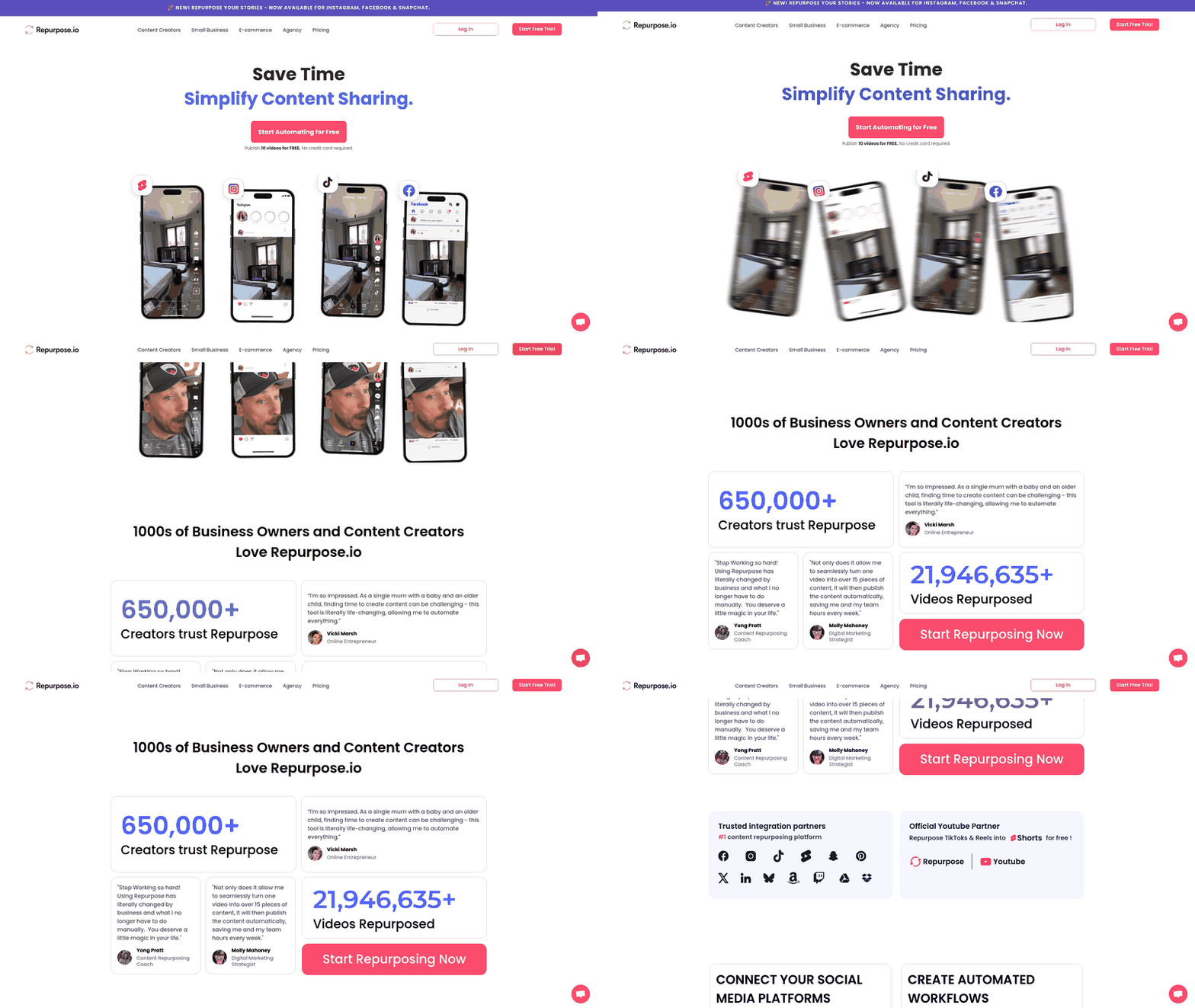
Repurpose.io is a platform designed to streamline content repurposing and lead generation, particularly for businesses seeking to automate workflows and integrate multi-source content. Since 2021, it has been leveraged for organic lead generation by transforming followers into leads through content strategies [1]. The platform is positioned as a tool for B2B demand generation, where lead generation tasks can be outsourced efficiently [4]. As mentioned in the [Understanding Outsourced Lead Generation] section, this approach allows businesses to delegate content workflows to external experts while maintaining strategic oversight. A notable example of its application includes outsourcing content repurposing for as little as $200 per week, which generated 1,495 new leads in one case [8], a metric further explored in the [Measuring and Tracking Lead Generation Success] section. This highlights its role in reducing costs while scaling outreach efforts.
Key Features of Repurpose.io
Repurpose.io enables automated content generation by combining existing core content into new formats, such as ebooks and guides, which are used for lead generation and in-depth audience engagement [6]. This feature allows businesses to transform fragmented content into cohesive resources without manual effort. Additionally, the platform supports multi-source content integration, enabling users to repurpose and distribute content across various channels to drive engagement and generate leads [7]. For instance, life sciences companies use Repurpose.io to strategically repurpose content assets across digital platforms [7], a process detailed in the [Repurposing Content for Different Channels] section. The platform’s ability to outsource labor-intensive tasks further distinguishes it, as demonstrated by its use in low-cost, high-impact lead generation campaigns [8].
Use Cases for Repurpose.io
Repurpose.io’s versatility is evident in its application across industries. In B2B demand generation, it supports strategies that combine theory with practical execution, such as turning blog posts, case studies, and webinars into targeted lead magnets [4]. For example, a single core content piece can be expanded into 180 repurposed assets, significantly amplifying reach [6]. In life sciences, the platform aids in creating consistent, compliant content that aligns with regulatory standards while maintaining audience engagement [7]. Another critical use case is outsourcing content workflows. By delegating tasks like video editing, social media scheduling, and email segmentation to external teams via Repurpose.io, companies achieve cost savings and faster time-to-market [8].
Strategic Integration for Lead Generation
The platform’s design emphasizes scalability, allowing businesses to automate repetitive tasks and focus on high-value activities. For example, Repurpose.io’s integration with multi-source content pipelines ensures that updates from blogs, podcasts, or social media are automatically repurposed into SEO-optimized formats [6]. See the [Optimizing Content for SEO with Repurpose.io] section for more details on how this process enhances SEO outcomes. While sources do not explicitly mention SEO tools within Repurpose.io, its role in creating structured, shareable content inherently supports SEO strategies by increasing content volume and keyword diversity. This is particularly valuable for industries like technology and life sciences, where demand generation relies on consistent, high-quality content [4][7].
By leveraging Repurpose.io, organizations can reduce dependency on in-house resources for content creation while maintaining a cohesive brand message. The platform’s focus on automation and outsourcing aligns with trends in outsourced lead generation, where cost efficiency and speed are critical [1][8]. Its ability to transform static content into dynamic, multi-channel assets ensures that businesses can sustain engagement across audiences without proportional increases in workload. This makes it a strategic tool for companies aiming to optimize their marketing stacks for both scale and precision.
Setting Up a Lead Generation System with Repurpose.io
Configuring Repurpose.io for Content Recycling
Repurpose.io's lead generation capabilities rely on strategic content recycling, transforming existing assets into new formats to expand reach. Begin by identifying core content pieces—such as blog posts, webinars, or case studies—and combine related materials into comprehensive ebooks or guides [6]. This approach, outlined in the Guide to Strategic Content Recycling, turns six initial content pieces into up to 180 repurposed assets, maximizing engagement while minimizing production costs [3]. For example, a webinar on digital marketing can be segmented into social media snippets, email sequences, and downloadable templates, each serving as a lead magnet [6]. By offering these resources in exchange for contact information, businesses create a scalable system for capturing qualified leads [7].

Distributing Repurposed Content Across Channels
After generating repurposed assets, distribute them across platforms to target different audience segments. The Life Science Digital Marketing Strategies guide emphasizes repurposing content for LinkedIn, Twitter, YouTube, and email campaigns to drive engagement and generate leads [7]. For instance, a technical white paper can be adapted into carousel posts for Instagram, short videos for TikTok, and podcast interviews for audio platforms [6]. Each format should align with the platform’s audience preferences while linking back to a centralized landing page for lead capture [7]. This multi-channel strategy ensures consistent messaging while optimizing for platform-specific engagement metrics [3]. See the [Repurposing Content for Different Channels] section for more details on tailoring assets to specific platforms.
Outsourcing Lead Generation Setup
Outsourcing lead generation with Repurpose.io involves delegating content creation, distribution, and analytics to specialized teams. The B2B demand generation guide highlights that lead generation can be efficiently outsourced, allowing businesses to focus on core operations [4]. For example, an agency might manage the full lifecycle of content recycling, from repurposing blog posts into email campaigns to tracking conversion rates [8]. This model reduces the time required to develop lead generation assets, as demonstrated by the 1,495 new leads generated through outsourced content repurposing efforts [8]. When outsourcing, ensure the partner has expertise in both content recycling strategies and demand generation frameworks to maintain alignment with business goals [4]. As mentioned in the [Understanding Outsourced Lead Generation] section, this approach is particularly effective for businesses seeking to scale without diverting internal resources.
Tracking Real-Time Analytics
While the sources do not explicitly describe Repurpose.io’s analytics tools, real-time tracking is implied through the iterative nature of content recycling and outsourcing. The B2B demand generation guide notes that analytics are critical for evaluating campaign performance and refining lead generation tactics [4]. Metrics such as click-through rates, conversion rates, and engagement trends should be monitored to identify high-performing assets [8]. For example, if a repurposed LinkedIn post drives more lead sign-ups than a Twitter thread, resources can be reallocated to amplify the former [7]. Although specific tools or dashboards are not detailed in the sources, the integration of analytics into outsourced workflows ensures data-driven adjustments to improve lead quality [6]. See the [Measuring and Tracking Lead Generation Success] section for more details on quantifying outcomes.
Finalizing the System
To finalize the setup, align your content recycling strategy with business objectives and audience needs. The Guide to Strategic Content Recycling recommends auditing existing content to identify gaps and opportunities for repurposing [3]. For instance, outdated blog posts can be refreshed with new data and distributed as thought leadership articles [6]. Simultaneously, outsource execution to teams capable of managing distribution, A/B testing, and performance reporting [4]. By combining content agility with outsourced expertise, businesses can create a self-sustaining lead generation system that adapts to market trends [7]. Regularly revisit analytics to ensure all repurposed assets contribute meaningfully to lead acquisition goals [8]. Building on concepts from [Advanced Strategies for Lead Generation with Repurpose.io], refining tactics like A/B testing and personalization can further enhance system effectiveness.
Repurposing Content for Different Channels
Repurposing content for different channels using Repurpose.io involves strategically transforming a single core asset—such as a blog post, webinar, or podcast—into multiple formats tailored to platforms like X/Twitter, newsletters, YouTube scripts, and more. This process reduces content creation time while expanding reach, as outlined in the Guide to Strategic Content Recycling, which emphasizes converting six core content pieces into 180+ variations across channels [6]. By automating this workflow, businesses can focus on lead generation rather than repetitive production tasks [1].
Repurposing for Social Media
Repurpose.io enables users to extract key insights, quotes, or data points from long-form content to create platform-specific social media posts. For example, a 2,000-word blog post on lead generation strategies can be split into 10–15 X/Twitter threads, each highlighting a subtopic like "5 Outsourcing Tips for B2B Marketing" [6]. The tool also supports formatting adjustments, such as converting webinar highlights into Instagram carousels or LinkedIn articles. According to Logan Cramer, this method helps turn followers into leads by maintaining consistent messaging across platforms [1].
Repurposing for Email Newsletters
Email newsletters benefit from compiling related content into comprehensive guides or case studies. The Guide to Strategic Content Recycling recommends combining blog posts, webinar recaps, and customer testimonials into downloadable ebooks, which serve as lead magnets for email list growth [6]. For instance, a series of Repurpose.io tutorials can be packaged into a "Lead Generation Playbook" and distributed via newsletters. This approach aligns with Waterfall Content’s strategy of using repurposed assets to drive engagement and nurture leads over time [7].
Repurposing for YouTube Scripts
Video content creation is streamlined by repurposing existing interviews, podcasts, or webinar recordings into scripted YouTube videos. Repurpose.io allows users to transcribe audiovisual content and extract key segments for editing, reducing production costs. A 60-minute webinar on outsourcing lead generation can be divided into 5–10 short videos, each addressing a specific pain point, such as "How to Outsource Content Creation for $200/Week" [8]. This tactic mirrors the success highlighted in a case study where outsourcing and content repurposing generated 1,495 new leads [8]. See the Measuring and Tracking Lead Generation Success section for more details on analyzing such outcomes.
Cross-Channel Optimization
Repurpose.io’s automation features ensure consistency in messaging while adapting tone and format for each platform. For example, a YouTube script’s hook can be repurposed as a newsletter subject line, and social media snippets can preview longer-form blog posts. The Life Science Digital Marketing Strategies report underscores the importance of distributing repurposed content across channels to maximize visibility [7]. Building on concepts from the Common Challenges and Solutions in Outsourced Lead Generation section, this strategy requires careful alignment to avoid fragmentation while maintaining brand coherence.
Cost and Time Efficiency
Outsourcing content repurposing through Repurpose.io minimizes labor costs while maintaining quality. As noted in a promotional video, outsourcing content workflows for as little as $200/week can yield high-impact results, such as the 1,495-lead increase achieved by one user [8]. This efficiency is critical for small businesses and B2B technology firms, as outlined in the Lead Generation for B2B Technology Companies guide, which emphasizes scalable demand generation strategies [2].
By leveraging Repurpose.io’s tools, marketers can systematically recycle content into targeted formats, ensuring each asset contributes to lead generation pipelines. The platform’s integration with analytics further allows teams to track performance across channels, refining strategies based on real-time data [6]. This approach not only optimizes resource allocation but also aligns with the "waterfall" model of content distribution, where each repurposed piece feeds into the next stage of the customer journey [7].
Optimizing Content for SEO with Repurpose.io
Repurpose.io enhances SEO by enabling strategic content recycling, which amplifies visibility through increased content volume and format diversity. By transforming a single piece of content into multiple formats (e.g., blog posts, social media snippets, videos), the platform supports SEO through broader keyword targeting and improved search engine crawlability [3]. For instance, repurposing a webinar into a blog post and video tutorial allows optimization for long-tail keywords specific to each format [6]. This approach aligns with B2B demand generation strategies that emphasize content variety to capture audience intent across search stages [4]. See the [Repurposing Content for Different Channels] section for more details on transforming assets into tailored formats.
Keyword Research with Repurpose.io
While Repurpose.io does not explicitly include built-in keyword research tools, its content recycling framework indirectly supports keyword strategy by analyzing high-performing source material. Marketers can identify frequently shared or engaged-with topics in existing content and repurpose them into new formats optimized for relevant keywords [3]. For example, if a case study receives significant traffic for terms like "outsourced lead generation," Repurpose.io allows teams to create blog posts or infographics targeting variations such as "B2B lead generation outsourcing strategies" [6]. This method mirrors life science digital marketing practices, where content is iteratively refined based on analytics to align with search trends [7]. As mentioned in the [Understanding Outsourced Lead Generation] section, identifying high-value topics is critical for aligning content with audience needs.
Meta Tagging and Content Optimization
Optimizing repurposed content requires manual meta tag adjustments, as Repurpose.io does not automate this process. Each new format—such as a video script or social media carousel—must include unique title tags and meta descriptions tailored to its specific keyword focus [3]. For example, a video repurposed from a blog post might use a title like "How Outsourced Lead Generation Boosts B2B Growth | [Company Name]" while the blog post could target "outsourced lead generation services for tech companies" [6]. This manual optimization ensures search engines index each asset correctly, aligning with general SEO best practices for B2B technology firms [2].
Content Optimization for Search Intent
Repurpose.io’s strength lies in aligning recycled content with user search intent, a critical factor in SEO success. By analyzing audience engagement metrics (e.g., shares, comments) on source content, marketers can determine which topics address informational or transactional intent and prioritize those for repurposing [8]. For instance, a high-engagement guide on "outsourcing lead generation" might be split into a step-by-step checklist (transactional intent) and a comparison article (informational intent), each optimized for distinct search queries [3]. This strategy mirrors demand generation tactics that segment content to match buyer journey stages [4]. Building on concepts from the [Setting Up a Lead Generation System] section, aligning search intent with content formats enhances lead qualification and conversion.
Leveraging Content Recycling for SEO Authority
Creating multiple content assets from a single source builds SEO authority through internal linking and backlink potential. Repurpose.io facilitates this by generating interconnected content that links to one another, improving domain authority [3]. For example, a whitepaper on lead generation could link to a related blog post and a video explainer, creating a content cluster that signals topical relevance to search engines [6]. This technique is particularly effective in B2B contexts, where in-depth resources drive long-term organic traffic [2]. Additionally, repurposed content increases the likelihood of earning backlinks, as diverse formats (e.g., infographics, case studies) appeal to different audiences [7].
By integrating Repurpose.io into SEO workflows, teams can systematically expand their content inventory while adhering to search engine best practices. The platform’s focus on strategic recycling complements traditional SEO efforts by addressing keyword diversity, search intent alignment, and content authority—key drivers of organic visibility in competitive markets [3][4]. However, success requires manual optimization of meta elements and intentional keyword targeting beyond the platform’s core features [6].
Measuring and Tracking Lead Generation Success
To measure the success of lead generation efforts using Repurpose.io, focus on quantifiable metrics such as the number of new leads generated and the cost per lead. For example, the video [8], as discussed in the Understanding Outsourced Lead Generation section, highlights a case where outsourcing and content repurposing strategies yielded 1,495 new leads, demonstrating the scalability of this approach. Tracking lead quantity provides a direct measure of campaign effectiveness, while monitoring costs—such as the reported $200 per week in the example—helps assess budget efficiency. These metrics allow businesses to evaluate whether their efforts align with financial and growth objectives.
Key Metrics for Lead Generation Success
Repurpose.io users should prioritize tracking metrics that align with both volume and cost efficiency. The video [8] explicitly states that outsourcing lead generation can produce "very very cheap" results, with costs as low as $200 weekly for a substantial lead count. To replicate this, businesses must:
- Quantify new leads: Use tools integrated with Repurpose.io to log and categorize leads generated through repurposed content.
- Calculate cost per lead: Divide total expenses by the number of leads (e.g., $200 ÷ 1,495 leads = ~$0.14 per lead in the example).
- Monitor conversion rates: While the video [8] does not specify conversion rates, tracking how many leads progress to sales opportunities is critical for long-term strategy refinement.
Using Analytics Tools with Repurpose.io
The video [8] does not detail specific analytics tools tied to Repurpose.io but emphasizes the importance of tracking lead generation outcomes through outsourced workflows. To implement this, businesses should leverage existing analytics platforms (e.g., Google Analytics, CRM dashboards) to monitor traffic sources, content engagement, and lead capture points. For instance, the example in [8] attributes success to "content repurposing" strategies, as outlined in the Repurposing Content for Different Channels section, suggesting that analytics should focus on which repurposed content formats (e.g., social posts, email sequences) drive the most leads. While Repurpose.io itself may not provide a dedicated analytics suite, integrating third-party tools ensures visibility into campaign performance.
Tracking ROI and Adjusting Strategies
Repurpose.io’s lead generation model requires continuous evaluation of return on investment (ROI). Using the example from [8], a business spending $200 weekly could calculate ROI by comparing lead acquisition costs to revenue generated per lead. If the average lead value exceeds $0.14 (as in the example), the strategy is financially viable. Adjustments should be data-driven:
- Scale successful tactics: The video [8] notes that outsourcing and repurposing content can amplify lead generation; prioritize platforms or content types that yield the highest lead volume.
- Reduce underperforming efforts: If certain repurposed content types fail to generate leads, reallocate resources to higher-performing strategies.
- Iterate based on cost trends: The example in [8] suggests costs can be "a little bit less" with optimization, so businesses should experiment with pricing models for outsourced teams.
By combining lead quantity metrics, cost analysis, and iterative strategy adjustments, Repurpose.io users can optimize their lead generation workflows. The example of 1,495 new leads at a low cost [8], as detailed in the Setting Up a Lead Generation System with Repurpose.io section, underscores the potential of outsourcing and content repurposing, but success depends on disciplined tracking and responsiveness to performance data.
Advanced Strategies for Lead Generation with Repurpose.io
Advanced strategies for lead generation with Repurpose.io require leveraging A/B testing, personalization, and account-based marketing (ABM) to maximize the value of repurposed content. These techniques build on the platform’s ability to transform existing content into diverse formats and distribute it across channels, as outlined in the Guide to Strategic Content Recycling [6] and B2B demand generation frameworks [4]. Below, we break down actionable steps for each strategy.
A/B Testing with Repurpose.io
Repurpose.io enables teams to experiment with content formats and distribution strategies by turning a single piece of content into multiple variations. For example, the Guide to Strategic Content Recycling [6] emphasizes repurposing core content into posts, ebooks, or guides, which can then be A/B tested for engagement. Logan Cramer’s work at Repurpose.io [1] highlights turning followers into leads through content, suggesting that testing different formats (e.g., video vs. text-based posts) can identify which resonates best with target audiences.
To implement A/B testing:
- Use Repurpose.io to split a single blog post or webinar into multiple assets (e.g., short videos, infographics, and email snippets).
- Distribute these variations across platforms like LinkedIn, Twitter, and email campaigns. See the Repurposing Content for Different Channels section for more details on platform-specific adaptations.
- Track metrics such as click-through rates and conversion rates to determine top-performing formats.
- Refine future content strategies based on these insights, prioritizing formats that drive higher lead generation.
This approach aligns with B2B demand generation principles [4], which stress the importance of iterative testing to optimize lead generation workflows.
Personalization Techniques for Lead Generation
Personalization involves tailoring content to specific audience segments based on their needs or behaviors. Repurpose.io supports this by enabling the creation of targeted content libraries. For instance, the Guide to Strategic Content Recycling [6] recommends combining related content into comprehensive ebooks or guides, which can be segmented for different buyer personas. Building on concepts from the Setting Up a Lead Generation System with Repurpose.io section, which outlines the foundational steps for content recycling, this strategy requires structured workflows to scale personalization effectively.
Key steps for personalization:
- Audience Segmentation: Use CRM or marketing automation data to identify segments (e.g., industry, job role, or content preferences).
- Content Adaptation: Repurpose.io’s tools let teams customize headlines, CTAs, and visuals for each segment. For example, a SaaS company might create two versions of a case study—one focused on cost savings for CFOs and another on efficiency gains for operations managers.
- Dynamic Lead Magnets: Develop lead magnets (e.g., whitepapers or checklists) using Repurpose.io’s content recycling framework [6], ensuring each version addresses a unique pain point.
By aligning repurposed content with audience-specific needs, marketers can improve conversion rates, as noted in B2B demand generation methodologies [4].
Account-Based Marketing (ABM) with Repurpose.io
ABM requires creating highly targeted content for specific high-value accounts. While the sources do not explicitly mention ABM, the principles of B2B demand generation [4] and strategic content repurposing [6] can be adapted to ABM strategies. For example, Repurpose.io can transform a webinar into personalized video messages or one-pagers tailored to individual accounts. This approach mirrors the “life science digital marketing” tactics described in Waterfall Content strategies [7], where content is customized for niche audiences.
To apply ABM with Repurpose.io:
- Identify Target Accounts: Use CRM data or market research to prioritize accounts.
- Repurpose Content for Specific Needs: Adapt existing content (e.g., a case study) into account-specific formats, such as personalized emails or LinkedIn messages.
- Automate Distribution: Use Repurpose.io’s scheduling tools to deliver content at optimal times for each account.
- Measure Engagement: Track opens, clicks, and conversions to refine ABM efforts. Refer to the Measuring and Tracking Lead Generation Success section for insights on evaluating campaign performance.
This method leverages Repurpose.io’s ability to scale personalized content creation, reducing the manual effort typically required for ABM campaigns [4].
Limitations and Considerations
While the sources provide a foundation for these strategies, they lack detailed technical specifications (e.g., Repurpose.io’s API integrations or automation workflows). Marketers should cross-reference Repurpose.io’s documentation for advanced setup steps. Additionally, the success of A/B testing and personalization depends on having robust analytics tools to measure performance [6].
By combining the content recycling techniques in [6], the demand generation insights in [4], and the execution expertise highlighted in [1], teams can unlock advanced lead generation outcomes with Repurpose.io.
Common Challenges and Solutions in Outsourced Lead Generation
Outsourced lead generation often faces challenges tied to alignment, consistency, and measurement. A primary issue is misalignment between outsourced teams and a company’s strategic goals, leading to disjointed messaging and wasted resources [2]. For example, third-party teams may lack deep knowledge of niche markets or brand-specific nuances, reducing campaign effectiveness [5]. To address this, Repurpose.io enables businesses to maintain control over core messaging while scaling outreach. By centralizing content creation and distribution through its platform, Repurpose.io ensures outsourced teams adhere to predefined brand guidelines, reducing the risk of miscommunication [8]. As mentioned in the [Understanding Outsourced Lead Generation] section, this alignment is critical for maintaining campaign integrity.
Misalignment often stems from differing priorities between internal teams and external vendors. For instance, outsourced teams may prioritize lead volume over quality, creating a mismatch with a business’s conversion goals [2]. Repurpose.io mitigates this by allowing teams to define clear KPIs and success metrics within the platform. By integrating with tools like HubSpot (as noted in source [4]), Repurpose.io provides real-time data on lead behavior, helping align external teams with internal objectives. Additionally, its content repurposing features ensure that all outreach material—such as email sequences or social posts—remains consistent with the company’s voice and messaging [6]. See the [Measuring and Tracking Lead Generation Success] section for more details on aligning metrics between internal and external teams.
Inconsistent content quality and quantity can dilute brand identity and reduce lead engagement [4]. Outsourced teams may struggle to produce high-quality, varied content at scale, leading to repetitive or low-impact campaigns [5]. Repurpose.io solves this by automating content recycling: a single piece of content (e.g., a webinar or blog post) can be transformed into 180+ assets, including social posts, email templates, and video snippets [3]. This not only maintains consistency but also ensures a steady pipeline of material for outsourced teams to work with. For troubleshooting, users should verify that their source content is structured strategically, as outlined in [6], to maximize Repurpose.io’s repurposing capabilities. Building on concepts from the [Repurposing Content for Different Channels] section, this automation ensures platform-specific content remains effective.
References
[1] Logan Cramer - Director of Marketing And Development | LinkedIn - https://www.linkedin.com/in/loganpcramer
[2] Lead Generation for B2B Technology Companies: 2024 Guide - https://belkins.io/blog/lead-generation-for-technology-companies
[3] Guide to Strategic Content Recycling: Turn 6 Pieces Into 180 - https://storychief.io/blog/content-repurposing
[4] B2B demand generation: the ultimate guide to building demand gen ... - https://fullfunnel.io/b2b-demand-generation/
[5] Your 2026 Guide to Lead Generation vs. Outsourcing: What Small ... - https://leadingresponse.com/blog/your-guide-to-generating-leads-versus-outsourcing/
[6] Guide to Strategic Content Recycling: Turn 6 Pieces Into 180 - https://storychief.io/blog/content-repurposing
[7] Life Science Digital Marketing Strategies | Waterfall Content - https://www.ramarketingpr.com/insights/waterfall-content-strategies/
[8] The Secret to 1,495 New Leads: Witness the Power of Outsourcing and Content Repurposing! by Automated Marketing Mastery - https://www.youtube.com/watch?v=a8WPUjSigtw
Frequently Asked Questions
1. What is outsourced lead generation, and how does Repurpose.io facilitate this process?
Outsourced lead generation involves delegating the identification and conversion of potential customers to external experts or agencies. Repurpose.io specializes in this by leveraging content repurposing to turn existing materials (e.g., blogs, videos) into diverse formats like social posts, email campaigns, and guides. This approach automates lead generation by expanding content reach and optimizing for SEO and audience engagement, as highlighted in the article. Repurpose.io’s focus on strategic content recycling allows businesses to scale efficiently without diverting resources from core operations.
2. What are the key benefits of outsourcing lead generation compared to in-house efforts?
Outsourcing offers cost efficiency, access to specialized expertise, scalability, and reduced overhead. For instance, a case study cited in the article achieved 1,495 new leads at $200/week—far cheaper than hiring and training an in-house team. External agencies also bring advanced tools for data-driven segmentation, automated follow-ups, and real-time analytics. This flexibility is critical for B2B technology companies navigating dynamic markets, as they can scale efforts up or down based on campaign demands.
3. How does content marketing drive success in outsourced lead generation?
Content marketing is foundational because it attracts, educates, and nurtures leads at scale. Repurpose.io’s strategy involves transforming existing content (e.g., webinar recordings, blog posts) into multiple formats—e.g., infographics, video clips, or downloadable guides—to maximize engagement across platforms. This "strategic content recycling" extends the lifecycle of core materials, ensuring consistent lead generation while reducing creation costs. For example, a single video might be repurposed into 10+ pieces of content tailored to different audience segments.
4. What metrics should I track to measure the success of outsourced lead generation?
Key metrics include cost per lead (CPL), conversion rates, lead-to-customer ratios, and ROI. The article references tracking CPL (e.g., $200/week for 1,495 leads) to assess efficiency. Other important KPIs are engagement rates (e.g., social shares, email open rates) and customer acquisition cost (CAC). Outsourced teams often provide dashboards with real-time analytics, enabling businesses to refine strategies based on data-driven insights.
5. How does Repurpose.io’s approach to content repurposing differ from traditional lead generation methods?
Unlike traditional methods that rely on creating new content from scratch, Repurpose.io focuses on optimizing and redistributing existing materials. For example, a webinar might be transformed into a video series, a podcast episode, and a downloadable eBook, each tailored to different platforms and audience preferences. This reduces content creation time by 50-70% (as noted in industry benchmarks) while maintaining high quality. The emphasis on repurposing also aligns with SEO best practices, ensuring visibility across search engines and social platforms.
6. Is outsourced lead generation suitable for all types of businesses?
While beneficial for many, it’s particularly effective for B2B companies, SaaS providers, and niche markets with complex sales cycles. These industries often require targeted, educational content to nurture leads—a strength of outsourced teams. However, businesses with highly personalized or low-volume sales may find in-house methods more suitable. The article highlights B2B tech firms as ideal candidates due to the scalability of content-driven strategies in their dynamic markets.
7. What steps should I take to choose an outsourced lead generation partner?
Prioritize agencies with proven expertise in your industry, transparent reporting, and a clear content repurposing strategy. The article’s case study (1,495 leads for $200/week) demonstrates the value of asking for performance guarantees or pilot programs. Look for partners that use tools like SEO analytics, CRM integrations, and A/B testing to optimize campaigns. Additionally, ensure alignment with your brand voice and marketing goals to maintain consistency in lead generation efforts.