
Persona Prompts Company or Software or Tool

Key Takeaways
- Role prompting increases perceived expertise but reduces clarity.
- A two-stage role-play setup lifted reasoning accuracy from 53% to 63% on GPT-3.5.
- The gains were specific to the task and model.
- In finance and tech, a plain baseline prompt often beats role prompting.
- Expert personas work best in advisory contexts like medicine and psychology.
- Across 1,140 open-ended questions and 38 expert roles, the persona advantage stayed conditional.
- As base models improve, persona layers add less value.
- At publishing scale, blanket personas can hurt readability.
Why persona prompts help sometimes and hurt others
Any persona prompts tool sounds simple: tell the model who it's writing as. Reality is messier. Persona prompts do matter, but their value depends on context. An automated publishing pipeline only wins when it knows when to apply them and when to strip them out.
One finding reframes the whole issue. A major retrieval study found that assigning expert roles creates tension between depth and readability. The same persona layer that makes copy sound more authoritative can make it harder to read. For any persona prompting software running at scale, managing that tension is the job.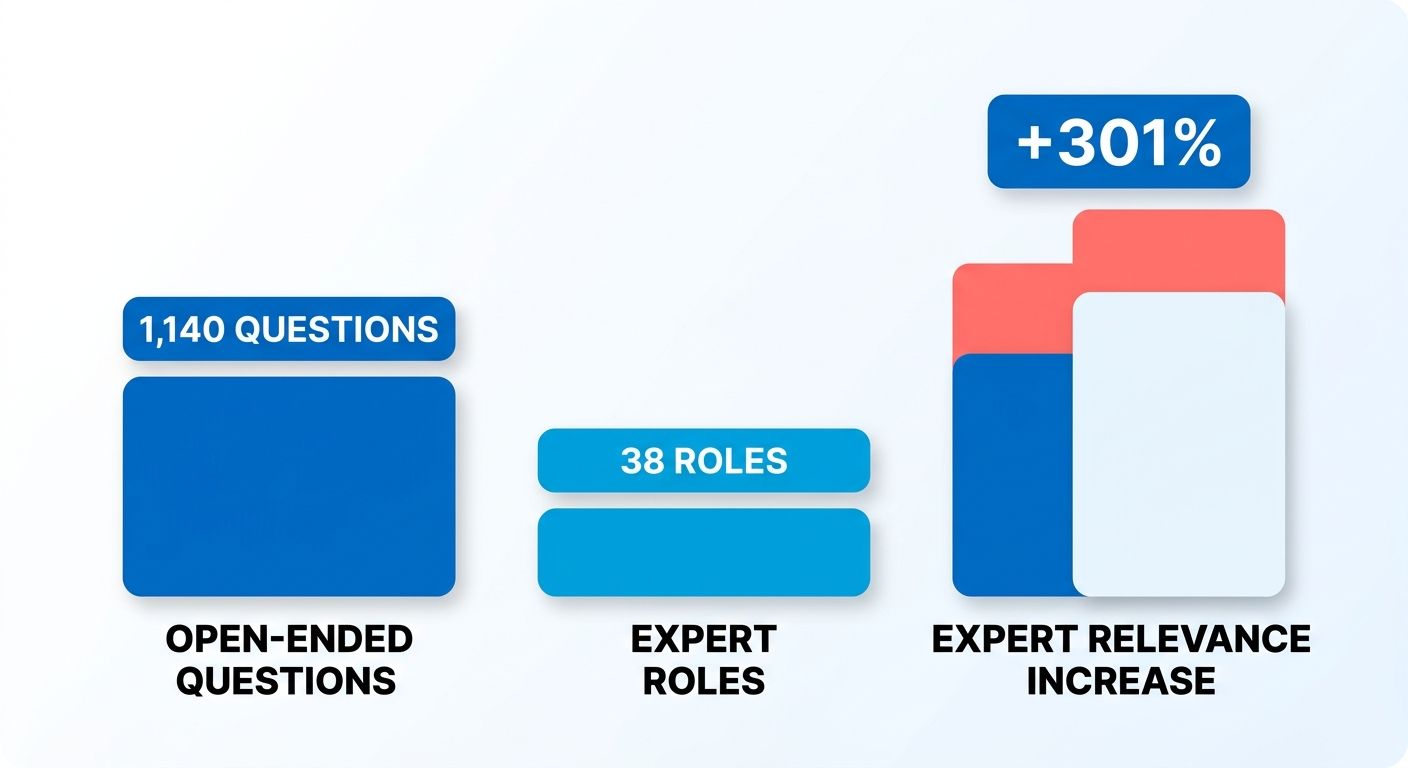
Does persona prompting actually improve content?
Sometimes. Older models showed reasoning improvements under specific multi-step role-play conditions, but newer research is blunt: a persona is not a universal upgrade. The benefits depend heavily on the domain, which means a blanket approach can backfire.
AnyPost's Persona Engine builds around your business context, crawling your site to capture how your brand sounds. The point is a voice layer that supports your content instead of fighting it. A context-aware engine knows where voice adds authority and where direct language works better.
What problem does it actually solve?
It solves consistent brand voice at volume, plus speed. One prompt-engineering study cut proto-persona creation to an average of 5.94 minutes across a 19-person session, down from days. Participants said it lowered cognitive load and freed the team for deeper strategy work.
That's the real win for B2B marketers and content teams. The bottleneck was never writing one persona. It was keeping voice consistent across dozens of pages, decks, and campaigns.
| Approach | Setup effort | Voice consistency | Best for | Difficulty |
|---|---|---|---|---|
| Manual persona docs | High (days) | Weak across assets | Small teams | Low |
| Simple role prompt | Low (minutes) | Inconsistent | One-off drafts | Low |
| Detailed persona file | Medium | Strong | Multi-asset campaigns | Medium |
| Automated persona engine | Medium setup, low ongoing | Strong at scale | Cross-platform publishing | Medium-high |
Why reusable personas beat one-off prompts
A validated persona, saved once, becomes the shared input for everything downstream: SEO articles, social posts, and whatever else you distribute. That's the automation primitive we build around. Validation is a one-time cost per persona; the value spreads across every asset it touches.
Two caveats keep us honest. Research on 83 persona prompts found 74% include dynamic variables and just over half require structured JSON output, so specificity matters more than length. And skip the persona layer entirely for factual, technical content where clarity beats authority. If you want the analytics side, pairing persona prompt engineering with real-time performance tracking gives you a feedback loop to check whether your voice choices are actually moving engagement.
Designing persona prompts that don't waste tokens
What separates a persona prompt that works from one that burns tokens is specificity, not length. Research on high-performing persona prompts points to a sweet spot around 107 words, built on dynamic variables and concrete named traits rather than a pile of adjectives. Sharper inputs keep automated systems matching your voice across every article.
There's a tension worth naming. One practitioner guide argues the more detailed and voluminous your instruction, the worse the output. A separate role-prompting analysis says the opposite: simple persona definitions don't improve performance at all, only specific and detailed ones do. Both are right. The fix isn't more words. It's sharper ones. Detail that pins down a role helps; volume that dilutes focus hurts.
What goes into a well-designed persona prompt?
A strong persona prompt names the role, the task, the context, and the output format before asking for anything creative. Skip demographics unless they move a buying decision. For B2B work, roles and responsibilities matter far more than age or location.
The research offers a worked example: a persona named Taylor Rodriguez, a marketing director at a mid-size healthcare nonprofit, built around goals like lifting donations 20% and event attendance 30% in the coming fiscal year. That prompt then spawned follow-ups to pull out the persona's vocabulary, information sources, and the two decision-makers who sign off. Notice the pattern: one validated persona feeds many downstream prompts.
A prompt built around named fields, role, vocabulary, decision criteria, and tone constraints functions as a reusable template rather than a one-time instruction. The same architecture that generates a service page can produce a CTA set or a sales deck audit without a rebuild. Treat the persona as a modular asset, not a session-specific instruction, and content operations become repeatable.
How do you test and refine a persona prompt?
Treat every AI persona as a draft, not a finished asset. Validate it against real customer data before any messaging ships. That guardrail is non-negotiable in our workflow.
The reason is documented risk. A scoping review of GenAI persona work found 45% of studies included no evaluation at all, and only 11.5% addressed hallucination detection despite the risk being well known. That gap is exactly where bad copy sneaks into production.
B2B strategist Ardath Albee put the discipline bluntly:
"Do we really know this is accurate? … Check these with your customers before using this. I don't trust this."
Synthetic personas replace the research bottleneck, not the validation step. A prompt-engineering approach can produce proto-personas in minutes, but that speed only pays off if a human check follows to keep the output honest.
Where should you skip the persona layer entirely?
Don't wrap a persona around conceptual or technical content. Forcing an expert voice onto a straightforward explanation tends to add stylistic fluff that distracts from the actual information. Match the treatment to the topic instead of applying one voice to everything.
This is the piece most persona prompting software misses. Applying a role everywhere is the mistake. Gating it by content type is where ranking-grade output comes from. A smart system maps your existing site architecture so the voice stays grounded in your real products and messaging, without overcomplicating a simple how-to guide.
Multi-persona prompting strategies
Multi-persona prompting means running several defined roles against the same brief instead of one. Give the model a buyer, a skeptic, and a subject-matter expert, and each returns a different angle on the same topic. For a persona prompts tool built for publishing scale, this is where diversity of output comes from without diluting relevance.
The research points to a real gap. An analysis across 27 research articles found that most prompts generate a single persona, which runs against the multi-persona reality of marketing work. Your buyer isn't one person. A B2B deal usually clears two or three approvers, so software that models only one voice leaves the other decision-makers unaddressed.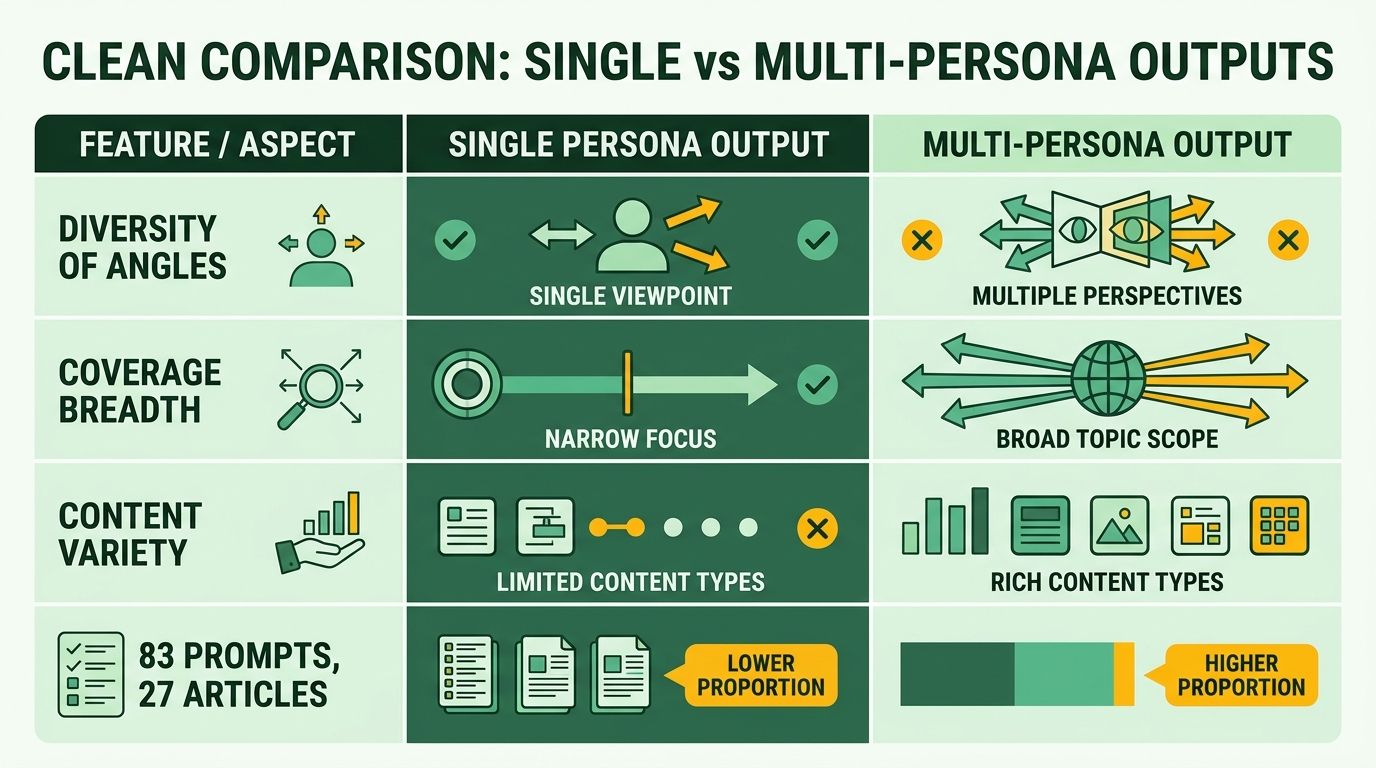
Why run multiple personas instead of one?
Multiple personas widen creative range and cover the full buying committee. Prompt structures that split role, context, and priorities into discrete slots let you branch the same base into a practitioner, a manager, and a budget-holder without starting over. That modularity is what makes running a committee of personas practical instead of tedious.
Andy Crestodina's persona work makes the stakeholder logic concrete. A well-built prompt chain doesn't just output content for one role, it maps the full approval path, surfacing who influences the decision and who controls the budget. Model the champion and the gatekeeper separately, and your content answers the objections that actually stall deals rather than speaking only to the person who found you.
A composite persona is the alternative when you need coverage without running separate voices. Instead of three prompts, you fold several buyer types into one blended profile. We use composites for top-of-funnel content and separate personas for bottom-of-funnel assets, where each stakeholder's objection needs its own answer.
How do you build a multi-persona strategy for a B2B campaign?
Start with a validated base persona, then branch it. Think of the model as a shoe-store salesperson who watches how you walk before recommending anything: teach each persona its buyer before asking for output. A campaign for a mid-market software launch might run three branches: the practitioner who uses the tool, the manager who approves it, and the finance lead who funds it.
Save each validated persona once and reuse it everywhere. That file becomes the shared input that audits web copy, CTAs, and sales decks across the campaign. One asset distributed across the workflow keeps every touchpoint on the same core message. When your publishing system matches tone across every asset while tracking how each version performs, that reuse feeds performance measurement directly.
Where does multi-persona prompting break down?
More personas mean more chances for drift. Coordination cost climbs fast once a single study runs a dozen prompts at once, and the risk of compounding inaccuracies means you have to keep cross-referencing synthetic outputs against real customer feedback.
Skip multi-persona prompting for straightforward factual or technical content. An automated pipeline should gate the persona layer by content type, reserving expert voices for advisory content and falling back to direct, unadorned instructions for technical explanations.
Integrating persona prompts into content workflows
Most teams bolt persona prompts onto their process as a one-off: write a clever prompt, paste it into a chat window, ship the draft. That doesn't scale. The gain comes when your persona prompts tool sits inside the pipeline, feeding the same validated buyer profile into every asset you publish.
Here's the primitive worth building around. Wire your validated buyer profiles directly into your CMS and the same core identity guides every piece of collateral. Whether a writer is drafting a blog post or a social update, the underlying audience assumptions stay identical, which is what makes systematic content operations repeatable.
How do you add a persona prompt into an existing workflow?
Generate a draft persona, then lock it into a reusable format before it touches any content. Three stages: draft, validate, distribute. Skip the middle one and you're automating your own inaccuracies.
Draft is fast. A capable model can produce a first-draft B2B persona in about two minutes, covering job title, industry, goals, and decision criteria. A SaaS procurement lead evaluating vendors on integration cost and security-review time, weighing a switch that could trim onboarding from six weeks to under two, is the kind of profile you get in that window: named traits, the vocabulary the buyer uses, and the triggers that push them to act.
Then validate before you distribute. Relying blindly on synthetic profiles without customer verification is a recipe for off-target messaging. The synthetic persona replaces the research bottleneck, not the human check.
What actually improves when personas live in the pipeline?
Efficiency and consistency, mostly because the persona stops getting retyped. When one profile drives every prompt, your blog, landing pages, and email all speak to the same buyer. One company saw 50% faster time to market and 10% faster sprint velocity after moving its planning work into a shared, structured workspace. The mechanism carries over to content: shared inputs cut rework.
Consistency matters because generic AI output drifts toward the average. Models train on roughly 80% of the public web, so without an ICP-specific persona layer, everything reads like everyone else's copy. A validated persona pulls the output back toward your actual buyer.
One more win: gap analysis. Feed existing copy into your model with the persona attached and ask which buyer concerns are missing. You get a fast audit instead of a rewrite from scratch, and content stays consistent from draft through publish.
Scaling without losing accuracy
The main challenge at scale is holding factual precision. Expert personas can enrich opinion pieces, but they sometimes add stylistic noise that reduces the clarity of technical documentation. So route by content type. Apply expert personas to advisory and opinion content where voice matters. Strip back to baseline prompts for technical or conceptual pieces where precision wins. A domain classifier making that call is what keeps an automated pipeline both on-brand and accurate.
Evaluating whether the persona actually worked
Measuring whether a persona prompt works comes down to one rule: use more than one metric. A retrieval study that scored responses across six separate dimensions concluded that persona prompting reshapes response characteristics rather than broadly improving capability. Any tool that reports a single "quality" score is hiding the tradeoffs you actually need to see.
Those six dimensions are worth naming: accuracy, expertise depth, relevance, safety, clarity, and time-sensitive correctness. Your persona prompting software should track each one per asset, because a role that lifts one dimension can quietly pull another down. A single average erases that signal.
What KPIs actually measure persona prompt effectiveness?
Track output-quality metrics and business metrics side by side. Score each draft across your core quality criteria, then watch engagement rate, time on page, and conversion rate for each persona variant. A persona that reads as more authoritative but converts worse is a signal, not a win.
Take two versions of the same landing page, one written through a subject-matter-expert persona, one through a plain baseline prompt. If the expert version earns longer dwell time but the baseline books more demos, your KPI stack just told you the persona added polish, not persuasion. A single quality score would have missed that split entirely.
How do you A/B test persona prompts?
Run the same brief through different prompting conditions and compare head to head. The retrieval study tested four directly: no role prompt, a generic domain-expert prompt, embedding-based role retrieval, and a hybrid method. The hybrid approach beat embedding-only role selection, which matters if you're auto-matching personas to topics.
For content teams, that maps to a live A/B test. Publish the baseline against the persona-prompted version, split your traffic, measure conversion over a fixed window. Keep in mind that persona effects are both task-dependent and output-length-sensitive. Role prompts hold up more consistently across short-form assets than across long documents, where instruction drift compounds paragraph by paragraph. Retest every time the underlying model changes.
Route by domain inside the pipeline. Advisory topics tend to reward expert personas. Conceptual and technical topics often win with a stripped-down baseline. A domain gate deciding whether the persona layer fires at all beats applying it everywhere.
What are the limits of evaluating persona prompting?
The biggest limit is that most teams skip evaluation entirely. The usual pattern: read a draft, decide it sounds right, ship it. That's qualitative review, not measurement. And it misses the failure modes that matter most: dimension-level tradeoffs where one score rises as another falls, hallucination buried inside authority-voiced claims, and tone drift across long outputs. Those only surface in structured scoring.
Structured output is what makes automated scoring practical. Machine-readable formats let you pipe persona data straight into a scoring layer instead of grading by hand. That's the mechanism behind measurable persona prompt analytics at scale. Pair it with human review on hallucination-prone claims, and evaluation stops being the step everyone quietly drops.
Future trends in persona prompting
The next phase is composability. As models improve, the question shifts from "does a persona help?" to "when should an automated system apply one at all?" Any persona prompts software built for the next few years has to answer that without a human in the loop.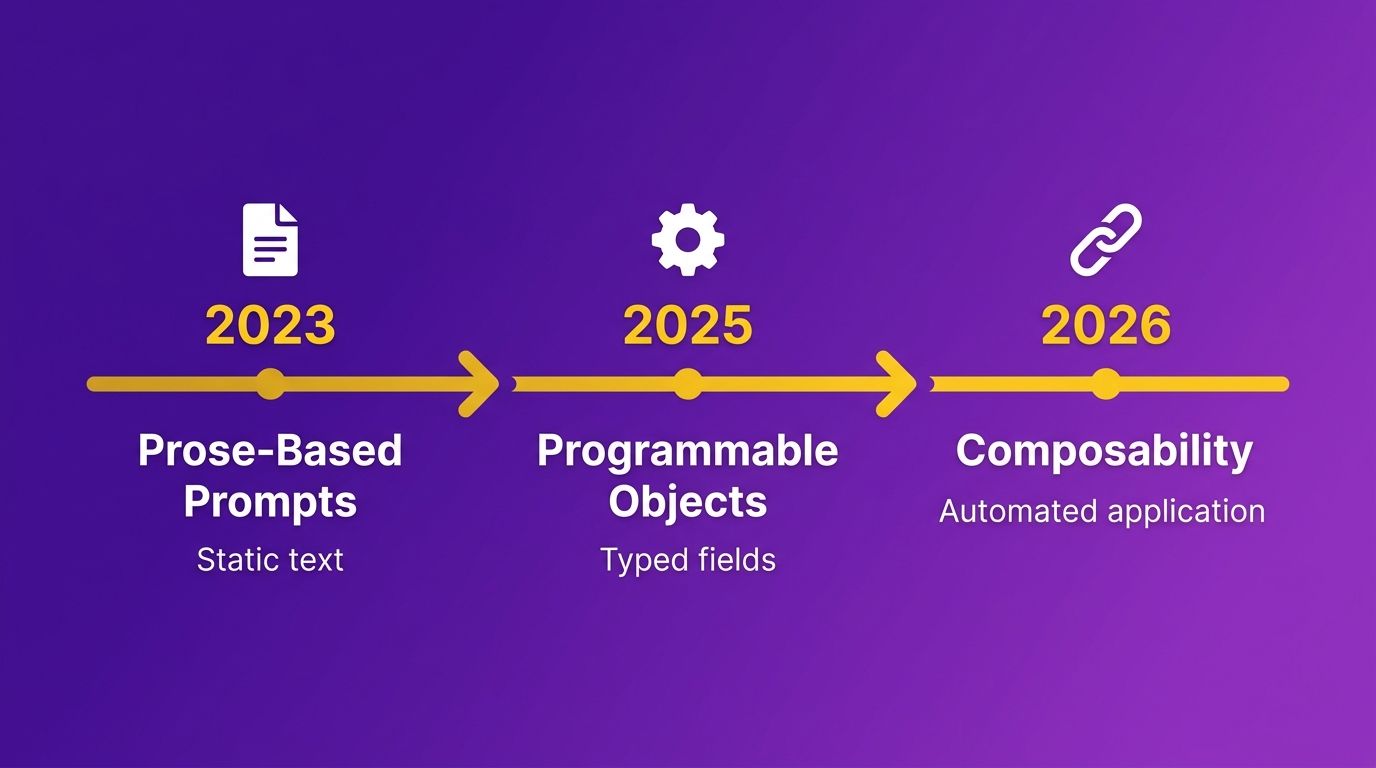
The structural fact behind it: persona definitions have moved from prose you paste into a chat box to programmable objects with typed fields and validation rules. Once a persona carries slots instead of static text, it stops being a document and starts being an interface other systems can call.
Are persona prompts becoming machine-composable?
Yes, and that's the trend that matters most for publishing. When a persona exposes named parameters for ICP traits, you pipe your buyer variables in, get a structured persona out, and feed it straight into content generation. No manual editing between steps.
Machine-readable output usually gets discussed as a formatting detail, but it's really what turns a validated persona into an input for an end-to-end pipeline that produces SEO-ready articles across platforms. Structure is what makes the automation work.
Where will persona prompting expand next?
Into domains where speed and new interfaces change the economics. Rapid proto-persona generation has already been tested on real legal-sector projects, showing that structured prompts can collapse setup times. Lower cost opens up applications that were never worth the manual effort.
Voice assistants are the obvious frontier. A persona that shapes written copy can shape spoken responses too, and adaptive-dialogue systems already model people with complex needs. As search fragments across chat, voice, and traditional SERPs, the same persona object should drive all three outputs.
Expansion has a ceiling, though. Factual retrieval and math-style problems often suffer when wrapped in a persona layer, because the extra framing adds friction rather than lift. So the future isn't "persona everywhere." It's a domain classifier deciding whether to apply the persona at all, per asset.
How do you stay ahead of persona prompting trends?
Build validation in before you scale. Most persona pipelines still ship without a verification stage, and hallucination detection is rarer still. That gap becomes a liability the moment you automate.
If you're publishing at volume, treat hallucination checks and multi-model validation as pipeline stages, not afterthoughts. A persona that invents a buyer trait will happily invent it across a hundred articles.
Skip the hype about fully autonomous persona generation for now. The concentration risk is real: one review found 86% of persona work ran on a single model family. Diversify your models, keep human oversight on high-stakes assets, and templatize the rest. That's the practical path to staying ahead without betting the whole pipeline on one vendor's output.
Frequently Asked Questions
1. Should I use a persona prompt for a technical documentation page?
No, it is best to avoid them. For technical or conceptual content, direct and unadorned instructions yield better results. Match the treatment to the topic instead, reserving expert voices for advisory contexts and using clean, straightforward prompts where precision is the primary goal.
2. How long should a persona prompt actually be?
Aim for specificity over length. High-performing prompts rely on dynamic variables and concrete named traits rather than piling on adjectives. Detail that pins down a role helps, but volume that dilutes focus hurts output quality, so sharper wording beats longer wording.
3. Is one blended persona ever better than running several separate ones?
Yes, depending on your campaign goals. Blended profiles are highly effective for broad, top-of-funnel content where you need to address a wide audience. For bottom-of-funnel assets, however, you should address individual stakeholders directly to resolve their specific objections. Match the approach to your funnel stage.
4. Can I trust an AI-generated persona without checking it?
No. Treat every AI-generated profile as an initial draft. Always validate it against real customer data before publishing. While synthetic profiles dramatically accelerate the initial creation phase, they do not replace the critical human verification step needed to ensure accuracy.
5. Why does a single "quality" score fail to measure persona effectiveness?
Persona prompting reshapes response characteristics rather than broadly improving overall capability, meaning one average hides real tradeoffs. You must track multiple distinct quality dimensions separately. A role that lifts one metric can quietly pull another down, which a single blended score conceals.
6. Do persona prompts work the same across short posts and long documents?
No. Persona consistency varies significantly based on output length. Role instructions hold up well in brief formats, but longer documents often suffer from gradual drift as the model progresses through successive paragraphs. Test each format separately, and retest whenever you update your underlying models.
7. What risk comes from relying on a single AI model for persona work?
Relying on a single model family creates significant systemic risk. If that specific model has a bias or tends to invent certain buyer traits, those errors will be repeated across all your assets. To mitigate this, diversify your models, maintain human oversight on high-stakes content, and treat verification as a core pipeline stage.