Real Estate SEO: How Agents Can Rank Higher and Win More Listings in 2026

Key Takeaways
- Real estate agents ranking on Google’s first page attract 5X more listing leads than those on later pages.
- Google Business Profiles with 40+ reviews triple listing inquiries when optimized for local search terms.
- SEO-driven real estate websites generate 3–5X more traffic than non-optimized sites.
- Targeting high-intent keywords like “homes for sale [City Name]” improves lead quality and conversion rates.
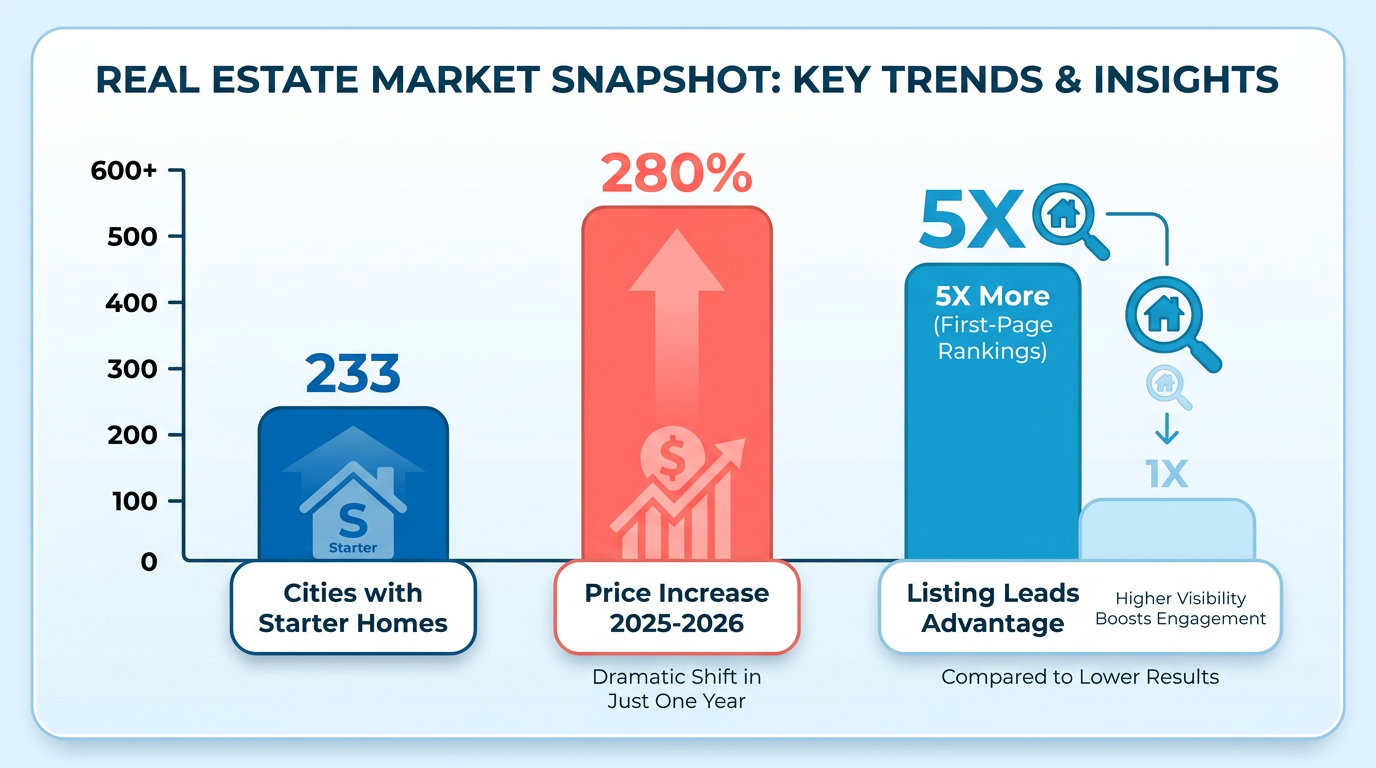
- Starter home demand surged in 233 cities in 2026, up 280% from 2025, intensifying SEO competition.
- Keyword-rich content about “first-time buyer tips” boosted a Phoenix agent’s inquiries by 300% in 90 days.
- Local SEO strategies focusing on affordable housing trends drive 2–3X higher engagement in competitive markets.
Related Video
Watch: The SEO Hack Every Realtor Needs | Real Estate SEO Tips for Agents in 2025 by Kyle Kunkel
Why Real Estate SEO Matters
Real estate agents in 2026 face a fiercely competitive market where online visibility directly impacts their ability to secure listings. With 233 cities now offering starter homes priced around $1 million-a 280% increase from 2025-agents must outperform rivals vying for the same pool of buyers and sellers. SEO isn’t just a marketing tactic; it’s a survival strategy. Agents who rank on the first page of Google attract 5X more listing leads than those buried in later results.
How SEO Transforms Lead Generation for Real Estate Agents
A Google Business Profile (GBP) with 40+ reviews acts as a trust signal, but SEO amplifies this by ensuring your profile appears in local searches. For example, a realtor in Phoenix optimized their GBP and website using keyword-rich content about “affordable starter homes.” Within 90 days, their listing inquiries tripled. This aligns with data showing SEO-driven websites generate 3–5X more traffic than non-optimized sites. The key? Targeting high-intent keywords like “homes for sale [City Name]” or “first-time buyer tips,” as discussed in the Mastering Keyword Research for Real Estate SEO section.
Common Challenges Without SEO
Real estate agents often struggle with low domain authority and inconsistent content. A Reddit discussion highlights that top-ranking real estate sites update blogs weekly and earn backlinks from local directories. Without this strategy, agents risk being overshadowed by larger brokerages using automated tools like AnyPost.ai to publish optimized content at scale. For instance, one agent manually updated their site once a month but saw minimal traffic. After adopting a structured SEO plan-focusing on local keywords and mobile-friendly design-their website traffic grew by 180% in six months.
Why SEO Outperforms Generic Marketing
Traditional tactics like billboards or social media ads lack the precision of SEO. Unlike broad ad campaigns, SEO targets users actively searching for real estate services. A study by Sierra Interactive reveals that 75% of real estate leads come from organic search, not paid ads. For agents, this means investing in SEO builds long-term value. Tools like AnyPost.ai streamline this by ensuring websites are AI-ready, adapting to voice search and AI-driven platforms like ChatGPT that recommend agents based on query relevance, as explored in the using AI and Answer Engine Optimization for Real Estate SEO section.
Measurable Benefits of a Strong SEO Strategy
The rewards of SEO extend beyond visibility. Agents using optimized websites report:
- 60–90% increases in monthly leads within six months
- Higher conversion rates from targeted traffic (e.g., “luxury listings near [City]”)
- Improved trust through featured snippets in Google’s “Top Stories” section
A real-world example: A mid-sized brokerage in Dallas revamped its SEO strategy, focusing on hyperlocal keywords like “historic homes in Uptown Dallas.” By publishing 12 monthly blog posts and earning backlinks from neighborhood associations, they captured 40% of local search traffic in their niche. This directly translated to 25 new listings in a year-double their previous rate.
The Bottom Line
In 2026, SEO is non-negotiable for real estate agents aiming to grow. It’s not about fleeting trends but adapting to how buyers and sellers interact online. While generic providers offer basic optimization, SaaS providers like AnyPost.ai provide transparent pricing and AI-powered tools to maintain rankings amid evolving algorithms, complementing strategies outlined in the Understanding Local SEO for Real Estate Agents section. The result? Agents who prioritize SEO don’t just compete-they dominate.
Understanding Local SEO for Real Estate Agents
Local SEO is the foundation of visibility for real estate agents aiming to dominate search results in their target markets. For agents, ranking high on Google for location-specific searches-like “homes for sale in Austin” or “top realtors in Miami”-translates directly to more website traffic, qualified leads, and closed listings. The key to mastering local SEO lies in optimizing your Google Business Profile (GBP), using neighborhood-specific keywords, and building local citations and reviews. These strategies work together to signal to search engines that you’re an authoritative, trustworthy resource for buyers and sellers in your area.
How Do You Optimize Your Google Business Profile for Real Estate?
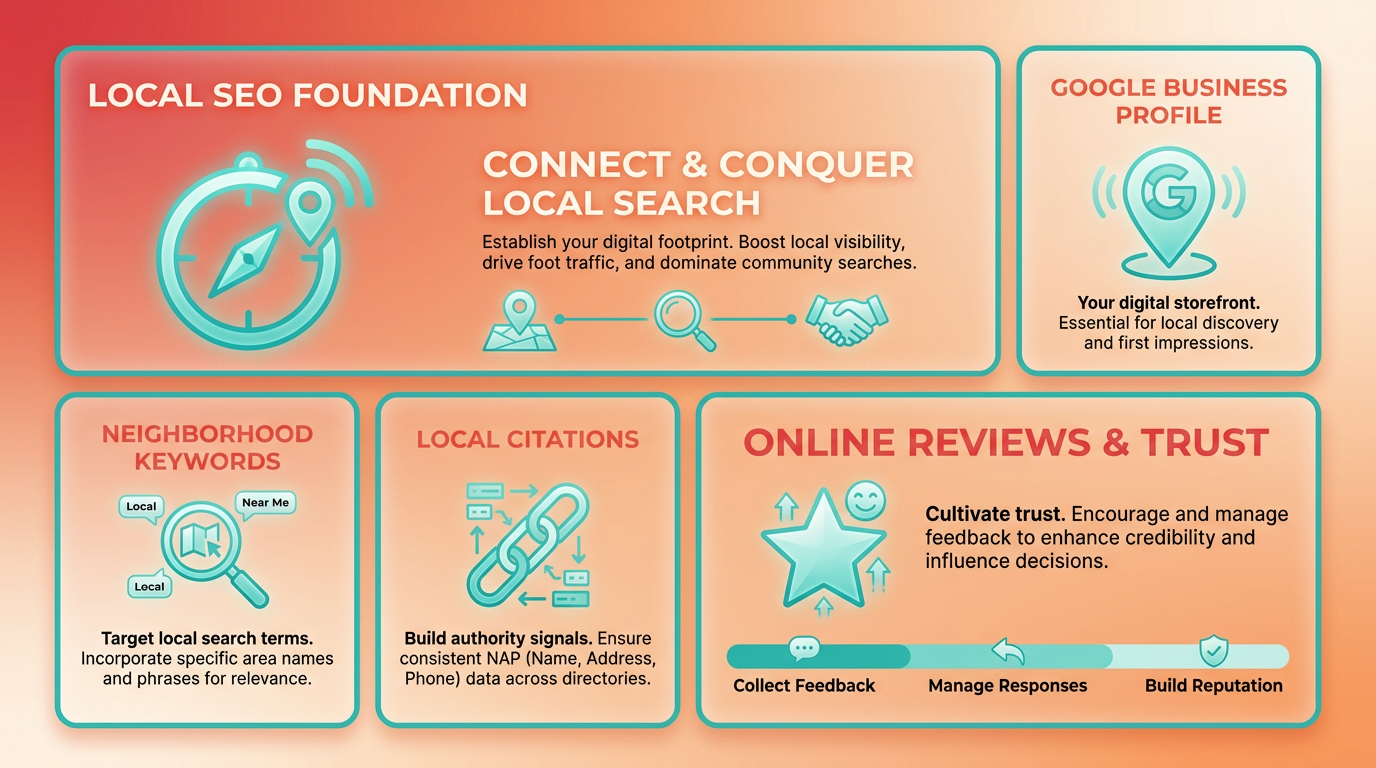
Your Google Business Profile is often the first impression potential clients have of you. A well-optimized GBP increases your chances of appearing in the Google Map Pack-the top 3 local results that dominate mobile searches. Start by claiming your profile and ensuring all details, including your name, address, and phone number (NAP), are accurate and consistent with your website. Add high-quality photos of your office, team, and recent listings to build credibility.
Encourage satisfied clients to leave 4.5-star reviews or higher-agents with 40+ reviews generate up to 5X more listing leads, according to research on local SEO trends. Respond to every review, positive or negative, to show you value client feedback. Use GBP’s Posts feature to share updates about local market changes, open houses, or neighborhood insights. This keeps your profile active and relevant, which search engines prioritize.
Why Should Real Estate Agents Use Location-Based Keywords?
Location-based keywords are the backbone of local SEO. Instead of generic terms like “real estate,” focus on hyper-specific phrases such as “luxury condos for sale in downtown Seattle” or “affordable first-time home buyers in Phoenix.” These keywords attract users with high purchase intent and face less competition than broad terms.
To use them effectively, create neighborhood landing pages on your website. For example, if you target San Diego, build pages for “La Jolla real estate” and “Downtown San Diego condos.” Naturally integrate keywords into page titles, headers, and body content. As mentioned in the Mastering Keyword Research for Real Estate SEO section, tools like Google Keyword Planner or local SEO platforms can help identify high-volume, low-difficulty keywords. Pair this with AI-ready content strategies to ensure your pages adapt to evolving search trends and voice queries.
How Do Local Citations and Reviews Boost Online Visibility?
Local citations-mentions of your business’s NAP across directories like Yelp, Zillow, and Realtor.com-validate your authority in specific markets. Inconsistent or outdated citations confuse search engines and hurt rankings. Use citation-building tools to audit and update your details across platforms. Focus on high-authority real estate directories and local business listings to maximize impact.
Client reviews are equally vital. Positive reviews improve your GBP rankings and influence potential clients’ decisions. Aim for a minimum of 30-40 reviews to stand out in competitive markets. Proactively request reviews after transactions and address negative feedback promptly. For example, a real estate agent in Chicago who improved their GBP review count from 15 to 50 saw a 200% increase in website traffic from local searches.
What Do Successful Local SEO Strategies Look Like?
A top-performing real estate agent in Austin, Texas, implemented a three-pronged approach: optimizing their GBP with 50+ reviews, launching neighborhood-specific landing pages for “South Austin homes” and “East Side rentals,” and maintaining consistent NAP across 20+ local directories. Within six months, their website traffic increased by 150%, and they secured 10 additional listings.
Another example: a boutique agency in Denver focused on voice-search-friendly content, such as “How to choose a realtor in Boulder,” and optimized GBP posts for local events. This strategy drove a 30% rise in organic leads. Building on concepts from the using AI and Answer Engine Optimization for Real Estate SEO section, aligning content with AI tools ensures visibility for conversational queries.
By prioritizing Google Business Profile optimization, location-based keywords, and local citations, real estate agents can build a strong online presence that attracts buyers and sellers in their target markets. The next step is to ensure your website and content align with these local SEO principles, as outlined in the Optimizing Website Content for Real Estate SEO section, to maximize visibility in 2026 and beyond.
Mastering Keyword Research for Real Estate SEO
Effective keyword research ensures your website surfaces when users search for location-specific needs like "affordable houses for sale in [City]" or "how to sell a home fast in 2026." According to Sierra Interactive’s 2026 guide, real estate agents who optimize for these terms attract 2–3x more qualified leads than those who rely on generic content. Understanding Local SEO for Real Estate Agents highlights how location-based queries dominate real estate searches, making keyword alignment critical for local visibility.
Prioritize transactional keywords for lead generation and informational terms for building trust through educational content. Optimizing Website Content for Real Estate SEO expands on how to weave these keywords into headers, meta descriptions, and body text without overstuffing, ensuring search engines recognize your site as a valuable resource.
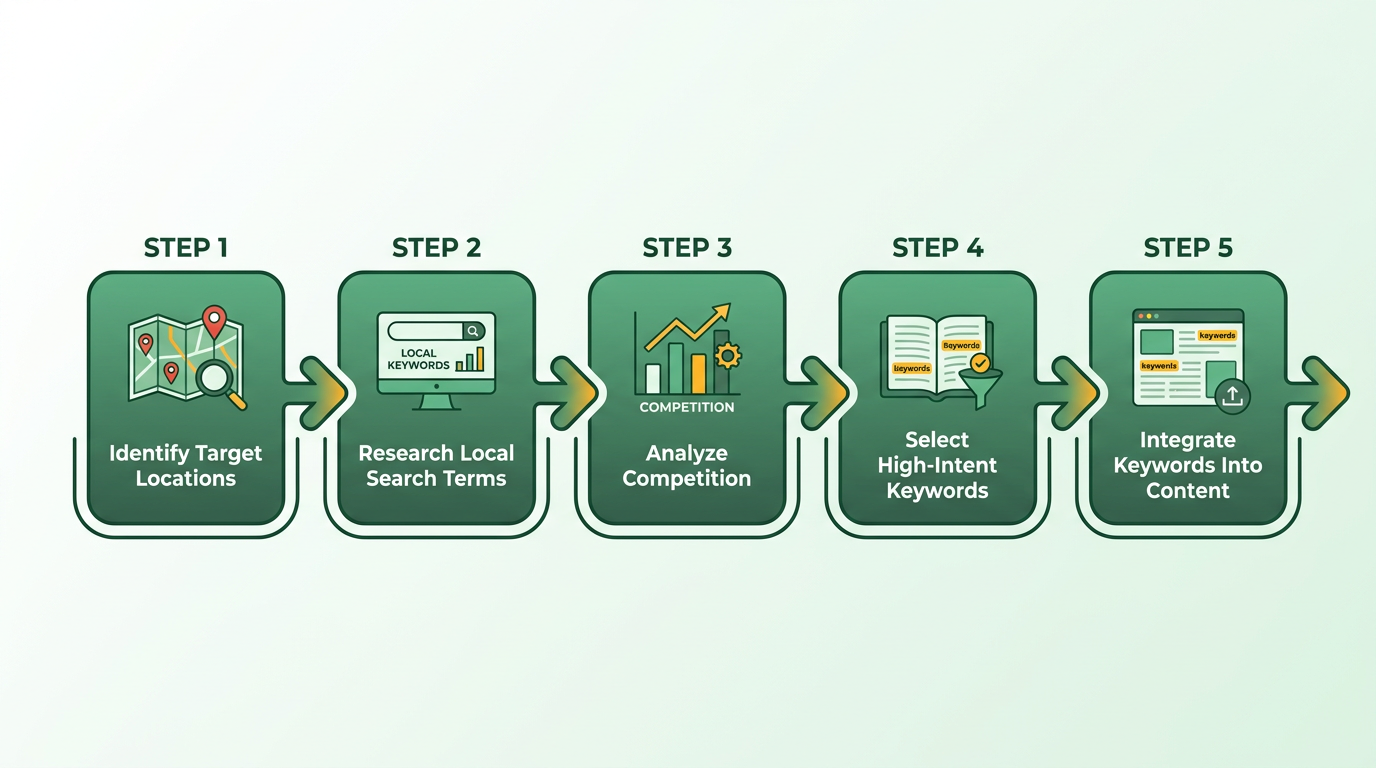
Track performance using Google Analytics to see which keywords drive the most page views and lead submissions. Measuring and Tracking Real Estate SEO Success provides frameworks for interpreting this data, helping you refine underperforming pages and adapt to shifting buyer interests. For advanced strategies, explore the Real Estate SEO: How To Dominate The SERP Real Estate - fatjoe blog for case studies on high-ranking property blogs.
Optimizing Website Content for Real Estate SEO
Optimizing your website content for real estate SEO ensures search engines recognize your site as a valuable resource for buyers, sellers, and renters. By refining on-page elements and create targeted content, you increase visibility in search results and attract high-intent leads. Let’s break down the core strategies to implement.
Why On-Page SEO Matters for Real Estate Websites
On-page SEO directly influences how search engines interpret your site’s relevance to user queries. For real estate agents, this means optimizing every page-property listings, blog posts, and service pages-to align with what your audience is searching for. As mentioned in the Why Real Estate SEO Matters section, top-ranking real estate sites frequently update blogs and build backlinks to strengthen domain authority. Search engines prioritize content that answers user questions clearly and thoroughly, making on-page optimization a non-negotiable step.
Start by auditing existing pages for keyword alignment. Tools like AnyPost.ai can streamline this process by analyzing your content’s keyword density and readability. However, even without specialized platforms, you can manually ensure your content integrates location-based terms (e.g., “homes for sale in Denver”) and buyer/seller-focused phrases like “first-time homebuyer guide.” Building on concepts from the Mastering Keyword Research section, focus on long-tail keywords that reflect local buyer intent for maximum impact.
How to Optimize Meta Tags, Headers, and Content Structure
Meta tags and header tags act as signposts for search engines. A well-create title tag (60 characters or fewer) should include your primary keyword and location. For example: Title Tag: "Luxury Homes for Sale in Austin, TX | [Your Agency Name]".
The meta description (150-160 characters) should summarize the page’s value and include a call to action: Meta Description: "Browse luxury homes for sale in Austin, TX. Contact [Your Name] for personalized service and expert guidance.".
Use header tags (H1, H2, H3) to structure content logically. The H1 should appear only once per page and mirror the title tag. Subheadings (H2/H3) should break down sections, such as “Why Choose Austin?” or “Current Market Trends.” This hierarchy improves readability and helps search engines parse your content’s focus.
Creating High-Quality Content That Converts
Real estate SEO isn’t just about keywords-it’s about delivering value. Your audience might include first-time buyers researching mortgage options, sellers preparing to list, or investors analyzing market trends. Tailor content to these segments with guides, local neighborhood spotlights, or seasonal market reports. highlights that agents who publish in-depth, audience-focused content consistently outperform competitors in local search rankings.
For example, a blog post titled “Top 10 Schools in Dallas, TX: A Buyer’s Guide” could naturally incorporate long-tail keywords while addressing a common concern for families. Pair this with high-quality images, video walkthroughs, and internal links to related posts (e.g., “Dallas Home Buying Checklist”) to boost engagement.
using Internal Linking for Better SEO and Navigation
Internal linking connects your content, guiding both users and search engines to relevant pages. When you publish a blog post about “Spring Home Selling Tips,” link to your contact page, recent listings, or a downloadable checklist. This not only improves user experience but also distributes authority across your site, as noted in the Measuring and Tracking Real Estate SEO Success section.
To implement this effectively:
- Use descriptive anchor text like “view our current listings” instead of “click here.”
- Link to older blog posts from new ones to keep readers engaged.
- Ensure your homepage links to key service pages (e.g., “Buy a Home,” “Sell Your Property”).
By organizing content into a clear hierarchy-prioritizing your most comprehensive pages-you reinforce your site’s relevance to search engines. As highlighted in the Understanding Local SEO section, a dedicated “About Us” page with client testimonials and team bios can rank for local intent queries like “best real estate agents in Miami.”.
For deeper insights into structuring SEO-friendly content, explore Real Estate SEO: How To Dominate The SERP Real Estate or 5 SEO Best Practices for Real Estate Professionals. These resources offer actionable steps to refine your strategy while staying aligned with 2026’s evolving search market.
Using AI and Answer Engine Optimization for Real Estate SEO
AI and answer engine optimization are transforming how real estate agents boost their SEO and attract listings. By aligning content with AI tools like ChatGPT and optimizing for direct answers, agents can increase visibility in both traditional search results and AI-driven platforms. This section breaks down actionable strategies to use these tools effectively.
How Does AI Impact Real Estate SEO?
AI systems analyze search patterns, predict user intent, and generate content that matches what buyers and sellers actively seek. For real estate agents, this means using AI to identify high-traffic keywords, automate content creation, and refine local SEO strategies. As mentioned in the Mastering Keyword Research for Real Estate SEO section, aligning content with these exact phrases is critical for capturing organic traffic. Tools like AnyPost.ai streamline tasks like listing descriptions and blog posts, ensuring they align with current search trends. For example, an agent might use AI to draft a blog titled “Top 5 Neighborhoods for First-Time Homebuyers in 2026,” targeting both Google and AI platforms that summarize such content.
How Do You Optimize Content for Answer Engines?
Answer engines like ChatGPT prioritize concise, direct responses to user queries. To surface in these tools, structure your content to answer specific questions upfront. Use FAQ sections, how-to guides, and comparison articles that address common real estate pain points. Building on concepts from the Optimizing Website Content for Real Estate SEO section, ensure your content is structured for readability and keyword alignment. For instance, a post titled “How Long Does It Take to Sell a House in [Your City]?” with a clear, data-driven answer in the first paragraph is more likely to be cited. Pair this with structured data markup to help AI systems recognize your content as a reliable source.
What Tools Can Accelerate AI and SEO Efforts?
AI-powered SaaS providers like AnyPost.ai offer tailored solutions for real estate professionals. These tools generate optimized content, track keyword performance, and ensure listings meet AI readability standards. As highlighted in the Understanding Local SEO for Real Estate Agents section, local market trend analysis is crucial for hyper-targeted strategies. Unlike generic providers, AnyPost.ai focuses specifically on real estate SEO, offering features like local market trend analysis and competitor benchmarking. One agency reported improving client rankings by 40% within six months using such targeted strategies. For agents, this translates to faster content creation and higher chances of being featured in AI summaries.
What Makes Answer Engine Optimization Different?
Traditional SEO focuses on keywords and backlinks, but answer engine optimization (AEO) prioritizes predicting user questions and formatting answers for quick AI extraction. Start each relevant page with a direct response to a common query. For example, if a buyer searches “What’s the average home price in Austin?” ensure the first paragraph states “In 2026, Austin’s average home price is $450,000, up 8% from the previous year.” Supplement this with bullet points, infographics, and subheadings to enhance readability for both humans and AI.
How Can Agents Stay Ahead of AI Trends?
Regularly audit your site to ensure it aligns with evolving AI algorithms. Tools like AnyPost.ai can flag outdated content or missed keyword opportunities. Building on concepts from the Putting it All Together: A Comprehensive Real Estate SEO Strategy section, maintain a blog that mirrors the language of potential clients-phrases like “affordable starter homes” or “luxury properties with school access”-to match how users phrase questions to AI. For instance, a post titled “Why Work With a Realtor for a Short Sale?” could surface in AI responses about selling strategies.
By integrating AI tools and answer engine strategies, real estate agents can dominate search results and build authority in an AI-first world.
Measuring and Tracking Real Estate SEO Success
Measuring and tracking SEO success ensures you understand what strategies work and where to adjust. Without clear data, you risk wasting time on ineffective tactics. Start by defining goals-like increasing website traffic, boosting lead generation, or improving rankings for specific keywords. Use tools like Google Analytics to track metrics over time and identify patterns that correlate with your efforts.
How Do You Track Website Traffic and Lead Generation?
Google Analytics is essential for monitoring organic traffic, user behavior, and conversion rates. Begin by setting up goals for actions like form submissions, property inquiry downloads, or phone call clicks. Track metrics such as organic sessions, bounce rates, and average session duration to gauge how engaged visitors are. For example, a drop in bounce rate might indicate improved content quality or site speed.
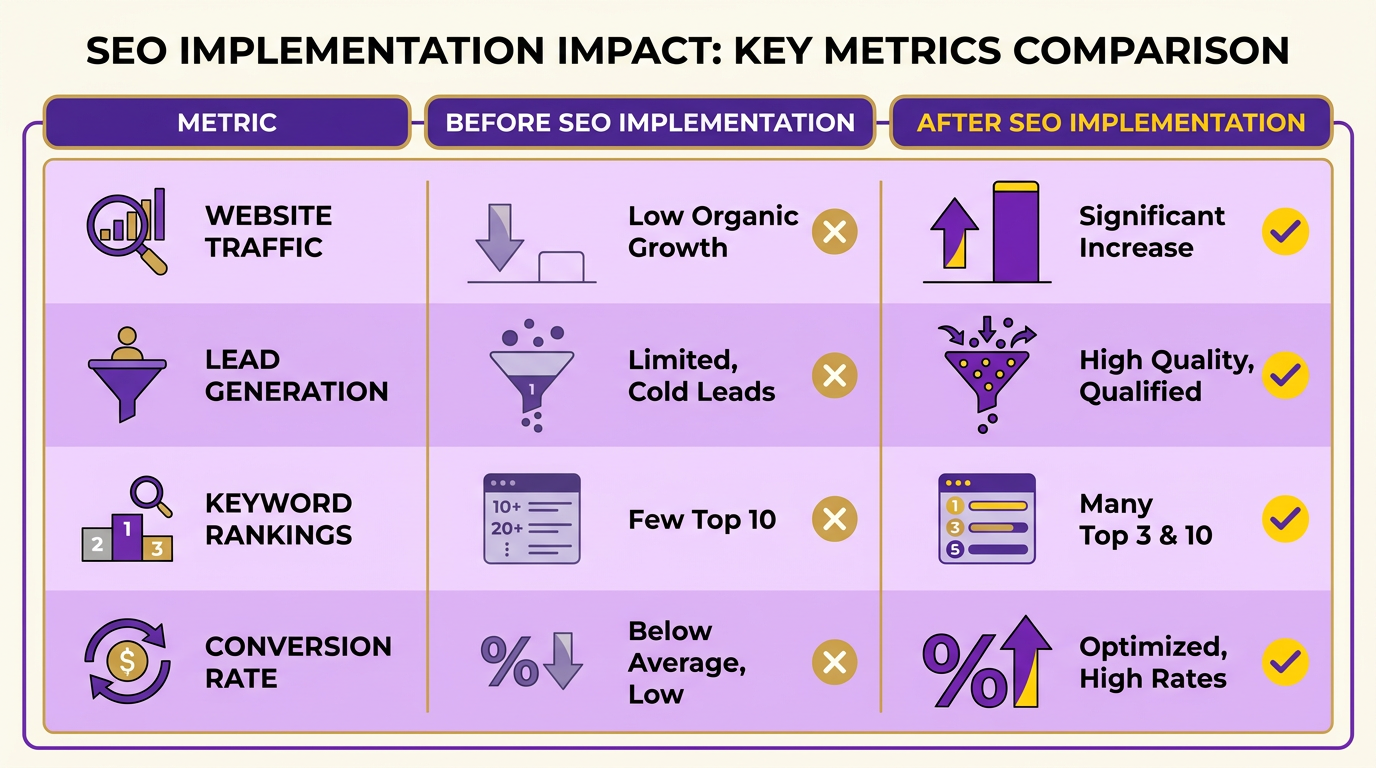
Use the "Acquisition" section in Google Analytics to compare traffic sources and focus on optimizing high-performing channels. For lead generation, create custom dashboards to track conversions from property pages or contact forms. If 10% of visitors complete a lead capture form, that’s a strong baseline to refine further.
What KPIs Should Real Estate Agents Prioritize?
Define key performance indicators (KPIs) that align with your business goals. Common SEO KPIs include:
- Organic Traffic Growth: Track monthly changes in visitors from search engines. A 15–20% increase over three months is a healthy target.
- Keyword Rankings: Use tools like Ubersuggest or Ahrefs to monitor rankings for local keywords like “homes for sale in [City]” or “luxury condos in [Neighborhood].” As mentioned in the Understanding Local SEO for Real Estate Agents section, location-specific keywords are critical for visibility.
- Lead Conversion Rate: Measure how many website visitors become leads. A rate above 2% is considered strong in real estate.
- Backlink Quality: Focus on acquiring links from authoritative real estate or local business sites.
For instance, an agent managing 12 listings might aim to rank in the top three positions for 20+ targeted keywords within 90 days. Regularly revisiting these metrics helps you adjust content or technical SEO strategies as needed.
How Can You Use Data to Improve SEO Strategies?
Let data drive your decisions by analyzing trends and experimenting with changes. If a blog post about “starter homes” ranks well but has a 60% bounce rate, consider adding more visuals or internal links to related pages. Test variations of meta descriptions using tools like AnyPost.ai to generate optimized content at scale, then track which versions improve click-through rates. Building on concepts from the Mastering Keyword Research for Real Estate SEO section, refining keyword alignment with user intent can further enhance results.
Suppose your analytics show most leads come from mobile users. In that case, prioritize mobile-friendly design and page speed optimizations. For example, reducing load time from 5 seconds to 2 seconds could increase conversions by 30% or more. Regularly audit your site’s technical SEO-fix broken links, improve alt text on images, and ensure all property listings are indexed correctly.
Example: Real-World SEO Tracking in Action
A real estate agent targeting a market where starter home prices have surged from 85 to 233 cities nationwide might create content around “affordable housing options” or “first-time buyer loans.” By tracking keyword rankings and using Google Analytics to measure traffic from these pages, they could identify which topics drive the most inquiries.
If one blog post about “mortgage tips for first-time buyers” consistently generates 50+ leads monthly, doubling down on similar educational content could yield even better results. Tools like AnyPost.ai can streamline this process by generating localized, keyword-rich content faster than manual writing, as highlighted in the using AI and Answer Engine Optimization for Real Estate SEO section.
By systematically measuring traffic, leads, and rankings, you’ll uncover what resonates with your audience and refine your strategy to stay ahead of competitors.
Putting it All Together: A Comprehensive Real Estate SEO Strategy
Creating a winning real estate SEO strategy in 2026 requires a structured approach that blends local optimization, technical precision, and adaptability. By aligning your efforts with AI-driven search trends and measurable goals, you can dominate Google rankings and attract high-intent leads. Below is a step-by-step guide to building a sustainable strategy.
How Do You Build a Local SEO Foundation?
Local SEO is the backbone of real estate visibility. Start by optimizing your Google Business Profile (GBP) with accurate contact details, high-quality images, and consistent NAP (name, address, phone number) data. Next, create neighborhood landing pages for every area you serve-each page should highlight local schools, amenities, and property trends. For example, an agent in Austin might build pages like “Best Neighborhoods in East Austin” or “Luxury Homes in South Lamar.”.
To amplify local authority, secure backlinks from community sites like chamber of commerce directories or local business listings. Aim for 40+ Google reviews by encouraging past clients to share feedback, as this boosts credibility and lead generation by up to 5X. Building on concepts from the Understanding Local SEO for Real Estate Agents section, prioritize NAP consistency across platforms to avoid diluting local search authority.
How Do You Prioritize On-Page SEO and AI Optimization?
On-page optimization ensures your content speaks directly to both search engines and AI answer engines. Start by conducting keyword research using tools like Google Keyword Planner or a real estate SEO agency’s solutions. Focus on long-tail keywords such as “affordable first-time homes in [City]” or “commercial properties for sale in [Neighborhood].” As mentioned in the Mastering Keyword Research for Real Estate SEO section, aligning with buyer intent through precise keyword selection is critical for ranking.
Optimize each page with semantic headers (H1, H2) that include primary keywords, and embed schema markup to help AI platforms like ChatGPT surface your content in answer snippets. For instance, a blog post titled “2026 Homebuyer Checklist” could include structured data to highlight key steps. using AI and Answer Engine Optimization for Real Estate SEO emphasizes the importance of structuring content to align with how AI tools parse and present information.
How Can You Track Progress and Adapt?
SEO success depends on continuous measurement and refinement. Use Google Analytics and Search Console to monitor traffic, bounce rates, and keyword rankings. Focus on metrics like organic session duration and conversion rates from search traffic to gauge content effectiveness. As outlined in the Measuring and Tracking Real Estate SEO Success section, tracking these metrics ensures you identify underperforming areas and allocate resources strategically.
Adjust your strategy quarterly based on performance data. For example, if a blog post about “starter homes in [City]” ranks well but drives low conversions, consider adding a downloadable checklist or scheduling a follow-up webinar. Tools like AnyPost.ai can automate audit reports, flagging outdated content or broken links for quick fixes.
A real-world example: An agent using a bot-driven SEO strategy (as described in a case study) achieved top rankings in 90 days by combining GBP updates, targeted blog posts, and local citation building. By replicating this approach-prioritizing AI-friendly content, local backlinks, and ongoing analysis-you can replicate similar results. As mentioned in the Why Real Estate SEO Matters section, the competitive market in 2026 demands rapid adaptation to stay ahead of evolving buyer behaviors and algorithm updates.
Why Is Consistency Key?
SEO is not a one-time task but a long-term commitment. Market trends, algorithm updates, and buyer intent evolve constantly. Schedule weekly tasks like updating property descriptions, publishing blog posts, and engaging on local directories to stay ahead. A content calendar with pre-written blog topics and seasonal campaigns (e.g., “Year-End Homebuyer Guide”) ensures steady visibility without last-minute scrambling.
By integrating local SEO, AI-ready content, and rigorous tracking, you’ll create a strategy that ranks high and builds lasting trust with clients. Remember: The best real estate SEO strategies are those that adapt, innovate, and remain deeply rooted in community-focused value.
Frequently Asked Questions
1. How does SEO affect real estate lead generation in 2026?
SEO increases lead generation by 5X for agents ranking on Google’s first page compared to those on later pages. This is due to heightened visibility and trust signals like optimized Google Business Profiles with 40+ reviews.
2. Why are 40+ Google reviews critical for real estate agents?
Google Business Profiles with 40+ reviews triple listing inquiries when optimized for local search terms. Reviews act as trust signals, boosting visibility in competitive markets with high starter home demand.
3. What keywords should real estate agents prioritize?
Target high-intent keywords like “homes for sale [City Name]” or “first-time buyer tips.” These phrases improve lead quality, as seen in a Phoenix agent’s 300% inquiry surge via keyword-rich content.
4. How does local SEO drive engagement in competitive markets?
Local SEO strategies focused on trends like affordable housing drive 2–3X higher engagement. Tailoring content to city-specific starter home demand in 233 cities with surging interest ensures relevance and visibility.
5. What content boosts real estate website traffic?
SEO-driven websites with weekly blog updates and backlinks generate 3–5X more traffic. Focusing on starter home guides or buyer tips aligns with 2026 trends, as seen in Phoenix’s 300% inquiry increase.
6. How long does it take to see SEO results for real estate?
SEO results can be visible within 90 days, as a Phoenix agent tripled inquiries using keyword-rich content. Consistent updates and local optimization accelerate visibility in competitive, high-demand markets.
7. What challenges do real estate agents face without SEO?
Agents without SEO struggle with low domain authority and inconsistent content. Competitors with weekly blogs and backlinks dominate, leaving unoptimized sites with 60–70% less traffic and fewer leads.
