
Refine Labs vs AI Content Marketing: Which Growth Channels Build B2B Pipeline

Related Video
Watch: Everyone's Obsessed With the Wrong Thing in AI Marketing (with Megan Bowen from Refine Labs) by Safe Doesn't Scale
Quick Answers
- Refine Labs works with B2B companies, running a Split-the-Funnel analysis and Brand, Demand, Expand framework.
- Refine Labs positions itself as favoring demand creation over demand capture, betting on brand and trust instead of trackable last-click paid clicks.
- Refine Labs has reported growth in AI-referred sessions over time without paid spend.
- Some AI content platforms can be configured to analyze a client's existing site and build a context profile so articles match the company's voice.
- Agency pricing often runs on people-bound retainers; AI content engines often run on software-bound SaaS subscriptions built for lean teams.
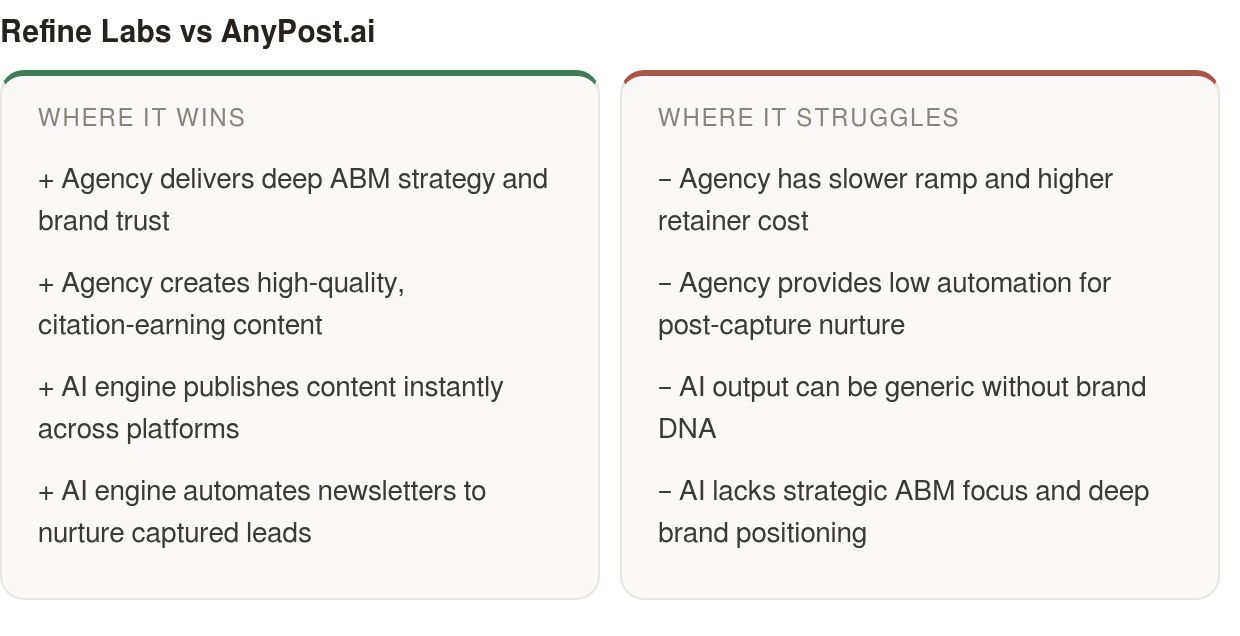
Agency or AI Engine: Who Actually Builds Your Pipeline
Pick an agency or pick an AI content engine, and you're really deciding who builds your pipeline and how fast it moves. Refine Labs sells strategy, human execution, and a demand model with a track record. AI content platforms sell scale, speed, and always-on distribution. Both feed pipeline. They just pull different levers at different stages of the funnel.
If your gap is strategy and demand creation, buy the agency. If your leads are captured and quietly going cold, buy the engine. That's the recommendation in one line, and the rest of this article is the math behind it.
Evaluate Refine Labs on growth channels and you get a team that leans toward demand creation over demand capture like paid search. That's a bet on brand and trust over trackable clicks. An automated engine can win somewhere else: the post-lead-capture stage most teams ignore, with workflows that keep captured contacts warm with consistent newsletters and social distribution between the first touch and the closed deal.
What actually separates a demand-gen agency from an AI content engine?
A demand-gen agency gives you senior strategy and done-for-you execution. An AI content engine gives you volume and automation you run yourself. Platforms like AnyPost.ai can be configured to automate content and distribution workflows so a lean team keeps publishing without a retainer.
| Factor | Refine Labs (agency) | AnyPost.ai (AI content engine) |
|---|---|---|
| Core deliverable | Demand strategy, paid execution, content | Content automation, newsletters, social distribution |
| Growth lever | Brand-led demand creation | Post-capture nurturing and velocity |
| Cost structure | Agency retainer | SaaS subscription |
| Best fit | Funded teams resetting GTM | Lean teams needing consistent output |
| Scalability | People-bound | Software-bound |
Which model moves pipeline velocity faster?
Depends on which half of the funnel you're funding. Legacy lead-gen chases a fast lift in lead volume, but Refine Labs argues that motion no longer produces the pipeline and revenue it used to. Refine Labs argues that refocusing on high-intent demand can reduce raw lead volume while improving quality enough to support more qualified opportunities.
Both sides call it demand gen. They mean opposite things. The fast lift is demand capture: trackable, last-click friendly. The high-intent play is demand creation: it trades volume for intent. And if you need pipeline to keep moving after capture, automated nurturing is the piece neither the fast-lead vendor nor the strategy retainer covers on its own.
Why does AI content quality decide who gets cited?
Volume alone loses. Generic, interchangeable AI output, the kind you could swap a logo onto and nobody would notice, doesn't get cited by ChatGPT and doesn't build trust. Some AI content platforms can be configured to analyze an existing site and build a brand-voice context profile, so articles match the company's voice.
Refine Labs puts brand and trust at the center of modern B2B growth through its Brand, Demand, Expand model. The platforms worth funding pair generation with brand-voice guardrails and structural depth, not raw throughput. Our demand gen agency checklist helps teams decide which layer to buy and which to automate.
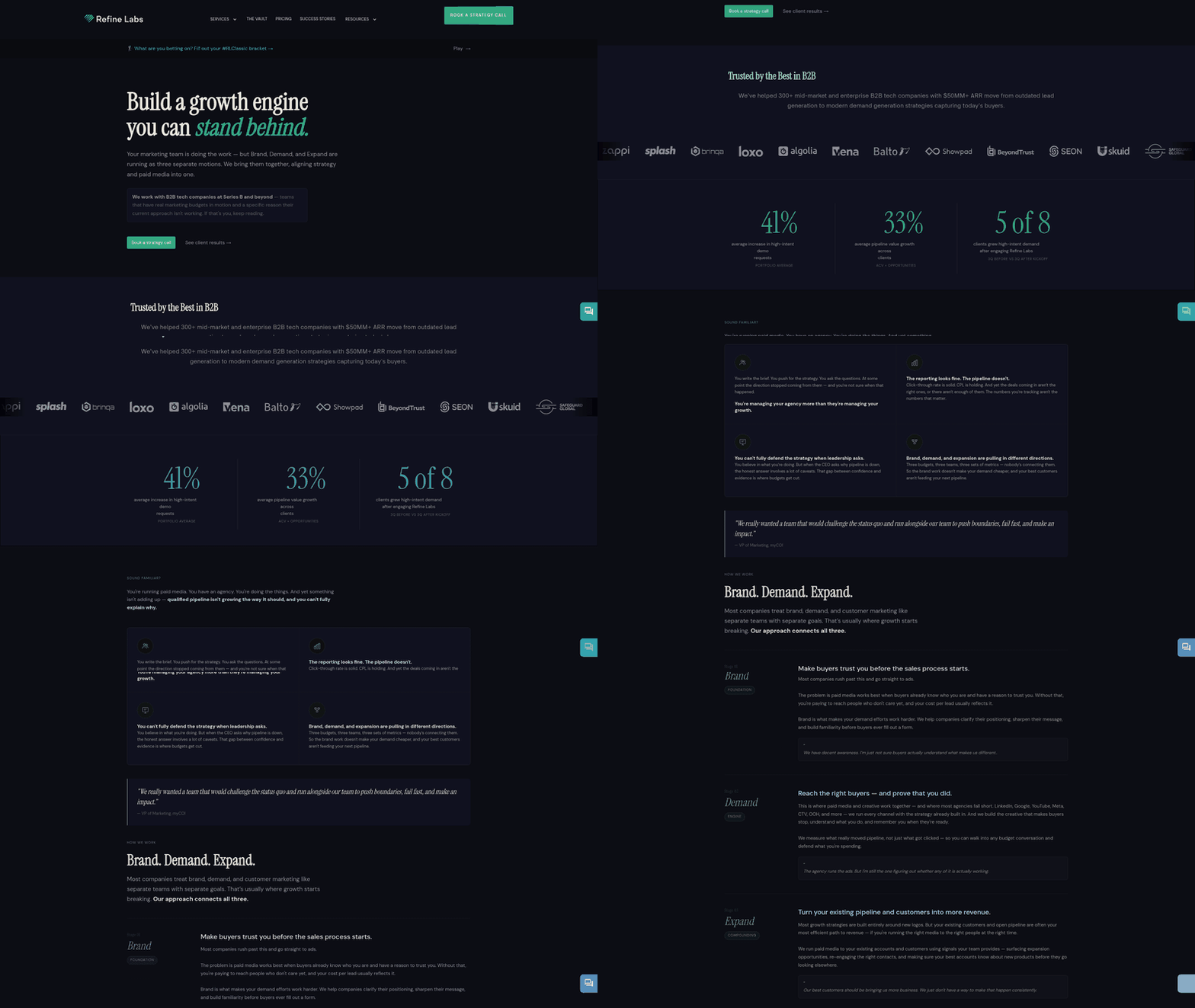
Capability Matrix: SEO, ABM, Automation, and Distribution
Line up three options and the tradeoffs get obvious fast. A demand-gen agency, a generic AI content platform, and an automated distribution engine each cover different squares of the grid. None wins every box.
Evaluate Refine Labs on growth channels and paid media and you get deep ABM strategy, demand creation, and human-led execution priced for scale. What that model doesn't do is run your post-lead-capture nurture on autopilot. That gap between demand creation and demand capture is exactly where the neglected funnel stage lives, and it's where the tools split.
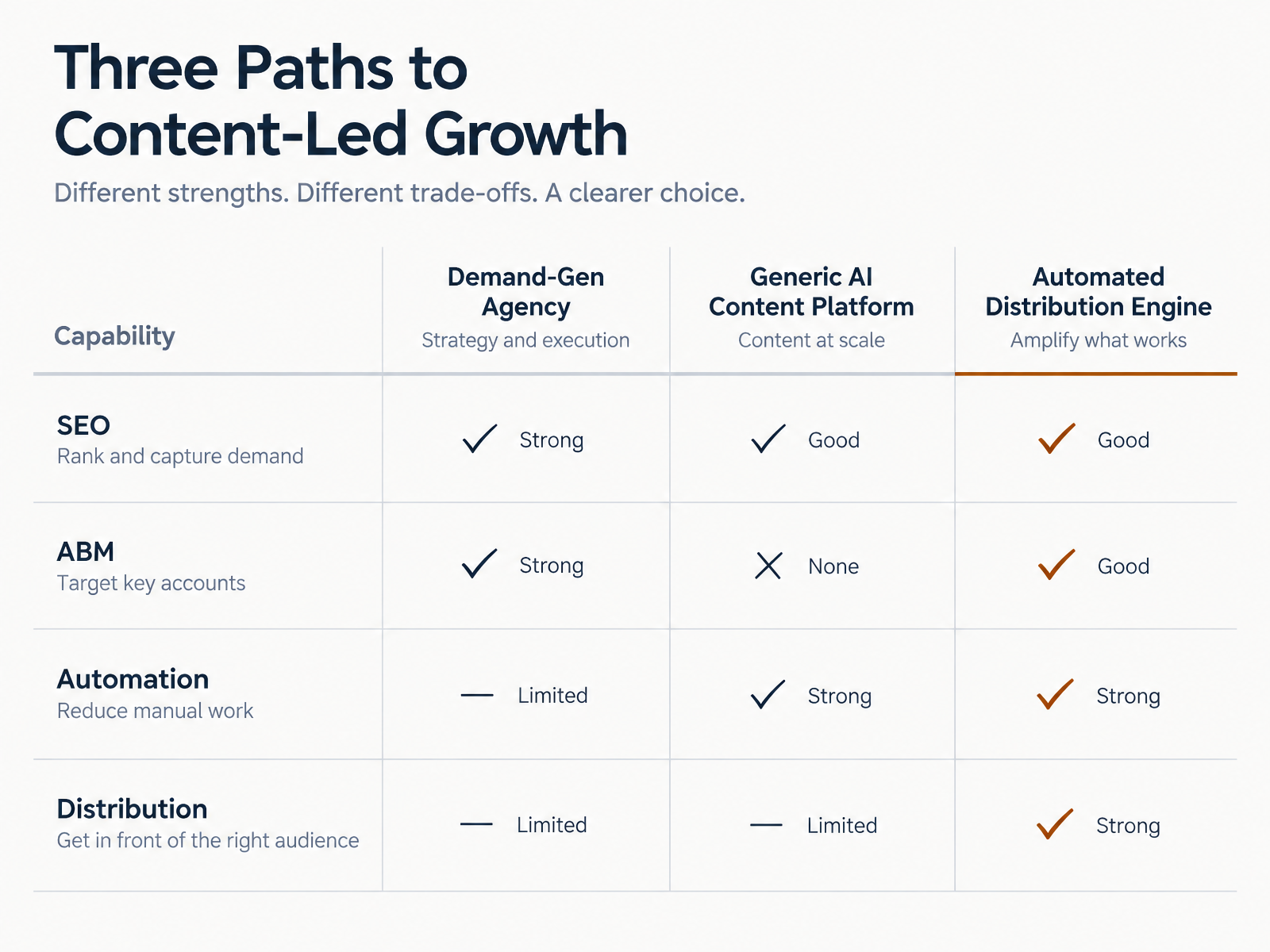
The Capability Grid Where Each Tool Actually Wins
Refine Labs is built around ABM strategy and human-led execution. Its strength is strategy and brand positioning, not turnkey automation.
Generic AI platforms flip that. They generate content at volume but stall on ABM targeting and lead nurturing. A common criticism is that many AI-generated pages are interchangeable. That's an assembly line, not a pipeline.
Our approach sits in the nurture gap: automated newsletter and social repurposing workflows can keep captured leads moving while brand and demand work compounds in the background.
| Category | Refine Labs | AI Content Platforms | AnyPost.ai |
|---|---|---|---|
| Core Focus | Demand creation + ABM strategy | High-volume content generation | Post-capture nurture + distribution |
| Distribution | Strategy-led execution | Content generation only | Multi-platform publishing workflows (e.g., LinkedIn, X, Instagram, TikTok, YouTube) |
| Pricing Model | Agency retainer | Per-seat SaaS | SaaS subscription |
| Automation Depth | Low (human execution) | High (creation only) | High (creation + newsletter + social workflows) |
| Ideal Company Stage | B2B teams scaling demand | Early content builders | Teams with leads but thin nurture |
The Timing Split Nobody Budgets For
Sit with this tension for a second. Demand capture and demand creation both wear the "demand gen" label. They aren't the same play.
The fast lift is demand capture, the trackable paid stuff. The slower one is demand creation, where buyers research you through ChatGPT before they ever convert. Refine Labs has described citation-earning brand equity as a longer, compounding climb rather than a quick bump. Fund capture and you're working a faster, trackable channel. Fund creation and you're committing to that longer climb.
Which is the case for running distribution in parallel. Automated nurture fills the space between the first lead and the slow brand payoff. Our B2B demand gen agency checklist walks through pairing an agency retainer with always-on distribution.
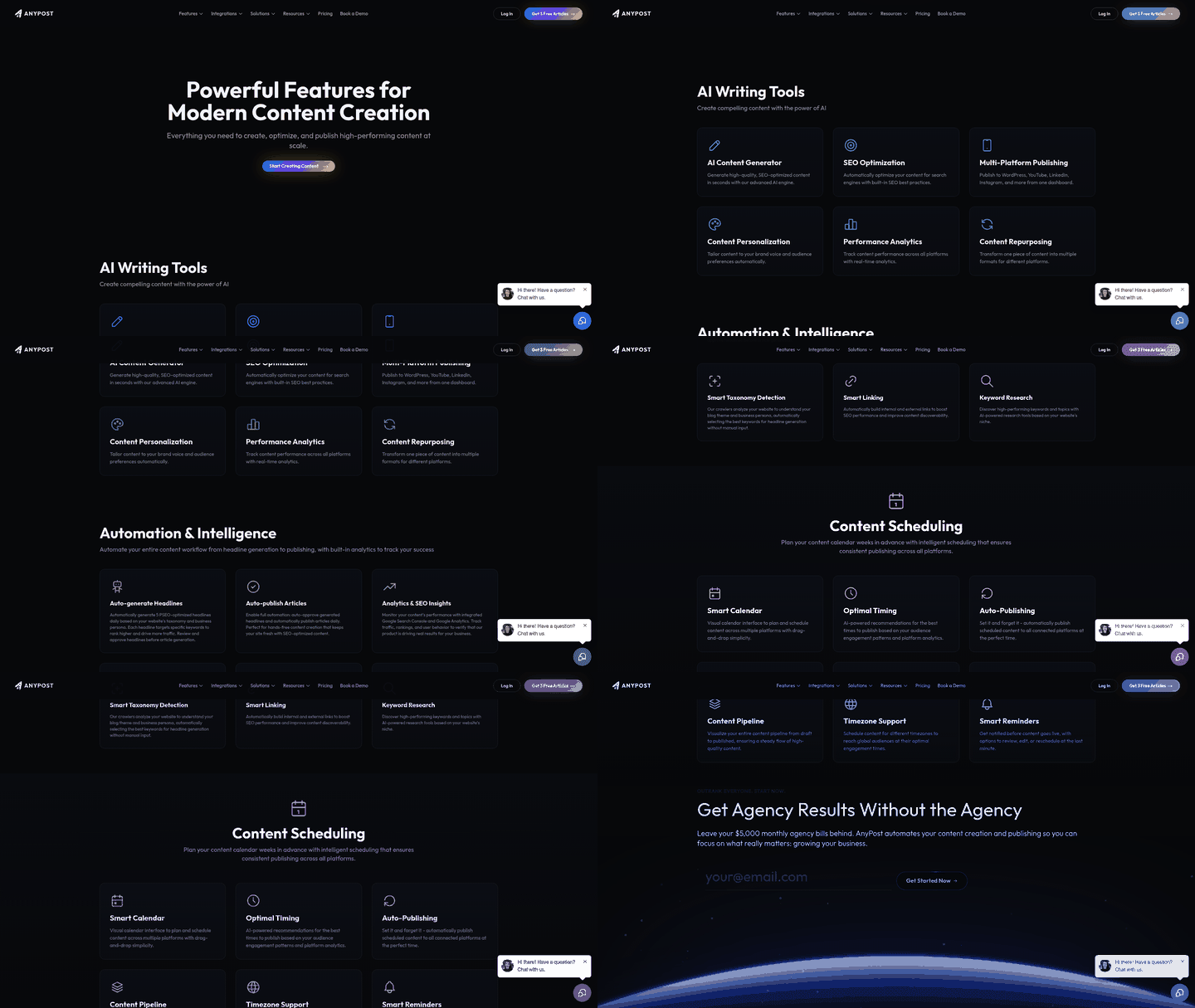
One caveat on the numbers. Provider-reported traffic and performance figures should be read directionally. The split is still clean: Refine Labs owns strategy, AI platforms own raw output, and we own the nurture stage that keeps both from leaking pipeline.
Pricing Structures & ROI Modeling
The cost side is where the two models stop looking comparable. With an agency, you're pricing a human team plus a media budget. With an AI content engine, you're pricing software that runs the distribution work at a flat monthly rate. Different math problems.
Some providers report that AI-referred traffic can grow on structured, citation-ready content without increasing ad spend. That matters because it suggests a channel can compound through content, not just through the media budget agency retainers often assume.
What Does Each Model Actually Cost?
Agency engagements generally sit at the top of the range. Some publicly available roundups describe monthly retainers, and most demand-creation programs assume a media budget on top. You're paying for strategy, human execution, and the media to amplify it.
An AI distribution engine flips the structure. The recurring cost is the subscription, and the marginal cost of publishing another newsletter or social post can be low. No required media floor.
| Cost element | Demand-gen agency | AI content engine (AnyPost.ai) |
|---|---|---|
| Base fee | Monthly retainer | Monthly subscription |
| Assumed media spend | Media budget on top | None required |
| Marginal cost per asset | Human hours | Typically low |
| Onboarding | Custom scoping | Often self-serve setup |
AI content platforms can often be configured to work with existing websites and publish to existing platforms. Some are designed to run post-lead-capture workflows, with setup centered on configuring cadence and channels rather than a multi-week strategy engagement.
How Do You Model ROI Against Your Own Pipeline?
Skip the vendor calculators. Build the equation from your own funnel. ROI here is pipeline generated divided by total cost, and total cost is where the two models split hardest.
For an agency, plug in retainer plus media plus the internal hours your team spends managing the relationship. That third line is the cost nobody quotes you. Someone on your side still briefs, reviews, and approves.
For an AI engine, the cost line is mostly the subscription. The pipeline line comes from a place agencies rarely optimize: velocity through the nurture stage. Captured leads that get consistent newsletters and social touches may convert faster, which can shorten your cycle and lift the return on every lead you already paid to acquire.
Run a simple scenario. For example, if you capture 500 leads a month, an agency program might raise top-of-funnel demand but leave those 500 to cool. A configured automated engine can keep those leads warm with distribution that costs roughly the same whether you nurture 500 or 5,000.
When should you still pick the agency? If your gap is strategy and demand creation, not distribution, the human team earns its retainer. But if your leads are captured and stalling, paying a retainer for more top-of-funnel is the wrong fix. Automated nurture solves the stage that's actually leaking. Our B2B checklist walks through where the two models should meet.
Ramp Time & Pipeline Velocity Comparison
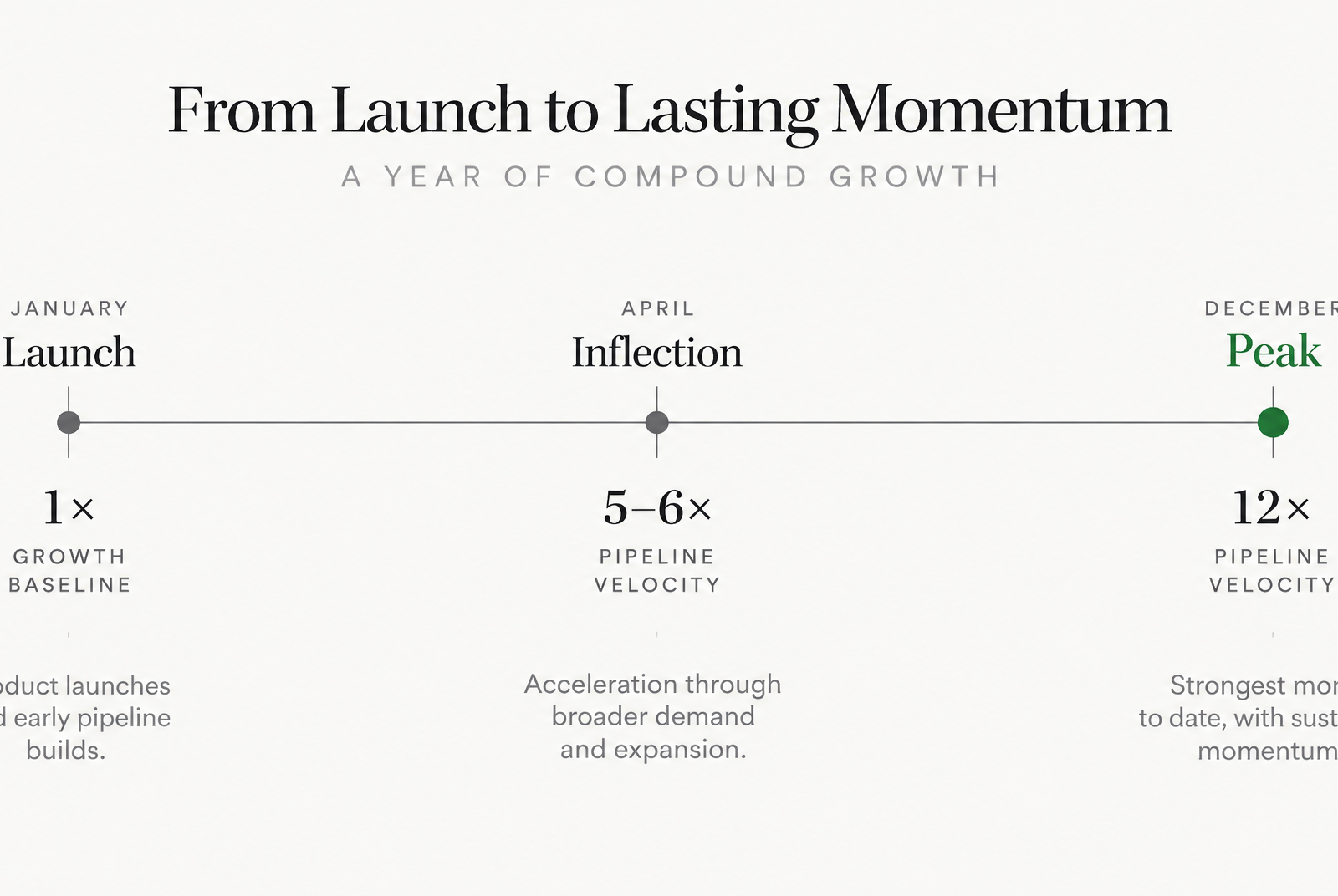
This is where ramp time matters. Some provider-reported AI-referral growth can take several months to compound before reaching a plateau. That kind of window is a useful reference when you compare how fast each approach fills a pipeline.
An agency and paid media buy you a demand-creation motion that compounds over time. Positioning and citation-worthy content build momentum gradually, not overnight. Paid demand capture surfaces trackable clicks and leads faster, but only while spend continues. An automated content engine sits in a third spot: it publishes right away but earns its pipeline lift the way brand does, over time.
Automated Publishing vs the Paid Sprint
Two things ramp on a similar clock. Any channel built on earning citations and trust compounds over a longer horizon, the way some provider-reported citation and AI-referral engines do.
Paid is the exception. Spend money, get clicks, traffic shows up fast. The tradeoff: the moment you stop paying, the leads stop. Content-driven citation keeps working after the work is done.
| Approach | Time to first publish | Ramp to pipeline lift | Main velocity lever |
|---|---|---|---|
| AnyPost.ai configured engine | Fast | Compounds over time | Post-capture nurture workflows |
| Refine Labs (agency) | Human onboarding first | Compounds over months | Demand creation, ABM strategy |
| Paid demand capture | Fast | Faster clicks | Trackable clicks (stops when spend stops) |
Time-to-First-Publish Splits the Two Models
Here's where the models genuinely diverge. An agency engagement starts with scoping, strategy, and human execution before a single asset ships. An AI content engine can be configured to automate content generation, SEO-optimized publishing, and multi-platform distribution once your business context and channels are connected.
That head start doesn't change how brand momentum compounds over months. It does mean your nurture machine can generate and distribute content while an agency is still onboarding. For a lean team, that difference in adoption speed is the whole appeal. No retainer to justify, no learning curve beyond setting a cadence.
Pipeline Velocity Lives in the Post-Capture Nurture Gap
Now the part most velocity comparisons skip. Some providers report that a large share of AI-referred sessions comes from ChatGPT, which suggests buyers are researching through AI long before they ever fill out a form. That's pre-lead-capture nurturing, and citation-earning content feeds it.
The same logic runs on the other side of the form. Once a lead is captured, automated newsletters and social distribution keep those contacts warm between the first touch and the sales conversation. Shrinking days-from-lead-to-SQL is less about a faster start and more about never letting a captured contact go cold. That post-capture stage is the lever an always-on engine pulls best, and the one an agency retainer rarely covers. Some AI content platforms include newsletter automation and multi-platform publishing workflows for channels such as LinkedIn, X, Instagram, TikTok, and YouTube. These can be configured to keep nurture running without manual effort.
Channel Effectiveness & Measurement Framework
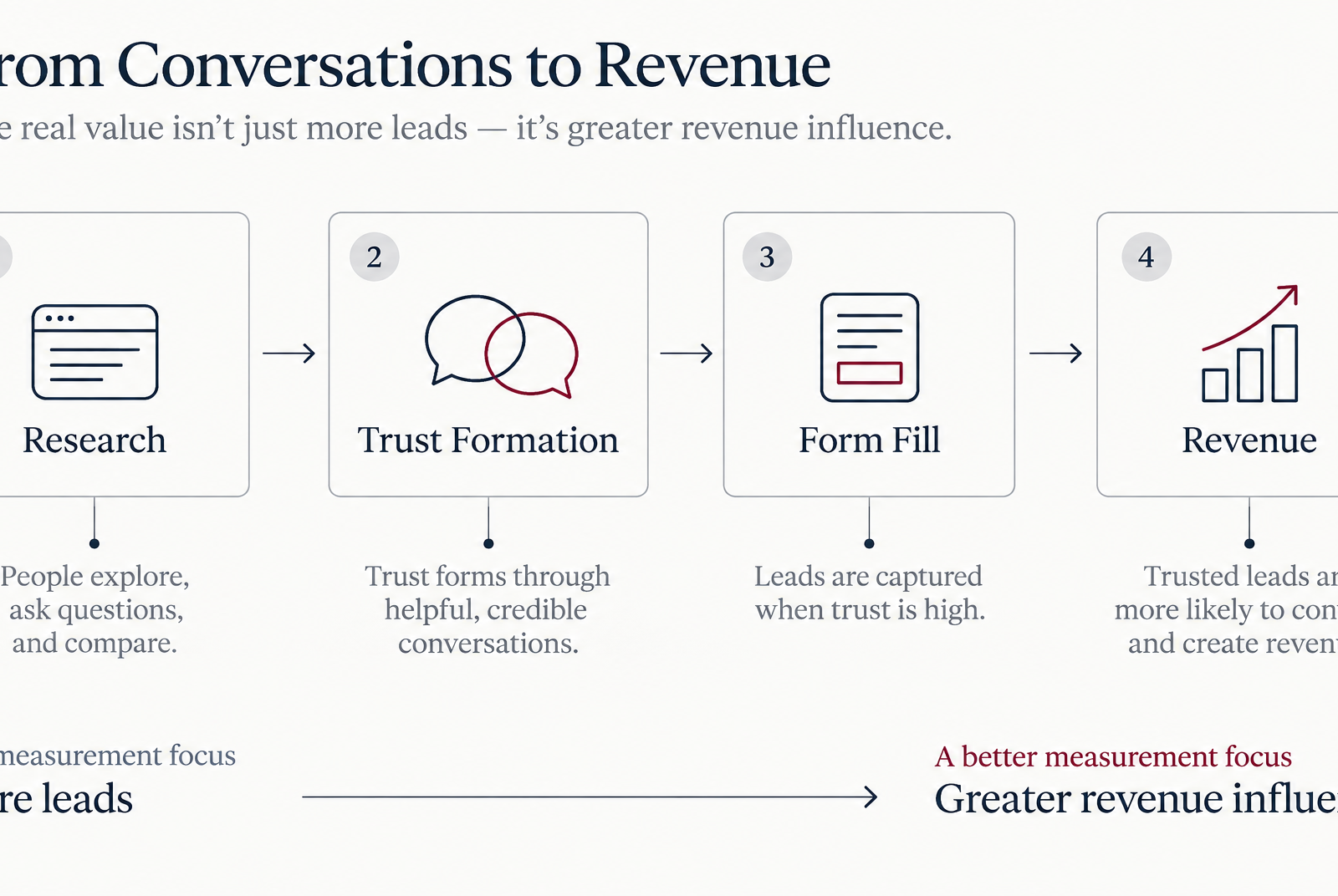
Start with the question that reframes measurement. Most channel reports answer "how many leads did this produce?" when the harder, more useful question is "which channel influenced the revenue that actually closed?" Those are two different measurements, and dashboards built around lead counts only ever show you the first. The buyer is researching inside a chat window long before any form gets filled, so a framework that starts at the form fill misses the stage where trust actually forms.
So resist the pull toward volume metrics. A channel that sources many cheap leads can influence less pipeline than one that touches a small number of high-intent accounts. Measure influence, not just output.
What Should You Actually Measure Per Channel?
Each channel earns its keep in a different currency, so a single vanity metric flattens the picture. Organic and AI-referral show up as share-of-sessions growth. Some providers report AI traffic rising as a share of total sessions without paid spend. That's a channel compounding on structure, not budget.
Paid demand capture reads in trackable clicks and cost-per-lead. Newsletters and social repurposing, the post-lead-capture layer most teams under-measure, read in engagement and pipeline velocity: how fast a captured contact moves from MQL to SQL while you keep showing up in their inbox and feed.
| Channel | Primary metric | What it proves | Best measured over |
|---|---|---|---|
| Organic / AI referral | Session share growth, citation rate | Brand gets found and cited | Months |
| ABM / demand creation | Influenced pipeline by cohort | High-intent accounts engage | Months |
| Paid demand capture | Cost-per-lead, trackable clicks | Fast, spend-dependent volume | Weeks |
| Newsletters + social (AnyPost.ai) | Open/click, engagement, MQL-to-SQL velocity | Nurture keeps pipeline moving | Ongoing |
The point hiding in that table: the front of the funnel and the back run on different clocks. Citation-earning content and ABM front-load a lag before they pay off. Automated nurture is the piece you can read week to week.
How Do You Tie Channels to One Pipeline View?
Map every touchpoint from first visit to MQL to opportunity, then read each channel by influenced revenue instead of raw traffic. This is where reporting that shows what actually changed beats reporting that just shows what was done. Some AI content platforms can surface impressions and click trends from Google Search Console alongside analytics, so you can trace results back to the content driving them instead of stitching together siloed per-tool reports.
That's the unified view worth building. One dashboard, every channel tagged to influenced revenue.
And here's where the two philosophies stop competing and start describing the same play. Refine Labs argues you win AI citations by writing for retrieval and owning specific topics, while on-page fundamentals like title tags and semantic clarity still matter. Both are right. Citation depends on structure and on-page hygiene together. And because a chatbot answer is really pre-lead-capture nurturing, the same measurement logic should extend past the form fill. Track the newsletter and social touches that carry a lead to sales, and you finally close the loop between demand creation and pipeline velocity.
Which Channel Fits Your Stage
Your stage decides more than your budget here. A pre-revenue startup and a large enterprise are solving different problems, so the same growth channel rarely fits both. The fit signals for Refine Labs are specific: Refine Labs describes its demand-gen model as targeting growth-stage SaaS companies with dedicated performance marketing budgets, and the model may not be the right fit if you lack a dedicated ad budget or need brand strategy from scratch.
That profile also tells you who Refine Labs may not be for. If you can't fund paid demand capture, or you're earlier stage, an agency retainer can burn cash before pipeline moves. An automated content engine plays a different game. It can be configured to run post-lead-capture nurture that keeps captured contacts warm, publishing SEO articles, newsletters, and social distribution without a media minimum.
Which Growth Channel Fits Your Company Stage?
Match the tool to your revenue stage and primary constraint, not to name recognition. Some practitioner shortlists make the same point: pick by specialty and client-size fit, since most directories rank by size or SEO authority instead of buyer situation.
| Company Stage | Best Fit | Why It Works |
|---|---|---|
| Early-stage startup | Automated content engine | Minimal ad-budget requirement; compounds organic and nurture from day one |
| Growth-stage SaaS | Refine Labs demand-gen | Performance marketing and attribution at scale, with ad budget |
| Mid-market/enterprise | ABM/enterprise specialist | Buying-committee orchestration built for enterprise sales cycles |
Demand-gen and full-service enterprise engagements run on retainers and multi-month commitments. Those structures price out most early-stage teams entirely.
What's the One Dimension AI Content Wins?
Automation depth across the full funnel. A demand-gen agency creates demand and captures leads, then hands the relationship back to your team. That's where pipeline stalls. The nurture stage between first touch and closed revenue gets neglected because it's manual, repetitive work.
A platform configured to generate SEO content, repurpose it into social carousels for LinkedIn and X, and distribute newsletters on a schedule can close that gap. The channel can be low-marginal-cost. The economics hold up because one source article can be repurposed into multiple social posts and a newsletter segment, so incremental output costs little beyond the initial generation. That per-asset cost curve is what a retainer model can struggle to match once volume climbs.
Tools like AnyPost.ai are positioned in this lane, with capabilities for SEO, social, and newsletter workflows from one place instead of stitching together separate point tools.
How Do You Test an AI Engine Before Committing?
Run a short, data-backed trial before you sign anything.
- Pull a recent baseline from Google Search Console impressions and clicks.
- Connect your site and social accounts, then let the platform build a voice profile from existing content.
- Publish a small batch of articles and one newsletter, then watch impressions and captured-lead nurture over a defined test window.
One honest scope limit. If your near-term goal is measurable paid pipeline and you already fund a dedicated ad budget, a demand-gen specialist will move faster on trackable capture. Choose the automated engine when you want compounding organic reach and hands-off nurture that keeps velocity up between touches.
Questions People Ask
1. Can you run Refine Labs and an AI content engine at the same time?
Pairing them is often the smarter play. An agency retainer builds demand creation and strategy up front, while an automated content engine can handle post-lead-capture nurture in parallel. That combination fills the stalling gap between first touch and closed revenue that neither covers alone.
2. Who is Refine Labs NOT the right fit for?
Earlier-stage teams or those without a dedicated ad budget. Refine Labs describes its demand-gen model as targeting growth-stage SaaS companies with performance marketing budgets. If you can't fund paid demand capture or need pure brand strategy, a retainer may burn cash before pipeline moves.
3. Why does buyer research inside ChatGPT change how you build pipeline?
Buyers now form trust before any form fill. Some providers report ChatGPT represents a meaningful share of AI-referred sessions, meaning people research you through AI long before converting. A framework starting at the form fill misses that pre-capture stage entirely, so citation-earning content matters upstream.
4. If I stop funding a channel, does the traffic disappear?
It depends on the channel. Paid demand capture stops the moment spend stops, since you're renting trackable clicks. Citation-earning content keeps working after the work is done. Some providers report it can hold a sustainable base of traffic without continued paid spend.
5. Does publishing more content automatically earn more AI citations?
Volume alone loses. Generic, interchangeable output that you could swap a logo onto doesn't get cited by ChatGPT and doesn't build trust. Some AI content platforms can be configured to analyze your existing site to build a voice/context profile, so articles match your voice rather than reading as filler.
6. How do I measure a channel that doesn't produce direct leads?
Read it by influenced revenue, not raw output. Organic and AI referral show up as share-of-sessions growth over a multi-month horizon. Map every touchpoint from first visit to opportunity, tag each channel to the revenue it influenced, and use search console impression data if available.
7. What's a low-risk way to test an AI content engine before committing?
Run a short, data-backed trial. Pull a recent baseline from Google Search Console impressions and clicks, connect your site and social accounts to build a voice profile, then publish a small batch of articles and one newsletter. Watch results over a defined test window.