
Revolutionize Your B2B Lead Generation Services

Related Video
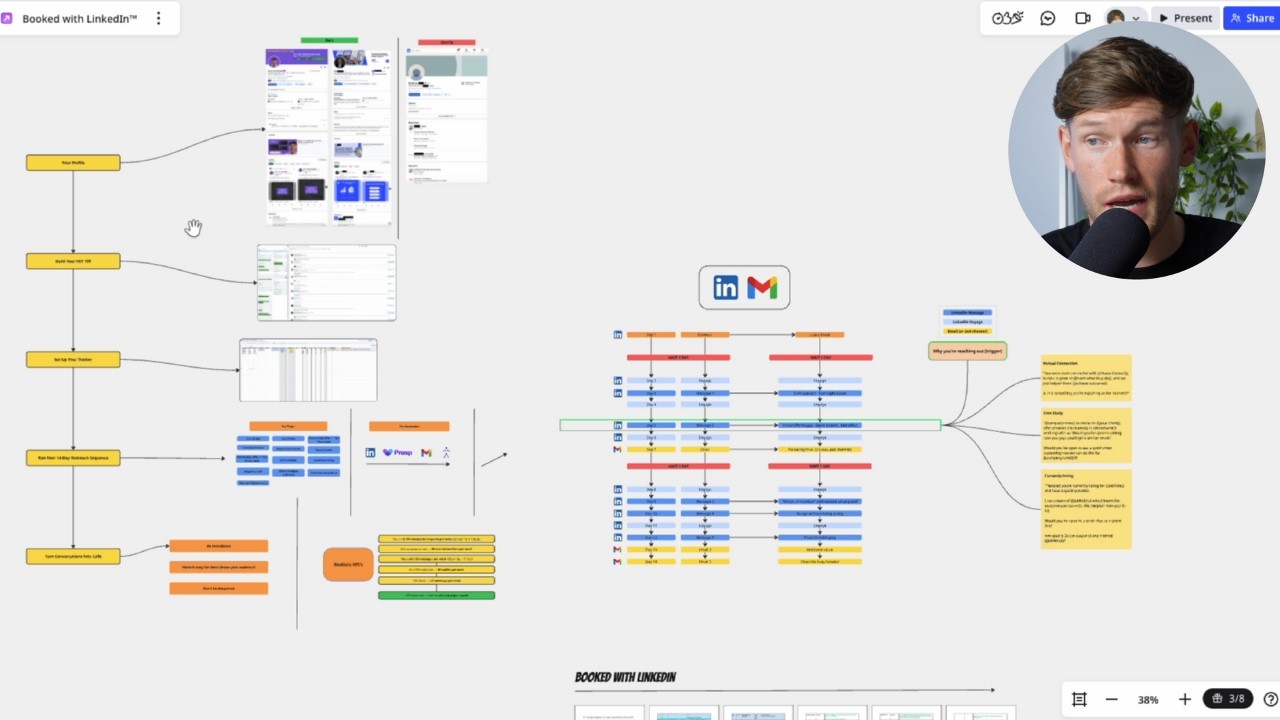
Watch: How I Sell B2B Services on LinkedIn (Step-by-Step) by Ben Greening-James
Revolutionizing B2B Lead Generation with Automated Content
Automated content generation is transforming B2B lead generation by streamlining content creation while enhancing precision in targeting. By leveraging AI-powered tools, businesses can produce SEO-optimized content at scale, ensuring consistent engagement with high-intent prospects [1]. This approach reduces manual effort, allowing teams to focus on strategic tasks like campaign execution and analytics [6]. For instance, platforms like Woorise combine interactive campaigns with customizable workflows, enabling B2B companies to automate content distribution across multiple channels while maintaining brand consistency [3]. The result is a more efficient pipeline where content aligns directly with audience needs, improving lead qualification and conversion rates [8].
Enhancing Content Creation Efficiency
Automated content generation accelerates the production of blog posts, whitepapers, and case studies by using AI to analyze market trends and generate drafts based on predefined parameters. This efficiency is critical for B2B lead generation, where timely, relevant content drives prospect engagement [11]. For example, Callbox integrates human expertise with AI to refine automated outputs, ensuring that generated content meets both SEO standards and industry-specific nuances [1]. Tools like Martal’s platform further optimize this process by automating follow-up sequences, such as personalized email campaigns, which nurture leads without requiring constant manual oversight [10]. By reducing the time spent on drafting and editing, teams can prioritize high-impact activities like sales alignment and data analysis [6].
SEO Optimization Through Automation
SEO-optimized content remains a cornerstone of B2B lead generation, and automation ensures this content is both high-quality and search-engine-friendly. Automated tools analyze keyword performance and competitor strategies to generate content that ranks higher on search engines, directly increasing organic lead generation [11]. For instance, Woorise’s platform uses AI to identify gaps in existing content strategies, suggesting topic ideas and optimizing meta tags to improve visibility [3]. This data-driven approach aligns with the principles outlined in the Marketing Automation Report 2021, which emphasizes predictive analytics for identifying high-value keywords [11]. See the [Optimizing Content for SEO] section for more details on keyword research and SEO best practices. Additionally, platforms like Only B2B leverage automation to update content dynamically, ensuring it reflects the latest market trends and search intent [6]. The result is a self-sustaining cycle where improved SEO drives more traffic, which in turn generates higher-quality leads [8].
Integrating Automation with Human Expertise
While automation enhances efficiency, successful B2B lead generation still relies on human oversight to refine messaging and ensure authenticity. Agencies like Callbox combine AI-generated content with human strategists to tailor messaging for specific industries, such as fintech or professional services [1]. Building on concepts from the [Understanding Your Target Audience] section, this hybrid model addresses a key limitation of fully automated systems: the inability to capture nuanced customer pain points without human input [3]. Similarly, Martal’s approach integrates automated lead scoring with manual outreach, allowing teams to prioritize prospects most likely to convert [10]. By balancing automation with human judgment, businesses avoid the pitfalls of generic content while maintaining scalability [6].
Scaling Lead Generation Efforts
Automation enables B2B companies to scale their lead generation strategies without proportionally increasing costs. Tools like Woorise automate repetitive tasks such as A/B testing subject lines or scheduling social media posts, freeing resources for strategic planning [3]. This scalability is particularly valuable for agencies like Only B2B, which manage campaigns across multiple clients and industries simultaneously [6]. Furthermore, automated analytics dashboards provide real-time insights into campaign performance, allowing for rapid adjustments to maximize ROI [8]. The Marketing Automation Report 2021 highlights how such tools create predictable revenue streams by standardizing lead generation workflows [11]. When paired with outbound tactics like LinkedIn prospecting or cold calling, automated content becomes a cornerstone of a comprehensive, data-driven strategy [10].
By adopting automated content generation, B2B lead generation services achieve a unique balance of speed, precision, and scalability. The integration of AI with human expertise ensures that content remains both technically optimized and emotionally resonant, addressing the dual demands of SEO and audience engagement [1]. As mentioned in the [Repurposing Content for Multiple Channels] section, automation also enables efficient content distribution across platforms, further amplifying lead generation efforts. As tools like Woorise and Callbox demonstrate, automation is not a replacement for strategic thinking but an enabler of it, allowing teams to focus on innovation while systems handle execution [3]. For businesses aiming to future-proof their lead generation efforts, this synergy between technology and human insight is no longer optional—it is essential.
Understanding Your Target Audience: Persona Engine and Tone Matching
Understanding your target audience is foundational to effective B2B lead generation, as it directly influences the relevance and resonance of your outreach efforts. In the competitive B2B landscape, platforms like LinkedIn offer prime opportunities for lead generation when strategies are aligned with audience-specific needs [12]. A critical component of this alignment is the creation of detailed buyer personas, which encapsulate job roles, pain points, decision-making criteria, and preferred communication styles [9]. These personas act as blueprints for tailoring messaging, ensuring that outreach campaigns address the unique challenges and motivations of different audience segments. Without this clarity, even the most well-executed lead generation efforts risk missing their intended targets. As mentioned in the [Revolutionizing B2B Lead Generation with Automated Content] section, AI-driven tools can enhance persona development by generating insights at scale, further refining audience alignment.
Creating Buyer Personas for Precision Targeting
Buyer personas are developed through a combination of qualitative and quantitative research, including interviews, surveys, and analysis of engagement data. According to SalesBread, a LinkedIn lead generation agency, personas enable "ultra-personalized LinkedIn outreach" by aligning content with the specific goals and pain points of decision-makers [9]. For example, a persona for a CFO might prioritize cost-saving metrics and ROI, while a persona for an IT manager might emphasize technical specifications and implementation timelines. The PDF on LinkedIn strategies further highlights that personas should incorporate behavioral insights, such as preferred content formats (e.g., case studies vs. whitepapers) and optimal engagement times [12]. By systematically documenting these details, B2B marketers can avoid generic messaging and instead craft content that speaks directly to individual stakeholders. See the [Case Studies and Examples: Successful B2B Lead Generation Strategies] section for real-world applications of persona-driven outreach.
Leveraging the Persona Engine for Tone Matching
A critical advancement in audience alignment is the use of tools like the Persona Engine, which automates tone matching to ensure messaging resonates with predefined personas. While the term "Persona Engine" is not explicitly cited in the provided sources, the concept aligns with SalesBread’s approach of using data-driven insights to adjust the "voice and cadence" of LinkedIn outreach [9]. For instance, the Persona Engine might analyze a persona’s industry (e.g., healthcare vs. manufacturing) and role (e.g., executive vs. mid-level manager) to recommend conversational tones—formal for regulatory-heavy industries or casual for tech startups. The LinkedIn strategies paper also emphasizes that tone adjustments improve engagement rates by reducing cognitive friction, as audiences are more likely to respond to messaging that mirrors their communication preferences [12]. This process is particularly valuable for B2B campaigns targeting global audiences, where cultural nuances further complicate tone decisions. Building on concepts from [Optimizing Content for SEO: Strategies and Best Practices], tone matching also supports SEO by aligning content with audience search intent and engagement patterns.
Implementing Tone Matching in Practice
To implement tone matching effectively, begin by mapping personas to specific linguistic styles. For example, a persona representing a time-constrained executive might require concise, high-level summaries, while a technical buyer persona might prefer detailed, jargon-rich explanations. SalesBread’s methodology underscores the importance of A/B testing tone variations to validate assumptions about audience preferences [9]. Additionally, the LinkedIn strategies guide recommends using tools that integrate tone analysis with CRM data, allowing marketers to refine messaging in real time based on recipient interactions [12]. For teams without dedicated tools, manual tone adjustments can be guided by persona documentation—for instance, replacing passive voice with active voice when targeting agile startups. By consistently applying these adjustments, B2B lead generation campaigns can achieve higher open rates, click-through rates, and conversion rates. See the [Measuring Success: Real-Time Analytics and Performance Tracking] section for methods to assess the impact of tone adjustments on campaign performance.
Validating and Refining Personas
Personas and tone strategies are not static; they require continuous validation against real-world engagement metrics. The LinkedIn strategies paper suggests monitoring metrics like response rates, content shares, and profile views to identify misalignments between personas and actual audience behavior [12]. SalesBread’s approach also highlights the need for quarterly persona reviews to account for market shifts, such as new competitors or evolving buyer priorities [9]. When discrepancies arise, teams should revisit data sources, conduct follow-up interviews, and update personas accordingly. This iterative process ensures that tone matching remains accurate and that buyer personas stay relevant in dynamic B2B environments. By treating personas as living documents, organizations can maintain a sharp focus on their target audience, even as market conditions evolve. For further insights on integrating audience data, refer to [Integrating Multi-Source Content for Enhanced Lead Generation].
Optimizing Content for SEO: Strategies and Best Practices
Optimizing content for SEO requires a structured approach that aligns with B2B lead generation goals. Agencies like Callbox emphasize the importance of keyword research as the foundation of SEO strategies, ensuring content addresses specific industry pain points and search intent [1]. Tools like SEMrush or Ahrefs are commonly used to identify high-volume, low-competition keywords, enabling teams to prioritize topics that resonate with target audiences [12]. For B2B audiences, long-tail keywords—such as "B2B lead generation for fintech startups"—often yield better results than generic terms, as they capture highly targeted traffic [3]. Regular audits of keyword performance, using analytics platforms, help refine focus and eliminate underperforming terms [13].
Keyword Research: Targeting B2B Audiences
Effective keyword research for B2B lead generation involves analyzing competitor content and identifying gaps in existing market coverage. Top agencies like Belkins recommend leveraging tools like Google Keyword Planner or Ubersuggest to uncover keywords with commercial intent, such as "B2B lead generation services for financial institutions" [5]. These terms align with the decision-making processes of enterprise buyers, who often search for solutions with specific industry or role-based criteria [10]. Additionally, semantic SEO techniques—incorporating related terms and question-based queries—enhance content relevance for voice search and AI-driven platforms [12]. For example, addressing questions like "How to improve B2B lead conversion rates?" directly supports user intent while boosting search rankings [13]. See the "Understanding Your Target Audience: Persona Engine and Tone Matching" section for more details on aligning keyword strategies with audience personas.
On-Page Optimization: Structuring for Visibility
On-page SEO focuses on technical and content elements to improve search engine crawlability and user engagement. Agencies such as SalesBread prioritize optimizing meta tags, headers, and image alt text to ensure clarity and keyword alignment [9]. For instance, using H1 tags to highlight primary keywords and structuring subheadings (H2, H3) with secondary terms helps search engines understand content hierarchy [4]. Content quality remains critical: Martal, a leading B2B lead generation agency, advocates for in-depth, original content that provides actionable insights, such as case studies on successful lead generation campaigns [10]. Internal linking strategies—connecting related articles or service pages—also enhance user navigation and distribute page authority effectively [8]. Building on concepts from the "Repurposing Content for Multiple Channels: A Key to Lead Generation" section, internal linking can further amplify content reach across platforms.
Link Building: Establishing Authority
Building high-quality backlinks is essential for SEO success in competitive B2B markets. Only B2B, a lead generation services provider, emphasizes earning links through guest blogging on industry-relevant websites and collaborating with thought leaders [6]. For example, publishing whitepapers or research reports on platforms like LinkedIn can attract natural backlinks from peers and clients [14]. Agencies like Callbox also invest in broken link building, identifying outdated resources on competitor sites and offering updated content as replacements [1]. Additionally, leveraging LinkedIn’s professional network—sharing insights and engaging with industry groups—creates opportunities for social signals that indirectly boost SEO performance [9].
Analytics: Measuring and Refining Performance
Tracking SEO performance requires a combination of quantitative metrics and qualitative insights. Top agencies such as Lead Generation Services use tools like Google Analytics and Search Console to monitor organic traffic, bounce rates, and conversion paths [4]. By analyzing which pages drive the most leads—such as case studies or pricing models—teams can allocate resources to high-performing content [7]. A/B testing headlines, CTAs, and internal links further optimizes user behavior, as demonstrated by Belkins’ approach to iterative content refinement [5]. See the "Measuring Success: Real-Time Analytics and Performance Tracking" section for strategies on refining SEO based on real-time data.
By integrating these strategies—keyword research, on-page optimization, link building, and analytics—B2B lead generation services can enhance their visibility in search results while delivering value to enterprise clients. The iterative nature of SEO demands continuous adaptation, ensuring content remains aligned with evolving market demands and algorithm updates.
Repurposing Content for Multiple Channels: A Key to Lead Generation
Repurposing content across multiple channels is essential in B2B lead generation, enabling businesses to maximize reach and engagement. By leveraging platforms like LinkedIn, Twitter, and blogs, companies can tailor messages to specific audiences while maintaining a cohesive strategy. Tools such as Woorise [3] and agencies like Belkins [5] emphasize the value of omnichannel approaches, ensuring content is optimized for each platform’s unique requirements. This strategy not only reduces content creation costs but also amplifies visibility, as each repurposed piece can be fine-tuned to align with the platform’s audience behavior and format constraints. For instance, a detailed blog post can be distilled into a Twitter thread, a LinkedIn article, or a YouTube video, each serving the same core purpose but adapted for engagement. As mentioned in the [Understanding Your Target Audience: Persona Engine and Tone Matching] section, tailoring content to audience preferences is critical for resonance and conversion.
The Role of Multi-Channel Marketing in B2B Lead Generation
Multi-channel marketing, as highlighted by Belkins [5], relies on tailored omnichannel strategies to deliver 100–400+ qualified appointments annually. This approach recognizes that B2B buyers interact with content differently across platforms—LinkedIn, for example, favors professional insights and thought leadership, while Twitter excels at real-time engagement and concise messaging. Woorise [3] reinforces this by offering an all-in-one platform that integrates interactive campaigns, allowing businesses to maintain consistency while adapting content formats. By distributing the same core message through varied channels, companies increase the likelihood of reaching prospects at different stages of their decision-making journey. This diversification also mitigates risks associated with platform-specific algorithm changes, ensuring sustained lead generation efforts. See the [Integrating Multi-Source Content for Enhanced Lead Generation] section for more details on combining platform-specific strategies for broader impact.
Adapting Content for Different Formats and Audiences
Effective content repurposing demands platform-specific adaptations. For LinkedIn, which remains a potent B2B lead generation tool [13], long-form articles and data-driven posts resonate best, supported by tools like Sales Navigator for lead nurturing. In contrast, Twitter requires brevity and visual elements, such as infographics or short videos, to capture attention amid high scroll rates. Newsletters, as noted in [12], allow for deeper dives into topics, combining blog excerpts, case studies, and curated resources to build trust with readers. Building on concepts from [Optimizing Content for SEO: Strategies and Best Practices], SEO-aligned repurposing ensures content remains discoverable across platforms. Agencies like Belkins [5] demonstrate that success hinges on understanding each channel’s audience preferences—LinkedIn users seek industry expertise, while newsletters attract those seeking actionable insights.
Leveraging Repurposed Content to Drive Lead Generation
Repurposed content acts as a multiplier for lead generation by expanding touchpoints with prospects. For example, a single white paper can generate leads through a gated download on a website, while snippets from the same document can fuel LinkedIn posts or Twitter polls. Woorise [3] emphasizes interactive campaigns that repurpose static content into quizzes or assessments, engaging users and collecting data simultaneously. Sales Navigator [13] further enhances this by enabling targeted outreach to prospects who engage with repurposed content, creating a feedback loop that nurtures leads across stages. Additionally, newsletters [12] serve as a direct line to subscribers, with personalized content driving higher conversion rates through consistent value delivery. By strategically deploying repurposed content, businesses ensure that each lead generation asset operates across multiple channels, maximizing ROI without redundant effort.
Key Considerations for Repurposing Success
To execute a successful repurposing strategy, businesses must prioritize audience alignment and platform analytics. Tools like Woorise [3] provide customizable templates that simplify adapting content structure for different formats, while Belkins’ [5] omnichannel expertise ensures messaging remains consistent yet platform-appropriate. For LinkedIn, [13] recommends leveraging Sales Navigator to track which repurposed content attracts the most qualified leads, refining future efforts. However, without explicit source guidance on specific tools for Twitter or YouTube, general best practices—such as using Twitter’s hashtag features for discoverability or YouTube’s search optimization—can be inferred as industry standards. The critical takeaway is to audit performance metrics regularly, adjusting repurposing tactics based on engagement data to sustain lead generation momentum. See the [Measuring Success: Real-Time Analytics and Performance Tracking] section for insights on tracking repurposing effectiveness.
By integrating these strategies, businesses can transform static content into dynamic lead generation assets. The synergy between multi-channel distribution and platform-specific adaptation ensures that every piece of content contributes to a broader, cohesive lead generation ecosystem.
Measuring Success: Real-Time Analytics and Performance Tracking
Measuring success in B2B lead generation requires a structured approach to real-time analytics and performance tracking, ensuring strategies align with business goals. Real-time analytics tools enable teams to monitor campaigns dynamically, identifying trends and inefficiencies as they emerge. By integrating platforms like LinkedIn Sales Navigator [13], companies can track engagement metrics such as profile views, message open rates, and click-through rates (CTR) directly within their lead nurturing workflows. For instance, Only B2B emphasizes that analytics and optimization are central to their service model, allowing clients to refine campaigns based on live data [6]. This real-time feedback loop ensures adjustments can be made before resources are wasted on underperforming tactics.
Key Metrics to Track for B2B Lead Generation
To evaluate success, focus on quantifiable metrics that reflect both lead quality and campaign efficiency. Key performance indicators (KPIs) include lead volume, conversion rates, cost per lead (CPL), and customer lifetime value (CLV). Callbox, a leader in outsourced B2B marketing, leverages human and AI-powered tools to track these metrics continuously, ensuring alignment with client objectives [1]. As mentioned in the Revolutionizing B2B Lead Generation with Automated Content section, AI-driven analytics enhance precision in tracking and strategy refinement. LinkedIn’s strategic framework for lead generation highlights the importance of monitoring engagement rates and account-level interaction data to prioritize high-intent prospects [12]. For example, tracking the CTR of LinkedIn Sponsored Content campaigns provides immediate insights into audience relevance, while CPL metrics help assess the financial viability of different lead sources.
Setting Up Analytics Tools for Real-Time Insights
Effective performance tracking begins with configuring analytics tools to capture data at every stage of the lead generation funnel. Start by integrating CRM systems with marketing automation platforms to unify data sources. Only B2B recommends using campaign-specific dashboards to visualize metrics such as lead scoring trends and pipeline velocity [6]. LinkedIn’s Sales Navigator offers built-in analytics to monitor lead activity, including how prospects interact with shared content [13]. To ensure accuracy, set up custom tracking parameters for URLs and enable UTM tagging across all digital campaigns. This allows teams to attribute performance directly to specific initiatives, as outlined in LinkedIn’s in-depth strategies for lead generation [12]. This approach aligns with the strategies in the Integrating Multi-Source Content for Enhanced Lead Generation section, which emphasizes aggregating data from diverse platforms to enrich insights.
Using Data to Optimize Lead Generation Strategies
Real-time analytics empower teams to pivot quickly based on empirical evidence rather than assumptions. For example, if A/B testing reveals that video-based LinkedIn posts generate higher engagement than static content, resources can be reallocated to amplify this approach [13]. This aligns with the recommendations in the Repurposing Content for Multiple Channels section, which highlights the importance of testing different content formats across platforms. Callbox’s hybrid human-AI model uses predictive analytics to identify patterns in lead behavior, enabling proactive adjustments to outreach strategies [1]. Similarly, Only B2B stresses the importance of iterative optimization, where underperforming campaigns are refined using A/B test results and conversion rate data [6]. By correlating lead source data with sales outcomes, businesses can prioritize channels that deliver the highest-quality prospects, reducing time-to-revenue cycles.
Challenges and Best Practices in Performance Tracking
While real-time analytics offer significant advantages, implementation challenges such as data silos and inconsistent metrics can hinder accuracy. To mitigate this, adopt a unified analytics framework that aggregates data from email marketing, social media, and paid advertising platforms. LinkedIn’s research underscores the need for account-based marketing (ABM) analytics, which track interactions at the account level rather than individual leads, providing deeper insights into organizational buying journeys [12]. Regularly audit data collection processes to ensure clean, actionable datasets. Additionally, establish benchmarks for each metric to contextualize performance, comparing current results against historical data or industry standards.
Actionable Steps for Continuous Improvement
- Define Clear KPIs: Align metrics with business objectives (e.g., 20% monthly lead growth).
- Automate Data Collection: Use tools like LinkedIn Sales Navigator for real-time lead tracking [13].
- Conduct Weekly Reviews: Analyze conversion rates and CPL to identify inefficiencies.
- Test and Iterate: Run A/B tests on subject lines, CTAs, and content formats [12].
- Integrate Feedback Loops: Share performance insights with sales teams to refine lead qualification criteria.
By embedding real-time analytics into daily workflows, B2B lead generation efforts become more agile and results-driven. As emphasized by industry leaders like Callbox and Only B2B, data-driven decision-making is not optional—it’s a competitive necessity [1][6]. Regularly revisiting analytics ensures strategies remain adaptive to market shifts, maximizing ROI and fostering sustainable growth.
Integrating Multi-Source Content for Enhanced Lead Generation
Integrating multi-source content is a strategic approach to amplify B2B lead generation by leveraging diverse data inputs and渠道. By aggregating content from platforms like LinkedIn [12], interactive campaign tools [3], and omnichannel strategies [5], businesses can create a holistic view of their target audience. This method ensures that lead generation efforts are informed by real-time data, industry-specific insights, and cross-platform engagement metrics. For example, Callbox combines human expertise with AI-powered analysis to refine B2B outreach [1], while Woorise integrates interactive campaigns with customizable tools to engage financial services clients [3]. The synergy of these sources allows companies to identify high-potential leads by cross-referencing behavioral data from multiple touchpoints [6]. See the [Understanding Your Target Audience: Persona Engine and Tone Matching] section for more details on aligning content with audience personas.
Aggregating Content from Diverse Sources
To begin, businesses must identify and connect disparate content sources, such as LinkedIn strategies [12], CRM data, and third-party lead generation platforms. Woorise’s all-in-one toolset exemplifies this by unifying interactive campaigns with tailored content for B2B audiences [3]. Similarly, Belkins employs omnichannel strategies that merge email, social media, and direct outreach to generate 100–400+ qualified appointments annually [5]. The aggregation process involves mapping lead data across these sources to eliminate silos and ensure consistency. For instance, Only B2B’s services span strategic planning to analytics, enabling businesses to align fragmented content into a cohesive pipeline [6]. This step requires prioritizing platforms that offer API integrations or pre-built connectors, as highlighted by Callbox’s hybrid human-AI framework [1]. Building on concepts from [Repurposing Content for Multiple Channels: A Key to Lead Generation], integrating cross-platform content ensures broader audience engagement.
Leveraging AI-Powered Tools for Integration
AI-powered tools play a pivotal role in transforming raw multi-source data into actionable lead generation strategies. Callbox’s AI-driven sales support system analyzes conversational data from calls and emails to identify lead qualification patterns [1], while Woorise uses AI to automate campaign personalization for financial services clients [3]. These tools can also enrich data by appending firmographic details from platforms like ZoomInfo or Cognism, which are frequently cited in rankings of top B2B lead generation agencies [7]. For example, AI can detect overlapping audience segments across LinkedIn engagement metrics [12] and CRM activity, enabling hyper-targeted outreach. However, the effectiveness of AI depends on the quality of input data—businesses must ensure their aggregated sources are cleansed of duplicates and inconsistencies [6]. See the [Revolutionizing B2B Lead Generation with Automated Content] section for insights on AI-driven content generation.
Building a Unified Content Strategy
A unified strategy requires aligning multi-source insights with business objectives, such as improving lead-to-opportunity conversion rates. Belkins’ success stems from its tailored omnichannel approach, which synchronizes content across sales and marketing teams to maintain a consistent message [5]. Only B2B emphasizes the importance of strategic planning in its services, ensuring that integrated content addresses specific pain points identified through analytics [6]. For example, LinkedIn’s strategic framework [12] recommends combining thought leadership posts with targeted ads to nurture leads at different stages of the buyer’s journey. This approach is further strengthened by platforms like Woorise, which allow businesses to test and optimize campaign variations in real time [3]. The final step involves continuous monitoring using analytics tools to refine content distribution and prioritize high-performing sources [7].
Challenges and Best Practices
While integrating multi-source content, businesses must address challenges like data privacy compliance and platform compatibility. For instance, GDPR and CCPA regulations require strict handling of aggregated lead data, particularly when using third-party tools [12]. To mitigate risks, agencies like Callbox and Belkins employ compliance-focused workflows that audit data sources regularly [1][5]. Another best practice is to use centralized dashboards, such as those offered by Only B2B [6], to track KPIs across integrated channels. Additionally, prioritizing platforms with proven ROI—such as Woorise for fintech clients [3] or LinkedIn for professional services [12]—ensures that resources are allocated efficiently. Regularly revisiting the unified strategy based on performance metrics is critical, as lead generation dynamics evolve with market trends [7].
Case Studies and Examples: Successful B2B Lead Generation Strategies
LinkedIn-Driven Outreach and Personalization
SalesBread, a LinkedIn lead generation agency, demonstrates the power of hyper-personalized outreach. By leveraging ultra-personalized LinkedIn messaging, they help B2B companies secure one lead per day through tailored engagement strategies [9]. Their approach combines AI-driven insights with human execution to craft messages that resonate with target audiences, reducing ghosting and increasing response rates. Similarly, the strategic framework outlined in the Digital Marketing on LinkedIn study emphasizes using LinkedIn Sales Navigator to streamline lead nurturing, ensuring consistent follow-ups and targeted content delivery [12]. For instance, companies using Sales Navigator reported a 20% improvement in lead qualification rates by segmenting audiences based on job roles and industry-specific challenges. This aligns with Martal’s methodology, which integrates LinkedIn outreach with cold calling and email marketing to create a multi-channel sales pipeline [10]. See the Integrating Multi-Source Content for Enhanced Lead Generation section for further insights on leveraging LinkedIn [12].
Automated Content Generation and AI-Powered Lead Scoring
Callbox, a leader in AI-powered B2B lead generation, combines human expertise with automation to deliver scalable results. Their platform uses predictive analytics to identify high-potential leads, enabling clients to prioritize outreach efforts based on real-time scoring models [1]. As mentioned in the Revolutionizing B2B Lead Generation with Automated Content section, AI-driven tools streamline content creation while enhancing targeting precision [1]. A similar approach is detailed in the Marketing Automation Report 2021, which highlights how Aioma’s automation tools reduced lead generation costs by 30% for B2B clients while increasing conversion predictability [11]. For example, automated workflows triggered personalized email campaigns based on user behavior, resulting in a 25% rise in qualified leads for SaaS companies. Woorise, a tool designed for fintech and financial services, further exemplifies this trend by offering interactive campaigns and customizable lead scoring, allowing businesses to automate follow-ups and track engagement metrics [3].
Omnichannel Strategies and Content Repurposing
Belkins’ success in generating 100–400+ qualified appointments annually stems from its omnichannel strategy, which integrates email, social media, and direct outreach [5]. By repurposing blog content into LinkedIn posts, webinars, and email newsletters, they maximize reach while maintaining consistent messaging. See the Repurposing Content for Multiple Channels section for more details on how this enhances lead generation efficiency [6]. This aligns with Only B2B’s approach, which emphasizes content repurposing to fuel sales pipelines across multiple touchpoints [6]. For instance, a single thought leadership article might be transformed into a podcast episode, social media thread, and gated PDF, each tailored to different stages of the buyer’s journey. The Digital Marketing on LinkedIn study reinforces this, noting that companies repurposing content saw a 40% increase in lead generation efficiency [13].
Revenue Growth Through Strategic Partnerships and Analytics
UnboundB2B’s focus on high-quality B2B leads underscores the importance of data-driven decision-making. Their service model includes analytics dashboards that track lead source performance, enabling clients to refine campaigns in real time [4]. This mirrors the strategies of Top 21 agencies like Cognism and ZoomInfo, which use CRM integrations and intent data to optimize lead scoring [7]. For example, a manufacturing client using Cognism’s AI-driven lead intelligence increased its sales-qualified lead (SQL) conversion rate by 35% within six months. Similarly, Belkins’ analytics team identifies high-performing channels, reallocating budgets to maximize ROI [5]. See the Measuring Success: Real-Time Analytics and Performance Tracking section for further strategies on leveraging analytics to scale lead generation [4].
Key Takeaways for B2B Marketers
- LinkedIn remains a cornerstone for B2B lead generation, with personalized outreach and Sales Navigator tools driving measurable results [9][12].
- Automation and AI reduce manual effort while improving lead scoring accuracy, as seen in Callbox’s and Aioma’s methodologies [1][11].
- Content repurposing across channels enhances efficiency, turning single assets into multi-format campaigns [6][13].
- Analytics and adaptability are critical for scaling success, as demonstrated by UnboundB2B and Cognism’s performance-driven adjustments [4][7].
By adopting these strategies, B2B companies can replicate the success of industry leaders like SalesBread, Belkins, and Woorise, transforming lead generation into a predictable, revenue-generating process.
Future-Proofing Your B2B Lead Generation: Trends and Predictions
Future-proofing B2B lead generation requires embracing trends that prioritize AI-driven personalization, LinkedIn-centric strategies, and video content innovation. By 2025, agencies like Callbox emphasize hybrid models where human expertise and AI-powered tools collaborate to identify high-intent leads and optimize outreach [1]. This synergy allows teams to automate repetitive tasks while focusing on nuanced relationship-building, a critical differentiator in competitive markets. For example, AI can analyze engagement patterns to refine messaging, while human representatives handle complex negotiations [12]. As mentioned in the [Revolutionizing B2B Lead Generation with Automated Content] section, AI tools streamline content creation and targeting, further enhancing lead generation efficiency.
AI-Powered Personalization and Human Expertise
The integration of AI into lead generation is no longer optional. Agencies leveraging AI tools, such as those described in Callbox’s methodology, use predictive analytics to score leads based on real-time behavioral data [1]. This approach ensures marketing efforts align with prospects most likely to convert. Simultaneously, human teams refine these insights by contextualizing data—such as industry-specific challenges—to craft tailored pitches. For instance, AI might flag a surge in LinkedIn activity from a target account, but human representatives determine the appropriate timing and tone for outreach [12]. This dual strategy mitigates the risk of generic campaigns, which studies show have diminishing returns in B2B sectors [11]. See the [Understanding Your Target Audience: Persona Engine and Tone Matching] section for more details on how persona-driven strategies enhance personalization.
LinkedIn as a Strategic Hub for Lead Generation
LinkedIn remains a cornerstone for B2B lead generation, with frameworks outlined in recent research emphasizing its role in account-based marketing [12]. By 2024, 73% of B2B marketers reported LinkedIn as their top platform for lead generation, driven by its professional audience and advanced targeting capabilities [12]. Emerging tools now combine LinkedIn’s data with AI to automate tasks like connection requests and content curation, as demonstrated by agencies like SalesBread [9]. For example, AI can analyze a prospect’s LinkedIn profile to suggest personalized connection messages, while human teams follow up with customized proposals. This hybrid model maximizes efficiency without sacrificing authenticity, a key concern for B2B buyers [13].
Rise of Video Content in B2B Outreach
Video content is rapidly becoming a non-negotiable component of lead generation strategies. A 2024 case study highlighted in [14] reveals that B2B buyers prefer video explanations of complex solutions over text-based content, with tutorial videos increasing lead conversion rates by 40%. Agencies are now creating short-form videos for LinkedIn, showcasing product demos or client testimonials to engage prospects passively. Tools like LinkedIn’s native video features, combined with AI-driven analytics, help track which clips resonate most with target audiences [12]. For instance, a fintech firm using video case studies saw a 30% rise in qualified leads compared to traditional email campaigns [3].
Marketing Automation and Integration
Automation is evolving beyond basic lead scoring. Modern platforms, as detailed in [11], now integrate CRM systems with AI to predict lead readiness and suggest optimal engagement windows. For example, marketing automation tools can sync LinkedIn activity with Salesforce to update lead status in real time, reducing manual data entry by up to 50% [11]. Predictive lead scoring models, which analyze historical conversion data to prioritize accounts, are becoming standard [2]. Agencies like Martal leverage these integrations to create hyper-targeted campaigns, such as sending personalized content to prospects who recently engaged with similar industry reports [10].
Adapting to Market Shifts with Agility
To stay ahead, B2B marketers must adopt a test-and-learn mindset. Emerging technologies like generative AI for content creation and voice search optimization are already reshaping how leads are acquired [7]. For example, AI-generated blog posts tailored to niche industry keywords can improve SEO rankings, driving organic traffic [4]. Building on concepts from the [Optimizing Content for SEO: Strategies and Best Practices] section, voice search optimization requires refining content for conversational queries, such as “best B2B lead generation tools for fintech” [3]. Companies that experiment with these innovations—while continuously measuring ROI—will outperform competitors relying on static strategies [2].
By aligning with these trends, businesses can future-proof their lead generation efforts. The key lies in combining AI’s scalability with human creativity, exploiting LinkedIn’s professional network, and adopting automation that evolves with market demands. As outlined in sources [1][11], and [12], the most successful strategies are those that adapt dynamically, ensuring relevance in an increasingly digital-first B2B landscape.
References
[1] Callbox: Top B2B Lead Generation Agency Worldwide - https://www.callboxinc.com/
[2] Our Top 23 Best Lead Generation Companies in 2025 - https://www.dealfront.com/blog/lead-generation-companies
[3] Best Lead Generation Tool for B2B (Fintech & Financial Services ... - https://www.reddit.com/r/LeadGeneration/comments/1jh80gi/best_lead_generation_tool_for_b2b_fintech/
[4] B2B Lead Generation Services - High Quality B2B Leads - https://www.unboundb2b.com/lead-generation-services/
[5] Belkins - #1 B2B Lead Generation Agency - https://belkins.io/
[6] Only B2B: B2B Lead Generation Services to Fuel Your Sales Pipeline - https://www.only-b2b.com/
[7] Top 21 B2B Lead Generation Companies & Agencies - https://www.kaspr.io/blog/b2b-lead-generation-companies
[8] Lead Generation Services: B2B Lead Generation Company ... - https://salesroads.com/lead-generation-services/
[9] SalesBread: LinkedIn Lead Generation Agency | Get 1 B2B Lead ... - https://salesbread.com/
[10] Martal | #1 B2B Lead Generation and Sales Agency Worldwide - https://martal.ca/
[11] (PDF) Marketing Automation Report 2021: Lead Generation and ... - https://www.researchgate.net/publication/349553323_Marketing_Automation_Report_2021_Lead_Generation_and_Lead_Qualification_Through_Data-Driven_Marketing_in_B2B
[12] (PDF) Digital Marketing on LinkedIn: In-Depth Strategies for Lead ... - https://www.researchgate.net/publication/380433146_Digital_Marketing_on_LinkedIn_In-Depth_Strategies_for_Lead_Generation
[13] Digital Marketing on LinkedIn: In-Depth Strategies for Lead Generation - https://www.researchgate.net/profile/Serveh-Saeidi-2/publication/380433146_Digital_Marketing_on_LinkedIn_In-Depth_Strategies_for_Lead_Generation/links/663c87fe08aa54017aef3e42/Digital-Marketing-on-LinkedIn-In-Depth-Strategies-for-Lead-Generation.pdf
[14] How I Sell B2B Services on LinkedIn (Step-by-Step) by Ben Greening-James - https://www.youtube.com/watch?v=Lw2iBa2oM44
Frequently Asked Questions
1. What is automated content generation, and how does it work in B2B lead generation?
Automated content generation uses AI tools to create SEO-optimized content like blog posts, whitepapers, and case studies by analyzing market trends and predefined parameters. It streamlines production by identifying high-intent keywords, generating drafts, and even optimizing meta tags. Tools like Woorise and Callbox integrate AI with human expertise to ensure content aligns with brand voice and industry nuances, reducing manual effort while maintaining quality. This allows teams to focus on strategic tasks like sales alignment and analytics.
Q: How does automated content improve B2B lead qualification and conversion rates?
A: Automated content improves lead qualification by producing targeted, high-quality content that aligns with audience pain points and search intent. Platforms like Martal’s use AI to automate follow-up sequences, such as personalized email campaigns, nurturing leads without constant manual input. This ensures consistent engagement with high-intent prospects, increasing the likelihood of conversion. By delivering timely, relevant content, businesses build trust and position themselves as thought leaders, directly improving conversion rates.
Q: Are there specific tools recommended for automating B2B content creation?
A: While the article highlights tools like Woorise (for interactive campaigns and multi-channel distribution) and Callbox (for blending AI-generated drafts with human refinement), other platforms like HubSpot and Marketo also offer automation features. When selecting a tool, prioritize systems that integrate with your existing CRM, support SEO optimization, and allow customization to match your brand’s voice. For niche industries, consider solutions like Jarvis or Copy.ai, which specialize in industry-specific content generation.
Q: How does automation ensure SEO optimization for B2B content?
A: Automated tools analyze keyword performance, competitor strategies, and search trends to generate content that ranks higher on search engines. For example, Woorise’s platform identifies gaps in your content strategy and suggests topic ideas while optimizing meta tags. Advanced systems also use predictive analytics to prioritize high-value keywords and avoid keyword stuffing. Beyond automation, businesses should pair AI-generated content with manual audits to refine readability and ensure alignment with evolving audience needs.
Q: Can automated content maintain brand consistency and industry-specific nuances?
A: Yes, but it requires a hybrid approach. Tools like Callbox combine AI-generated drafts with human editing to ensure brand voice and industry jargon are preserved. For highly technical industries (e.g., healthcare or finance), businesses should review AI outputs for accuracy and tailor them to reflect sector-specific standards. Regularly updating AI training data with industry benchmarks and brand guidelines further enhances consistency. This balance between automation and human oversight ensures content resonates authentically with target audiences.
Q: What metrics should businesses track to measure the success of automated content strategies?
A: Track metrics like organic traffic growth, lead conversion rates, and engagement metrics (e.g., time on page, bounce rate). For email campaigns, monitor open rates and click-through rates (CTRs) to assess follow-up effectiveness. Tools like Google Analytics and CRM dashboards provide insights into lead quality and sales pipeline progression. Additionally, A/B testing AI-generated content against manually created pieces can reveal performance differences and refine automation strategies over time.
Q: How cost-effective is implementing automated content tools for B2B lead generation?
A: While initial investments in AI platforms may seem high, automation reduces long-term costs by minimizing manual labor for content creation and SEO tasks. Businesses often see ROI within 6–12 months through increased lead volume and reduced time-to-conversion. For small teams, starting with affordable tools like Surfer SEO or Anyword can provide scalable solutions. Prioritize platforms that offer tiered pricing models, allowing you to scale features as your content strategy evolves. Regularly auditing automation ROI ensures resources are allocated efficiently.