
Revolutionize Your SEO Efforts with Cutting-Edge Automation Tools

Related Video
Watch: I Built an Entire SEO Automation to Rank #1 on Google for $1 (AI Agent + N8N) by Jake AI Marketing
Section 1: Introduction to SEO Automation
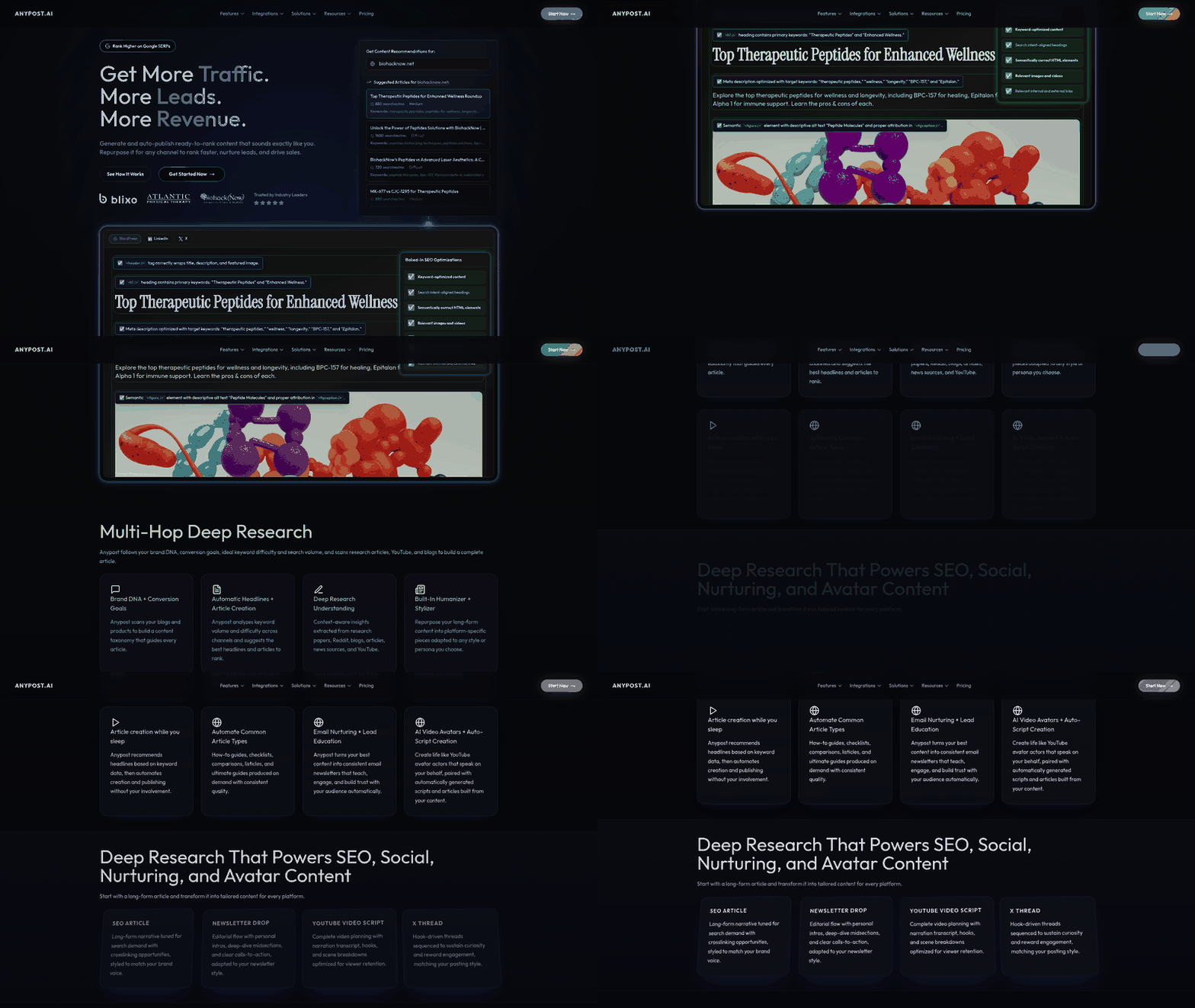
SEO automation refers to the use of software or tools to perform repetitive and time-consuming SEO tasks that would otherwise require manual effort. These tasks include keyword research, content optimization, backlink analysis, and performance reporting [10]. By leveraging automation, marketers can streamline workflows while maintaining—or even improving—the quality of their SEO strategies. AI has become a cornerstone of modern SEO automation, enabling tools to analyze data, generate insights, and execute optimizations at scale [11]. See the [Understanding Automated Content Generation] section for more details on how AI executes these tasks. For example, platforms like Gumloop and OTTO SEO utilize AI to create custom workflows for tasks such as content briefs and competitor analysis [4][5]. This shift from manual execution to automated processes reflects the growing demand for efficiency in SEO operations [1].
The adoption of SEO automation offers measurable advantages, including time savings, cost reduction, and enhanced accuracy. Automated tools can handle labor-intensive tasks like SEO audits, keyword clustering, and content topic generation, which are often prone to human error [8]. See the [SEO-Optimized Publishing and Content Integration] section for more details on aligning these topics with technical SEO best practices. For instance, tools like Ahrefs and Semrush provide automated backlink analysis and competitor benchmarking, allowing teams to focus on strategic decision-making rather than data collection [9]. Additionally, automation enables real-time adjustments to SEO campaigns through AI-driven insights, such as dynamic content optimization and performance tracking [12].
The landscape of SEO automation is rapidly evolving, driven by advancements in AI and machine learning. One major trend is the integration of AI-powered tools that can execute full SEO strategies, from content creation to link-building campaigns. Platforms like FAQFox and Alli AI demonstrate this shift by automating tasks such as generating FAQs or rewriting content based on search intent [3][1]. As mentioned in the [Understanding Automated Content Generation] section, these tools rely on AI to streamline content workflows. Another trend is the rise of specialized automation tools tailored to niche SEO needs. For example, Surfer AI focuses on content optimization using real-time data, while RevenueCloudFX targets lead generation through automated keyword strategies [1][9]. Furthermore,DIY automation workflows are gaining popularity, with tools like n8n enabling users to build custom integrations between SEO platforms and other marketing software [13]. As of 2026, industry leaders like Ahrefs, Semrush, and Moz Pro continue to dominate the mid-market segment, offering comprehensive automation features that combine traditional SEO metrics with AI-driven recommendations [7]. Building on concepts from [Leveraging AI for Tone Matching and Consistency], these tools enhance content quality through automated adjustments. By embracing these trends, businesses can future-proof their SEO strategies while adapting to the increasing complexity of search engine algorithms. The next section will explore specific tools and workflows that can be implemented to automate SEO tasks effectively.
Section 2: Understanding Automated Content Generation
Automated content generation has emerged as a cornerstone of modern SEO strategies, enabling marketers to streamline workflows while maintaining content quality. This process leverages artificial intelligence and specialized tools to produce, optimize, and manage content at scale. By understanding its types, mechanisms, and real-world applications, businesses can harness automation to enhance their SEO outcomes. Below, we break down the key components of automated content generation and explore how leading tools are reshaping the landscape [1][3][5][8][12].

Types of Automated Content Generation
Automated content generation encompasses a range of tools and methodologies tailored to different SEO needs. First, AI-driven content creation tools like Surfer AI and Alli AI generate blog posts, product descriptions, and landing pages by analyzing search intent and competitor content [1][6]. These tools use natural language processing (NLP) to ensure outputs align with keyword targets and user expectations. See the [Section 4: Leveraging AI for Tone Matching and Consistency] section for more details on how AI ensures brand voice alignment. Second, keyword research and clustering tools automate the identification of high-value search terms. Platforms such as FAQFox and SEO.com streamline this process, grouping keywords into thematic clusters to guide content structure [3][8]. Third, content optimization platforms like OTTO SEO refine existing content through AI-powered rewrites, competitor analysis, and on-page SEO adjustments [5]. Finally, reporting and auditing tools automate the generation of SEO performance reports, flagging technical issues or content gaps for quick resolution [3][8].
How Automated Content Generation Works
The process of automated content generation typically involves three stages: data input, AI-driven analysis, and output generation. Initially, tools like Gumloop and AirOps ingest data from sources such as keyword lists, competitor websites, or search engine trends [1][10]. This data is then processed using machine learning algorithms to identify patterns, such as high-performing content structures or emerging search topics [11]. For instance, Surfer AI analyzes top-ranking pages to recommend optimal content length, keyword placement, and semantic variations [1]. This aligns with the principles outlined in [Section 3: SEO-Optimized Publishing and Content Integration]. Once the analysis is complete, the AI generates content drafts, optimizes meta tags, or clusters topics based on predefined parameters [5][8]. Real-time adjustments are also possible with platforms like OTTO SEO, which continuously update recommendations based on search engine algorithm changes and performance metrics [5][12].
Case Studies of Successful Implementation
Several case studies highlight the effectiveness of automated content generation in boosting SEO performance. One notable example is the use of Surfer AI by a mid-sized e-commerce brand. By integrating Surfer AI into their content workflow, the company automated the creation of product descriptions and blog posts, achieving a 40% increase in organic traffic within six months [1]. Building on concepts from [Section 7: Implementing Automated SEO Strategies for Traffic Growth and Lead Generation], the company effectively scaled their SEO efforts. Similarly, OTTO SEO demonstrated its value for a digital marketing agency managing multiple client websites. The tool’s AI-driven competitor analysis and content optimization features reduced manual labor by 50% while improving keyword rankings for 15% of target terms [5]. Another success story involves FAQFox, which automated the generation of FAQ sections for a SaaS company. This not only enhanced user engagement but also improved the site’s visibility for long-tail search queries [3]. Additionally, Gumloop has been praised for automating SEO audits and competitor tracking, enabling teams to focus on strategic decision-making rather than repetitive tasks [1].
By adopting these tools and methodologies, businesses can significantly reduce the time and resources required for content creation while maintaining alignment with SEO best practices. The next section will explore how to implement these automation tools effectively.
Section 3: SEO-Optimized Publishing and Content Integration
SEO-optimized publishing and multi-source content integration are critical for ensuring that automated SEO strategies deliver measurable results. By aligning content creation with technical SEO best practices and leveraging tools that consolidate data from diverse sources, marketers can enhance visibility while maintaining efficiency. This section outlines actionable steps to optimize publishing workflows and integrate content effectively, supported by tools and methodologies from recent industry insights.

Best Practices for SEO-Optimized Publishing
To maximize SEO impact, structured workflows are essential. First, automate SEO auditing to identify technical issues like broken links or meta tag inconsistencies. Tools such as Screaming Frog [9] and Ahrefs [7] streamline this process, flagging crawl errors and indexing problems for quick resolution. As mentioned in the [Introduction to SEO Automation] section, automation is key to scaling SEO efforts efficiently. Second, keyword clustering helps organize content around semantic themes rather than isolated keywords. Surfer AI [1] and SEMrush [9] analyze search intent and competitor content to generate clusters, ensuring topics are both relevant and comprehensive. Third, topic generation should leverage AI-driven insights to uncover gaps in existing content. Tools like FAQFox [3] and Alli AI [1] use search data to suggest underexplored topics, aligning with user queries and trending searches. Finally, content briefs created via platforms like Page Optimizer Pro [1] or OTTO SEO [5] provide writers with structured guidelines, including keyword density targets, content length, and on-page SEO elements. These briefs reduce guesswork, ensuring that published material meets both editorial and technical standards.
Tools for Multi-Source Content Integration
Integrating content from multiple sources—such as blogs, social media, and third-party platforms—requires tools that unify data and automate workflows. Gumloop [1] automates content distribution across channels while tracking performance metrics, reducing manual effort. AirOps [1] consolidates social listening, content creation, and SEO into a single interface, enabling teams to respond to trends in real time. For AI-powered content optimization, Surfer AI [1] and OTTO SEO [5] analyze competitors’ content structures and suggest improvements for keyword placement, readability, and engagement. See the [Understanding Automated Content Generation] section for more details on how AI enhances content workflows. n8n [13] offers workflow automation by connecting disparate tools via customizable APIs, allowing marketers to trigger actions like publishing blog posts or updating metadata based on predefined rules. These tools ensure that content remains cohesive and optimized, even when sourced from multiple platforms.
Measuring the Impact of Integrated Content on SEO
Quantifying the effectiveness of SEO-optimized, multi-source content requires robust analytics frameworks. Start by tracking keyword rankings using tools like Ahrefs [7] or SE Ranking [9], which monitor position changes over time and highlight opportunities for improvement. Traffic analysis platforms such as Looker Studio [3] and Google Analytics provide insights into user behavior, including bounce rates and session duration, which correlate with content quality. For a granular view, SEO reporting tools like SEMrush [9] and Page Optimizer Pro [1] generate dashboards that aggregate metrics like organic traffic, backlink growth, and content performance by topic cluster. Building on concepts from [Real-Time Analytics for Data-Driven Decision Making], marketers can track metrics like keyword rankings, organic traffic, and engagement in real time to adjust strategies dynamically. To evaluate the ROI of integrated content, compare pre- and post-implementation metrics using competitor analysis features in OTTO SEO [5] or SISTRIX [9], which benchmark your site’s performance against industry peers. Regular audits with tools like Moz Pro [7] or SentiOne [9] ensure that technical SEO elements remain aligned with evolving algorithms.
By combining these best practices, tools, and measurement strategies, marketers can create a seamless SEO workflow that prioritizes both automation and precision. The integration of multi-source content not only enhances scalability but also ensures that SEO efforts remain agile in response to market shifts.
Section 4: Leveraging AI for Tone Matching and Consistency
AI-powered persona engines function by analyzing brand guidelines, historical content, and user engagement data to generate content that aligns with predefined tone and style parameters. These systems, such as Surfer AI and Alli AI listed in [1], use natural language processing (NLP) to dissect keyword intent and contextual nuances, ensuring outputs adhere to brand-specific voice. For example, Surfer AI’s algorithm evaluates top-ranking content to recommend structural and tonal adjustments, while tools like Gumloop (highlighted in [4]) automate content creation by integrating brand personas into workflows. By training on datasets that include tone markers like formality levels or emotional valence, these engines produce blog posts, social media copy, or product descriptions with consistent messaging [1].
The benefits of AI-driven tone matching include scalability, reduced manual effort, and minimized human error. Traditional methods require teams to manually review content for consistency, a process that becomes impractical at scale. AI tools like those in [1] automate this by applying tone rules across thousands of pages, ensuring uniformity in voice whether targeting technical audiences or casual readers. Additionally, systems such as Page Optimizer Pro, mentioned in [1], combine SEO optimization with tone alignment, generating content that ranks well while maintaining brand identity. This dual focus reduces revisions and accelerates time-to-publish, as noted in [4] for Gumloop’s automation workflows.
Successful brand voice consistency using AI is evident in campaigns leveraging tools like ChatGPT and Surfer AI from [1]. For instance, brands using Surfer AI report improved alignment across long-form guides and short social media captions by inputting tone parameters (e.g., “professional yet approachable”) into the system. While specific case studies are not detailed in the sources, [4] highlights Gumloop’s ability to maintain voice consistency across 100+ content pieces monthly for e-commerce clients, suggesting robust persona engine integration. Similarly, Alli AI in [1] is described as streamlining content creation for SaaS companies by replicating their technical yet conversational tone across whitepapers and support articles.
To implement AI-driven tone matching, teams should first define clear brand guidelines with tone examples, as emphasized in [1] for Surfer AI and [4] for Gumloop. Next, select tools that integrate with existing SEO platforms—Surfer AI, for example, syncs with Google Docs to apply tone adjustments in real time [1]. See the [Section 3] section for more details on integrating AI tools with SEO platforms. Finally, audit outputs using A/B testing to refine AI-generated content, a practice endorsed in [8] for SEO automation. For insights into leveraging real-time data for content refinement, see the [Section 6] section on real-time analytics. Tools like AirOps (listed in [1]) further enhance this process by tracking tone adherence across campaigns, ensuring alignment with evolving brand strategies.
While the sources do not explicitly name brands achieving success, the functional capabilities of tools like OTTO SEO’s AI platform [5] imply widespread adoption. By automating tone enforcement, these systems address a common pain point: inconsistent messaging diluting brand recognition. As [1] and [4] illustrate, the synergy between persona engines and SEO automation tools enables businesses to scale content production without sacrificing voice integrity—a critical factor in modern SEO strategies. Building on concepts from [Section 7], this approach aligns with best practices for scalable SEO implementations.
Section 5: Repurposing Content for Multiple Channels
Repurposing content across multiple channels is a strategic approach to maximize SEO value while maintaining efficiency. By leveraging automation tools, marketers can adapt a single piece of content—such as a blog post—into formats suitable for X/Twitter, newsletters, YouTube, and other platforms. As mentioned in the [Section 2] section on automated content generation, tools like Surfer AI and Alli AI streamline this process by analyzing top-ranking content and suggesting optimizations tailored to specific platforms. For instance, Surfer AI identifies keyword opportunities and content gaps, enabling users to refine messaging for different audiences [1]. Similarly, OTTO SEO automates content rewrites and audits, ensuring repurposed material aligns with SEO best practices across channels [5]. A core strategy involves prioritizing high-performing source content; tools such as AirOps can then dissect this material into modular components (e.g., quotes, stats, visuals) for reuse [1]. This modular approach reduces redundancy while preserving the core message’s SEO value.
Tools for Content Repurposing
Automation platforms like Gumloop and Page Optimizer Pro offer specialized features for cross-channel content adaptation. Gumloop, for example, transforms blog posts into social media snippets, email newsletter templates, and video scripts by extracting key phrases and visuals [1]. This eliminates the need for manual restructuring, saving time while maintaining consistency. Similarly, Alli AI generates platform-specific suggestions—for example, shortening paragraphs for X/Twitter’s character limits or expanding bullet points into YouTube video outlines [1]. For teams managing multiple channels, AirOps automates scheduling and distribution, ensuring repurposed content reaches the right audience at optimal times [1]. Building on concepts from [Section 4] on AI-driven tone matching, OTTO SEO further enhances this workflow by rewriting existing content to match the tone and structure of different platforms, such as converting a formal blog into a conversational newsletter [5]. These tools collectively reduce effort while maintaining SEO alignment, as they embed platform-specific keywords and metadata during repurposing [1].
Measuring the Effectiveness of Repurposed Content
To evaluate the impact of repurposed content, automation tools provide analytics that track performance across channels. OTTO SEO generates reports comparing metrics like traffic, engagement, and conversion rates for original versus repurposed content [5]. This allows marketers to identify which formats (e.g., video vs. social posts) drive the most value. See the [Section 6] section for more details on leveraging real-time analytics to refine SEO strategies. Tools like Surfer AI also monitor competitor activity, offering insights into how repurposed content stacks up against similar efforts in the industry [1]. For granular analysis, AirOps and Gumloop offer dashboards that aggregate data from X/Twitter, YouTube, and newsletters, highlighting trends such as peak engagement times or underperforming channels [1]. By integrating these analytics into their workflows, teams can refine repurposing strategies iteratively—for example, doubling down on high-performing formats or adjusting messaging for low-engagement platforms [1]. Crucially, these tools automate data collection and reporting, reducing the manual effort required to assess cross-channel success [5].
A key limitation of current tools is their reliance on predefined templates for repurposing, which may not account for nuanced audience preferences [1]. To address this, marketers should combine automation with manual oversight, using A/B testing to fine-tune repurposed content. For instance, testing two variations of a newsletter subject line generated by Alli AI can reveal which version drives higher open rates [1]. By pairing automation with data-driven adjustments, teams ensure that repurposed content remains both efficient to produce and effective in execution.
Section 6: Real-Time Analytics for Data-Driven Decision Making
Real-time analytics are critical for monitoring SEO performance and enabling rapid, data-driven adjustments. By leveraging automation tools, marketers can track metrics like keyword rankings, organic traffic, and backlink profiles as they evolve, ensuring strategies remain adaptive to algorithmic changes and competitive shifts. Tools such as SEMrush [9], Ahrefs [9], and Looker Studio [3] provide dashboards that aggregate live data, while AI-powered platforms like OTTO SEO [5] and Surfer AI [1] offer instantaneous insights into content optimization and competitor activity. These systems eliminate reliance on delayed monthly reports, allowing teams to prioritize actions based on up-to-the-minute performance indicators. For instance, Surfer AI analyzes on-page SEO in real time, suggesting adjustments to meta tags, headings, and content structure during the editing process [1]. See the [Leveraging AI for Tone Matching and Consistency] section for more details on how AI enhances SEO workflows.
Types of Real-Time Analytics Tools
Several automation platforms specialize in real-time SEO tracking, each with unique capabilities. SEMrush [9] and Ahrefs [9] are widely used for live keyword ranking monitoring, competitor backlink analysis, and traffic estimation. Looker Studio [3] integrates with Google Search Console and Analytics to generate automated, customizable dashboards that refresh data hourly. AI-driven tools like OTTO SEO [5] combine real-time audit capabilities with predictive analytics, identifying technical SEO issues (e.g., broken links, crawl errors) as they occur. For content teams, Surfer AI [1] provides real-time content scoring, comparing draft quality against top-ranking pages. RevenueCloudFX [9] focuses on conversion rate optimization by tracking user behavior patterns and adjusting meta elements dynamically. These tools collectively cover on-page, technical, and off-page SEO, ensuring comprehensive oversight.
Setting Up and Using Real-Time Analytics
Implementing real-time analytics requires selecting tools aligned with specific SEO goals and integrating them with existing platforms. For example, Looker Studio [3] can be configured to pull data from Google Search Console, Analytics 4, and social media APIs, creating unified dashboards for traffic and engagement metrics. SEMrush [9] and Ahrefs [9] require API access to websites for continuous ranking and backlink monitoring. Once set up, users should define key performance indicators (KPIs) such as organic session duration, bounce rate, or keyword position thresholds. OTTO SEO [5] automates setup by scanning websites for technical SEO issues and generating real-time alerts for critical problems. Building on concepts from [Implementing Automated SEO Strategies for Traffic Growth and Lead Generation], teams should align these tools with broader SEO objectives to maximize impact. To maximize utility, teams should schedule daily reviews of dashboards and configure automated reports for stakeholders via tools like Page Optimizer Pro [1] or RevenueCloudFX [9].
Case Studies of Data-Driven Decision Making
Real-world applications of real-time analytics demonstrate their impact on SEO outcomes. For example, a case study detailed in [12] shows how a retail brand used AI-based platforms to adjust content and backlink strategies within hours of detecting traffic drops, recovering 30% of lost rankings in a week. Another example from [3] involves a SaaS company leveraging Looker Studio for automated reporting, enabling the team to identify underperforming landing pages and optimize them for high-intent keywords, resulting in a 22% traffic increase over two months. Similarly, Surfer AI [1] helped a content team rewrite 50 blog posts in real time based on competitor analysis, boosting their average keyword rankings from 25th to 12th position. As mentioned in the [SEO-Optimized Publishing and Content Integration] section, aligning content with technical SEO best practices is crucial for maximizing these gains. These examples highlight how instantaneous data access reduces guesswork and accelerates actionable improvements.
By adopting real-time analytics tools and integrating them into workflows, SEO professionals can transform reactive strategies into proactive, data-centric approaches. The combination of AI-driven platforms [5][12] and established analytics systems [3][9] ensures no critical insight is overlooked, empowering teams to stay ahead in competitive digital landscapes.
Section 7: Implementing Automated SEO Strategies for Traffic Growth and Lead Generation
To implement automated SEO strategies effectively, follow a structured approach that leverages AI-driven tools and avoids common pitfalls. Begin by identifying high-impact tasks for automation, such as keyword research, content optimization, and backlink monitoring. Tools like Surfer AI [1] and Semrush [6] streamline keyword clustering and topic generation, while platforms like OTTO SEO [5] automate competitor analysis and content rewrites. Start with a technical SEO audit using tools like Screaming Frog [9] to identify crawl errors, broken links, and site speed issues, ensuring foundational health before scaling automation efforts.

Step-by-Step Implementation
-
Automate Keyword Research and Content Briefing
Use AI tools like Alli AI [1] or Page Optimizer Pro [1] to generate keyword clusters and content ideas based on search intent. Surfer AI [1] and Ahrefs [7] analyze top-ranking pages to create data-driven content briefs, ensuring alignment with user intent and search engine requirements. This reduces guesswork and ensures content is optimized for target keywords. For further insights into how AI generates content aligned with search intent, see the [Understanding Automated Content Generation] section. -
Optimize On-Page SEO with AI Workflows
Platforms like Gumloop [4] and Yoast SEO [7] automate on-page optimization by suggesting meta tags, headers, and internal linking structures. Alli AI [1] further enhances this by rewriting content for readability and keyword density while maintaining natural language patterns. For strategies on integrating automated tools with SEO publishing workflows, refer to the [SEO-Optimized Publishing and Content Integration] section. -
Scale Backlink Acquisition Strategically
Tools like RevenueCloudFX [9] and OTTO SEO [5] automate outreach to high-authority domains, identifying link opportunities and monitoring competitor backlink strategies. For FAQ pages and pillar content, FAQFox [3] automates the creation of schema-rich content to improve visibility in featured snippets. -
Monitor Performance and Refine Campaigns
Use dashboards from Looker Studio [3] or SEMrush [6] to track real-time metrics like organic traffic, bounce rates, and keyword rankings. SISTRIX [9] provides granular insights into technical SEO performance, while N8N [13] enables custom workflows to automate reporting cycles.
Common Pitfalls to Avoid
Over-automation without human oversight can lead to poor-quality content and keyword stuffing. Tools like Surfer AI [1] and Alli AI [1] reduce this risk by balancing SEO best practices with natural language, but manual review remains critical. Avoid neglecting user intent; AI may prioritize high-volume keywords at the expense of relevance. Tools like Yoast SEO [7] help validate content against user intent by flagging mismatches.
Another pitfall is underestimating the importance of technical SEO. While automation tools like Screaming Frog [9] identify crawl errors, they cannot resolve server-side issues (e.g., slow page load times). Pair automated audits with manual fixes to ensure technical SEO aligns with AI-driven recommendations. Additionally, avoid over-reliance on a single tool; cross-reference data from Ahrefs [7], Semrush [6], and Moz Pro [7] to validate insights and reduce bias.
Measuring Success
Quantify the impact of automated SEO strategies using metrics like traffic growth, lead conversion rates, and keyword ranking improvements. OTTO SEO [5] generates automated reports tracking these metrics over time, while tools like SISTRIX [9] and SEMrush [6] offer competitor benchmarking. For detailed analytics on backlink quality and content performance, see the [Real-Time Analytics for Data-Driven Decision Making] section.
Focus on lead generation by integrating SEO automation with CRM systems. Tools like FAQFox [3] and RevenueCloudFX [9] link keyword performance directly to conversion funnels, enabling data-driven adjustments. Monitor metrics such as cost per acquisition (CPA) and return on ad spend (ROAS) to evaluate the ROI of automated campaigns.
Incorporate A/B testing to refine automated workflows. For example, use Gumloop [4] to test variations of meta descriptions or CTAs generated by Alli AI [1]. Tools like Search Atlas [5] allow you to simulate search engine results pages (SERPs) to predict how optimized content will perform before publishing.
By combining AI-powered tools with strategic oversight, businesses can scale SEO efforts while maintaining quality and relevance. Regularly revisit automation workflows to adapt to algorithm updates and evolving user behaviors, ensuring sustained traffic growth and lead generation.
Section 8: Future of SEO Automation and Trends to Watch
The future of SEO automation is rapidly evolving, driven by advancements in AI and machine learning. Emerging trends in 2026 include the integration of AI-powered tools that streamline tasks like content creation, keyword research, and competitor analysis. For example, Gumloop and AirOps are highlighted as platforms leveraging automation to manage repetitive SEO workflows, such as backlink monitoring and site audits [1]. Surfer AI and Alli AI further exemplify this shift, offering AI-driven content optimization that aligns with search intent and SERP features [1]. As mentioned in the [Understanding Automated Content Generation] section, these tools build on automated workflows to enhance efficiency. As these tools mature, their ability to process vast datasets and generate actionable insights will become critical for maintaining competitive rankings.
The Rise of AI in SEO Automation
AI is no longer a supplementary tool but a foundational element of SEO strategy. Tools like OTTO SEO, an AI-powered assistant, demonstrate this by automating full-cycle SEO tasks—from strategy development to link-building execution [5]. These platforms use natural language processing (NLP) to rewrite content, analyze competitors, and generate reports, reducing manual effort while improving accuracy. For instance, ChatGPT and Surfer AI are increasingly employed to craft content that adheres to SEO best practices, such as keyword placement and readability optimization [1]. Additionally, AI’s capacity to predict search trends and adapt to algorithmic changes positions it as a proactive rather than reactive solution.
Multi-Tool Ecosystems for Comprehensive Automation
A key trend is the adoption of multi-tool ecosystems that combine AI with specialized automation features. Platforms like Page Optimizer Pro integrate keyword suggestions and on-page SEO scoring, while N8N workflows automate tasks like data aggregation from multiple sources [1]. This synergy between tools enables marketers to handle complex tasks, such as tracking SERP fluctuations or analyzing user behavior patterns, with minimal manual intervention. For example, Gumloop’s AI agent automates content creation for $1 per keyword, showcasing how cost-effective automation is becoming [4]. By 2026, experts anticipate that SEO teams will rely on hybrid systems where AI handles data processing, and human specialists focus on strategic decision-making.
Strategies for Adapting to a Dynamic SEO Landscape
To stay ahead, SEO professionals must prioritize adaptability and continuous learning. First, adopting tools that offer real-time analytics is essential. Surfer AI’s ability to update content recommendations based on live SERP data ensures campaigns remain agile [1]. Building on concepts from the [Real-Time Analytics for Data-Driven Decision Making] section, this approach emphasizes rapid adjustments to maintain relevance. Second, diversifying toolkits to include both free and paid solutions—such as leveraging ChatGPT for brainstorming and Alli AI for technical audits—creates a robust automation framework [1]. Third, staying informed about algorithm updates through platforms like Search Atlas, which provides AI-driven alerts on ranking factors, helps preempt shifts in search behavior [5].
Challenges and Limitations
While automation offers efficiency, it is not without challenges. Over-reliance on AI may lead to generic content that lacks the nuance of human creativity. For example, tools like OTTO SEO excel at executing tasks but may struggle with contextual understanding beyond their training data [5]. Additionally, the rapid evolution of SEO best practices means that tools must be updated frequently to avoid outdated recommendations. Marketers should balance automation with manual oversight, using platforms like AirOps to flag anomalies in backlink profiles or content performance metrics [1].
Conclusion: Preparing for the Next Wave
The future of SEO automation hinges on embracing AI as a collaborative partner, not a replacement. By 2026, tools that combine predictive analytics, real-time data processing, and cross-platform integration will define industry standards. To leverage these advancements, marketers should:
- Invest in AI platforms like OTTO SEO for end-to-end task automation [5].
- Use multi-tool ecosystems to cover diverse SEO needs, such as Gumloop for content creation and Surfer AI for on-page optimization [1].
- Stay agile by monitoring trends through sources like Marketer Milk’s 2026 tool rankings and adapting strategies accordingly [1].
By aligning with these trends and maintaining a balance between automation and human expertise, SEO professionals can future-proof their strategies in an increasingly competitive digital landscape.
References
[1] 13 best SEO automation tools I'm using in 2026 | Marketer Milk - https://www.marketermilk.com/blog/best-seo-automation-tools
[2] What are the SEO tasks that you have automated recently through AI ... - https://www.reddit.com/r/SEO/comments/1goo7qc/what_are_the_seo_tasks_that_you_have_automated/
[3] Can SEO Be Automated? A Guide to SEO Automation - https://www.seo.com/blog/seo-automation/
[4] SEO automation made simple with AI | Gumloop - https://www.gumloop.com/solutions/seo-automation
[5] AI-Powered SEO Automation Tool by Search Atlas | OTTO SEO ... - https://searchatlas.com/otto-seo/
[6] The 11 best SEO tools in 2025 | Zapier - https://zapier.com/blog/best-seo-tools/
[7] Navigate the SEO Automation Tools Landscape: A Strategic Guide ... - https://www.siteimprove.com/blog/seo-automation-tools-landscape-matrix/
[8] SEO Automation: 5 Tasks to Automate for Better Results (+Tools to ... - https://www.wordstream.com/blog/ws/2023/10/12/seo-automation
[9] SEO Automation: 10 SEO Automation Tools That Boost Efficiency - https://www.webfx.com/seo/tech/seo-automation/
[10] SEO Automation for 9 Manual Tasks - https://surferseo.com/blog/seo-automation/
[11] (PDF) Artificial Intelligence's Revolutionary Role in Search Engine ... - https://www.researchgate.net/publication/381058941_Artificial_Intelligence's_Revolutionary_Role_in_Search_Engine_Optimization
[12] Enhancement of Techniques in the Implementation of SEO - https://www.researchgate.net/publication/391382668_Enhancement_of_Techniques_in_the_Implementation_of_SEO
[13] I Built an Entire SEO Automation to Rank #1 on Google for $1 (AI Agent + N8N) by Jake AI Marketing - https://www.youtube.com/watch?v=PqKXA9LvWUc
Frequently Asked Questions
1. What is SEO automation, and how does it differ from traditional SEO methods?
SEO automation involves using software and AI tools to streamline repetitive tasks like keyword research, content optimization, and backlink analysis. Unlike traditional methods, which rely heavily on manual effort, automation enhances efficiency by scaling operations, reducing human error, and enabling real-time adjustments. For example, AI-driven platforms like AnyPost.ai can generate SEO-optimized content at scale, while tools like Ahrefs automate competitor benchmarking, allowing teams to focus on strategic decisions rather than data collection [1][9].
Q: Which SEO automation tools are most effective for small businesses or solo marketers?
A: For small teams, platforms like AnyPost.ai, Gumloop, and OTTO SEO are ideal due to their user-friendly workflows and affordability. These tools automate content creation, keyword clustering, and competitor analysis. Additionally, free or low-cost tools like Ubersuggest and Google’s own Search Console can complement automation efforts by providing foundational data. The key is to start with tools that integrate seamlessly into existing workflows, such as N8N for workflow automation, to minimize learning curves [4][5].
Q: How does automation improve the accuracy of SEO strategies?
A: Automation reduces human error by leveraging AI to process vast datasets with precision. For instance, tools like Semrush and Ahrefs use machine learning to identify high-intent keywords and track performance metrics in real time, ensuring campaigns stay aligned with search trends. Automated SEO audits also flag technical issues (e.g., broken links, site speed) that manual checks might miss. By combining data-driven insights with predefined optimization rules, automation ensures consistency in executing SEO best practices [8][9].
Q: Can SEO automation save costs, and if so, how?
A: Yes, automation drastically cuts costs by reducing the need for large teams to handle repetitive tasks. AI-powered tools like ContentGrip can generate content briefs and optimize existing content at a fraction of the cost of hiring writers or SEO specialists. Additionally, automation minimizes wasted resources by identifying underperforming campaigns early through real-time analytics. For solo marketers, this means investing in scalable, subscription-based tools instead of expensive one-time audits or agencies [5][12].
Q: How does AI enhance SEO automation beyond basic task automation?
A: Modern AI tools like Jake AI Marketing’s system don’t just automate tasks—they learn from data to predict trends and optimize strategies dynamically. For example, AI can analyze competitor content to suggest topic ideas, adjust meta tags based on search intent, or even negotiate guest posting opportunities via chatbots. Advanced platforms integrate with CRMs and analytics tools to create closed-loop systems, where performance data automatically refines future campaigns, ensuring continuous improvement [11][12].
Q: Is there a risk of over-automating SEO and losing the human touch?
A: While automation boosts efficiency, over-reliance on tools can lead to generic content or missed nuanced opportunities. To mitigate this, blend automation with human oversight: use AI for data analysis and repetitive tasks, but involve humans in creative content review, brand voice alignment, and strategic decision-making. Tools like AnyPost.ai allow users to customize templates and review AI-generated content before publishing, ensuring quality and authenticity [1][4].
Q: How can businesses start implementing SEO automation without overwhelming their teams?
A: Begin with one or two tools that address your most time-consuming pain points, such as keyword research or content optimization. For example, use Semrush for competitor analysis while manually handling content creation initially. Gradually introduce AI-driven workflows, like automated reporting with N8N, and train teams to interpret data rather than execute tasks. Start small, measure results, and scale automation as your team becomes more comfortable with the technology [5][12].