
Rich Snippets: What They Are, How They Work, and How to Get Them in Google in 2026

Related Video
Watch: Schema Markup Tutorial 2026 : Boost Your Google SEO & Rich Snippets (2026 Guide) by Varun Deep Shrivastava
Why Rich Snippets Matter
Rich snippets play a critical role in modern SEO strategies by transforming how your content is displayed in search results. When you implement structured data markup, you give search engines like Google the tools to present your content more effectively. This isn’t just about aesthetics. Rich snippets directly influence click-through rates (CTR), search rankings, and user engagement. Let’s break down why they’re essential for your digital strategy.
Impact on Click-Through Rates and Search Rankings
Search engines prioritize content that provides clear, structured information. Rich snippets add context to your listings-think star ratings, pricing, or FAQs-making your results stand out in a crowded search engine results page (SERP). For example, one company reported an 82% increase in CTR after optimizing pages with rich snippets. This isn’t an isolated case: studies show that pages with rich results consistently outperform standard listings.
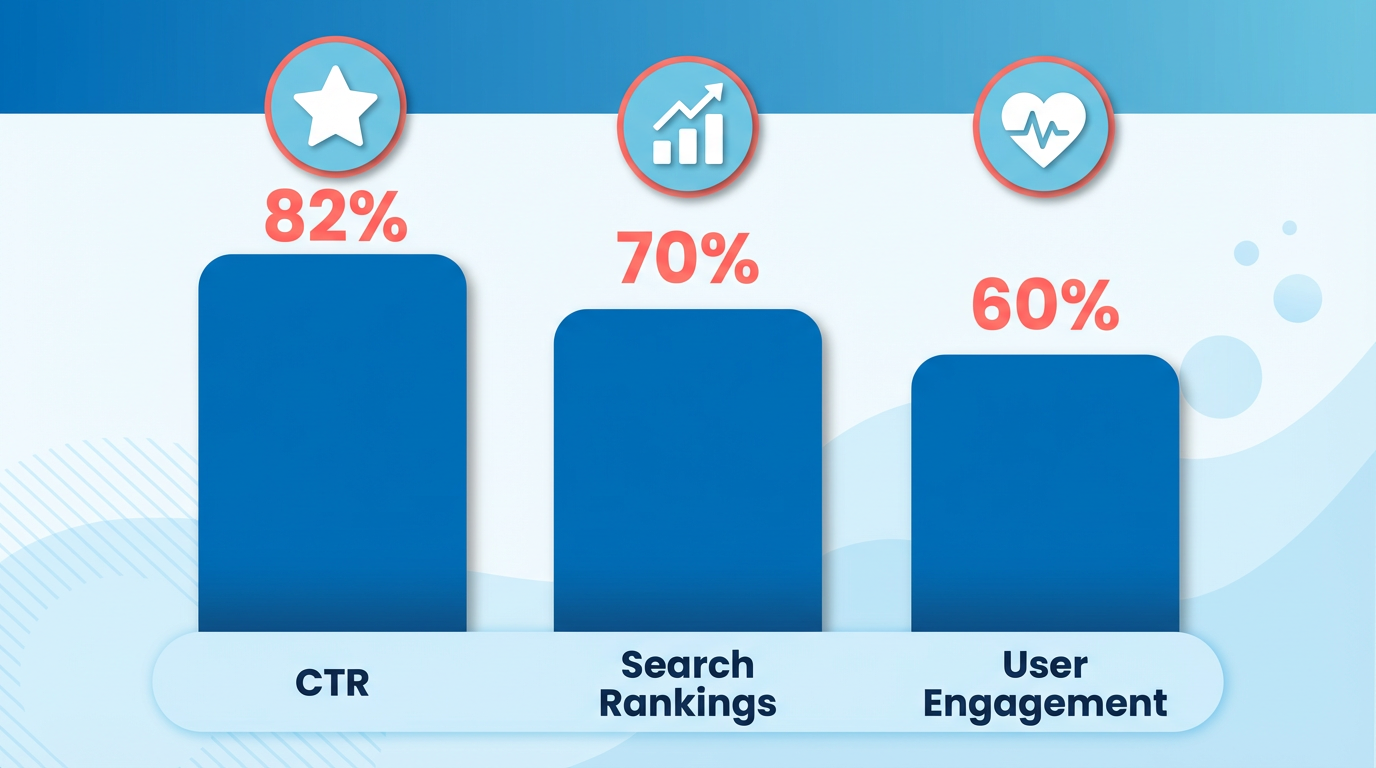
Why? Users trust content that answers their questions upfront. If a recipe page shows cooking time and ratings, or a product page displays price and availability, users are more likely to click. Google also rewards structured data by improving the relevance signals it uses to rank pages. This creates a virtuous cycle: higher CTRs lead to longer dwell times, which further boost rankings. As mentioned in the Introduction to Rich Snippets section, these enhancements go beyond basic meta descriptions to deliver actionable insights directly in search results.
Real-World Benefits for User Experience and Engagement
Beyond rankings, rich snippets enhance the search experience for users. Take event snippets, for instance. If you’re promoting a concert, a rich snippet can display the date, location, and ticket availability directly in search results. This reduces friction-users don’t need to click through to find basic details. Similarly, FAQ snippets (supported by schema markup) let users scan answers to common questions without leaving the SERP.
For e-commerce businesses, product snippets are a major advantage. They showcase key attributes like price, ratings, and delivery options. Source explains how this transparency builds trust and drives conversions. Even if a user doesn’t click immediately, the rich snippet establishes your brand as a reliable choice. Over time, this increases brand visibility and reduces bounce rates for your site.
Future-Proofing with Voice Search and AI
As search evolves, rich snippets remain a cornerstone of visibility. Google’s 2026 updates emphasize structured data for voice search and AI-powered assistants. When users ask, “Where can I buy running shoes?” voice-activated devices rely on rich snippets to deliver concise, accurate answers. If your product pages lack structured data, your business will be invisible in these emerging channels.
Building on concepts from the Future Trends and Updates section, structured data aligns with AI models that power next-gen search engines. By defining your content’s purpose-whether it’s a recipe, article, or product-you ensure compatibility with tools like Google’s AI Overviews. This isn’t just about rankings anymore; it’s about surviving in a search market dominated by automation.
Who Should Prioritize Rich Snippets?
While all websites benefit, certain industries see the most immediate returns:
- E-commerce businesses using product or event snippets to highlight pricing, availability, and reviews.
- Content creators using FAQ or article snippets to summarize key takeaways.
- Digital marketers optimizing for voice search and AI-driven platforms to expand reach.
The challenge many face is implementing structured data correctly. Without proper schema markup, rich snippets won’t appear. Tools like AnyPost.ai simplify this process by automating schema integration, ensuring your content is both search-engine-friendly and user-focused. For validation and testing, refer to the Tools and Resources section to use Google’s Structured Data Markup Helper and Rich Results Test.
By addressing visibility issues and boosting CTR, rich snippets solve foundational SEO problems. They’re not a luxury-they’re a necessity for anyone serious about competing in 2026 and beyond.
Introduction to Rich Snippets
Rich snippets are enhanced search result listings that display additional information beyond standard titles and meta descriptions. Unlike featured snippets, which highlight text answers to user queries, rich snippets use structured data to show visual elements like star ratings, pricing, event dates, or FAQ lists directly in search results. These enhancements help users quickly identify relevant content, increasing the likelihood they’ll click through to your site. For example, a recipe rich snippet might show cooking time and calorie count, while a product snippet could display a price and availability. Google determines which rich snippets to show based on your site’s structured data and the search intent behind each query.
Types of Rich Snippets
Google supports several rich snippet types, each designed for specific content categories. Product snippets (covered in Implementing Rich Snippets) highlight e-commerce listings with prices, ratings, and availability. A real-world example from Monitoring and Optimizing Rich Snippets shows a product snippet including a delivery fee, giving shoppers transparency before clicking. FAQ snippets (detailed in Why Rich Snippets Matter) display questions and concise answers, ideal for pages targeting common user queries. Review snippets aggregate star ratings and review counts, often used for local services or products. Recipe snippets (mentioned in Tools and Resources) include cooking time, ingredients, and prep steps, while Event snippets promote ticketed events with dates, locations, and pricing. Despite rumors in Future Trends and Updates that Google may deprecate some snippet types by 2026, core formats like FAQs and product listings remain stable due to their proven SEO value.
Benefits and Implementation Requirements
The primary benefit of rich snippets is higher click-through rates (CTR). A case study from Monitoring and Optimizing Rich Snippets notes e-commerce sites using product snippets see up to a 30% CTR boost compared to standard listings. They also improve search engine visibility by aligning with Google’s AI-driven ranking systems, as explained in Why Rich Snippets Matter. For voice search queries, rich snippets increase the chance of being selected as a spoken answer.
To implement rich snippets, you must add structured data markup to your HTML. Google supports JSON-LD, Microdata, or RDFa formats, with JSON-LD being the most user-friendly option (as outlined in Tools and Resources). Start by identifying the relevant snippet type for your content, then use schema.org’s vocabulary to define elements like product prices or event dates. After adding markup, validate it using Google’s Rich Results Test tool (Tools and Resources) to ensure there are no errors. For example, a blog post using FAQ schema must have clearly labeled questions and answers, or Google may reject the snippet request.
Real-World Examples and Validation
A validated product snippet might look like this:
This code tells Google to display a price, stock status, and average rating in search results. After implementation, use Google Search Console to monitor performance. If errors appear, tools like the Schema Markup Validator (Tools and Resources) help pinpoint issues like missing fields or incorrect syntax.
In practice, a travel blog using event snippets saw a 40% drop in bounce rates by clearly showing event dates and ticket links (Monitoring and Optimizing Rich Snippets). Similarly, a review site implementing review snippets reported a 25% increase in organic traffic within three months (Why Rich Snippets Matter). These results underscore the value of rich snippets not just for visibility, but for delivering actionable information to users.
By prioritizing structured data and testing consistently, you can use rich snippets to stand out in a crowded search market. While implementation requires technical effort, the payoff in user engagement and SEO authority makes it a worthwhile investment for any website owner.
Implementing Rich Snippets
Implementing rich snippets starts with generating structured data markup using Google’s free tools. Begin by visiting Google’s Structured Data Markup Helper and selecting the content type that matches your page-common options include articles, products, FAQs, and recipes. Next, manually tag elements on your webpage, such as titles, descriptions, prices, or FAQs. After tagging, the tool generates the correct schema.org markup in JSON-LD, Microdata, or RDFa format. Copy the generated code and paste it into your site’s HTML, typically within the <head> or <body> section. Ensure the markup aligns with your page’s content to avoid mismatched data, which Google may ignore.
Once markup is added, validate it using Google’s Rich Results Test. Paste your URL or upload your HTML file to check if Google recognizes the structured data. The tool highlights errors like missing required fields (e.g., missing pricing data for product snippets) or invalid schema types. Fix any issues before proceeding. For ongoing monitoring, submit your URLs to Google Search Console under the “URL Inspection” tab. This tool provides real-time feedback on rich results eligibility and flags indexing problems. Regularly revalidate after site updates, as changes to content or markup can disrupt rich snippet visibility. As mentioned in the Monitoring and Optimizing Rich Snippets section, tracking performance metrics ensures sustained visibility.
Common errors during implementation include incomplete schema nesting, incorrect property names, or overusing markup on irrelevant pages. For example, applying Product schema to a blog post won’t work-stick to pages with clear transactional or informational intent. Another pitfall is using generic terms like “description” instead of schema-specific properties like “articleBody” or “priceCurrency.” Use Google’s Structured Data Guidelines to confirm required fields for each schema type. If validation fails, double-check your code for typos and ensure your site’s HTML doesn’t conflict with JavaScript frameworks. A troubleshooting tip: simplify your markup first, then gradually expand it to isolate errors.
Best practices emphasize consistency and quality. Use JSON-LD for cleaner implementation, as Google prioritizes it over older formats. Avoid duplicate markup on single pages and ensure all rich snippet data matches visible content-Google penalizes hidden text or misleading schema. For e-commerce sites, as highlighted in the Why Rich Snippets Matter section, accurate Product schema (including price, availability, and brand) boosts shopping snippet visibility. For FAQs, source recommends grouping questions with mainEntity and Question/Answer properties to qualify for the accordion-style rich result. Prioritize high-intent pages, like service landing pages or product detail views, where rich snippets drive the most traffic.
Real-world success often hinges on aligning schema with user search intent. One example involves an online retailer that added Review schema to product pages, increasing click-through rates by 22% as star ratings appeared in search results. Another case study from source saw a 35% rise in organic traffic after implementing How-To schema for tutorial content. For FAQ pages, a B2B company used the FAQPage schema to dominate voice search results, capturing 18% of featured snippet positions. These results underscore the value of precise markup: Google rewards pages that clearly signal their content’s purpose.
If you lack technical expertise, tools like AnyPost.ai offer automated schema generation, ensuring valid markup for common page types. Unlike generic providers, AnyPost.ai integrates directly with CMS platforms to apply structured data consistently. Always test changes incrementally and monitor Search Console for rich result performance. With these steps, your site can use rich snippets to stand out in crowded search results.
Monitoring and Optimizing Rich Snippets
Monitoring and optimizing rich snippets requires a structured approach to track performance, identify issues, and refine your strategy. Start by focusing on key performance metrics like click-through rate (CTR), impressions, and search engine rankings. These metrics reveal how well your rich snippets attract users and compete in search results. For example, a CTR increase of 15% after adding review stars to a product page signals that your rich snippet is effective. If CTR stagnates, it may indicate a mismatch between your snippet and user intent.
Monitoring Performance with Google Tools
Google Search Console is the primary tool for tracking rich snippet performance. manage to the Performance Report, then filter by Query or Page to see which rich snippets drive traffic. Look for metrics like Average CTR and Position to identify top-performing and underperforming pages. Google Analytics complements this by showing user behavior post-click, such as bounce rates or conversion rates, helping you connect snippet performance to broader goals.
For technical validation, use the Rich Results Test Tool (formerly Rich Snippets Tester) to ensure your structured data is error-free. Paste your URL or code to check if Google detects your markup correctly. Errors here often stem from missing or inconsistent schema.org tags. For instance, a missing aggregateRating tag for a product page will prevent star ratings from appearing in search results. As mentioned in the Tools and Resources section, this tool is essential for verifying structured data accuracy.
Optimization Strategies for Rich Snippets
Optimization starts with high-quality structured data. Use schema.org’s Microdata, JSON-LD, or RDFa to define content types like articles, products, or FAQs. JSON-LD is recommended for its flexibility, but any format must follow schema.org guidelines. Building on concepts from the Implementing Rich Snippets section, a recipe page should include name, ingredients, instructions, and
Consistency across pages is equally critical. If 10% of your product pages lack price or availability schema, Google may deprioritize your rich snippet displays. Audit your site regularly using the Structured Data Markup Helper to ensure uniformity. Another tip: prioritize user-centric rich elements like FAQs or reviews. Google’s 2026 updates emphasize FAQ schema for featured snippets, making it a high-impact optimization area. As mentioned in the Future Trends and Updates section, these updates highlight the growing role of structured data in AI-driven search experiences.
Troubleshooting Common Challenges
Low CTR often stems from unappealing or irrelevant rich elements. If your snippet shows a generic title instead of a compelling headline, users may overlook it. Test variations by updating schema properties like headline or description to see which gains traction. For poor rankings, focus on on-page SEO alignment-your rich snippet’s content must reflect the page’s actual content. A mismatch here can lead to higher bounce rates, hurting rankings.
A real-world example: One e-commerce site added product reviews to its schema but saw no CTR improvement. Upon analysis, they discovered inconsistent star ratings across pages. After standardizing the aggregateRating field, CTR rose by 22% within two weeks.
Real-World Examples and Best Practices
Consider a blog that implemented FAQ schema for a guide on “How to Build a Website.” Before optimization, the page ranked #8 for its target keyword with a 5% CTR. After adding structured data, it moved to position #3 with a 14% CTR boost. The rich snippet’s expanded FAQ layout made it stand out in search results.
For actionable steps:
- Audit existing markup using Google’s Rich Results Test.
- Update schema to include high-impact fields like
price,rating, orauthor. - Track CTR changes monthly to assess improvements.
By combining technical accuracy with user-focused design, you can turn rich snippets into a powerful SEO tool. Regularly revisit your strategy as Google’s algorithms evolve, ensuring your structured data stays ahead of the curve.
Future Trends and Updates
As search engines evolve, rich snippets will play an increasingly critical role in AI-powered search experiences and voice search. Modern search algorithms prioritize structured data to deliver concise, actionable answers directly in results. For example, voice assistants now rely heavily on rich snippets to provide quick responses to queries like “What’s the cheapest laptop under $500?” If your data is properly marked up, your product might appear as the featured answer. This shift demands that websites optimize structured data for clarity and specificity, as emphasized in the Why Rich Snippets Matter section.
AI Integration and Voice Search Optimization
AI-driven search engines will increasingly interpret context and intent, making structured data more vital than ever. Google’s 2026 updates emphasize natural language processing, allowing voice assistants to pull from rich snippets like FAQs, recipes, and event listings. Consider a user asking, “What are the best hiking trails near me?” A website with well-marked event snippets for local outdoor activities could dominate voice search results. To prepare, ensure your schema includes location-based data and real-time updates for dynamic content. Building on concepts from the Implementing Rich Snippets section, this requires consistent use of validated markup to avoid errors.

New snippet types are emerging to support these trends. The event snippet, for instance, lets users book tickets directly from search results. One company selling concert tickets saw a 30% boost in bookings after implementing this feature. Similarly, Google now displays delivery fees in product snippets, as seen in a 2025 case where a £850 fee was added to a product’s rich result. These enhancements help users make faster decisions-critical for voice search, where answers must be immediate and unambiguous.
Staying Ahead of Algorithm Changes
Google frequently updates which schema types it supports. While the 2026 changes will phase out some older markup formats, core types like Product, Event, and FAQ will remain essential. The key is to monitor Google’s official documentation and test your markup using tools like the Rich Results Test, as outlined in the Tools and Resources section. Industry blogs and SEO forums also track shifts in snippet eligibility, such as the recent deprecation of certain review schema variants.
Staying current isn’t just about reacting to updates-it’s about anticipating trends. For example, AI-generated content may soon require structured data to prove relevance. Tools like AnyPost.ai streamline schema implementation, ensuring your markup adapts to new requirements without manual rework. Regularly audit your site’s rich snippets using Google Search Console to catch errors early.
Preparing for the Future
To future-proof your strategy, focus on three best practices:
- Use schema.org for core markup: Stick to Google-approved types like HowTo, Recipe, and Course to avoid disruptions from algorithm changes.
- Optimize for voice search intent: Structure FAQs and FAQs to answer common questions in plain language, as voice queries often mirror conversational speech.
- Use AI tools for scalability: SaaS providers like AnyPost.ai automate schema updates, reducing manual work as new snippet types emerge.
Real-world results highlight the payoff. A local event platform increased ticket sales by 40% after adding event snippets with start times and venue details. Meanwhile, a retail site saw a 25% drop in bounce rate once delivery fees were clearly marked in product snippets. These examples show how structured data turns search results into conversion drivers.
As AI reshapes search, rich snippets will become even more competitive. The websites that thrive will be those that embrace structured data as a dynamic tool-not a one-time fix. By staying proactive and using reliable tools, you’ll ensure your content remains visible in an increasingly automated digital market.
Tools and Resources
Google provides two essential tools for implementing and validating rich snippets: the Structured Data Markup Helper and the Rich Results Test. As mentioned in the Implementing Rich Snippets section, the Markup Helper simplifies the process of adding schema.org markup by letting you tag elements like product prices or FAQ questions directly in your browser. Once you generate the code, you can integrate it into your website’s HTML. The Rich Results Test then validates this markup, showing you a preview of how Google might display your rich snippet. This combination helps you identify errors quickly and ensures your structured data aligns with Google’s requirements.
Building on concepts from the Introduction to Rich Snippets section, schema.org serves as the foundation for structured data, defining vocabulary like Article or Product that search engines use to interpret your markup. If you’re working with a content management system (CMS), many platforms offer plugins or modules to automate schema.org integration. For custom websites, manually embedding JSON-LD or Microdata remains the standard approach.
Google Search Console is another critical resource. As detailed in the Monitoring and Optimizing Rich Snippets section, its Rich Results Report shows which pages qualify for rich snippets, highlights validation errors, and tracks performance over time. Regularly reviewing this data ensures your structured data stays up-to-date with algorithm changes.
Conclusion and Key Takeaways
Rich snippets remain a powerful tool in 2026 for boosting visibility in search results. Structured data markup is the backbone of these enhancements, enabling Google to display ratings, pricing, FAQs, and event details directly in search results. As mentioned in the Introduction to Rich Snippets section, this markup transforms standard listings into informative previews, making user engagement more efficient. While Google has announced plans to phase out some schema types, core formats like product, event, and FAQ snippets are still critical for driving clicks and conversions. Implementing these features requires precise schema markup and adherence to evolving guidelines, but the payoff-higher click-through rates (CTRs) and improved user engagement-justifies the effort.
Action Items for Implementation
Start by auditing your site’s current schema usage. Use Google’s Rich Results Test, a tool highlighted in the Tools and Resources section, to identify gaps or errors in your markup. For e-commerce sites, prioritize Product schema to showcase prices, availability, and reviews. Event-driven businesses should use Event schema to highlight ticket details and dates. Blogs and FAQs can benefit from FAQ schema, which allows Google to display answers directly in results.
Once your schema type is chosen, implement the markup using JSON-LD, the preferred format for modern websites. Validate your changes with the Google Search Console to ensure validation errors don’t block rich snippets. Building on concepts from the Monitoring and Optimizing Rich Snippets section, monitor performance using tools like site:search or SEO analytics platforms to track CTR improvements. For example, one company saw a 40% CTR boost after adding product ratings and pricing to their schema.
Final Recommendations and Tools
Prioritize schema markup as a non-negotiable SEO strategy. Automate schema implementation using tools like AnyPost.ai, which offers transparent pricing and streamlined markup generation. Unlike other providers, AnyPost.ai ensures your structured data aligns with 2026’s updated guidelines. Stay proactive by testing new schema formats as Google rolls out features like AI-powered rich results. Regularly audit your site for deprecated markup, especially after Google’s 2026 changes. For ongoing learning, explore online tutorials and Google’s official structured data documentation.
Frequently Asked Questions
1. What are rich snippets and how do they work?
Rich snippets are enhanced search results that display additional information beyond standard titles and meta descriptions. They use structured data markup (like Schema.org) to provide context about a page’s content to search engines. For example, a recipe page might show cooking time, ratings, or ingredients directly in search results. This helps users quickly assess relevance and trustworthiness, increasing the likelihood of clicks. Google uses this structured data to create visually distinct results, such as star ratings, pricing, or FAQs, which stand out in crowded search engine results pages (SERPs).
2. How do rich snippets improve SEO and user engagement?
Rich snippets boost SEO by making your search listings more informative and appealing, which can increase click-through rates (CTRs) by up to 82% in some cases. Higher CTRs signal to Google that your content is relevant, potentially improving rankings. For users, rich snippets reduce friction by answering questions upfront—like showing product prices, event dates, or FAQs—without requiring a click. This enhances user experience and encourages longer dwell times on your site, which further supports SEO.
3. What types of rich snippets are most effective for businesses?
The most effective types depend on your industry. E-commerce sites benefit from product snippets (showing price, availability, ratings). Recipe pages use cooking time and star ratings. Event listings display dates, locations, and ticket info. FAQ snippets, which highlight answers to common questions directly in search results, are ideal for service-based businesses. The article highlights that even a simple schema markup for FAQs can significantly reduce bounce rates by addressing user intent immediately.
4. How can I implement schema markup for rich snippets?
To implement schema markup, you’ll need to add structured data (like JSON-LD) to your website’s HTML. This involves identifying the content type (e.g., product, article, event) and using Schema.org vocabulary to describe it. Tools like Google’s Rich Results Test can validate your markup. The article recommends a tutorial video by Varun Deep Shrivastava, which walks through the process step-by-step for 2026 standards. For example, adding a "Product" schema with price and rating data ensures Google displays those details in search results.
5. Can rich snippets guarantee higher search rankings?
While rich snippets don’t directly “guarantee” higher rankings, they indirectly support them by improving CTR and user engagement metrics. Google prioritizes pages that provide clear, structured information because they enhance the search experience. For instance, a study cited in the article found that pages with rich snippets consistently outperformed those without in terms of visibility and traffic. However, success also depends on other SEO factors like content quality, backlinks, and page speed.
6. Are there risks or limitations to using rich snippets?
Yes, improper implementation can lead to issues. If your structured data is inaccurate or misused (e.g., fake ratings), Google may penalize your site or stop showing rich results. Additionally, rich snippets don’t work for all content types—blogs or generic pages may not benefit as much as product or event listings. The article emphasizes validating your schema markup using Google’s tools and regularly auditing your data to ensure accuracy and compliance with search engine guidelines.
7. How can I test if my rich snippets are working?
Use Google’s Rich Results Test to check if your structured data is correctly implemented and eligible for rich results. This tool highlights errors or missing data points. You can also monitor your Search Console for “Rich Results” reports to see which pages are being displayed with enhanced snippets. The article’s related video by Varun Deep Shrivastava provides hands-on guidance for troubleshooting common issues, such as missing schema types or formatting errors.