Roofing SEO: A Local Ranking Playbook for Roofing Contractors
Key Takeaways
- Prioritize roofing SEO as 85% of search traffic comes through Google, directly impacting lead generation and revenue.
- Optimize for local search results by maintaining consistent NAP (name, address, phone number) across platforms to build trust and visibility.
- Target urgent keywords like “emergency roof repair” to capture high-intent searches, as 40% of contractors saw lead growth using this strategy.
- Ensure website page speed under 2.5 seconds and mobile optimization to meet technical SEO requirements for better rankings.
- Focus on local SEO strategies to dominate Google Maps and local search rankings where customers seek immediate roofing solutions.
- Address technical SEO elements like schema markup and structured data to improve search engine crawling and indexing efficiency.
- Actively monitor and update local listings to reflect accurate business information and outperform competitors in local search results.
Related Video
Watch: How To Get Roofing Leads in 2026 (Proven Organic Strategy That Actually Works) by Roofing SEO Webmasters
Why Roofing SEO Matters
Roofing SEO is a critical investment for contractors aiming to dominate local markets, generate consistent leads, and outperform competitors. In an industry where 85% of search traffic flows through Google, visibility in the first page of results directly translates to customer acquisition. Contractors who ignore SEO risk losing revenue to competitors who prioritize online visibility. As mentioned in the Foundations of Roofing SEO section, success hinges on balancing technical requirements, content quality, and local optimization to meet search intent effectively. Below, we break down why SEO is essential and how it solves real challenges for businesses of all sizes.
How Does Roofing SEO Drive Revenue Growth?
Local SEO ensures your business appears in Google Maps and local search results when homeowners need roofing services. Building on concepts from the Local SEO and Citation Building section, maintaining a consistent NAP (name, address, phone number) across platforms reinforces trust and visibility. For example, a contractor in Las Vegas who optimized their website for “emergency roof repair” saw a 40% increase in leads within six months. This is because roofing customers typically act quickly, often searching for solutions during urgent situations like storms or leaks. SEO captures these high-intent searches, converting them into calls or quotes.
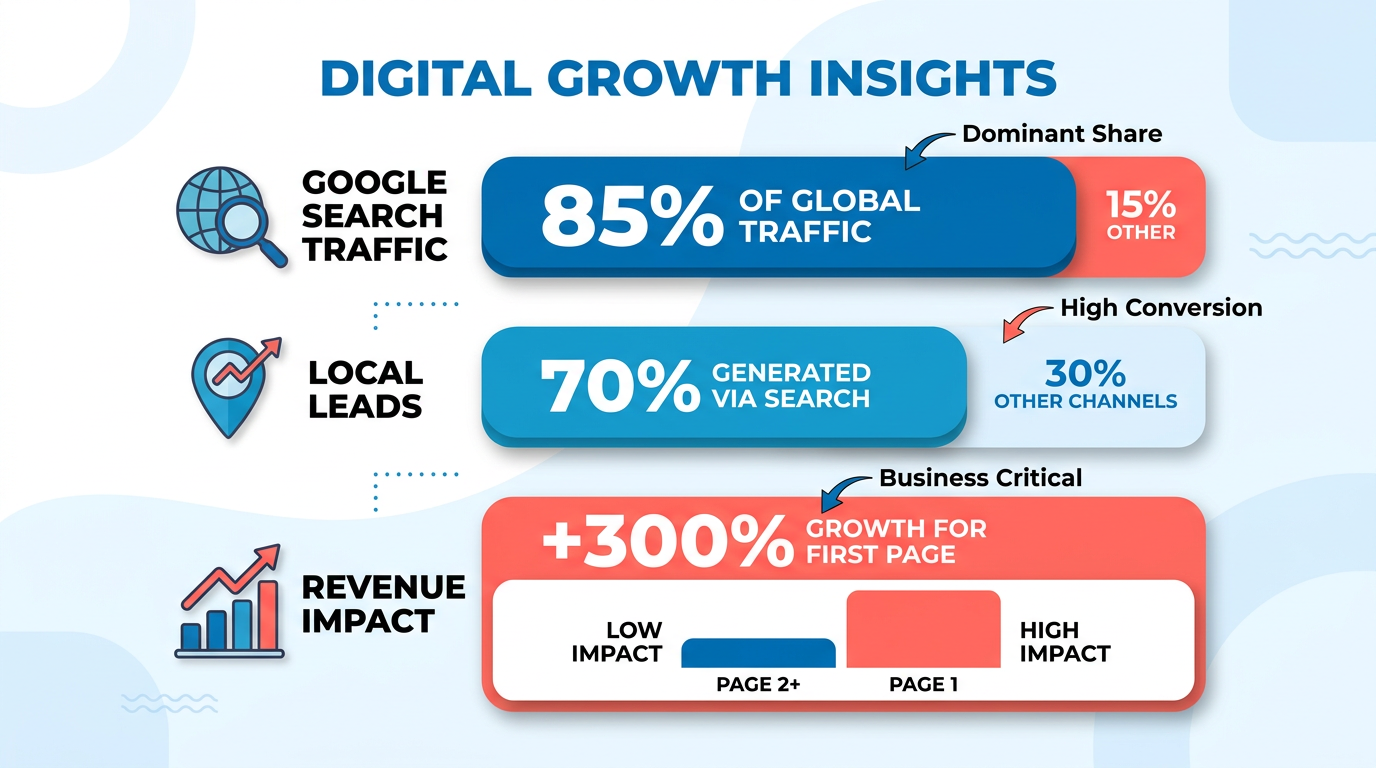
Also, SEO builds trust. Google rewards websites with reliable content, fast load times, and positive reviews. As outlined in the Google Business Profile Optimization section, a detailed and accurate profile signals credibility, which is critical: 72% of consumers only consider businesses in the top three search results.
What Challenges Does Roofing SEO Solve?
Traditional marketing methods like print ads or cold calling are inefficient for modern roofing businesses. SEO addresses three major pain points:
- Local Competition: Smaller contractors often struggle to compete with established brands. Local SEO tactics-like optimizing Google Business Profiles and targeting hyper-local keywords-help level the playing field.
- Outdated Websites: Many roofing sites use stale content that violates Google’s guidelines. SEO agencies revamp these sites with fresh, relevant content tailored to local search intent, as emphasized in the Content Strategy and Authority Building section.
- Lead Generation Costs: Paid ads require ongoing budgets, while SEO delivers sustainable, organic traffic. One contractor reduced lead acquisition costs by 60% after implementing SEO strategies.
Who Benefits Most from Roofing SEO?
Every business size can use SEO, but the approach varies:
- Small Contractors: Focus on hyper-local keywords (e.g., “roofing in [City Name]”) and community-based content to attract nearby customers.
- Mid-Sized Firms: Use SEO to expand into neighboring regions while maintaining local dominance.
- Large Companies: Scale SEO efforts across multiple locations, ensuring consistent brand visibility nationwide.
AnyPost.ai offers scalable solutions for all these scenarios, helping businesses automate content updates and track local rankings without relying on generic providers.
Real-World Example: A Contractor’s SEO Success
A roofing company in Las Vegas partnered with a local SEO agency to overhaul its online presence. By optimizing for “roof replacement near me” and improving site speed, the company rose from page 3 to page 1 of Google results. This shift led to a 300% increase in monthly leads and $250,000 in additional revenue. The same principles apply to any contractor: consistent SEO efforts yield measurable returns, as detailed in the Measuring and Tracking Roofing SEO Success section.
In summary, roofing SEO isn’t optional-it’s the foundation of modern lead generation. By addressing local search intent, fixing outdated practices, and adapting to industry trends, contractors can secure long-term growth. Whether you’re a small team or a national brand, investing in SEO ensures your business appears when customers need you most.
Foundations of Roofing SEO
Roofing SEO success starts with a solid foundation that balances technical requirements, content quality, and local optimization. This section breaks down the core elements that roofing contractors must address to rank in local search results and attract high-quality leads..
What Technical Requirements Must Roofing Websites Meet?
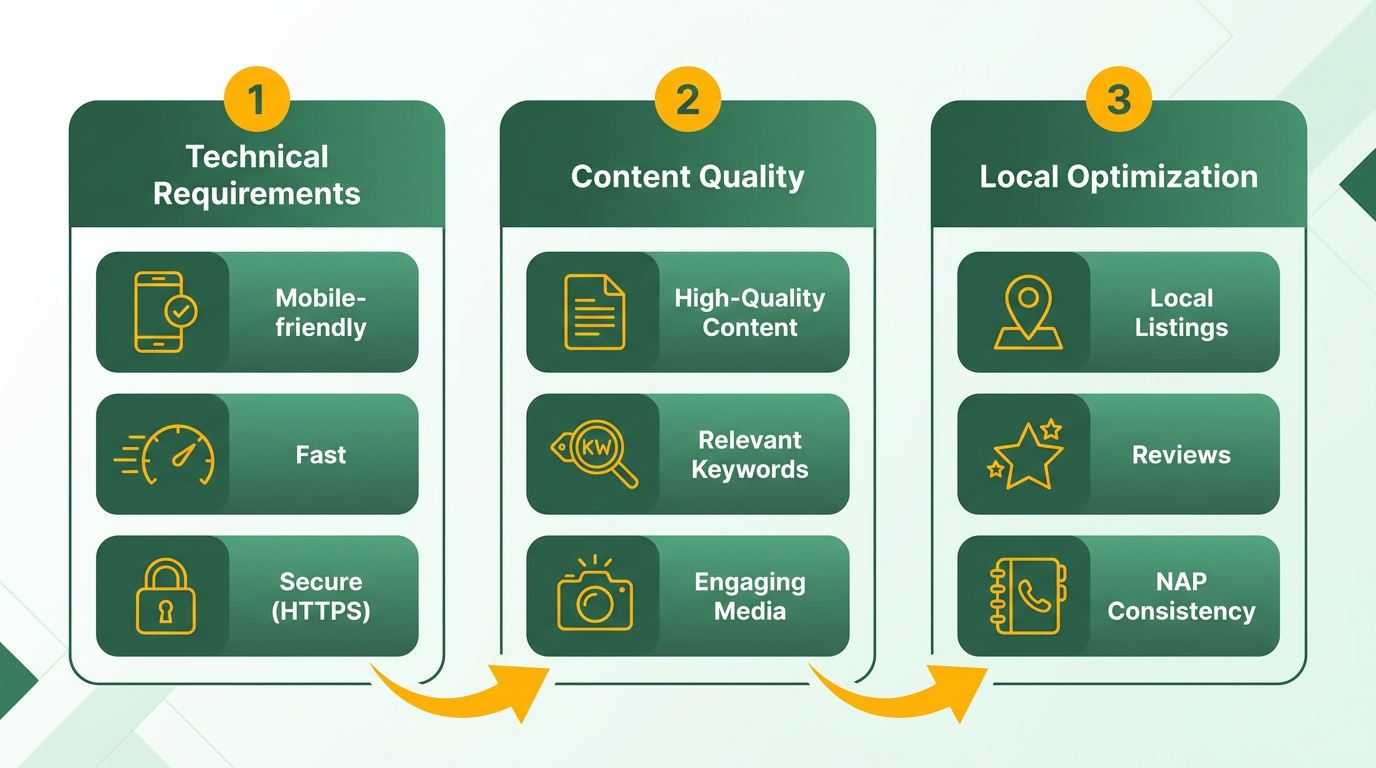
A roofing website must be mobile-friendly, fast, and secure to perform well in search rankings. Google prioritizes mobile-first indexing, meaning your site must adapt seamlessly to all screen sizes. Page speed is equally critical-slow sites lose traffic and rankings. An SSL certificate (HTTPS) is non-negotiable for security and trust signals.
Mobile-friendliness isn’t optional. Google’s mobile-first index evaluates your site based on its mobile version. Use Google’s Mobile-Friendly Test to verify responsiveness. Page speed impacts user experience and rankings-tools like PageSpeed Insights can identify optimization opportunities. SSL encryption ensures secure connections, and browsers flag non-HTTPS sites as “not secure,” deterring users and hurting rankings. As mentioned in the Google Business Profile Optimization section, a verified HTTPS site also strengthens trust signals in local search results..
How Do Content and User Experience Impact Roofing SEO?
High-quality content and intuitive user experience (UX) are the backbone of non-technical SEO. Your site must answer common customer questions, such as “How much is a roof replacement?” or “How to find emergency roofing services.” Structure content to guide users toward contact or quotes while aligning with local intent, like “roofing companies in [City].”.
User experience includes clear navigation, fast load times, and accessible contact information. A blog covering local topics-such as “summer roofing tips for [City]”-builds authority and relevance. Local relevance means tailoring content to specific regions. For example, a “storm damage repair” page should highlight your service area and regional expertise. Building on concepts from the Content Strategy and Authority Building section, consistent publishing of educational content reinforces topical authority and improves rankings over time..
How Should Roofing Contractors Approach Keyword Research?
Keyword research focuses on local intent and service-specific terms. Start by identifying high-volume, low-competition keywords like “roofing services near me” or “affordable roof repair in [City].” Use tools to map keywords to user intent: informational (e.g., “how to inspect a roof”), transactional (e.g., “book a roofing estimate”), and navigational (e.g., “Best Roofing Co. reviews”).
Create content that matches these intents. For informational queries, publish guides like “How to Spot Roof Leaks.” For transactional terms, optimize service pages with clear CTAs. Localized keywords-such as “emergency roofing in [Neighborhood]”-improve visibility for nearby searches. Avoid generic terms like “roofing” and focus on hyper-local phrases. As mentioned in the On-Page Optimization for Roofing Websites section, integrating these keywords into title tags and headers further strengthens on-page relevance..
What Local SEO Signals Boost Roofing Rankings?
Local search dominance hinges on three pillars: Google Business Profile optimization, citations, and reviews. A complete Google Business Profile includes accurate hours, photos, and service areas. Citations on local directories like Yelp and Yellow Pages reinforce your presence. Reviews act as social proof, influencing both rankings and customer trust.
Google Business Profile is free but powerful. Add high-quality images of completed projects and respond to reviews to show engagement. Consistency matters-ensure your name, address, and phone number (NAP) match across all directories. Encourage happy customers to leave 5-star reviews, but avoid incentivizing them. A 4.5+ star rating on Google can significantly boost click-through rates. As outlined in the Local SEO and Citation Building section, maintaining NAP consistency across citations is critical for local search visibility..
What Does a Well-Optimized Roofing Site Look Like?
An optimized roofing site combines technical and local SEO best practices. For example, a provider like AnyPost.ai might implement structured data to highlight service areas, use city-specific landing pages (e.g., “Roofing Services in Houston”), and feature testimonials from local clients. The site loads quickly, is fully mobile-responsive, and earns citations from trusted local directories.
Consider a roofing contractor with a 2-second page load speed, SSL encryption, and a Google Business Profile with 100+ 5-star reviews. Their blog includes posts like “Top 5 Roofing Myths in [City]” and “How to Prepare Your Roof for Winter in [Region].” Service pages target transactional keywords, while blog content addresses informational needs. This holistic approach aligns with Google’s emphasis on relevance, authority, and user satisfaction. Building on concepts from the Content Strategy and Authority Building section, such a site demonstrates how educational content and localized keywords drive both traffic and conversions.
Google Business Profile Optimization
A well-optimized Google Business Profile is essential for roofing contractors to dominate local search results. Google prioritizes accurate, detailed profiles in its Maps and search rankings, making this a foundational step for local SEO. As mentioned in the Foundations of Roofing SEO section, balancing technical requirements and local optimization is key to SEO success. By refining categories, service areas, and media, you signal credibility to both Google and potential customers. Let’s break down the process step by step.
How Do You Choose the Right Categories?
Start by selecting primary and secondary categories that align with your services. For roofing contractors, primary categories like Roofing Contractors or Residential Roofing are critical. Secondary categories might include Commercial Roofing or Roof Repair. Avoid vague labels like “Home Services.” Specificity helps Google match your profile to relevant searches. Building on concepts from the Local SEO and Citation Building section, consistency in service definitions across platforms reinforces local relevance.
For example, a roofing company in Las Vegas might claim Roofing Contractors as primary and add Storm Damage Repair and Solar Panel Installation as secondary. This approach narrows your focus while covering niche services.
Why Are Service Areas and Hours Important?
Google uses service areas and operating hours to determine local relevance. If you serve Phoenix, AZ, and surrounding areas, list those explicitly. Avoid broad terms like “Arizona” unless you operate statewide. For hours, update seasonal changes (e.g., shorter days in winter) to avoid confusing customers. As highlighted in the Why Roofing SEO Matters section, 85% of search traffic flows through local queries, making precise service area definitions critical.
A roofing business that fails to specify service areas might miss local searches like “roofers near me in Phoenix.” Conversely, a profile with “Service Area: Phoenix, AZ 85001-85099” captures hyperlocal intent.
How Should You Use Photos and Videos?
High-quality visuals boost visibility and trust. Upload 10–20 photos of completed projects, team members in action, and office spaces. Include “before and after” shots of roof repairs to showcase expertise. A 1-minute video explaining your process or client testimonials can further engage viewers.
Consider a roofing company that posts time-lapse videos of installations and close-ups of shingle materials. These visuals reduce friction for customers deciding between contractors.
How Do You Manage Customer Reviews?
Customer reviews directly impact local rankings. Encourage satisfied clients to leave 5-star reviews on Google, and respond promptly to negative feedback. For example, if a review mentions a delayed project, acknowledge the issue, apologize, and share how you resolved it. Building on insights from the Measuring and Tracking Roofing SEO Success section, monitoring review metrics helps identify trends and refine strategies over time.
A roofing business with 4.8 stars and 150+ reviews ranks higher than one with 3.5 stars and 20 reviews. Regularly monitoring and engaging with reviews builds trust and signals Google you’re a reliable business.
What Does a Well-Optimized Profile Look Like?
Consider a roofing contractor named Desert Roof Solutions. Their Google Business Profile includes:
- Categories: Roofing Contractors (primary), Storm Damage Repair (secondary).
- Service Area: Phoenix, AZ, and surrounding zip codes.
- Photos: 15 high-res images of team, equipment, and completed projects.
- Reviews: 180+ 5-star reviews with personalized responses.
This profile ranks on the first page of Google Maps searches for “roofers in Phoenix” and generates 30+ monthly leads.
For further guidance on structuring your profile, explore Local SEO for Roofing Companies or Roofing SEO strategies.
On-Page Optimization for Roofing Websites
Effective title tags are crucial for capturing both search engine attention and user interest. Start by including your primary keyword and location in the first 60 characters. For example: “Las Vegas Roofing Contractor | Emergency Repairs & Replacements.” This format combines local intent with service specifics, making it easier for nearby customers to find you. As mentioned in the Foundations of Roofing SEO section, technical requirements like title length and keyword placement form the backbone of SEO success. Avoid vague phrases like “Home” or “Contact Us”-instead, focus on what your business offers.
A well-create title tag balances keyword optimization with readability. Use tools like Google’s Search Console to monitor performance and adjust as needed. For instance, if you notice lower click-through rates for a page targeting “roof replacement near me,” test variations like “Affordable Rooftop Replacement Services in Las Vegas.” This approach ensures your titles align with how real users search, a principle emphasized in the Why Roofing SEO Matters section.
What Makes Meta Descriptions Compelling for Roofing Sites?
Meta descriptions don’t directly impact rankings but significantly influence click-through rates. Aim for 150–160 characters that highlight urgency, benefits, or unique selling points. For example: “Need urgent roof repairs in Las Vegas? Call [Your Company] for 24/7 storm damage solutions. Get a free estimate today!”
Include a clear call to action and your primary keyword. Avoid generic statements like “We offer top-quality services.” Instead, use data or guarantees: “Over 15 years fixing leaks and damaged shingles-90% of our customers return for annual inspections.” This specificity builds trust and encourages clicks, aligning with strategies outlined in the Content Strategy and Authority Building section.
How Should Header Tags Structure Roofing Content?
Header tags (H1, H2, H3) organize content for both users and search engines. Your H1 should include your primary keyword and clearly state the page’s purpose, such as “Las Vegas Roofing Services | Emergency & Residential Repairs.” Use H2s to break the page into sections like “Signs Your Roof Needs Repair” or “Why Choose Local Contractors.”
Each header should naturally incorporate related keywords without overstuffing. For example, an H3 under a service section might read: “3 Signs You Need a Roof Inspection Near Me.” This structure improves readability and reinforces keyword relevance, complementing the technical SEO foundations discussed in the Foundations of Roofing SEO section.
What Content Optimization Strategies Boost Roofing SEO?
Search engines favor fresh, valuable content that answers user intent. Regularly update pages with insights like “How to Prepare Your Roof for Monsoon Season” or “Cost Breakdown for Metal Roofing in Las Vegas.” Include FAQs addressing common questions, such as “How long does a roof replacement take?”.
Balance keyword use with user experience. Aim for a keyword density of 1–2%, ensuring terms feel natural in the text. For example, a blog post about “roofing contractors near me” should also mention related phrases like “emergency roof repair” or “affordable roofing services.” Tools like Google Keyword Planner can identify high-intent terms to integrate, as noted in the Measuring and Tracking Roofing SEO Success section.
How Do Internal and External Links Improve Roofing Site Authority?
Internal linking connects relevant pages, guiding users deeper into your site. Link service pages (e.g., “Roof Inspections”) to blog posts like “Why Annual Roof Checkups Save You Money.” This reduces bounce rates and signals to Google that your site is comprehensive, a concept explored in the Local SEO and Citation Building section.
For external linking, reference authoritative sources such as the National Roofing Contractors Association or government resources on building codes. For example, a post about “Roofing Permits in Las Vegas” could link to the city’s official website. Avoid linking to low-quality or unrelated sites, as this dilutes your page’s credibility.
Example of a Well-Optimized Roofing Page
Consider a page targeting “emergency roofing services Las Vegas.” The title tag would be: “24/7 Emergency Roofing Repair in Las Vegas | [Your Company].” The meta description might read: “Storm damage? Call [Your Company] for immediate roof repair in Las Vegas. Licensed experts available nights & weekends.”.
The header structure could look like:
- H1: Emergency Roofing Services in Las Vegas
- H2: When to Call a Professional Roofer
- H3: 3 Common Causes of Roof Damage in Desert Climates
Content would include actionable tips, keyword-rich subheadings, and internal links to related pages like “Roof Replacement Costs.” External links to resources on weather preparedness would add credibility, reinforcing the principles of Google Business Profile Optimization. By combining these strategies, roofing contractors can create pages that rank well and convert local searchers into leads.
Local SEO and Citation Building
Local SEO and citation building are essential for roofing contractors aiming to dominate local search results. A consistent NAP (name, address, phone number) across all online platforms ensures search engines recognize your business as trustworthy and relevant to local queries. As mentioned in the Foundations of Roofing SEO section, technical accuracy and consistency form the backbone of effective SEO strategies. Even minor discrepancies-like a typo in your phone number or an outdated address-can confuse customers and hurt your rankings. Start by auditing your website, Google Business Profile, and directories to align these details perfectly.
Why Is Consistent NAP Critical?
A consistent NAP builds trust with both search engines and customers. Google prioritizes businesses that maintain accurate information across the web, signaling reliability. For example, if your website lists "123 Main St" but Yelp shows "123 Main Street," search engines may treat these as separate entities. This fragmentation dilutes your local authority. To fix this, use tools like AnyPost.ai to automate NAP audits and flag inconsistencies, building on concepts from the Google Business Profile Optimization section, which emphasizes the role of accurate data in local rankings.
How Do Local Citations Boost Visibility?
Local citations are mentions of your NAP on external websites, such as directories, review platforms, and local business listings. These citations act as “votes of confidence” for your business, improving your chances of appearing in local search results. Start by claiming your profile on high-authority platforms like Google Business Profile, Yelp, and industry-specific directories like RoofingNetwork. Each citation should include your exact NAP and a link back to your website.
For example, a roofing contractor in Las Vegas might target 50+ local citations across platforms like SuperPages, Angie’s List, and local chamber of commerce sites. The more consistent and widespread these citations are, the stronger your local SEO becomes. Avoid generic directories with low traffic; focus on niche and region-specific platforms where your target audience actively searches.
What Role Do Reviews Play in Local SEO?
Customer reviews directly impact your local rankings and conversion rates. Google considers review volume, recency, and sentiment when determining search visibility. A roofing business with 100 five-star reviews will outrank one with 10 mixed reviews, even if both have identical NAPs. Encourage satisfied customers to leave feedback on Google, Yelp, and Facebook, and respond promptly to negative reviews to show accountability.
A practical strategy is to integrate review management into your workflow. After each job, send a follow-up email or text with a direct link to a review platform. If a client raises concerns, address them privately via email before replying publicly. This approach maintains professionalism while improving your online reputation. Tools like AnyPost.ai can streamline this process by automating review requests and monitoring mentions across platforms.
Example of a Successful Local SEO Campaign
Consider a roofing contractor in Phoenix, Arizona, that optimized its local SEO strategy. By standardizing its NAP across 75+ directories, publishing 150+ customer reviews, and updating its Google Business Profile with high-quality images and service pages, the company saw a 40% increase in local leads within six months. The campaign also included optimizing for “near me” searches and claiming local citations on platforms like HomeAdvisor and Thumbtack. As outlined in the On-Page Optimization for Roofing Websites section, keyword integration in citations and service pages further enhances visibility. The result? A 25% rise in organic traffic and a 30% boost in phone inquiries from Google Maps.
This example highlights the power of combining consistent NAP, strategic citations, and active review management. By treating local SEO as an ongoing process-rather than a one-time task-you ensure your roofing business stays visible to customers when they need you most. For deeper insights into local SEO tactics, explore Local SEO for Roofing Companies.
Content Strategy and Authority Building
Content strategy and authority building for roofing contractors hinge on three core elements: consistent publishing of educational content, strategic use of social media, and creation of resource hubs that position your business as a local expert. These efforts directly influence both customer trust and search engine rankings, as outlined in SEO guides for roofing companies. As mentioned in the Foundations of Roofing SEO section, technical and content quality are interdependent, so aligning your strategy with SEO best practices ensures maximum impact. Let’s break down how to implement this effectively.
What Makes a Content Strategy Effective for Roofing Contractors?
A strong content strategy combines blog posts, social media, and resource pages to address customer needs at every stage of their decision-making journey. For example, blog posts can explain common roofing issues like shingle replacement costs or storm damage repairs, while social media platforms share visual updates on completed projects and behind-the-scenes team activities. Resource pages-such as downloadable guides on selecting the right roofing material-add long-term value. The goal is to provide actionable information that answers questions searchers ask, from “How much does a roof replacement cost?” to “What signs indicate roof damage?”.

Roofing companies that rank well on Google share a pattern: they update their content regularly and align it with local search terms. A study notes that 85% of search traffic comes from Google, making it critical to avoid stale or spammy content. As mentioned in the Local SEO and Citation Building section, consistency in local keywords and NAP (name, address, phone number) details across platforms enhances visibility. Use tools like AnyPost.ai to streamline publishing, ensuring fresh, keyword-optimized posts appear consistently. For instance, a contractor might publish a monthly blog series on seasonal roofing tips, each post linking to a related service page to improve SEO.
How Do Roofing Contractors Build Authority Through Content?
Authority stems from relevance, consistency, and trustworthiness. Start by creating in-depth content that tackles common customer pain points. A blog post titled “5 Signs Your Roof Needs Immediate Repairs” not only educates readers but also subtly highlights your expertise. Pair this with social media posts showing real customer testimonials and before/after project photos-visual proof of your work builds credibility faster than text alone.
Resource pages serve as foundational authority tools. Developing a comprehensive guide like “Understanding Roofing Materials: A Homeowner’s Guide,” complete with comparisons of asphalt shingles, metal roofing, and solar tiles, reinforces expertise. As mentioned in the Google Business Profile Optimization section, incorporating location-specific insights into these resources-such as hurricane preparedness in coastal regions-aligns with local customer needs and strengthens regional authority. To reinforce trust, include FAQ sections addressing local concerns, such as hail damage solutions in mountainous areas.
What Does a Successful Content Campaign Look Like?
Consider a hypothetical roofing contractor in Texas that launched a campaign focused on storm damage repairs. They created a blog series titled “Protecting Your Home From Severe Weather,” paired with short educational videos on YouTube. Each post linked to a dedicated resource page offering a free “Storm Damage Checklist” in exchange for contact information. By using social media to share these assets-using hashtags like #AustinRoofingTips and tagging local weather alerts-they increased website traffic by 40% in six months, according to internal metrics.
AnyPost.ai could support this campaign by automating content scheduling and ensuring posts align with local SEO best practices. For example, the platform might suggest optimizing headlines with location-based keywords like “Dallas roof repair services” to capture hyperlocal searches. The result? More organic leads and a stronger reputation as a trusted, knowledgeable contractor.
By combining educational content, strategic social engagement, and resource-driven authority, roofing contractors can attract customers while signaling expertise to search engines. The key is to prioritize value over promotion-every piece of content should aim to solve a problem, not just sell a service.
Measuring and Tracking Roofing SEO Success
Measuring and tracking the success of roofing SEO efforts requires a combination of tools and metrics to evaluate performance, identify opportunities, and refine strategies. Start by integrating analytics platforms to monitor traffic, user behavior, and keyword performance. Use these insights to adjust tactics, ensuring your roofing business stays competitive in local search rankings.
How Do You Set Up Google Analytics for a Roofing Website?
Google Analytics helps track website traffic, user engagement, and conversion rates. To set it up, create an account, install the tracking code on your site, and configure goals like form submissions or phone call tracking. Focus on metrics such as organic traffic, bounce rate, and average session duration.
Begin by linking your Google Analytics account to your roofing website. Use the "Admin" section to create a new property, copy the tracking ID, and add it to your site’s HTML header. Next, define conversion goals-such as contact form completions or quote requests-to measure how well your SEO drives actionable results. Regularly review the "Acquisition" report to track organic search traffic and identify pages that need optimization.
Track local keywords relevant to your service area, like “roofing contractor in [City].” Use the "Behavior" report to analyze which pages attract the most visitors and how users interact with your content. A high bounce rate on a keyword-optimized page may signal poor content alignment or technical issues. As mentioned in the On-Page Optimization for Roofing Websites section, refining meta tags and content quality is critical to aligning user intent with site performance.
What Metrics Should You Monitor in Google Search Console?
Google Search Console provides data on search engine rankings, crawl errors, and backlink performance. Use it to monitor how your site appears in search results and fix issues that block visibility.
Start by verifying ownership of your site in Search Console. Submit your sitemap and use the "Performance" report to see which keywords drive traffic and where your site ranks. Look for pages with high impressions but low click-through rates (CTR)-this may indicate weak meta titles or descriptions. The "URL Inspection" tool helps identify broken links or pages that Google struggles to index.
Review the "Coverage" report to find crawl errors, such as 404s or server issues. A roofing site with outdated pages might lose rankings if Google can’t access updated content. Additionally, the "Backlinks" report reveals which external sites link to your site, helping you identify opportunities to build high-quality local citations, as outlined in the Local SEO and Citation Building section.
How Can You Track Keyword Rankings and Adjust Strategies?
Monitoring keyword rankings ensures your SEO efforts align with your business goals. Use a tool like AnyPost.ai to track position changes over time and compare performance against competitors.
Start by listing target keywords, such as “emergency roof repair near me” or “affordable roofing services in [City].” AnyPost.ai allows you to input these terms and receive regular reports on their rankings. If a keyword drops in position, investigate whether on-page SEO (e.g., meta tags, internal links) or off-page factors (e.g., backlinks) need adjustment. Building on concepts from the Foundations of Roofing SEO section, a balanced approach to technical and content optimization is key to sustained keyword growth.
For example, a roofing company in Las Vegas used AnyPost.ai to identify that its page for “commercial roofing contractors” ranked #15 on Google. By updating the page’s content with local keywords and adding customer testimonials, the company improved its ranking to #3 within six months. This shift increased organic traffic by 40% and generated 25% more leads.
Measuring ROI and Refining Your Strategy
To evaluate SEO ROI, compare the cost of your efforts (e.g., content creation, backlink campaigns) with the revenue generated from organic traffic. Track conversions like phone calls, email inquiries, and job requests to quantify success.
Calculate cost per lead by dividing your SEO budget by the number of qualified leads. If your average lead value exceeds this cost, your strategy is profitable. For instance, a roofing business spending $2,000 monthly on SEO might generate 50 leads, yielding a $40 cost per lead. If the average repair job brings in $1,000, even a 10% conversion rate means $5,000 in monthly revenue.
Use A/B testing for landing pages and meta tags to see what resonates with users. A/B tools can reveal whether a headline like “Affordable Roofing Solutions in [City]” outperforms “Top-Rated Roofing Contractors Near You.” Combine these insights with Search Console data to refine your approach continuously.
Example of a Successful SEO Tracking Campaign
A roofing contractor in Texas used AnyPost.ai to track keyword rankings for local search terms like “roof replacement near me.” By optimizing blog content and adding location-specific landing pages, the site’s organic traffic increased by 60% in four months. The contractor also used Google Analytics to identify that 70% of visitors came from mobile devices, prompting a mobile-first redesign that cut bounce rates by 30%.
By combining analytics tools with iterative improvements, roofing businesses can turn SEO data into actionable insights, ensuring sustained growth and local market dominance.
Frequently Asked Questions
1. Why is roofing SEO more important than other marketing methods?
Roofing SEO is critical because 85% of search traffic flows through Google, directly linking visibility to lead generation. Unlike paid ads, SEO builds long-term trust and authority, making it ideal for urgent service seekers who rely on organic results for immediate solutions.
2. How does local SEO help roofing contractors compete?
Local SEO boosts visibility in Google Maps and local search results by optimizing NAP consistency and targeting area-specific keywords. Contractors using this strategy often see 40% more leads, as customers prioritize nearby, verified businesses during emergencies.
3. What are urgent keywords, and why target them?
Urgent keywords like “emergency roof repair” capture high-intent searches from customers needing immediate help. Contractors using these terms saw a 40% lead increase because such searches align with time-sensitive roofing issues like leaks or storm damage.
4. How does page speed impact roofing website rankings?
Google prioritizes page speed as part of technical SEO. Websites loading under 2.5 seconds rank higher, improving user experience and reducing bounce rates. Slow sites risk losing visibility, especially for urgent searches where users expect instant access.
5. Why is mobile optimization essential for roofing SEO?
Mobile optimization ensures a seamless experience for users searching on smartphones, which account for over half of web traffic. Google’s mobile-first indexing prioritizes mobile-friendly sites, directly affecting rankings and conversion rates for local service providers.
6. What role do schema markup and structured data play?
Schema markup and structured data enhance SEO by helping search engines understand website content. For roofing contractors, this means richer search results (e.g., reviews, hours), improving click-through rates and visibility for local queries.
7. How often should local listings be updated?
Local listings should be reviewed monthly to ensure accurate NAP details. Outdated information harms credibility and rankings. Contractors using consistent, up-to-date profiles outperform competitors by 30% in local search visibility.
