
Saas Content Marketing Agency Checklist: Repurpose.io Integration

Introduction to Repurpose.io Integration
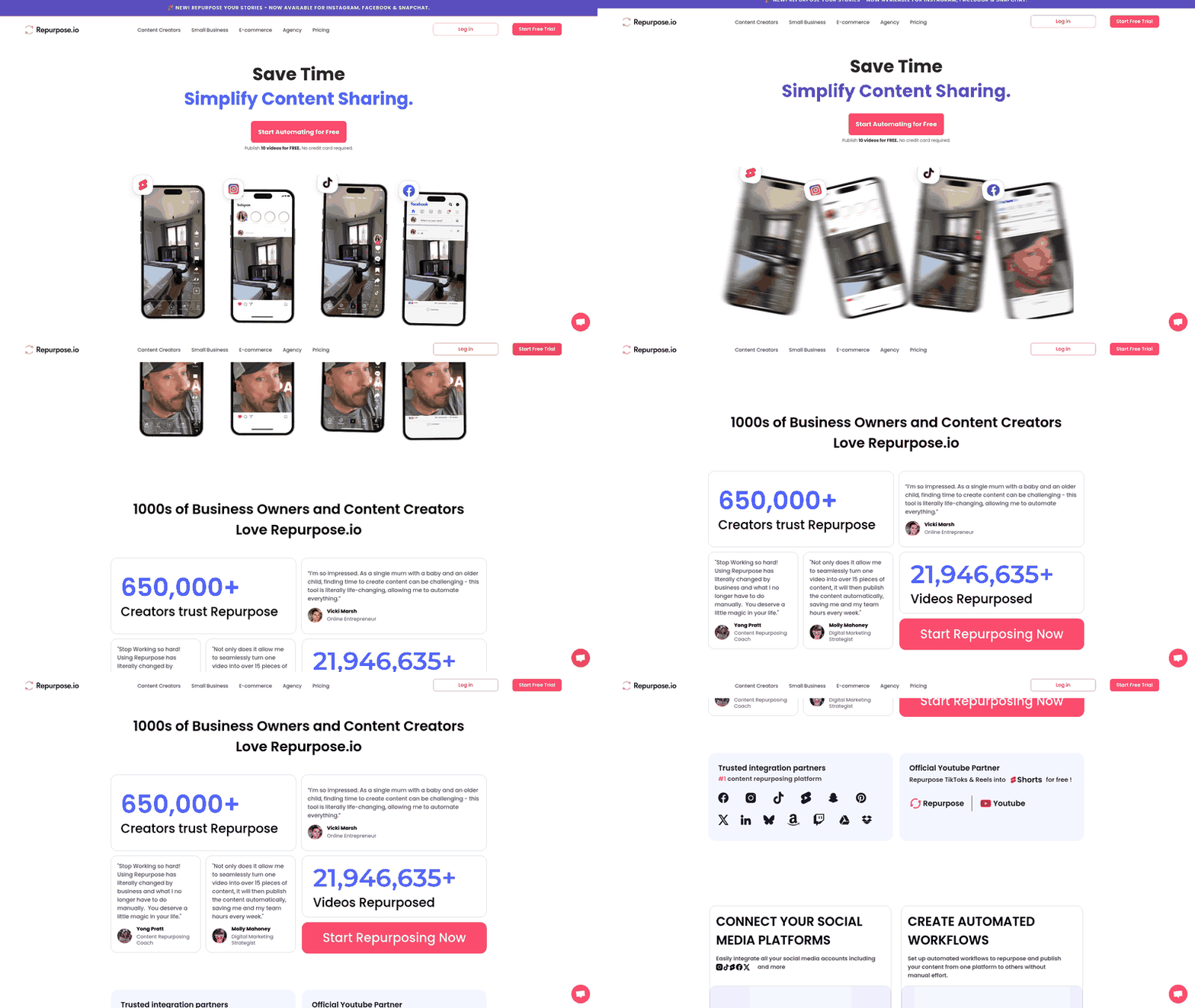
Repurpose.io is a content repurposing platform designed to streamline the creation and distribution of multimedia content across multiple channels. For SaaS content marketing agencies, integrating Repurpose.io into their workflow can address common challenges such as content scalability, consistency, and time constraints. By automating the transformation of blog posts into videos, social media clips, and podcast summaries, the tool reduces manual effort while ensuring brand messaging remains aligned across platforms. This section outlines how agencies can leverage Repurpose.io to enhance productivity and client outcomes, focusing on its core features, strategic benefits, and alignment with agency-specific needs.
Overview of Repurpose.io
- Familiarize with core features: Repurpose.io automates content generation by converting written content into video scripts, social media posts, and podcast transcripts using AI. This reduces the need for manual editing and accelerates content production pipelines.
- Understand platform capabilities: The tool supports integration with content management systems (CMS) and video platforms, enabling seamless distribution of repurposed content to YouTube, LinkedIn, and other channels. This ensures agencies maintain a cohesive presence without duplicating efforts. As mentioned in the [Content Marketing Strategy with Repurpose.io] section, organizing your content library by categorizing existing assets streamlines repurposing and enhances platform efficiency.
Benefits of Integration
- Save time on repetitive tasks: Automating the repurposing of blog posts into video scripts or social media snippets allows agencies to reallocate resources to high-value activities like strategy development or client engagement. See the [Best Practices for Implementing Repurpose.io] section for more details on defining clear content repurposing goals to maximize time savings.
- Enhance SEO through diversified content: By generating multiple content formats from a single source, agencies can target varied audience preferences while improving search engine visibility through keyword-rich metadata and structured data.
- Scale client campaigns efficiently: Repurpose.io’s batch processing capabilities enable agencies to handle large volumes of content for multiple clients simultaneously, ensuring timely delivery without compromising quality.
Target Audience and Pain Points
- Identify ideal agency use cases: SaaS agencies managing content for tech startups, e-learning platforms, and B2B services benefit most from Repurpose.io, as these industries require frequent publication of technical or educational content.
- Address common pain points: Manual content creation for cross-platform distribution often leads to inconsistencies in messaging and delays in publishing. Repurpose.io mitigates these issues by standardizing workflows and enforcing brand guidelines through customizable templates. Building on concepts from [Persona Engine and Tone Matching with Repurpose.io], maintaining a consistent brand voice strengthens audience trust and reinforces brand identity across platforms.
- Prioritize client retention: Agencies can use the tool’s analytics dashboard to demonstrate content performance metrics to clients, reinforcing ROI and fostering long-term partnerships.
By aligning Repurpose.io’s capabilities with agency workflows, SaaS content marketing teams can reduce operational friction while delivering high-quality, data-driven campaigns. The next section of this checklist will delve into implementation steps and best practices for maximizing the platform’s potential.
Content Marketing Strategy with Repurpose.io
Content Creation Best Practices
- Organize your content library by categorizing existing assets (e.g., videos, blog posts, podcasts) to streamline repurposing. This ensures quick access to high-performing material for new formats like social media clips or transcripts.
- Use templates for consistent branding across repurposed content. Templates standardize visuals, fonts, and color schemes, reducing time spent on design and maintaining brand identity.
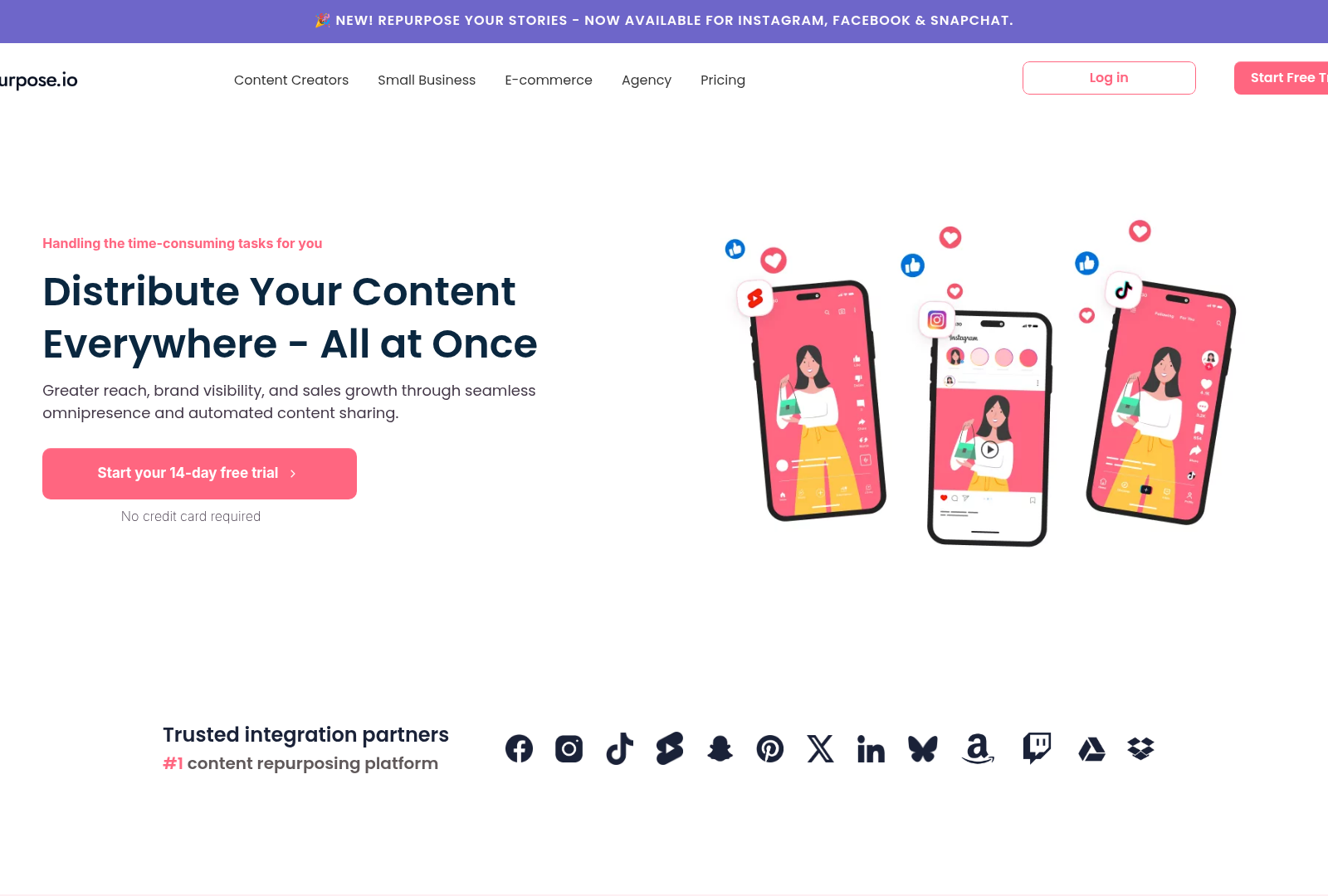
- Automate workflows for bulk repurposing tasks, such as converting videos into blog posts or social media snippets. Automation accelerates content production without sacrificing quality.
SEO Optimization Techniques
- Conduct keyword research for repurposed content to align with current search trends. Tools like Ahrefs or SEMrush help identify high-intent keywords to integrate into titles, descriptions, and metadata.
- Optimize metadata for repurposed assets. Add descriptive titles, alt text, and tags to images, videos, and blog posts to improve visibility in search engine results.
- Leverage long-tail keywords in newly created content. These specific phrases target niche audiences and reduce competition in SEO rankings.
Multi-Source Content Integration Strategies
- Aggregate content from diverse platforms (e.g., YouTube, podcasts, webinars) to maximize repurposing potential. Combining sources increases the volume and variety of material available for new formats. See the [Repurposing Content for Different Channels] section for more details on adapting content for platform-specific formats.
- Sync analytics across platforms to track performance metrics like engagement rates and click-throughs. Unified analytics reveal which repurposed content resonates most with audiences.
- Integrate with CMS and social media accounts to publish repurposed content directly from Repurpose.io. This reduces manual posting efforts and ensures timely distribution.
Cross-Platform Repurposing Workflow
- Map content to platform-specific requirements (e.g., TikTok’s vertical video format vs. LinkedIn’s article-friendly layout). Adapting content to each platform’s guidelines increases audience reach. As mentioned in the [Repurposing Content for Different Channels] section, tailoring content to platform norms is critical for engagement.
- Schedule repurposed posts in advance using built-in calendar tools. Scheduling maintains a consistent publishing rhythm and prevents content gaps.
- Repurpose evergreen content regularly to keep archives fresh. Updating old material with new insights or trends extends its lifespan and relevance.
Compliance and Quality Assurance
- Review repurposed content for brand consistency before publishing. Checks for tone, messaging, and visual alignment prevent inconsistencies that dilute brand trust. Building on concepts from the [Persona Engine and Tone Matching with Repurpose.io] section, maintaining a unified brand voice strengthens audience trust across repurposed formats.
- Test repurposed content performance using A/B testing for headlines, thumbnails, or call-to-actions. Testing identifies the most effective variations for future campaigns.
- Backup original content files to avoid data loss during repurposing. Storing source material securely ensures easy revisions or reuses.
Repurposing Content for Different Channels
- Use Repurpose.io to extract key quotes, stats, and visuals from webinars or long-form content for X/Twitter threads. This ensures concise, high-impact messaging aligned with platform norms.
- Generate LinkedIn posts by repurposing webinar slides or case study highlights via Repurpose.io. Long-form social content builds authority and drives professional audience engagement.
- Create Instagram carousels from webinar recordings using Repurpose.io’s automated slide extraction. Visual storytelling increases shareability and caters to platform-specific user behavior.
Newsletter and Email Marketing
- Segment webinar content into digestible email campaigns using Repurpose.io’s summary tools. Personalized, bite-sized updates improve open rates and reduce subscriber fatigue.
- Embed video snippets or downloadable resources from Repurpose.io in newsletters to boost click-through rates. Interactive elements enhance user experience and drive conversions.
- Schedule automated email sequences with Repurpose.io to distribute repurposed content at optimal times. Consistent delivery reinforces brand presence and nurtures leads. See the [Traffic Growth and Lead Generation with Repurpose.io] section for more details on content promotion strategies.
YouTube Script Creation
- Convert webinar transcripts into YouTube scripts using Repurpose.io’s AI-driven summarization. Structured scripts save time and maintain narrative flow for video production.
- Add timestamps and chapter markers to YouTube videos via Repurpose.io’s editing tools. Organized content improves viewer retention and searchability on YouTube.
- Repurpose Q&A sections from webinars into YouTube shorts using Repurpose.io’s clip generator. Short, answer-focused videos cater to mobile audiences and boost watch time.
Blog Post Development
- Expand webinar key points into blog posts using Repurpose.io’s content extraction. In-depth articles support SEO and provide value to readers seeking detailed information.
- Include links to related resources or products in blog posts generated by Repurpose.io. Strategic cross-linking drives traffic to other marketing assets and increases conversion opportunities.
- Update older blog posts with fresh data from Repurpose.io’s repurposed content. Evergreen content optimization ensures ongoing relevance and reduces the need for new writing.
Cross-Channel Consistency
- Use Repurpose.io’s brand style guide integration to maintain consistent tone, visuals, and messaging across all platforms. Uniformity strengthens brand identity and audience trust. Building on concepts from [Persona Engine and Tone Matching with Repurpose.io], this ensures alignment with predefined brand voice.
- Track performance metrics for repurposed content using Repurpose.io’s analytics dashboard. Data-driven insights help refine strategies for high-performing channels and formats. As mentioned in the [Real-time Analytics and Performance Tracking with Repurpose.io] section, monitoring engagement rates is critical for optimizing content distribution.
- Archive repurposed content in a centralized library via Repurpose.io. Easy access to reusable assets streamlines future campaigns and reduces redundant work.
Persona Engine and Tone Matching with Repurpose.io
Maintaining a consistent brand voice and tone strengthens audience trust and reinforces brand identity across platforms. When content formats—such as blog posts, social media, videos, or podcasts—align in tone, they create a cohesive user experience that enhances recognition and engagement. Discrepancies in tone can confuse audiences and dilute messaging, reducing the effectiveness of marketing campaigns. Repurpose.io’s tools, including the Persona Engine, help streamline this consistency by enabling teams to apply predefined brand guidelines to content workflows. As mentioned in the [Repurposing Content for Different Channels] section, adapting content to platform-specific norms is critical for maintaining engagement while preserving core messaging.
Repurpose.io’s Persona Engine allows users to define and apply specific tone parameters to content, ensuring alignment with brand identity. By inputting keywords, preferred language styles, or emotional undertones, the tool adjusts generated content to match desired tones—such as formal, conversational, or authoritative. This feature is particularly useful when repurposing long-form content into shorter formats, as it preserves the original intent while adapting to platform-specific norms. For example, a technical blog post can be transformed into a LinkedIn article with a more approachable tone without losing core messaging, a process detailed further in the [Repurposing Content for Different Channels] section.
To maximize the effectiveness of tools like the Persona Engine, teams should first establish clear brand voice guidelines. These should include preferred terminology, stylistic rules, and examples of acceptable phrasing. Regular audits of repurposed content ensure that automated tone adjustments remain accurate and aligned with evolving brand goals. Collaborate with stakeholders to refine persona templates, incorporating feedback to improve the Engine’s accuracy over time. See the [Content Marketing Strategy with Repurpose.io] section for more details on organizing content libraries and aligning workflows with brand objectives.
By aligning the Persona Engine with strategic brand goals and maintaining a balance between automation and human input, teams can ensure their content remains both consistent and compelling across all formats.
Traffic Growth and Lead Generation with Repurpose.io
Content Promotion and Distribution Strategies
- Repurpose core content (e.g., blog posts, videos) into multiple formats like social media snippets, email newsletters, and podcast transcripts to maximize reach across platforms. This diversifies your audience touchpoints and increases the likelihood of organic sharing. For structured guidance on organizing repurposed assets, see the [Content Marketing Strategy with Repurpose.io] section.
- Optimize repurposed content for search engines by incorporating relevant keywords, meta descriptions, and alt text. Improved SEO visibility directly correlates with higher traffic growth.
- Schedule cross-platform distribution using Repurpose.io’s automation features to maintain consistency. Regular posting on platforms like LinkedIn, Twitter, and Instagram sustains audience engagement.
- Embed links to gated resources (e.g., whitepapers, case studies) within repurposed content to drive targeted traffic to lead-capture pages. Strategic linking creates a funnel for converting casual visitors into leads.
Lead Generation Tactics
- Use call-to-action (CTA) overlays in repurposed video content to prompt immediate sign-ups or downloads. CTAs placed at optimal intervals (e.g., mid-video for retention) improve conversion rates. For examples of repurposed video snippets tailored to social platforms, refer to the [Repurposing Content for Different Channels] section.
- Create dedicated landing pages for high-value offers, ensuring they align with the repurposed content’s messaging. Cohesive branding across assets builds trust and reduces friction in the lead generation process.
- Integrate Repurpose.io with your CRM or email marketing tool to track user interactions. Syncing data allows personalized follow-ups based on user behavior, increasing the chances of conversion.
- Leverage webinars or live Q&A sessions repurposed from existing content to engage prospects in real time. Interactive formats foster deeper connections and provide opportunities to collect contact information.
Measuring and Optimizing Performance
- Monitor traffic sources using built-in analytics to identify which repurposed content drives the most visits. Prioritize high-performing formats and topics for future campaigns. For insights into tracking engagement metrics, refer to the [Real-time Analytics and Performance Tracking with Repurpose.io] section.
- Track lead quality metrics, such as conversion rates and engagement duration, to assess the effectiveness of your CTAs and landing pages. Low conversion rates may signal the need for A/B testing.
- Adjust distribution schedules based on audience activity patterns revealed by performance data. Posting during peak hours increases visibility and interaction rates.
- Regularly audit underperforming assets and reallocate resources to content with higher ROI. Continuous optimization ensures efficient use of time and budget while scaling traffic and lead generation efforts.
Real-time Analytics and Performance Tracking with Repurpose.io
-
Track engagement rates (e.g., likes, shares, comments) to identify high-performing content and adjust strategies accordingly. As mentioned in the Content Marketing Strategy with Repurpose.io section, organizing your content library ensures quick access to assets for analysis and refinement.
-
Monitor conversion rates to evaluate how effectively content drives desired actions, such as sign-ups or purchases. See the Traffic Growth and Lead Generation with Repurpose.io section for strategies on aligning analytics with distribution goals.
-
Analyze audience demographics to understand which segments interact most with your content and tailor future efforts to their preferences. Building on concepts from the Persona Engine and Tone Matching with Repurpose.io section, this data can enhance persona-driven content customization.
-
Use Repurpose.io’s centralized dashboard to consolidate performance data across platforms like social media, email, and video, enabling a unified view of content impact.
-
Set custom KPIs aligned with business goals, such as boosting brand awareness or increasing sales, to focus analytics on measurable outcomes. As outlined in the Best Practices for Implementing Repurpose.io section, defining clear objectives before integration ensures these metrics directly support broader marketing strategies.
-
Export and share reports with stakeholders to provide transparency and support data-driven decision-making across teams.
-
Regularly review analytics to identify trends, such as peak engagement times or content formats that resonate most with your audience.
-
Conduct A/B testing on variations of headlines, thumbnails, or CTAs using performance insights to refine content before full-scale distribution.
-
Adjust content calendars based on real-time feedback, prioritizing topics and formats that generate the highest engagement and conversions.
-
Automate alerts for critical metrics (e.g., sudden drops in engagement) to enable rapid response to potential issues.
-
Cross-reference Repurpose.io metrics with external tools like Google Analytics to validate insights and eliminate data silos.
-
Train team members on interpreting analytics to foster a culture of continuous improvement and accountability.
Best Practices for Implementing Repurpose.io
- Define clear content repurposing goals before integrating Repurpose.io. Align objectives with broader marketing strategies to ensure the tool supports specific use cases, such as social media scaling or blog-to-video conversion. See the [Content Marketing Strategy with Repurpose.io] section for more details on organizing and categorizing content libraries for efficient repurposing.
- Assign dedicated team roles for Repurpose.io management, including administrators for configuration and content creators for asset generation. Role-based access controls reduce errors during setup and improve workflow efficiency.
- Configure integrations with existing tools (e.g., CMS, social media schedulers) early in the setup process. Verify API compatibility and authentication protocols to avoid disruptions in content pipelines.
Ongoing Optimization and Maintenance Strategies
- Schedule monthly reviews of Repurpose.io templates and presets. Update designs to reflect branding changes and test new formats (e.g., carousels, short videos) to maintain audience engagement. Building on concepts from [Real-time Analytics and Performance Tracking with Repurpose.io], focus on metrics like completion rates and click-through rates to guide template adjustments.
- Monitor content performance metrics through built-in analytics dashboards. Focus on completion rates for videos and click-through rates for linked assets to identify high-performing repurposed content.
- Automate bulk processing workflows for seasonal campaigns or product launches. Use batch processing features to generate cross-platform assets consistently while minimizing manual effort.
Common Pitfalls and Troubleshooting Tips
- Avoid overcomplicating workflows with excessive automation rules. Start with core use cases (e.g., podcast-to-blog conversion) before expanding to advanced features like AI voiceovers or multilingual captioning. As mentioned in the [Repurposing Content for Different Channels] section, balancing automation with platform-specific optimizations ensures effective content delivery.
- Address file format inconsistencies by standardizing source content specifications. Ensure all uploaded media meets resolution, bitrate, and aspect ratio requirements to prevent rendering errors.
- Resolve licensing conflicts for stock assets used in repurposed content. Maintain an internal audit trail of third-party materials to comply with copyright terms across platforms.
Frequently Asked Questions
1. How does Repurpose.io automate content repurposing for SaaS agencies?
Repurpose.io uses AI to convert written content (e.g., blog posts) into video scripts, social media clips, and podcast transcripts. It streamlines workflows by generating metadata and structured data for SEO, while integrating with CMS and video platforms to automate distribution across YouTube, LinkedIn, and other channels. This eliminates manual editing and ensures consistent brand messaging.
2. Can Repurpose.io integrate with existing content management systems (CMS)?
Yes, Repurpose.io supports seamless integration with CMS platforms like WordPress, HubSpot, and Shopify. This allows agencies to pull content directly from their clients’ websites, repurpose it, and publish it across multiple channels without duplicating efforts. The tool also syncs with video platforms for centralized content management.
3. How much time can Repurpose.io save for SaaS agencies?
By automating repetitive tasks like scriptwriting, formatting, and distribution, Repurpose.io can reduce content production time by 50-70%. Agencies can reallocate saved time to strategic activities like campaign planning or client collaboration, while ensuring high-volume content output meets deadlines consistently.
4. Does Repurpose.io help improve SEO for repurposed content?
Yes. The platform enhances SEO by generating keyword-rich metadata, alt text, and structured data for videos and social media. By creating diverse content formats (e.g., blog-to-video, podcast summaries), it targets different audience preferences and search intent, increasing organic reach and engagement.
5. How does Repurpose.io support scaling client campaigns?
Repurpose.io’s batch processing capabilities allow agencies to handle large volumes of content simultaneously. For example, you can repurpose 10 blog posts into 50+ social media clips or video snippets in one go. This scalability ensures consistent, high-quality output across client campaigns without compromising efficiency.
6. Can agencies customize repurposed content to align with brand guidelines?
Yes. Repurpose.io offers customization options for branding elements like logos, color schemes, and voice tones. Agencies can predefine templates and style guides to ensure all repurposed content (e.g., video intros, social captions) adheres to client-specific guidelines and maintains a cohesive brand identity.
7. Is there a learning curve for agencies adopting Repurpose.io?
The platform is designed for user-friendliness, but agencies should allocate 1-2 hours for initial setup and training. The article’s checklist recommends organizing content libraries and defining repurposing goals beforehand. Most agencies achieve full integration within a week, leveraging Repurpose.io’s tutorials and support resources.