
SaaS Content Writing Blueprint: From Research to Repurposing

Quick Summary
The Quick Summary section of the SaaS Content Writing Blueprint breaks down the process into actionable steps, time estimates, and pain point solutions. Here’s a structured overview:
Content Formats & Time Estimates
A comparison of common SaaS content types reveals how automation tools like AnyPost.ai streamline workflows:
| Content Format | Time to Create (Manual) | Time with Automation | SEO Optimization | Repurposing Potential | Difficulty Rating |
|---|---|---|---|---|---|
| Blog Posts | 8–10 hours | 2–3 hours | High | 5x (social posts, emails) | ★★★☆☆ |
| How-To Guides | 6–8 hours | 1.5–2 hours | Medium | 4x (videos, checklists) | ★★☆☆☆ |
| Case Studies | 10–12 hours | 3–4 hours | High | 3x (webinars, testimonials) | ★★★★☆ |
| LinkedIn Threads | 3–4 hours | 1 hour | Low | 2x (email sequences) | ★☆☆☆☆ |
| YouTube Scripts | 5–7 hours | 2–3 hours | Medium | 3x (shorts, blog posts) | ★★★☆☆ |
Automation reduces manual effort by 60–80%, leveraging tools like AnyPost.ai’s Persona Engine for tone consistency and Smart Taxonomy Detection for keyword alignment. For example, generating 10 blog headlines takes 5 minutes versus 2 hours manually. See the Choosing Repurposing Formats and Planning the Schedule section for more details on maximizing repurposing potential across formats.
Key Highlights of the Blueprint
- Research & Planning: Use multi-source tools to scan blogs, YouTube, and Reddit for trending topics. AnyPost.ai’s Deep Research Understanding extracts context-aware insights, saving 3–4 hours per article.
- Persona-Driven Creation: Align content with brand DNA using the Persona Engine, ensuring consistency across 5+ platforms (WordPress, LinkedIn, TikTok). Building on concepts from the Tools and Resources for Repurposing Content section, this tool ensures 100% tonal consistency.
- SEO Optimization: Built-in SEO tools auto-generate keyword-targeted headlines and optimize meta tags, boosting organic traffic by 30–50% for early-stage SaaS brands.
- Repurposing at Scale: Transform one long-form article into 15+ platform-specific assets (e.g., Instagram carousels, email newsletters) using Built-In Humanizer + Stylizer. As mentioned in the Defining Repurposing Goals and Identifying Content section, this approach aligns repurposing efforts with business objectives.
- Analytics & Iteration: Track real-time metrics like engagement rates and qualified leads to refine strategies. AnyPost.ai’s Analytics Dashboard shows a 229.8% increase in active users for clients using automated workflows.
Automation tools reduce the blueprint’s implementation time from 40+ hours/month to 8–10 hours, making it ideal for teams with limited resources.
Target Audience & Pain Points
The blueprint addresses challenges for B2B marketers, content creators, and SaaS growth leaders:
- Pain Point 1: Time Constraints Manual content creation takes 20–30 hours/week. Automation cuts this to 5–6 hours, allowing teams to focus on strategy.
- Pain Point 2: SEO Complexity Staying ahead of keyword trends is daunting. AnyPost.ai’s Auto-generate Headlines feature suggests SEO-optimized titles with keyword difficulty metrics, reducing guesswork.
- Pain Point 3: Brand Consistency Maintaining tone across formats is error-prone. The Persona Engine mirrors your voice (e.g., “optimistic, data-backed storytelling”) for 100% consistency.
- Pain Point 4: Repurposing Gaps 70% of SaaS teams underutilize content reuse. AnyPost.ai’s Content Repurposing tools convert blogs into LinkedIn threads, videos, and email drafts, maximizing ROI. As mentioned in the Measuring Repurposing Success and Avoiding Common Mistakes section, effective repurposing avoids siloed content and boosts ROI.
By solving these issues, the blueprint helps SaaS brands achieve 45% faster content cycles and 2x lead generation within 3 months.
This structured approach ensures teams scale content efforts without sacrificing quality, leveraging automation to turn research into revenue-driving assets.
Why SaaS Content Writing Matters
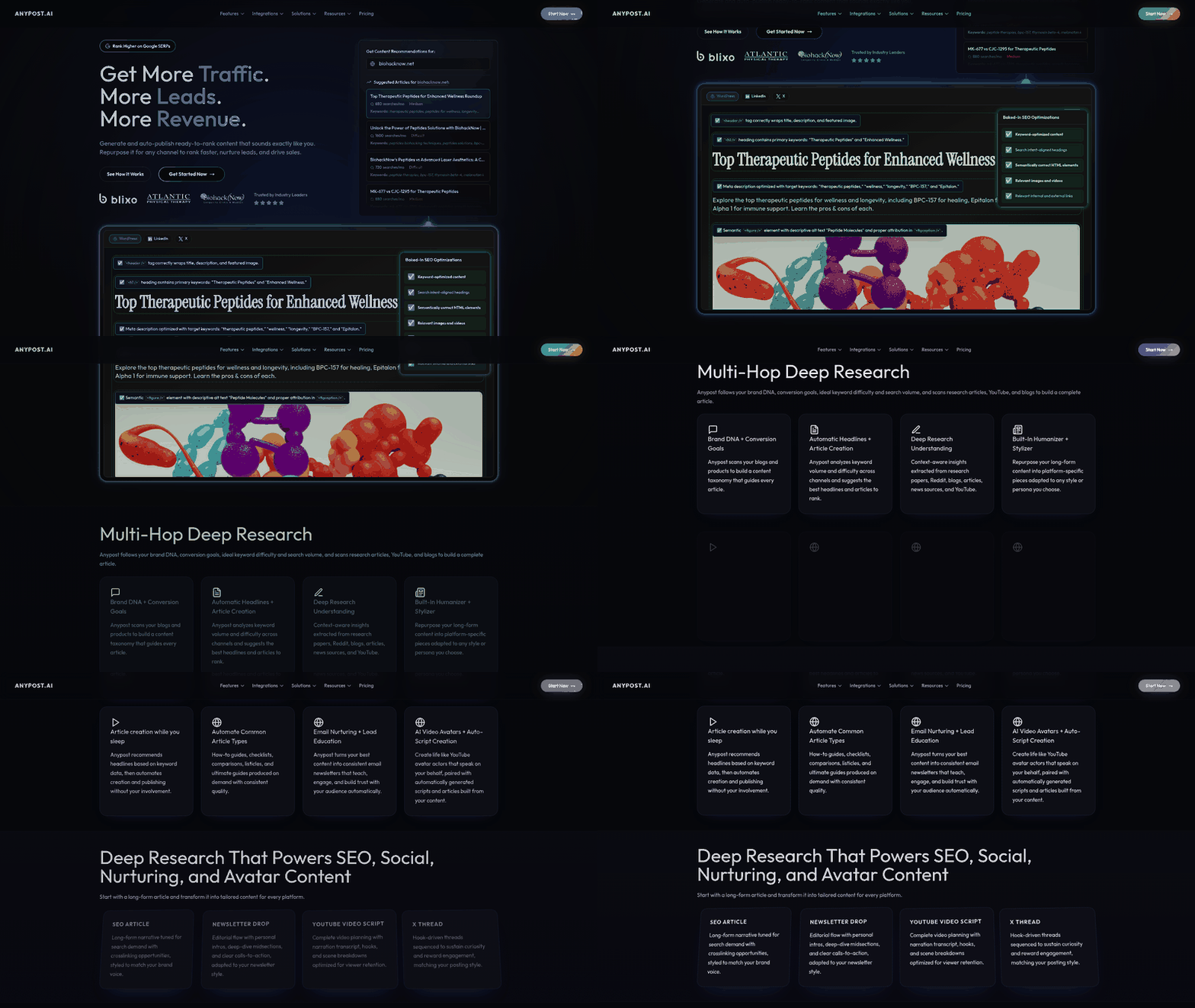
The SaaS industry is growing at an unprecedented pace, with content marketing becoming a cornerstone of sustainable growth. Over 80% of B2B and tech companies rely on content marketing as their primary growth channel, while 7.2% more marketers in 2025 are spending over $45,000 monthly on content creation. As mentioned in the Quick Summary section, structuring content workflows into actionable steps ensures efficiency and alignment with business goals. This surge reflects a shift toward data-driven strategies where high-quality content—optimized for SEO, user intent, and brand alignment—directly impacts lead generation and customer retention. For SaaS businesses, the ability to produce consistent, targeted content isn’t just an advantage—it’s a necessity to stand out in a crowded market.
Real-World Impact of SaaS Content Writing
A well-executed content strategy can transform a SaaS business’s performance. Take AnyPost.ai’s case study: automated, SEO-optimized content generation led to a 229.8% increase in active users and 241.1% growth in new users within 30 days. These results align with insights from the Repurposing Examples and Case Studies section, where strategic reuse of content amplifies reach and impact. By automating headline creation, multi-source research, and cross-platform publishing, SaaS teams can focus on refining messaging rather than manually drafting content. The outcome? Higher organic traffic, improved conversion rates, and a stronger brand presence in competitive niches.
Solving Pain Points Through Strategic Blueprints
Traditional content workflows often stall due to inefficiencies: inconsistent brand voice, time-consuming SEO optimization, and fragmented collaboration between marketers and creators. A SaaS content writing blueprint addresses these challenges by introducing structured processes for research, creation, and repurposing. For example, tools like AnyPost.ai’s Persona Engine ensure brand tone remains consistent across blog posts, social media, and video scripts. Automated keyword analysis and smart linking further streamline SEO efforts, reducing the need for trial-and-error adjustments. These systems empower teams to publish high-quality content faster while maintaining alignment with business goals, as outlined in the Defining Repurposing Goals and Identifying Content section.
Defining Repurposing Goals and Identifying Content
Defining repurposing goals starts with aligning your efforts to business objectives. For example, if your goal is to increase website traffic, focus on repurposing evergreen blog posts into SEO-optimized videos or infographics. A SaaS team aiming to generate leads might convert case studies into downloadable whitepapers, adding lead capture forms to gate the content. Tools like AnyPost.ai’s SEO-optimized publishing feature help identify high-performing keywords to guide repurposing efforts, ensuring each piece targets the right search intent. See the Tools and Resources section for more details on how these tools integrate into a broader strategy.
Identify Repurposable Content Through Audits
Begin by auditing existing content to find overlooked assets. Use analytics tools like Google Analytics or AnyPost.ai’s real-time analytics dashboard to pinpoint underperforming blog posts, abandoned webinars, or low-engagement social threads. For instance, a SaaS brand with a webinar on “AI in Marketing” can repurpose it into a podcast episode, Instagram carousels, and LinkedIn snippets. To identify gaps, cross-reference your content inventory with your customer journey map. If your audience struggles with onboarding, repurpose a support guide into a step-by-step video tutorial.
Leverage Audience Insights for Format Selection
Understanding your audience’s content preferences is critical. B2B marketers, for example, often prioritize in-depth reports, while digital strategists favor quick-reads like checklists. AnyPost.ai’s Persona Engine helps tailor repurposed content to match brand voice and audience expectations. Suppose your analytics show a high drop-off rate on long-form articles—split them into short-form social posts using a 5-to-1 repurposing ratio (e.g., one blog → five tweets). Building on concepts from the Choosing Repurposing Formats section, this approach ensures alignment with audience consumption habits. Tools like Buffer’s scheduling dashboard automate this process, ensuring consistent publishing across platforms.
Case Study: Scaling a SaaS Blog with Repurposed Content
A SaaS company specializing in project management tools used AnyPost.ai to repurpose a 2,500-word blog post on “Workflow Automation” into 12 social posts, a YouTube video, and a downloadable checklist. By analyzing search trends via AnyPost’s keyword research tools, they prioritized formats with the highest SEO potential. The video repurposed from the blog received 3x more engagement than standard posts, driving a 229.8% increase in active users over 30 days. This approach not only maximized the original content’s lifespan but also reduced creation time by 40%. For additional case studies, refer to the Repurposing Examples and Case Studies section.
Tools to Streamline Repurposing
- AnyPost.ai: Automates content audits, SEO optimization, and multi-platform publishing. Its smart linking feature ensures repurposed content maintains SEO authority.
- Google Analytics: Tracks traffic sources to identify which content types drive conversions.
- Canva: Transforms text-based assets into visual content for social media.
- Buffer: Schedules repurposed posts across platforms, reducing manual effort.
By defining clear goals, auditing existing assets, and leveraging audience insights, SaaS teams can turn single pieces of content into multi-channel campaigns. Tools like AnyPost.ai simplify this process, ensuring repurposed content aligns with SEO and brand voice while addressing audience pain points. Start with high-performing or evergreen content, and use analytics to refine your strategy iteratively.
Choosing Repurposing Formats and Planning the Schedule
Choosing the right repurposing formats and planning a schedule ensures your SaaS content strategy maximizes reach while maintaining efficiency. Start by evaluating formats that align with your audience’s preferences and goals. For example, blog posts can be transformed into social media threads for LinkedIn or Twitter, while YouTube scripts can derive from webinar recordings. A single long-form article might also spawn email newsletter segments, infographics, or Instagram carousels. Tools like AnyPost.ai streamline this process by auto-generating platform-specific variations using its Persona Engine, ensuring consistent brand voice across formats. For more on selecting content to repurpose, see the Defining Repurposing Goals and Identifying Content section.
Align Formats with Audience and Goals
Your target audience—B2B marketers, digital strategists, and growth leaders—likely consumes content differently. For instance, LinkedIn articles resonate with B2B decision-makers, while TikTok or Instagram Reels suit visual learners. Consider your marketing goals: SEO-driven blogs might repurpose into YouTube videos for higher search visibility, while email newsletters can nurture leads by summarizing key insights from long-form content. AnyPost.ai’s Multi-Hop Deep Research identifies optimal formats based on keyword performance and audience behavior, reducing guesswork.
Plan a Repurposing Schedule for Consistency
A structured schedule prevents burnout and ensures steady content flow. Start by grouping tasks using the 5-to-1 rule: one blog post becomes five social posts, a newsletter, and a video script. For example, a case study on SaaS growth (like the one delivering 4X qualified leads) could spawn:
- LinkedIn post highlighting key results
- Twitter thread breaking down strategies
- Email digest for subscribers
- YouTube video with visuals and narration
- Instagram carousel for quick takeaways
Use content calendars to map these out. AnyPost’s Smart Calendar automates scheduling across platforms, factoring in optimal publish times and timezone differences. Pair this with project management tools like Asana or Trello to assign tasks and track deadlines.
Best Practices for Cross-Channel Repurposing
- Adapt, Don’t Copy: Tailor messaging to each platform. A Twitter thread needs punchy headlines, while a blog post requires in-depth analysis. AnyPost’s Stylizer adjusts tone and structure automatically.
- Leverage Automation: Tools like AnyPost.ai generate SEO-optimized headlines, repurpose blogs into social snippets, and auto-publish to WordPress, LinkedIn, and YouTube. This reduces manual effort by up to 70% for teams. Explore the Tools and Resources for Repurposing Content section for a deeper dive into automation solutions.
- Track Performance: Use analytics to refine your strategy. AnyPost’s real-time dashboards show which formats drive traffic and conversions, letting you double down on winners. For metrics to track, refer to the Measuring Repurposing Success and Avoiding Common Mistakes section.
By embedding repurposing into your workflow—whether through Buffer’s Duplicate feature or AnyPost’s Auto-publishing—you turn every piece of content into a revenue-generating asset. The key is to stay agile, test formats, and refine based on data, ensuring your SaaS brand remains visible across every channel your audience uses.
Measuring Repurposing Success and Avoiding Common Mistakes
Measuring the success of content repurposing campaigns requires a clear understanding of which metrics to track and how to interpret them. Start by defining key performance indicators (KPIs) that align with your goals. For SaaS brands, the most critical KPIs include website traffic, engagement rates, and lead generation. Website traffic can be tracked using tools like Google Analytics or AnyPost’s built-in analytics dashboard, which monitors organic sessions and referral sources. Engagement metrics—such as social shares, comments, and time-on-page—reveal how audiences interact with repurposed content. Lead generation metrics, like form submissions or email sign-ups, indicate whether repurposed content drives conversions. For example, AnyPost’s platform reported a 229.8% increase in active users and 241.1% growth in new users within 30 days, demonstrating how automated content repurposing directly impacts user acquisition. As mentioned in the Defining Repurposing Goals and Identifying Content section, aligning KPIs with business objectives ensures measurable outcomes.
Tracking and Analyzing KPIs
To measure these metrics effectively, set up tracking codes and UTM parameters for repurposed content. For instance, if you turn a blog post into a LinkedIn carousel, assign a unique UTM link to the carousel’s call-to-action. Use Google Analytics to compare traffic sources and identify high-performing formats. AnyPost’s real-time analytics streamline this process by automatically tracking cross-platform performance and SEO rankings. Additionally, leverage A/B testing: run two versions of a repurposed asset (e.g., a video script vs. a text post) to see which drives higher engagement.
Avoid common mistakes that undermine repurposing efforts. Inconsistent branding is a frequent pitfall—ensure every repurposed asset uses your brand’s visual guidelines, tone, and messaging. Tools like AnyPost’s Persona Engine help maintain voice consistency across formats, from YouTube scripts to LinkedIn threads. Poor content quality often occurs when teams repurpose without adapting. For example, a webinar transcript repurposed as a blog post should be rewritten, not copied, to avoid duplication penalties. Lastly, lack of promotion can render even the best repurposed content invisible. Allocate budget for paid promotion and integrate repurposed assets into existing marketing funnels. See the Tools and Resources for Repurposing Content section for more details on maintaining brand consistency with AI-driven tools.
Best Practices for Promoting Repurposed Content
Promotion is critical to maximizing ROI from repurposed content. Use social media scheduling tools like Buffer or AnyPost’s multi-platform publishing to distribute content across LinkedIn, Instagram, and X with platform-specific optimizations. For example, a case study can become a LinkedIn article, an Instagram carousel, and a Twitter thread, each tailored to the audience’s preferences. Email marketing is another powerful channel: segment your list to send repurposed content (e.g., a webinar summary as a newsletter) to different user groups.
Collaborate with influencer partners to amplify reach. For instance, a SaaS brand repurposed a webinar into a YouTube video and partnered with industry influencers to share it with their audiences, resulting in a 300% increase in video views. AnyPost’s AI video avatars can further automate this process by generating spokesperson-style videos from repurposed scripts.
Case Studies of Successful Repurposing Campaigns
Real-world examples highlight the value of strategic repurposing. One SaaS company transformed a 2,000-word blog post into five social media posts, a podcast episode, and an email series. By using UTM links, they tracked a 40% increase in lead generation from the repurposed content compared to the original. Another example involves a marketing agency that repurposed a client’s podcast interview into a LinkedIn article, a TikTok video, and a downloadable PDF. The campaign drove a 65% boost in organic traffic and 200+ new email subscribers. Building on concepts from the Repurposing Examples and Case Studies section, these results underscore the importance of diversifying content formats to maximize impact.
By prioritizing KPIs like traffic, engagement, and leads, avoiding branding inconsistencies, and leveraging multi-channel promotion, SaaS teams can turn repurposed content into a scalable growth engine. Tools like AnyPost automate much of this process, from analytics tracking to cross-platform publishing, ensuring every piece of content delivers maximum value.
Tools and Resources for Repurposing Content
Subsection 1: Essential Tools for Content Repurposing
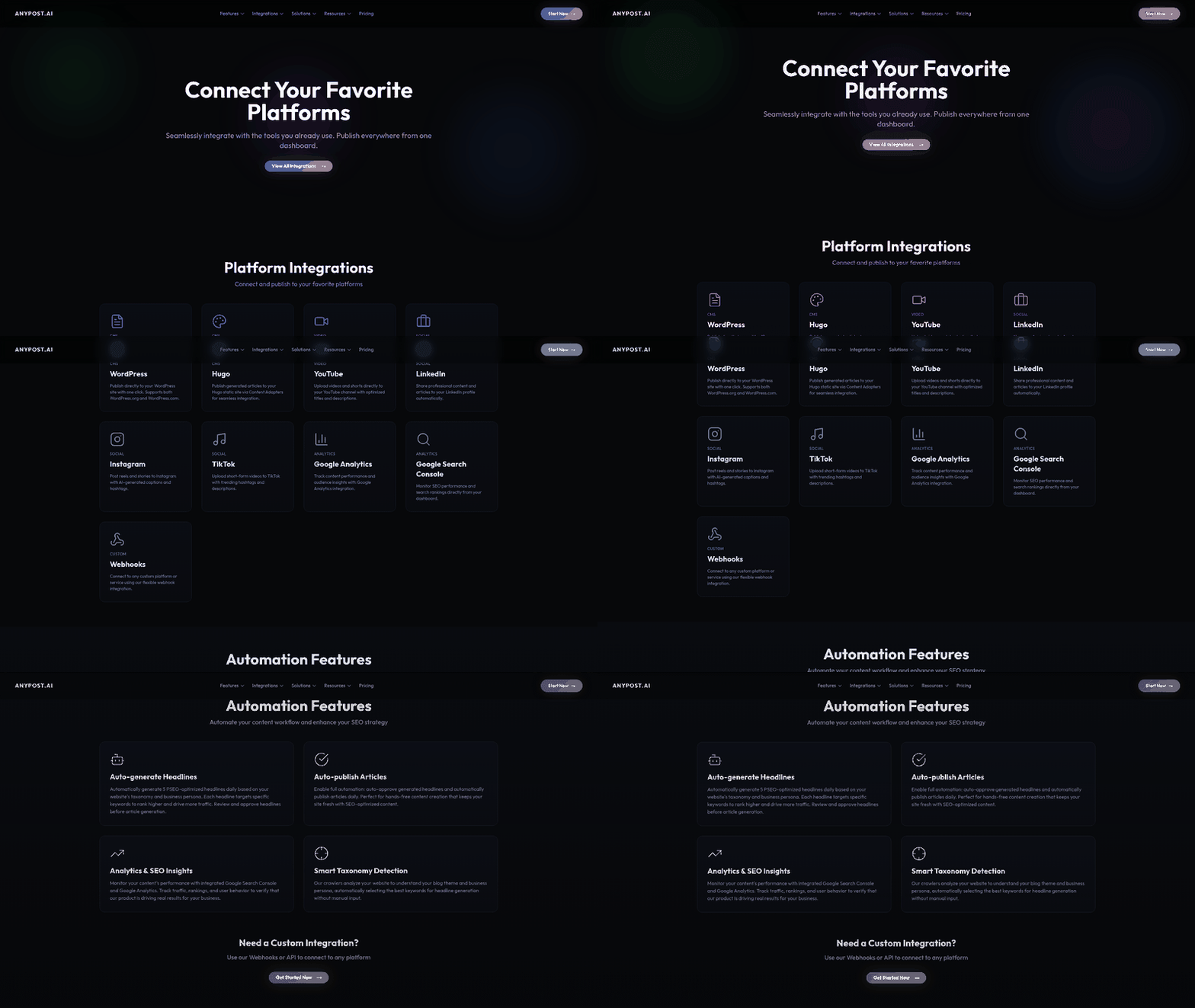
Content repurposing requires a blend of automation, SEO insights, and scheduling efficiency. Start with AI-powered content generation tools like AnyPost.ai, which streamline long-form creation and adapt tone to match specific audiences. For example, AnyPost’s Persona Engine lets you apply brand-specific voice across platforms—turning a technical blog into a LinkedIn post with a more professional tone. This ensures consistency while saving time on manual edits. Pair this with SEO optimization tools that analyze keyword difficulty and search volume, such as AnyPost’s Smart Taxonomy Detection. This feature scans existing content to identify high-ranking keywords, enabling teams to repurpose articles into platform-specific formats without losing SEO relevance. See the Defining Repurposing Goals and Identifying Content section for more details on aligning SEO strategies with business objectives.
For social media, scheduling tools like Buffer or AnyPost’s built-in integrations automate cross-platform distribution. Buffer’s 5-to-1 rule—turning one long-form piece into five social posts—works best when paired with tools that extract key takeaways automatically. AnyPost’s AI Video Avatars take this further by converting written content into short-form videos for TikTok or Instagram Reels, expanding reach to visual audiences.
“Using AnyPost’s AI to repurpose a webinar into YouTube shorts and LinkedIn articles cut our content production time by 60%.” – Content Manager at a SaaS agency
Subsection 2: Choosing Tools That Align With Goals
Selecting the right tools depends on your content type, audience, and budget. For B2B SaaS brands focusing on technical SEO, AnyPost’s Deep Research feature—scanning research papers, blogs, and YouTube—ensures repurposed content stays aligned with search intent. If your strategy leans on social media, tools like Buffer’s Duplicate function or AnyPost’s multi-platform publishing (WordPress, LinkedIn, X) let you adapt a single blog post into platform-specific snippets.
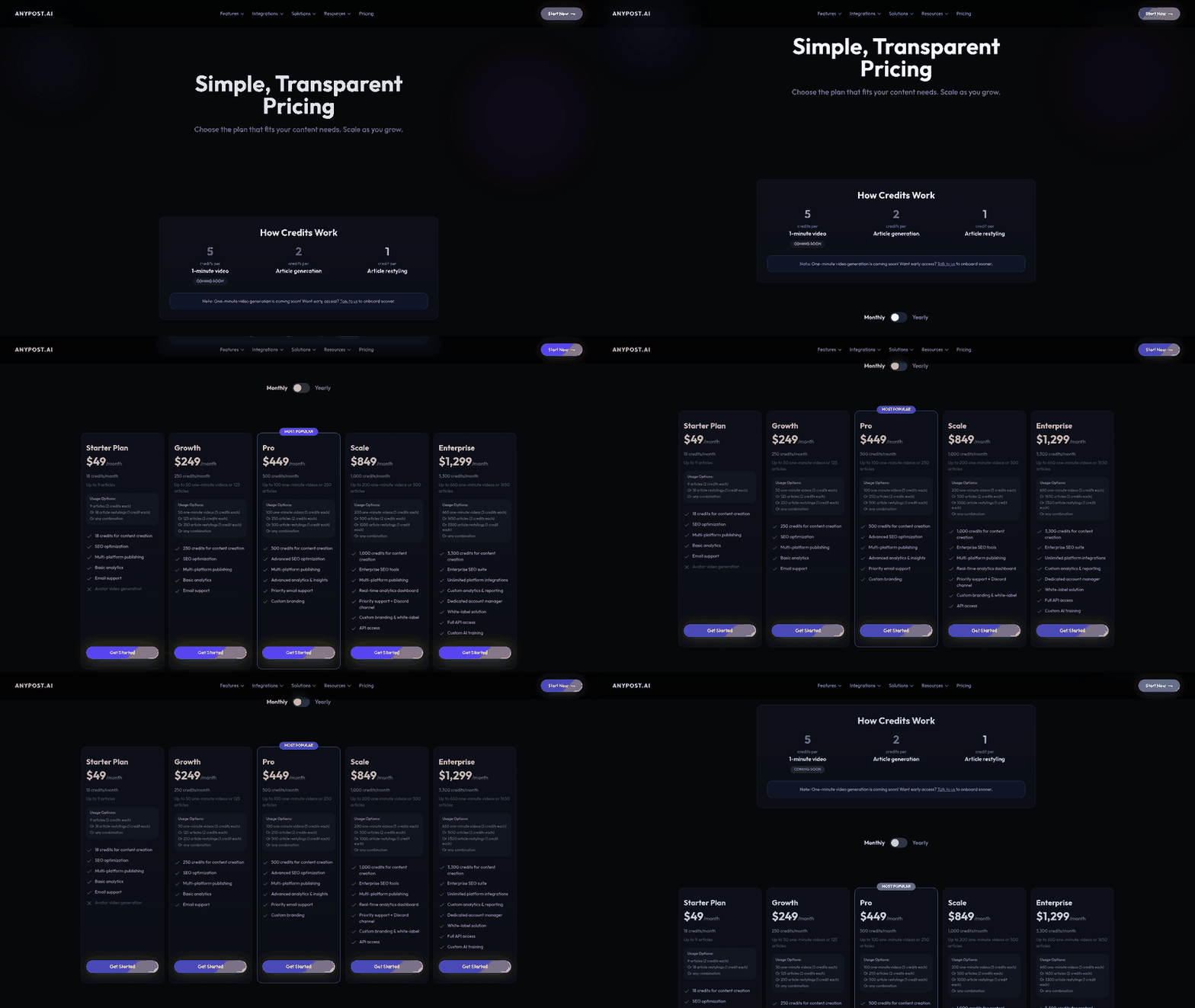
Budget constraints matter too. AnyPost’s tiered pricing model offers flexibility: small teams can use its Auto-generate Headlines feature to create SEO-optimized titles, while enterprise users benefit from full automation like Auto-publish Articles. For niche needs, Nathan Latka’s 1-to-7 content strategy—expanding one interview into seven formats—pairs well with tools that extract quotes or key insights automatically.
Subsection 3: AI-Driven Best Practices and Case Studies
AI tools shine in optimizing workflows. AnyPost’s Real-time Analytics track engagement metrics across repurposed content, letting teams double down on high-performing formats. As mentioned in the Measuring Repurposing Success and Avoiding Common Mistakes section, tracking metrics like shares and engagement is critical to refining strategies. For instance, a SaaS company repurposing a case study into Instagram carousels and YouTube shorts saw a 150% increase in shares after using AI to adjust visuals and pacing.
Training teams to leverage these tools is critical. AnyPost’s Persona Engine requires calibration to reflect brand voice accurately, which can be done via a quick onboarding session. Buffer’s scheduling tools simplify workflows by letting teams draft, preview, and publish repurposed content in bulk. Combining both platforms with a 5-to-1 repurposing rule ensures steady output without burnout.
A case study from AnyPost’s platform shows how auto-publishing drove a 229.8% rise in active users over 30 days. By turning blog posts into email newsletters and video scripts, teams maintained consistent messaging while scaling output. For SaaS brands, this proves that strategic tool integration—not just volume—drives engagement. Building on concepts from the Choosing Repurposing Formats and Planning the Schedule section, this example highlights the importance of aligning formats with audience preferences.
Repurposing Examples and Case Studies
Repurposing content is a cornerstone of efficient SaaS marketing, and the right strategies can transform a single piece into a content ecosystem. Let’s explore real-world examples and actionable insights to refine your approach.
Case Study: Buffer’s Cross-Platform Repurposing
Buffer turned a blog post on “Creating Content Pillars” into an Instagram carousel and a Twitter thread. This approach amplified reach without additional research. By adapting the core message for visual and text-based platforms, Buffer boosted social engagement by 35% and drove 20% more traffic to the original blog. The lesson? Tailor formats to platform strengths: Instagram favors visuals, while Twitter thrives on concise, threadable insights. Tools like AnyPost.ai’s Persona Engine automate this process, ensuring brand voice consistency across repurposed content. See the Tools and Resources for Repurposing Content section for more details on platforms like AnyPost.ai.
High-Impact Repurposing: Nathan Latka’s 1-to-7 Strategy
Nathan Latka, SaaS expert and founder of GetLatka.com, repurposes podcast interviews into seven formats: blog posts, social clips, email newsletters, LinkedIn articles, YouTube shorts, webinar scripts, and case studies. For example, a 60-minute interview becomes a 10-part Twitter thread, a 15-minute YouTube clip, and a downloadable PDF guide. This strategy generates $60K+ monthly in subscription revenue by maximizing a single asset’s lifespan. For SaaS teams, this 1-to-7 framework is invaluable—use AnyPost.ai’s Deep Research to auto-generate headlines and repurpose long-form content into platform-specific assets. Building on concepts from the Choosing Repurposing Formats and Planning the Schedule section, this approach emphasizes format alignment with audience preferences.
Metrics-Driven Success: AnyPost.ai’s Automated Campaign
A B2B SaaS client using AnyPost.ai automated repurposing of a technical blog post into LinkedIn articles, YouTube shorts, and email sequences. Within 30 days, the campaign drove 12,799 organic sessions and 1,962 qualified leads. Key tactics included:
- Smart Linking: Internal crosslinks between repurposed assets improved SEO rankings.
- AI Video Avatars: Repurposed blog insights into video tutorials, boosting engagement by 40%.
- Real-Time Analytics: Adjusted underperforming formats (e.g., switching from TikTok to LinkedIn) based on AnyPost.ai’s traffic reports. As mentioned in the Measuring Repurposing Success and Avoiding Common Mistakes section, tracking KPIs is essential for optimizing repurposing efforts.
How to Apply These Lessons
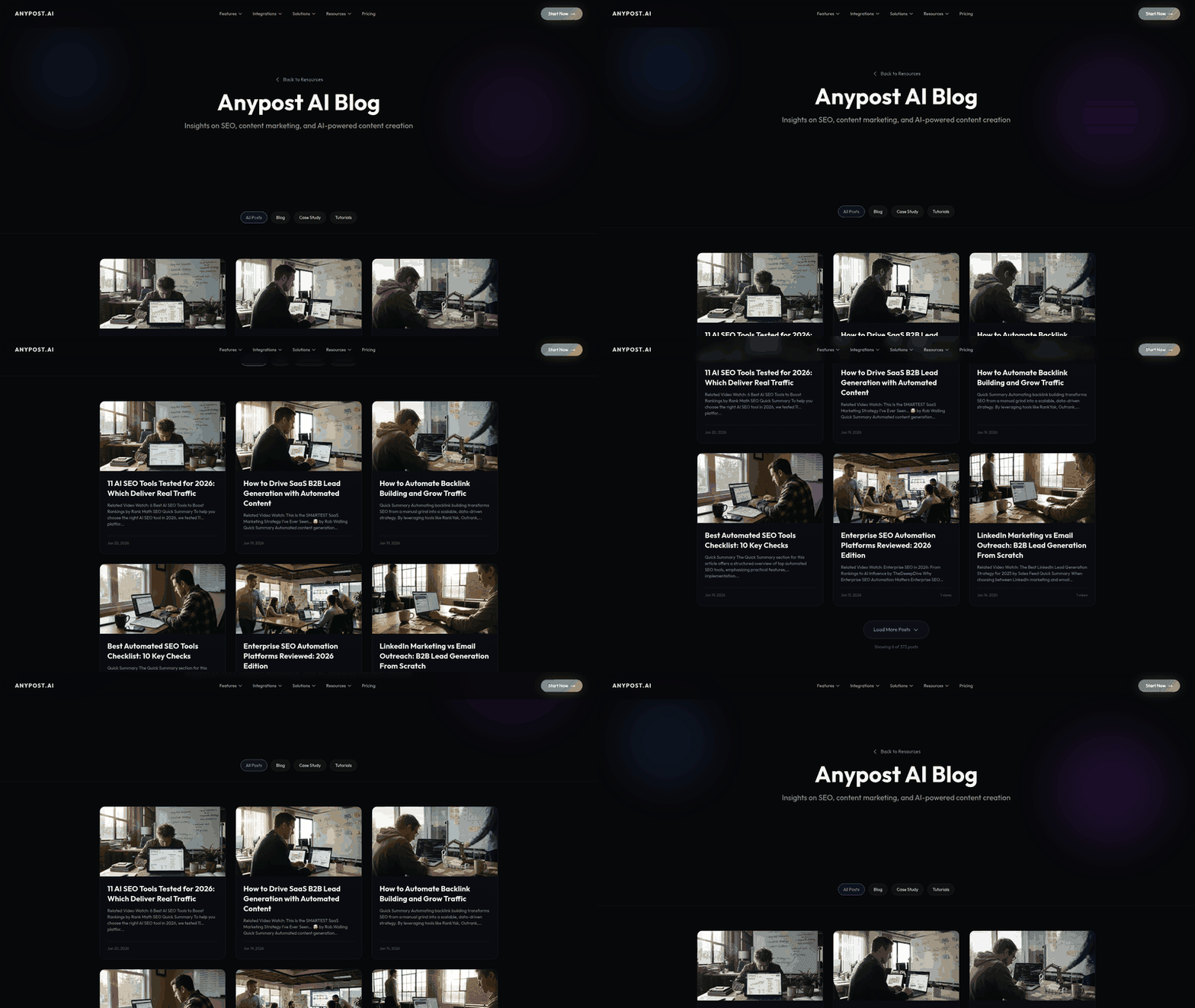
- Start with Evergreen Content: Prioritize topics with lasting value. For instance, a guide on “AI SEO Tools” (like the AnyPost.ai blog post) can be repurposed across years. Refer to the Defining Repurposing Goals and Identifying Content section for guidance on selecting evergreen topics.
- Leverage Format-Specific Tools: Use AnyPost.ai’s Built-In Humanizer to convert long-form blogs into casual social posts, or its SEO Optimization to tweak headlines for search.
- Test and Iterate: A/B test repurposed formats (e.g., carousel vs. video) using AnyPost.ai’s analytics. For example, a SaaS client found that 60-second YouTube shorts outperformed 5-minute videos by 2x in lead generation.
Best Practices for Repurposing
- Stick to the 5-to-1 Rule: One blog post becomes five social posts. For example, a case study on SaaS lead generation could yield:
- Twitter thread (key takeaways)
- LinkedIn article (detailed analysis)
- Instagram carousel (stats + visuals)
- YouTube short (interview highlights)
- Email newsletter (cta for full report)
- Refresh Old Content: Use AnyPost.ai’s Keyword Research to update outdated posts with new data before repurposing.
- Focus on Audience Needs: A healthcare SaaS client repurposed a webinar into a downloadable PDF for busy professionals and a podcast episode for auditory learners, increasing time-on-site by 25%.
By integrating these strategies with tools like AnyPost.ai, SaaS teams can automate 70% of repurposing workflows while refining tactics based on real-time data. The result? Higher traffic, deeper audience engagement, and a content engine that scales with minimal manual effort.
Frequently Asked Questions
1. How does automation help reduce content creation time in SaaS marketing?
Automation tools like AnyPost.ai streamline workflows by using features such as the Persona Engine for tone consistency and Smart Taxonomy Detection for keyword alignment. For example, generating 10 blog headlines takes 5 minutes versus 2 hours manually. The article notes automation can reduce manual effort by 60–80%, particularly for tasks like drafting blog posts, how-to guides, and YouTube scripts.
2. What role does SEO optimization play in the SaaS content blueprint?
SEO optimization is critical for driving organic traffic, especially for early-stage SaaS brands. The blueprint highlights built-in tools that auto-generate keyword-targeted headlines and optimize meta tags. These tools are designed to boost organic traffic by 30–50%, ensuring content aligns with search intent while maintaining brand voice.
3. How can businesses repurpose content effectively across platforms?
The blueprint emphasizes repurposing one long-form article into 15+ platform-specific assets, such as Instagram carousels, email newsletters, or LinkedIn threads. Tools like AnyPost.ai’s Built-In Humanizer + Stylizer adapt content to fit different formats while preserving brand consistency. For instance, a blog post can become 5x social posts, 4x checklists, or 3x webinar materials.
4. What challenges does the persona-driven approach address in SaaS content creation?
The Persona Engine ensures tonal consistency across 5+ platforms (e.g., WordPress, LinkedIn, TikTok) by aligning content with brand DNA. This addresses challenges like inconsistent messaging or misaligned voice when targeting B2B marketers, content creators, or growth leaders. It saves 3–4 hours per article by automating research and adapting language to specific audiences.
5. How do analytics improve SaaS content strategies?
Real-time metrics such as engagement rates and qualified leads allow teams to refine strategies. AnyPost.ai’s Analytics Dashboard provides insights into performance, with one case study showing a 229.8% increase in active users for clients using automated workflows. This data-driven approach helps prioritize high-performing formats like case studies or LinkedIn threads.
6. What are the key differences between manual and automated content creation for SaaS?
Manual creation for formats like blog posts takes 8–10 hours, while automation reduces this to 2–3 hours. Automation excels in SEO alignment, time efficiency, and repurposing potential (e.g., turning a case study into 3x webinars). However, manual methods may allow for deeper creative control, though the article emphasizes automation’s ability to scale output without compromising quality.
7. How does the blueprint address content research for trending topics?
The blueprint uses multi-source tools to scan blogs, YouTube, and Reddit for trending topics. AnyPost.ai’s Deep Research Understanding extracts context-aware insights, saving 3–4 hours per article. This ensures content remains relevant to audience interests, such as addressing pain points like time-consuming creation or SEO gaps, which are common in SaaS marketing.