
SaaS Content Writing Checklist: Boost Lead Generation Efforts


Related Video
Watch: MRR-Enhancing SaaS Content Marketing: Strategy and Implementation, w/ Adriana Tica: Episode 42 by SaaS Boss
Quick Summary
Content Channel Comparison Table
- Blog Posts: High SEO impact, requires 4-6 hours per article, moderate difficulty due to research and keyword optimization. See the SEO and Keyword Alignment in SaaS Content section for more details on optimizing blog SEO.
- Social Media: Quick turnaround (1-2 hours), high consistency demands, low difficulty for short-form content.
- Newsletters: Personalization is key (2-3 hours), builds loyalty, moderate difficulty in balancing education and promotion.
- YouTube: High production time (6-8 hours), engaging for B2B audiences, high difficulty due to video editing and SEO.
Key Highlights of Content Marketing for SaaS
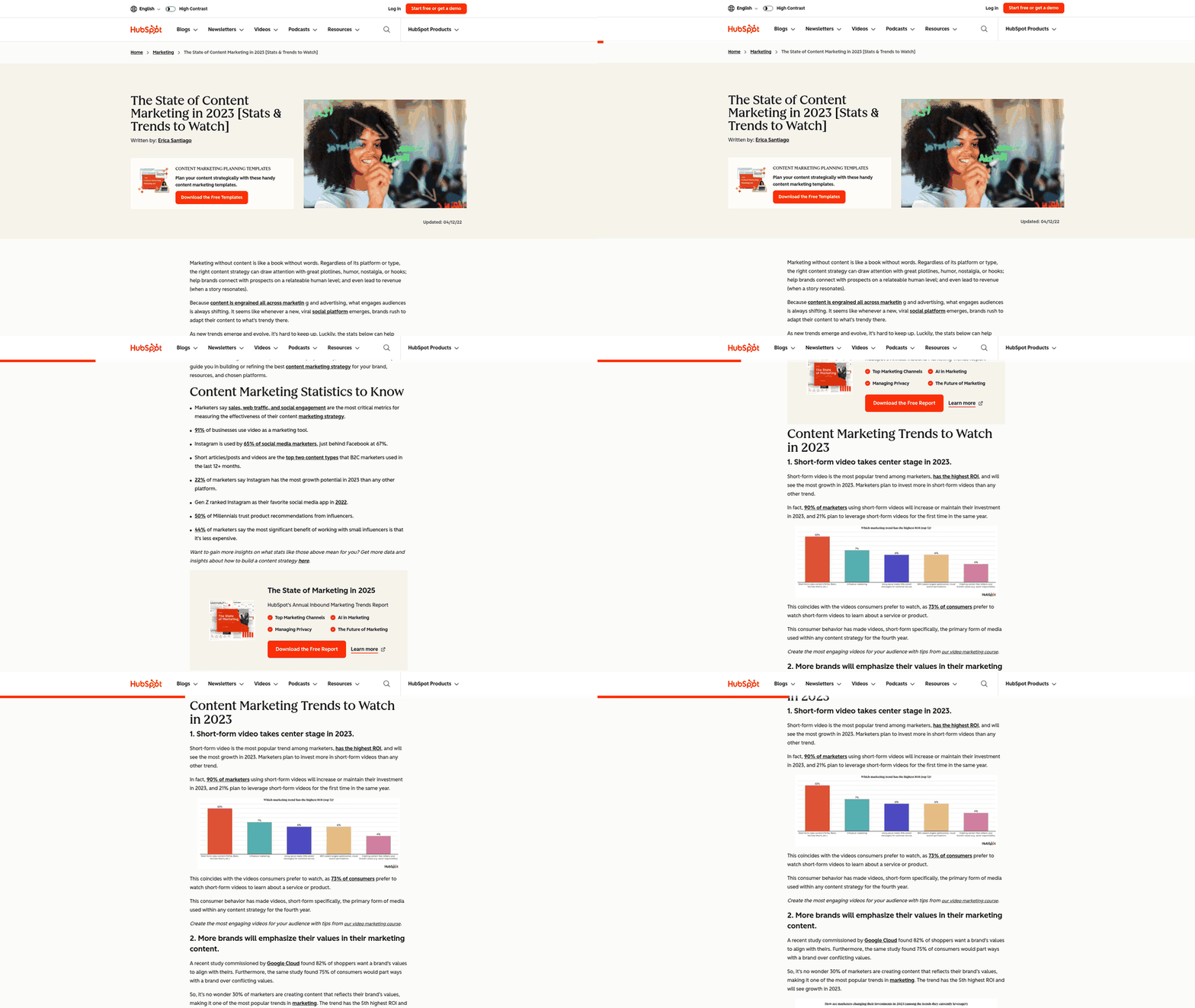
Content marketing drives 53% of B2B leads and 33% of B2C leads (HubSpot). For SaaS businesses, it’s critical for:
- Establishing authority: Thought leadership through blogs and whitepapers.
- SEO visibility: Targeting long-tail keywords like “SaaS lead generation strategies.” Building on concepts from the SEO and Keyword Alignment in SaaS Content section...
- Lead nurturing: Email campaigns with gated resources convert 25% higher than cold outreach (SaaStorm).
- Cost efficiency: Content marketing costs 62% less than traditional methods while generating three times more leads (Content Marketing Institute).
Time & Effort Estimates
A SaaS content writing checklist requires 20-30 hours monthly, broken down as:
- Research & planning: 5-7 hours (keyword tools, audience analysis).
- Content creation: 12-15 hours (writing, design, video scripts).
- SEO optimization: 3-5 hours (meta tags, internal linking, competitor analysis).
- Repurposing: 3-5 hours (turning blog posts into social snippets or email digests). See the Repurposing SaaS Content for Different Channels section for strategies on maximizing content reuse.
Automated Solutions for Efficiency
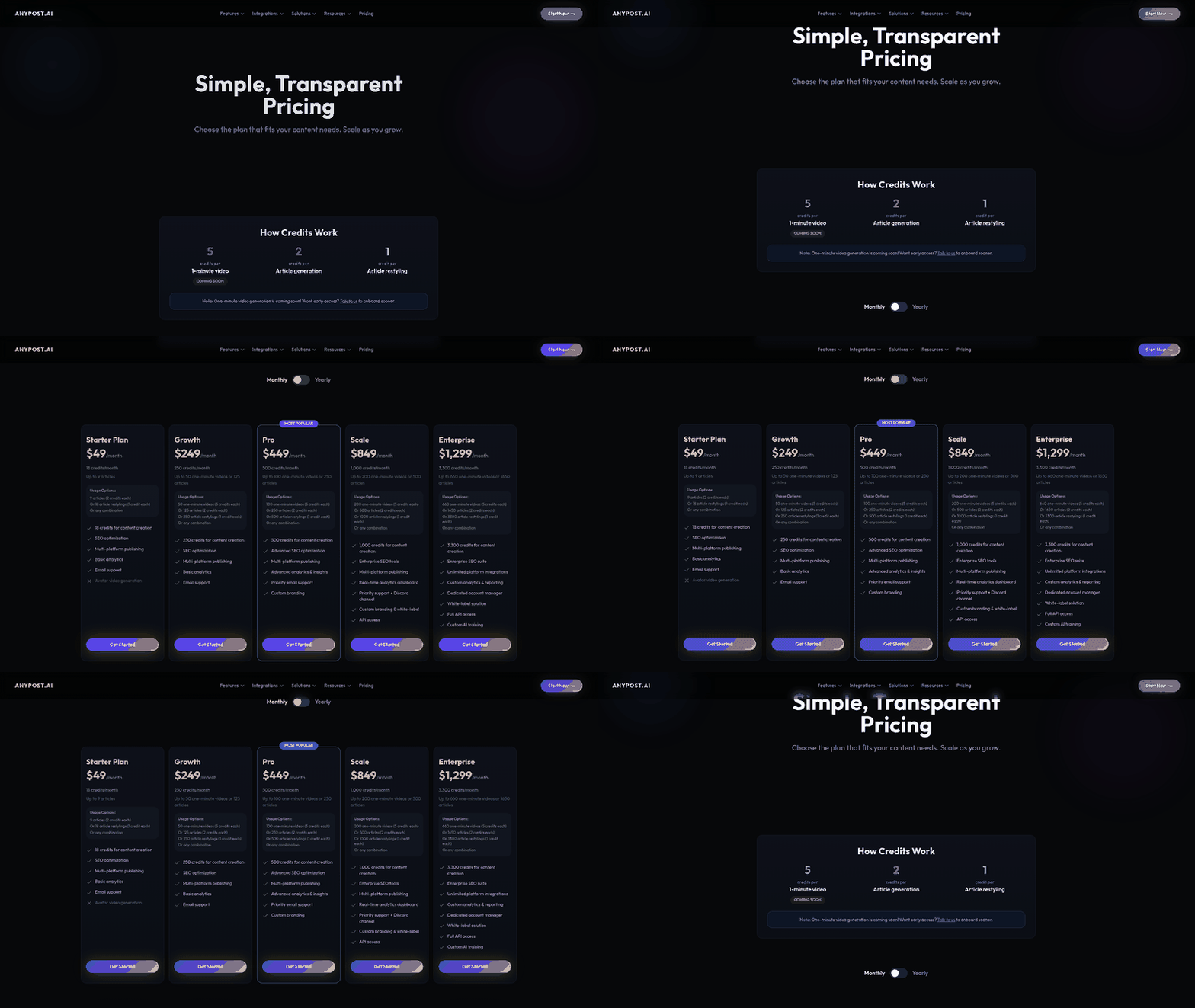
Tools like AnyPost.ai reduce manual work by:
- Auto-generating SEO-optimized headlines and articles based on keyword research.
- Repurposing long-form content into platform-specific formats (e.g., LinkedIn threads, YouTube scripts).
- Integrating real-time analytics to track engagement and adjust strategies.
“Our automated content system drove a 229.8% increase in active users and 241.1% growth in new users by publishing SEO-optimized content daily without manual intervention,” — AnyPost.ai Case Study.
Difficulty Ratings & Mitigation
- High difficulty: SEO optimization (requires technical audits and competitor benchmarking).
- Medium difficulty: Maintaining brand voice across channels (solved with AnyPost.ai’s Persona Engine). As mentioned in the Creating a SaaS Content Inventory and Gap Analysis section, consistent brand voice starts with a structured content audit.
- Low difficulty: Social media scheduling (streamlined with multi-platform publishing tools).
By combining structured checklists with automation, SaaS teams can cut content creation time by 40% while improving lead quality. For example, Lingio increased organic traffic by 500% using SaaStorm’s content-led strategy, while Reditus built a $1.3M ARR pipeline through SEO-focused content. Start with a 30-day plan: audit existing content, prioritize high-impact formats, and automate repetitive tasks to scale your lead generation efforts.
Why SaaS Content Marketing Matters
SaaS content marketing is a cornerstone of modern growth strategies, especially for companies navigating competitive B2B markets. With 89% of B2B marketers leveraging LinkedIn for lead generation and SEO-driven content boosting organic traffic by 18%, the numbers speak to its efficacy. Let’s break down why it works and how it solves critical business challenges.
Proven Impact on Lead Generation and Revenue
Content marketing directly fuels lead generation by capturing high-intent audiences at every stage of the buyer journey. For example, AnyPost.ai’s automated, SEO-optimized content drove a 229.8% surge in active users and 241.1% growth in new users in 30 days. This aligns with industry benchmarks: competitor comparison pages (like Pipedrive vs. Salesforce) see higher conversion rates because they target users already researching solutions. By addressing specific pain points—such as cybersecurity risks or workflow inefficiencies—SaaS companies position themselves as trusted advisors, not just vendors.
Solving Key Challenges for SaaS Businesses
Many SaaS firms struggle with brand awareness, traffic acquisition, and consistent messaging across platforms. Content marketing tackles these head-on. For instance, thought leadership pieces (whitepapers, case studies) build credibility, while SEO-optimized blogs and comparison pages attract organic traffic. Tools like AnyPost.ai’s Persona Engine ensure brand voice stays consistent across formats, reducing the friction of manual content creation. This is particularly valuable for B2B marketers and growth leaders who need scalable strategies to nurture leads without compromising quality. See the Repurposing SaaS Content for Different Channels section for more details on maintaining consistency across formats.
Who Benefits Most? A Targeted Approach
The primary beneficiaries are B2B marketers, digital strategists, and growth leaders in SaaS and tech-driven industries. For example, a digital strategist managing a SaaS product might use automated content tools to publish 5 SEO-optimized blog posts weekly, doubling organic traffic within six months. Growth leaders, meanwhile, leverage email nurturing workflows (powered by repurposed content) to convert free trial users into paying customers. These roles thrive on data-driven insights—like tracking 1,962 qualified leads from 12,810 organic sessions—making content marketing a non-negotiable in their toolkit.
Real-World Success: Case Studies and Examples
Successful campaigns often blend SEO with cross-platform repurposing. A cybersecurity SaaS company, for instance, might publish a guide on “Ransomware Mitigation for MSPs,” then turn it into LinkedIn threads, YouTube videos, and email series. The result? A 30% increase in demo requests. Similarly, AnyPost.ai’s clients use automated content pipelines to generate how-to guides and checklists, slashing creation time by 70%. These examples highlight how content marketing isn’t just about volume—it’s about strategic alignment with buyer intent. Building on concepts from the Repurposing SaaS Content for Different Channels section, this approach maximizes reach and efficiency.
Why SEO Optimization is Non-Negotiable
Search engines drive 50%+ of B2B lead generation, making SEO a critical component. Tools like AnyPost.ai’s auto-generate headlines and keyword research features help SaaS companies target high-intent queries (e.g., “SaaS competitor comparison” or “automated content tools”). As mentioned in the SEO and Keyword Alignment in SaaS Content section, optimizing for competitive keywords with technical SEO elements like schema markup ensures content ranks and resonates. For example, optimizing a blog post for “SaaS lead generation tactics” with a featured snippet can boost visibility in Google’s SERPs, directly translating to more website traffic and qualified leads.
The Bottom Line
SaaS content marketing isn’t just about publishing—it’s about strategically attracting, educating, and converting audiences through purpose-built content. By addressing pain points like brand visibility and lead quality, it becomes a scalable engine for growth. Whether you’re a solo marketer or part of a large team, integrating SEO-focused, data-driven content into your strategy ensures you’re not just competing—you’re leading in a saturated market.
Creating a SaaS Content Inventory and Gap Analysis
Step 1: Conduct a Comprehensive Content Audit
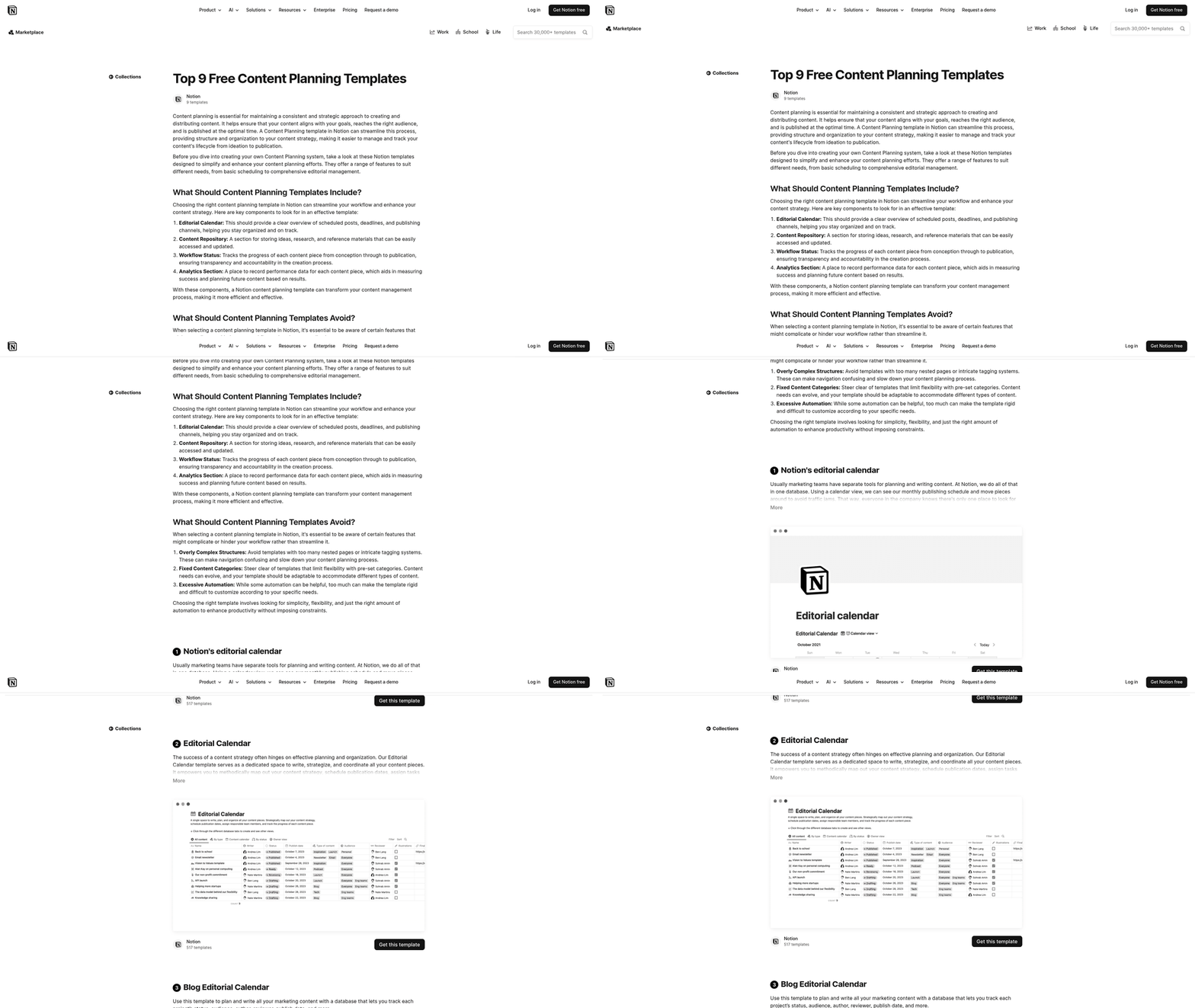
Start by cataloging all existing content to assess its performance and relevance. A content inventory includes blogs, case studies, whitepapers, videos, social media posts, and product pages. Use a spreadsheet or content management system to track:
- Content type (e.g., blog post, webinar, infographic)
- Format (text, video, podcast)
- Publication channel (website, LinkedIn, YouTube)
- SEO performance (keyword rankings, organic traffic)
- Engagement metrics (click-through rates, time on page)
For example, a SaaS company might discover that 30% of their blog posts haven’t been updated in over a year, leading to outdated SEO and lower user engagement. Tools like Ahrefs or SEMrush can automate data collection, while platforms like AnyPost.ai streamline inventory creation by scanning websites for taxonomy and keyword alignment.
"Clients report that AnyPost.ai provides high-quality, reliable SEO services specifically tailored for B2B SaaS and Fintech startups," highlighting its role in inventory optimization. See the SEO and Keyword Alignment in SaaS Content section for more details on keyword research and optimization strategies.
Step 2: Analyze Gaps Between Content and Audience Needs
A gap analysis identifies missing content that aligns with buyer intent and business goals. Start by:
- Mapping buyer personas: Cross-reference your inventory with pain points from surveys, support tickets, and sales conversations.
- Benchmarking competitors: Use tools like BuzzSumo to find topics competitors rank for but you don’t.
- Reviewing performance data: Flag underperforming content (e.g., low traffic pages) for updates or removal.
For instance, a cybersecurity SaaS firm might find competitors dominate search rankings for “managed IT security solutions,” prompting them to create a comparison guide or thought leadership piece on the topic. AnyPost.ai’s persona engine can mirror your brand voice to draft new content, ensuring consistency across formats.
Step 3: Prioritize Content Creation and Optimization
Once gaps are identified, prioritize actions based on SEO potential, audience demand, and resource feasibility. Group tasks into categories:
- High-impact updates: Refresh outdated blogs with new data or repurpose them into videos.
- New content creation: Address unmet needs like “how-to” guides or competitor comparison pages (see the Repurposing SaaS Content for Different Channels section for best practices).
- Repurposing: Turn long-form articles into social media snippets, email sequences, or LinkedIn threads.
Automate repetitive tasks using tools like AnyPost.ai. Its auto-publishing feature generates SEO-optimized headlines and articles based on keyword research, reducing manual effort by 40% for clients like B2B marketers and growth leaders.
Step 4: Maintain Brand Consistency Across Formats
A strong brand voice ensures recognition across blogs, emails, and social media. Use style guides and tools like AnyPost.ai’s stylizer to adapt tone for different platforms (e.g., formal for whitepapers vs. casual for LinkedIn). For example:
- Blogs: Data-driven, educational tone.
- Emails: Personalized, action-oriented language.
- Social media: Conversational hooks with emojis or questions.
Regularly audit content for consistency using grammar checkers (Grammarly) and brand voice analyzers. A SaaS company using AnyPost.ai’s Persona Engine reported a 229.8% increase in active users by maintaining a cohesive, high-energy tone across all channels.
Step 5: Leverage Automation for Scalability
Automated content generation accelerates inventory updates while maintaining quality. Platforms like AnyPost.ai:
- Repurpose long-form content into platform-specific pieces (e.g., turning a blog into a YouTube script).
- Generate daily headlines and articles based on keyword difficulty and search volume.
- Track performance metrics (organic traffic, leads) to refine strategies.
For example, a SaaS startup automating 80% of its content creation with AnyPost.ai saw 12,810 organic sessions and 1,962 qualified leads in 30 days. Building on concepts from the Continuous Improvement Cycle for SaaS Content and Lead Gen section, use these tools to focus on high-value tasks like strategy and audience engagement.
This structured approach ensures your SaaS content remains competitive, aligned with audience needs, and optimized for growth. By combining audits, gap analysis, and automation, teams can scale efforts while maintaining brand integrity.
SEO and Keyword Alignment in SaaS Content
SEO is the backbone of SaaS content marketing, driving visibility, credibility, and lead generation. For SaaS companies, ranking for competitive keywords—like “automated content generation” or “SEO-optimized publishing”—ensures your solutions reach decision-makers actively searching for tools like yours. A well-optimized piece can attract high-intent traffic, convert readers into trial users, and establish your brand as an authority in a niche. As mentioned in the Building a Lead Generation Funnel with SaaS Content section, aligning SEO with funnel stages is critical for capturing leads at different decision points.
Conducting Keyword Research for SaaS Content
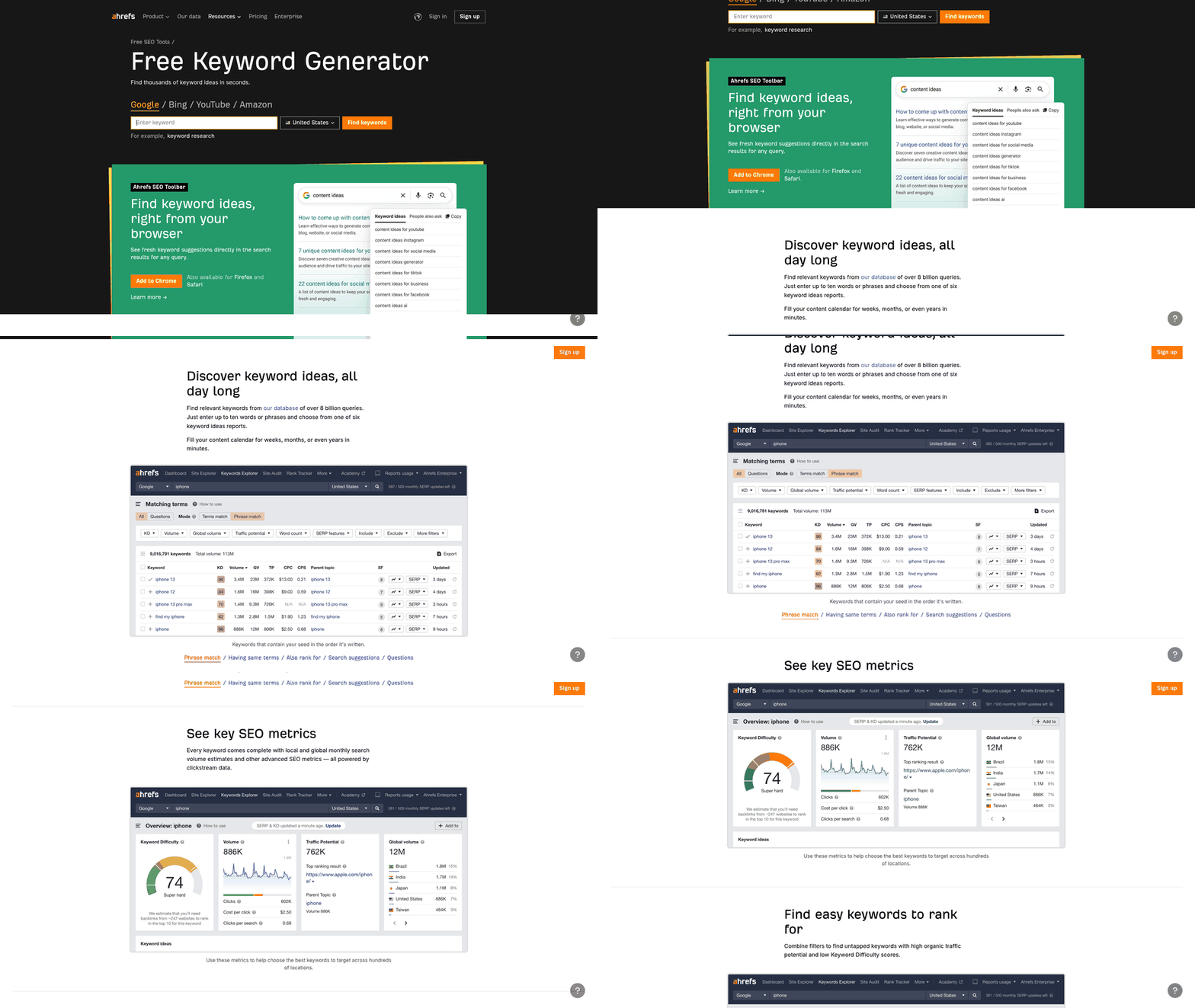
Start by identifying high-intent, low-competition keywords using tools like Ahrefs, SEMrush, or Google Keyword Planner. Focus on long-tail phrases (10–15 words) that align with your audience’s pain points, such as “how to automate SEO content creation for SaaS.” These terms often have lower competition and higher conversion rates.
Competitor analysis is critical. Tools like AnyPost.ai’s Smart Taxonomy Detection scan competitor websites to uncover gaps in their keyword strategies. For instance, if a rival ranks for “SaaS content marketing checklist” but misses “B2B SaaS lead generation tactics,” you can target the latter with tailored content. See the Creating a SaaS Content Inventory and Gap Analysis section for more details on identifying content gaps.
AI-powered platforms like AnyPost.ai also generate SEO-optimized headlines by analyzing keyword difficulty and search volume. This ensures your titles balance appeal with search engine relevance, such as “Boost SaaS Leads: 10 SEO Strategies for 2025.”
Best Practices for Keyword Alignment
Once keywords are identified, integrate them strategically into your content. Prioritize on-page SEO elements:
- Headings and subheadings: Use primary keywords in H1 and H2 tags. For example, a blog post about “SaaS content automation” might include subheadings like “Why SEO Matters for SaaS Content.”
- Meta descriptions: Write compelling summaries with keywords to improve click-through rates.
- Body content: Sprinkle keywords naturally, avoiding keyword stuffing. Focus on semantic SEO by including related terms (e.g., “B2B marketing” alongside “SaaS lead generation”).
Structure your content to match the customer journey. Early-stage readers might search for educational terms like “what is SaaS marketing,” while decision-makers look for “best SaaS content tools.” Tailor blog posts, case studies, and comparison pages to these stages. Building on concepts from the Building a Lead Generation Funnel with SaaS Content section, align your content with each funnel stage to maximize conversions.
Examples of SEO-Optimized SaaS Content
- Blog posts: A guide titled “The Ultimate Guide to SaaS Content Automation in 2025” targeting keywords like “automate content creation for SaaS.” Include internal links to related resources (e.g., “How to Use AI for SEO”).
- Social Media: LinkedIn posts using hashtags like #SaaSMarketing and #ContentAutomation to boost visibility. For example, a thread breaking down “5 AI Tools Every B2B Marketer Needs.”
- Comparison Pages: A page like “AnyPost.ai vs. Competitor X: Which Tool Automates SEO Content?” ranks for high-intent keywords while showcasing your product’s strengths.
The Role of AI in SEO Trends and Keyword Alignment
AI tools like AnyPost.ai streamline SEO by predicting keyword trends, generating optimized content, and analyzing competitors. For example, its Auto-generate Headlines feature creates SEO-friendly titles based on your brand voice and keyword data. AI also identifies content gaps—if competitors rank for “B2B content strategy,” but not “B2B SaaS content personalization,” you can fill that niche.
Moreover, AI-powered platforms repurpose long-form content into platform-specific formats (e.g., turning a blog post into LinkedIn carousels or YouTube scripts), ensuring consistent keyword alignment across channels. As highlighted in the Repurposing SaaS Content for Different Channels section, this approach amplifies reach while maintaining SEO relevance.
Tools and Resources for SEO Optimization
Leverage the following tools to refine your SaaS SEO strategy:
- Google Search Console: Track rankings, fix crawl errors, and monitor search traffic.
- AnyPost.ai: Automate keyword research, headline generation, and content publishing.
- AnswerThePublic: Discover questions your audience asks, guiding topic ideas.
- Surfer SEO: Analyze top-ranking pages and get on-page optimization recommendations.
For instance, AnyPost.ai’s Deep Research feature scans research articles, blogs, and YouTube videos to build comprehensive content around a keyword. This ensures your content is both original and aligned with what your audience searches for.
Final Tips
- Audit existing content quarterly to update keywords and fix technical SEO issues. This aligns with the Creating a SaaS Content Inventory and Gap Analysis section’s emphasis on continuous evaluation.
- Repurpose high-performing content into new formats (e.g., turning a blog post into an email sequence).
- Track metrics like organic traffic, bounce rate, and conversion rates to refine your strategy.
By embedding SEO and keyword alignment into your SaaS content workflow, you’ll attract qualified leads, reduce customer acquisition costs, and stay ahead of competitors. Tools like AnyPost.ai make this process scalable, letting you focus on creating value-driven content that resonates with your audience.
Building a Lead Generation Funnel with SaaS Content
Building a lead generation funnel for SaaS requires a strategic blend of content creation, audience engagement, and performance tracking. Here’s how to structure it effectively, using insights from industry practices and tools like AnyPost.ai to streamline the process:
Define Your Funnel Stages
Start by mapping the customer journey into three core stages: awareness, consideration, and decision.
- Awareness: Create educational content (e.g., blog posts, infographics) addressing pain points. For example, a SaaS cybersecurity firm might publish “Top 5 Ransomware Threats in 2025” to attract IT managers. As discussed in the SEO and Keyword Alignment in SaaS Content section, aligning content with high-intent keywords enhances visibility at this stage.
- Consideration: Offer in-depth resources like whitepapers or webinars to nurture leads. AnyPost.ai’s automated content tools can generate SEO-optimized long-form guides tailored to your audience.
- Decision: Use case studies or free trials to convert leads. Highlight social proof, such as client testimonials from platforms like G2 or Capterra.
Design High-Value Lead Magnets
A lead magnet is a gated asset that exchanges value for contact details.
- Choose the right format: eBooks, checklists, or free trials work well for B2B SaaS. For instance, a project management tool might offer a “Workflow Optimization Checklist” to capture leads. As outlined in the Quick Summary: ### Content Channel Comparison Table, blog posts and checklists are particularly effective for B2B lead generation.
- Optimize for SEO: Use keyword research to align your lead magnet with high-intent searches. AnyPost.ai’s SEO tools suggest headlines and keywords to maximize visibility.
- Simplify capture: Embed lead capture forms directly on your blog or use pop-ups triggered by scroll depth. Keep fields minimal (name and email only) to reduce friction.
Nurture Leads with Targeted Campaigns
Post-capture engagement is critical to moving leads through the funnel.
- Email sequences: Automate nurturing with a series of emails that build trust. For example, send a welcome email, followed by a case study, and end with a demo request. AnyPost.ai’s email nurturing feature generates personalized sequences based on your content library.
- Social media engagement: Repurpose blog content into LinkedIn threads or Twitter polls. Use platforms like LinkedIn to comment on industry discussions and share insights. As explained in the Repurposing SaaS Content for Different Channels section, social media repurposing amplifies reach and engagement.
- Retargeting ads: Serve ads to website visitors who didn’t convert, showcasing testimonials or limited-time offers.
Optimize Landing Pages for Conversions
A high-performing landing page turns visitors into leads.
- Align with the offer: Ensure the headline and visuals match the lead magnet’s promise. For example, if your offer is a “Free SEO Audit,” your page should emphasize time-saving benefits.
- Use clear CTAs: Place “Download Now” or “Get Started” buttons prominently. A/B test colors, copy, and placement to find the best-performing design.
- Leverage trust signals: Display certifications, client logos, or security badges to reduce hesitation.
Track Performance with Real-Time Analytics
Monitor funnel health to identify bottlenecks and refine strategies.
- Track key metrics: Focus on conversion rates, bounce rates, and email open rates. AnyPost.ai’s analytics dashboard provides real-time data on traffic and lead quality.
- Adjust based on insights: If your landing page has a high bounce rate, simplify the copy or add more visuals. If email open rates are low, test subject lines for urgency.
- Case study example: A SaaS company using AnyPost.ai’s automated content saw a 229.8% increase in active users by optimizing its funnel with data-driven adjustments.
Example Funnel in Action
- Awareness: A blog post titled “How AI Reshapes Content Marketing” ranks on Google, driving organic traffic.
- Lead capture: Readers download a “Content Marketing ROI Calculator” via a short form.
- Nurturing: A 5-email sequence explains how the SaaS tool automates publishing, with links to case studies.
- Conversion: A 14-day free trial is offered after the final email, with a personalized demo scheduled for high-engagement leads.
By combining strategic content, automation, and analytics, SaaS businesses can build scalable funnels that attract and convert high-quality leads without manual effort.
Repurposing SaaS Content for Different Channels
Repurposing content is a game-changer for SaaS companies. It turns one piece of work into multiple assets, saving time while expanding your reach. For example, a single blog post can fuel social media updates, newsletter digests, and even YouTube videos. The key? Adapting the core message to fit each platform’s strengths.
Why Repurposing Matters for SaaS Content
- Maximize ROI on content creation Creating original content for every channel is time-intensive. Repurposing lets you reuse high-quality content in new formats, reducing workload while maintaining consistency.
- Reach audiences where they are Blog readers might miss your YouTube video, and LinkedIn users could ignore your email. Tailoring content to each platform ensures your message connects with the right people.
- Boost SEO and visibility Diverse content types (text, video, social posts) improve search engine rankings and drive traffic. For instance, a blog post can be optimized for search, while its social snippets attract clicks, as discussed in the SEO and Keyword Alignment in SaaS Content section.
How to Repurpose Blog Posts Across Channels
A blog post is a goldmine for multi-channel content. Here’s how to break it down:
Social Media
- Create threadable posts Split a blog into 3–5 LinkedIn or Twitter threads, each highlighting a key takeaway. Add a call-to-action (e.g., “Download the full guide”) to drive traffic.
- Design shareable visuals Use tools like Canva to turn data points or infographics from the blog into Instagram posts or Pinterest pins.
Newsletters
- Digest key points Summarize the blog’s main ideas in a newsletter, adding a personal intro and actionable steps. Include a link to the full blog for deeper engagement.
- Add a Q&A section Repurpose FAQs from the blog into a “Your Questions Answered” segment in your email, encouraging replies.
YouTube
- Script a tutorial video Turn a blog into a video script using AnyPost’s AI video avatar tool. For example, a “How to Choose a SaaS Tool” blog can become a 5-minute explainer video.
- Create a “Top 5 Tips” clip Extract the blog’s most valuable tips and pair them with on-screen text and b-roll footage. Use YouTube’s built-in captions for accessibility.
Automating Repurposing with AI Tools
Manual repurposing is inefficient for high-volume SaaS content. Automation tools like AnyPost.ai streamline the process:
- Auto-generate platform-specific content AnyPost’s Persona Engine adapts your brand voice for each channel. A formal blog can become a casual LinkedIn post or a punchy Twitter thread.
- Schedule cross-channel publishing Use AnyPost’s smart calendar to auto-publish repurposed content to WordPress, YouTube, and email newsletters at optimal times.
- Optimize for SEO and engagement The tool suggests keywords for each platform, ensuring your repurposed content ranks well and resonates with audiences.
“Our automated content generation system drove a 229.8% increase in active users by consistently publishing SEO-optimized content across channels,” says AnyPost’s case study.
Tracking Performance Across Channels
Monitoring results ensures your repurposed content delivers value.
- Use unified analytics Tools like AnyPost’s dashboard track metrics across blogs, social posts, and videos. Compare engagement rates to identify top-performing formats.
- A/B test variations Test different headlines, visuals, or CTAs for repurposed content. For example, a LinkedIn post with a statistic might perform better than one with a question.
- Refine based on data If YouTube videos get 50% more views than blog posts, prioritize video repurposing. Adjust your strategy using real-time insights, as outlined in the Continuous Improvement Cycle for SaaS Content and Lead Gen section.
Tools to Simplify Repurposing
While AnyPost.ai excels at multi-source content integration, here are additional tools for specific needs:
- Design: Canva for social graphics
- Scheduling: Buffer or Hootsuite for social media
- Video editing: Descript for script-to-video workflows
- Email automation: Mailchimp for newsletter campaigns
By repurposing strategically, SaaS teams can amplify their message without burning out their content creators. Start small—pick one blog post to transform—and scale from there. For guidance on identifying content gaps before repurposing, refer to the Creating a SaaS Content Inventory and Gap Analysis section.
Continuous Improvement Cycle for SaaS Content and Lead Gen
Continuous Monitoring and Data-Driven Adjustments
SaaS content marketing thrives on iteration. Even the best strategies require constant evaluation to stay aligned with evolving audience needs and market trends. Start by setting up real-time analytics tracking for all content campaigns. Tools like Google Analytics, Search Console, and platform-specific dashboards (e.g., AnyPost.ai’s performance metrics) let you monitor engagement rates, bounce rates, and conversion paths. For example, if blog posts about cybersecurity generate high traffic but low conversions, it might signal mismatched messaging or poor lead capture tactics.
Use A/B testing to refine content elements. Test different headlines—say, “How to Secure Your SaaS Platform” vs. “5 Must-Know Cybersecurity Tips for SaaS Businesses”—to see which drives more clicks. AnyPost.ai’s Persona Engine can automate this by generating multiple tone-matched variations based on your brand DNA. Another example: compare long-form guides (2,000+ words) against checklist-style posts to determine which format better suits your audience’s preferences.
Staying Ahead with AI and Industry Trends
AI isn’t just a convenience—it’s a competitive necessity. Platforms like AnyPost.ai leverage AI to scan research papers, YouTube, and blogs for deep insights, ensuring your content addresses the latest pain points. For instance, if AI detects rising interest in “zero-trust security models,” you can proactively create content that positions your SaaS product as a solution. AI also automates SEO optimization, suggesting keyword-rich headlines and internal linking strategies to boost rankings. See the SEO and Keyword Alignment in SaaS Content section for more details on aligning content with search intent.
To stay ahead of trends, allocate time monthly to review industry publications like SaaS Blogging Tips or tools like BuzzSumo. Cross-reference these with AnyPost.ai’s multi-source content integration, which aggregates insights from Reddit, podcasts, and competitor blogs. For example, if a competitor’s article on “AI-Driven SaaS Analytics” suddenly ranks in Google’s top three, analyze its structure and repurpose the insights into a unique angle tailored to your audience, as discussed in the Repurposing SaaS Content for Different Channels section.
Case Studies and Optimization Examples
Real-world results prove the value of continuous improvement. A SaaS company using AnyPost.ai’s automated content generation increased organic sessions by 82% and qualified leads by 1,962 in 30 days. Their strategy included:
- Repurposing long-form articles into LinkedIn threads and email newsletters.
- Using AI-generated video scripts to turn blog content into explainer videos.
- Testing CTAs like “Download our whitepaper” vs. “Book a demo” to optimize lead capture.
Another example: A B2B tech firm reduced bounce rates by 25% after analyzing real-time heatmaps and restructuring their competitor comparison pages. They followed the checklist from the Creating a SaaS Content Inventory and Gap Analysis section, adding feature tables, migration guides, and FAQs. The result? A 40% increase in trial sign-ups from high-intent visitors.
Final Checklist for Sustained Success
- [ ] Monitor daily analytics for traffic spikes/drops and correlate with content updates.
- Example: Use AnyPost.ai’s dashboard to track how a new blog post affects organic traffic.
- [ ] Conduct monthly A/B tests on headlines, CTAs, and content formats.
- Test checklist-style vs. how-to guides to see which drives higher engagement.
- [ ] Update content quarterly based on AI-driven research and competitor benchmarks.
- Use AnyPost’s deep research feature to identify outdated info or new trends.
- [ ] Integrate user feedback from surveys and support tickets into content planning.
- Address recurring questions in FAQs or blog posts to reduce support load.
By embedding these practices, SaaS teams can transform content marketing from a static effort into a dynamic, lead-generating engine. The key? Treat every piece of content as a work in progress, ready to evolve with your audience.
Frequently Asked Questions
1. Which content channel is most effective for SaaS lead generation?
Blog posts are highlighted as highly effective due to their SEO impact and ability to target long-tail keywords, which aligns with SaaS audiences’ research-driven behavior. However, social media offers quick turnaround and consistent engagement, while newsletters build loyalty through personalization. The choice depends on your goals: blogs for long-term SEO, social media for immediate reach, and newsletters for nurturing leads.
2. How can SaaS companies balance SEO optimization with engaging, reader-friendly content?
Focus on keyword research to align with user intent while ensuring content remains valuable and easy to consume. Use tools like keyword analyzers to identify high-impact terms, and structure content with clear headings, bullet points, and practical insights. The article emphasizes that SEO should enhance, not hinder, the reader’s experience.
3. What tools can automate content creation for SaaS businesses?
Tools like AnyPost.ai streamline content generation by auto-producing SEO-optimized headlines, repurposing long-form content into platform-specific formats (e.g., LinkedIn threads or YouTube scripts), and integrating analytics for performance tracking. These tools reduce manual effort, but traditional methods like hiring writers or using templates remain viable for businesses prioritizing human creativity.
4. How much time should a SaaS team allocate monthly for content marketing?
The article estimates 20–30 hours monthly, broken into 5–7 hours for research, 12–15 hours for creation, 3–5 hours for SEO, and 3–5 hours for repurposing. This aligns with SaaS businesses needing to balance depth (e.g., in-depth blog posts) with agility (e.g., social media updates) while maintaining SEO consistency.
5. How can SaaS content be repurposed across different channels?
The article suggests transforming blog posts into social media snippets, email digests, or video scripts to maximize reach. Tools like AnyPost.ai automate this process by adapting content for platform-specific formats (e.g., YouTube scripts or LinkedIn threads). Manual strategies include creating infographics from data-heavy blogs or turning case studies into podcast topics.
6. What are common challenges in SaaS content creation, and how can they be addressed?
Key challenges include time constraints, maintaining SEO relevance, and consistent brand voice. Automation tools like AnyPost.ai help with efficiency and tone matching via a persona engine. Additionally, prioritizing evergreen topics and using content calendars can reduce time pressure, while competitor analysis ensures SEO stays ahead.
7. How do you measure the success of a SaaS content marketing strategy?
Track metrics like lead generation (53% of B2B leads via content marketing), SEO rankings for targeted keywords, and engagement rates (e.g., email open rates or social shares). Tools like AnyPost.ai provide real-time analytics, but platforms like Google Analytics and HubSpot also offer insights into user behavior and conversion rates. Regular A/B testing of headlines and CTAs can refine performance further.