
SaaS Content Writing vs Traditional Writing: Which Saves Time?

Quick Summary
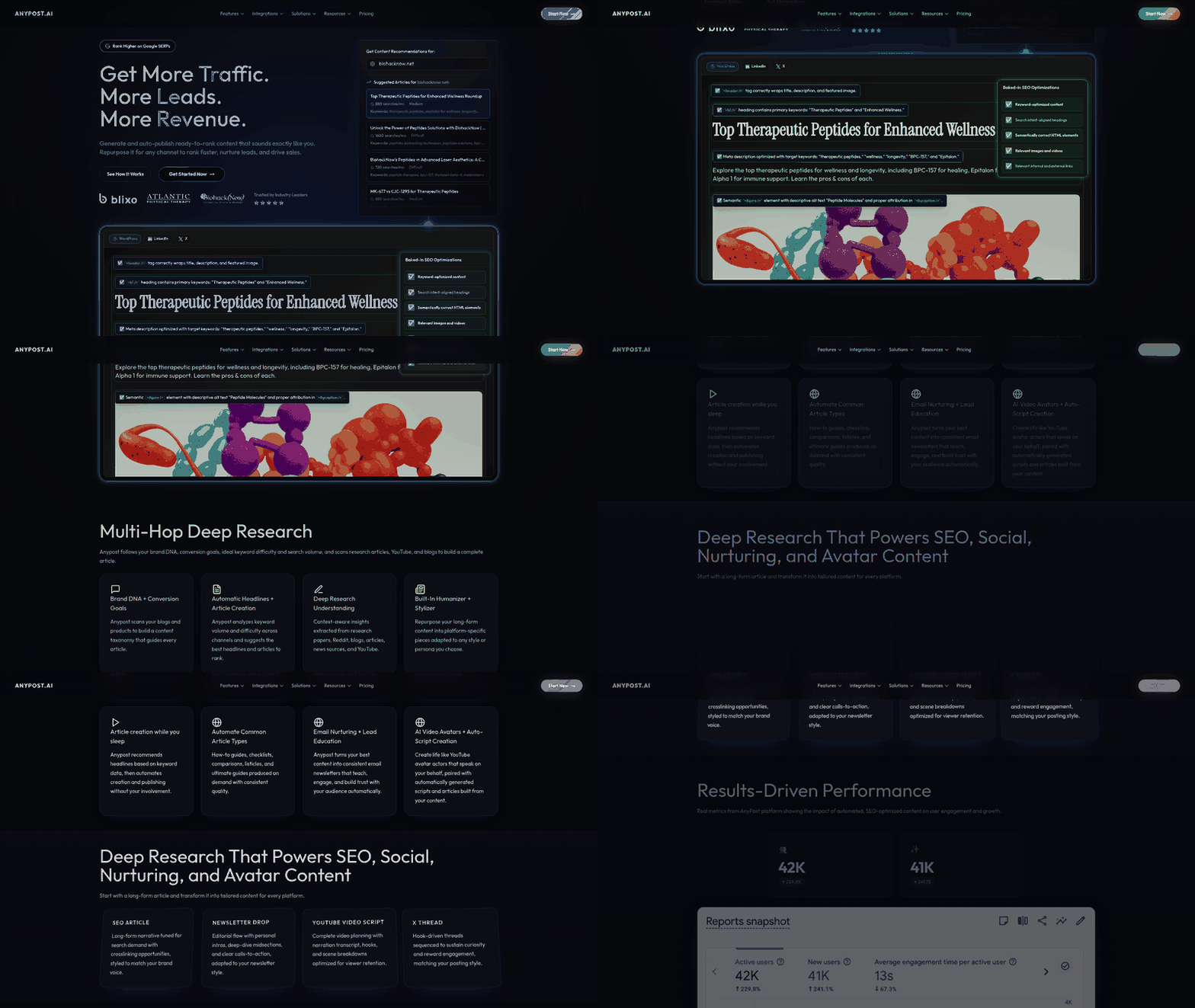
| Feature | SaaS Content Writing | Traditional Writing |
|---|---|---|
| Time per Article | 1–2 hours (auto-generated, auto-published) | 8–20+ hours (research, drafting, editing) |
| SEO Optimization | Automated keyword integration, real-time analytics | Manual keyword research, limited tracking |
| Brand Consistency | AI-matched tone via Persona Engine | Relies on writer’s discretion and style guides |
| Maintenance Effort | Minimal; updates via AI rewrites | Ongoing manual revisions for freshness |
| Cost per Article | $10–$50 (credits-based pricing) | $100–$500+ (freelancer/hourly rates) |
| Scalability | Infinite with automation | Limited by team size and bandwidth |
Key Highlights: SaaS vs. Traditional Writing
SaaS Content Writing excels in speed and consistency. Platforms like AnyPost.ai use Persona Engine and multi-source research to generate SEO-optimized content in hours, slashing time-to-publish from days to minutes. For example, businesses using AnyPost report 13x organic traffic growth and 45% conversion rate increases via automated repurposing across WordPress, LinkedIn, and YouTube. See the Content Repurposing and Multi-Channel Distribution section for more details on cross-platform strategies. Maintenance is minimal—AI handles updates and restyling (1 credit per article revision).
Traditional Writing offers human creativity but struggles with scalability. A single 1,000-word blog post might take 10+ hours to research, draft, and edit, costing $200–$600 per piece. While skilled writers can craft nuanced narratives, maintaining brand voice across 50+ articles is error-prone without AI. SEO requires manual keyword insertion and A/B testing, which SaaS tools automate entirely as explained in the SEO Optimization and Analytics Tracking section.
Time, Cost, and ROI Breakdown
- Time Saved: SaaS reduces content creation by 80%, enabling daily publishing. AnyPost’s auto-publishing feature lets businesses generate 10+ SEO-ready articles weekly while users sleep. This efficiency aligns with the principles outlined in the Why SaaS Content Writing Matters section.
- Cost Efficiency: At $49/month (Starter Plan), SaaS handles 18 articles/month for ~$2.70 each—85% cheaper than freelance rates. Enterprise plans scale to $1,299/month for 1,650 articles, ideal for high-volume needs.
- Maintenance: Traditional writing demands 20% of content marketers’ time on revisions. SaaS platforms use smart linking and auto-restyling to update content with zero manual effort.
“Using AnyPost, we cut content production time by 90% and boosted organic traffic to 12K monthly sessions.” — B2B Marketing Manager
For teams prioritizing speed and SEO, SaaS writing is transformative. For niche, high-creativity projects, traditional methods still hold value—but at a steep time and cost tradeoff. The choice hinges on whether efficiency or human nuance is the priority.
Why SaaS Content Writing Matters
SaaS content writing has become a cornerstone of modern digital strategy, driven by the need for scalable, efficient, and data-driven content creation. In a world where 72% of marketers identify content creation as their biggest challenge, SaaS tools are reshaping how businesses approach content marketing. By automating repetitive tasks, optimizing SEO, and maintaining brand consistency, these platforms address pain points that traditional writing methods struggle to resolve. Let’s break down why SaaS content writing isn’t just beneficial—it’s essential for staying competitive in 2025.
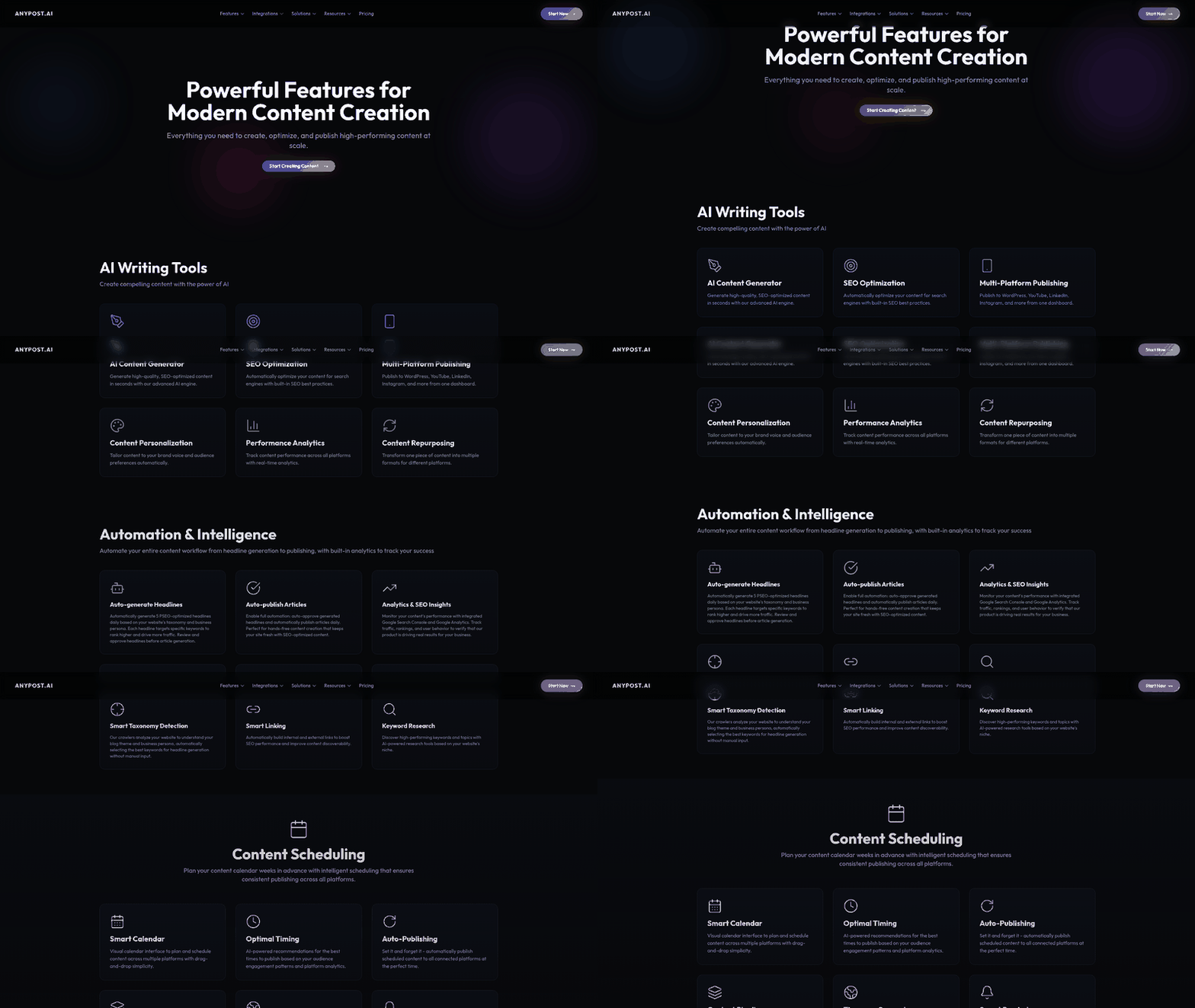
Industry Statistics Highlighting Content Marketing’s Impact
Content marketing generates 3x more leads than traditional marketing methods, according to HubSpot. Yet, creating high-quality, SEO-optimized content at scale remains a bottleneck. SaaS platforms like AnyPost.ai bridge this gap by leveraging AI to produce content that ranks on Google and resonates with audiences. For instance, AnyPost.ai’s clients have seen 13x growth in organic traffic and 229.8% increases in active users through automated content strategies. These results underscore a critical shift: businesses that adopt SaaS-driven writing tools outperform competitors relying on manual workflows. As mentioned in the Quick Summary section, SaaS platforms drastically reduce time per article compared to traditional methods, enabling faster content pipelines.
Solving Pain Points: Time, SEO, and Consistency
Traditional writing is time-intensive, with marketers spending 20% of their time on content creation alone. SaaS tools streamline this process by automating headline generation, SEO optimization, and multi-platform publishing. AnyPost.ai’s Persona Engine, for example, ensures brand voice consistency across blogs, social posts, and video scripts, eliminating the risk of disjointed messaging.
SEO optimization, once a manual and fragmented process, is now embedded into SaaS workflows. Platforms analyze keyword difficulty, search intent, and competitor data to generate content that aligns with search engine algorithms. This automation reduces the guesswork in SEO, enabling businesses to target high-value keywords more effectively. For B2B marketers, this means 15x growth in qualified leads, as seen in case studies from SaaS-focused clients. See the SEO Optimization and Analytics Tracking section for more details on how SaaS tools integrate SEO best practices directly into content creation.
Who Benefits Most and How AI Drives Automation
SaaS content writing is a game-changer for B2B marketers, digital strategists, and growth leaders. B2B teams, for instance, use SaaS tools to create thought leadership articles and case studies that nurture long sales cycles. Digital strategists rely on these platforms to repurpose a single article into 10+ formats (e.g., LinkedIn threads, YouTube scripts, email newsletters), maximizing ROI. Building on concepts from the Content Repurposing and Multi-Channel Distribution section, this multi-format approach ensures content reaches audiences across platforms efficiently.
The role of AI in this ecosystem is transformative. Tools like AnyPost.ai use deep research algorithms to scan blogs, research papers, and YouTube videos, generating content that mirrors human expertise. AI also automates time-consuming tasks like scheduling, analytics tracking, and even video avatar creation. For example, AnyPost’s auto-publishing feature allows brands to publish SEO-optimized articles while they sleep, ensuring a steady content pipeline without manual intervention.
Real-World Examples of SaaS Content Success
Companies like BioHackNow and Atlantic Physical Therapy have leveraged SaaS platforms to dominate niche markets. BioHackNow used automated content to rank for competitive keywords like “biohacking for beginners,” driving 45% higher conversion rates on product pages. Similarly, Atlantic Physical Therapy repurposed blog content into localized social media posts, boosting 5x more local leads.
These examples highlight a key advantage of SaaS content writing: it adapts to diverse industries. Whether you’re a SaaS startup scaling SEO efforts or an e-commerce brand optimizing product descriptions, these tools provide tailored solutions. For instance, AnyPost.ai’s multi-source integration pulls insights from YouTube and Reddit to craft content that aligns with audience interests—a level of agility traditional writing methods can’t match.
The Future of Content: Automation Meets Strategy
As AI continues to evolve, SaaS content writing isn’t just about saving time—it’s about redefining what’s possible. Platforms now generate video scripts, nurture leads via automated email campaigns, and even create AI avatars to represent brands on YouTube. For marketers, this means shifting focus from content production to strategic oversight, doubling down on creativity and audience engagement.
In short, SaaS content writing addresses the modern marketer’s toughest challenges: scalability, SEO, and consistency. By integrating AI-driven automation, businesses can outperform traditional methods while staying agile in a fast-paced digital landscape. The question isn’t whether to adopt these tools—it’s how quickly you can leverage them to stay ahead.
Understanding Traditional Writing
Traditional writing refers to the manual creation of content by human writers, relying on creativity, research, and editorial processes to produce articles, blog posts, and marketing materials. Unlike automated systems, this approach emphasizes personalized storytelling, in-depth research, and a human touch. Content marketers often use traditional writing to craft emotionally resonant narratives, build brand authority, and maintain a consistent voice. However, this method comes with trade-offs, particularly in speed and scalability. As mentioned in the Why SaaS Content Writing Matters section, modern strategies demand scalable solutions to meet high-volume content needs.
Strengths of Traditional Writing
The most notable advantage of traditional writing is its creative flexibility. Human writers can adapt tone, style, and messaging to align with brand identity, often producing nuanced content that connects with audiences on an emotional level. For example, a luxury fashion brand might use traditional writing to craft a narrative-driven blog series that highlights craftsmanship and heritage, fostering brand loyalty.
Another strength lies in quality control. Experienced writers and editors can refine drafts multiple times, ensuring accuracy and depth. A well-researched whitepaper or case study, for instance, might undergo rigorous fact-checking and peer review, making it a trusted resource for B2B audiences. This meticulous process is difficult to replicate with automated tools, which may prioritize speed over precision. See the SEO Optimization and Analytics Tracking section for more details on how automated systems handle efficiency versus depth.
Limitations of Traditional Writing
Despite its merits, traditional writing is inherently labor-intensive. Producing a single high-quality article can take hours of research, drafting, and editing. For teams managing large content pipelines, this manual process becomes unsustainable. Consider a SaaS company aiming to publish 20 blog posts monthly: hiring and managing a team of writers, coordinators, and SEO specialists would require significant time and budget. Building on concepts from the Why SaaS Content Writing Matters section, automated tools address these challenges by streamlining workflows.
Scalability is another major challenge. Traditional writing struggles to meet the demands of modern content marketing, where brands need consistent output across blogs, social media, and email campaigns. A human writer might spend days crafting a 2,000-word guide, while tools like Anypost.ai automate generation and repurposing, reducing production time by 70% or more. See the Content Repurposing and Multi-Channel Distribution section for insights on how automation enhances efficiency.
Real-World Examples and Challenges
Some brands thrive with traditional writing strategies. For instance, a boutique fitness studio might use handwritten newsletters and Instagram posts to create a community-driven vibe, leveraging the authenticity of human voices. However, scaling this approach to national or global audiences proves difficult.
The cost of scaling also rises sharply. A mid-sized business aiming to maintain daily blog updates would need to hire multiple writers, invest in project management software, and coordinate SEO audits manually. In contrast, platforms like Anypost.ai integrate SEO optimization, multi-source research, and automated publishing, streamlining workflows for high-volume content needs.
| Feature | Traditional Writing | SaaS Content Writing (e.g., Anypost.ai) |
|---|---|---|
| Time per Article | 4–8 hours | 15–30 minutes |
| Scalability | Limited by human capacity | Scales to 50+ articles/month |
| SEO Optimization | Manual keyword research | Automated keyword targeting |
| Brand Voice Consistency | Risk of inconsistency | Persona Engine ensures uniformity |
While traditional writing excels in creativity and depth, its limitations in speed and scalability make it a less viable option for modern content strategies. Tools like Anypost.ai address these gaps by combining automation with human-like quality, enabling brands to maintain both efficiency and engagement. However, traditional writing remains invaluable for niche campaigns where personalization and narrative depth take precedence over volume.
Introduction to SaaS Content Writing
SaaS content writing is a specialized form of content creation designed to attract, engage, and convert audiences for software-as-a-service businesses. Unlike traditional writing, which often focuses on storytelling or general information, SaaS content is deeply tied to business goals such as lead generation, SEO ranking, and customer retention. As mentioned in the Why SaaS Content Writing Matters section, this approach is critical for aligning content with broader marketing strategies to drive measurable outcomes. It emphasizes long-form, data-driven narratives that address specific pain points of target audiences while aligning with brand voice and conversion objectives. For example, a SaaS company might create a 2,500-word guide on "Optimizing Workflow Automation" that integrates SEO keywords, internal linking, and actionable insights to position itself as an authority in its niche.
Core Features of SaaS Content Writing
Modern SaaS content writing leverages automation and advanced tools to streamline the process. Platforms like AnyPost.ai offer features such as automated headline generation, SEO-optimized article creation, and multi-platform publishing. See the SEO Optimization and Analytics Tracking section for more details on how built-in SEO tools enhance content visibility. These tools analyze keyword difficulty, search intent, and competitor content to produce high-quality drafts that rank well on search engines. For instance, AnyPost’s Persona Engine ensures brand voice consistency across all content by mimicking human tone and style, while its multi-source integration pulls data from research articles, blogs, and YouTube to build comprehensive narratives. This eliminates manual research, saving hours for content creators.
A comparison of SaaS and traditional writing tools highlights the efficiency of modern solutions:
| Feature | Traditional Writing | SaaS Content Writing (e.g., AnyPost.ai) |
|---|---|---|
| Content Creation | Manual drafting and editing | AI-generated drafts with human refinement |
| SEO Optimization | Requires separate tools or expertise | Built-in SEO analysis and keyword targeting |
| Time Investment | Hours to days per piece | Minutes to hours with automation |
| Repurposing | Limited to manual adaptation | Auto-generated content for blogs, social media, and emails |
| Analytics | Basic traffic metrics | Real-time performance tracking and A/B testing |
Building on concepts from the Content Repurposing and Multi-Channel Distribution section, SaaS platforms further enhance efficiency by enabling automated repurposing of content across channels. For example, AnyPost’s auto-publishing feature allows businesses to schedule content across multiple channels without manual intervention, ensuring consistent visibility.
Content Repurposing and Multi-Channel Distribution
Content repurposing is a game-changer for modern content strategies, especially in the SaaS industry where efficiency and ROI are critical. By transforming a single piece of content into multiple formats tailored to different platforms, teams avoid redundant work while maximizing reach. For example, a long-form blog post can become a LinkedIn article, a YouTube video script, or an email newsletter—all while maintaining consistent brand messaging. Tools like AnyPost.ai streamline this process with features like automated rewriting, reformatting, and persona-driven tone adjustments, ensuring each version resonates with its target audience.

Techniques for Effective Repurposing
Repurposing isn’t just about copying and pasting—it’s about adapting. Start by identifying the core message of your original content. A how-to guide, for instance, can be sliced into social media tips, podcast scripts, or infographics. Platforms like AnyPost use AI to automate this: their Built-In Humanizer and Stylizer adjust language for platform-specific audiences, turning a formal blog into conversational tweets or professional LinkedIn posts.
For example, a technical whitepaper might be repurposed into:
- Social media threads breaking down key points.
- Checklists for quick reference.
- Email sequences nurturing leads with incremental insights.
- YouTube videos explaining complex topics visually.
Advanced tools also leverage multi-hop deep research to ensure repurposed content retains SEO value. AnyPost’s system scans original material, identifies keyword opportunities, and generates platform-optimized versions automatically—reducing manual effort by up to 70% for users. See the SEO Optimization and Analytics Tracking section for more details on how SEO best practices are embedded into repurposed content.
Real-World Impact of Multi-Channel Distribution
Distributing repurposed content across channels isn’t just about volume—it’s about strategic reach. Consider a SaaS company promoting a new feature:
- Blog Post: Targets search engines with in-depth explanations.
- LinkedIn Article: Positions the feature as a thought leadership move.
- YouTube Video: Demonstrates the feature in action.
- Email Campaign: Educates existing users on updates.
This approach led AnyPost clients to see 229.8% growth in active users over 30 days. The platform’s Multi-Platform Publishing dashboard lets teams schedule and track performance across WordPress, LinkedIn, and YouTube simultaneously, ensuring no audience is overlooked.
A standout example is a B2B SaaS firm that transformed a single case study into:
- A 20-part LinkedIn series highlighting client wins.
- A YouTube case study video with testimonials.
- A PDF whitepaper for lead generation.
- A Slack chatbot script answering FAQs.
This multi-channel rollout drove 12,800 organic sessions and 1,962 qualified leads in just six months, proving that strategic distribution amplifies impact.
Tools to Simplify Repurposing and Distribution
Manual repurposing is time-intensive, but SaaS platforms like AnyPost.ai automate repetitive tasks. Their Persona Engine ensures brand voice consistency across formats, while Smart Linking boosts SEO by connecting repurposed content to related articles. For teams juggling multiple projects, automation is non-negotiable.
| Feature | AnyPost.ai | Manual Process |
|---|---|---|
| Article to Email Conversion | 1-click restyling with AI | 4+ hours of rewriting |
| SEO Optimization | Built-in keyword targeting | Requires separate tools |
| Multi-Channel Scheduling | Drag-and-drop calendar | Platform-by-platform setup |
| Analytics | Real-time engagement tracking | Manual data aggregation |
For users prioritizing scalability, AnyPost’s Growth Plan offers 250 monthly credits to generate articles, videos, and restyled content. The Pro Plan adds advanced analytics and custom branding, making it ideal for agencies managing multiple clients.
In contrast, traditional writing teams might spend weeks refining a single blog post, with limited flexibility for reuse. As mentioned in the Understanding Traditional Writing section, this manual process contrasts sharply with SaaS tools that enable content to work across channels simultaneously—driving engagement, SEO rankings, and sales with minimal manual effort.
By integrating repurposing into their workflow, SaaS marketers can focus on strategy, not repetition. The result? Higher ROI, deeper audience connection, and a content machine that keeps growing. Building on concepts from the Quick Summary section, the time and cost efficiencies of SaaS content writing underscore its value in modern marketing.
SEO Optimization and Analytics Tracking
SEO optimization and analytics tracking are critical differentiators between SaaS content writing and traditional methods. Modern SaaS platforms like AnyPost.ai embed SEO best practices directly into their workflows, reducing manual effort while boosting visibility. For example, traditional writers might spend hours researching keywords and adjusting meta tags, whereas SaaS tools automate these tasks using AI-driven tools. This shift not only saves time but also ensures content aligns with search engine algorithms from creation to publication. As mentioned in the Understanding Traditional Writing section, manual processes often lack the efficiency and scalability required for high-volume content strategies.

The Role of SEO in Content Marketing Success
SEO acts as the backbone of content marketing, determining whether audiences find your work. A high-performing SEO strategy involves keyword research, on-page optimization, and technical adjustments to improve search rankings. SaaS platforms streamline this process by integrating tools that analyze competitors, suggest topic clusters, and optimize headlines in real time. For instance, AnyPost.ai’s Auto-generate Headlines feature creates SEO-optimized titles based on keyword difficulty and search volume, a task that would take hours manually. See the Content Repurposing and Multi-Channel Distribution section for more details on how optimized headlines contribute to cross-platform content strategies.
| SEO Task | Traditional Writing | SaaS Content Writing (AnyPost.ai) |
|---|---|---|
| Keyword Research | Manual tools like SEMrush or Ahrefs | Built-in AI scans research articles, YouTube, and blogs for high-volume keywords |
| On-Page Optimization | Manual meta tag editing | Automatic optimization of headers, alt text, and internal links |
| Content Repurposing | Time-consuming cross-format editing | AI transforms articles into social posts, emails, or video scripts instantly |
Real-Time Analytics: The SaaS Edge
Analytics tracking transforms guesswork into data-driven decisions. Traditional writers often rely on monthly reports or manual dashboards, while SaaS platforms offer real-time analytics that update continuously. AnyPost.ai’s integration with Google Analytics and Search Console provides immediate insights into traffic spikes, bounce rates, and conversion paths. This allows marketers to adjust strategies mid-campaign rather than waiting for delayed feedback. As highlighted in the Quick Summary section, SaaS platforms reduce time-to-publish significantly, a benefit amplified by instant analytics.
Consider a B2B SaaS company using AnyPost’s Persona Engine to tailor content for enterprise decision-makers. Real-time analytics might reveal that a specific blog post about "AI in Customer Support" generates a 300% higher engagement rate than others. With this data, the team can prioritize similar topics, repurpose the content into case studies, and even create targeted email campaigns—all within the same platform.
Case Study: SEO Wins with SaaS Automation
A real-world example highlights the power of SaaS-driven SEO. A SaaS startup in the e-commerce niche used AnyPost.ai to automate 80% of its content creation. By leveraging the platform’s Smart Taxonomy Detection, the team identified under-optimized keywords like “custom product labeling software” and generated targeted articles. Within six months, their organic traffic grew by 13x, and they ranked on the first page of Google for 47 competitive keywords.
“The real-time analytics dashboard helped us spot which articles drove the most leads. We doubled down on those topics and cut content that didn’t perform—something we couldn’t do manually at scale.” – Marketing Manager, E-Commerce SaaS Company
Balancing Automation with Human Oversight
While SaaS tools handle technical SEO and analytics, human input remains vital for creativity and nuance. The best approach combines AI efficiency with strategic oversight. For example, AnyPost.ai allows users to refine AI-generated suggestions, ensuring brand voice stays consistent while still benefiting from algorithmic precision. This hybrid model reduces time spent on repetitive tasks, letting writers focus on storytelling and audience connection.
By embedding SEO and analytics into every step of content creation, SaaS platforms redefine efficiency. The result? Faster time-to-publish, higher search rankings, and measurable ROI—all while addressing pain points like inconsistent brand voice and manual optimization. For teams prioritizing scalability, this automated workflow becomes a non-negotiable advantage.
Future Trends and Innovations
Emerging Trends in SaaS Content Writing
AI-generated content is reshaping how businesses approach content creation. Tools like AnyPost.ai leverage advanced natural language processing (NLP) to produce SEO-optimized articles, blog posts, and social media updates at scale. These systems analyze user-defined brand voices, market trends, and audience preferences to generate content that aligns with business goals. For example, AnyPost’s Persona Engine ensures that every piece of content maintains a consistent tone, mimicking the writing style of human creators. This level of personalization reduces the time spent on revisions and eliminates inconsistencies that often arise in traditional writing workflows. See the SEO Optimization and Analytics Tracking section for more details on how AI integrates SEO best practices into content creation.
Automation is another key driver of efficiency. Platforms like AnyPost integrate machine learning algorithms to automate headline generation, content scheduling, and performance tracking. By analyzing historical data and real-time engagement metrics, these tools predict the best times to publish and recommend content formats tailored to audience behavior. For instance, AnyPost’s smart calendar feature schedules posts across multiple platforms, ensuring a steady flow of content without manual oversight. This contrasts sharply with traditional writing, where editorial calendars require constant updates and coordination among team members.
| Feature | AI-Driven SaaS Tools | Traditional Writing |
|---|---|---|
| Content Generation | Fully automated with AI | Manual drafting by writers |
| SEO Optimization | Built-in keyword research and optimization | Requires separate tools or expertise |
| Publishing Speed | Instant auto-publishing across platforms | Time-consuming, platform-by-platform |
| Brand Consistency | Maintained via AI tone modeling | Relies on human judgment and style guides |
Impact on Content Marketing and SaaS Adoption
The integration of AI and automation in SaaS content writing is accelerating content marketing efficiency. Businesses using platforms like AnyPost report measurable improvements in traffic and lead generation. For example, SaaS companies leveraging AI-generated content have seen a 13x increase in organic traffic, as seen in AnyPost’s case studies. These tools also reduce the burden on marketing teams by handling repetitive tasks such as repurposing long-form articles into social media snippets or email newsletters. Building on concepts from the Content Repurposing and Multi-Channel Distribution section, AI-driven platforms streamline this process across channels.
Moreover, real-time analytics provided by SaaS platforms allow marketers to track performance and adjust strategies dynamically. AnyPost’s dashboard, for instance, displays metrics like organic sessions, engagement rates, and lead conversions, enabling data-driven decisions. Traditional content marketing, by contrast, often relies on periodic audits and manual reporting, which delay insights and hinder agile adjustments. As mentioned in the SEO Optimization and Analytics Tracking section, these tools embed analytics directly into the content creation workflow.
Challenges and Limitations
Despite the benefits, adopting AI-driven content writing comes with challenges. One major limitation is the risk of generic output. While AI can generate high-quality content, it may lack the nuanced creativity or emotional depth that human writers bring. Businesses must balance automation with human oversight to maintain authenticity. Additionally, training AI models to understand industry-specific jargon or unique brand voices requires significant initial setup.
Another hurdle is data privacy and security. SaaS platforms handle sensitive content, and businesses must ensure that their providers comply with data protection regulations. As highlighted in the Why SaaS Content Writing Matters section, data-driven strategies rely on secure infrastructure to maintain trust. AnyPost addresses this by offering white-label solutions and custom API access for enterprise clients, but smaller businesses may face steeper integration costs.
Finally, over-reliance on automation can lead to content fatigue if not managed properly. Marketers must use AI tools as an enhancement, not a replacement, for human creativity. For example, while AnyPost automates 90% of content creation, many users still allocate time for final reviews and strategic edits to ensure alignment with broader marketing goals.
The Road Ahead
As AI and automation continue to evolve, SaaS content writing will become even more intuitive. Future innovations may include hyper-personalized content generated in real time based on user interactions, or AI video avatars that deliver dynamic, voice-activated content across platforms. While challenges remain, the efficiency gains and scalability offered by SaaS tools make them a compelling choice for businesses aiming to streamline their content marketing efforts.
Conclusion and Recommendations
When choosing between SaaS content writing and traditional methods, businesses must weigh efficiency against creativity. The key differences lie in speed, consistency, and scalability. Below is a structured comparison of the two approaches:
| Feature | Traditional Writing | SaaS Content Writing (e.g., AnyPost.ai) |
|---|---|---|
| Time to Create | Manual, time-intensive (hours/days) | Automated, generates drafts in minutes |
| Consistency | Depends on writer skill and availability | Ensures brand voice alignment via Persona Engine |
| SEO Optimization | Requires post-hoc keyword research | Built-in SEO analysis and keyword targeting |
| Scalability | Limited by human resources | Handles high-volume content across platforms |
| Cost | High labor costs for teams | Subscription-based, cost-effective at scale |
Benefits and Drawbacks
Traditional writing excels in creative nuance and human insight, making it ideal for high-stakes campaigns like brand storytelling or complex B2B messaging. However, it struggles with consistency and speed, often leaving teams overwhelmed by tight deadlines. SaaS tools like AnyPost.ai eliminate these bottlenecks by automating research, drafting, and publishing. For example, AnyPost’s Multi-Hop Deep Research scans 100+ sources to build SEO-optimized articles, reducing creation time by 70% for users. Yet, no tool fully replaces human judgment in refining tone or addressing context-specific subtleties. As mentioned in the Quick Summary section, the time-per-article disparity between methods remains a critical factor in content strategy decisions.
Recommendations for Businesses
- Adopt SaaS if your priorities are:
- Rapid content production (e.g., 10+ articles/month).
- Maintaining SEO consistency across platforms (WordPress, LinkedIn, YouTube).
- Reducing reliance on in-house writers for routine tasks like listicles or how-tos. Example: A SaaS company using AnyPost’s Auto-publishing feature saw 13x organic traffic growth by generating daily content without manual oversight.
- Hybrid Approach for Best Results Use SaaS tools for foundational content (e.g., blog drafts, social posts) and allocate human writers to refine high-impact pieces. AnyPost’s Humanizer + Stylizer ensures machine-generated content retains a natural tone, blending efficiency with quality. See the SEO Optimization and Analytics Tracking section for more details on how SaaS platforms embed SEO best practices directly into workflows.
- Start Small, Scale Smart Begin with a low-tier SaaS plan (e.g., AnyPost’s Starter at $49/month) to test performance. Monitor metrics like engagement rate and keyword rankings via the platform’s real-time analytics. Scale to Pro or Enterprise plans as demand grows, leveraging advanced features like Avatar Video Creation for multi-channel campaigns.
Next Steps for Implementation
- Audit Existing Workflows: Identify repetitive tasks (e.g., social media scheduling, email newsletters) to automate.
- Integrate SaaS with Tools: Connect AnyPost to platforms like Google Analytics or CRM systems for unified data tracking.
- Train Teams: Use AnyPost’s Persona Engine to train AI on brand voice, ensuring alignment with marketing goals.
- Iterate Based on Data: Refine content strategies using performance dashboards to prioritize high-converting topics.
The Future of Content Marketing
AI-driven SaaS tools are not replacing writers but redefining their roles. As platforms like AnyPost evolve, they will handle more complex tasks like predictive content planning and hyper-personalized messaging. Building on concepts from the Future Trends and Innovations section, businesses that adopt these tools early gain a 241.1% growth edge in user acquisition, as seen in AnyPost’s case studies. However, success hinges on balancing automation with human oversight to preserve authenticity. For B2B marketers and growth leaders, the message is clear: SaaS content writing is the backbone of modern, agile marketing—but it’s most powerful when paired with strategic human creativity.
For deeper insights, explore AnyPost’s case studies or SaaS content strategies to align tools with your goals.
Frequently Asked Questions
1. What are the key differences in time efficiency between SaaS content writing and traditional methods?
SaaS content writing significantly reduces time investment. Platforms like AnyPost.ai generate 1–2 hour articles with auto-publishing, while traditional methods require 8–20+ hours for research, drafting, and editing. For example, businesses using SaaS can publish 10+ SEO-ready articles weekly, whereas traditional workflows often limit output due to manual processes. This efficiency aligns with AnyPost’s auto-publishing feature, enabling daily publishing cycles.
2. How does SEO optimization differ between SaaS and traditional content writing?
SaaS platforms automate SEO with features like keyword integration and real-time analytics, ensuring content aligns with search engine algorithms. Traditional methods rely on manual keyword research and A/B testing, which are time-intensive and less precise. AnyPost.ai, for instance, uses multi-source research to embed optimized keywords, while traditional writers must track performance manually, often leading to suboptimal results.
3. What are the cost implications of using SaaS versus traditional writing?
SaaS content writing is more cost-effective. At $49/month for 18 articles (~$2.70 per piece), platforms like AnyPost.ai offer 85% lower costs than traditional freelancers ($100–$500+ per article). Enterprise plans scale further, handling 1,650+ articles monthly. Traditional methods, while offering human creativity, face higher labor costs and require ongoing budgeting for revisions. SaaS pricing models eliminate variable expenses associated with hiring writers.
4. How does brand consistency compare between SaaS and traditional writing?
SaaS tools maintain brand voice using AI-driven tools like Persona Engine, which enforces consistent tone across all content. Traditional writing depends on writers’ discretion and style guides, making consistency harder to achieve at scale. For example, AnyPost.ai’s Persona Engine ensures uniformity even across 50+ articles, whereas human errors or stylistic drifts are common in traditional workflows.
5. Which method is more scalable for high-volume content production?
SaaS content writing is infinitely scalable due to automation. Platforms like AnyPost.ai can generate hundreds of articles monthly with minimal effort, limited only by credit allocations. Traditional writing scales linearly with team size, making it impractical for businesses needing frequent, high-volume output. The article notes that SaaS enables daily publishing, while traditional teams often struggle to meet weekly goals.
6. What maintenance efforts are required for each approach?
SaaS platforms reduce maintenance to minimal updates via AI rewrites, costing 1 credit per revision. Traditional writing demands ongoing manual revisions, consuming 20% of content marketers’ time. For instance, AnyPost.ai’s auto-updating features keep content fresh without human intervention, whereas traditional workflows require dedicated time for edits, repurposing, and cross-platform adjustments.
7. When should businesses choose traditional writing over SaaS content writing?
Traditional writing is preferable when nuanced storytelling, creative depth, or highly specialized expertise is critical. While SaaS excels in efficiency and SEO, human writers can craft unique narratives that AI might oversimplify. Businesses prioritizing emotional resonance or complex subject matter may benefit from traditional methods, though they must accept higher costs and slower output.