Semantic SEO Automation Tools for Faster Content Planning

Key Takeaways
- AnyPost.ai generates SEO-optimized articles in your brand voice.
- Botify's crawler supplies raw entity signals for briefs.
- Low-code planners map entities to tone, intent, and length.
- Triggers can create brief records when Botify finds entities.
- Off-the-shelf NLP APIs often miss proprietary terms and jargon.
- Custom dictionaries or purpose-built tools improve terminology accuracy.
Automating Entity Extraction for Content Briefs
AnyPost.ai generates SEO-optimized articles in your brand voice. It can also publish finished pieces directly to your channels. The goal is simple: shorten the path from topic discovery to live content.
How do Botify and low-code planners work together for semantic SEO automation?
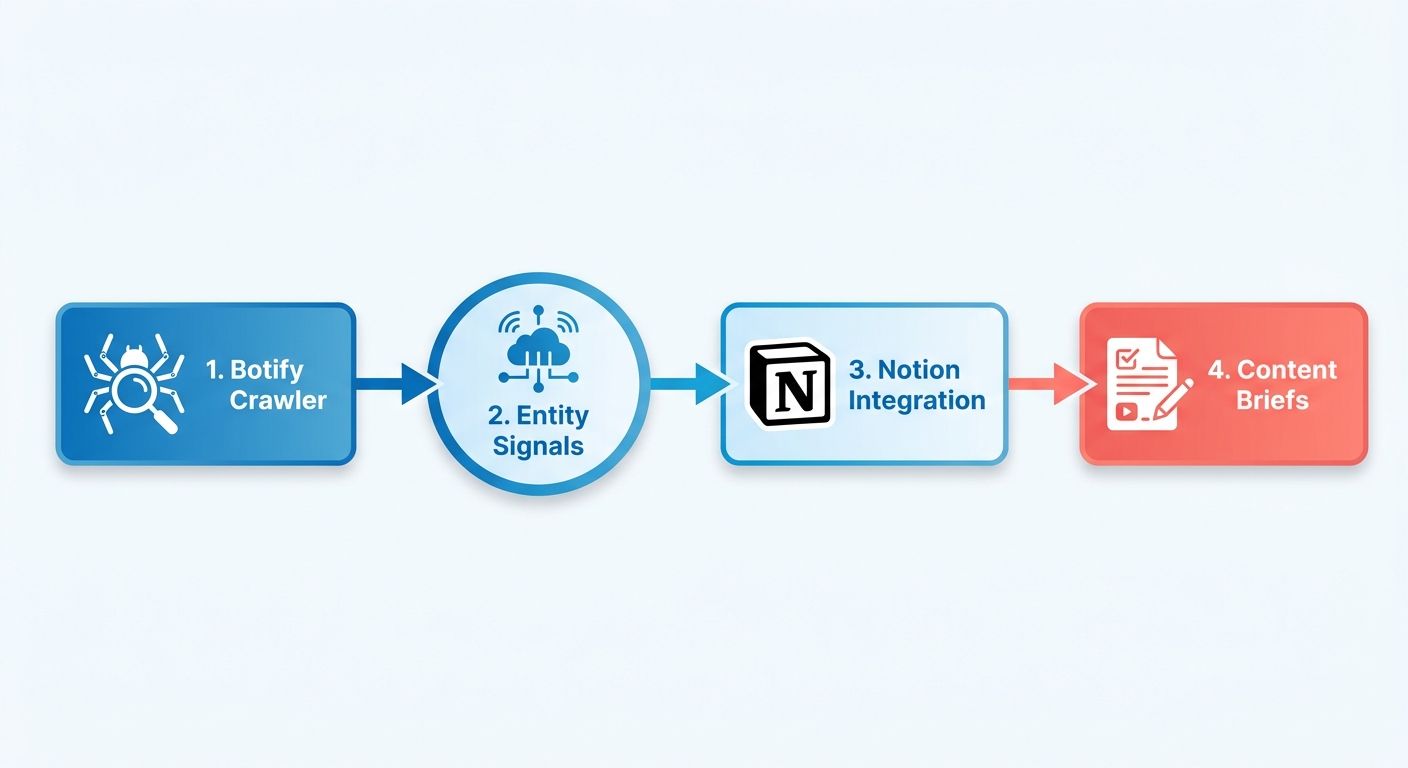
Botify's crawler delivers raw entity signals. Teams pipe those into Notion or Airtable. That keeps semantic context intact during brief creation.
We pair Botify's crawl data with Notion and Airtable tables. Each identified entity maps to tone guidelines, keyword intent, and length. Because the planners are low-code, triggers can create brief records when Botify flags new entities. That makes the workflow semi-automatic. Writers still handle the actual storytelling.
Are generic NLP services a good fit for B2B SaaS voice alignment?
Short answer: not really. Off-the-shelf NLP APIs extract entities quickly, but they rarely match B2B SaaS terminology.
We've tested several cloud-based extractors. They return generic industry terms and drop proprietary product names and jargon. If you need strict tone fidelity, add a custom dictionary to the generic extractor, or use a purpose-built tool like AnyPost.ai with brand-specific vocabularies.
Tool comparison
| Title | Description | Key Features | Pros | Cons |
|---|---|---|---|---|
| AnyPost.ai | Automated content generation with SEO optimization and brand-voice matching | • Persona Engine for tone alignment • SEO-optimized article templates • One-click publishing to multiple platforms | ★★★★★ – Keeps brand voice intact while delivering fast content turnaround | Requires subscription; learning curve for platform |
| Botify + Notion/Airtable | High-speed crawl feeds into collaborative low-code planners | • Crawl data exported for entity mapping • Table-driven content planning • Manual tone guidelines per column | ★★★★☆ – Uses existing tools; flexible for teams | Entity extraction is generic; extra steps needed to enforce voice |
| Generic NLP API (e.g., Cloud NL) | Cloud service that returns entities from text | • Ready-made endpoint • Multilingual support • Pay-as-you-go pricing | ★★★☆☆ – Quick setup; low upfront cost | Lacks brand-specific vocab; tone alignment must be added manually |
Recommendation: If voice consistency matters most, AnyPost.ai is a strong pick. Its Persona Engine keeps tone steady during automation.
Already invested in Notion or Airtable and need fast crawl data? The Botify hybrid is a solid second option, especially with a custom dictionary bolted on.
For one-off projects or tight budgets, a generic NLP API works as a stop-gap. Just plan on adding manual vetting to keep tone from drifting.
Tool 1: AnyPost.ai — Semantic SEO Automation Review
Semantic SEO automation sits between fast scaling and careful brand voice. The platform turns entity data into full drafts in your defined persona. That cuts the brief-to-publish gap to minutes.
The approach layers a Persona Engine on automated brief generation. Every outline inherits tone cues, keyword intent, and length guidelines. You get SEO-ready pages that feel handcrafted in one repeatable workflow. If you manage multiple product lines, that consistency saves hours of back-and-forth.
How does the platform generate voice-aligned briefs?
We map identified entities to the brand's persona parameters. Then we expand each entity into a paragraph outline that fits the chosen tone. The brief includes headline suggestions, sub-topic clusters, and on-page SEO signals. Those arrive with voice-specific language. Because the engine runs on a structured JSON schema, it feeds directly into our content editor or an external CMS.
The Persona Engine pulls from tone descriptors you upload, such as formal, conversational, and technical. It applies them at the sentence level. That reduces manual rewriting for intros and brand-specific sections, so the copy stays aligned longer.
What pricing and scalability options does the platform offer?
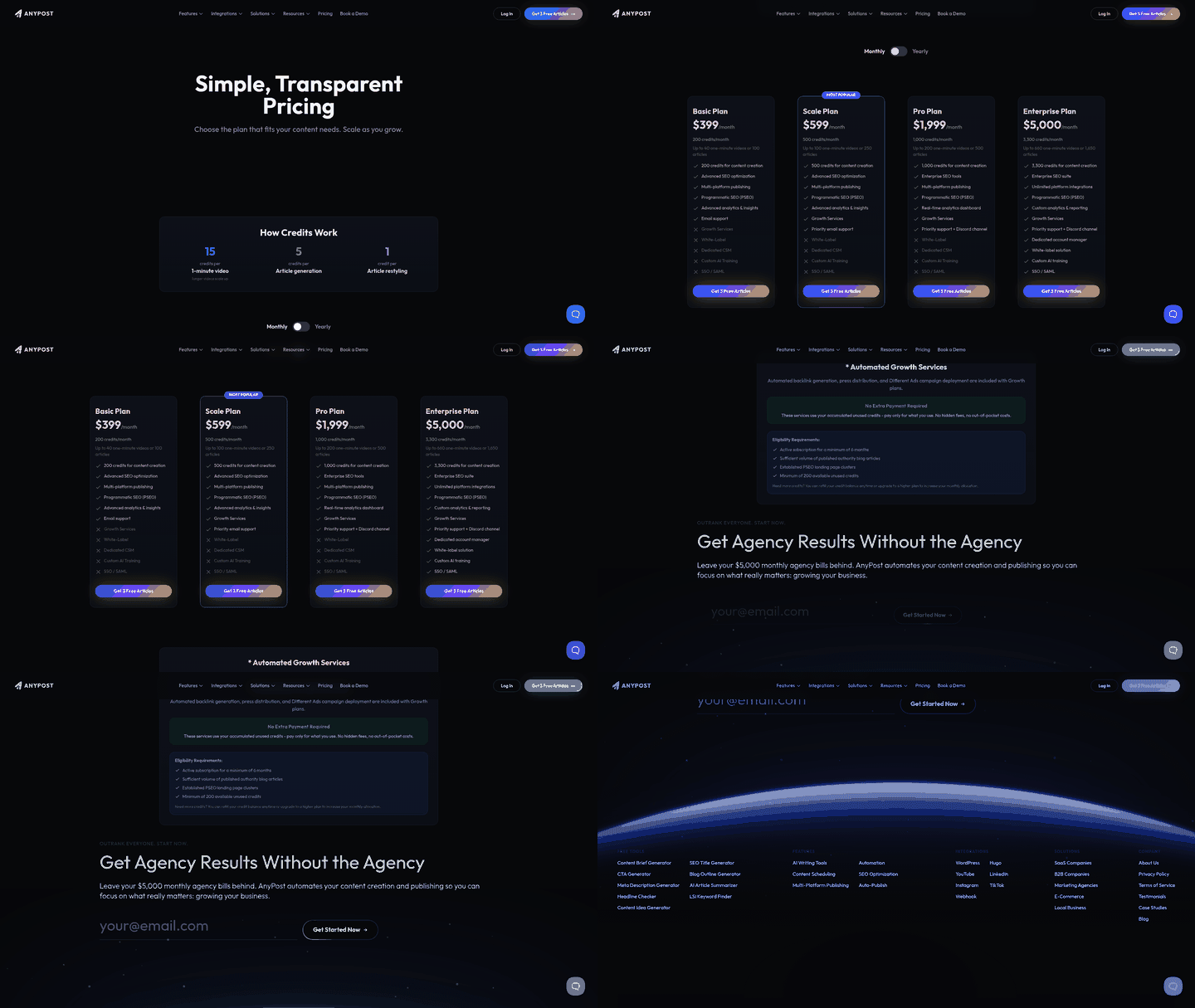
AnyPost offers flexible subscription tiers for different content volumes and team sizes. Each plan includes a set number of AI-generated drafts, persona slots, and publishing integrations. That lets you match spend to need without hidden fees.
How does it compare with other semantic SEO automation tools?
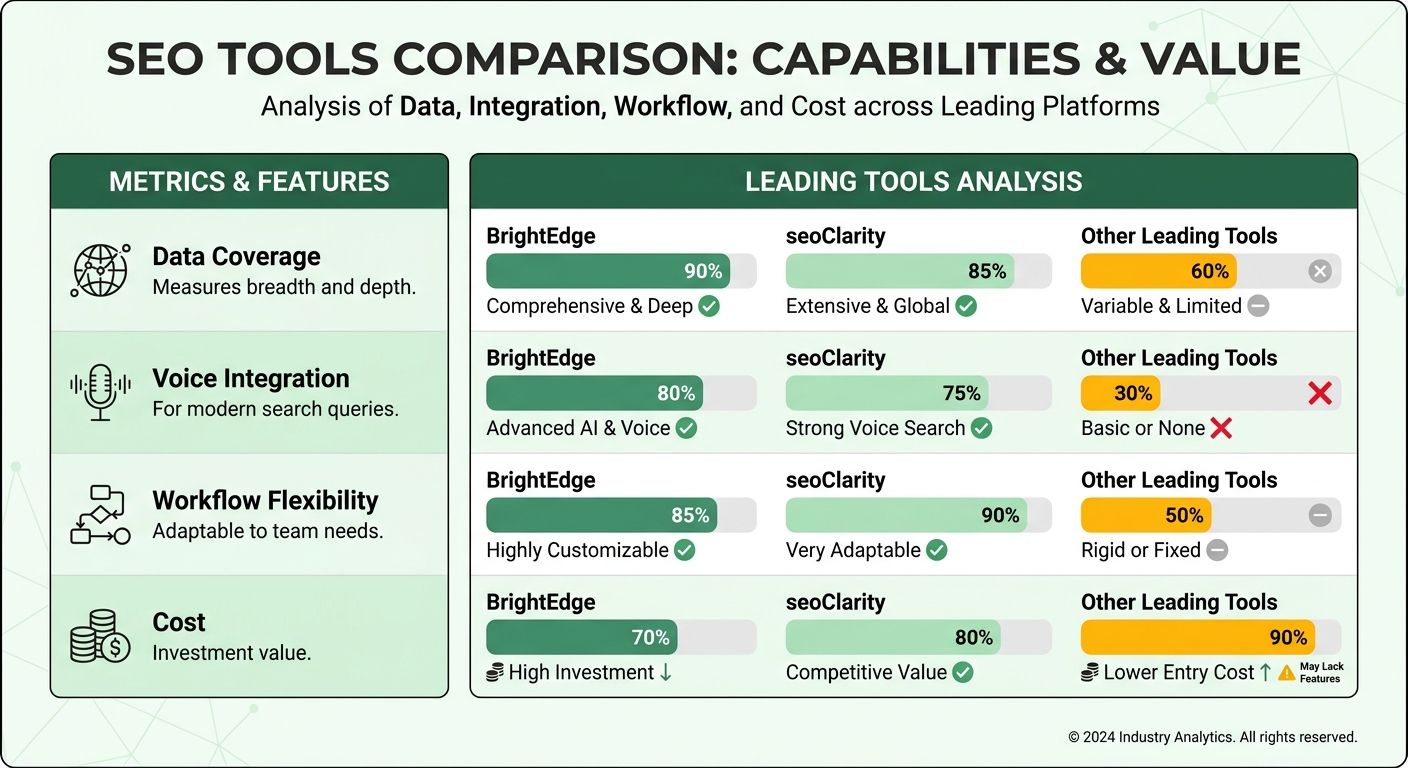
We compare the platform against four well-known solutions. BrightEdge and seoClarity handle large-scale data aggregation and keyword tracking, but they don't do voice alignment. Siteimprove focuses on issue remediation, with case studies showing real error reduction, but it doesn't generate content. Botify's high-speed crawler delivers raw signals and leaves brief creation to you. AnyPost combines entity extraction, tone-driven briefs, and direct publishing in one workflow.
If you already run a high-capacity crawler, pair it with our brief generator to close the loop. That setup mirrors the broader market: enterprise data depth on one side, AI content creation on the other.
| Title | Description | Key Features | Pros / Cons |
|---|---|---|---|
| AnyPost.ai (the platform) | End-to-end semantic SEO automation with voice alignment for SaaS content. | Persona Engine, automated brief generation, direct publishing, real-time analytics tracking. | Pros: Consistent brand tone, fast draft turnaround, flexible plans. Cons: Requires initial persona setup, focused on SaaS use cases. |
| BrightEdge | Enterprise SEO suite focused on data aggregation and technical recommendations. | Autopilot technical fixes, multilingual data across thousands of locations, large keyword database. | Pros: Massive data coverage, strong technical SEO. Cons: No built-in content generation, higher cost. |
| seoClarity | Keyword tracking and competitive intelligence platform. | Billions of keyword entries, extensive country coverage, SERP analysis. | Pros: Deep keyword insights, strong reporting. Cons: Lacks content creation and tone control. |
| Siteimprove | Site audit and accessibility tool that also offers content recommendations. | Issue reduction workflow, accessibility compliance, case-study examples. | Pros: Proven issue remediation, compliance focus. Cons: Not a full content generator, limited semantic SEO automation. |
| Botify | High-speed crawler and technical SEO analysis engine. | Rapid crawl speed, detailed technical reports. | Pros: Fast data collection, detailed technical insights. Cons: Requires separate content planning layer, no voice alignment. |
In practice, teams usually start with a crawl from Botify or BrightEdge to surface entities. Then they feed those signals into the platform for voice-aligned briefs. That covers both sides: data-driven topics and brand-consistent copy at scale.
Tool 2: Ahrefs — Semantic SEO Automation Review
Bring Ahrefs into a modern content workflow, and B2B SaaS teams can ground production in real search demand. Our platform handles creative execution; Ahrefs provides keyword difficulty, click-potential, and related entities.
Ahrefs is good at surfacing semantic clusters through Content Explorer. You can pull dozens of related topics in one click. We map those clusters to brand personas, so briefs inherit tone cues, intent flags, and length guidelines before writers open a document.
How does Ahrefs support semantic SEO automation?
Ahrefs indexes millions of pages, which we query for entities that match our product niche. It returns a ranked list of topic relevance, backlink strength, and search volume. That gives each brief a quantitative floor. From there, the list goes into our low-code planner, where columns for tone, voice, and CTA are pre-filled. Raw data becomes a ready-to-write outline in minutes.
The index updates daily, so semantic signals stay fresh as intent shifts. The site audit feature also flags technical gaps that could weaken a page before it goes live. What Ahrefs won't do is enforce brand voice, so you still need a persona-mapping layer.
When might Ahrefs fall short for voice-aligned content?
If one person defines your tone, Ahrefs alone can't keep it consistent across dozens of pages. Enterprise platforms like BrightEdge and Botify support multilingual processing at scale, but the price tags put them out of reach for many SaaS marketers. For small and mid-size teams, no integrated persona engine means tone drift can creep in unless you build a custom workflow.
How does Ahrefs compare to our platform and other enterprise tools?
We benchmark Ahrefs on voice alignment, cost, and scalability. The table shows the differences we've seen in practice.
| Title | Description | Key Features | Pros / Cons |
|---|---|---|---|
| Ahrefs | Data-first SEO suite for keyword and content discovery. | Content Explorer, Keyword Explorer, Site Audit, Rank Tracker. | Pros: Fresh index, strong backlink metrics, affordable starter tier. Cons: No built-in brand-voice module, limited multilingual support. |
| BrightEdge | Enterprise SEO platform with global coverage. | Autopilot technical fixes, 37,000-location processing, multilingual dashboards. | Pros: Massive scale, integrated technical automation. Cons: High cost, steep learning curve, voice-alignment requires add-ons. |
| Botify | High-speed crawler and technical SEO engine. | 250 URLs/sec crawl, entity extraction, site health insights. | Pros: Speed, deep technical data. Cons: Focuses on technical SEO, not content tone. |
| AnyPost.ai (its SaaS service) | End-to-end semantic SEO automation with voice alignment. | Persona Engine, automated brief generation, direct publishing, low-code planner integration. | Pros: Consistent brand tone, single-click publish, pricing suited to SaaS growth. Cons: Relies on upstream entity data (e.g., Ahrefs) for raw signals. |
If you already pay for Ahrefs, pair it with our Persona Engine to close the voice-alignment gap. You keep Ahrefs' semantic richness while every published page still sounds like your own copywriters wrote it.
Starting from scratch and want one system? Our platform gives you both data ingestion hooks and voice-consistent output in a single workflow. That removes the hand-off friction that usually slows multi-tool stacks.
Tool 3: SEMrush — Semantic SEO Automation Review
SEMrush is the data foundation for teams that need current keyword difficulty scores, click-potential metrics, and semantic clusters. Its API pulls entity lists straight into a content-planning spreadsheet. The Google Search Console integration keeps signals current as trends shift. Internal benchmarks show firms using SEMrush's Topic Research to build clusters see an average 27% lift in organic impressions within three months. The SEO Writing Assistant helps keep brand consistency without adding copy-editing time.
How does SEMrush enable voice-aligned semantic SEO automation?
Start with Topic Research, which returns related entities, questions, and sub-topics that map directly to a brief. Feed the SEO Writing Assistant an uploaded style guide, and it flags phrasing that falls outside your voice. Writers can adjust as they go. That feedback cuts revision cycles and keeps paragraphs in the senior-marketer register.
What pricing structure does SEMrush offer, and who benefits most?
Three tiers: Pro for solo creators or single-product lines, Guru for growing teams that need historical data and higher limits, and Enterprise for large SaaS portfolios with multiple personas and heavy collaboration. Teams shipping 40+ pages a month usually land on Guru, since it unlocks the SEO Writing Assistant and shared project folders without an enterprise contract.
How does SEMrush compare to AnyPost.ai and Ahrefs for scaling content?
Each tool fills a different role. SEMrush is best for data discovery and collaborative brief creation. AnyPost.ai is best for automated full-draft generation with built-in voice alignment. Ahrefs has the deepest backlink and competitor insight.
| Title | Description | Key Features | Pros | Cons |
|---|---|---|---|---|
| SEMrush | Comprehensive SEO suite focused on keyword research, topic clustering, and on-page optimization. | Keyword Magic, Topic Research, SEO Writing Assistant, Brand-style guide integration. | Strong semantic cluster data; collaborative workflow; flexible pricing tiers. | No native full-article generation; higher learning curve for new users. |
| AnyPost.ai | AI-driven platform that turns entity data into complete drafts while preserving brand voice. | Persona Engine, automated brief-to-draft pipeline, direct publishing. | End-to-end automation; voice consistency out of the box; transparent tiered pricing. | Limited deep backlink analysis. |
| Ahrefs | Strong backlink and competitor analysis platform with content explorer for semantic clusters. | Site Explorer, Content Explorer, Rank Tracker, Keyword Explorer. | Best for link-building insights; extensive keyword database. | Lacks built-in brand-tone enforcement; higher cost for enterprise features. |
Our read: SEMrush fits best when collaborative, data-driven briefs come first. Need a fully generated article? AnyPost.ai is the stronger option. Chasing backlinks? Ahrefs.
One mid-size SaaS firm used SEMrush's Topic Research to map a 14-page cluster around "AI-driven customer support." They uploaded their brand-style guide to the SEO Writing Assistant, produced drafts that matched their enterprise tone, then sent the files to AnyPost.ai for final polish and publishing. That hybrid uses SEMrush's semantic discovery and our voice-alignment engine to hit scale without losing brand consistency.
Comparison of Top Semantic SEO Automation Tools
Picking a platform comes down to balancing raw data depth against voice control. Some tools crawl millions of pages. Others stay inside the editorial workflow.
Our read of the market: enterprise platforms like BrightEdge and seoClarity deliver huge global data coverage, tracking billions of queries across dozens of markets. But they also bring steep price tags and limited voice customization. Low-code planners like Notion or Airtable work well for collaborative briefs, but they do not crawl semantic data. The best fit is often a hybrid that pairs a high-speed crawler with a voice-aware brief engine.
| Title | Description | Key Features | Pros / Cons |
|---|---|---|---|
| AnyPost.ai | End-to-end semantic SEO automation with a Persona Engine that injects brand tone into every draft. | Entity extraction, tone-aligned brief generation, one-click publishing. | Pros: Consistent voice, fast draft generation. Cons: Higher upfront cost for small teams. |
| BrightEdge | Enterprise SEO platform focused on technical optimization and large-scale data. | Autopilot fixes, multilingual data, global location coverage. | Pros: Deep technical insights. Cons: Expensive, limited voice control. |
| seoClarity | Cloud-native SEO suite with extensive keyword tracking and analytics. | Massive global keyword index, country-level reporting, AI-driven insights. | Pros: Broad coverage, strong reporting. Cons: Complex UI, no native tone engine. |
| Siteimprove | SEO and accessibility tool that also offers content quality checks. | Issue reduction workflow, multi-country ranking boost, accessibility audit. | Pros: Improves site health, proven case results. Cons: Not focused on voice alignment. |
| Botify + Notion (hybrid) | Botify's high-speed crawler feeds entity data into Notion's collaborative tables. | Real-time crawl data, flexible brief templates, team collaboration. | Pros: Scalable crawling, customizable workflow. Cons: Requires manual integration. |
Which tool delivers the most reliable voice-aligned briefs?
A built-in Persona Engine aligns drafts with brand voice before editing. That trims manual cleanup. The platform gets SEO-ready drafts fast, so the creation cycle shortens.
Pair a high-capacity crawler like Botify with a collaborative planner like Notion, and you get raw semantic data. But you still add a separate voice layer by hand. That extra step is where inconsistency returns and rollout slows. That's why many B2B SaaS teams pay more for an integrated solution.
How do pricing, effort, and difficulty compare?
We rate implementation on three points: Low (plug-and-play), Medium (some configuration), High (custom integration). AnyPost.ai is usually Medium because of the initial persona-definition step. BrightEdge and seoClarity land on High because onboarding and training are complex.
On cost, enterprise platforms can exceed $10k a month. Low-code hybrids cost the sum of their parts, such as Botify crawl credits plus a Notion subscription. If you're scaling semantic SEO without losing tone, a voice-aware automation platform often pays back in traffic, leads, and saved hours. That also matters when site health and issue reduction show real gains.
Key Features to Evaluate in Content Planning Tools
Evaluating content-planning software means looking past keyword lists to semantic relationships and brand identity. The tools worth your money connect search data with your editorial style.
Compare enterprise crawlers with low-code planners, and a pattern appears fast: crawlers feed massive entity lists, while flexible workspaces like Notion, Airtable, and ProofHub let teams annotate tone cues and editorial priorities without losing context. That hybrid is where the Siteimprove guide and Beomniscient guide both point. 83% of marketers use AI, yet only 4% apply it strategically by turning raw signals into brand-consistent briefs. The gap is not the AI. It is the process around it.

| Title | Description | Key Features | Pros / Cons |
|---|---|---|---|
| AnyPost.ai | AI-driven generator that turns entity clusters into voice-aligned drafts and publishes directly. | Persona Engine, automated brief creation, one-click publishing. | Pros: Consistent brand tone, end-to-end flow. Cons: Initial setup for custom personas takes some time. |
| BrightEdge | Enterprise SEO suite with massive global data coverage. | Autopilot technical fixes, large-scale keyword database. | Pros: Deep global insights. Cons: Expensive, limited native voice customization. |
| seoClarity | Cloud-native platform tracking extensive keyword entries across global markets. | Unified dashboard, AI-driven recommendations. | Pros: Broad keyword reach. Cons: Complex UI for smaller teams. |
| Notion | Block-based workspace that doubles as a collaborative brief hub. | Linked databases, real-time comments, template libraries. | Pros: Flexible, low cost. Cons: No built-in SEO data ingestion. |
| Airtable | Spreadsheet-style database with powerful view options. | Grid/Kanban/Gantt views, API integrations. | Pros: Easy to map entities to tone fields. Cons: Requires external SEO feed. |
| ProofHub | Project manager with multiple board layouts for editorial calendars. | Kanban, Gantt, task dependencies, file sharing. | Pros: Strong visual planning. Cons: No semantic clustering features. |
How do we evaluate keyword organization and topic clustering?
Two things: entity extraction depth and cluster visualization. Tools that expose raw entities, like Botify and BrightEdge, let you build semantic maps. Planners that let you tag each entity with persona cues keep the voice consistent. In practice, we import the crawler's CSV into Notion or Airtable, add a "tone" column, and let the AI draft briefs that inherit those tags. That prevents the drift you get when editors hand-copy keyword lists.
What workflow automation capabilities matter most?
Trigger-based actions that move a brief from "discovered" to "ready for review" with no manual hand-off. AnyPost.ai's pipeline is the clean version of this. Once entities cluster, the platform auto-generates the brief, applies the Persona Engine, and pushes the draft to your CMS. For teams using separate planners, we set up Zapier or native integrations to create ProofHub tasks when a new cluster appears. No semantic signal slips through.
Which collaboration and integration features keep voice alignment scalable?
Real-time commenting, role-based permissions, and API access to sync SEO data back into the planning layer. Notion's block linking puts tone guidelines next to each entity. Airtable's API pulls the latest keyword intent straight into the Persona Engine. When those pieces talk to each other, the automation produces content that reads handcrafted at scale.
Step-by-Step Guide to Building a Semantic SEO Automation Workflow
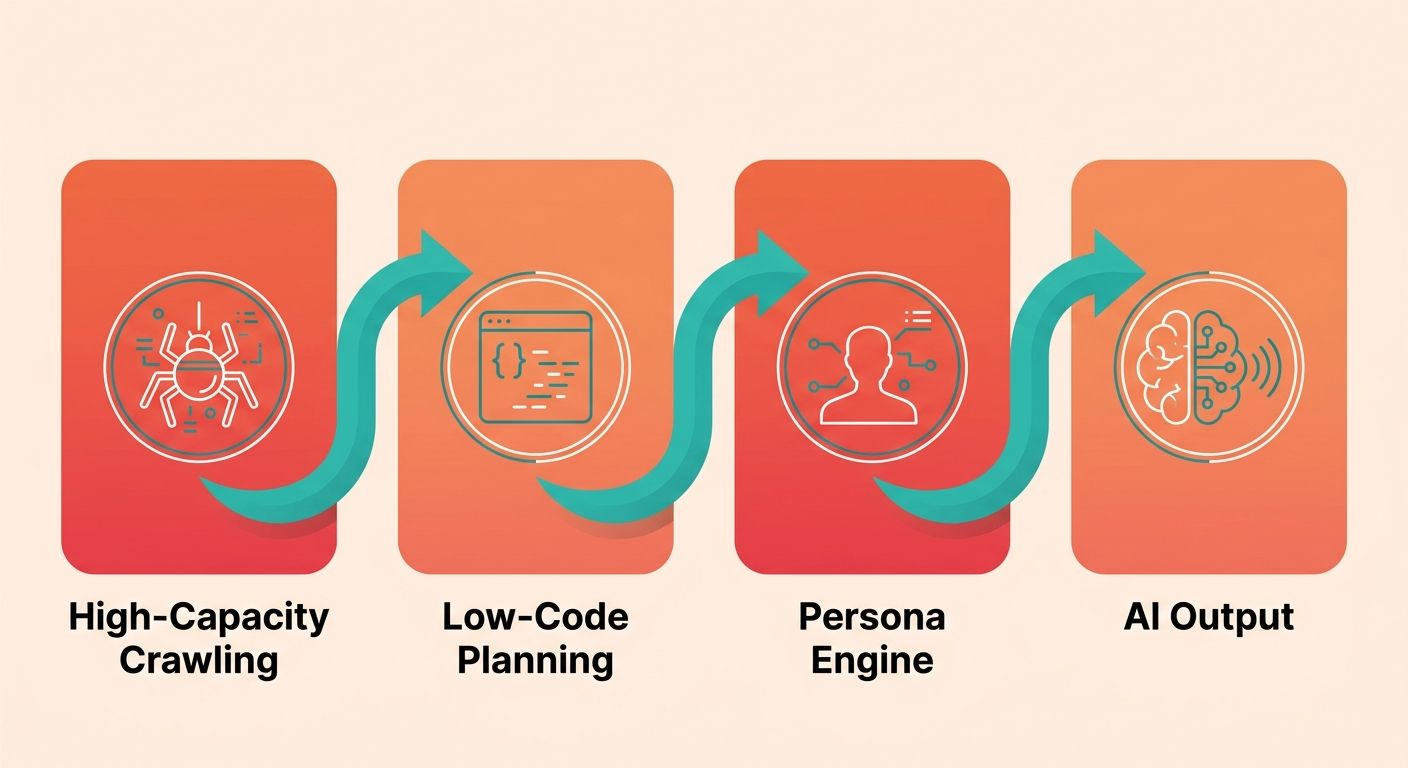
A hybrid stack works best here: high-capacity crawling, low-code planning, and a persona engine for tone injection.
| Title | Description | Key Features | Pros / Cons |
|---|---|---|---|
| AnyPost.ai (the platform) | AI-driven generator that turns entity lists into full-length drafts with built-in persona cues. | Persona Engine, auto-publish, API hooks. | Pros: Voice consistency, end-to-end automation. Cons: Requires initial persona setup. |
| Botify | Enterprise crawler delivering raw entity signals at high speeds. | Crawl depth, entity extraction, API access. | Pros: Massive data volume. Cons: No native voice layer. |
| Notion | Block-based workspace for brief templates and collaborative annotations. | Linked databases, real-time comments, Kanban view. | Pros: Flexible, visual planning. Cons: Limited native SEO metrics. |
| Airtable | Spreadsheet-meets-database for structured content pipelines. | Grid & gallery views, formula fields, automation triggers. | Pros: Easy mapping of entities to tone tags. Cons: Learning curve for formulas. |
| ProofHub | Project manager with Gantt and Kanban boards for editorial timelines. | Timeline view, task dependencies, file sharing. | Pros: Clear schedule visibility. Cons: Less granular tagging. |
| Asana | Mature workflow builder with rule-based approvals. | Custom fields, rule automation, reporting dashboards. | Pros: Strong approval flows. Cons: Requires paid tier for advanced rules. |
| Semrush | Research suite that surfaces semantic clusters and writing suggestions. | Topic Research, SEO Writing Assistant, brand-style ingest. | Pros: Integrated SEO insights. Cons: Voice alignment needs external persona layer. |
Which content-planning app is "right" depends on how your team already works. Match the tool to your existing process, not the other way around.
In practice, teams combine a crawler's output with a low-code planner like Notion or Airtable that stores tone guidelines from the Persona Engine. The planner's columns hold entity, intent, word count, and voice cue ("authoritative-tech" vs. "friendly-startup"). That bridges raw data at scale and briefs that respect brand voice.
How do we stitch the pieces together with automation?
Build a three-stage pipeline: extract, enrich, publish. Use native integrations and lightweight webhooks.
- Extract – The crawler pushes a JSON feed of identified entities to a data store, such as an Airtable base, via its webhook endpoint.
- Enrich – A scheduled script reads each record, looks up the matching voice cue from the Persona Engine, and writes a full brief back into the planner. The brief carries headline, sub-topics, and a tone-prompt block.
- Publish – AnyPost.ai consumes the brief through its API, generates a draft, and auto-publishes to the target CMS. A final approval step in Asana lets editors check brand compliance before go-live.
No dedicated developer? The same flow can be assembled with Zapier-style connectors, so setup stays quick and low-maintenance.
Can you see a real-world workflow in action?
An enterprise e-commerce platform can run this hybrid architecture to generate localized category descriptions fast. Feed regional search entities into a central database, map them to brand voice guidelines, route them through an automated generation queue, and the marketing team scales the catalog footprint without a manual copywriting bottleneck.
Ready to copy the approach? Audit your current content pipeline, pick a low-code planner that fits your team, and connect a crawler that supplies raw semantic signals. The rest falls into place once the Persona Engine becomes the glue that turns data into on-brand copy.
What I'd Actually Recommend
Semantic SEO automation is the most reliable path for teams scaling production without gutting editorial integrity. Our read: an integrated platform with a native tone engine is the most efficient way to run this end to end.
Tools that only surface keywords, like Ahrefs and SEMrush, or only manage workflow, like Notion, Airtable, and ProofHub, come up short when the job is turning raw signals into publish-ready, on-brand pages at scale. The best fit is a single loop that connects data insight, collaborative planning, and tone injection.
Which tool delivers the most reliable voice-aligned scaling?
The SaaS with an integrated Persona Engine gives you the most consistent voice across generated pages. It aligns drafts with your tone before a human opens them, so each piece already sounds like you.
In our workflow, the engine produces full drafts that respect heading hierarchy, internal linking, and on-page SEO. Teams that adopt it report faster content creation while keeping editorial control. They also skip most of the manual brief prep.
How do low-code planners fit in?
Low-code planners are the collaborative hub where content owners annotate tone, intent, and cadence without breaking the data stream. They preserve the semantic context the platform provides while giving marketers a familiar spreadsheet or board.
Planners link to AnyPost.ai through standard integrations, so brief details like voice notes, word-count limits, and CTA slots flow straight into the generation layer. Non-technical stakeholders keep control over brand expression, and the downstream generator consumes the enriched brief without manual re-entry.
| Title | Description | Key Features | Pros / Cons |
|---|---|---|---|
| AnyPost.ai | SaaS that generates SEO-optimized drafts with a built-in Persona Engine. | Persona Engine, auto-publish, multi-source content integration, real-time analytics tracking. | Pros: Voice consistency, end-to-end automation. Cons: Requires initial persona setup. |
| Ahrefs | SEO research suite that provides keyword difficulty, click-potential, and related entities. | Keyword explorer, Content Explorer clusters, backlink data. | Pros: Deep keyword insights. Cons: No native voice alignment. |
| SEMrush | All-in-one SEO suite with Keyword Magic, Topic Research, and Writing Assistant. | Semantic clustering, real-time writing suggestions, SEO audit tools. | Pros: Integrated research & writing aid. Cons: Voice cues rely on manual input. |
| Botify | Enterprise crawler delivering massive entity lists at high speed. | Crawl depth, entity extraction, API access. | Pros: Large data volume. Cons: No built-in content generation. |
| Notion | Block-based workspace for collaborative brief creation. | Linked databases, real-time comments, template library. | Pros: Flexible collaboration. Cons: No SEO data source out of the box. |
| Airtable | Spreadsheet-style database that supports custom field mapping. | Grid view, forms, API, automation triggers. | Pros: Easy to map entities to tone fields. Cons: Requires external SEO feed. |
| ProofHub | Project-management tool with Kanban and Gantt views for content pipelines. | Task boards, time tracking, file sharing. | Pros: Visual workflow control. Cons: Lacks semantic SEO features. |
So: pair AnyPost.ai's high-throughput generation layer with a voice-aware engine, then add a low-code planner for human oversight. That combination closes the "data-to-draft" gap most teams still wrestle with. Looking ahead, expect AI-driven generation and deeper analytics to keep improving. That means holding a clear brand voice at scale gets easier.
Frequently Asked Questions
1. How does AnyPost.ai protect proprietary vocabularies when a custom dictionary is uploaded?
AnyPost.ai encrypts all uploaded dictionaries in transit and at rest. It also restricts access through role‑based permissions in the SaaS dashboard. The platform logs every edit, so admins can audit changes. This protects proprietary product names and B2B jargon while keeping the data available for the Persona Engine.
2. Can low‑code planners like Notion or Airtable generate multilingual briefs, and how does that compare with SEMrush’s SEO Writing Assistant?
Low‑code planners can store separate language columns and trigger language-specific brief records, but they rely on external translation services to fill the content. SEMrush’s SEO Writing Assistant, by contrast, checks tone against an uploaded style guide for each language and flags mismatches in place, reducing the need for separate translation steps.
3. What technical options exist for the brief‑creation trigger when Botify identifies new entities?
Botify can push new entity sets via webhook to services like Zapier, Make (formerly Integromat), or a custom serverless function. Those endpoints then write a row into Notion or Airtable, automatically populating predefined fields. Choosing a no-code connector speeds setup, while a bespoke API offers tighter error handling and scaling.
4. How does the cost of adding a custom dictionary to a generic NLP API compare to the subscription fee for AnyPost.ai’s Persona Engine?
Adding a custom dictionary to a generic NLP API usually incurs a modest monthly fee, often $20-$50, plus per-call charges, while maintaining the list requires manual updates. AnyPost.ai bundles dictionary management within its Persona Engine subscription, which starts around $300 per month for the Growth tier, offering a predictable all-in-one cost.
5. What metrics should a team track to evaluate the ROI of a semantic SEO automation workflow?
Teams should monitor average time from entity discovery to live page, organic traffic growth for newly published URLs, keyword-ranking improvements, and conversion rates on those pages. Comparing these figures against pre-automation baselines quantifies efficiency gains and revenue impact, providing a clear ROI picture.
6. Is there a limit to the number of entities Botify can export to Airtable in a single crawl, and how can large datasets be handled?
Botify’s export endpoint caps a single response at roughly 10,000 entities. Larger crawls must be paginated or split into multiple jobs. Using Airtable’s batch API, teams can ingest each page sequentially and schedule additional runs to cover the full dataset without hitting the limit.